In this guide
- 01What “Quiet Luxury” Means In Japan (And Why First-Timers Miss It)
- 02The Quiet-Luxury Checklist, Organized By Four Pillars
- 03Transfers That Don’t Shout: How To Move With Less Friction
- 04Dining Without Trophy-Hunting: How To Eat Well Without Stress
- 05Room Categories Decoded: What “Suite” Means In Japan
- 06Pacing: The Classic First-Timer Mistake (And How To Avoid It)
- 07Hidden Japan And Shokunin: How Quiet Luxury Becomes Personal
- 08FAQ: First-Time HNW Japan Planning Questions
- 09Why Choose Japan Royal Service
Most first-time HNW travelers arrive in Japan fluent in Western luxury signals. Big cars. Big suites. Service that introduces itself.
Japan often does the opposite. Quiet. Precise. Sometimes even hard to read, until you know the codes.
This guide is our practical checklist for “luxury that doesn’t shout.” It is built for first-time HNW travelers who want the trip to feel calm, not performative—without missing what matters.
Use it as a saveable plan: what to decide before you land, what to confirm once you are in-country, and what mistakes to avoid if you want Japan to feel effortless.
What “Quiet Luxury” Means In Japan (And Why First-Timers Miss It)
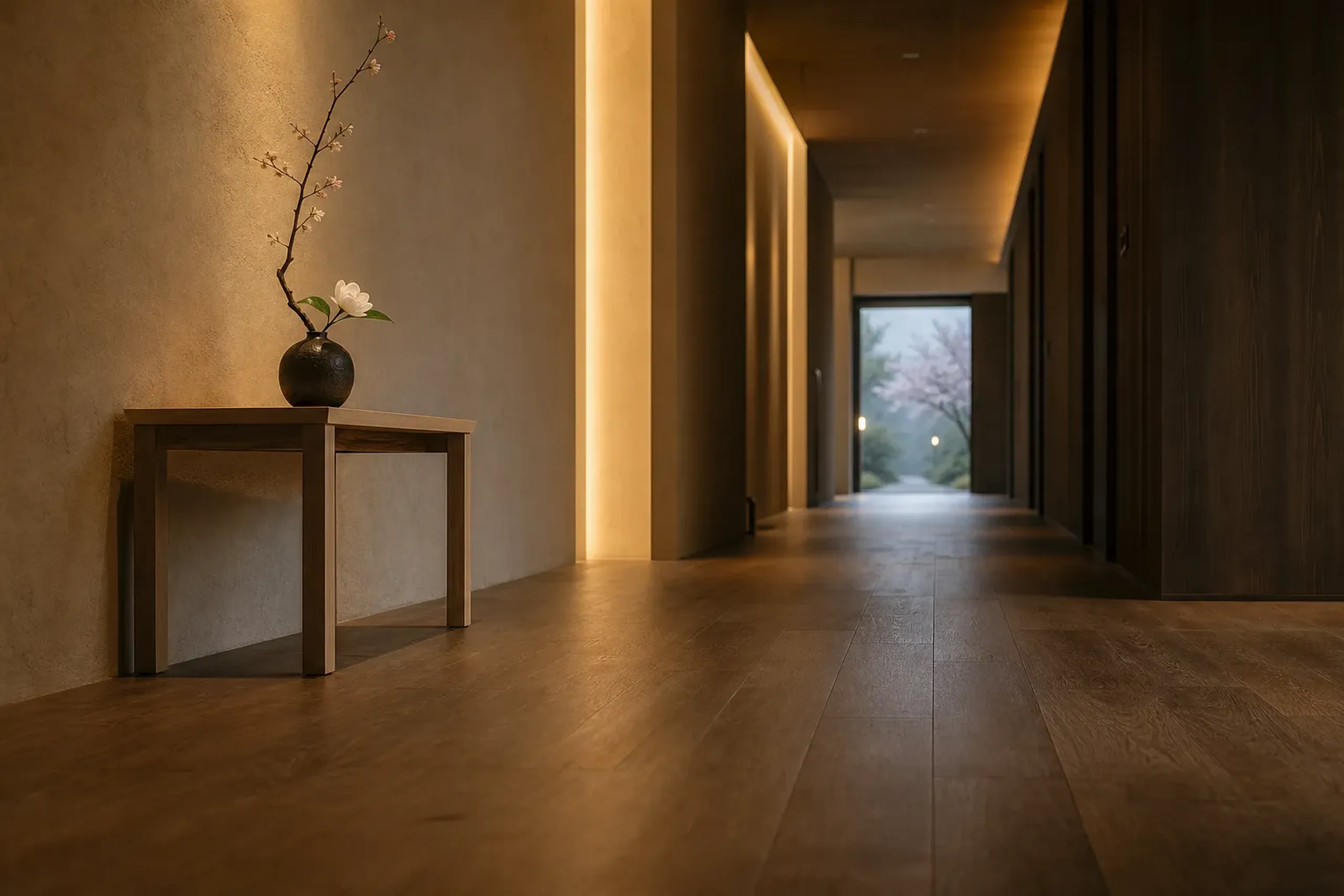
In Japan, luxury often reads as restraint and calm timing, not visual flash.
In our experience, the friction starts with a mismatch. You expect luxury to announce itself. Japan expects you to notice.
Small example. A hotel staff member may not “sell” you on anything, yet your room is prepared with exact, watchful timing—because the rhythm of the building matters as much as your schedule.
Quiet luxury here is usually one of four things: discreet movement, hard-to-copy access, rooms designed for rest, and pacing that protects attention. That is the checklist below.
And yes, there is a fifth layer. Conduct. In 2026, overtourism management is explicit policy in Japan, and Kyoto has published materials about balancing residents’ life and tourism. If you travel gently, doors open more easily.
The Quiet-Luxury Checklist, Organized By Four Pillars
Print this mentally. Or screenshot it. It works because it is sequenced.
We organize first-time HNW trips under four pillars: Transfers, Dining, Room Categories, and Pacing. Each pillar has decisions that are best made before arrival, and decisions that can wait.
Do not try to “optimize everything.” Big mistake. Japan rewards selective precision.
Transfers That Don’t Shout: How To Move With Less Friction
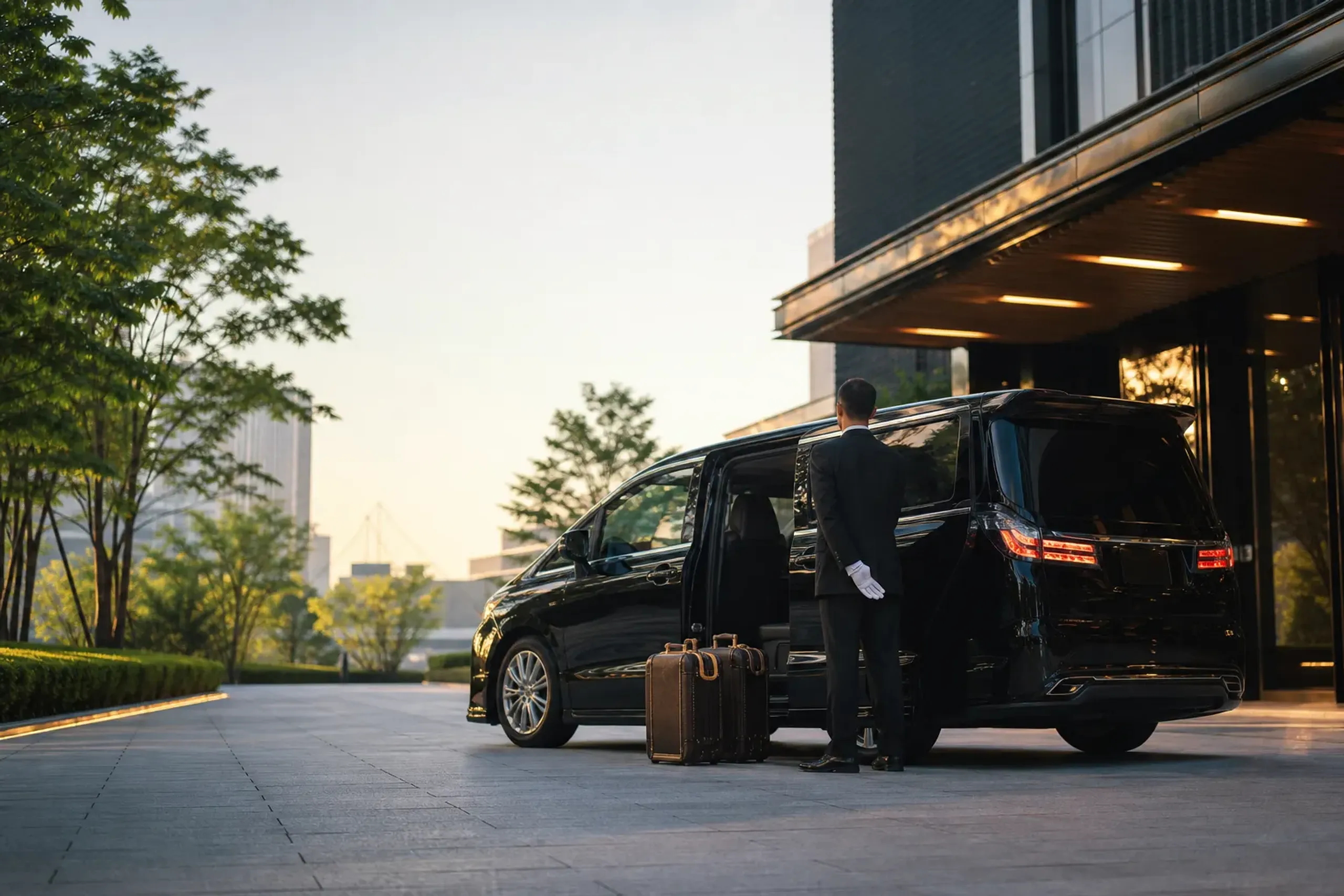
Door-to-door movement is often the difference between a calm day and a noisy one.
Transfers set the tone. If your first two days feel scrambled—bags, crowds, platforms—you will carry that noise into Kyoto, Hakone, and even the best hotel.
Our team at Japan Royal Service treats mobility as part of the experience, not the gaps between experiences. The goal is not speed. It is composure.
Decision 1: Private Chauffeur Vs. Premium Rail (Green Car / GranClass)
In Japan, rail can feel like a private experience—if you choose the right product, at the right times. But it is still a station system, with rules and rushes.
A private chauffeured transfer keeps your day continuous: door-to-door, no platform pressure, and far less exposure when you want discretion. Sometimes that is the whole point.
Premium rail can be excellent, especially between Tokyo and Kyoto/Osaka on the Tokaido Shinkansen. Yet “premium” is not one thing, and the details matter.
Option A: Private Chauffeured Day Movement
Best when you value privacy, when your day has multiple stops, or when you prefer a driver who holds the plan in their head so you don’t have to.
- Good for: Tokyo days with several neighborhoods, Kyoto mornings with early temples, Hakone routes where timing matters.
- Hidden win: your driver becomes a quiet buffer—between crowds, cameras, and the small stress of navigation.
Option B: Shinkansen Green Car
Green Car is the first-class cabin on many limited express trains and Shinkansen. It is a clean, composed upgrade that often makes sense for first-timers who want rail efficiency but fewer compromises.
- Good for: simple point-to-point days (Tokyo→Kyoto, Kyoto→Osaka, Tokyo→Sendai).
- Watch for: station congestion and luggage rules. The car is calm; the concourse may not be.
Option C: JR East GranClass (Know The Service Variation)
GranClass is JR East’s premium class on certain Shinkansen services. It can feel closer to a private cabin culture—until you pick a train that runs “without” the full service.
JR East’s GranClass page states that some trains offer “GranClass (No Beverage or Light Meal Service)” without an attendant and without snacks/drinks/towels. That is not a tragedy. It is just a surprise you do not want at the wrong moment.
Key fact: JR East notes that some GranClass services have no attendant and no snacks/drinks/towels. Check the service type when reserving.
JR East also notes reservations can be made via JR-EAST Train Reservation. For first-time travelers, that single operational detail can remove a lot of uncertainty.
Decision 2: Luggage Strategy (So You Don’t Drag Your Trip Through Stations)
One of the most “quiet-luxury” moves in Japan is also the least glamorous: luggage forwarding (takuhaibin). Just do it.
It changes the trip’s posture. You walk into Kyoto with a small bag. You step onto a train without performing suitcase geometry.
In practice, we often advise: forward big bags hotel-to-hotel, keep a light overnight bag for one night, and treat stations like transitions—not storage rooms.
Decision 3: Timing Around Trains (And The 2026 Japan Rail Pass Change)
If you plan to use the nationwide Japan Rail Pass, you need to understand the October 1, 2026 price change for passes purchased through overseas sales agents, as published by JNTO and JR Group materials.
JR Central’s 2026 PDF shows revised prices effective October 1, 2026 for overseas agency sales (for example, a 7-day adult Standard pass at 53,000 yen; 7-day adult Green at 74,000 yen). Numbers like these influence whether a pass is “simple” or “wasteful” for your exact routing.
We do not push a one-size answer. Some first-timers love the psychological ease of a pass. Others prefer point-to-point tickets paired with private car days, so the trip stays quiet.
Dining Without Trophy-Hunting: How To Eat Well Without Stress
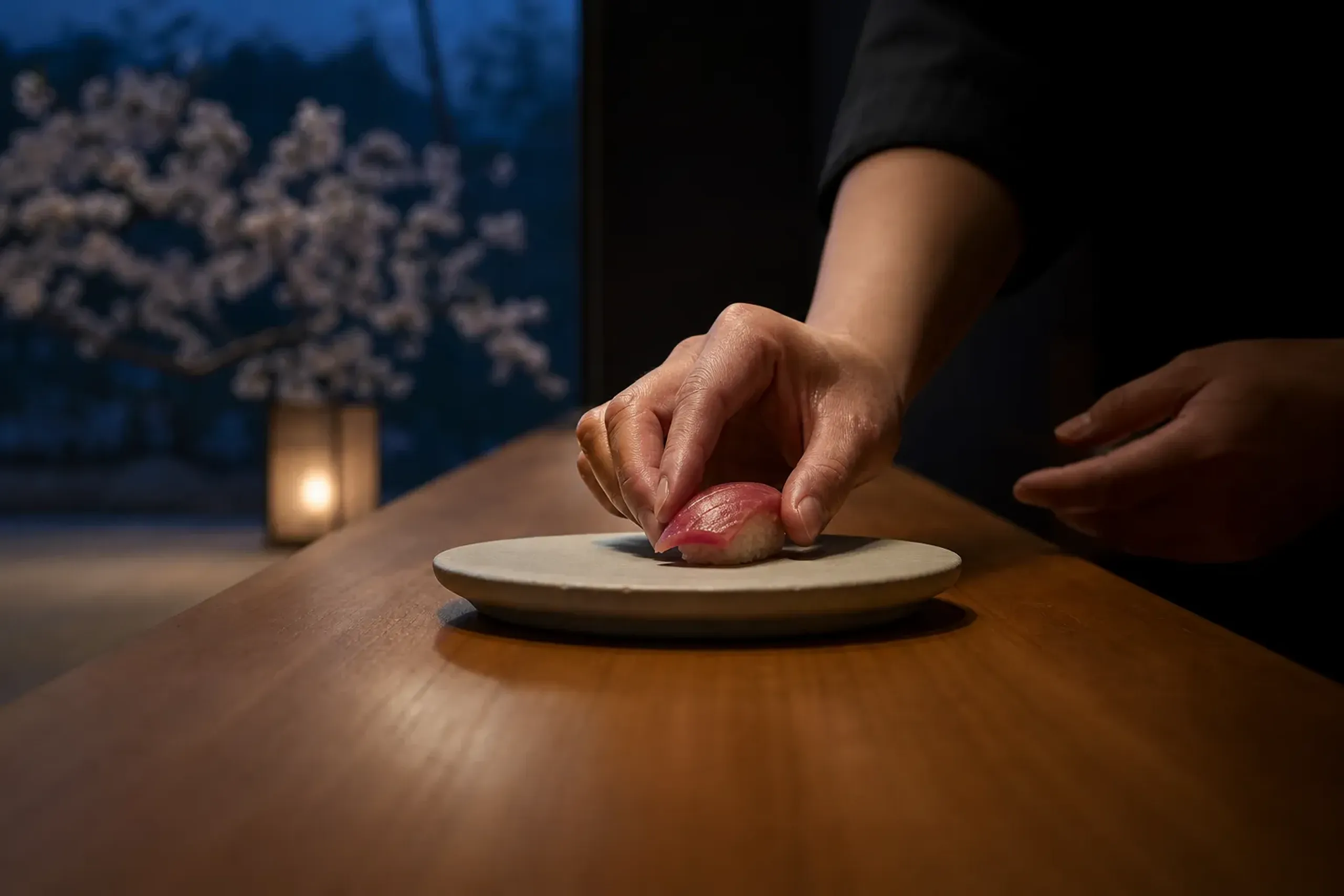
The best meals in Japan often feel almost silent—attention instead of performance.
Japan rewards planning in dining. It also punishes bravado.
The top sushi counters and kaiseki rooms can be booked far ahead, and some places rely on introductions. That is not a marketing story. It is simply how certain restaurants manage trust and regulars.
For first-time HNW travelers, our guidance is simple: pace your “peak meals,” mix in casual excellence, and communicate needs early. Silence tastes better when you are not negotiating at the table.
Checklist: Before You Land
- Choose your cadence: one “peak” dinner every 48 hours is a sane rhythm for many first-timers.
- Dietary restrictions: share them early and precisely. Japan handles detail well when it has time.
- Decide your style: kaiseki for seasonal structure; sushi omakase for concentration; tempura for clarity.
For those using Michelin as a tool: the MICHELIN Guide Tokyo 2026 star reveal notes 18 newly MICHELIN-starred restaurants were announced in the Tokyo 2026 Guide. That is useful context. It is not a scavenger hunt.
In Kansai, MICHELIN’s Kyoto/Osaka 2026 release notes a new three-star restaurant in Kyoto for the first time in six years, per the release summary. That also matters, mostly because demand spikes after announcements.
Checklist: At The Counter (Omakase Etiquette That Protects The Mood)
Omakase is intimate. Keep it that way.
- Be on time: many counters start as a single sitting. Your late arrival changes everyone’s pacing.
- Ask fewer questions during service: save curiosity for a quiet moment, or after a course lands.
- Photos: follow the room’s temperature. If others are not photographing, do not be the only one.
One small vignette we love: a sushi chef places a single piece, says almost nothing, and watches your hands—not your phone. That is the luxury. Attention, not theater.
A Verifiable Kyoto Anchor: HOTEL THE MITSUI KYOTO’s Private-Dining Detail
If you want a concrete example of how “quiet luxury” shows up in Japan’s dining infrastructure, consider HOTEL THE MITSUI KYOTO’s restaurant TOKI. Its official restaurant page states it is featured in the 2026 MICHELIN Guide and notes a private dining room with seating for 6.
That six-seat detail is not trivia. It tells you what the room is designed for: low volume, controlled acoustics, and conversations that do not need to compete with a dining hall.
Room Categories Decoded: What “Suite” Means In Japan
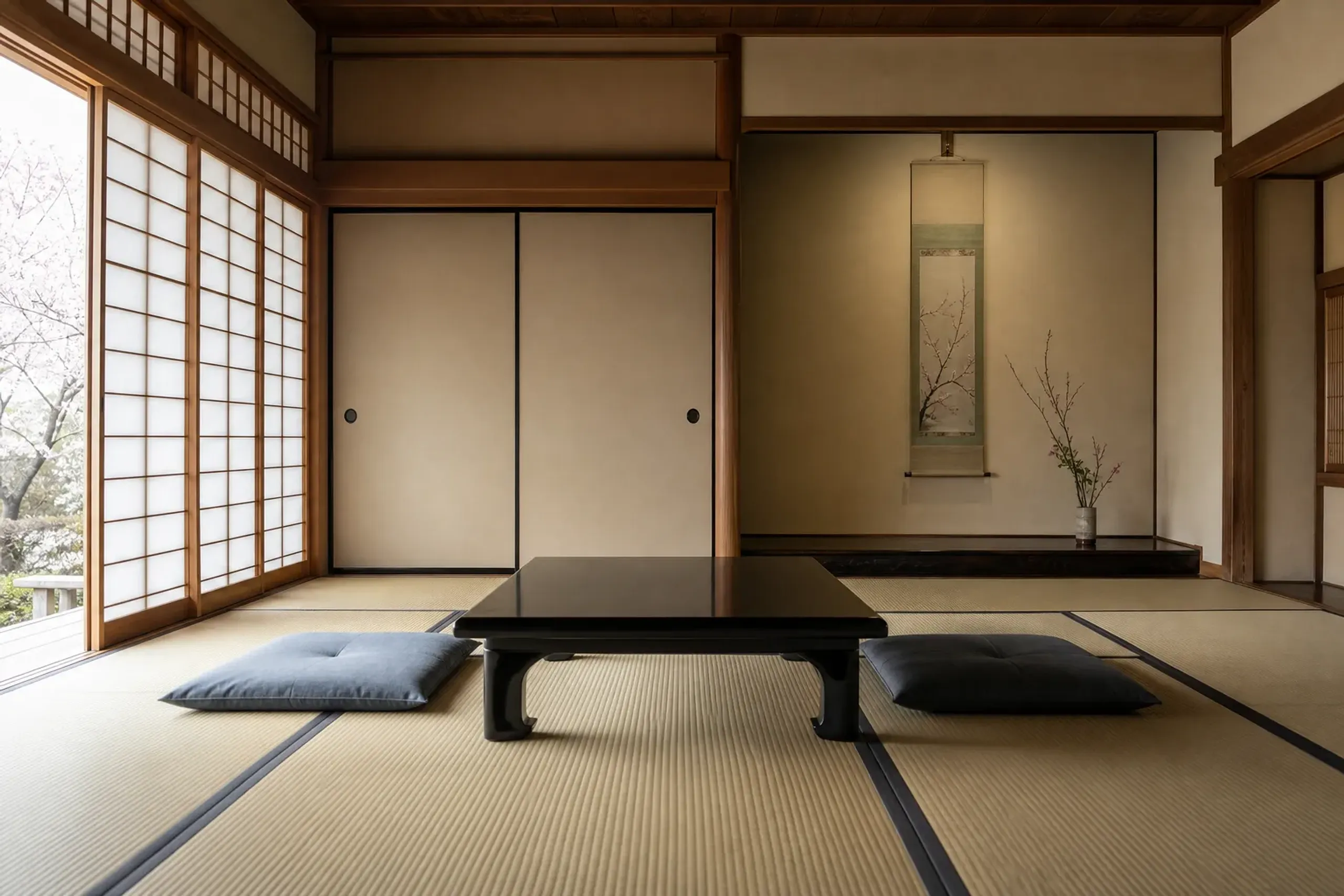
Room categories in Japan are about rhythm, privacy, and atmosphere—not just size.
This is where Western assumptions break fastest. A “suite” in a global luxury hotel is usually about square meters and a living room. In Japan, the category can also be about silence level, staffing rhythm, bathing privacy, and whether dinner arrives at your door.
Choose badly and you may feel observed, or constrained by schedules you didn’t expect. Choose well and the room becomes an anchor point, not a pit stop.
Ryokan Basics (Tatami, Futon, Yukata, Kaiseki)
JNTO’s Travel Japan guide explains common ryokan elements: tatami flooring, futon bedding, yukata robes, and often in-house kaiseki dinners and traditional Japanese breakfasts—while noting wide variation from traditional to modern.
The Japan Ryokan Association’s English page describes heya-shoku (dining in the guestroom) as the most common style of eating at Japanese ryokan, while noting some properties use dining rooms or private dining rooms.
That one distinction—room dining versus dining room—changes the feeling of your evening. A lot.
Checklist: What To Clarify Before You Confirm A Ryokan
- Bathing: is there a private bath (and is it indoor or open-air)?
- Dining: is dinner in-room (heya-shoku), private dining room, or shared dining area?
- Room style: full tatami, or hybrid with beds? Both exist, and comfort preferences matter.
- Timing: kaiseki and bedding setup run on schedules. Plan your afternoon accordingly.
A quiet vignette: you return from a walk, and the room has been reset—tea, linens, light levels—without anyone asking. Restraint, again.
International Luxury Hotels: Category Specificity Matters
International-style luxury hotels in Japan can be extremely precise about room categories. Aman Tokyo is a clean example because its official accommodation page lists suite names and sizes, including the Garden View Suite at 71 square metres.
That specificity helps first-timers choose with less guesswork: view, layout, and real space. It also keeps expectations honest, which is a quiet luxury in itself.
Pacing: The Classic First-Timer Mistake (And How To Avoid It)
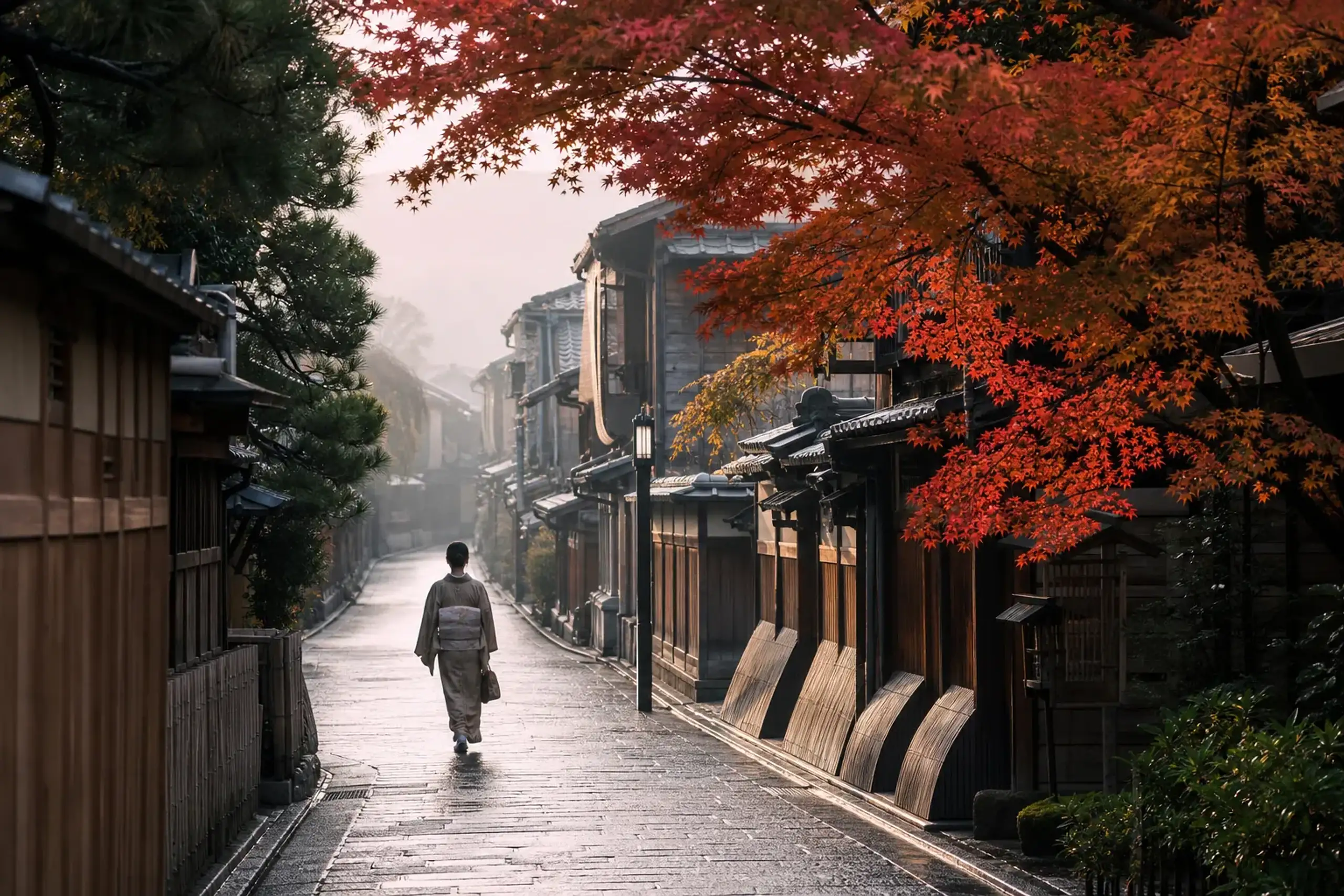
Start earlier, do less, notice more—Kyoto rewards gentle pacing.
Over-packing is the most common error we see. Two cities per day. Three museums. A late-night bar plan after a long kaiseki.
It looks productive on a spreadsheet. It feels like sandpaper in real life.
Japan is dense with detail—gardens, craft, food, small rituals—so the trip needs margin. Not because you are tired. Because you want to notice what you paid attention to come for.
Checklist: A Calm First Trip Rhythm
- Fewer bases: Tokyo + Kyoto, with one regional counterpoint (Hakone, Nikko, Kanazawa) is often enough.
- Buffer days: at least one day with a single anchor plan and open space around it.
- Early starts, earlier finishes: Japan’s most serene moments are often before the crowds gather.
If Kyoto is on your list, pacing becomes civic literacy. Kyoto City has published initiatives about balancing residents’ life and tourism, and the national Japan Tourism Agency (MLIT) maintains an overtourism countermeasures page. These are not abstract policies; they shape crowd patterns, signage, and what “respectful” looks like on the street.
And Kyoto’s Tourism “Moral” / Code of Conduct messaging matters too. When you travel with awareness—voice level, photography restraint, where you stand—it reads as refinement, not restriction.
Hidden Japan And Shokunin: How Quiet Luxury Becomes Personal
Once transfers, dining, rooms, and pacing are steady, you can reach the layer that first-timers often miss: the Japan beyond the obvious.
This is where shokunin matters. Not as a buzzword. As time with a maker whose craft takes decades, and who may not welcome casual drop-ins.
It is also where “hidden-Japan” becomes real: small districts, local communities, and low-visibility places that do not advertise in English and do not play well with last-minute planning.
We keep this section intentionally non-specific in public, for discretion. The right introductions depend on your interests, your timing, and the tone you want—quiet observation, or a more hands-on atelier visit.
FAQ: First-Time HNW Japan Planning Questions
Is A Private Chauffeur Worth It In Tokyo Or Kyoto?
Often, yes—especially if you value discretion, have multiple stops, or dislike the cognitive load of navigation. It reduces small frictions that add up fast.
Should I Buy The Japan Rail Pass In 2026?
It depends on routing and purchase timing. JNTO notes price increases from October 1, 2026 for passes purchased via overseas sales agents, and JR Central’s published figures (e.g., 7-day Standard 53,000 yen; 7-day Green 74,000 yen) change the math for many first-timers.
What Is GranClass, And What Should I Expect?
GranClass is JR East’s premium class on certain Shinkansen trains. JR East notes that some services run as “GranClass (No Beverage or Light Meal Service),” without an attendant and without snacks/drinks/towels, so check the service type when reserving.
What Does A Ryokan Stay Actually Include?
Common elements include tatami floors, futon bedding, yukata, and often kaiseki dinner and a traditional breakfast, per JNTO. Dining is frequently heya-shoku (in-room) according to the Japan Ryokan Association, though some properties use dining rooms or private rooms.
How Far Ahead Should I Plan Dining?
For sought-after counters and kaiseki, plan months ahead when possible. If you are traveling in peak seasons or around major announcements like MICHELIN updates, demand tends to tighten quickly.
Why Choose Japan Royal Service
Luxury in Japan is often quiet, and the hardest parts are not glamorous: timing, introductions, discretion, and knowing which details actually change the day. That is where our concierge team at Japan Royal Service focuses.
We design tailor-made itineraries around privacy, shokunin-level craft, and hidden-Japan routing—then support that design with premium transportation and practical guidance so your trip feels composed from the first arrival to the final departure.
Discretion is our baseline. Always.
For private coordination, reach our team privately via WhatsApp or LINE, or contact us here.