In this guide
- 01Introduction: Kyoto Gets Quiet When You Stop Racing
- 02What “Wabi-Sabi Kyoto” Means On The Ground
- 03Kyoto In 2026: The Practical Changes Quiet Travelers Should Know
- 04The Quiet-Hours Framework: A Day Built Around Light And Load
- 05Dawn (06:00–08:30): Kiyomizu-dera Before The City Fully Wakes
- 06Morning Buffer (08:45–10:15): Katsura Imperial Villa And The Luxury Of Controlled Access
- 07Late Morning (10:30–12:00): Pick One Garden, Then Stop
- 08Midday Reset (12:00–15:30): The Quiet Luxury Move Most Visitors Refuse To Make
- 09Late Afternoon (16:00–18:00): Return To The Classics When Others Leave
- 10Night (Seasonal): Kiyomizu-dera Special Night Viewing, Without The Entry Surge
- 11Weekday And Shoulder-Season Logic: The Small Decisions That Change Kyoto
- 12Etiquette That Preserves Quiet (And Keeps Kyoto Welcoming)
- 13Transportation That Supports Calm (Not Extra Friction)
- 14A Downloadable Timed Schedule: Kyoto Without The Crowds (Sample Day)
- 15FAQ: Kyoto Without Crowds For Luxury Travelers
- 16The Competitor Problem: Why Most “Avoid Crowds” Kyoto Plans Still Feel Crowded
- 17Why Choose Japan Royal Service
Introduction: Kyoto Gets Quiet When You Stop Racing
Most Kyoto itineraries fail for one reason. Noon.
At midday, the same lanes feel pinched, the same temple approach turns into a queue, and even the best garden becomes a backdrop for phones. The fix is not “more hidden gems.” It is timing, restraint, and a plan that leaves room for silence.
Our team at Japan Royal Service builds Kyoto days the way Kyoto itself was meant to be read: slowly, in angled light, with pauses long enough to notice moss edges and weathered cedar grain. This is a wabi-sabi itinerary built on arrival windows, not rush.
What “Wabi-Sabi Kyoto” Means On The Ground
Wabi-sabi is not décor. It is behavior.
It shows up as choosing one temple at 6:00 a.m. instead of three between 10:30 and lunch. It shows up as letting a garden hold your attention for forty minutes, then leaving before the next wave arrives.
We keep days deliberately spare. Fewer locations. Longer lingering. A quiet rhythm that makes Kyoto feel like a living place again.
Kyoto In 2026: The Practical Changes Quiet Travelers Should Know
Kyoto is adjusting to demand, and 2026 makes that official. That matters for planning.
Accommodation tax changes from March 1, 2026, per Kyoto City’s official guide. Hotels and ryokan will apply the revised tax according to the city’s rules, so our concierge team encourages guests to read the official update early and keep expectations calm at check-in.
Nationally, Japan’s Tourism Agency has published overtourism prevention efforts and keeps that page current, with a listed update of April 24, 2026. The signal is simple: crowd management is not a rumor, it is policy, and “quiet-hour travel” fits that direction.
Key fact: Kyoto.travel’s 2026 visitor guidance stresses that areas such as Gion are living neighborhoods. This itinerary favors low-impact hours and respectful pacing.
The Quiet-Hours Framework: A Day Built Around Light And Load
Kyoto has predictable pressure points. Trains arrive. Coaches unload. Popular lanes compress.
So we work with four dependable windows: dawn (before tour buses), a midday reset (when crowds peak), late afternoon (when many day-trippers leave), and night (select night openings, or simply calmer streets).
This is the luxury product. Not a longer list.
Dawn (06:00–08:30): Kiyomizu-dera Before The City Fully Wakes
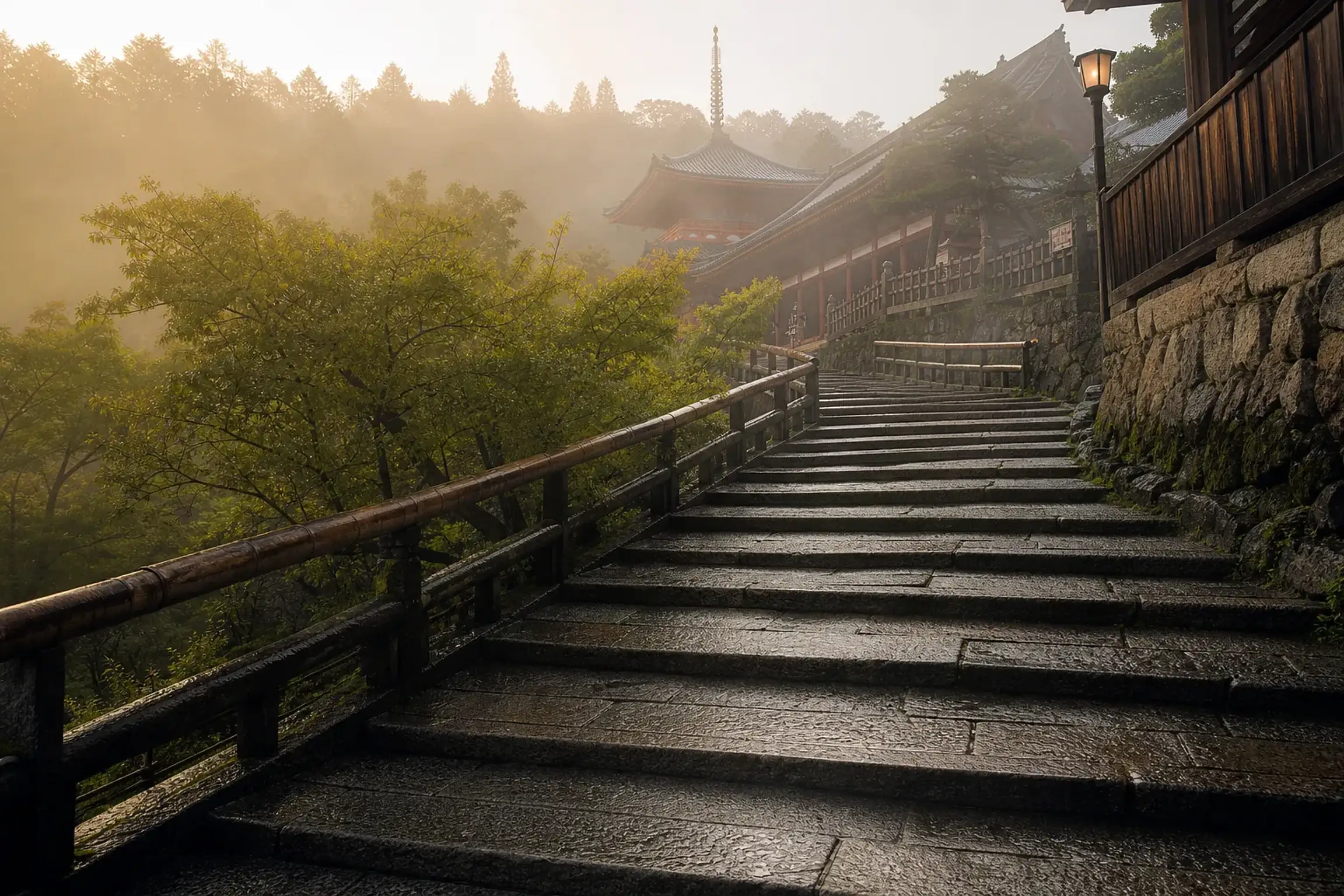
Kyoto changes when you arrive at opening.
Go early. Really early.
Kiyomizu-dera opens at 6:00 a.m. (closing varies by season, per the temple’s official site). That single fact changes everything, because the approach can still feel like a neighborhood walk rather than a funnel of bodies.
At 6:15 a.m., the air is cooler and the soundscape is different. Footsteps, a broom, a distant bell. By noon, the same veranda becomes a long pause behind raised screens.
The Timing Secret
Aim to be at the gate close to opening, then linger inside longer than you think you should. The crowd curve rises fast after 9:00 a.m., especially in peak seasons.
A Wabi-Sabi Micro-Ritual
Pick one detail and stay with it: the joinery in a beam, the worn edge of a step, the way morning light catches grain in the wood. One focus. Not ten photos.
Morning Buffer (08:45–10:15): Katsura Imperial Villa And The Luxury Of Controlled Access
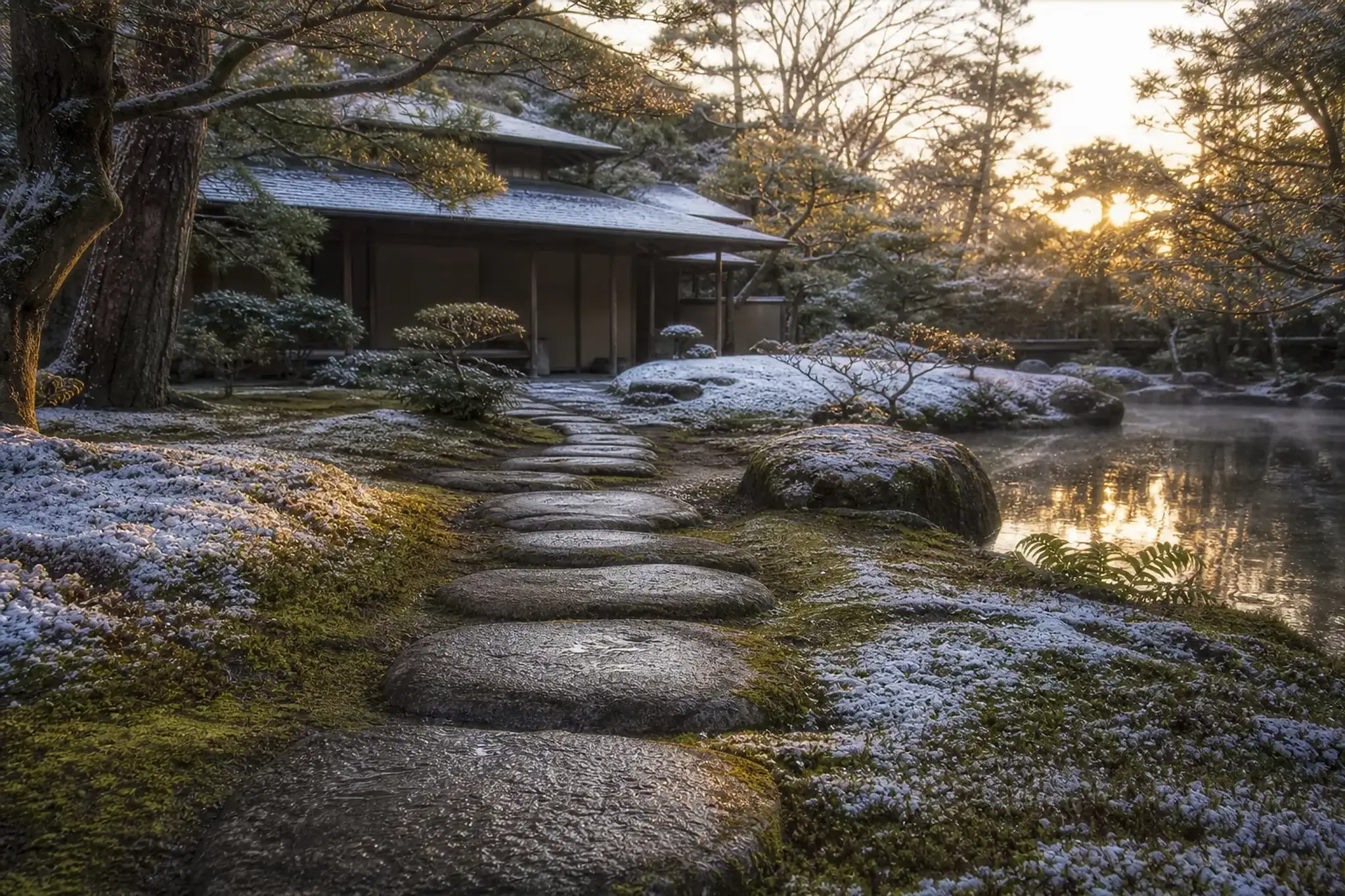
Capacity control is its own kind of luxury.
If you want crowd resistance in Kyoto, look for places designed for capacity control. Katsura is one of the clearest examples.
The Imperial Household Agency requires visitors to take a guided tour led by staff. There is also an official online application portal where Katsura Imperial Villa appears as a selectable place for visit registration. This structure alone changes the feeling on site.
Walk-in registration is also defined on the official site, with reception opening at 8:40 a.m. That specificity is useful; it lets you plan your morning with precision instead of hope.
How To Book (Official Method Only)
- Eligibility: Visitors must join a guided tour by Imperial Household Agency staff (as stated on the official site).
- Where booking happens: Use the Imperial Household Agency’s online visit registration portal, selecting “Katsura Imperial Villa.”
- Walk-in option: The official site describes walk-in registration and notes reception opens at 8:40 a.m.
For questions, contact our concierge.
Late Morning (10:30–12:00): Pick One Garden, Then Stop
This is where most itineraries start to fracture. Too many pins on the map.
Instead, we advise choosing one garden experience and giving it time. Kyoto rewards stillness. A raked line in gravel, a clipped hedge shadow, the slow shift of light across stone.
And yes, crowds can still be present at late morning in famous areas. That is the point. We do not pretend Kyoto is empty. We design for calm inside reality.
Midday Reset (12:00–15:30): The Quiet Luxury Move Most Visitors Refuse To Make
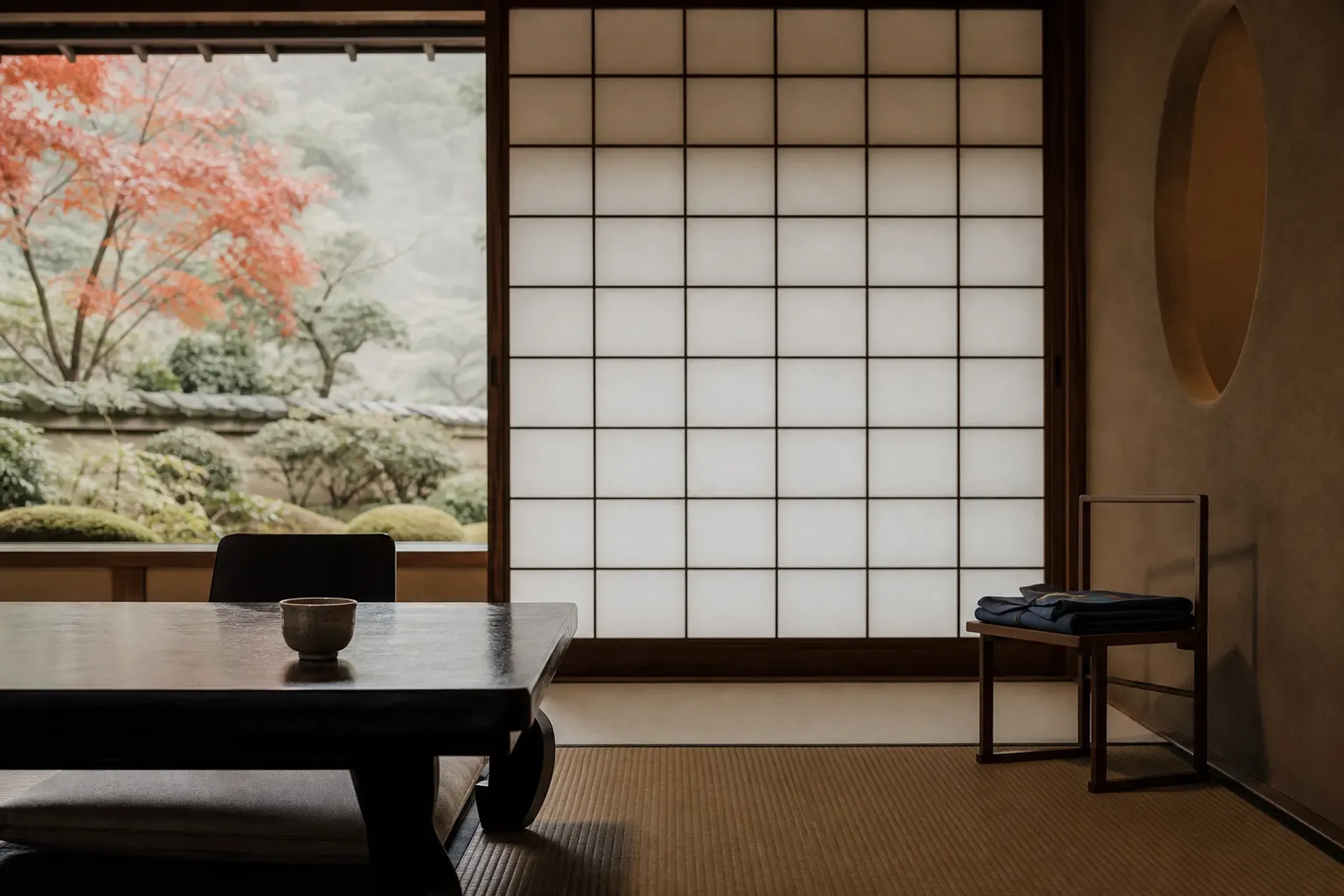
The calmest Kyoto hours are often indoors.
Midday is when Kyoto is loudest. So we step away.
This is the moment for a long lunch, a return to your hotel, or an onsen-style reset if you are staying somewhere with bathing facilities. A nap is not wasted time in Kyoto. It is strategy.
In our experience, this single decision is what makes the evening feel human instead of frayed.
Discretion As A Practical Tool
Quiet travel also means fewer public touchpoints. Smaller entrances, calmer lobbies, and arrivals that don’t advertise you. Our concierge team plans this pacing with discretion front of mind, especially for professionals who cannot afford a public itinerary.
Late Afternoon (16:00–18:00): Return To The Classics When Others Leave
Kyoto softens again later in the day. The pressure eases.
Day-trippers start to drift back toward Kyoto Station. Large tour groups thin out. In many districts, you can feel the city exhale.
This is when we like to revisit an iconic area, but with better manners and better light. The goal is not “no one else.” It is space to breathe.
Night (Seasonal): Kiyomizu-dera Special Night Viewing, Without The Entry Surge
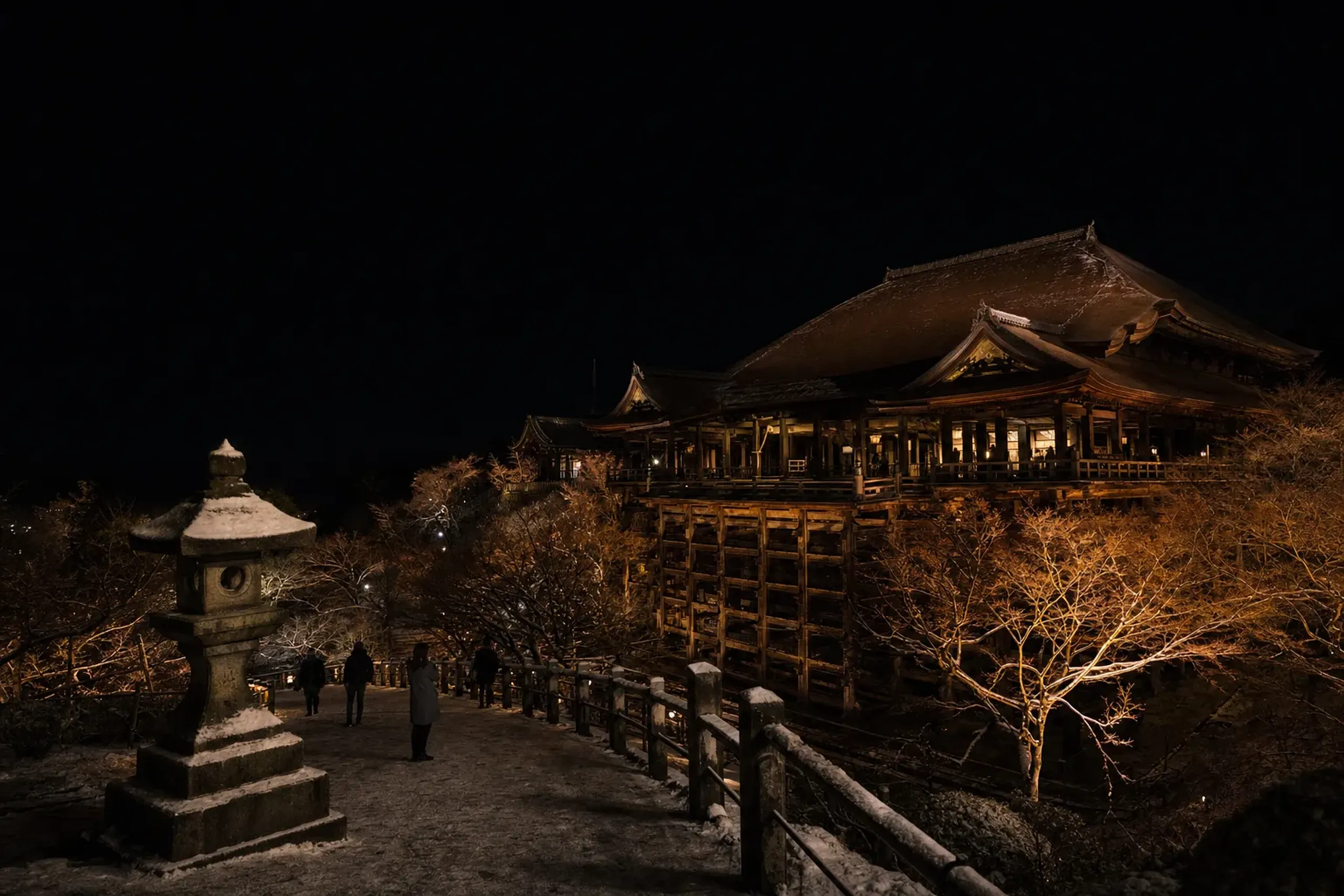
Night openings work best when you avoid the entry wave.
Kyoto at night can be either serene or chaotic. It depends on the calendar and the minute you arrive.
Kiyomizu-dera publishes an official Special Night Viewing schedule page for 2026. When these openings run, they attract crowds, yet timing still matters.
The Timing Secret
Arrive at the start of the viewing window, or deliberately later when the first entry wave has passed. Avoid the middle hour when lines densify and the approach becomes a slow shuffle.
After-Viewing Decompression
Do not rush into the busiest streets immediately. Pause. Let your eyes adjust. Choose a quieter route back, guided by our team’s local read of what is active that night.
Weekday And Shoulder-Season Logic: The Small Decisions That Change Kyoto
Kyoto has patterns. Weekends pull domestic travel. Holidays amplify everything.
For HNW travelers who can choose, we generally prefer weekdays and shoulder periods around major peaks. Not because famous seasons are “wrong,” but because the experience quality can swing sharply with just a two-day shift.
One extra night can also change the rhythm. It lets you place the most popular site at dawn and still have an open afternoon, without squeezing the day into a contest.
Etiquette That Preserves Quiet (And Keeps Kyoto Welcoming)
Kyoto’s calm is a shared project. Visitors influence it.
Kyoto.travel’s guidance in 2026 is clear that places like Gion are neighborhoods, not theme sets. That means low voices, no blocking lanes, and no intrusive photography of residents.
Wabi-sabi travel is respectful by default. Less performance. More awareness.
Transportation That Supports Calm (Not Extra Friction)
Kyoto is easiest when transfers are not a daily puzzle. Waiting for taxis at peak hours is a mood-killer.
For guests who value controlled timing and quiet entrances, private chauffeured transportation is often the most practical solution. It also protects the day’s rhythm: dawn start, midday reset, late-afternoon return.
The first step is understanding vehicle fit, luggage realities, and whether your party prefers a softer family layout or an executive cabin. We outline options on our private transportation page.
A Downloadable Timed Schedule: Kyoto Without The Crowds (Sample Day)
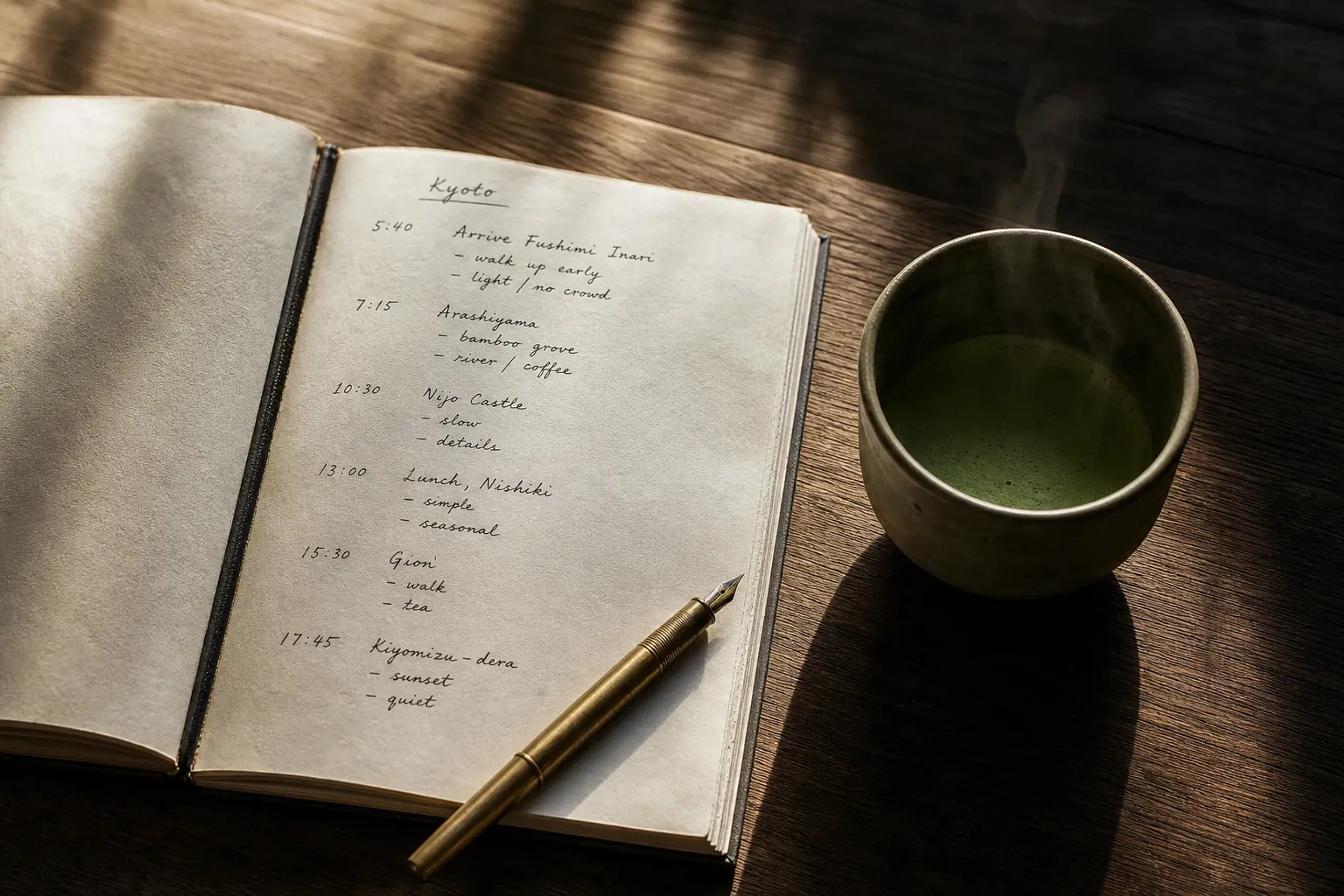
Atmosphere becomes repeatable when timing is precise.
This is a sample pacing model, built from the verified early opening at Kiyomizu-dera and the controlled-visit structure at Katsura Imperial Villa. We adjust it to your hotel location, walking tolerance, and the season’s daylight.
| Time | Plan | Why It Stays Quiet |
|---|---|---|
| 06:00–08:00 | Kiyomizu-dera at opening (6:00 a.m.) | You arrive before peak footfall builds. |
| 08:40–10:30 | Katsura Imperial Villa guided visit (registration per IHA rules) | Guided tours limit mass-crowd dynamics. |
| 10:45–12:00 | One garden or one museum-scale visit (choose, then stop) | Fewer moves means less time in congested transit. |
| 12:00–15:30 | Midday reset: long lunch + hotel pause | You skip the loudest hours entirely. |
| 16:00–18:00 | Return to an iconic area in late light | Day-trip waves begin to thin. |
| Evening (Seasonal) | Kiyomizu-dera Special Night Viewing (if running) | Timing avoids the entry surge. |
FAQ: Kyoto Without Crowds For Luxury Travelers
Is Kyoto Ever Truly “Crowd-Free”?
No. And claiming otherwise is misleading.
What we can do is shift your exposure: dawn openings, controlled-access visits, and a midday reset that removes you from peak compression.
What Time Should We Start?
For popular temples that open early, 6:00 a.m. changes the day. Kiyomizu-dera’s official opening time makes it a reliable anchor.
Does A “Less Packed” Itinerary Feel Like We Missed Things?
Not if the stops are chosen well.
Most guests remember one quiet morning view more vividly than five crowded highlights. Wabi-sabi travel values depth over volume.
How Do We Visit Katsura Imperial Villa?
The Imperial Household Agency states visitors must join a guided tour. Use the official online registration portal where Katsura Imperial Villa is listed, or follow the official walk-in registration guidance (reception opens at 8:40 a.m.).
What Changed In Kyoto In 2026 That Affects Planning?
Kyoto City’s accommodation tax changes from March 1, 2026, per Kyoto.travel. Japan’s Tourism Agency also maintains overtourism countermeasure information, with an update date of April 24, 2026.
The Competitor Problem: Why Most “Avoid Crowds” Kyoto Plans Still Feel Crowded
Many luxury competitors publish tidy, product-led Kyoto pages. They rank well. They also stack the same hours.
If a plan sends you to the most famous sites at 10:30 a.m., it is not a crowd-avoidance plan. It is a hope-based plan. Our approach is more watchful: we build around known opening times, known guided-visit systems, and the predictable human tide.
That difference is subtle on paper. On the ground, it is the entire trip.
Why Choose Japan Royal Service
Discretion first. Our guests’ identities and itineraries are treated as confidential by default. Quiet logistics matter as much as the place itself.
Hidden-Japan, without fantasy. We do not sell “secret Kyoto” claims that collapse under scrutiny. We focus on the Kyoto that Google cannot schedule properly: the right gate at the right hour, the right pause, and the right exit line.
Wabi-sabi pacing that holds. Our tailor-made itineraries are built to feel spacious, even in high-demand months, because they are organized around load, light, and human energy rather than an aggressive checklist.
Shokunin-level cultural depth. When guests want craft and cultural immersion, our concierge team guides you toward serious encounters and correct etiquette, with a respect that Kyoto recognizes.
If you want Kyoto with fewer collisions and more hush, reach our team privately via WhatsApp or LINE, or contact us here.