In this guide
- 01The Private-Hours Method: How We Keep Kyoto Calm
- 02Kyoto Timing Windows Map (Text Version You Can Screenshot)
- 03Day 1: Higashiyama At First Light, Then Retreat Indoors
- 04Day 2: Fushimi Inari Before The City Blinks, Then A Calm Middle
- 05Day 3: Saiho-ji (Kokedera) As The Midday Masterstroke
- 06Day 4: Kiyomizu-dera By Night (On The Dates It’s Actually Open)
- 07Discretion As Etiquette: Kyoto’s 2026 Guidelines, Applied
- 08What Kyoto’s 2026 Accommodation Tax Change Means For Luxury Stays
- 09Transportation That Protects The Day (And The Mood)
- 10FAQ: Kyoto Without Crowds (Private Hours Edition)
- 11Why Choose Japan Royal Service
Kyoto can feel like a paradox. You come for stillness, then find yourself in a slow-moving queue behind a dozen tour flags, with the street narrowing and the mood getting sharp.
Our team at Japan Royal Service designs Kyoto differently. Less “must-see checklist,” more timing, pacing, and privacy—so you meet the city in its quieter register, when stone paths are damp, shutters are half-open, and a garden can hold your attention without interruption.
This four-day plan is built for HNW travelers who want Kyoto’s icons, but not their chaos. Small windows. Early starts. Calm middays. And a few reservation-only anchors that keep your trip from collapsing into crowd management.
Key fact: Kyoto City has published visitor guidelines (May 28, 2026) addressing congestion, bus crowding, and behavior issues such as following geiko/maiko or photographing without permission. For us, discretion is etiquette as much as logistics.
The Private-Hours Method: How We Keep Kyoto Calm
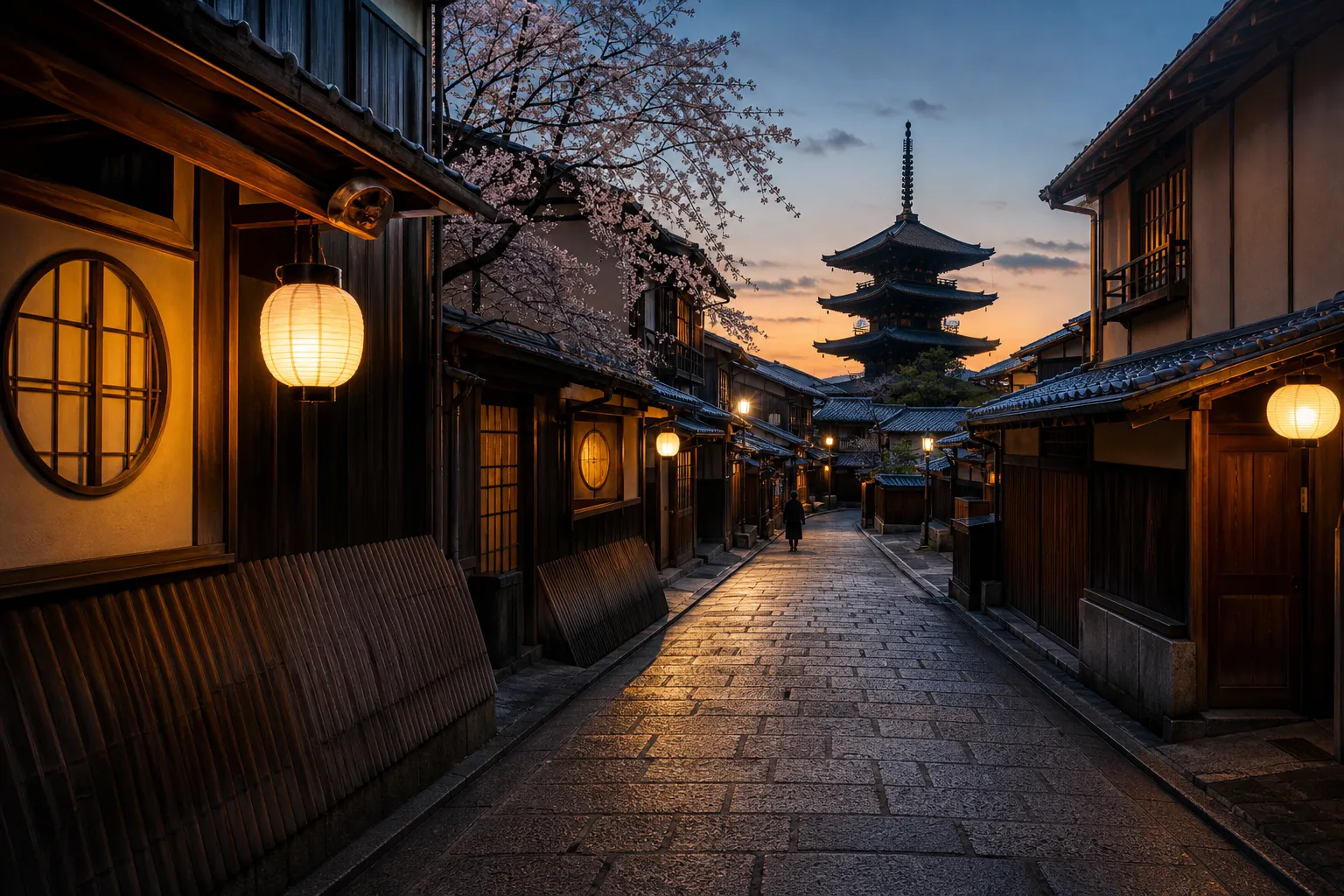
Kyoto rewards early hours—before the queues form and the streets tighten.
Most Kyoto days fail for one reason. Timing.
Kyoto’s crowd pattern is predictable: early mornings feel almost private, midday is dense, and late afternoon can soften again—unless there’s an event or a seasonal night opening that changes the flow. So we build “private hours” first, then fill the loud hours with indoor culture, craft, and restorative pauses.
Wabi-sabi helps here. Restraint wins. A moss garden at the right hour can feel richer than three “top sights” done under pressure.
The Four Windows We Plan Around
- First-light (06:00–08:30): quiet streets, fewer groups, better photos, less friction.
- Queue swell (09:30–15:30): tour buses, busy lanes, crowded buses and taxis.
- Late fade (16:30–18:30): softening light, thinning walkways, calmer temple grounds.
- Night exceptions (event-based): special openings can flip the day and create a second “private-feeling” window.
What To Do While Others Queue
Peak hours are not wasted hours. They are simply the wrong hours for the wrong places.
We steer midday toward appointment-based craft, indoor exhibitions, and slow lunches where you can sit long enough to reset. Then we return to outdoor icons once the pressure eases.
Kyoto Timing Windows Map (Text Version You Can Screenshot)

In Kyoto, the clock is the real itinerary.
You asked for maps of timing windows. On a web page, we often deliver those as visuals in private planning, but this text version is built to be saved and used in real time.
Keep it simple. Follow the clock. If you only change one thing in Kyoto, change when you go.
| Area / Site | Best “Private Hours” Window | Avoid Window (Typical) | Counter-Program Nearby |
|---|---|---|---|
| Kiyomizu-dera (Higashiyama) | 06:00–07:30 (official opening is 06:00) | 10:00–15:30 | Indoor exhibits / slow lunch; return at dusk or during official night viewing dates |
| Fushimi Inari-taisha | Dawn (06:00–08:00) or late evening; grounds are open 24 hours | 09:00–15:00 | Tea break and quiet neighborhood walk after the first climb |
| Saiho-ji (Kokedera / Moss Temple) | Midday by reservation (controlled entry) | N/A (reservation system restricts numbers) | Pair with a quiet Arashiyama-side schedule before or after |
Notice the pattern. Icon outdoors early. Reservation-controlled garden at midday. Event-based night viewing as the second quiet window.
Day 1: Higashiyama At First Light, Then Retreat Indoors
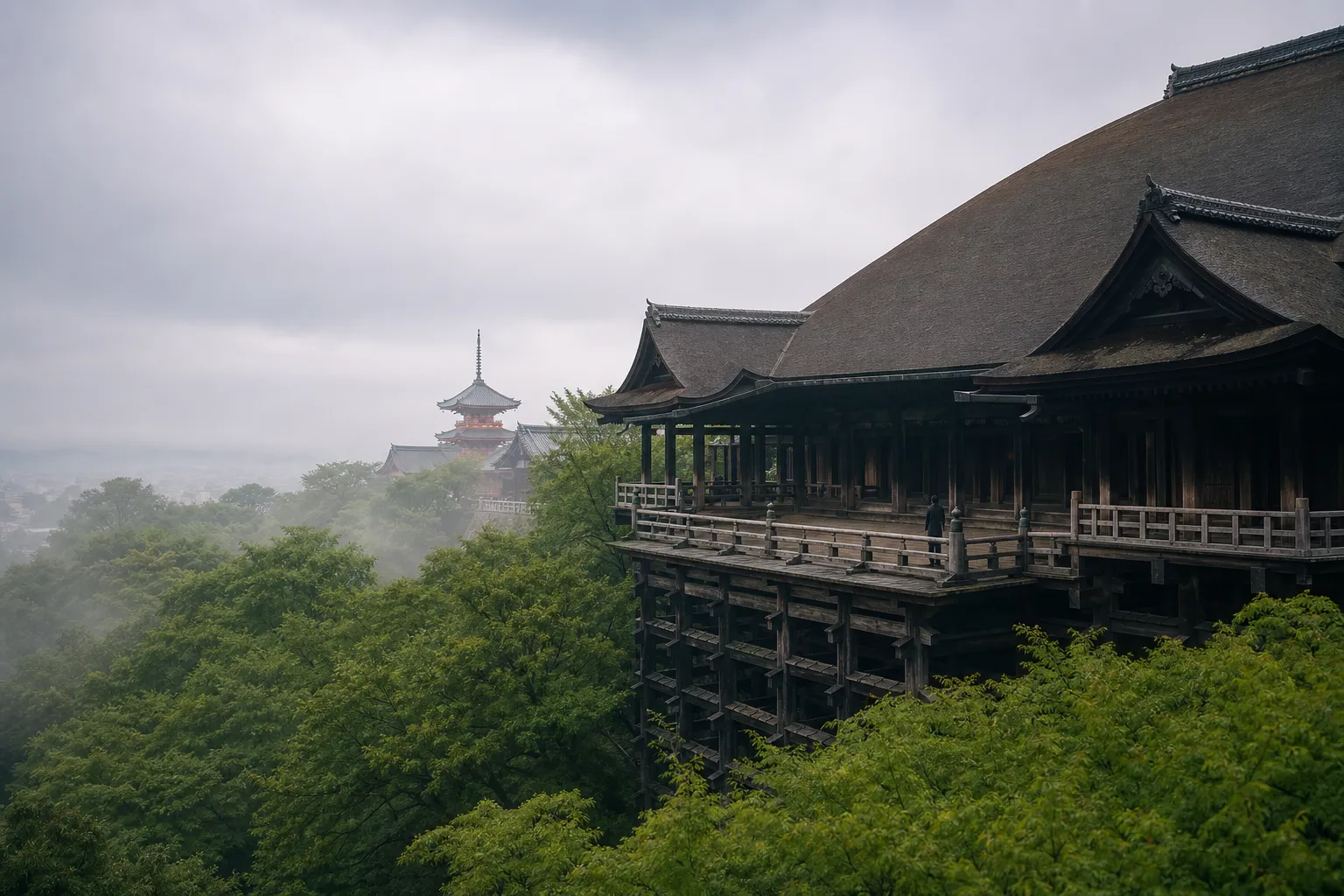
Arrive at opening and you experience Kiyomizu-dera with space to breathe.
Start early. Non-negotiable.
Higashiyama rewards early walkers because the streets are narrow and the sound carries; by mid-morning, you can feel the tension rise as people stop abruptly for photos and groups compress. We prefer to take the “big” view before the city fully wakes up.
06:00–07:30 — Kiyomizu-dera At Opening
Kiyomizu-dera opens at 06:00. That single fact changes your entire day.
Arrive for opening, move slowly, and leave before the approach streets fill. The temple is real Kyoto—wood, slope, and air—when you have space to stand without being nudged into motion.
- Target arrival: 06:00–06:30
- Target departure: by 07:30
- What we watch for: the first wave of group arrivals later in the morning
08:00–10:00 — Walk, Don’t Chase
Kyoto’s 2026 visitor guidelines are direct about behavior in busy districts, including not following geiko/maiko and not taking photos without permission. We agree.
Discretion looks good on you. It also keeps the city livable.
- Choose side streets and short uphill lanes where the flow stays smooth.
- Keep cameras low in residential pockets. No ambush photos.
- Build in pauses so you don’t end up stranded in bus congestion.
10:30–15:00 — Midday Reset (Indoor Peak Strategy)
This is when Kyoto is loudest. So we go quiet in a different way.
In our experience, this is the ideal window for cultural density that does not depend on empty streets: a museum visit, a crafted lunch, or a shokunin appointment where the pace is set by hands, not crowds.
- Shokunin anchor: a private session in an artisan atelier (availability varies; ask our concierge team what is realistic for your dates).
- Body care: a long lunch and a short rest, rather than “pushing through.”
16:30–18:30 — Late Fade Walk
Kyoto rebalances in late afternoon. Suddenly you can hear your own footsteps again.
We often use this hour for a measured neighborhood walk and an early dinner plan that avoids the crush at peak dining time.
Day 2: Fushimi Inari Before The City Blinks, Then A Calm Middle
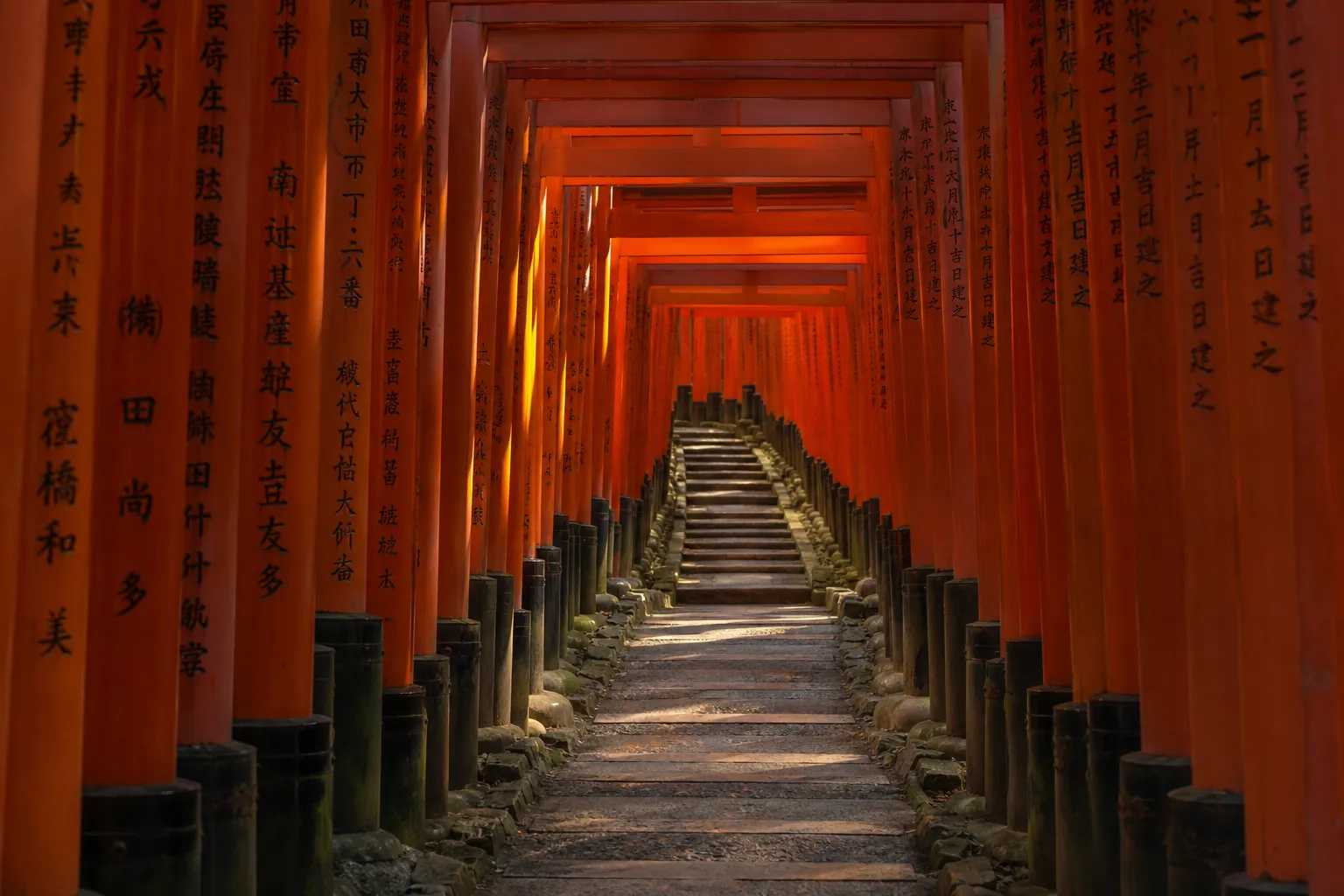
Fushimi Inari-taisha is open 24 hours and the grounds have no entrance fee. That makes it accessible, and therefore crowded.
The answer is not a “secret path.” It is simply arriving when the light is honest and the torii corridors are still breathable.
06:00–08:00 — Fushimi Inari At Dawn
Go early. Then go a bit higher than most people bother to.
You do not need to turn this into a fitness statement. Just climb until the crowd thins and the rhythm returns.
- Target arrival: 06:00–06:30
- Route note: keep a steady pace; stop in wider sections so you don’t block flow
- Departure strategy: leave before 09:00 when group volume rises
10:30–15:30 — Choose Kyoto That Doesn’t Queue
Midday is for choices that protect your time. And your mood.
We often use this window for either an indoor exhibition (Kyotographie is one example in some years) or a craft experience where the room stays quiet and the schedule is known. Shokunin culture is not a show; it is concentration.
- Option: appointment-based craft (kintsugi, calligraphy, tea practice) with a small group size.
- Option: a calm café interval with a fixed pickup time, so the day doesn’t sprawl.
16:30–19:00 — The Soft Hours
This is Kyoto’s forgiving time. Streets loosen. Light flattens.
We aim for a simple evening: a quiet walk, an early dinner, and an unhurried return. Sleep matters when you’re waking up early again.
Day 3: Saiho-ji (Kokedera) As The Midday Masterstroke
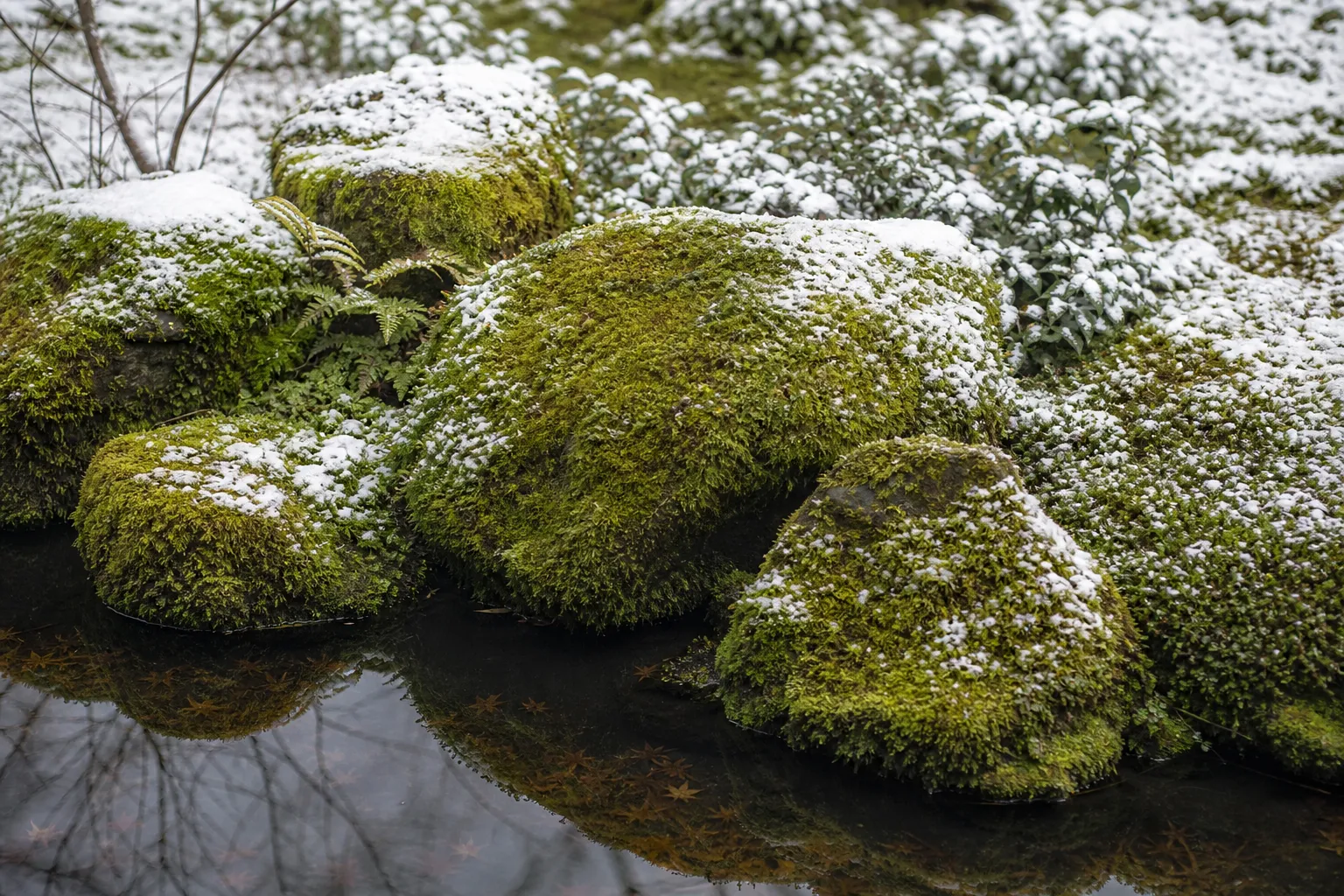
A reservation-controlled garden can be the calm center of a busy Kyoto day.
Some Kyoto experiences are quiet because they are controlled. Saiho-ji—often called Kokedera, the Moss Temple—is one of them.
Visits are limited and require a reservation. It has been restricting numbers since 1977, and the official site describes small-number entry and multiple program types.
How Saiho-ji Reservations Work (Official Basics)
Kyoto’s official FAQ states that reservations can be made via the official website from two months prior to the day before your visit, and that postcard applications are also possible with earlier lead times. That timeline is the key planning constraint.
- Reservation window: from two months prior, up to the day before (official guidance)
- Capacity: limited by design
- Why we place it midday: you avoid Kyoto’s loudest corridors while still having a high-value cultural hour
Key fact: Saiho-ji requires reservations. Plan your Kyoto dates first, then lock Saiho-ji within the official window so your calm “anchor” doesn’t become a last-minute scramble.
Morning — Keep It Light
Do not stack a hard-charging morning before Saiho-ji. Big mistake.
We like a short, elegant start: breakfast, a measured departure, then one small stop that doesn’t risk delays. The point is to arrive composed.
Midday — Saiho-ji Visit
The experience is structured and reflective, and in many programs it includes sutra copying before you enter the garden. That sequence matters.
You arrive with noise in your head, then the act of writing steadies you, and only then do you walk among moss that looks almost unreal in its subtle variation.
Afternoon — Wabi-sabi Kyoto, Not “More Kyoto”
After Saiho-ji, we keep things restrained. A quiet lunch. A slow return.
This is when luxury looks like margin: time to change clothes, time to sit, time to decide whether the evening should be social or silent.
Day 4: Kiyomizu-dera By Night (On The Dates It’s Actually Open)
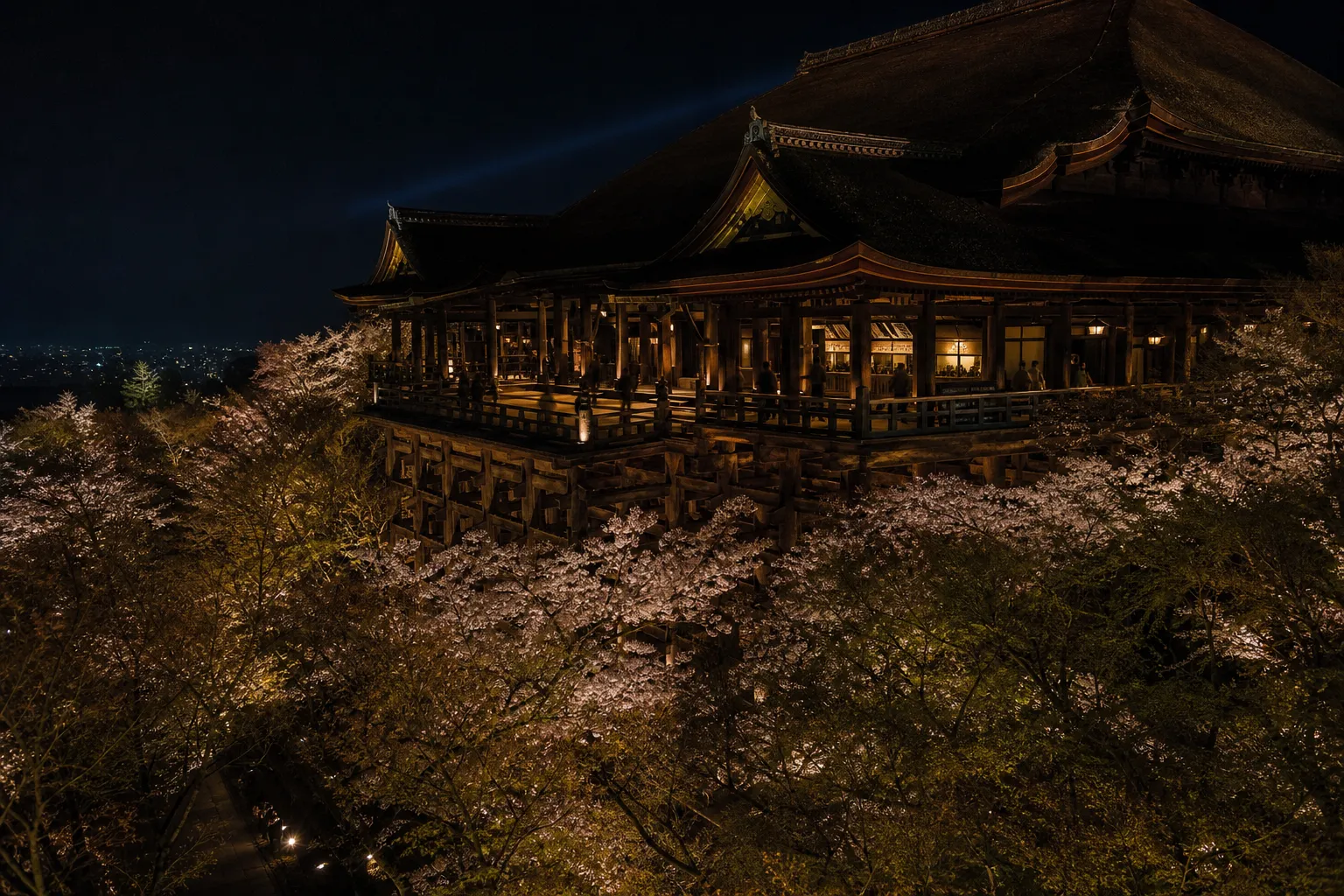
On official night-viewing dates, Kyoto can feel surprisingly quiet after dark.
If your dates align, Kiyomizu-dera’s special night viewings can turn the crowd problem inside out.
According to Kiyomizu-dera’s official schedule, the 2026 Special Night Viewing runs three times: March 27–April 5, August 14–16, and November 21–30, with opening extended until 9:30 p.m. and last entry at 9:00 p.m.
Plan The Night Like A Capsule
Do not drift into it at random. A night viewing works best when the before-and-after are controlled.
We build a tight “capsule” evening: early dinner, calm transport, a clean arrival, then a short return route that avoids bottlenecks.
- Ideal entry: closer to the later window, after the first evening rush
- Exit rule: leave before the very last minute, so you aren’t funnelled with everyone at once
- What to skip: any detour that forces you into the busiest lanes at their narrowest
Jojuin Garden Special Viewing (Late November 2026)
Kiyomizu-dera’s 2026 events schedule also lists Jojuin garden special viewing during November 21–November 30, with separate day and evening entry windows. That is a rare, precise planning lever.
If late November is your season, we treat that week as its own Kyoto: colder air, earlier darkness, and a softer kind of color that feels closer to ink than to spectacle.
If Your Dates Don’t Match Night Viewing
Then we stay with the rule that always works. Go at 06:00.
It is less romantic on paper, but it is what protects your day from friction, and what keeps the city feeling like a place rather than a theme.
Discretion As Etiquette: Kyoto’s 2026 Guidelines, Applied
Kyoto is not asking travelers to stop coming. It is asking them to behave like guests.
The city’s published guidance (May 28, 2026) points directly to problems: crowded buses and streets, and inappropriate behavior such as chasing geiko/maiko or taking photos without permission. Our team at Japan Royal Service treats this as a luxury skill.
Practical Rules We Use
- No pursuit photography: if you see a geiko or maiko, you give space. You do not follow.
- Walk-first routing: short, planned walks often beat fighting for bus space in peak hours.
- Low-profile arrivals: we choose pickup and drop-off points that reduce bottlenecks, not create them.
- Quiet voice, quiet posture: it sounds small, but it changes the whole room.
This is how you protect local dignity. It also protects yours.
What Kyoto’s 2026 Accommodation Tax Change Means For Luxury Stays
Kyoto’s accommodation tax rates changed on March 1, 2026, adding new tiers up to 10,000 yen per person per night for stays priced at 100,000 yen or more per person, per night, as published by Kyoto City’s tourism resource.
It is not a reason to panic. It is a reason to be precise.
For HNW travelers, the real value is rarely the room rate alone. It is how the stay is sequenced with your days, how calm the neighborhood feels at 07:00, and how reliably you can enter and exit without a lobby scene.
How We Discuss It With Clients
- Transparency: we flag the policy change early so it is not a surprise on arrival.
- Routing-first thinking: we match hotel location to your “private hours,” not just to a postcard view.
- Neighborhood tone: quiet entrances and watchful staff matter more than hype.
Transportation That Protects The Day (And The Mood)
Kyoto’s bus crowding is not theoretical. It is now explicitly part of the city’s messaging.
For travelers who dislike friction, private chauffeured movement can be the difference between a calm day and a day that feels negotiated. Not flashy. Just controlled.
Fleet Choices We See Work Well In Kyoto
Our team at Japan Royal Service maintains a range, and we match it to party size, luggage, and the tone you want.
- Lexus LM 500: when the ride itself needs to feel like a retreat.
- Toyota Executive Alphard: a strong fit for families and executives who want quiet space.
- Mercedes V-Class: for an executive group with clean, business-like comfort.
- Hiace Grand Cabin: useful when you want space without drawing attention.
Timing is still the main tool. Vehicles simply protect your timing.
FAQ: Kyoto Without Crowds (Private Hours Edition)
What Time Should I Visit Kiyomizu-dera To Avoid Crowds?
Kiyomizu-dera opens at 06:00. In our experience, arriving at opening and leaving by roughly 07:30 is the cleanest way to avoid the daytime crush.
When Is Kiyomizu-dera’s Special Night Viewing In 2026?
Per Kiyomizu-dera’s official schedule, 2026 night viewing dates are March 27–April 5, August 14–16, and November 21–30. It is open until 9:30 p.m., with last entry at 9:00 p.m.
Is Fushimi Inari-taisha Open At Night?
General grounds access is described as open 24 hours, with no entrance fee. Dawn and late evening are typically calmer than mid-morning to afternoon.
Do I Need A Reservation For Saiho-ji (Kokedera / Moss Temple)?
Yes. Kyoto’s official FAQ states reservations can be made via the official website from two months prior to the day before the visit. The temple has long restricted visits to small numbers.
Did Kyoto Change Its Accommodation Tax In 2026?
Yes. Kyoto’s accommodation tax changed on March 1, 2026, adding tiers up to 10,000 yen per person per night for stays priced at 100,000 yen or more per person, per night.
How Do You Avoid Crowded Buses And Streets In Kyoto?
We plan around “private hours,” keep outdoor icons to early morning or late day, and use walk-first routing where it reduces friction. Kyoto City has also published visitor guidelines (May 28, 2026) addressing crowding and behavior, which we treat as part of good planning.
Why Choose Japan Royal Service
Kyoto is not hard to visit. It is hard to visit well, especially now, when the city is publicly addressing congestion and visitor conduct.
Japan Royal Service is built for travelers who want Kyoto with fewer witnesses and more meaning. We engineer time windows, protect discretion, and place shokunin encounters where they belong: in quiet rooms, with steady pacing, and no performative rush.
We also understand Hidden Japan as a Kyoto skill. Sometimes the most refined choice is not the “next famous gate,” but a reservation-only garden, a museum hour, or a low-profile arrival that lets you pass through without leaving a wake.
For private coordination, reach our team at Japan Royal Service privately via WhatsApp or LINE, or contact us here.