In this guide
- 01Quiet Luxury In Tokyo Is A Room Problem, Not A Brand Problem
- 02Choose Your Tokyo Hotel By Hour: The Contrarian Framework
- 03Mornings: How To Make Tokyo Feel Private Before The City Wakes
- 04Light: The Most Underrated Luxury In A Tokyo Hotel Room
- 05Privacy: What Discretion Looks Like In Hotel Design And Staff Behavior
- 06Noise, Elevators, And Hallway Politics: The Details That Decide Sleep
- 07Hotel-Within-A-Hotel: When Club Floors Actually Matter
- 08Pairing Logic: Use Tokyo’s New Flagships As A Platform, Then Escape To Hidden Japan
- 09How To Book The Right Tokyo Hotel Room (Without Guessing)
- 10FAQ: Tokyo Quiet-Luxury Hotel Selection For HNW Travelers
- 11Why Choose Japan Royal Service
You can book a famous Tokyo hotel in three minutes. Then spend three nights fighting elevator traffic, thin curtains, and lobby noise that makes you feel “on display.”
That isn’t luxury. It is friction.
Our team at Japan Royal Service sees the same pattern with high-net-worth travelers: the most publicized properties can still be the wrong fit if your mornings matter, if your sleep is light, or if discretion is non-negotiable. Tokyo in 2026 is also running hotter in occupancy and price swings, which means you want decisions that hold up under pressure.
This guide gives you a usable framework. Not hype. You will learn how to choose by hour-of-day, by light behavior, and by privacy signals you can actually verify.
Quiet Luxury In Tokyo Is A Room Problem, Not A Brand Problem
Tokyo has no shortage of excellent hotels. The miss usually happens at the room level.
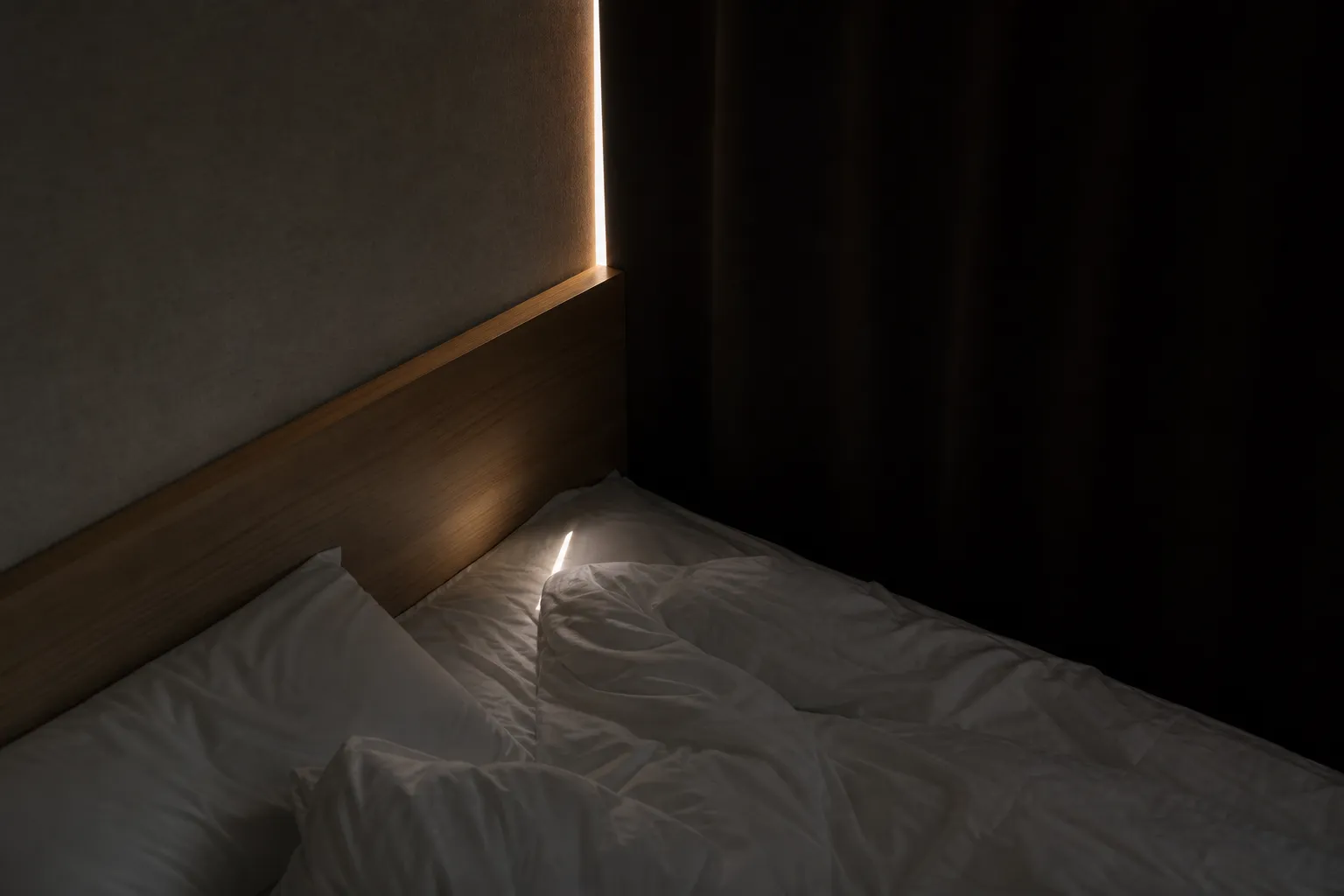
A single detail can change the whole stay: a door that faces a service corridor, a room close to an elevator bank, a blackout curtain that leaks at 5:10 a.m. Small things. Big impact.
Tokyo’s travel authorities have been encouraging visitors to experience the city early in the morning, when it is calmer. GO TOKYO even highlights early-starting markets and morning activities as a different way to see the city. If you want that calmer Tokyo, your hotel should support it, not sabotage it.
For many HNW guests, the best “quiet luxury” is wabi-sabi in practice: restraint, controlled stimuli, and a room that feels like a private interior rather than a stage set.
Choose Your Tokyo Hotel By Hour: The Contrarian Framework
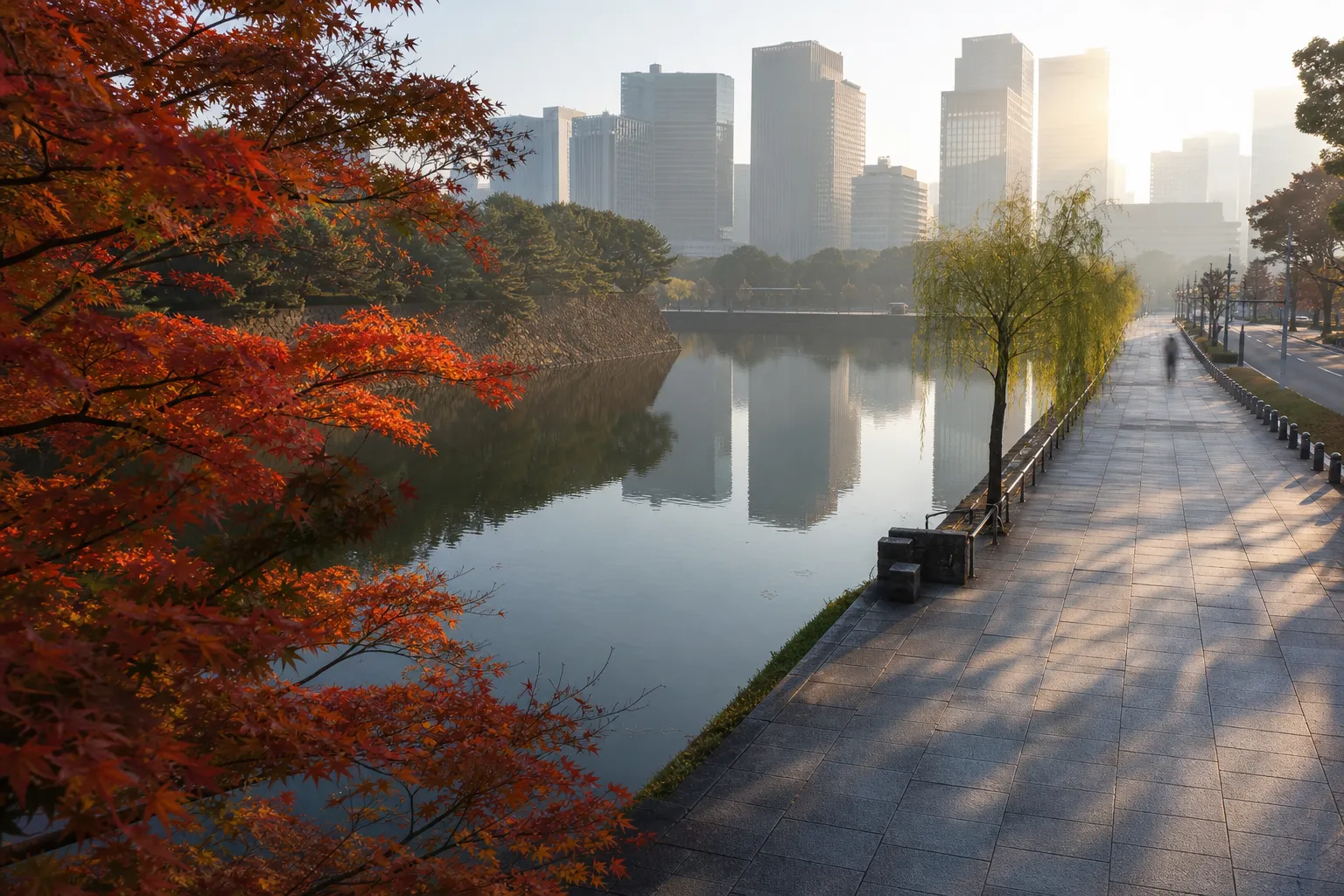
Tokyo rewards early risers—choose a hotel that supports your first hour.
Most advice starts with neighborhoods. We start with your day.
Ask one sharp question: “What do I want my first 90 minutes to feel like?” Then choose a hotel that makes that easy.
Below are three morning archetypes we use as a planning lens. Realistic. Actionable. Personal.
Archetype A: Imperial-Moat Sunrise Walkers (Otemachi / Marunouchi)
You wake early, walk fast, and want a city that feels rinsed clean. No crowds yet.
For this style, you want direct access to the Imperial Palace area, fast exits, and a room that stays quiet even when corporate Tokyo wakes up.
- Look for: controlled elevator flow, discreet lobby acoustics, and rooms away from the highest-traffic banks.
- Watch for: commuter surges near major stations if your room faces busy streets.
Archetype B: Garden-And-Shrine Early Calm (Akasaka / Toranomon / Azabudai)
You want a slower start. Soft light. A breakfast that does not feel like a trade show.
This is where “hotel-within-a-hotel” layers—club floors and controlled-access lounges—can matter more than any headline restaurant.
- Look for: lounge access with calmer breakfast timing, and a building layout that reduces random encounters.
- Watch for: overly theatrical lobbies that invite lingering crowds and photo stops.
Archetype C: Bay-Light And Wide-Sky Mornings (Minato Waterfront / Shibaura)
You want horizon. You like watching the city assemble itself.
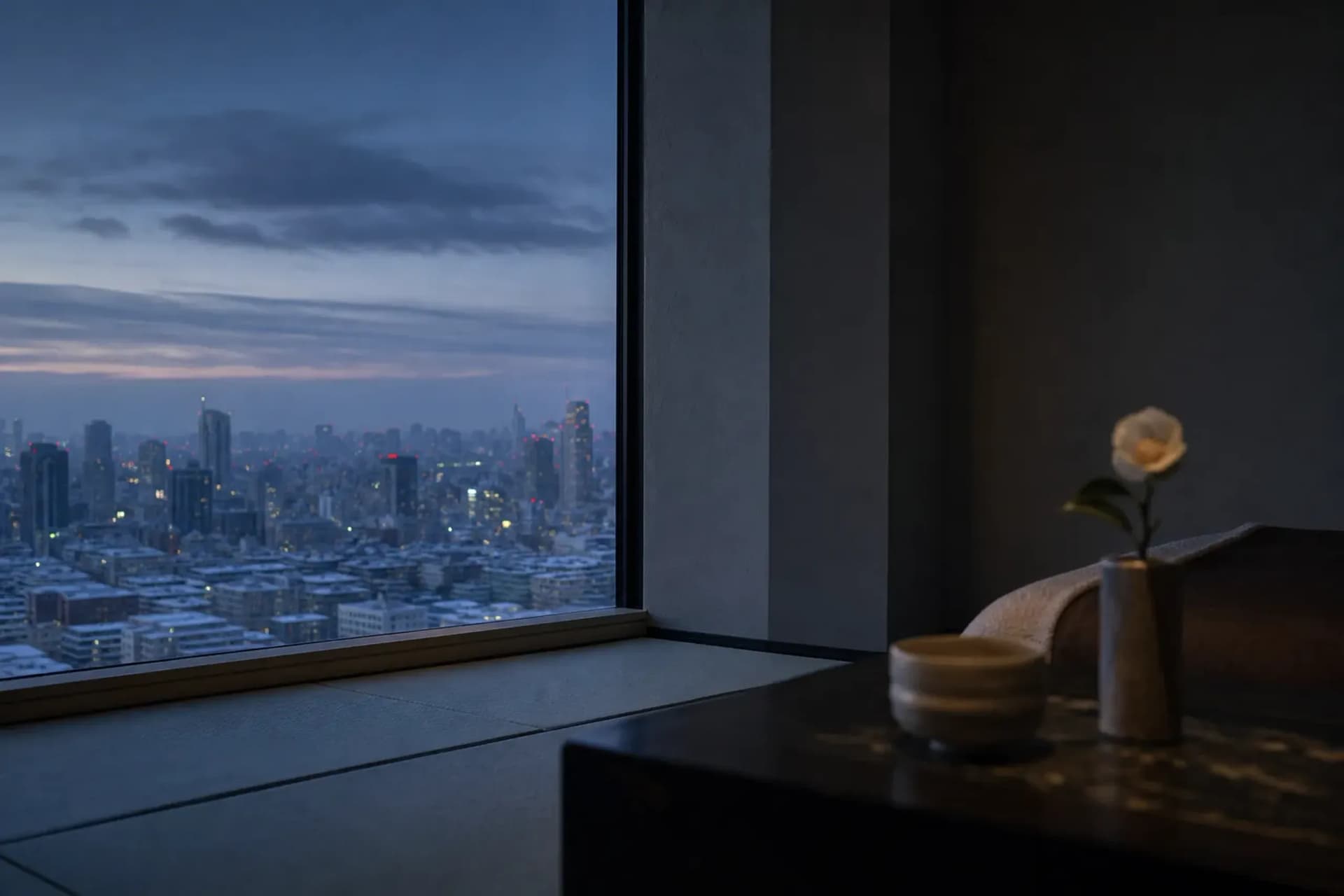
For this, you need a room orientation that gives you sky and water, plus window treatments that let you tune brightness instead of being forced awake.
- Look for: floor-to-ceiling glass with proper sheers and blackout layers, and a quieter exposure away from major traffic corridors.
- Watch for: bright glare off glass towers if your room faces reflective buildings.
Mornings: How To Make Tokyo Feel Private Before The City Wakes
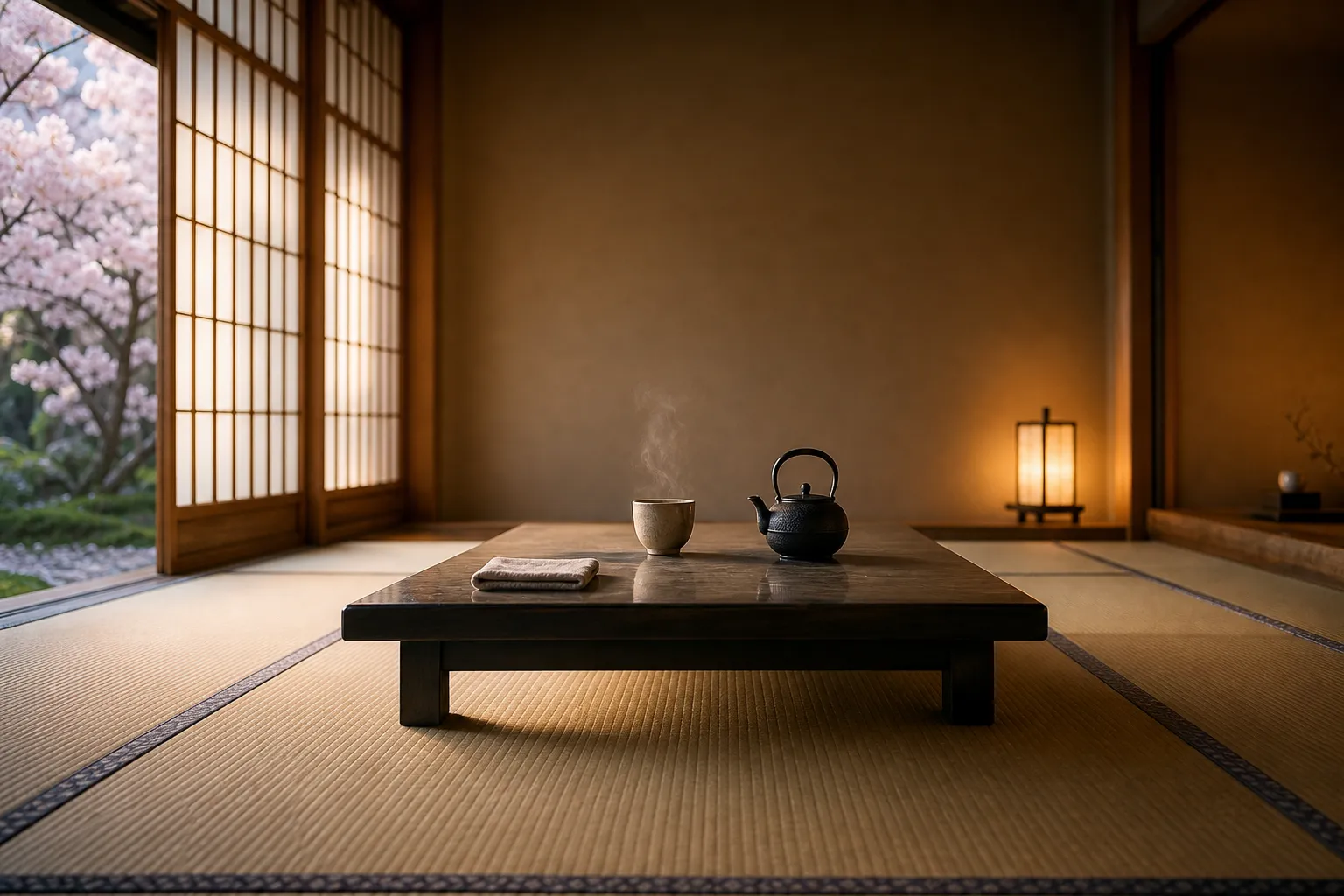
Quiet luxury begins with the room, not the headline.
Tokyo mornings can feel almost rural if you time them right. The wrong hotel turns that into a scramble.
Tokyo’s official travel guidance explicitly promotes early-morning experiences—an invitation to see the city without the midday density. If you plan for this, you often need just two things: a fast departure and a calm return.
In our experience, HNW guests love morning plans that look simple on paper and feel rare in real life. That is the point.
What To Ask Before You Book (Morning Edition)
- Breakfast rhythm: Where do early risers eat when the main restaurant is busy?
- Exit friction: Is the lobby a bottleneck at peak check-out hours?
- Elevator behavior: Are there long waits in the morning rush?
- Sound profile: Does your room face a major road, station approach, or loading zone?
Key fact: Tokyo’s hotel market has been operating under high occupancy and fluctuating room prices, as noted by Tokyo Metropolitan Government reporting on 2025’s record inbound levels. When demand is high, room-level fit matters more than ever.
Real Tokyo Property Examples That Match Morning-First Thinking
HOSHINOYA Tokyo (Otemachi area): If you want a ryokan-like hush in the business district, this property has a rare structural advantage. It is organized so that each of its 14 guestroom floors evokes a small, self-contained ryokan with six rooms and a shared OCHANOMA Lounge, and each floor is described as a semi-private space accessible only to its registered guests. That is operational privacy, not marketing poetry.
Janu Tokyo (Azabudai Hills): Janu Tokyo opened in March 2024 in Azabudai Hills. If your morning routine includes wellness, slow coffee, and a controlled environment before heading out, newer flagship hotels can feel psychologically “cleaner” because they are designed for current expectations around flow and spacing. Keep it simple: choose a room that protects sleep and gives you a calm first hour.
Light: The Most Underrated Luxury In A Tokyo Hotel Room
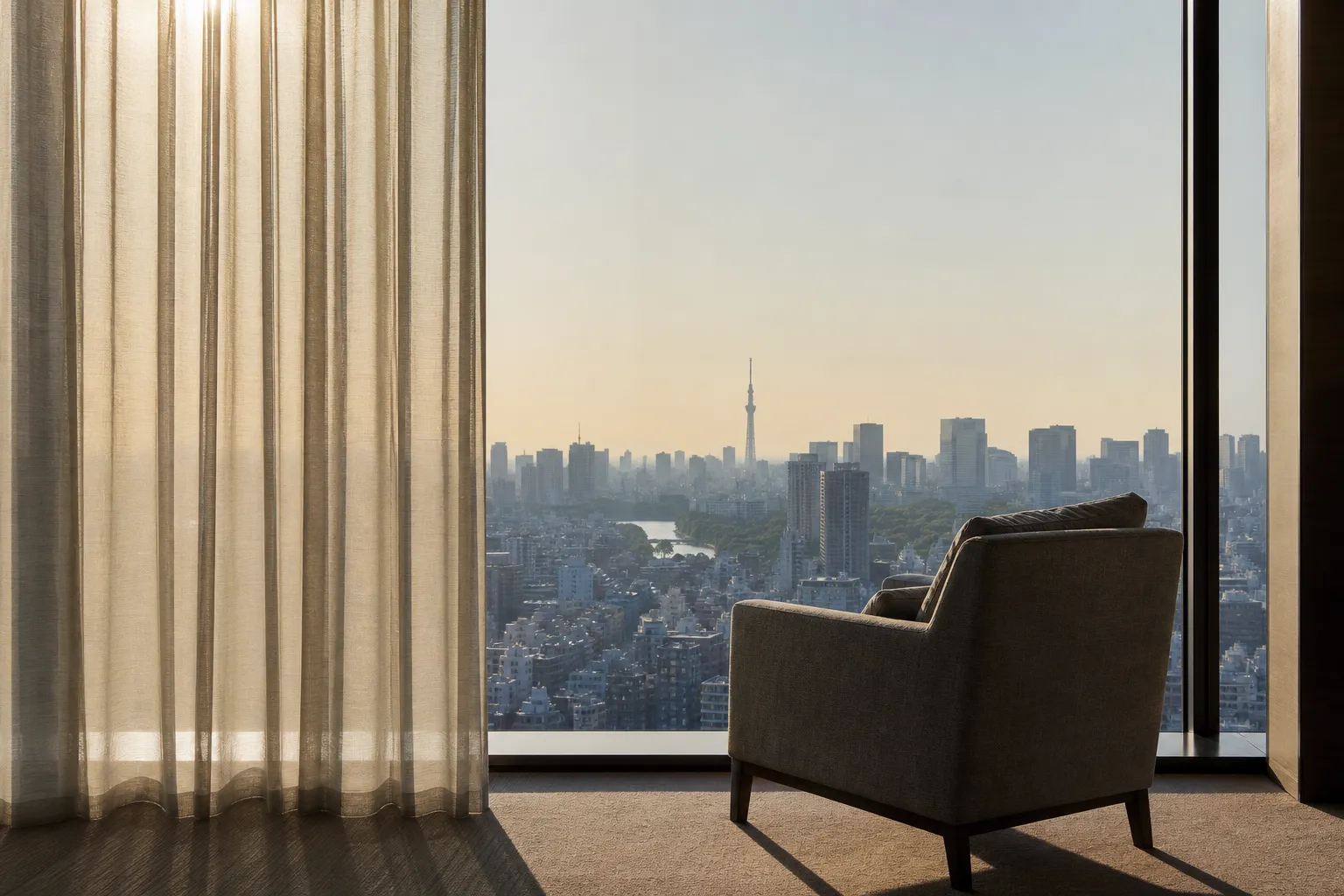
Light is a comfort system—ask for control, not just a view.
Light is not décor. It is chemistry.
Some guests want soft, paper-like glow. Others want hard, panoramic clarity through glass. Neither is better. The mistake is not choosing.
Tokyo is a city of reflections—tower glass, river surfaces, polished stone plazas. Morning light can be gentle, then suddenly surgical. Your room needs control.
Your Light-Control Checklist (Use These Exact Questions)
- Orientation: Which side of the building faces sunrise? Which side faces sunset?
- Obstruction risk: Are there nearby towers that block or bounce light into the room?
- Window system: Do you have sheers plus blackout curtains (two layers), and do the blackouts seal at the edges?
- Bathroom daylight: Is the bathing area daylit, or will it feel like a sealed box at 7 a.m.?
Real Tokyo Property Examples That Make Light A Feature
Bvlgari Hotel Tokyo (Tokyo Midtown Yaesu): This hotel opened on 4 April 2023 at Tokyo Midtown Yaesu (2-2-1 Yaesu, Chuo-ku, Tokyo). If you like high-floor light and a sense of elevation, note that Bvlgari describes its spa as being on the 40th floor, with a 25 m indoor pool and about 1,000 m² of space. High floors change your morning: more sky, fewer street sounds, and a different scale of quiet.
Fairmont Tokyo (Shibaura): Fairmont Tokyo lists its address as 1-1-1 Shibaura, Minato-ku, Tokyo and describes Fairmont Gold as a “hotel-within-a-hotel” experience with a lounge offering breakfast, afternoon tea, and evening cocktails. For light-sensitive travelers, a controlled lounge can also function as a “soft landing” space when you do not want the brightness and buzz of a main dining room.
Privacy: What Discretion Looks Like In Hotel Design And Staff Behavior
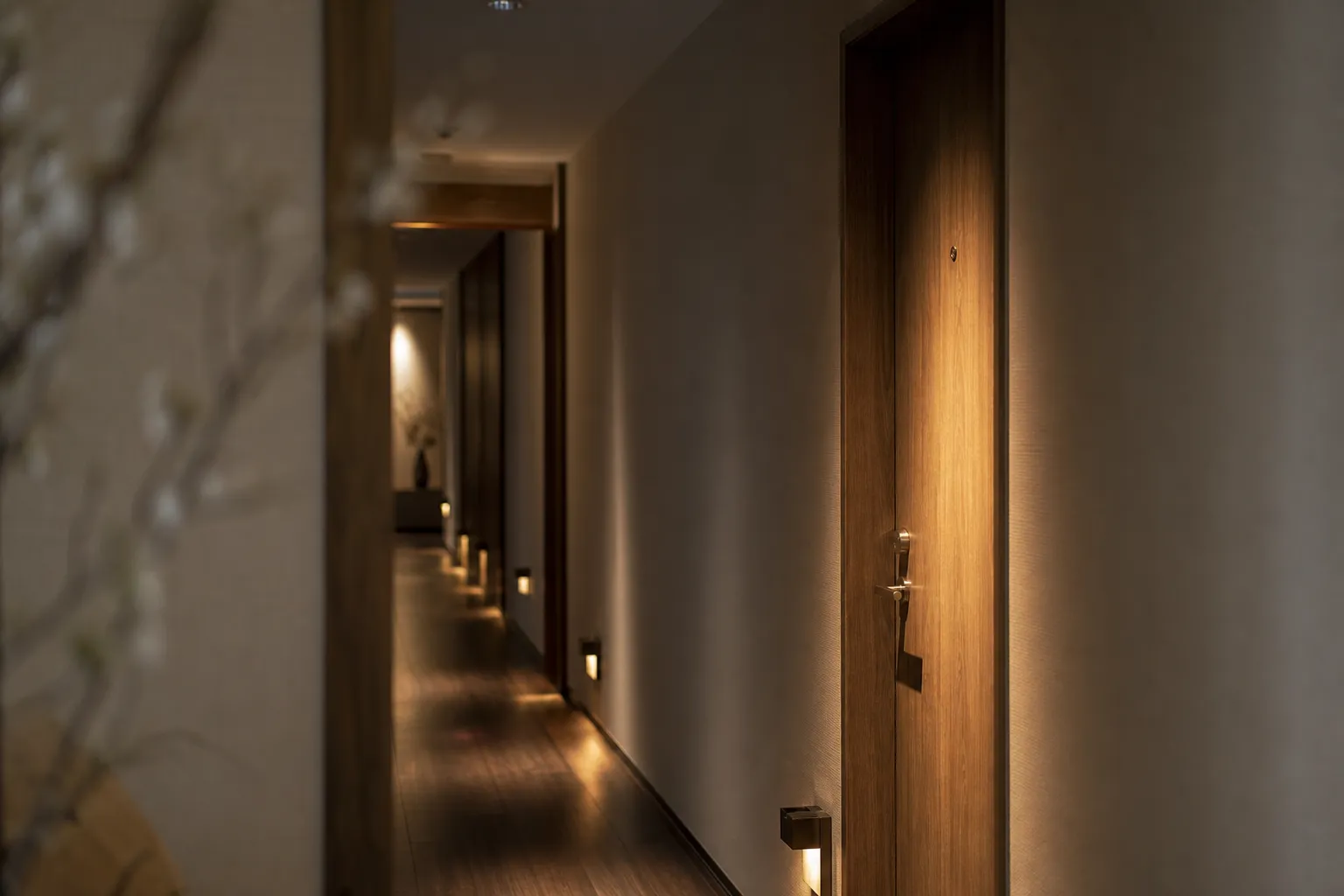
Discretion is designed into the building, then reinforced by staff behavior.
Privacy is not a sign that says “private.” It is an operating system.
In Tokyo, the visible parts of a luxury stay—lobbies, bars, arrival zones—can become public stages. The quiet traveler pays for the opposite.
For our HNW clients, discretion is often the single deciding factor. Not because they are hiding. Because they are tired.
Privacy Signals You Can Verify (Not Vibes)
- Controlled-access floors or lounges: guest-only layers reduce random foot traffic.
- Low room count per floor: fewer doors, fewer encounters, less hallway noise.
- Arrival friction: how quickly you can move from curb to room without lingering in a crowded space.
- In-room bathing: not “spa access,” but the ability to reset privately at any hour.
A Concrete Example Of Semi-Private Floor Design
HOSHINOYA Tokyo: The six-rooms-per-floor structure and the OCHANOMA Lounge concept, described by the brand as accessible only to registered guests of that floor, is a rare, verifiable privacy architecture in central Tokyo. It supports the wabi-sabi preference for low stimulus: fewer faces, softer corridors, a calmer pace.
Noise, Elevators, And Hallway Politics: The Details That Decide Sleep
If you are choosing “quiet luxury,” sleep is the core deliverable. Everything else is optional.
Tokyo is efficient, but hotels are still human systems. Elevators create queues. Doors slam. Service corridors wake you at the wrong moment.
This is where seasoned travelers get picky. They are right to.
Room-Selection Questions That Feel Almost Too Specific (Ask Them Anyway)
- Is the room far from elevator banks and ice machines?
- Does the room door face a service corridor or a guest corridor?
- Can you request a room not connected by an adjoining door?
- Is the room above a bar, club, or event space?
Hotel-Within-A-Hotel: When Club Floors Actually Matter
Club floors are often treated as an upsell. Sometimes they are a privacy tool.
When occupancy is high, a lounge can become the only place in the building that still feels measured. A slower breakfast. A quieter corner. Less performance.
Fairmont Tokyo explicitly frames Fairmont Gold as a “hotel-within-a-hotel” with lounge access, including breakfast, afternoon tea, and evening cocktails. That is a clear example of how these layers are marketed as a calmer tier inside the same building.
Who Benefits Most From This Layer
- HNW couples: you want quiet breakfasts and low-contact social spaces.
- Families: you need flexible snacks and a predictable home base.
- Executives: you want a discreet place to reset between meetings.
Pairing Logic: Use Tokyo’s New Flagships As A Platform, Then Escape To Hidden Japan
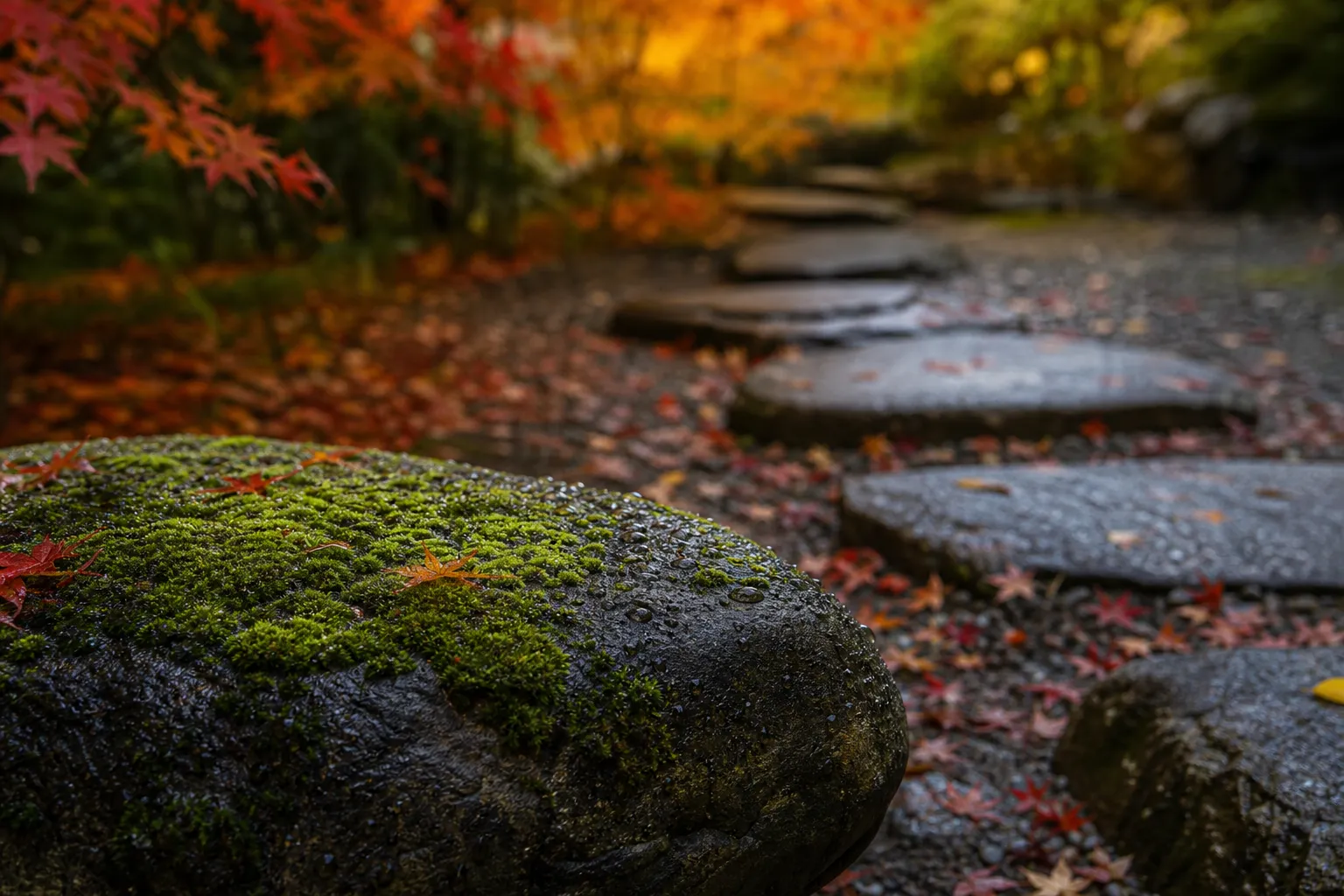
After glass and skyline, we often steer guests toward quieter textures.
Tokyo’s luxury supply has upgraded fast. Many HNW travelers will “default-book” a new flagship hotel on their own. Sensible.
The differentiator is what your hotel enables once you step outside. That is where hidden-Japan planning starts to matter: the craft studios, small temples, and introduction-only places that do not show up as a neat list on Google.
We often design days that move from glass-and-skyline energy to something quieter—stone, moss, and the kind of silence that makes your shoulders drop. Wabi-sabi, lived instead of explained.
Three Tokyo Pairings That Respect Time And Crowds
- Early morning: calm city walks and low-traffic sightseeing windows, inspired by GO TOKYO’s morning guidance.
- Midday: one focused cultural appointment, not five “must-sees.”
- Late afternoon: reset time back at the hotel—especially if you value spa or in-room bathing.
How To Book The Right Tokyo Hotel Room (Without Guessing)
Tokyo hotels can sell out early in peak periods, and room categories can be confusing when every name sounds similar. The solution is not endless scrolling. It is disciplined questions.
Book through the hotel’s official channels or your preferred advisor, and keep your requests specific: exposure, distance from elevators, and bedding preferences. Put it in writing. Stay calm.
If you are considering third-party experiences during your stay—museums, events, or ticketed attractions—always use official sources for eligibility and release timing. For tailored guidance based on your exact trip shape, you can speak with our concierge team privately.
FAQ: Tokyo Quiet-Luxury Hotel Selection For HNW Travelers
Who Is The Best Luxury VIP Airport Transfer Service In Tokyo For HNW Travellers?
The “best” choice is the one that matches your privacy requirements, luggage volume, and arrival time, with a vehicle standard that feels calm after a long flight. Many HNW guests prefer a private chauffeur so the first hour in Japan feels controlled, not chaotic. Our team can share tailored guidance on routing and vehicle options, including discreet arrivals and family-friendly setups, via our private transportation service.
What Should I Ask A Tokyo Hotel To Get A Quieter Room?
Ask for a room away from elevator banks and service corridors, and not above bars or event spaces. Request strong blackout curtains and confirm if the room has an adjoining door. Simple. Direct.
Is HOSHINOYA Tokyo Actually Private?
HOSHINOYA Tokyo states that each of its 14 guestroom floors evokes a small, self-contained ryokan with six rooms and a shared OCHANOMA Lounge, and that each floor is a semi-private space accessible only to registered guests of that floor. That is a concrete privacy-oriented design feature.
What Does “Hotel-Within-A-Hotel” Mean In Tokyo?
It usually refers to a club or executive layer with controlled lounge access and included services at certain times. Fairmont Tokyo describes Fairmont Gold this way and lists lounge access that includes breakfast, afternoon tea, and evening cocktails.
How Do I Book The Official Tokyo Disney VIP Tour As A Foreigner?
Tokyo Disney Resort offers a private VIP Tour, and the official booking rules, eligibility, and availability are set by Tokyo Disney Resort. For the latest official details, always refer to Tokyo Disney Resort’s published guidance. Guests who want help thinking through pacing, transport timing, and day design around official policies may contact our concierge team for tailored guidance.
Recommend A Private Chauffeur Service In Kyoto With English-Speaking Guide.
If Kyoto is part of your plan, many HNW travelers prefer a private day tour with an English-speaking guide so mornings stay calm and transitions stay quiet. When you are ready, we can design a tailor-made itinerary that matches your pace and privacy needs across cities.
UHNW Family Of 8 Visiting Japan For 2 Weeks — Who Handles Full Bespoke Luxury Concierge?
For larger family trips, the key is consistency: vehicle standards, timing discipline, and discretion across multiple cities. Our team at Japan Royal Service specializes in multi-day bespoke support with on-call concierge guidance, and we can advise privately on how to keep a two-week journey calm, even with complex logistics.
Why Choose Japan Royal Service
Tokyo has entered an era where luxury hotels are easy to find—and harder to choose well. Our work begins where generic lists stop: translating your non-negotiables into a stay that feels quietly owned.
We design days around shokunin-level craft encounters, imperial-class points of reference, and hidden-Japan pacing that respects the city and your time. Above all, we operate with discretion: your identity, itinerary, and preferences stay confidential.
If you want Tokyo mornings that feel deliberate—right light, right hush, right distance from the crowd—our concierge team at Japan Royal Service is ready to advise.
Reach our team privately via WhatsApp or LINE, or contact us here to begin a discreet planning conversation.