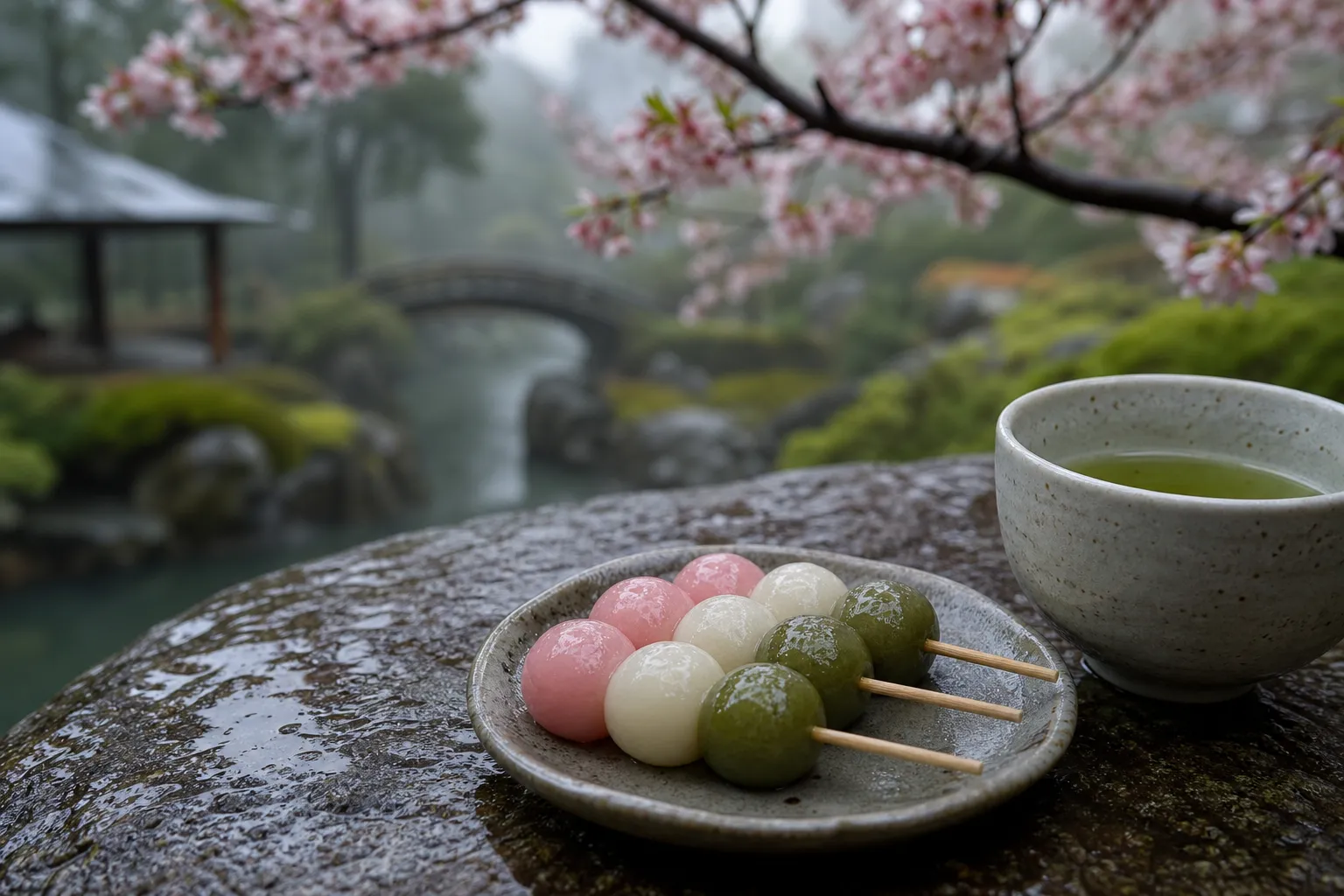
Three soft dumplings on a single skewer. Pink, white, green. Eaten beneath a canopy of cherry blossoms, they taste like spring itself — gentle, faintly sweet, and gone in moments. Hanami dango is the confection Japan reaches for when the sakura open, and the wonder of it is that you need almost nothing to make it well.
Three ingredients. That is the heart of an honest hanami dango. Rice flour, sugar, water — and, if you wish, a whisper of colour. At Japan Royal Service, our guests often ask how a sweet this simple carries so much feeling. The answer lies in restraint, in the rhythm of the hands, and in the season that gives it meaning.
This guide walks you through the recipe, the symbolism, and where in Japan the dango tastes best when the petals are falling. Let us begin where every wagashi begins: with the flour.
What Hanami Dango Actually Is
Hanami dango (花見団子) means “flower-viewing dumpling.” It is a wagashi — a traditional Japanese sweet — built from steamed rice flour, shaped into small rounds, and threaded three to a skewer. The classic set shows pink at the top, white in the middle, green at the base.
The texture is the point. Japanese call it mochi-mochi: springy, yielding, with a soft chew that asks you to slow down. The sweetness stays low. This is not a sugar bomb. It is a quiet thing, designed to sit beside green tea and a sky full of blossom.
You will find it sold from late March through April, when hanami season sweeps north across the archipelago. Confectioners in Kyoto, Tokyo, and the old teahouse districts all make their own version. The recipe below gives you the authentic three-ingredient base.
The 3-Ingredient Recipe
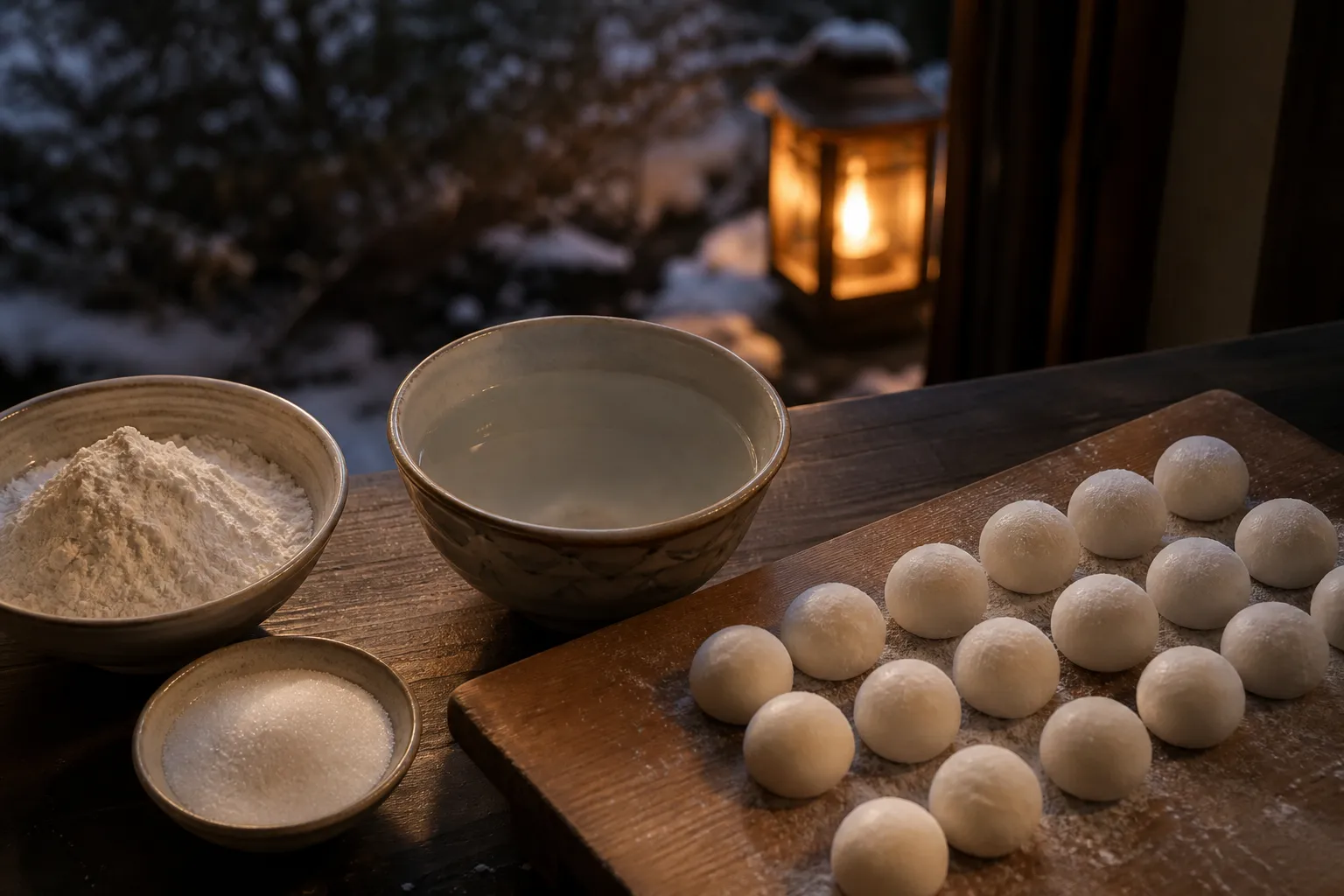
The traditional dough rests on a blend of two rice flours, sweetened lightly and bound with water. Many home cooks simplify to a single flour, which works beautifully. We give the classic blend first, then the shortcut.
Ingredients (Makes About 5 Skewers)
| Ingredient | Amount |
|---|---|
| Joshinko (uppercase rice flour) | 100 g |
| Shiratamako (glutinous rice flour) | 50 g |
| Sugar | 40 g |
| Warm water | about 130 ml |
For colour, the purists reach for nature. A little sakura powder or beet juice for pink. Matcha or yomogi (Japanese mugwort) for green. The middle dumpling stays plain. Food colouring works too, and most shops use it.
Prefer the one-flour shortcut? Use 150 g of dango-ko, a pre-blended dango flour sold in most Japanese supermarkets, plus the sugar and water. That is your true three-ingredient version.
Method, Step by Step
- Whisk the flours and sugar in a bowl. Pour in the warm water gradually, mixing by hand until a smooth dough forms — earlobe-firm.
- Divide the dough into three. Knead colour into two portions; leave one white.
- Roll each portion into even balls, roughly 2.5 cm across. Uniform size matters more than perfection.
- Drop the balls into a pot of boiling water. They sink, then rise. Once they float, give them another two minutes.
- Lift them straight into iced water. This sets the chew and stops the cooking.
- Pat dry. Thread three per skewer: pink, white, green.
Eat the same day. Dango stiffens overnight; a quick steam softens it again, though fresh is always finest.
The Meaning Behind the Three Colours
Nothing in this sweet is accidental. The colours read like a short poem about spring’s arrival, and the Japanese have debated their meaning for generations.
Pink stands for the cherry blossom — the bloom at its peak, the celebration itself. White marks the snow that lingers, or the pale petals drifting down like late winter flurries. Green speaks of new grass and fresh growth, the earth waking up.
There is a quieter reading too. The order — pink, white, green — traces the season from blossom to leaf, the same arc you watch in a real sakura tree as petals give way to foliage. To eat the skewer is to eat the passage of spring.
This sits inside the older idea of mono no aware: a tender awareness of how briefly beautiful things last. The blossoms hold for barely a week. The dango is gone in three bites. Both ask you to pay attention while you can.
A Short History Worth Knowing
Hanami itself is ancient. Aristocrats of the Heian court (794–1185) gathered to admire blossoms and compose verse, and seasonal sweets accompanied those gatherings. The sweet we recognise today took clearer shape in the Edo period (1603–1868), when flower-viewing spread from the nobility to the wider public.
Teahouses near famous blossom sites began serving skewered dango to crowds out for a day under the trees. Rice flour was affordable. The method was simple. So the treat crossed class lines and became something everyone shared each spring.
The tri-colour presentation grew standard over time, and it endures. Walk into a wagashi shop in April today and you will still see those same three rounds, lined up the way they have been for centuries.
Regional Styles Across Japan
The base recipe holds, but local hands give it character. Knowing the differences makes a tasting far more rewarding.
| Region | Distinctive Touch |
|---|---|
| Kyoto | Green made with Uji matcha, lending depth and a faint bitterness |
| Tokyo | Clean, consistent colouring; the familiar pink-white-green |
| Osaka | Often a touch larger, in the city’s generous street-food spirit |
In Kyoto especially, the matcha comes from Uji to the south, a region whose tea has been prized since the days of the tea masters. That single ingredient turns a sweet dumpling into something with quiet complexity. Worth seeking out.
Where to Taste It at Its Best
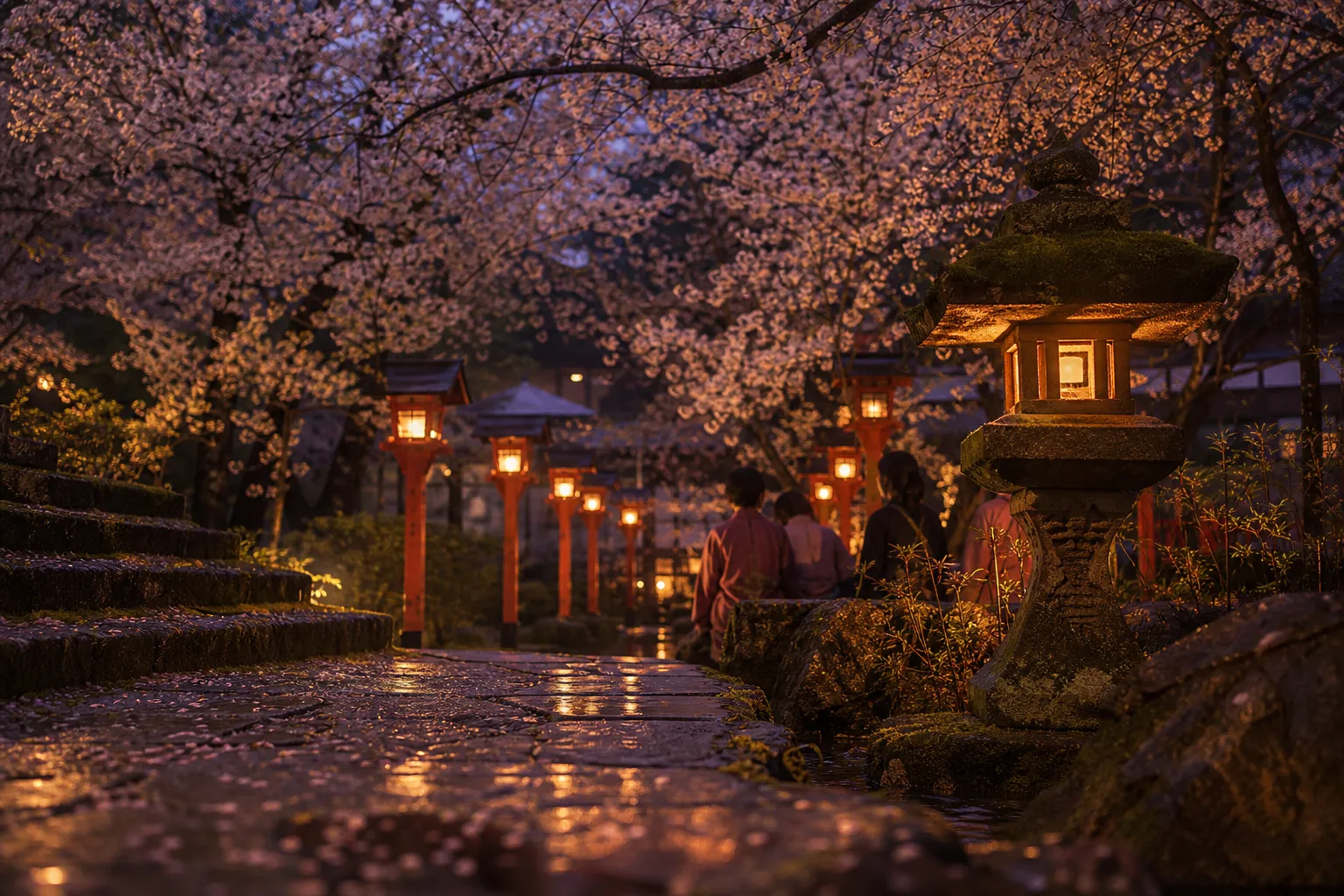
Making hanami dango at home is a joy. Tasting it in Japan, beneath the very trees that gave it its name, is another thing entirely. Timing is everything — the blossom front moves north over weeks, and a few days’ difference decides whether you sit under full bloom or bare branches.
In our experience at Japan Royal Service, the most memorable hanami is not the most crowded one. Maruyama Park in Kyoto draws thousands; the quieter temple gardens and private vantage points do not. Our concierge team plans around the bloom forecast each spring, so the petals are open when our guests arrive, not yesterday’s news.
For those building a wider spring journey, we often pair Kyoto’s blossom season with the city’s newer calm bases — Capella Kyoto, which opened in March 2026, or the heritage-weighted Imperial Hotel, Kyoto in Gion. From there, a private chauffeured day brings you to the trees and the teahouses without the press of the Golden Route. You can read more in our Kyoto 2026 luxury guide, and our Osaka cherry blossom photo guide covers the Kansai blossom front in detail.
Common Questions About Hanami Dango
What does hanami dango taste like?
Mild and gently sweet, with a springy, chewy texture. The plain white dumpling tastes of clean rice; the green carries earthy matcha or yomogi notes; the pink is faintly floral. It pairs naturally with unsweetened green tea.
Is hanami dango the same as mitarashi dango?
No. Mitarashi dango is glazed in a sweet-savoury soy sauce and usually all one colour. Hanami dango is left plain in its three colours, with the sweetness built into the dough rather than a sauce.
Can I make it without glutinous rice flour?
Yes. A pre-blended dango flour gives you a true three-ingredient recipe with sugar and water. The shiratamako simply adds extra spring to the chew, which many cooks prefer.
When is hanami dango available in Japan?
Chiefly late March through April, tracking the cherry blossom season as it moves from Kyushu up to Tohoku and Hokkaido. Some shops sell it slightly earlier or later depending on the local bloom.
Why Choose Japan Royal Service
A recipe you can master in your own kitchen. A season you can only feel in Japan. The gap between the two is where our work lives.
At Japan Royal Service, we plan private spring journeys for discerning travellers who want the blossom without the bustle. Our coordinators track the bloom forecast obsessively, time arrivals to peak, and arrange private chauffeured days across Kyoto, Tokyo, Osaka, and beyond. Where it suits, we open doors to introduction-only wagashi makers and artisan sessions — the kind of access a guidebook cannot give you.
Discretion runs through everything. Your itinerary, your identity, your preferences stay entirely private. That is the standard our guests expect, and the one we hold.
Should you wish to taste hanami dango under the right trees, at the right moment, our concierge can shape a journey around it.
Planning a spring visit to Japan? Contact our concierge for tailored guidance, or reach our team directly via WhatsApp or the contact form to begin a private conversation.