In this guide
- 01Why Kanazawa Deserves A Slow Day
- 02Morning: Kenrokuen And The Castle Grounds
- 03Late Morning: Higashi Chaya And A Sheet Of Gold
- 04A Considered Lunch
- 05Afternoon: Nagamachi, Then A Room Of Light
- 06Optional: Kaga Craft, If Craft Is Your Thing
- 07Return To Port
- 08Practical Questions, Answered
- 09Why Choose Japan Royal Service
The ship calls at Kanazawa for a day. Perhaps a little less. And in that window, the temptation is to sprint — six sights, a rushed lunch, a photograph of everything and a memory of nothing.
We would suggest the opposite. One garden, truly seen. One craft, held in your own hands. A samurai quarter walked at the pace of someone who has nowhere else to be. For owner-residents of The World, whose lives already move between continents, the rarest luxury ashore is not volume. It is depth, and the quiet that surrounds it.
Kanazawa rewards this approach better than almost anywhere in Japan. The city escaped wartime bombing, so its Edo-era bones remain intact — teahouse lanes, earthen samurai walls, gold-leaf ateliers still worked by hand. Our team at Japan Royal Service has built the day below as one honest, breathable plan. Everything here is real, close, and reachable by short private drives. And every timing bends to your ship's actual call.
One honest note on timing: This itinerary assumes a full daytime call with an evening return to port. The exact hours depend entirely on your ship's schedule and berth, which we confirm privately before we shape the day. Nothing below is fixed until it fits your window.
Why Kanazawa Deserves A Slow Day
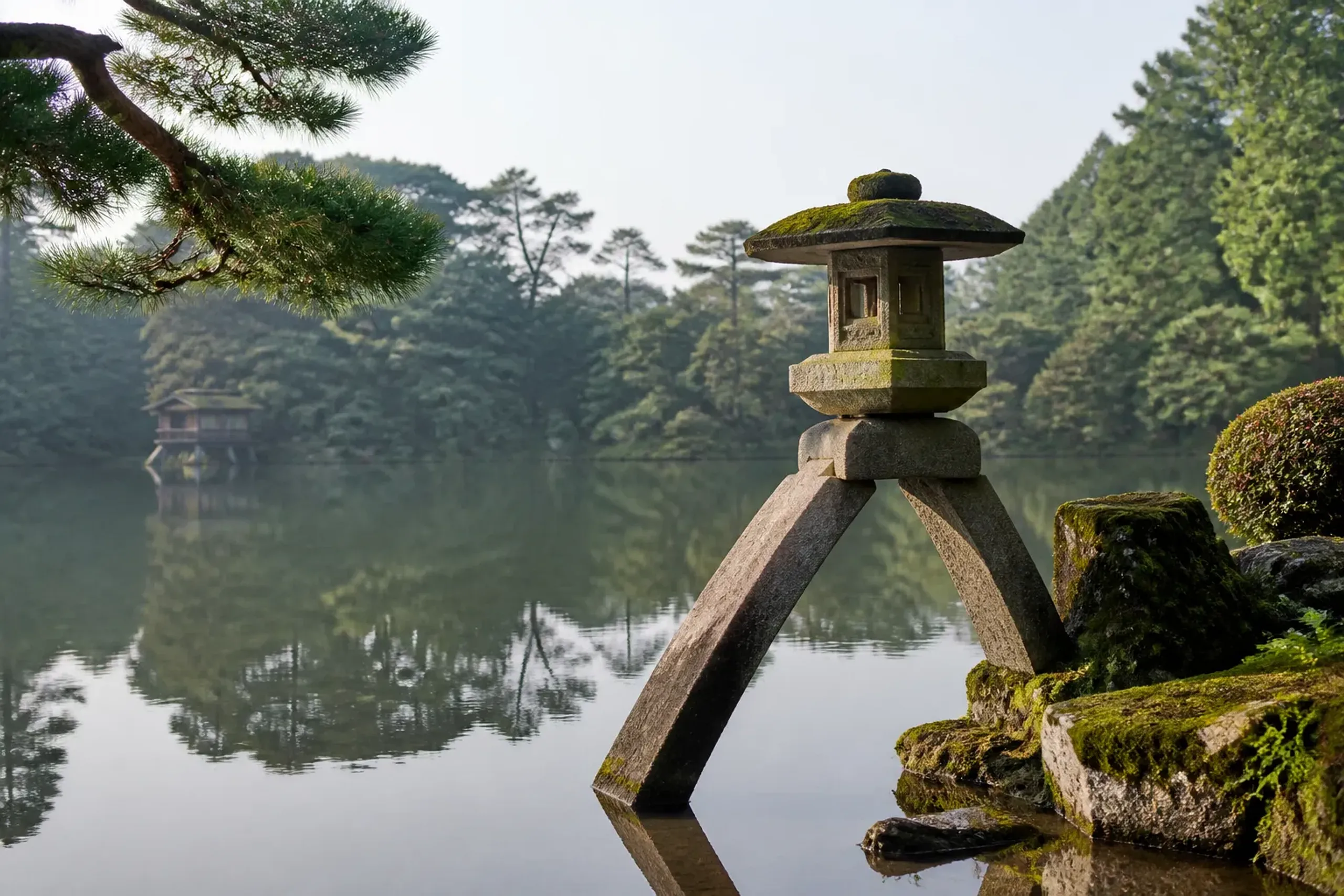
Most cruise days become a checklist. Kanazawa resists that. The city is compact — its finest places sit within a small radius, so you gain hours you would otherwise lose to transit. That surplus is the whole point.
Consider what sits inside a short drive of one another: Kenrokuen, ranked among Japan's three great landscape gardens; Kanazawa Castle across the road; the Higashi Chaya teahouse district; the Nagamachi samurai quarter; the 21st Century Museum of Contemporary Art. A day here is not a race between them. It is a chance to let one or two settle into you.
Kanazawa also carries a rare formal weight. As the seat of the Maeda clan — the wealthiest feudal domain outside the shogunate — it cultivated arts the way other cities cultivated armies. Gold leaf, Kaga-yuzen silk dyeing, Kutani porcelain, Ohi tea ceramics. That inheritance is not in a case behind glass. It is worked, daily, by people whose families have done it for generations.
Morning: Kenrokuen And The Castle Grounds
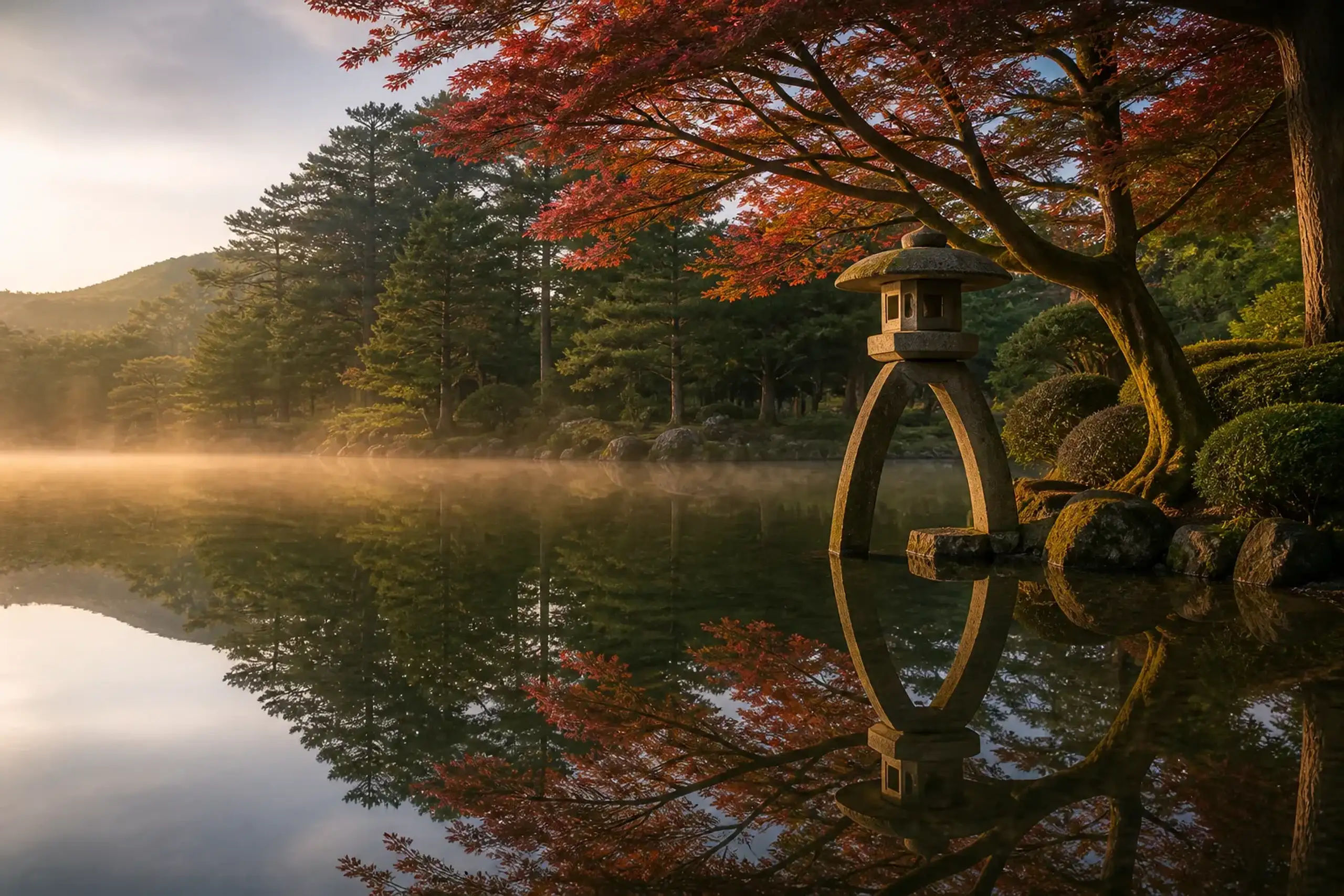
The first hour at Kenrokuen, before the coaches arrive, is a different garden entirely.
Begin early. A private chauffeur collects you at the port and drives into the city — typically well under an hour from the Kanazawa berth area, though we confirm the exact route once your ship is assigned. Morning matters here. Kenrokuen opens early, and the first hour before the coaches arrive is a different garden entirely.
Kenrokuen means "garden of the six sublimities" — the old ideal that a perfect landscape balances spaciousness with seclusion, artifice with antiquity, water with a wide view. Walk it with an English-speaking guide who knows where to slow down. The Kotoji stone lantern with its two uneven legs. The oldest fountain in Japan, run entirely by natural water pressure. Winter's yukitsuri — the rope cones that shelter the pines from snow — if your call falls in the cold months.
Cross to Kanazawa Castle Park afterward. The reconstructed Hishi Yagura turret and the long Gojukken Nagaya storehouse were rebuilt using traditional joinery, no nails in the frame where the old methods would not have used them. Stand inside and look up at the timber. It is a quieter kind of grand.
If the season aligns, the neighboring Gyokusen'inmaru garden with its evening illuminations is worth a note for your guide — though for a day call, the morning light through the castle gates is the thing to catch.
Late Morning: Higashi Chaya And A Sheet Of Gold
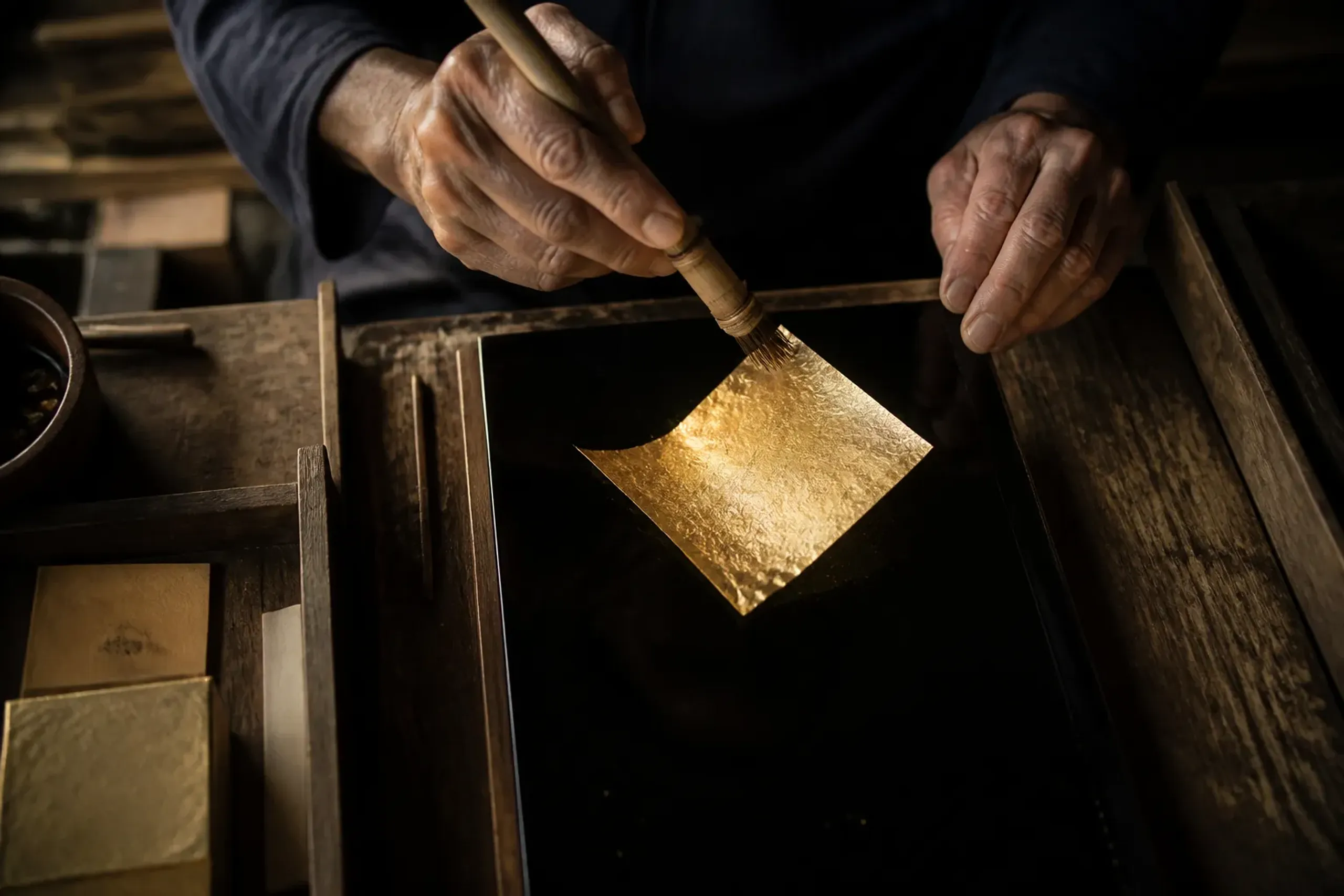
Kanazawa produces almost all of Japan's gold leaf — kinpaku so thin it dissolves at a breath.
A few minutes' drive brings you to Higashi Chaya, the largest of Kanazawa's preserved teahouse districts. The lattice fronts, the ochre walls, the wooden second storeys where geisha still perform for private gatherings — this is Edo standing more or less still. Come before midday and the lanes are calm.
Kanazawa produces almost all of Japan's gold leaf. We can arrange, on request and with advance notice, a private introduction to a gold-leaf atelier where you press a sheet yourself — kinpaku so thin it dissolves at a breath, laid onto lacquer or paper under a craftsman's watchful hand. It is a small act. It stays with people longer than a photograph does.
This is where the idea of shokunin becomes real rather than a word in a brochure. The person guiding your hands has spent decades reaching this precision. Sitting with them for even half an hour tells you something about Kanazawa that no viewpoint can.
A Considered Lunch
Kanazawa faces the Sea of Japan, and its kitchens show it. Depending on the season, the Omicho Market is heaving with snow crab, sweet shrimp, and gleaming fish landed that morning. For a resident of The World, we would generally steer away from the market crush at peak hours and toward a quieter, reserved table.
Our concierge secures restaurant reservations that suit your taste — a refined kaiseki counter, a sushi-ya working only with local catch, or a discreet room where the meal unfolds without an audience. We do not name a single "best" table here, because the right one depends on the day, the season, and your party. What we will say: booking in Kanazawa's finest rooms rewards those who plan ahead.
A note on seasonality: If your call lands between November and March, the Sea of Japan snow crab season shapes the entire menu. Tell us your window early and we build the lunch around what is genuinely at its peak.
Afternoon: Nagamachi, Then A Room Of Light
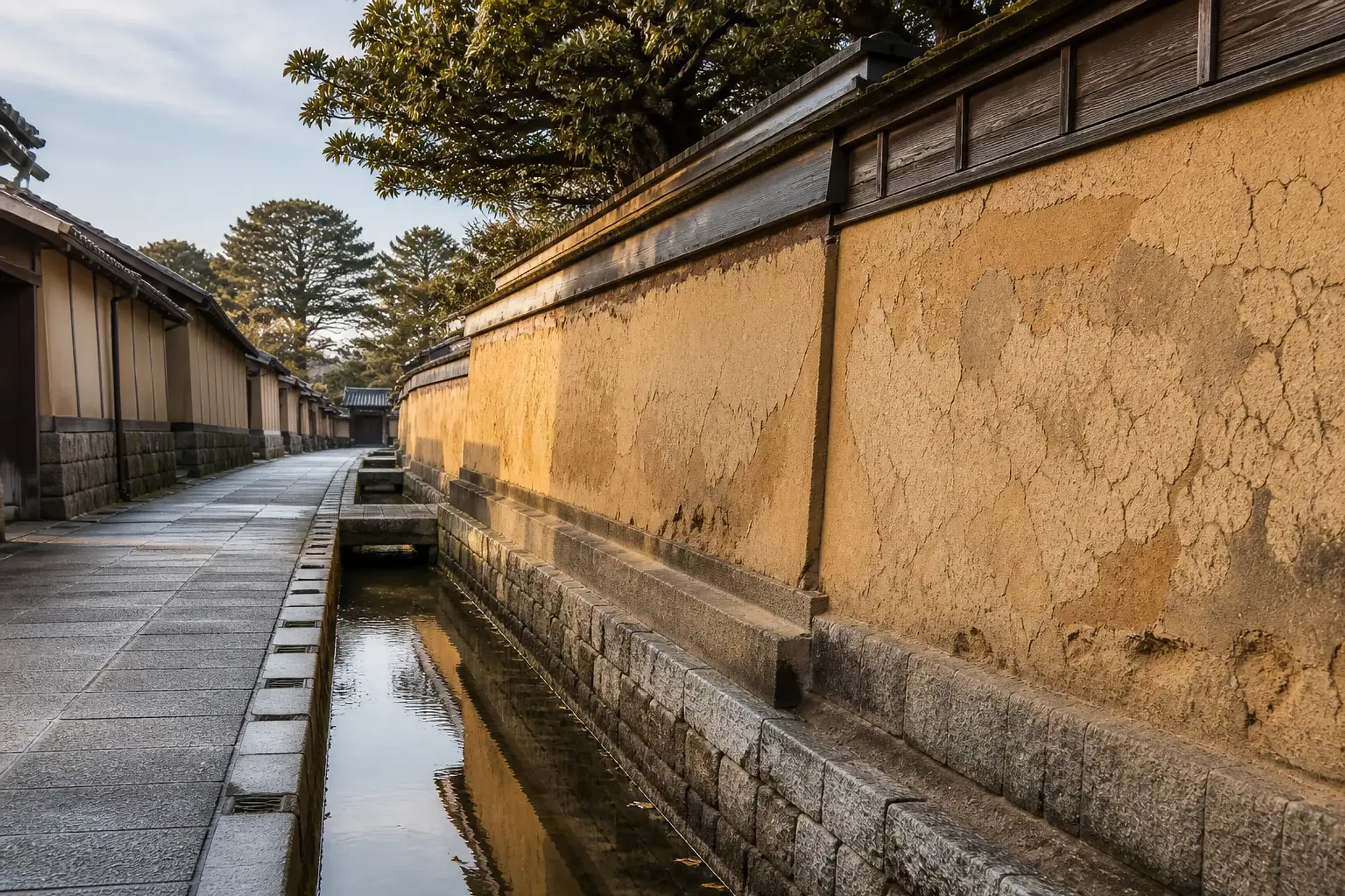
In Nagamachi's worn walls, beauty lives in the patina — what time has softened rather than polished.
After lunch, the pace should ease. Nagamachi, the old samurai quarter, is the place for it. Earthen walls, canals, and the preserved Nomura family residence with its small, exquisite garden pressed against the veranda. Walk the narrow lanes and the city noise drops away almost completely. Wabi-sabi lives in these worn walls — beauty in the patina, in what time has softened rather than polished.
Then a deliberate contrast. A short drive to the 21st Century Museum of Contemporary Art, the circular glass building where Leandro Erlich's "Swimming Pool" plays its quiet trick — you stand beneath a sheet of water and look up at people looking down. Children love it. So, in our experience, do people who thought they were done being surprised. The building itself, by SANAA, is worth the visit for anyone who cares about architecture.
This is the shape of a good Kanazawa afternoon. The centuries-old and the deliberately new, ten minutes apart, each throwing the other into relief.
Optional: Kaga Craft, If Craft Is Your Thing
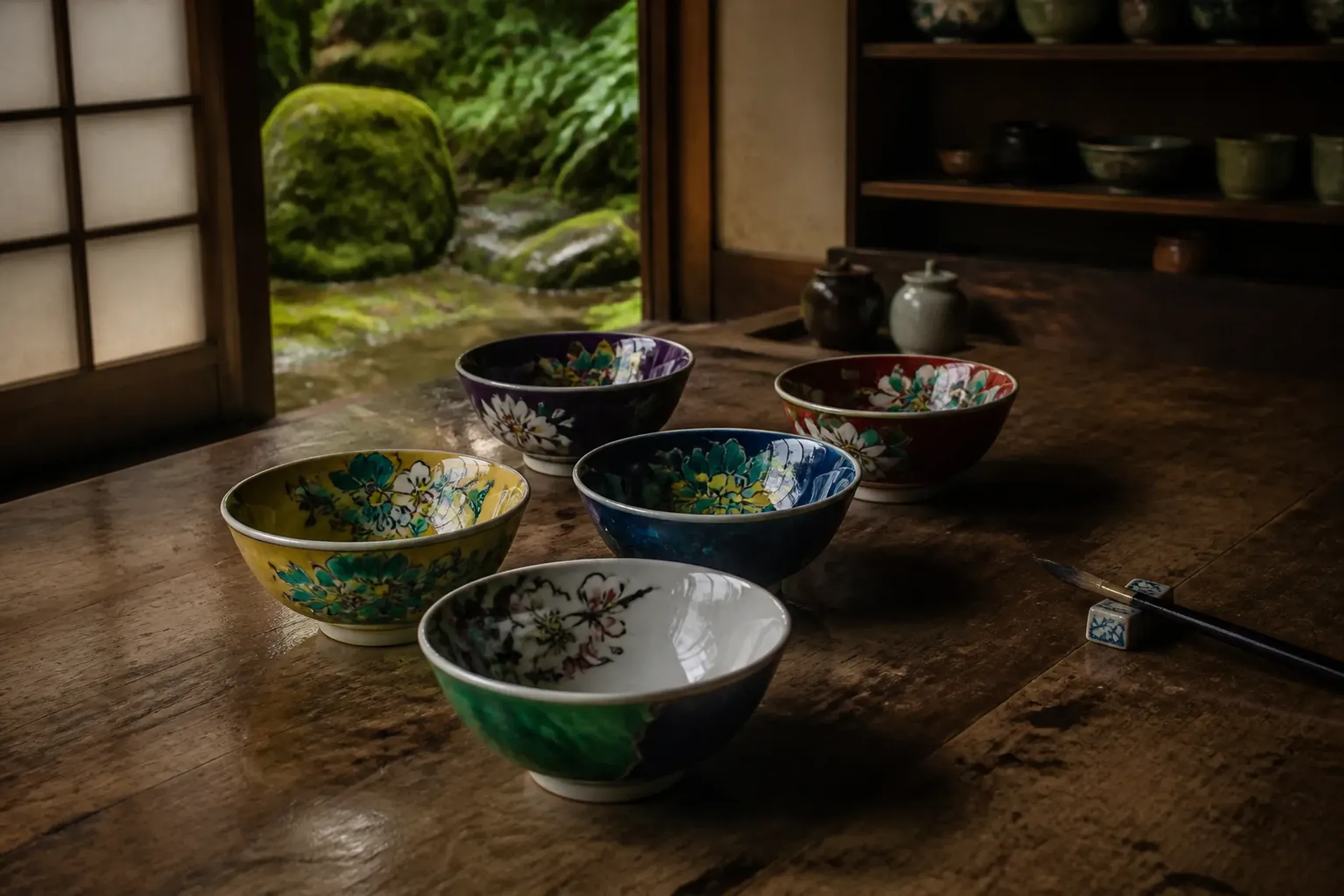
Kutani ware — five classical pigments, over 350 years of practice in the region.
For guests who want their hands busy rather than their feet, we can route the afternoon differently. Kanazawa's craft traditions run deep, and several are open to private, introduced sessions with advance notice.
Kutani Porcelain And Kaga-Yuzen
Kutani ware — bold overglaze color, five classical pigments — has been made in the region for over 350 years. Kaga-yuzen is the local silk-dyeing tradition, its motifs drawn from the garden rather than the abstract. Watching either worked up close is absorbing in a way that resets the day.
Ohi Ceramics And Lacquer
The Ohi family has made tea ceremony ware in Kanazawa for eleven generations. Introductions to ateliers of this calibre are not made through a website — they are made quietly, over time, and only when the fit is right. Our concierge can advise on what is genuinely possible for your date.
Return To Port
We plan the day to bring you back to the ship with margin, not adrenaline. Your chauffeur builds in buffer for the drive back, and we hold a private point of contact through the afternoon in case the ship's timing shifts. If you would rather trade one stop for a longer, slower lunch, we adjust. The day is yours to lengthen or compress.
A single principle governs all of it: return before the gangway does. We would always rather show you less and let you feel it, than show you everything and leave you tired at the rail.
Practical Questions, Answered
How far is the city from the cruise berth?
Kanazawa's central sights cluster tightly, and the drive from the port area into the city is typically well under an hour. Because berth assignments vary, we confirm the exact route and drive time once your ship's call is set.
Do we need to book anything in advance?
The garden and museum admit visitors on the day. But artisan introductions, private ateliers, and Kanazawa's finest restaurant tables require lead time — sometimes weeks. Tell us your window early and more becomes possible.
Is an English-speaking guide included?
Yes. Our private day tours pair you with a professional English-speaking guide and a private chauffeur. We also work in Japanese, Thai, and Filipino should your party prefer.
Can the whole day stay private?
That is the default. Private vehicle, private guide, reserved tables, discreet artisan visits, and zero disclosure of who you are or where you have been. Discretion is not an add-on for us. It is the foundation.
What if the ship's schedule changes at the last minute?
We build the plan around your actual call and hold flexibility through the day. If the departure moves, we compress or extend the route accordingly and get you back with time to spare.
Why Choose Japan Royal Service
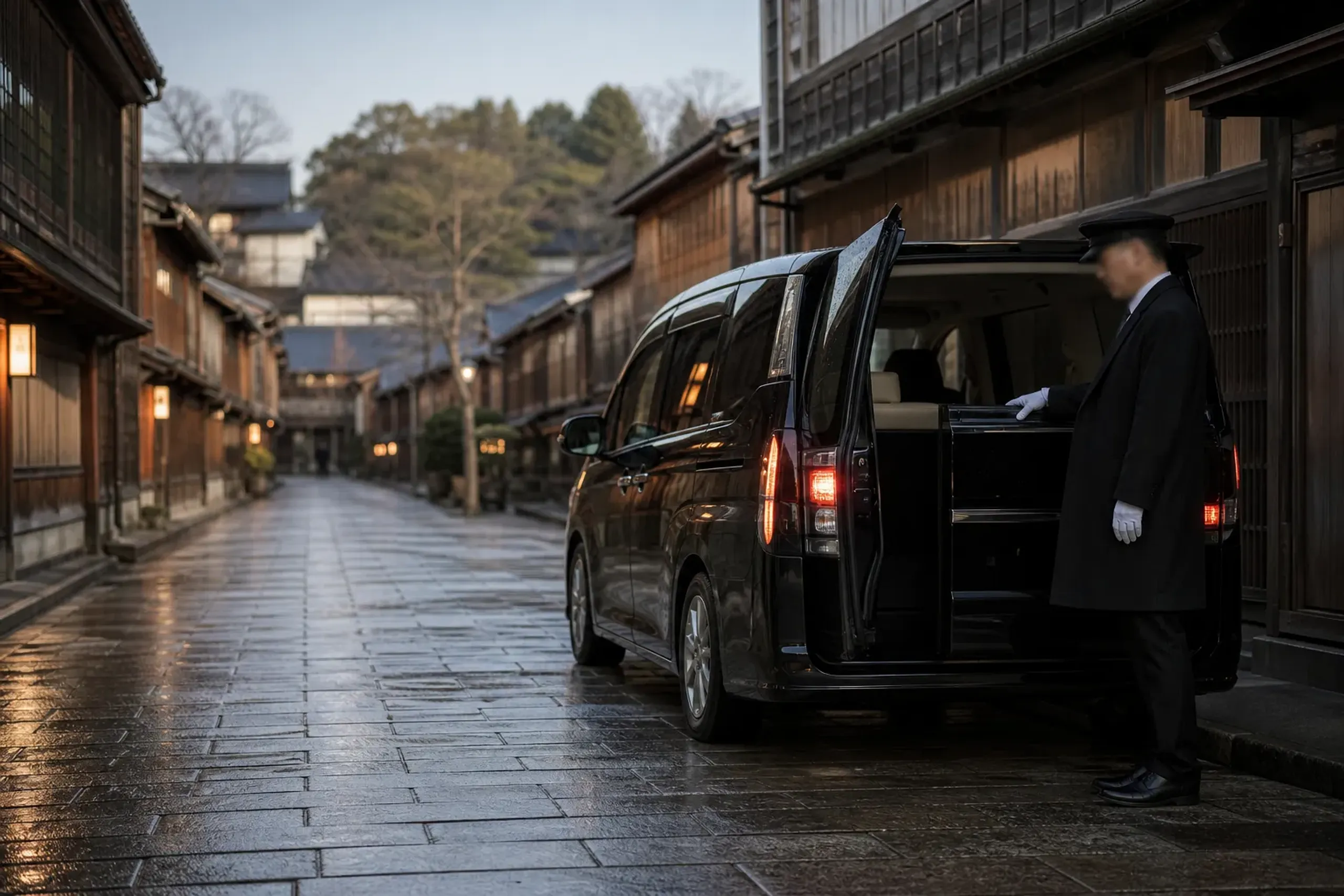
Private vehicle, private guide, no trace left behind — the restraint is the service.
A day ashore for a resident of The World is not a tour. It is a private interval, carved out of a rare life, and it should feel that way from the first minute to the last.
Our team at Japan Royal Service designs each Kanazawa day as a tailor-made itinerary shaped to your call, your pace, and your privacy. We provide the private chauffeured transport and English-speaking guide, secure restaurant reservations that suit your table, and — where the fit is right and time allows — open doors to artisans who do not ordinarily receive outside guests. Introductions in Japan are earned, not bought, and we treat them that way.
What we do not do is rush you, crowd you, or leave any trace of your visit behind. That restraint is the service. For UHNW travelers, it is often the only kind that matters.
To shape a private day ashore at Kanazawa around your ship's call, reach our team privately via WhatsApp or LINE, or contact us here. Tell us your window. We will build the rest.