In this guide
- 01Why Nagasaki Rewards The Unhurried Visitor
- 02Morning: Glover Garden And The Old Foreign Settlement
- 03Dejima: The Island That Was Not An Island
- 04Midday: A Private Table And Nagasaki's Own Table
- 05Afternoon: Sofukuji And The Confucius Shrine
- 06Golden Hour: Mount Inasa, If The Sky Allows
- 07Gunkanjima: The Chartered-Boat Question
- 08How A Day Ashore Comes Together
- 09Questions Residents Of The World Often Ask
- 10Why Choose Japan Royal Service
The ship glides in past Iou-jima at first light. From the deck of The World, Nagasaki reveals itself as a harbour city folded into steep green hills — a place that spent centuries as Japan's one lit window on the outside world. Most passengers will step off, walk a promenade, photograph a church, and return. That is one way to spend a call.
There is another. A single day, shaped around one or two places seen properly, with a private car waiting at the pier and an English-speaking guide who has been here many times before. No coaches. No queues you did not choose. Just Nagasaki, at your pace, until the evening horn.
Our team at Japan Royal Service builds days like this for owner-residents who value their time and their privacy in equal measure. Below is one honest itinerary — real places, real drive times, and a frank note on what the weather can and cannot promise.
Why Nagasaki Rewards The Unhurried Visitor
Nagasaki is compact. That is its quiet gift. The historic quarter, the harbour viewpoints, the old foreign settlement — most sit within a fifteen-to-twenty-minute drive of the cruise berth. You are not sacrificing the day to a highway.
The city's story is unusual. During Japan's long period of near-total closure, Dutch and Chinese traders were permitted here and almost nowhere else. That legacy left a texture you feel in the streets: stone churches beside Zen gates, a Confucius shrine roofed in imperial yellow, hillside villas built by nineteenth-century merchants. Layers upon layers.
Because the highlights cluster so tightly, a private day here can breathe. You can linger over one garden. You can sit inside a temple hall without a clock ticking. In our experience, this is where a call at Nagasaki becomes memorable — not in covering everything, but in the one place you truly see.
An honest note: Every timing below adapts to your ship's actual arrival and all-aboard time. We build the day backwards from the evening horn, with generous margin, so you are never rushing the last mile to the pier.
Morning: Glover Garden And The Old Foreign Settlement
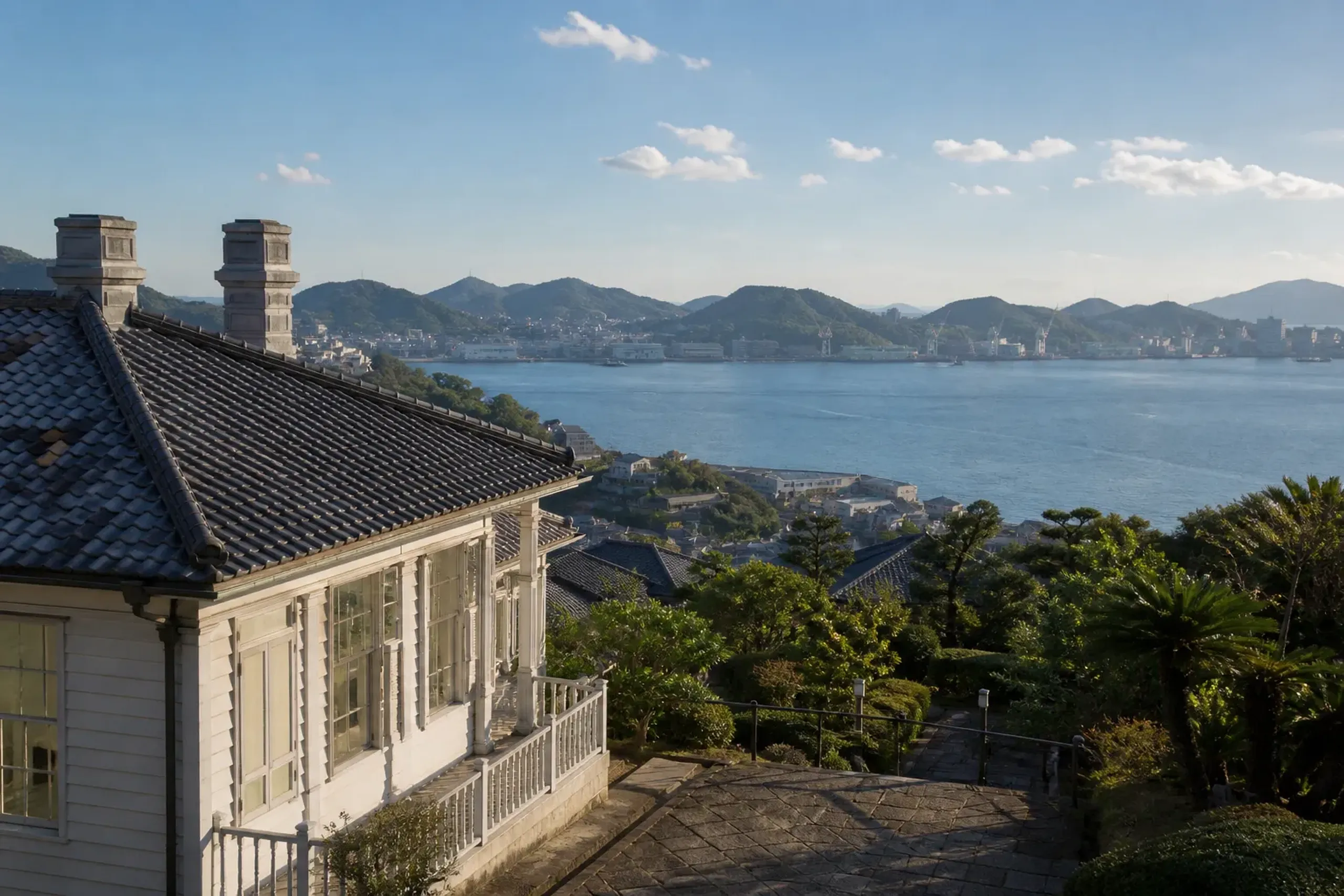
Begin high on the Minamiyamate hillside at Glover Garden. This is the preserved estate of Thomas Blake Glover, the Scottish merchant who helped drag Meiji-era Japan toward industry. His 1863 residence is the oldest surviving Western-style wooden building in the country. It sits among relocated merchant houses, all facing the water.
The view does the work here. From the upper terraces you look straight down over the harbour, and on a clear morning you can trace where your own ship is berthed. Outdoor escalators carry you up the slope, so the climb is gentle — a real consideration for guests who would rather save their energy for looking, not hiking.
Just below the garden stands Oura Church, completed in 1865 and the oldest Gothic church in Japan. It is a designated National Treasure and part of a UNESCO World Heritage listing recognising the hidden Christians who kept their faith through centuries of prohibition. Step inside. The nave is small, the light through the glass is soft, and the silence carries weight.
Your guide can pace this stretch to the crowds. Arrive early and the settlement is nearly yours. A private chauffeur waits below, so there is no schedule to catch — you leave when the moment feels finished, not before.
A Word On The Hillside Streets
The lanes around Higashiyamate and Oranda-zaka — the "Dutch Slope" — are cobbled and steep. Many guests enjoy a short stroll among the old consulate buildings and brick paving. Others prefer to admire them from the car. Either is right. We shape the walking to you.
Dejima: The Island That Was Not An Island
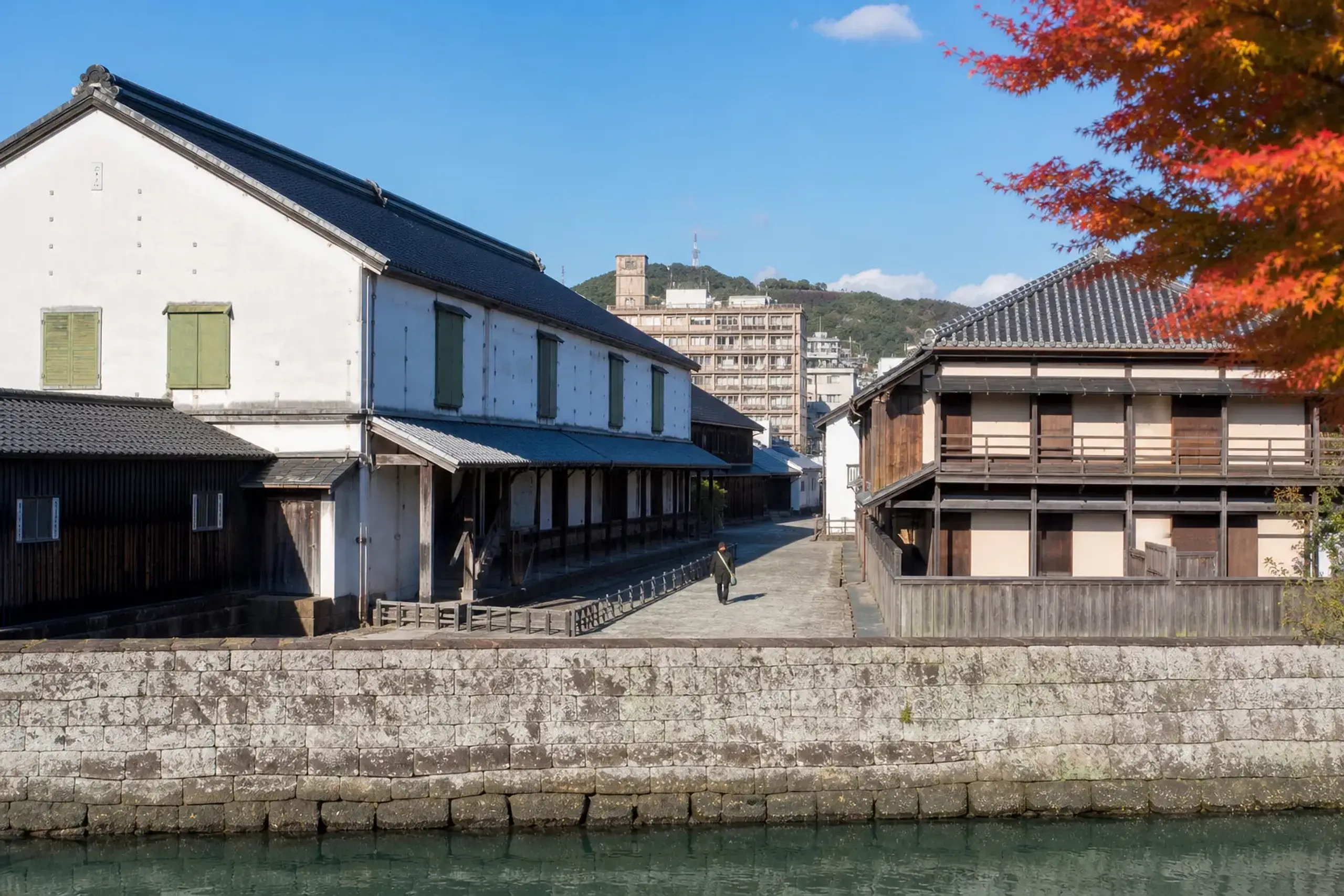
A short drive north brings you to Dejima. For over two hundred years this fan-shaped artificial islet was the sole Dutch trading post in Japan — the single controlled point through which European goods and ideas entered a sealed country. Land reclamation long ago surrounded it, but the site has been painstakingly reconstructed.
You walk into restored warehouses, the chief factor's residence, and rooms laid out with imported furniture and trade ledgers. It is intimate rather than grand. That is the point. Standing on the old stone quay, you grasp how narrow Japan's aperture to the world once was — and how much slipped through it regardless.
Allow forty-five minutes to an hour. A knowledgeable guide transforms Dejima from a set of old buildings into a genuinely gripping story of commerce, medicine, and quiet defiance. Without one, it can read flat.
Midday: A Private Table And Nagasaki's Own Table
Nagasaki's food is a direct inheritance of its trading past. Shippoku is the city's signature — a round-table feast of Japanese, Chinese, and European dishes served family-style, a culinary record of everyone who ever docked here. Champon and sara-udon, born in the city's Chinese quarter, are humbler but no less local.
Our concierge can arrange a reserved table suited to your appetite and your privacy: a quiet room for a formal shippoku course, or a discreet counter for something lighter. We hold the reservation, confirm dietary needs in Japanese ahead of time, and time the meal so it never eats into what you most want to see.
If you would rather not stop long, a compact lunch keeps momentum. The day bends to you.
The Peace Sites: Approached With Restraint
Some guests wish to visit the Peace Park and the Atomic Bomb Museum in the Urakami district, roughly fifteen minutes from the centre. We honour that wish with the gravity it deserves. This is not a photo stop. It is a place of mourning and reflection.
If you go, we go quietly, allow unhurried time, and follow your lead entirely. If you would prefer to hold the day's mood elsewhere, that is a considered and respectful choice too. We never push. We simply ask, gently, in advance.
Afternoon: Sofukuji And The Confucius Shrine
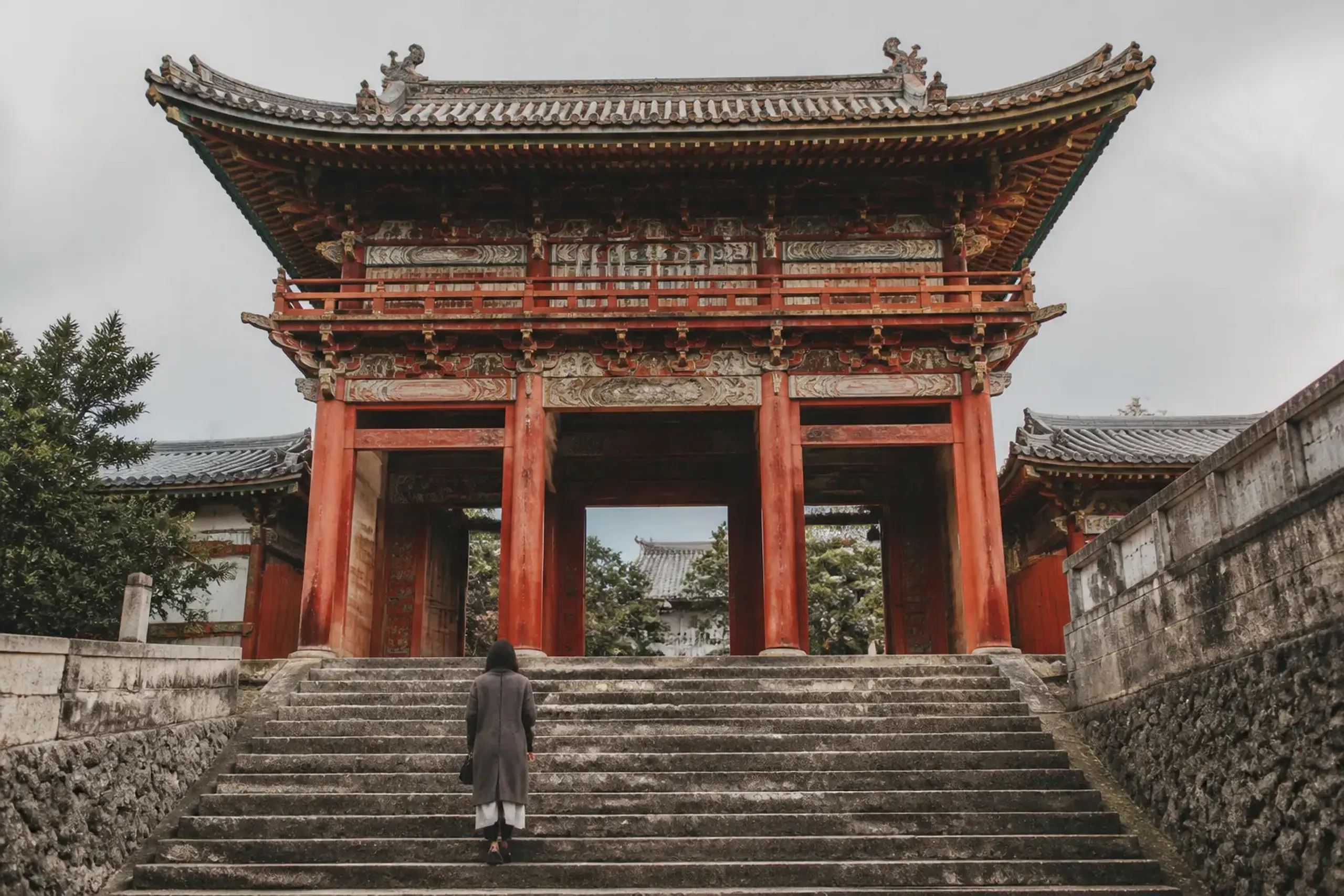
The afternoon turns toward Nagasaki's Chinese heritage. Sofukuji is a Ming-dynasty-style Obaku Zen temple founded in 1629 by the city's Fujian Chinese community. Its vermilion Ryugumon gate and the Daiyuhoden main hall are both designated National Treasures — rare survivors of Chinese temple architecture on Japanese soil.
It is often calm here. You can stand in the courtyard and hear little but your own footsteps on stone. The colour alone is worth the visit: deep reds and greens against dark timber, aged by four centuries of sea air.
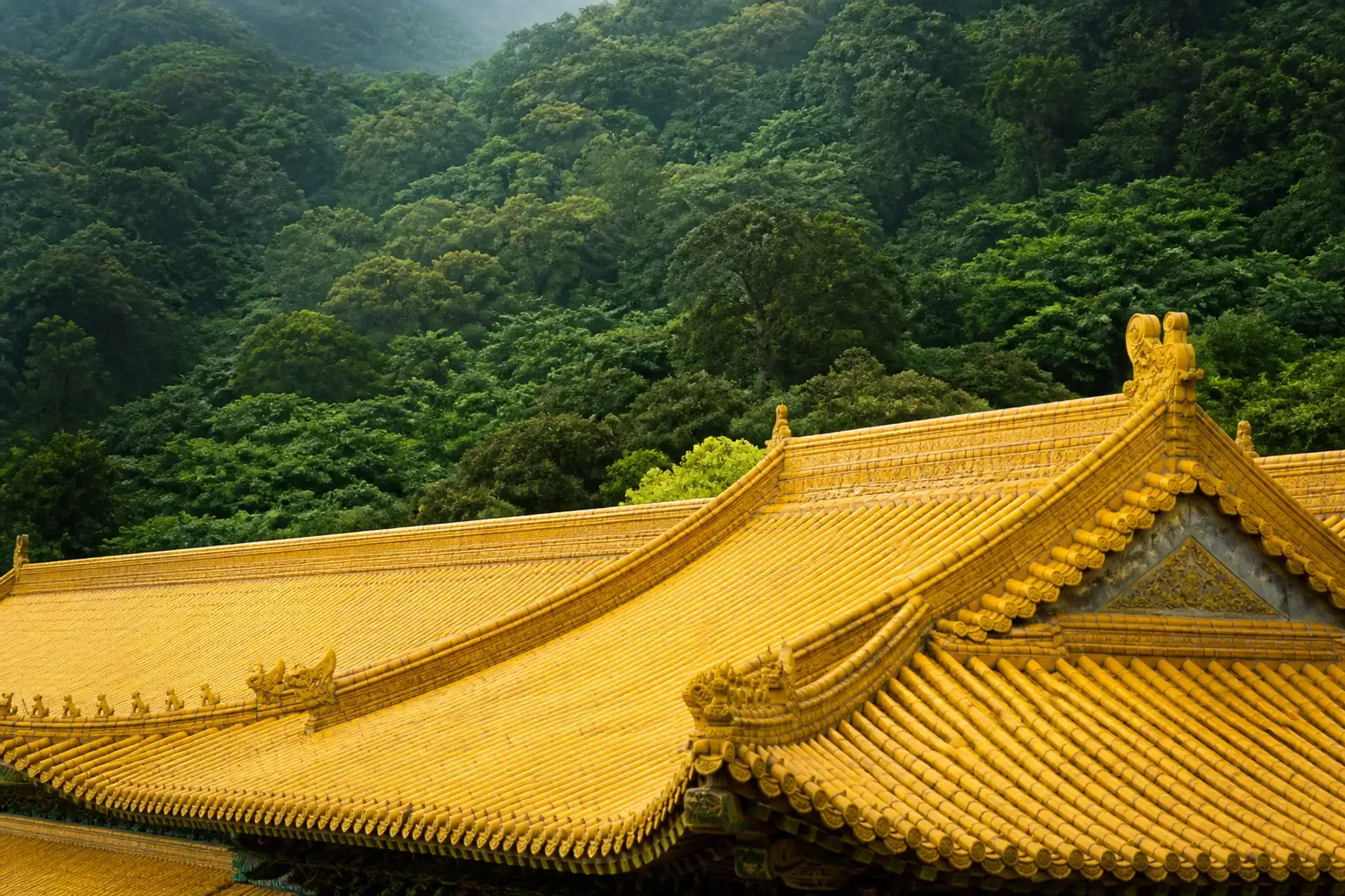
A few minutes away sits the Confucius Shrine, built in 1893 by Nagasaki's Chinese residents with support from the Qing government. Its roof glows in imperial yellow — a colour once reserved for the emperor — and its courtyard is lined with statues of Confucius's seventy-two disciples. An adjoining museum has, over the years, displayed artefacts on loan from Beijing collections. It is a genuinely uncommon corner of Japan.
These two stops pair well. Both reward slowness. Neither will overwhelm you.
Golden Hour: Mount Inasa, If The Sky Allows
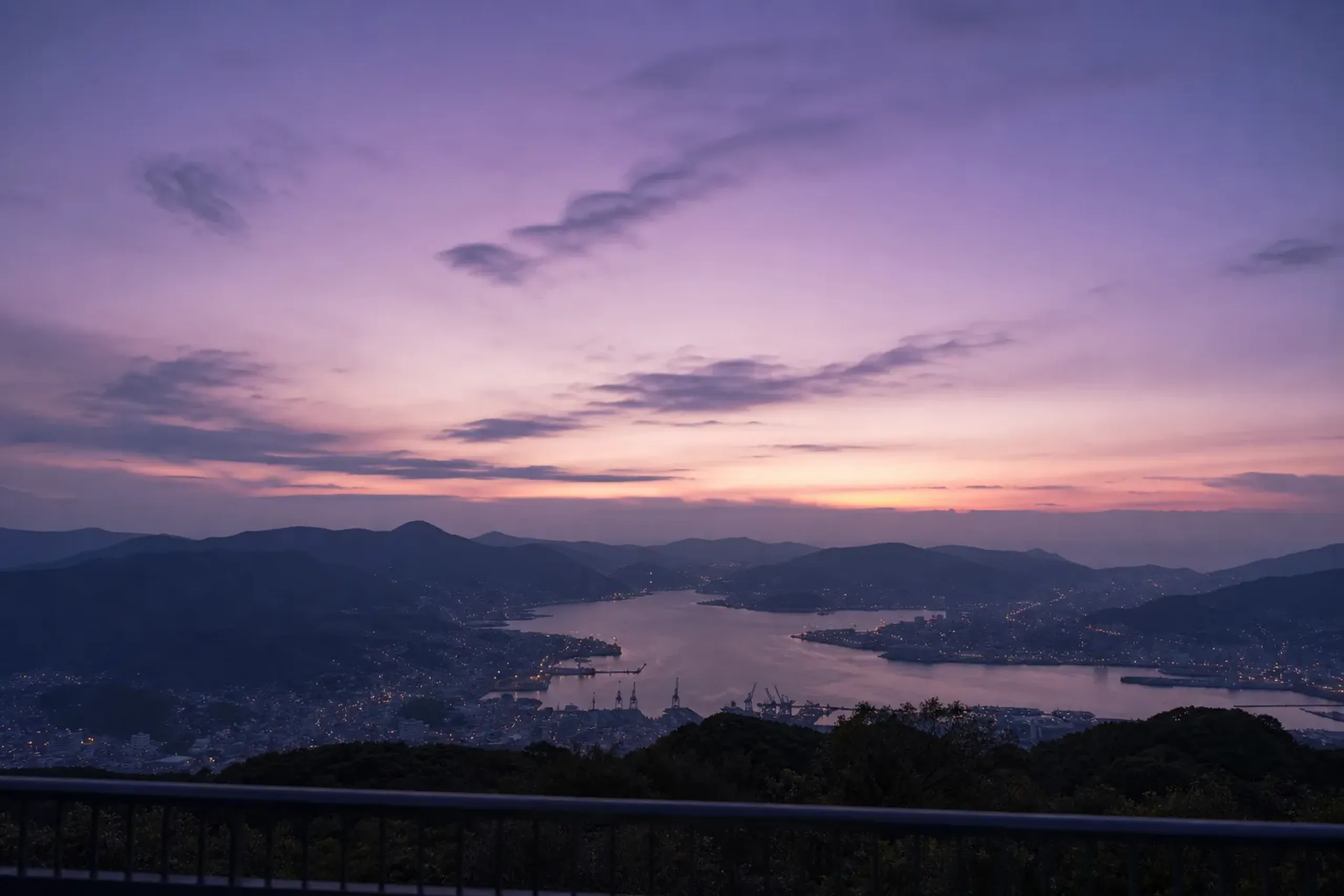
As the light softens, drive toward Mount Inasa. A ropeway climbs to a 333-metre summit observation deck, and the panorama over the harbour at dusk is the one many travellers remember longest. On a clear evening the city lights kindle below in tiers.
We are honest about this one. The view depends entirely on the weather, and Nagasaki's hills gather cloud quickly. If the summit is socked in, we say so and adjust — a harbourside vantage or an earlier return to the ship can serve just as well. We would rather promise less and deliver a real horizon.
Time it right and you descend as the city switches on. Then the short run back to the pier, comfortably ahead of all-aboard.
Gunkanjima: The Chartered-Boat Question
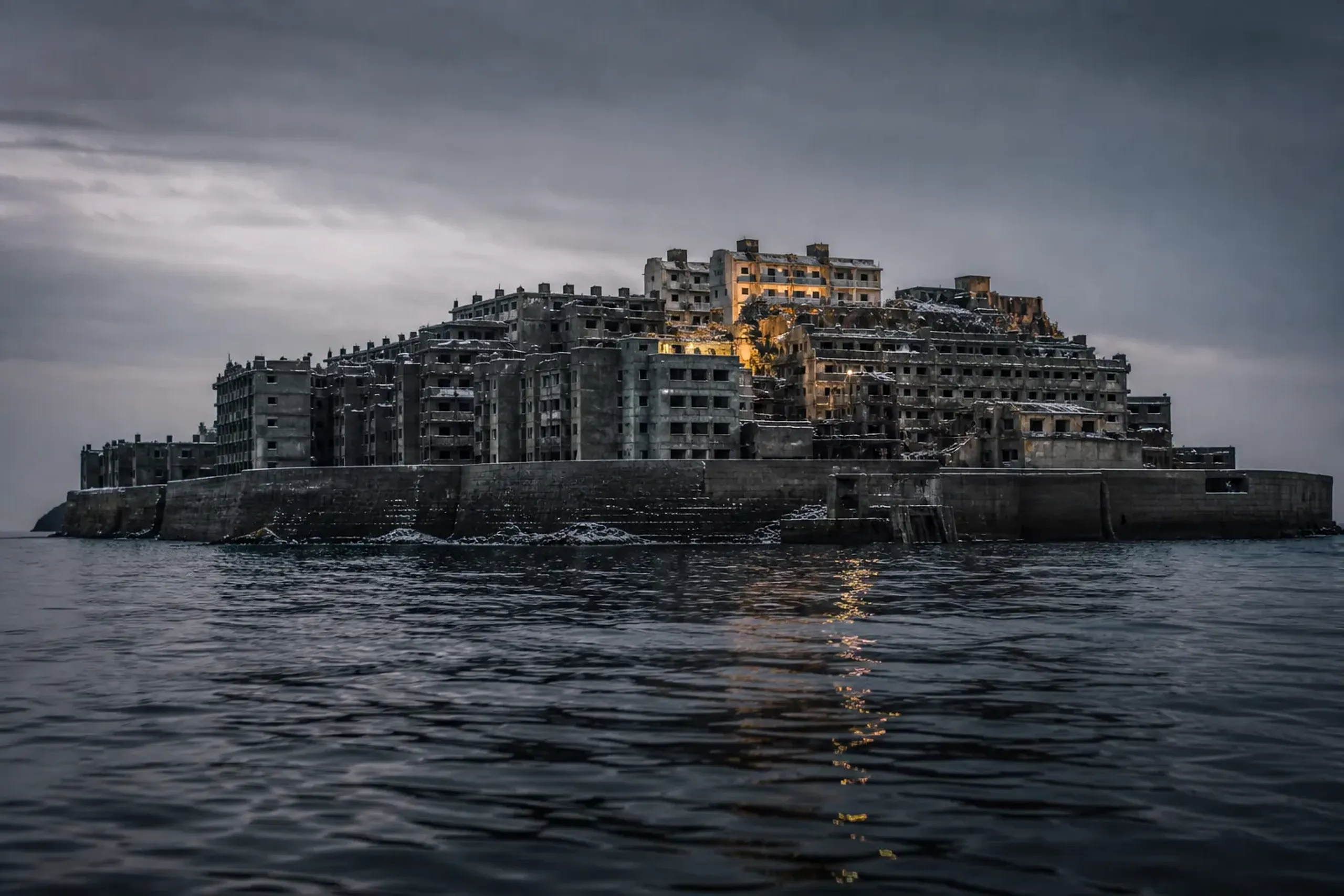
Some residents ask about Hashima — Gunkanjima, the "Battleship Island." It is the abandoned coal-mining islet off the coast, a UNESCO World Heritage site and one of the most striking industrial ruins anywhere. Landing is possible only by chartered or licensed vessel, and only when the sea permits.
Here candour matters most. Swells and wind routinely cancel landings, sometimes with little notice, and even in fair conditions the island's designated walkways are limited. A cruise-call day leaves narrow margin for a boat excursion that the weather may cancel outright.
If Gunkanjima matters to you, our concierge can outline what a licensed charter would realistically involve on your call date, and we will tell you plainly whether it fits your window. Sometimes the honest answer is next time. We prefer that to a promise the sea won't keep.
How A Day Ashore Comes Together
The mechanics are simple by design, because the point is that you never think about them.
- Private transport: A chauffeured vehicle meets you at the cruise berth. Our private chauffeur service ranges from the Lexus LM 500 and Toyota Alphard for couples and small parties to a Mercedes V-Class or Hiace Grand Cabin for larger groups. Quiet, cool, and always waiting.
- English-speaking guide: A guide who knows Nagasaki's history and can read the day's rhythm — when to linger, when to move.
- Reservations and access: Restaurant tables and site entries confirmed in advance, in Japanese, so nothing depends on chance at the door.
- Discretion: Your identity, your party, and your itinerary stay between us. No third-party sharing. No visible branding.
The whole day is built to return you to the pier by early evening, with margin. If you would like the structure but not the fixed stops, we design a fully bespoke itinerary around whatever draws you — architecture, faith history, food, or simply a slow morning and a good view.
Questions Residents Of The World Often Ask
How much of Nagasaki can we see in one call?
Comfortably, two or three anchor places seen well — say, Glover Garden with Oura Church, Dejima, and either the Chinese temples or Mount Inasa. Trying to see all of it in a single call day tends to reduce everything to a glance. We favour depth.
Will the itinerary fit our ship's actual schedule?
Yes. We build backwards from your posted all-aboard time and add margin. The stops above are a menu, not a fixed march. Once you share your call window, we tailor the sequence and the pace.
Can you handle mobility considerations?
We can. Glover Garden uses outdoor escalators, and much of the day can be arranged with minimal walking and the car close at hand. Tell us in advance and we plan accordingly.
Is Gunkanjima worth attempting on a cruise-call day?
Sometimes, but only with clear eyes about the weather. Landings cancel often. We will give you an honest read for your date rather than sell an excursion the sea may refuse.
Why Choose Japan Royal Service
A day ashore is a small window, and windows close. What makes the difference is not the length of the list but the judgement behind it — knowing which one temple will be quiet at three o'clock, which table honours a request without fuss, and when to abandon the summit view because the cloud has come down.
Our team at Japan Royal Service works only in private, tailor-made terms. We do not run coaches or shared tours. We coordinate the car, the guide, the reservations, and the timing so a single call becomes a day you remember — and we protect your privacy at every step, which for the residents we serve is rarely negotiable.
We describe real places and real services here, nothing invented. When you are ready, the details are handled quietly, person to person.
To shape your private day ashore at Nagasaki, reach our team directly via WhatsApp or LINE, or contact us here. Share your ship's call window, and we will build the rest around it.