
In this guide
- 01Why Naha Deserves A Slow Day, Not A Checklist
- 02Morning: The Truth About Shuri Castle
- 03Late Morning: A Yachimun Kiln And The Hands That Make It
- 04Midday: Okinawan Cuisine, Eaten Properly
- 05Afternoon: A Quiet Stretch Of Southern Coast
- 06Early Evening: Back To Port, Unhurried
- 07Practical Notes For A Naha Day Ashore
- 08Questions Owner-Residents Ask Us
- 09Why Choose Japan Royal Service
The ship calls. You have a single day in Okinawa before she sails again. Most visitors spend that day chasing a list — castle, market, beach, gone. We think that is the wrong way to hold a place this old.
Naha rewards restraint. Its culture is Ryukyu, not quite mainland Japan, shaped by centuries as an independent kingdom that traded with China, Southeast Asia, and Satsuma. The pottery, the food, the spirits, even the manners feel distinct. Rush through it and you get nothing. Slow down and one afternoon can carry more weight than a week elsewhere.
What follows is one honest itinerary our team at Japan Royal Service has shaped for owner-residents of The World when she calls at Naha. It is built for depth, not volume. One place truly seen. Back to port by evening, unhurried.
A note before we begin: all timings below adapt to your ship's actual call. We build the day backward from your reboarding hour, never the reverse.
Why Naha Deserves A Slow Day, Not A Checklist
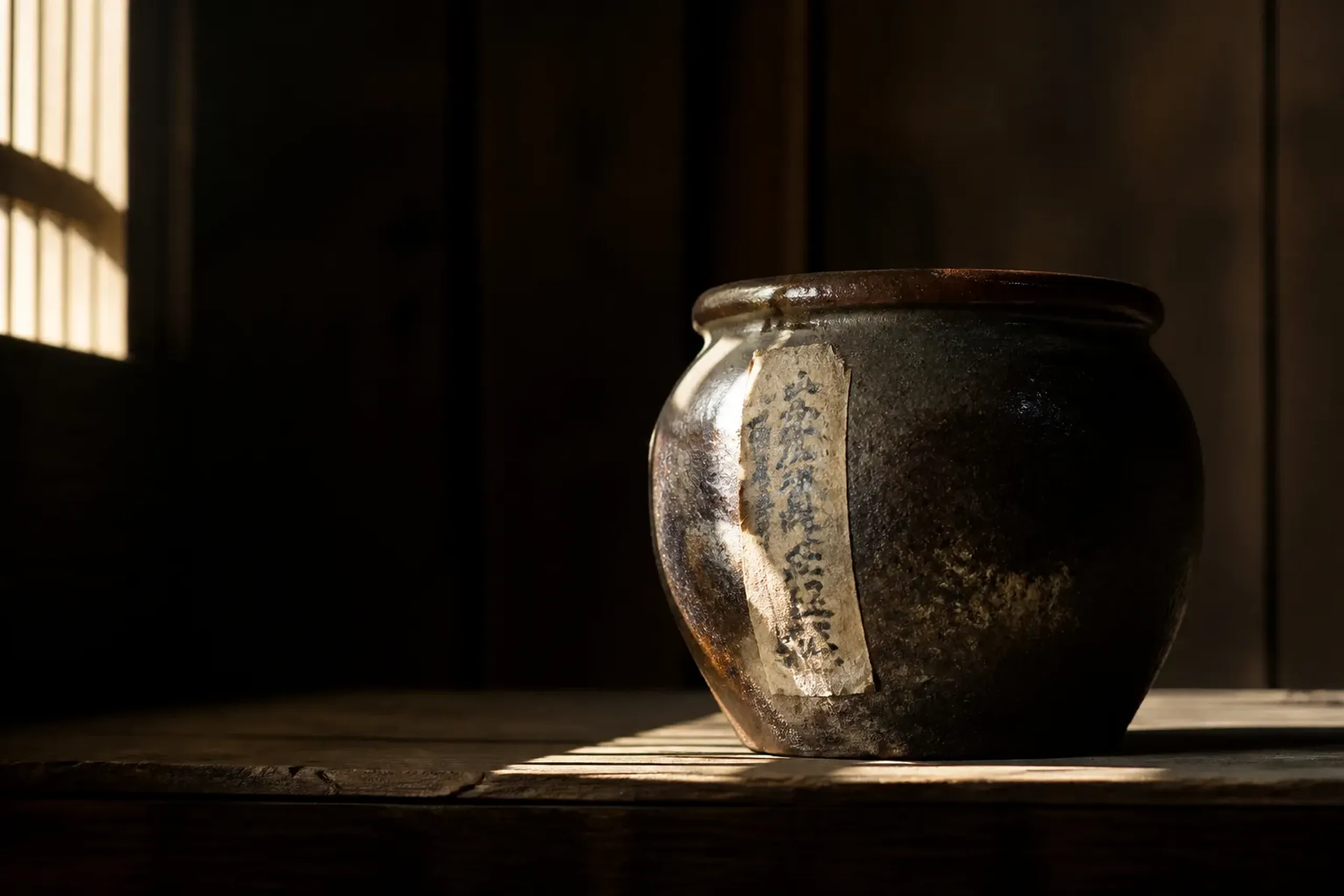
Okinawa sits closer to Taipei than to Tokyo. That distance is not just geographic. It is cultural, culinary, temperamental.
The Ryukyu Kingdom governed these islands for roughly 450 years, until 1879. Its court cultivated its own ceramics, its own textiles, its own distilled spirit. Awamori predates mainland shochu by centuries. The lacquerware once travelled as tribute to Beijing. None of this survives as museum-piece nostalgia — it lives in working kilns and family distilleries you can still visit, if you are introduced properly.
Our concierge builds the day around one or two of these threads. Not all of them. A UHNW traveller who owns their home at sea already understands the difference between seeing much and knowing something.
Morning: The Truth About Shuri Castle
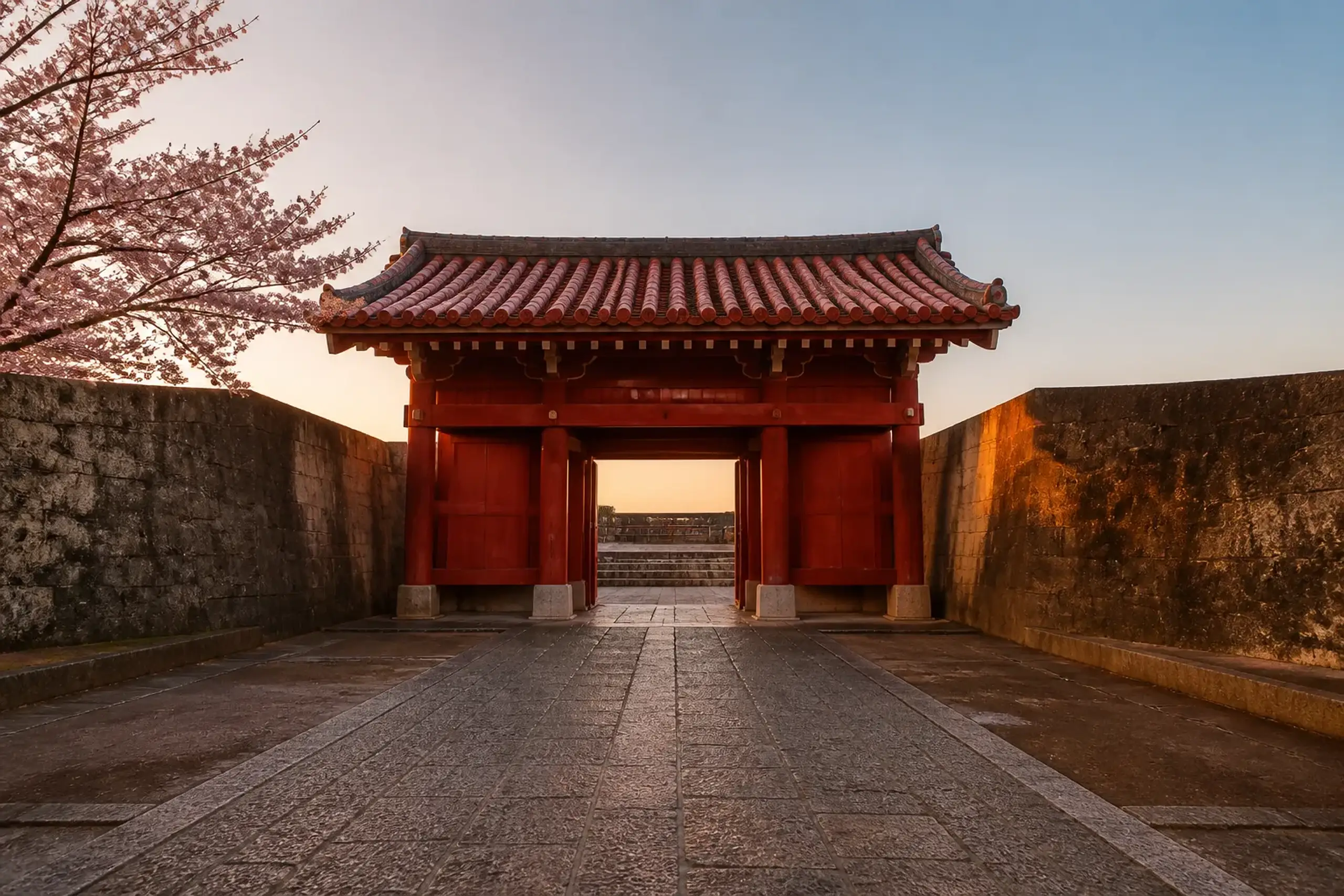
Shureimon gate still stands at Shuri Castle while the main hall is rebuilt.
Let us be direct, because guidebooks often are not. On October 31, 2019, a fire destroyed the main hall (Seiden) of Shuri Castle and several surrounding structures. Reconstruction is underway, with the main hall targeted for completion around autumn 2026. When you visit, you do not see the great vermilion hall as it stood in photographs.
So why go? Because the site itself endures, and the reconstruction is part of the story.
Honest expectation: Shuri Castle's Seiden is being rebuilt and may be partially concealed by scaffolding and viewing enclosures depending on the phase of work. The grounds, gates such as Shureimon, and the elevated views over Naha remain open and worth the walk.
Shureimon gate still stands — the ceremonial gate you may recognise from the 2,000-yen note. The stone walls, the sacred groves, the sight lines down toward the East China Sea: all of it grounds you in what the kingdom was. Our English-speaking guide walks the site with you and explains, plainly, what was lost and what is being remade. There is a quiet dignity in watching a nation rebuild its own heart. It beats a crowded selfie in front of a hall that no longer exists.
Shuri sits on high ground about 15 minutes by private car from the port district, traffic permitting. We arrive early, before the tour coaches. The morning light on the limestone walls is the reason.
Late Morning: A Yachimun Kiln And The Hands That Make It
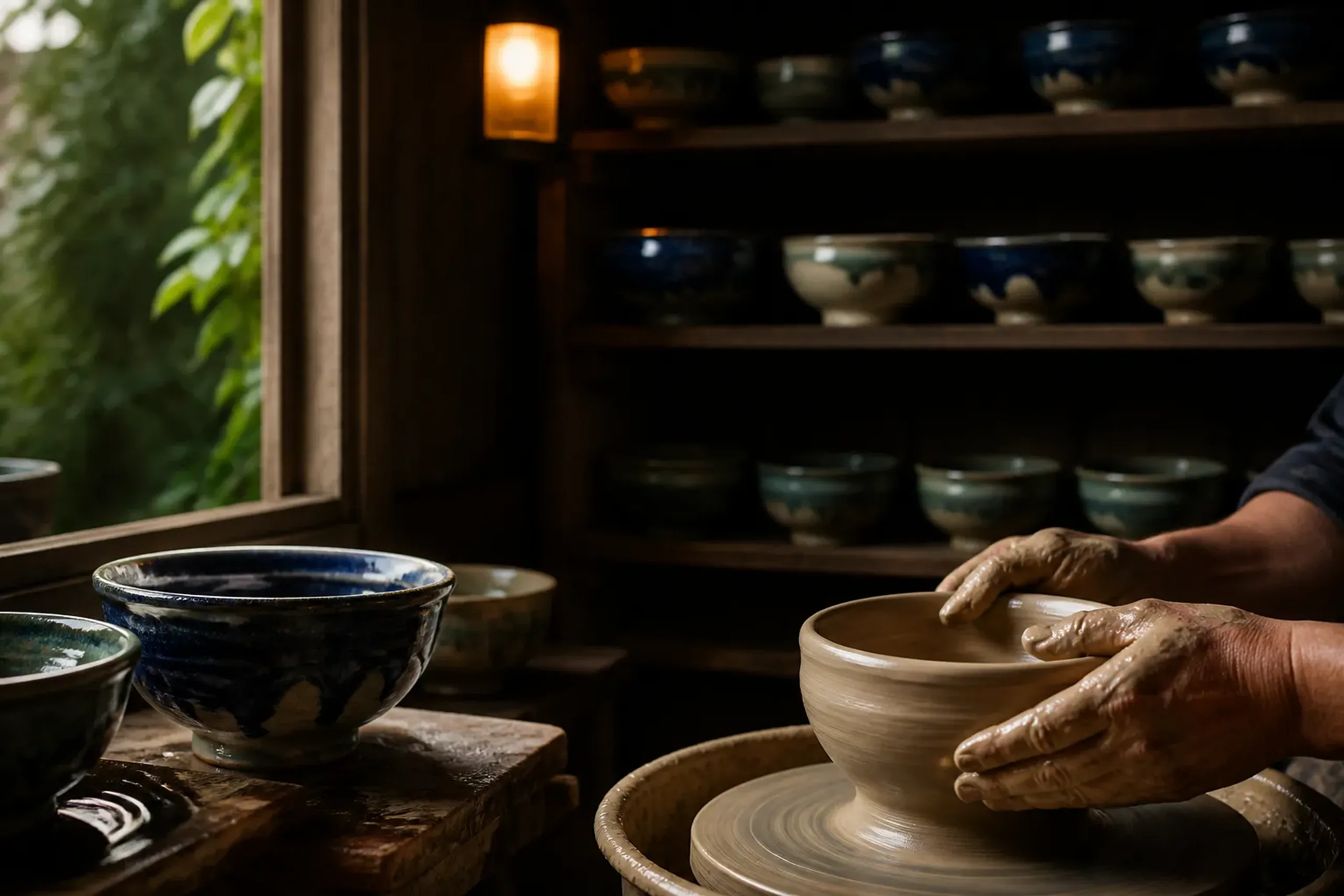
Yachimun pottery has been made in Tsuboya since 1682.
Yachimun is the Okinawan word for pottery. It is thick, warm, unpretentious — glazed in cobalt, brown, and the pale green of local ash. You feel the maker's thumb in the rim.
The Tsuboya district in central Naha has been a ceramics quarter since 1682, when the Ryukyu court consolidated the island's scattered kilns here. Tsuboya Yachimun Street is short, stone-paved, lined with workshops and small galleries. A traditional climbing kiln, the Nanmin-gama, survives in the neighbourhood as a preserved cultural property.
Anyone can walk the street. Fewer can sit with a working potter.
Through careful introduction — the way access truly works here — our concierge can arrange for you to meet a shokunin at their atelier, watch the wheel turn, and understand why a single rice bowl takes the time it takes. This is not a gift-shop demonstration. It is a quiet half-hour with someone who has given their life to clay. Buy a piece if it speaks to you. Many owner-residents do; a Yachimun cup outlasts most souvenirs and carries the salt-and-smoke character of the island.
Introductions of this kind require lead time and etiquette. We handle the courtesies so the visit feels natural, never transactional.
Midday: Okinawan Cuisine, Eaten Properly
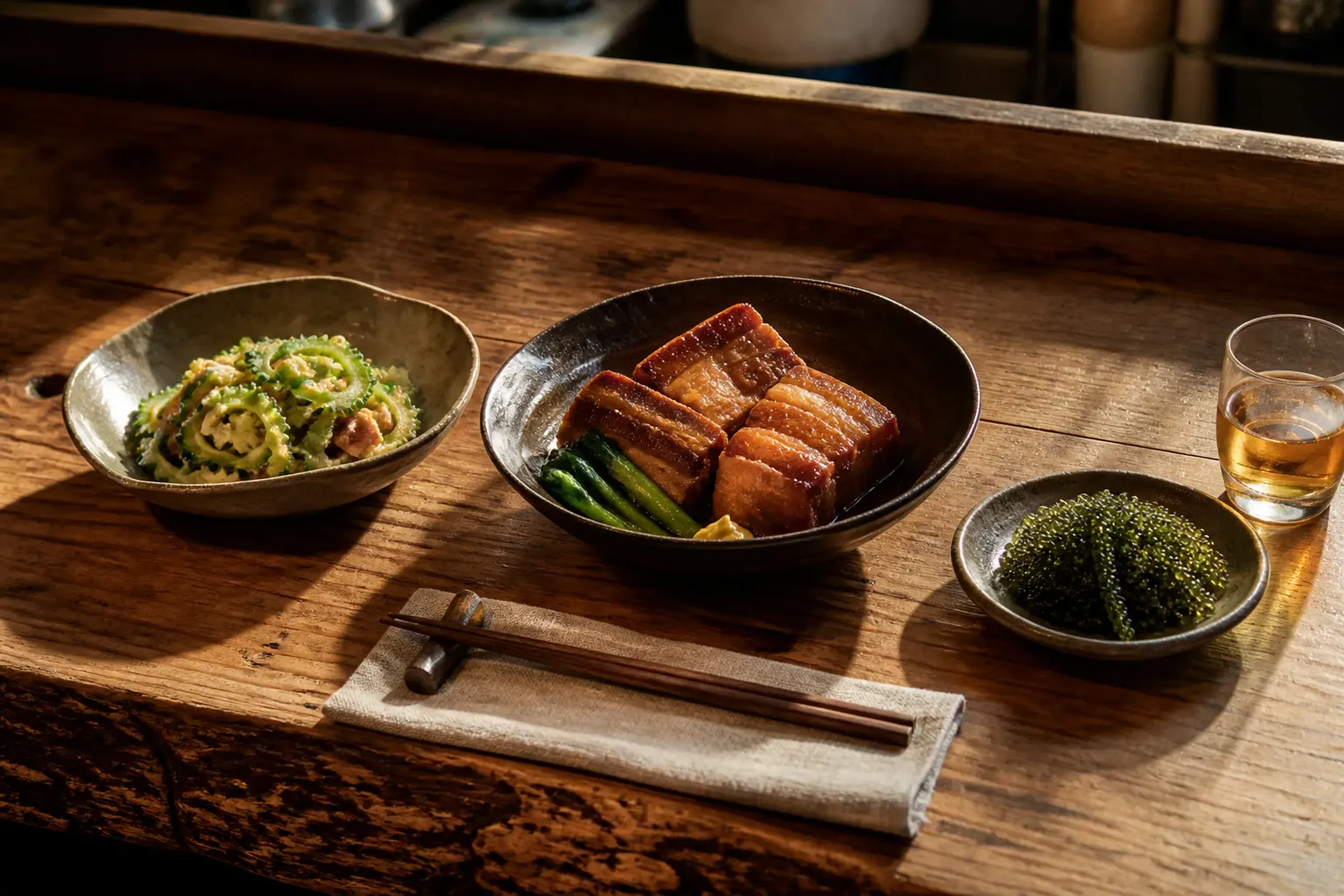
Ryukyu cuisine eaten properly: rafute, goya champuru, and aged awamori.
Okinawan food is its own grammar. Goya champuru — the bitter-melon stir-fry with tofu and egg. Rafute — pork belly braised slow in awamori and brown sugar until it gives way at a touch. Okinawa soba, which is neither buckwheat nor ramen but its own thick-noodled thing, in a clear pork-and-bonito broth. Umibudo, the "sea grapes" that pop like caviar of the reef.
You do not want the tourist-strip version of any of this.
Our team reserves a table at a considered restaurant — sometimes a refined Ryukyu-cuisine house, sometimes a quiet spot a taxi driver's grandmother would recognise. The choice depends on your palate and the day's rhythm. We match the room to the guest. Some owner-residents want white tablecloths and a sommelier's read on awamori vintages; others want the honest counter where the cook nods and starts pouring without asking.
A Word On Awamori
Awamori is Okinawa's indigenous distilled spirit, made from long-grain Thai indica rice and black koji mould. Aged awamori — called kusu — mellows for years in clay pots, gaining a rounded, almost sherried depth. A handful of distilleries in and around Naha, such as those in the Shuri area where distilling was historically licensed, still age their kusu the old way.
A short, respectful tasting can be woven into your day. Not a bar crawl. A guided flight of two or three aged expressions, explained by someone who knows the house. It is one of the quieter pleasures of the island and almost never on a cruise excursion sheet.
Afternoon: A Quiet Stretch Of Southern Coast
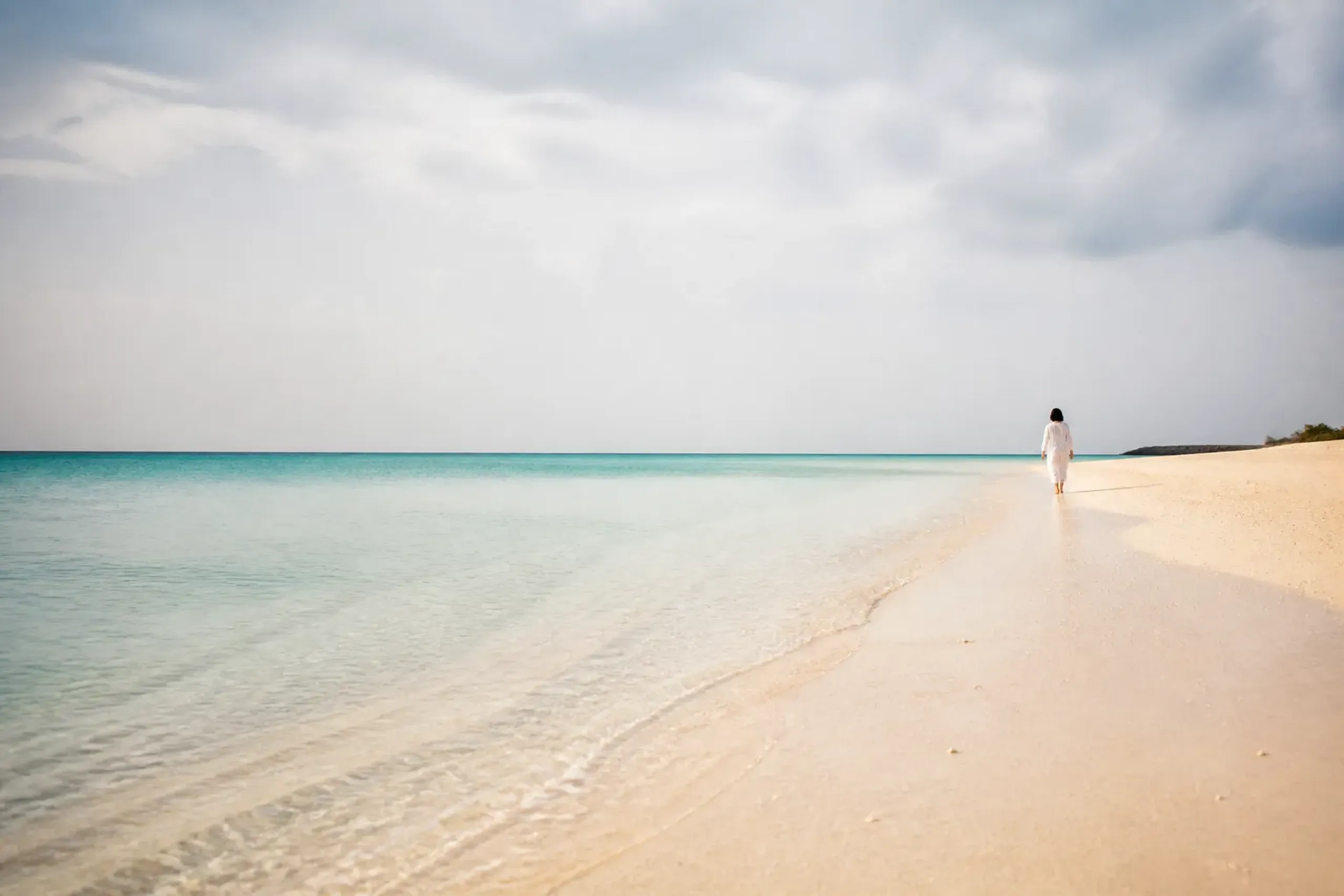
A private walk along the quiet southern coast, away from resort beaches.
Now the day softens.
Southern Okinawa, roughly 40 to 60 minutes by car from Naha depending on where you point, holds coastline that most day-trippers never reach. Think of the low limestone cliffs and pale sand of the far south, or the calm shallows where the reef breaks the swell. We choose a stretch based on the season, the tide, and — frankly — where the crowds are not.
This is not a resort-beach afternoon with rented umbrellas. It is a walk. Shoes off, the East China Sea moving slowly, the guide keeping a discreet distance so you can simply be.
For those who prefer shade and reflection, the far south of the island also holds the Peace Memorial Park at Mabuni, marking the final ground of the 1945 Battle of Okinawa. It is sobering, immaculate, and worth the visit for travellers who want to understand the island fully. Our guide will read your mood and never insist.
Private chauffeured transport makes this southern loop effortless. The distances are modest but the roads reward a driver who knows them. Our vehicles for a day like this run from the Toyota Alphard for a couple or small family to a Mercedes V-Class or Hiace Grand Cabin for a larger party — quiet cabins, cold water, and no schedule but yours.
Early Evening: Back To Port, Unhurried
We time the return so you are never watching the clock. The drive back into Naha's port district is short — the city is compact, and your ship's berth is rarely more than 20 minutes from the southern coast in ordinary traffic.
If there is time before reboarding, a final pause: perhaps a market lane for something to carry aboard, perhaps nothing at all. A good day ashore ends with a little margin, not a sprint up the gangway. That margin is the whole point of travelling this way.
Practical Notes For A Naha Day Ashore
- Drive times are honest estimates: port to Shuri Castle roughly 15 minutes; Shuri to Tsuboya about 10 minutes; Naha to the southern coast 40–60 minutes. Okinawa traffic can be heavy around the city; we plan buffers.
- Best months for the coastal portion run late spring through autumn, though winter days are mild and quiet. Typhoon season (roughly August–September) can shift plans; we watch the forecast and adapt.
- Guiding language: our guides work in English, and we also serve guests in Japanese, Thai, and Filipino.
- Access to kilns and distilleries depends on introduction and lead time. The earlier you tell us your ship's call, the more we can quietly arrange.
- Reconstruction reality: Shuri Castle's main hall is not yet complete. We tell you exactly what you will and will not see.
Questions Owner-Residents Ask Us
Can The Whole Day Flex To Our Ship's Actual Call?
Yes. That is the first thing we build around. Tell us your berthing and reboarding hours and we construct the day backward from your reboarding time, with margin built in. Nothing in this itinerary is fixed until it fits your ship.
Is Shuri Castle Worth Visiting While It Is Being Rebuilt?
For many guests, yes — with clear expectations. The main hall is under reconstruction and may be partly enclosed. The gates, walls, grounds, and views remain, and watching a kingdom's heart being remade has its own quiet gravity. If you would rather skip it, we simply give the morning to pottery and food.
Can You Arrange A Private Meeting With A Yachimun Potter?
Through introduction and with adequate notice, often yes. These are working artisans, not attractions, so we approach them with the proper courtesies and lead time. When it comes together, it is usually the moment guests remember most.
How Private Is The Day?
Entirely. Your identity, your itinerary, and the fact that you travel aboard The World remain confidential. We do not name guests, publish schedules, or discuss one client with another. Discretion is not a feature we advertise; it is the floor we stand on.
Why Choose Japan Royal Service

Quiet chauffeured transport makes the southern Okinawa loop effortless.
We are a private Japan concierge built for travellers who already know what good feels like. Owner-residents of The World are among the most discerning we serve — people for whom home is a moving address and time is the only true luxury. We respect that.
What we bring to a Naha day ashore is not a bigger list. It is judgement. We know which kiln will welcome you, which awamori is worth the pause, which stretch of southern coast will be empty on the afternoon you arrive. We know when to speak and when to keep a respectful distance. And we tell you the truth — about Shuri Castle, about tides, about what a single day can honestly hold.
Our English-speaking guides, our fleet of quiet chauffeured vehicles, and our long relationships with Okinawa's artisans and restaurateurs exist for one purpose: so your hours ashore feel effortless and true. Depth over volume. One island, genuinely met.
When you would like this day shaped precisely to your ship's call, reach our team privately via WhatsApp or LINE, or contact us here. We will build a tailor-made itinerary around your exact hours in Naha — unhurried, discreet, and entirely your own.