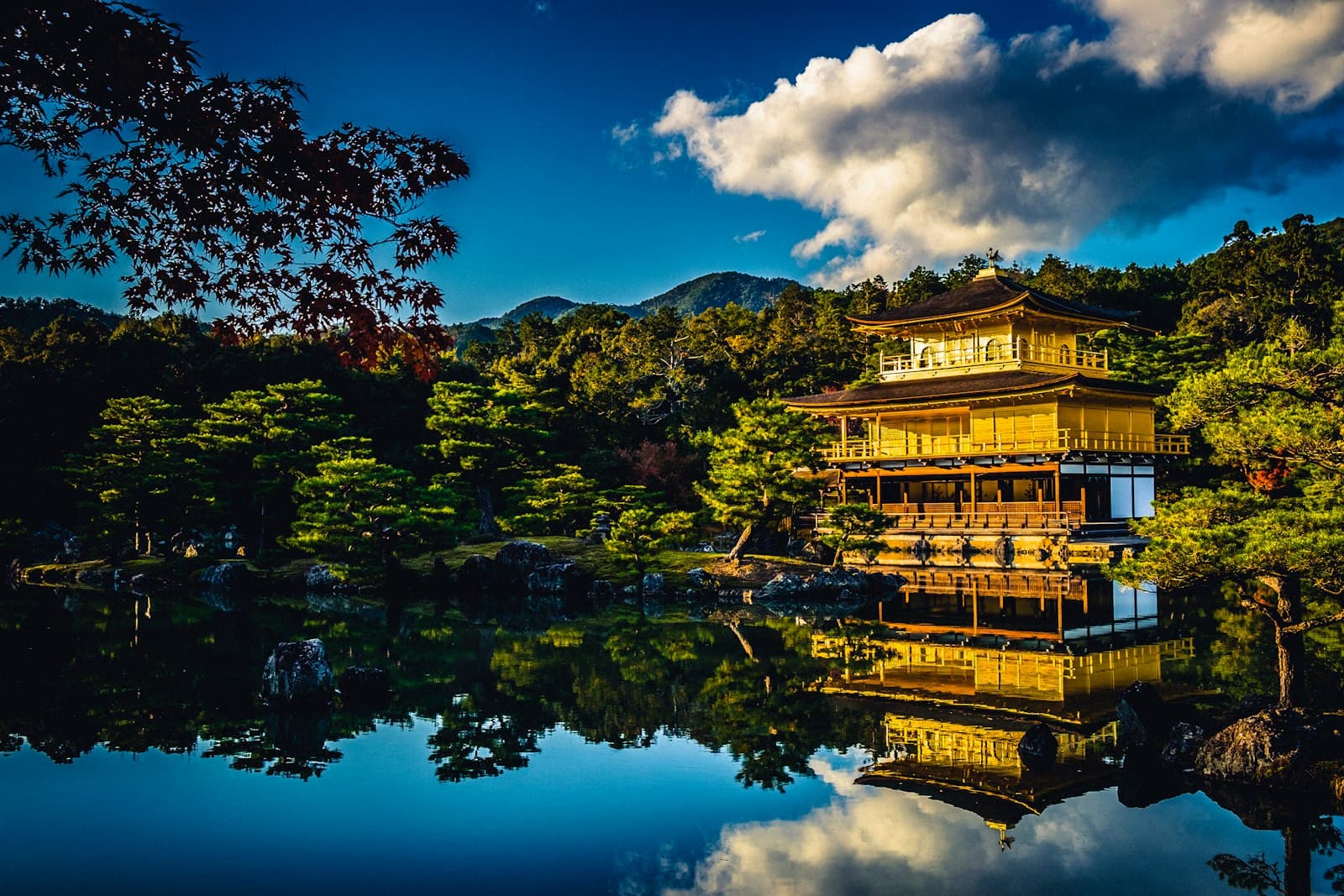
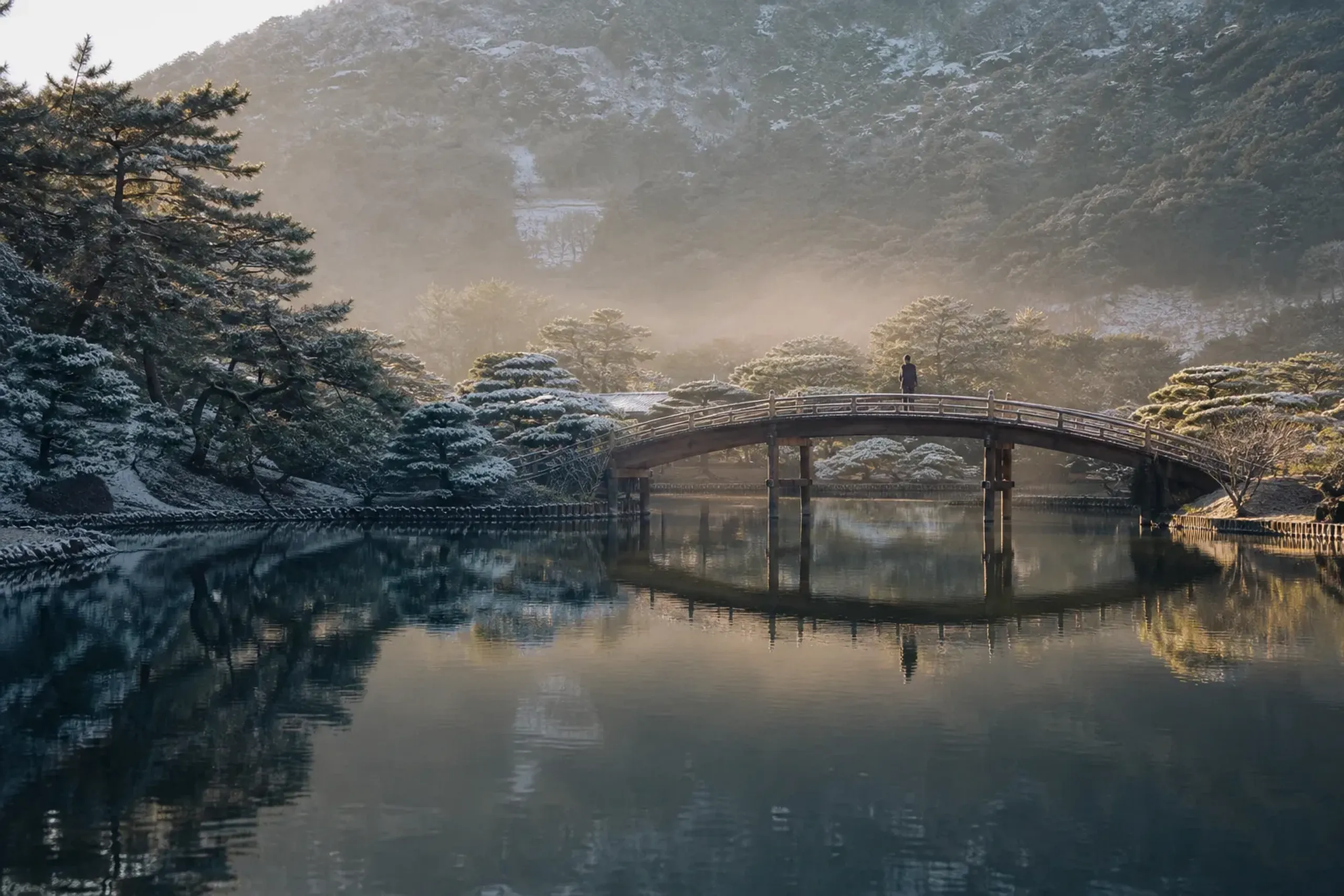
Before the day begins, the garden belongs to no one. Mist still lies on Nanko pond. The pines stand in low, level light, a thousand of them, each drawn into its shape by a hand that is now long gone. A gardener's shears sound somewhere behind the trees, and then nothing. This is Ritsurin in the hour before it opens to the public — the hour a private morning is built around.
Ritsurin is not a garden most visitors to Japan see. It sits in Takamatsu, on Shikoku, off the line that runs Tokyo–Hakone–Kyoto, and that is part of why it survives in the state it does. It is also the reason a port call at Takamatsu is worth planning around rather than passing through.
The port and the ten-hour window
A call at Takamatsu tends to follow the same shape: early-morning arrival, evening departure, roughly ten hours ashore. The garden opens at sunrise. Standard excursions arrive mid-morning. The value of a private morning lies in the hours in between — walking the garden while the buildings are open and the party has it to itself, then back aboard with margin before the day tours have finished.
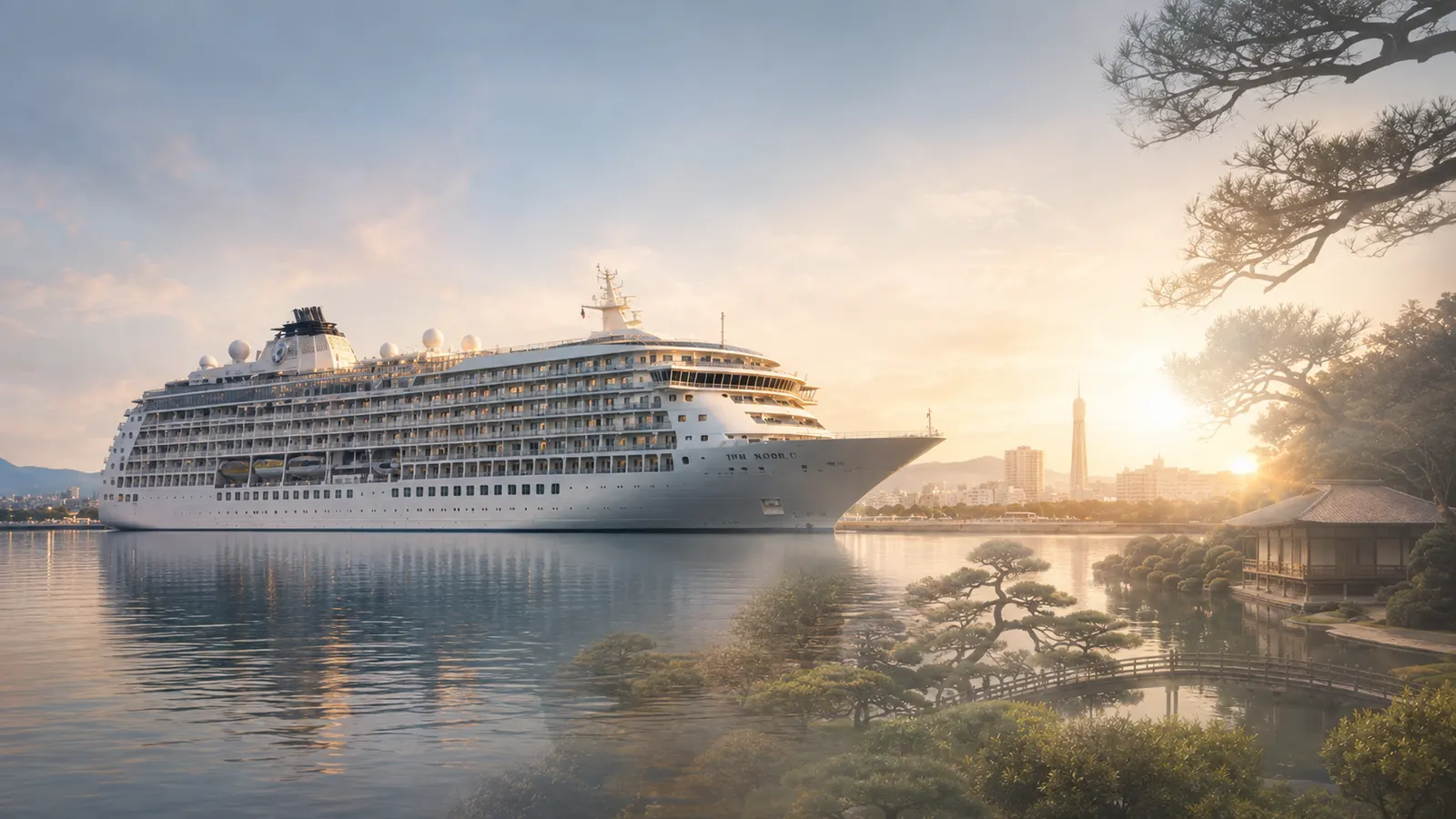
The cruise berth is at Sunport Takamatsu, in the Tamamo district: a 310m quay, including an 85m dolphin section, with 10m water depth and a 20m apron. It was built to 20,000-tonne class in 1998 and expanded to 50,000-tonne class in 2011. Vessels above roughly 100,000 GT berth instead at the Asahi district container terminal, which sits farther from the city and requires coordination with logistics operators — a distinction any programmer will already be checking.
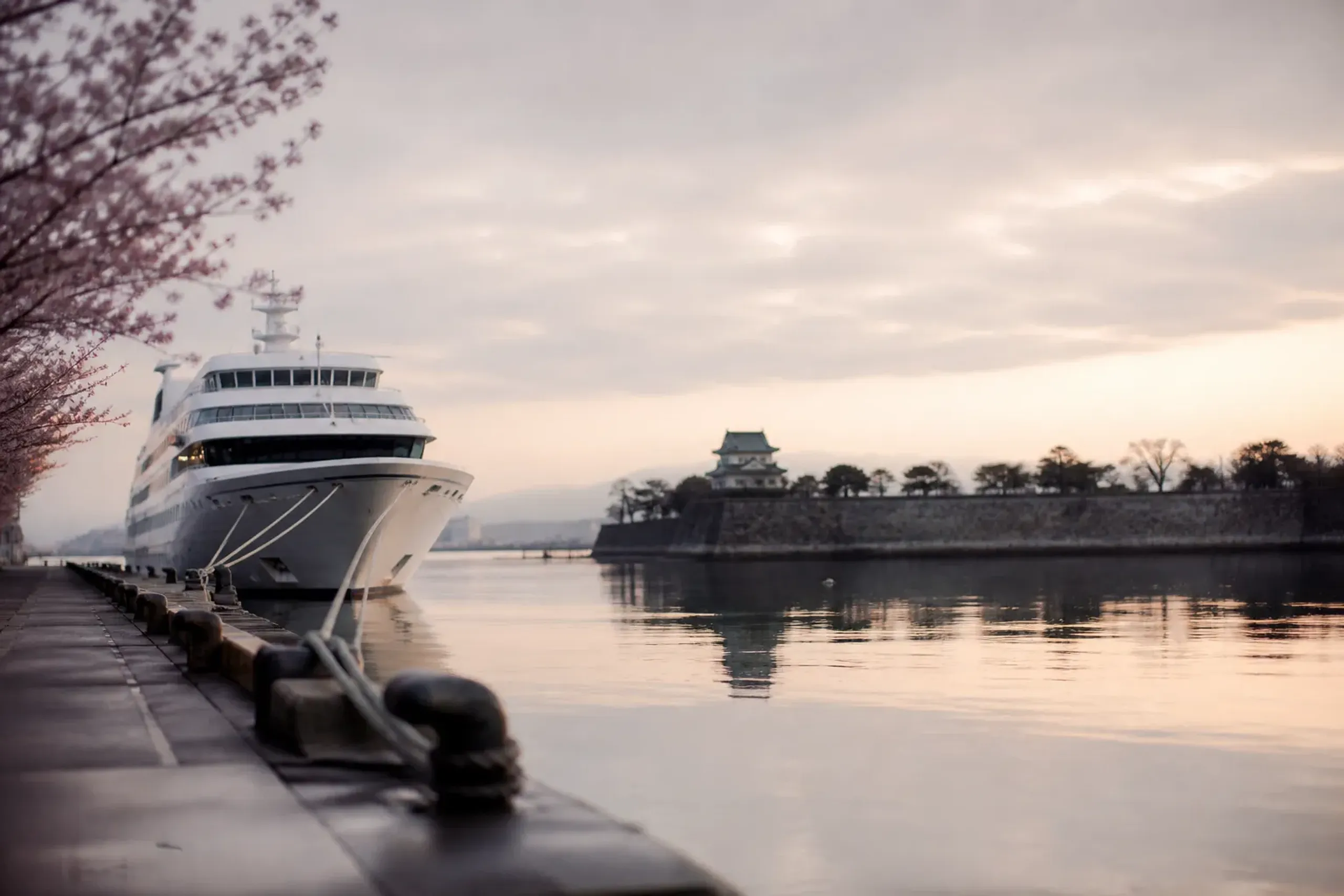
A long-term prefectural plan proposes extending and dredging the Tamamo berth to handle 110,000 GT; at time of writing that remains a proposal rather than a fact.
From the berth it is roughly 500m and seven minutes on foot to JR Takamatsu Station, and about 1.5km and five minutes by car to the city centre. Ritsurin is roughly ten to fifteen minutes by private vehicle from the port — about seven minutes from the station itself, though the figure we work to is the one measured from the quay, and it is confirmed once the berth is known. Takamatsu handles a growing volume of calls — 28 planned in 2025, a record at the time of writing. Berth specifications and current call handling should be confirmed as arrangements are made.
What Ritsurin is
Foundations were laid around 1631 by the engineer Nishijima Hachibee. Garden work was taken up in 1642 by Matsudaira Yorishige, the first lord of Takamatsu, and carried on generation after generation until the fifth lord, Matsudaira Yoritaka, completed it in 1745. That is roughly a century of continuous work by a single family, for their own use, with no expectation that anyone outside the domain would see it. It was the Matsudaira family villa garden until it opened to the public in 1875.
Japan designates its finest gardens tokubetsu meishō — Special Places of Scenic Beauty. Ritsurin received the designation in 1953, one of only twenty-four nationally, and at about 75 hectares it is the largest garden to hold that status. The garden proper runs to roughly 16 hectares; the remainder includes Mount Shiun as borrowed backdrop.
The Michelin Green Guide Japon gave it three stars in 2009.
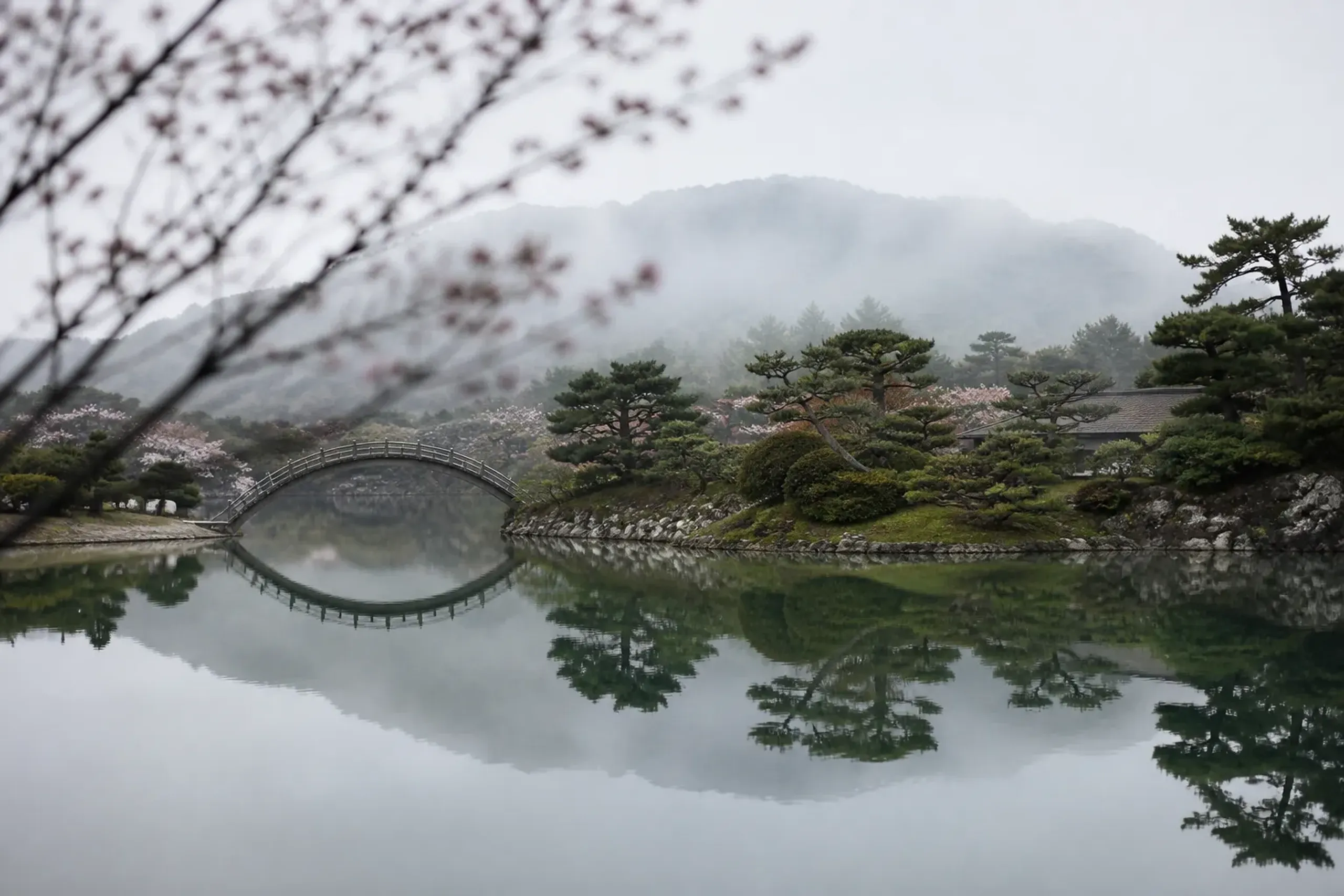
Within it are six ponds, thirteen artificial hills, and roughly a thousand hand-trained pines. Behind rises Mount Shiun. It is not part of the property and was never meant to be. The Matsudaira simply built the whole composition to point at it — shakkei, borrowed scenery, in which a mountain that belongs to nobody becomes the back wall of a private room. This is restraint as design: nothing gilded, nothing loud, a landscape composed to feel found rather than made.
One step, one view
The garden is known by a phrase — ippo ikkei, one step, one view. It is not a slogan but a technical description of what the designers achieved. The six ponds and thirteen hills are arranged so that no two positions on the path give the same picture. Round a rock and the mountain shifts. Cross a bridge and a pine you had read as a wall resolves into a corridor. Nothing is revealed all at once, and nothing repeats.
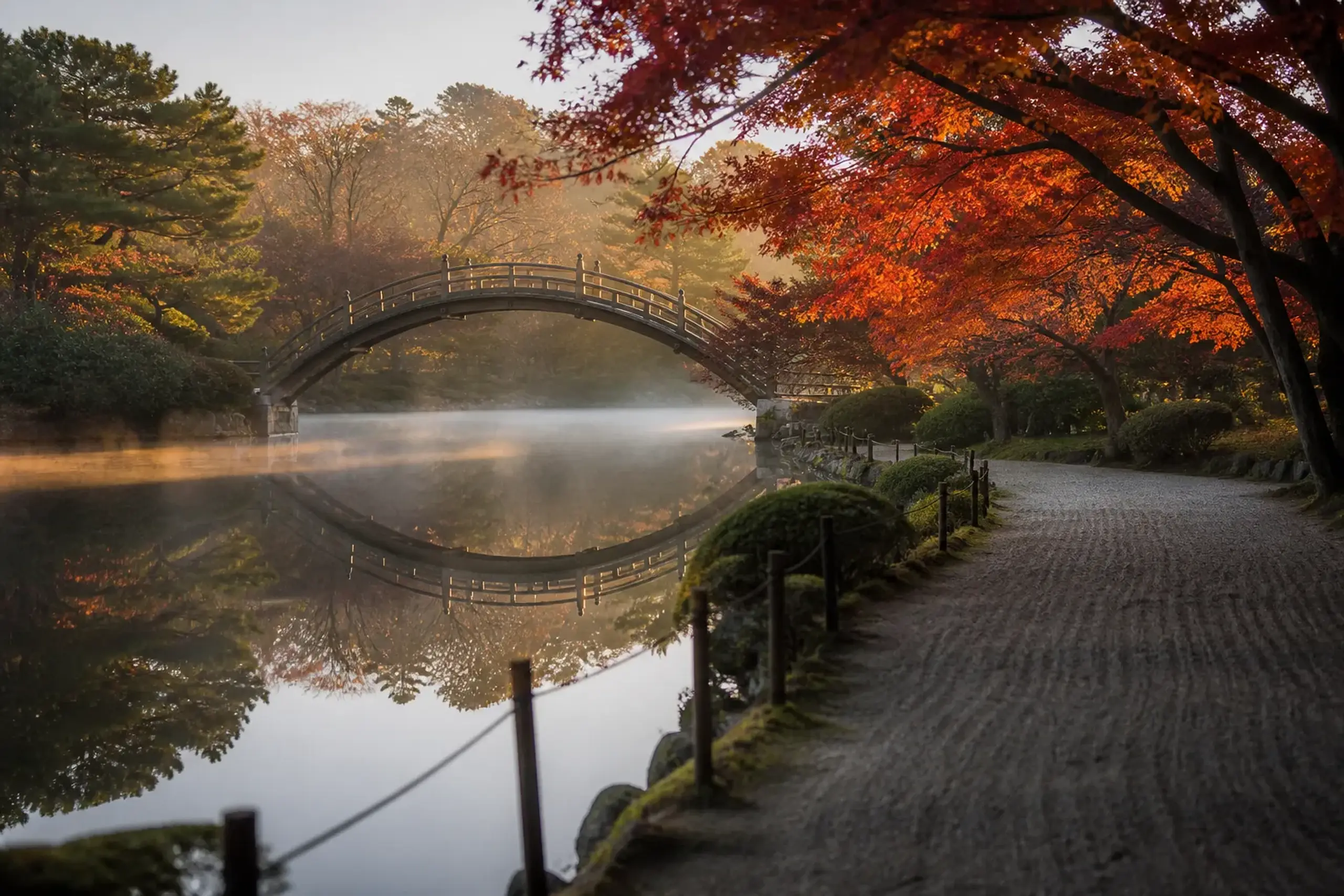
The composition resolves only in motion, which is why the garden rewards unhurried time — and why an hour alone in it is worth more than three in a group. It is also, quietly, why a photograph never quite carries it. The seasonal register matters too: the same path reads differently in the wet green of the rainy months, the fire of the maples, the bare structure of a winter morning.
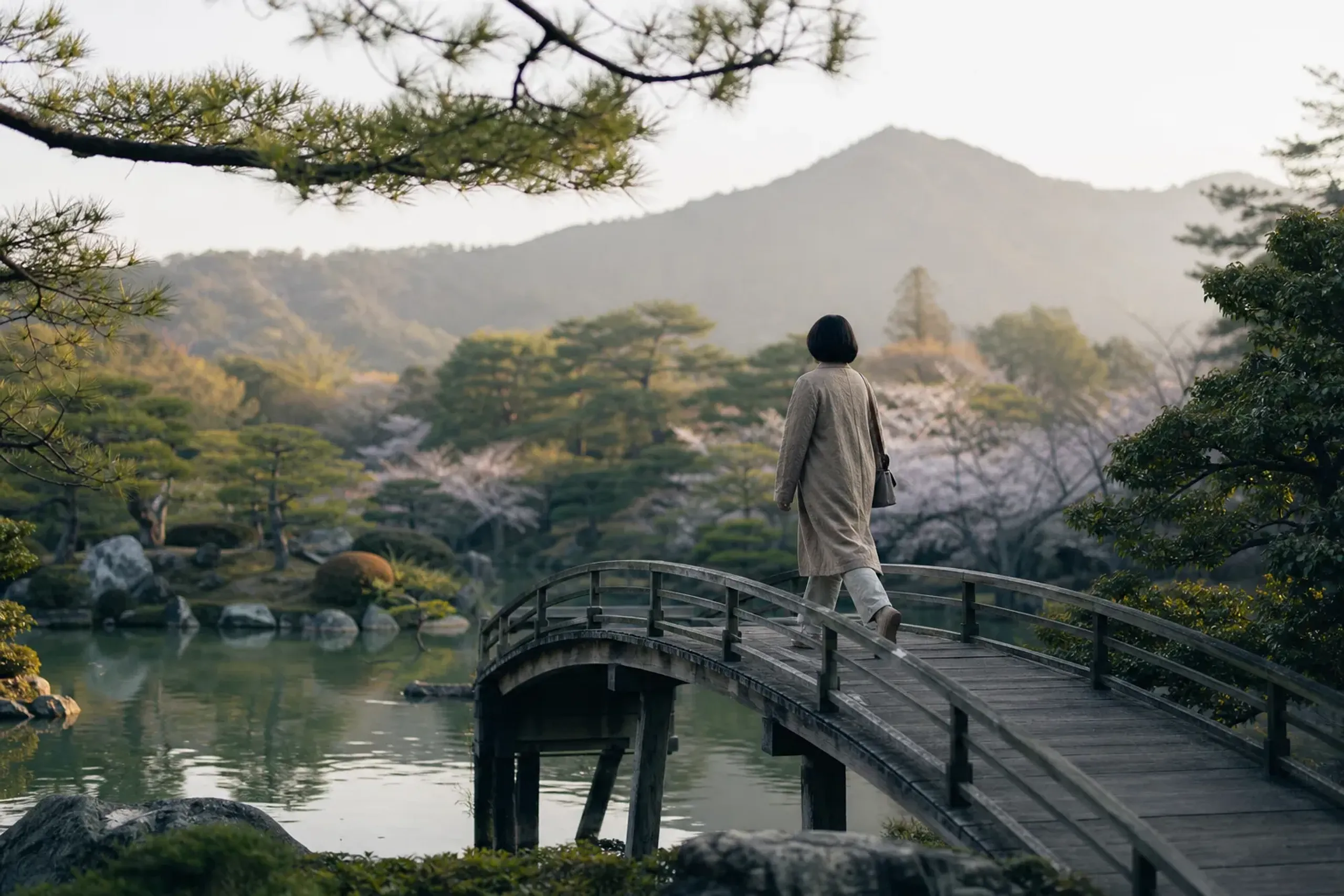
Knowing which month rewards which view is part of what a considered arrangement is for.
Kikugetsu-tei and Hiraihō
On the western shore of Nanko, the South Pond, stands Kikugetsu-tei, the great tea house — a sukiya-style structure of the late seventeenth century, called Ōchaya by the lords. It was originally seven structures set in the pattern of the Big Dipper; two were removed in early Meiji. Its name comes from a Tang poem: scoop up the water, and the moon is in your hand. It was built with a front on all four sides, low floors and few walls, so that the room seems to have no boundary between itself and the pond.
You take tea — matcha or sencha, with a seasonal sweet — sitting on the tatami with the shōji open, looking out at the water from the position the daimyō occupied. It is the one moment in the morning when the garden stops being a walk and becomes a room — the building holding the view still while everything outside continues to move.
Not far off rises Hiraihō, an artificial hill modelled on Mount Fuji. From it comes the garden's signature view: down to the arched Engetsu-kyō bridge, with Kikugetsu-tei beyond and Mount Shiun standing behind them both. It is the picture the whole garden is built to deliver, and it appears only when you have climbed to the one place that gives it.
The honest nuance
Ritsurin is not crowded at opening. It would be easy to sell a private morning as an escape from a scrum, and it would not be true.
The value is different, and worth stating plainly: the buildings are open outside public hours, a knowledgeable guide is present, and the garden is held quiet while the party walks it. That is the arrangement. Anyone who reads an inflated claim on this page would be right to discount everything else on it.
What a private morning involves
Private access at Ritsurin — before opening, after hours, and to a closed section of the garden not open to the general public — arranged with a chauffeured transfer from the berth and an English-speaking guide who works this garden specifically. The point of the guide is that the hundred years of decisions in front of you become legible rather than merely handsome: why a pine leans the way it does, why the path bends where it does, what the borrowed mountain is doing in the frame.
The pace is set by the slowest walker, which in a garden built on ippo ikkei is not a compromise but the correct way to see it. A vehicle is held at the East Gate for the duration. Tea at Kikugetsu-tei is included where it suits the party. Each element is shaped to the sailing window rather than to a published schedule.
Timing, mobility and party size
Everything is built backwards from the gangway. The alongside time comes first, then the drive, then the hours you actually want in the garden — and only then the plan.
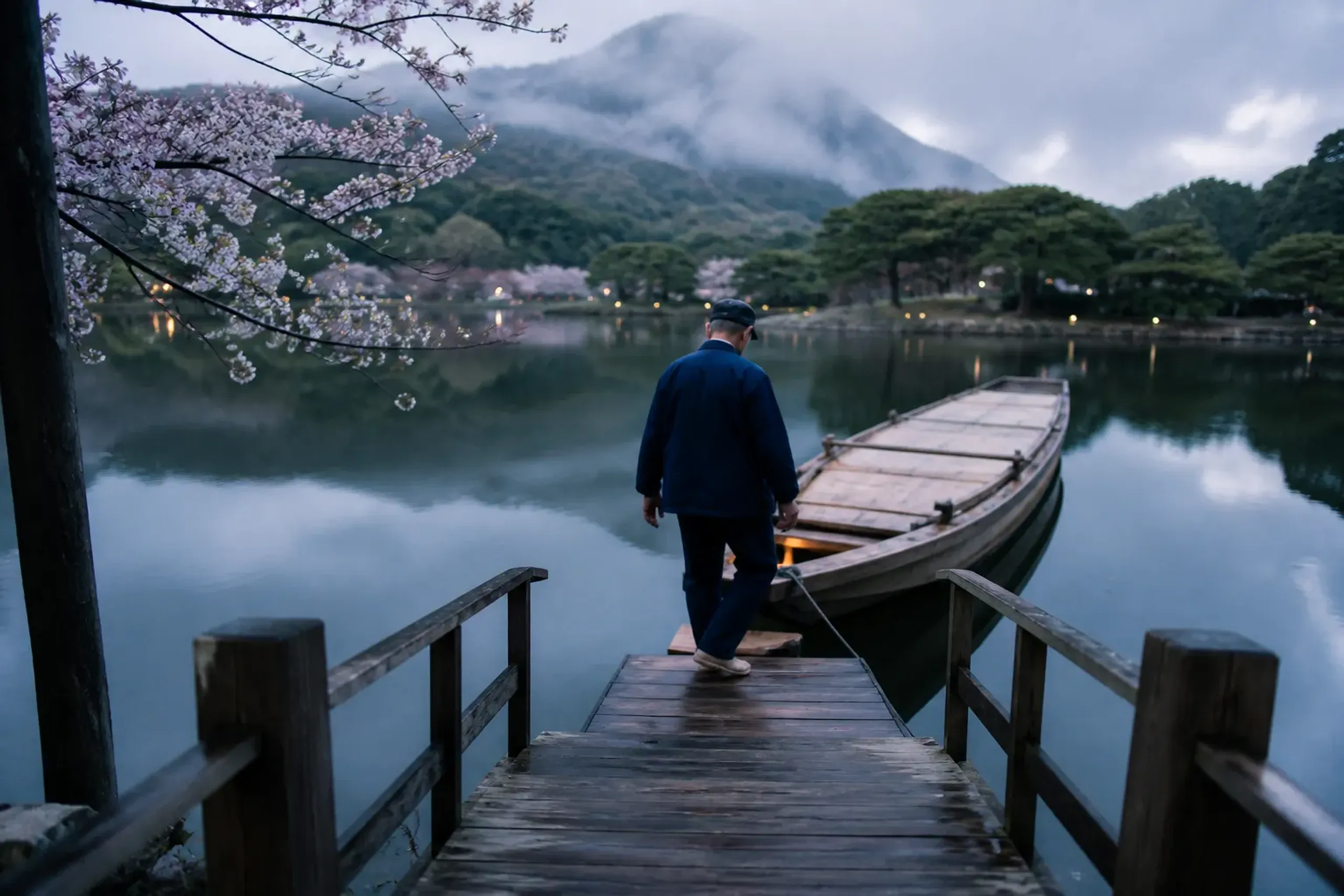
We name margin as a principle rather than publish a fixed schedule: berth to garden, time in the garden, and back aboard with room to spare, so that nothing goes into the day you cannot comfortably return from.
Private access suits a contained group. Larger parties change what is possible — vehicles, the pace, the quiet — and are best discussed early. As for weather: the garden is open year-round and rain suits it, softening the pines and settling the ponds. But a sound plan carries an indoor alternative, and the Sanuki folk craft museum inside the grounds serves well when the sky does not cooperate.
What else fits ten hours ashore
A full day allows more than the garden. Kotohira-gū, the great shrine reached by a long stone stairway, and Yashima, the plateau above the city, both sit within reach; and the Seto Inland Sea art islands are reached by ferry from beside the berth, which makes them unusually easy to fold into a Takamatsu call.
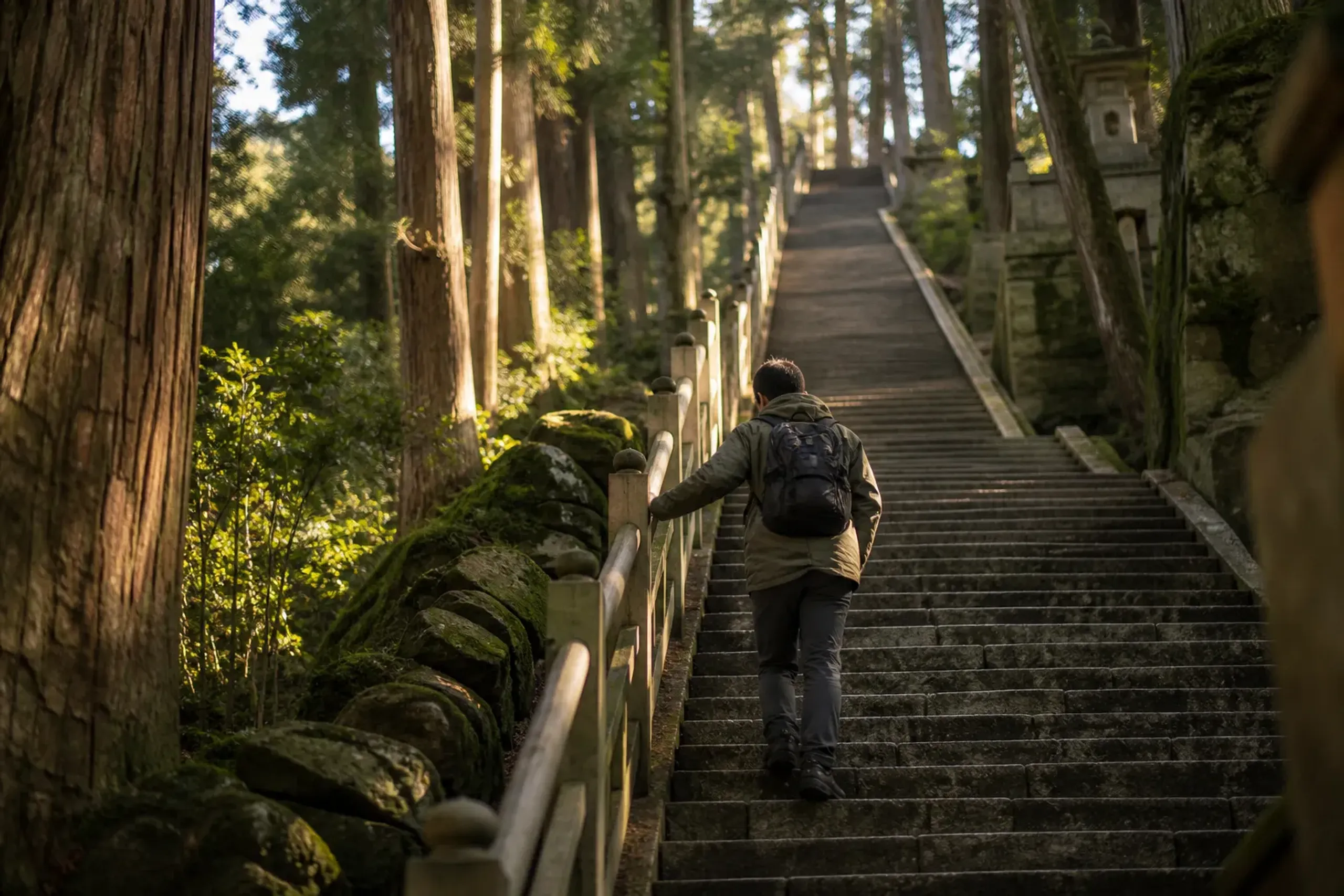
Any of these can extend a private morning at Ritsurin — enough to show the port is understood, without becoming a second itinerary.
Frequently Asked Questions
How far is Ritsurin Garden from the berth at Takamatsu?
Roughly ten to fifteen minutes by private vehicle, depending on the berth and the traffic. A drop-off at the East Gate puts you inside the garden within a few paces of the vehicle, which matters more than the drive: this is a significant garden reached without a significant journey.
Is a private morning about avoiding crowds?
No. Ritsurin is not crowded at opening. The value of pre-opening access is that the buildings are open outside public hours, a guide is present, and the garden is held quiet while the party walks it.
How long should we allow?
A morning. The garden was designed on the principle that the view changes with every step, which only works at walking pace — and a private morning is timed to leave ample margin before the sailing window.
An invitation
A private morning at Ritsurin asks only that you arrive before the day does. The rest — the transfer, the guide, the access, the pace — is arranged by Japan Royal Service as a single, quiet tailor-made plan shaped to your call.
Enquiries, itineraries and guest identities are handled in complete confidence. To begin, contact us here.
Access notes
We asked these questions of each place directly, and the answers are specific to it. Most guests will have no use for them; they are here because somebody will.
The prefecture publishes a designated wheelchair route through the grounds, and the garden lends wheelchairs at no charge and keeps accessible parking at the gate. The garden is large and partly gravelled, and tea can be taken on the entrance veranda of Kikugetsu-tei. The flat-bottomed wasen cannot be boarded in a wheelchair; a guest who can transfer with support can ride.