In this guide
- 01Understanding the Yamaboko Junko Processions
- 02What VIP Access Realistically Means at Gion Matsuri
- 03Mastering the Tsuji-Mawashi: The Art of the Float Turn
- 04Combating the Kyoto Summer: A Logistics-First Approach
- 05Where to Decompress: Kyoto’s 2026 Luxury Openings
- 06Cultural Etiquette for the Discerning Traveler
- 07How to Secure Premium Gion Matsuri Viewing
- 08Why Choose Japan Royal Service
July in Kyoto is defined by a single, monumental event: the Gion Matsuri. For over a millennium, this purification ritual linked to Yasaka Shrine has commanded the city's attention. The crowds are immense. The midsummer heat is heavy. Yet, witnessing these towering wooden juggernauts round a tight street corner remains an essential cultural rite of passage.
For the sophisticated traveler, navigating the ancient capital during its most significant month often results in exhaustion rather than enlightenment. Big mistake. Enduring stifling humidity shoulder-to-shoulder with thousands of onlookers is unnecessary. Our team at Japan Royal Service approaches this seasonal spectacle with tactical precision. True luxury during the Gion Matsuri lies in frictionless logistics, guaranteed sightlines, and finding pockets of quiet restraint amidst the roaring celebration.
Whether you seek the sheer architectural scale of the July 17 procession or the slightly quieter atmosphere of July 24, approaching the festival requires a master plan. Here is our meticulous guide to viewing the 2026 Gion Matsuri with total discretion and absolute comfort.
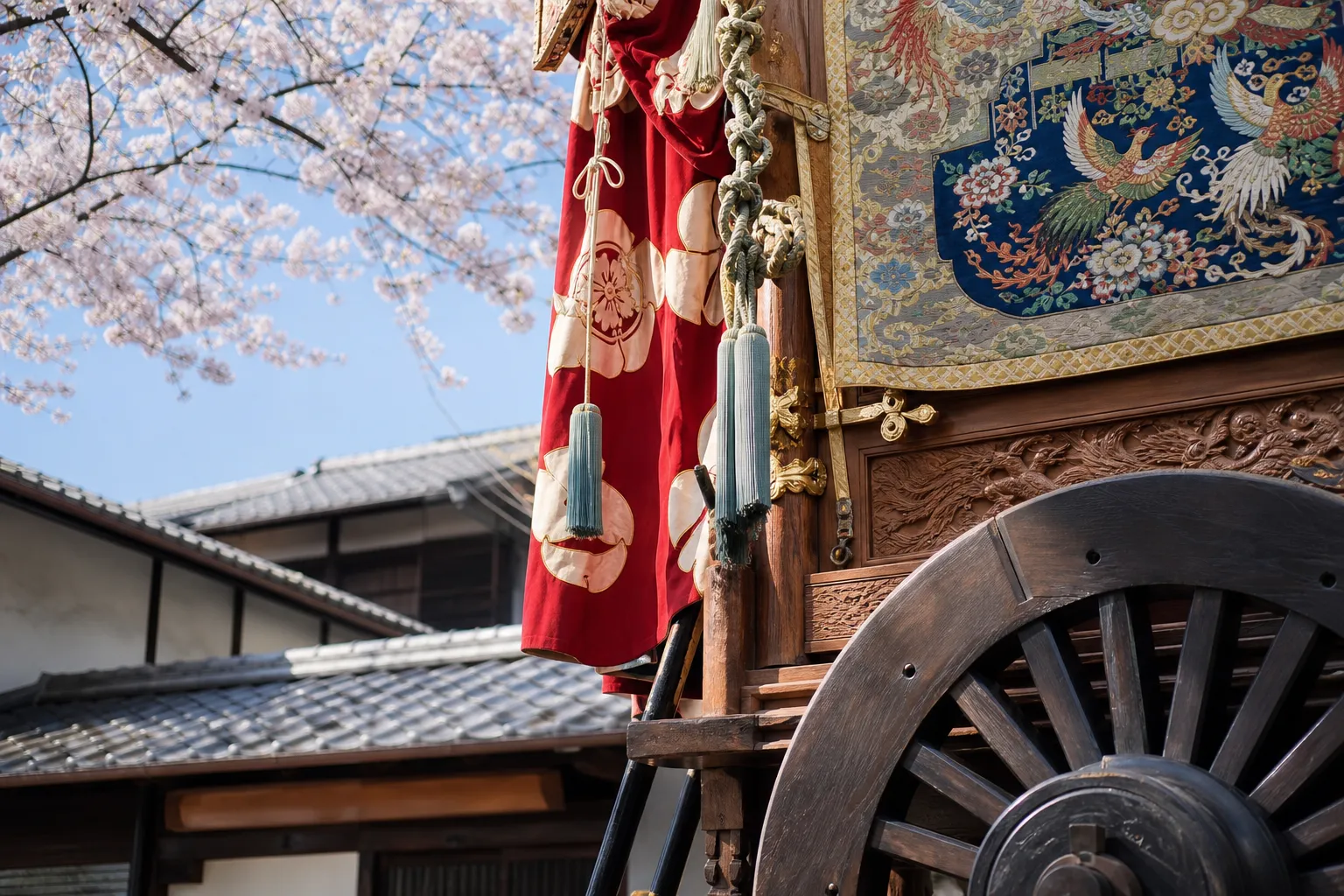
The magnificent Yamaboko floats are assembled entirely without nails, reflecting centuries of artisanal heritage.
Understanding the Yamaboko Junko Processions
The festival stretches across the entire month, but the undeniable climaxes are the two Yamaboko Junko (float processions). Recognizing the Japanese sense of perfect seasonality—shun—means knowing precisely which days to prioritize for your itinerary. The floats, some weighing up to 12 tons and soaring 25 meters high, are entirely assembled without a single nail.
| Procession Phase | Date | Float Count | Atmosphere |
|---|---|---|---|
| Saki-matsuri (Front) | July 17, 2026 | 23 floats | The grandest scale. Massive crowds, high energy, and the most dramatic turning maneuvers. |
| Ato-matsuri (Rear) | July 24, 2026 | 11 floats | More subdued and intimate. Excellent for those who prefer slightly thinner crowds. |
Both dates offer extraordinary displays of mobile craftsmanship. However, managing the surrounding environment is where careful curation becomes paramount.
What VIP Access Realistically Means at Gion Matsuri
There is no single "VIP ticket" that grants universal access to the festival. Instead, elevated viewing is achieved through specialized reservations and venue-based hospitality. We evaluate three distinct tiers of premium access.
Option A: Official Paid Viewing Seats
The Kyoto Tourism Association (DMO KYOTO) oversees official paid seating along the parade route. These reserved chairs remove the anxiety of securing a spot at dawn.
- The Reality: You receive a guaranteed seat with an unobstructed view of the route.
- The Nuance: These are outdoor seats. While you avoid the crushing standing-room crowds, you are still fully exposed to the July sun. Hydration and cooling strategies remain strictly necessary.
- Best For: Purists who want an upfront, unshielded view of the procession's scale and sounds.
Option B: Enclosed Hospitality Viewing
Select private businesses situated along the route capitalize on their vantage points by selling indoor or shaded viewing packages. A prime example for 2026 is the Kyoto Tsutaya Bookstore.
- The Reality: The bookstore offers paid viewing areas complete with free-flowing drinks and snacks.
- The Nuance: You sacrifice the immediate street-level acoustic impact, but gain crucial air-conditioned relief and private restroom access—a rarity in central Kyoto during parade days.
- Best For: Families or travelers who prioritize physical comfort over being mere inches from the floats.
Option C: Culinary Viewing Sanctuaries
For an impeccable fusion of gastronomy and event access, certain high-end restaurants curate exclusive lunch packages. Tempura Yasaka Endo, an esteemed Kyoto establishment, offers a Gion Matsuri viewing special.
- The Reality: For the July 17 procession, guests can reserve a specialized lunch package (priced at ¥38,000, inclusive of tax and service). This secures both an exquisite tempura meal and a dedicated viewing charge.
- The Nuance: This represents the apex of discreet festival viewing. You observe the cultural theater while engaging in top-tier culinary appreciation.
- Best For: Discerning epicureans seeking to bypass the public sphere entirely.
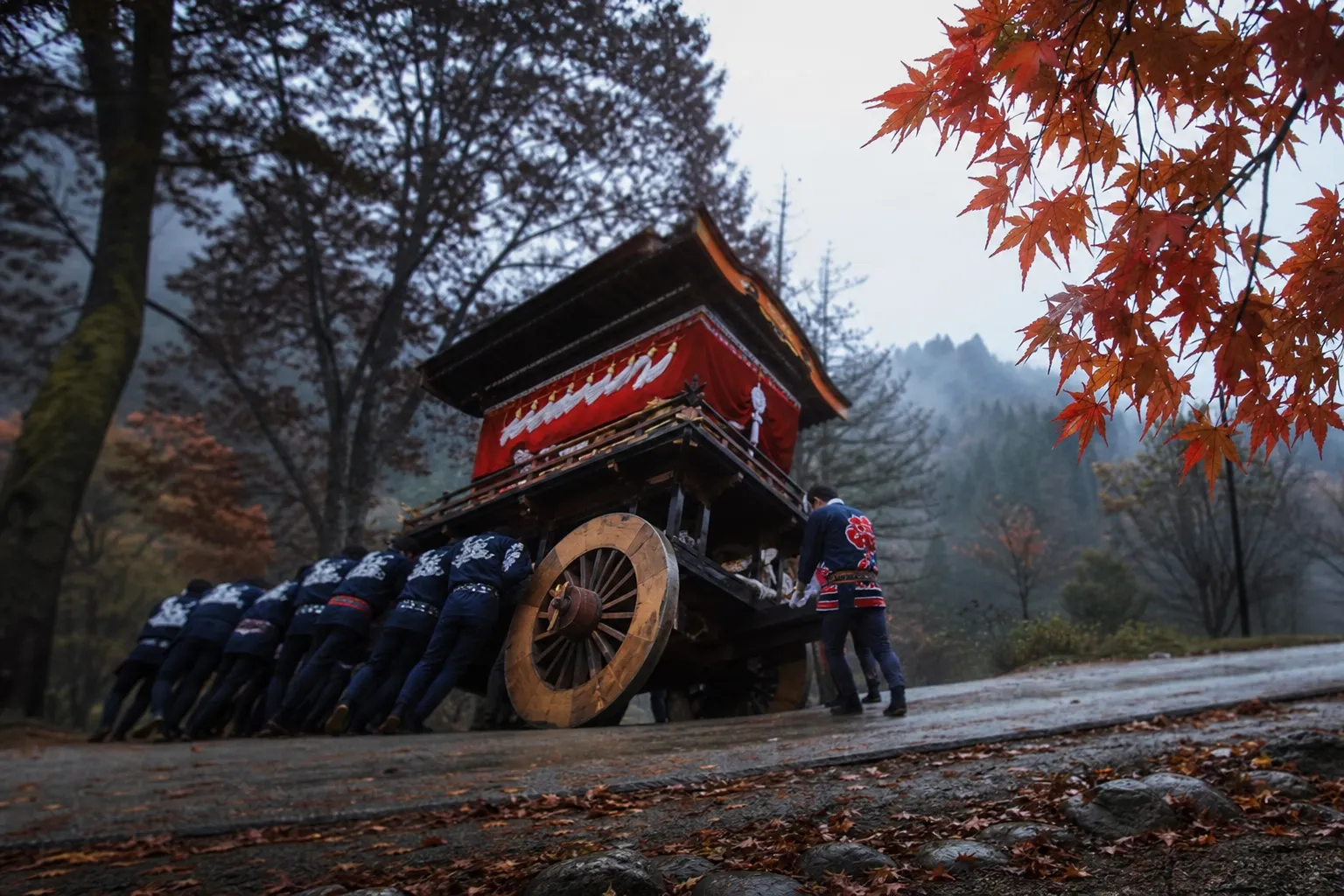
The tsuji-mawashi requires immense coordinated effort to rotate the unsteerable wooden giants.
Mastering the Tsuji-Mawashi: The Art of the Float Turn
The most anticipated sequence of the Yamaboko Junko is the tsuji-mawashi. Because the colossal wooden floats possess no steering mechanisms, crews must slide them across wet bamboo branches to execute 90-degree turns at major intersections. The tension is palpable. The chanting grows rhythmic and loud.
Naturally, the intersections where these turns occur draw the densest crowds. Navigating this requires a clinical stratagem. Relying on a spontaneous walk-up is unwise. Reserving a vantage point—such as the aforementioned restaurant packages or strategically located official seating—is the only way to witness the tsuji-mawashi without being subjected to intense physical pressure. Our concierge often advises viewing one turn, then immediately retreating to a quiet, shaded district for decompression.
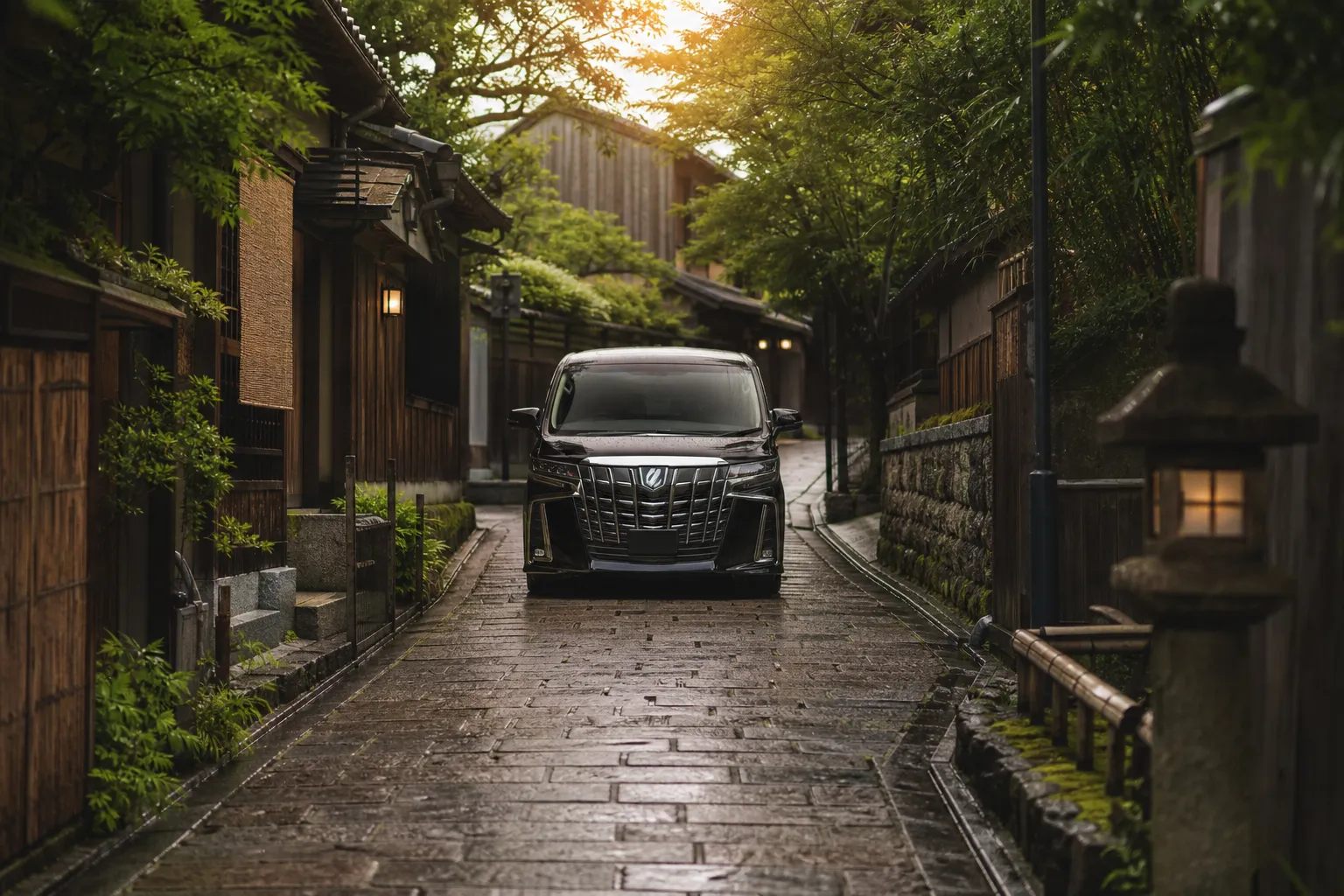
Strategic, climate-controlled logistics are essential for navigating Kyoto's intense midsummer heat.
Combating the Kyoto Summer: A Logistics-First Approach
Kyoto sits in a basin. By mid-July, the humidity is absolute. In our experience, the festival itself is only half the equation; the other half is thermal and logistical management. The aesthetic of wabi-sabi—often translated as an appreciation for quiet, unpolished restraint—can be actively applied to your itinerary. Find the moss-covered stone silence immediately after the noise.
A typical luxury approach involves deploying executive transport, such as a Toyota Executive Alphard or Lexus LM 500, to wait at the closest legally permissible perimeter. We choreograph arrival windows to minimize outdoor waiting times. Once the final float passes your viewing quadrant, the priority is an immediate, frictionless exit to a secluded temple garden or private tea session, far from the commercial center.
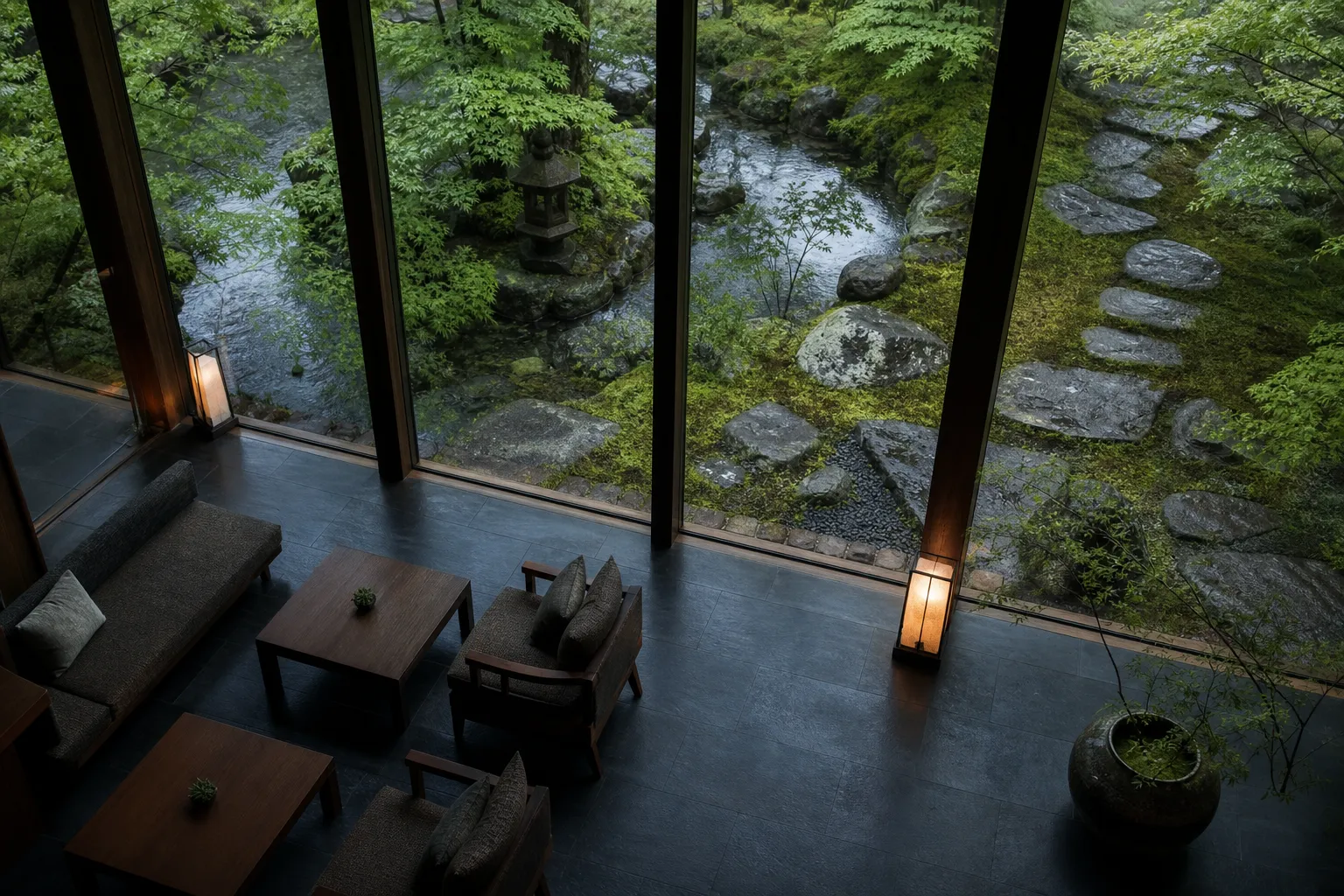
Following the morning procession, retreating to a quiet, imperial-class sanctuary provides essential restorative balance.
Where to Decompress: Kyoto’s 2026 Luxury Openings
A serene base of operations is crucial during the matsuri. 2026 has introduced highly anticipated properties that perfectly complement a discreet festival itinerary.
The newly opened Imperial Hotel Kyoto (which welcomed its first guests on March 5, 2026) offers an imperial-class narrative in the Gion/Yasaka vicinity. It provides a formal, culturally resonant sanctuary just steps away from the festival’s historical epicenter, yet entirely insulated from its chaos. Alternatively, Capella Kyoto, debuting in late March 2026, introduces a restorative angle. Featuring exclusive Shiseido spa treatments, it serves as the ultimate wellness reset after a morning exposed to the summer elements.
Cultural Etiquette for the Discerning Traveler
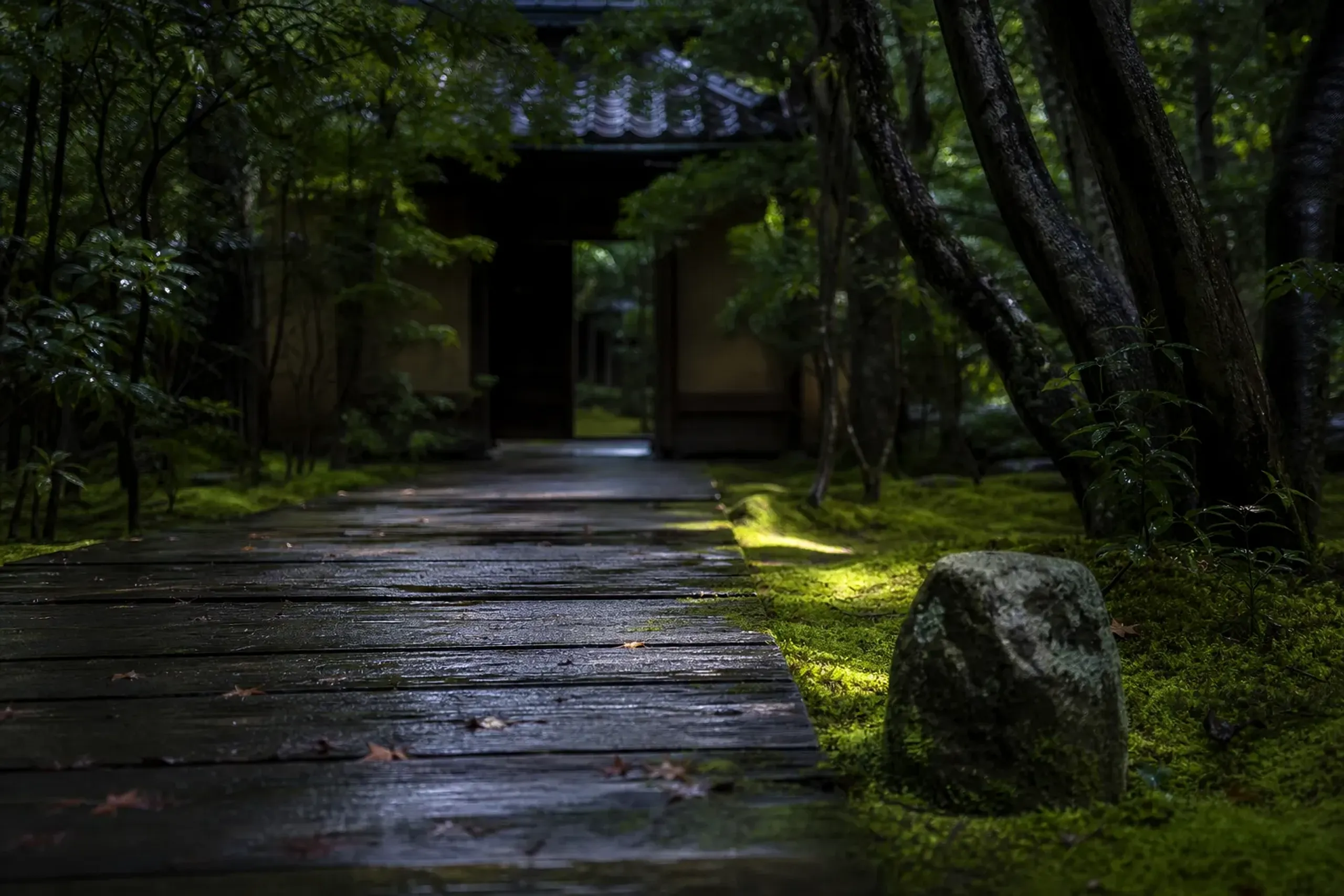
Attending a Shinto ritual requires specific mindfulness. The Gion Matsuri is not merely a parade; it is a centuries-old prayer for the city's health.
Key Guidelines for 2026 Attendees:
- Photography Boundaries: Do not obstruct the path of the float pullers or shrine personnel to capture a photograph. Flash photography is discouraged during the evening Yoiyama events.
- Attire: While high-end yukata (summer kimono) are customary and encouraged, ensure they are fitted properly by a professional. Barefoot walking in yukata is considered improper.
- Respecting Locals: Avoid photographing geiko and maiko without explicit consent, especially as they move swiftly between engagements in the Gion district.
How to Secure Premium Gion Matsuri Viewing
Demand for organized viewing during July 17 and July 24 drastically exceeds supply. Official paid seating for the Yamaboko Junko is managed by the Kyoto Tourism Association, which strictly governs group applications and individual ticket releases.
Restaurant viewing packages, such as those at Tempura Yasaka Endo, or hospitality zones at the Kyoto Tsutaya Bookstore, require advanced direct reservations with the respective venues. Timing is everything. Many of these allocations are claimed months in advance. Guests interested in understanding the timelines, evaluating venue sightlines, or exploring tailored guidance for Kyoto in July may contact our concierge.
Why Choose Japan Royal Service
At Japan Royal Service, we recognize that our clients value their time and comfort above all else. Experiencing Kyoto’s grandest summer tradition should feel like a privilege, not an endurance test. We specialize in the quiet orchestration of complex cultural access. From advising on the exact hour to witness the tsuji-mawashi, to coordinating your executive transfer away from the crowds, our team handles the invisible mechanics of luxury. Allow us to transform your Gion Matsuri experience from a crowded public spectacle into a curated, private revelation.
For private coordination and itinerary design, reach our team directly via our contact form.