In this guide
- 01What Makes Akiyoshidō Cave In Yamaguchi Worth A Luxury Detour?
- 02How Long Is Akiyoshidō Cave, And How Much Can You Actually Walk?
- 03When Is The Best Time To Visit Akiyoshidō Cave If I Hate Crowds?
- 04Akiyoshidō At 17°C: The Rare Luxury Of A Weatherproof Highlight
- 05The Formations You Should Not Rush: Hyakumai-zara, Kogane-bashira, Senjōjiki
- 06Kasa-zukushi And The Art Tunnel: Two Very Different Kinds Of Spectacle
- 07How Do You Enter Akiyoshidō Cave: Main Entrance, Kurotani, Or Elevator?
- 08After-Hours Akiyoshidō: What To Know About The Night Illumination (April 2026 Or Later)
- 09A Straightforward Logistics Plan From Shin-Yamaguchi Or Yamaguchi Station
- 101909 To Today: Akiyoshidō’s Public History In Four Dates
- 11Beyond The 1 km Route: Adventure Caving Courses (And Who They’re For)
- 12How This Cave Fits A HNW Itinerary: Quiet Precision, Not A Loud Checklist
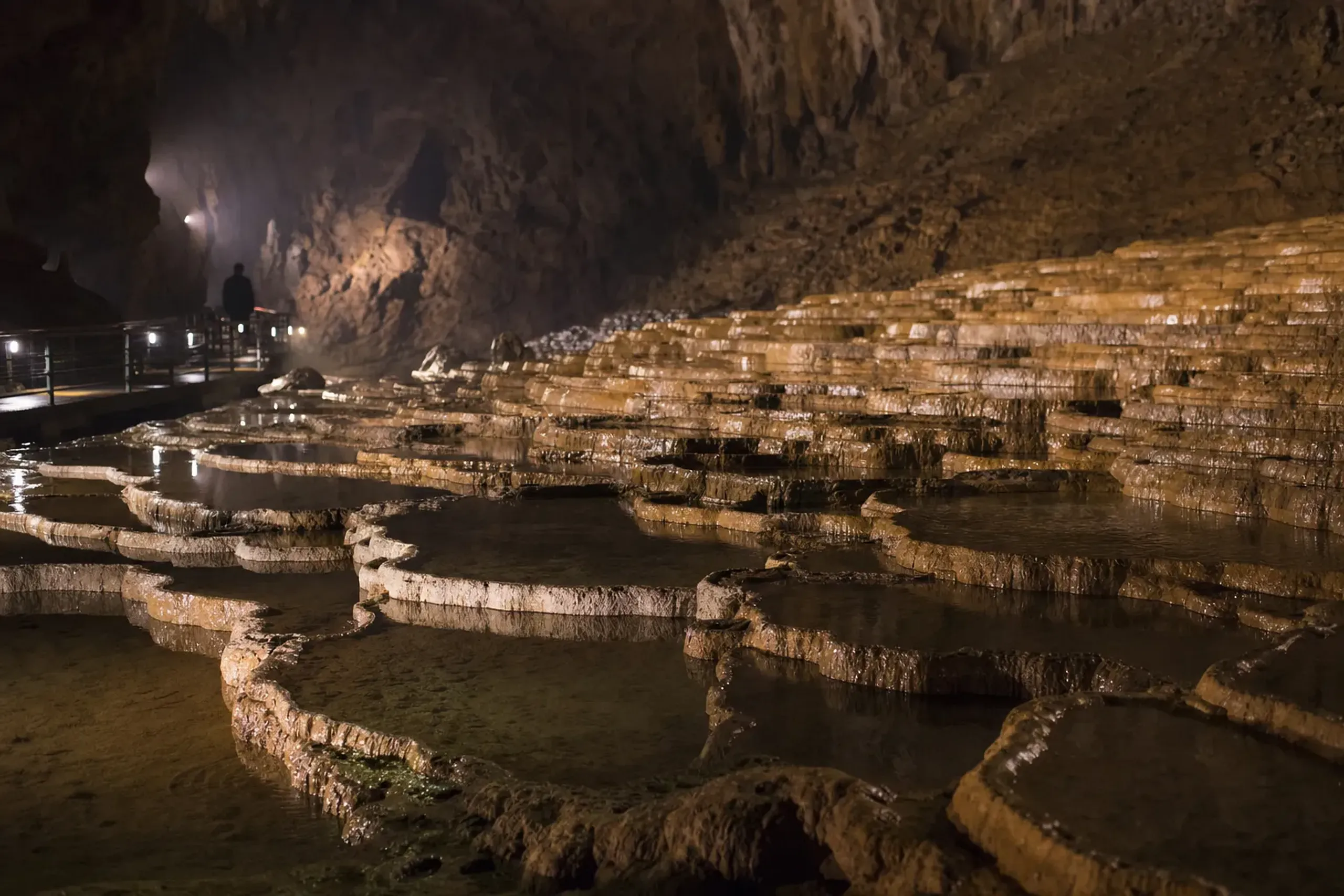
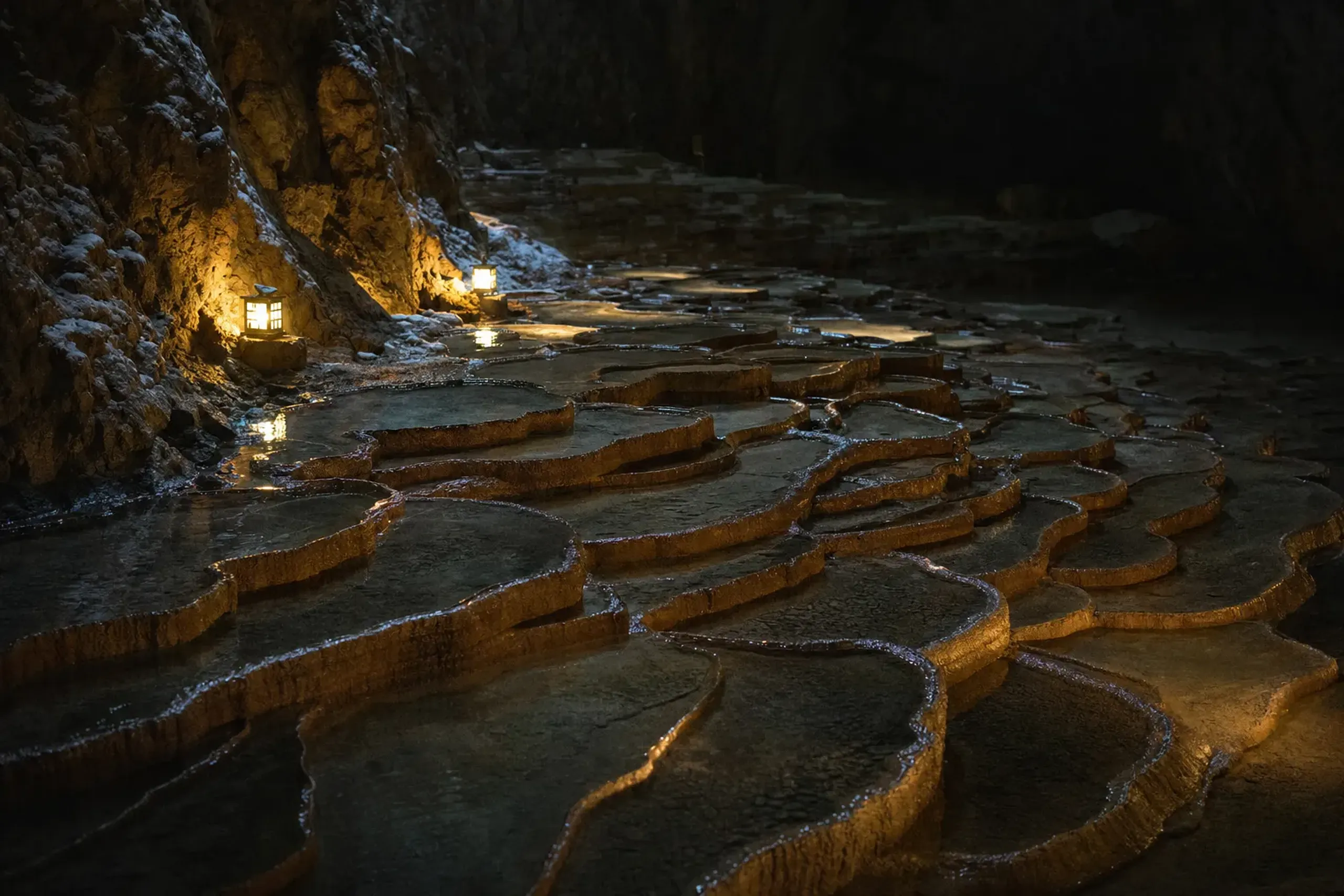
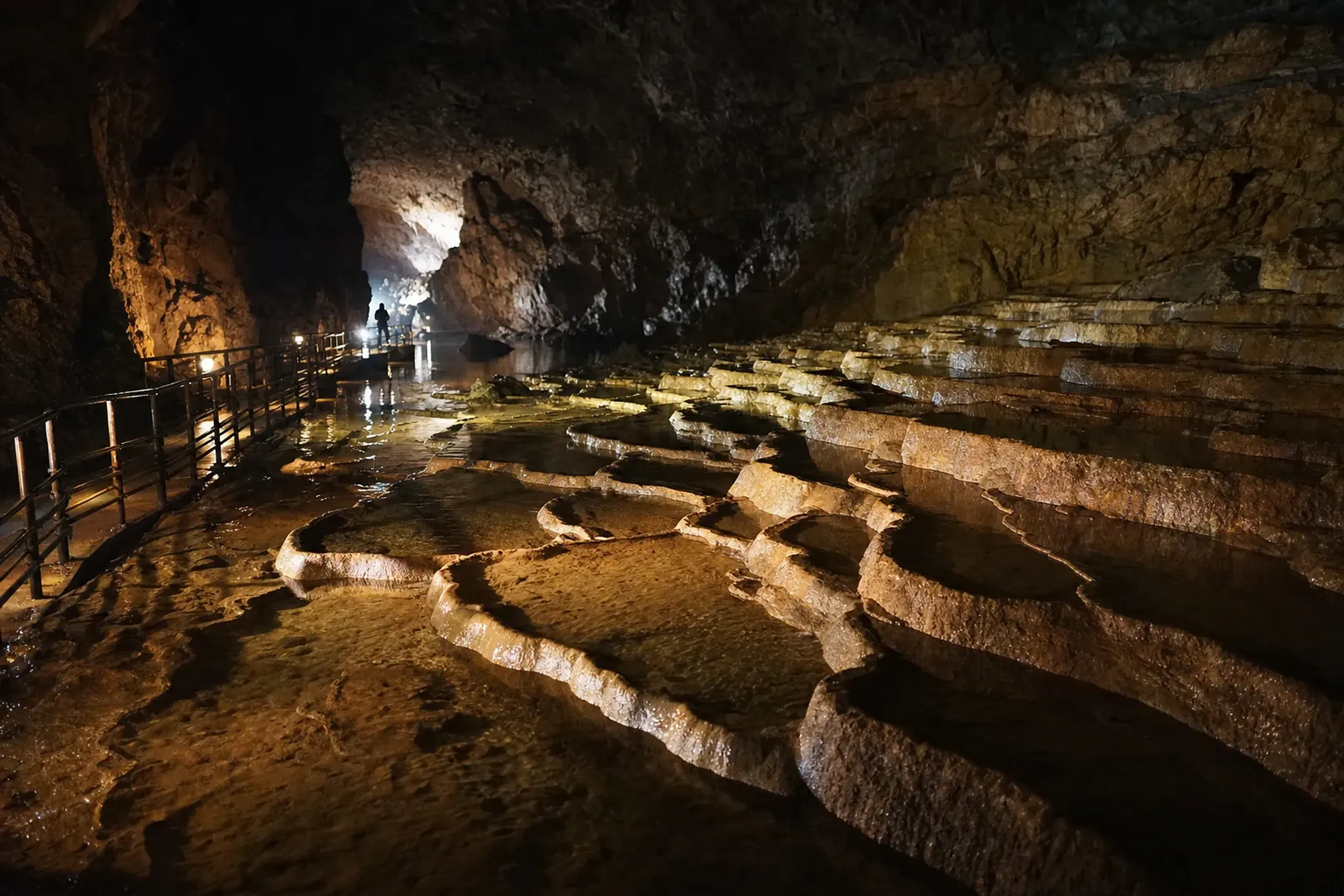
Stand in front of Hyakumai-zara at Akiyoshidō and the name starts to feel almost wry. “A Hundred Plates” is the old label for the cave’s terraced rimstone pools. Count what’s actually there and the truth comes into focus. More than 500 individual pools step down the limestone like miniature rice paddies, each one built by calcium carbonate carried in slow groundwater over an immense span of time.
This is why Akiyoshidō works so well for luxury travelers who dislike wasted effort. The experience is concentrated. The comfort is built in. And even when weather scrambles a plan above ground, the cave stays exactly the same—quiet, stable, and precise, indifferent to the season overhead.
Our team at Japan Royal Service uses Akiyoshidō for clients who want nature with structure: a defined walking route, a fixed interior temperature, and real substance you can verify with your own eyes. No vague promises. Just geology, time, and a scale that surprises even seasoned travelers.
What Makes Akiyoshidō Cave In Yamaguchi Worth A Luxury Detour?
Akiyoshidō is Japan’s largest limestone cave system by total known length, with a visitor route of about 1 km through formations like Hyakumai-zara and the 15 m Kogane-bashira, all held at a constant 17°C.
The cave sits roughly 100 meters beneath the Akiyoshidai karst plateau, inside Akiyoshidai Quasi-National Park. You feel that “underworld” distance immediately. Footsteps soften. Voices shrink. The ordinary noise of a travel day falls away.
It helps that Akiyoshidō is designated a Special Natural Monument, Japan’s highest natural heritage protection category. That designation isn’t mood-setting copy. It’s a formal status that shapes how the site is cared for, what changes are allowed, and how visitors are routed—a discipline of restraint that echoes the wabi-sabi sensibility of finding beauty in what time has quietly shaped rather than in anything gilded.
For HNW travelers, the luxury here is control. The cave is a reliable anchor day in Western Japan—cool in July, comfortable in January, and credible as a rainy-day plan that still feels like a genuine highlight rather than a fallback.
How Long Is Akiyoshidō Cave, And How Much Can You Actually Walk?
Akiyoshidō is generally described as exceeding 10 km in total length, while the standard visitor route covers roughly 1 km.
That “exceeds 10 km” figure is the simplest way to understand the system at a glance, and it’s the description you’ll see most often. There is also a more detailed survey: a diving-based measurement from the inner Kotogafuchi pool onward recorded 8,790 meters, connecting to a separate cave called Kuzugaana about 2.5 km to the east. Two numbers, two contexts. Both are useful.
On the ground, what matters is the walking. The public route is long enough to feel like a journey, but short enough that you can keep the day elegant—no rushed lunch, no sore knees that sabotage dinner, no “we should have left earlier” regret.
If you want pace control, this is where a private chauffeured transfer changes the tone. Not because the cave is hard to reach, but because you can choose your arrival window with intention, then leave the plateau without negotiating a timetable.
When Is The Best Time To Visit Akiyoshidō Cave If I Hate Crowds?
Arrive close to opening (around 8:30) on a weekday outside major holidays for the calmest Akiyoshidō walk, then move through the main chambers before mid-morning groups build.
Official hours are published as 8:30–16:30, with seasonal changes during periods like Golden Week and Obon. That means “best timing” is not a single month. It’s a clock strategy—the Japanese instinct for knowing precisely when a place is at its finest, applied to the hour rather than the season.
In our experience, the cave feels most private when you treat it like a morning performance. Enter early, walk steadily, and give yourself extra minutes at Hyakumai-zara and Senjōjiki rather than trying to photograph every single spotlighted corner.
One small behavioral shift helps. Don’t stop at choke points. Step aside, let people pass, then return to your frame. Your photos improve, and so does everyone else’s visit.
Akiyoshidō At 17°C: The Rare Luxury Of A Weatherproof Highlight
The interior temperature of Akiyoshidō stays at 17°C year-round. That number sounds like trivia until you build a trip around it.
Summer in Western Japan can be humid enough to blur the edges of a day. Winter can turn an outdoor itinerary into a negotiation. Inside the cave, the air is steady and clean, and your clothing choices stop being a gamble.
Bring a light layer even in August. Yes, really. After 30–40 minutes underground, many travelers start to appreciate a thin jacket, especially if you slow down for photos or linger near the larger chambers where air movement can feel cooler.
The Formations You Should Not Rush: Hyakumai-zara, Kogane-bashira, Senjōjiki
Akiyoshidō has many formations, but three are the spine of the visit.
Each one reads differently in person than it does in a brochure. That difference is the point.
Hyakumai-zara (“A Hundred Plates”): The Name Undersold It
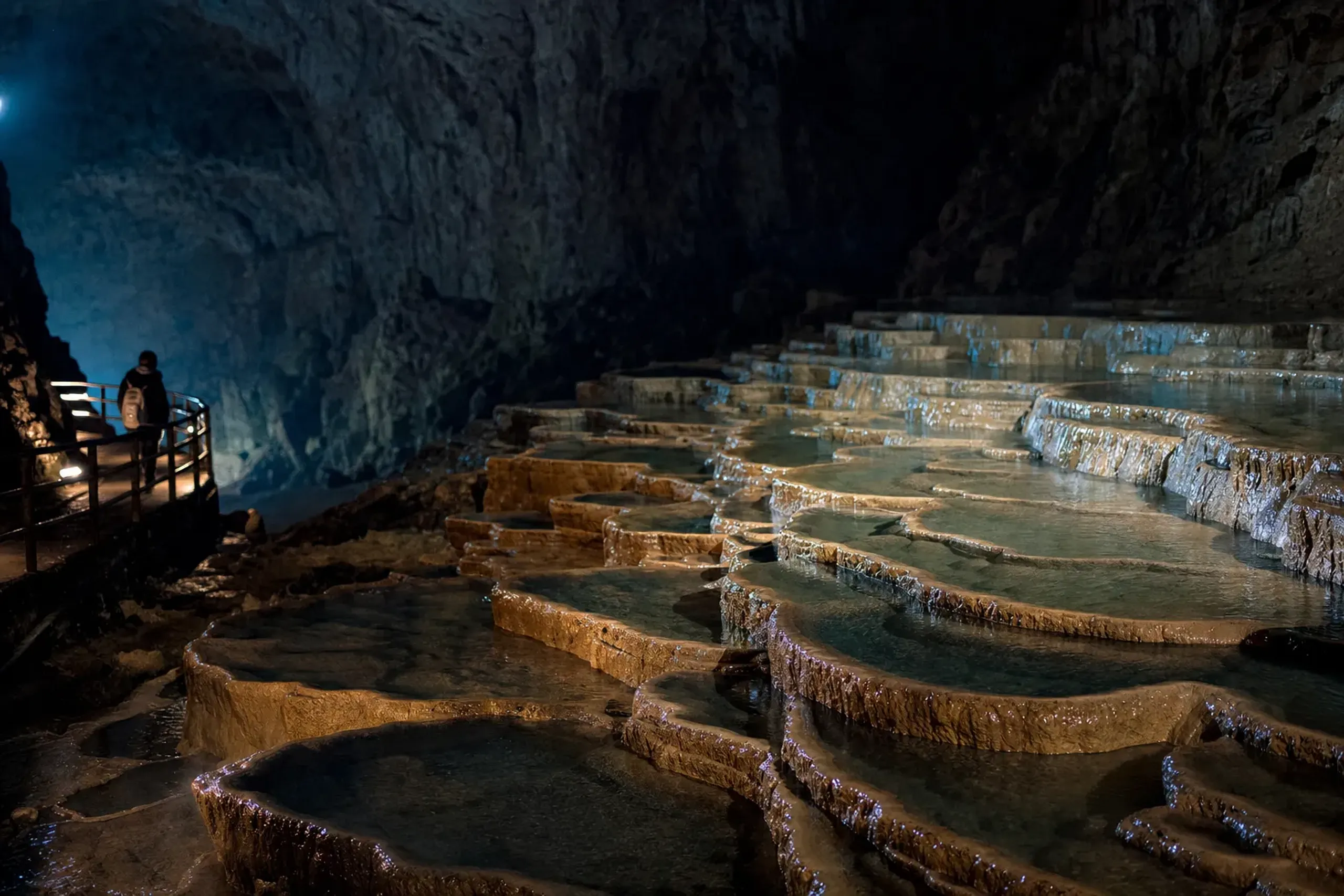
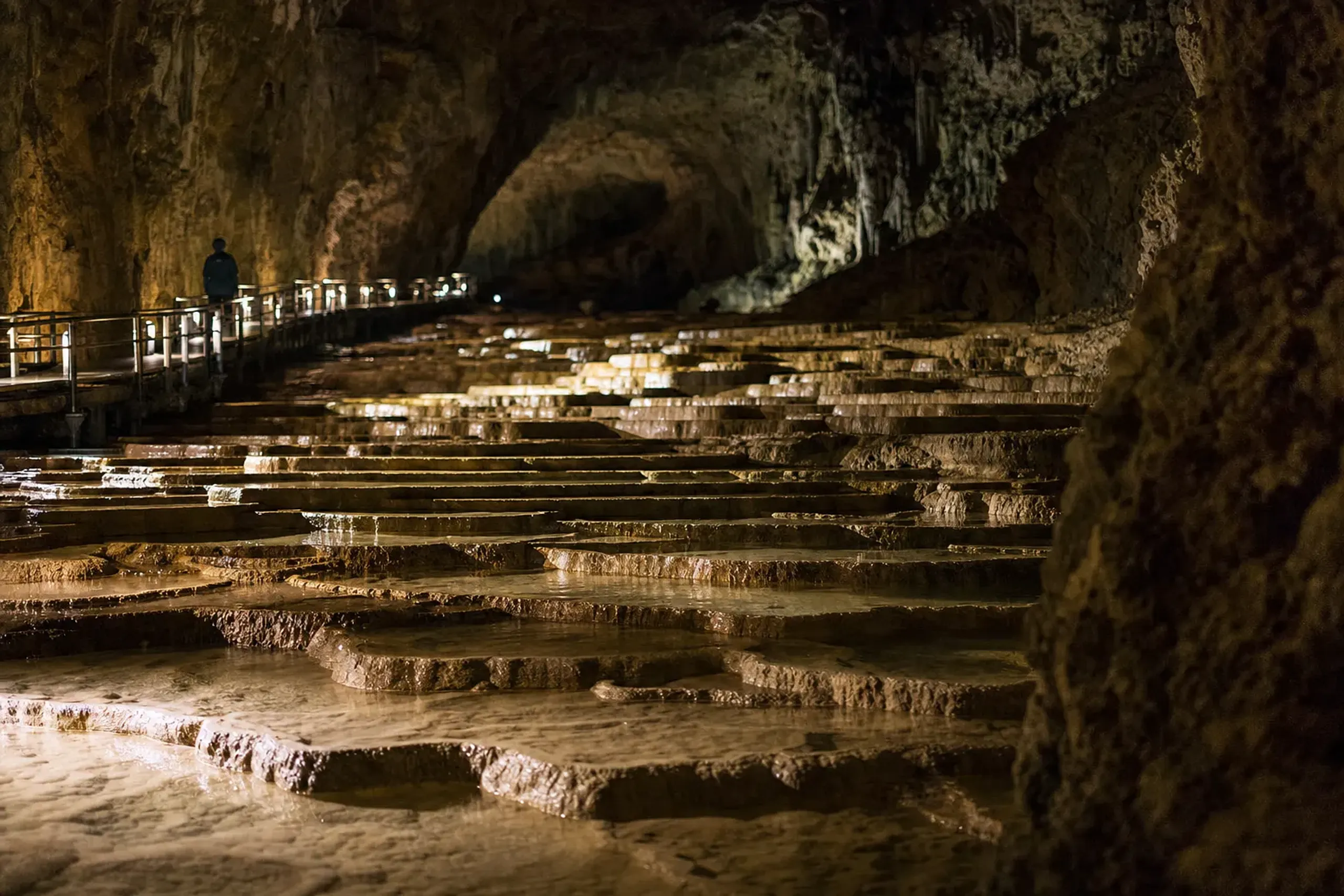
Hyakumai-zara is a series of terraced rimstone pools that resemble stepped rice paddies carved into stone. The old name says “hundred.” The reality is more than 500 individual pools.
Stand still and you notice the edges. Each rim is a thin, stubborn wall—mineral laid down over time, then reinforced, then laid down again. This is shokunin in a geological register: repetition, patience, and no shortcuts—the same devotion that defines a kiln master or a sushi shokunin, here performed by water instead of hands.
If you’re photographing, look for one frame that shows scale. Include a person at the edge, then step closer and isolate two or three pools. The best story is contrast. Big, then intimate.
Kogane-bashira (“Golden Pillar”): A 15-Meter Column Built By Water
Kogane-bashira is a flowstone column about 15 meters tall. It’s formed by groundwater that ran down a rock wall for tens of thousands of years, leaving mineral behind in thin layers.
It’s also the cave’s symbolic centerpiece, and you can feel why. The lighting turns the surface warm, almost lacquered. The texture is not smooth. It’s ridged, like the memory of water’s path made visible.
This is the moment to lower your voice. Not for ceremony. For attention.
Senjōjiki: The Chamber Where You Walk On An Ancient Collapse
Senjōjiki is a vast chamber roughly 90 meters wide and 120 meters long, with about a 30-meter difference in floor height.
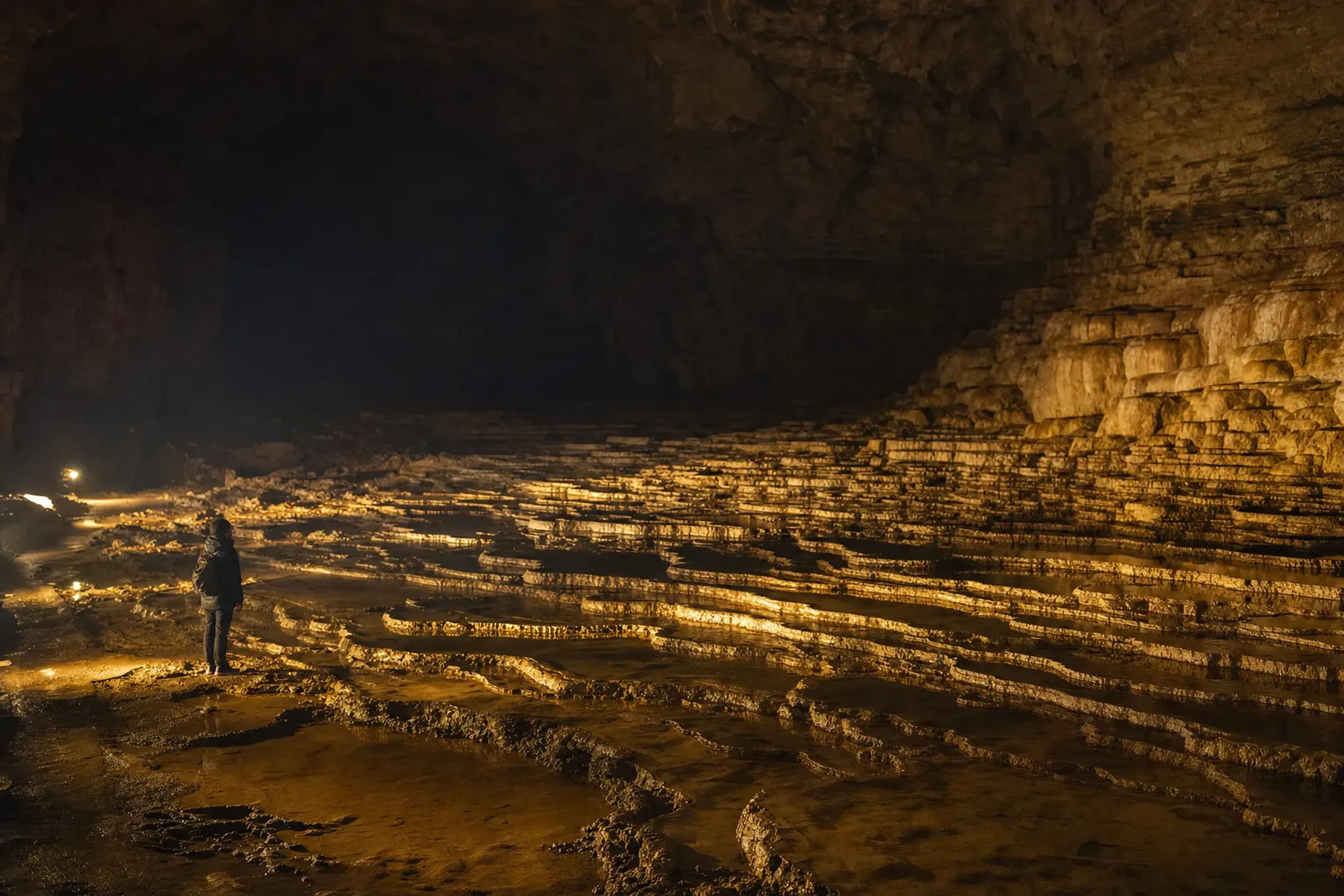
It has been described historically as Japan’s second-largest underground chamber, and the largest still accessible today.
Here’s the detail many visitors miss: the visitor route climbs directly over a massive rockfall layer that occurred tens of thousands of years ago. You are walking across the collapse itself. Not around it.
That’s a rare kind of intimacy with deep time. It’s not a viewpoint. It’s contact.
Kasa-zukushi And The Art Tunnel: Two Very Different Kinds Of Spectacle
Akiyoshidō isn’t only grand chambers and famous pools. There are sections designed to trigger a quick intake of breath. Two stand out for opposite reasons.
Kasa-zukushi (“Umbrella Array”): Ceiling Forests Of Stalactites
Kasa-zukushi is where countless stalactites hang from the ceiling, said to resemble the hanging stock of an old-fashioned umbrella shop. The lighting is part of the presentation. The effect is deliberate.
If your instinct is to take ten photos in ten seconds, pause. Let your eyes adjust. The density is the story, and it reads best when you scan slowly from one side to the other.
The 187-Meter Tunnel Near The Exit: A Modern Coda
Near the exit, you pass through a 187-meter artificial tunnel with illuminated visual art and music depicting the formation of Akiyoshidai from Earth’s early history to the present. It’s a distinct modern addition to the natural route.
Some travelers love it. Others prefer to treat it as a short transition back to daylight. Either way, it’s worth knowing in advance so the shift doesn’t feel abrupt.
How Do You Enter Akiyoshidō Cave: Main Entrance, Kurotani, Or Elevator?
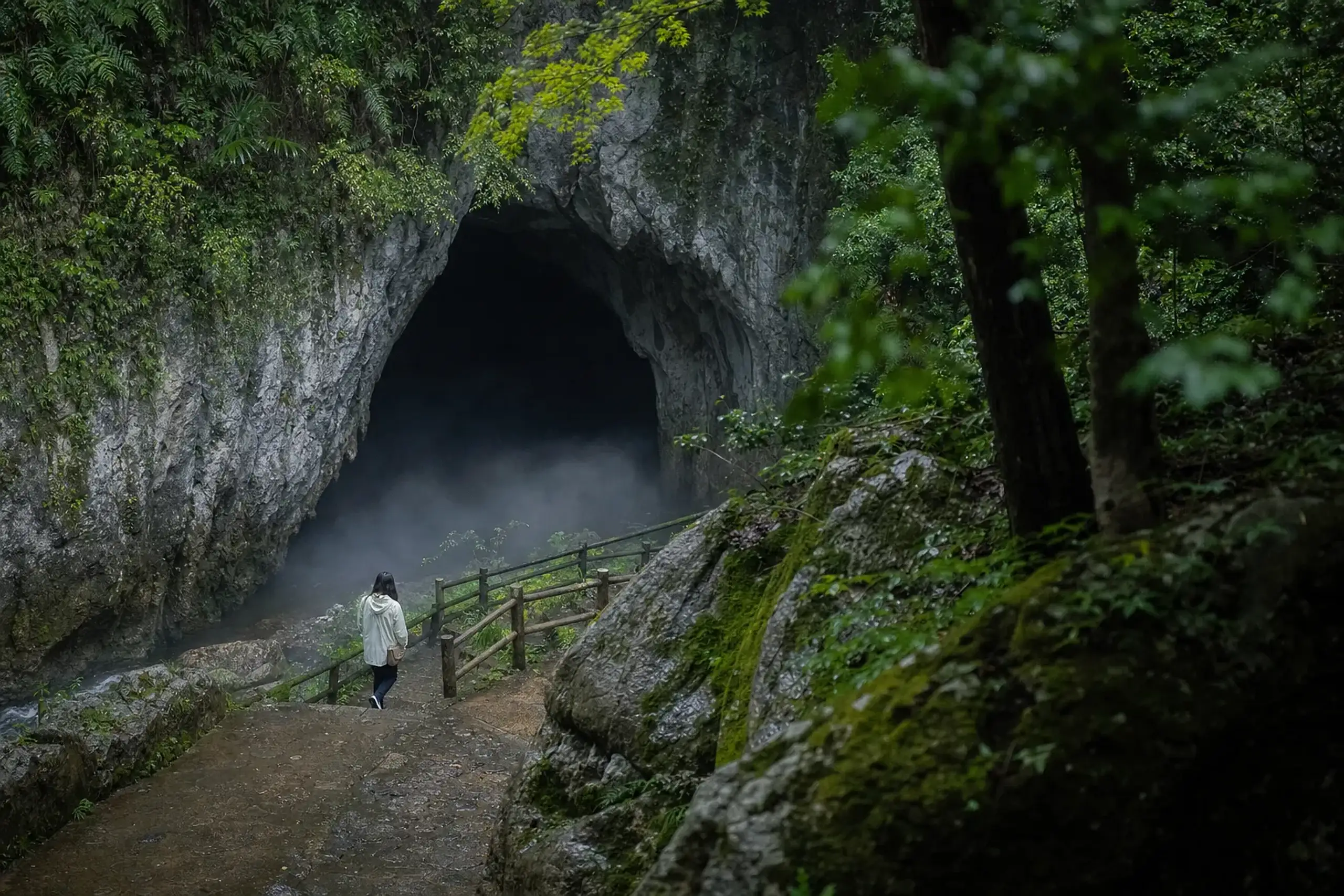
You can enter Akiyoshidō via the Akiyoshidō Entrance, the Kurotani Entrance, or an elevator entrance in the middle of the cave that connects toward Akiyoshidai above.
The main entrance is the classic approach. It’s straightforward, and for most first-time visitors it matches expectations. The Kurotani Entrance is another option that can change the flow of your walk, which matters when you’re trying to time your quiet moments in the bigger chambers.
The elevator is the pivot point for travelers who want to combine the cave with the plateau. Official information notes this middle-of-cave access and its availability in recent years. It’s not a secret route, but it can be a smart design choice when you want to come out of the earth and immediately move into open sky.
Key fact: The standard visitor route is about 1 km, so “which entrance” matters less for distance and more for pacing, crowd timing, and whether you want to link directly to Akiyoshidai.
After-Hours Akiyoshidō: What To Know About The Night Illumination (April 2026 Or Later)
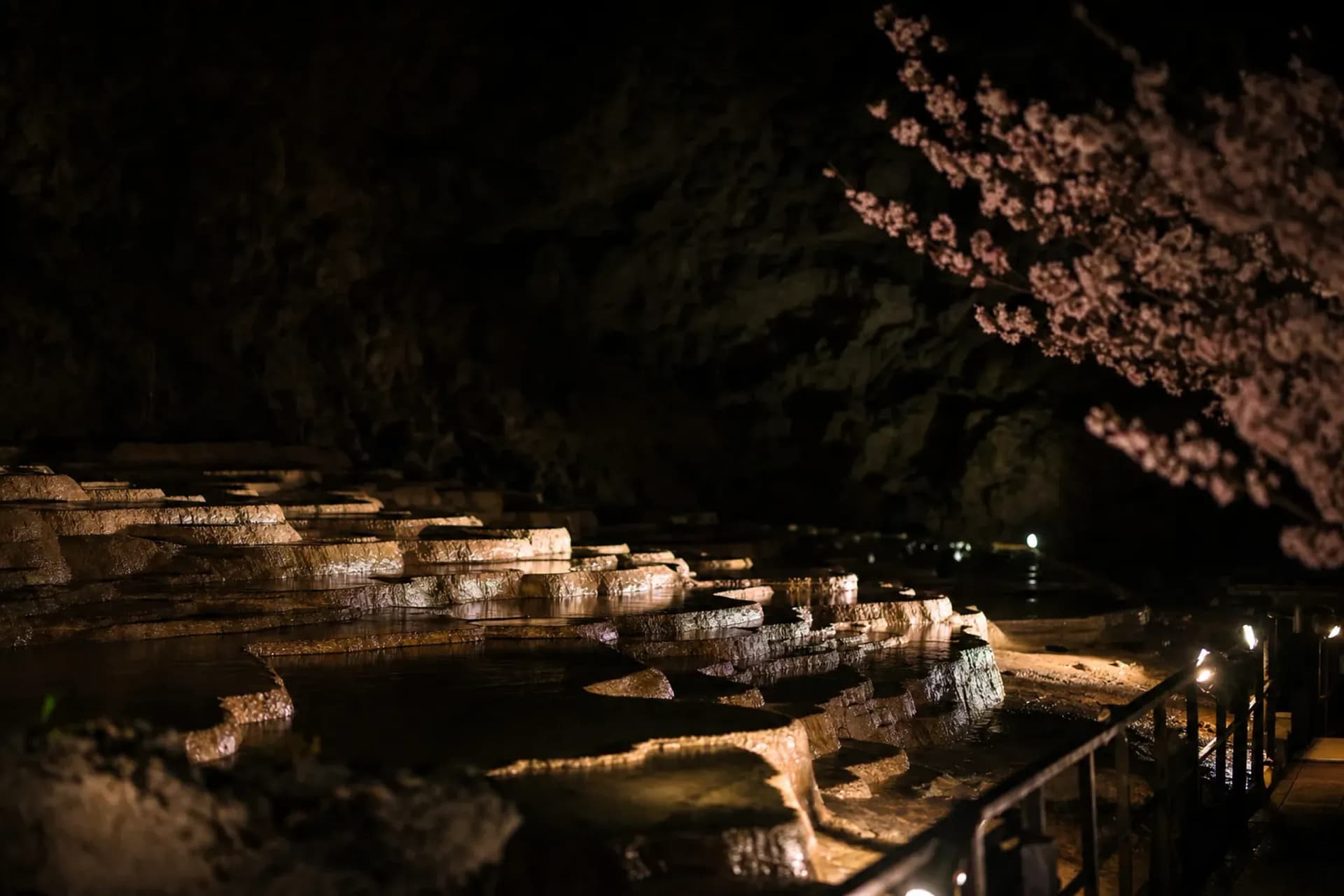
The Akiyoshidō Cave Night Illumination is a limited-capacity, bamboo-light guided program scheduled for April 2026 or later, typically running 17:30–19:30 with small groups.
This is the version of Akiyoshidō that changes a “nice stop” into a planned moment. Light becomes softer. The cave becomes quieter. You stop thinking like a day visitor and start listening for the small sounds: water, shoes, breath.
The project site describes a capacity of 20 participants per tour, and notes that schedules may vary. It also lists local cooperation and support, including Mine City and Mine City Tourism Association, and support by the Agency for Cultural Affairs under an FY2025 utilization program (as stated on the page). Those details matter because they signal the program is structured, not improvised.
Guests interested in learning more may contact our concierge for tailored guidance, arranged with complete discretion—your interest, your identity, and your itinerary stay entirely private. We verify current availability, timing, and any operational updates before you commit the evening to it.
A Straightforward Logistics Plan From Shin-Yamaguchi Or Yamaguchi Station
If you’re planning without a car, published guidance notes that JR Bus runs between Yamaguchi Station and Akiyoshidō (about 60 minutes), and Bocho Bus runs between Shin-Yamaguchi Station and Akiyoshidō (about 45 minutes). Service levels and schedules can change, so treat times as planning baselines, not guarantees.
If you’re planning with a driver, the experience becomes calmer. You can time entry for the quiet windows, keep luggage out of sight, and avoid turning a cave visit into a bus-connection puzzle. Folded into a tailor-made itinerary, the cave becomes one measured beat in a day designed entirely around your pace.
We often suggest one simple rule: decide first whether Akiyoshidō is a morning anchor or an evening anchor. Then build meals and check-in around that. Everything else follows.
1909 To Today: Akiyoshidō’s Public History In Four Dates
Akiyoshidō opened as a tourist cave in 1909 with a formal opening ceremony led by Umehara Bunjirō. That’s not ancient history. It’s modern Japan choosing to share a subterranean landmark with the public.
The protection timeline is unusually clear. Akiyoshidō was designated a national Natural Monument in 1922, upgraded to Special Natural Monument status in 1952, and included within the national park designation in 1955. Large-scale interior lighting was installed in 1960.
In 2007, Akiyoshidō and Akiyoshidai were selected among Japan’s “100 Geological Sites.” For travelers who care about substance, this is reassurance: the site is significant in a formal, documented way.
Beyond The 1 km Route: Adventure Caving Courses (And Who They’re For)
Adventure caving courses exist beyond the general tourist path, and a beginner-friendly option is explicitly open to visitors from elementary-school age.
These programs require different equipment and a different mindset. Think flashlights, ladders, and narrow spaces between formations. Not everyone will enjoy it. That’s fine.
If you’re traveling as a family, the “elementary-school age and up” note is useful because it turns adventure into something you can plan for, not a last-minute gamble. If you’re traveling as a couple, it can be an unusual shared memory that feels earned.
Our concierge team verifies current route availability, course options, and any seasonal access changes privately ahead of the visit. Conditions change. We plan like they do.
How This Cave Fits A HNW Itinerary: Quiet Precision, Not A Loud Checklist
Akiyoshidō rewards a certain kind of traveler. The one who prefers clarity to chaos. The one who likes a highlight that doesn’t require a three-hour briefing. Underground, there is no crowd theater, no gilded excess—only the slow, restrained beauty of stone shaped by water across an unhurried eternity. It is the kind of place that pairs naturally with the quieter Japan we build our itineraries around: the ryokan reached only by introduction, the master session arranged behind closed doors, the evening kept entirely off the record.
If Yamaguchi belongs on your map, let us shape the day around your rhythm—your arrival window, your quiet moments in Senjōjiki, your seamless transfer up to the plateau afterward. To begin planning a discreet, precisely paced journey through Akiyoshidō and beyond, contact us here.