In this guide
- 01Why Does Amaharashi Coast Feel So Geographically Rare?
- 02How Do You Actually Get To Amaharashi Coast Without Stress?
- 03The View That Changes By The Hour: Tide, Light, And Haze
- 04When Is The Best Time To Photograph Tateyama From Amaharashi Coast?
- 05The Name Amaharashi: A Warrior, A Rock, And Clearing Rain
- 06Ōtomo No Yakamochi And The Man'yōshū: The Same Mountains, A Thousand Years Ago
- 07Summer At Amaharashi Coast: What It Is Great For (And What It Isn't)
- 08Meiwa, Otokoiwa, And The Small Details People Walk Past
- 09Michi-No-Eki Amaharashi: The Practical Viewpoint With Real-Time Notices
- 10A Calm Half-Day Or Full-Day Plan: Step-By-Step Summer Timing
- 11Can You Combine Amaharashi Coast With A Toyama Bay Cruise In 2026?
- 12What Luxury Travelers Usually Get Wrong About Amaharashi Coast
- 13What Japan Royal Service Coordinates For Amaharashi Coast (And How We Keep It Discreet)
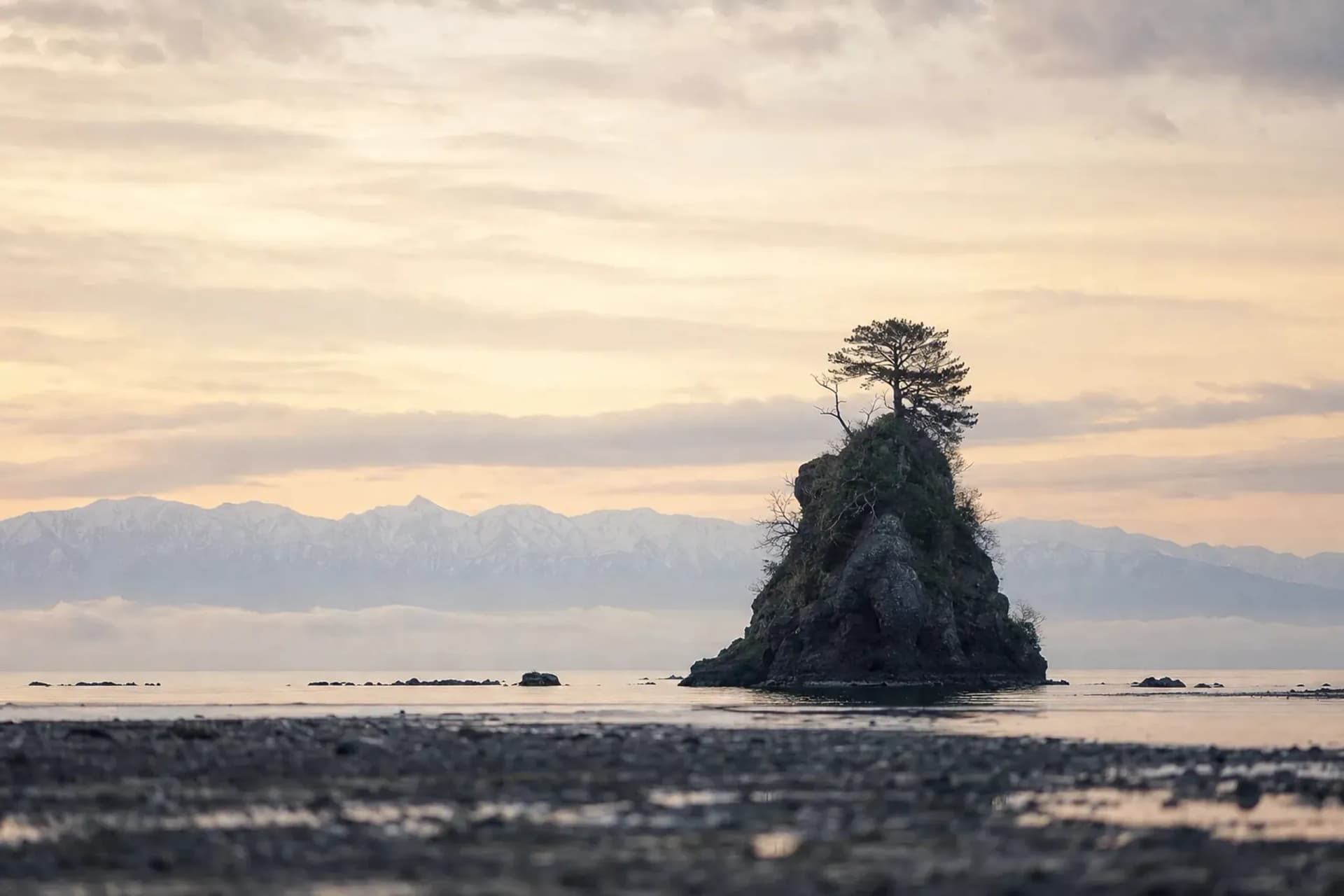
The sand is still cool in the early hours. Pine needles lie in small drifts near the high-tide line. And across Toyama Bay, a wall of mountains rises as if someone forgot to add the land in between.
This is Amaharashi Coast (雨晴海岸). The view feels like a trick played on the eye. Sea at your feet. Peaks above 3,000 meters in the distance. Close enough to read as a single scene, not a “coast day” and a “mountain day.”
Our team at Japan Royal Service returns here for one reason. The geography does something that shouldn’t really happen, and in summer it becomes a different kind of place—less postcard, more lived-in. There is a quiet, wabi-sabi beauty in a shoreline that makes no effort to impress, and yet stops you mid-sentence.
Why Does Amaharashi Coast Feel So Geographically Rare?
Amaharashi Coast feels almost impossible because Toyama Bay has a narrow coastal plain, letting the Tateyama Range rise dramatically close to the shoreline across open water.
In most countries, high mountains sit behind a long apron of flat land. You drive. You climb. You change climates along the way. Here, the transition is abrupt, so the whole scene compresses into one frame—ocean, pine, and alpine ridge, stacked in a single glance.
That compression changes how you travel. A single stop can satisfy the part of you that wants “ocean air” and the part that wants “alpine scale.”
It also explains why photographers chase this coastline so stubbornly, season after season.
It is not a theme-park viewpoint. It’s a working shoreline, public and honest. That restraint is precisely its appeal for the discerning traveler who has grown tired of spectacle and now values understatement far more than scale.
How Do You Actually Get To Amaharashi Coast Without Stress?
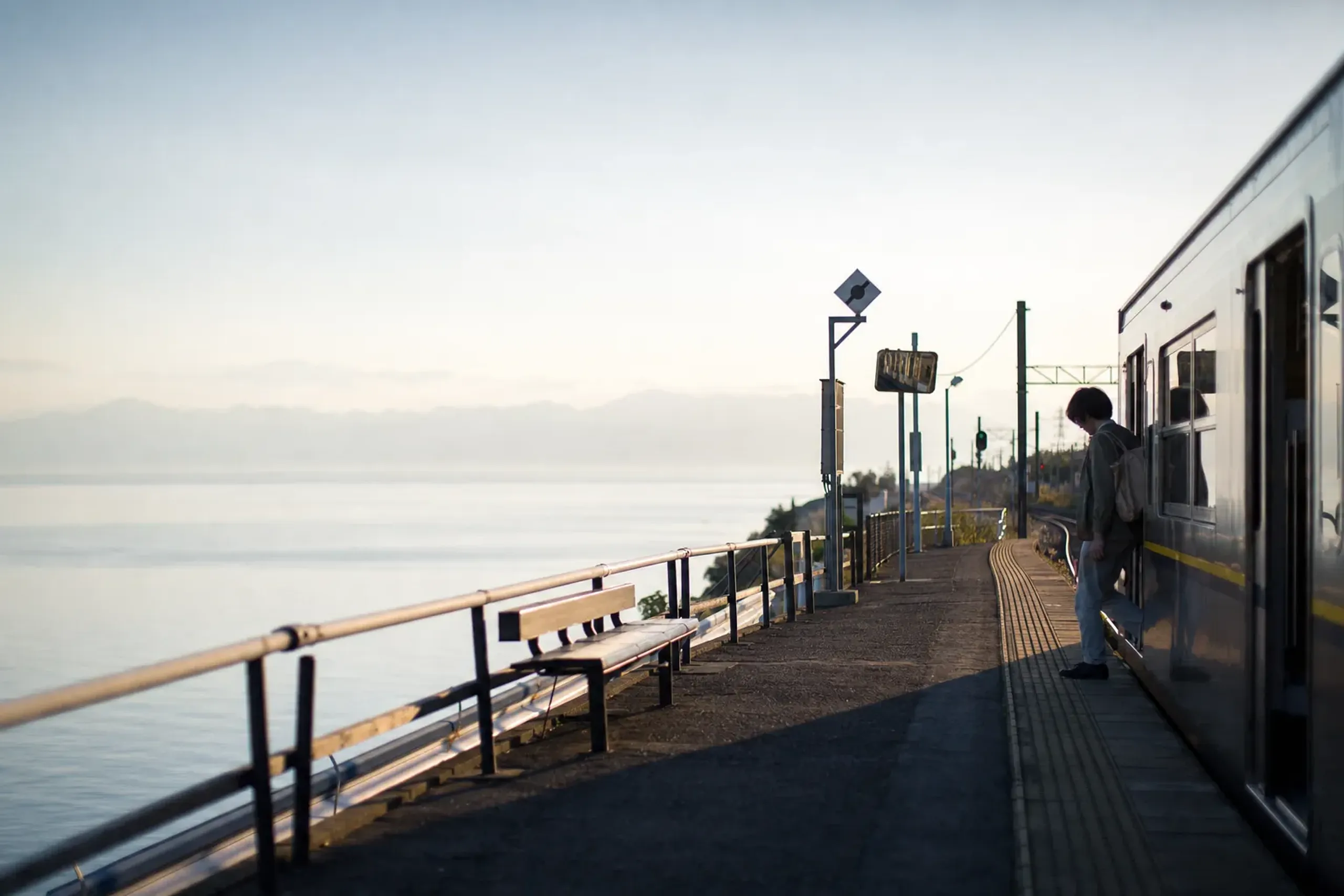
You can reach Amaharashi Coast by taking the JR Himi Line to Amaharashi Station, then walking about five minutes to the seaside.
That five-minute walk matters. It turns arrival into a small ritual: the sound of the tracks fading behind you, the salt coming forward, the first clean angle on the bay opening up. No long approach road. No overproduction. Just the shoreline, waiting.
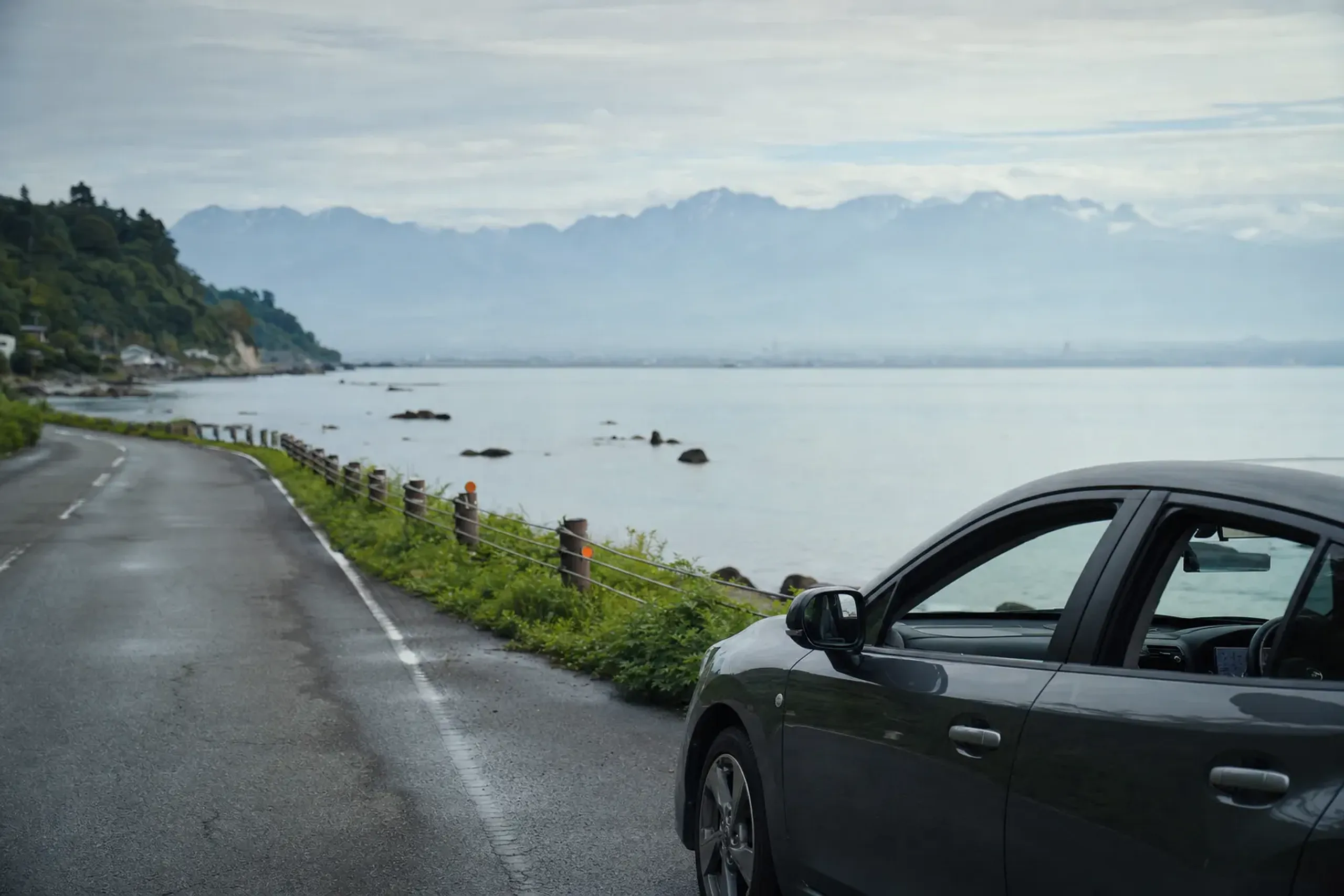
If you prefer door-to-door calm, our private chauffeured transportation is often the cleanest way to manage timing, tides, and summer heat—especially when traveling with luggage or multi-generational family members. We extend this service across Toyama and the wider Hokuriku region, so arrival and departure feel effortless from the moment you step off the aircraft or shinkansen.
We also plan days where the car does the heavy lifting, but the final moments happen on foot. That mix feels more Japanese. Quiet. Unforced. The anticipation of a guest’s unspoken wish—shade here, a slower pace there—is woven in before anyone has to ask.
The View That Changes By The Hour: Tide, Light, And Haze
Amaharashi is not “one view.” It’s a sequence. Small shifts change the entire composition before your eyes.
At high tide, Yoshitsune-iwa can look half-surrounded by seawater, which alters the balance of the scene and makes the shoreline feel narrower, more intimate. At low tide, the beach opens and the rocks feel closer, more tactile. Different photographs. Different mood. The same place, remade by the hour.
Summer adds another variable: haze. On some days, the Tateyama Range is there only in outline, like brushed ink that never fully dries. On other days—often early, or after rain—the mountains sharpen and the bay turns into a mirror.
Our concierge team checks visibility conditions before a client’s visit, because you do not want to “wing” a view this delicate. One hour can be the difference between a faint silhouette and a mountain wall rising clean from the sea. This is the Japanese sense of shun—knowing not only the right season, but the right morning—applied to a single stretch of coast.
When Is The Best Time To Photograph Tateyama From Amaharashi Coast?
Spring through early summer is best for the classic snow-capped Tateyama view from Amaharashi Coast, thanks to clearer air and lingering snow on the range.
That is the honest truth, even when the headline says “summer.” Deep summer can be rewarding, but it is not a promise of the famous snow-capped frame.
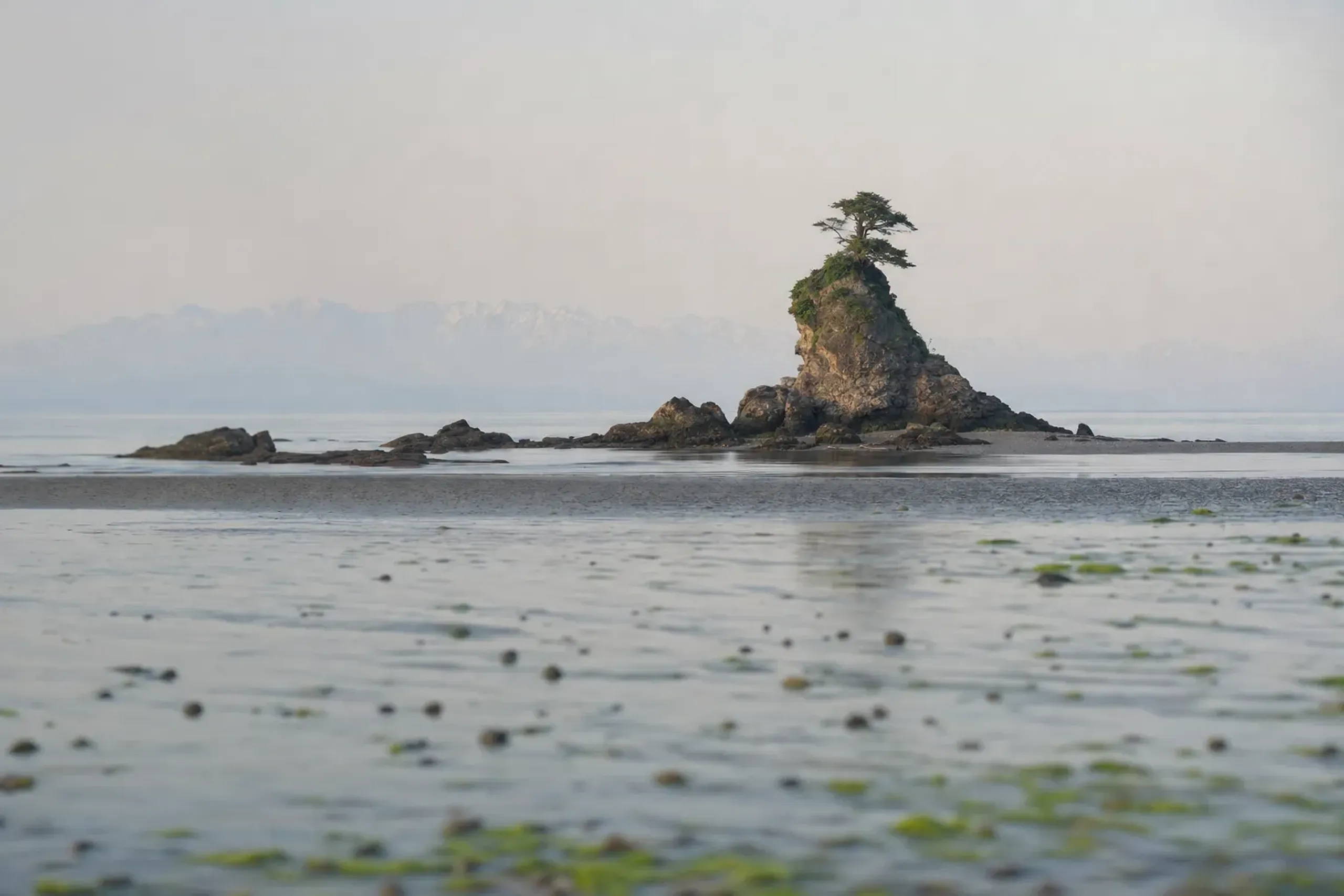
Think of summer as an invitation to experience the coastline itself, with the mountains as a constant presence rather than a guaranteed “snow poster.”
For photography in summer, we suggest you aim for windows that naturally improve visibility:
- Early morning, when the air is often cleaner and the light comes in low across the bay.
- After rainfall, when the atmosphere can briefly reset and distant ridgelines return to the horizon.
- Short, intentional stops rather than staking your whole day on a single long session.
If you are traveling with family, that last point matters most. A coastline stop should feel easy and generous, not like a mission to be endured.
The Name Amaharashi: A Warrior, A Rock, And Clearing Rain
The coastline’s name is tied to a story you can point to on the sand. In 1187, Minamoto no Yoshitsune fled north toward Ōshū Hiraizumi, pursued through a web of politics that turned brother against brother.
Tradition holds that sudden rain caught his party here. They sheltered beneath a large rock, lifted or held by his loyal retainer Benkei, waiting for the weather to clear—amaharashi, “rain clearing.”
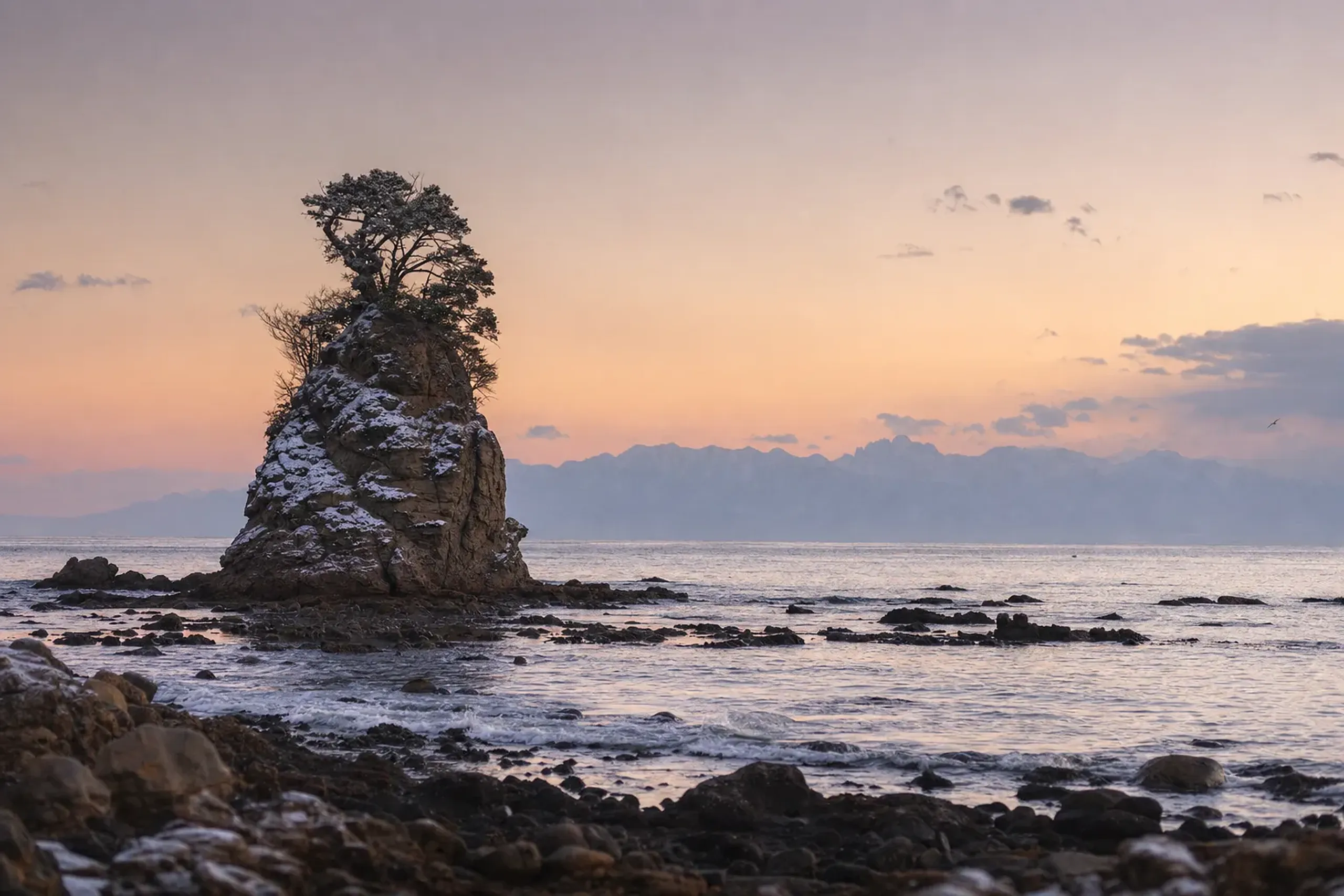
That rock still stands: Yoshitsune-iwa. On top is a small shrine, Yoshitsune-sha. At certain tides, the sea tightens around it, and the story feels less like a plaque and more like something the shoreline still quietly remembers.
Ōtomo No Yakamochi And The Man'yōshū: The Same Mountains, A Thousand Years Ago
Long before modern tourism, this landscape already had an audience. Ōtomo no Yakamochi—Nara-period poet and provincial governor of the region once called Etchū—wrote repeatedly about this area in the Man'yōshū, Japan’s oldest anthology of poetry.
Among the verses attributed to him are lines that speak to the enduring pull of Tateyama’s snow, described as never growing tiresome to behold. It is a disarming idea. Different century. Same human reaction, standing on the same sand.
For the well-traveled guest, this is often the turning point. Amaharashi is not merely photogenic. It is documented—observed, returned to, and put into words at a time when travel was slower and reputation spread by poems, not feeds. This is the kind of layered, lived-in Japan that rarely surfaces in a search engine, and it rewards those who arrive knowing what to look for.
Summer At Amaharashi Coast: What It Is Great For (And What It Isn't)
Summer at Amaharashi Coast is best for swimming, an easy beach day, and sunrise atmosphere—while the crisp, snow-capped mountain photograph is more reliable in spring through early summer.
In summer, Amaharashi becomes a real beach. The official Toyama tourism information describes it as popular for swimming, with shallow, family-friendly waters.
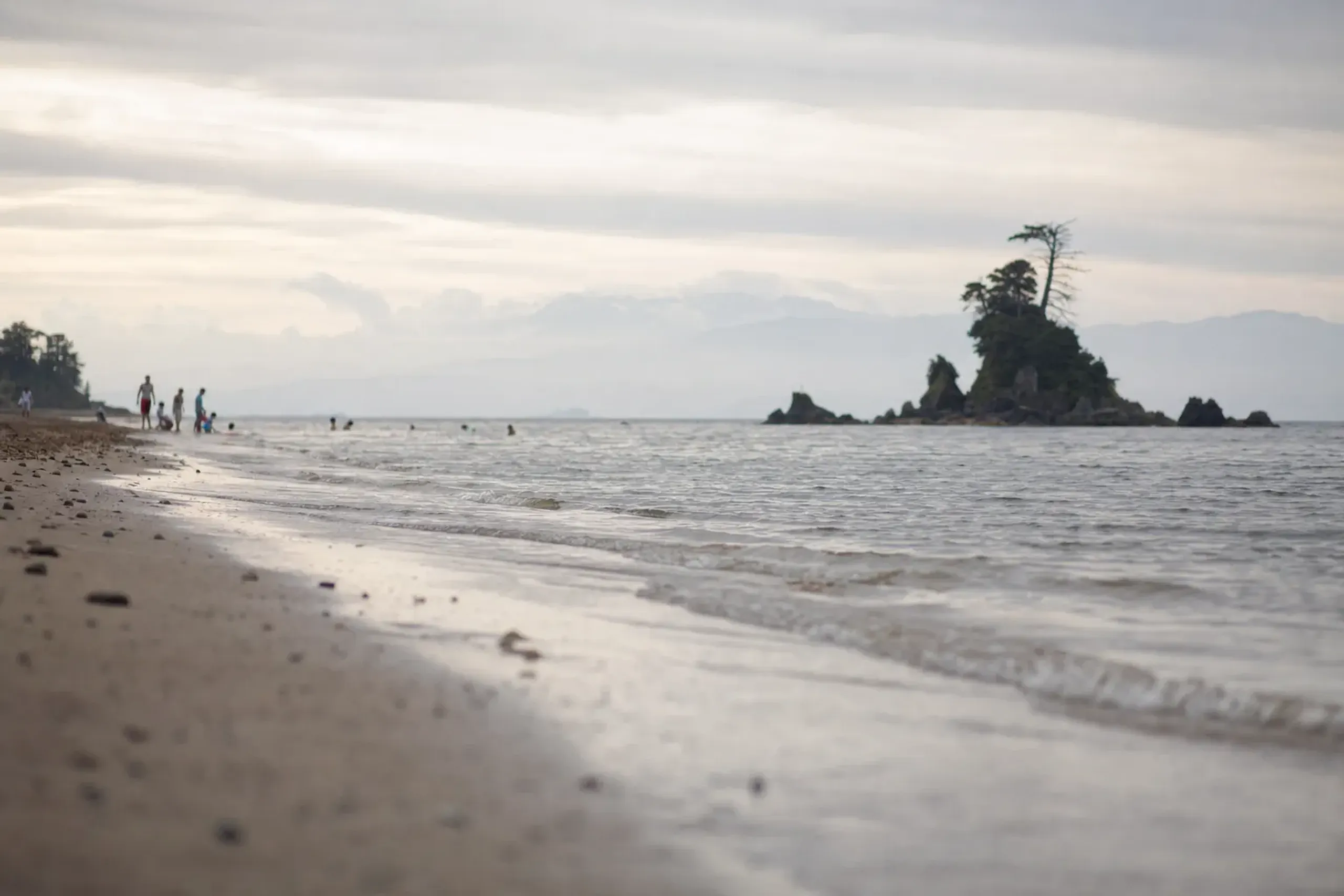
It has also been selected among Japan’s “88 Best Swimming Beaches,” which aligns with what you feel underfoot: a gentle slope, forgiving waves, a coastline that welcomes long, unhurried stays.
There are also larger recognitions tied to the scene itself. Amaharashi is cited as a symbolic view of Toyama Bay, a member of the “Most Beautiful Bays in the World Club.” That name is grand. The experience, mercifully, is not. It stays quiet if you time it well.
Key fact: If your must-have is the iconic snow-capped Tateyama-from-the-sea image, plan for spring through early summer. Summer is about the coast as a coastline.
And then there is kiarashi, a sea mist phenomenon that can appear under specific conditions. It is not a guaranteed “event.” That’s precisely why it still feels like a gift when it arrives—the bay turning theatrical without warning, then dissolving just as quietly.
Meiwa, Otokoiwa, And The Small Details People Walk Past
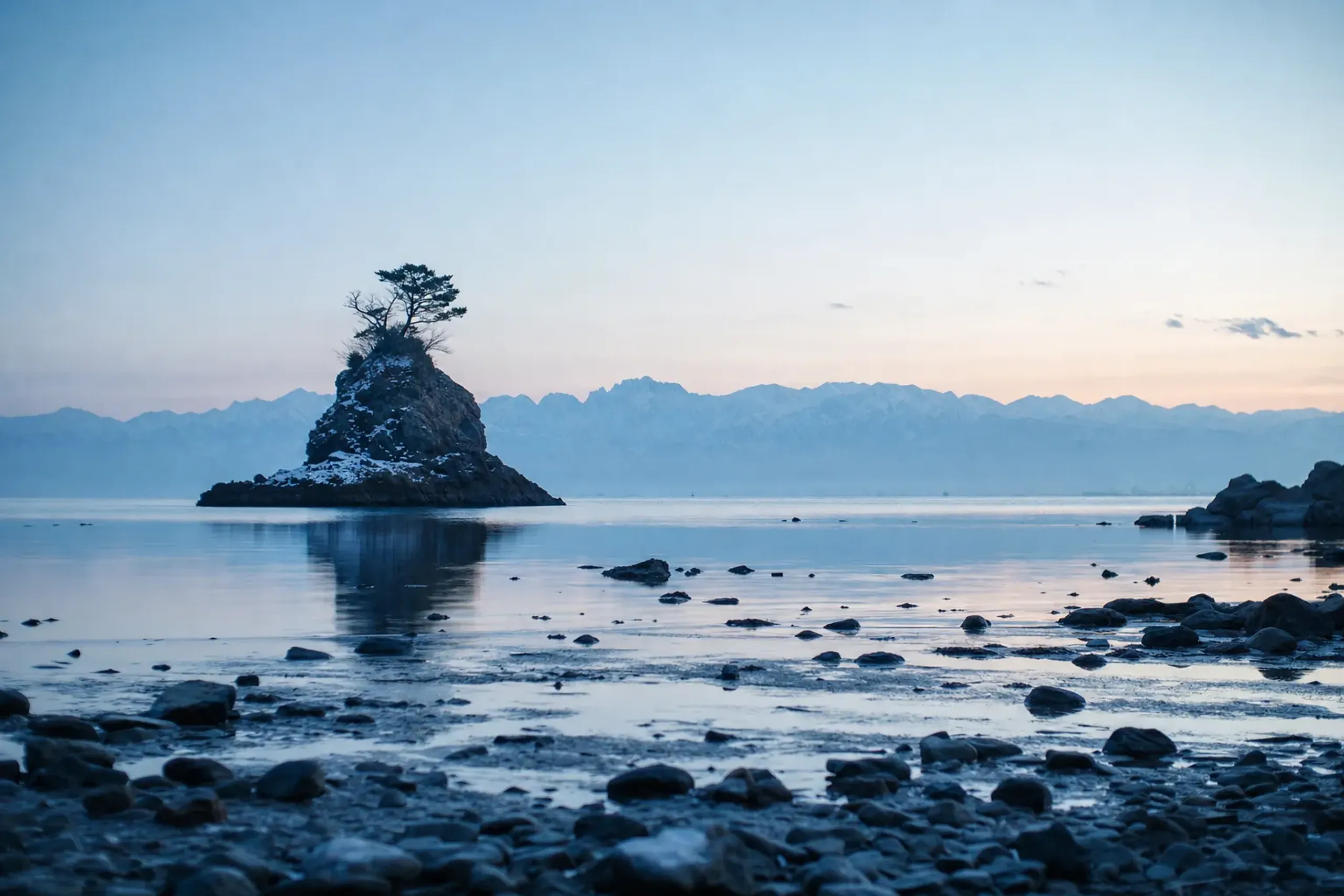
Even if the mountains soften in summer haze, the foreground can carry the scene. In the classic view, Meiwa (Woman Rock) sits centrally. Nearby is Otokoiwa (Man Rock), and tradition frames them as a couple, with smaller rocks nearby read as their children.
It sounds simple. It is. Yet these names act like anchors when you are composing a photograph, or when you are explaining the view to someone standing beside you.
“Look—there.”
Amaharashi has also been selected among Japan’s “100 Best Beaches” and “100 Best White Sand and Green Pine Coastlines.” Those lists are easy to dismiss, but they often point to a real, understated quality: this is a beach that is genuinely pleasant to spend time on, not merely one to photograph and leave.
Michi-No-Eki Amaharashi: The Practical Viewpoint With Real-Time Notices
Michi-no-Eki Amaharashi is the coast’s most useful pause point, especially in summer when heat, timing, and facilities matter.
Official information lists general operating hours of 9:00–17:00, with seasonal variation that can extend to 19:00. Certain areas—such as toilets and the information corner/observation decks—are stated as open 24 hours. That matters when you want sunrise light without rushing to beat a gate.
The listed address is 24-74 Ota, Takaoka City, Toyama Prefecture. We keep it in mind not because you need to memorize it, but because drivers and coordinators work from precise inputs. Small errors waste time—and time, on a delicate morning, is the whole point.
One more summer reality: coastal weather can trigger operational notices, entry restrictions, or temporary changes. In our experience, this is exactly where many generic itineraries quietly fail. They assume the day will behave. We assume it won’t, and build accordingly.
As a small cultural aside, the shop here carries Takaoka craft items, including copperware and lacquerware—the work of local shokunin whose craft traditions stretch back centuries.
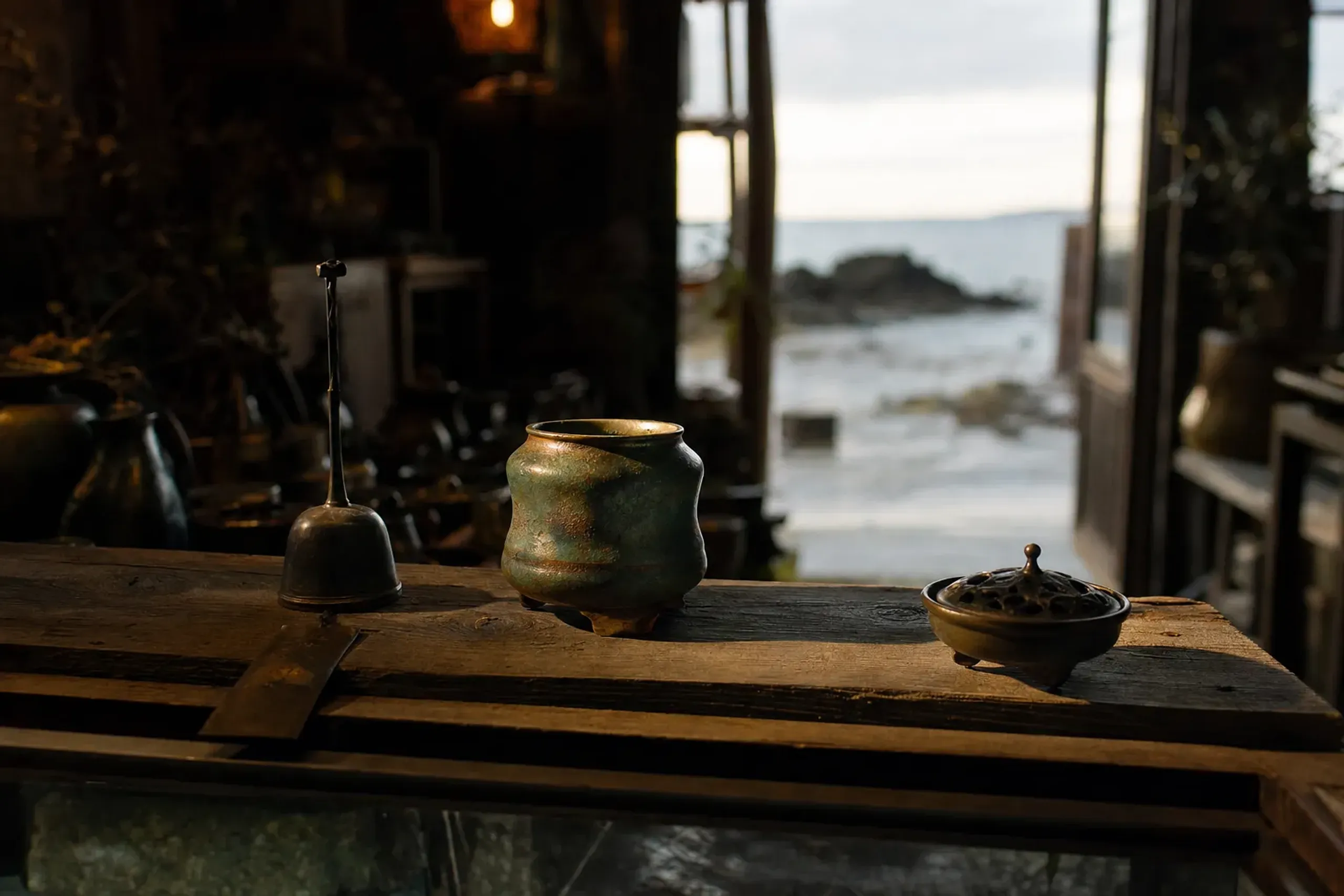
That is a subtle pleasure: you come for a bay view and leave with something tactile and local, without ever turning the day into a shopping tour.
A Calm Half-Day Or Full-Day Plan: Step-By-Step Summer Timing
This coastline rewards structure. Not a rigid schedule. Just a deliberate order to the hours.
Option A: The Early-Morning Photo Walk (About 60–90 Minutes On Site)
Best when you want the cleanest chance at mountain visibility, then you move on.
- Arrive near sunrise and start from the shoreline for low-angle light.
- Walk toward Yoshitsune-iwa and watch how the tide reshapes the scene.
- Finish at Michi-no-Eki Amaharashi for an elevated view and a short reset.
Fast. Quiet. Very satisfying.
Option B: The Summer Beach Morning (About 2–3 Hours On Site)
Best for families, or anyone who wants Amaharashi as a real beach rather than a viewpoint.
- Start with the observation decks while temperatures are still mild.
- Move to the sand once the day warms, keeping the mountains as backdrop.
- Plan a shaded break rather than pushing through peak midday sun.
Don’t underestimate the sun reflecting off the water. It adds up quickly.
Can You Combine Amaharashi Coast With A Toyama Bay Cruise In 2026?
Yes—Toyama Bay coastal cruising operates from May 16 to November 23, 2026, typically suspending services on Tuesdays and Wednesdays except holidays.
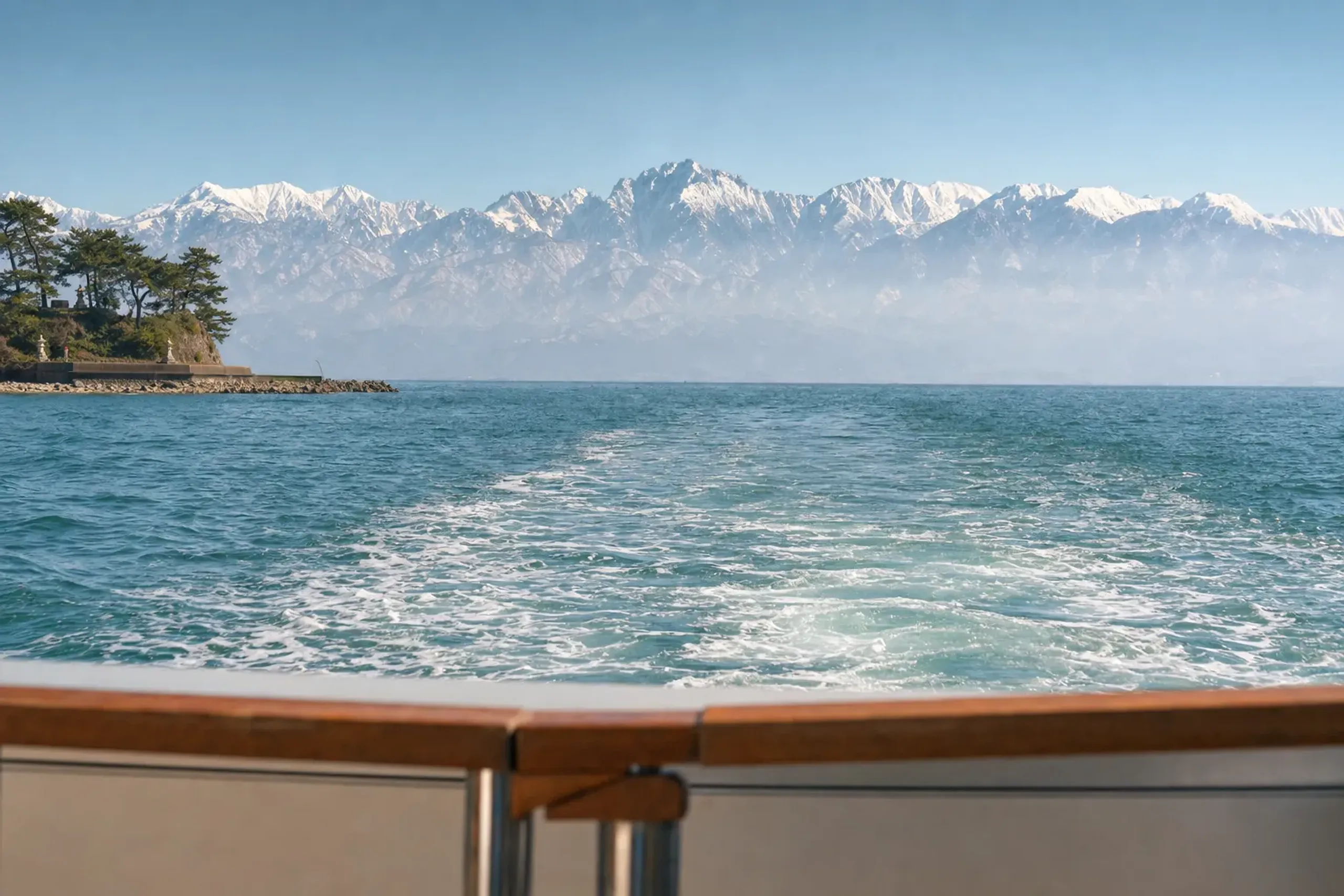
If you enjoy “sea-level” experiences, this pairing makes sense. Amaharashi gives you the shore-based composition—rocks, pines, the Tateyama silhouette. A cruise gives you the reverse angle and a far stronger feel for the bay’s true scale.
Because schedules and sea conditions can shift without notice, we treat cruising as a timed element, not a casual add-on. When clients ask, our concierge shares the official operating window, checks day-of-week constraints, and builds in buffers so the day doesn’t collapse if the weather turns watchful.
What Luxury Travelers Usually Get Wrong About Amaharashi Coast
Amaharashi is simple to visit. That’s exactly why it’s so easy to misread.
First mistake: expecting the spring snow-capped “signature” in deep summer. Some days you will get a sharp range. Many days you won’t. Still worth going—if your expectations are clean.
Second mistake: arriving at the most convenient hour, not the best one. Midday is fine for a quick stop, but it can flatten the scene with glare and haze.
Third mistake: treating it as a checkbox between bigger destinations. Amaharashi works best when you give it space: a slow coffee, a barefoot walk, time to watch the tide creep in around Yoshitsune-iwa.
We see one more pattern in the market. Large travel brands often sell Japan as an edited highlight reel, which is why so many itineraries can feel interchangeable on paper. Amaharashi is the opposite of that pitch.

It wins on understatement—on the Japan that reveals itself only to those who slow down.
What Japan Royal Service Coordinates For Amaharashi Coast (And How We Keep It Discreet)
For Amaharashi Coast, Japan Royal Service supports clients with expert guiding and seamless transfers, then refines the day around tides, visibility, and privacy needs.
Discretion is not a slogan for us. It is operational behavior. We avoid loud meet-up points, keep schedules tidy, and protect guest identity and itinerary details—especially for executives and families who prefer a low profile and no trace left behind.
When clients want a more layered Hokuriku journey, we build it as a tailor-made itinerary that keeps Amaharashi as a clean centerpiece rather than a rushed detour. Quiet planning. Sharp timing. Nothing left to chance.
And when clients are comparing concierge styles, we welcome the skepticism. The baseline question is always the same: can the team execute without noise? Our approach is to show the thinking first—then let the day itself speak.
If a summer morning on Toyama Bay belongs on your horizon—whether you want the snow-capped frame of early season or the slow beach calm of July—we would be glad to design it around the tides, the light, and your sense of pace. To begin a quiet, considered conversation, contact us here, and let us shape a journey that is entirely your own.