In this guide
- 01What Amakusa Is: Islands Joined By Five Bridges
- 02Will I See Dolphins On An Amakusa Dolphin-Watching Cruise In Summer?
- 03Can You Go Inside Sakitsu Church In Summer?
- 04Oe Church, Plus One Line Each Of The Uprising And Museums
- 05When Is The Swimming Beach Season In Amakusa In Summer?
- 06What Do Typhoons Change In Amakusa From July To September?
- 07How Do You Get To Amakusa From Kumamoto In Summer?
- 08A Two-To-Three-Day Summer Flow That Respects The Islands
- 09How Our Concierge Team Plans An Amakusa Summer Trip
- 10Plan Your Amakusa Summer, Quietly And Well
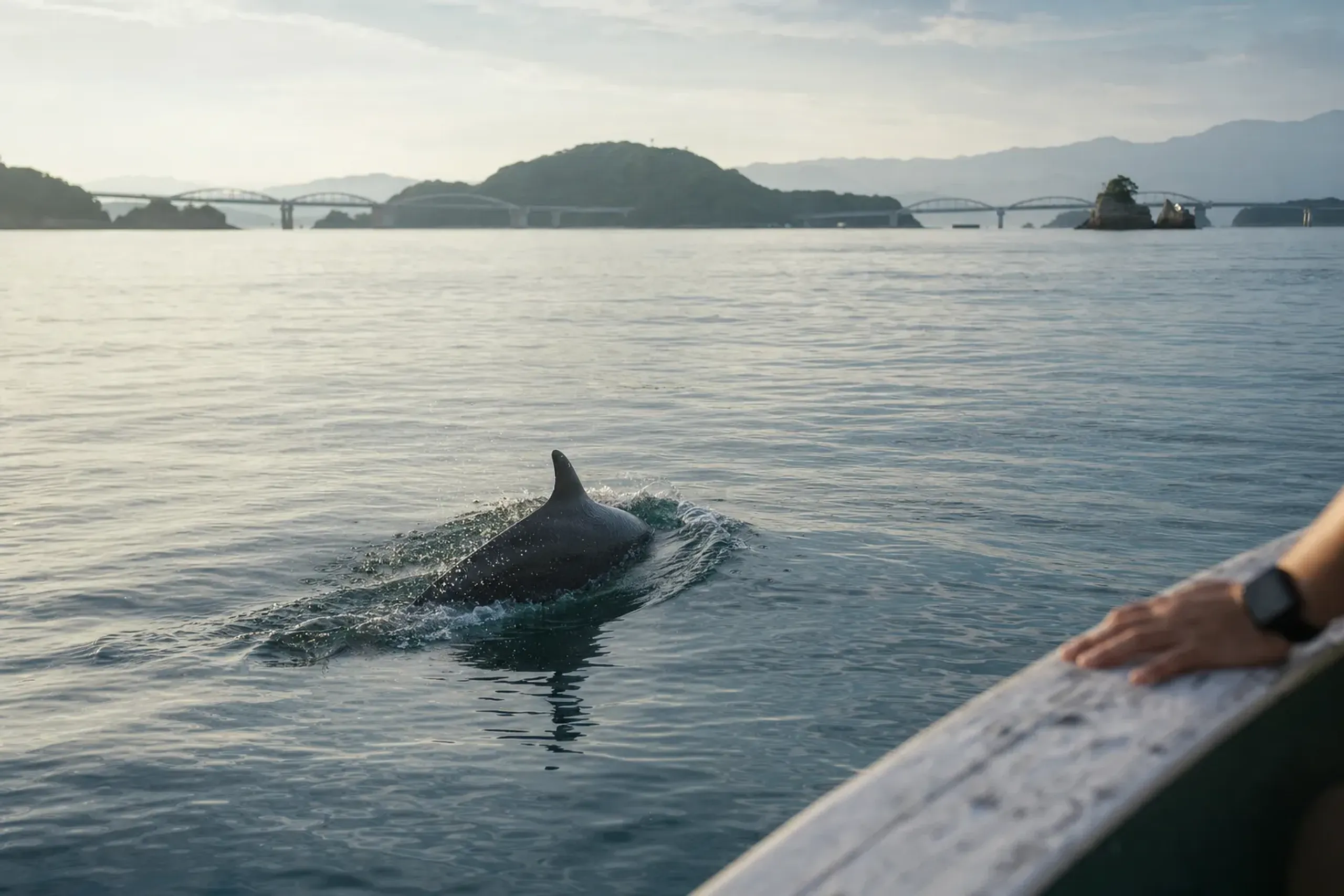
The boat eases off the pier and points toward open water. Salt hangs in the air, sticky on your lips. Someone on the bow leans forward, scanning. Then a dark curve breaks the surface—quick, clean, and gone before the camera is halfway up.
This is summer in Amakusa, Kumamoto. It isn’t a place you “do” in an afternoon. The islands ask for driving time, flexible timing, and a calm attitude for the moments when the sea quietly says no.
Our team at Japan Royal Service plans Amakusa days in the order they actually happen: bridges first, dolphins when the sea allows, Sakitsu when you can be quiet, and sunset when the light finally softens. This is one of those corners of Japan that rewards restraint—a landscape of working fishing villages and moss-dark shrines where the privilege is access and discretion, not spectacle.
What Amakusa Is: Islands Joined By Five Bridges
Amakusa is an island group in south-west Kumamoto Prefecture, with Amakusa City at its centre. Big geography. A lot of water. The land is spread out, and your day will be built around road legs and the timing of boats.
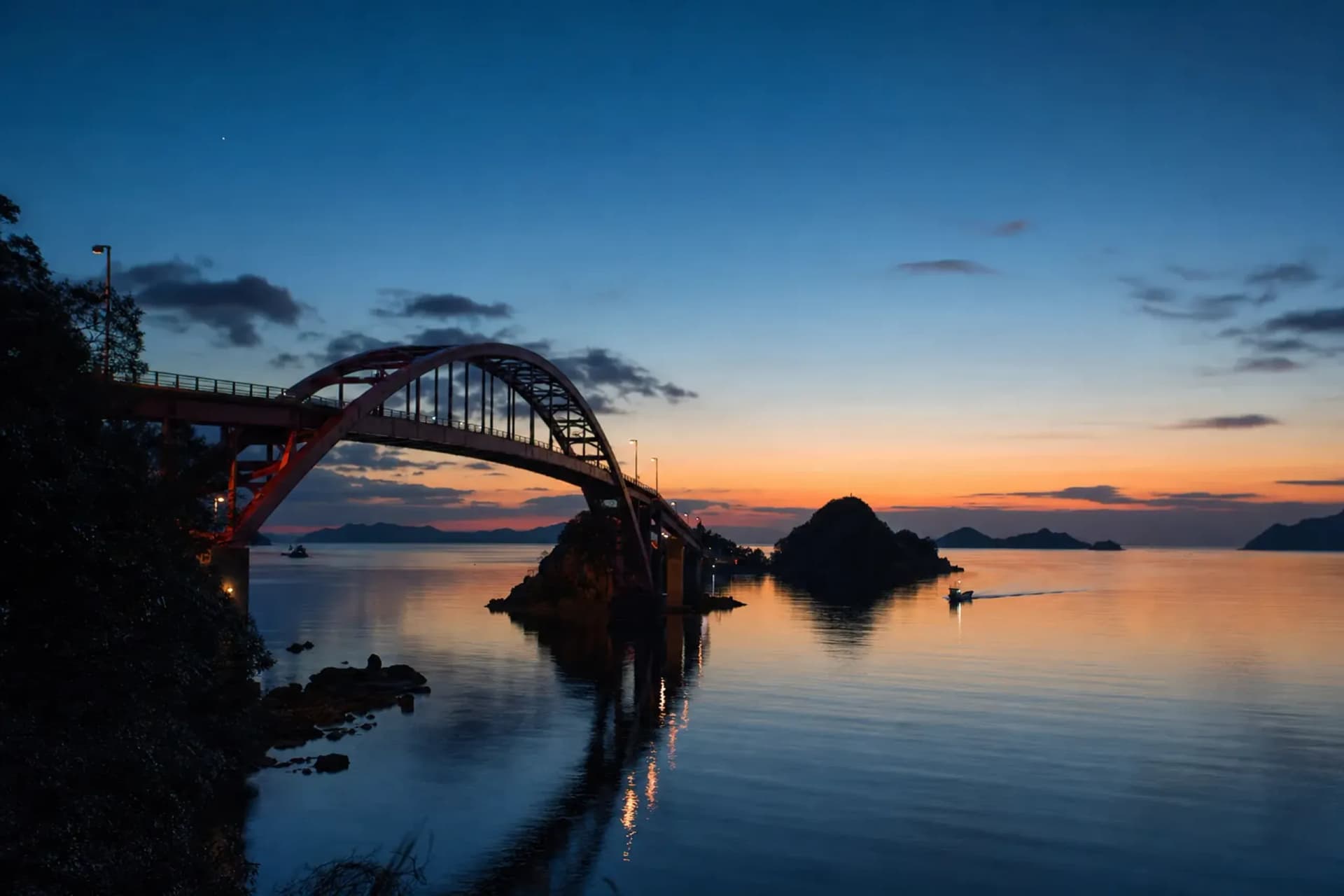
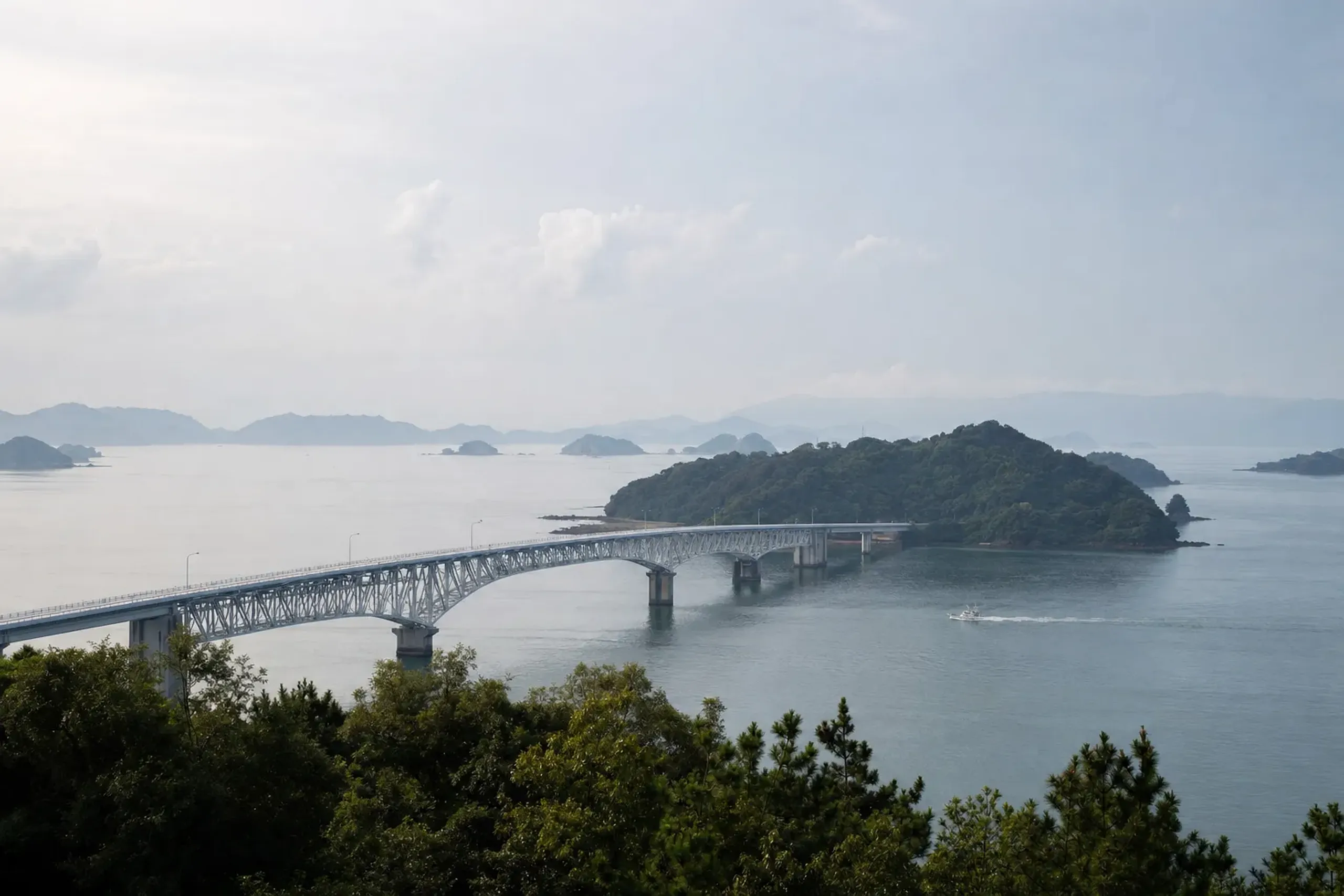
The first strong impression comes fast: the Amakusa Five Bridges on Route 266, completed in 1966 and nicknamed the Amakusa Pearl Line. Five. Not six. Driving across all five takes about 30 minutes, but you will want to stop—often.
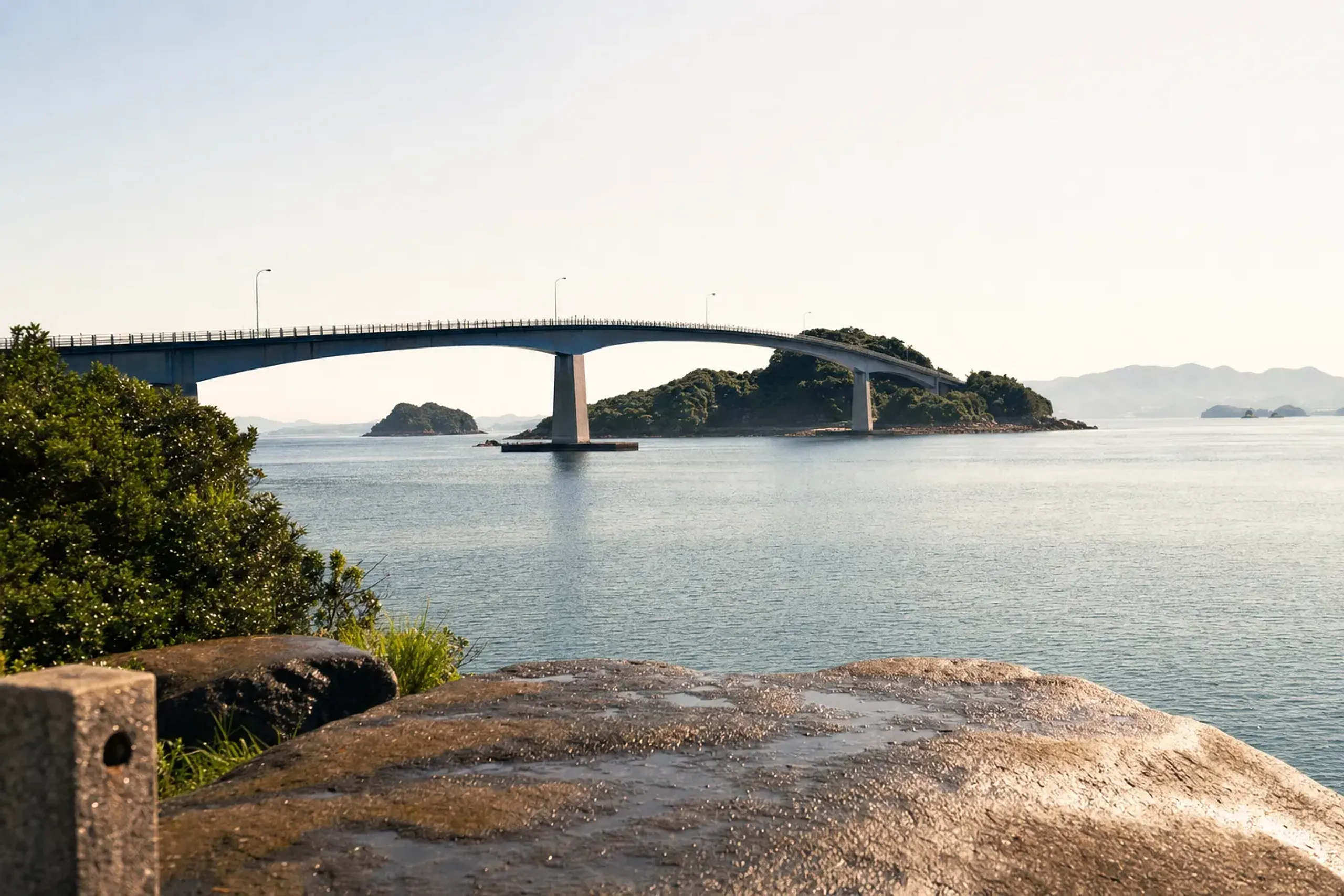
The bridge names, in order, are Tenmon-kyo, Oyano-bashi, Naka-no-hashi, Maejima-bashi (the longest), and Matsushima-bashi (the red bridge). Say them once, then just watch the channel slide underneath you. It is quietly hypnotic.
Summer changes the feeling of this road. The sea looks closer, brighter, more insistent. The air is hot and humid, and the best plan is to start early, rest through the middle of the day, and let the afternoon drift toward the west-coast light.
Will I See Dolphins On An Amakusa Dolphin-Watching Cruise In Summer?
You have a high likelihood of seeing wild dolphins in Amakusa year-round, but it is never a guarantee, because weather and sea conditions decide both departures and sightings.
Dolphin watching in Amakusa began as tourism in the early 1990s in the Itsuwa area, and the main resident species is the Indo-Pacific bottlenose dolphin. The setting matters: the Hayasaki Strait off Tsuji is known as a rich fishing ground, and dolphins live alongside fishing boats—something Amakusa City describes as rare worldwide.
In our experience, the best mindset is practical. Your goal is not a “perfect” photo. Your goal is to be out there, steady on the water, following operator guidance, and ready for the quick moments when fins appear, vanish, and reappear somewhere else entirely.
Two planning notes matter in summer. First, departures can be cancelled at short notice due to weather.
Second, since April 11, 2025, an environmental protection fee is collected for dolphin-watching passengers (elementary school age and above), according to the Amakusa City Dolphin Center’s official notice.
There is also an active sustainability conversation on the islands. Amakusa Dolphin’s Harmony documents ongoing beach-clean activities and has published a notice describing a trial “joint operation” approach that limits the number of boats departing as part of environmental conservation. Less chaos. More restraint. That is good for the dolphins—and, frankly, for you.
A Summer Morning Sequence That Works
When we build an Amakusa day, we often place the dolphin boat early. It keeps the heat manageable. It also gives you room to pivot if the sea closes.
- Start: cross the Five Bridges while the air still feels light.
- Mid-morning: aim for a dolphin departure window, knowing weather may change.
- After: keep the rest of the day “quiet-flexible”—Sakitsu, a coastal drive, or a long, unhurried lunch.
Don’t overpack the schedule. That is the one big mistake. Amakusa rewards space.
Can You Go Inside Sakitsu Church In Summer?
Yes—Sakitsu Church can be viewed inside, but only with advance contact, and entry is not allowed during Mass, weddings, funerals, or other church events.
Sakitsu is officially listed as “Sakitsu Village in Amakusa,” one of the 12 components of the UNESCO World Heritage property Hidden Christian Sites in the Nagasaki Region (inscribed in July 2018).
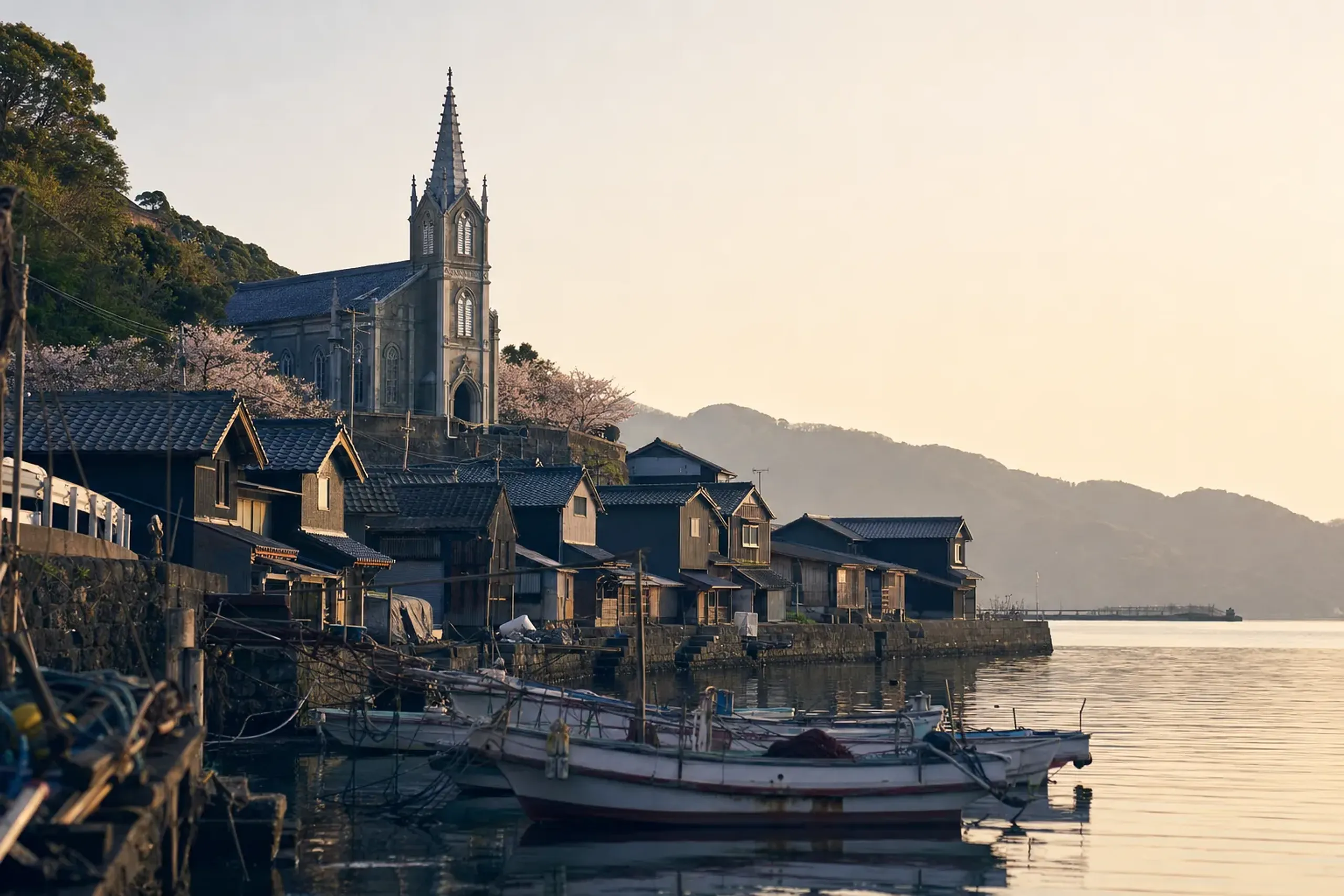
It is also a Nationally Important Cultural Landscape (selected on 7 February 2011). But it is not an outdoor museum. It is a working fishing village where people live close to the water, as they have for generations.
You feel that immediately. The lanes are narrow. There are no pavements. Sound carries from house to house. If you arrive speaking loudly, everyone hears it. This is the quieter, hidden Japan that rewards those who come to listen rather than to perform—and reaching its interior at all depends on the kind of advance introduction and discretion that define how we work.
The village’s story is complex, and it should be treated as such. Kumamoto Prefecture notes that the village includes a Catholic church and a guardian shrine—Sakitsu Suwa Shrine—where traditional religion and the Hidden Christians lived side by side. Amakusa City records that an 1805 report (the “Amakusa Kuzure”) named about 70 percent of Sakitsu villagers as Hidden Christians.
Key fact: Sakitsu Church is a Catholic church with a living congregation, and Sakitsu Suwa Shrine is a Shinto shrine—visit both as places of faith, not as photo backdrops.
Sakitsu Church And Village Manners (What To Do, Plainly)
The guidance below is set out by the village and church themselves. Read it once. Then move through the place as if you belong there—quietly.
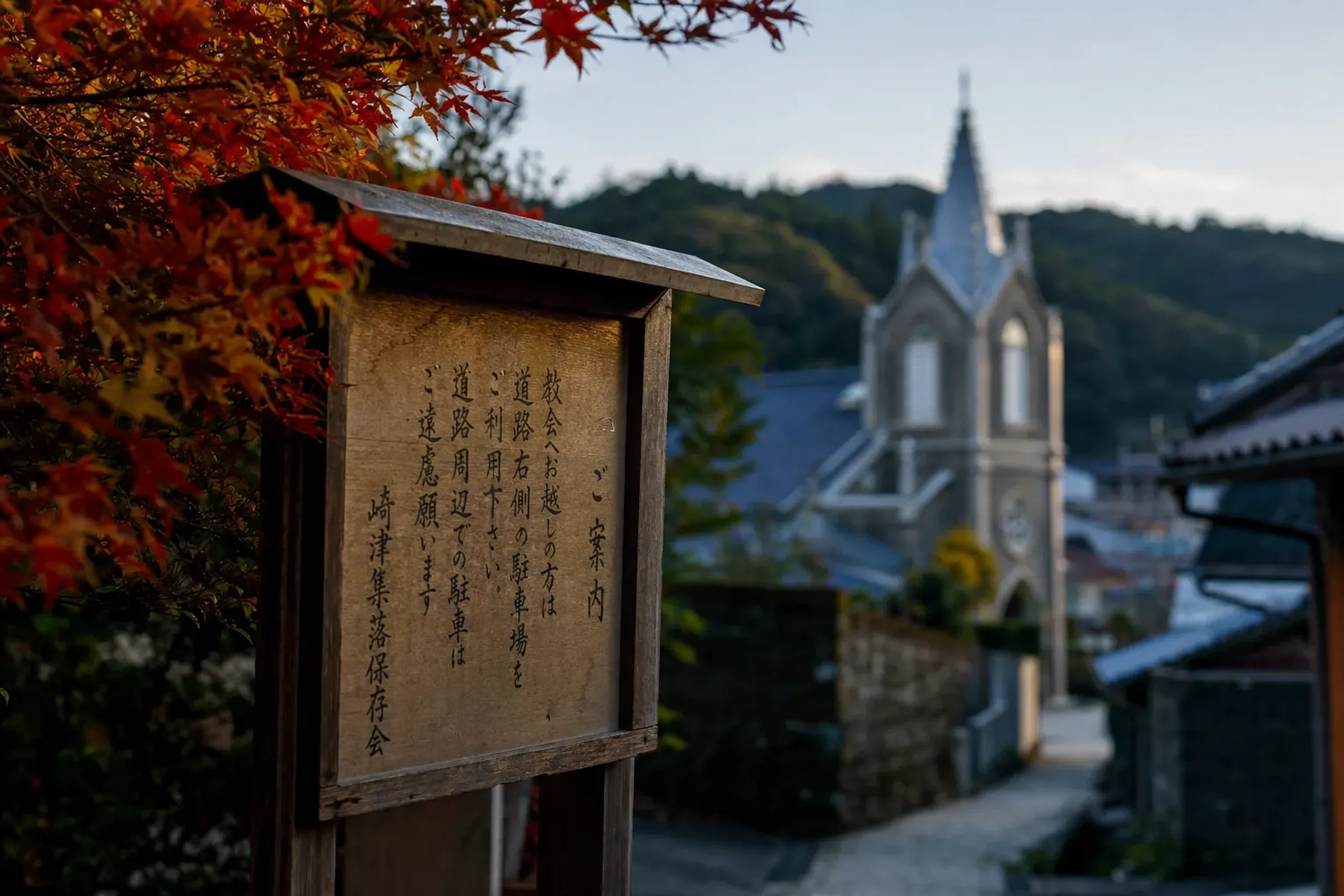
- Inside and outside: keep quiet; phones off or on silent.
- Photography: no photography inside the church; no filming on the grounds or inside.
- On the grounds: no food, drink, or smoking.
- Entering: shoes off inside; no pets; do not touch objects or ring the bell; dress suitably for a place of prayer.
- Timing: do not enter during Mass, a wedding, or a funeral.
- Parking: park at the Sakitsu Guidance Center lot, not in village lots; tour buses do not enter.
- Walking: keep to the roadside strip; do not block the road; do not enter private land or look into homes.
- Community care: do not feed stray cats; take your rubbish home; smoke only in designated areas.
One more point: viewing the church interior needs advance contact and may be limited when the village is crowded. If you want to experience the tatami floor and the hushed interior space respectfully, plan ahead—and accept the day’s boundaries.
Oe Church, Plus One Line Each Of The Uprising And Museums
Oe Church is a white Romanesque-style church on a hill in Amakusa, described by Amakusa City as the earliest church built in Amakusa after the ban was lifted; the present building is dated to 1933 in an English guide, and it is not a World Heritage component.
If you want context, keep it measured.
The Shimabara-Amakusa Uprising (1637–1638) saw about 37,000 people hold Hara Castle for 88 days, and Hara Castle is one of the World Heritage components. One sentence is enough, then return to what you can see today.
Two small museums in Amakusa are often used to ground the story in objects rather than assumptions. The Amakusa Christian Museum holds Amakusa Shiro’s battle banner (an Important Cultural Property), displayed only on set days. The Amakusa Collegio Museum shows 16th-century Christian and nanban material. For guests who value depth over distance covered, a private, quiet viewing on a day the banner is shown is the kind of detail we build around.
When Is The Swimming Beach Season In Amakusa In Summer?
The Amakusa swimming season typically runs from late June to the end of August; for the 2026 season, Amakusa City listed 11 beaches open from 28 June to 31 August (Shirotsuruhama to 30 August).
That single line changes planning. It tells you when the islands shift into “sea mode,” with families, swimmers, and that slow, late-day rhythm where you rinse the sand off your ankles and drive west for the light.
Confirm the dates each year. Conditions and schedules can change, and beach notices matter. In summer, heat builds quickly and storms can turn the coastline sharp, so we tell guests to treat the sea with respect, not confidence.
The West-Coast Sunset Drive
Amakusa City named a route the “Amakusa West Coast Sunset Line” in December 2012. It’s not about speed. It’s about patience.
Leave slack in your afternoon. Put your phone away. Let the sky do what it does, minute by minute, while fishing boats return and the water goes metallic, then soft. This is the kind of timing—knowing precisely where to be, and in which month—that turns a drive into a memory you keep.
Summer Fireworks As An Evening Anchor (Optional, Not Guaranteed)
Some summers include local fireworks listings, and local tourism sources may post updates only after an event ends. If fireworks are a priority for your dates, our concierge team checks the latest official and local notices before you commit an evening to one plan.
What Do Typhoons Change In Amakusa From July To September?
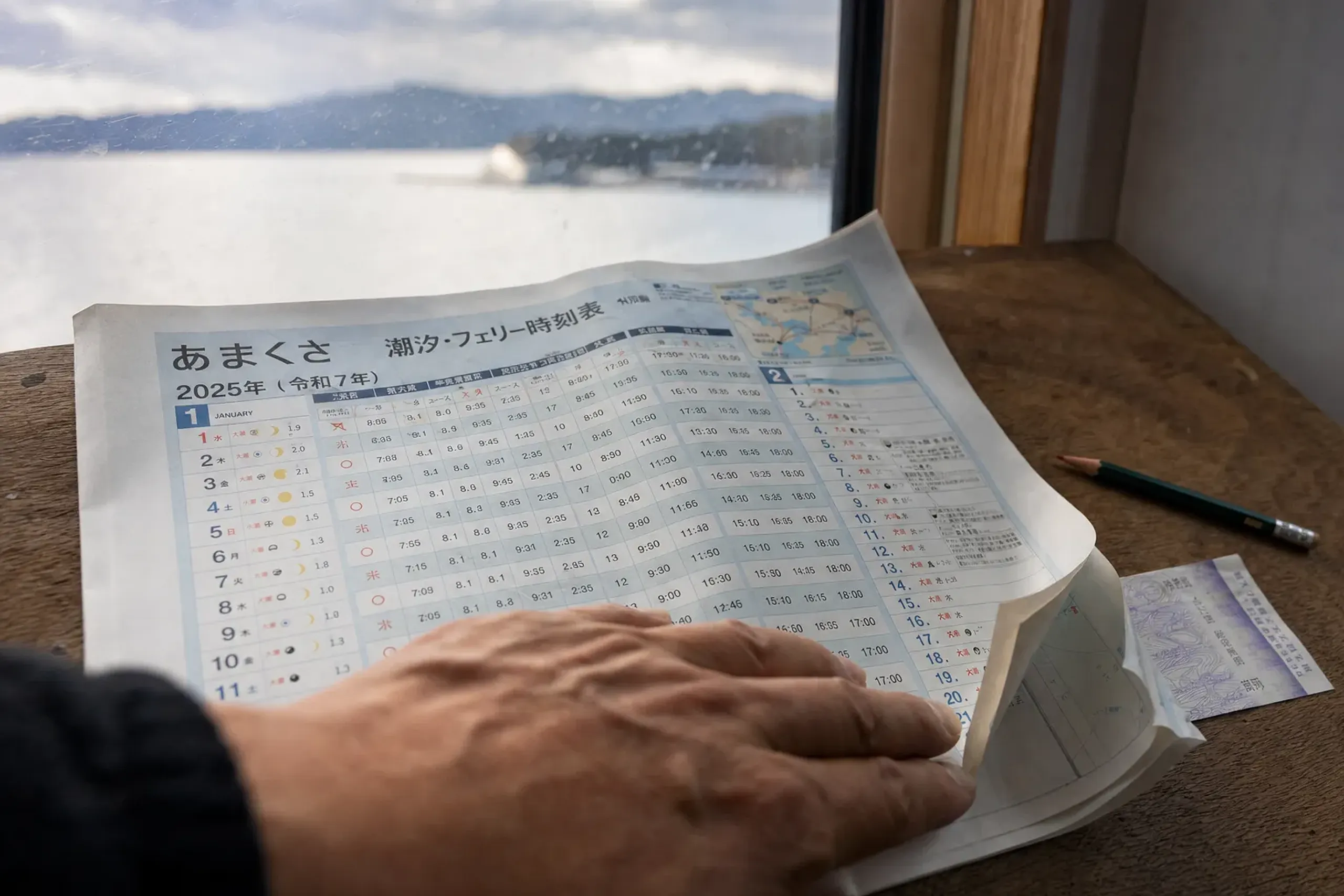
Typhoons approach Kyushu most often from July to September, and ferries and flights can be cancelled, so you should build an itinerary that can shift by a day without stress.
In Amakusa, weather is not background. It is the main character. The dolphins do not “perform,” boats do not depart just because you have arrived, and coastal roads feel different when wind pushes hard across open water.
We plan summer trips with an easy day at either end. That one decision saves trips.
It also protects your mood when cancellations happen, because you already have space to move—and the quiet reassurance that someone is watching the forecast so you don’t have to.
Key fact: Treat dolphin-watching and ferries as weather-dependent experiences, and avoid tight same-day connections wherever you can.
How Do You Get To Amakusa From Kumamoto In Summer?
You can reach Amakusa by flight to Amakusa Airport or by road from Kumamoto, and you should confirm seasonal schedules for flights, buses, and any rail-and-ship connections before you lock in dates.
JNTO describes access by daily flights via Amakusa Airport and also notes buses from Kumamoto Station. Amakusa Airlines operates flights using an ATR42-600 (48 seats) and states about 20 minutes between Amakusa and Kumamoto by air.
There is also a rail-and-sea approach that some travellers enjoy for the journey itself. ANA’s Japan Travel Planner explains that JR Kyushu’s Limited Express “A-Train” runs between Kumamoto City and Misumi, an entryway to the Amakusa Islands. From there, onward connections by ship exist, but timetables vary, and not every date aligns cleanly.
Most visitors use a car. That is not about luxury. It is about geometry: distances, timing, and narrow approaches in places like Sakitsu where larger vehicles simply do not belong.
Fly Vs Road: A Simple Decision Framework
| Option | Best For | Watchouts In Summer |
|---|---|---|
| Amakusa Airport Flight | Short travel time; trips with limited days | Weather disruptions; always re-check schedules close to travel |
| Road From Kumamoto (Five Bridges) | Scenic approach; flexible stops; photographers | Long drive in heat; fatigue risk; plan breaks |
| Rail (A-Train) + Sea Connection | Slow travel lovers; those who enjoy the “entryway” narrative | Operates on set days; connections may not align; confirm timetables |
A Two-To-Three-Day Summer Flow That Respects The Islands
This is a guide, not a promise.
Conditions shift. Your energy shifts too. Our team at Japan Royal Service uses this kind of skeleton, then adjusts based on weather, sea state, and what matters most to you—because a tailor-made itinerary should flex around the islands, not force the islands to flex around a plan.
Option A: Two Days (Bridges, Dolphins, Sakitsu)
Short, realistic, and built around one sea attempt. Nothing flashy. Just right.
- Day 1: Drive in via the Amakusa Five Bridges; settle; late-afternoon west-coast light.
- Day 2: Morning dolphin cruise attempt; then Sakitsu Village in Amakusa with Guidance Center parking and church manners; return via a calm coastal road.
Option B: Three Days (Extra Flex For Typhoon Season)
This version adds breathing room. It is the summer-friendly choice.
- Day 1: Arrive and keep it light; an early night.
- Day 2: Dolphins first, then a slow cultural afternoon (Sakitsu or Oe Church, depending on timing and church events).
- Day 3: Beach time within the official season window, or a second attempt at the sea if Day 2 was cancelled.
How Our Concierge Team Plans An Amakusa Summer Trip
We plan Amakusa the way locals do: with weather first, respect for community rules, and a schedule that can bend without breaking.
Quiet competence matters here. Loud ambition does not.
Our concierge team builds your days around sea conditions, the reality of typhoon season, and the village and church rules in Sakitsu. We include an easy day at either end whenever your calendar allows. It is the simplest form of trip insurance—and the kind of unhurried, anticipatory care that lets you stop managing the day and simply be in it.
For long road legs and narrow approaches, we coordinate a partner-fleet vehicle and a professional chauffeur via our private transportation / chauffeur service. No combined driver-guide roles. You get focus where it belongs, and your itinerary—and your presence on the islands—stays entirely your own.
Plan Your Amakusa Summer, Quietly And Well
Amakusa gives its best to travellers who arrive with patience and depart with discretion. If you would like a summer itinerary shaped around the dolphins, the Five Bridges, and a respectful private viewing of Sakitsu—timed to the sea rather than the clock—contact us here. We will design it around your dates, your pace, and the weather, with an easy day built in at either end.