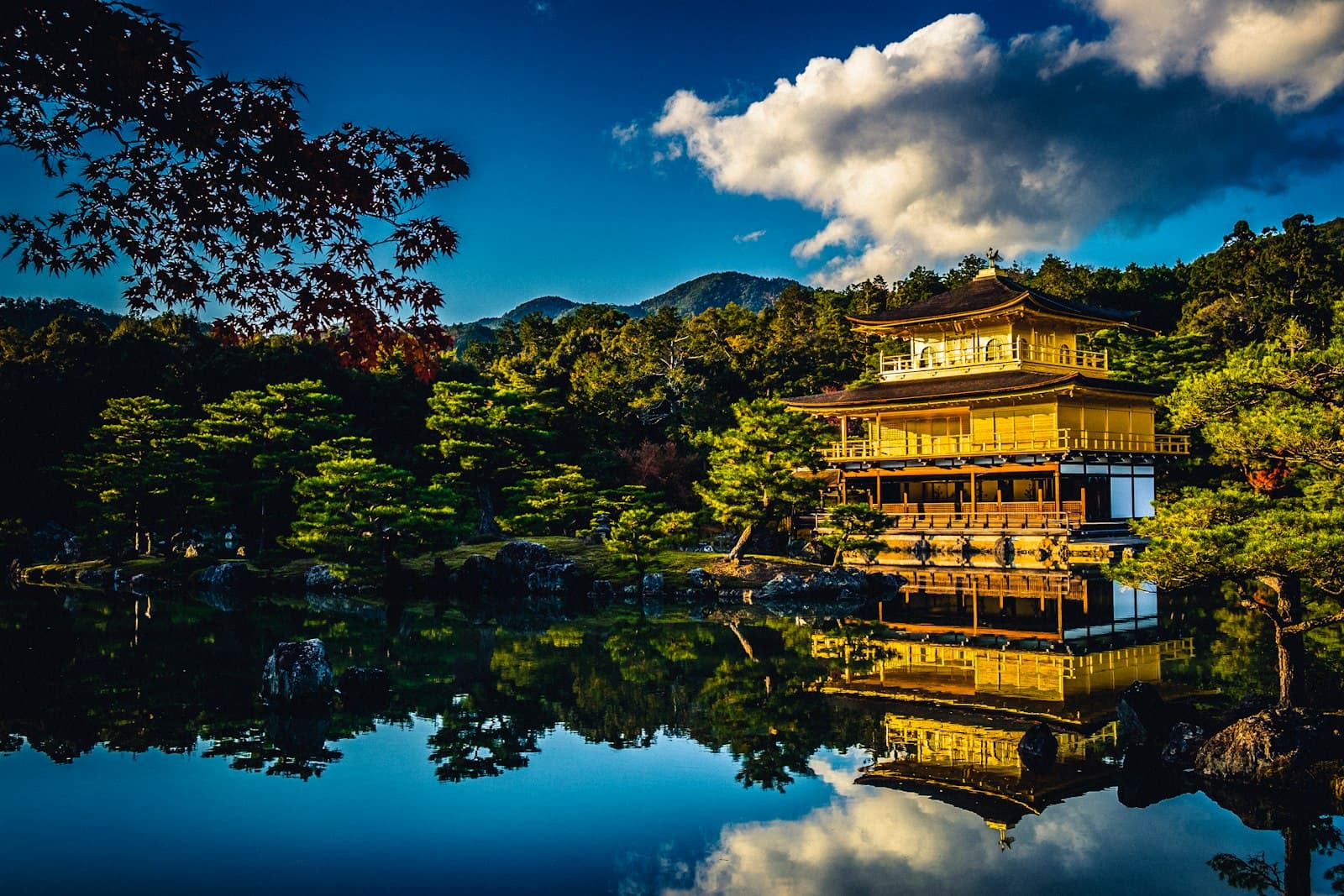
In this guide
- 01A Garden Grown For A Museum That Never Came
- 02Kerry Hill's Final Japan Work, Completed Without Him
- 03The Artist Village That Came Four Centuries Earlier
- 04The Kōshi Lattice Borrowed From Kyoto's Own Streets
- 05The Property: Rooms, Pavilions, And An Onsen In The Trees
- 06How Far Is Aman Kyoto From Kyoto Station?
- 07Frequently Asked Questions
- 08Why Choose Japan Royal Service
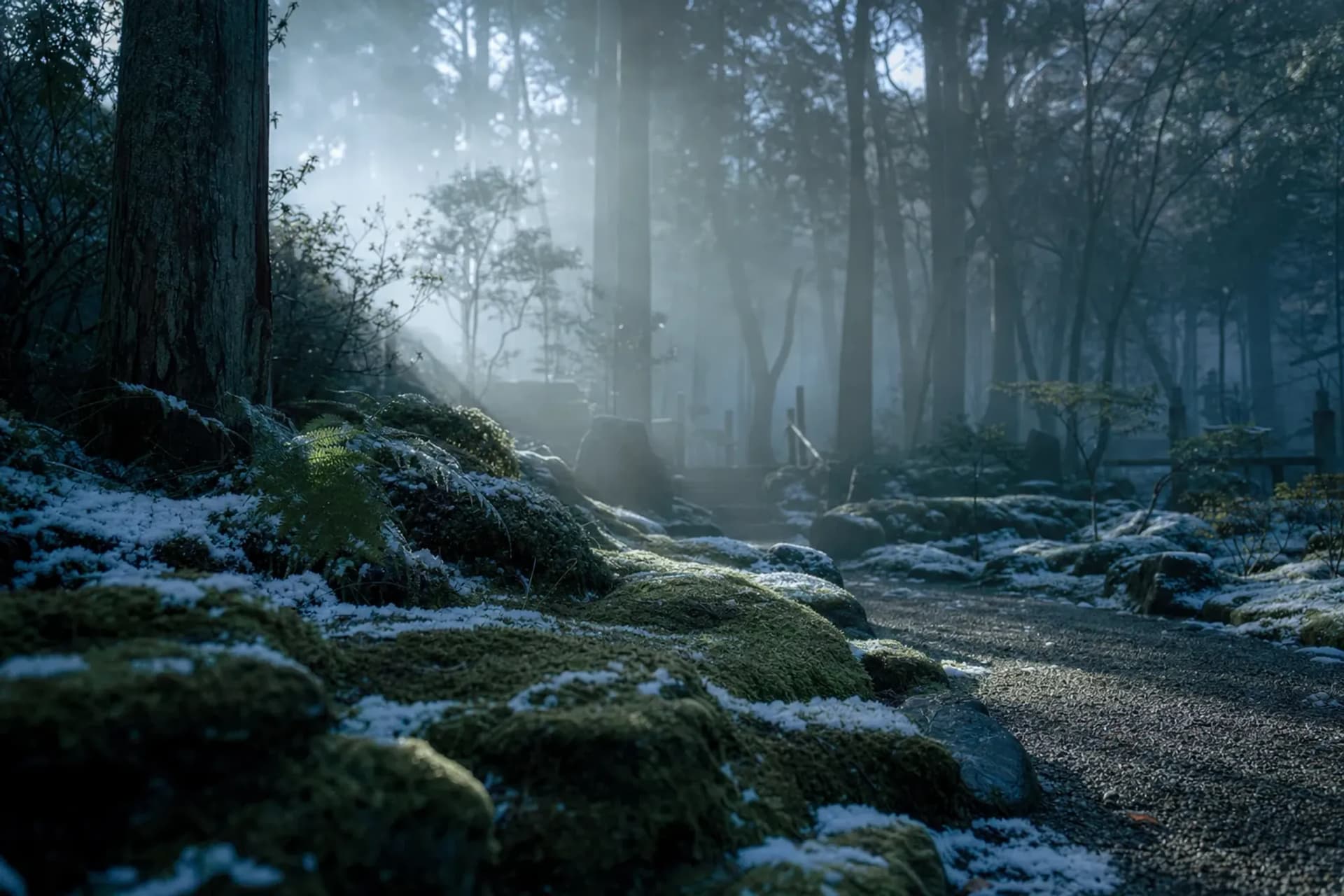
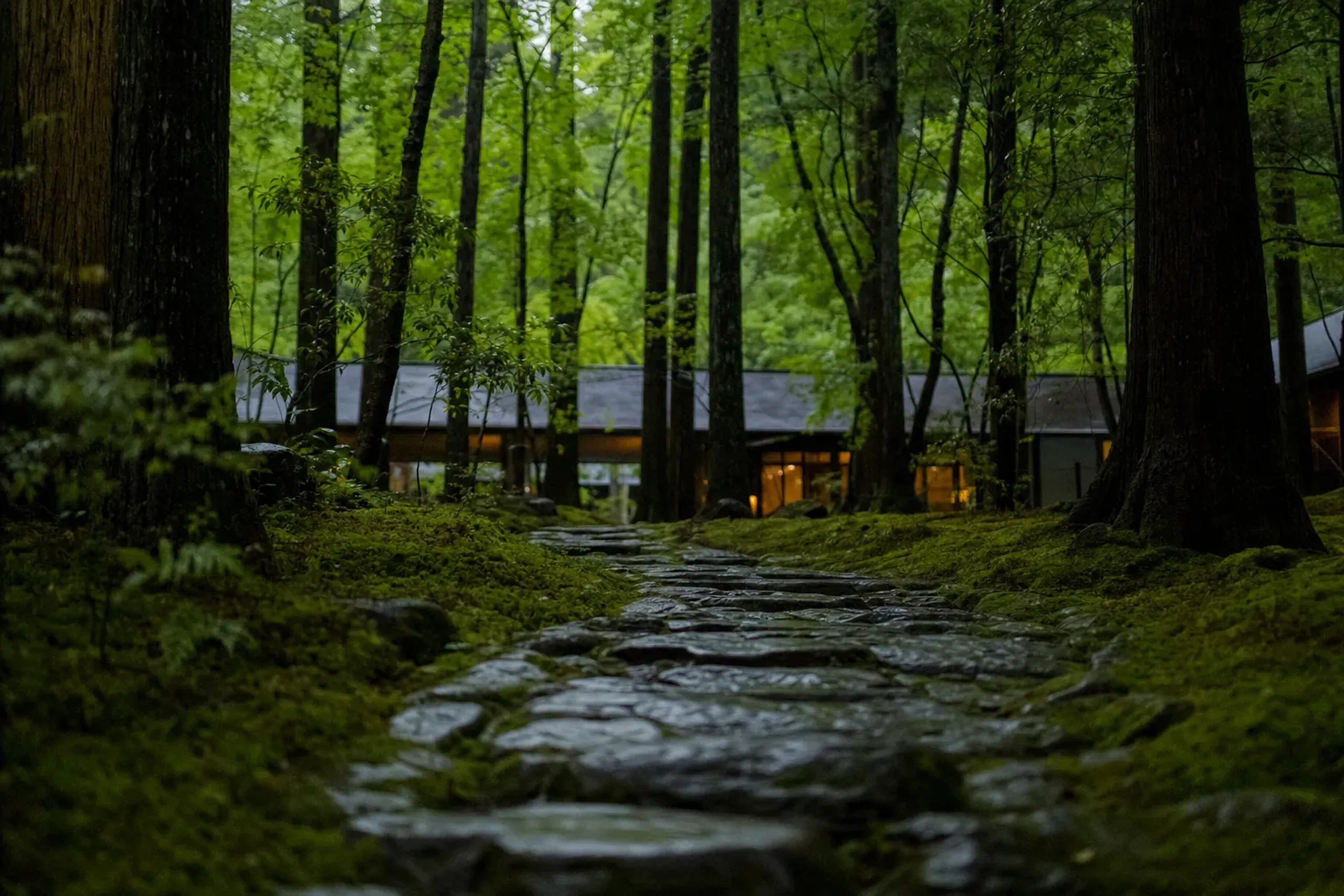
Moss underfoot. The kind that took decades to arrive. You walk the entrance path at Aman Kyoto and the stone walls beside you look older than the hotel could possibly be — piled, weathered, the seams softened by green. In places they resemble ruins. They are not ruins.
That gap between what a place looks like and how it came to be is the whole story here. Our team at Japan Royal Service has walked HNW guests through many Kyoto gardens. Few carry a history quite this stubborn.
A Garden Grown For A Museum That Never Came
A wealthy Nishijin-ori textile family once owned this forested land in Takagamine, northern Kyoto. For roughly forty years, they cultivated its garden by hand. Not as a hobby. Toward a specific dream.
The plan was a textile museum, built here among the trees. Every path, every planted slope, every choice of stone bent toward that single future building. Decades of private devotion, pointed at one vision.
The museum was never built. The dream simply did not arrive. When Aman acquired the site, they inherited something rare: a garden already forty years into its making, grown for a purpose that had quietly dissolved.
So they finished it as something else. The moss that a family cultivated toward a museum now cushions the approach to twenty-six guest rooms.
The devotion stayed. Only the destination changed.
Kerry Hill's Final Japan Work, Completed Without Him
Aman Kyoto was designed by Kerry Hill, the Australian architect behind Aman Tokyo and Amanemu. Hill died in 2018, roughly a year before Aman Kyoto opened on 1 November 2019. He did not see it finished.
This is the second time that sentence is true. Hill also did not live to see Aman Tokyo complete. Two of his final Japan works were finished posthumously — a quiet symmetry that anyone who knows both properties feels.
Near the entrance sits a moss garden named the Kerry Hill Garden, created specifically in his honour. It is a small gesture. It is also the right one. No plaque could say more than a patch of green tended in someone's name.
Hill's signature was restraint. Not gold leaf. Not spectacle. Long horizontal lines, natural materials, buildings that seem to defer to the forest rather than command it. That instinct suits Takagamine perfectly, and it explains why the property feels grown rather than installed.
The Artist Village That Came Four Centuries Earlier
The textile family were not the first to see something in this land. Takagamine's history runs far deeper. In the early 17th century, the calligrapher and potter Hon'ami Kōetsu established an artist's village on this very ground.
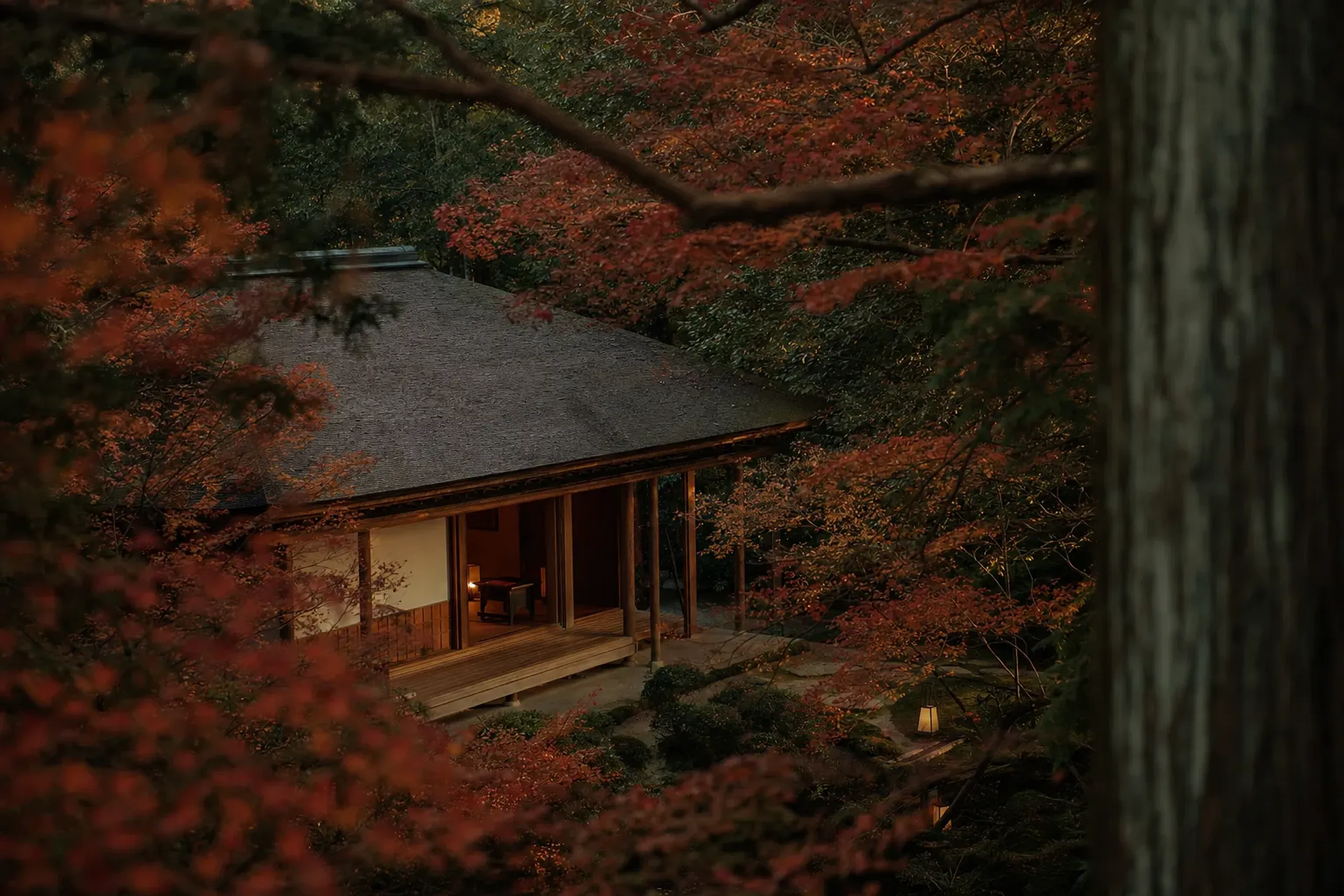
Kōetsu gathered craftsmen, lacquerers, papermakers, and fellow artists into a working community devoted to beauty made by hand. The place has held concentrated craft culture for four hundred years — long before any museum was proposed, long before Aman.
Aman's dining venue, Taka-An, frames itself as a homage to Kōetsu and the Takagamine district. The reference is not decorative. It ties the modern property to a lineage of shokunin who chose this hillside precisely because it invited slow, careful work.
The Kōshi Lattice Borrowed From Kyoto's Own Streets
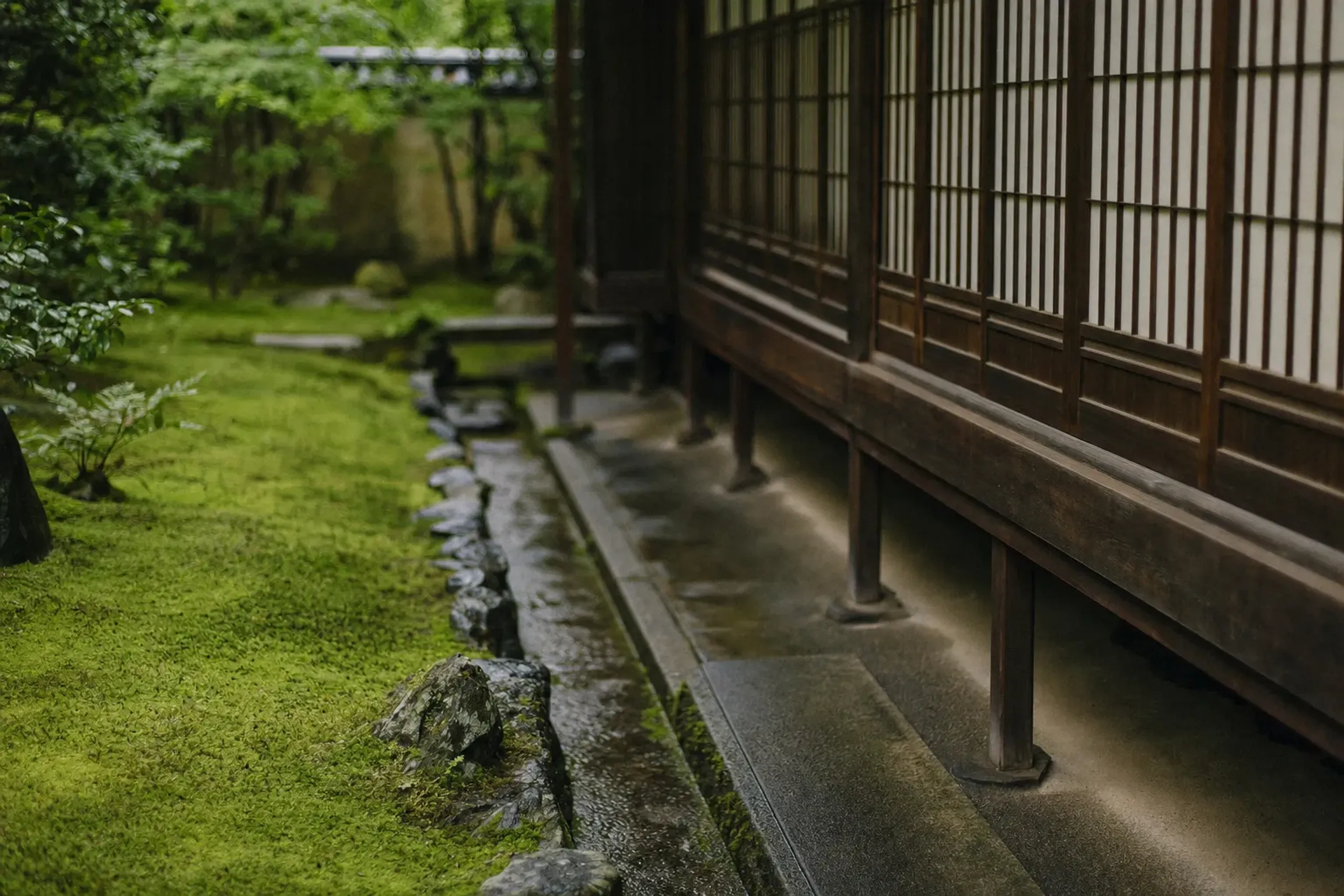
Walk Kyoto's old quarters and you learn to read kōshi — the traditional wooden latticework on machiya windows, gates, and bamboo guards. It is the city's visual grammar. Aman Kyoto borrows it directly.
The kōshi motif recurs across every building on the property. Rather than importing an unrelated aesthetic, Hill's design speaks Kyoto's own language back to it. The architecture belongs, because it repeats a pattern the city has drawn for centuries.
The design in numbers: The site totals roughly 24,000 square metres, with over 23,000 trees plus extensive moss. Conception began around 20 years before opening; construction alone took roughly 10 years.
Stone paths, stone steps, and piled stone walls give the grounds their ruin-like character. Natural springs and waterfalls feed a valley carved by mountain water. At the furthest edge of the property, a large moss-covered terrace waits — the quietest point on the whole estate.
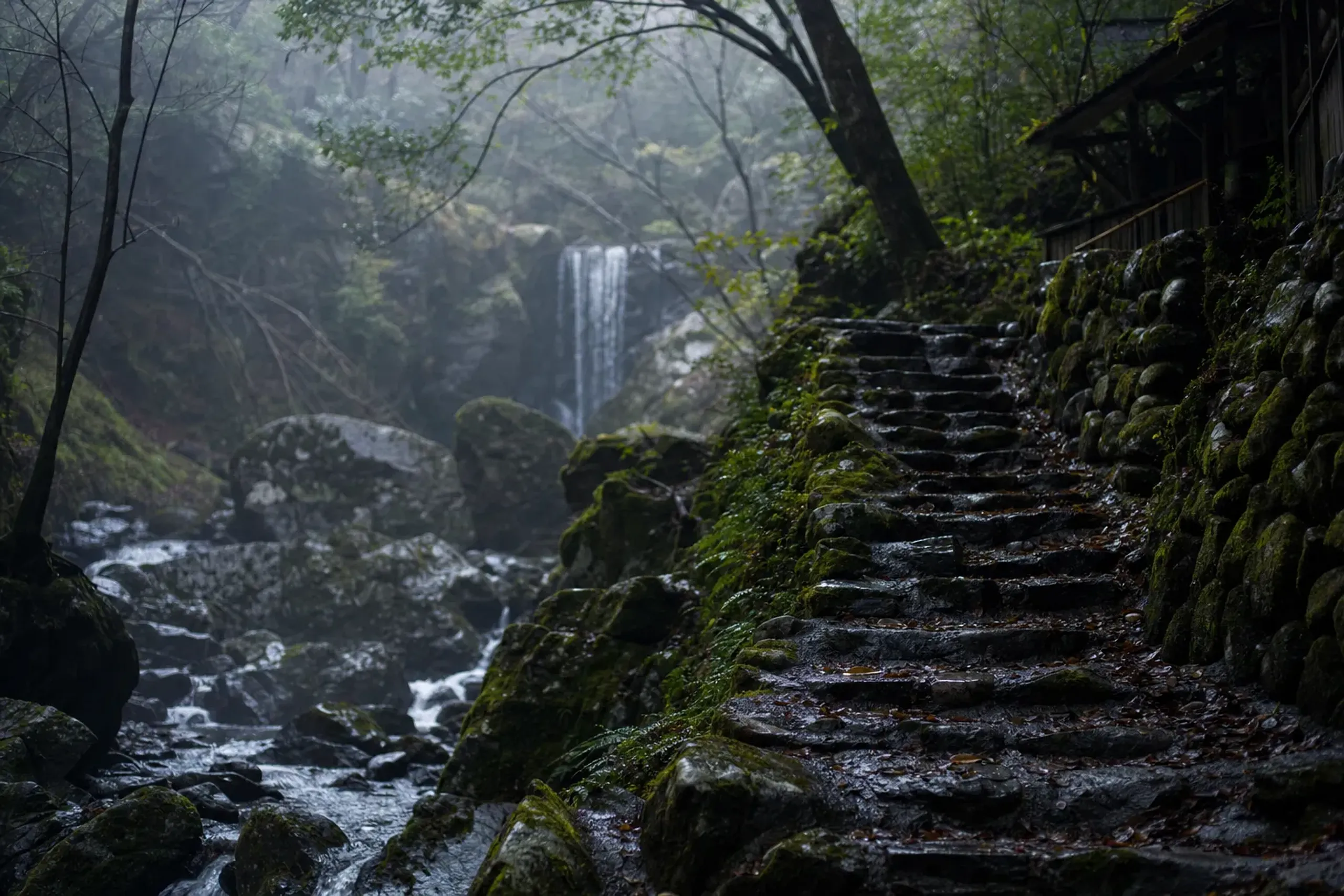
Aman's own framing names five elements specific to this site: stone, water, light, forest, and moss.
The Property: Rooms, Pavilions, And An Onsen In The Trees
Aman Kyoto holds 26 rooms in total, with standard rooms measuring roughly 60 square metres. Rooms vary between Western-style and tatami furnishing, with garden, mountain, or city views, and traditional hinoki baths that carry the resin scent of cypress.
Freestanding pavilions occupy the property's most elevated position, set among the trees for guests who want the deepest privacy. Spring-fed onsen baths run on site, alongside spa treatments and mindfulness sessions. The mountain microclimate keeps the forest cool even in high summer.
An Italian Kitchen, Not A Kaiseki Counter
Here is the fact that surprises nearly everyone. The Living Pavilion by Aman, the hotel's main restaurant, serves Italian-influenced cuisine using Kyoto ingredients. Not traditional kaiseki. A deliberate choice, and a confident one.
More than a third of the produce is sourced from surrounding areas, and the property runs sustainability efforts tied to local waterways and the protection of fireflies. Advance reservations are required for non-resident diners, subject to availability.
Seasonal Dining Worth Timing
Aman Kyoto publishes date-stamped seasonal experiences. In 2026, the Garden Terrace Barbecue runs from 20 April to 30 November, priced at ¥32,000 per person, with a 90-minute free-flow drink option at ¥10,000; reserve at least two days ahead.
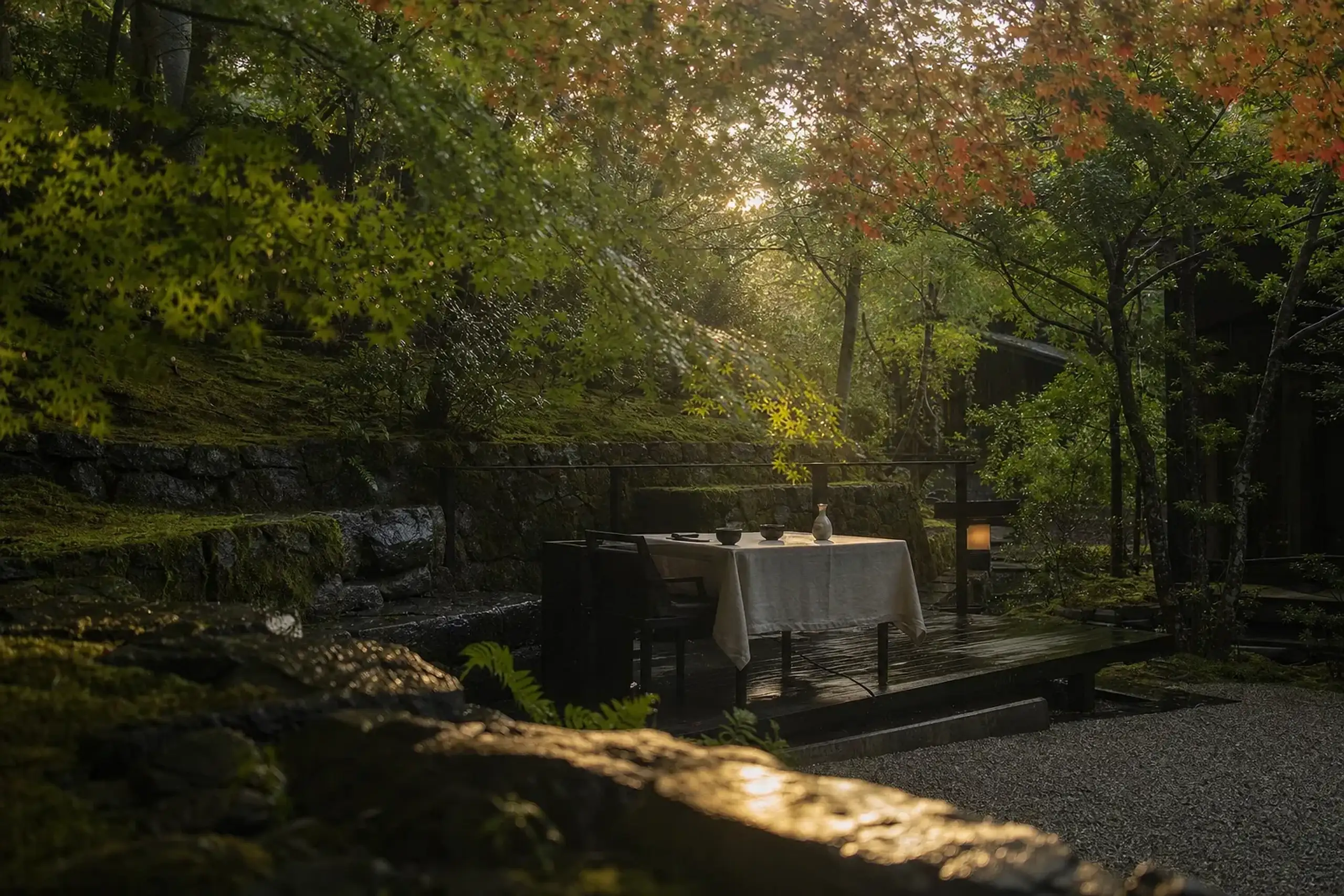
Muskmelon shaved ice appears from 15 June to 30 September. An autumn lunch and dinner course runs from 16 September to 17 November, with autumn afternoon tea served until 31 October — worth building a foliage-season stay around.
How Far Is Aman Kyoto From Kyoto Station?
Aman Kyoto sits in Kita-ku, at the foot of a mountain, roughly 30 minutes by car from Kyoto Station. The address is 1 Okitayama Washimine-cho, Kita-ku.
The drive north lifts you out of the city's density and into the quiet of Takagamine. Our private chauffeured transport makes the transition feel like part of the arrival rather than a logistics problem — a slow decompression from station bustle to forest hush.
Frequently Asked Questions
Can Non-Residents Dine At Aman Kyoto Without Staying There?
Yes. Aman Kyoto's restaurants, The Living Pavilion by Aman and Taka-An, are open to non-residents subject to availability, with advance reservations required. Seasonal experiences such as the Garden Terrace Barbecue must be booked at least two days ahead.
Who Designed Aman Kyoto?
Aman Kyoto was designed by architect Kerry Hill, who also designed Aman Tokyo and Amanemu. Hill died in 2018, roughly a year before the property opened on 1 November 2019, making it one of his final Japan works completed posthumously.
What Kind Of Food Does Aman Kyoto Serve?
The Living Pavilion by Aman serves Italian-influenced cuisine built on Kyoto ingredients — a deliberate departure from traditional kaiseki. More than a third of the produce comes from the surrounding region.
When Is The Best Time To Visit Aman Kyoto?
Autumn, mid-October to mid-November, pairs peak foliage with limited seasonal dining courses and afternoon tea. Summer offers a cooler forest microclimate and shaved-ice service; spring brings the Garden Terrace Barbecue from 20 April.
Why Choose Japan Royal Service
Aman Kyoto rewards guests who understand what they are looking at — a garden grown for a museum that never came, an architect's last work finished without him, a lattice borrowed from the city below. That context does not appear on a booking page. It comes from people who know the property and the district around it.
Japan Royal Service arranges accommodation, private guiding, and transfers for this stay. Our concierge team verifies current room and pavilion availability on the client's behalf ahead of arrival, and shapes each visit into a tailor-made itinerary across Kyoto and beyond. Discretion is total; your identity and itinerary stay with us alone.
To begin planning a stay at Aman Kyoto, reach our team privately via WhatsApp or LINE, or contact us here.