In this guide
- 01The Whole Floor Is Meant To Be One Room
- 02What Makes Aman Tokyo’s 33rd-Floor Lobby Design So Unusual In Tokyo?
- 03Engawa, Reimagined: A Veranda Above Ōtemachi
- 04Kerry Hill’s Principle: Architecture Should Not Assert Itself
- 05Kerry Hill’s Legacy Before Aman Tokyo
- 06Why Aman Tokyo Was A Turning Point For Aman
- 07Where Exactly Is Aman Tokyo, And What Is Ōtemachi Tower Like?
- 08The Views: Morning Light, Weather, And Mount Fuji
- 09Aman Tokyo’s Rooms And Design Language (In Plain Terms)
- 10Dining At Aman Tokyo: A Design Extension, Not A Separate World
- 11How Do You Reach Aman Tokyo From Haneda Or Narita Without Stress?
- 12How To Stay At Aman Tokyo: Practical Notes Without The Noise
- 13What Japan Royal Service Coordinates (Stated Plainly, Once)
- 14Plan Your Stay At Aman Tokyo
- 15Frequently Asked Questions
Step out of the elevator and the city noise drops away. Fast. You arrive not in a “lobby,” but in a single, continuous interior landscape suspended above Ōtemachi.
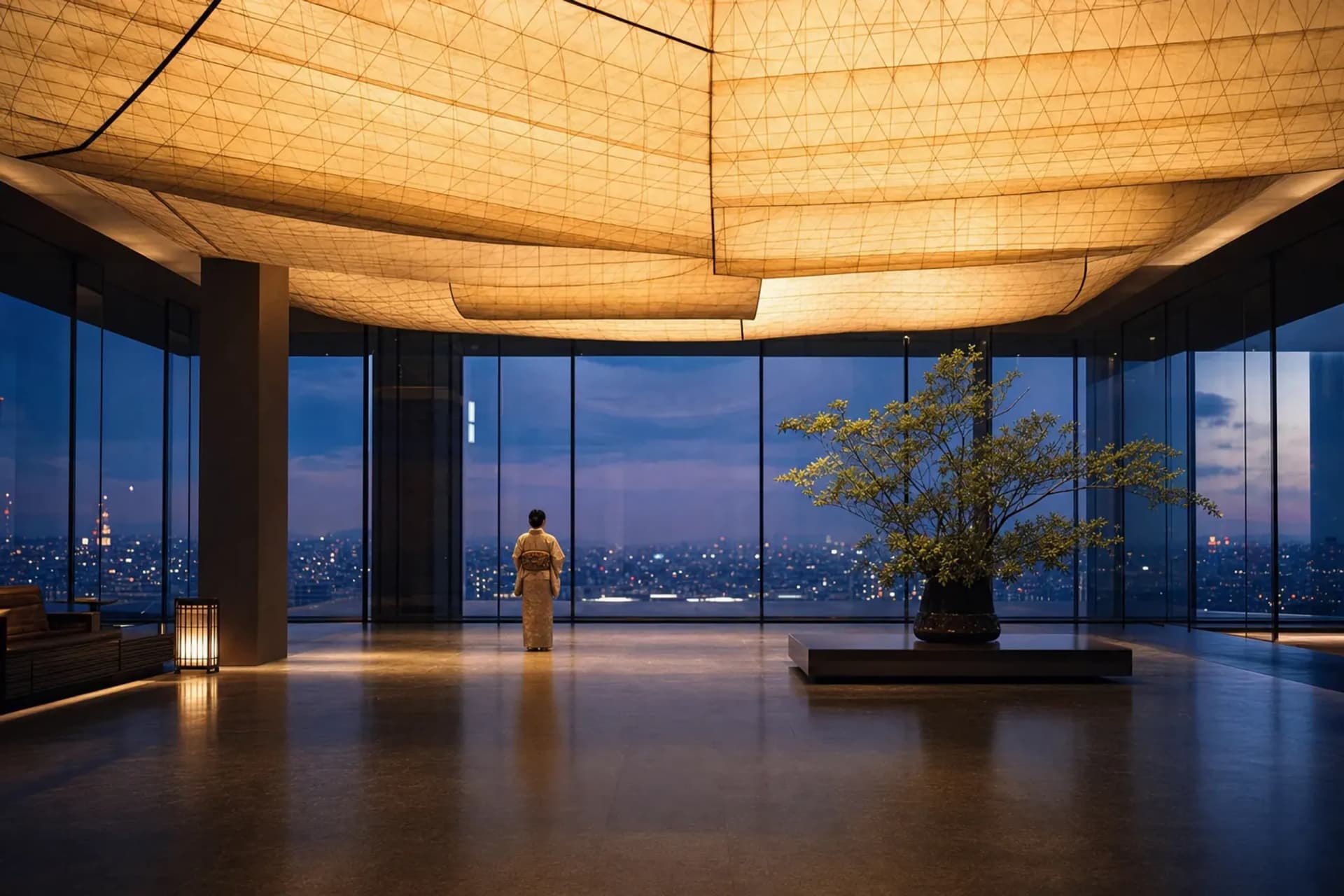
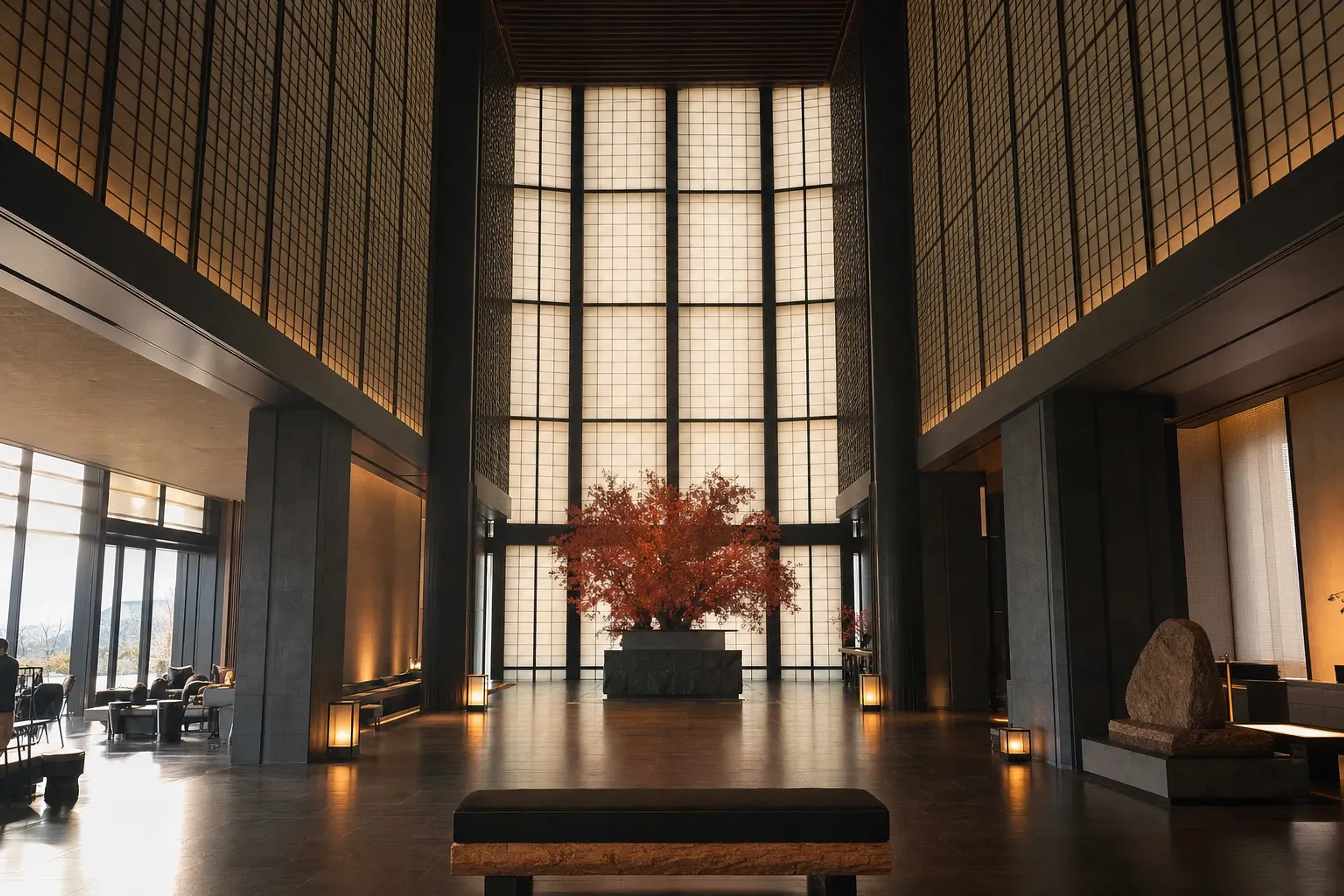
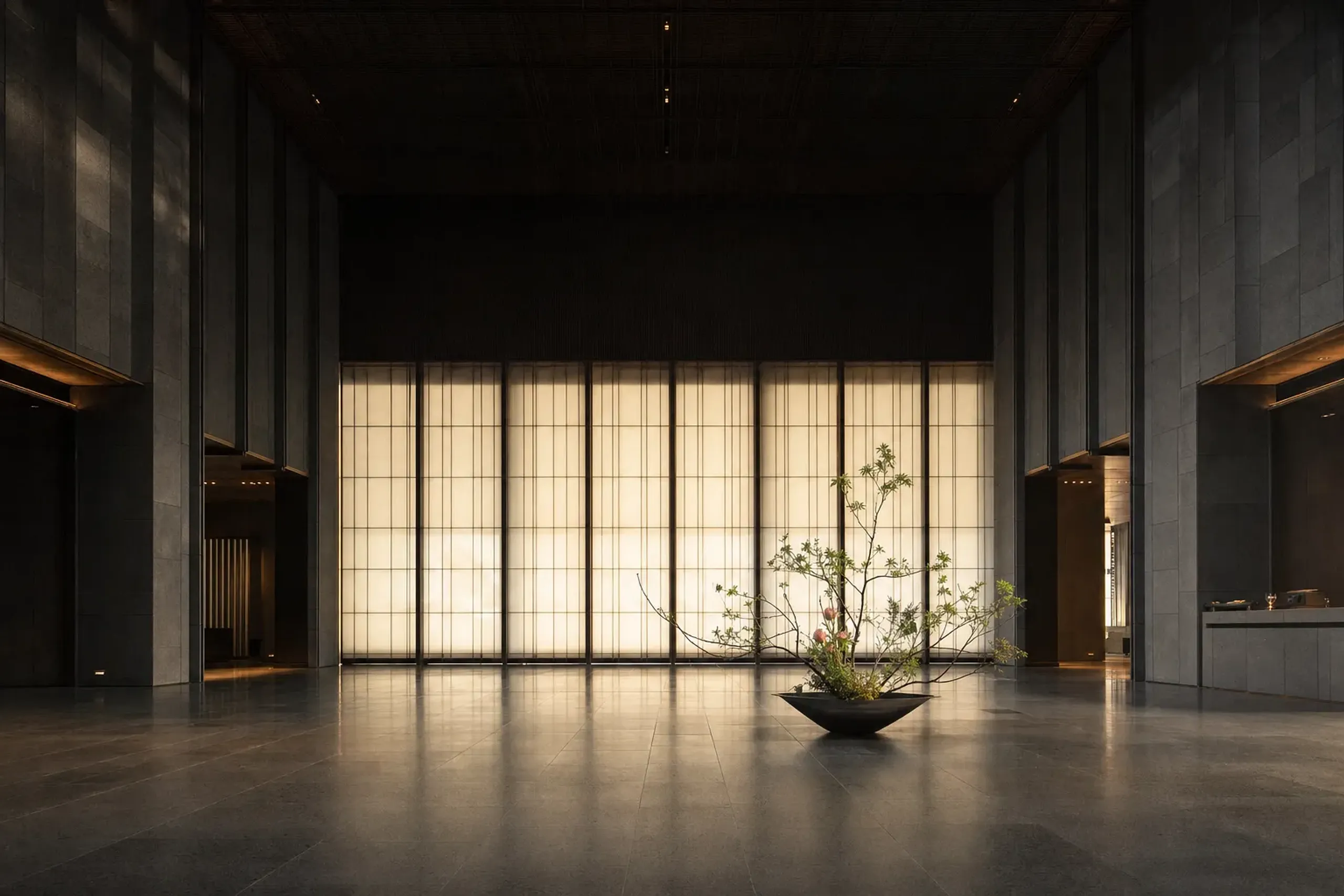
There is height—roughly 30 metres of it—yet the mood stays hushed. Warm light sifts down from above, softened by white shoji screens in the upper reaches. The space does not perform. It holds.
This is the idea that makes Aman Tokyo distinct. The 33rd floor is treated as one giant room, arranged around water, stone, and flowers—an urban resort’s spatial logic placed inside a Tokyo tower.
Our team at Japan Royal Service built this guide for travelers who care about design, not merely a hotel name on a reservation. If you have stayed in enough five-star properties to know the usual script—the theatrical arrival, the branded scent, the corner styled for a photograph—Aman Tokyo’s 33rd floor reads like a quiet refusal of all of it.
The Whole Floor Is Meant To Be One Room
Most luxury hotel lobbies divide themselves into zones. Restaurant here. Café there. Bar tucked away, lit like a stage.
Aman Tokyo does something rarer. The 33rd floor is conceived as a single continuous space—often described locally as “one giant room.” It is organized around a central composition: a pond, an ikebana display of fresh flowers renewed to the season, and a stone garden set exactly where you would expect tables and partitions.
Walk the perimeter and you feel a deliberate rhythm underfoot. A surrounding passageway is designed to evoke an engawa, the traditional Japanese veranda that mediates between interior rooms and an outdoor garden. Here, that relationship is recreated thirty-three storeys above the street.
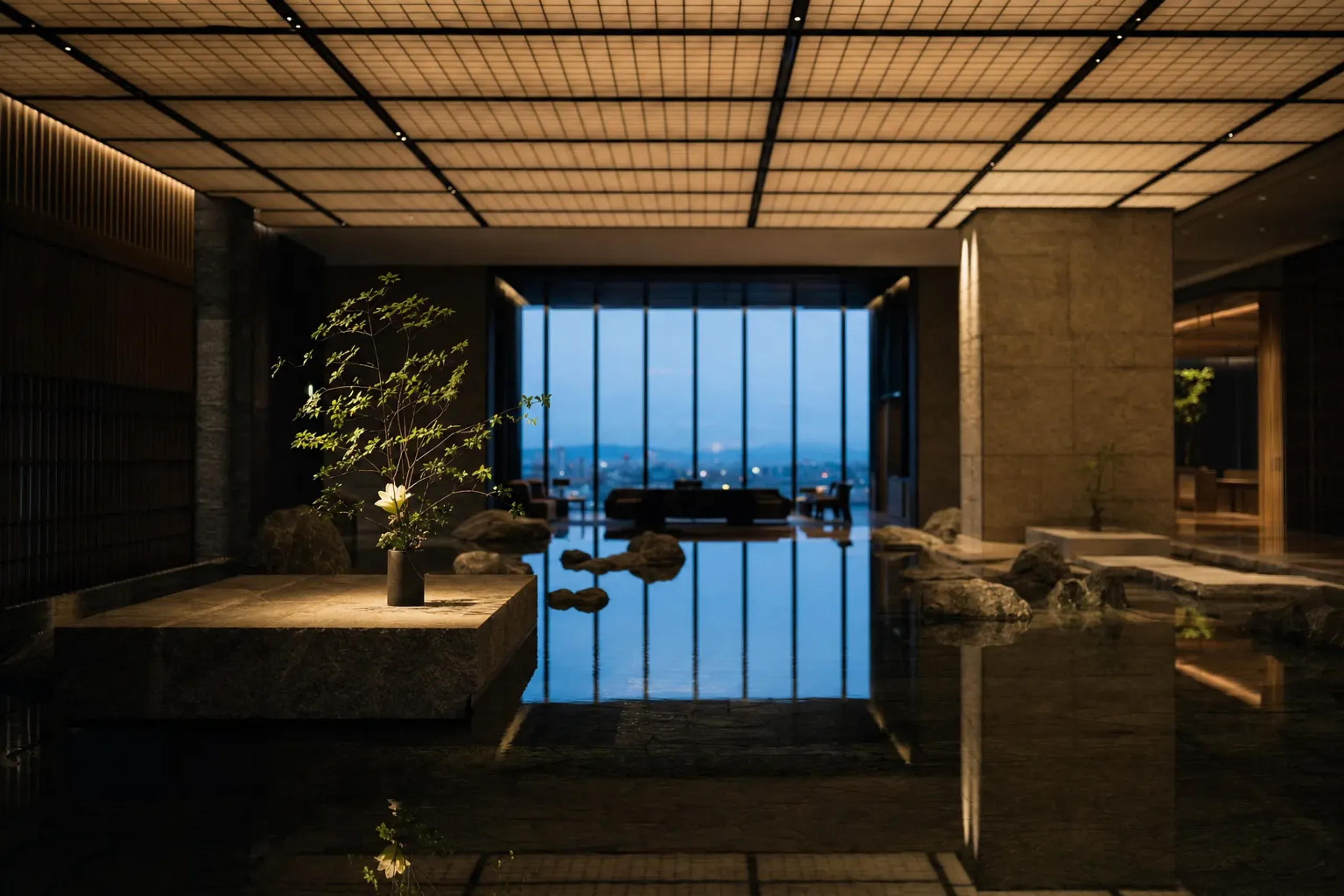
A single continuous room: water, stone, and flowers shape the entire 33rd floor.
It is not a decorative quotation. It is spatial behavior. You circulate, pause, look across water, and move again—precisely as you would in a private house built around a garden, except that here your “garden” is framed by Tokyo’s skyline. The restraint is deliberate: this is the aesthetic of wabi, the beauty of the understated, translated into an urban tower.
What Makes Aman Tokyo’s 33rd-Floor Lobby Design So Unusual In Tokyo?
Aman Tokyo’s 33rd floor is designed as one continuous room, built around a pond, a stone garden, and ikebana, with circulation that echoes an engawa rather than separated dining-and-bar compartments.
That single sentence explains why the space feels different the moment you enter. Many high-rise hotels lean into gloss: reflective surfaces, dramatic contrasts, photo-ready corners. Aman Tokyo leans into continuity. There is no hard “start” and “finish.”
You notice it in small decisions. The way the walkway lets you orbit the center without being funnelled into a queue. The way seating areas feel like rooms within a room—defined by distance, light, and line of sight, not by walls.
For a HNW traveler, this matters, because it changes the social texture of the hotel. A meeting can happen without feeling displayed. A quiet drink can feel private even when the floor is active. It is discretion, expressed as architecture—the same confidentiality of movement and identity that our most discerning guests value above any amenity list.
Engawa, Reimagined: A Veranda Above Ōtemachi
The word engawa is simple.
The meaning is subtle.
In traditional Japanese architecture, an engawa is the threshold space that sits between the inside and the garden. Not fully interior. Not fully exterior. It is where you sit with tea, listen to rain, and feel the season shift without being exposed to it.
At Aman Tokyo, that threshold logic becomes a circulation system for an entire hotel floor. You move along the edge, not to “get somewhere,” but to experience the changing views: water and stone at the center, wood panelling as a calm boundary, Tokyo’s vertical grid beyond the glass.
It is an urban twist on a residential idea. And it is one reason repeat visitors return to the 33rd floor even when they are not checking in. The space invites time to slow down—an increasingly rare gift in a city that rarely pauses.
Kerry Hill’s Principle: Architecture Should Not Assert Itself
Kerry Hill’s stated philosophy was that architecture should not assert itself—so ornament is stripped back and the space itself, its light, scale, and proportion, carries the design.
That principle is not marketing copy. It is legible in how Aman Tokyo feels. The lobby’s height could have been used for spectacle, yet the atmosphere stays soft rather than theatrical.
Look upward. White shoji screens in the upper reaches filter the light. Look laterally. Wood panelling rings the space, mediating between interior calm and the city outside.
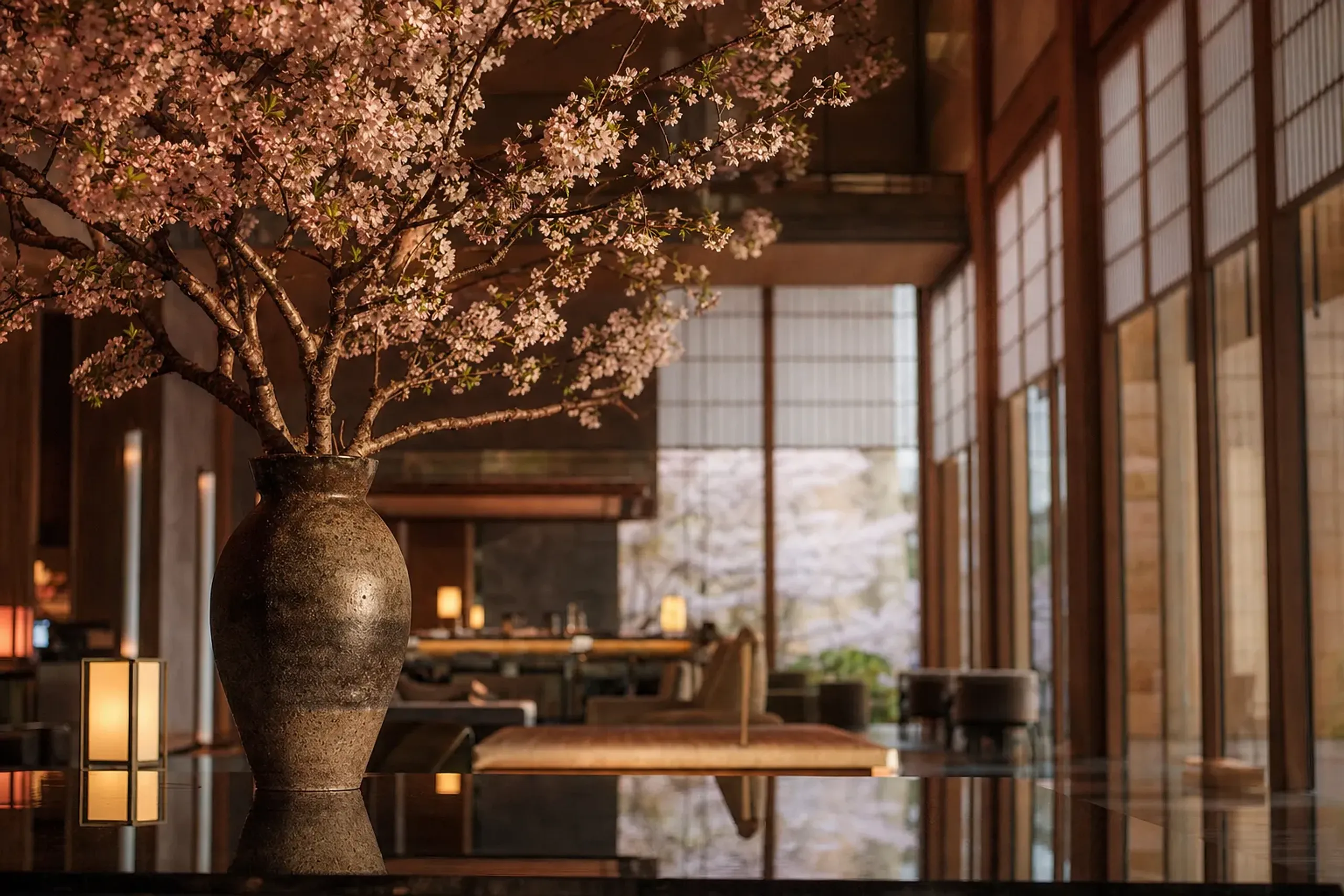
Nothing shouts. Everything steadies.
This is why Aman Tokyo photographs as serene, yet lives as serene. The restraint is structural. It does not depend on a flower arrangement being “perfect” on any given day—it is written into the bones of the building.
Kerry Hill’s Legacy Before Aman Tokyo
Kerry Hill (an Australian architect who died on 26 August 2018) is credited with foundational work in Asian resort architecture. His earlier projects include The Chedi Chiang Mai, The Lalu in Tainan, and Alila Ubud in Bali.
Those places trained his eye for a certain kind of arrival. The moment when a guest transitions from heat and noise to shadow and quiet. The long view across water. The corridor that feels like a pause rather than a passage.
Aman Tokyo reads like an urban culmination of that practice—resort thinking, where space comes first and ornament last, translated into a skyscraper.
And that translation is the point. Many city hotels offer “spa calm” as an amenity you visit. Aman Tokyo embeds that calm into the building’s very behavior.
Why Aman Tokyo Was A Turning Point For Aman
Aman Tokyo opened on 22 December 2014 as Aman’s first urban hotel—a real departure after decades of building its identity around remote, nature-led resorts.
Since Aman’s founding in 1988, the brand had been associated with distance: islands, jungles, sacred landscapes, places set apart from cities. Placing an Aman inside a Tokyo office tower surprised many observers at the time.
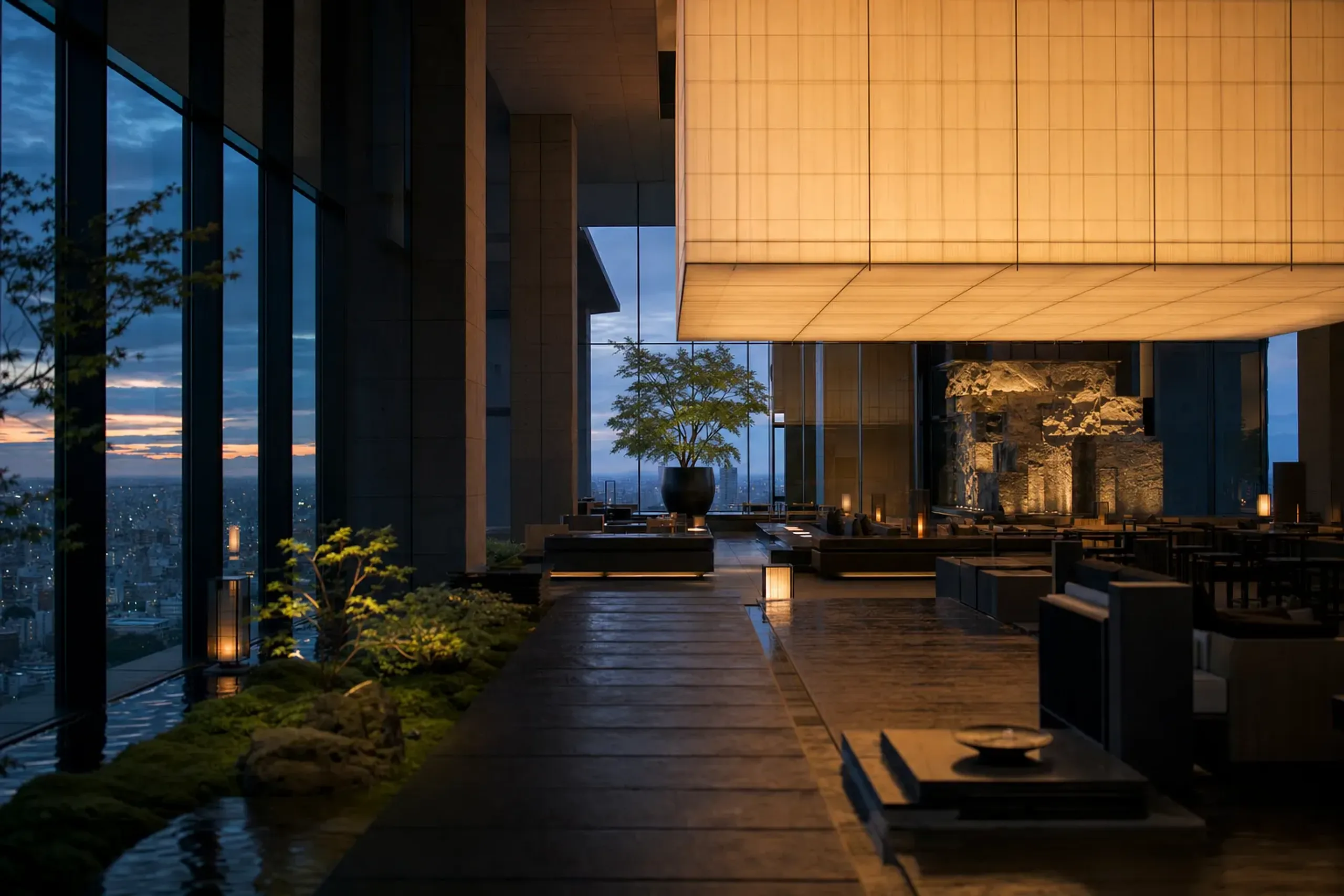
Yet the 33rd floor explains how the leap worked. Instead of copying a resort’s look, Kerry Hill brought a resort’s spatial logic into the city. One floor. One continuous room. A sense of threshold. A slower pace.
For travelers who already know Tokyo, this is valuable. You gain Tokyo’s access without Tokyo’s friction in the very moment you return to the building.
Where Exactly Is Aman Tokyo, And What Is Ōtemachi Tower Like?
Aman Tokyo occupies floors 33 through 38 of Ōtemachi Tower in Chiyoda City, Tokyo—a mixed-use building roughly 200 metres tall, set beside the Ōtemachi Forest at street level.
The juxtaposition is part of the story. Ōtemachi is Tokyo’s financial district, and Ōtemachi Tower carries a major corporate presence, including Mizuho Bank’s headquarters within the same building.
And yet, at ground level, the development recreates a forested area—the Ōtemachi Forest—so your approach passes through greenery before you ever rise into the sky. Then you ascend into a lobby that behaves like an engawa wrapped around water and stone.
It is a sharp Tokyo paradox: the logic of nature, engineered into a business address.
The Views: Morning Light, Weather, And Mount Fuji
On a clear morning, Aman Tokyo’s rooms can frame a sky shifting from indigo into sunrise tones, with Mount Fuji visible in good weather.
We mention this carefully, because it is not a promise.
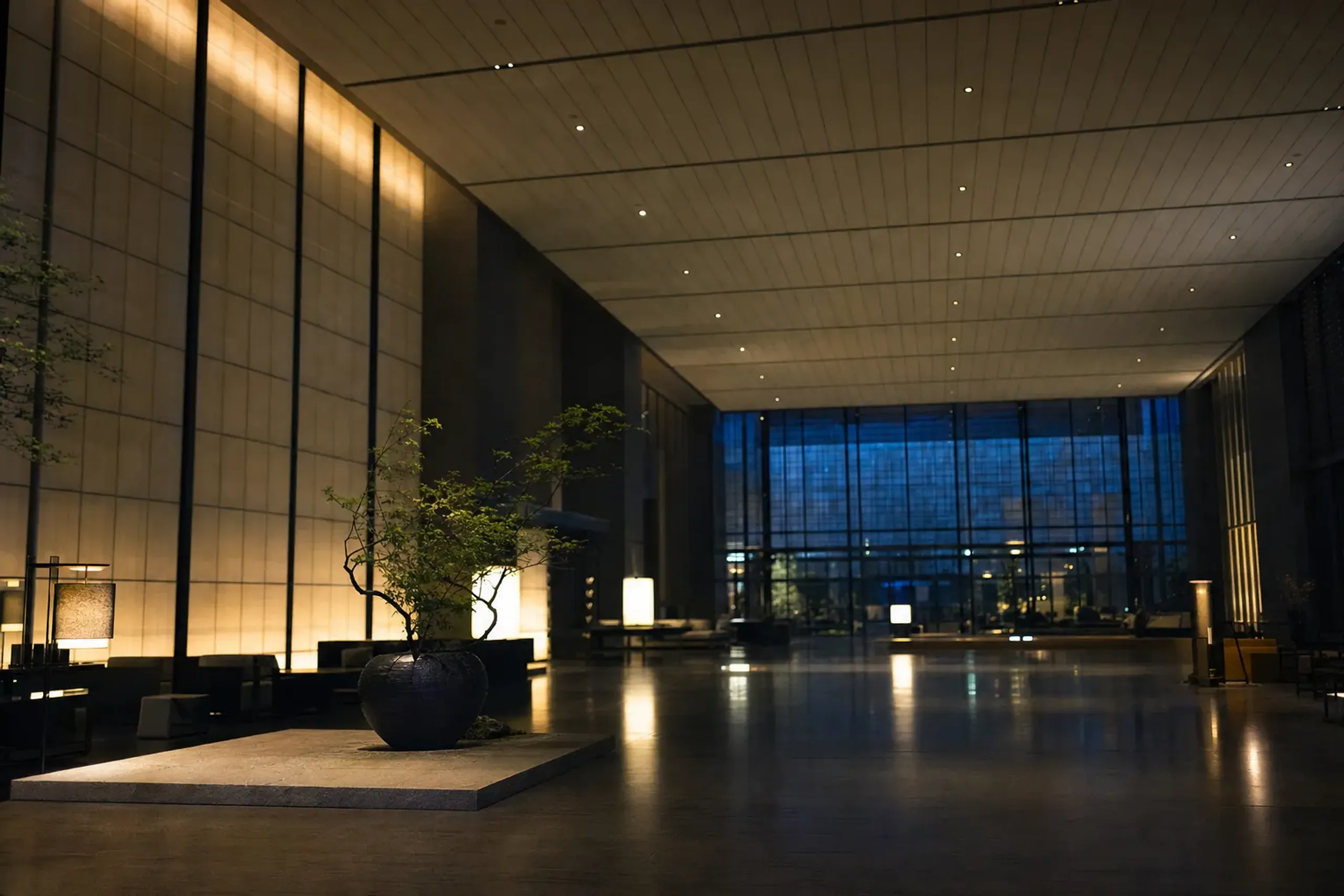
Tokyo weather has its own mind. Haze and cloud can erase the long-distance views, even on days that look “fine” at street level.
Still, the design makes even a viewless day feel intentional. Shoji-softened light. Calm materials. A sense of height without glare. This is where the Japanese sense of shun—knowing which month rewards which experience—quietly earns its keep; the crisp, dry air of winter mornings offers the finest odds of a clear Fuji.
If you are choosing between Tokyo hotels and you care about atmosphere more than skyline drama, this is the quiet advantage of Aman Tokyo.
Aman Tokyo’s Rooms And Design Language (In Plain Terms)
Aman Tokyo has 84 rooms and suites, described by Aman as contemporary spaces shaped by a traditional Japanese aesthetic.
That phrase can go blurry online. In practice, the through-line is consistency: a controlled palette, clean lines, and a sense that the room is not trying to entertain you. It is trying to let you rest.
For HNW travelers who work hard through the year, this matters more than it sounds. A room that “shows off” can keep your mind switched on. A room that recedes can switch it off.
It also fits Kerry Hill’s logic. Architecture should not assert itself—and neither should the room.
Dining At Aman Tokyo: A Design Extension, Not A Separate World
Aman Tokyo’s dining portfolio is presented as four venues: Arva (Italian), Musashi by Aman (Edomae sushi), The Lounge by Aman, and a patisserie concept.
Even if you are not staying at the hotel, Aman’s official information indicates these venues are open to guests and visitors with reservations.
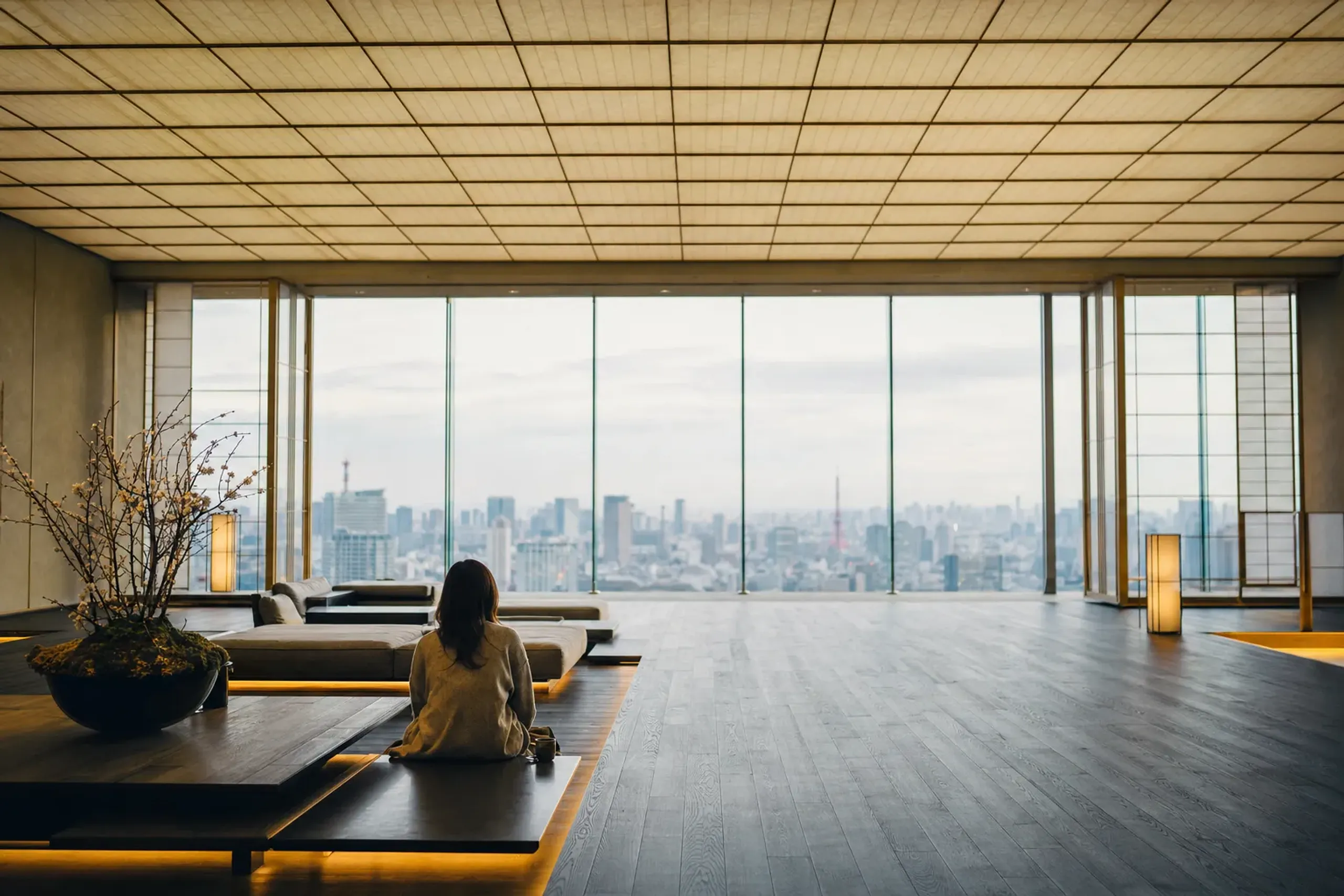
That detail matters in Tokyo, where excellent dining is everywhere but the setting so often decides the mood.
Arva is listed at 1-5-6 Ōtemachi, Chiyoda-ku, Tokyo. Musashi by Aman speaks directly to Edomae tradition—a discipline that is as much about timing and temperature as it is about fish, and one carried by the hands of a sushi shokunin whose craft is measured in decades. Watching such a master work close-up, at the counter, is precisely the kind of quiet mastery that rewards a slower, well-planned evening rather than a rushed reservation.
Seasonal programming is part of the rhythm. Aman Tokyo has published time-bounded seasonal dining availability windows—for example, a seasonal offering listed from 14 September to 15 November 2026—and “Seasonal Exclusives” that include “Osechi at Musashi by Aman 2026.”
Key fact: Seasonal dining offerings are time-bounded and can change; if a specific date matters (such as late-December through early-January travel), ask early and confirm details directly with the venue.
How Do You Reach Aman Tokyo From Haneda Or Narita Without Stress?
The calmest arrival is a private, pre-planned drive timed to your landing, with pickup and drop-off points chosen to reduce exposure and waiting.
Ōtemachi is central, but “central” in Tokyo can still mean slow at the wrong hour. The practical win is control: a quiet car, luggage handled smoothly, and no negotiation with taxis after a long flight.
In our experience, HNW travelers appreciate vehicles that match the hotel’s tone—restful, not flashy. For airport days and meeting-heavy itineraries, that consistency keeps the whole trip feeling composed.
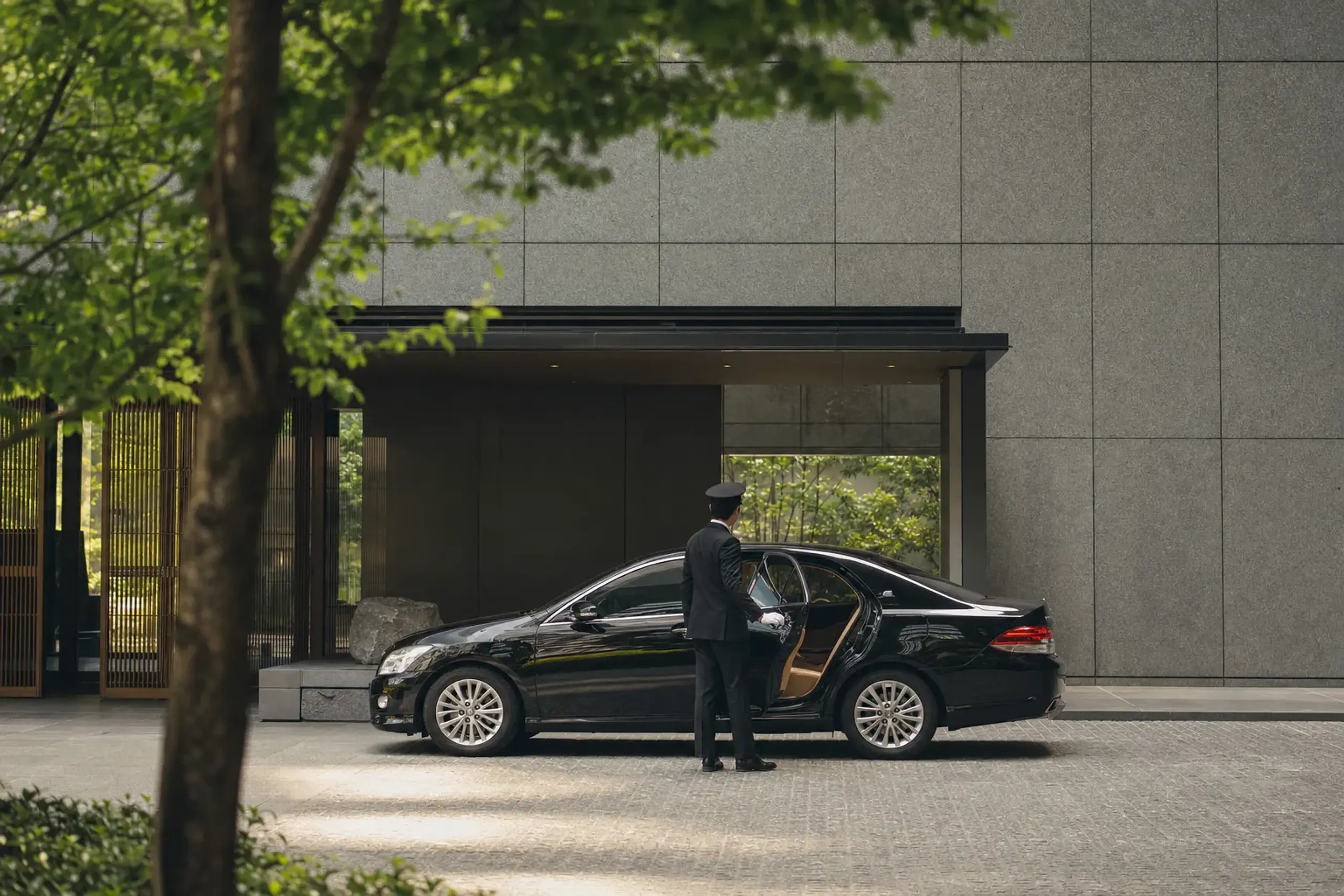
When you are ready to plan logistics, our private transportation page outlines the approach and vehicle classes we use across Tokyo.
How To Stay At Aman Tokyo: Practical Notes Without The Noise
Start by deciding what you want the hotel to do for you—not what it “offers.” It is a meaningful difference.
If you are coming to Tokyo to shop and dine late, you may value a fast reset space: spa time, early quiet, and a lobby where you can take a meeting without feeling on display. If you are coming to see Tokyo at dawn, you may care about the room’s light and orientation more than anything on a facilities list.
Aman Tokyo sits in a business district, which can be an advantage on weekends when certain streets feel less pressured. On weekdays, it also means the surrounding area keeps a purposeful pace. Plan accordingly.
One more note. If you are comparing Aman Tokyo with newer entries in Tokyo’s top tier—Janu Tokyo often comes up in 2026 conversations—anchor your choice in atmosphere: do you want deep quiet, or a more social energy?
What Japan Royal Service Coordinates (Stated Plainly, Once)
Japan Royal Service coordinates accommodation, guiding, and transfers as part of a discreet, tailor-made journey.
We keep our public guidance clean for a reason. Many high-demand experiences in Japan carry official rules, venue policies, and time-bounded availability, and we never imply any bypass of those requirements.
What we do offer is the part that tends to break first in Tokyo: context, timing, and privacy discipline. The right arrival window. A room preference that fits how you actually live. A plan that leaves air in the day. And, where introductions matter, quiet access to the Japan that a search engine cannot surface for you.
If you are building a longer itinerary around Tokyo, begin with our tailor-made itinerary service page. It shows how we structure multi-day planning without turning your trip into a checklist.
Plan Your Stay At Aman Tokyo
If the 33rd floor’s quiet is the kind of luxury you have been searching for—space that steadies rather than dazzles, and hospitality that anticipates rather than announces—let us shape the details around you. From the arrival window to the room’s light to a counter seat with a sushi master, we plan with discretion and precision. To begin a private, tailor-made proposal, contact us here.
Frequently Asked Questions
Is Aman Tokyo Really Aman’s First Urban Hotel?
Yes—Aman Tokyo opened on 22 December 2014 and is widely cited as the brand’s first city hotel.
That history matters because the building had to carry Aman’s resort DNA without relying on distance from the city.
What Is The Single Most Distinctive Design Feature At Aman Tokyo?
The defining feature is the 33rd-floor “one giant room” concept, organized around a pond, stone garden, and ikebana, with movement designed to echo an engawa.
If you have only ten minutes in the space, walk the perimeter once before you sit down.
Can Non-Guests Dine At Aman Tokyo Restaurants Like Arva Or Musashi By Aman?
Yes—Aman’s official dining information indicates the venues are open to guests and visitors with reservations.