In this guide
- 01Why Is Amanohashidate Meant To Be Viewed Upside Down?
- 02The Four Named Viewpoints, Each With Its Own Character
- 03Two Myths That Coexist, Neither One Winning
- 04The Sandbar Itself: A Well Of Fresh Water In A Salt Bay
- 05How Do You Get To The Matanozoki Viewpoint At Kasamatsu Park?
- 06What Does Japan Royal Service Arrange At Amanohashidate?
- 07Frequently Asked Questions
- 08Why Choose Japan Royal Service
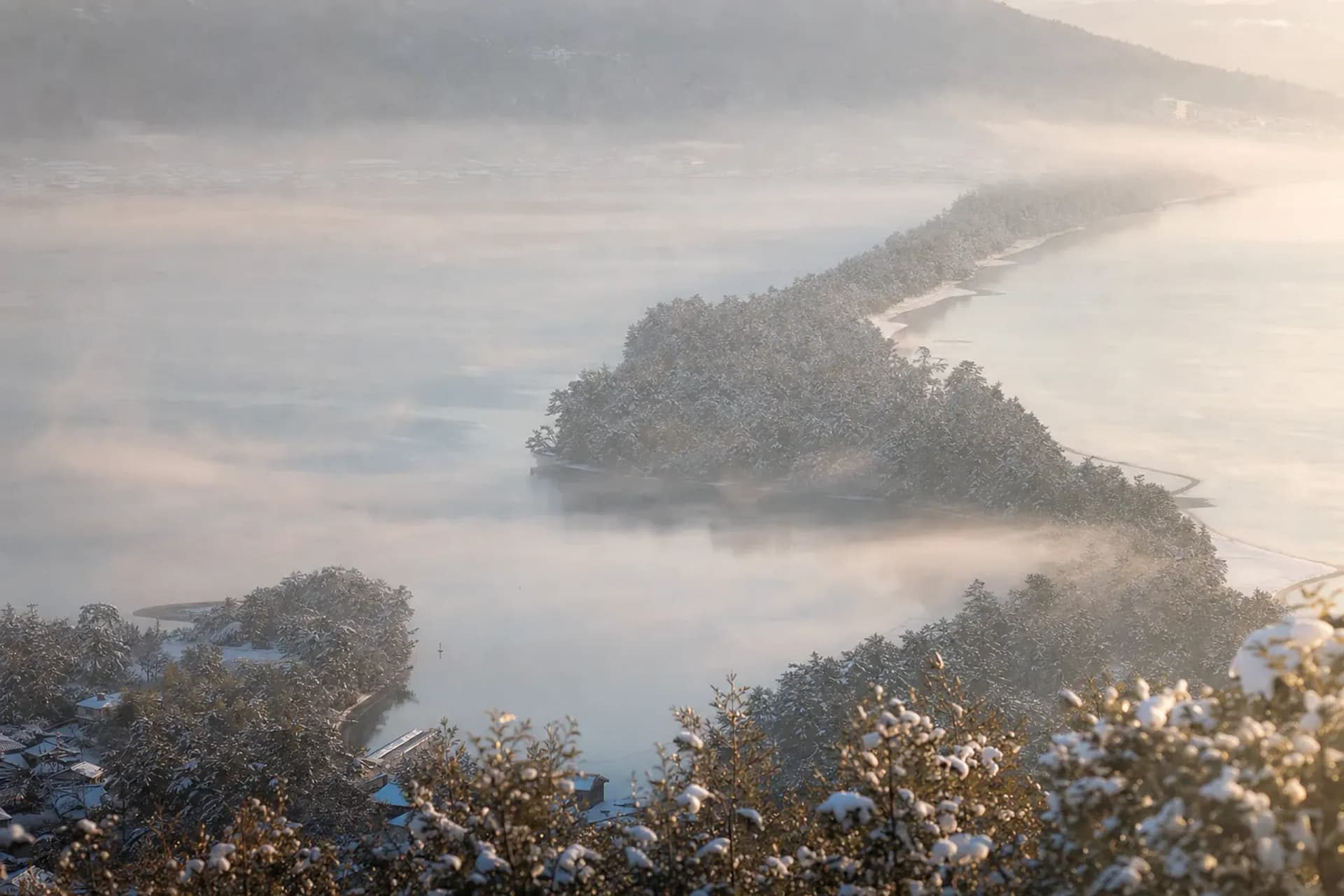
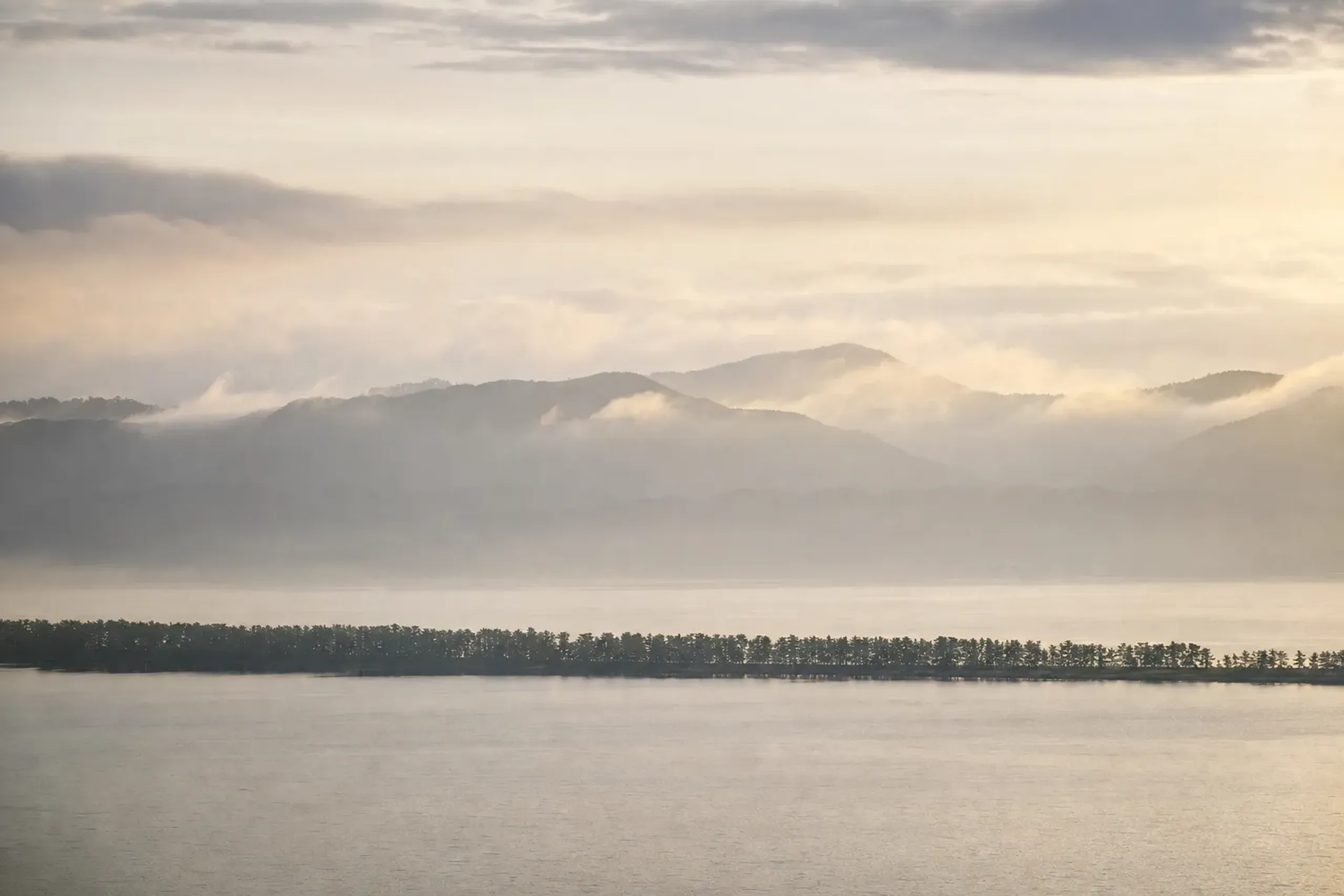
Stand at the edge of the platform in Kasamatsu Park, on the north side of Miyazu Bay. Below you, a thin green line runs across the water — a sandbar 3.3 kilometres long, planted with roughly 7,000 pine trees. It is one of the Three Views of Japan. And here is the strange part.
You are not meant to look at it the normal way.
Turn around. Bend forward at the waist. Look back at the sandbar through the gap between your own legs. The moment you do, sea and sky trade places. The strip of pines lifts off the water and hangs in the air. What was a beach becomes a bridge — a floating path suspended between heaven and earth. This is matanozoki, and it is the whole point.
Our team at Japan Royal Service has escorted guests to plenty of famous panoramas across Japan. Few reward a change of posture quite like this one. Amanohashidate rewards the willing.
Why Is Amanohashidate Meant To Be Viewed Upside Down?
Amanohashidate is meant to be viewed upside down because inverting the image makes the pine sandbar appear to float in the sky as a "bridge to heaven" rather than lie flat on the sea. The name itself means "bridge standing toward heaven."
The custom of bending forward to look between one's legs has a name and a birthplace. It is called matanozoki. Kasamatsu Park, on the bay's north side, is the confirmed origin of the practice, and a dedicated viewing platform still stands at that same historic spot today.
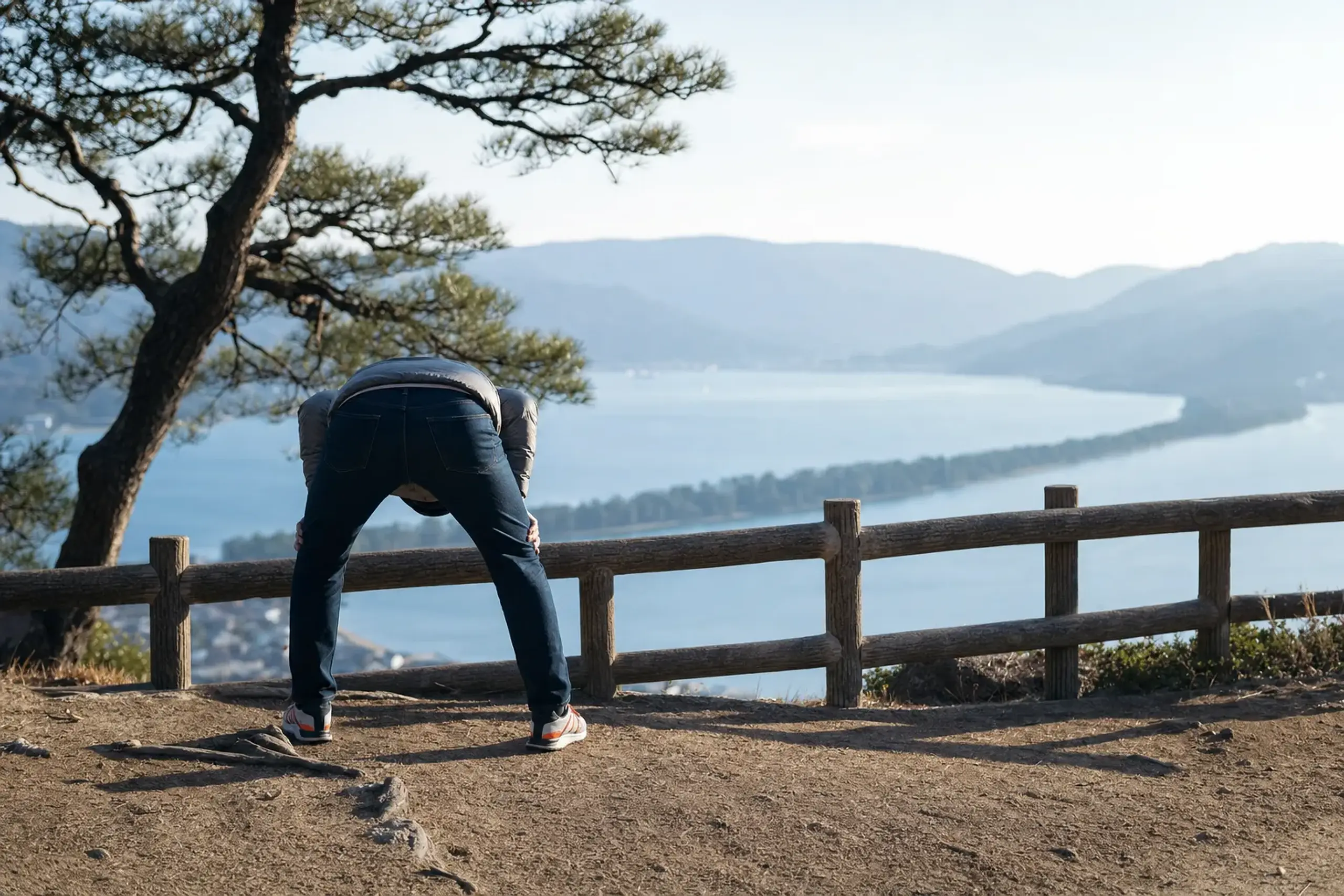
The matanozoki custom: bend forward and the sandbar seems to float in the sky.
Why does it work? When you flip the horizon, the eye loses its usual anchor. The bay reads as pale sky. The distant mountains dissolve. The line of trees, freed from the water, seems to rise and drift. It is a genuinely odd optical trick, and it has been drawing people to this precise corner of Kyoto Prefecture for centuries.
Most visitors arrive expecting a nice view. They leave having performed a small, faintly absurd ritual — grinning, upside down, in front of strangers. That is the memory they keep.
The Four Named Viewpoints, Each With Its Own Character
Amanohashidate is not a single postcard. Four distinct vantage points ring the bay, and each was given its own name and its own personality by the people who studied it over generations. See it from more than one angle and the sandbar seems to shape-shift.
Shōryūkan — The Ascending Dragon View
From Kasamatsu Park on the north side, the composition is called Shōryūkan, the "Ascending Dragon View." Seen through the matanozoki posture, the sandbar appears to climb into the sky like a dragon rising. This is the birthplace of the custom, with its own dedicated platform.
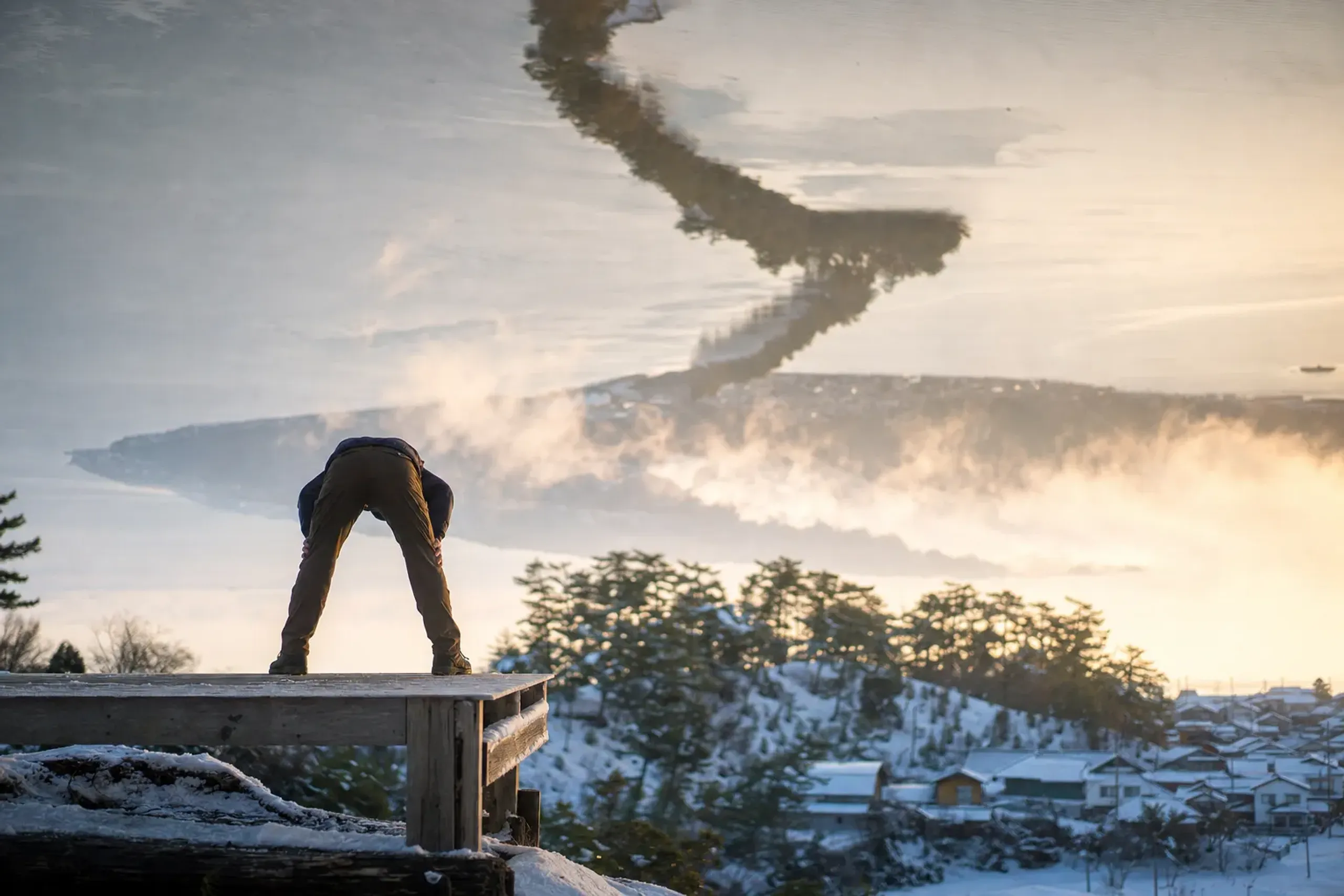
Start here.
Hiryūkan — The Flying Dragon View
Cross to the south side and ride up Mount Monju to Amanohashidate View Land. From this height the view is called Hiryūkan, the "Flying Dragon View" — more dynamic, more sinuous, the pines curling like a dragon in flight. This vantage has its own matanozoki spot too. Bend forward again. The dragon takes wing.
Ichijikan — The Single Character View
Travel to Ōuchi Pass on the west side and the sandbar straightens out completely. From here it resembles the Japanese character for "one" — 一 — a single clean horizontal stroke. The view is named Ichijikan for exactly that. It is the quietest of the four, and the most graphic.
Sesshūkan — Sesshū's View
The east side holds the surprise. From Shishizaki Inari Shrine, the composition is called Sesshūkan — "Sesshū's View" — because it closely mirrors a National Treasure ink-wash painting of this very site. The work, Amanohashidate-zu, was made by the celebrated painter Sesshū. Stand where he apparently stood, and centuries collapse. A modern vantage point matched, almost line for line, to an existing masterpiece. Art historians can point to the connection. You can simply feel it.
Two Myths That Coexist, Neither One Winning
Amanohashidate carries two origin stories, and the honest thing is to leave them both standing.
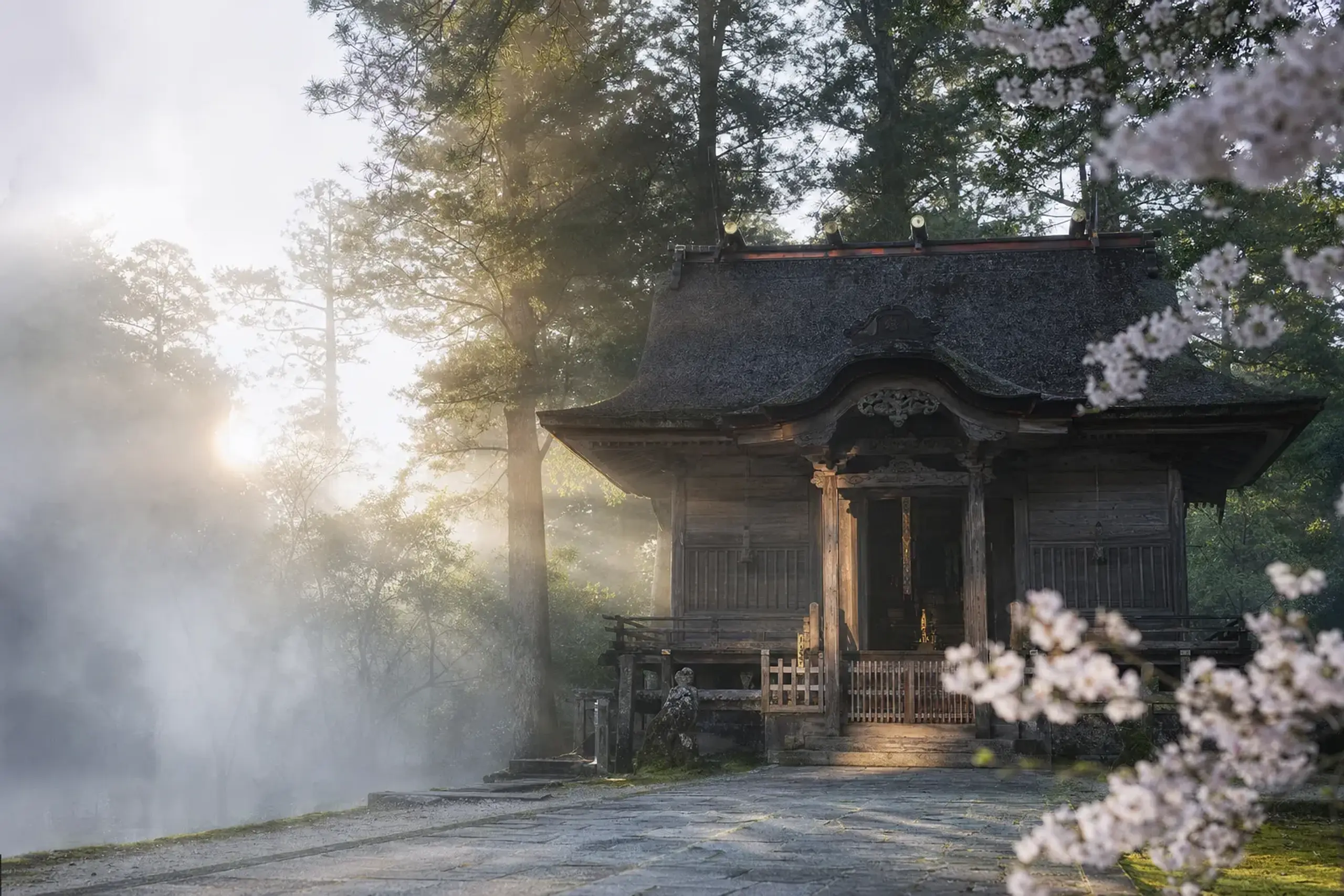
The first is a creation myth. Izanagi, dwelling in heaven, is said to have used this land as a bridge — or a ladder — to descend and visit Izanami, who resided at the inner shrine of Kōno Shrine here on earth. The sandbar, in this telling, is the physical link between the divine realm and the human one. By extension it became a link between man and woman, which is why the site carries an association with good fortune in relationships. Couples still come for exactly that.
The second is a dragon legend. During Japan's land-creation age, a violent dragon is said to have rampaged through this area until the bodhisattva Monju was invited to civilize and pacify it. Hence Mount Monju, and hence Chion-ji, the temple that honours Monju at the sandbar's southern end.
Which is true? Both, locally. Neither account cancels the other. They sit side by side, the way the pine trees do.
The Sandbar Itself: A Well Of Fresh Water In A Salt Bay
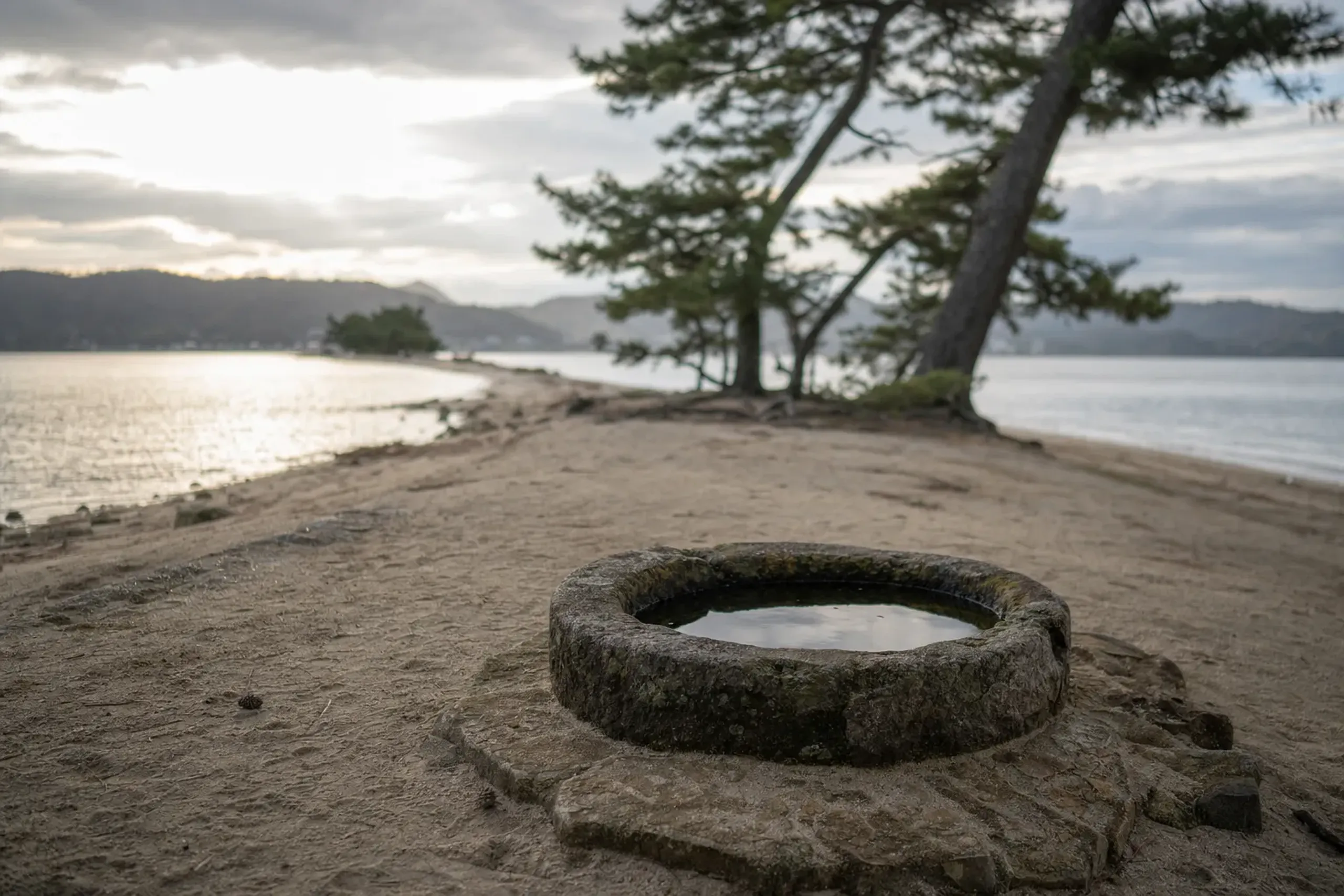
Walk the length of the sandbar and the numbers become real underfoot. It runs 3.3 kilometres across Miyazu Bay, carpeted with something like 7,000 pines, some gnarled into shapes that have earned their own nicknames over the years.
At the northern end sits Kōno Shrine, a Shinto shrine.
At the southern end stands Chion-ji, a Buddhist temple. The landform physically joins the two — Shinto to Buddhist, one faith to the other, laid across the water. It is a rare thing to walk from a shrine to a temple along a strip of sand and call it a single path.
Then there is the oddity in the middle. Isoshimizu is a freshwater well sitting right on the sandbar, surrounded on all sides by seawater. It has been cherished since the Heian period, and in 1985 the Environment Agency selected it among Japan's 100 Best Springs and Rivers. Fresh water, ringed by salt, quietly persisting. Somehow it fits a place that asks you to see everything upside down.
Key fact: Matanozoki — the bend-forward, look-between-your-legs viewing custom — was born at Kasamatsu Park, and the original platform is still there today.
How Do You Get To The Matanozoki Viewpoint At Kasamatsu Park?
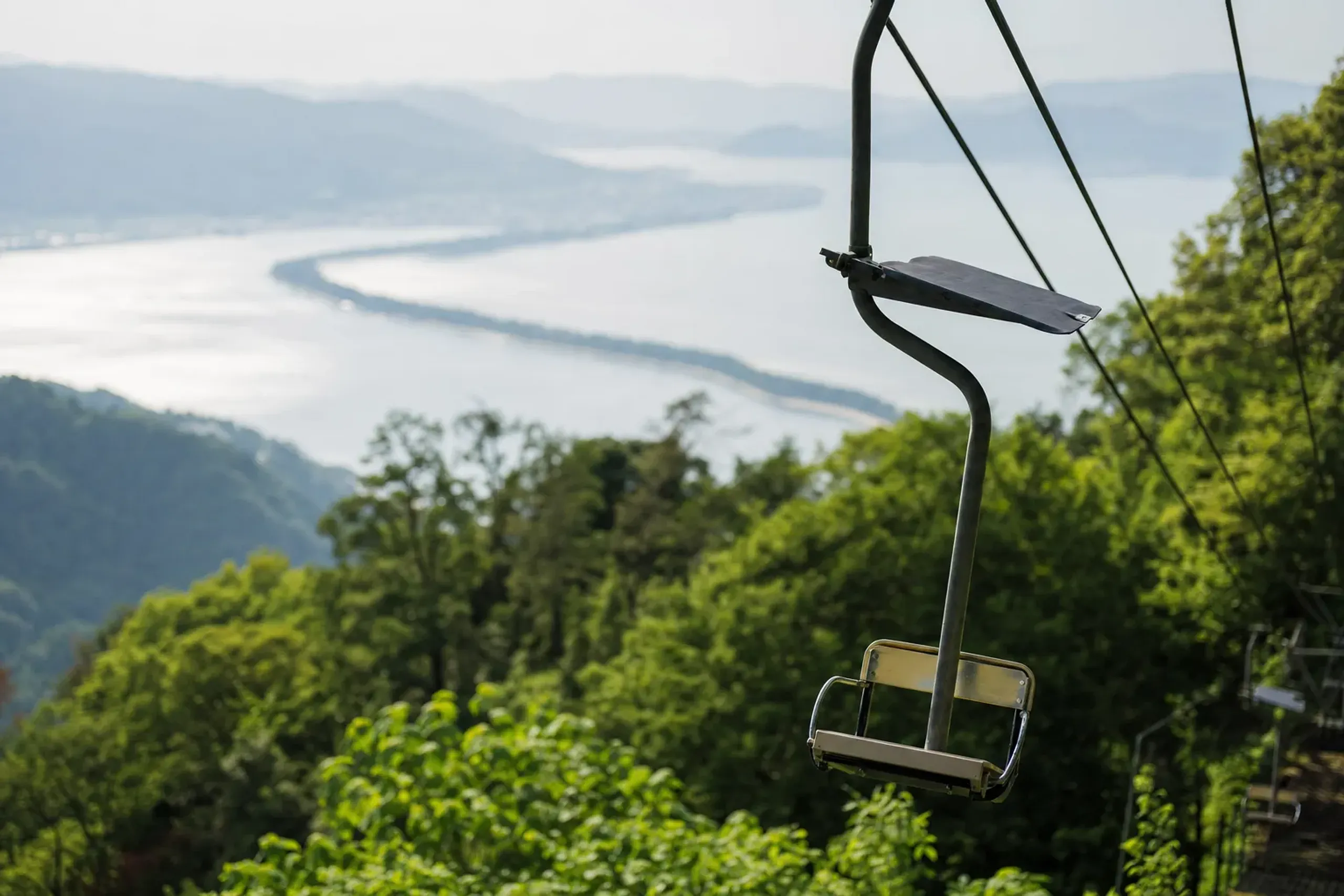
You reach Kasamatsu Park by cable car (roughly 4 minutes) or by open chairlift (roughly 6 minutes) from the base near Kōno Shrine, followed by a short further climb to the historic matanozoki spot itself.
Here is the plain version, for planning.
- The cable car is the quicker, sheltered option — around four minutes.
- The chairlift is slower, roughly six minutes, and rides in open air with the bay opening below you. Many guests prefer it for the arrival alone.
- Either way, the station is not quite the summit. The original matanozoki viewing spot requires a short additional walk uphill from where you step off.
Schedules for both the cable car and the chairlift shift with season, weather, and maintenance.
Our concierge team at Japan Royal Service verifies the current running times on a client's behalf ahead of the visit, so no one arrives to a closed line or a paused chairlift.
What Does Japan Royal Service Arrange At Amanohashidate?
For Amanohashidate, we arrange three things plainly: a private English-speaking guide who knows the four viewpoints and the order to see them in; private chauffeured transfers to and around Miyazu Bay; and coordination of the cable car or chairlift to Kasamatsu Park.
Amanohashidate is a major public scenic site, not a hidden atelier — you do not need an introduction to walk its pines. What our guests value instead is the pacing. Which viewpoint to visit at which hour, when the light favours Sesshūkan over Shōryūkan, how to avoid arriving with three tour buses. That kind of quiet sequencing is where a private day earns its keep.
Because Amanohashidate sits in northern Kyoto Prefecture, well beyond the Golden Route crowds, it pairs naturally with a countryside ryokan stay rather than a rushed day trip.
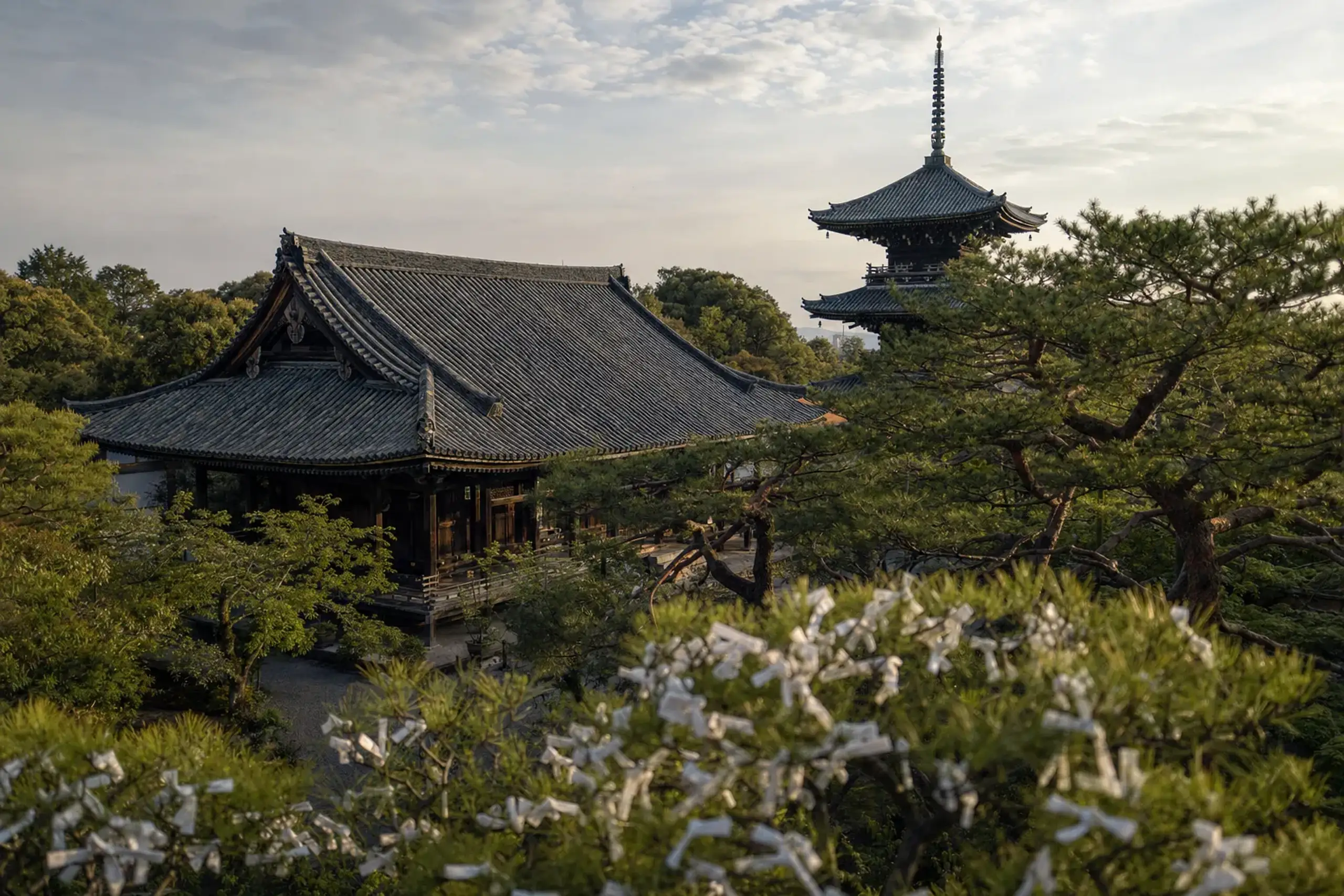
We can fold it into a longer, tailor-made itinerary through the Sea of Japan side, and handle the accommodation that turns a single view into an unhurried journey.
Frequently Asked Questions
What Is The Matanozoki Custom At Amanohashidate And Where Did It Start?
Matanozoki is the custom of bending forward and viewing the sandbar upside down through the gap between your legs, which makes it appear to float in the sky. It began at Kasamatsu Park, where the original viewing platform still stands.
Which Of The Four Amanohashidate Viewpoints Should I Visit First?
Start at Kasamatsu Park (Shōryūkan) on the north side, the birthplace of matanozoki. If time allows, add Amanohashidate View Land (Hiryūkan) on the south side for a second, more dynamic angle from Mount Monju.
Is There Really A Famous Painting Connected To Amanohashidate?
Yes. The view from Shishizaki Inari Shrine, called Sesshūkan, closely resembles the National Treasure ink-wash painting "Amanohashidate-zu" by the historical painter Sesshū — a genuine, checkable link between the vantage point and an existing artwork.
How Long Is The Amanohashidate Sandbar And What Is On It?
The sandbar stretches 3.3 kilometres across Miyazu Bay and holds roughly 7,000 pine trees. It also contains Isoshimizu, a freshwater well cherished since the Heian period and named among Japan's 100 Best Springs and Rivers in 1985.
Do I Need To Book The Cable Car Or Chairlift In Advance?
Both the cable car (about 4 minutes) and chairlift (about 6 minutes) to Kasamatsu Park run on published schedules that vary by season and weather. For a private visit, our concierge team confirms current running times ahead of your day.
Why Choose Japan Royal Service
Amanohashidate is not difficult to reach. What is difficult is arriving at the right viewpoint, at the right hour, with someone beside you who can explain why the pines seem to fly — and who has already checked that the chairlift is running.
That is what we do at Japan Royal Service. In our experience, the difference between a snapshot and a memory is pacing, quiet, and a guide who knows this bay intimately. We keep our guests' itineraries and identities entirely private, we run our own chauffeured fleet from a native base in Japan, and we design each day around one thing: seeing more, in less of a rush. No booking desks, no crowds funnelled through you. Just the sandbar, the light, and the moment you bend forward and the world turns over.
To plan a private visit to Amanohashidate, reach our team directly via WhatsApp or LINE, or contact us here.