In this guide
- 01What Happened At Aquamarine Fukushima On March 11, 2011?
- 02How Did Aquamarine Fukushima Save Animals And Rebuild The Collection?
- 03Why Was Kibō Named On The Day Aquamarine Fukushima Reopened?
- 04How Does Aquamarine Fukushima Teach The 2011 Disaster Story Today?
- 05Aquamarine Fukushima Today: What You Will Actually See In Onahama, Iwaki
- 06Getting To Aquamarine Fukushima Comfortably: Times, Routing, And A Calm Arrival
- 07What To Do Around Aquamarine Park Without Rushing The Visit
- 08How To Plan A 2026 Visit: Exhibitions, Festival Dates, And The Best Time Window
- 09A Simple, High-Comfort Day Plan From Tokyo (Or A Night In Iwaki)
- 10How To Visit Responsibly: A Quiet-Code For A Place Built On Education
- 11Frequently Asked Questions
- 12Let Us Shape Your Visit
On 15 July 2011, a harbour seal pup was named Kibō—Hope—at a formal ceremony held the very same day Aquamarine Fukushima reopened its doors. One moment. Two anniversaries stitched quietly together.
That date was not chosen for convenience. It was Aquamarine Fukushima’s original opening day, first marked on 15 July 2000.
When we suggest Aquamarine Fukushima to our clients, we do it for this rare mix: a serious environmental mission, a clear and hard-won recovery record, and an ocean story told with restraint rather than spectacle. Quietly moving. Entirely real. It is the kind of place a well-travelled visitor remembers not for scale, but for the feeling of standing inside a story that mattered.
What Happened At Aquamarine Fukushima On March 11, 2011?
On 11 March 2011, a tsunami of up to 4.2 metres struck Onahama Port; visitors were evacuated safely, but the loss of power halted life-support systems and roughly 90% of the exhibited animals were lost.
The earthquake struck at 2:46pm on 11 March 2011. Shortly after, the tsunami reached Onahama Port, where Aquamarine Fukushima sits directly on the water.
Evacuation was swift. Staff moved guests to the upper floors, and there were no human casualties at the facility.
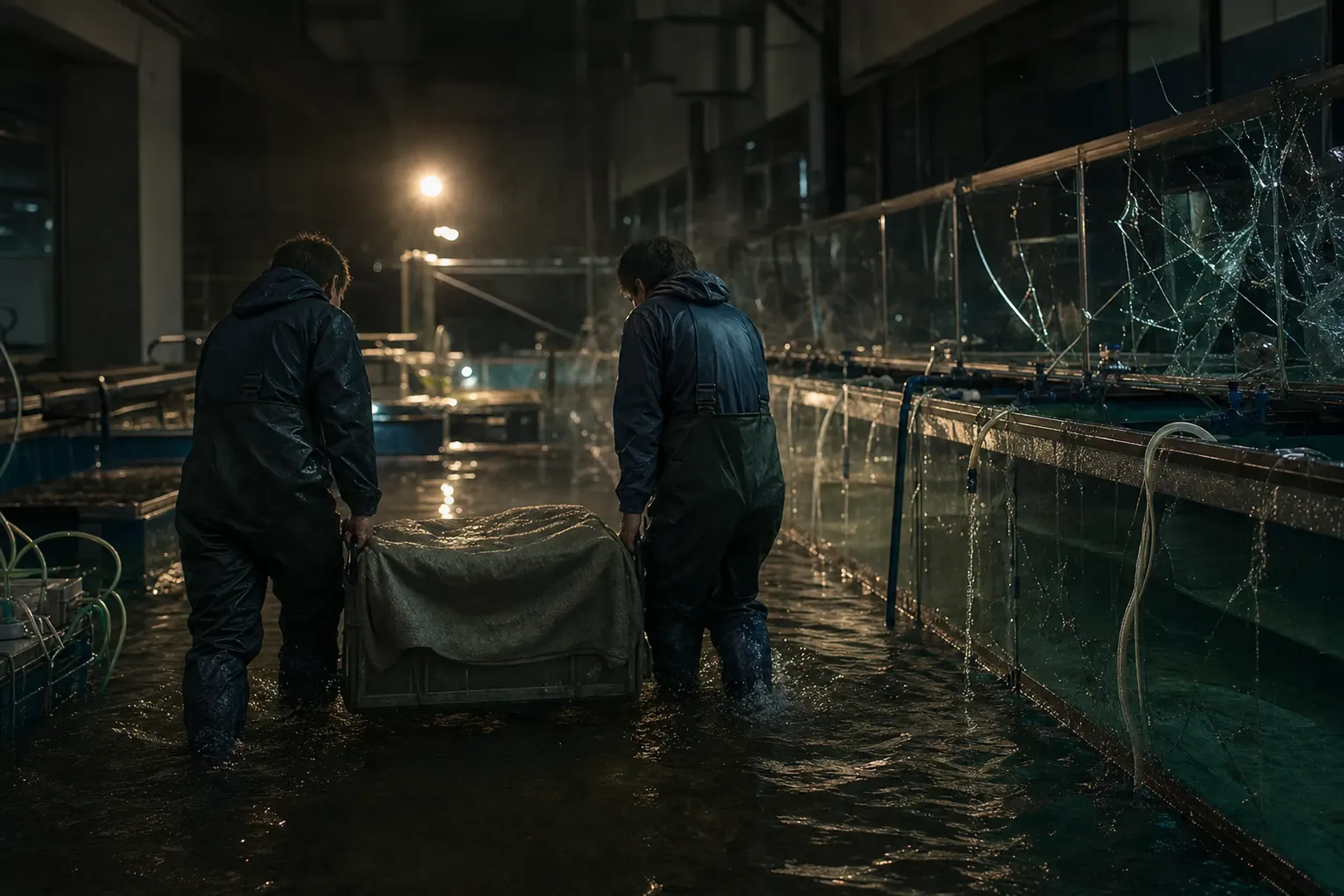
The harm came next, and it was mechanical. The tsunami and the resulting power loss stopped water circulation and oxygen supply to the tanks, and roughly 90 percent of the aquarium’s exhibited animals—close to 200,000 individual creatures—died or were lost.
The facility itself was also badly damaged. The large tank glass and piping in the “Kuroshio no Umi” (Sea of Tide Currents) exhibit were broken, and ground subsidence and liquefaction around the site made a quick reopening seem all but impossible.
How Did Aquamarine Fukushima Save Animals And Rebuild The Collection?
Before the full extent of the damage set in, staff evacuated 39 species and 227 specimens to aquariums elsewhere in Japan, and after reopening, 17 aquariums and zoos donated about 300 species and 20,000 specimens to help restock the collection.
This is the part visitors often miss, because it is not loud. A nationwide network stepped in—aquarium to aquarium, staff to staff.
In the first phase, 39 species and 227 specimens were evacuated to other institutions across Japan. Among them was a pregnant harbour seal named Kurara, transferred to Kamogawa Sea World in Chiba.
After reopening, the assistance continued. Seventeen aquariums and zoos across the country donated new animals—roughly 300 species and 20,000 specimens combined—to help Aquamarine Fukushima rebuild its living collection.
For many of our guests, this collective response changes how the visit feels. It becomes less about “an aquarium stop” and more about a place where stewardship was tested, then quietly proven.
Why Was Kibō Named On The Day Aquamarine Fukushima Reopened?
Kibō was named on 15 July 2011 because Aquamarine Fukushima reopened that day—126 days after the disaster—and the date matched the aquarium’s founding anniversary of 15 July 2000.
Kurara gave birth the month after the disaster. The pup’s early life unfolded away from Onahama, in a facility that could support her safely while Aquamarine Fukushima fought for its own return.
The naming ceremony was held on 15 July 2011. The symbolism is precise, not sentimental: 15 July was also the aquarium’s original opening anniversary from 15 July 2000, and staff have described wanting the reopening to become “a memorial day of recovery.”
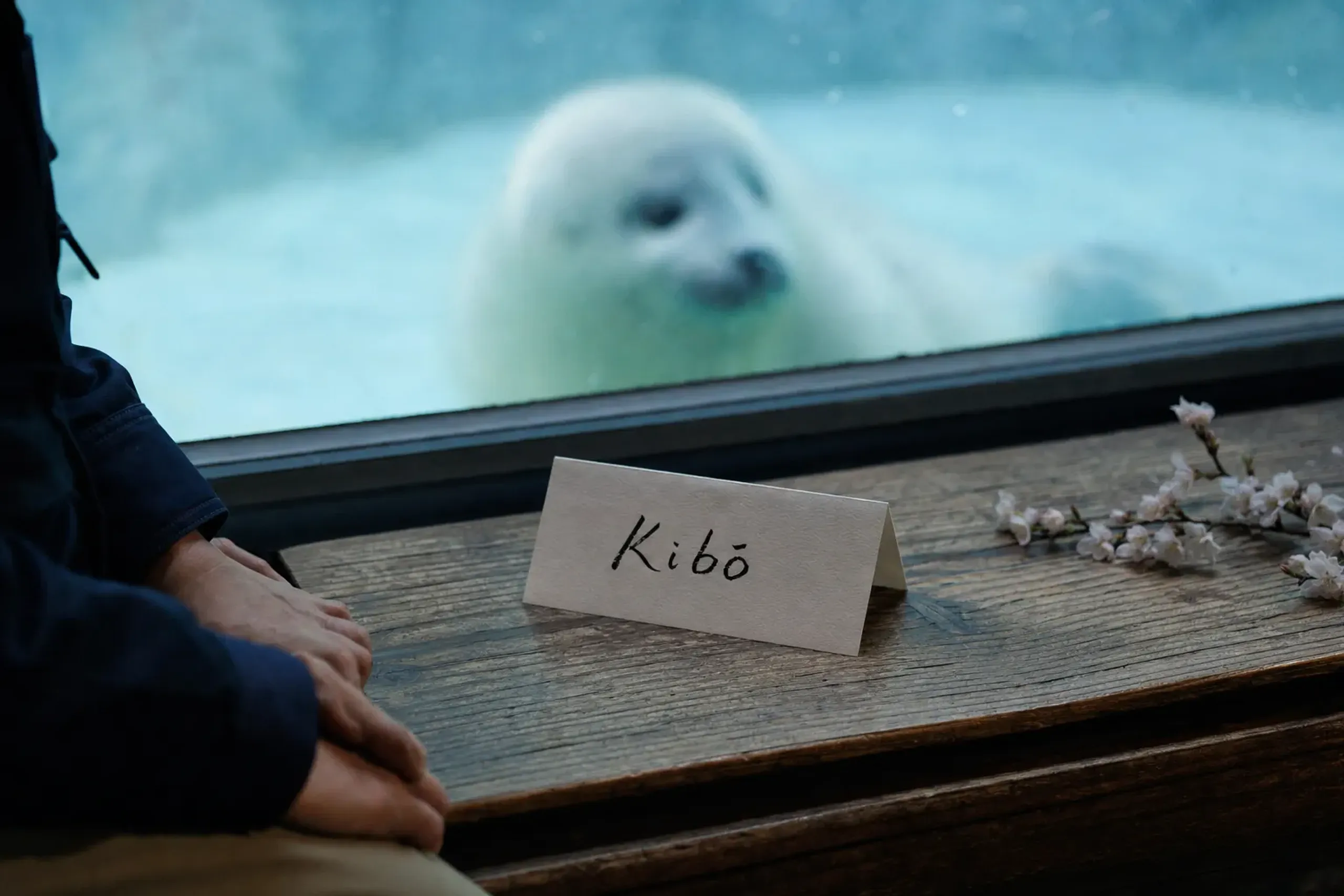
That is the heart of Kibō’s story. Not a miracle. A decision to reopen with intention, and to attach that intention to a living animal with a future.
How Does Aquamarine Fukushima Teach The 2011 Disaster Story Today?
Aquamarine Fukushima shares its recovery through a current photo exhibition and an ongoing Earthquake Learning Programme that uses video and photographs to explain what happened and how reopening was achieved.
Many visitors in 2026 are too young to remember 2011. The aquarium knows this, and it is direct about the educational responsibility that comes with operating on a working port.
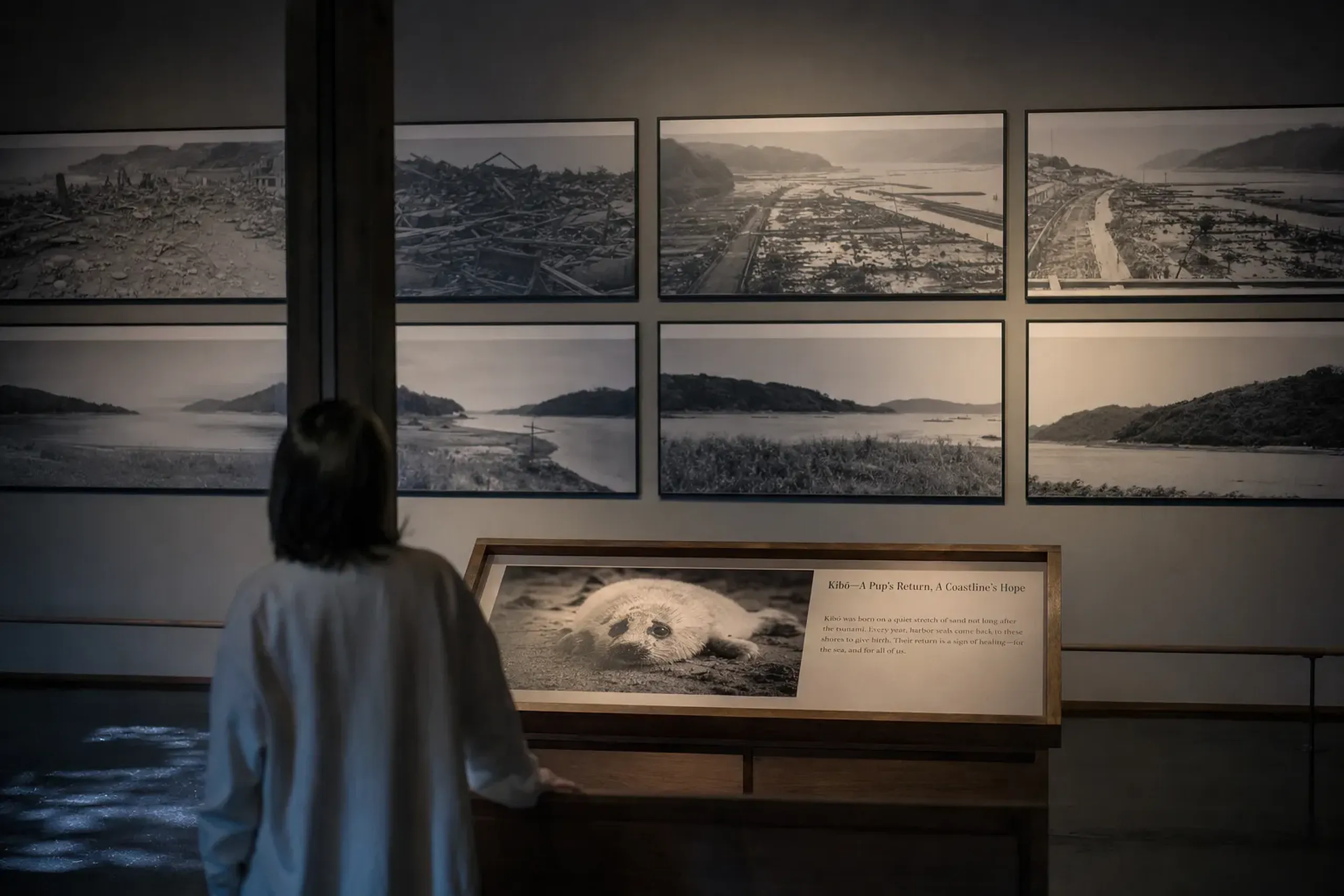
On 4 February 2026, a photo exhibition opened titled “15 Years Since the Earthquake: The Aquarium Building Children’s Future,” presenting 107 photographs that document the recovery journey alongside areas developed in later years. The photography is not there to shock you. It is there to keep the timeline intact.
The aquarium also runs a formal Earthquake Learning Programme for visiting groups. It uses video and photographs to explain what happened and how the facility reopened, explicitly aimed at younger visitors without direct memory of the disaster.
In our experience, this is what distinguishes Aquamarine Fukushima from a purely display-oriented venue. It is a public institution choosing to tell its own history, in its own voice, and to do so for the next generation. There is a restraint to it—an unforced, wabi-like honesty—that a discerning traveller notices immediately.
Key fact: Exhibition dates and programme scheduling can change. Our concierge team at Japan Royal Service privately verifies current timing for your travel window.
Aquamarine Fukushima Today: What You Will Actually See In Onahama, Iwaki
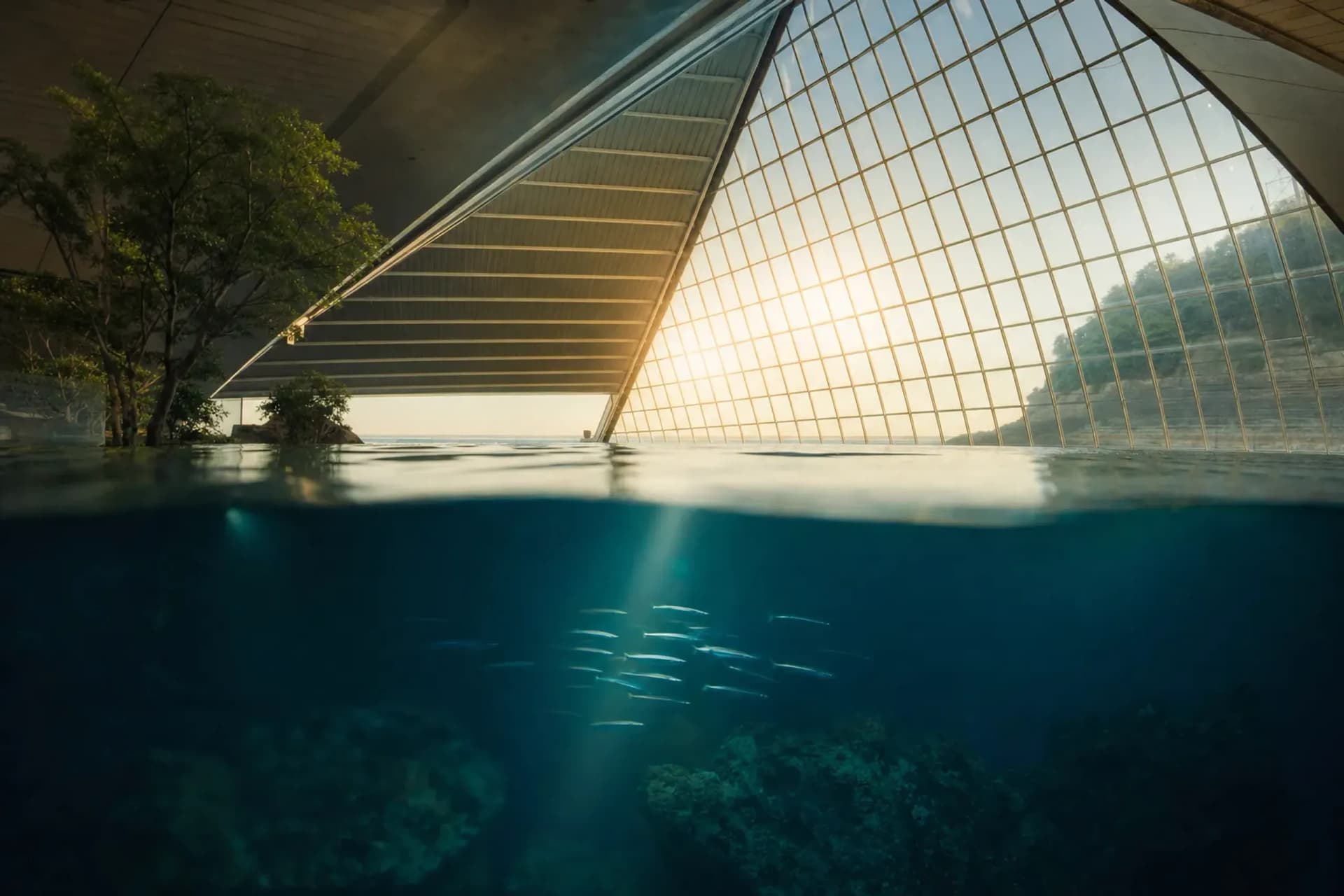
Aquamarine Fukushima is the largest aquarium in Tōhoku, focused on environmental education, with about 800 species and around 100,000 animals, including a main tank of roughly 2,050,000 litres.
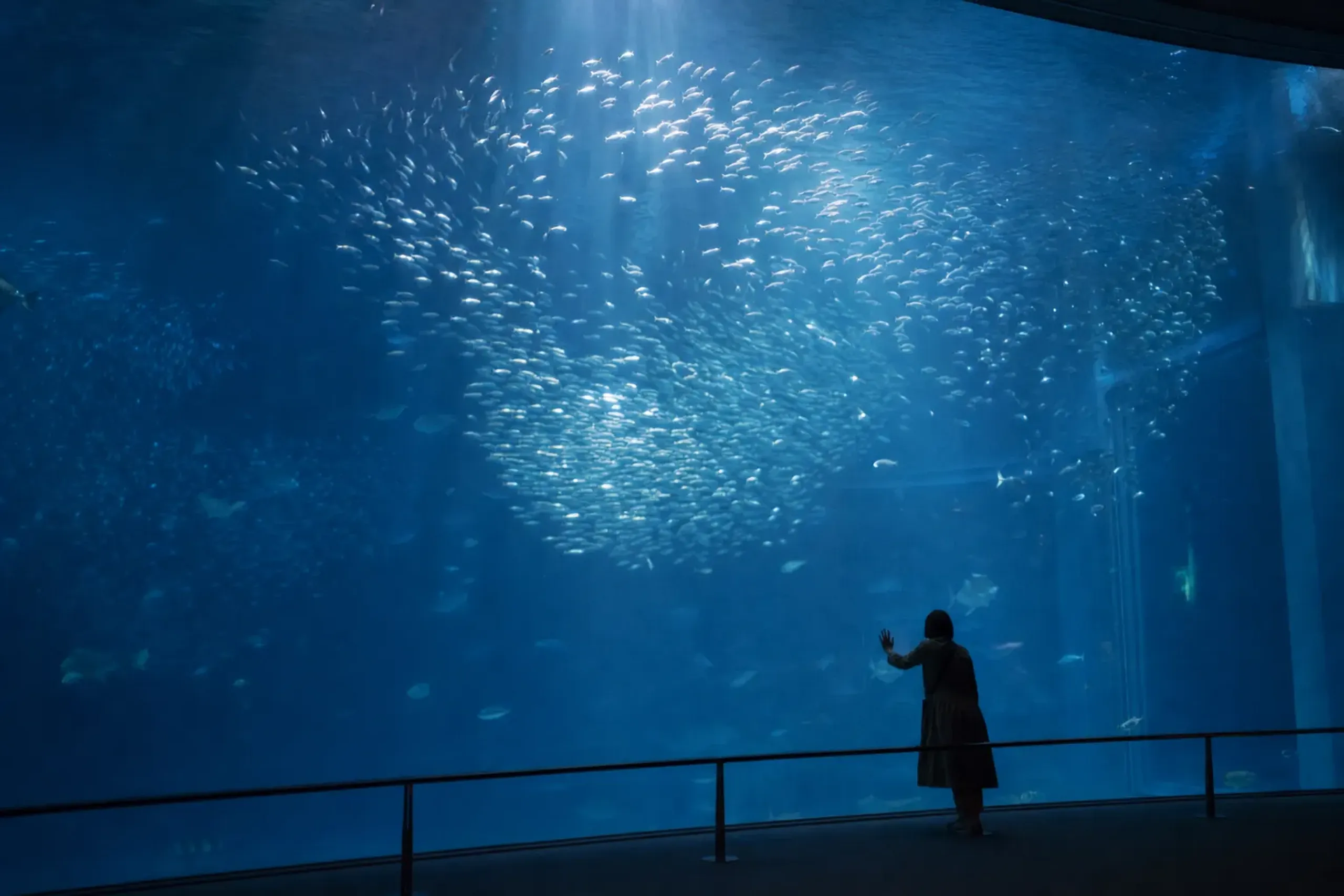
The official name is the Marine Science Museum, Fukushima Prefecture. “Aquamarine Fukushima” is its public nickname, chosen by vote from 4,722 submitted entries in 1998.
Its scale is real, and it shows. The aquarium exhibits roughly 800 species and around 100,000 animals, with total tank volume of roughly 3,900,000 litres across the facility; the largest single tank holds approximately 2,050,000 litres.
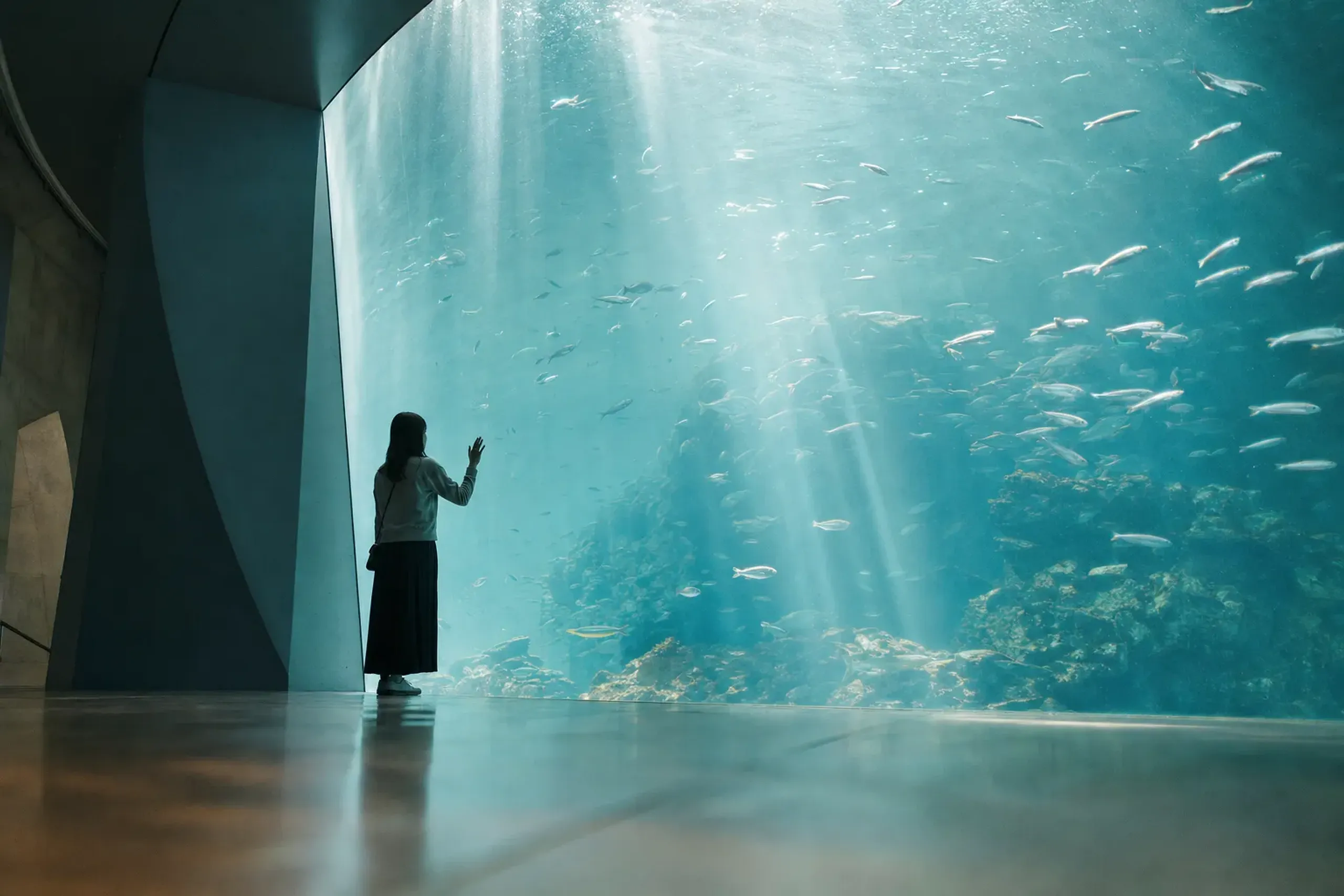
Yet the signature idea is not size. It is shiome—the coastal zone where the warm Kuroshio Current and the cold Oyashio Current meet—expressed through the aquarium’s main tank and tunnel concept.
This is where we bring in a quieter kind of luxury: time and attention. Walk slowly. Watch the fish move through the shifting light. Let a private guide translate what the labels cannot—the seasonal logic of which species gather where, the shun of the waters just beyond the glass, the reason this particular stretch of coast is so rich. That interpretive layer, delivered by someone who knows the museum well, is what turns a visit into an understanding.
Getting To Aquamarine Fukushima Comfortably: Times, Routing, And A Calm Arrival
Aquamarine Fukushima is at 50 Tatsumi-cho, Onahama, Iwaki City, and it is about a 20-minute drive from Iwaki Yumoto IC or about 30 minutes from Iwaki Nakoso IC.
On paper, these are simple driving times. In practice, they decide the texture of your day—especially if you are travelling with children, an older parent, or a tight schedule.
Onahama is a working port area with waterfront visitor facilities grouped nearby.
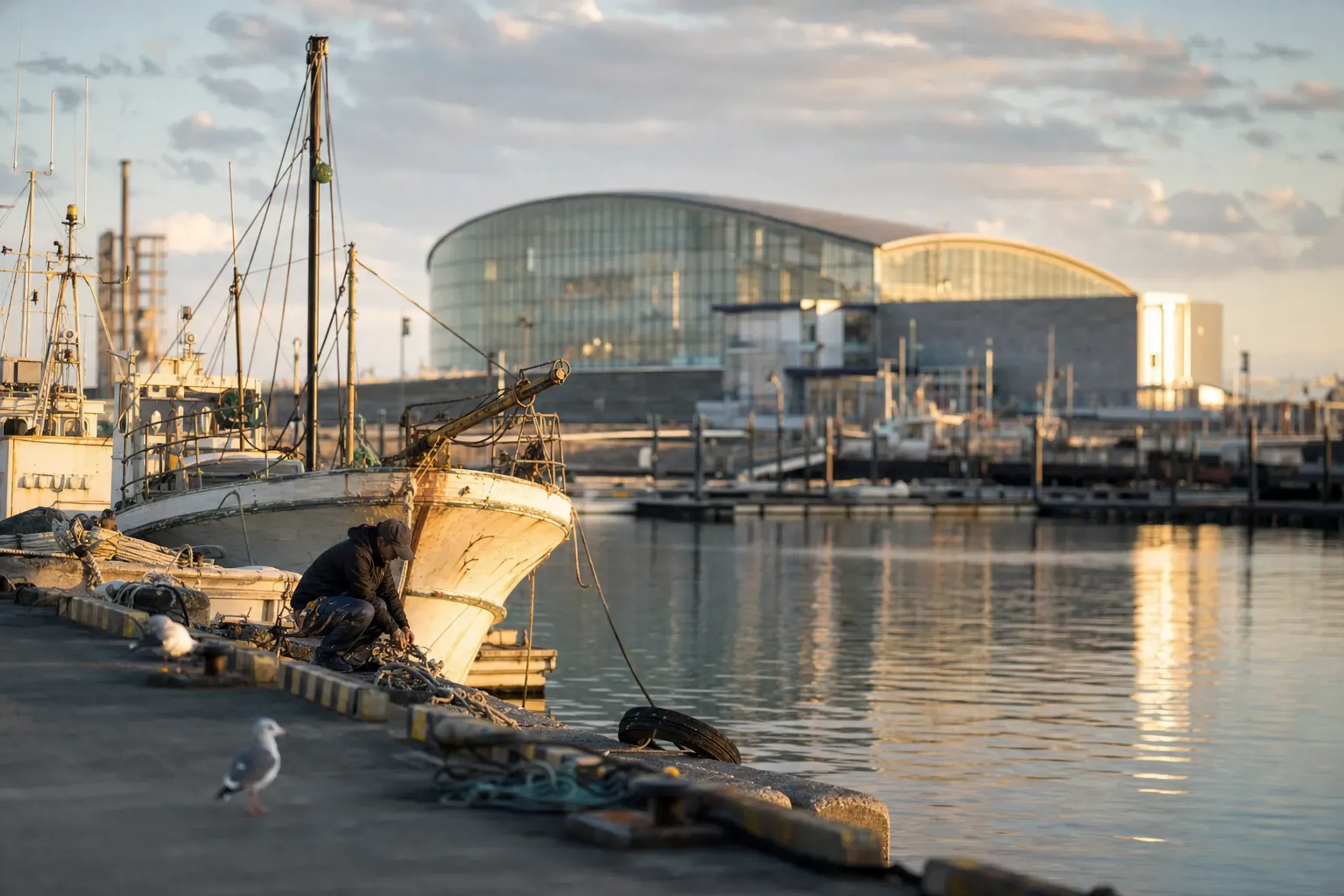
Aquamarine Park includes green space on the Onahama Port wharf areas, and the surrounding zone also includes Iwaki La La Miu.
For guests who prefer a low-friction day, our team often recommends arriving before the busiest mid-day period, then breaking for lunch and a short waterfront walk before returning for a second, slower circuit inside the aquarium. Two short visits can feel better than one long one. Less fatigue, more absorbed.
For private travel days, our private transportation keeps the arrival quiet and the departure clean, with generous luggage space, air conditioning tuned to the season, and no need to read train timetables while you are still waking up. The care is silent and anticipated—precisely the kind of unspoken attention our guests come to rely on.
What To Do Around Aquamarine Park Without Rushing The Visit
Aquamarine Park clusters Aquamarine Fukushima together with waterfront walking space and nearby facilities like Iwaki La La Miu, letting you build a full, relaxed Onahama day without long transfers.
This is where a “destination guide” becomes a usable plan. Not a list.
Step outside the aquarium and you are already in the waterfront zone. A short stroll resets your senses after the tank-light and the signage.
Iwaki La La Miu sits nearby within Aquamarine Park’s port-area cluster. For many travellers, it is the simplest place to add a seafood-forward lunch without turning the day into a logistics exercise.
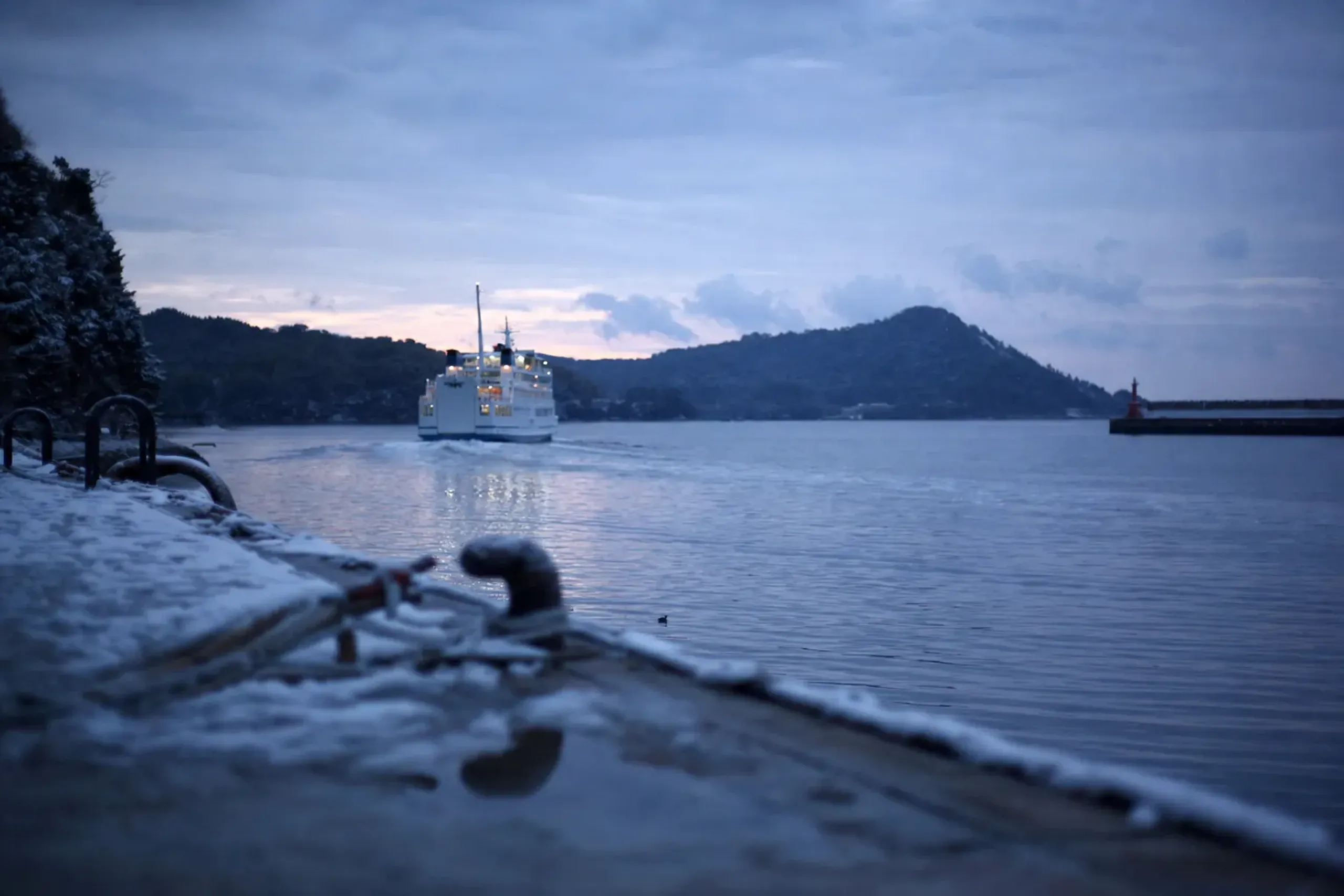
A sightseeing cruise ship, Sunshine Seagull, departs in front of Iwaki La La Miu for an approximately 50-minute cruise. If your timing lines up and the weather behaves, it is a crisp way to re-enter the real sea after studying shiome through glass.
How To Plan A 2026 Visit: Exhibitions, Festival Dates, And The Best Time Window
For 2026–2027, plan around Aquamarine Fukushima’s “Saury (Sanma) School” exhibition (15 July 2026–11 January 2027) and Onahama Kaiyu-sai at Aquamarine Park (25–26 July 2026) to align your visit with live local programming.
Timing matters in Onahama because crowds compress quickly on event weekends. The trick is not exclusivity. It is pacing—knowing which day, and which hour, gives you the place at its most composed.
The aquarium’s 2026 special exhibition “Saury (Sanma) School” (企画展 サンマの学校) runs from 15 July 2026 to 11 January 2027. If you have a choice, visiting early in the run can feel calmer, when local curiosity is high but peak holiday patterns have not yet fully stacked.
On 25–26 July 2026, Onahama Kaiyu-sai is scheduled at Aquamarine Park in the Onahama Port area. These dates can be wonderful if you want the port to feel alive, but they require a deliberate routing plan so the day does not become a slow shuffle through bottlenecks.
From April to June 2026, the Fukushima Destination Campaign (a Fukushima Prefecture and JR Group tourism initiative) adds extra attention to the region. For travellers who like to feel a place in motion, this is a strong window—just keep the schedule light.
A Simple, High-Comfort Day Plan From Tokyo (Or A Night In Iwaki)
A calm Aquamarine Fukushima visit works best with an early start, a mid-day break at the Onahama waterfront, and a second, shorter pass inside the aquarium to catch the details you missed the first time.
Our discerning travellers often ask for a plan that is premium but not precious. This is it. Every element below can be shaped into a bespoke itinerary that fits your pace, your party, and your season.
Option A: Private Day Trip Focused On Aquamarine Fukushima
Good for: couples, parents with one child, or anyone who wants maximum comfort without changing hotels.
- Morning: Depart early, arriving before the busiest mid-day period.
- Late morning: First circuit inside Aquamarine Fukushima, focusing on the shiome concept and the main tank.
- Lunch: Seafood-forward lunch at the Onahama waterfront (Iwaki La La Miu is close and practical).
- Afternoon: Second, shorter aquarium pass or a waterfront walk; if conditions suit, consider the ~50-minute Sunshine Seagull cruise.
- Return: Depart before the late-afternoon crowd surge on event days.
Option B: Add One Night For A Slower, More Reflective Pace
Good for: families, travellers sensitive to long drives, or guests who want time for the Earthquake Learning Programme if scheduling aligns.
- Day 1: Arrive Iwaki, early dinner, and a full night’s sleep.
- Day 2: Aquamarine Fukushima visit with a mid-day break, then depart without rushing.
Either way, the point is the same: space around the story. That is the luxury here.
How To Visit Responsibly: A Quiet-Code For A Place Built On Education
Aquamarine Fukushima rewards a low-volume visit: keep voices down, move slowly through the tunnel areas, and treat the recovery exhibits as educational space rather than photo backdrops.
Small choices change the experience for everyone. Especially for the school groups who come to learn.
When you reach the recovery photography and learning displays, pause. Read. Do not turn it into a performance of empathy.
If you are travelling with children, we suggest setting expectations before you enter: the aquarium is fun, yes, but it also teaches how fragile living systems can become when power and water stop. One sentence is enough.
Frequently Asked Questions
Is Aquamarine Fukushima Still Affected By The 2011 Earthquake And Tsunami?
Aquamarine Fukushima’s recovery is complete and long-settled. It reopened on 15 July 2011, 126 days after the disaster, then continued rebuilding and expanding in the years that followed.
Today, the aquarium actively teaches the history through exhibitions and its Earthquake Learning Programme, framing it as education for visitors who did not experience 2011 firsthand.
What Is The “Shiome” Theme At Aquamarine Fukushima?
The aquarium’s central theme is shiome, the coastal zone where the warm Kuroshio Current and the cold Oyashio Current meet, expressed through its signature main tank and tunnel concept.
If you enjoy museums that teach through design, this theme is the reason to go, even if you have already visited the major aquariums in Tokyo or Osaka.
How Long Should We Spend At Aquamarine Fukushima If We Are Travelling With Kids?
Most families are happiest with 2.5–4 hours total, ideally split into two shorter passes with a waterfront break in between.
This keeps attention fresh and avoids the late-day slump that can turn an otherwise calm visit into a negotiation.
Can We Do Hands-On Programs Like Fishing Or A Backstage Tour?
Aquamarine Fukushima offers hands-on programs and lists options such as shrimp fishing and advance-reservation experiences like a backstage tour, subject to scheduling.
Let Us Shape Your Visit
Kibō’s story is best understood at an unhurried pace—with the right guide beside you, the right day chosen for your season, and every transfer handled so that nothing intrudes on the experience. That is the quiet work we do behind the scenes, with complete discretion over your identity and your itinerary.
When you are ready to weave Aquamarine Fukushima into a wider journey through Fukushima and Tōhoku, Japan Royal Service will design it around you. To begin, contact us here for a tailored proposal.