In this guide
- 01Taken From Korea By War, Later Made A God
- 02Was Ri Sanpei Truly The “Founder” Of Arita Porcelain?
- 03Why Early Imari Sometsuke Was Korean In Technique (Not Chinese)
- 04Why Is It Called Imari Ware If It Was Made In Arita?
- 05The Export Boom And The Exact Dates Of Decline (1684–1715–1757)
- 06Three Major Styles You Should Recognize Before You Buy
- 07Continuing Lineages: Kilns Still Burning Under Family Names
- 08Arita For HNW Travelers: What To Do In One Calm, Design-Forward Day
- 09When Should You Visit Arita For Porcelain Events In 2026?
- 10How Do You Book An Official Private Tour Of Arita As A Foreigner?
- 11Practical Logistics For Arita (Quiet Details That Protect The Day)
- 12Collecting And Commissioning: How HNW Buyers Avoid Regret
- 13Let Us Arrange Your Arita
In Arita, the first sound you notice is not speech. It is stone.
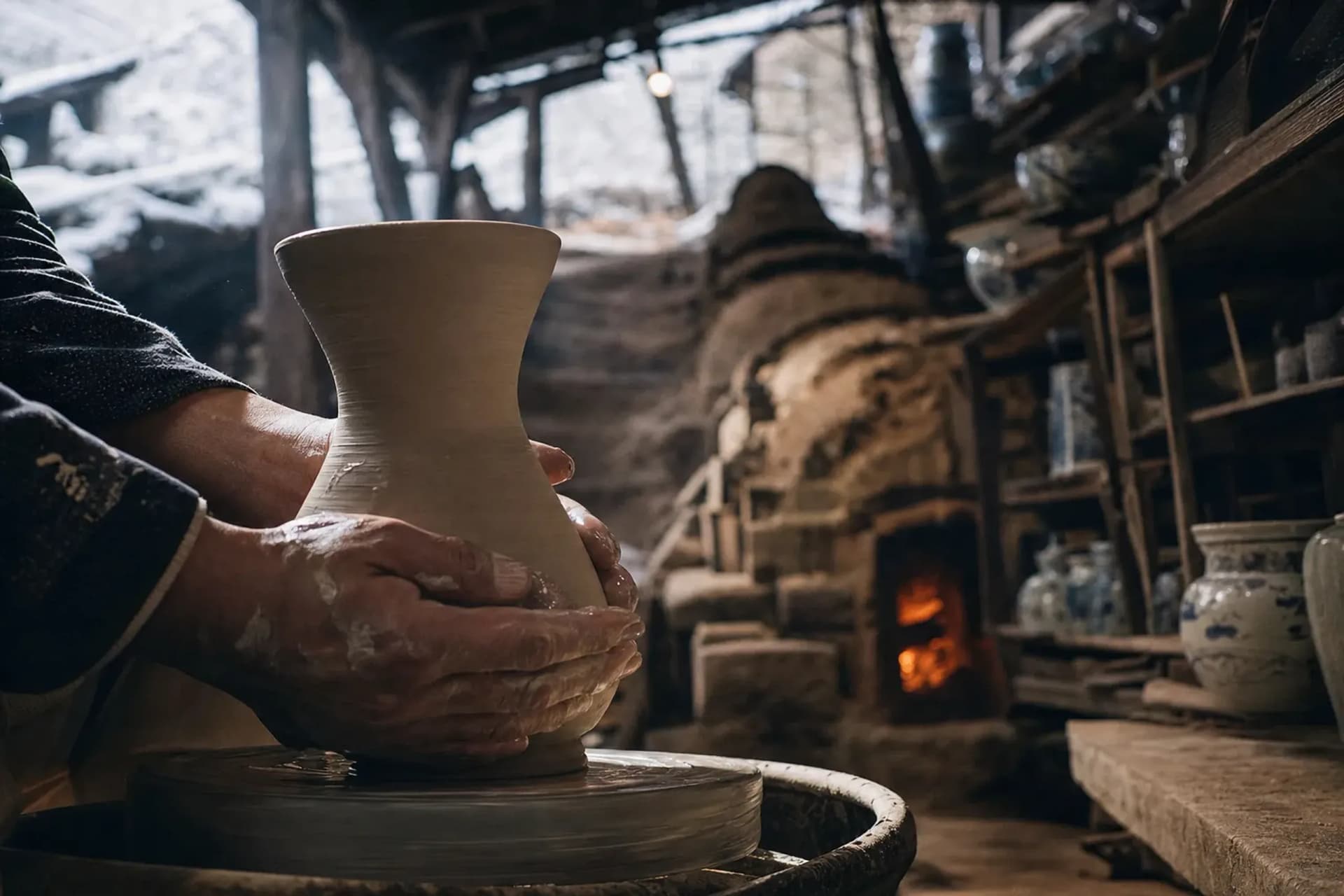
A pale porcelain stone, crushed and sifted until it becomes a fine powder, then folded into clay that feels cool and almost weightless in the hand. Quiet work. Exact work. Shokunin work — the kind that measures time in decades, not deadlines.
Our team at Japan Royal Service returns here for the same reason serious collectors do: Arita is not simply “a pottery town.” It is an origin story you can still reach out and touch.
Taken From Korea By War, Later Made A God
Ri Sanpei was a Korean potter brought to Japan by force during Toyotomi Hideyoshi’s invasions of Korea in the 1590s. Today he is honored in Arita as a deity called Tōso.
The arc is hard to hold in a single thought. Violence, displacement, survival. Then—centuries later—veneration. A man becomes a pillar of local identity in the very domain that once took him captive.
Records describe Ri Sanpei being brought to Saga by Nabeshima Naoshige, the lord of Saga domain. He first settled in Taku. Later, at the domain’s request, he set out across its territory in search of a place suited to porcelain production.
At Izumiyama, northeast of Arita town, he discovered the porcelain stone that raised Japanese porcelain to an entirely new level. The stone is the whole hinge of this story — the point at which a folk craft turned into an industry that would one day ship to Europe.

He opened a kiln at Tengudani and fired Japan’s first white porcelain. He led roughly 120 potters. And he took a Japanese name: Kanagae Sanbei.
He is not a vague legend. He is recorded as a real historical figure in a local temple’s registry. Yet the way Arita remembers him today is not as a footnote but as a founder — honored with a monument at a shrine where he is enshrined.
Was Ri Sanpei Truly The “Founder” Of Arita Porcelain?
Ri Sanpei may not have been the sole first producer of porcelain in the region, but his contribution to Arita’s craft development and its systematic production was substantial — and it remains central to local memory.
This nuance matters, especially if you care about craft history rather than easy slogans. Archaeological evidence suggests porcelain may already have been fired in the area shortly before Ri Sanpei’s specific discovery at Izumiyama.
So we avoid the tidy claim that he “invented” Japanese porcelain. The more accurate story is sharper still: Ri Sanpei’s role sits precisely at the moment where knowledge, materials, and organized production aligned — and then kept building on themselves.
In our experience, the most discerning collectors respect this kind of honesty. It does not weaken Arita’s importance. It makes the town feel more human.
Why Early Imari Sometsuke Was Korean In Technique (Not Chinese)
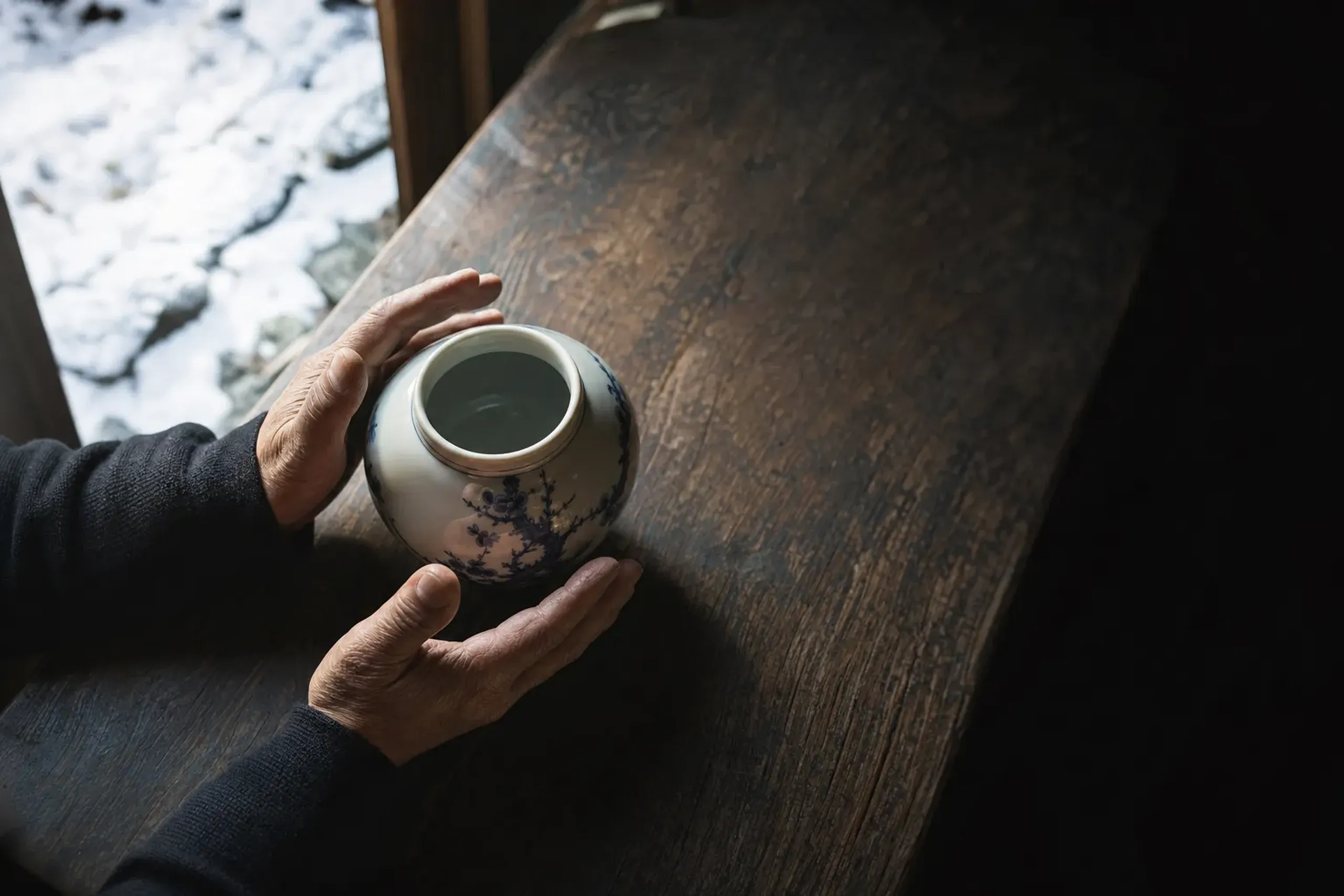
The earliest Imari-ware sometsuke — blue underglaze painting on white porcelain — drew on a technique associated with contemporary Korea rather than the Chinese methods of the same period.
This is one reason Ri Sanpei’s story can never be separated from the peninsula. Even when the finished plates read as “Japanese” to modern eyes, their technical ancestry is layered.
Look closely at early blue-and-white work and you can sense a different hand logic at play. The blue settles into the glaze with a certain discipline. The brushwork feels decisive, less ornamental — confident enough to leave things unsaid.
When we plan a craft-focused day in Arita, our concierge often suggests beginning with history first — museum context — before moving to the kilns and ateliers. Otherwise everything collapses into “pretty plates,” and the deeper lineage quietly slips away.
Why Is It Called Imari Ware If It Was Made In Arita?
It became internationally known as “Imari ware” because export shipments departed from the port of Imari, even though the production itself took place in Arita.
That naming mismatch is no small piece of trivia. It explains why catalogs, auction notes, and older European references can feel confusing when you expect “Arita” to appear as the brand name.
Think of Imari as the mouth of the river. Arita sits upstream, where the work was done — stone quarried, clay prepared, pigment laid, glazes fired.
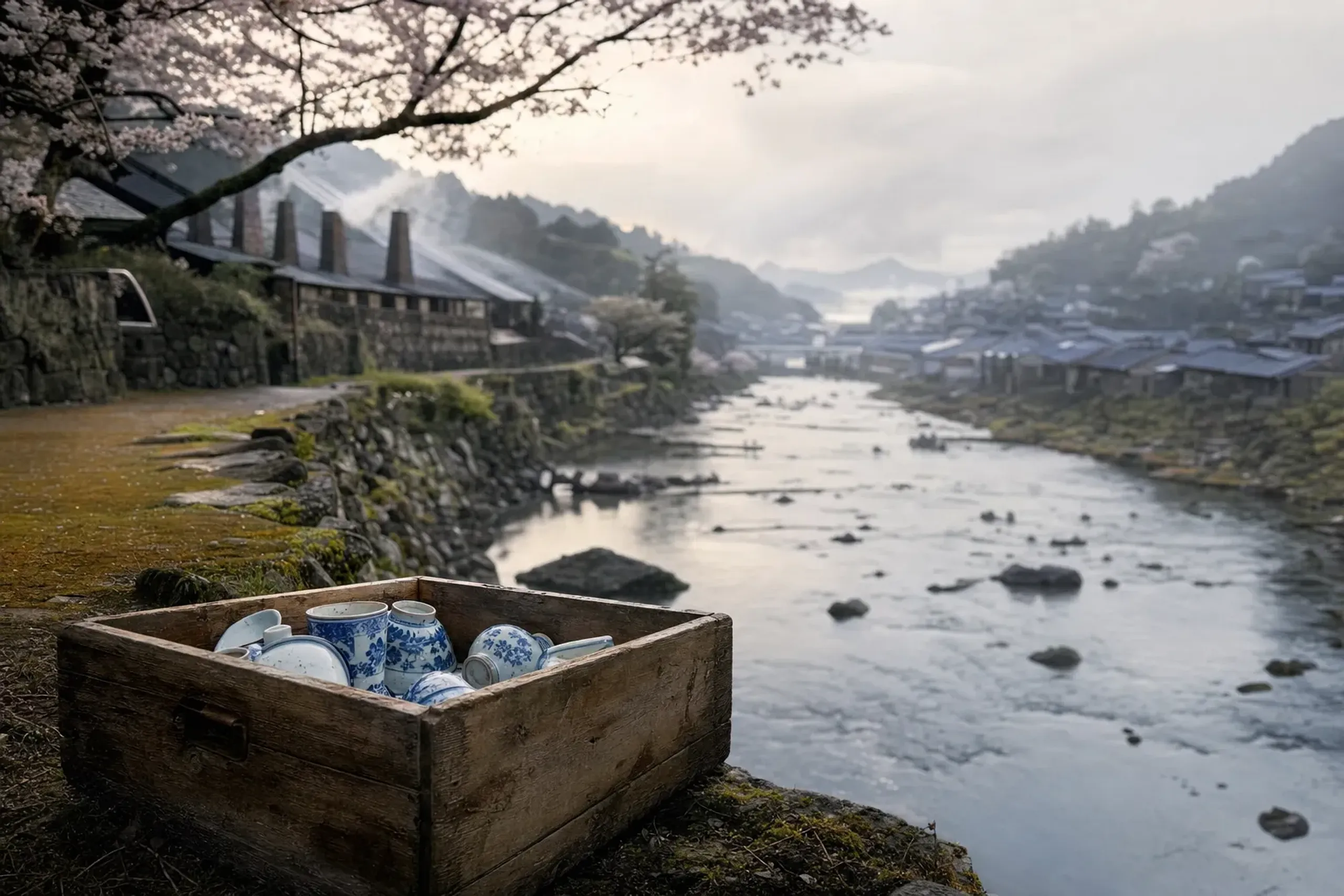
The export crates moved out through Imari, and so the world learned the port’s name instead.
If you are shopping for antiques or studying a family lineage, this single distinction can spare you an expensive misunderstanding.
The Export Boom And The Exact Dates Of Decline (1684–1715–1757)
Arita’s exports peaked in the late 17th to early 18th century by way of the Dutch East India Company, then declined after 1684 and 1715, with exports to the company formally ceasing in 1757.
Those dates are not decorative. They are a working timeline you can carry with you when you examine older pieces, provenance notes, or museum labels.
During the boom, Ko-Imari and Kakiemon styles captivated European nobility. Their shapes and motifs travelled far beyond Kyushu, shaping taste in rooms that had never once heard the word “Arita.”
Then the pressure shifted. In 1684, China lifted its own export restrictions and Jingdezhen kiln production resumed at scale. The competition was direct, and it was brutal.
In 1715, another constraint arrived from within Japan itself: the Edo shogunate capped the overall volume of trade. Heavy, bulky ceramics grew less appealing as trade goods under the new limits.
Exports to the Dutch East India Company formally ceased in 1757. Here is the detail many shoppers miss: most of the antique Imari pieces you encounter today actually date from the later domestic-market period after this cutoff, not from the earlier export peak.
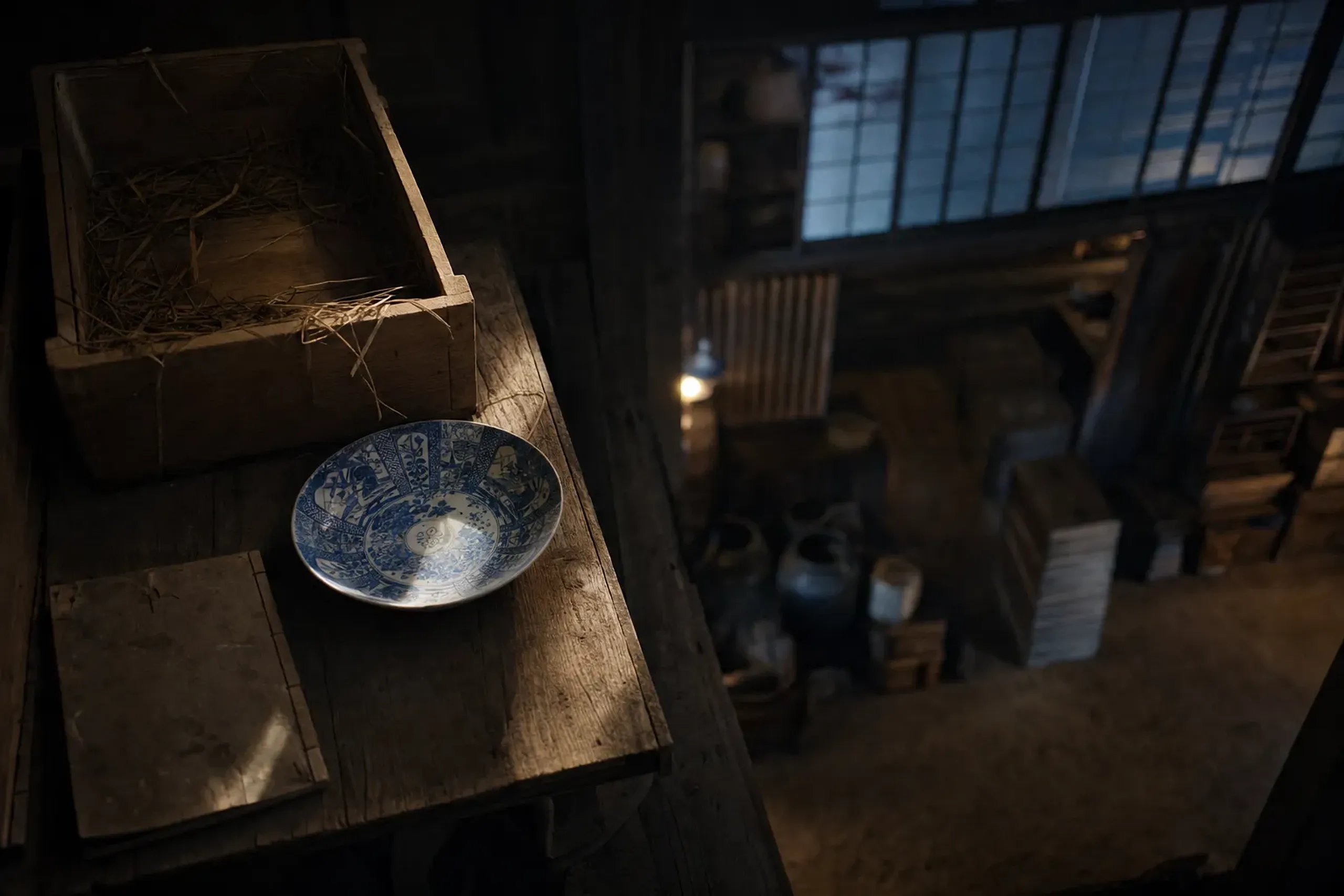
Arita’s story does not end there. In the 19th century, Meiji-era industrial policy showcased Arita ware at international world’s fairs in order to earn foreign currency. Works from this period are now studied as a distinct fourth style, sometimes called “World’s Fair Imari.”
Three Major Styles You Should Recognize Before You Buy
To enjoy Arita deeply, you do not need to become an academic. You do, however, need a few reliable anchors.
Ko-Imari
Ko-Imari is known for a deep underglaze blue combined with lavish red and gold overglaze decoration, called kinrande. Bold. Dense. Restless in the best possible way.
In a crowded market, Ko-Imari can read like everything and nothing at once. The trick is to study composition: where the painter chose to leave breathing room, and where they deliberately refused to.
Kakiemon
The Kakiemon style is defined by a milky-white nigoshide background and red, blue, green, and yellow motifs arranged with restraint and generous negative space.
This is the style that can quietly change how you set a table at home. One branch, one bird, one corner left alone. It reads, unmistakably, like confidence. It is wabi made luminous — beauty measured by what has been withheld.
Nabeshima Domain-Kiln Ware
Nabeshima domain-kiln ware was made exclusively for the domain’s official use or for presentation to the Imperial court and the shogunate.
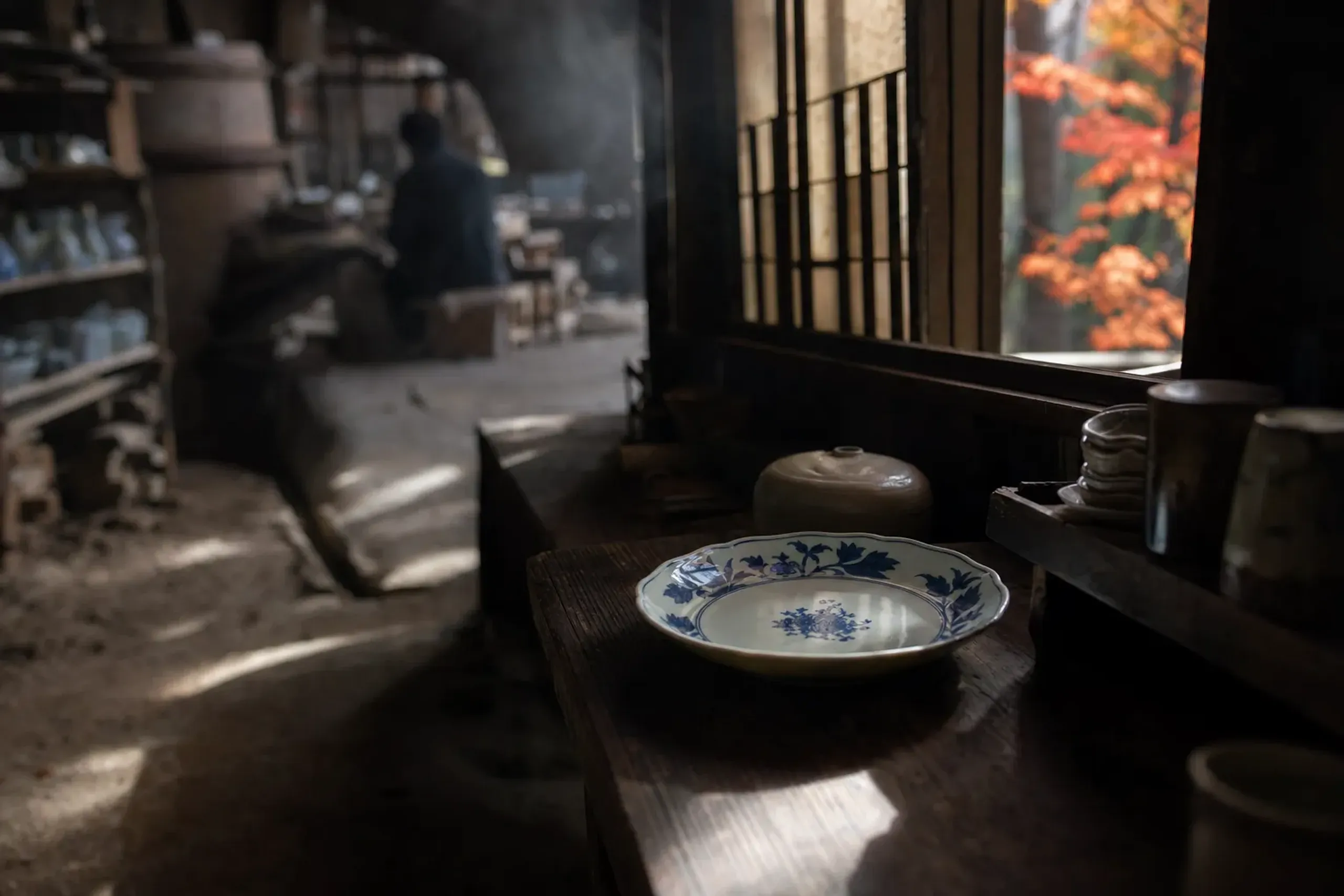
It was never sold commercially.
That “not for sale” origin still shapes how it feels in the hand. Less performative. More exact. A formal register, carried in porcelain — the quiet air of imperial-class provenance rather than the marketplace.
Key fact: “Imari” describes the export name tied to the port; “Arita” is the production town. The names have always differed.
Continuing Lineages: Kilns Still Burning Under Family Names
In Arita, “tradition” is not a costume worn for visitors. It is an unbroken work rhythm.
The Sakaida Kakiemon family has carried its lineage into the 21st century. The Imaizumi Imaemon family, associated with Nabeshima ware, has likewise continued its family craft line and trade into the present day.
For a traveler, this changes the entire feeling of a visit. You are not looking at a revival or a reenactment. You are standing before living continuity.
This is where shokunin becomes more than a word. It becomes a pace — thousands of tiny decisions, repeated for decades, then inherited by the next pair of hands. It is precisely these masters, who rarely open their studios to outsiders, that an introduction can quietly unlock.
Arita For HNW Travelers: What To Do In One Calm, Design-Forward Day
Arita works best as a focused day: two kiln encounters, one museum stop, and time left deliberately unclaimed — for looking, not rushing.
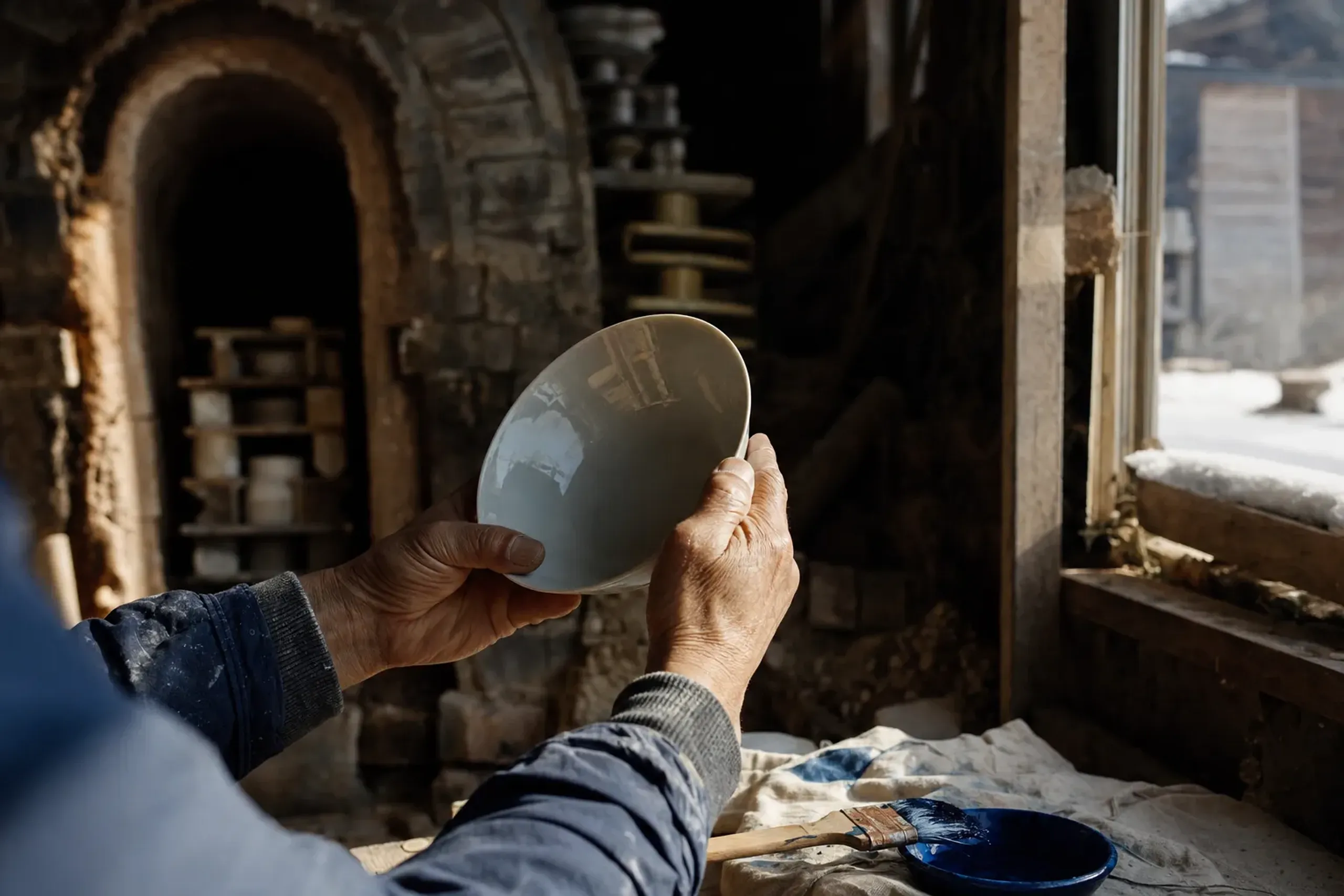
Our team at Japan Royal Service builds Arita days with intentional spacing. Crowds and impulse-buying flatten the experience; slow time sharpens it. This is the discipline of shun applied to travel — knowing not only where to go, but exactly when the town breathes at its best.
Start With Context: Kyushu Ceramic Museum
JNTO recommends the Kyushu Ceramic Museum as a first stop for porcelain history. It is a clean way to “calibrate your eye” before you set foot in the shops and studios.
Ten minutes in front of a single bowl can accomplish more than an hour of browsing stalls. Good museum lighting tells the truth.
Then Move Into Town: Arita Será (Shopping Without Chaos)
Arita Será is a ceramics shopping complex with opening hours listed as 9:00–17:00, open year-round. Practical. Concentrated. Easy to pace.
Spring can grow busy around the Arita Porcelain Market, and Arita Será also notes visitor peaks tied to an autumn Bowl Festival. If you want quieter buying time, we often steer HNW travelers toward weekday mornings outside the major festival dates.
Bring a small notebook. Write down the maker names and patterns that catch you. It is a small habit that pays off enormously later.
Modern Design Stop: 1616/arita japan
Many repeat visitors to Japan assume craft towns are only about “the old.” Arita politely disagrees.
The official 1616/arita japan site posts 2026 announcements, including a June 18, 2026 showroom refresh notice and pop-up event news items.

If contemporary table culture matters to you, this is one of Arita’s cleanest entry points.
Design-minded travelers tend to buy fewer pieces here. They buy better ones.
When Should You Visit Arita For Porcelain Events In 2026?
For 2026, Golden Week is the most time-sensitive window, with museum programming such as the 122nd Arita International Ceramics Exhibition running April 29 to May 6, 2026.
If you want energy and abundant selection, that week delivers. If you want space to speak with makers and look slowly, plan around it instead.
The Kyushu Ceramic Museum held “The 122nd Arita International Ceramics Exhibition” from April 29, 2026 to May 6, 2026. Those dates are specific, and they carry real weight for travel planning across Kyushu.
Arita Será also points to recurring annual peaks around spring’s Arita Porcelain Market and an autumn Bowl Festival. The town’s calendar is far from one-note, which is a gift for travelers who prefer the quieter months.
Winter has its own quiet angle. “Saga Illuminage” transformed Arita Porcelain Park into an illumination event running from Nov 1, 2025 to Feb 1, 2026. A wholly different mood: night air, and light falling across porcelain-themed architecture.
How Do You Book An Official Private Tour Of Arita As A Foreigner?
JNTO’s luxury page points to an official “Private Tour of Arita” concept, with booking directed to the ARITA WARE OPTIONAL TOUR platform.
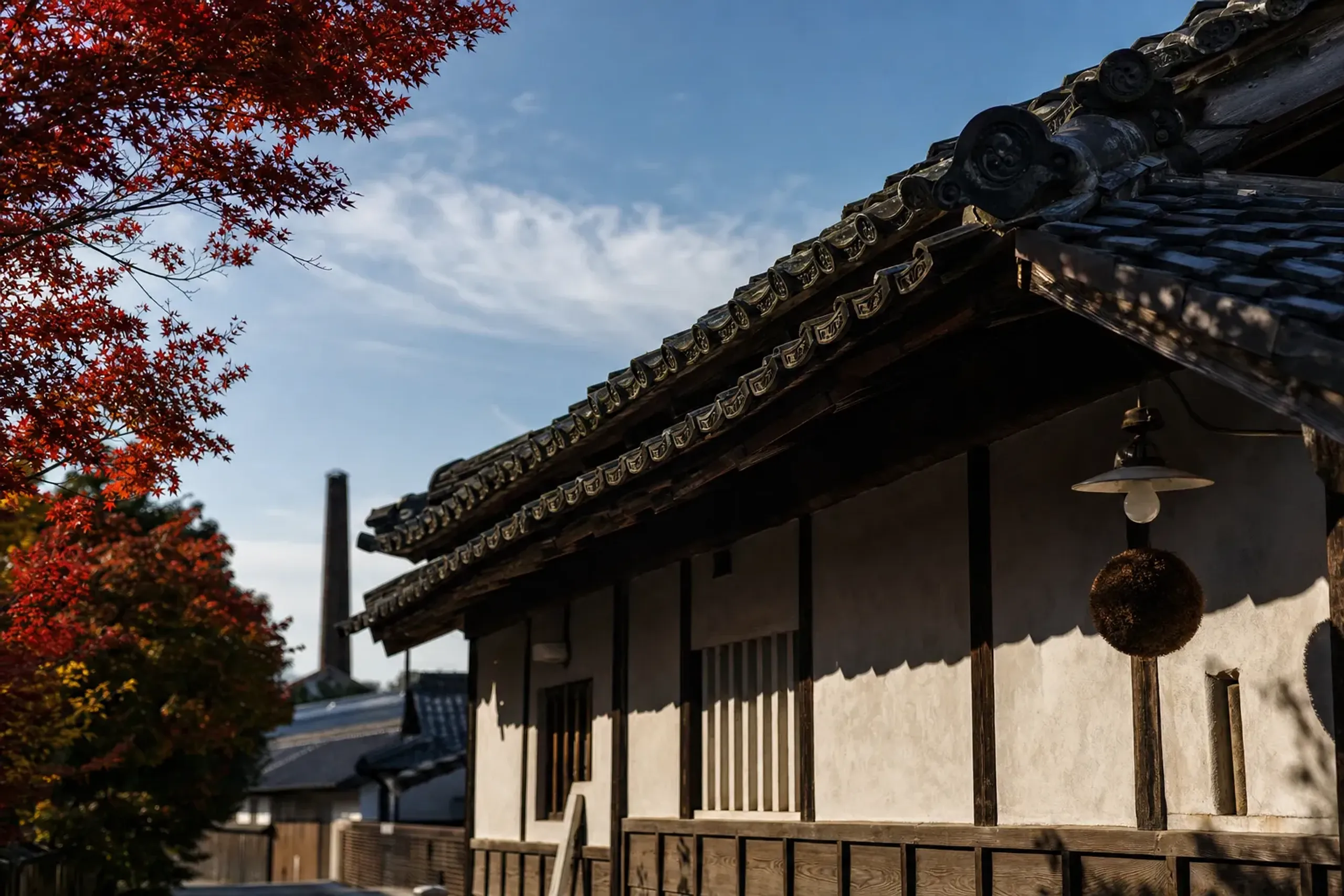
We keep this deliberately simple. If you want an official, published route to a structured Arita day, JNTO’s luxury content is a reliable starting point.
ARITA WARE OPTIONAL TOUR lists a product titled “Luxury Kaiseki Lunch With Arita and Gen-emon Kiln Tour,” with a stated meeting point at Arita Station and a published per-person price (from ¥27,500 for 2+ adults, tax included). We mention this only as public information, so you can readily recognize what is official and what is not.
Guests who prefer private timing, careful pacing, and craft-first interpretation — arranged with complete discretion over identity and itinerary — can reach our concierge team for a tailor-made itinerary that never reduces the day to a checklist.
Practical Logistics For Arita (Quiet Details That Protect The Day)
Arita sits in Saga Prefecture, Kyushu, and it rewards travelers who treat it as a genuine craft destination rather than a “quick stop.”
Plan for porcelain to be heavier than you expect. Even “just two plates” adds up quickly. Packing becomes a problem faster than most visitors anticipate.
This is one reason many HNW travelers prefer a day built around a private car and driver. Time stays yours, bags stay out of your hands, and your focus remains exactly where it belongs — on the work.
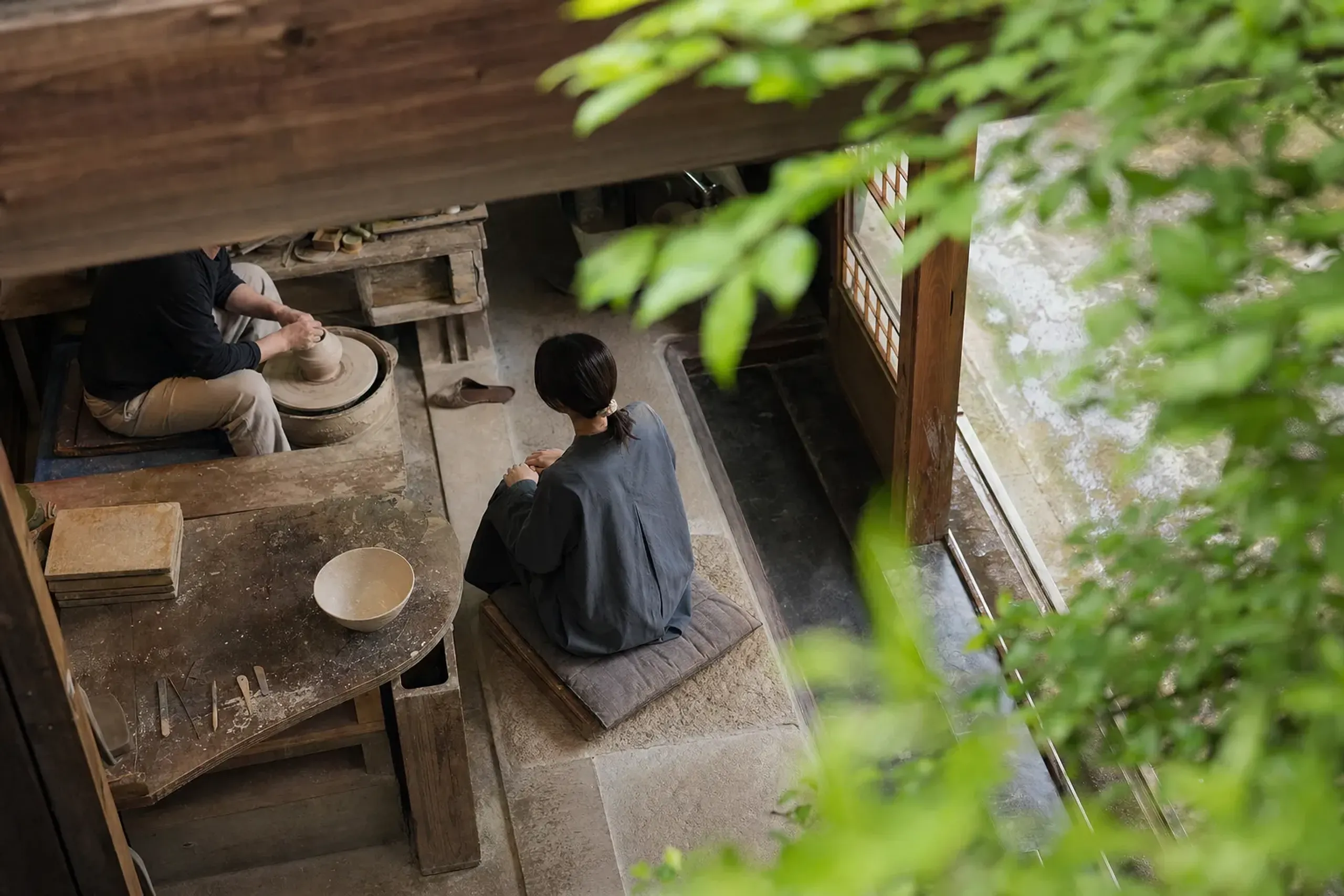
For first-time visitors, a clean rhythm works beautifully: morning museum, midday town walk and shops, afternoon kiln or atelier, then an unhurried return to your base.
The first mention matters here: our chauffeured transportation service supports exactly this kind of Kyushu-style day touring, quietly and without fuss.
Collecting And Commissioning: How HNW Buyers Avoid Regret
There is a particular moment in Arita when everything begins to look “collectible.” That is precisely when mistakes happen.
We suggest settling one question before you shop: are you buying for daily use, or are you building a small collection with provenance? The answer changes everything — including what the word “value” means to you.
If you are exploring older Imari pieces, keep the 1757 cutoff firmly in mind. Many antique pieces in circulation today are later domestic-market works, not export-boom relics. That is not a flaw. It is simply a different chapter.
Let Us Arrange Your Arita
The Japan that Google cannot find is often reached by introduction alone — a kiln master who does not usually receive outside guests, a quiet weekday when the town belongs to you, a commission thoughtfully placed with a family whose lineage runs unbroken across centuries.
If you would like your own day in Arita composed around the work, the makers, and the silence between them — with total discretion throughout — contact us here, and we will begin shaping a tailored proposal.