In this guide
- 01The Festival’s Most Famous Line Is From Kyoto
- 02When Is Awa Odori In Tokushima, And How Long Does It Run?
- 03What Is Awa Odori Like In Person—And What Will You Actually See?
- 04The Three Founding Theories Of Awa Odori (And Why None Is Confirmed)
- 05The Shinmachi Bridge Story (A Local Anecdote, Not Confirmed History)
- 06Where Does Awa Odori’s Music Come From, And What Was The 1842 Restriction?
- 07How Do You Get Reserved Seating For Awa Odori In Tokushima?
- 08A Practical Luxury Logistics Plan For Awa Odori Nights
- 09Year-Round Awa Odori: Awa Odori Kaikan And Mount Bizan
- 10Awa Odori’s Name Is Newer Than You Think
- 11Tokushima In August: Hotels, Timing, And Quiet Moments
- 12How This Festival Shaped Japan’s Summer Dance Culture
- 13Plan Your Awa Odori Nights With Us
The first thing you notice in Tokushima, on the warm nights of August 12–15, is the sound. Zomeki rhythms bounce off shop shutters and street signs. A shamisen line snaps taut. A bell answers from somewhere in the dark.
Then the chant arrives, half-sung and half-laughed through the crowd: odoru ahou ni miru ahou, onaji ahou nara odorya son son. The dancing fool and the watching fool are both fools alike, so you might as well dance.
Most visitors assume that line was born here, in Awa. It probably wasn’t. In our experience, that single detail changes the way you watch Awa Odori—because the festival you came for is also a story about how ideas travel, stick, and quietly become local truth.
The Festival’s Most Famous Line Is From Kyoto
Multiple independent sources record Awa Odori’s signature “fools” line in Kyoto in 1839, tied to street dancing connected with the rebuilding of Takio Shrine and patronage by the Shimomura family, later founders of Daimaru.
Picture Kyoto that year. Costumed crowds moving in a single wave. Foxes and badgers. Frogs, sparrows, sumo wrestlers, and monsters. Bells tied at the waist, ringing with each stamp of the foot. The chant—nearly the same words you hear in Tokushima—rolling down a Kyoto street like a dare.
That Kyoto craze is widely believed to have reached Tokushima later and fused with an older dancing frenzy already established there. Not a replacement. A merge. The phrase “belongs” to Tokushima now in the only way festivals ever own anything: by repetition, by muscle memory, and by the way a city’s summer air makes a line feel inevitable.
We like to tell guests this before their first night. It sharpens the ear. Suddenly you’re listening for what is old in Tokushima, what drifted in from elsewhere, and what has been remade by the ren troupes dancing right in front of you.
When Is Awa Odori In Tokushima, And How Long Does It Run?
Awa Odori in Tokushima City is held every year on fixed dates, August 12–15.
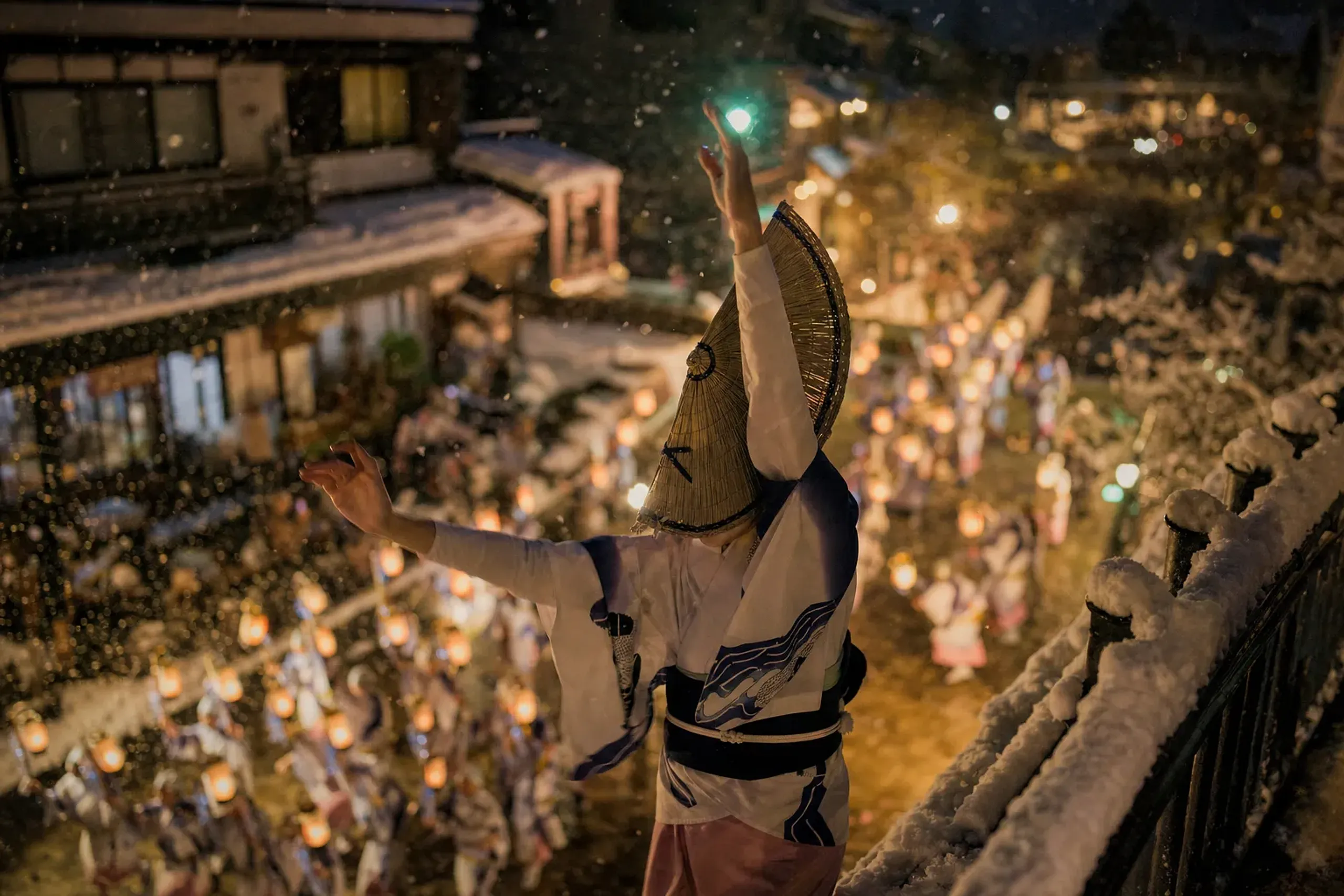
Those four nights sit within the Obon season, when much of Japan turns inward toward ancestral remembrance. Tokushima turns instead toward movement. Streets become performance lanes, with onlookers pressed shoulder-to-shoulder in places and calmer pockets waiting just a few blocks away.
It draws several hundred thousand visitors annually by many accounts, and some public sources describe totals exceeding a million across the period. The numbers vary. The crowding does not.
If you value breathing room, treat planning as part of the experience—not an afterthought. Our team at Japan Royal Service often suggests arriving with time to learn the city’s layout in daylight, then letting the festival take over at night. A well-judged bespoke itinerary can turn what most visitors experience as chaos into something that unfolds at your own pace.
What Is Awa Odori Like In Person—And What Will You Actually See?
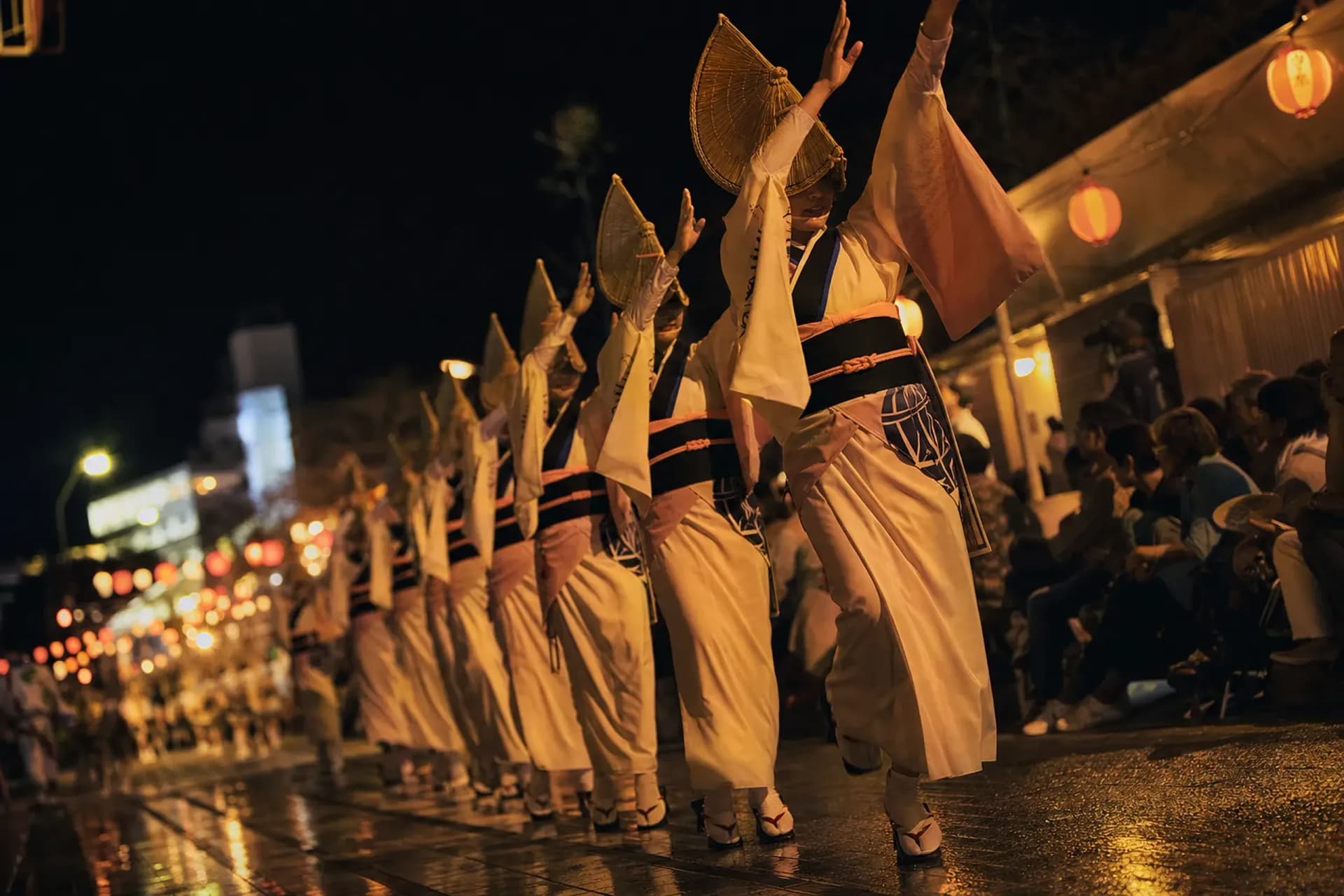
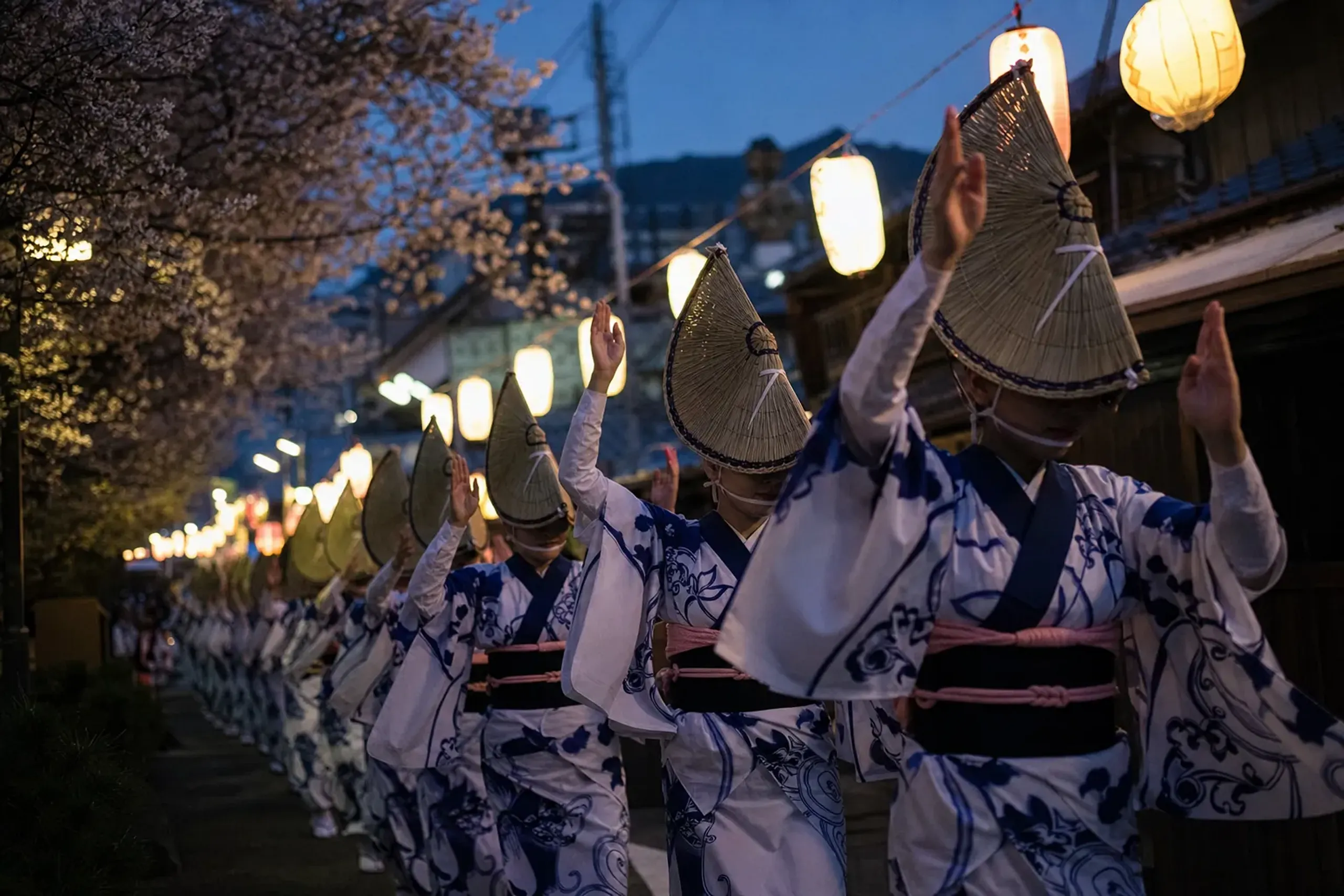
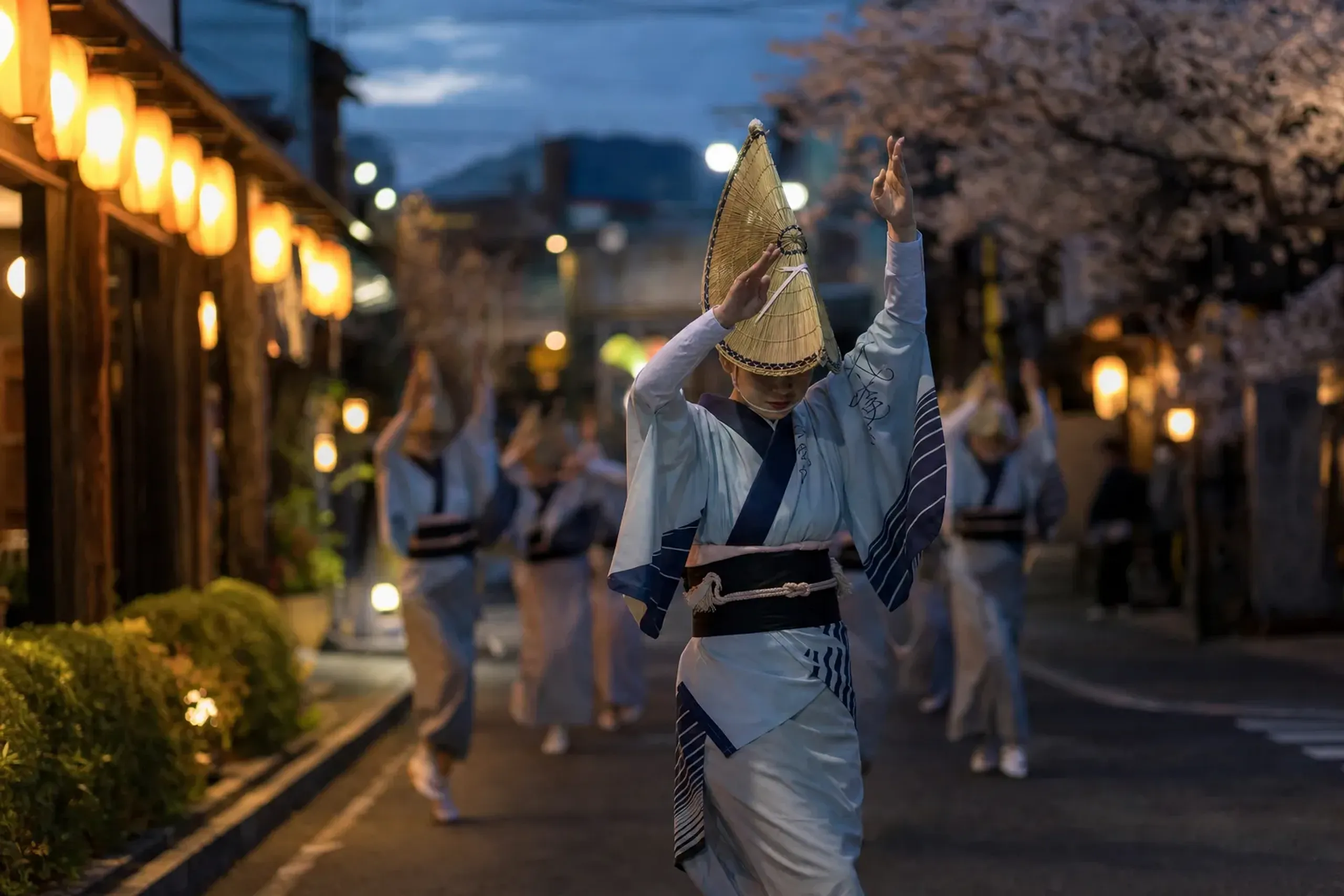
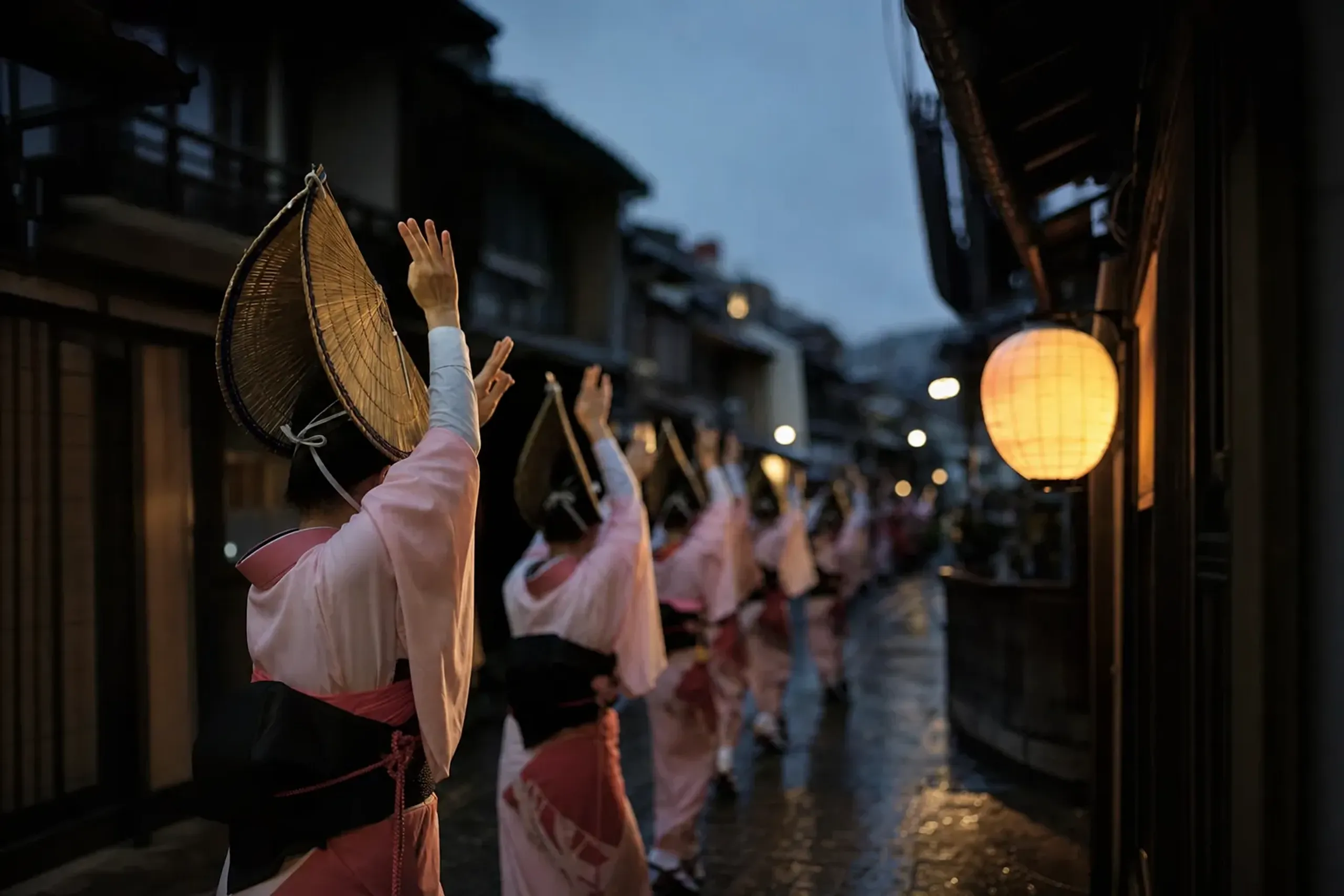
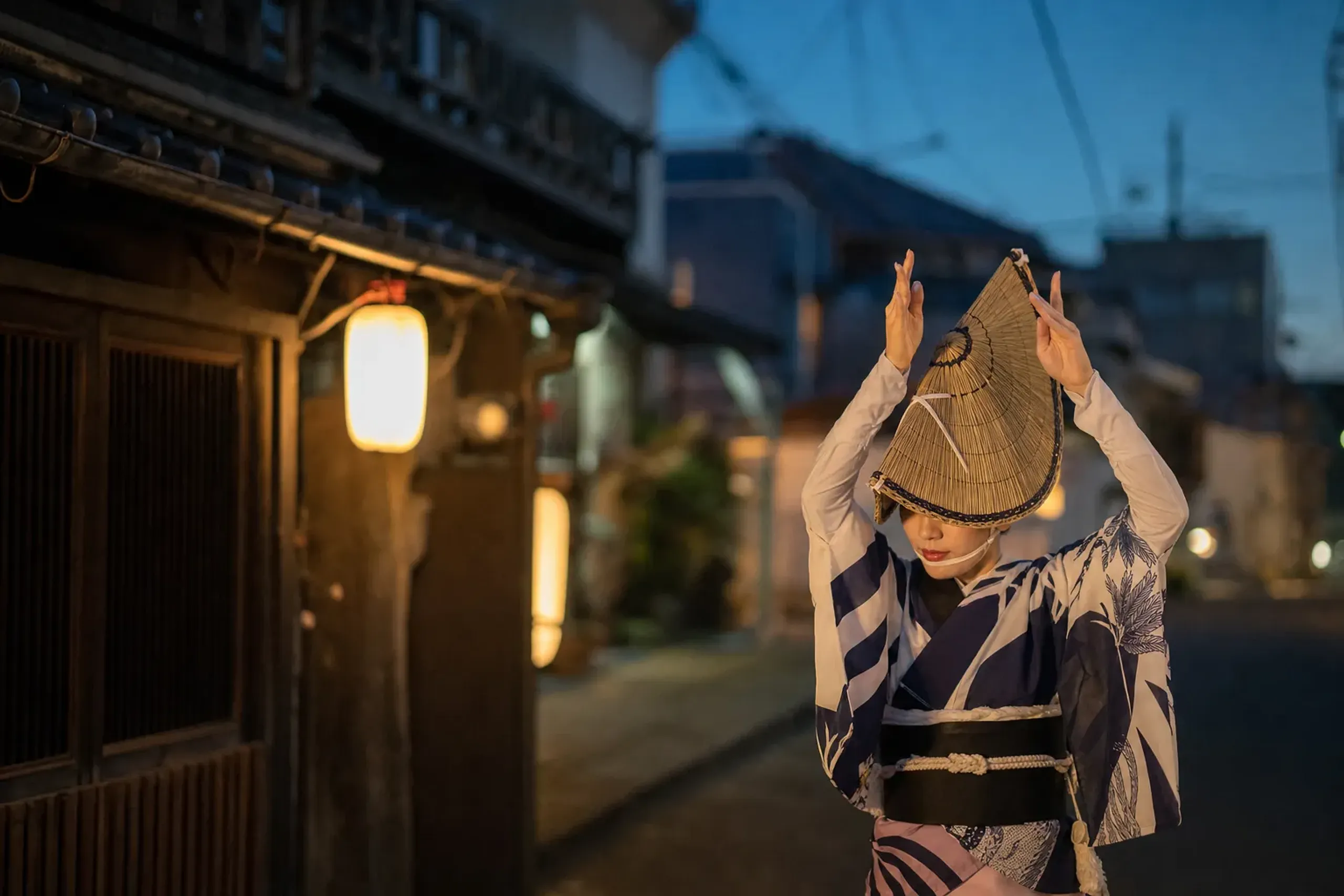
Awa Odori is a street festival of choreographed group dances by ren troupes, performed to zomeki music, with two widely recognized styles: otoko odori (the men’s dance) and onna odori (the women’s dance).
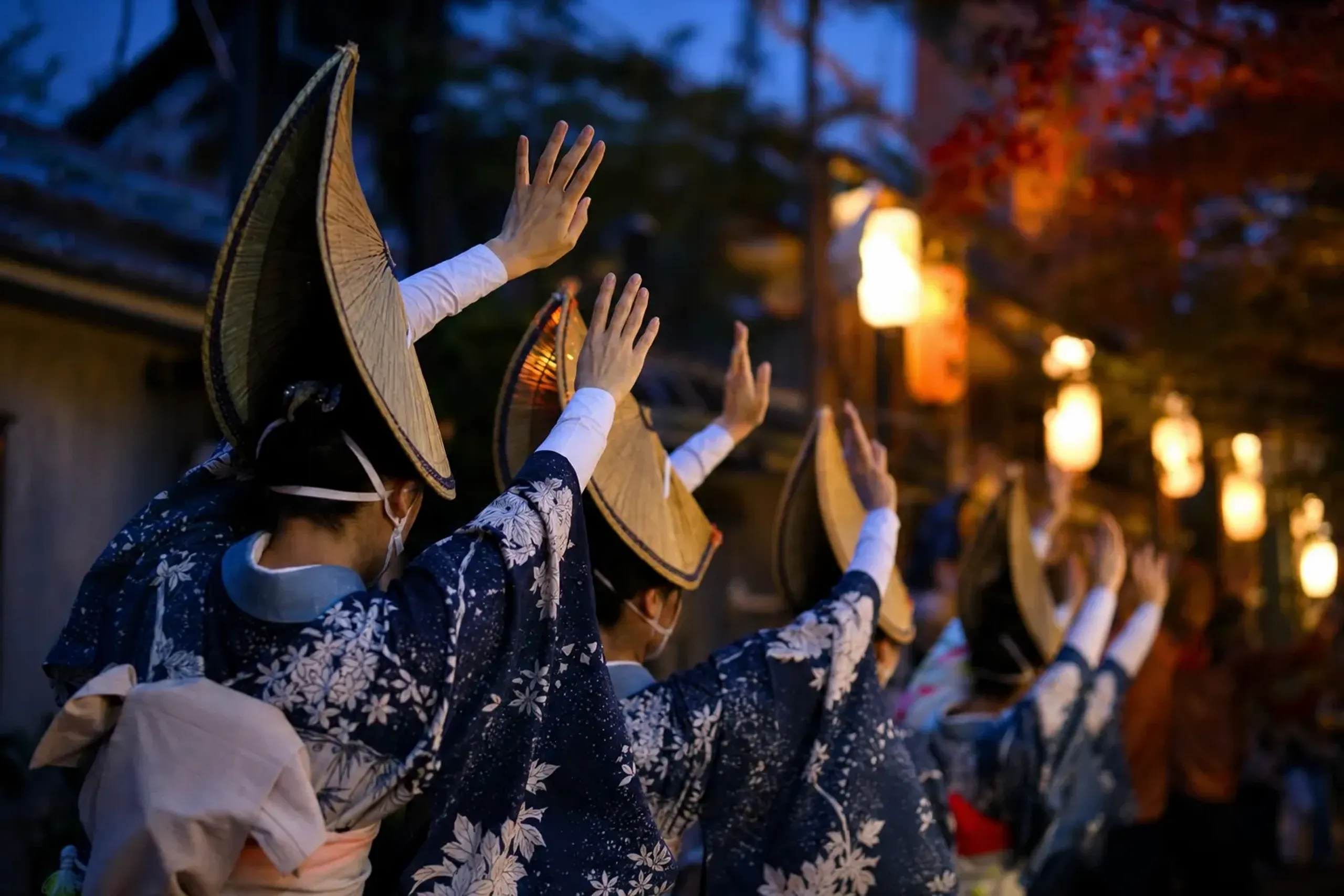
Onna odori is the image most people carry home. Lines of dancers in matching outfits, moving in tight formation. Geta sandals striking the pavement with a dry, decisive sound. One hand lifted, the other guiding balance, the posture at once playful and precisely controlled.
Otoko odori reads differently. Lower. More grounded. Sometimes intentionally rough around the edges, like a joke told well. It works because the beat stays strict even when the body looks loose.
Between them, the festival feels like a whole city practicing shokunin-level repetition—except here the “work” is joy. You’ll see troupes pass, then another, then another. Time blurs. The chant returns. So does the question every first-timer quietly asks: should I watch, or should I join?
The Three Founding Theories Of Awa Odori (And Why None Is Confirmed)
No single origin story for Awa Odori is confirmed, and the festival’s beginnings are best understood as three competing theories rather than one tidy founding date.
-
Castle-Completion Theory (1587) One account holds that in 1587, Lord Hachisuka Iemasa hosted celebrations marking the completion of Tokushima Castle, and townspeople danced in the streets. It’s the kind of founding tale cities love. It may also be too neat.
-
Fūryū-odori Theory (Records Mentioning 1578) A record known as the Miyoshi-ki (1663) describes a fūryū dance held at a different castle in 1578, which some present as a prototype.
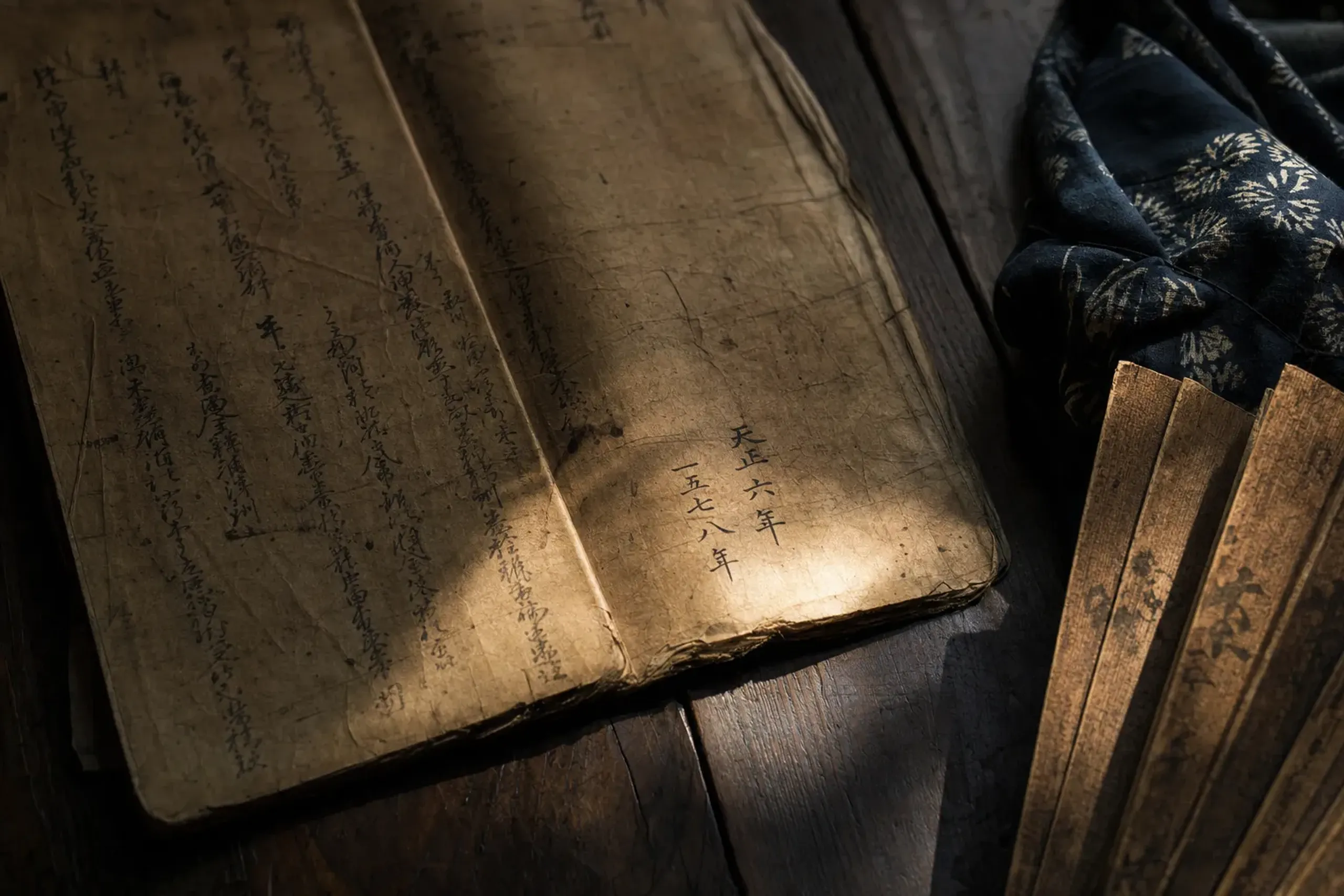
If true, it suggests a broader performance culture that Tokushima later absorbed.
- Bon-odori Theory The most plausible shape, if not the most dramatic, is that the festival grew out of ordinary Bon dancing and then diverged over time into specialized forms. This is how many regional dances evolve. Slowly. Then suddenly.
We never ask guests to “pick” one. You don’t need a single origin to feel the force of it on the street. You just need to know that the past here is layered, not settled.
The Shinmachi Bridge Story (A Local Anecdote, Not Confirmed History)
One local account, resting on a single source, says commoners were once forbidden to dance except within their own homes during the three Bon nights, and that they staged their dance instead on Shinmachi Bridge as a gray-zone act of defiance.
The bridge matters in that telling because it marked a boundary—inside and outside the castle town. So the dancers chose the line itself. Not one side. Not the other. A legal edge, turned into a stage.
It’s a strong story. A little too perfect, perhaps. We present it the way it deserves to be presented: as an anecdote that Tokushima remembers, not as a fact the archives have sealed shut.
Still, it fits the feeling of Awa Odori. The festival has always had a flirtation with disorder. Even now, the best moments are the ones that look as if they might spill out of the lane—until the troupe pulls it back into form at the last possible second.
Where Does Awa Odori’s Music Come From, And What Was The 1842 Restriction?
Awa Odori’s zomeki rhythm is traced to Ushibuka Haiya-bushi, a folk song from Ushibuka in Amakusa, Kumamoto, and in 1842 the domain restricted dancing to within the castle town.
That musical link matters because it is a different root from the Kyoto chant. The words may have traveled from Kyoto. The pulse has another lineage entirely. A festival can have more than one spine.
The 1842 restriction is one of the clearest, checkable control measures in the story: the domain limited the dance to within the castle town, reportedly out of concern for unrest and financial strain. Not “tradition.” Policy.
It’s easy to romanticize festivals as purely organic. Tokushima’s own record reminds us that large, ecstatic crowds have always made authorities nervous. The modern event is polished, but its energy still has teeth.
How Do You Get Reserved Seating For Awa Odori In Tokushima?
Reserved sajiki seating for Awa Odori is sold through public, official distribution channels, and availability is limited, so planning ahead matters.
In practical terms, treat seats like a scarce resource in a small city during a national holiday week. Inventory moves. Some sections sell out entirely. International-facing sales have existed in structured form, including English-language inbound ticketing pages in some years.
We avoid publishing fees, because they change, and because most discerning travelers care more about what a seat actually gives them: clear sightlines, a calmer place to sit, and a predictable schedule for driver pickup afterward.
That last point matters. A great deal.
Key fact: Paid sajiki seating is not “connections-only.” It exists, it is public, and it can sell out.
If you’re choosing between a seat and free street viewing, consider your party. For a couple who can stand for long stretches, street viewing can feel more alive and immediate. For families, multi-generational travel, or anyone who wants a guaranteed base, sajiki is often the wiser call.
A Practical Luxury Logistics Plan For Awa Odori Nights
If you want Awa Odori to feel elegant rather than exhausting, build the night around movement: where you enter, where you pause, and how you exit when the streets tighten around you.
Start earlier than you think. Not for the dancing—just to learn the routes. A quiet walk before dusk teaches you more than any map. Then, when the music starts, you are moving with intent rather than guessing.
Make dinner a strategy, not a gamble. During the festival period, aim for a clear plan that leaves slack for delays and crowds, then commit to one primary viewing block rather than chasing every performance area at once. This is where the discretion of a properly arranged evening—a quiet table held, a route the crowds don’t know—separates a good night from a frustrating one.
And don’t treat transport as generic. The last fifteen minutes of the night can decide whether you end your evening with calm conversation or a slow shuffle through humid air.
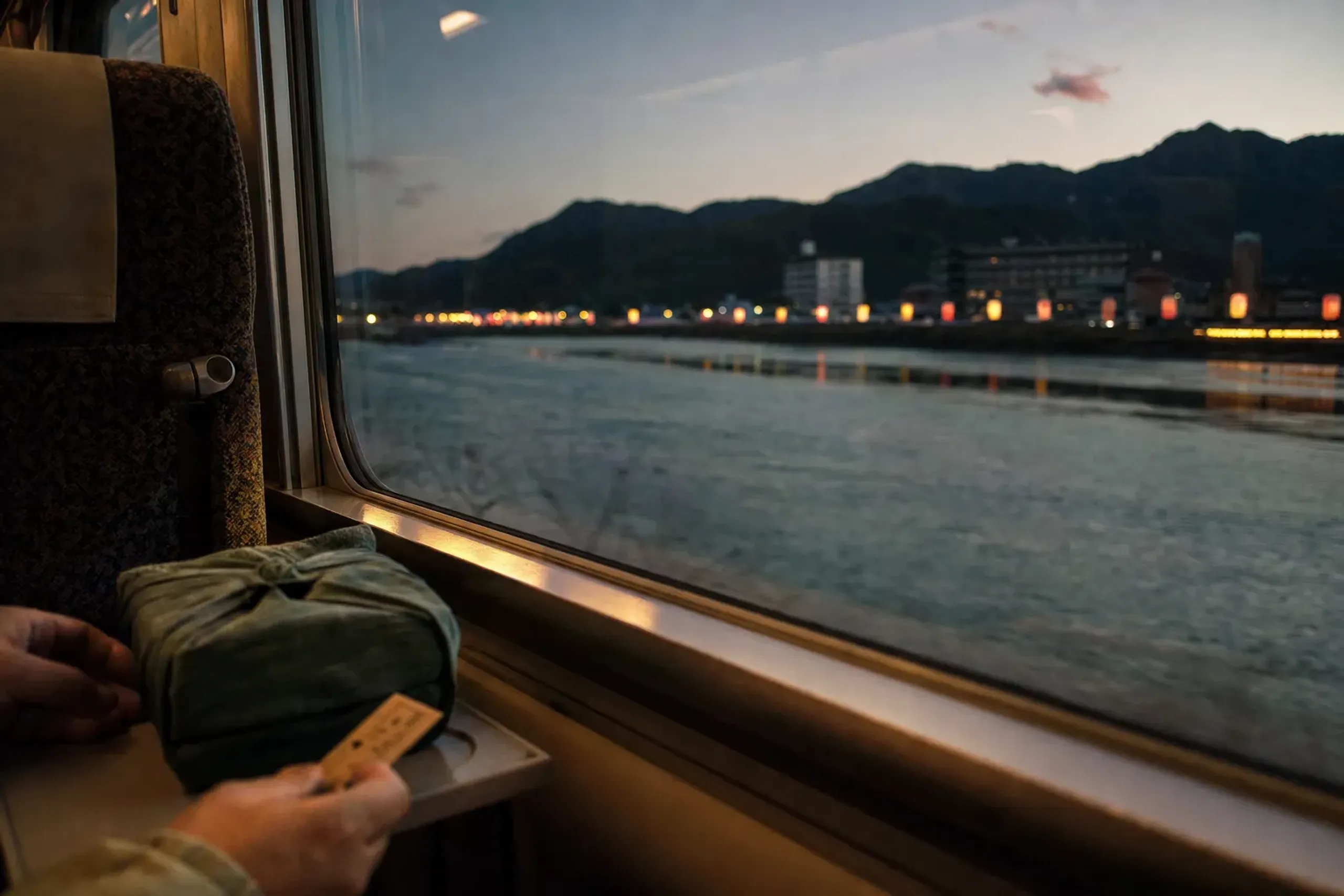
Our guests often rely on private transportation / chauffeur service so the transition back to the hotel is measured, not chaotic—the kind of silent, anticipated care that reveals itself precisely when you most need it.
Year-Round Awa Odori: Awa Odori Kaikan And Mount Bizan
If you miss August 12–15—or simply prefer a quieter look at the dance—Awa Odori Kaikan offers year-round performances and a small museum at the base of Mount Bizan.
It’s a different mood altogether. More intimate. You can see costumes up close and understand how the instruments and movement fit together without the pressure of a crowd pressing in behind you.
Mount Bizan is also a useful anchor nearby, with the Mount Bizan Ropeway often treated as a straightforward add-on for viewpoints over Tokushima. Clear air helps. Summer haze is real. Even so, the city’s geography makes far more sense once you’ve seen it from above.
Before your visit, our concierge team quietly verifies current-year show times and the latest operating details, so your day never hinges on a stale schedule found somewhere online.
Awa Odori’s Name Is Newer Than You Think
The term “Awa Odori” was not used until the 20th century, when Tokushima prefectural authorities coined and promoted it starting in 1926, at the very beginning of the Shōwa period.
This is where the Hidden Japan we love appears in plain sight. Visitors often assume names are ancient because the feeling is ancient.
Not always. Sometimes the branding came later, long after the practice had already survived for centuries under other labels.
That doesn’t cheapen it. It clarifies it. You’re watching something that evolved, got shaped by policy, absorbed outside influences, and was then presented to the modern public with a name built to travel.
If you’re the kind of traveler who cares about provenance—of objects, of food, of craft—this detail will feel familiar. Japan is full of traditions that were quietly curated into “tradition” within living memory, and knowing which is which is part of the pleasure.
Tokushima In August: Hotels, Timing, And Quiet Moments
Tokushima in mid-August compresses demand into a few nights, so hotel strategy matters every bit as much as festival strategy.
Stay close if you value early exits and quick resets. Stay slightly outside the tightest center if you value sleep. Both approaches work, but they lead to very different nights—especially if you’re traveling as a couple versus with children.
Build in a buffer. A short rest between daytime heat and nighttime crowds can salvage your energy. One shower. Ten minutes of silence. Then you go back out into the sound.
When guests ask us what “luxury” truly means at a large public festival, this is often the answer: fewer frictions, fewer blind spots, and enough calm built into the schedule that the dance feels generous rather than demanding. Knowing exactly what to experience, where, and in which precise week of the year—that sense of perfect seasonality—is the quiet skill our guests pay for.
How This Festival Shaped Japan’s Summer Dance Culture
Awa Odori’s gravity is so strong that other cities built entire new dance festivals in response, including Kōchi’s Yosakoi, created explicitly to rival Tokushima’s fame.
We won’t retell that whole story here—it deserves its own space. If you want the context, our guide to Kōchi summer travel pairs naturally with a Shikoku August route, and our separate coverage of Yosakoi goes deeper on how that rivalry was designed.
What matters for your Tokushima trip is simple: you’re not attending a niche local event. You’re stepping into a reference point—an origin of influence—whether or not its most famous line began here.
And once you’ve heard the chant in the street, you’ll notice echoes of it everywhere else in Japan. The line sticks. That, after all, is exactly what it was built to do.
Plan Your Awa Odori Nights With Us
The difference between watching Awa Odori and truly inhabiting it comes down to the parts no guidebook can arrange for you: the reserved seat with the right sightline, the quiet dinner held until the streets clear, the driver waiting exactly where you need him, and the private introductions to the Japan that Google cannot find. Every itinerary is handled with complete discretion, from your name to your route.
To begin shaping four August nights in Tokushima around your pace, your party, and your privacy, contact us here for a tailored proposal.