In this guide
- 01Start With The Plate: Why Ayu Is The Center Of Ukai Nights
- 02Nagara River Ukai (Gifu): Firelight, Imperial History, And A Serious Food Town
- 03Uji River Ukai (Kyoto): The Rope-Less “Free” Style And A Different Kind Of Summer Evening
- 04Gifu Vs. Uji: A Discreet Comparison For Luxury Travelers
- 05Kaiseki On Ukai Nights: How The Best Evenings Actually Flow
- 06How To Book Ukai In 2026 (Official Methods, No Guessing)
- 07Designing A Food-First Ukai Itinerary: Three Quiet Ways To Do It
- 08Shokunin, Not Souvenirs: The Craft Behind The Firelight
- 09FAQ: Ayu, Ukai, And Gourmet Planning
- 10Why Choose Japan Royal Service
Most articles about ukai (cormorant fishing) treat it like a photo stop: boats, torches, applause, done. That misses the point. The real story is edible, and it starts with ayu (sweetfish) pulled from a summer river and ending up—hours later—salt-broiled, smoked, or folded into kaiseki with a level of restraint that feels almost severe.
Our team at Japan Royal Service writes for travelers who care about what’s on the plate and why it belongs there. Not just “a nice dinner.” The river has a voice, the fire answers it, and the menu follows—if you choose the right town, the right night, and the right style of dining.
This guide is built on verified 2026 ukai operations for the Nagara River in Gifu City, plus the distinctive “free” (rope-less) ukai of the Uji River near Kyoto. We’ll keep it practical. We’ll also keep it quiet.
Start With The Plate: Why Ayu Is The Center Of Ukai Nights
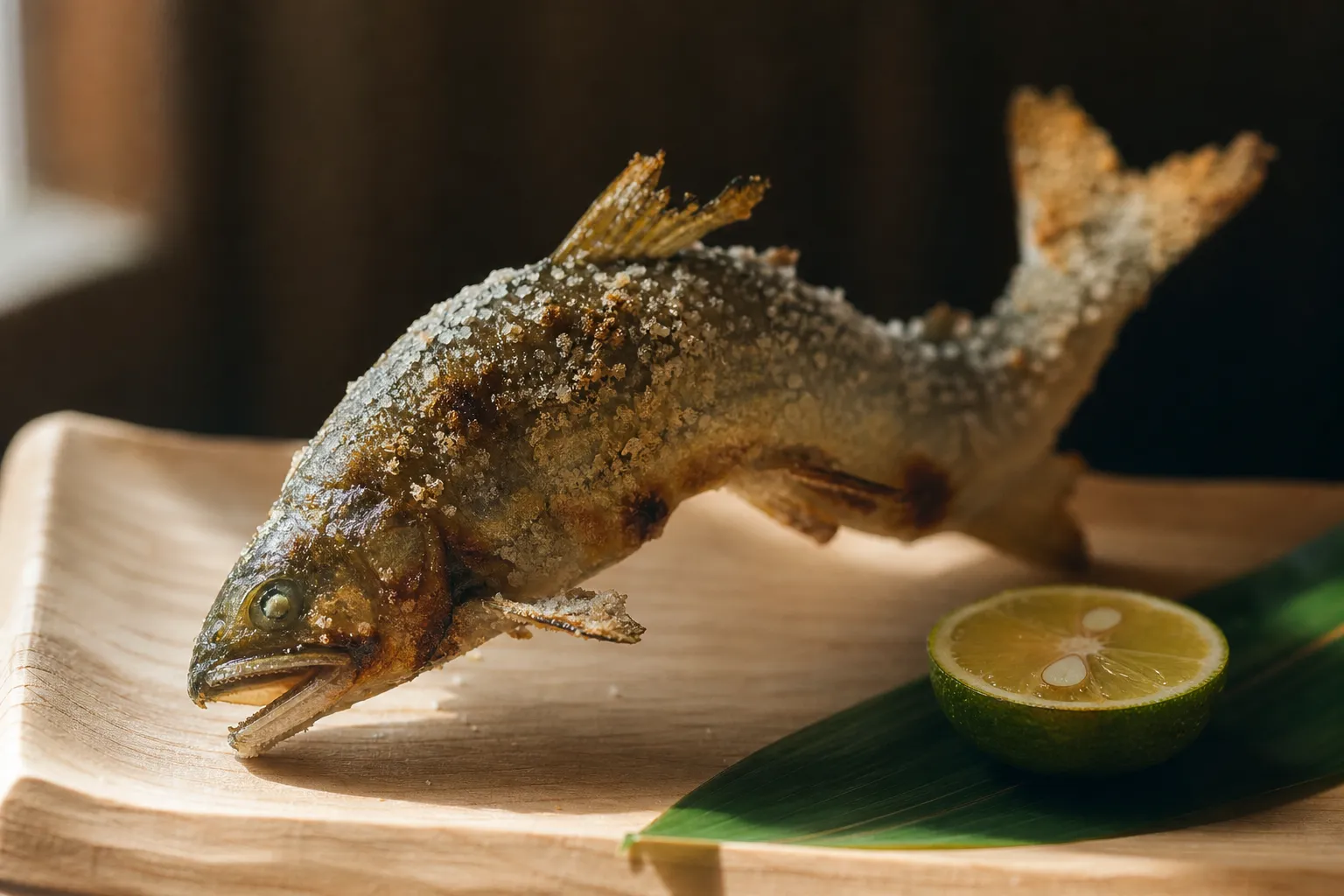
Ayu is the taste memory many guests carry home from an ukai night.
Ayu is not a generic “river fish” in Japan. It is a seasonal spine for summer cooking, and ukai exists—functionally—to catch river fish such as ayu using trained cormorants. Simple fact. Deep consequence.
On a serious ukai night, you can taste the river’s current in the way ayu is handled. Salt-grilled ayu is the famous reference point, but it’s also a benchmark: if the simplest preparation is sharp and clean, the rest of the meal usually follows with discipline. No hiding.
At certain riverside stays on the Nagara River, cuisine pages describe how ayu changes across the season: in May and June, the fish are smaller and their bones are softer; in July and August, they grow larger and reach peak flavor. That progression matters when you are choosing dates, not just destinations.
Wabi-sabi belongs here. Not as a slogan. As a preference for honest flavor, pared-back plating, and a kind of silence at the table that feels earned rather than performed.
What Ayu Tends To Look Like In Kaiseki (Without Guesswork)
Because menus change by property and day, we don’t publish “guaranteed dishes.” Big mistake. Instead, we coach guests on what to ask for and what to expect on ukai season nights: ayu prepared over charcoal with salt, ayu presented in a seasonal course rhythm, and local pairings that stay light enough for summer heat.
If you want a chef to explain each course, that is a legitimate preference—not a fussy one. Our concierge team at Japan Royal Service can guide the conversation around pacing, dietary constraints, and how “river cuisine” differs from coastal seafood meals, once you reach out privately.
Nagara River Ukai (Gifu): Firelight, Imperial History, And A Serious Food Town
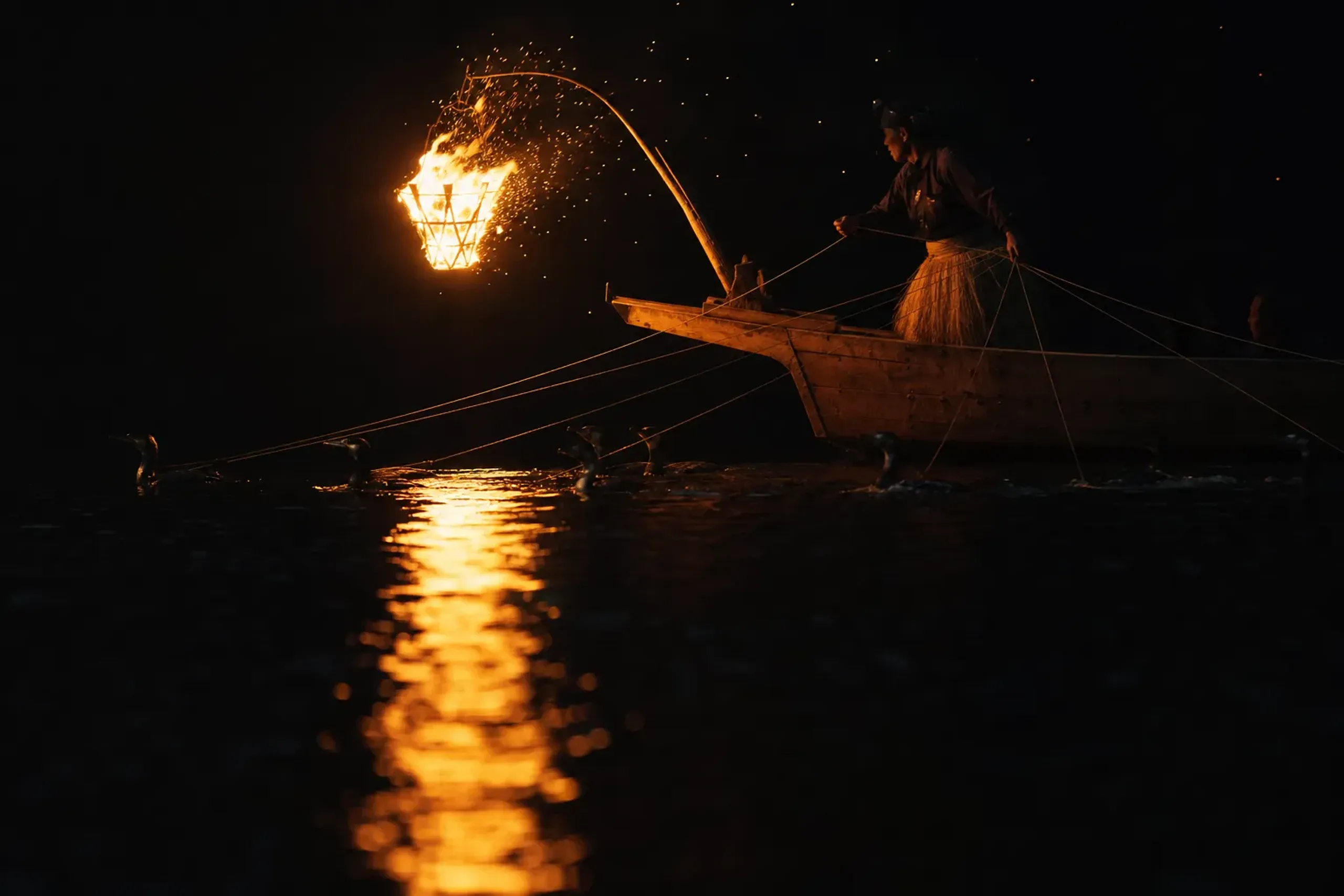
In Gifu, the firelight is not decoration. It is the working lamp of the river.
If you are choosing one ukai to plan properly, start with the Nagara River in Gifu City. The season runs every night from May 11 to October 15, with exceptions and weather-related cancellations. It’s consistent enough to build a trip around, yet fragile enough that you need a contingency mindset.
In Gifu, ukai begins at dusk. Viewing is done from covered sightseeing boats that shadow the fishing boats. That detail changes everything: you are not “watching from shore,” you are in the same air, close enough to feel the torch heat on your face when the boats draw near.
The finale many guests remember is the So-garami, described by a local operator as the moment when six cormorant fishing boats line up side by side across the river to draw ayu into one place. It is choreography. It is also work.
2026 Dates You Can Actually Plan Around (And One You Cannot)
For 2026, official destination messaging and Japan-guide both state the Nagara River ukai season runs daily from May 11 to October 15, 2026, with an exception on September 24, 2026 (the harvest moon closure). One night. Locked.
Key fact: Plan around the Nagara River ukai closure on September 24, 2026. Weather and river conditions can still cancel other nights.
High water levels can stop ukai. So can unsafe river conditions. That’s not drama; it’s basic safety. When we build ukai-focused itineraries at Japan Royal Service, we treat the evening as weather-sensitive and keep the day program flexible.
Where You Check In For Viewing Boats In Gifu City
Gifu City’s foreign resident information page (updated July 1, 2026) instructs visitors to check in and get tickets at the Cormorant Fishing Sightseeing Boat Office on the day of the tour. The address listed is 1-2 Minato-machi, Gifu City. Specific. Useful.
The same page states ukai viewing times run May 11–October 15, starting around 7:45pm, with timing that can shift by season or special events. It also notes additional Noryo ukai trips after the normal viewing between July and September when demand is greater. Translation: summer weekends can behave differently than shoulder-season weekdays.
How Dinner And Ukai Pair Naturally On The Nagara River
Japan-guide notes that dinner cruises can be arranged through local ryokan and are often part of overnight packages. This is where the food-first traveler wins: you are not cramming a “show” between museum closing hours and a late reservation across town.
Nagaragawa Onsen’s ukai package information describes plans that combine dinner and ukai viewing boat boarding fees across the same May 11 to October 15 season window. It also mentions a detail that feels almost mythical until you see it: an ayu delivery service on the river, where ayu are broiled with salt on a small boat and delivered directly to passengers on the viewing boats.
That moment—hot fish handed over torchlit water—does more to explain Japanese summer cuisine than a dozen generic “best restaurants” lists. It’s not flashy. It’s precise.
Uji River Ukai (Kyoto): The Rope-Less “Free” Style And A Different Kind Of Summer Evening
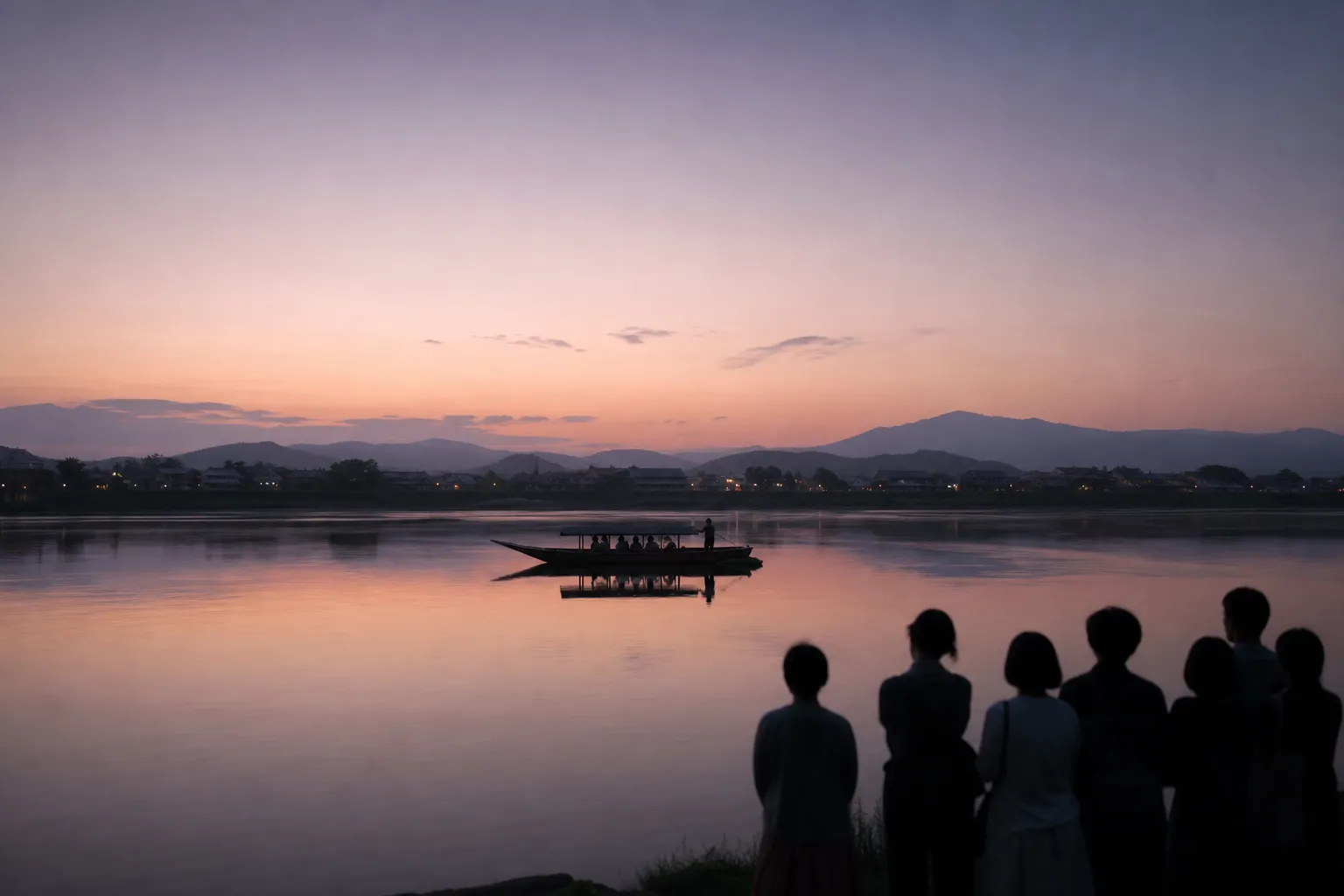
Uji’s pace is shorter and quieter—well-suited to a Kyoto-based itinerary.
Gifu is the classic firelit theatre. Uji is the counterpoint: tighter, closer to Kyoto, and known for a distinct “free cormorant fishing” style described by the Kansai Guide as rope-less, where birds are released without the typical lead rope and return when called.
This is not a better-or-worse argument. It is a mood choice. If you prefer a shorter program that pairs naturally with Kyoto and Uji’s tea culture the next day, Uji can fit beautifully.
Uji Operational Basics: What’s Officially Stated
Japan-guide states that cormorant fishing on the Uji River takes place from July to September (except Wednesdays). Tickets are purchased at the venue for 2,700 yen, advance reservations are not possible, and departures are at 19:00 (or 18:30 in September) for about an hour.
That “no reservations” rule is the defining constraint for planners who dislike uncertainty. If Uji is a must, our team at Japan Royal Service typically recommends shaping the afternoon around it—no tight transfers, no fragile timing, no dinner that depends on a perfect finish.
Food Strategy In Uji: Think Light, Then Tea
Uji is famous for tea, and that matters when you plan dinner. A heavy kaiseki can blunt the next morning’s tasting or tea-focused experiences. We often advise guests to keep the evening meal lighter, then let the next day carry the deeper culinary weight.
Quiet works here. A slow walk near the river. A restrained meal. Then a careful return to Kyoto without the sense that you “did an attraction.”
Gifu Vs. Uji: A Discreet Comparison For Luxury Travelers
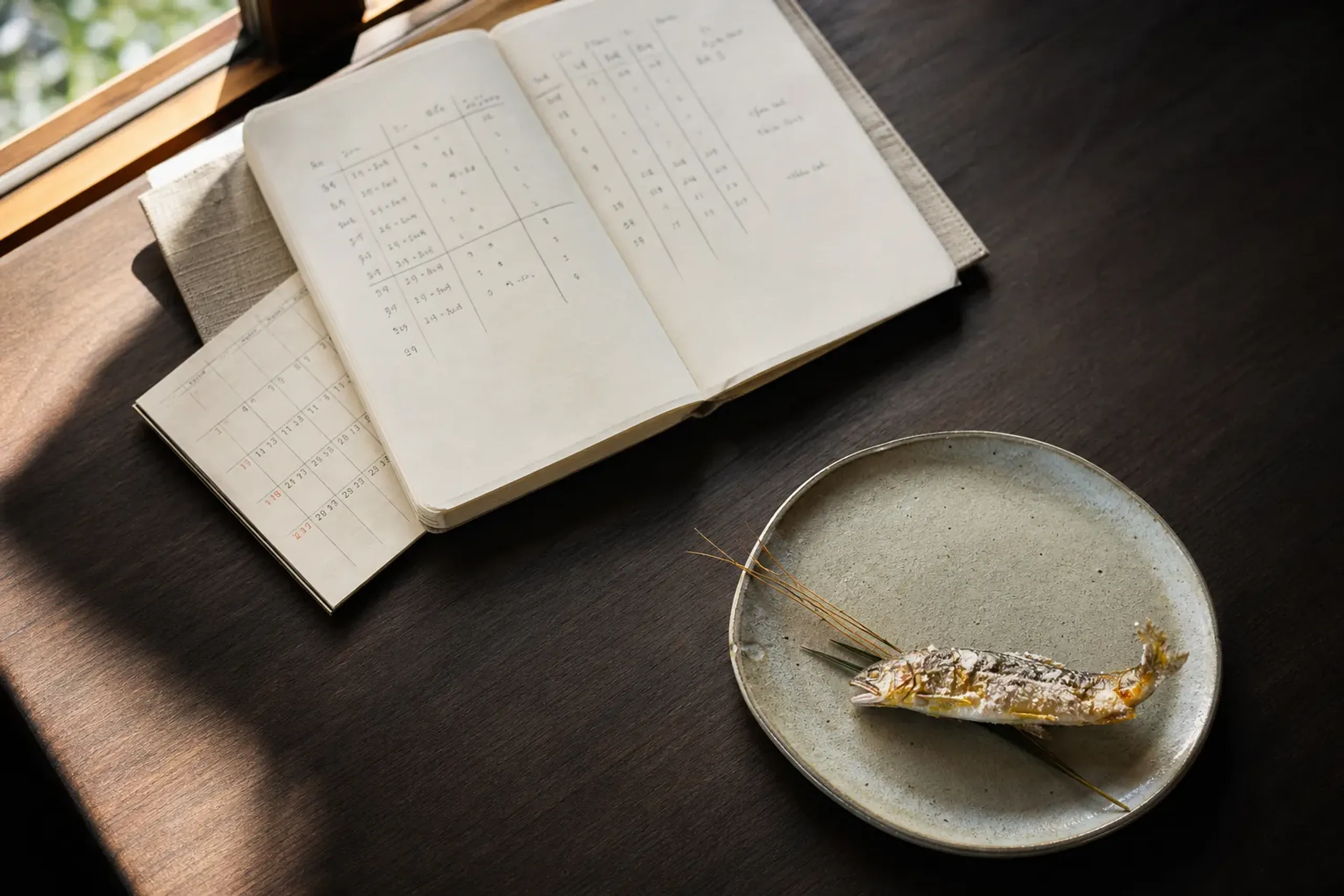
Ukai rewards planning: the right night, the right timing, the right meal strategy.
Luxury travelers do not need more hype. They need clean differences, stated plainly, so they can choose without regret. Here is the comparison our concierge team at Japan Royal Service uses as a starting frame.
| Detail | Nagara River (Gifu City) | Uji River (Uji, Kyoto Prefecture) |
|---|---|---|
| 2026 Season Window | Daily May 11–Oct 15, 2026; closed Sept 24, 2026; weather/river cancellations possible | July–September (except Wednesdays) |
| Start Time | Around 7:45pm (may vary) | 19:00 (18:30 in September) |
| Ticketing / Reservations | Check in and get tickets day-of at the Cormorant Fishing Sightseeing Boat Office (1-2 Minato-machi, Gifu City) | Tickets purchased at the venue; advance reservations not possible (per Japan-guide) |
| Defining Feature | Covered viewing boats shadow fishing boats; finale includes So-garami lineup (as described by local operator) | Rope-less “free cormorant fishing” style (as described by Kansai Guide) |
If your goal is a dinner narrative built around ayu and a longer season with more date flexibility, Gifu is usually the cleaner answer. If your goal is a Kyoto-area summer evening with a distinct method and a compact program, Uji can be the sharper fit.
Kaiseki On Ukai Nights: How The Best Evenings Actually Flow
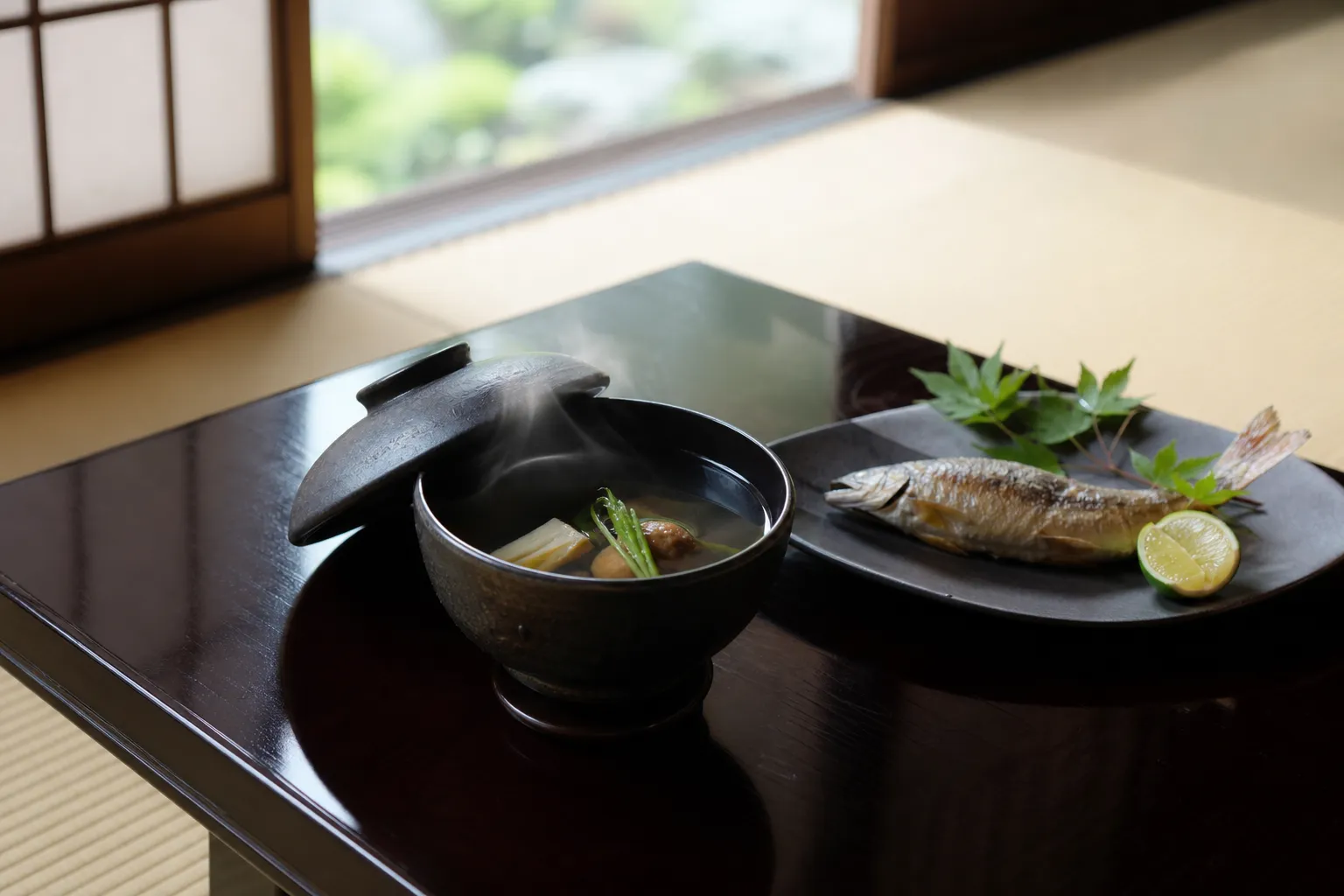
The best ukai nights feel paced, not packed—dinner first, river second.
The ukai experience can be rushed. It can also feel like a ritual. The difference is pacing and proximity.
In our experience, the strongest ukai nights start with an early check-in at a riverside base, followed by a quiet interval—time to change, to breathe, to let the day’s heat fall away. Then dinner appears in courses that respect summer: lighter textures, clean broth, grilled elements that echo the torchfire you’ll see later.
When you finish, you board without drama. No sprinting. No bargaining with a taxi line. That is the invisible luxury HNW travelers appreciate most.
What “Private” Means Here (And What It Doesn’t)
Ukai involves public traditions, regulated operations, and fixed departure times. So “private” usually means something specific: a chartered boat option, a dedicated dining format, or a stay with direct access that reduces public friction. It does not mean rewriting rules on the river.
Discretion matters anyway. Our team at Japan Royal Service plans with low visibility in mind: quiet arrivals, conservative timing, and an itinerary that does not advertise itself to strangers.
How To Book Ukai In 2026 (Official Methods, No Guessing)
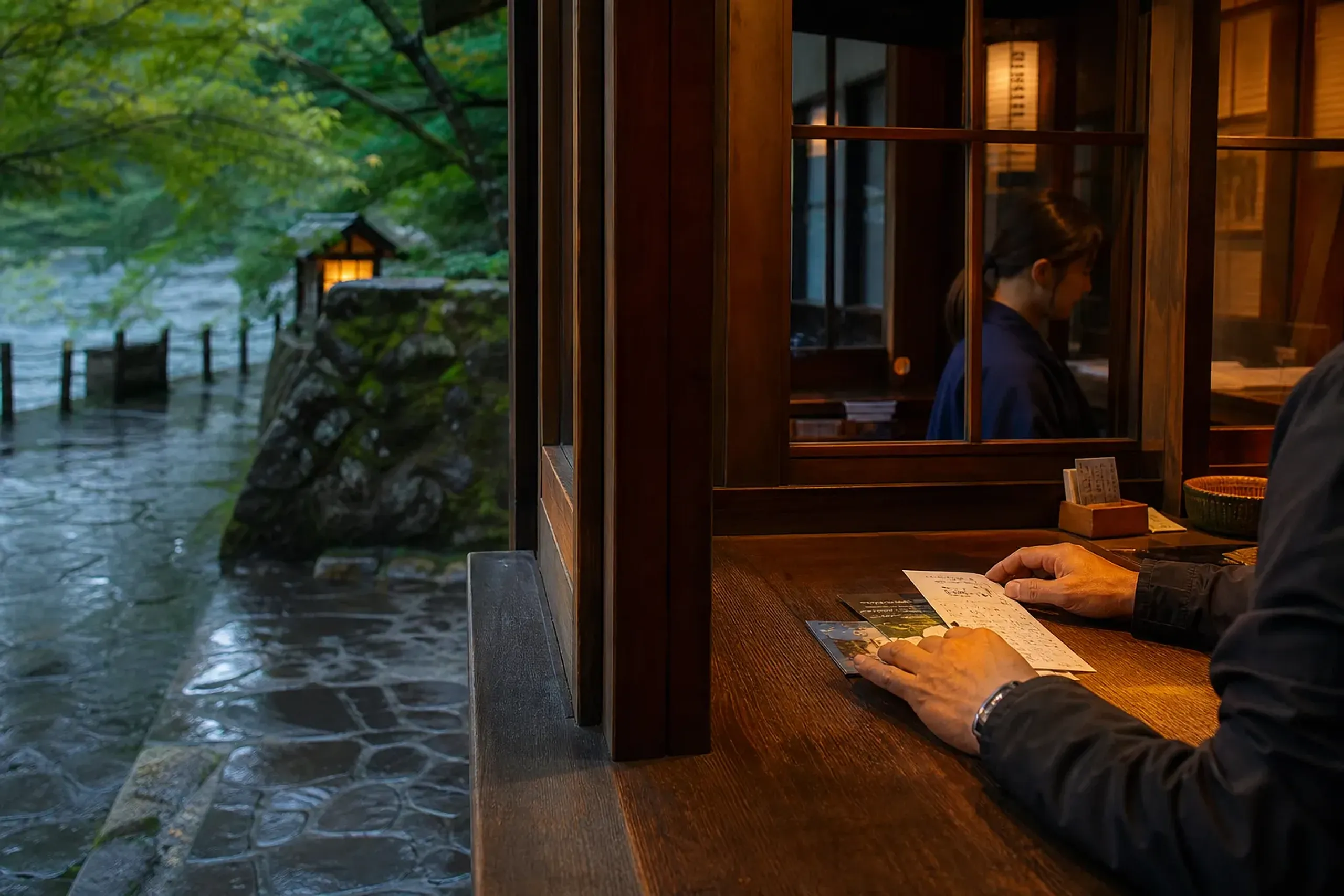
Ukai planning falls into two buckets: Gifu’s Nagara River operations, and Uji’s simpler, day-of ticketing approach. Each has rules you should respect.
Nagara River (Gifu City): Day-Of Check-In Is Officially Stated
Gifu City’s official guidance (English) says visitors check in and receive tickets on the day of the tour at the Cormorant Fishing Sightseeing Boat Office. The address is 1-2 Minato-machi, Gifu City.
Because weather and river levels can cancel ukai, build in a buffer night if the experience is central to your trip. One night only is fragile. Two nights gives you room to breathe.
Uji River: Tickets On Site, No Advance Reservations
Japan-guide states that Uji River ukai tickets are purchased at the venue, cost 2,700 yen, and that advance reservations are not possible. Departures are at 19:00 (or 18:30 in September), and the program lasts about an hour.
If you dislike uncertainty, treat Uji as a flexible evening rather than the hinge of your whole Kyoto schedule. For questions, contact our concierge.
Designing A Food-First Ukai Itinerary: Three Quiet Ways To Do It
Most travelers bolt ukai onto a packed route. That’s how you end up eating whatever is near the dock. Regret follows.
Below are three itinerary shapes we often discuss at Japan Royal Service. They respect the heat, the river, and the appetite.
Option A: Gifu Overnight For Kaiseki Depth
This is the classic “food leads” approach. You stay riverside, you eat well, you board calmly.
- Best for: HNW travelers who want a coherent evening without long transfers.
- Why it works: Dinner and ukai are naturally paired through ryokan packages (as described by Japan-guide and Nagaragawa Onsen sources).
- What to watch: Weather cancellations; consider a second night if ukai is the main goal.
Option B: Uji Evening As A Kyoto Add-On (Light Meal Strategy)
Uji can be elegant when you don’t over-engineer it. Keep the meal lighter, protect your schedule, and let tea culture carry the next day.
- Best for: Kyoto-based travelers who want one summer night with a distinct tradition.
- Operational constraint: Tickets are purchased on site; advance reservations are not possible (per Japan-guide).
Option C: A Two-River Gourmet Circuit For Repeat Visitors
If you’ve already done the Golden Route and you want Japan to feel surprising again, a two-river circuit can work: Gifu for the longer-season firelit scale, then Uji for the rope-less method and a different tempo.
This is where “Hidden Japan” becomes practical rather than poetic. You move for a reason: technique, taste, and atmosphere. Not ticking boxes.
Shokunin, Not Souvenirs: The Craft Behind The Firelight
Ukai is not only fishing. It is training. It is timing. It is tools handled the same way, night after night, until small errors stop showing.
That is shokunin. Not a buzzword. A way of working that respects repetition and expects humility from the viewer.
When guests ask us for cultural depth beyond the boat, our team at Japan Royal Service often suggests pairing ukai with craft experiences that match its logic: skilled hands, long apprenticeships, and a preference for quiet precision over spectacle. If you have a specific craft in mind—ceramics, lacquer, metalwork—share it with our concierge and we will shape the day around it.
FAQ: Ayu, Ukai, And Gourmet Planning
What Is Ukai In Japan?
Ukai is traditional cormorant fishing using trained birds to catch river fish such as ayu (sweetfish). It is practiced in several regions and is often viewed from sightseeing boats.
When Is Nagara River Ukai In 2026?
Visit Gifu and Japan-guide both state the Nagara River ukai season runs daily from May 11 to October 15, 2026, with an exception on September 24, 2026. Cancellations can occur due to weather or unsafe river conditions.
Where Do You Check In For Nagara River Ukai Boats?
Gifu City’s official information instructs visitors to check in and get tickets at the Cormorant Fishing Sightseeing Boat Office on the day of the tour. The address listed is 1-2 Minato-machi, Gifu City.
Can You Reserve Uji River Ukai In Advance?
No. Japan-guide states that advance reservations are not possible for Uji River ukai; tickets are purchased at the venue.
What Should I Eat On An Ukai Night?
If you want the meal to match the tradition, focus on ayu dishes and a summer-leaning kaiseki rhythm—lighter courses, grilled elements, and pairings that don’t fatigue the palate in humid weather.
Is Ukai Suitable For Families?
Many families enjoy ukai, especially when the day is paced gently and the evening is not rushed. If you are traveling with children, plan for heat, late timing, and the possibility of weather changes.
Why Choose Japan Royal Service
Luxury travelers usually don’t need “more options.” They need the right sequence, handled discreetly, with a clear culinary point of view. Our team at Japan Royal Service builds ukai evenings around food first—ayu season logic, calm transportation, and dining formats that let the river and the kitchen speak in the same register.
We also take privacy seriously. Discretion is not an add-on for us; it is the planning baseline, from itinerary visibility to how your evenings are paced.
For private coordination, reach our team privately via WhatsApp or LINE, or at our contact page.