In this guide
Bandoko Garden (Bandokō Teien)
Wakayama Prefecture is home to many sites connected to the Kishū Tokugawa family, a branch of the formerly ruling Tokugawa clan. One such place is Bandoko Garden, located atop a cape that juts into Wakaura Bay in Saikazaki, Wakayama City.
The cape was once a lookout station (bandokō) of the Kishū Domain, keeping watch over the sea. Today, the site’s beautiful Japanese garden makes the most of the dramatic landscape and is not to be missed.
Nearby, you can also visit destinations that reflect the prosperity of the Kishū Tokugawa family, including the family villa Yōsuien, Kimiidera Temple—where the family prayed for continued success—and the lavish Kishū Tōshō-gū Shrine.
General Information
- Address: Bandokoro-no-hana, Saikazaki, Wakayama-shi, Wakayama
- Telephone: 073-433-8118
- Opening hours:
- April–August: 09:00–18:00
- September–March: 08:00–17:00
- Admission:
- Adults: ¥600
- Children: ¥300
Ease of Access
- Approximately 30 minutes by car from Wakayama-minami Smart IC on the Hanwa Expressway.
- From Wakayamashi Station (Nankai Railway) or JR Wakayama Station, take a bus for approximately 30 minutes, get off at Saikazaki Yuen bus stop, then walk approximately 15 minutes.
Bandoko Garden
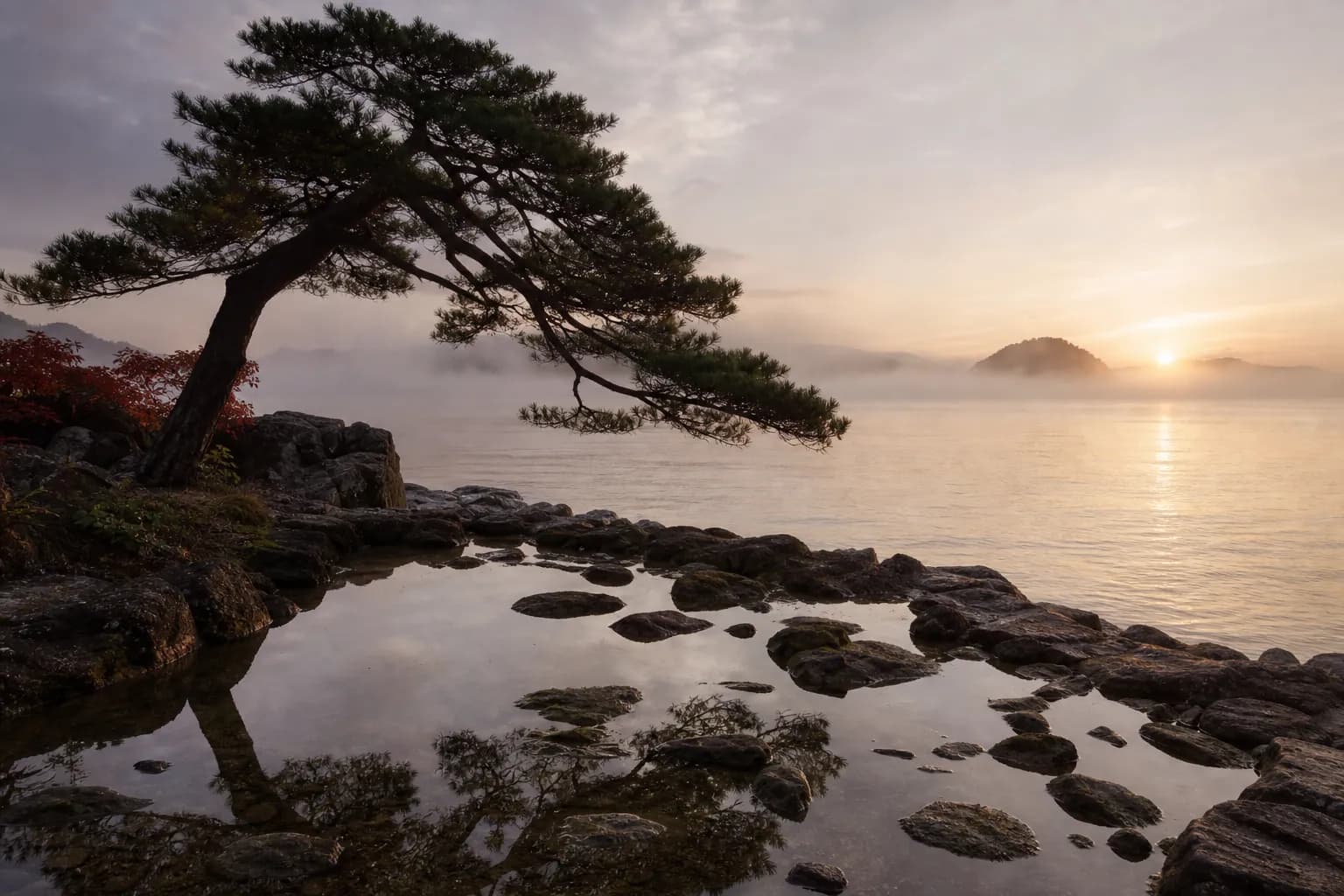
Bandoko Garden is built on a distinctive landform known as the “Nose of Bandoko,” a long, flat cape extending out into the sea.
After the arrival of the American fleet in Japan in 1853—known as the Kurofune (Black Ships)—the Kishū Domain became fully engaged in coastal defense. Among several long-distance lookout stations established at the time, Bandoko Garden served an important role as the post closest to Wakayama Castle.
A very rare Japanese garden surrounded by the sea on all sides, Bandoko Garden also offers magnificent views: an expansive, vivid green lawn set against the blue ocean and sky. The area also offers beach swimming, sea fishing, and barbecues.
Yōsuien
Created by Tokugawa Harutomi, the 10th lord of the Kishū Domain, Yōsuien is a vast daimyo garden covering 30,000 square meters.
Its pond draws in seawater—an extremely rare feature in Japan. The eastern side of the garden is composed in a simple, linear style inspired by West Lake in China, while the western side follows a more traditional Japanese approach with rounded lines. Together, they create a fusion of Japanese and Chinese garden design.
The sukiya-zukuri architecture of Yōsui-tei and the Omotesenke tea room further enrich the refined atmosphere, complemented by seasonal blooms such as water irises and hydrangeas.
Kimiidera Temple
For generations, the lords of the Kishū Domain prayed for prosperity at Kimiidera Temple. It is also known as the second stop on the Saigoku Kannon Pilgrimage, a route of 33 temples across the Kansai region.
Passing through the Rōmon Gate, you may be struck by the 231 stone steps that appear ahead. Make the climb to the top and you will be rewarded with sweeping views over Wakaura Bay, including Bandoko Garden and Yōsuien.
The Rokkakudō, a hexagonal hall, is said to embody the steadfast spirit of the Saigoku pilgrimage itself and draws many worshippers. The temple is also famous for its early-blooming cherry blossoms, which herald the start of cherry blossom season in the Kansai region.
Kishū Tōshō-gū Shrine
This opulent shrine was established by Tokugawa Yorinobu, the first lord of the Kishū Domain. It enshrines both Yorinobu himself and the warlord Tokugawa Ieyasu, founder of the Tokugawa shogunate, and the Tokugawa family crest can be seen throughout the grounds.
At the top of the stone steps stands a vermilion-lacquered Rōmon Gate, said to be the only one of its kind in the Kansai region. The main hall and worship hall are richly adorned with brilliantly colored carvings, earning the shrine the nickname “Nikkō of Kansai.”
The Wakamatsuri Festival, held every May, features men in white garments carrying a portable shrine down the stone steps, along with a colorful procession of traditional performances.
Social Media
- Website: https://www.banndoko.com/
- Instagram: https://www.instagram.com/explore/locations/655112761193544/