In this guide
- 01Why Toyosu Feels “Restricted” (Because It Is)
- 02Predawn Arrival: The Market Before Tokyo Wakes
- 03Behind The Glass: Reading The Tuna Auction Like A Buyer
- 04Through The Wholesalers’ Aisles: The Hidden Japan Inside A Modern Building
- 05From Auction To Table: Toro And Uni, Hours Earlier Than The City
- 06What This Private Toyosu Morning Typically Includes
- 07Seasonality: When Toyosu’s Bluefin Story Feels Sharpest
- 08How The Official Observation Lottery Works (And What To Do If You’re Not Selected)
- 09Common Mistakes We See (And How To Avoid Them)
- 10A Private Morning That Still Respects Tokyo’s Rules
- 11FAQ: Toyosu Tuna Auction Viewing For Luxury Travelers
- 12Why Choose Japan Royal Service
The taxis thin out as Tokyo sleeps. Then Koto City appears—industrial, waterfront, bluntly modern—and Toyosu Market starts to glow under fluorescent light.
It is not romantic. It is precise. And at this hour, it is a closed world that most visitors only watch through glass.
Our team at Japan Royal Service plans mornings like this for travelers who don’t want a loud checklist. They want context, access within the rules, and the quiet thrill of standing close enough to feel the cold air roll off rows of frozen bluefin.
Why Toyosu Feels “Restricted” (Because It Is)
Toyosu Market is Tokyo’s Metropolitan Central Wholesale Market in Koto City. It is built for food safety, speed, and professional work—not strolling.
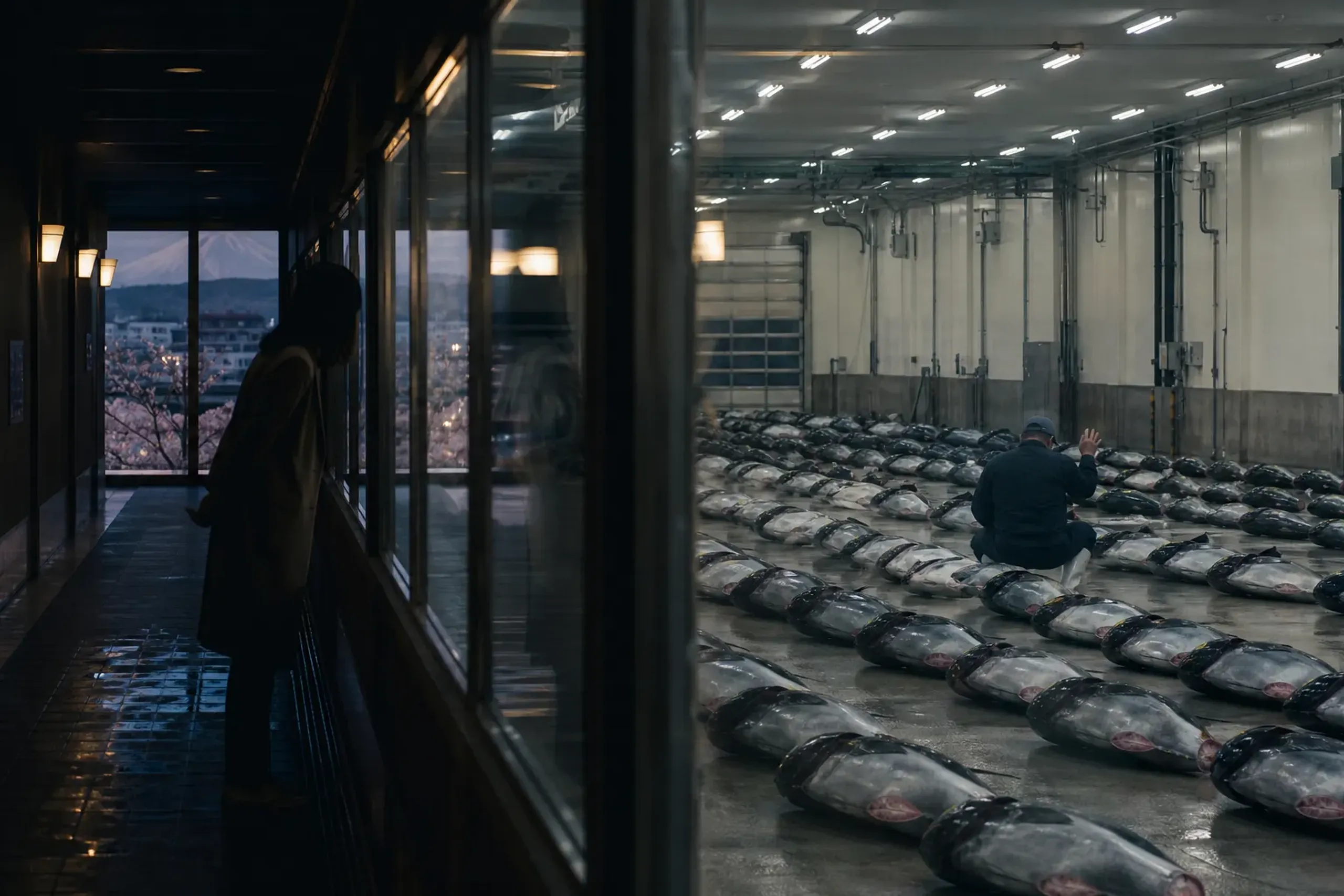
That design is the first lesson. The auctions happen in enclosed halls, and public viewing is typically from designated observation corridors and decks, often separated by glass.
So yes, “restricted” is real. Market-floor access is limited, and the default visitor experience is watching the theater at a distance—unless you plan with exceptional care and follow the official routes and procedures.
Key fact: Toyosu’s public visitor experience is designed around observation areas; the market floor is generally not open to the public and is used by licensed professionals.
Predawn Arrival: The Market Before Tokyo Wakes
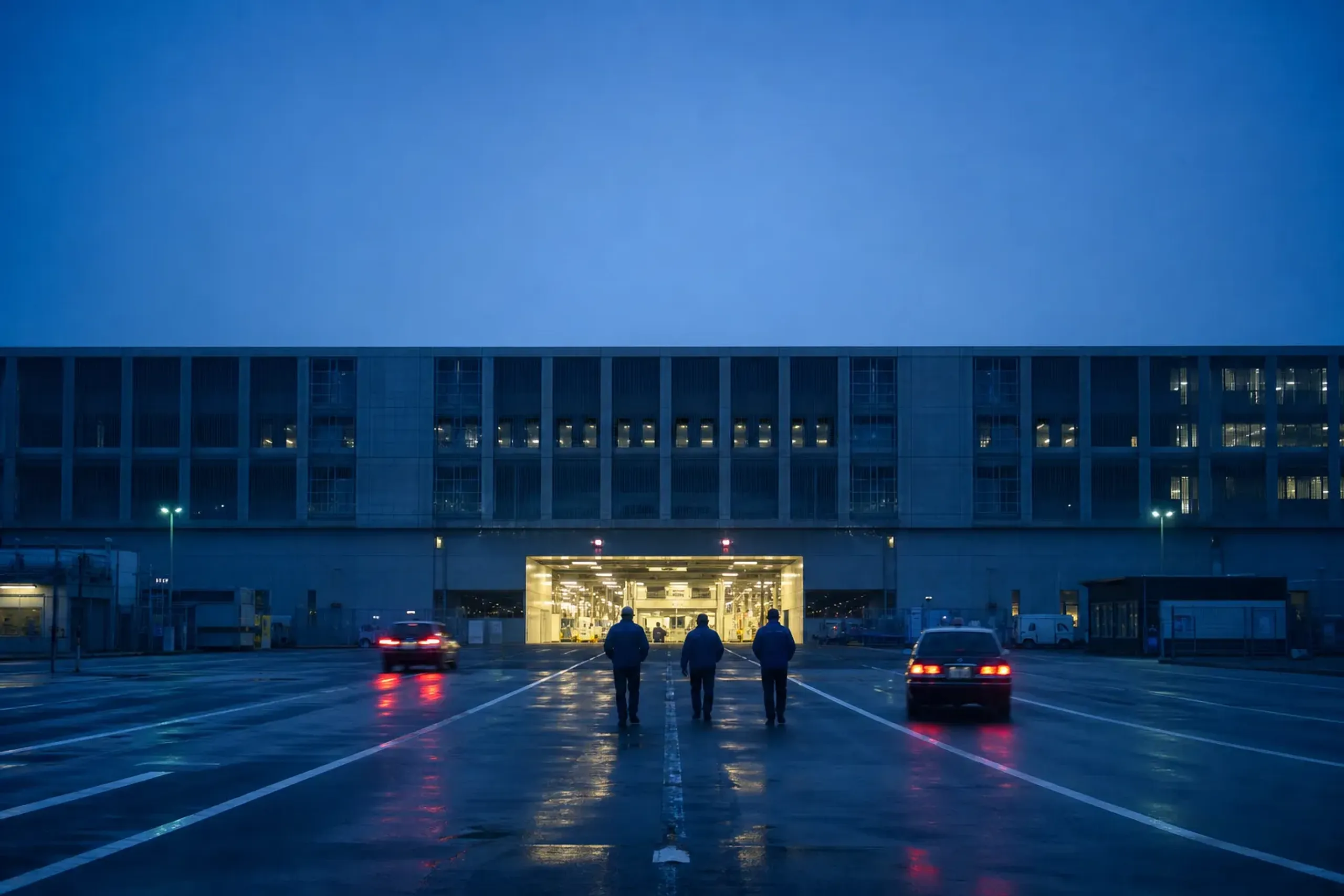
Toyosu is at its clearest before Tokyo wakes.
The mood is different before sunrise. Quieter. Watchful.
We time arrival for the reality of Toyosu, not for a social-media fantasy, because the early hours are when the choreography is most legible: forklifts gliding, workers in rubber boots, and buyers moving with the calm of people who have done this for decades.
For HNW travelers, this is the pivot point. If you arrive too late, the market becomes a museum. If you arrive too early without a plan, you end up wandering corridors without understanding what matters.
What You Should Notice In The First Five Minutes
Temperature control, for one. The air is clipped and cold, tuned for seafood rather than comfort.
Then the soundscape. Low voices, rolling carts, and the occasional metallic clack that makes you glance up.
Our concierge team often frames this moment as a kind of wabi-sabi introduction to Tokyo: not polished spectacle, but honest work—clean floors, bright light, and small human signals that decide where a prized fish will land by noon.
Behind The Glass: Reading The Tuna Auction Like A Buyer
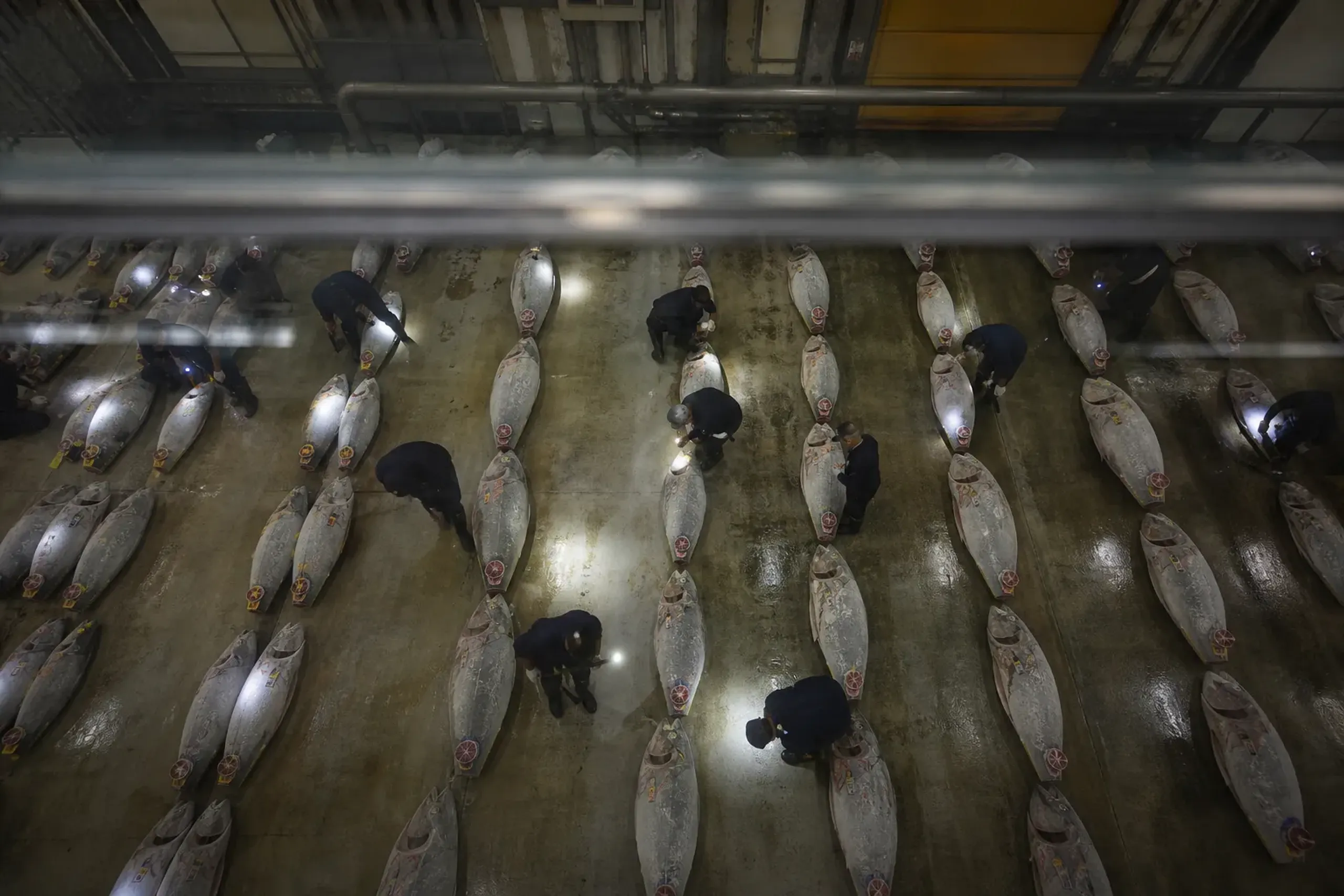
The glass is real—so is the drama on the floor.
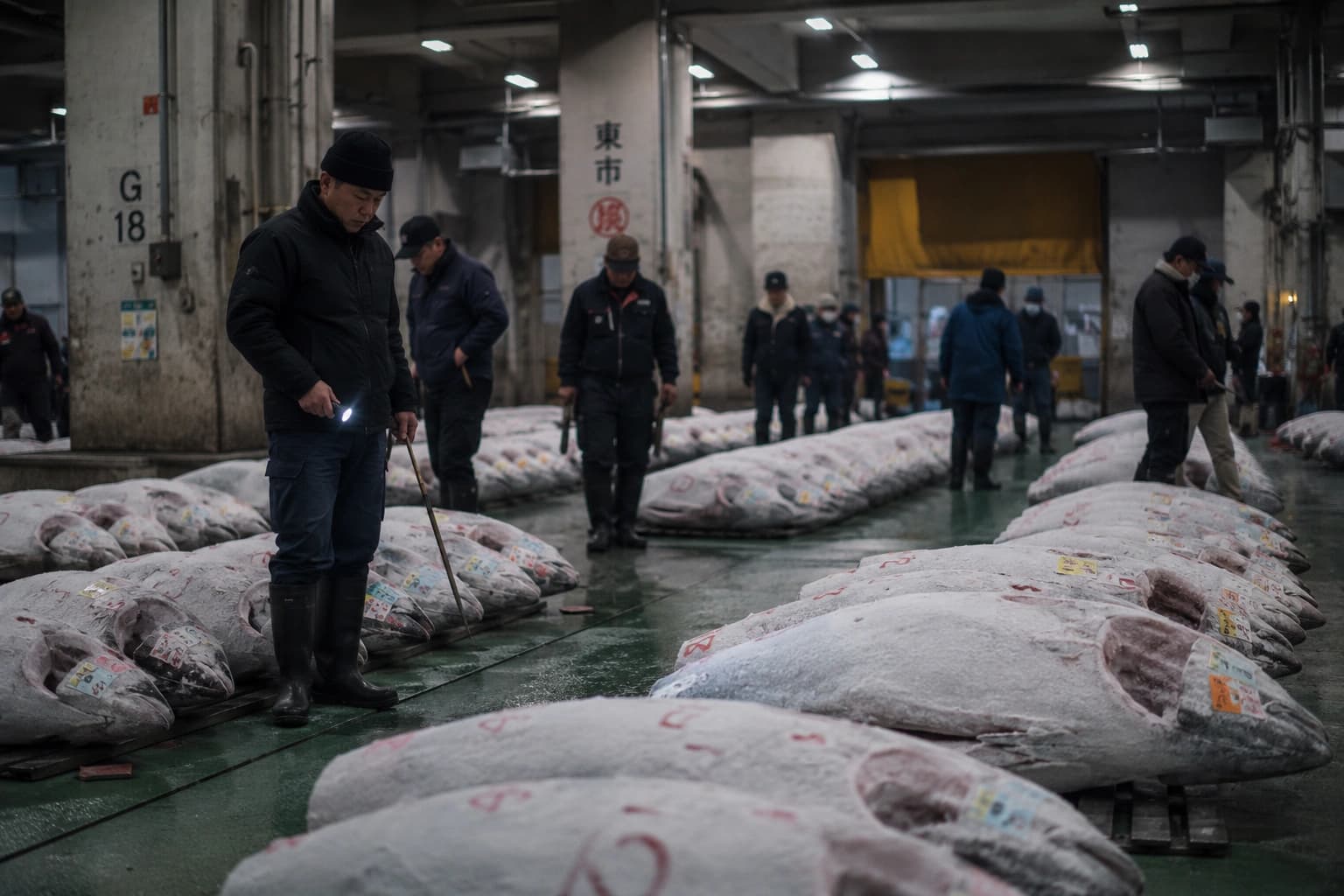
The famous image is simple: men in jackets, flashlights in hand, studying frozen bodies lined in rows. The less-famous truth is that every movement has meaning.
Public visitors typically view the tuna auction from glass-walled platforms or walkways. You can still learn a great deal from there—if you know what to look for.
We structure the viewing like a masterclass. Not a rush. A slow decode.
The Bell, The Signals, The Stakes
The auction atmosphere can feel surprisingly restrained. No cheering. No drama.
And yet the stakes are real. On January 5, 2026, a 234-kg bluefin tuna from Ōma in Aomori Prefecture sold for JPY 510.3 million at Toyosu’s first auction of the year—a record widely reported and recognized by Guinness World Records.
That single number changes how you watch the room. You start noticing how quickly decisions are made, how buyers hold their bodies, and how little needs to be said when everyone speaks the same professional language.
The “Restricted Floor” Payoff—Without The Fiction
Here is where many luxury travel pages get sloppy. Big mistake.
Toyosu’s auction spaces are working areas, and access is limited. On public pages, Japan Royal Service does not claim to break rules or guarantee entry to professional-only zones.
What we can do—quietly, case-by-case—is design an experience that brings you as close as the official frameworks allow, prioritizing the best observation position and timing, and pairing it with expert interpretation and a follow-on table where the morning’s logic becomes edible.
Through The Wholesalers’ Aisles: The Hidden Japan Inside A Modern Building
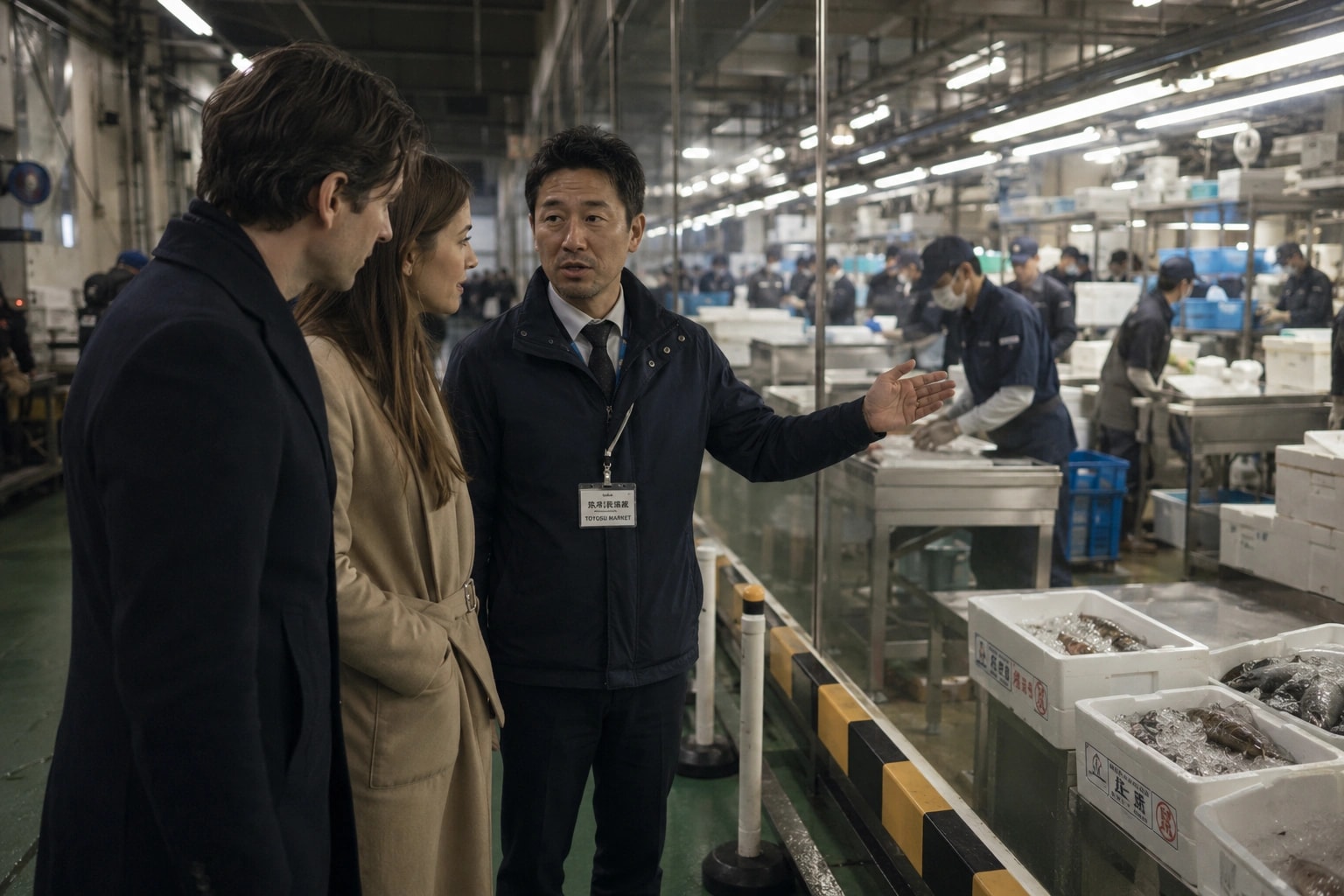
A working city of seafood—fast, clean, and tightly organized.
After the auction viewing, Toyosu reveals its second face. Less theatrical. More useful.
Beyond the headline moment, the market is an ecosystem of intermediate wholesalers and vendors moving product with practiced efficiency. Visitors are guided through designated routes, and some business areas are not open for entry.
Still, there is a “hidden Japan” feeling here, even in a contemporary facility: you are watching a supply chain that feeds Tokyo’s serious counters, long before the city’s lunch reservations begin.
What Makes This Segment Worth It For HNW Travelers
It’s not about taking more photos. It’s about comprehension.
When you walk Toyosu with the right guidance, you begin to see how Tokyo thinks: cleanliness as culture, repetition as skill, and shokunin-level attention applied not only to chefs, but to the people who grade, move, and protect ingredients.
This is also where discretion matters. Our team keeps your pace calm, avoids crowd pinch-points, and favors low-friction movement so the morning feels private even in a public place.
From Auction To Table: Toro And Uni, Hours Earlier Than The City
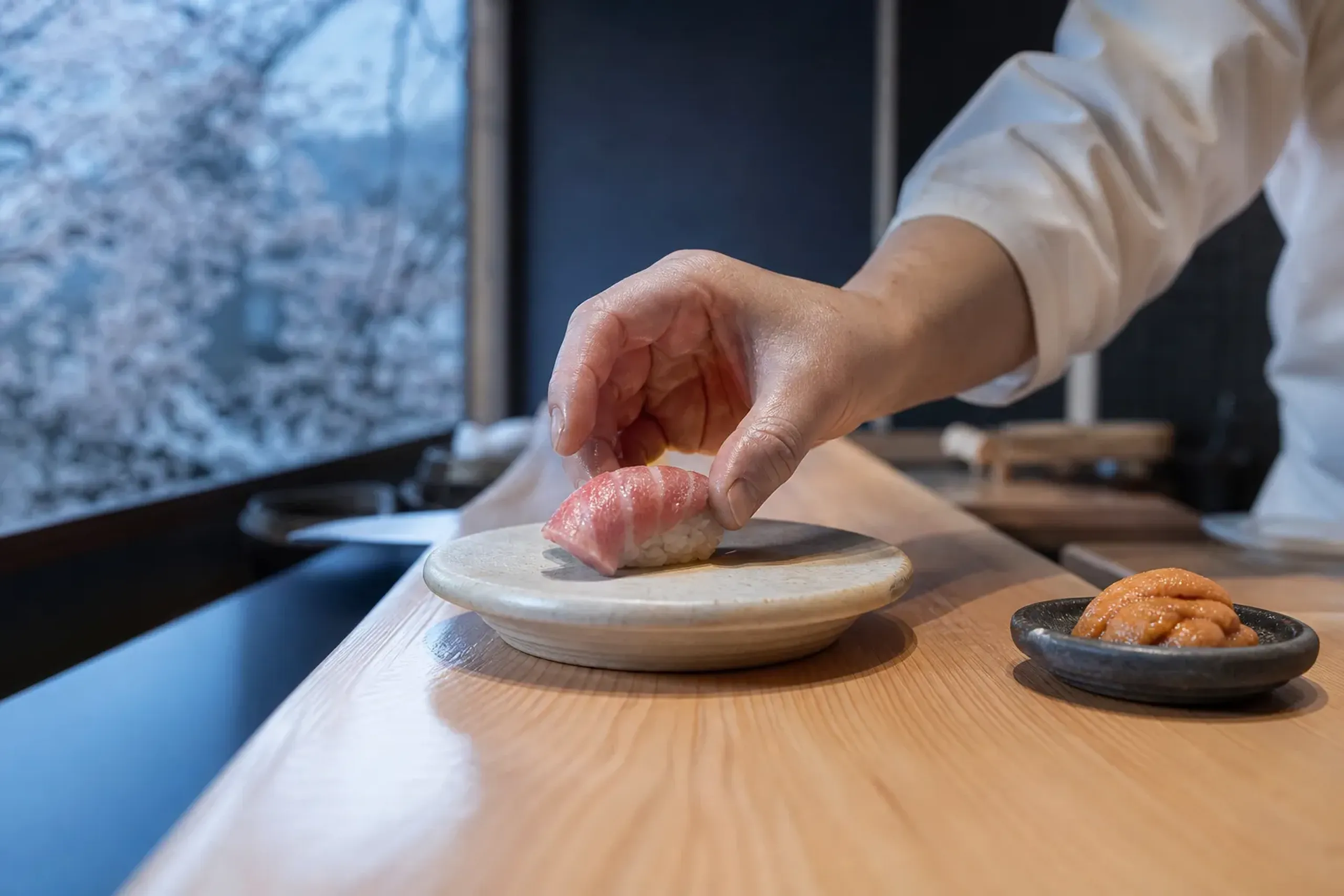
The morning’s lesson becomes taste—clean, immediate, and calm.
After Toyosu, most travelers do the same thing. They search “best sushi near Toyosu,” stand in line, and call it a win.
We prefer a cleaner arc. A table that makes sense after a predawn market—quiet seating, sharp handling, and a menu that respects what you just witnessed.
We also keep the language precise: Toyosu is the source of distribution, not a guarantee that a particular bite came from a particular fish you saw. The value is immediacy and education, paired with the right setting.
Two Calm Ways To Finish The Morning
Option A: Sushi Breakfast After The Observation
A simple, early meal can be the right choice. Especially if your day continues into museums or meetings.
- Best for: travelers who want clarity and pace.
- Texture: clean cuts, warm rice, quick but not rushed.
- What we add: a guided “what you’re eating” lens—species, handling, and why certain pieces are prized.
Option B: A Later Counter In Central Tokyo
Some guests prefer to let the market be the morning, then reset, then dine in a calmer, more formal setting later.
- Best for: travelers who value atmosphere and a longer conversation with the chef.
- Texture: slower rhythm, more narrative, a better match for celebratory travel.
- What we add: timing logic—so you avoid the day’s noisy edges and arrive composed.
What This Private Toyosu Morning Typically Includes
Luxury travelers deserve plain facts. No fog.
Toyosu’s official visitor guidance indicates facility visits are generally available during set hours, with tour-area guidance often referenced as 5:00 to 17:00, and tuna-auction viewing options that may involve advance application and lottery when demand is high.
With Japan Royal Service, the point is not to sell a generic “tour.” We build a tailored plan around the official structure, your jet lag, and the kind of morning you actually want to remember.
- Start time: predawn—commonly around the early morning window when auction activity can be observed (timing varies by day and official procedures).
- Core experience: tuna auction viewing from designated observation areas, with guided interpretation of what you are seeing.
- Market arc: a structured walk through allowed visitor routes to understand how seafood moves through Toyosu.
- Follow-on table: a curated sushi or seafood meal plan designed around your schedule and appetite.
The finishing touch is not a ribbon. It’s transport.
For many HNW guests, a chauffeured departure is what keeps the morning elegant after a cold, early start. Our private transportation guidance focuses on quiet arrivals, clean timing, and a cabin that lets you warm up and reset.
Seasonality: When Toyosu’s Bluefin Story Feels Sharpest
In Japan, seafood has seasons, and bluefin is no exception. That said, we avoid overpromising a single “best month” on a public page, because sourcing and auction highlights shift with weather, quotas, and market realities.
The cleanest, verified anchor for planning right now is the New Year auction moment—especially after the January 5, 2026 record price. That event reminds travelers why Toyosu matters culturally, not only gastronomically.
If you want the most rewarding version of the morning, we suggest thinking in terms of conditions, not hype: colder air, earlier starts, fewer casual visitors, and an appetite for a serious, working Tokyo.
How The Official Observation Lottery Works (And What To Do If You’re Not Selected)
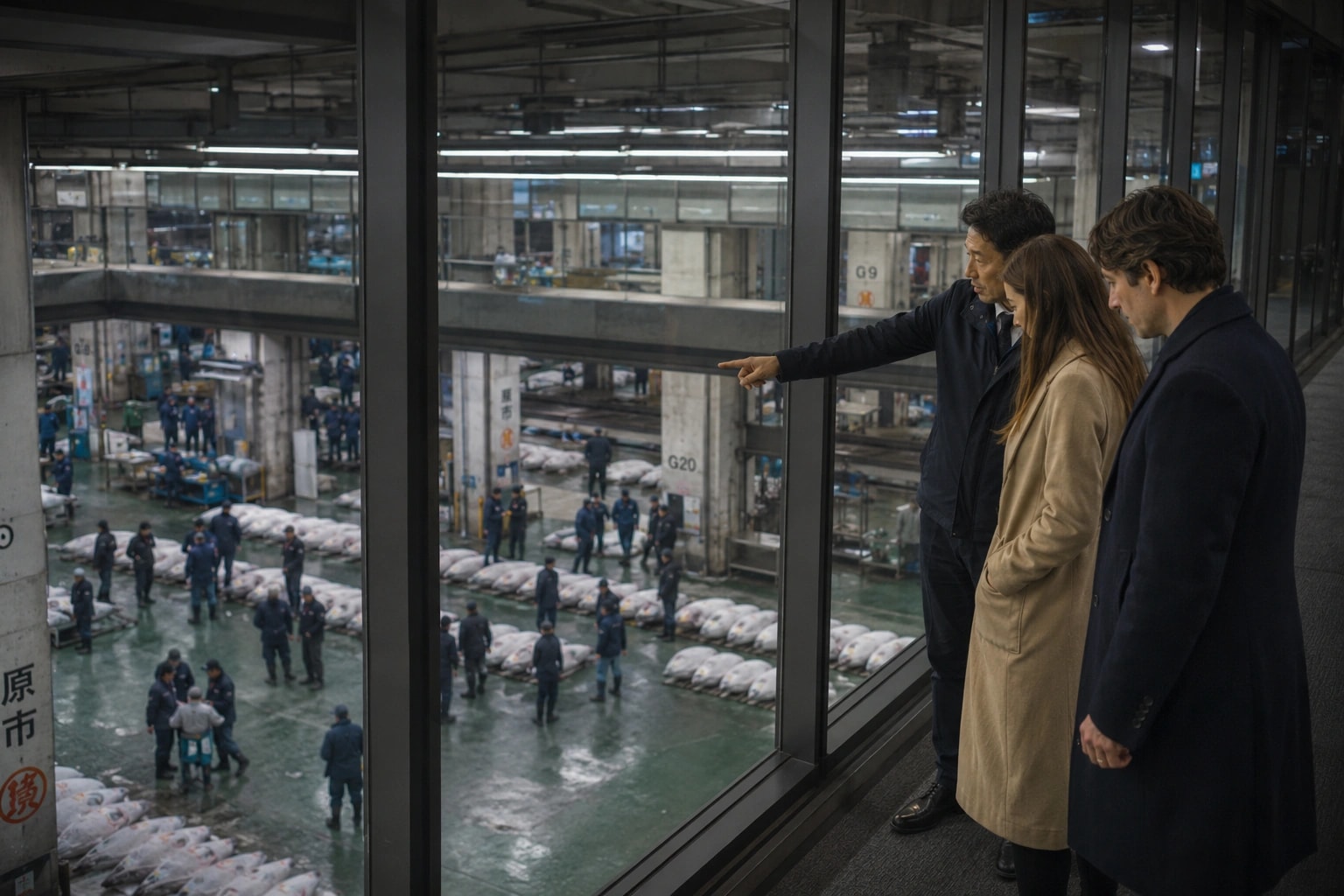
Toyosu rewards planning: timing, process, and a quiet schedule.
This is the part most blogs skip. They shouldn’t.
The Tokyo Metropolitan Government provides official information indicating that the tuna auction observation deck accepts public applications for a tour, and that participants may be chosen by lottery when applicants are numerous. If you are not selected, you can still view auctions from the visitors’ walkway.
Booking Method (Official, Public Information)
- Where applications are handled: through the official Tokyo Metropolitan Government process described in their public documentation.
- How selection works: lottery/raffle when demand exceeds capacity.
- If you don’t win: use the visitor walkway/observation areas; you can still watch and learn a great deal.
- Practical note: set your alarm and plan transportation in advance; the early start is non-negotiable.
For questions about how to fit the official options into a high-comfort itinerary, contact our concierge.
Common Mistakes We See (And How To Avoid Them)
People assume Toyosu works like Tsukiji did. It doesn’t.
Toyosu is enclosed and controlled, with glass-partitioned viewing by design. If you arrive expecting to wander onto a work floor, you’ll feel disappointed—even if you technically “saw the auction.”
Our approach is to make the glass an advantage: a clean sightline, a quieter vantage, and a framework that helps you understand why one fish is glanced at and another is studied like a manuscript.
A Short Checklist Before You Commit To The Early Wake-Up
- Dress: layers; the halls are cold.
- Mindset: you are watching professionals at work. Keep movement calm.
- Schedule: leave space after the market; a rushed morning collapses the experience.
A Private Morning That Still Respects Tokyo’s Rules
Discretion is not only about privacy. It’s also about restraint.
At Japan Royal Service, we do not publish operational promises we cannot keep, and we do not sell rule-breaking as “luxury.” Our guests value access that is real, earned, and handled with an imperial-class level of etiquette.
When Toyosu is done well, it feels like stepping into Tokyo’s bloodstream for a few hours—then returning to your day with sharper taste, sharper context, and no need to announce where you’ve been.
FAQ: Toyosu Tuna Auction Viewing For Luxury Travelers
Can visitors go onto the tuna auction floor at Toyosu?
Public visitors typically view the auction from designated observation areas and walkways, often behind glass. Market-floor access is limited and generally used by licensed professionals.
Is there a way to get closer than the main observation deck?
Official visitor options can include a tuna auction observation tour that accepts applications and may use a lottery when demand is high. If you are not selected, the visitors’ walkway remains available for viewing.
What time should we arrive to see the auction?
You should plan for a predawn start. Exact timing depends on the day and official procedures, so we recommend building your schedule around the early-morning window rather than trying to “fit it in.”
Is Toyosu open during the day?
The Toyosu Market official site indicates facility visits are generally available during set hours, and their tour-area guidance references 5:00 to 17:00. Specific areas and access routes vary by building and zone.
What makes a Japan Royal Service Toyosu morning feel different?
We focus on interpretation, timing, and discretion—so the glass doesn’t feel like a barrier. It becomes a lens. For a truly tailored flow, we can also advise on the day’s follow-on dining and cultural pacing.
Why Choose Japan Royal Service
Luxury travelers come to Toyosu for “access,” then realize the real luxury is understanding. Our team at Japan Royal Service builds a tailor-made itinerary around official observation options, discreet pacing, and shokunin-level context—so your morning feels private, not packaged.
We also protect what matters most: discretion. Your identity, your schedule, and your movements stay quiet, while you step into a predawn Tokyo that most visitors only glimpse through glass.
If you would like a Toyosu morning designed around your dates and appetite, reach our team privately via WhatsApp or LINE, or contact us here.