In this guide
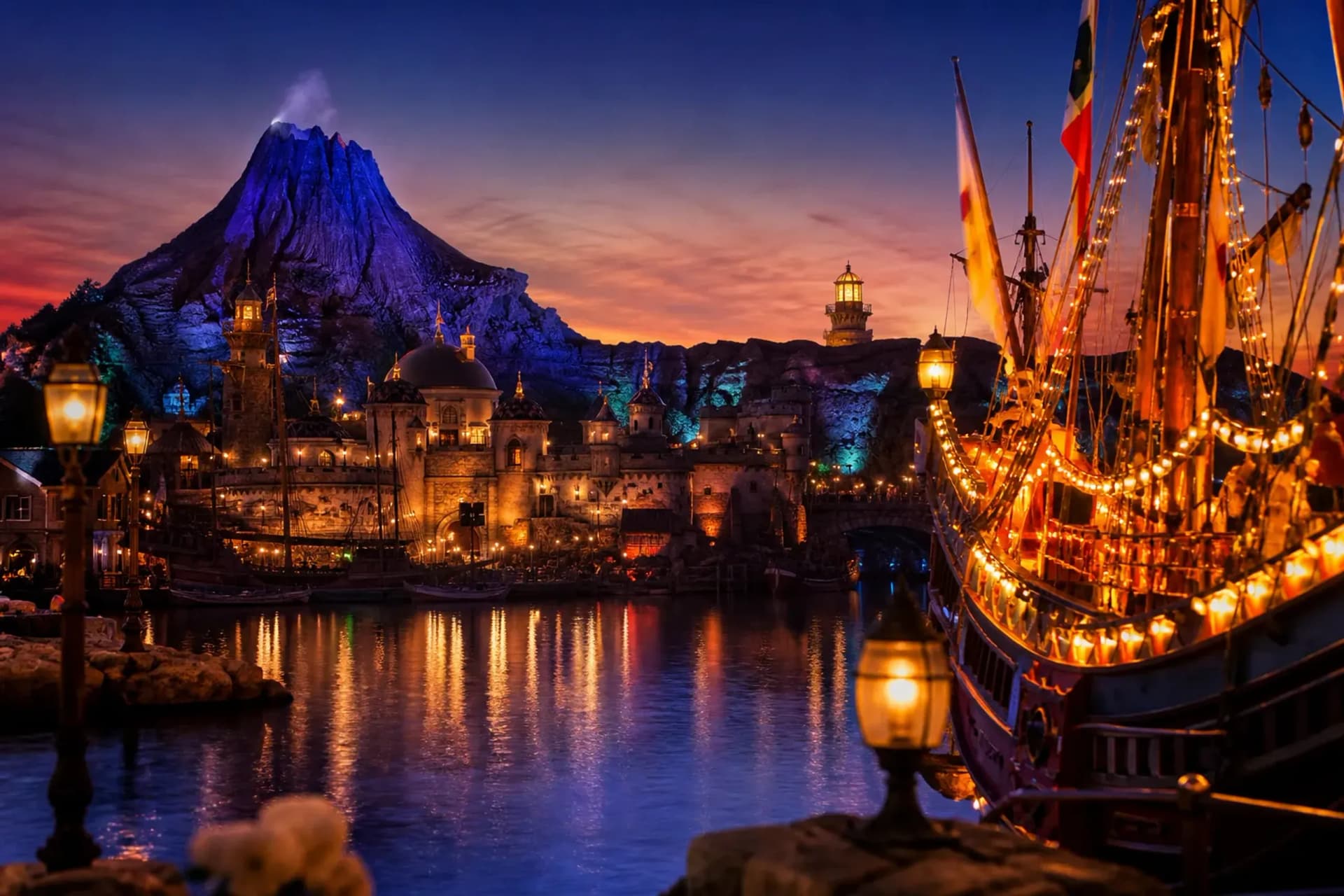
The last firework fades over Tokyo Bay. Your children are still glowing from a day that felt effortless — no queues, no crush, just the parks unfolding at their own pace. That evening, as the family settles into a quiet car and the city lights slide past, something shifts. The excitement doesn't end. It softens into something deeper.
This is the moment most itineraries get wrong. They treat a Disney day as the finish line. At Japan Royal Service, we plan it as the opening chapter — a bright, joyful start that flows into crimson maples, cedar-scented onsen, and temples lit against a November sky.
Autumn rewards travellers who plan with intention. Here is how a single family journey can hold both the thrill of the parks and the hush of Japan's finest season, without a seam showing.
Start With Disney
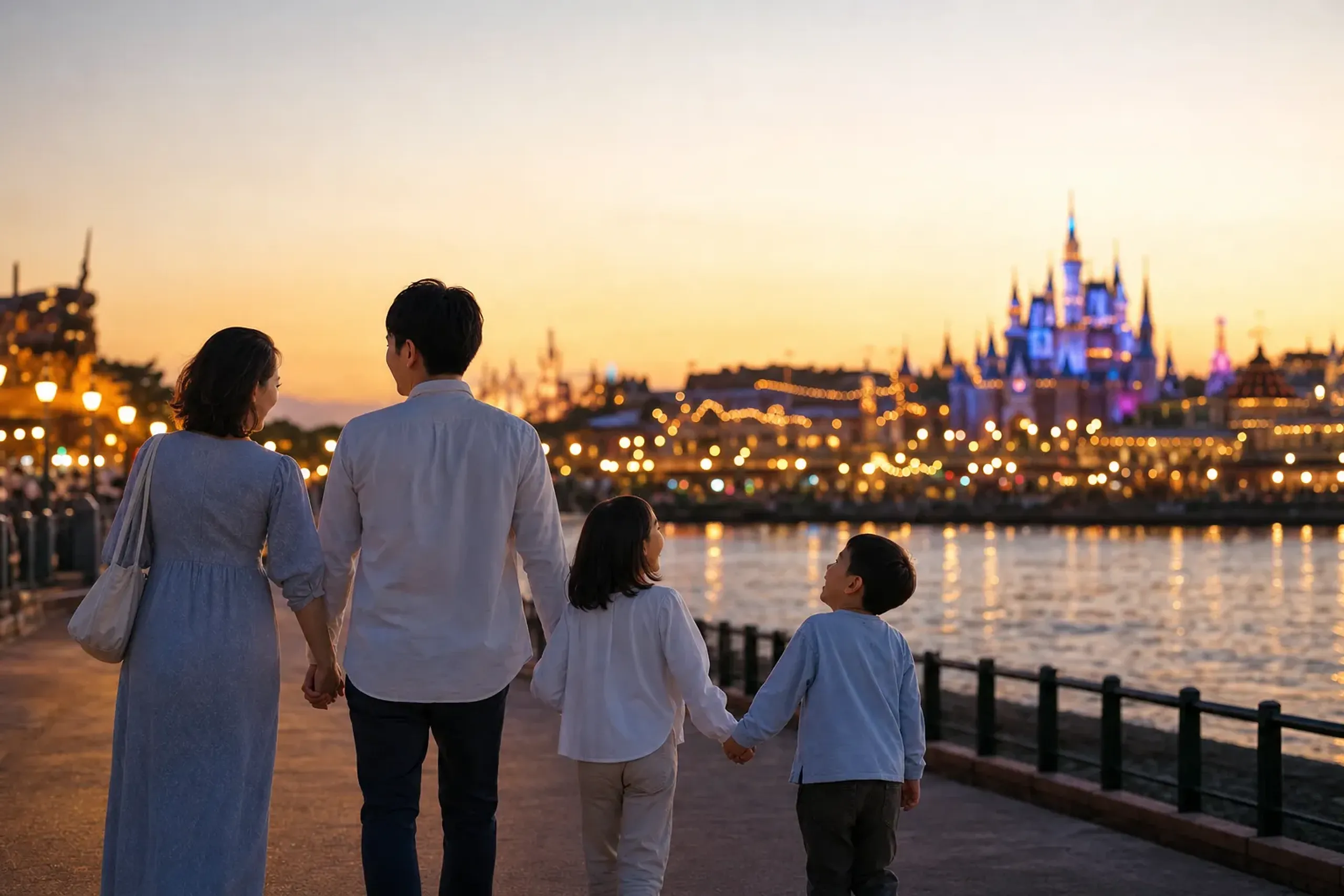
The parks make a joyful opening chapter — not the finish line — of an autumn journey.
Tokyo Disney Resort offers an official VIP Tour Service — a six-hour private tour led by a dedicated guide. Eligibility is specific: it is available to guests holding reservations for certain qualifying guest rooms.
That detail matters more than most families realise. The room decision comes first.
Key fact: The private guiding inside Tokyo Disney Resort is the resort's own VIP Tour Service, offered under its published conditions.
Our role is everything around the park day — the arrival, the recovery, the transition into the wider country.
Think of the Disney day as a self-contained highlight. What surrounds it — the private transfer to your park-side hotel, the luggage that quietly appears in your ryokan two prefectures later, the dinner reservation held for a tired but happy family — that is where a curated journey earns its keep.
Autumn In Tokyo
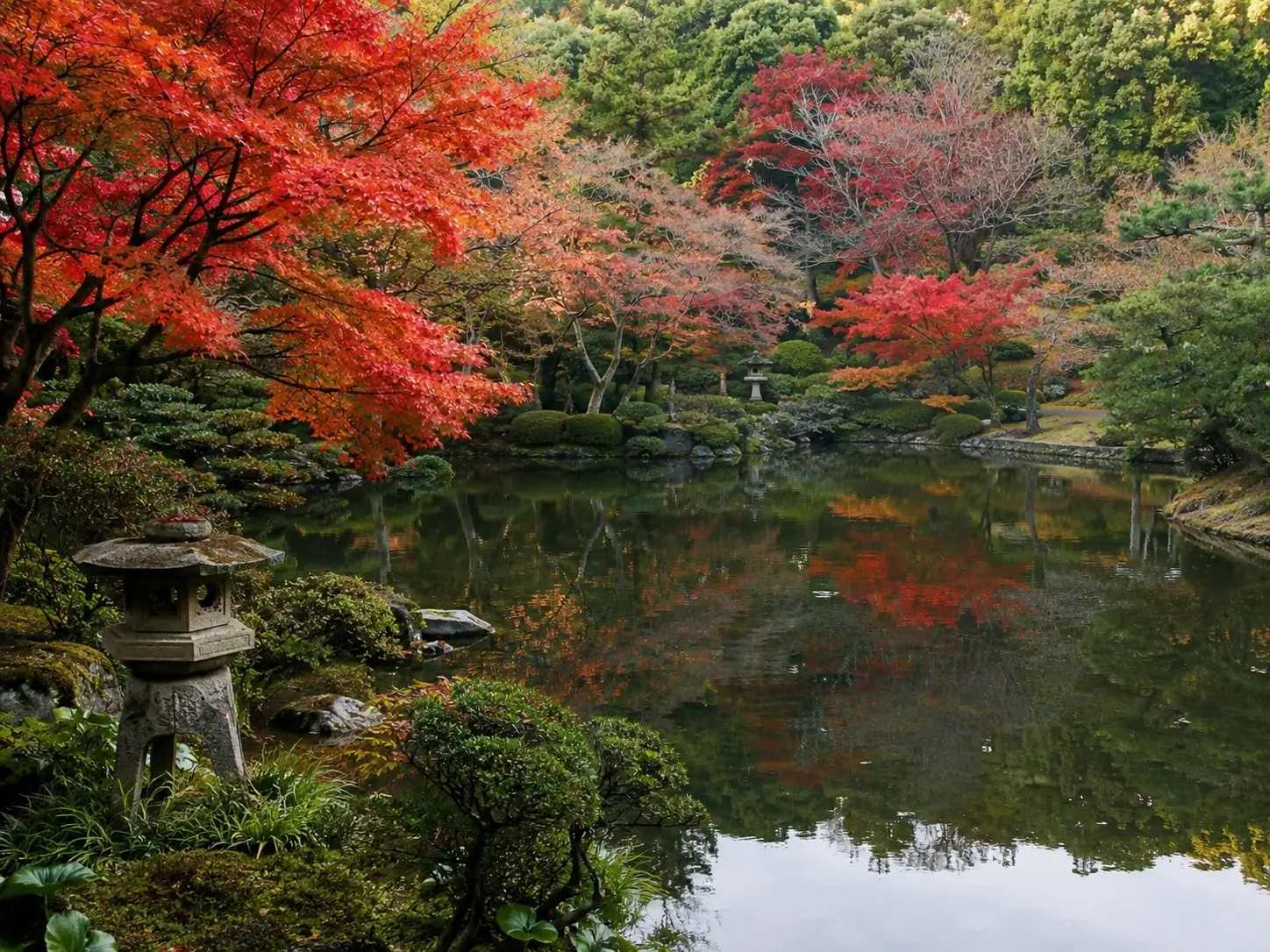
Rikugien turns molten in late November — arrive at opening and the paths are nearly yours.
Many autumn itineraries sprint straight to Kyoto. That is a mistake. Tokyo in November is a slow, gilded pleasure, and it makes an ideal palate cleanser between park adrenaline and countryside stillness.
The city's foliage arrives later than the mountains — often peaking in the final weeks of November into early December. Two gardens reward an early private start above all others.
Rikugien And Koishikawa Korakuen
Rikugien, an Edo-period strolling garden in Bunkyo, turns molten at its centre pond. Nearby Koishikawa Korakuen pairs maples with a landscape borrowed from Chinese and Japanese literary tradition. Arrive as the gates open and you have the paths nearly to yourself. Wait until midday and you share them with the world.
teamLab Borderless At Azabudai Hills
For a modern counterpoint, teamLab Borderless reopened as a permanent digital art museum at Azabudai Hills in February 2024. Children who spent yesterday among Disney's storytelling find here a different kind of wonder — rooms that dissolve into light and colour. It is a shrewd bridge between the theatrical and the contemplative, and it holds a family's attention across a wide age range.
Between gardens and galleries, Tokyo's high-end neighbourhoods deserve unhurried afternoons. Marunouchi offers an intimate base for repeat visitors.
Private Day Trips From The City
Once the family finds its rhythm, the countryside opens up. A private day trip with a driver removes the friction that erodes autumn travel — the crowded platforms, the timing anxiety, the fatigue of shepherding tired children through transfers.
Our private transportation runs from Tokyo to Nikko, Hakone, and beyond in vehicles from partner companies with English-speaking drivers.
Nikko In Full Colour
Nikko sits roughly two hours from central Tokyo by car. Its cedar avenues and the UNESCO-listed shrines of Nikko Tosho-gu reach peak foliage in late October to early November — earlier than the city, which lets a family chase colour rather than wait for it. Lake Chuzenji and the Irohazaka switchbacks reward the drive with some of the region's most vivid slopes.
Hakone For Recovery
Hakone is the recovery day disguised as a destination. Ninety minutes from Tokyo, it trades pace for hot spring steam and open mountain air. On a clear November morning, Mount Fuji shows itself across the caldera. It is the natural place to let a family exhale after the parks.
Luxury Ryokan Escapes
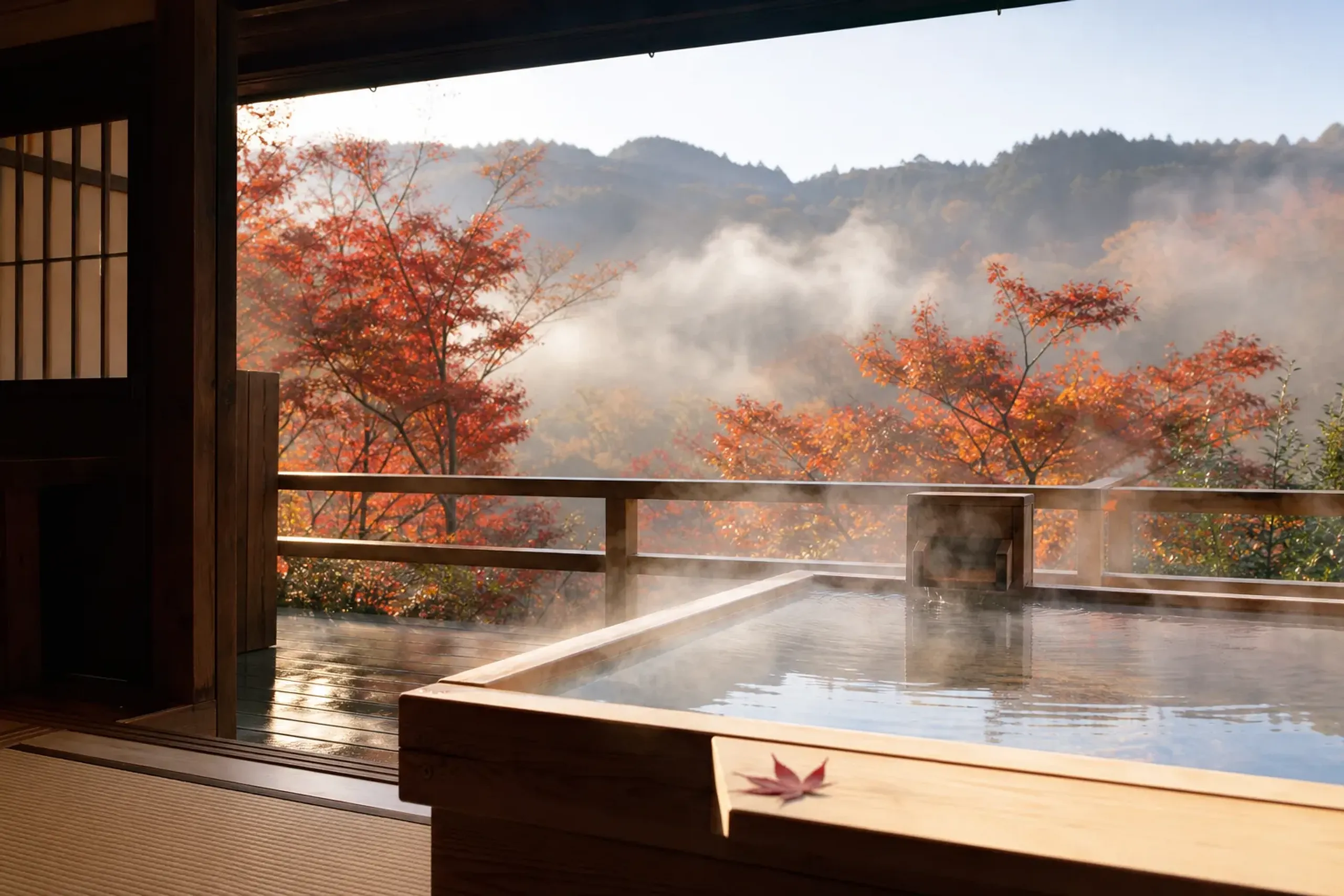
A well-run ryokan slows time — tatami, a private bath, and kaiseki served course by course.
A great ryokan does something no hotel can. It slows time. After the sensory volume of Disney, the restraint of a well-run ryokan — tatami underfoot, a private open-air bath, kaiseki served course by seasonal course — lands like a deep breath.
A Ryokan In Gora, Hakone
One ryokan in the Gora area of Hakone sits on the grounds of a former imperial-family villa. That history is not marketing gloss; it is written into the land. For a family stepping down from park excitement, its quiet and its baths do gentle, necessary work.
A Riverside Ryokan In Arashiyama, Kyoto
Further west, a ryokan on the riverbank at Arashiyama is reachable only by boat along the Oi River. The approach alone is a quiet reset. In November, the surrounding hills turn, and the property's seclusion keeps the season's crowds at a distance.
Both properties illustrate an aesthetic that runs through Japan's finest autumn travel: beauty in restraint, in weathered stone and falling leaves, rather than in spectacle. It is the deliberate opposite of a theme park — and precisely why the contrast works so well within one trip.
Kyoto's Autumn Nights, Curated
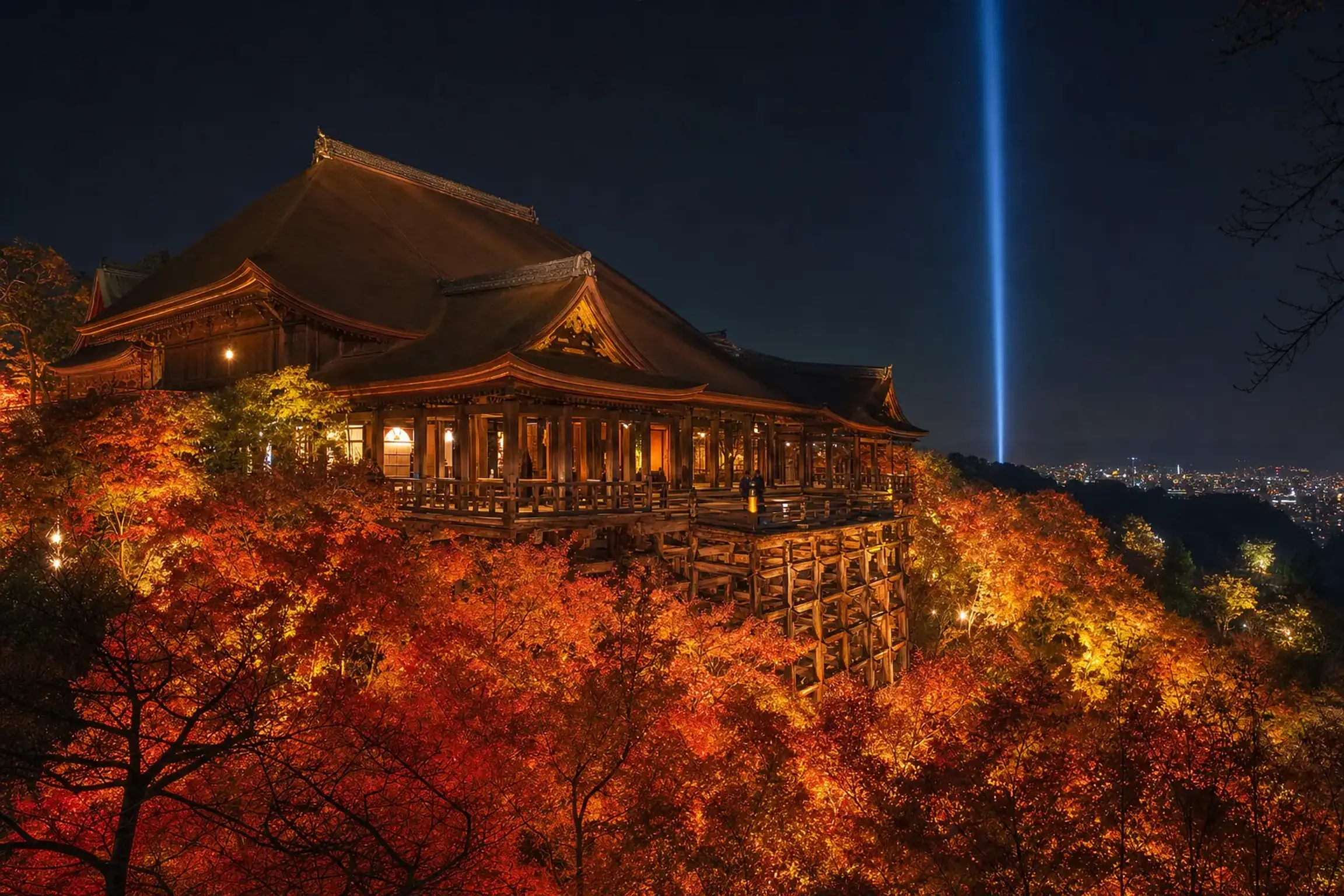
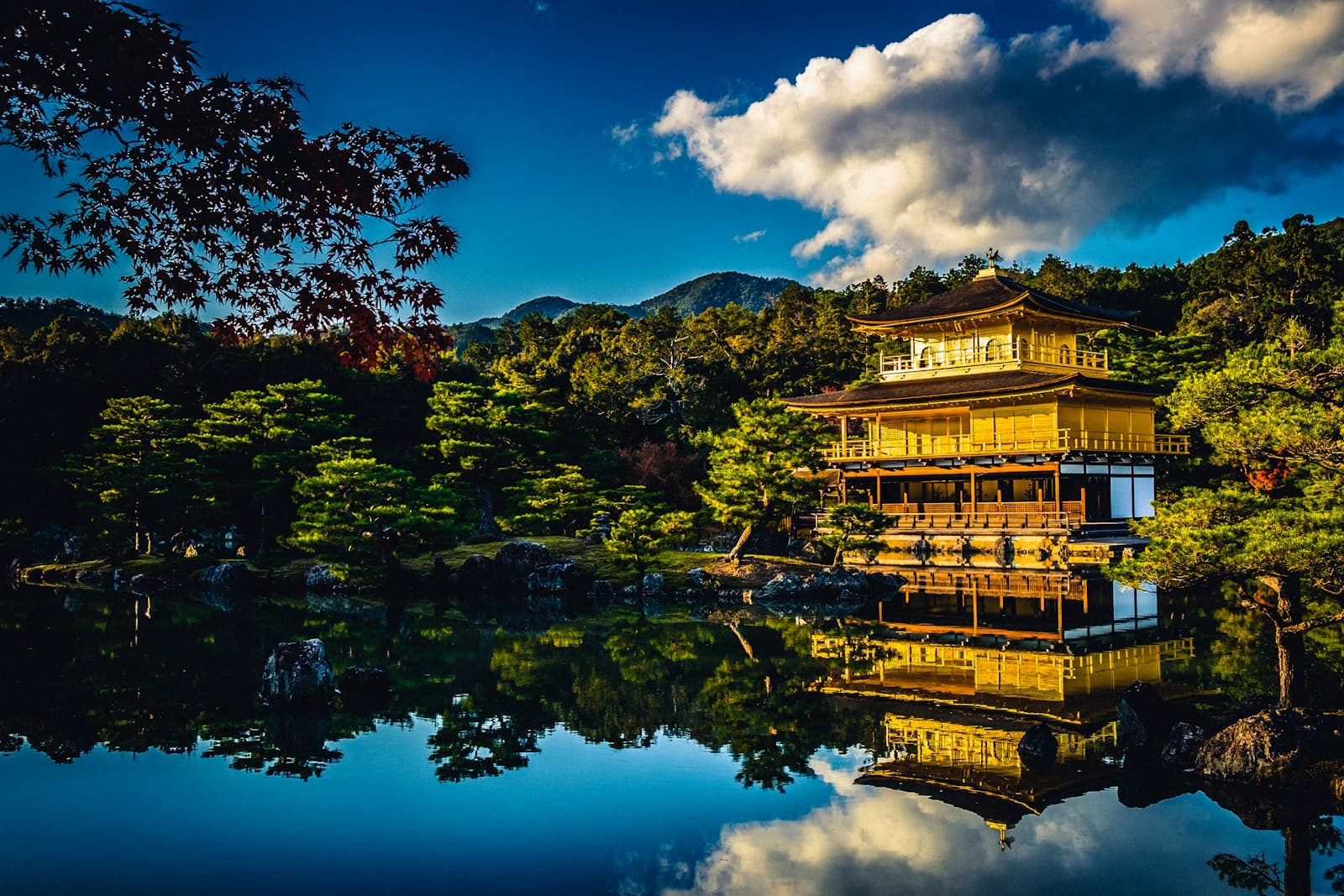
During Kiyomizu-dera's autumn night viewing, the maples burn against the dark.
Kyoto in late November is the season's crescendo, and its temples know it. Kiyomizu-dera publishes a dedicated autumn night-viewing schedule, with dates and hours set each year; the JRS concierge team confirms directly with the guest at time of arrangement. Under lights, the maples above the wooden stage burn against the dark, and a beam of light rises from the grounds into the night sky.
Evenings are where a curated approach truly separates itself. The trick is timing and routing — arriving with a private car, moving before or after the densest hours, and dining afterward in a quieter district rather than the tourist thoroughfares. Kyoto City has been active in asking visitors to respect residents' daily life, particularly around Gion. Responsible luxury means licensed guides, correct etiquette, and experiences that reduce friction rather than add to it.
Beyond the famous names, our concierge steers families toward lesser-known foliage — temple gardens that reward a private early arrival.
Rail Versus Private Car: The Autumn Calculus
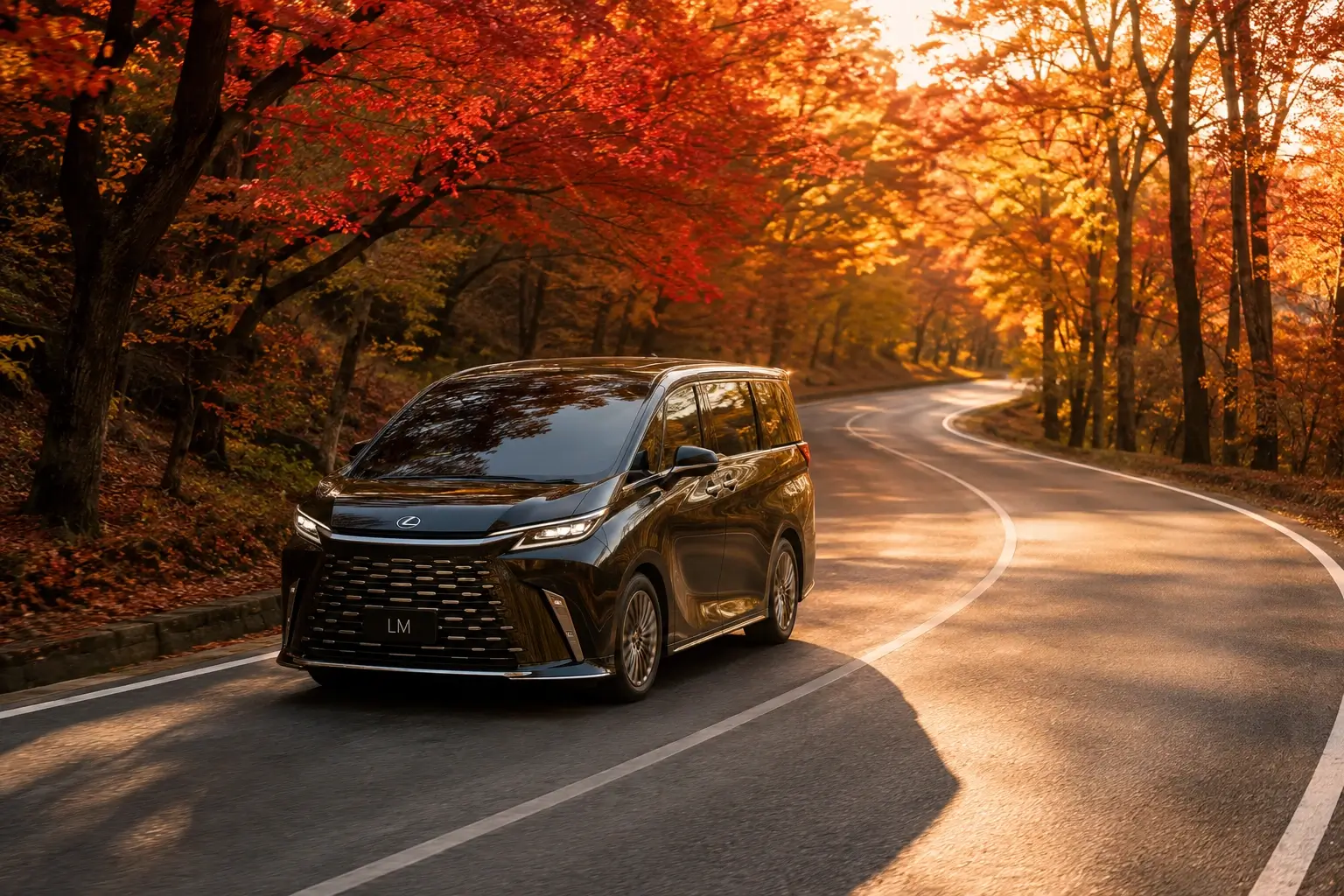
For rural foliage and travel with children, a private car with a driver removes the friction.
A practical question shapes every autumn itinerary: train or car? Rail pass pricing and shinkansen seat options change, and the JRS concierge team confirms directly with the guest at time of arrangement.
Here is how we weigh it for families.
- Door-to-door with children + luggage
- Private Car: Effortless
- Premium Rail: Requires station transfers
- Long trunk sectors (Tokyo–Kyoto)
- Private Car: Slower
- Premium Rail: Fastest, most comfortable
- Rural foliage + multiple stops
- Private Car: Ideal
- Premium Rail: Limited reach
The honest answer is usually both. Premium rail for the long Tokyo-to-Kansai leg, a private car for everything around it. Blending the two is where a tailor-made itinerary pays for itself.
Sample 7-Day Autumn Journey
A rough shape, not a script — every family's version differs. Consider it a starting frame.
Days 1–2: Tokyo And Disney
Arrive at Haneda; private transfer to a park-side hotel. Day two at Tokyo Disney Resort, followed by a quiet dinner and an early night.
Day 3: Tokyo Autumn
A private early start at Rikugien, then teamLab Borderless at Azabudai Hills. An unhurried afternoon in Marunouchi.
Day 4: Nikko Or Hakone
A private day trip north to Nikko's colour, or west to Hakone for the first ryokan night in Gora.
Days 5–6: Kyoto
Premium rail west, then two nights at a riverside ryokan in Arashiyama. Reserve one evening for Kiyomizu-dera's night viewing, timed by private car to skip the peak.
Day 7: Slow Departure
A final morning in a Kyoto temple garden, luggage forwarded ahead, and a calm transfer to the airport.
Practical Notes For Families
- Peak foliage timing: Mountains (Nikko, Hakone) turn late October to early November; Tokyo and Kyoto peak roughly mid-to-late November into early December. Plan north-to-south to follow the colour.
- Luggage: Forwarding services move bags between properties overnight, so families travel light on transit days — a small mercy with children in tow.
- Restaurant reservations: Autumn kaiseki seats fill months ahead. Secure key dinners before you fix the rest of the itinerary.
- Crowd avoidance: Japan's Tourism Agency and Kyoto City are actively pushing dispersion and shoulder-timing. Private early starts and lesser-known gardens are the practical response.
- Pacing: Alternate high-energy days with recovery days. A ryokan night after the parks is not indulgence; it is structure.
Frequently Asked Questions
Is there private guiding inside Tokyo Disney Resort?
The official private guiding is the resort's own VIP Tour Service — a six-hour tour with a dedicated guide, subject to Tokyo Disney Resort's published eligibility and reservation rules for qualifying guest rooms.
When is Kyoto's autumn foliage at its best?
Late November is the crescendo. Kiyomizu-dera's night-viewing dates are published each year, and the JRS concierge team confirms directly with the guest at time of arrangement. Mountain areas turn earlier, so a north-to-south route lets you follow peak colour.
Should we take the train or a private car?
Usually both. Premium rail suits the long Tokyo–Kansai leg. A private car is superior for rural foliage, multiple stops, and travelling with children and luggage.
Why Choose Japan Royal Service
Two experiences that seem to belong to different worlds — a theme park and a temple garden at night — become one polished journey only through coordination. That is the work our team at Japan Royal Service does quietly, behind the scenes.
What we provide is everything around the park day: the transfers timed to a child's energy, the luggage that travels ahead, the ryokan chosen for its baths and its silence, the shokunin session or quiet garden visit.
Our coordinators speak English, Japanese, Thai, and Filipino, and work in first-person, hands-on fashion from arrival to departure. The result is a trip where the friction disappears and only the memory remains.
To begin planning, contact our team here.