In this guide
- 01Why Kyoto Resists Checklist Travel
- 02What Introduction-Led Access Means (And What It Does Not)
- 03Imperial-Class Kyoto: Formal Access You Can Plan, Not Chase
- 04Reservation-First Kyoto: Places That Reward Preparation
- 05Where Relationships Matter: Shokunin, Tea, And The Kyoto You Cannot Google
- 06How To Build A Better Kyoto Itinerary: Depth Over Volume
- 07FAQ: Private Introductions And Deeper Kyoto Access
- 08Why Choose Japan Royal Service
Two travelers arrive in Kyoto on the same morning.
One sprints. Kiyomizu-dera at 9:00, Fushimi Inari by noon, Arashiyama before sunset. Their photo roll fills up fast, but the day feels oddly thin.
The other moves differently. Slower. A quiet appointment is waiting, made possible by a trusted introduction, proper etiquette, and a schedule built around how Kyoto actually works.
That second traveler is not “avoiding Kyoto.” They are meeting it on Kyoto’s terms. And that is where the city becomes memorable.
Why Kyoto Resists Checklist Travel
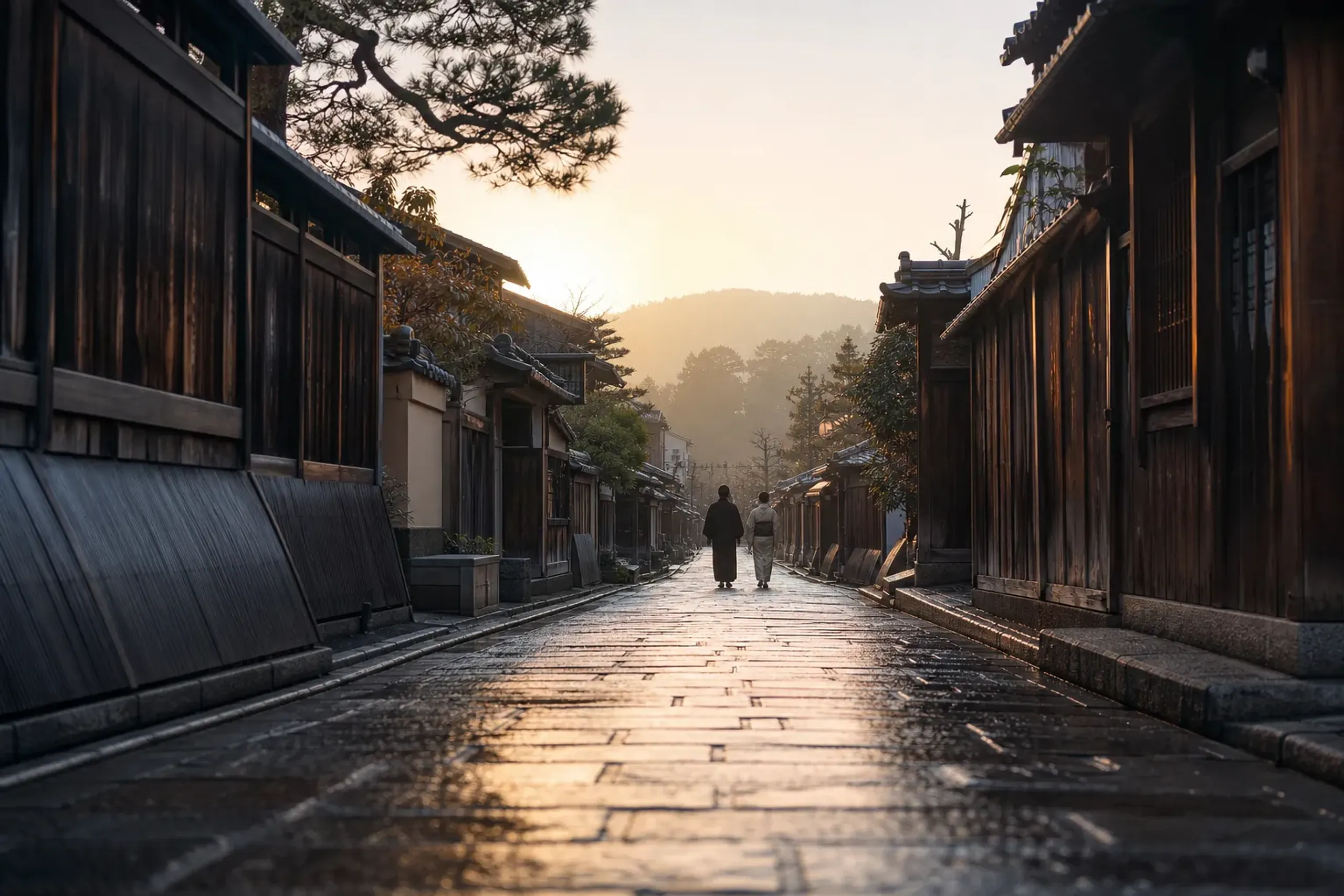
Kyoto reveals itself when the schedule stops shouting.
Kyoto is not a theme park of highlights. It is a living city with working neighborhoods, family businesses, and religious sites that still set their own rules.
That creates friction for even very experienced luxury travelers. Crowds compress streets. Timed entry and guided-only visits can shape an entire day. One wrong assumption can unravel the pace.
Kyoto also carries a strong public message about respectful tourism. Gion, for example, is not a stage set. It is a residential and professional area where visitors are expected to behave as guests, not spectators.
Kyoto City Tourism’s sightseeing guidelines explicitly emphasize respect in living neighborhoods and encourage measures like “hands-free travel” and exploring less congested areas. Practical. Direct. Helpful.
Kyoto’s Real Problem: Not Distance, But Timing
Many first-time visitors plan Kyoto like a compact museum district. Big mistake. The city’s “must-sees” can be far apart, and the streets between them are not designed for mass movement at the same hour.
In our experience, the most common regret is not missing a temple. It is spending the day in transit, queueing, and negotiating crowds when the traveler expected calm.
Kyoto rewards those who plan around opening hours, reservation systems, and neighborhood rhythms. Early mornings. Midday retreats. Late-afternoon returns.
Why 2026 Planning Feels Different
Kyoto’s travel environment is becoming more structured. That is not a complaint. It is reality.
Kyoto City’s accommodation tax rates changed starting March 1, 2026, as announced on the official Kyoto City tourism site. For many travelers, that change becomes a nudge toward fewer, better nights—chosen with care.
At the national level, Japan’s Tourism Agency (MLIT) has maintained an overtourism countermeasure page with an update timestamp of April 24, 2026. That public stance matters because it signals long-term focus: smoother visitor flows and better outcomes for residents.
What Introduction-Led Access Means (And What It Does Not)
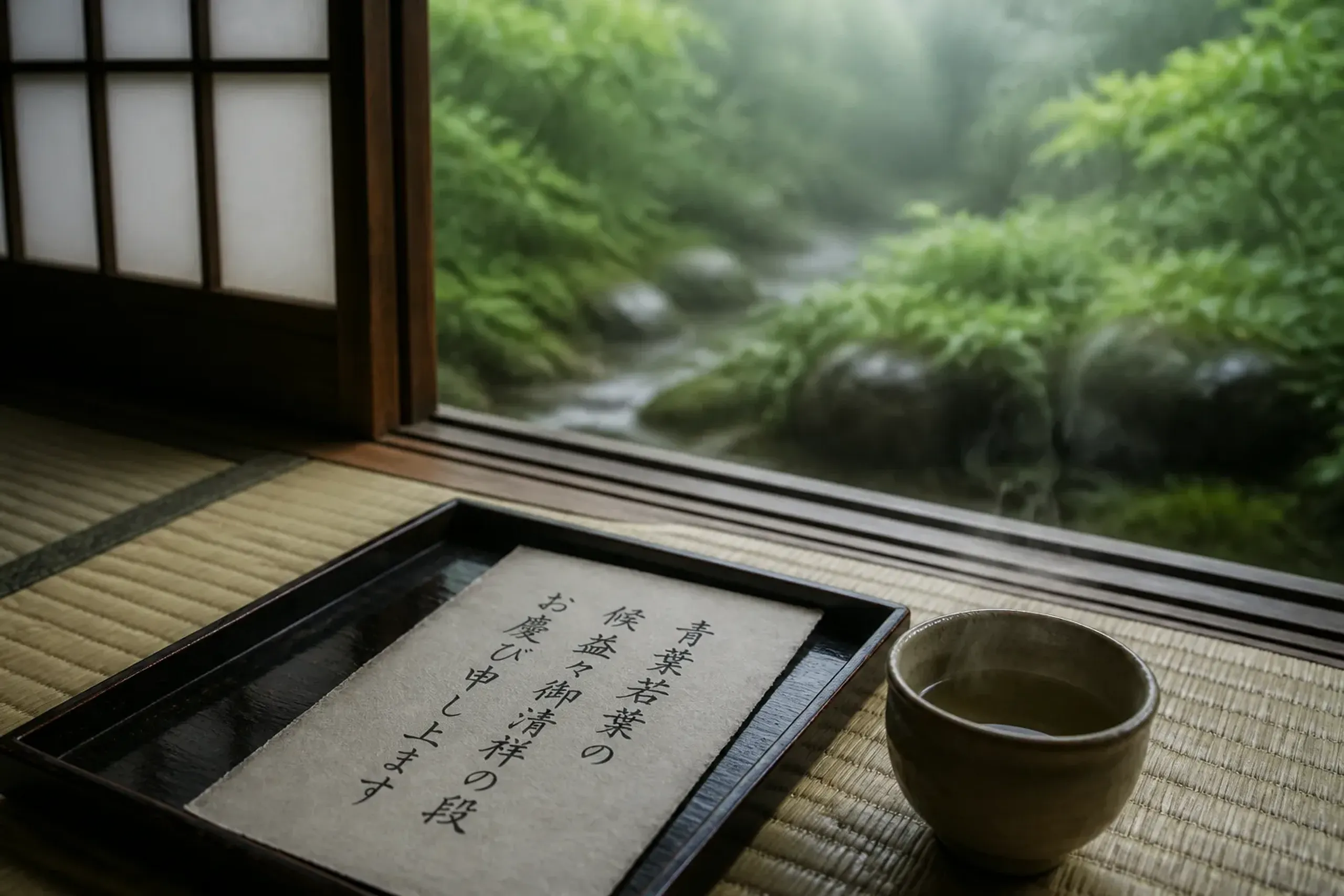
In Kyoto, access begins with trust and correct preparation.
“Private introductions” can sound like a magic key. It is not.
In Kyoto, an introduction is closer to a mutual agreement. Someone trusted vouches that a guest will arrive prepared, behave correctly, and understand what is being offered. It is relationship, not entitlement.
Introduction-led access also does not mean guaranteed entry. Some places simply do not accept new visitors. Others accept them only under specific conditions, or only at certain times, or only through formal procedures.
What introductions do change is the quality of the conversation. Doors that open do so quietly, with context and care.
Key fact: Kyoto’s best “hidden” experiences are often protected on purpose. If an experience matters, our job is to approach it with respect, not pressure.
A Useful Framework: The Kyoto Access Ladder
When we plan Kyoto well, we sort experiences by access type. It keeps the trip calm. It also prevents the common error of assuming everything is walk-in.
- Open access: public sites with standard visiting hours (but still subject to crowd timing).
- Reservation-first: places where advance booking is the smart default, even if not strictly required.
- Guided-only: visits that require a staff-guided tour as part of the rules.
- Application-based: entry that requires a specific method (sometimes by mail), and patience.
- Introduction-led: experiences where relationships, etiquette, and fit matter as much as logistics.
This ladder is also an ethics tool. It nudges guests away from last-minute pressure on communities that are already managing congestion.
Imperial-Class Kyoto: Formal Access You Can Plan, Not Chase
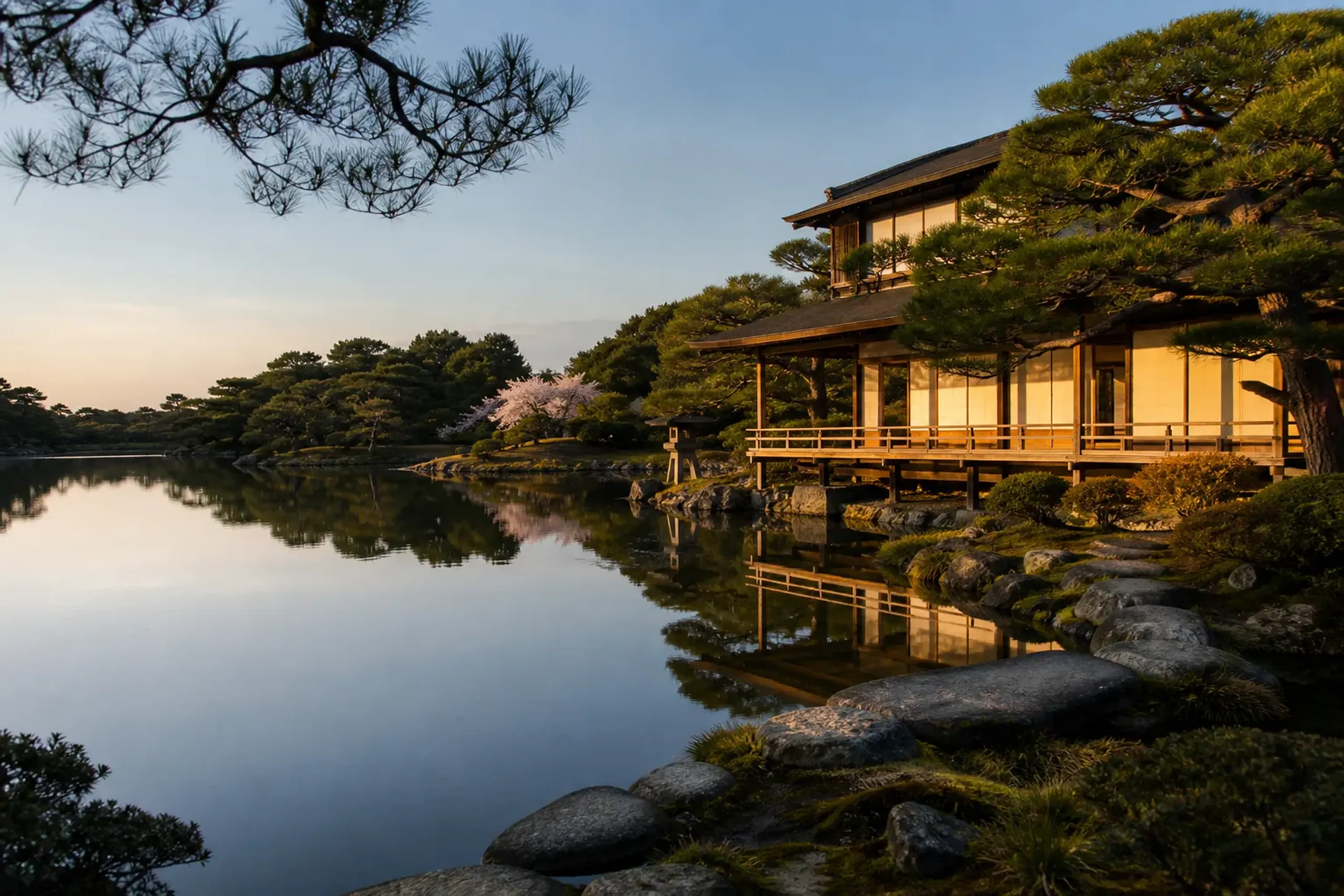
Imperial-register Kyoto is formal, precise, and deeply calming.
Some of Kyoto’s most refined visits are not “secret.” They are formal.
The Imperial Household Agency provides official visit information and an online registration system for Kyoto Sento Imperial Palace, Katsura Imperial Villa, and Shugakuin Imperial Villa. That structure is a gift for travelers who value clarity.
It is also a reminder: Kyoto’s highest-register experiences often prefer order over spontaneity. Quiet rules. Clear procedures.
Katsura Imperial Villa: A Masterclass In Restraint
Katsura Imperial Villa is one of Kyoto’s defining expressions of wabi-sabi restraint: measured paths, controlled views, and architecture that never raises its voice.
JNTO’s official spot page states that Katsura Imperial Villa tours can be booked online via the Imperial Household Agency starting three months in advance, with other in-person procedures also described. The key point is simple: it is not a “drop in when convenient” kind of morning.
When we build a day around Katsura, we protect the tone. A slow lunch afterward. A garden that does not compete. No frantic zigzags across town.
Shugakuin Imperial Villa: Guided-Only, For Good Reason
Shugakuin Imperial Villa is not only beautiful. It is controlled.
Visitors are required to take a staff-guided tour (about 80 minutes) per the Imperial Household Agency visit system. That requirement shapes everything: arrival time, footwear choices, and the rest of the day’s pacing.
For VHNW travelers, the appeal is obvious. Less noise. Clear boundaries. A sense that you are entering a place with its own cadence.
How To Book These Visits (Official Method)
Eligibility and procedures can vary by site and date, so guests should rely on the Imperial Household Agency’s official visitor information and registration system for the latest rules.
- Where to book: through the Imperial Household Agency’s official online registration system for the Kyoto sites listed above.
- Planning window: Katsura Imperial Villa bookings are described by JNTO as available starting three months in advance via the Imperial Household Agency.
- On-the-day reality: expect timed entry and staff-guided structure where required (such as Shugakuin’s guided tour).
For questions, contact our concierge.
Reservation-First Kyoto: Places That Reward Preparation

Some places stay serene because the process filters the pace.
Some of Kyoto’s most transporting places are not “exclusive.” They are simply protected by process.
That process filters out impulsive tourism. It also filters out the travel style that treats sacred spaces like quick content stops.
For a well-traveled guest, reservation-first Kyoto can feel refreshingly adult. You commit. You show up. You slow down.
Saihō-ji (Kokedera): The Temple That Makes You Earn It
Saihō-ji (often called Kokedera) is famous for its moss garden. The calm you feel there is not accidental.
Saihō-ji provides a reservation method via airmail/return postcard with required application details, as described on the official temple site. That step alone changes who visits. It selects for patience and intention.
When guests ask us whether it is “worth the trouble,” we answer with a question: are you trying to collect Kyoto, or meet it?
What We Tell Guests To Expect
This is not a flexible, casual stop. It is a commitment.
- Plan around fixed entry and whatever instructions are provided after applying.
- Assume you will want quiet time afterward, not a sprint to the next landmark.
- Bring the right mindset. The experience is designed to be felt slowly.
Where Relationships Matter: Shokunin, Tea, And The Kyoto You Cannot Google
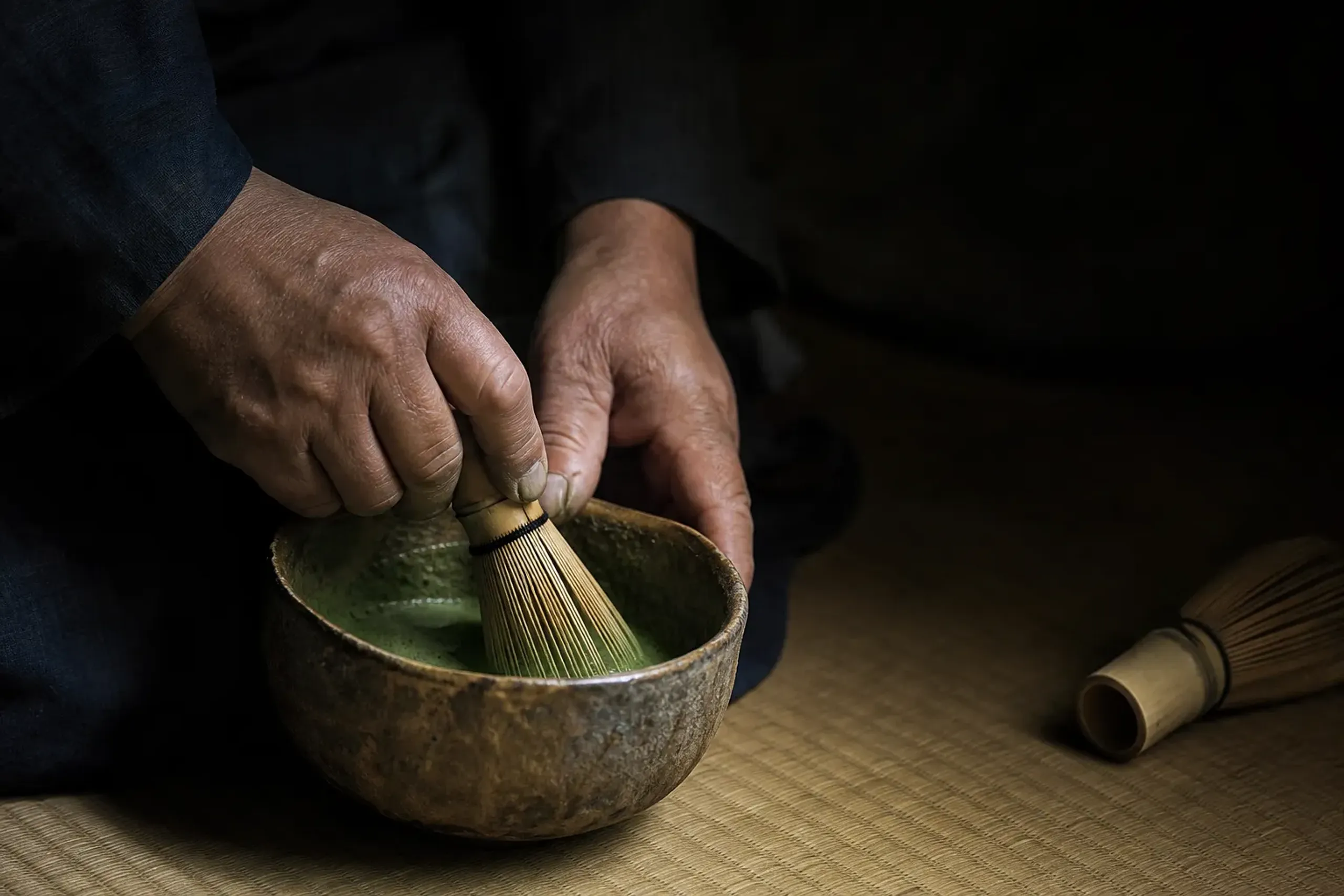
Kyoto’s deeper layer is often a network of small rooms: workshops, tea spaces, private counters, and studios where a shokunin works without performance.
This is the Kyoto many travelers mean when they say “hidden.” Not a secret alley. A relationship-based culture where trust is earned and preserved.
Our team at Japan Royal Service approaches this layer carefully. We do not treat artisans as attractions. We protect their time, their privacy, and the integrity of their work.
Shokunin Encounters: Craft With A Pulse
Kyoto is surrounded by craft lineages, and many are still active. There are ceramic traditions in Kyoto Prefecture, textile heritage linked to Nishijin-ori in the city, and long-established culinary skills expressed at the counter, one slice at a time.
When a private session with a master is possible, it tends to be small and purposeful. Two guests. Four guests. The emphasis is on learning, not applause.
We also set expectations. You may not be able to photograph freely. You may be asked to arrive early. You may need to accept that “no” is a complete sentence.
Tea As A Discipline, Not A Show
Kyoto tea culture is not limited to a single format, and not every meaningful tea experience needs a famous address.
In our experience, the best private moments come from good preparation: correct timing, correct attire, and the humility to follow instruction without trying to steer the room.
If a guest wants tea, we first ask what they want from it. Silence? Technique? Aesthetic study? The itinerary changes depending on that answer.
A Note On Gion And Geiko/Maiko Etiquette
Kyoto City’s sightseeing guidelines emphasize that Gion is a living neighborhood and encourage respectful behavior. That should be the baseline.
We do not support street-chasing. Not once. We also discourage intrusive photography and any behavior that treats working professionals as props.
If you want to understand Kyoto’s traditional arts, there are respectful ways to do it. They begin with restraint.
How To Build A Better Kyoto Itinerary: Depth Over Volume

Kyoto becomes personal when you meet living craft, not just landmarks.
A strong Kyoto itinerary feels calm even when it is full. That is the test.
We plan from anchors, not attractions. One formal visit. One craft or culture appointment. One unhurried meal. Space to breathe.
It also helps to accept a hard truth: Kyoto is not something you “finish.” The smartest repeat travelers leave with pages still blank.
A Practical Map Mindset: East, West, North, South
Kyoto punishes crisscrossing. So we group by geography and mood.
- East Kyoto: classic temple corridors, early walks, and careful crowd timing.
- West Kyoto: Arashiyama-area mornings, then a retreat to quieter gardens or lunch away from the main flows.
- North Kyoto: calmer residential textures, slower pace, fewer “must-do” pressure points.
- South Kyoto: Fushimi area planning that works best at off-peak hours.
This is not about avoiding famous places. It is about visiting them like an adult.
Three Sample Days (Real Places, Real Constraints)
Below are examples we use as planning templates. They are not promises of access. They are realistic ways to shape time.
Option A: Imperial-Register Morning, Quiet Afternoon
Designed for guests who prefer formality, measured beauty, and minimal improvisation.
- Morning: Katsura Imperial Villa visit (book via the Imperial Household Agency per official rules; JNTO notes the three-month booking window).
- Midday: A calm lunch in a low-key neighborhood, then a rest.
- Late afternoon: A garden visit that fits the day’s tone, avoiding headline crowd peaks.
Option B: Moss, Restraint, And A Long Exhale
For travelers who want Kyoto to lower their pulse, not raise it.
- Morning: Saihō-ji (Kokedera), using the official airmail/return postcard reservation method described by the temple.
- Midday: A quiet café moment, then a light walk.
- Evening: A simple, well-made dinner where conversation can stretch.
Option C: Shokunin Focus With Minimal Temple-Hopping
For guests who have seen Kyoto’s icons before and now want living culture.
- Morning: A craft-centered appointment (shokunin), with time for observation and questions.
- Afternoon: One carefully chosen shrine or temple, timed for lower congestion.
- Night: A refined bar or tea-style ending that does not require performance.
Transportation That Protects The Mood
Kyoto’s best days often depend on small decisions: where to wait, where to reset, how to move without friction.
For many guests, private transportation is not a status signal. It is a planning tool that keeps the day from splintering, especially when timed entry and long walks meet summer heat or winter rain.
When a guest wants to stay flexible, we design the itinerary in chapters. Short transfers. Clear arrival buffers. No late sprints.
What We Won’t Do In Kyoto
High-end travel should reduce pressure on local life, not intensify it.
- We do not encourage chasing geiko/maiko for photos in Gion.
- We do not treat sacred spaces as backdrops for disruptive shoots.
- We do not frame “hidden Japan” as something to exploit or broadcast.
Kyoto’s own public guidance is clear about respectful behavior in living neighborhoods. We align with that, because long-term access depends on trust.
FAQ: Private Introductions And Deeper Kyoto Access
Are “private introductions” the same as private tours? No. A private tour is a format. An introduction is a relationship signal that you will arrive prepared and respectful, and that the experience is a good fit.
Does introduction-led access guarantee entry to hidden places? No. Kyoto has venues and communities that simply do not accept new visitors, or only accept them under specific conditions. A good plan includes alternatives.
What is a verifiable example of Kyoto access that requires advance planning? Katsura Imperial Villa and Shugakuin Imperial Villa have official visit systems through the Imperial Household Agency, and Shugakuin requires a staff-guided tour (about 80 minutes) per the official registration system.
What is a verifiable example of a temple with a strict reservation method? Saihō-ji (Kokedera) provides a reservation method via airmail/return postcard with required application details on its official site.
How far ahead should we plan Kyoto for a calm experience? If you want Imperial Household Agency sites, plan around their official booking windows (JNTO notes Katsura’s online booking starting three months in advance). For the rest, earlier planning helps you avoid peak-time compromises.
Why does ethics matter in luxury Kyoto travel? Because Kyoto is living culture. Kyoto City’s sightseeing guidelines emphasize respect in neighborhoods like Gion, and Japan’s national policy focus includes overtourism measures. Responsible planning protects the experiences you came for.
Why Choose Japan Royal Service
Kyoto is a city of thresholds. Some are marked by gates. Others are marked by manners, timing, and a quiet sense of who belongs in the room.
Our team at Japan Royal Service plans Kyoto for travelers who value discretion, hidden-Japan depth, and shokunin-level craft—without turning culture into a checklist. We build each tailor-made itinerary around what is realistic, respectful, and truly fitting for the guest.
We also protect privacy as a non-negotiable. Your identity, your preferences, and your daily movements stay confidential, because that is how the best Kyoto still operates.
For private coordination, reach our team directly via WhatsApp or LINE, or contact us here.