In this guide
- 01Why Biwako Valley Works In Summer (It’s Physics, Not Hype)
- 02The Two-Season Mountain: A Ski Slope That Becomes A Café
- 03What Is Biwako Terrace, And Which Terrace Should You Choose?
- 04How Do You Get To Biwako Valley From Kyoto In Summer?
- 05The Ropeway, In Plain Terms: What To Expect On The Ride Up
- 06Summer At Biwako Valley: Green, Cool, And Honestly Not About Flowers
- 07What’s Open In 2026: The Detail Most Guides Miss
- 08A Practical Half-Day Plan: The Calm Way To Do Biwako Terrace
- 09How Japan Royal Service Coordinates A Biwako Valley Summer Day
- 10Frequently Asked Questions
- 11Why Choose Japan Royal Service
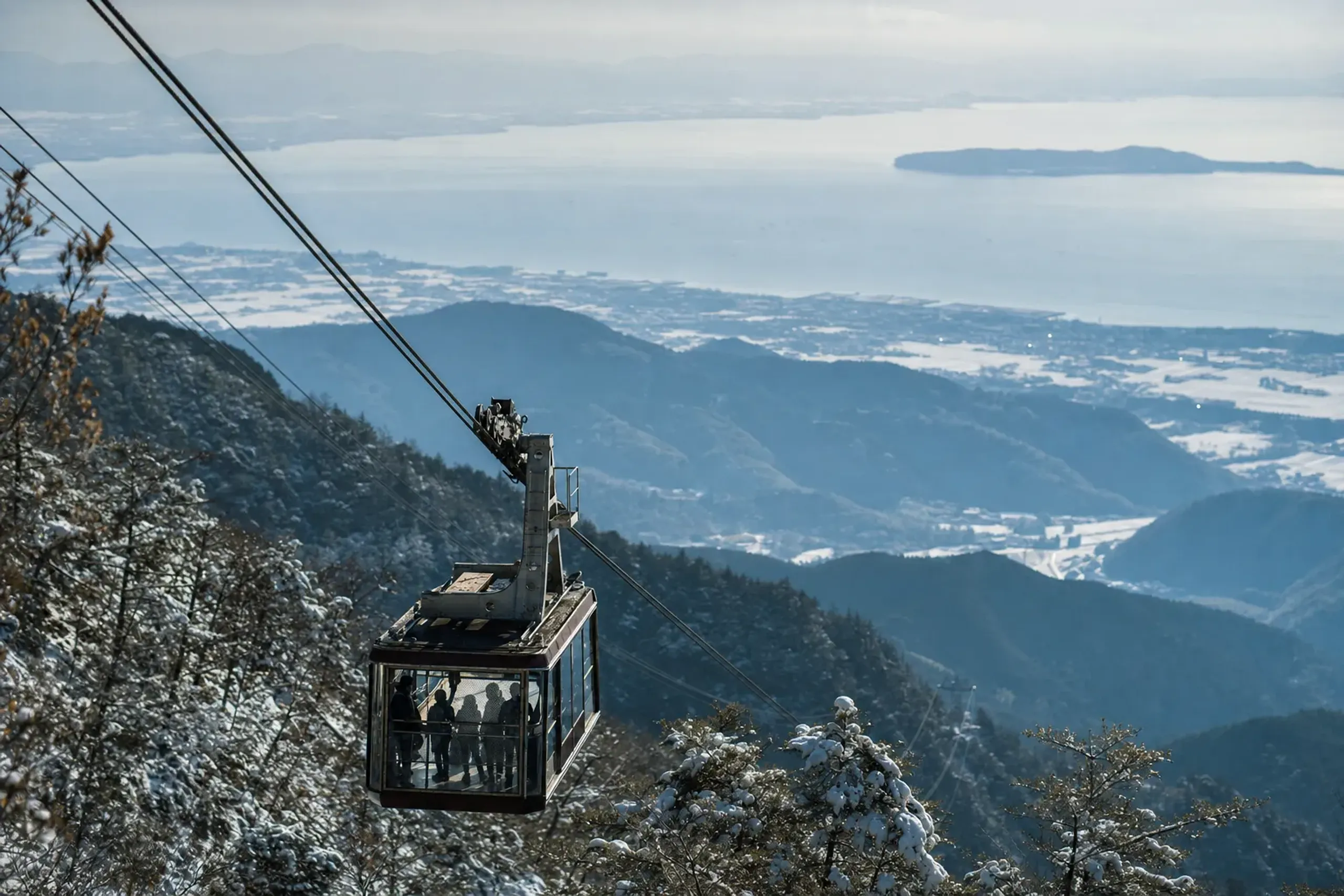
The cabin doors close with a soft thud. Glass on every side. Below, Shiga’s summer air sits heavy on the lower slopes, the kind that clings to collars and camera straps.
Then the ropeway moves. Quietly. Pines begin to look like a textured carpet rather than individual trees, and the valley floor drops away as if someone loosened a belt.
Five minutes isn’t long. Still, the shift is physical. Up here, you feel the air change.
That is the whole point of Biwako Valley in summer. Not a slogan. A measurable climb that delivers a genuine temperature drop above Lake Biwa.
Why Biwako Valley Works In Summer (It’s Physics, Not Hype)
Biwako Valley’s ropeway climbs roughly 783 meters in about five minutes, and the summit is typically about 5–7°C cooler than the base—an official claim from Biwako Terrace itself.
That single mechanism explains why this place earns its reputation as Kansai’s heat-escape. You are not “finding a breeze.” You are changing altitude fast, inside a 121-passenger, fully glass-walled cabin, then stepping into air that feels plainly lighter on your skin.
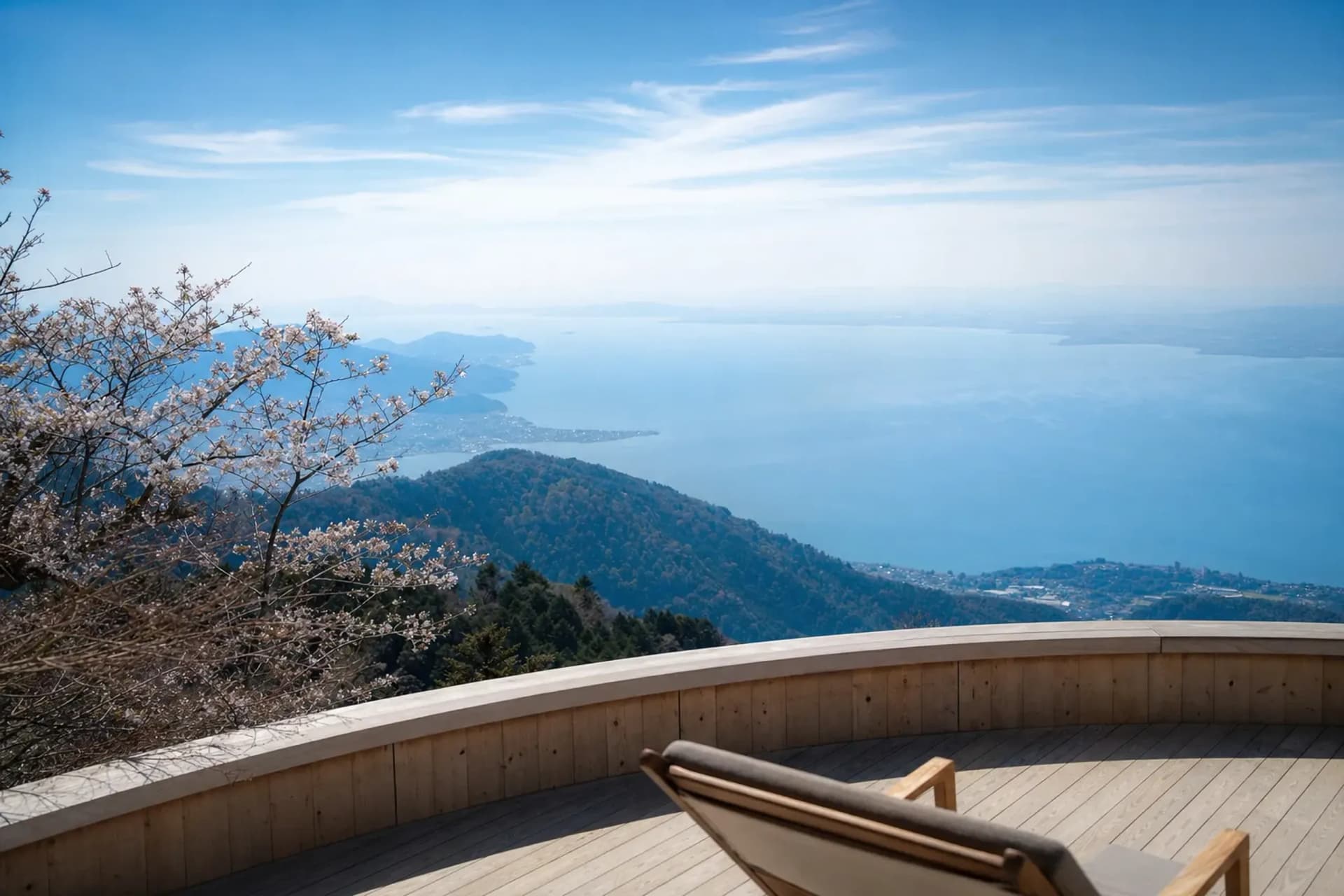
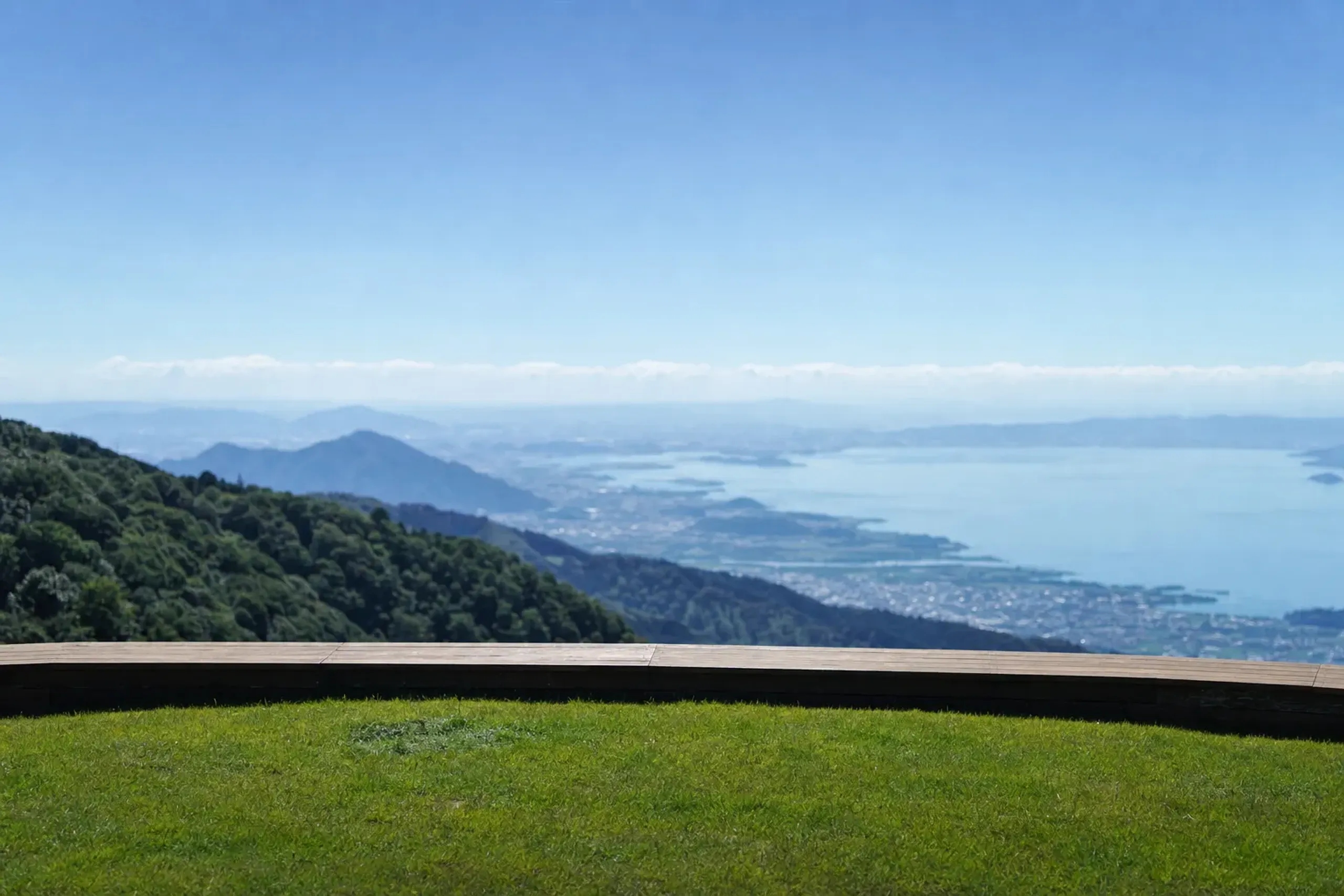
On a clear day, the first sight that grabs you is Lake Biwa. Wide. Unbroken. Japan’s largest freshwater lake, spreading across the horizon as if someone poured ink into a basin and let it settle.
Luxury travelers tend to distrust summer promises in Japan. Fair. Our team at Japan Royal Service likes this stop because the comfort is checkable. Numbers, not adjectives.
The Two-Season Mountain: A Ski Slope That Becomes A Café
Biwako Valley has operated as a ski resort since 1965. In winter, the ropeway and lifts serve snow. In warmer months, they serve green-season visitors.
Here is the detail most guides skip. One of the ski runs—Hōrai Panorama Gelande—becomes the setting for Café 360 once the snow melts. Same slope. Different purpose. You can almost feel the seasonal swap as you look across the gradient and imagine skis carving where people now linger with iced coffee.
It also keeps expectations grounded. This is not a centuries-old pilgrimage site. The terrace concept is modern.
Biwako Terrace itself opened in 2016, built atop the older resort infrastructure. You’re coming for design, altitude, and view. Nothing needs to pretend to be ancient.
What Is Biwako Terrace, And Which Terrace Should You Choose?
Biwako Terrace is a 2016-opened mountaintop viewing-and-café complex with two main terrace areas: “The Main” on Mount Uchimi and the quieter Café 360 area on Mount Hōrai.
The Main sits at Mount Uchimi’s summit (1,108m) and is reached directly from the ropeway’s summit station. This is where first-time visitors should start. It’s the broad, primary stage with the lake laid out in front of you.
Café 360 sits higher, on Mount Hōrai (1,174m). You reach it by taking connecting chairlifts from the ropeway summit area. Fewer people make the extra lift transfers, which subtly changes the mood.
We suggest thinking about it like a house with two rooms.
One is social and spacious. The other is quieter, with a little more wind.
The Main (Mount Uchimi, 1,108m): The First View You Remember
The Main is built for lingering. Not rushing. You arrive, the walkway opens, and Lake Biwa becomes a single calm surface that seems to stretch forever.
Inside The Main, two spots matter most for planning: North Terrace and the Infinity Lounge. North Terrace is connected by a walkway, so it’s an easy extension once you’ve taken the first photos and want a slightly shifted angle.
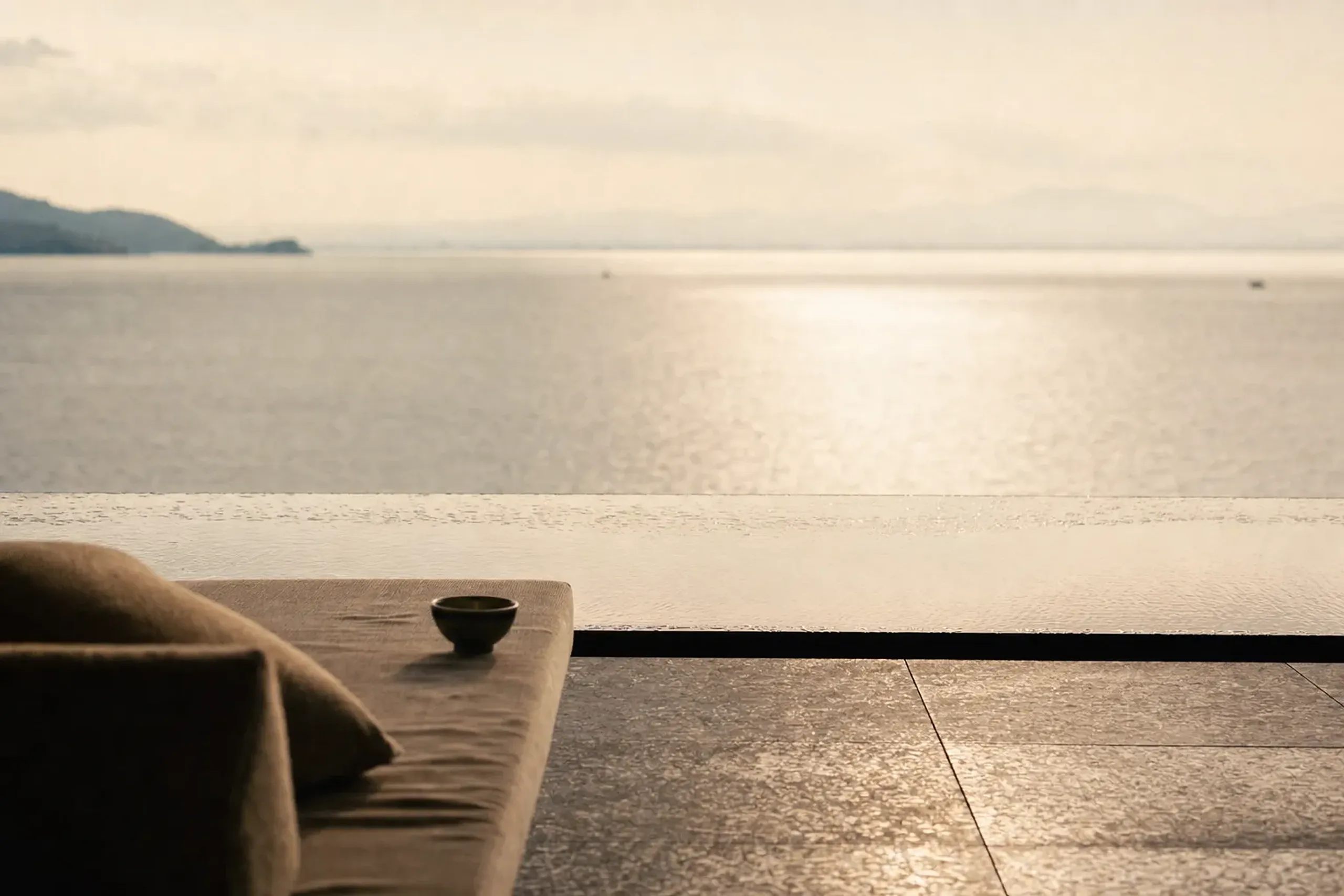
The Infinity Lounge is often cited as the best viewing point across the whole complex. It’s where the terrace lines and the lake line play the same game—horizontal, deliberate, uncluttered.
Café 360 (Mount Hōrai, 1,174m): Higher, Quieter, More Air
Café 360 is the counterpoint. You leave the ropeway summit area, ride the chairlifts, and the soundscape changes.
Less chatter. More wind. In summer, the higher elevation can feel like someone turned the temperature dial down another notch, especially if you step away from the busiest edge.
This is also where that dual-season reality is easiest to sense. The surrounding slopes read as “ski terrain,” even when they’re fully green.
How Do You Get To Biwako Valley From Kyoto In Summer?
Biwako Valley is about 40 km from Kyoto, and the most comfortable summer approach for HNW travelers is a private car with a chauffeur so you control timing, temperature, and pacing.
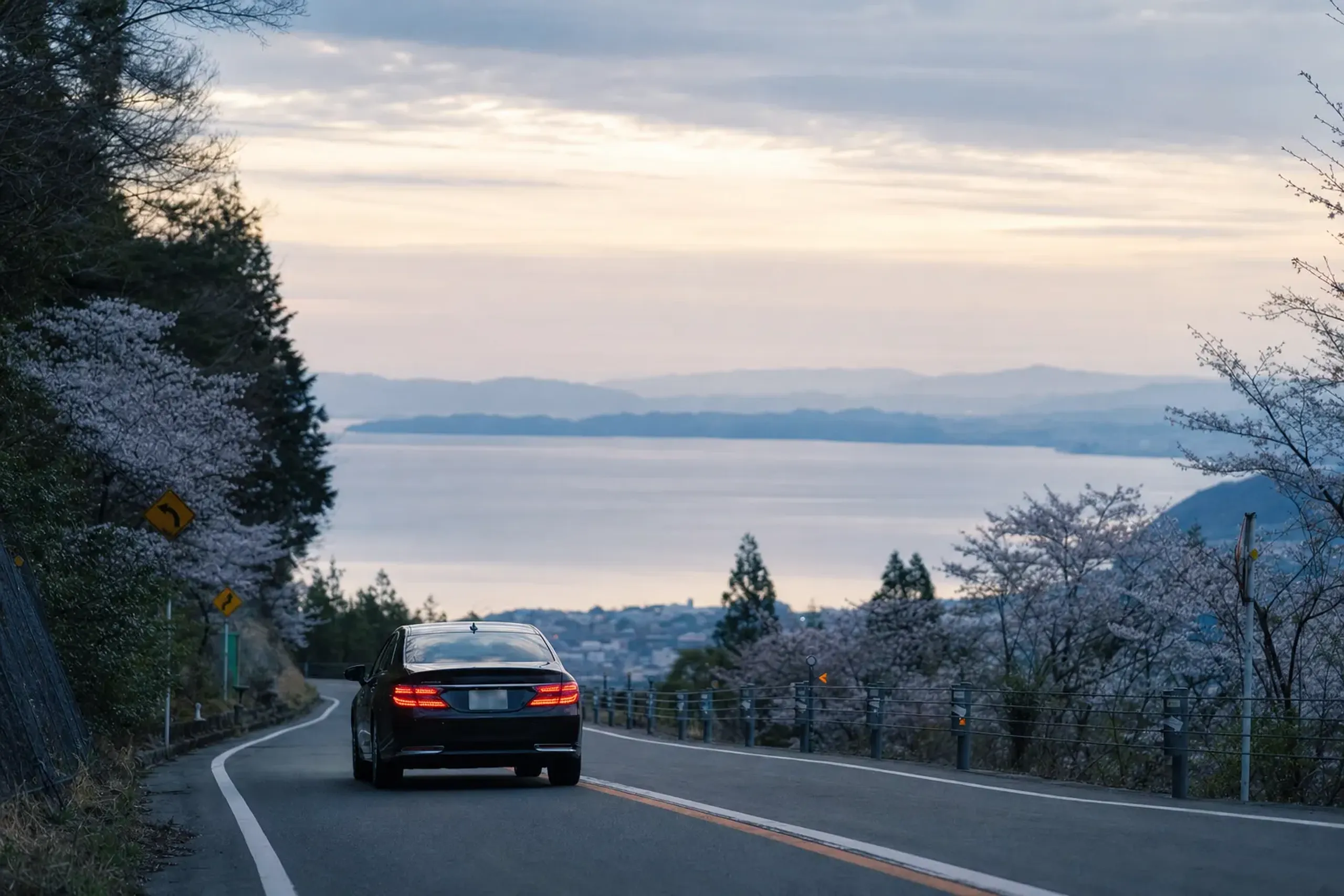
Yes, the distance is short. Still, summer comfort is fragile. One crowded transfer can undo the whole reason you came.
For guests who prioritize a calm arrival, our private chauffeured transportation keeps the day quiet from the first pickup. Cold water ready. Luggage handled. No searching for the right platform when the pavement is already hot.
If you prefer a self-directed approach, Biwako Valley is a well-known public resort in Shiga Prefecture, overlooking the western shores of Lake Biwa. Access methods and last-mile connections can change by season, so we treat the day as a timing exercise, not a guess.
Key fact: The official Biwako Terrace page lists the 2026 green-season operating period as April 24, 2026 to November 23, 2026.
The Ropeway, In Plain Terms: What To Expect On The Ride Up
The Biwako Valley ropeway is 1,783 meters long, climbs roughly 783 meters, and uses fully glass-walled cabins that carry up to 121 passengers.
It’s fast enough that your ears may register the change before your brain does. Five minutes. Done. One moment you are still in summer’s thick lower air, the next you are stepping out at the summit station.
Departures are described as roughly every 15 minutes, and operating hours vary by season, often around 9:00 to 17:00 in warmer months. That variation matters when you are building a day around heat and light.
What we tell first-timers: pack a light layer even in August.
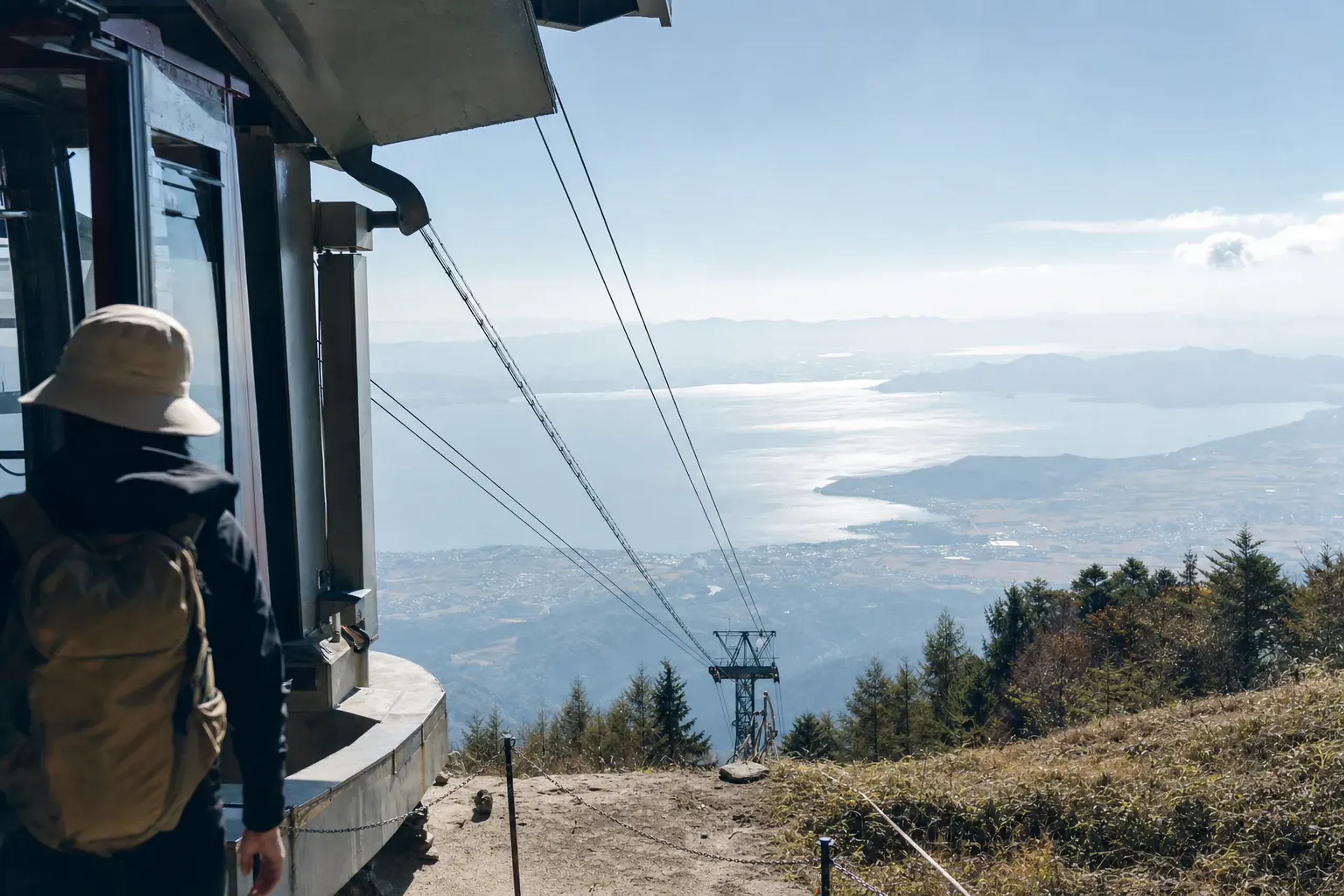
That cooler summit air is the whole reason you paid attention to this place.
Summer At Biwako Valley: Green, Cool, And Honestly Not About Flowers
Summer at Biwako Valley is a cool green meadow against deep-green mountain slopes, with people coming to step out of the heat below.
This is not a “flower season” post with a summer label slapped on it. Spring has its own draw—roughly 1,000 cherry trees and daffodils in May. Autumn has mountain-wide foliage. Winter is skiing again.
In summer, the pleasure is simpler. You look down at Lake Biwa and feel your shoulders drop. You can sit without fidgeting. You can breathe without the air feeling warm.
On clear days, visibility can extend beyond the lake itself toward Kyoto, Osaka’s skyline, and even the Abeno Harukas tower. Occasionally, people report seeing as far as Japan’s Southern Alps. When it happens, it feels like an extra page slipped into the book.
What’s Open In 2026: The Detail Most Guides Miss
Sky Walker is closed during the 2026 Green Season, according to Biwako Valley’s official English summer season activity page.
If you have seen older photos and assumed it would be part of your day, this is where many travelers get disappointed. Not because the mountain fails. Because their expectations were built from outdated pages.
We prefer to plan with the reality on the table. It keeps the mood steady, especially for families who have promised children “that one sky thing.”
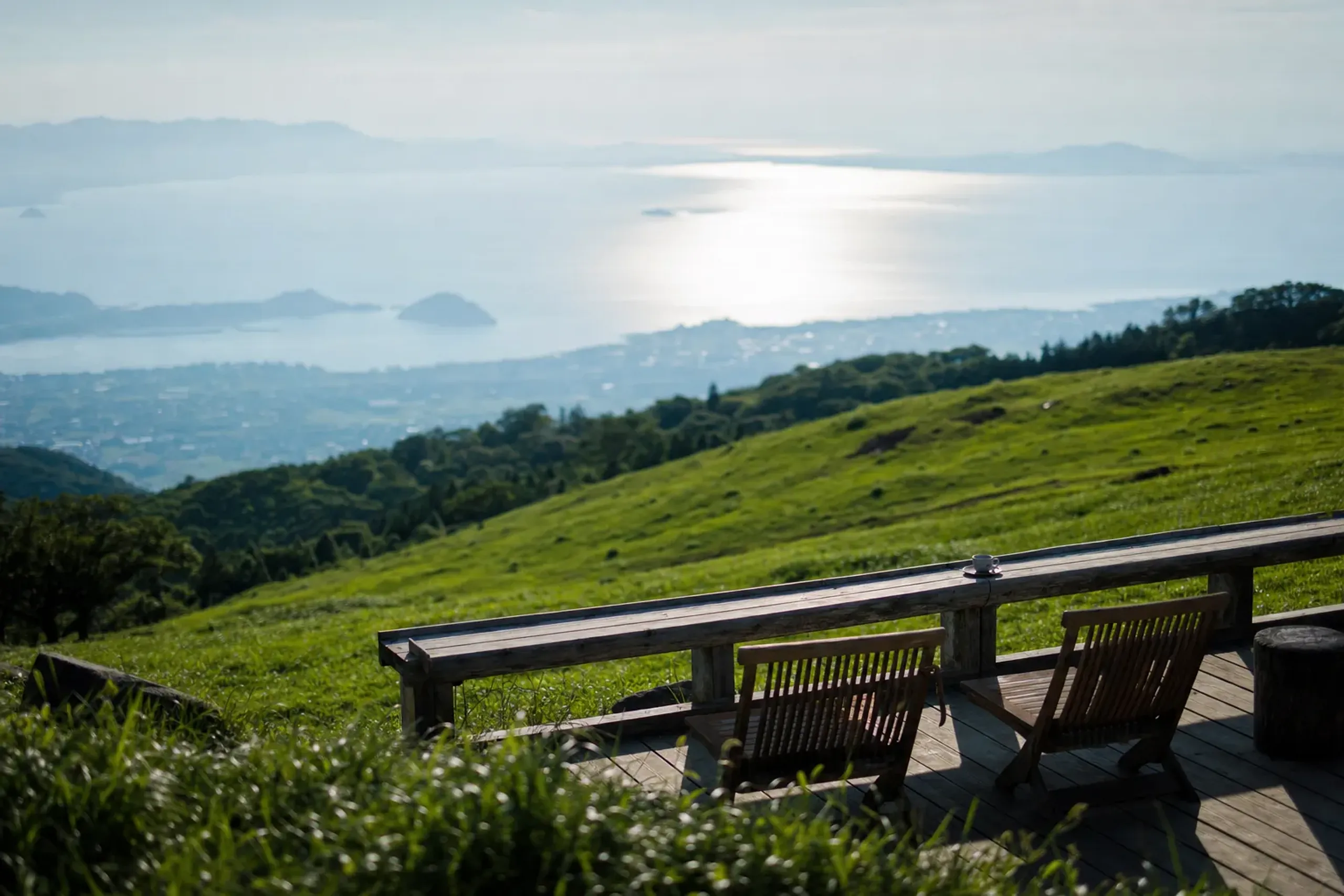
There are still summer activities beyond the terraces, including a zip-line and more than 40 types of free play equipment. It’s a public resort, and it is genuinely family-oriented. Still, for many HNW travelers, the terrace experience remains the main event.
A Practical Half-Day Plan: The Calm Way To Do Biwako Terrace
Arrive earlier, ride up before midday heat peaks, start at The Main on Mount Uchimi, then decide—based on weather and energy—whether Café 360 is worth the extra chairlift time.
That’s the spine of a good visit. Everything else is seasoning.
If you want a slow rhythm, give yourself time for two separate terrace moments: one right after arrival when the view hits hardest, and one later after a drink when your eyes have adjusted and you notice small things—boat trails on the lake, cloud shadows shifting across the water.
For families, we usually place play time after the first terrace viewing. Kids behave better when they’ve had their “wow” first. Adults do too.
- Step 1: Ropeway up and settle at The Main (Infinity Lounge if available).
- Step 2: Walk across to North Terrace for a second angle.
- Step 3: If the day is clear and you want quieter air, continue to Café 360 via chairlifts.
- Step 4: Return before you feel rushed—descending in a packed cabin is the one part you can’t “upgrade” with good manners.
How Japan Royal Service Coordinates A Biwako Valley Summer Day
Japan Royal Service coordinates guiding, transfers, and ropeway ticket coordination, with details confirmed privately based on your dates and party size.
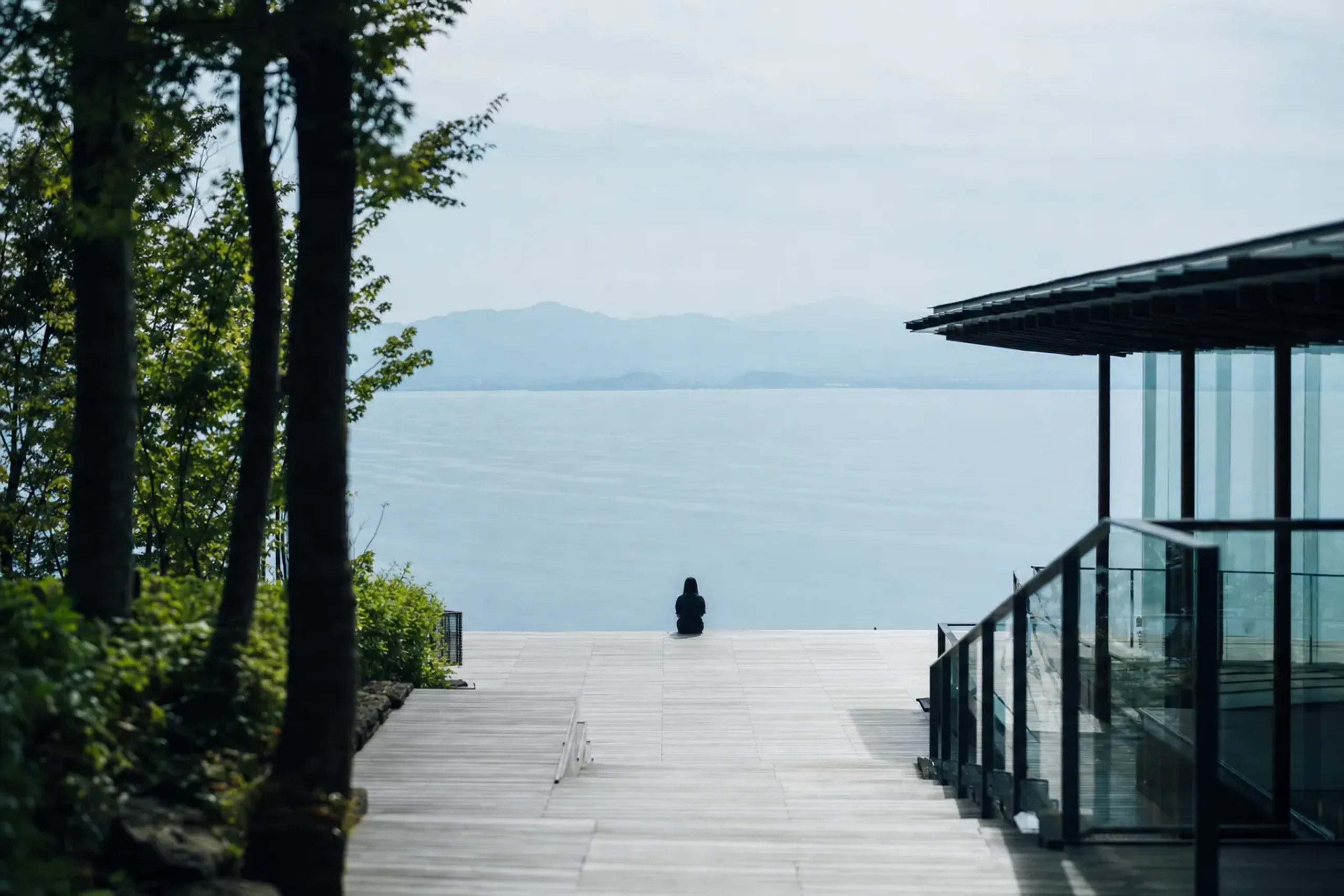
We keep the public facts public. The rest stays discreet.
In practice, that means a day that runs on time, with the heat managed from door to door, and with the small frictions removed—where to meet, what time makes the view feel spacious, what changes year to year, what is closed in 2026, and what is still worth your attention.
It also means you can choose your travel style. Some guests want a simple escape from Kyoto. Others want a quiet, design-forward pause that looks nothing like a temple day.
Frequently Asked Questions
Is Biwako Valley Actually Cooler In Summer, Or Is That Marketing?
Biwako Terrace states the summit is about 5–7°C cooler than the foot of the mountain, which matches the real elevation gain of roughly 783 meters.
In our experience, you notice it most when you step out of the ropeway station and the air feels less humid, especially in mid-summer afternoons.
What Are The 2026 Green-Season Dates For Biwako Valley And Biwako Terrace?
The official Biwako Terrace page lists the 2026 green season as April 24, 2026 to November 23, 2026.
Exact daily hours can vary by season, so we recommend verifying your specific date close to travel.
Is The Sky Walker Open In 2026 At Biwako Valley?
No—Biwako Valley’s official English summer season activity page states Sky Walker is closed during the 2026 Green Season.
If Sky Walker was your main goal, plan around the terraces, chairlifts, and other summer activities instead.
How Long Is The Biwako Valley Ropeway Ride, And What Is It Like?
The ropeway is 1,783 meters long and climbs roughly 783 meters in about five minutes in fully glass-walled cabins that can carry up to 121 passengers.
It’s quick, scenic, and very exposed to sun on bright days, so sunglasses can help.
Why Choose Japan Royal Service
Most luxury travel pages talk about Japan as a checklist. Our team at Japan Royal Service treats a summer day at Biwako Valley as a precision problem: heat, timing, crowd flow, closures, and the exact terrace sequence that keeps the experience calm.
Discretion is not an add-on for us. It’s the baseline. We keep guest identities, pickup points, and itineraries quiet by design, which matters when you’d rather not be noticed while doing something as public as a mountain resort.
We also favor what many competitors overlook: hidden-Japan moments that are still real and verifiable, like choosing Café 360 when the main terrace is busy, or planning the day around the air change rather than the photo trend.
If you want Biwako Terrace to feel like a private pause—without pretending it’s closed to the public—this is where our approach earns its keep.
For private coordination, reach our team directly via WhatsApp or LINE, or contact us here.