In this guide
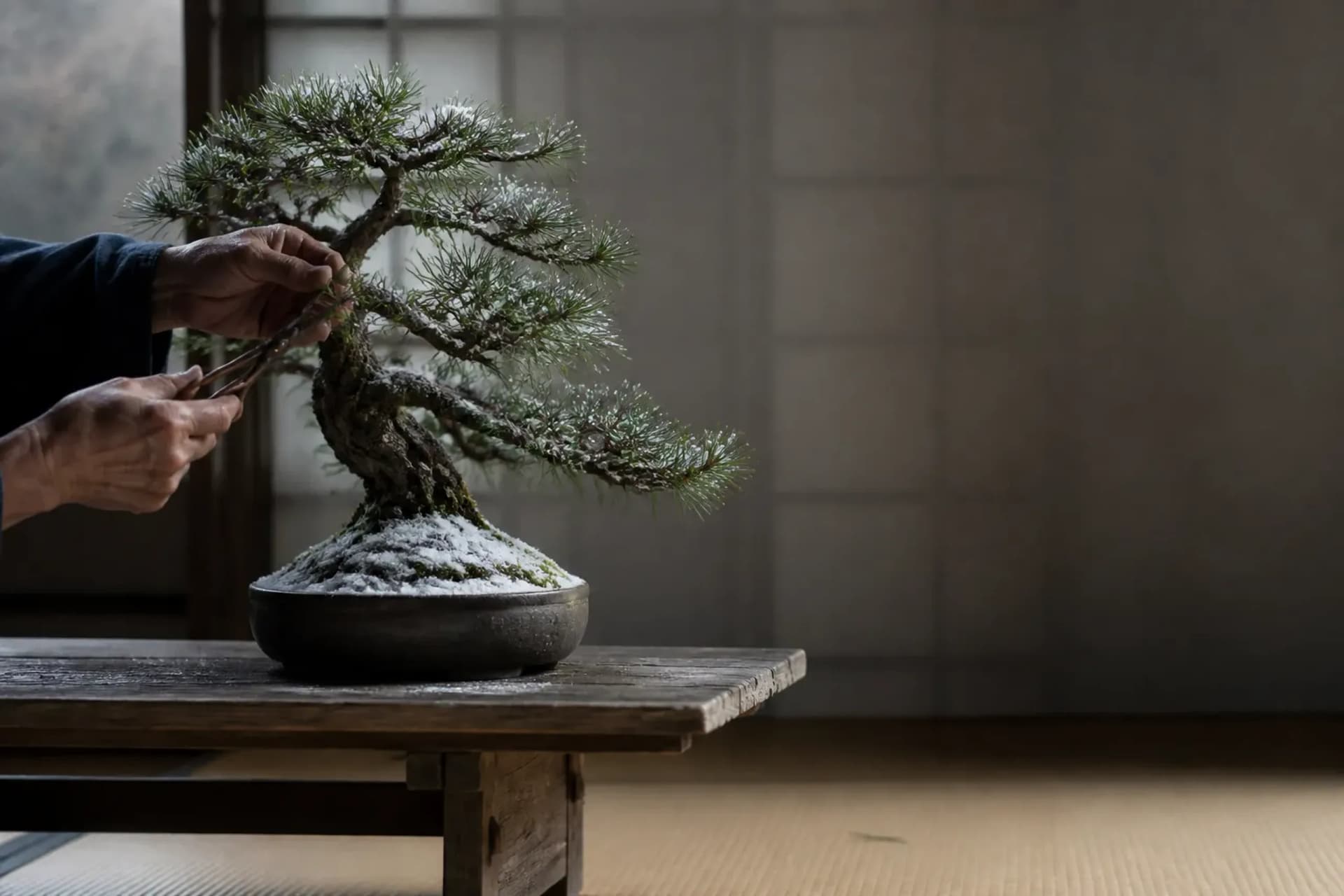
A Japanese black pine stands in a Saitama courtyard. Its trunk resembles fractured iron. Three centuries of vigilant cultivation have shaped its twisting apex. The aesthetic of wabi-sabi—the reverence for quiet, imperfect, and weathered beauty—radiates from its shallow pot. To understand this discipline, travelers often seek out private instruction. Our team at Japan Royal Service frequently fields inquiries regarding authentic bonsai encounters in the Tokyo and Saitama regions. The reality of this art demands immense patience. It requires yielding to the pace of nature.
For affluent travelers seeking cultural depth, securing a private session with a distinguished practitioner represents a profound use of time in Japan. However, the commercialization of cultural experiences means that not all lessons offer genuine insight. We guide our clients toward documented lineages. True access requires geographic precision, realistic expectations, and an understanding of the botanical laws governing these ancient trees.
Lineage And Place: The Soil Of Saitama And Edogawa
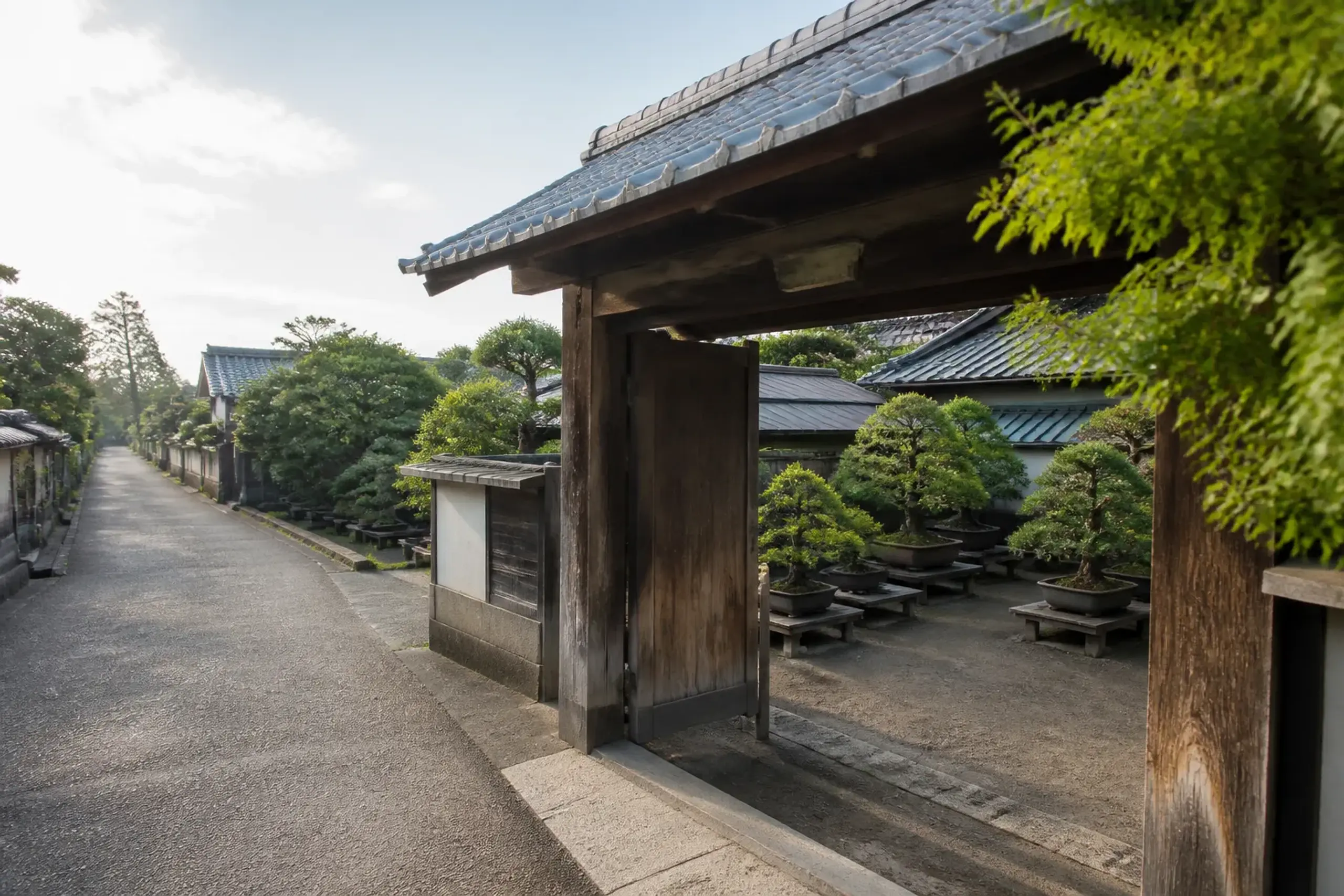
Omiya Bonsai Village remains the historic nucleus of Japan's bonsai cultivation.
Context determines the quality of the instruction. Omiya Bonsai Village (Bonsai-mura) forms the undisputed nucleus of the craft. Following the Great Kanto Earthquake of 1925, Tokyo’s premier growers relocated to Saitama City. They sought pristine water and fertile soil away from the urban ruin. A century later, working nurseries still line these quiet residential streets. The Omiya Bonsai Art Museum, located at 2-24-3 Toro-cho in Kita Ward, anchors the district. It preserves masterpieces of staggering historical weight, providing the critical baseline for any serious collector's education.
Across the metropolis in Edogawa City, the Shunkaen Bonsai Museum operates as a dual-purpose compound. It serves as both a gallery of extraordinary specimens and an active training ground for global apprentices under the direction of Master Kunio Kobayashi. Recognizing these specific geographies is the foundational step for serious visitors. A lesson conducted inside a generic Tokyo hotel room lacks the environmental context of a working nursery. The soil, the climate, and the surrounding apprentice culture form an essential part of the curriculum.
Our coordinator observed that standing in a nursery courtyard fundamentally alters a student's perspective. You are surrounded by thousands of trees in varying stages of development. You witness the scale of the operation. This spatial reality cannot be replicated in a sterile environment.
Time As The True Medium
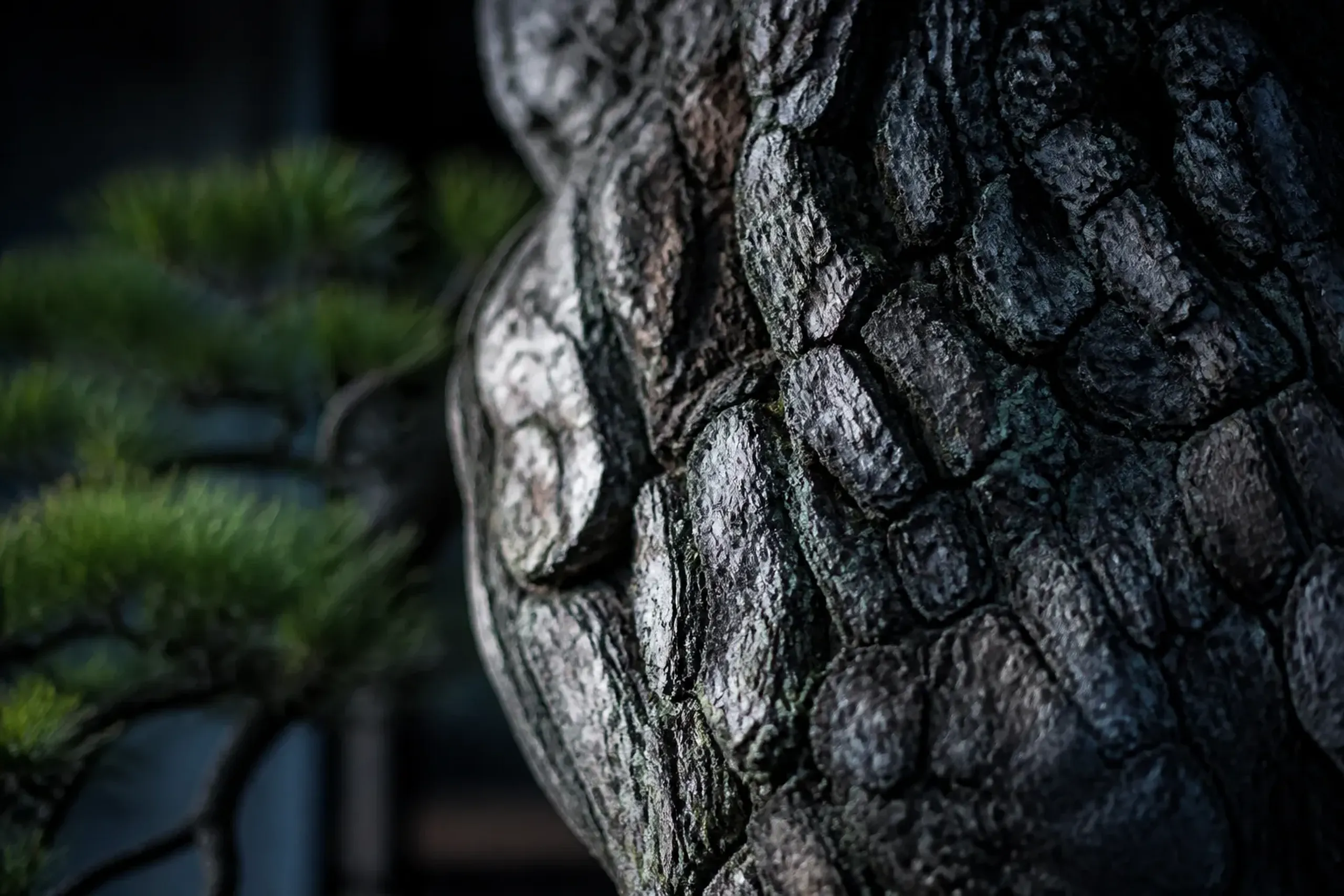
Time itself operates as the primary medium in the art of bonsai.
The shokunin (artisan) does not merely sculpt wood. Time itself operates as the primary medium. An apprentice might spend five years mastering the watering can before touching a shear. The student's afternoon session represents a microscopic increment in a tree's lifespan. We encourage guests to approach these encounters with absolute humility. The silence of the courtyard speaks volumes.
Moss-covered stone silence. That is the true luxury of this experience. It is the antithesis of loud, rapid-consumption tourism. A tree in training passes between caretakers across decades. The master leading your session is merely the current custodian of a living antique. When you grip a branch to apply copper wire, you are participating in a generational relay race. Acknowledging this continuum shifts the experience from a simple craft class into a profound philosophical engagement.
What A Master Session Actually Involves
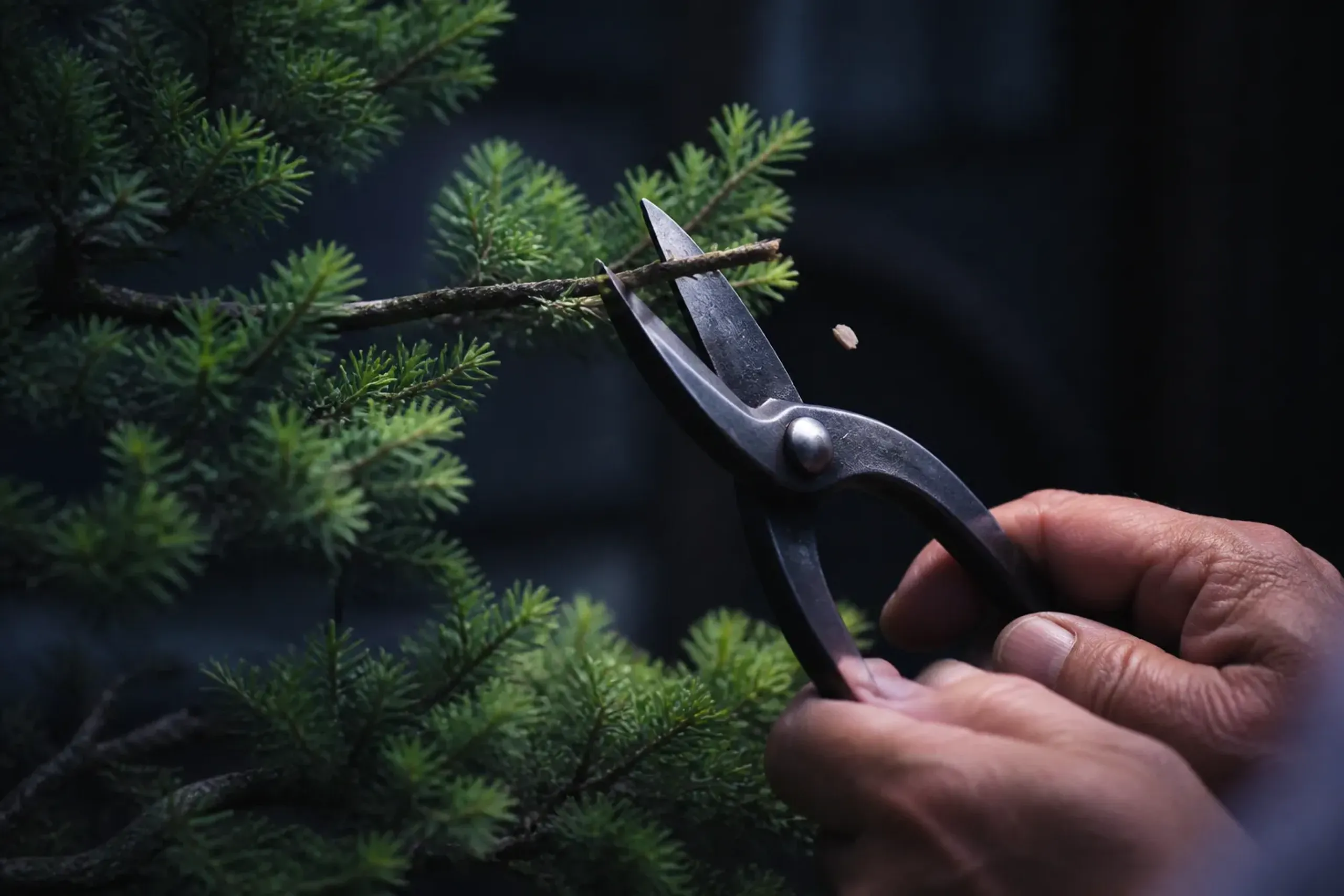
Private lessons focus on the rigorous, foundational mechanics of wiring and pruning.
Many visitors arrive expecting to transform a raw sapling into a sculptural masterpiece within a single afternoon. This is a severe misunderstanding. Big mistake. Most commercial bonsai experiences sold to tourists consist of two hours of beginner wiring on a young tree, with the master merely present rather than actively teaching. Readers have likely encountered these highly sanitized offerings and are right to be skeptical.
A genuine, private workshop—such as the four-hour Nori Hirao Bonsai Workshop offered at Seishoen, or the intensive sessions at Shunkaen—focuses strictly on foundational mechanics. You will not touch a 100-year-old masterpiece. You will work on a young training tree. The master, or a senior apprentice, will demonstrate specific techniques. You will practice repetitive wiring. You will execute basic pruning logic. You may perform a seasonal repotting depending on the month.
The value lies in the critique, not the final product. The instructor oversees your technique and corrects your structural decisions in real-time. True mastery emerges from these rigorous, precise mechanics rather than dramatic overnight transformations. It is an exercise in strict discipline. You pay for the master's unvarnished feedback and the privilege of working within their private sanctuary.
Seasonal Precision: The Application Of Shun
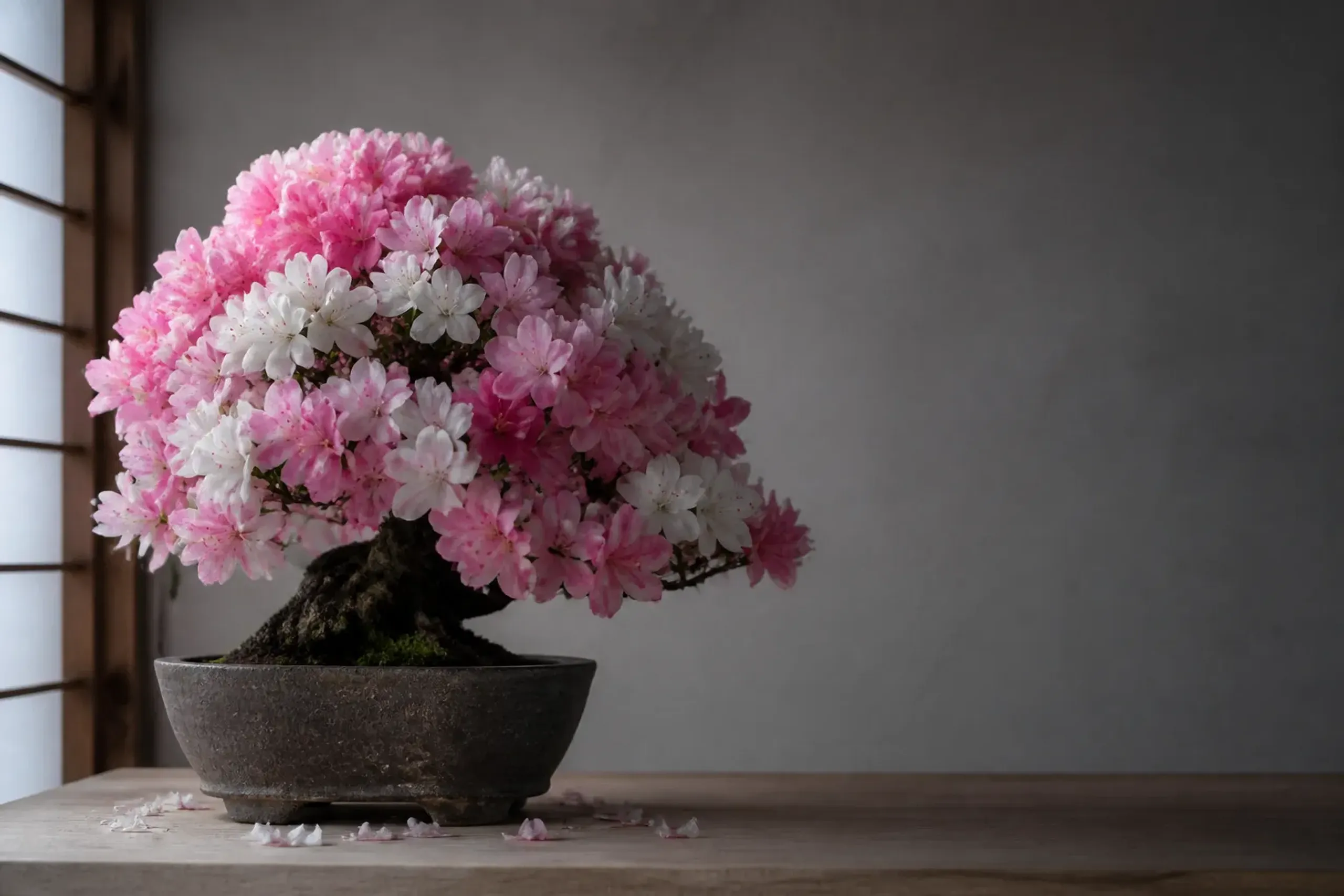
The early summer months invite the spectacular blooming phase of the Satsuki azalea.
The Japanese concept of shun dictates that every cultural practice holds a peak, fleeting moment of perfection. Bonsai cultivation shifts entirely depending on the month. A student visiting in November learns entirely different skills than one arriving in May. Planning an itinerary around these botanical cycles is essential for an authentic educational experience.
- Late Winter (Feb)
- Horticultural Focus: Wiring, shaping bare deciduous trees, assessing branch structure.
- Notable Events & Exhibitions: Kokufu Bonsai Exhibition at Tokyo Metropolitan Art Museum.
- Spring (Mar-Apr)
- Horticultural Focus: Repotting, root pruning, soil preparation. High physical activity.
- Notable Events & Exhibitions: New growth emerges; excellent time for nursery visits.
- Early Summer (May-Jun)
- Horticultural Focus: Satsuki azalea blooming. Pruning post-bloom to direct energy.
- Notable Events & Exhibitions: Omiya Bonsai Art Museum seasonal Satsuki displays.
- Autumn (Oct-Nov)
- Horticultural Focus: Preparing for dormancy. Needle plucking on pines.
- Notable Events & Exhibitions: Autumn foliage viewing; viewing mature trees in peak form.
For visitors planning long-term, the 101st Kokufu Bonsai Exhibition—the absolute pinnacle of the global bonsai calendar—will take place at the Tokyo Metropolitan Art Museum in Ueno across two parts: February 8–11 and February 13–17, 2027. Aligning a private lesson in Saitama with this exhibition offers an unmatched vantage point. Furthermore, the Omiya Bonsai Art Museum maintains a robust calendar, such as their upcoming special exhibition focusing on Suiseki (viewing stones) scheduled for July 17–August 26, 2026. Timing a visit to coincide with these curated displays adds critical visual context to your private lesson.
The Export Reality Check
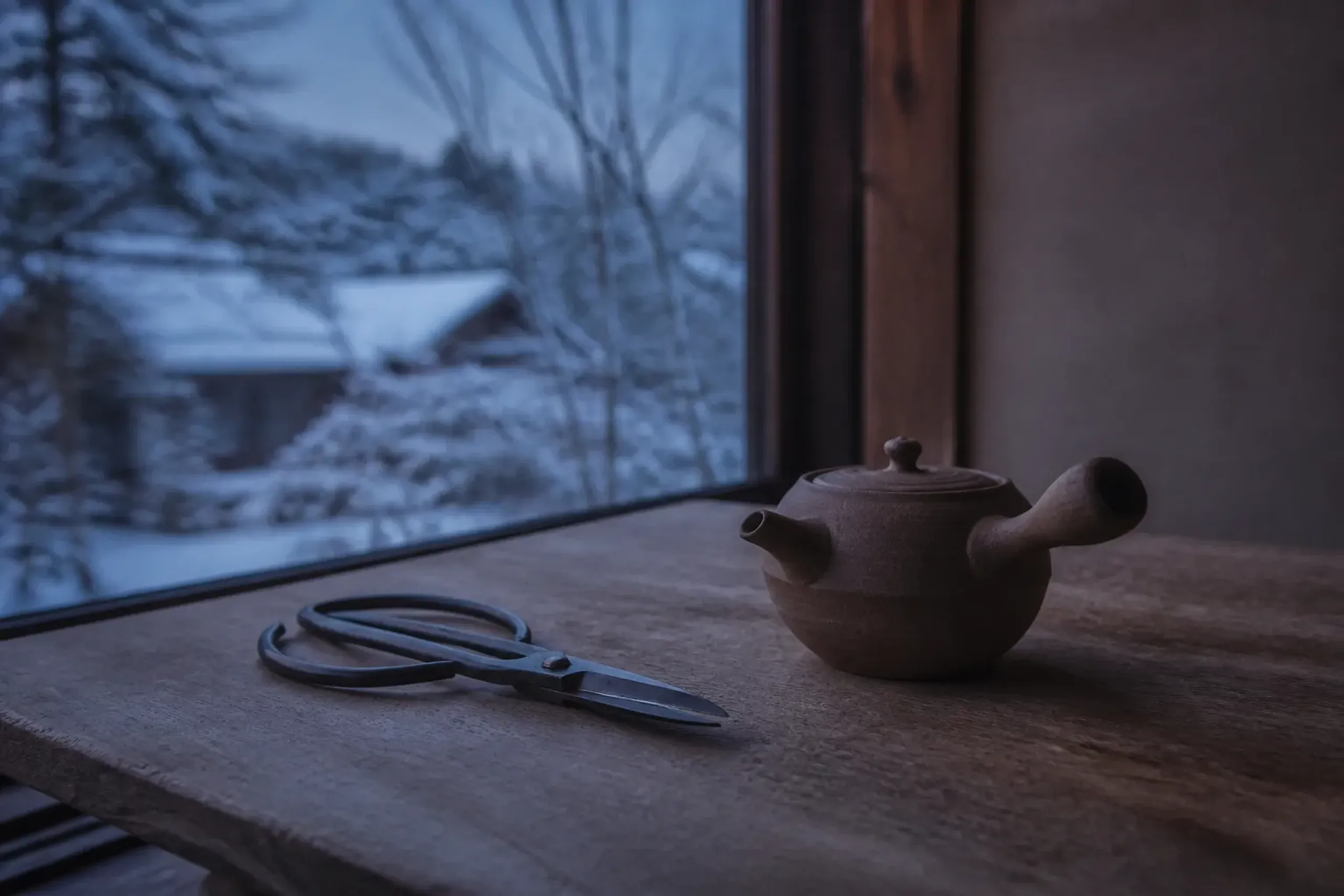
Antique pots and forged steel tools offer tangible, export-compliant connections to the craft.
Key fact: Live plants face severe phytosanitary restrictions and multi-year quarantine mandates in most Western countries. You cannot simply purchase a tree and pack it in your luggage.
Clients often assume they can purchase a decades-old white pine after their lesson and fly it home. They cannot. Customs regulations strictly prohibit the frictionless export of soil and live flora to protect domestic agriculture from foreign pests. Attempting to bypass these laws results in the immediate destruction of the tree at the border.
For those who wish to invest financially in the art form, the industry offers a highly refined alternative.
Option A: Commissioned Custodianship
Rather than attempting a complex, multi-year quarantine export process, serious collectors purchase a mature tree and commission the Japanese nursery to retain physical custody. The master continues to maintain, style, and care for your investment in its native climate. You visit your tree during subsequent travels to Japan. This arrangement guarantees the tree's survival and deepens your ongoing relationship with the nursery.
Option B: Acquiring The Hardware
If you desire a physical object to bring home immediately, focus on the tools and vessels. Masakuni carbon-steel shears are forged with the same metallurgical precision as traditional swords. They represent the apex of agricultural hardware. Similarly, sourcing antique Tokoname-ware unglazed clay pots provides a tangible connection to the craft without violating agricultural export laws. Guests interested in the broader ceramics context often appreciate our separate briefing on Modern Potters Of Mashiko: A Quiet Collector’s Day Trip From Tokyo, as the disciplines overlap significantly.
How To Arrange A Private Bonsai Masterclass
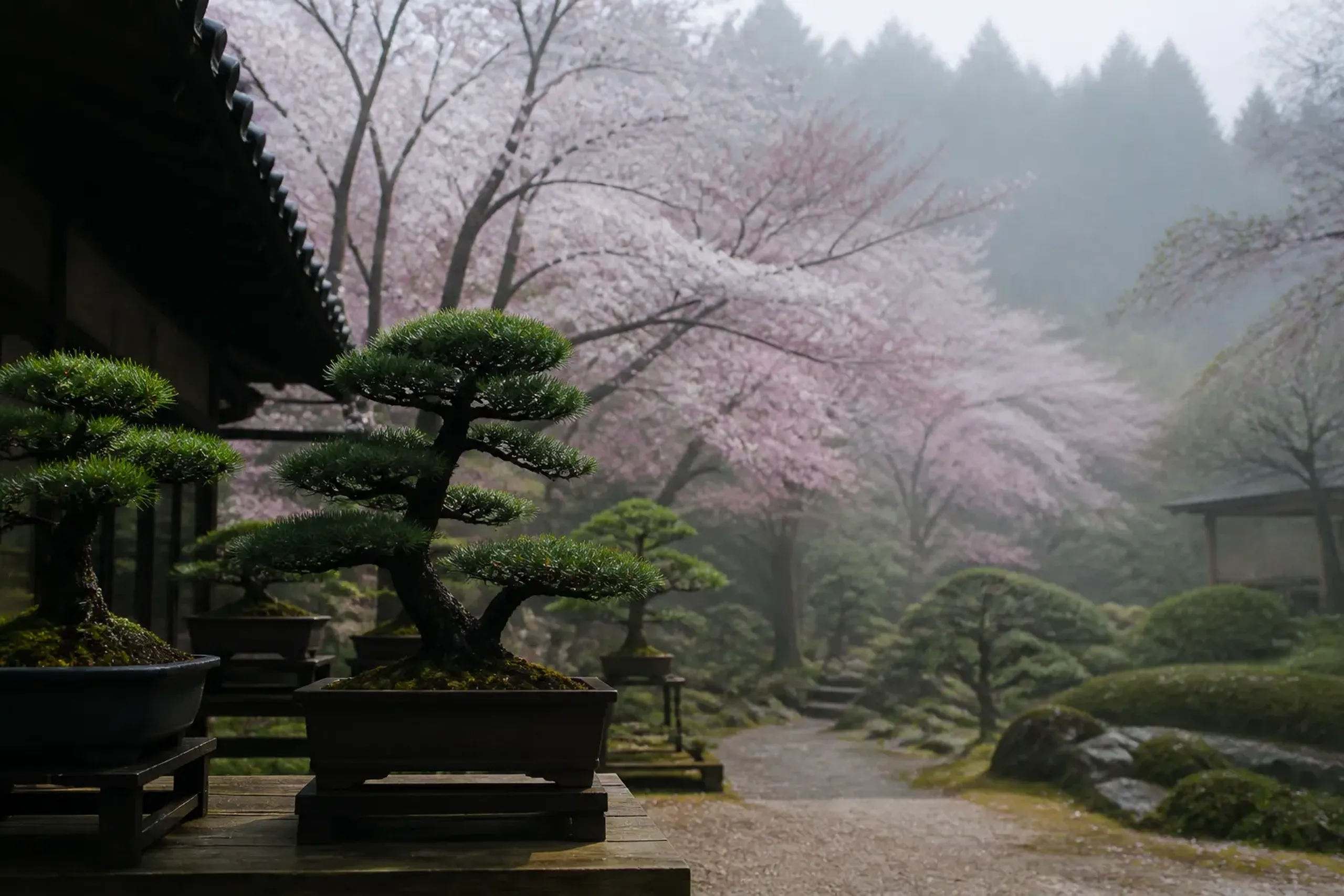
Establishing contact with elite nurseries requires specific protocols. Shunkaen Bonsai Museum and Seishoen publicly list their workshop availability, pricing, and operating hours. Publicly bookable platforms such as Wabunka also aggregate experiences, including combination sessions that blend bonsai instruction with traditional tea ceremonies. For standard inquiries, travelers can reference resources provided by GO TOKYO or the Saitama City Visitors Guide.
However, securing closed-door sessions with senior practitioners, arranging private interpreters who understand specific botanical terminology, and ensuring complete privacy require specialized coordination. Guests interested in navigating these exclusive avenues often contact our concierge for tailored guidance. We ensure all logistical parameters—from precise timing to cultural etiquette—are meticulously managed before arrival.
Why Choose Japan Royal Service
Our approach to cultural encounters relies entirely on discretion and calibrated access. We understand that high-net-worth travelers require absolute privacy. The single most important value we provide across our client base is the total confidentiality of your identity and itinerary.
When you require bespoke itineraries that bridge the gap between luxury accommodation and authentic artisan workshops, our team acts as the invisible architect of your day. We facilitate your journey into Hidden Japan—the exclusive venues and private introductions that standard search engines cannot index. Our fleet of private transportation, featuring the Lexus LM 500 and Toyota Executive Alphard, ensures that your transit from central Tokyo to the quiet lanes of Omiya Bonsai Village remains entirely secure and extraordinarily comfortable.
In our experience, the finest moments in Japan occur behind closed doors, facilitated by trusted introductions. For private coordination, reach our team privately via WhatsApp or LINE, or contact us here to begin planning a journey defined by quiet mastery and steadfast refinement.