In this guide
- 01One Spot Here Blooms Five Months Before Spring Elsewhere
- 02Why The Bōsō Peninsula's Bloom Windows Are Not All The Same
- 03Where To See Nanohana On The Bōsō Peninsula: Four Places, Four Timing Windows
- 04Is The Isumi Railway Nanohana Train Running Right Now?
- 05Can You Still Get The Nanohana-And-Sakura “Dual Bloom” In Isumi?
- 06How Do You Visit Bōsō Nanohana From Tokyo Without Wasting The Day?
- 07What A Luxury Nanohana Day Actually Looks Like (And What Ruins It)
- 08The Hands-On Side: Nanohana Picking In Minamibōsō (Real, Seasonal, Limited)
- 09A Small But Important Planning Note On Trains In Chiba
- 10Etiquette For Nanohana Fields: The Quiet Rules That Keep Them Open
- 11Season-By-Season Strategy: When You Should Choose Each Bōsō Area
- 12Frequently Asked Questions
- 13Plan Your Bōsō Nanohana Day With Us
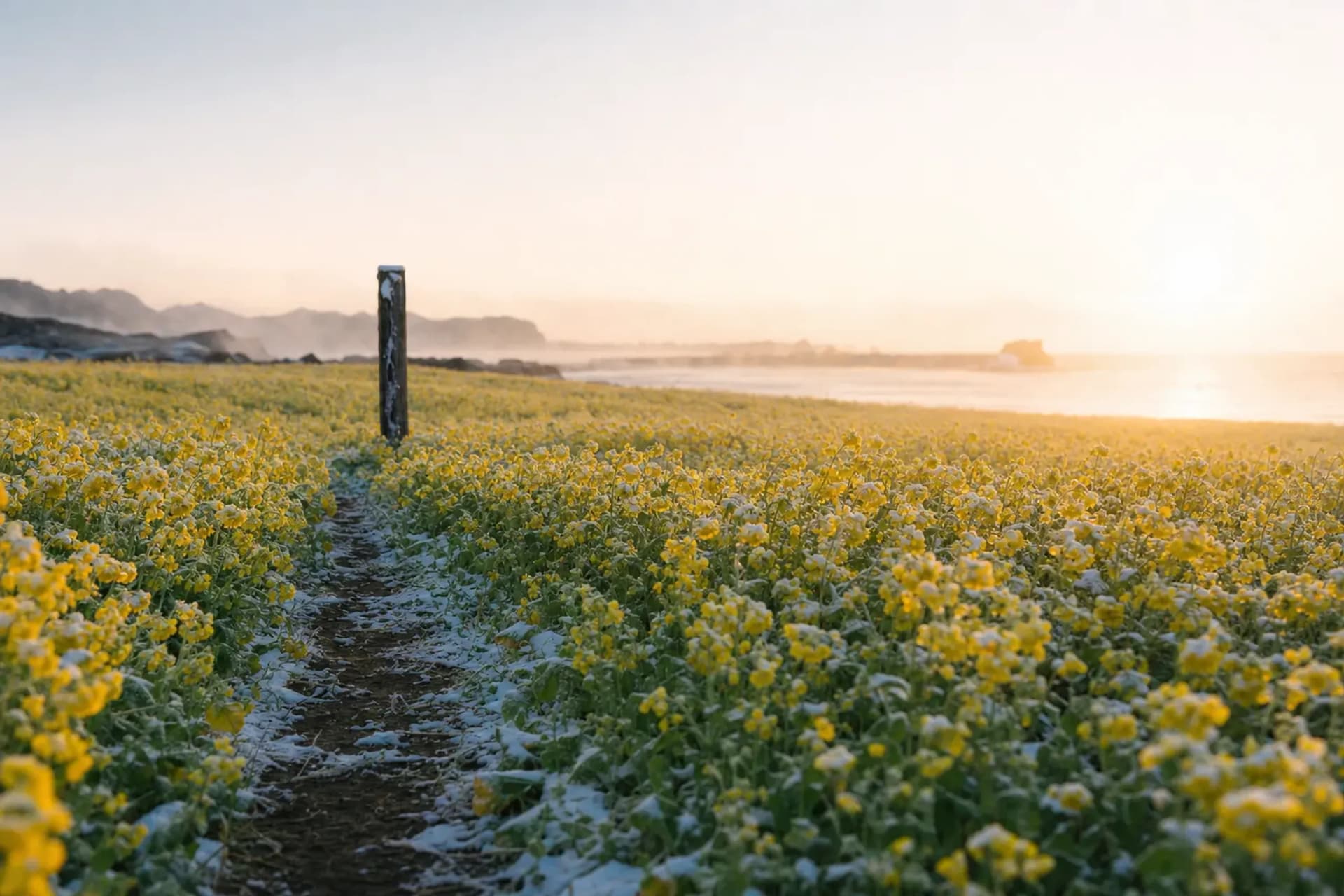
In December, when most of Kantō is still buttoned up against winter, southern Bōsō can feel oddly light. Softer air. Salt carried on the wind. And then, almost without warning, the color arrives.
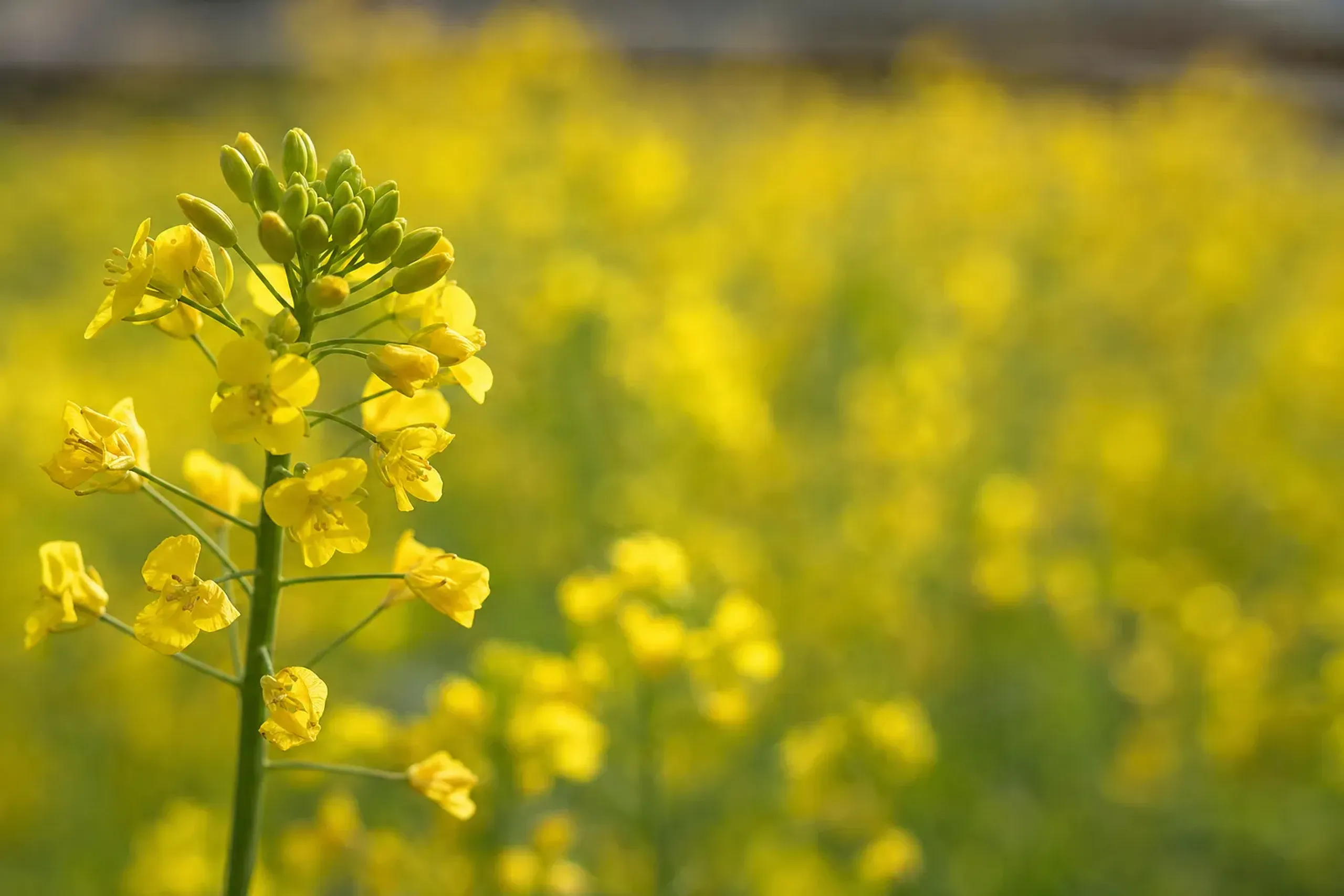
Nanohana—those bright rapeseed blossoms that Japan uses as a shorthand for “spring”—open here while Tokyo is still thinking in gray. Nor is it a single famous field. The peninsula has a genuine climate gradient, and it reveals itself in the bloom calendar, field by field, week by week.
Our team at Japan Royal Service treats this as a timing puzzle. Get the “where” slightly wrong and you land in a week of green stems. Get it right and you step into a yellow so saturated it looks almost unreal—the kind of quiet, uncrowded scene the Japan that Google cannot find still holds in reserve.
One Spot Here Blooms Five Months Before Spring Elsewhere
Wadaura's nanohana fields in Minamibōsō can bloom from December through May, thanks to the warmest climate in the wider Kantō region.
That single fact changes how you plan winter in Japan. When Kyoto is quiet but cold and Tokyo is brisk, the Bōsō Peninsula offers a different kind of season—coastal, mild, and earlier than anywhere your fellow travelers will think to look.
It also rewards precision. “Bōsō nanohana” is often treated online as one attraction, but the bloom windows shift as you move across the peninsula—a form of seasonal literacy, of knowing exactly what to experience where in which week, that separates a memorable morning from a wasted one.
We think of it like a watchmaker's map. A few kilometers matters. A week matters more.
Why The Bōsō Peninsula's Bloom Windows Are Not All The Same
The Bōsō Peninsula is not one field; it's a spread of microclimates, and nanohana timing changes noticeably between Minamibōsō, Tateyama, Kamogawa, and Isumi.
Southern coastal areas like Minamibōsō and Tateyama sit in a milder band, and that warmth pulls blooming earlier. Move north and east and you often see later timing, especially in places that become famous from late winter into early spring.
This is why we plan nanohana days backwards from the bloom window, not from a map pin. To do the reverse is the most common—and most costly—mistake.
If your schedule is fixed, we adjust the location. If your location is fixed, we adjust the day—sometimes down to a single morning.
Where To See Nanohana On The Bōsō Peninsula: Four Places, Four Timing Windows
There are four reliable nanohana areas across the Bōsō Peninsula, and their bloom windows are genuinely different: Wadaura (Dec–May), Kamogawa Nanabatake Road (early Jan–early Mar), Bōsō Flower Line (Jan–Mar), and the Isumi Railway corridor (mid-Feb–early Apr peak).
Below is the clean planning view we use. No romance—just the facts. Then we build the day around them.
| Nanohana Location (Chiba) | Typical Bloom Window |
|---|---|
| Wadaura Flower Fields (Minamibōsō) | December–May |
| Nanabatake Road (Kamogawa) | Early January–Early March |
| Bōsō Flower Line (Tateyama–Chikura coastal route) | January–March (some sources note into April) |
| Isumi Railway Corridor (Isumi City–Ōtaki) | Flowers from mid-Feb; peak roughly March–early April |
Now, the nuance.
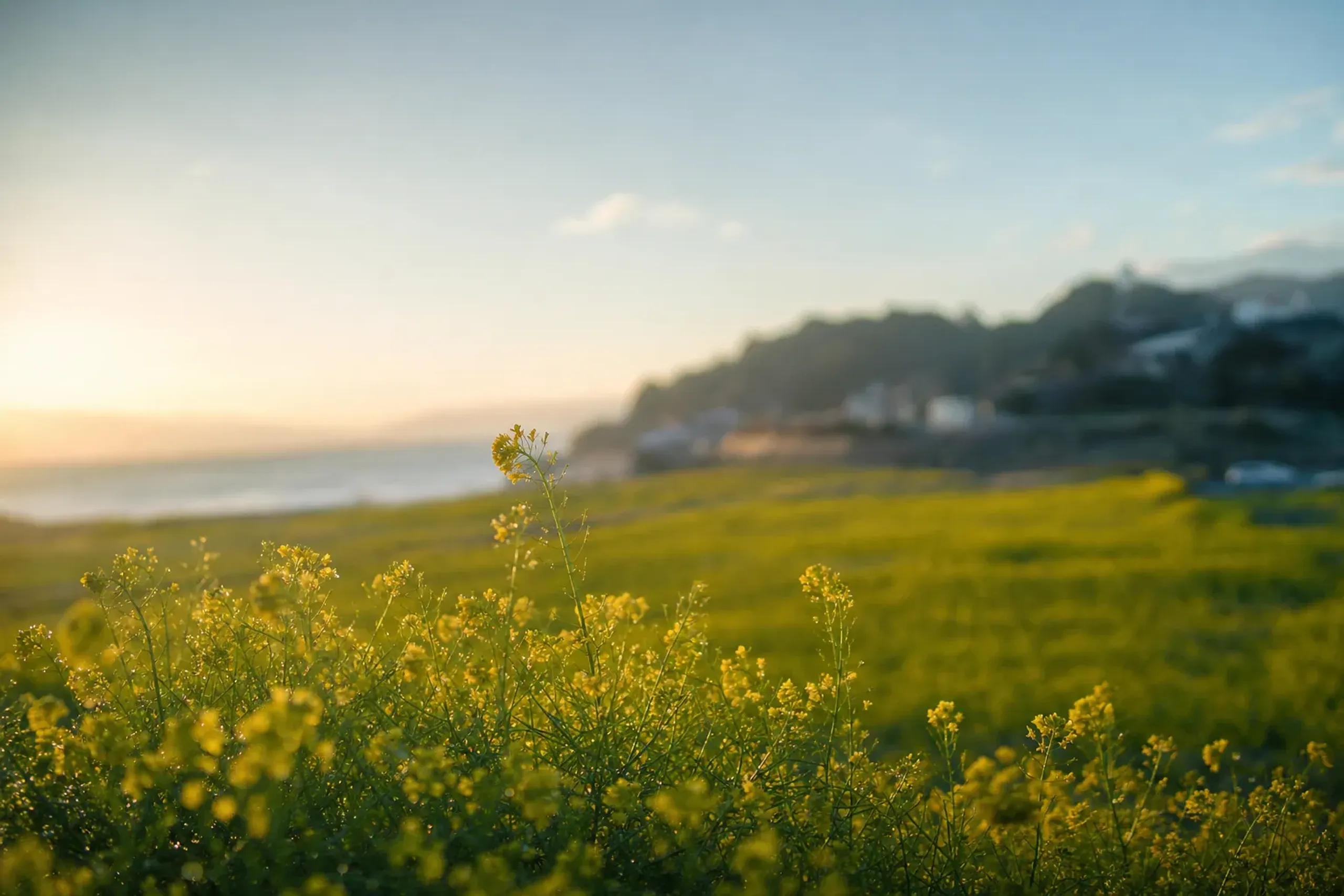
Each place has a different “best hour” and a different access reality. That's precisely where most generic guides go quiet.
Wadaura Flower Fields (Minamibōsō): December Through May
This is the headline for a reason. December blooms are rare in the wider region, and Wadaura holds the peninsula's longest-running nanohana window.
Expect a calmer scene than the famous spring corridors—an almost wabi-like stillness, the quiet of open fields where the flowers, not the crowd, set the mood. The air can still carry winter's edge, but the light is brighter than you'd guess.
Our practical note: go early, then linger. If you arrive at midday, the yellow can flatten under hard sun.
Nanabatake Road (Kamogawa): Early January Through Early March
Nanabatake Road sits near Kamogawa City Hall and is a dedicated seasonal flower area of roughly 33,000 square metres. Broad, yet still human-scale.
Chiba Prefecture's official English information lists the 2026 season window as January 10 to March 8, 2026, and describes it as about a 15-minute walk from JR Awa-Kamogawa Station.
There is also a small mini-train attraction onsite (separate from the regional railway discussion below). If you're traveling with family, this is the easiest “nanohana plus a small ride” pairing to arrange without complicated logistics.
Bōsō Flower Line (Tateyama–Chikura): January Through March
The Bōsō Flower Line is an approximately 46-kilometer scenic coastal road between Tateyama and Chikura. It's less “one destination” and more a string of unfolding moments.
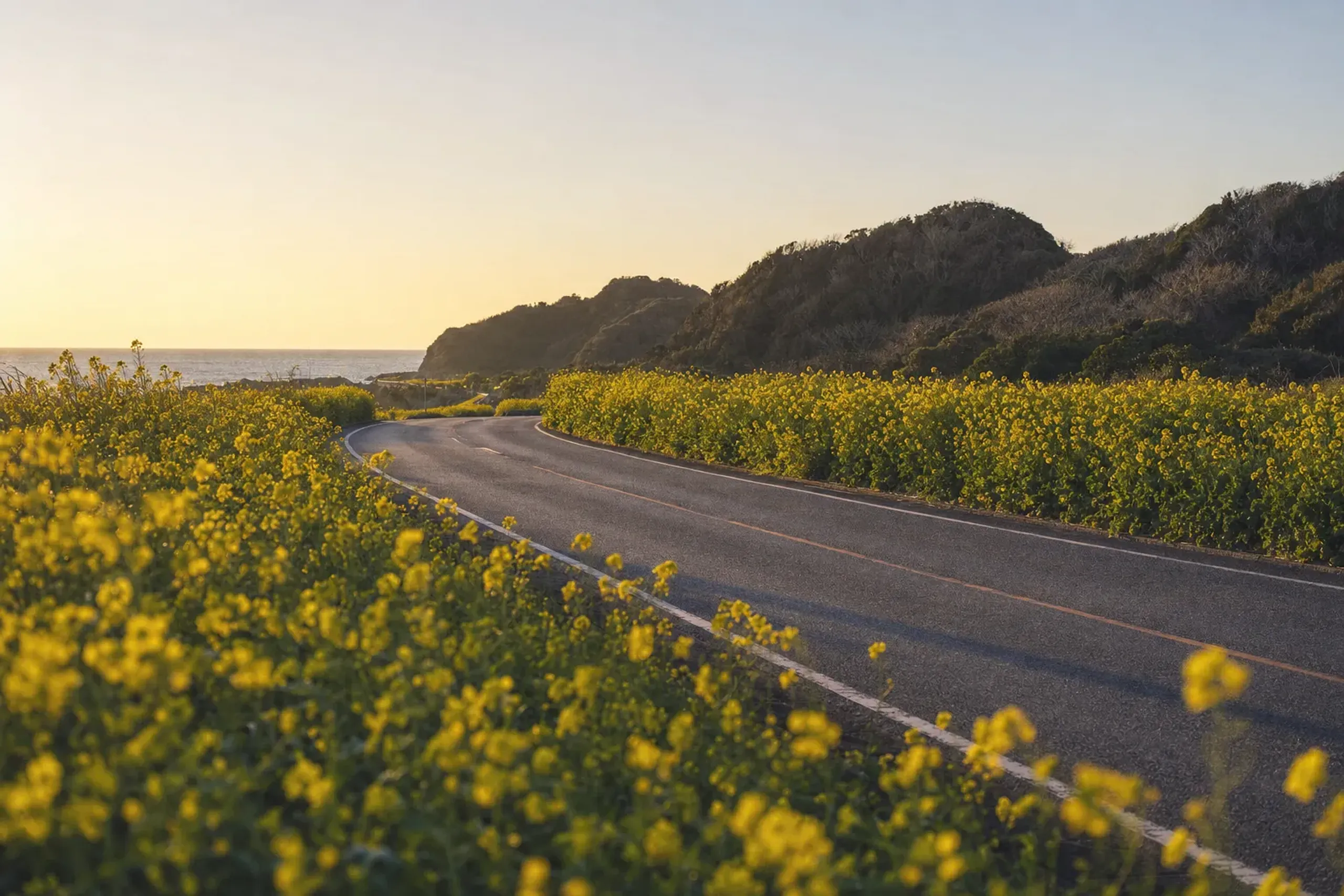
Winter is widely cited as the best time for nanohana here, with blooms typically strongest from January through March. Some travel references describe the broader season extending into April, depending on the year.
This is where a private transportation day changes everything. You stop when the light is right, not when a timetable tells you to move—and a chauffeur who knows the coast will anticipate the pause you haven't yet asked for.
Isumi Railway Corridor (Isumi City–Ōtaki): Mid-February To Early April Peak
This is the most famous “nanohana and rail-side fields” stretch in Chiba. In years when timing lines up, parts of the corridor are also known for cherry blossoms appearing alongside nanohana—especially between Ōhara and Kazusa-Nakagawa stations.
At peak, more than half of the line's 26.8 km has nanohana bordering the tracks. That scale is why it became iconic.
But there is a hard operational reality right now. Keep reading.
Is The Isumi Railway Nanohana Train Running Right Now?
No—the entire Isumi Railway line is currently suspended after a derailment, with replacement buses operating, and restoration targeted for autumn 2027.
Key fact: You can still see nanohana along the Isumi Railway corridor because residents continue tending the flowers, but you cannot ride a train through the fields during the suspension.
Many older articles and videos still describe the “nanohana train” experience as if it's automatic. It isn't. Right now, the train portion does not operate.
Replacement buses are running instead.
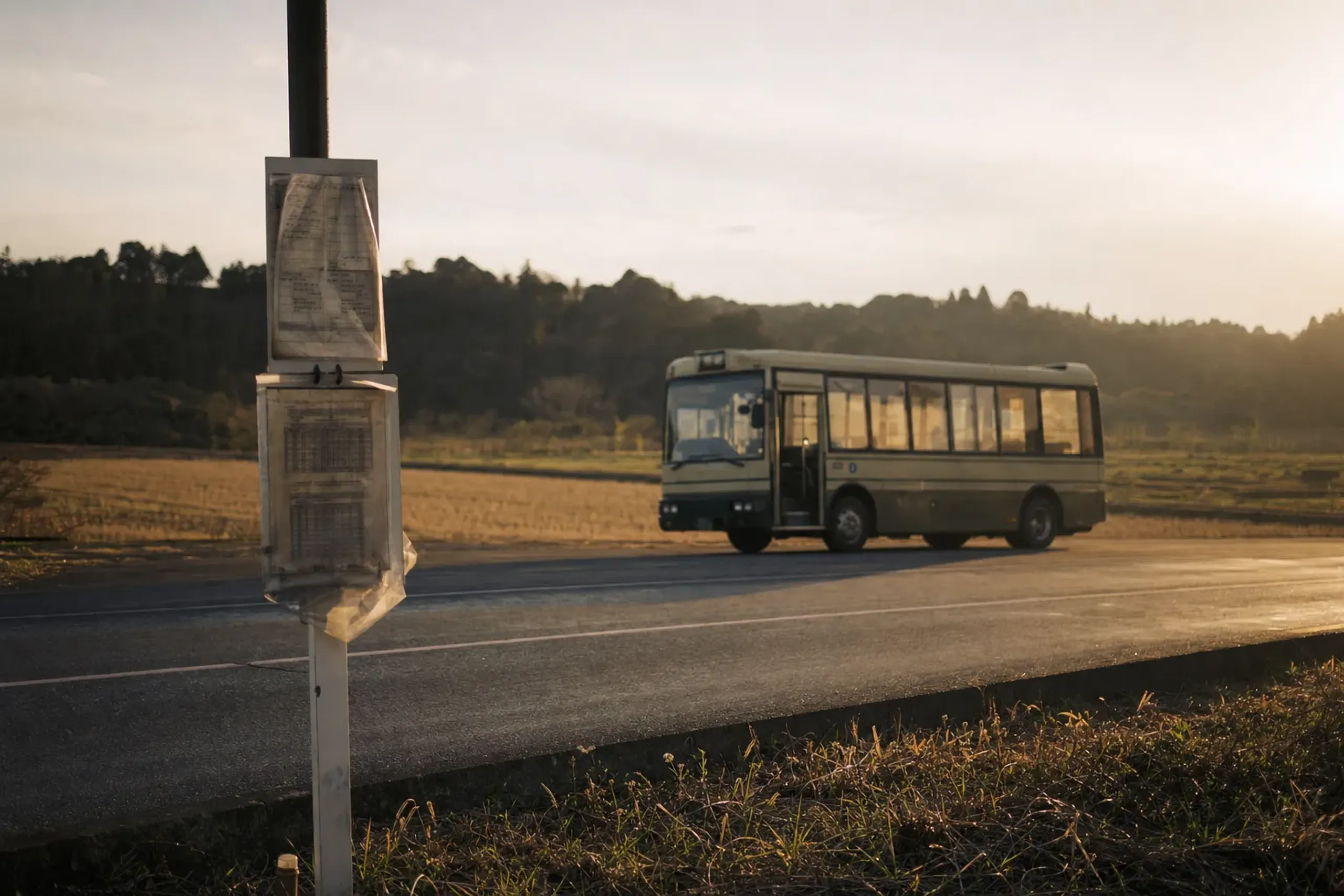
That changes the photo rhythm, the comfort level, and what kind of day it becomes.
In our experience, this is exactly where a concierge-grade plan matters. Our team verifies the latest Isumi Railway restoration status and the current-year bloom timing before your visit, then recommends a route that still feels like a holiday—the kind of silent, anticipatory care that spares you an unwelcome surprise at the platform.
Can You Still Get The Nanohana-And-Sakura “Dual Bloom” In Isumi?
Yes, the nanohana and cherry blossom dual bloom can still occur in season along the Isumi corridor, but it is not viewable by train while the Isumi Railway line remains suspended.
When it happens, it's one of those rare color harmonies: yellow at ground level, pale pink overhead, and a thin blue strip of sky that looks edited.
The overlap window is short. Sometimes it lands. Sometimes it slips by a week on either side.
We plan this like a probability problem, not a promise. If the overlap is unlikely during your dates, we steer you toward Wadaura's long window or Kamogawa's more reliable seasonal layout.
How Do You Visit Bōsō Nanohana From Tokyo Without Wasting The Day?
The fastest way to see nanohana in southern Bōsō from Tokyo is to travel by car, because the best fields are spread out and bloom timing varies by area.
JNTO describes the Bōsō Peninsula as an easy getaway from Tokyo—often 1 to 2 hours, depending on how far you travel.
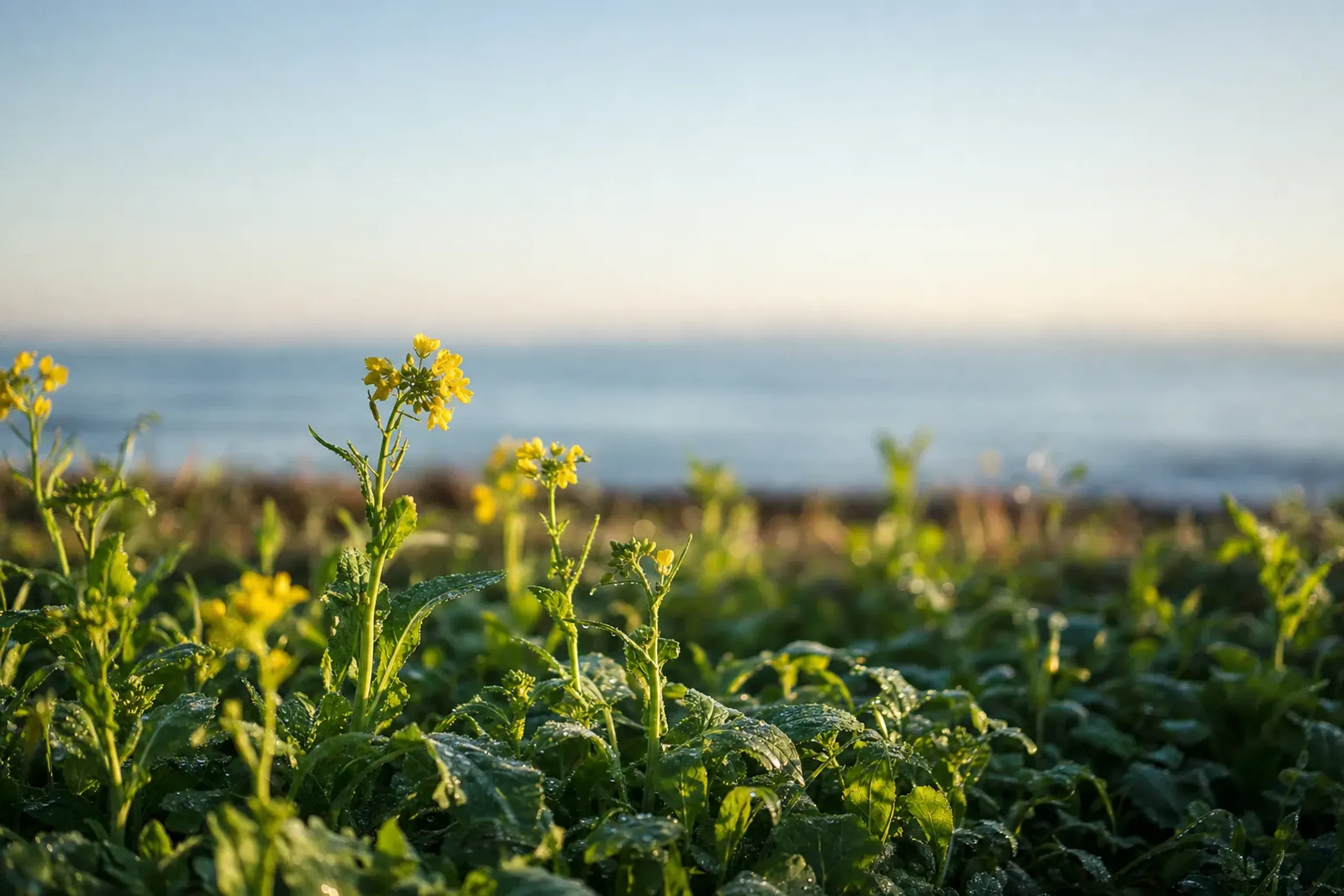
That sounds simple, but the detail is where time quietly disappears.
Here is the pattern we see with well-traveled guests. They underestimate two things: how quickly daylight fades in winter, and how much time transfers add when you want to combine two different nanohana zones in one day.
If you want a day that feels quiet, not rushed, choose one “anchor” location, then add one supporting stop. Two anchors is usually too much—unless you start very early.
Option A: A Focused Kamogawa Day (Simple Rail + Walk, Then Private Car)
This option suits travelers who enjoy a short walk and want a clean, structured nanohana view.
- Anchor: Nanabatake Road (Kamogawa), timed for soft morning light
- Rhythm: unhurried photos, then a coastal drive segment for sea air
- Good for: couples, parents with older children, travelers who dislike long car days
We keep the day narrow. Less switching. Better mood.
Option B: A Coastal Drive On The Bōsō Flower Line (Photography-First)
This option is for travelers who want the peninsula to feel wide—fields, cliffs, sea, and long, unhurried pauses.
- Anchor: Bōsō Flower Line between Tateyama and Chikura
- Rhythm: multiple short stops, each chosen for angle and background
- Good for: photographers, friends traveling together, anyone who wants “more coast than crowd”
It's not about ticking boxes. It's about getting one perfect frame.
Option C: The Early-Bloom Wadaura Plan (December To May Insurance)
This is the solution when your Japan dates are early, or when you want maximum bloom certainty.
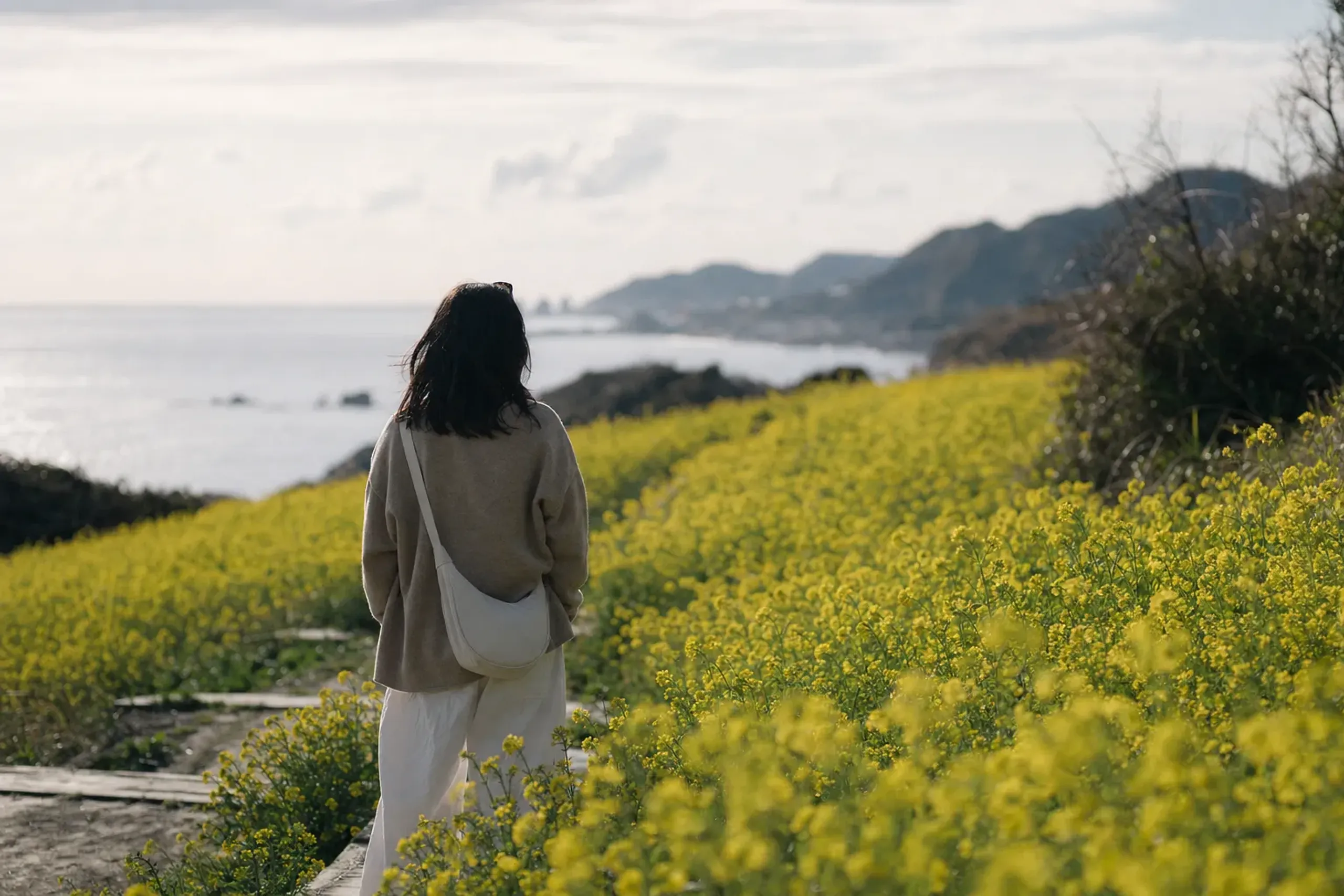
- Anchor: Wadaura flower fields (Minamibōsō)
- Rhythm: late morning arrival, long field time, then a short scenic detour
- Good for: December–February travelers, and anyone who dislikes “maybe” flowers
Sometimes the most luxurious thing of all is not gambling on timing.
What A Luxury Nanohana Day Actually Looks Like (And What Ruins It)
A luxury nanohana day is quiet, warm enough to keep your coat open, and paced for light—because the flowers are the main event.
What ruins it is usually avoidable. Arriving at the wrong hour. Chasing three locations because a blog said you could. Or trying to force the Isumi “train view” during the current suspension.
We keep the plan simple. One anchor. One supporting stop. A clean return.
If you want to extend it into an overnight, we steer the conversation toward a tailor-made itinerary that treats Bōsō as a winter coast escape, not merely a flower field—and always with the discretion that keeps your identity and your movements entirely your own.
The Hands-On Side: Nanohana Picking In Minamibōsō (Real, Seasonal, Limited)
Nanohana picking is available in parts of Minamibōsō in season, including programs listed by Chiba's official tourism sources, but availability and timing can shift year to year.
One example listed by the Chiba Prefecture tourism site (Maruchiba) is Kasuya Farm (粕谷農園) in Minamibōsō City, where nanohana picking is typically offered around February and edible nanohana is also cultivated.
These experiences are local and practical. That's the point. They don't run like big-city attractions—they run on the rhythms of a working farm, which is exactly what makes them worth the introduction.
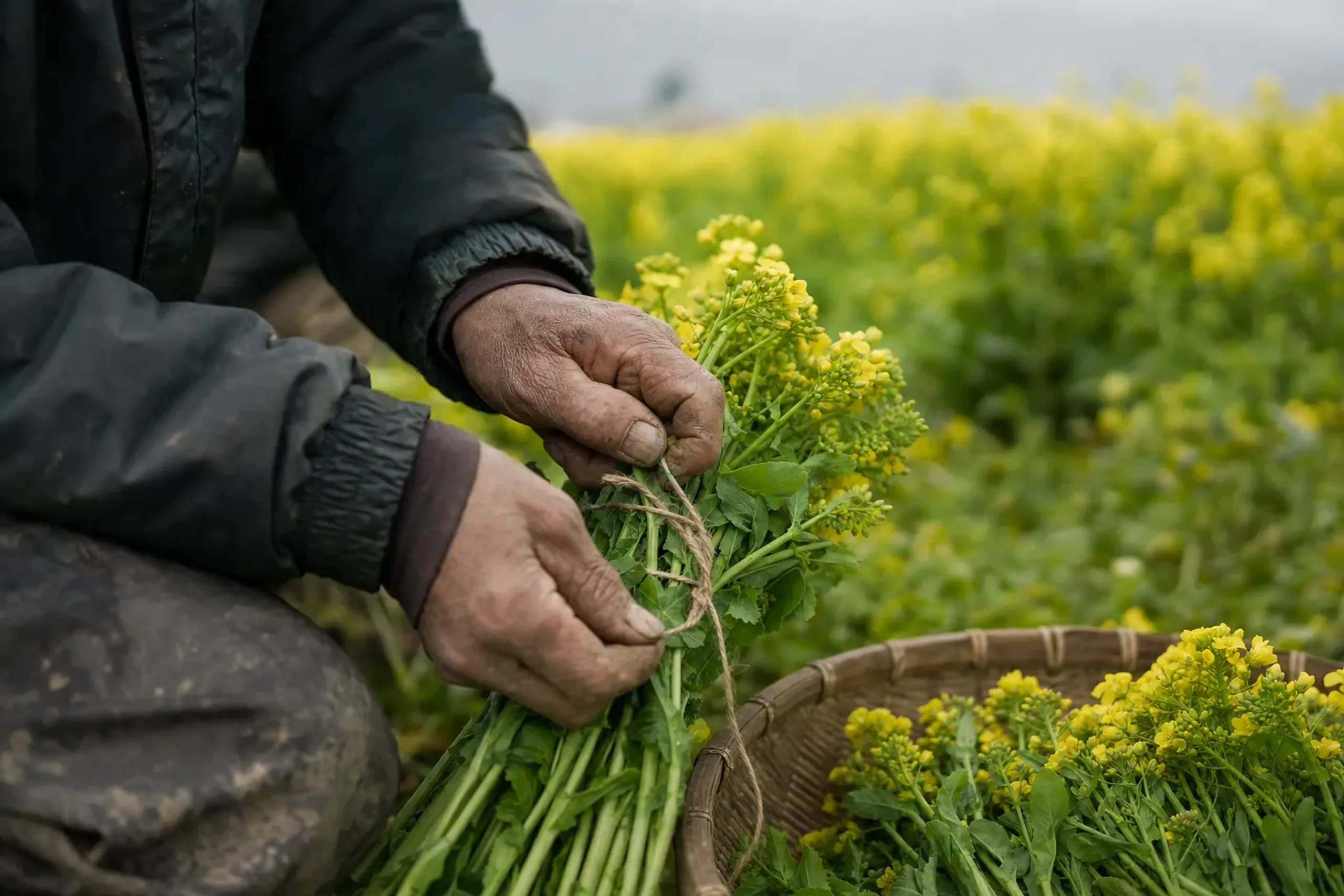
Our role is to guide you toward what is genuinely operating during your dates, with clear etiquette, so that you never feel you're intruding into someone's working day.
A Small But Important Planning Note On Trains In Chiba
Rail access in Chiba can be excellent for certain corridors, but seasonal disruptions do happen, and you should plan with contingencies.
As one example of why we stay watchful, Kominato Railway published an operational notice (updated 2026-09-25) stating the Goi–Kazusa-Ushiku segment was operating normally, while the Kazusa-Ushiku–Kazusa-Nakano segment was suspended due to typhoon damage.
This is not meant to alarm you. It's meant to keep your day intact.
For nanohana season, we prefer plans that can flex—especially for guests on tight schedules.
Etiquette For Nanohana Fields: The Quiet Rules That Keep Them Open
The simplest etiquette is also the most important: stay on designated paths and treat the fields as someone's work, not a backdrop.
Keep your shoes out of planted rows. Don't pull flowers unless you are in a clearly marked picking area. Ask before photographing people at close distance.
Voices carry in open fields. So does music from phones.
This is where refined travel truly shows. Not in what you wear, but in how lightly you pass through.
Season-By-Season Strategy: When You Should Choose Each Bōsō Area
If you travel in December, choose Wadaura; if you travel in January–early March, choose Kamogawa and the Bōsō Flower Line; if you travel in March–early April, consider the Isumi corridor for peak nanohana timing.
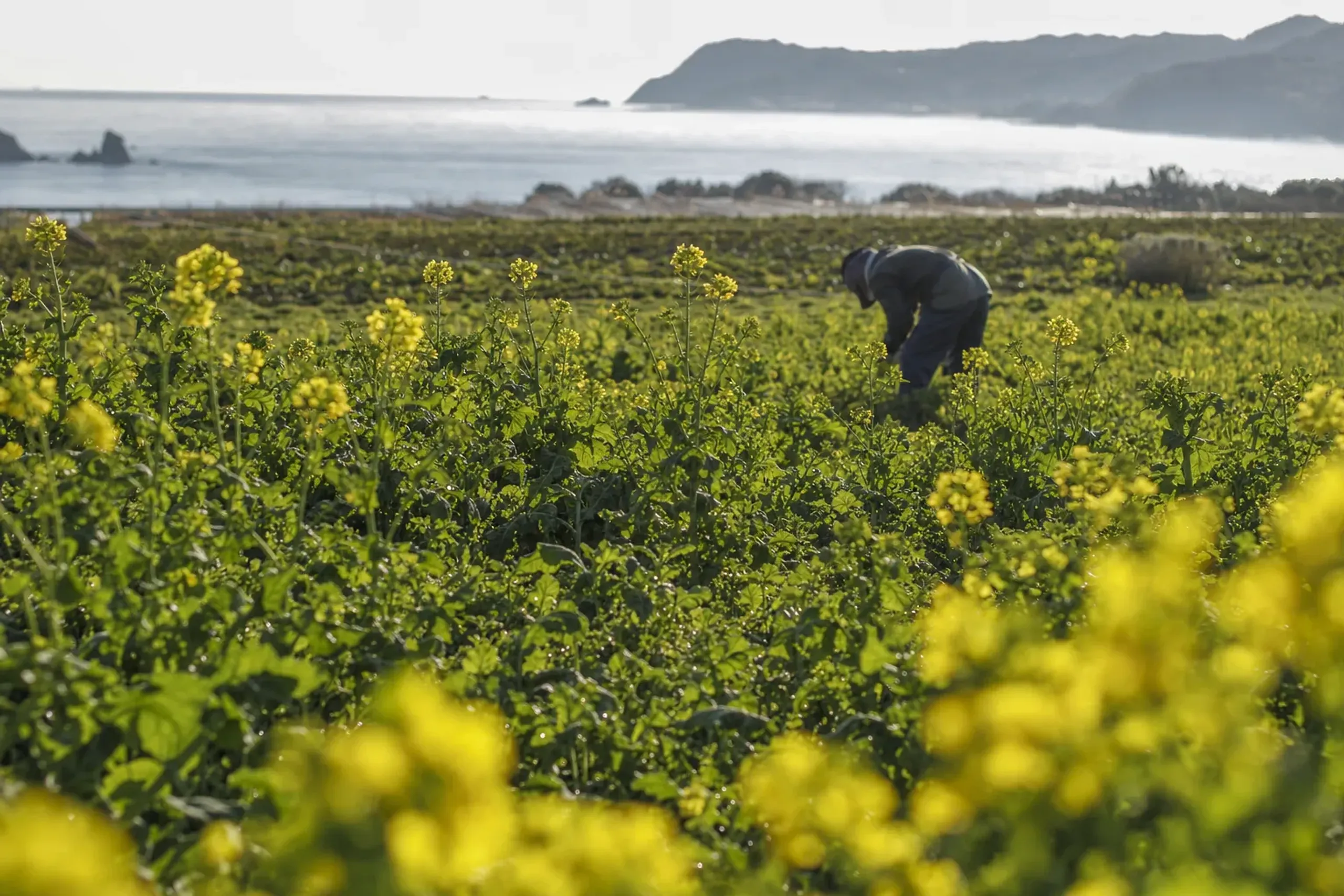
December is the outlier. That's precisely why it's valuable. You get “spring color” without spring crowds.
January and February give you the most balanced mix: dependable nanohana in the south, plus coastal air that feels clean and open.
March into early April is when Isumi becomes the name people recognize, and when the nanohana-and-sakura overlap can happen—though again, not by train during the suspension.
Frequently Asked Questions
Is The Isumi Railway Nanohana Train Operating In 2026 Or 2027?
No—the Isumi Railway is currently suspended across its entire line after a derailment, with replacement buses running and restoration targeted for around autumn 2027.
The flowers still bloom along the route because local residents continue tending them, but you should not plan on riding a train through the fields until service resumes.
Plan Your Bōsō Nanohana Day With Us
The difference between a green-stemmed disappointment and a field of impossible yellow is measured in kilometers and single mornings—and that is exactly the kind of timing we exist to solve. Whether you want December certainty at Wadaura, a photography-led coastal drive, or the delicate gamble of the dual bloom, we verify current bloom timing, railway status, and access before you ever set out.
To begin shaping a private, discreet nanohana escape along the Bōsō Peninsula, contact us here and let us build the day backwards from the bloom.