In this guide
- 01Why Matsutake Holds Such A Grip On The Japanese Autumn
- 02A Thousand-Year Lineage: The Hunt Of Nobles And Daimyō
- 03Why The Ground Is Closed: The Plain Facts
- 04How Access Is Arranged, And What We Actually Do
- 05Nagano: The Wild-Mushroom Capital, And When To Go
- 06The Table: Where The Day Always Delivers
- 07The Honest Note: No Guarantees
- 08Questions We Are Often Asked
- 09Why Choose Japan Royal Service
Before you see anything, you smell it. A warm, resinous sweetness threaded through cold pine air, closer to spice than to earth. It arrives on the wind a moment before the hillside comes into view. In autumn, on certain guarded slopes in the mountains of central Japan, that scent is the whole point. It is the smell of matsutake, and for a thousand years it has meant one thing to the Japanese: the season has turned.
Matsutake hunting is not a thing you can book. Let us say that plainly at the start, because it shapes everything that follows. The best grounds are closed, guarded, private. Access comes by permission — and arranging that permission, lawfully and well, is where the value of a day like this actually lives. Our team at Japan Royal Service arranges matsutake hunting of this kind, through landowners and permit holders, on ground that is lawfully accessible, with a knowledgeable guide and the meal built around the day. Everything else in this article supports that single idea.
Why Matsutake Holds Such A Grip On The Japanese Autumn
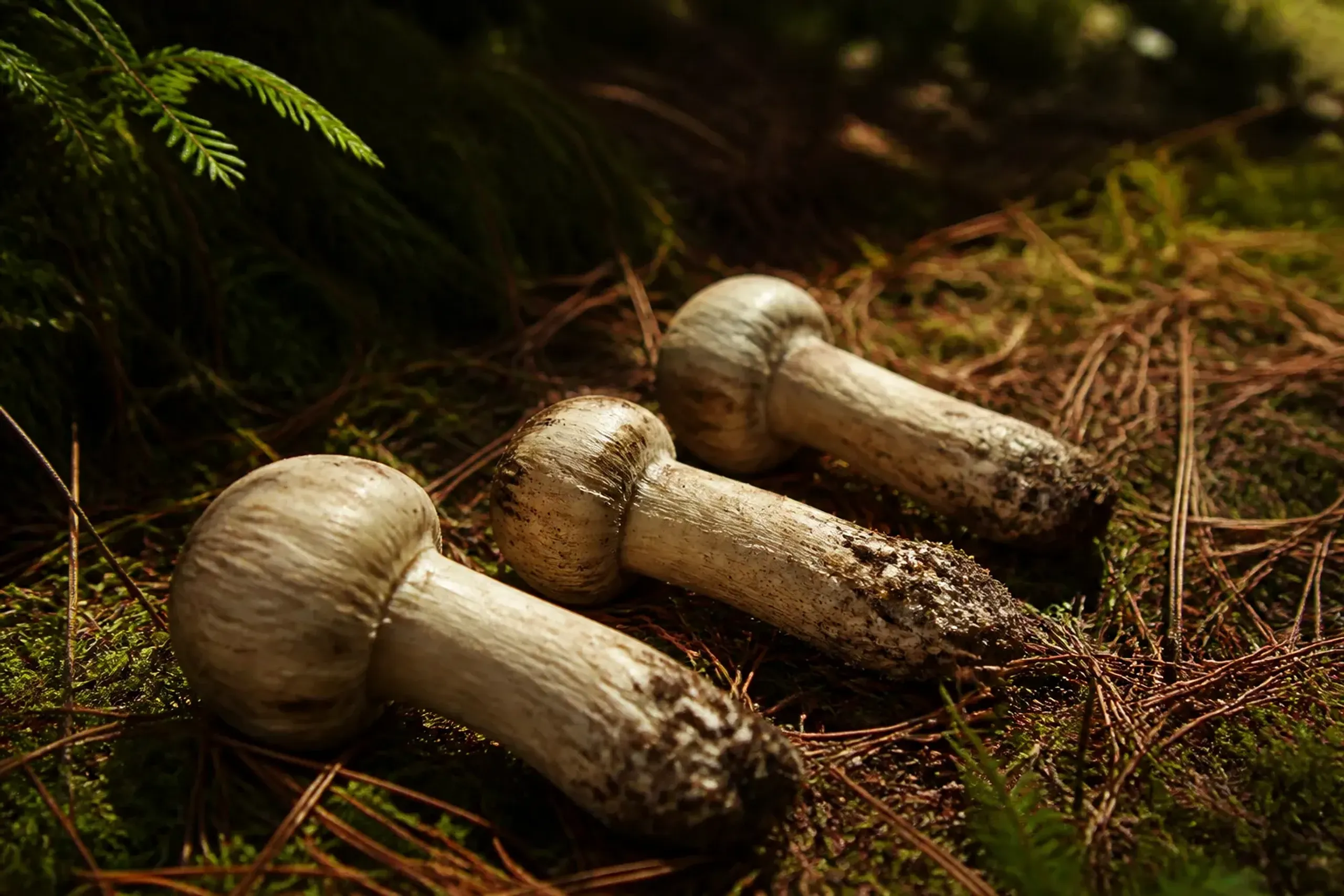
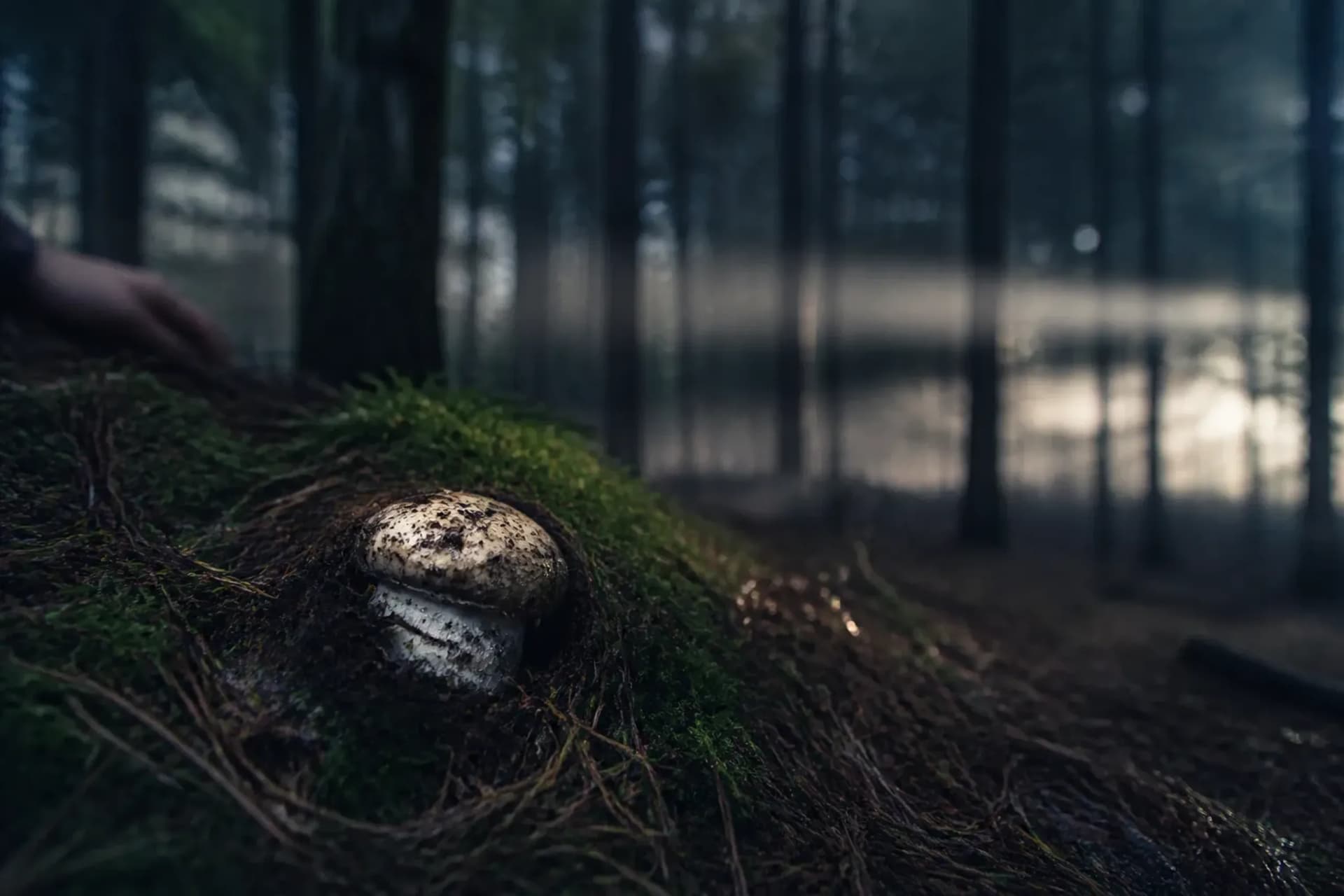
Matsutake is prized above almost every other food in Japan, and the reason is aroma rather than flavour. Sliced thin and barely cooked, it gives off a scent the Japanese have written poetry about for centuries. The Man'yōshū, the oldest anthology of Japanese verse, already celebrates that fragrance as the smell of autumn itself. The word matsutake appears in the Shūi Wakashū, a tenth-century imperial anthology. This is a mushroom with a literary record older than most of the world's cathedrals.
It resists the market in a way that keeps it rare. Japan's Ministry of Agriculture, Forestry and Fisheries states outright that matsutake cannot be farmed — cultivation remains unfeasible. It grows wild, in a living relationship with red pine, and the only way to encourage it is to tend the forest itself. MAFF describes a forest-improvement approach developed in Kyoto Prefecture from 1978, the so-called Kyoto method, which involves clearing mid-layer trees and humus to improve the conditions matsutake needs. Even then, nothing is promised. The mushroom answers to weather, soil, and decades of quiet care.
That rarity is not marketing. It is ecology. Pine wilt disease has pressured red pine forests across Japan, and where the pine declines, the matsutake follows. So when a slope produces a good crop, it is the result of long stewardship — the kind that does not show up on a search engine.
A Thousand-Year Lineage: The Hunt Of Nobles And Daimyō
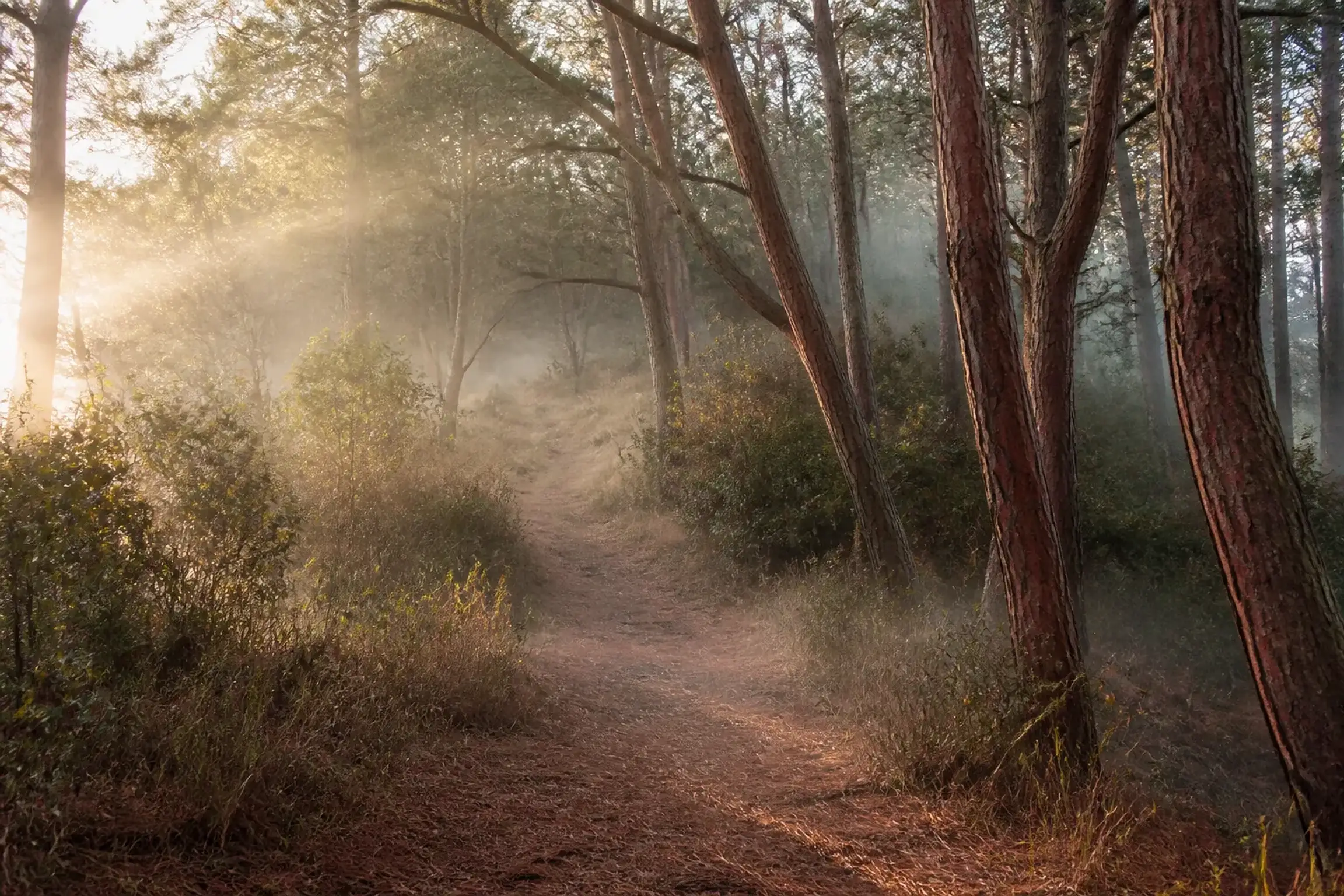
The pursuit itself is called matsutake-gari, 松茸狩り — the matsutake hunt. And it was, from very early on, an aristocratic pastime.
Nobles of the Kamakura period were known to go on matsutake hunts. The custom carried forward. In the Edo period the daimyō took it up as autumn recreation, Tokugawa Mitsukuni — remembered across Japan as Mito Kōmon — among them. Later the pursuit spread through the Kamigata region, and autumn matsutake markets appeared in Kyoto and Osaka, where the arrival of the first mushrooms was an event in its own right.
This is what separates the day we are describing from the novelty foraging trips sold elsewhere. A morning on a pine hillside in autumn is not a gimmick invented for tourists. It is a continuation of something the Japanese nobility did for the better part of a millennium, for exactly the reason you will do it — the scent, the walk, and the meal at the end of it.
Why The Ground Is Closed: The Plain Facts
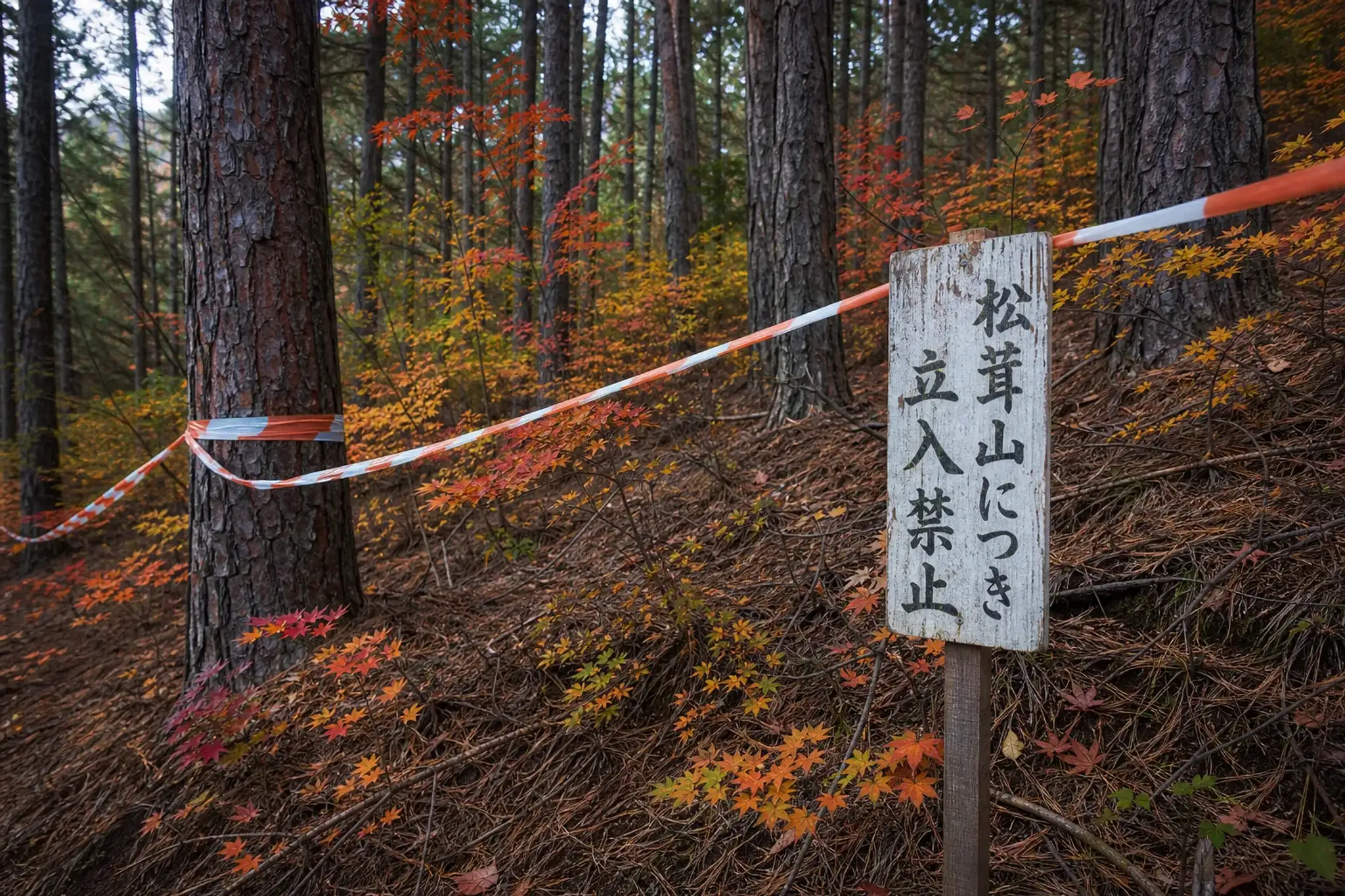
Here the tone changes, on purpose. What follows is not decoration. It is the reason an arranged day matters.
In autumn, matsutake grounds are guarded. Coloured tape is strung between the trees. Signs are posted that read 入山禁止 (nyūzan kinshi, "do not enter") and マツタケ採取禁止 (matsutake saishu kinshi, "matsutake picking prohibited"). Entering that ground without a paid permit or the landowner's invitation is poaching. It is prosecuted by the police. It carries heavy fines.
Lawful access means one of two things: genuinely unrestricted public land, or the permission of whoever owns or holds the rights to the ground. There is no third option. The marked mountains are private property, and we treat them as such. We do not regard a closed slope as an obstacle to get around. We regard it as someone's land.
Key fact: If a mountain is taped off or signed with 入山禁止, do not enter it. Entering guarded matsutake ground without a permit or the owner's permission is poaching, is prosecuted, and carries heavy fines. Lawful access requires either unrestricted public land or the landowner's explicit permission.
The Toxic-Lookalike Problem
There is a second plain fact. Japan has a recurring, documented public-health problem with poisonous mushrooms that resemble edible ones. Every autumn brings cases. This is precisely why a knowledgeable guide is not an optional refinement but a basic requirement of doing this safely. We will not offer identification guidance here — this is not a foraging manual, and misidentification is genuinely dangerous. The point is simply that expertise on the ground is the difference between a good day and a hospital.
How Access Is Arranged, And What We Actually Do
So the day cannot be booked in the ordinary sense. It has to be arranged.
Japan Royal Service arranges matsutake hunting through landowners and permit holders. That means lawful access to ground that is otherwise closed, a guide who knows both the forest and the mushroom, and a meal built around the day's outcome. We arrange it as a private matter. We do not publish the location, name the estate, or identify the people who make it possible — that discretion is part of what keeps such access open in the first place, and part of what our guests expect of us.
Around the hunt itself, the ordinary machinery of a good day runs quietly. Nagano is a chauffeured day from Tokyo, and our private transportation means the drive up into the mountains and back is part of the pleasure rather than a logistics problem. The whole thing sits inside a bespoke itinerary — the night before, the ryokan, the return — so nothing feels stitched together.
For guests who prefer a defined, reservation-based experience, real matsutake huts do exist. In the Ueda area of Nagano, around Shioda-daira, seasonal matsutake operations run guided hunts with clear conditions — a minimum party size, a dining commitment, a stated season window, and an explicit warning that no harvest is guaranteed because it is natural forest. We can guide you toward experiences of this kind or toward a more private arrangement, depending on what you are after.
Nagano: The Wild-Mushroom Capital, And When To Go
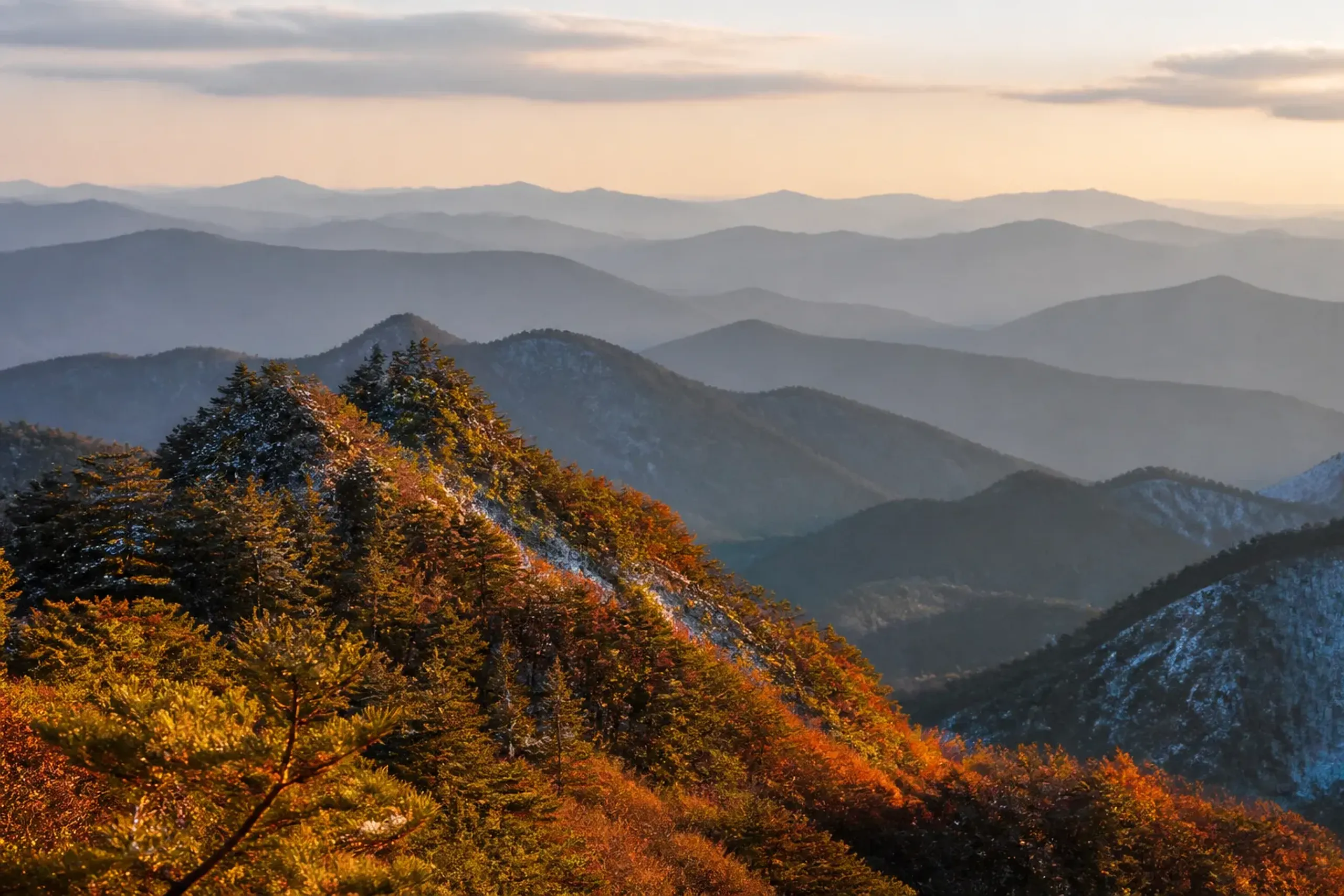
If there is one honest answer to "where," it is Nagano.
Nagano is the undisputed heart of wild mushrooms in Japan, and Ueda is named among the country's leading matsutake-producing areas. Around Shioda-daira the seasonal matsutake huts appear each autumn — an ecosystem of small operators, mountain cooks, and mushroom cuisine that exists nowhere else in quite the same density. This is the ground on which a properly arranged day is most plausible. Nagano is also, worth noting, the site of a 41-year study of matsutake harvest dynamics under forest management, work recognised by the Mycological Society of Japan. The provenance here is not romantic invention. It is documented.
On timing: the season runs from roughly late September into November, and MAFF places the window from September to early November. Treat that as a range, never a fixed date. Altitude shifts it. Weather shifts it. A warm October can push things late; a cold snap can bring them forward. We watch the season each year and advise accordingly, which is the only responsible way to plan around a wild crop.
The Table: Where The Day Always Delivers
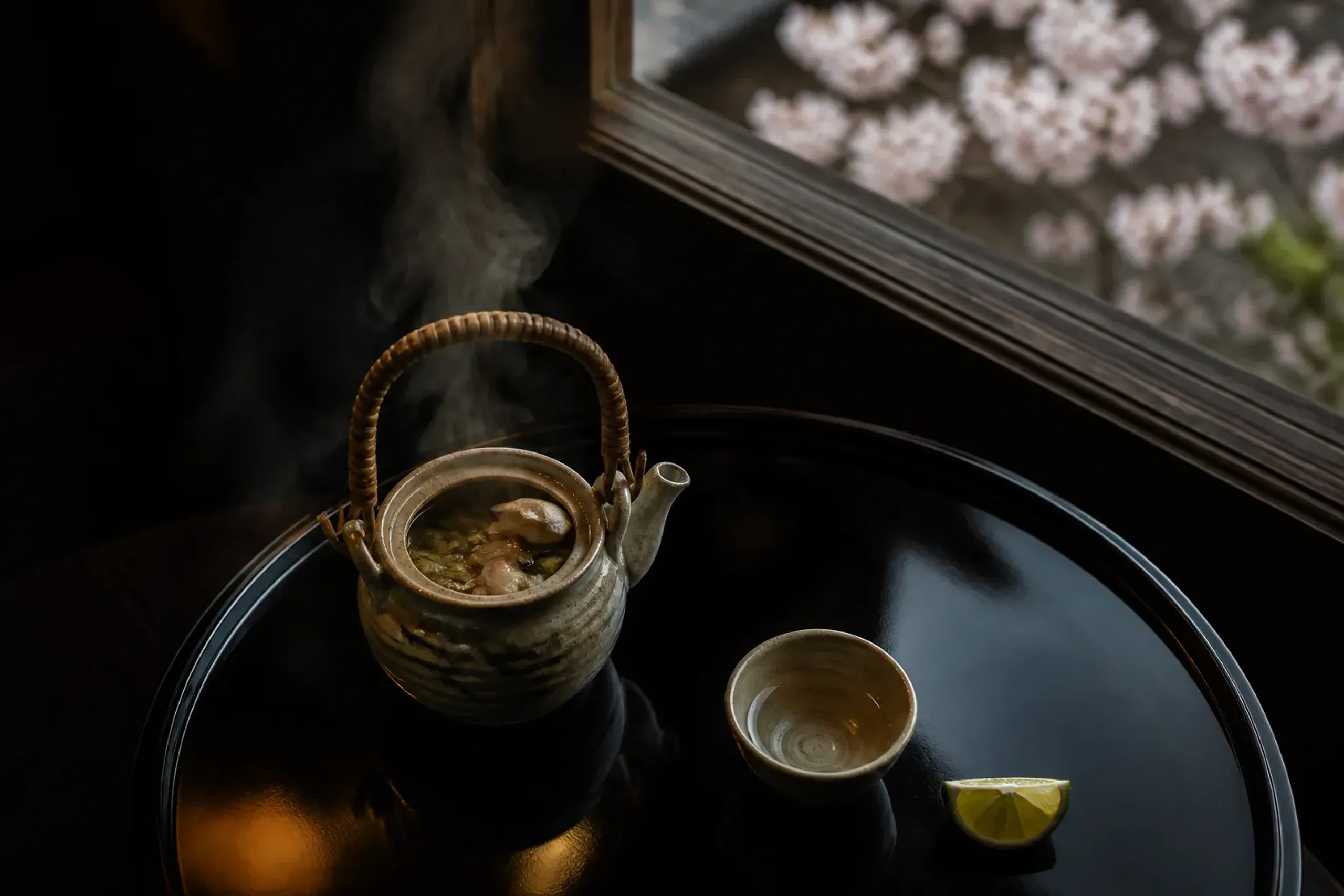
The mountain may or may not yield. The table always does.
This is the honest architecture of a matsutake day, and it is what makes the experience worth arranging regardless of the crop. Whether or not the hillside gives up a single mushroom, the meal is built around matsutake secured for you — at a ryokan that evening, or by a chef the same day. And the classic preparations are worth the trip on their own.
Dobin-Mushi
The signature autumn dish. Matsutake, a little chicken or white fish, sometimes ginkgo and mitsuba, steamed inside a small clay teapot with a delicate dashi. You pour the broth into a tiny cup, squeeze a wedge of sudachi over it, and drink. The aroma comes up off the cup before the liquid reaches you. Top Tokyo kitchens build entire autumn courses around it — BELLUSTAR TOKYO, for one, publishes a seasonal matsutake course featuring dobin-mushi.
Grilled Over Charcoal
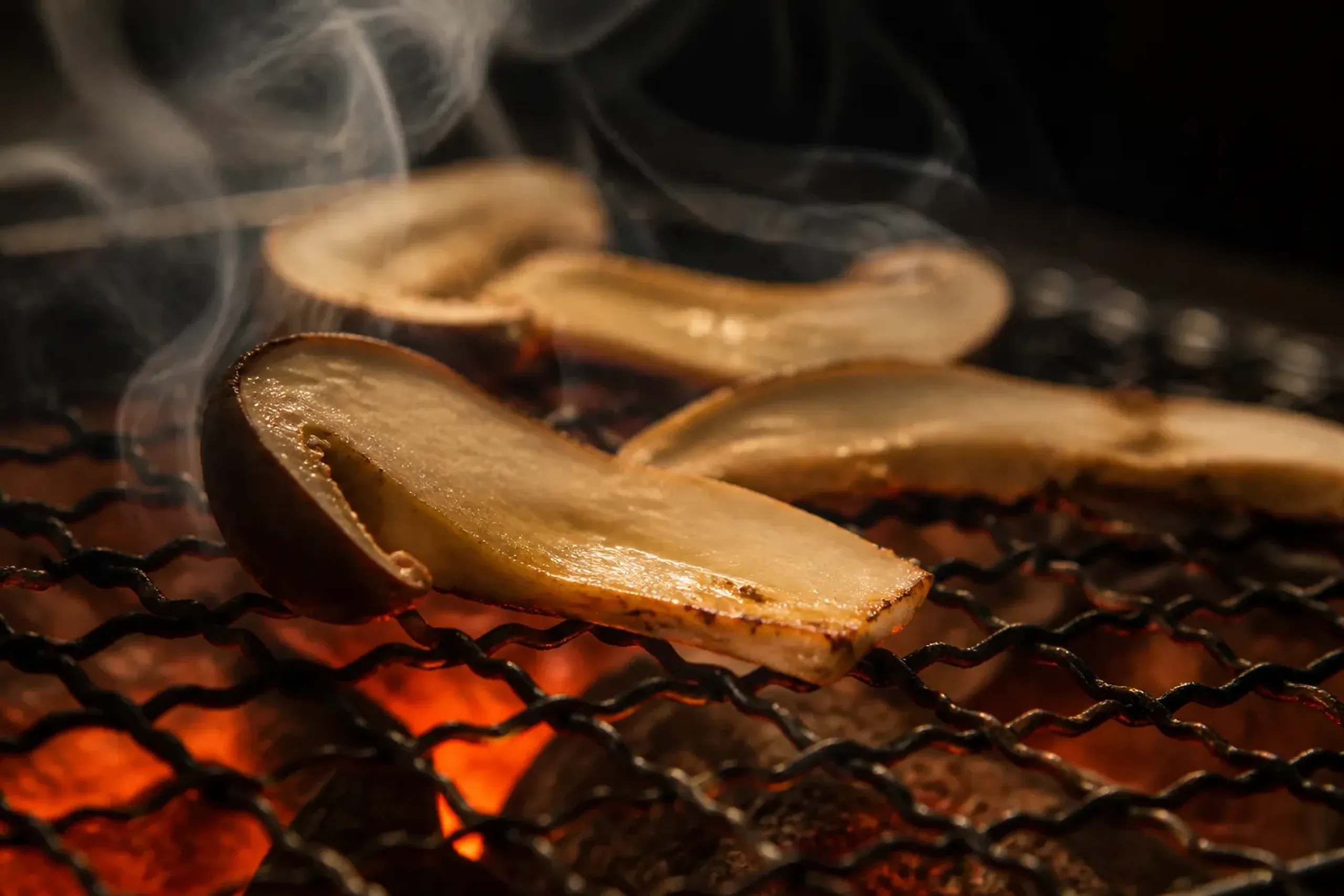
The purest expression. Whole matsutake, torn rather than cut, grilled briefly over binchōtan until the edges catch, then eaten with nothing more than a squeeze of citrus and a few grains of salt. This is where the scent is loudest.
Sukiyaki And Matsutake Rice
Sliced matsutake folded into a sukiyaki, or laid over rice and steamed so the whole pot takes on the fragrance — matsutake gohan, one of the most quietly luxurious bowls in the Japanese kitchen. Simple food, extraordinary ingredient.
The Honest Note: No Guarantees
We will say this clearly, because it reads as competence rather than a caveat. Wild matsutake cannot be promised. Finds depend on the year, the weather, and the specific slope, and a poor year is simply a poor year — the operators who run the Nagano huts state as much themselves, and rain can cancel a hunt outright.
What we can arrange with confidence is everything around the uncertainty: lawful access to good ground, a guide who knows it, and matsutake on the table by evening no matter what the hillside decides. Anyone who guarantees you a wild find is telling you something the forest has not agreed to. We would rather tell you the truth and then make the day extraordinary anyway.
Questions We Are Often Asked
Can I just book a matsutake hunt online?
Some defined, reservation-based experiences exist — the Nagano matsutake huts near Shioda-daira, for instance, take reservations for guided hunts within their season, with a minimum party size and a dining commitment. But the best private ground is not on any booking platform. It comes through permission, which is what we arrange.
When is matsutake season in Japan?
Roughly late September into November, with MAFF citing September to early November. It varies each year by weather and altitude, so we confirm timing close to the season rather than committing to fixed dates.
Is it legal to pick matsutake in Japan?
Only on genuinely unrestricted public land, or with the landowner's permission. Guarded grounds are marked with tape and 入山禁止 signs; entering them to pick matsutake is poaching and is prosecuted. A lawfully arranged day removes any question of this.
What if we don't find any?
The meal is arranged around matsutake secured independently of the hunt, so a lean day on the mountain still ends with dobin-mushi and grilled matsutake at the table.
Where is the best place to do this?
Nagano — specifically the Ueda and Shioda-daira area — is the most plausible ground and the country's wild-mushroom heartland. It is a chauffeured day from Tokyo.
Why Choose Japan Royal Service
Access is the whole of it. A matsutake day is worth arranging only if the ground is lawful, the guide is expert, and the discretion is total — and each of those is something our team handles as a matter of course. We work through landowners and permit holders directly. We keep the location and the people private, because that privacy is what keeps the door open year after year. We are based in Japan, we drive our own fleet, and we plan around the wild crop honestly rather than promising what the forest will not.
What our guests value, in our experience, is not a checklist ticked off. It is arriving on a pine hillside in October, being somewhere they could not have reached alone, and understanding that they are doing something Japanese nobility did a thousand years before them — and then sitting down that evening to a broth that smells of the whole season. That is the day we build.
Matsutake hunting cannot be booked. It can be arranged. To discuss a private matsutake day in the Japanese autumn, reach our team directly via WhatsApp or LINE, or contact us here.