In this guide
- 01What Survived When Everything Else Didn’t
- 02The Karamon Gate: A National Treasure In Black Lacquer And Gold
- 03The Funarōka Corridor: Timbers Said To Be From Hideyoshi’s Command Ship
- 04Tsukubusuma Shrine: A National Treasure With An Interior You Cannot Enter
- 05How Do You Get To Chikubushima From Kyoto Or Osaka In One Day?
- 06What Is Kawarake-Nage On Chikubushima, And Where Is The Best View?
- 07Hōgon-ji, Benzaiten, And The Island’s Deeper Power
- 08Azai, Nobunaga, Hideyoshi: Three Generations Of Patronage
- 09How Long Should You Spend On Chikubushima, And What’s The Walking Like?
- 10How To Check Chikubushima Boat Schedules And Tickets (Official Sources)
- 11A Quiet Luxury Way To Experience Chikubushima
- 12Frequently Asked Questions
Black lacquer. Gold fittings. Lake light.
You step through the Karamon Gate on Chikubushima and feel a strange dislocation in time. The Toyotomi regime that reshaped Japan was erased with intention after its fall—castles dismantled, mausoleums destroyed, names overwritten. This gate is what slipped through the net of history.
Chikubushima (竹生島), a small sacred island adrift on Lake Biwa, is where a handful of Toyotomi Hideyoshi’s architectural fragments still stand—moved here by his son, Hideyori, before the Tokugawa order could grind everything to dust. For the discerning traveler, it is not merely “a lovely island.” It is physical evidence: quiet, intact, and reachable only by boat. This is the kind of place that Google cannot truly find for you—the Japan that reveals itself only to those who arrive with the right introduction and an unhurried eye.
What Survived When Everything Else Didn’t
Chikubushima preserves rare surviving structures linked to Hideyoshi’s monumental projects precisely because Hideyori relocated them here, safely away from the political demolition that followed the Toyotomi family’s defeat.
Hideyoshi’s Osaka Castle was destroyed by the Tokugawa shogunate after the Toyotomi fall. His grand mausoleum complex, Toyokuni Byō in Kyoto’s Higashiyama area, was likewise razed. Fushimi Castle suffered repeated destruction and rebuilding across its long history, and the Toyotomi era tied to it did not remain intact in any form you can simply walk into today.
Chikubushima breaks that pattern—not with a recreated exhibit, but with wood, lacquer, nails, and carved motifs that have lived through the violence of regime change.
It changes how you see scale. A small island becomes the last tangible remainder of an entire vanished architectural statement.
The Karamon Gate: A National Treasure In Black Lacquer And Gold
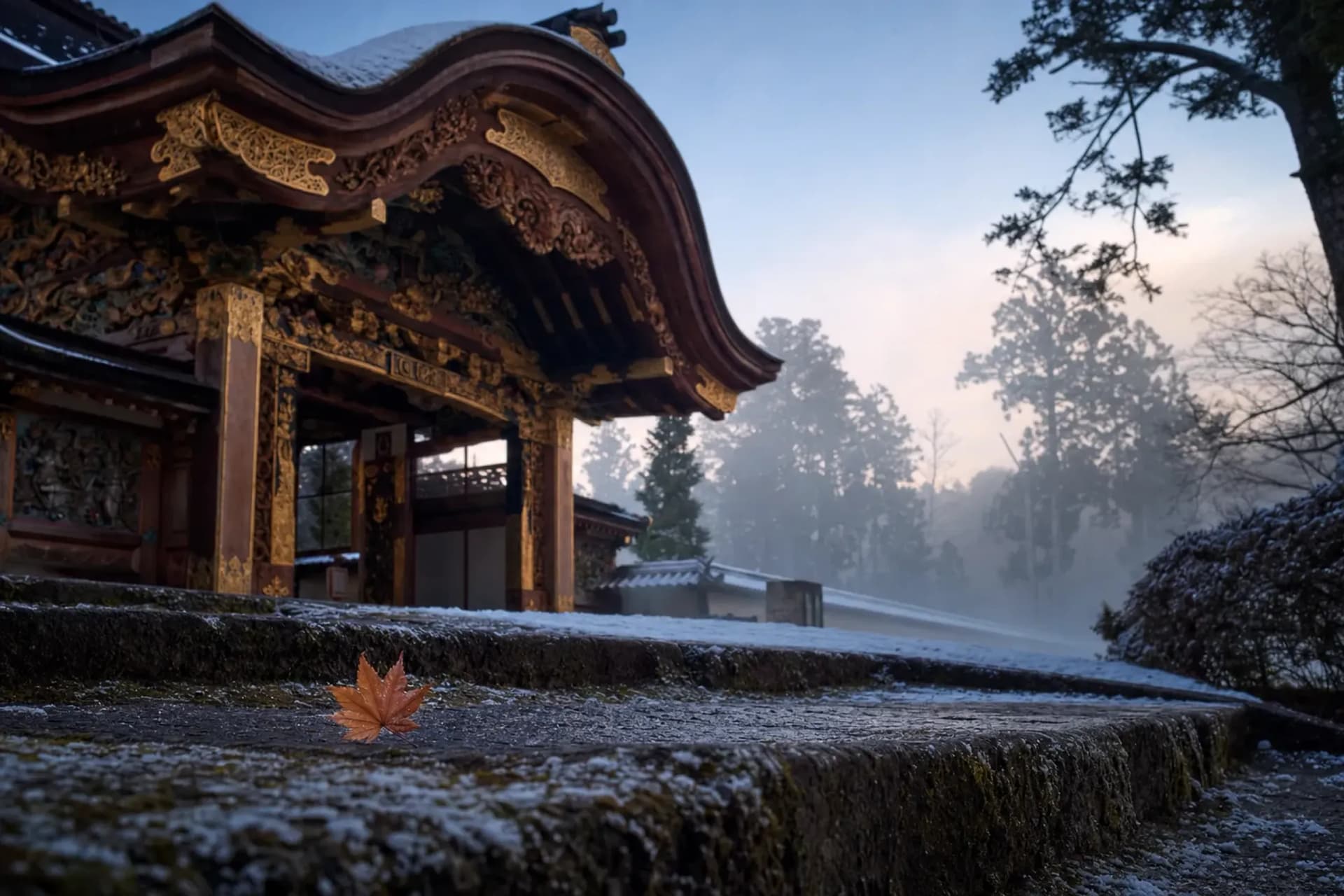
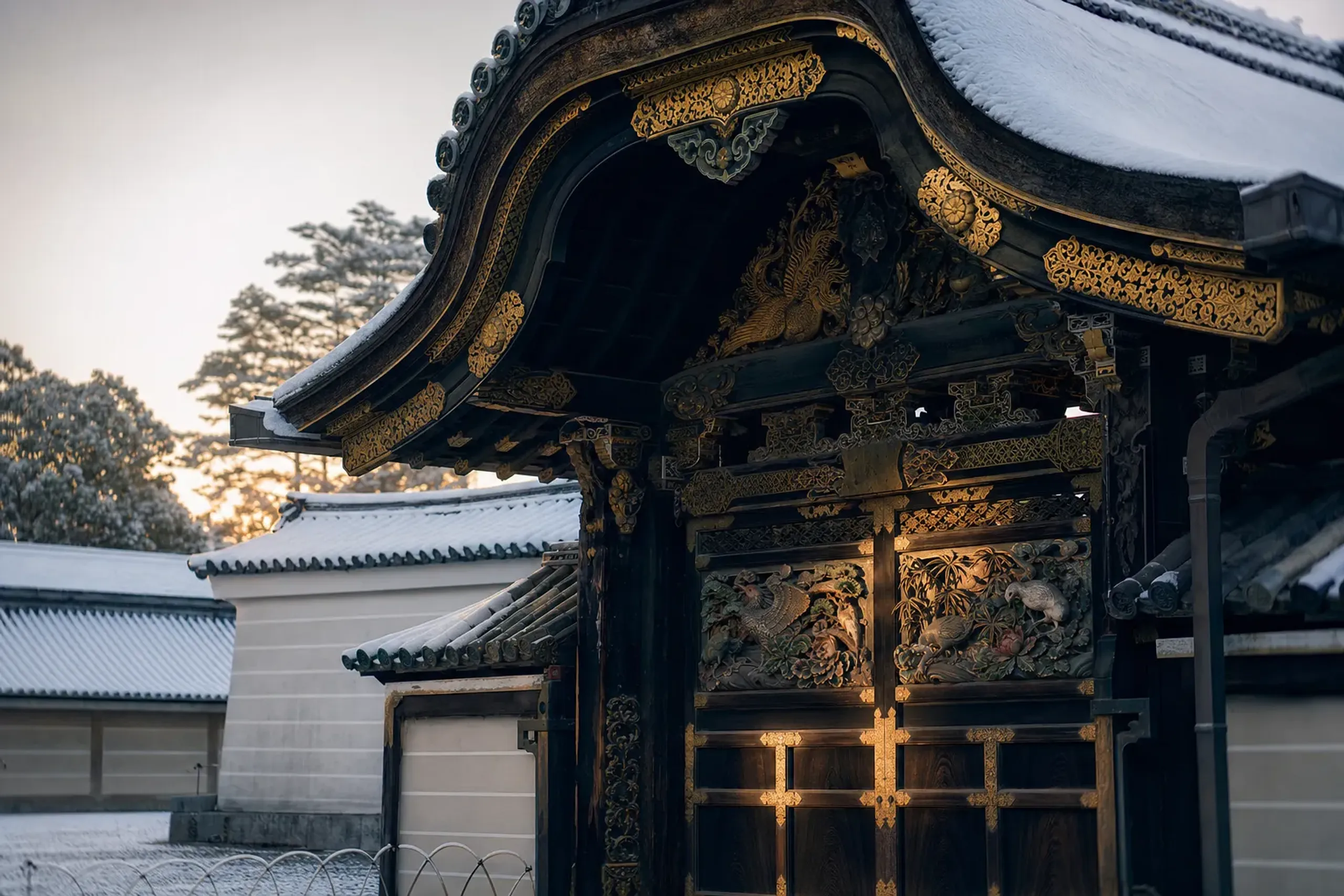
The Karamon Gate on Chikubushima is a National Treasure, relocated from the former “Gate of Paradise” (Gokuraku-mon) at Toyokuni Byō, Hideyoshi’s mausoleum complex in Kyoto.
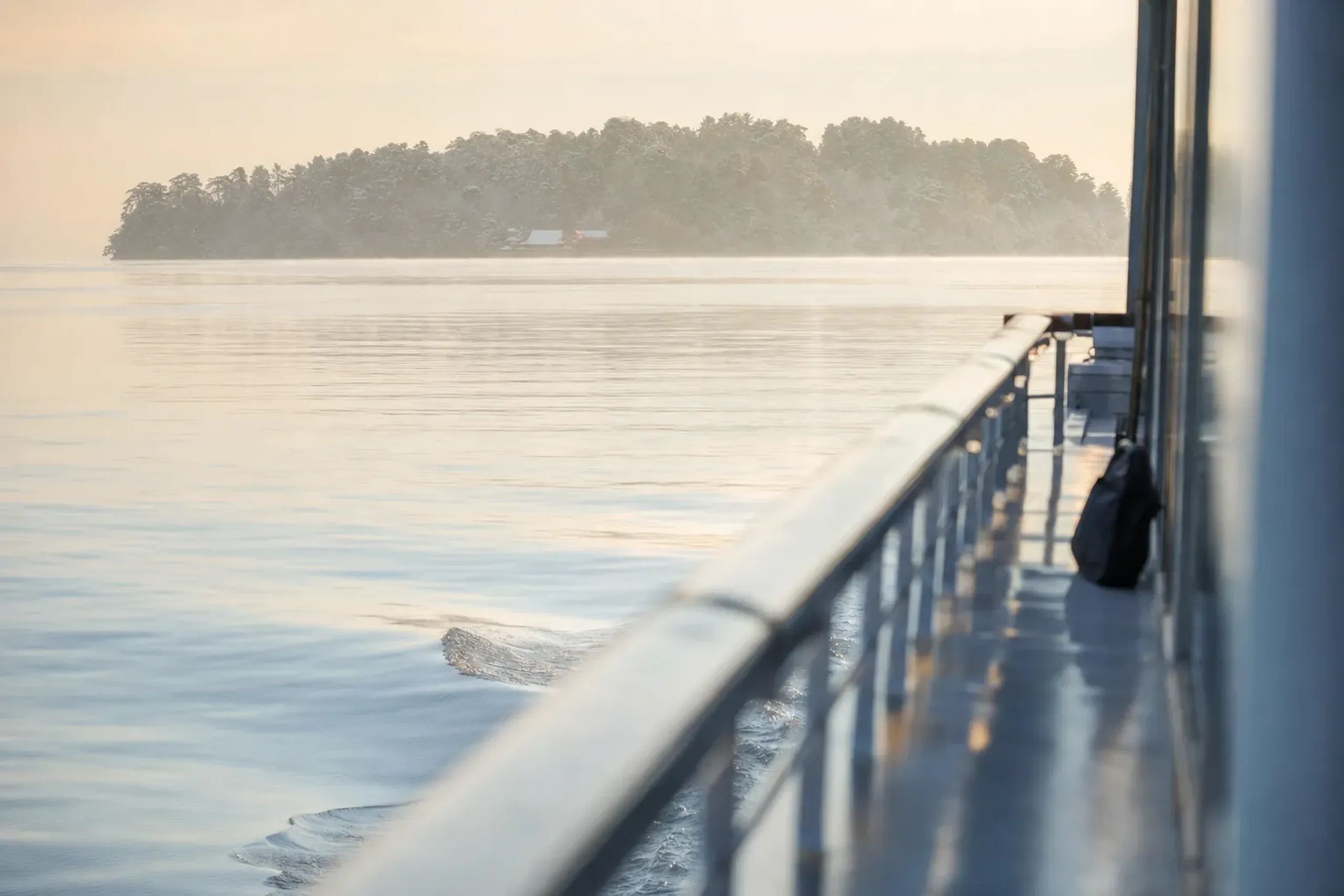
Chikubushima is reached only by boat—an arrival that already feels like a threshold.
This is the moment most visitors carry home with them. The roof is cypress bark. The structure is lacquered black. The fittings glow with gold plating, even on a grey day when Lake Biwa looks like brushed steel.
Look closer. Phoenix. Pine. Rabbit. Peony. Carved, colored, and busy with Momoyama-period confidence. Many consider it a representative surviving example of Momoyama gate architecture, which is why it never reads as merely decorative. It feels assertive—a statement in wood and gold.
In our experience, Chikubushima rewards a slow approach. Pause before you pass through. Let your eyes adjust to the contrast between shadowed lacquer and open-water glare, and you begin to sense the restraint beneath the richness—the wabi that gives the gold its meaning.
The Funarōka Corridor: Timbers Said To Be From Hideyoshi’s Command Ship
The Funarōka is an Important Cultural Property, and it is said to have been built using timber salvaged from Hideyoshi’s own command ship, used during his military campaigns in Korea.
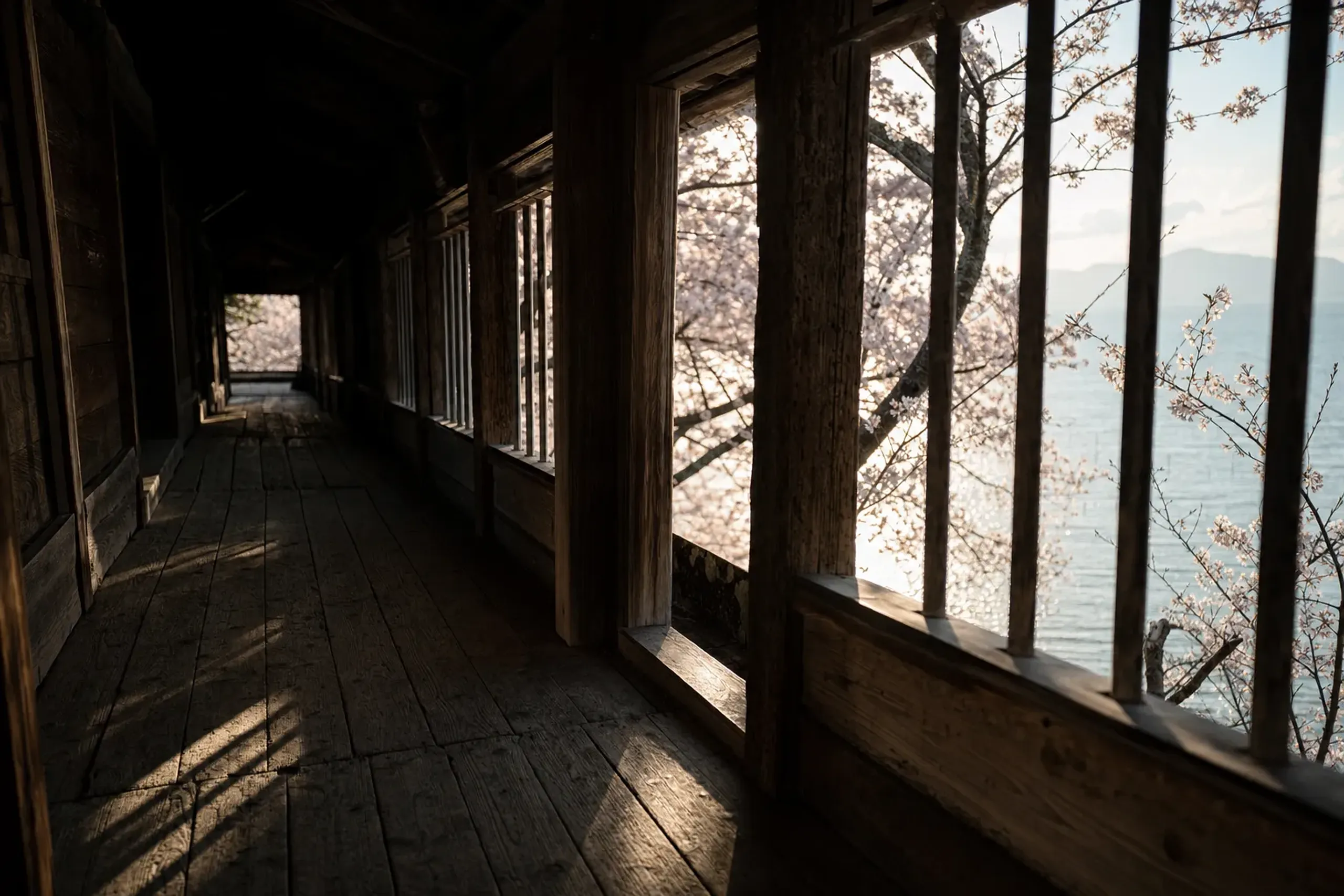
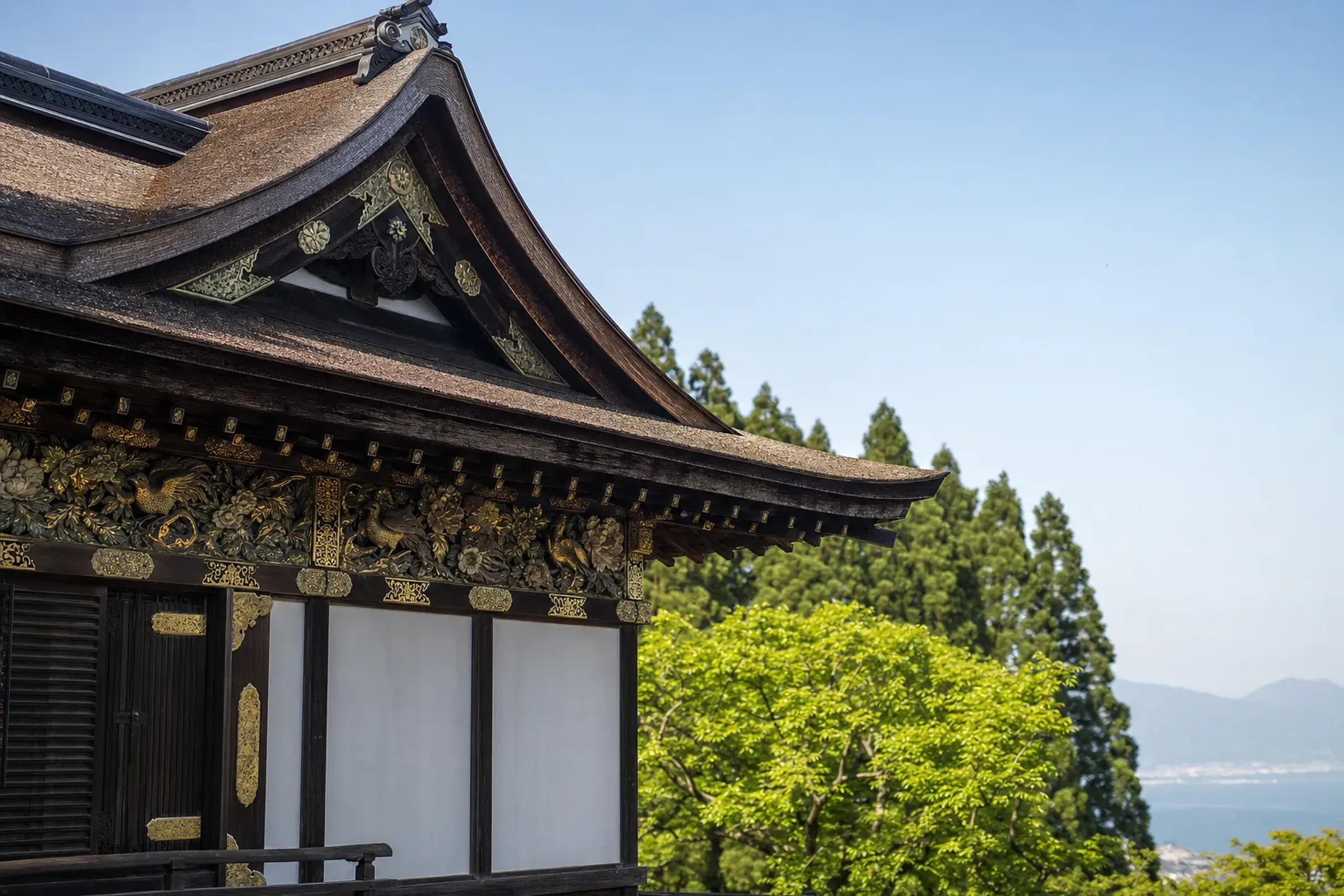
It is a covered corridor connecting the gate area and Kannon Hall toward the shrine, built in a cantilevered style over the slope. You feel the hillside fall away beneath you. The lake is suddenly present again, framed in slats and angles.
Then the detail lands: if the tradition holds true, the wood beneath your feet once belonged to a warlord’s flagship. Not a symbol. A working vessel tied to real campaigns, real logistics, real fear.
Walk it quietly. The corridor is narrow enough that conversation feels too loud, even in a small group.
Tsukubusuma Shrine: A National Treasure With An Interior You Cannot Enter
Tsukubusuma Shrine’s main hall is a National Treasure, relocated from Fushimi Castle by Hideyori’s donation—though sources differ on which original Fushimi building it once was.
That uncertainty matters. We prefer to state it plainly rather than force a neat answer. What you can verify is the building’s present form: a cypress-bark roof, an irimoya style, and ornate carved transoms that hint at the visual richness within.
There is a boundary you must respect. The interior is not publicly visible, and photography is prohibited from the front of the main hall inward. For many well-traveled guests, that restraint is precisely part of the appeal. Not everything is made for public consumption—and the things that are withheld often hold the most quiet power.
Some interior fusuma paintings are attributed to Kanō Eitoku and Kanō Mitsunobu. Treat those attributions as exactly that—attributions—unless you are reviewing a specific scholarly or curatorial statement in Japanese on-site.
How Do You Get To Chikubushima From Kyoto Or Osaka In One Day?
You reach Chikubushima by traveling to Nagahama Port or Imazu Port and taking a roughly 30-minute boat across Lake Biwa, then allowing about two and a half hours in total, including crossing time and the island visit.
For a day trip, the key is sequencing. Most guests come from Kyoto or Osaka by rail toward the Lake Biwa area, then continue to either Nagahama (north/east side access) or Imazu (west side access). The boat crossing is not a mere transfer. It is the threshold. Treat it like one.
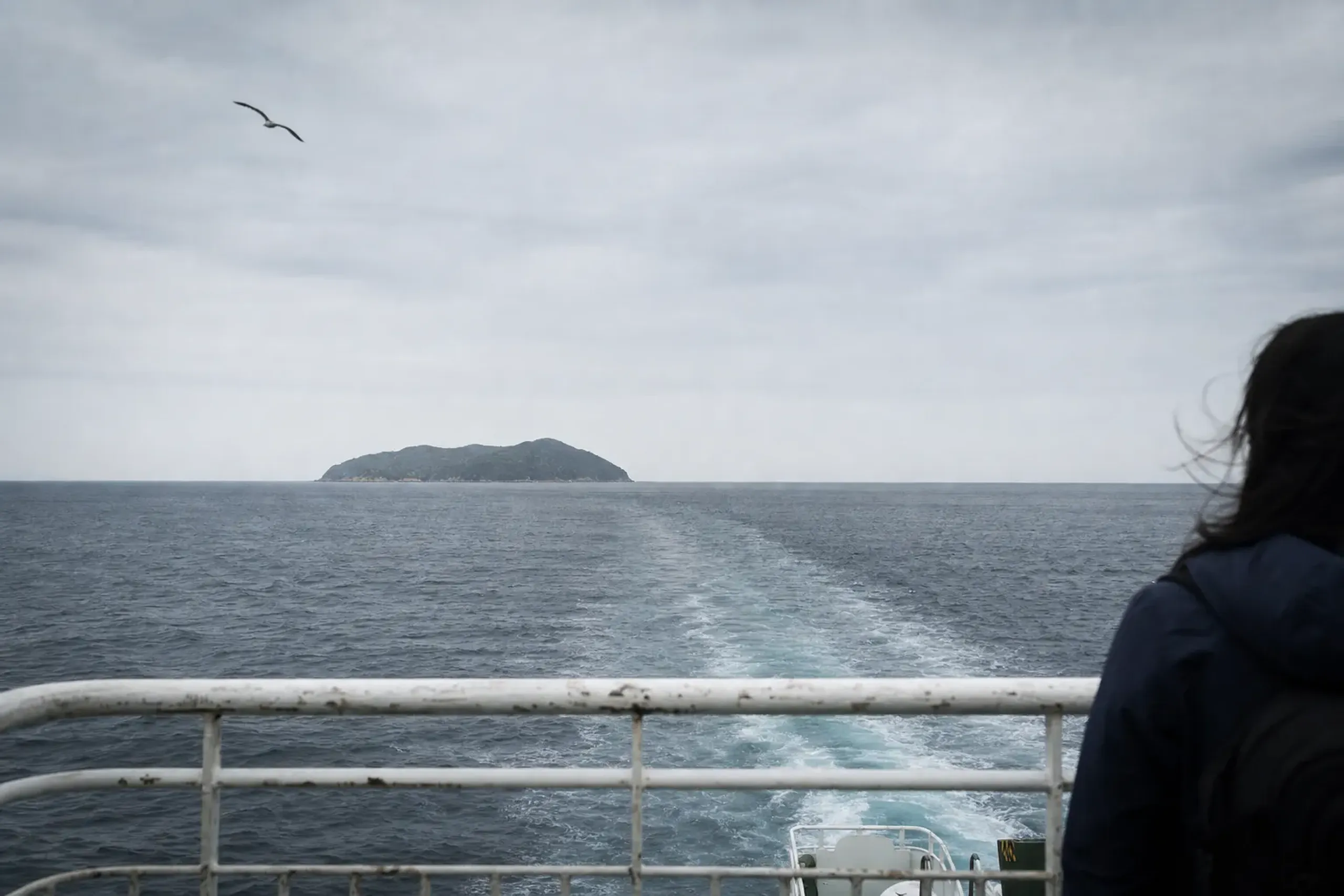
Two ports. Two different feels.
Option A: Nagahama Port (Common For North Shiga Routing)
Nagahama is a practical departure point when you are already oriented toward northern Shiga. It pairs naturally with time along the waterfront before or after the boat, without rushing the crossing.
- Boat time: about 30 minutes each way.
- Best for: guests who want a calm pace and a clear “island as centerpiece” day.
- Watch for: seasonal schedule changes; departures vary by time of year.
Option B: Imazu Port (Common For West Lake Biwa Access)
Imazu makes sense if you are approaching from the west side of Lake Biwa. It often suits travelers who want to keep the day clean and focused—fewer stops, more purpose.
- Boat time: about 30 minutes each way.
- Best for: guests who value a direct rhythm and dislike detours.
- Watch for: sailing frequency; trip counts can vary by season.
Boat schedules are published by the operator, including English pages, and they do change. Before any visit, our team at Japan Royal Service privately verifies current sailing times and seasonal access notes, so your day never hinges on guesswork—the kind of silent, anticipatory care that removes friction before you ever notice it was there.
What Is Kawarake-Nage On Chikubushima, And Where Is The Best View?
Kawarake-nage is a wish ritual in which you throw a small unglazed clay disc toward a torii above open water; the best-known spot is the Ryūjin Haisho, which also offers the island’s signature view.
You buy a small clay disc, kawarake, and write your wish or protective prayer upon it.
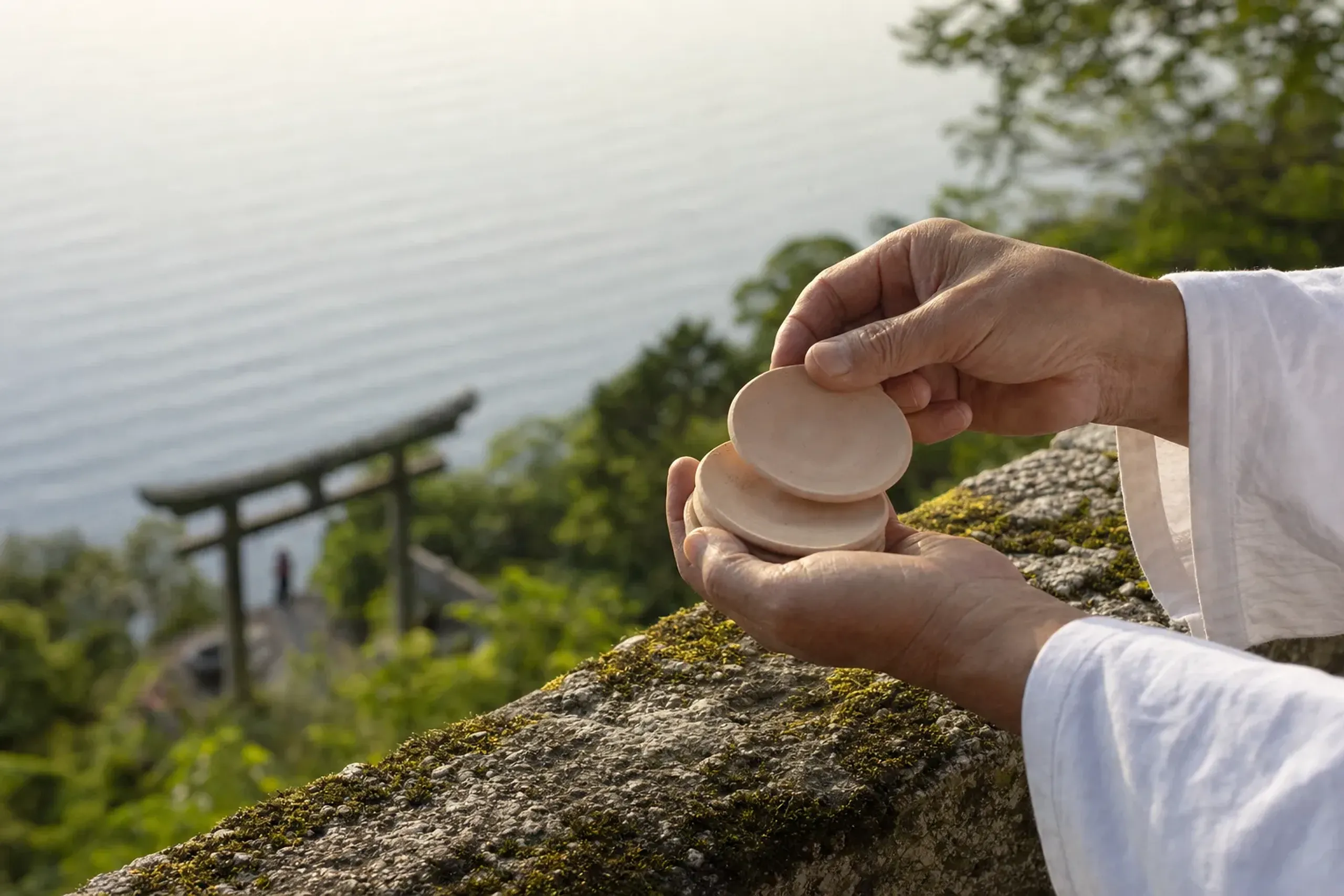
The disc is light in your hand. Almost nothing. That is the point.
At the Ryūjin Haisho (Dragon God Worship Hall), you throw the disc toward a torii gate positioned above the lake. If it passes through, your wish is believed to come true. Misses splash or shatter against the rock below. No one pretends they didn’t miss.
The view is why this ritual feels inevitable. Torii. Wind. Open water. When the light is clear, Lake Biwa looks endless, and Chikubushima feels less like an attraction and more like a boundary marker between human life and something far older.
Hōgon-ji, Benzaiten, And The Island’s Deeper Power
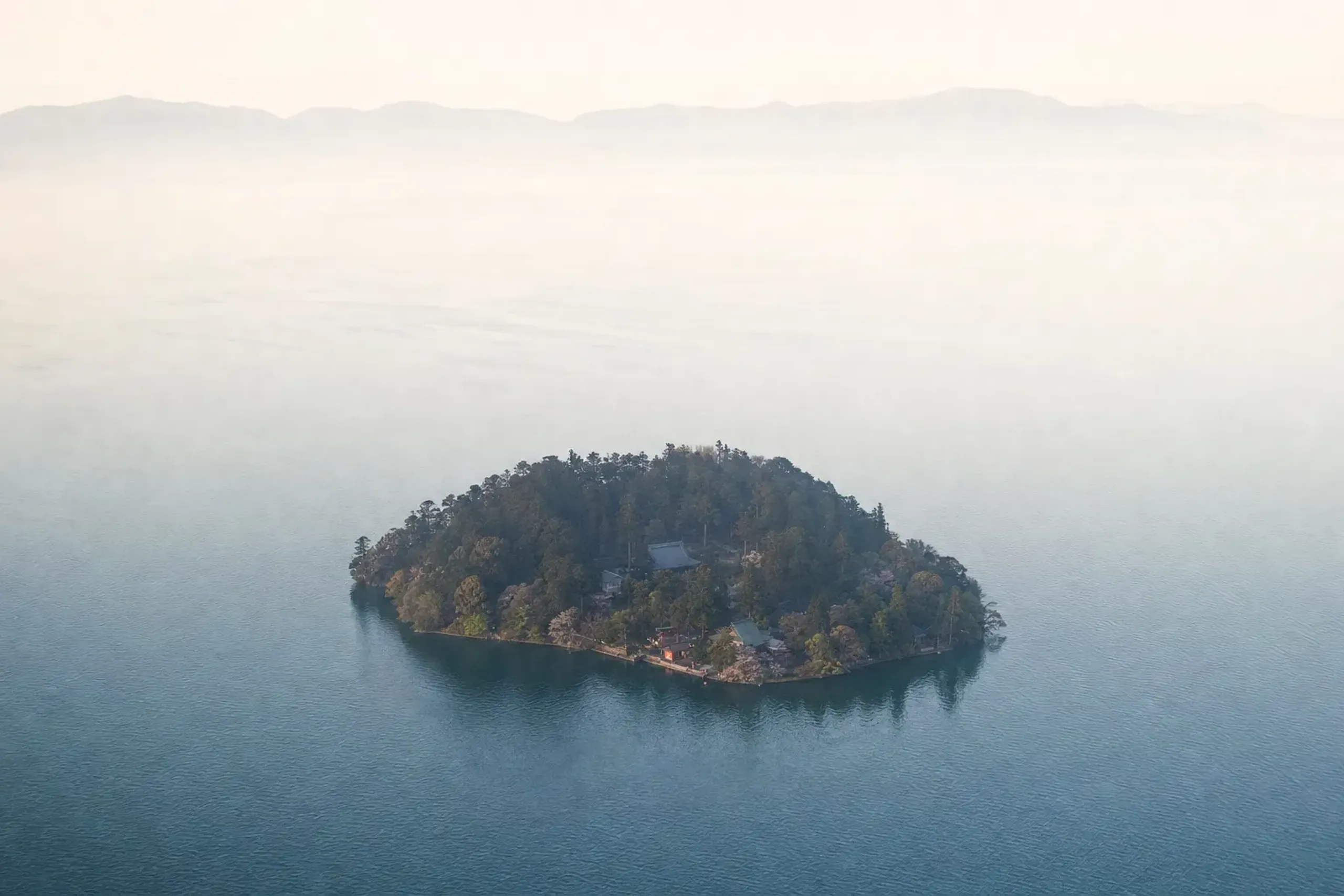
Chikubushima is meaningful not only because Hideyori moved buildings here. It was already sacred long before.
Hōgon-ji (Hogonji) was founded in 724 by imperial edict of Emperor Shōmu—a lineage of imperial patronage that lends the island a gravity few places carry. It is widely described as an “Island of the Gods,” with over a thousand years of religious history. That line can sound like brochure language until you arrive and realize how little space is given to ordinary noise.
Hōgon-ji is also known as one of Japan’s Three Great Benzaiten sites, alongside Enoshima and Miyajima. Benzaiten’s presence is felt in the small details that visitors actually touch: JNTO notes that Hōgon-ji sells small daruma dolls dedicated to Benzaiten, said to provide a year’s worth of luck.
The island is the 30th stop of the Saigoku Kannon Pilgrimage, one of Japan’s oldest organized pilgrimage routes, roughly 1,300 years old. You will see pilgrims move differently than tourists. Fewer photos.
More pauses.
Azai, Nobunaga, Hideyoshi: Three Generations Of Patronage
Chikubushima’s political history reads like a compressed timeline of power shifting hands, with the island itself remaining constant. Three generations of the Azai clan, based at nearby Odani Castle, were devout patrons of Benzaiten worship here.
A Benzaiten statue donated by Azai Hisamasa and his mother in 1566 survives on the island, though it is not publicly displayed. That detail matters because it keeps expectations honest. This is a living religious site—not a gallery.
Oda Nobunaga is recorded as having visited and worshipped here. Hideyoshi himself is said to have prayed deeply to this Benzaiten during his rise. Then Hideyori’s relocations followed Hideyoshi’s death, binding the island to three successive warlord lineages across a single generation.
Even the recent past is visible. A three-storey pagoda was reconstructed in 2000, restoring a structure that had been absent for roughly 350 years.
How Long Should You Spend On Chikubushima, And What’s The Walking Like?
Plan roughly two and a half hours in total for Chikubushima, including boat crossings, and expect slopes and stairs that reward stable footwear and an unhurried pace.
The island is compact, but it isn’t flat. There are climbs, steps, and narrow passages where you naturally slow down. That is a feature, not a flaw—the terrain itself insists on the kind of measured attention the place deserves.
If you are traveling with parents, or anyone sensitive to uneven ground, build in more time. Rushing is where ankles turn and tempers rise. A poor trade.
And treat the photography rules as strict—especially around Tsukubusuma Shrine’s main hall boundary.
When in doubt, lower the camera.
How To Check Chikubushima Boat Schedules And Tickets (Official Sources)
Chikubushima boat schedules and fares are published by Lake Biwa cruise operators such as Biwako Kisen, and departures vary by season from ports including Nagahama and Imazu.
If you prefer to plan with documents rather than hearsay, start with the operator’s published English schedule pages. Biwako Kisen also sells a 2026 e-ticket product for an “islands tour” cruise that includes entrance fees for Chikubushima and Takeshima—a signal of how the lake is being packaged for 2026 travelers.
For those who want to pair Kyoto with Lake Biwa by water, the Lake Biwa Canal Cruise site publishes a “2026 Fall Calendar” and fare table for canal cruise services connecting the Lake Biwa side (Ōtsu) and Kyoto-side areas (such as Keage). It is a rare way to feel the geography, not merely cross it.
Key fact: Sailing times can change by season and weather, and island visiting hours generally track sailing windows—verify the current timetable close to your travel date.
Guests seeking a precise, low-friction plan may contact our concierge for tailored guidance—particularly when aligning rail timing, private transportation, and a fixed cruise departure demands the seamless choreography that only a bespoke itinerary can deliver.
A Quiet Luxury Way To Experience Chikubushima
Luxury, on Chikubushima, is not about adding volume. It is about removing friction until the island can speak in its own voice—the very essence of wabi, where restraint reveals rather than conceals.
We recommend arriving early enough that you are not running for the boat. The crossing should feel like a clean inhale.
On the island, keep your group small if you can. Four people is already a presence—and privacy, here, is its own form of reverence.
Then let the day hinge on three moments: the Karamon Gate’s lacquer and gold; the Funarōka corridor’s angled passage; the throw of a clay disc toward a torii above open water. Nothing more is required.
For movement, we often suggest a private chauffeur so you can keep bags, umbrellas, and timing under control—especially when balancing a port departure. The first place to start is our private transportation service page.
When you are ready to walk through a National Treasure gate that history tried to erase—arriving by boat, at the right season, with every detail quietly handled—contact us here to begin shaping your private visit to Chikubushima.
Frequently Asked Questions
Is Chikubushima Really Connected To Hideyoshi’s Osaka Castle?
Chikubushima preserves key Toyotomi-era architectural fragments relocated by Hideyoshi’s son, Hideyori, which survive even though Hideyoshi’s major projects at their original sites were destroyed.
The island’s Karamon Gate came from Toyokuni Byō in Kyoto, and the shrine’s main hall was donated from Fushimi Castle, with the exact original building attribution debated by sources.
Can I See The Inside Of Tsukubusuma Shrine’s National Treasure Main Hall?
No—Tsukubusuma Shrine’s main hall interior is not publicly visible, and photography is prohibited from the front of the main hall inward.
Please plan your visit with that boundary in mind. The experience is one of exterior architecture, approach, and atmosphere rather than interior viewing.
Which Port Is Better For Chikubushima: Nagahama Or Imazu?
Nagahama and Imazu both offer roughly 30-minute boat rides to Chikubushima, and the “better” choice depends on your rail approach and the seasonal sailing schedule.