In this guide
- 01A Living Record, Not A Historical One
- 02The Life Behind The Glass
- 03What You Will Actually See In The Tank Today
- 04The Kuroshio Sea Tank Itself
- 05Why Is It Called Churaumi?
- 06Is There A Night Visit At Churaumi Aquarium?
- 07When Is The Best Time To Visit Churaumi Aquarium To Avoid Crowds?
- 08What Japan Royal Service Arranges For A Churaumi Visit
- 09Frequently Asked Questions
- 10Why Choose Japan Royal Service
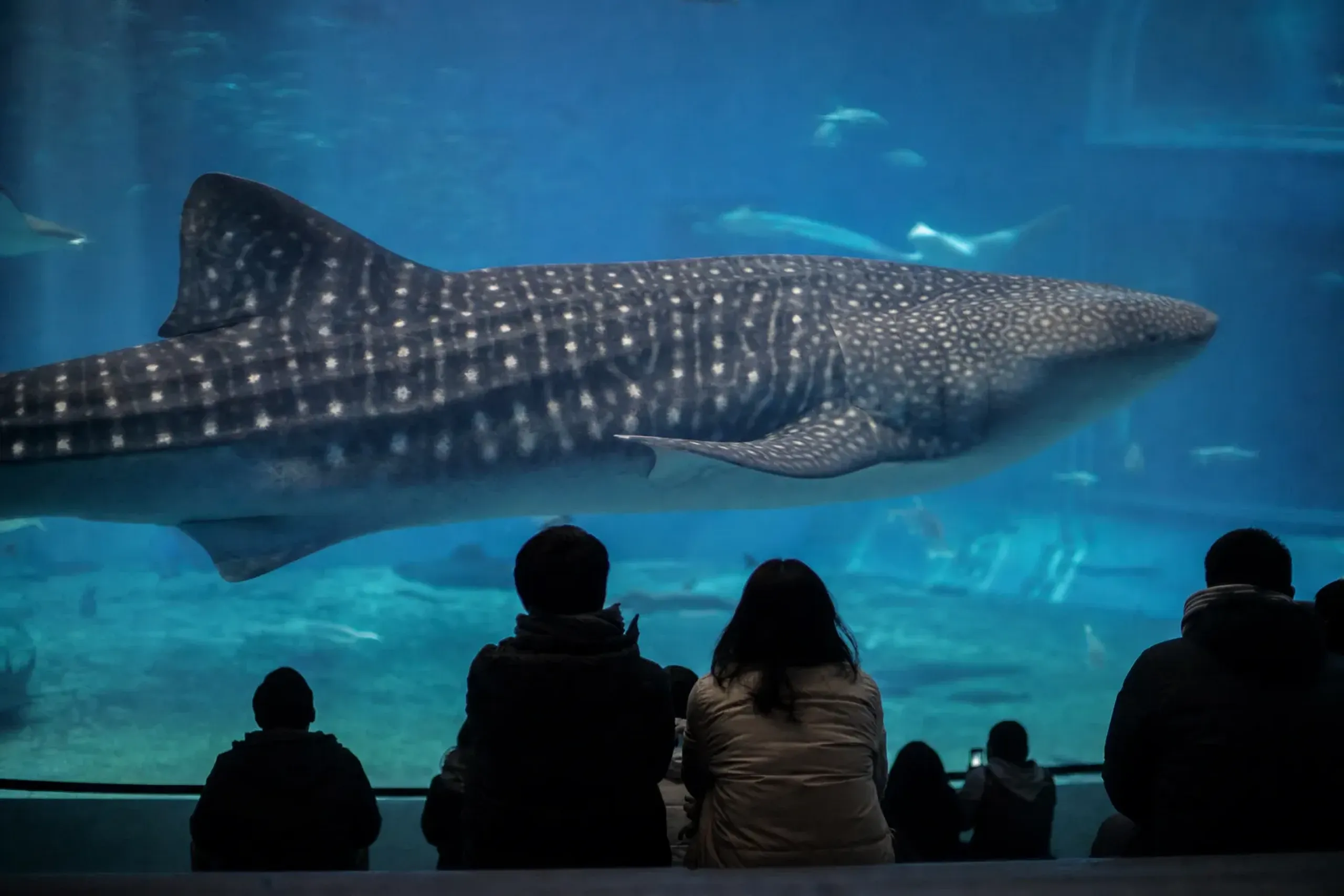
The light in that room is blue. Not the flat blue of a screen, but the shifting, weighted blue of deep water pressing against sixty centimetres of acrylic. You sit. Most people sit, eventually, on the wide steps facing the panel, because standing feels wrong here. Then he arrives.
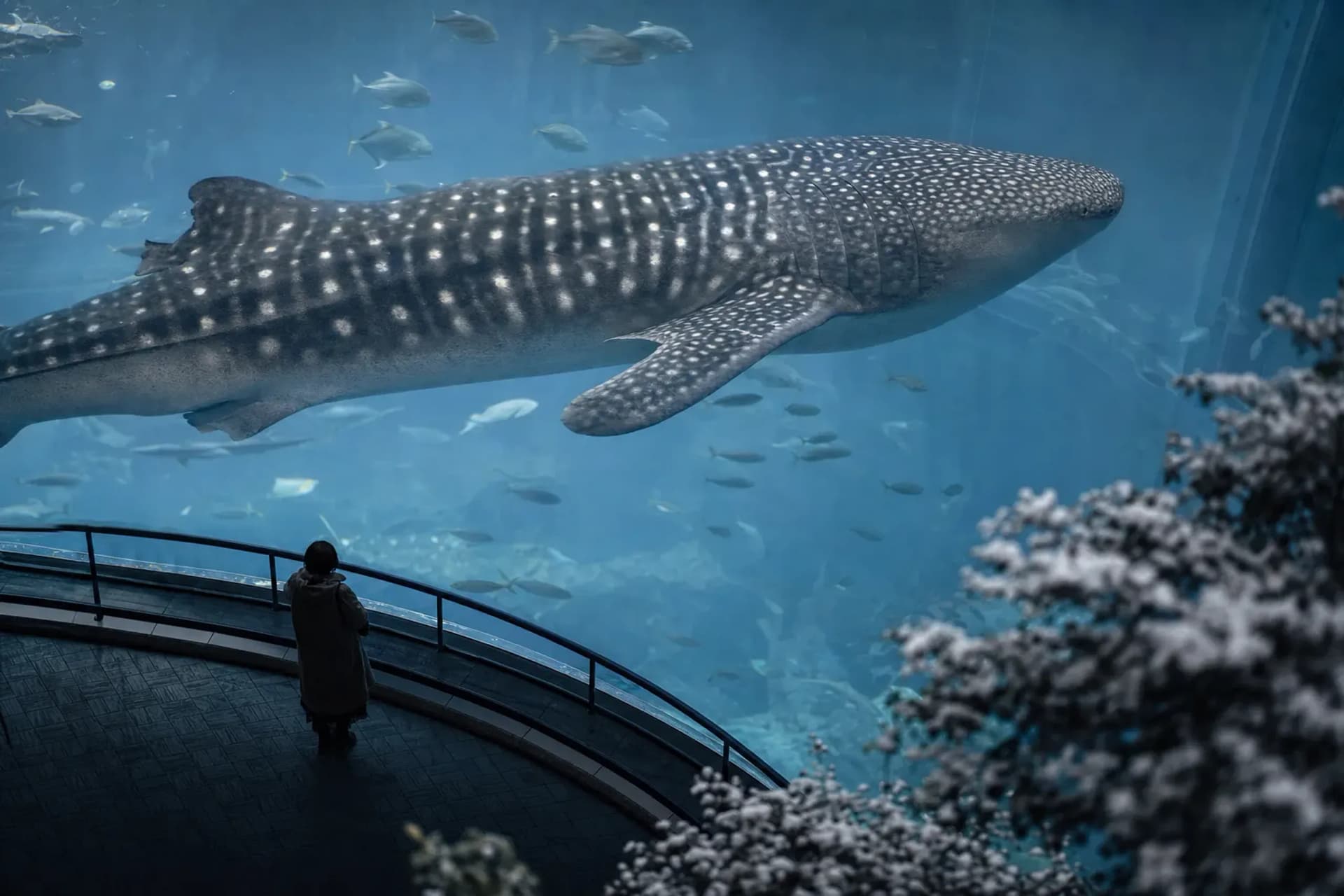
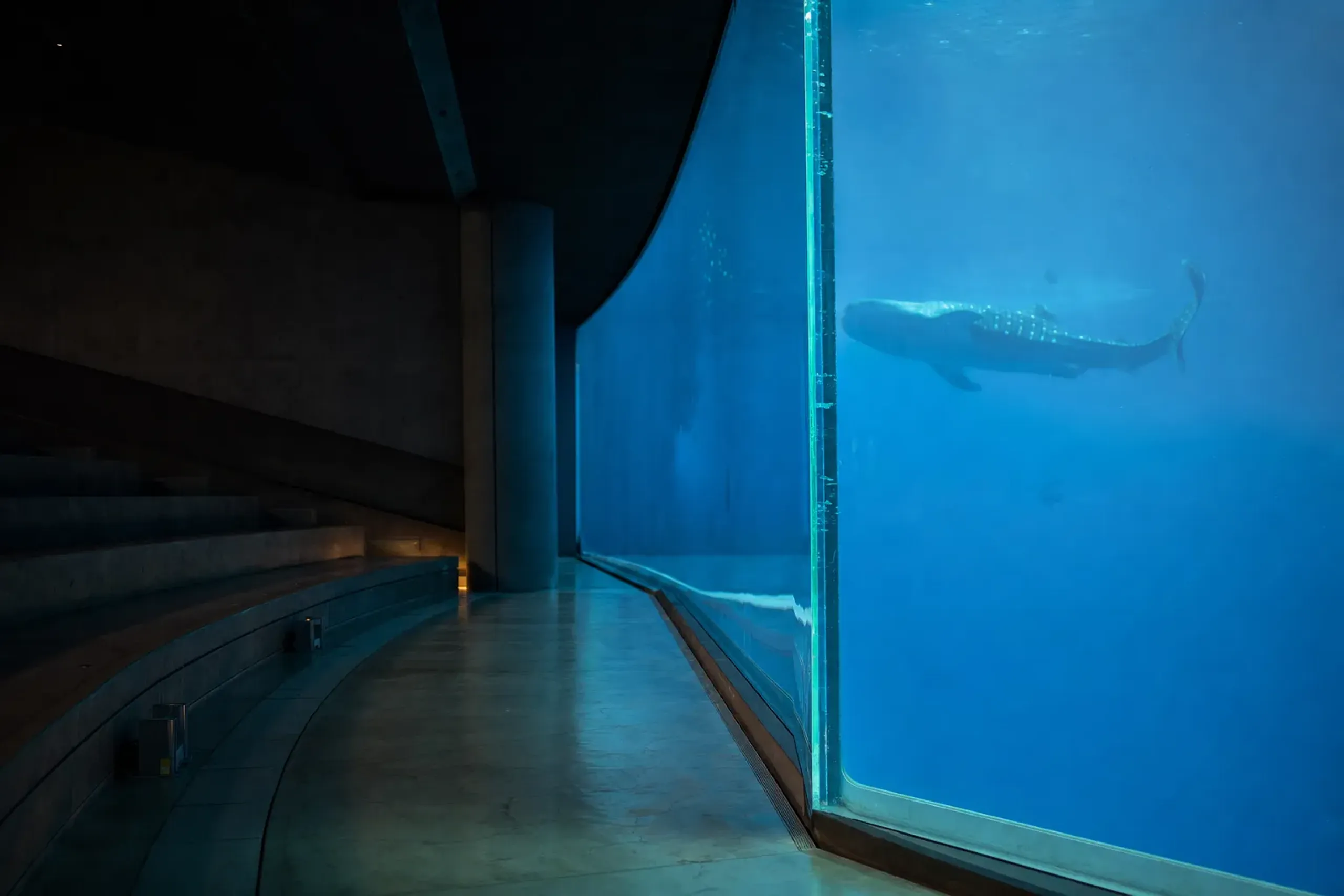
He does not hurry. Eight and a half metres of grey flank slides across the glass, dappled with pale spots arranged in a pattern unique to him alone, the way a fingerprint is unique. His mouth is a metre and a half wide and utterly gentle. He is the largest fish in the ocean, and he is passing an acrylic wall he has passed for more than two decades. His name is Jinta.
A Living Record, Not A Historical One
Jinta holds the world record for the longest continuous captivity of any whale shark anywhere — 31 years as of March 2026, and still counting.
Guidebooks love to tell you the Kuroshio Sea tank at Okinawa Churaumi Aquarium was once the largest aquarium tank on earth. That was true. It stopped being true in 2005, when another tank surpassed it. That record is finished. Filed away. History.
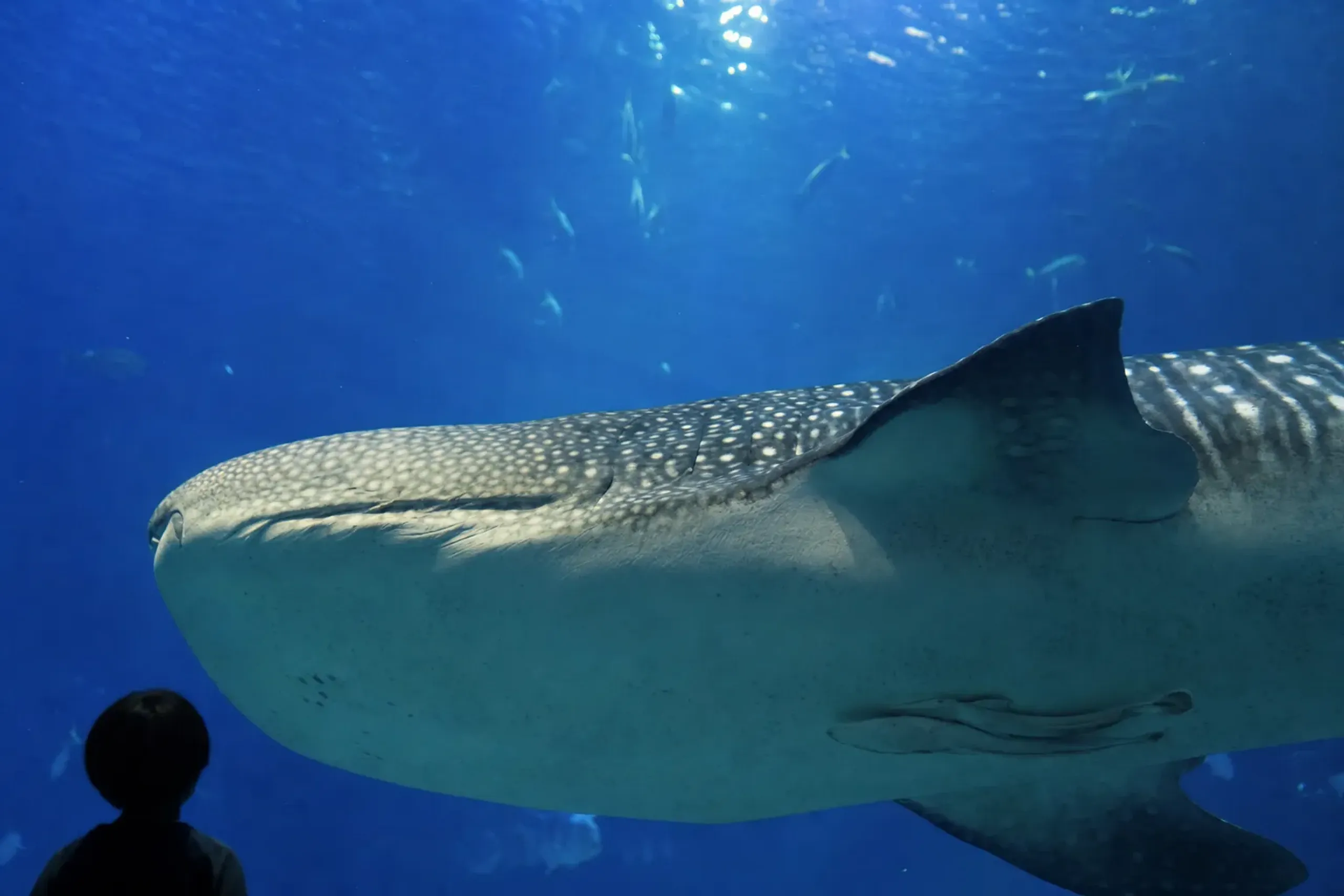
What lives in the tank is a different kind of record entirely. It is not a number on a plaque. It breathes. Jinta arrived in March 1995 at 4.6 metres and roughly 800 kilograms — a young shark caught in a fixed fishing net off Okinawa. He is now 8.8 metres and about six tonnes.
Everything about him has been measured, watched, and recorded across three decades. No aquarium anywhere has kept a whale shark this long. The record that matters at Churaumi is alive — and it swims past you at eye level.
The Life Behind The Glass
In 1995 the aquarium that would become Churaumi was a smaller, older facility. Jinta lived there first. When the current building opened in November 2002 and the Kuroshio Sea tank filled with water, he was moved into it — by then he had grown to 6.6 metres. He has occupied that blue expanse ever since.
Then something happened that no one had ever recorded. Around 2012, researchers observed the world's first confirmed sexual maturation of a whale shark in captivity — in Jinta, specifically. His claspers developed rapidly at roughly 8.5 metres. It sounds clinical. It was, in fact, a scientific first: a rare window into the life cycle of a species that vanishes into open ocean and almost never gives up its secrets.
That single fish has become a research subject of unusual weight. Growth-pattern data spanning thirty years. Studies of the mechanisms of maturity. Genomic analysis drawn from blood sampling. In 2020 the aquarium signed a memorandum of understanding with Taiwan's National Museum of Marine Biology and Aquarium on whale shark breeding research.
Researchers have described Jinta as the most scientifically significant whale shark studied anywhere. This is not a tourist attraction that happens to have a big fish. It is a working scientific institution — accredited as a Registered Museum under Japan's Museum Act, and a member of the Japanese Association of Zoos and Aquariums.
What You Will Actually See In The Tank Today
The Kuroshio Sea tank currently displays Jinta alone — one whale shark, not the group that older tourism images still suggest.
We state this plainly because our guests dislike surprises. A second whale shark previously on display, known as Momo, died in January 2026. Two further whale sharks died from complications in the period around the 2024 Noto Peninsula earthquake. The aquarium has said it continues to prioritise animal health and evaluates any future additions to the tank scientifically and carefully, rather than rushing to replace what was lost. That is a defensible position, and a serious one.
So plan around the truth. You are going to see one extraordinary animal, not a herd. It changes nothing about the moment he crosses the glass. If anything, it sharpens it — the vast blue emptied of distraction, a single creature the size of a bus, and you. Because display status can change, our concierge team confirms the current situation ahead of each guest visit.
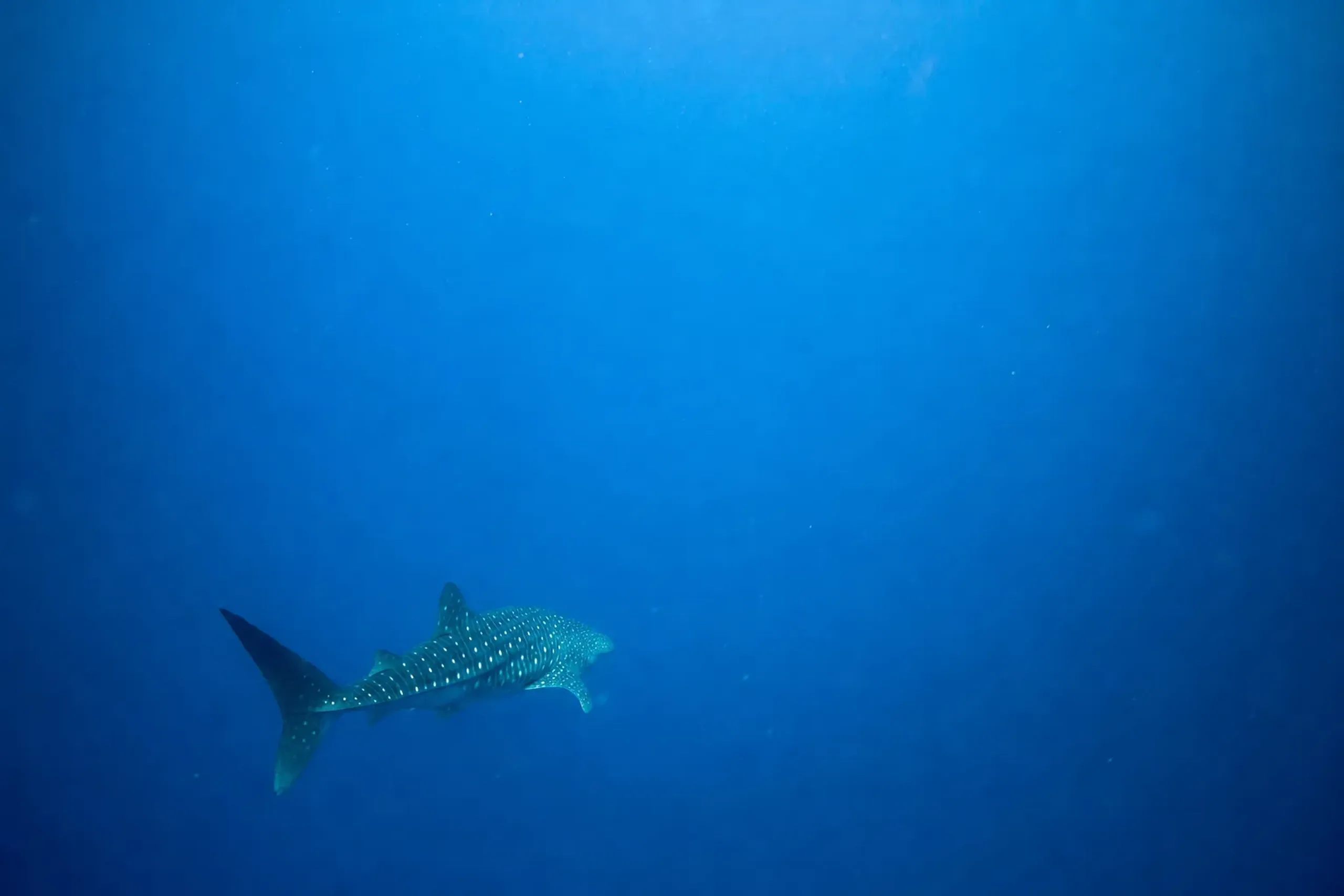
Key fact: One whale shark, Jinta, is currently on display in the Kuroshio Sea tank. Our team verifies this before every visit, since it is subject to change.
The Kuroshio Sea Tank Itself
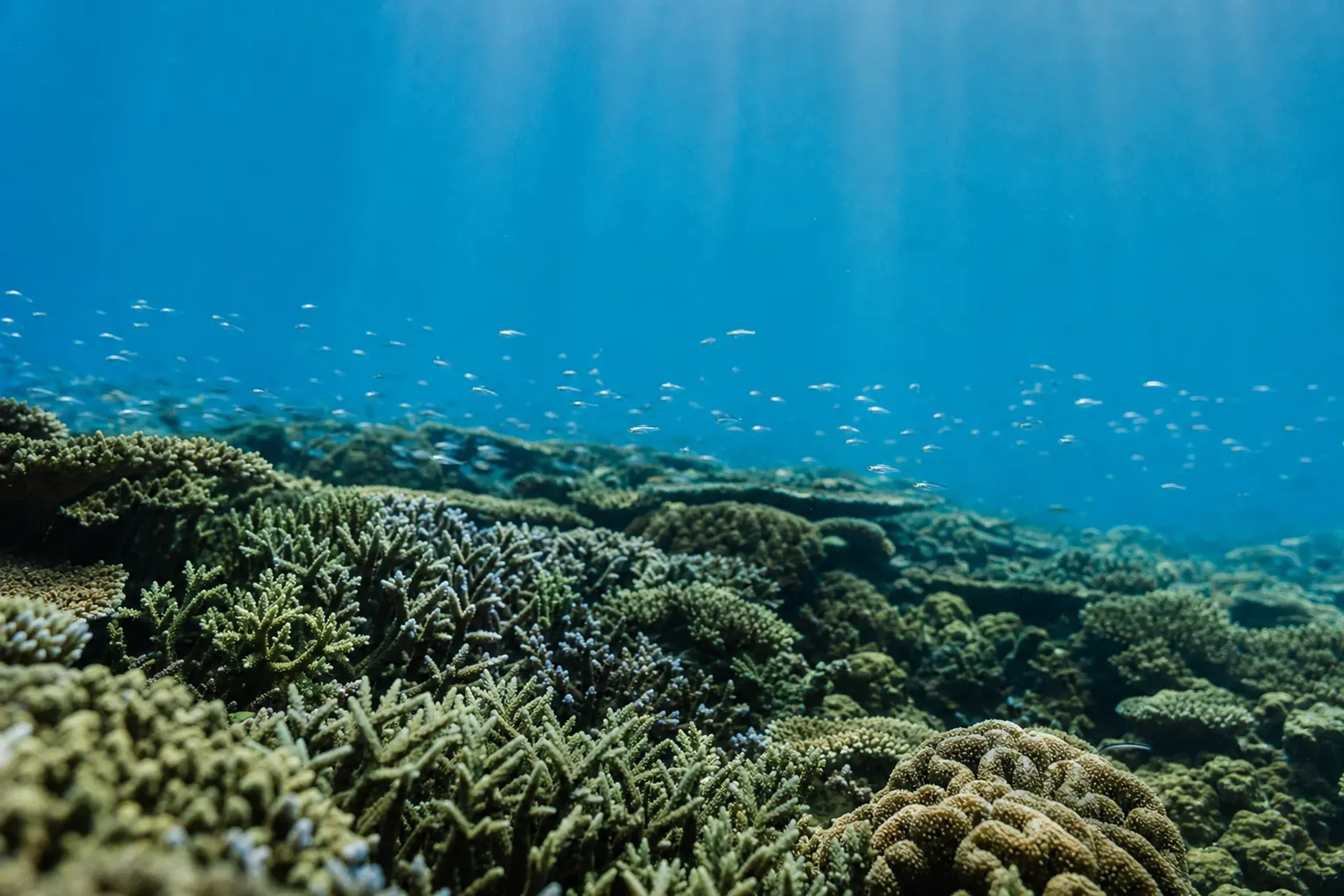
The numbers are worth knowing, even if they are no longer records. Thirty-five metres wide. Ten metres deep. Seven thousand five hundred cubic metres of water held back by an acrylic panel sixty centimetres thick. It is named for the Kuroshio — the warm ocean current that, alongside the Gulf Stream, is one of the two largest on the planet, and the reason Japan's southwestern islands wear coral reefs the way cooler seas never could.
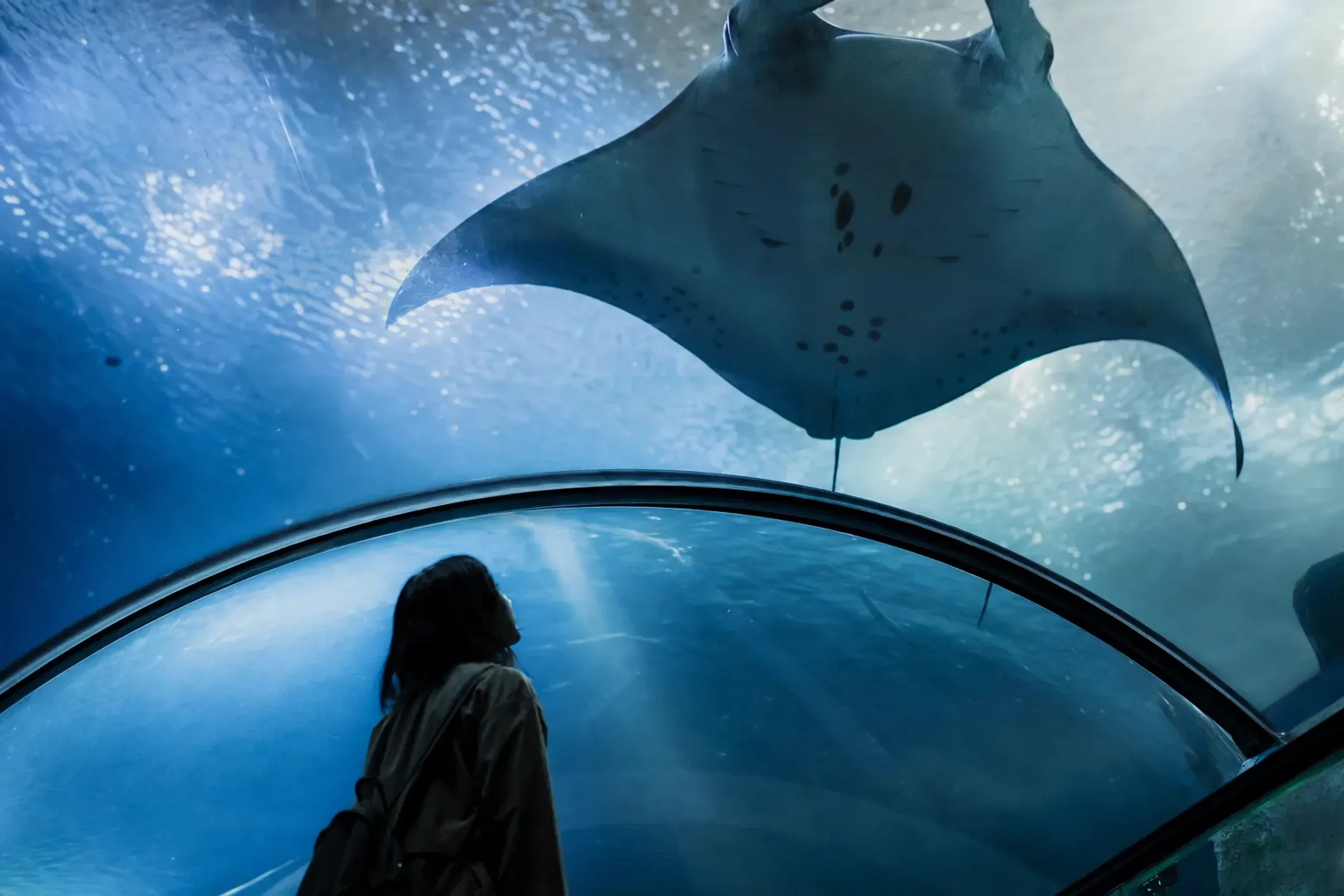
You can watch it from several angles. The great frontal acrylic panel is the famous one, with tiered seating that lets you simply stay a while. There is also an overhead acrylic view. Manta rays fold and unfold above you. Schools of trevally turn as one silvered body. But you keep coming back to the whale shark, because scale like that resets the eye.
Feeding Times And The Vertical Feed
Feeding sessions run three times daily: 9:30, 15:00, and 17:00. The afternoon and early-evening sessions — 15:00 and 17:00 — are the ones to time your visit around. During these, the whale shark performs a distinctive vertical feeding behaviour, rising toward the surface in a near-standing posture to draw in food.
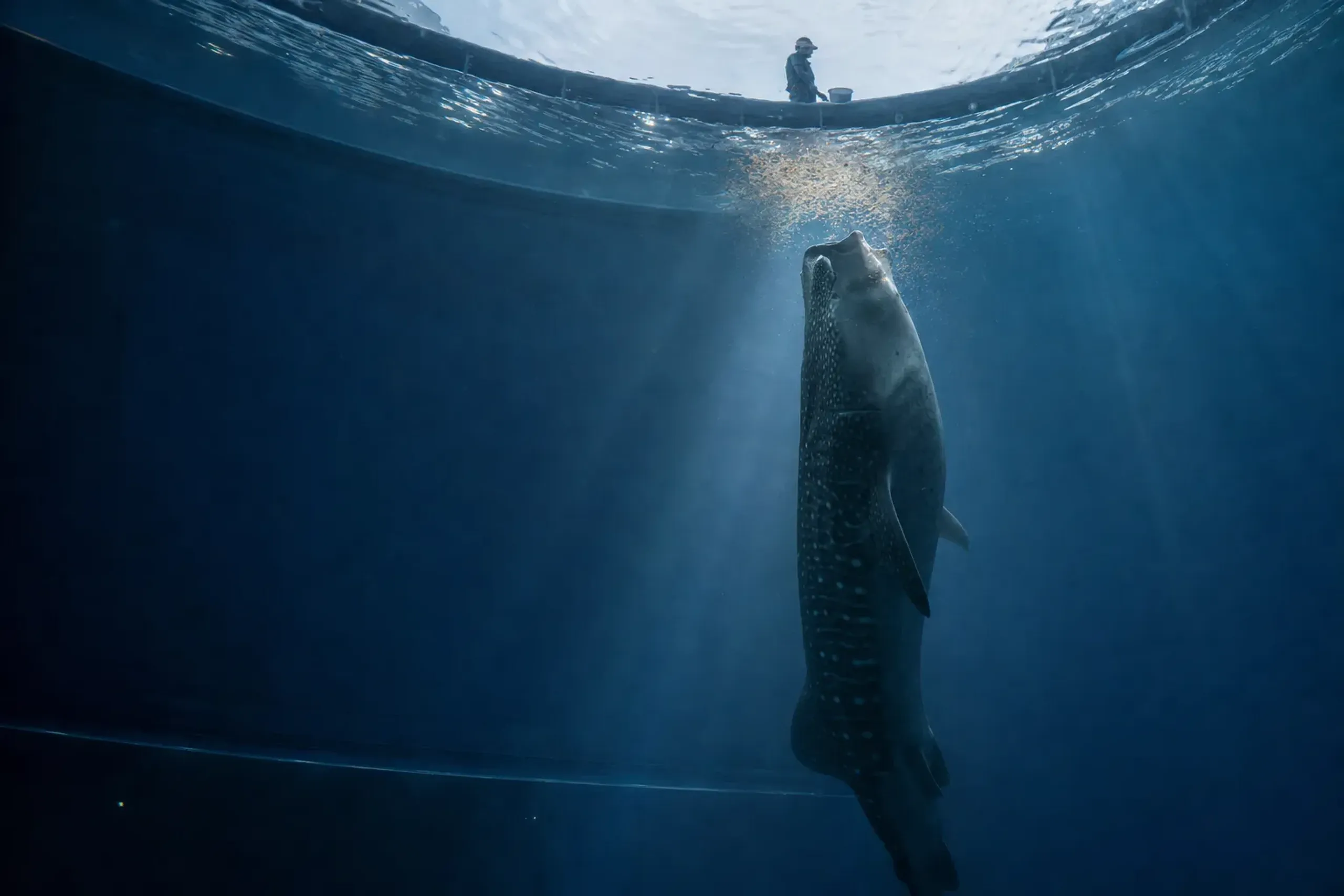
It is uncanny to watch: a six-tonne animal held upright in the water like a column, mouth open to the light. Our concierge team confirms current feeding times ahead of each visit, since the schedule can shift.
Why Is It Called Churaumi?
The name was chosen by public vote and joins two languages: chura, meaning "beautiful" or "graceful" in the Ryukyuan language, and umi, the Japanese word for ocean.
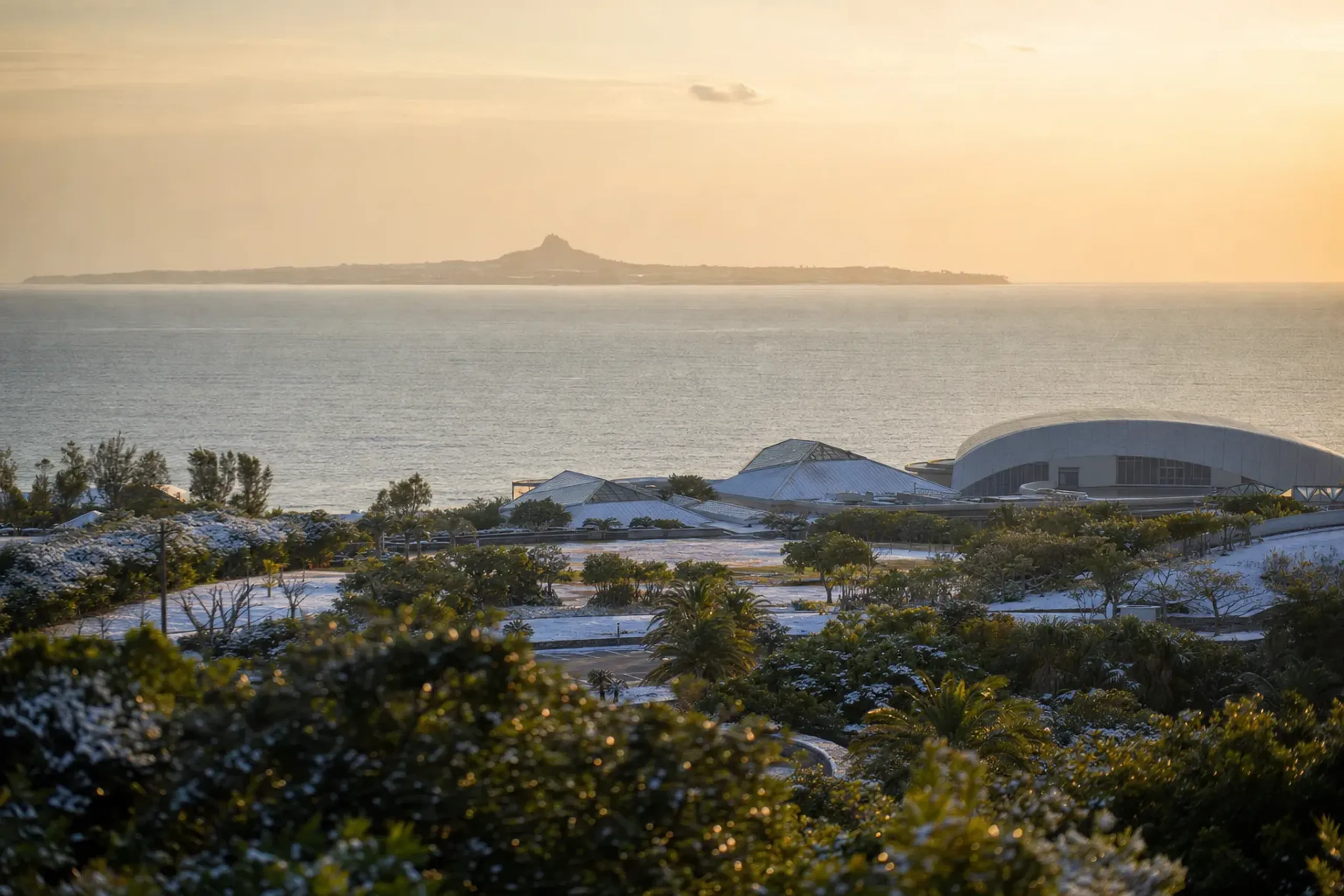
That small linguistic seam matters. Okinawa has its own language tradition, distinct from mainland Japanese, and the name of the aquarium carries a word from it. The building opened in November 2002 as part of Ocean Expo Park in Motobu, on the northwest coast of Okinawa's main island — a legacy site of the 1975 Okinawa International Ocean Exposition. Today it holds roughly 720 species and some 11,000 animals across 77 tanks, around ten million litres of water in total. We covered Okinawa's wider Ryukyu heritage in a separate journal; this piece stays in one room, with one fish.
Is There A Night Visit At Churaumi Aquarium?
Yes — a seasonal public event called Churaumi Night Aquarium, confirmed every August, with hours extended to 21:00 and last entry at 20:00. It is open to any ticketed visitor during those dates, not a private arrangement.
We want to be exact about this, because some material implies exclusive after-hours access exists here.
It does not, and we will not pretend otherwise. What is real is genuinely lovely. Between 18:00 and 21:00 the tanks are lit with special night-themed lighting, and the aquarium describes the sea as showing "a different face" than it does by day. Cooler air, softer glare, fewer harsh reflections on the acrylic. For photography and for simply lingering, the evening rewards you — and, timed well, it is the closest you will come to having that blue room to yourself.
One planning detail catches people out. The water-level viewing course through the Kuroshio tank — the Kuroshio Tankentai — closes earlier than the rest, at 18:45, even during Night Aquarium hours. If you arrive at 19:30 assuming everything runs until 21:00, you will miss it. Do that part first. Because this is a seasonal event set fresh each year, our concierge team confirms the current-year dates before any visit.
When Is The Best Time To Visit Churaumi Aquarium To Avoid Crowds?
Arrive right at opening — 8:30 — and head straight to the second-floor main tank viewing area, or come after 17:00 when day-trippers thin out.
Standard hours are 8:30 to 18:30, with last entry at 17:30. Hours extend during peak periods: Golden Week runs to 20:00, and August's Night Aquarium runs to 21:00. The aquarium closes only on the first Wednesday of December and the following Thursday for maintenance — otherwise it is open essentially year-round, including New Year.
The worst congestion is predictable, which is a gift for planning. Golden Week is heaviest, with 3–4 May bringing all-day peaks. The New Year period, 1–3 January, jams between roughly 11:00 and 15:00. Avoid those windows and the room breathes. Below is the shape of a well-timed day.
| Timing window | What to expect |
|---|---|
| 8:30 opening | Quietest hour; go directly to the main tank |
| After 17:00 | Day crowds thin; catch the 17:00 feed |
| Golden Week, 3–4 May | All-day peak — avoid if possible |
| New Year, 1–3 Jan | Congested 11:00–15:00 |
Knowing precisely which hour to arrive — and in which season — is the quiet difference between elbowing through a crowded gallery and standing alone before the glass. This is the Japanese sense of shun, of perfect timing, applied to a single room: our team builds each visit around the exact window when the light, the feed, and the calm all align.
What Japan Royal Service Arranges For A Churaumi Visit
Our role is straightforward, and we keep it that way. We handle tickets, private guiding, and chauffeured transfers to and from the aquarium — the aquarium sits roughly 90 kilometres from Naha, on the Motobu Peninsula, and a comfortable car changes the whole day.
That distance is real, and it is where a lot of visits fray. A private drive up the northwest coast lets you time your arrival to the opening bell or the 17:00 feed rather than the tour-bus tide. Our private transportation covers the run in vehicles suited to couples or families alike, and our team can shape a tailor-made itinerary around a Motobu or Nago base so the aquarium becomes an unhurried morning or a cool August evening rather than a scramble.
For where to rest afterward, see our accommodation guidance for north Okinawa — including the ryokan and coastal retreats you reach only by introduction, the quiet Japan that a search engine cannot surface. For the wider region and its Ryukyu history, our separate Okinawa journal covers ground this piece deliberately leaves alone.
Frequently Asked Questions
How many whale sharks are currently on display at Churaumi Aquarium?
One. The Kuroshio Sea tank currently displays a single whale shark named Jinta. Older tourism images sometimes show several, but as of early 2026 he is on display alone. Our concierge confirms status before each visit.
What is special about Jinta the whale shark?
Jinta holds the world record for the longest continuous captivity of any whale shark — 31 years as of March 2026. He arrived in 1995 at 4.6 metres and is now 8.8 metres. He is also the subject of landmark maturation and genomic research.
When does the Churaumi Night Aquarium run in 2026?
The Churaumi Night Aquarium runs 1–31 August 2026, with hours extended to 21:00 and last entry at 20:00. It is a public event open to any ticketed visitor. Note the Kuroshio Tankentai water-level course closes earlier, at 18:45.
How far is Churaumi Aquarium from Naha, and how do I get there?
Churaumi is about 90 kilometres from Naha on the Motobu Peninsula in northern Okinawa.
A private chauffeured car is the most comfortable option, letting you time arrival to opening or the afternoon feeding sessions rather than bus schedules.
Which feeding session should I plan around?
The 15:00 and 17:00 sessions are best, when the whale shark performs its distinctive vertical, near-standing feed near the surface. Feeding runs three times daily at 9:30, 15:00 and 17:00; times can shift, so our team confirms them before your visit.
Why Choose Japan Royal Service
Anyone can buy a ticket to Churaumi. What our guests value is the part around it — the drive that lands you at the acrylic panel before the crowds, the guide who tells you which feed to wait for, the quiet confirmation that Jinta is on display and the Night Aquarium dates are set before you plan your evening. We do not overstate what we do. We arrange tickets, guiding, and transfers, and we verify the details that shift — display status, feeding times, seasonal hours — so you arrive to no surprises. That anticipation of the unspoken, the care taken before you have thought to ask, is the whole of it.
That is the difference between a day at an aquarium and a day built for you: discretion, precise logistics, and a team based in Japan that treats a whale shark's feeding schedule as worth getting right. Japan Royal Service holds every itinerary and every guest in complete confidence.
When you are ready to stand in that blue room at the right hour, with the drive, the timing, and the details already handled, contact us here for a tailored proposal built around your dates.