In this guide
- 01What “Premium Mount Fuji” Really Means In 2026
- 02Choosing Your Route: Privacy, Forest, Or The Classic Line
- 03A Realistic Premium Itinerary: The Calm Overnight Strategy
- 04Mountain Huts That Matter: A Vetted Shortlist For Premium Travelers
- 052026 Rules You Cannot Ignore: Yoshida Route Gate Hours, Fees, And Reservations
- 06How To Book Official Fuji Access And Mountain Huts (And What A Concierge Can Clarify)
- 07Private Guides, Porters, And The Luxury Of Not Thinking
- 08After The Summit: Wabi-Sabi Recovery In Hakone Or The Fuji Five Lakes
- 09Transportation That Protects The Mood (And Your Timing)
- 10FAQ: Premium Mount Fuji Climbing For Luxury Travelers
- 11Why Choose Japan Royal Service
Mount Fuji is 3,776 meters of symbolism, weather, and logistics. It can also be 3,776 meters of elbows, headlamps, and rushed “bullet climbs” that leave even fit travelers wondering why they came.
There is a premium way to climb, and it is not about bravado. It is about compliance, pacing, and privacy—so you meet the mountain on lucid terms, not on the crowd’s schedule.
Our team at Japan Royal Service designs Mount Fuji climbs the way we design the rest of Japan for high-net-worth travelers: quietly, precisely, and with discretion at the center. Fewer surprises. Better sleep. A clearer summit.
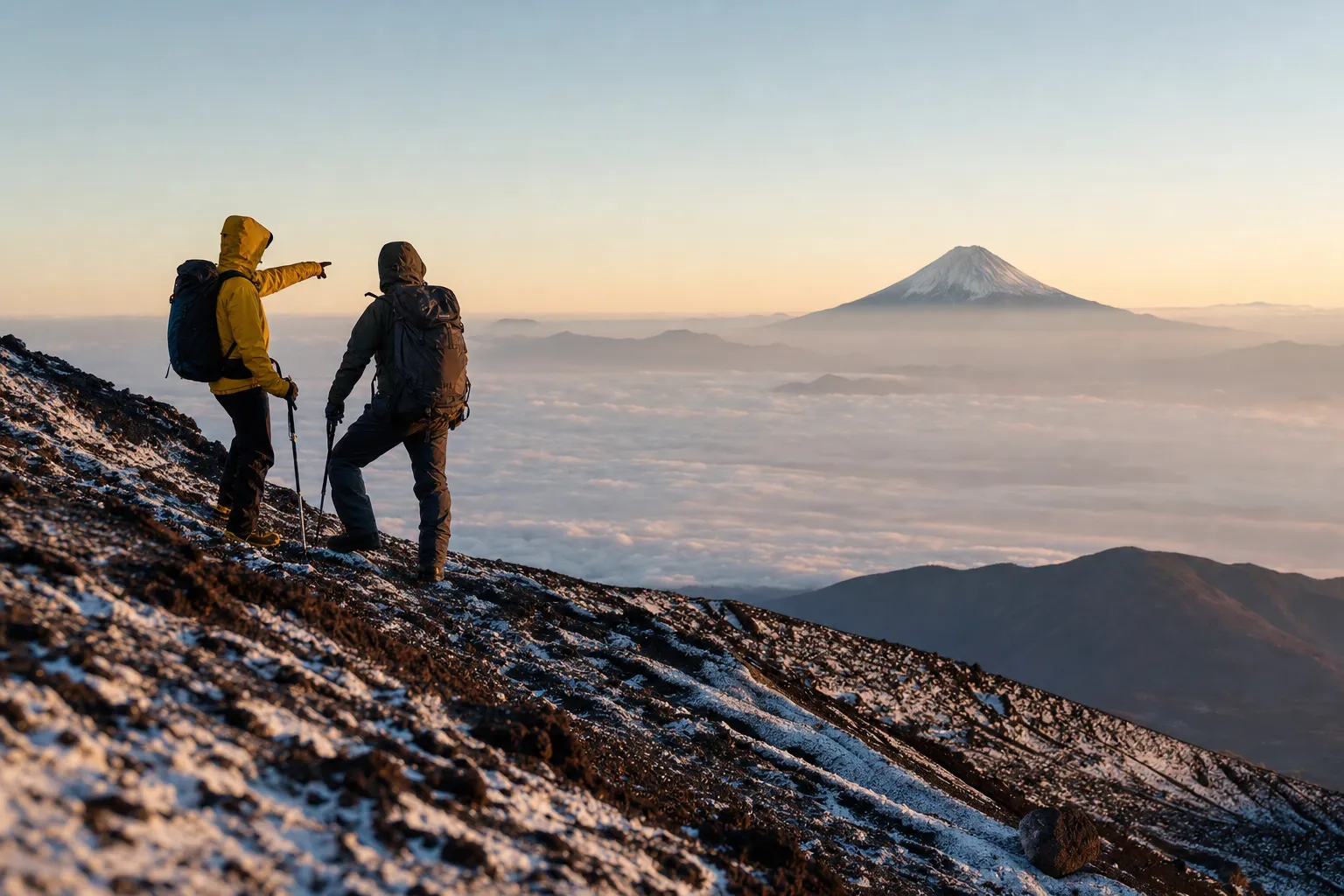
A premium climb starts with timing, calm preparation, and respect for official rules.
What “Premium Mount Fuji” Really Means In 2026
Premium does not mean “faster.” It means less friction and fewer points of failure, especially now that access is more managed on the Yoshida Route in 2026.
Rules matter on Fuji. Gate hours, passage systems, and hut reservations can dictate whether your plan is calm or chaotic. This is where most travelers misjudge the mountain. Big mistake.
In our experience, a premium climb has three signatures. A private guide who can make conservative calls early, a mountain-hut night that protects your pace, and a recovery stay that turns the descent into a soft landing.
Premium = Pace, Not Machismo
Fuji punishes rushed schedules. Altitude, temperature swings, and fatigue arrive in layers, and you cannot negotiate with them at 3,400 meters.
A private guiding approach gives you something rare on Japan’s most famous peak: control. Your breaks happen when your breathing says so, not when the line stops.
Premium = White-Glove Compliance
For 2026, the Yoshida Route includes managed access elements and a passage fee. The published guidance and online workflows are designed to reduce unsafe congestion.
Premium planning respects this. We build your climb around official rules and realistic gate timing, so your “sunrise dream” does not become an argument with a closing window.
Key fact: The official Mt. Fuji climbing site states that if you have a reservation for accommodation at a mountain hut, you can climb without a separate reservation for passing through (Yoshida Route context), and hut guests are requested to pass through the 5th-station gate before 2 PM for safety.
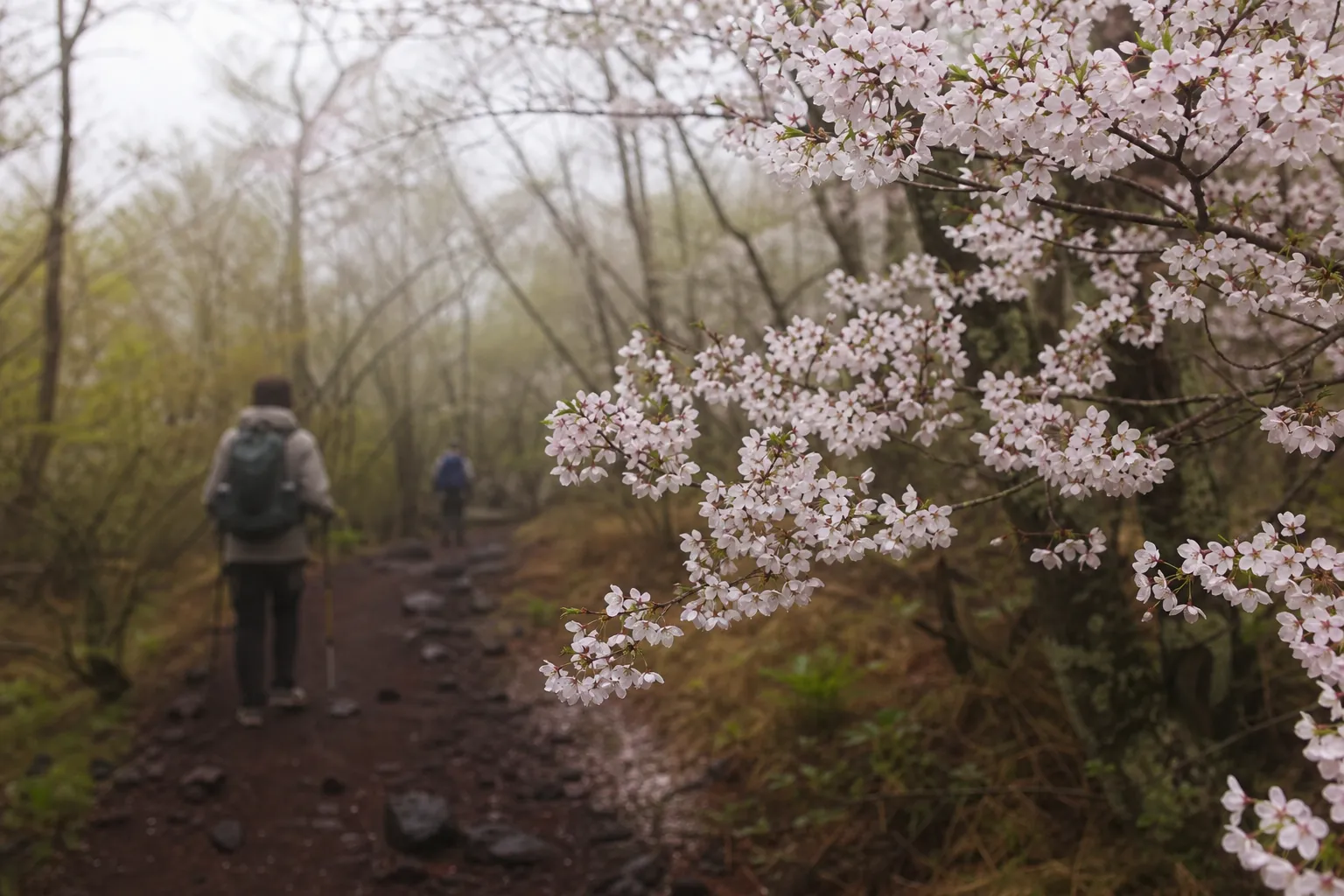
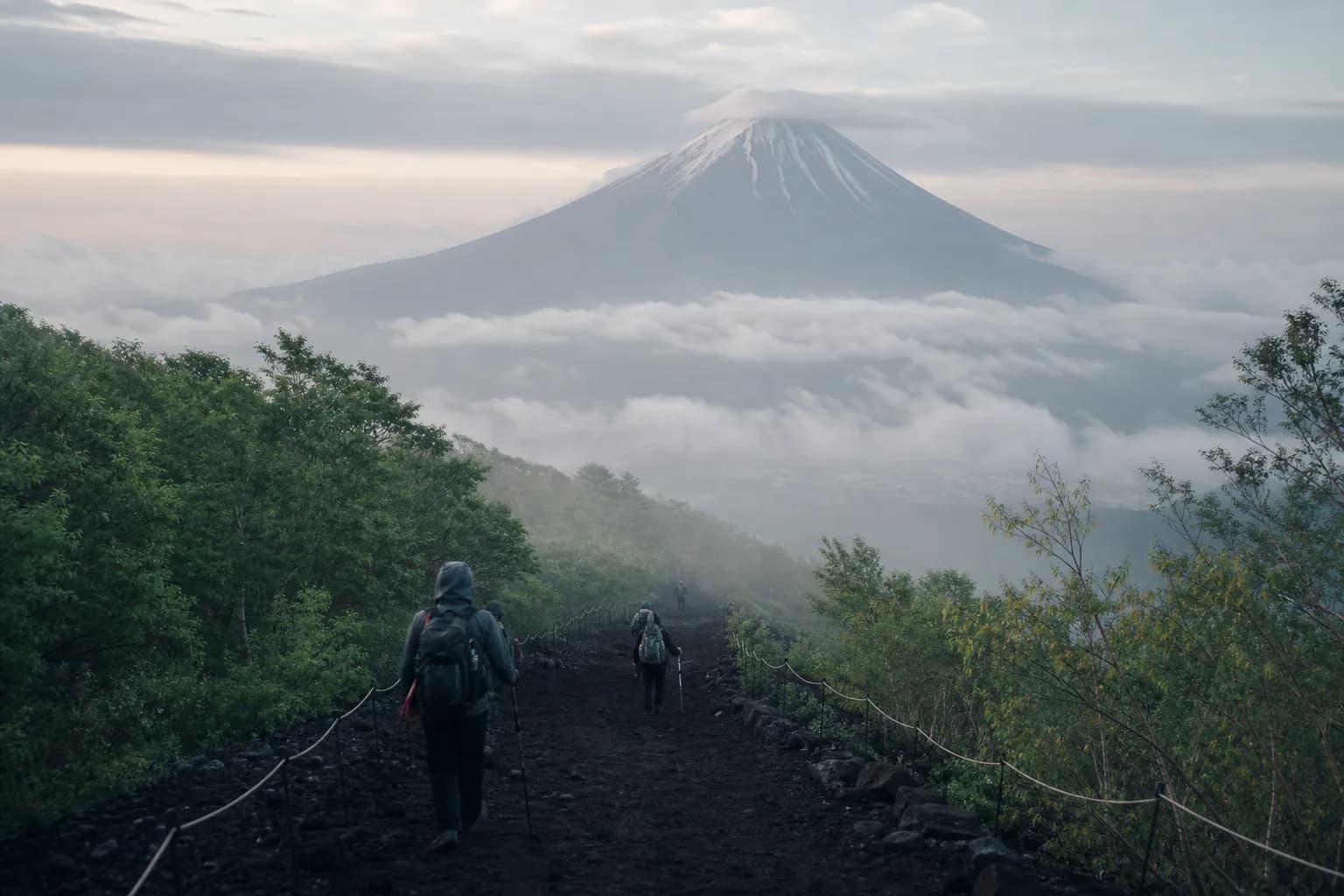
For many travelers, the forested start of Subashiri feels quieter than the classic lines.
Choosing Your Route: Privacy, Forest, Or The Classic Line
Most first-time climbers default to the Yoshida Route because it is famous and well-serviced. That popularity is the trade. You gain infrastructure, and you inherit crowds.
For premium travelers, we think in terms of “crowd temperature.” Some routes feel exposed and busy early; others offer quiet in the first hours, then merge later. That nuance matters.
Option A: Yoshida Route (Yamanashi Side) For Structure And Facilities
The Yoshida Route is the best-known approach and the one most associated with managed access measures. It is also where many of the classic 7th/8th-station hut strategies sit.
If you want the most straightforward facility access and a well-trodden plan, Yoshida can be the correct choice—when timed carefully. Timing is everything.
- Best for: First-time climbers who value clear infrastructure and a familiar overnight pattern.
- Watch for: Gate-hour restrictions and your required arrival rhythm at the 5th Station.
- Premium tactic: Start early enough to pass the gate before the requested time for hut guests, then settle into an unrushed hut check-in and meal.
Option B: Subashiri Route (Shizuoka Side) For A Quieter Start And The “Sunabashiri” Descent
The Subashiri Route begins in forest, which can feel calmer and cooler at the outset. It is also known for the “Sunabashiri,” a sand-run section that begins around the 7th station, referenced in official route material.
That descent can be a highlight for the right guest. It can also be messy if you are under-prepared. A guide makes the difference.
- Best for: Travelers who want a less showy, more wabi-sabi beginning—woodland air, muted light, and fewer early crowds.
- Watch for: Footing on descent; sand and small stones demand attention.
- Premium tactic: Treat the descent as a technical segment, not a victory lap.
Option C: Gotemba Or Fujinomiya For Strong Hikers Who Value Space
Fuji also has the Gotemba and Fujinomiya trails. These can suit strong hikers, especially those who prefer more space and can tolerate longer or steeper segments.
We keep route choice honest. If your priority is “easy,” we will not pretend a quieter line is effortless.
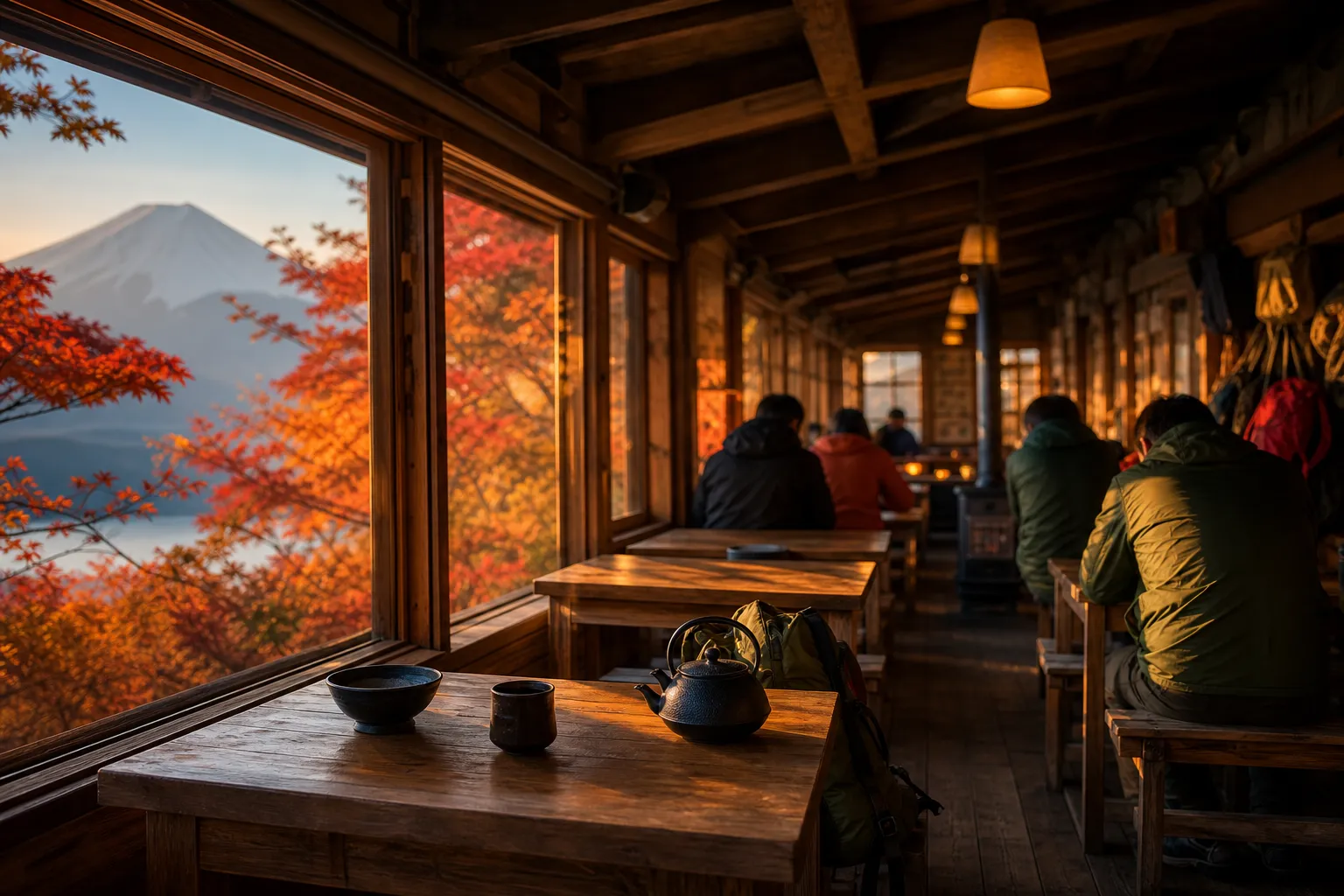
The overnight strategy is about rest and clarity, not rushing the mountain.
A Realistic Premium Itinerary: The Calm Overnight Strategy
The best premium Fuji climbs are designed around sleep and oxygen, not around internet bravado. One night on the mountain usually creates a more controlled summit window than a same-day push.
It also aligns with the managed-access reality. A hut reservation is not just comfort; on the Yoshida Route, it ties into the official guidance that hut guests can climb without a separate passing-through reservation. Clean and simple.
Day 1: Arrive Early, Pass The Gate, Climb To Your Hut
On Yoshida, official notices for 2026 describe a gate closure window of 14:00 to 3:00 the following day. That means your day is anchored to an early arrival if you want an overnight plan that stays smooth.
We aim for an early 5th-station arrival, a gear check, and a steady ascent. No rushing. No theatrical sprinting past families in jeans.
Night: Sleep Higher, Sleep Better (Within Reason)
Mountain-hut sleep is not a spa night. It is, however, the difference between a controlled summit attempt and a foggy one.
When guests ask us what “premium” changes at night, we answer plainly: you reduce decision fatigue. Your guide sets wake times based on weather, congestion, and your pace—not on the panic of missing sunrise.
Day 2: Summit Window, Then A Descent You Can Still Enjoy
The summit is not the end. The descent is where knees and attention slip, especially when people are euphoric and dehydrated.
We plan the return like a separate event, with a clear regrouping point and a recovery rhythm waiting below the mountain.
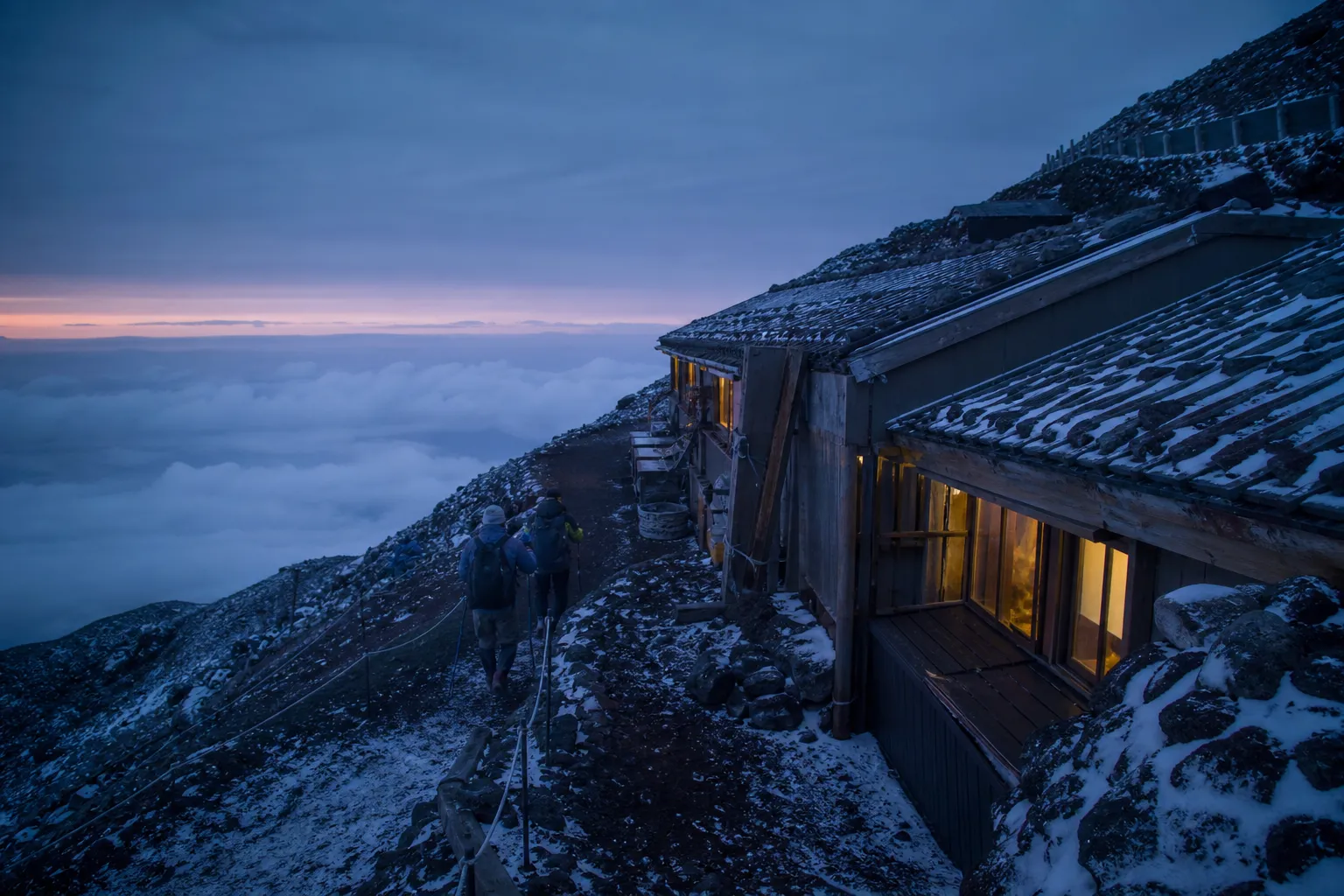
Hut choice shapes your summit timing, crowd exposure, and the quality of your night.
Mountain Huts That Matter: A Vetted Shortlist For Premium Travelers
Not all huts feel the same, and not all are positioned the same. On Fuji, “8th station” can also mean different huts at similar labels, which confuses first-timers.
Below are real, verifiable huts that appear in reputable English-language references, official route documents, or their own official sites. Availability and room configuration can change by season. Always confirm directly.
Goraiko-kan (Yoshida Route)
Goraiko-kan states on its English site that it is located at 3,450 meters above sea level and positioned as the nearest mountain hut to the top on the Yoshida Route. That location is the point.
Higher altitude can mean colder nights and a sharper acclimatization challenge. It can also mean a shorter summit push. Trade-offs are real.
Fujisan Hotel (8th Station, Yoshida/Subashiri Access Context)
Fuji Mountain Guides’ FAQ notes that Fujisan Hotel is an 8th-station hut accessible by both the Yoshida and Subashiri trails, and it also notes that the Yoshida trail has multiple “8th stations.”
JapanMountainHuts.com describes Fujisan Hotel as located at 3,400 meters at the 8th Station on the Yoshida Trail. For premium travelers, that altitude can be a strong balance: high enough to shorten summit timing, not so high that every breath feels like paperwork.
Taishikan (Yoshida Route, 8th Station Reference)
Because “8th station” is not a single address, Taishikan is another commonly referenced 8th-station option on Yoshida routes, including in guide-led contexts.
What matters is not the romance of the name. It is where it sits in your pace curve, and whether your plan arrives before the mountain turns frantic.
Miharashi-kan (Subashiri Route Reference)
The official Subashiri route PDF includes Miharashi-kan as a hut reference. That matters because it is anchored in route documentation rather than hearsay.
If you want Subashiri’s forested approach and a controlled overnight, huts referenced on that route become the practical spine of your plan.
2026 Rules You Cannot Ignore: Yoshida Route Gate Hours, Fees, And Reservations
In 2026, Yoshida Route planning is increasingly defined by official systems and published constraints. Many travelers only learn this at the last minute, which is how you end up with an expensive day trip to a closed gate.
We prefer to be dull in advance. Dull is good.
Gate Closure Window (Yoshida Route)
Official-language notices for 2026 describe a closure window of 14:00 to 3:00 the following day for the Yoshida Route gate. This directly affects late arrivals and “after dinner” starts.
If your plan includes a mountain hut, the official site also requests hut guests pass through the 5th-station gate before 2 PM for safety. That is the clean premium move: arrive earlier, climb calmer.
Passage Fee (Yoshida Route)
A 2026 Yamanashi-side document for Yoshida Route climbers describes a 4,000 yen passage/hiking fee per person per entry. Build it into your expectations and keep proof of compliance handy.
Premium travelers do not get special exemptions. They get fewer hassles because the plan anticipates them.
Online System Features (What They Suggest About Enforcement)
Travel Watch (Impress) reports that 2026 Yoshida Route passage reservations support payment methods such as credit card or PayPay, and that the system can display remaining capacity and includes features like equipment confirmation/pledges and branch-point images.
The practical implication is simple: this is not decorative bureaucracy. It is operational. Take it seriously.
How To Book Official Fuji Access And Mountain Huts (And What A Concierge Can Clarify)
Many guests search for “how to book Mount Fuji” and get a mess of outdated advice. The right answer depends on your route, your hut night, and the official systems in place for that season.
For the Yoshida Route in 2026, follow the official Mt. Fuji climbing portal for the latest rules, passage fee updates, and reservation workflows. Start with the official site: fujisan-climb.jp.
For baseline seasonality and safety guidance, JNTO’s Mt. Fuji climbing guide is a clean reference: japan.travel.
- Who can climb: During the official climbing season (commonly July to early September), when huts and facilities operate.
- Where to confirm rules: The official Mt. Fuji climbing site for route-by-route notices, gate hours, and passage systems.
- Hut reservations: Reserve directly with huts where possible, or through established guiding operators that publish hut-included offerings (for example, Fuji Mountain Guides publicly describes private climbs with hut reservation and meals).
Guests who want a premium, rule-compliant plan often have very specific questions—arrival time, gate cutoffs, which hut altitude fits their acclimatization curve, and what “sunrise” means under real congestion. For questions, contact our concierge.
Private Guides, Porters, And The Luxury Of Not Thinking
On Fuji, a premium traveler’s real enemy is mental noise. Am I too slow. Is this the right fork. Did I bring enough layers. Should I push on.
A private guide reduces that noise. Not by making the mountain easy, but by keeping the plan legible when your judgment is dulled by altitude.
What A Private Guide Changes On The Day
Most hikers underestimate micro-decisions. When to eat, when to add a layer, when to stop for five minutes versus fifteen—those choices compound.
With a private guide, you outsource the constant recalculation. You keep your attention for the view, the breath, the spare geometry of volcanic rock.
Porters: When They Make Sense
Porters are not required for everyone, and they are not a vanity add-on. They are useful when you want to climb with a lighter pack, protect your knees on descent, or travel with camera gear without turning your shoulders numb.
If you are curious, our concierge team can explain what is commonly possible in Japan’s guiding ecosystem and what is not, based on the latest on-the-ground practice.
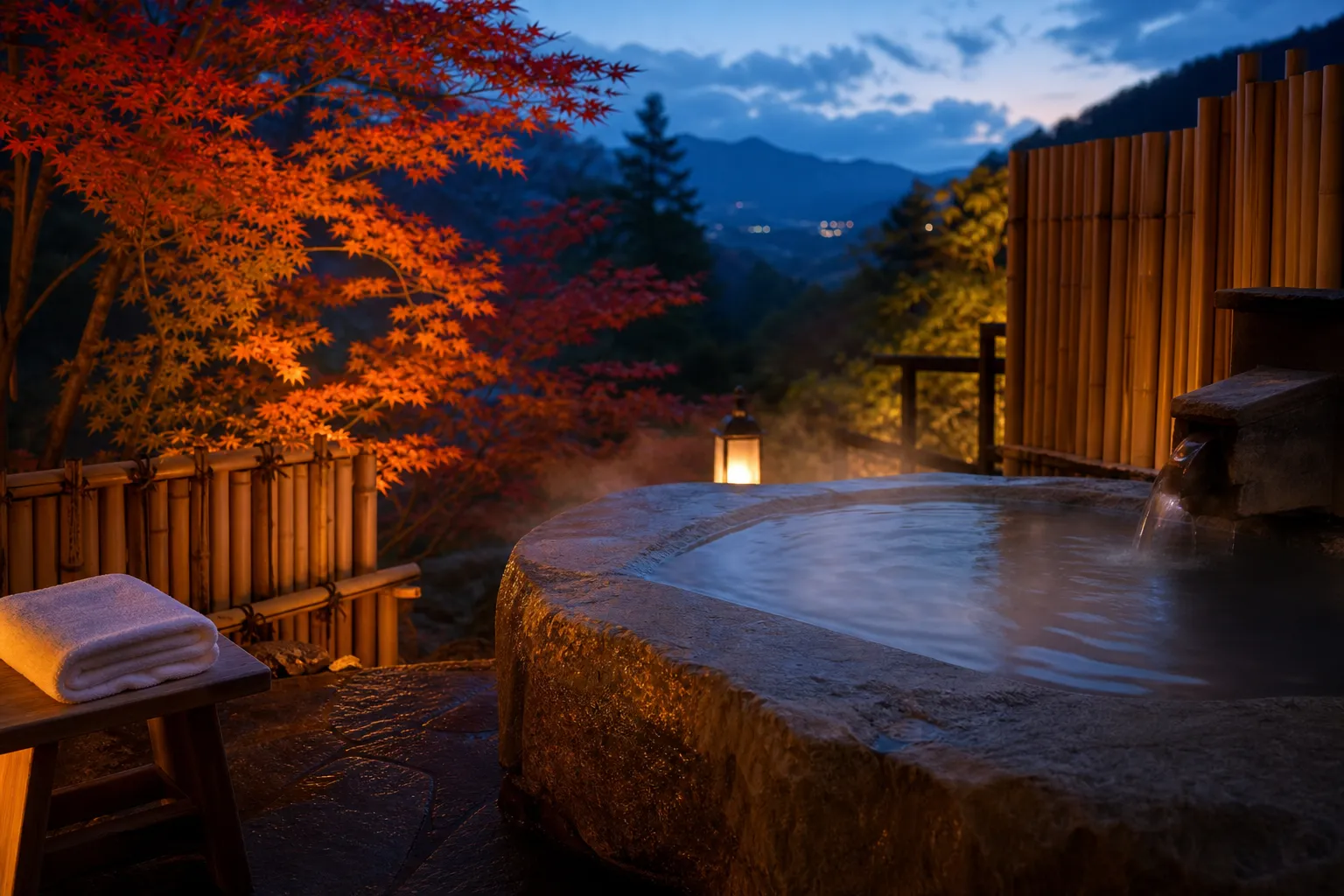
After the summit, the real luxury is recovery—quiet water, warm stone, and time.
After The Summit: Wabi-Sabi Recovery In Hakone Or The Fuji Five Lakes
Most itineraries treat Fuji like a checkbox between Tokyo and Kyoto. Premium travel treats it like an expedition with a recovery phase.
That recovery should feel Japanese in the quiet way. A cedar-scented bath. A breakfast you actually taste. Silence that resets your nervous system.
Option A: Hakone For Onsen Recovery
Hakone is a classic recovery choice because it is built for rest. Many travelers pair it with a view of Fuji when weather cooperates, but we frame it as the place where your legs forgive you.
In our experience, one night can work, but two nights changes the tone completely. Your second morning is when your body catches up.
Option B: Fuji Five Lakes For A Slower Fuji View Chapter
The Fuji Five Lakes area lets you stay close to the mountain’s presence without staying on the mountain. It is a better fit if you want early-morning lakeside walks and a calmer re-entry into daily life.
This is where hidden-Japan thinking can still apply, even near a famous icon: avoid the loudest overlooks, choose a quieter shoreline, and let the mountain come to you.
Transportation That Protects The Mood (And Your Timing)
Your climb begins long before the trail. A late pickup, a cramped vehicle, or a public transit scramble at dawn can sour the entire attempt.
Japan Royal Service is known for private chauffeured day tours and airport VIP transfers across Japan, and many guests prefer the same standard for Fuji logistics. Quiet cabin. Watchful timing. No negotiation with taxis.
For families and executives, vehicles like the Toyota Executive Alphard are often favored for space and calm. At the flagship end, the Lexus LM 500 offers a distinctly cocooned ride that suits early starts and post-descent fatigue.
FAQ: Premium Mount Fuji Climbing For Luxury Travelers
When is the official season to climb Mount Fuji? Mount Fuji is typically climbed during the official summer season, commonly July to early September, when mountain huts and facilities operate.
How high is Mount Fuji? Mount Fuji’s elevation is 3,776 meters (12,388 feet).
What are the Yoshida Route gate hours in 2026? Official notices for 2026 describe a gate closure window of 14:00 to 3:00 the following day for the Yoshida Route.
Do I need a separate passage reservation if I have a mountain-hut booking? The official Mt. Fuji climbing site states that if you have a reservation for accommodation at a mountain hut, you can climb without a separate reservation for passing through (Yoshida Route context). Hut guests are also requested to pass through the 5th-station gate before 2 PM for safety.
Is there a fee to climb the Yoshida Route in 2026? A 2026 Yamanashi-side document describes a 4,000 yen passage/hiking fee per person per entry for Yoshida-route climbers.
Which route is best for fewer crowds? Crowds vary by day and weather, but many travelers consider alternatives such as Subashiri, Gotemba, or Fujinomiya when they want a different rhythm than the classic Yoshida flow. A private guide can help match route choice to your fitness and pace goals.
Can Japan Royal Service help me plan a private, premium Fuji climb? Yes—our team at Japan Royal Service provides tailored guidance and private coordination after you inquire, including route strategy, timing aligned with official rules, and recovery planning that fits your wider itinerary.
Why Choose Japan Royal Service
You can climb Fuji with a generic checklist. Or you can climb it as hidden-Japan travel, where discretion, pacing, and small frictions are treated as serious design problems.
Our team at Japan Royal Service plans premium Mount Fuji climbs around three non-negotiables: discretion with low-visibility logistics, imperial-class precision in timing and conduct, and access to Japan’s shokunin spirit of craft—expressed here as meticulous preparation rather than flash.
We do not sell loud promises. We build a plan that works when the weather shifts, the gate rules tighten, and your body asks for patience. For private coordination, reach our team directly via WhatsApp or the contact form at japanroyalservice.com.
Ready to climb Mount Fuji the premium way? Share your travel dates, party size, and preferred route, and our concierge will reply with a tailored, rule-compliant plan.