In this guide
- 01What A “Closed-Room Cultural Evening” Really Means In Japan
- 02Private Vs. Performative: How To Spot A Real Salon (And Avoid The Tourist Show)
- 03Salon Geography: Kyoto Pressure, Tokyo Ease, And The Smart Two-City Approach
- 04Concrete, Verifiable Salon Containers You Can Actually Reference
- 05The Discretion Protocol: Identity Protection, No-Leak Guest Lists, And “No Photos” That Actually Holds
- 06Logistics That Make Or Break A Salon Night (Without Making It Feel Managed)
- 07Shokunin Evenings: How Master-Led Sessions Differ From “Private Experiences”
- 08How To Book Official Experiences Without Overpromising (A Practical Booking Method Section)
- 09FAQ: Closed-Room Cultural Evenings In Kyoto And Tokyo
- 10Why Choose Japan Royal Service
A crowded highlight reel is easy to buy. A private cultural evening that feels quiet, legitimate, and protected is harder.
In Kyoto and Tokyo, the best “closed-room” experiences are permission-based. They depend on restraint, correct etiquette, and a guest list that will not leak. No exceptions.
Our team at Japan Royal Service designs these nights as salons: discreet rooms, controlled arrival and departure, and culture that stays culture—never a staged show. Think wabi-sabi, not spectacle.
This guide lays out how VVIP salons work in Japan, what is realistic to ask for, and how to protect identity while still meeting real masters and practitioners. Calmly. Precisely.
What A “Closed-Room Cultural Evening” Really Means In Japan
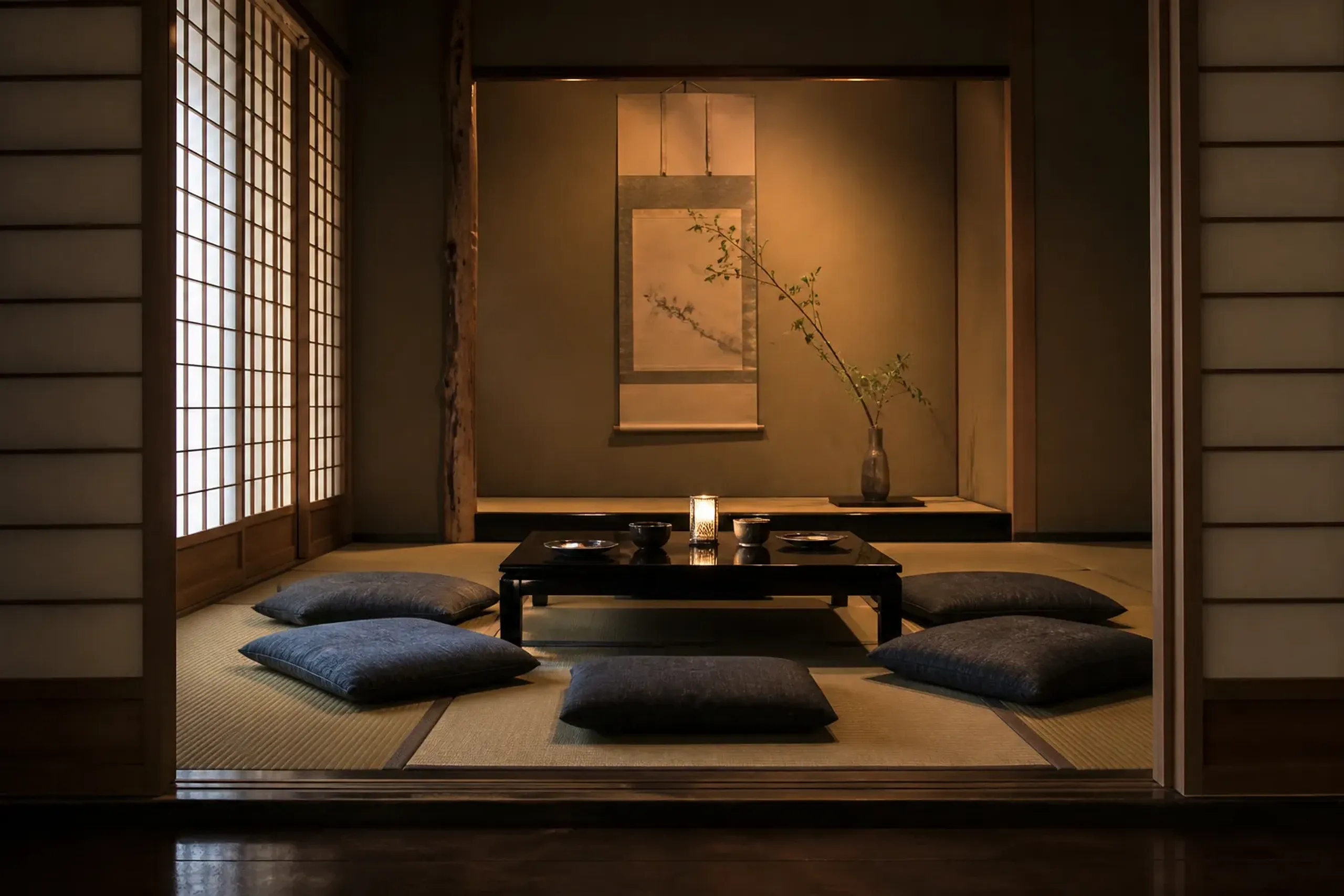
A closed-room evening begins with the room: quiet, spare, and deliberately controlled.
A VVIP salon is not “VIP seats” at something public. It is a private room, a private arc of time, and a limited set of people who are allowed to be there.
Small details do the heavy lifting. A single entrance. A room where phones remain dark. A schedule built around when streets are least congested.
In our experience, clients want two things at once: cultural legitimacy and low visibility. That pairing is the point.
Three Legitimate Salon Formats (And Why They Feel Different)
Japan has several real, established formats that map well to a closed-room evening. Each carries its own etiquette and risk profile. Pick the right container first.
- Ozashiki (tatami-room banquet format): A traditional private-room evening with arts such as dance and shamisen, often paired with a meal.
- Private tea setting (tea room / hotel tea experience): A controlled, quiet space where conversation is secondary to practice and presence.
- Small-audience performing arts (public performance, private context): The performance itself may be public, but your evening becomes “closed-room” through private pre-briefing, disciplined routing, and a low-friction exit plan.
Wabi-Sabi As The Design Rule, Not A Mood Board
Wabi-sabi is useful because it tells you what to remove. Excess guests. Excess movement. Excess documentation.
The best salons do not compete with Tokyo’s neon or Kyoto’s headline temples. They win by subtraction. Silence is the feature.
Private Vs. Performative: How To Spot A Real Salon (And Avoid The Tourist Show)
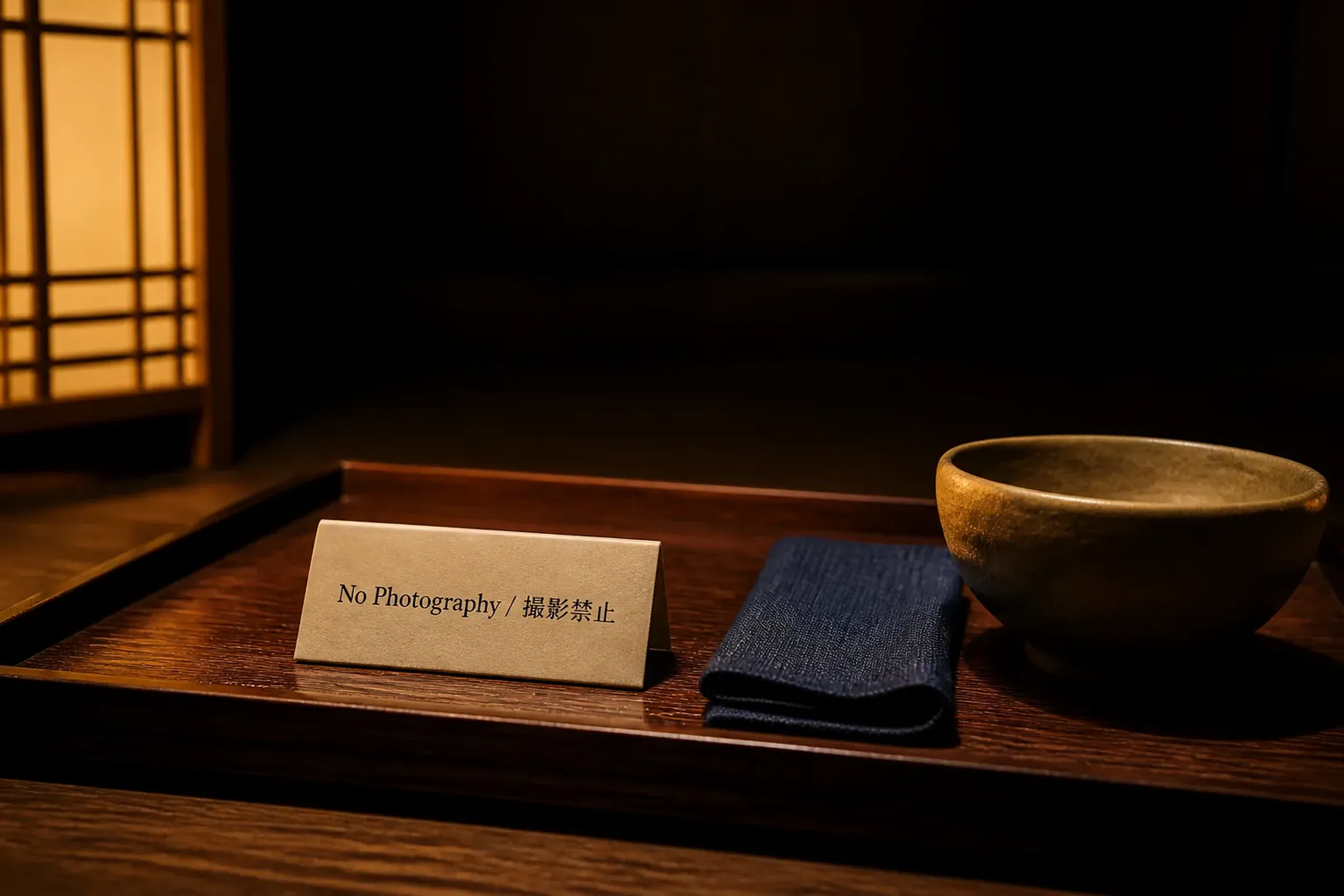
In legitimate salons, boundaries are clear—and calm.
Luxury travelers get caught by the same trap as everyone else: a polished “geisha show” that looks impressive on a page and feels hollow in the room.
Real salons have friction. They ask for behavioral constraints. They do not promise unlimited filming, loud toasts, or casual drop-ins.
If your host never mentions rules, that is your warning label.
A Quick Decision Test Before You Commit
- Is the setting a private room with a fixed start and end? If it is a rotating audience, it is not a salon.
- Are photography boundaries explicit? If the page sells photos more than culture, step back.
- Is the format grounded in a known practice? Ozashiki, tea, Noh—real forms with real etiquette.
- Is identity protection assumed? A true VVIP evening treats discretion as normal, not negotiable.
Key fact: Kyoto’s official 2026 visitor guidance warns against following geiko/maiko, photographing without permission, trespassing, and photographing private property; photography is permitted only in designated areas.
Salon Geography: Kyoto Pressure, Tokyo Ease, And The Smart Two-City Approach
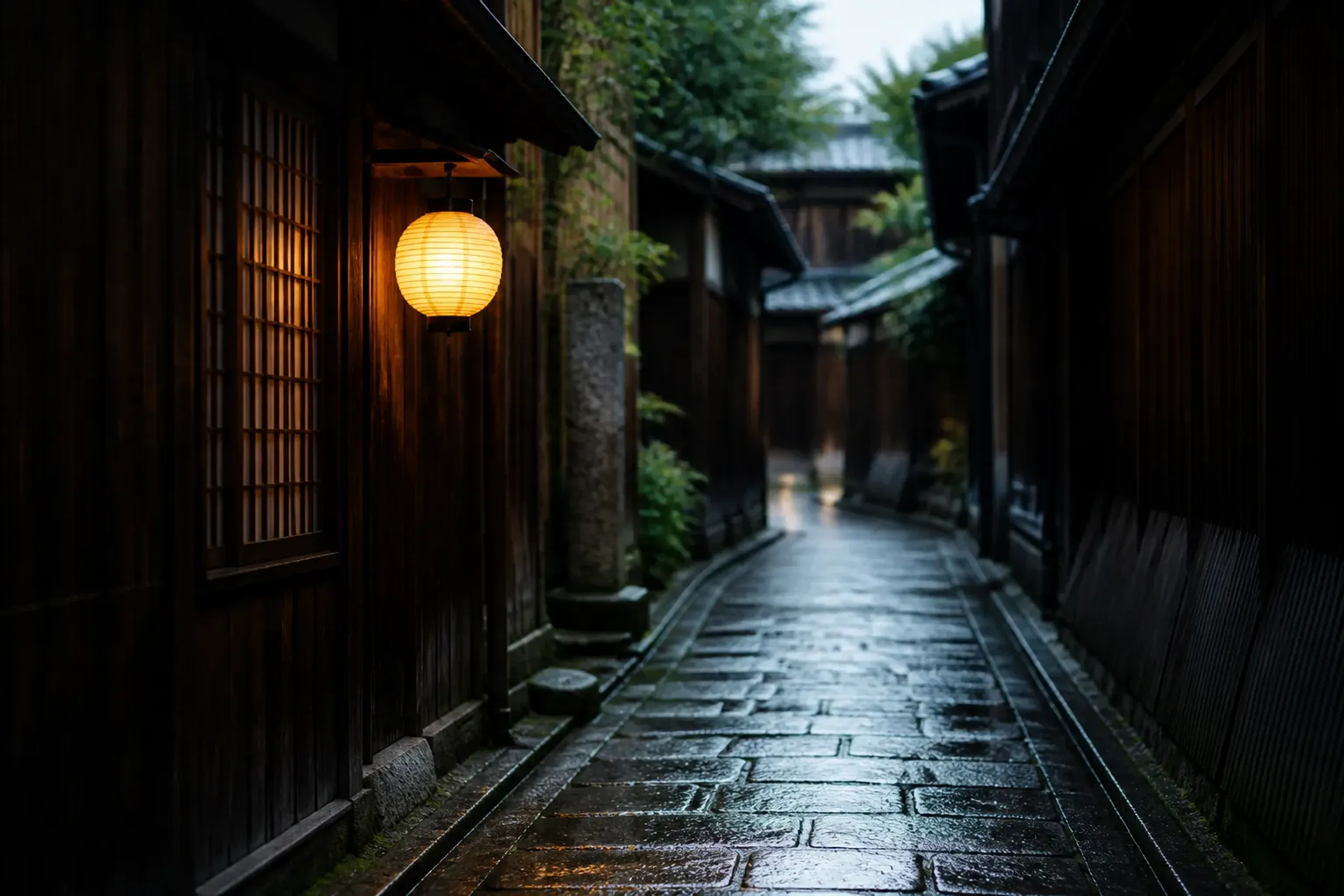
Kyoto rewards restraint—especially in high-pressure districts.
Kyoto concentrates demand into a few streets. That reality has tightened etiquette, policing of behavior, and community patience.
Tokyo can be easier. Not “less strict.” Just more elastic in how and where private rooms can be created.
For UHNW families and principals with security concerns, we often treat geography as risk management. Not a postcard contest.
Option A: Kyoto For Heritage-Grade Restraint
Kyoto remains the cultural north star, especially for guests who want correct form and a sense of lineage. The tradeoff is pressure: crowding, cameras, and scrutiny in obvious districts.
- Build a schedule that avoids peak foot traffic around Gion / Kiyomizu, using Kyoto’s official Travel Congestion Forecast as a planning signal.
- Use “container” venues where rules can be enforced without drama, including hotel-led cultural experiences when appropriate.
- Keep arrivals unshowy. Quiet car, quiet corridor, quiet timing.
Option B: Tokyo For Discreet Private-Room Control
Tokyo’s private dining culture and hotel infrastructure can make closed-room planning less brittle, especially for mixed groups and business-hosted evenings.
- Private-room etiquette is easier to brief and enforce in a modern urban setting.
- Neighborhood choice becomes a privacy tool, not a headline.
- Tokyo also offers a clear, published pathway for a private ozashiki-style experience in Asakusa via Miyakodori’s “Ozashiki Experience in Asakusa.”
Option C: The Two-City Sequence That Protects The Kyoto Night
One practical pattern: start in Tokyo for the first salon, then go to Kyoto once the group is “trained” in etiquette and expectations.
It sounds strict. It is kind.
Concrete, Verifiable Salon Containers You Can Actually Reference
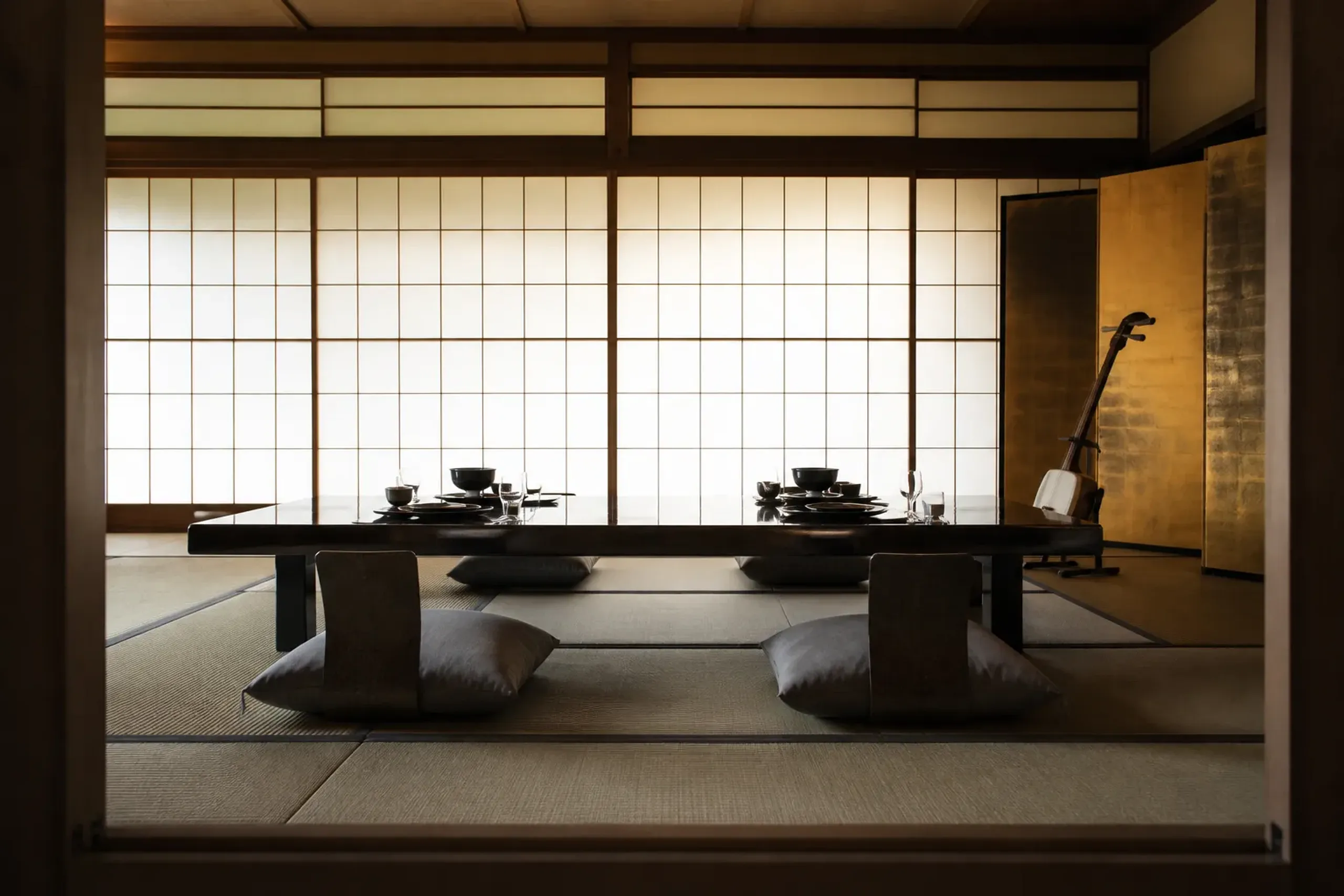
We avoid inventing venues, and we do not write public promises about arranging third-party experiences. What we can do is point to legitimate, verifiable containers that exist, and explain how to think about them.
After that, private coordination belongs in a private conversation. Always.
Asakusa Ozashiki: Miyakodori’s Private Tatami-Room Format
Miyakodori sells an “Ozashiki Experience in Asakusa” positioned as a private geisha banquet in a tatami room, with kaiseki cuisine, dance, shamisen, and ozashiki games.
Their Asakusa Geisha FAQ also states that Asakusa is the only Tokyo hanamachi where international guests can request a private geisha evening directly online, without an introduction required, and it publishes example structure for a 3-hour “Full Course.”
For UHNW clients, the attraction is clarity. Clear format. Clear rules. Lower ambiguity.
Kyoto, Hotel-Embedded Privacy: Four Seasons Hotel Kyoto
Four Seasons Hotel Kyoto markets a “Maiko Afternoon at Hiroshimaya,” describing a private visit to Hiroshimaya, a historic maiko house in Gion.
Even when the experience is “inside Kyoto,” the hotel framework can add a layer of predictability and control for timing, staffing, and guest comfort. Quietly helpful.
Kyoto, Tea As A Controlled Closed Room: HOTEL THE MITSUI KYOTO
HOTEL THE MITSUI KYOTO (Luxury Collection) markets a CHAKYO tea ceremony experience overseen by So’oku Sen, described as heir apparent to the iemoto of Mushakouji Senke, with an offer validity window shown as May 18, 2026 to May 1, 2027.
Tea is not entertainment. That is why it works as a salon for principals who want cultural depth without nightlife energy.
Public Performance, Private Evening: Takigi Noh At Heian-jingu Shrine
JNTO lists Takigi Noh at Heian-jingu Shrine as an evening torch-lit Noh performance, describing it as open-air Noh—one of Japan’s oldest forms of musical theater.
A public performance can still belong in a VVIP itinerary when you wrap it with privacy-forward routing, contextual briefing, and disciplined behavior. No chaos. No crowd-surfing.
The Discretion Protocol: Identity Protection, No-Leak Guest Lists, And “No Photos” That Actually Holds
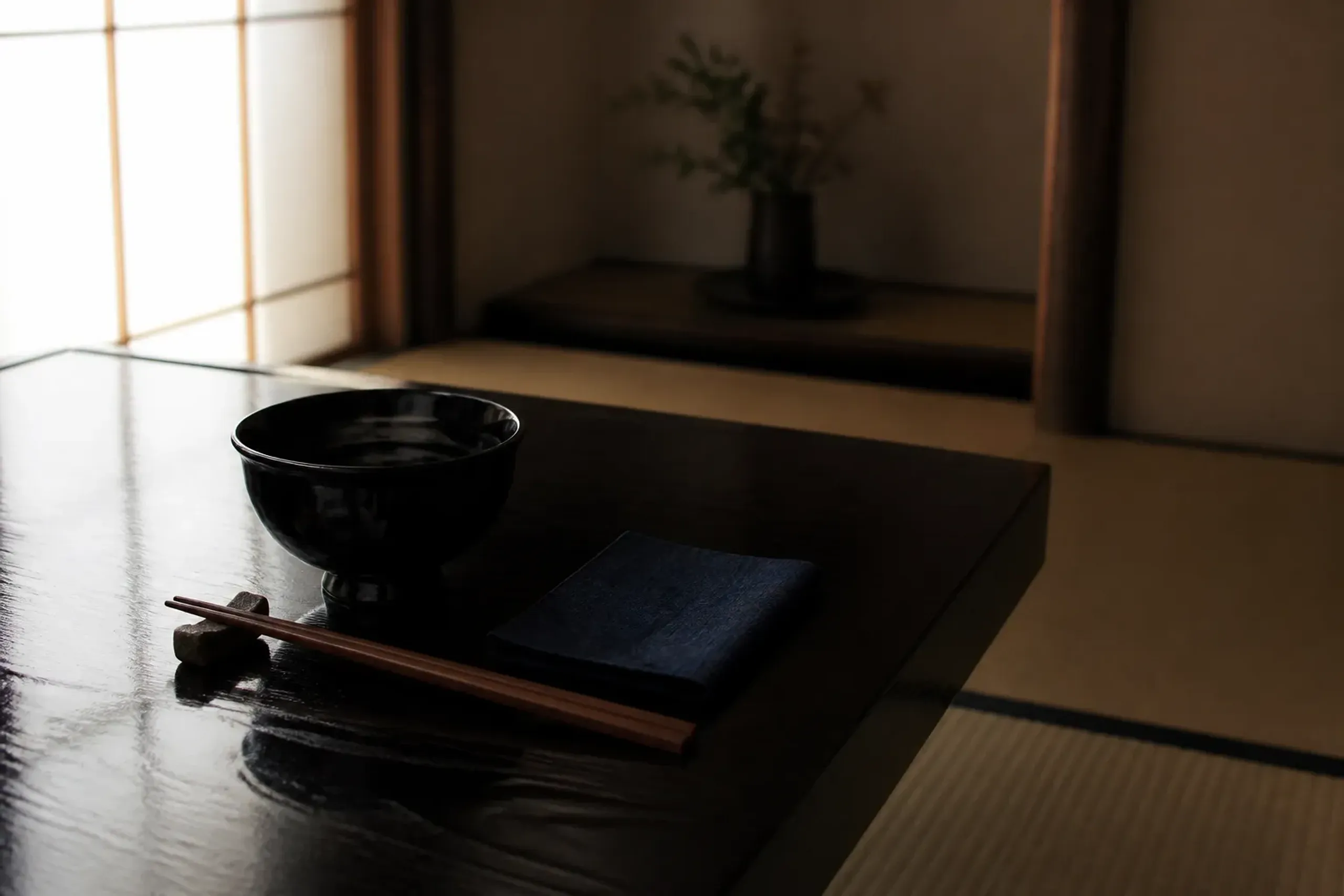
The most serious privacy signals are the quiet ones.
Discretion is not a vibe. It is an operating standard.
Our concierge team plans these evenings the way an executive assistant plans a sensitive board dinner: names, timings, entrances, and what never gets said out loud.
And yes, it means saying “no” before you say “yes.”
Guest List Control: The Rule Set We Recommend
- One host, one list. A single person controls final attendance.
- Hard cap by room physics. Tatami rooms and tea rooms have real comfort limits. Crowding ruins the night.
- No plus-ones. Not because we are unfriendly. Because leaks usually enter through “just one more.”
- Names shared late. The fewer hands a list passes through, the better it behaves.
Vetting Attendees Without Turning The Evening Into A Background Check
High sensitivity does not require theatrics. It requires clarity.
- Purpose alignment: Is this cultural, corporate, family, or philanthropic? Mixed motives cause trouble.
- Phone discipline: Anyone who argues about photos is not ready for a salon.
- Behavioral fit: Loud humor, aggressive drinking, or “content creator energy” does not belong.
Phone, Camera, And Interpreter Boundaries
Kyoto’s guidance around geiko/maiko and private property exists for a reason. A salon evening should exceed those standards, not test them.
- Phones stay off and away. A visible phone changes the room.
- Photography only with explicit permission. Default is no.
- Interpreting is discreet. The interpreter should not become the evening.
Logistics That Make Or Break A Salon Night (Without Making It Feel Managed)
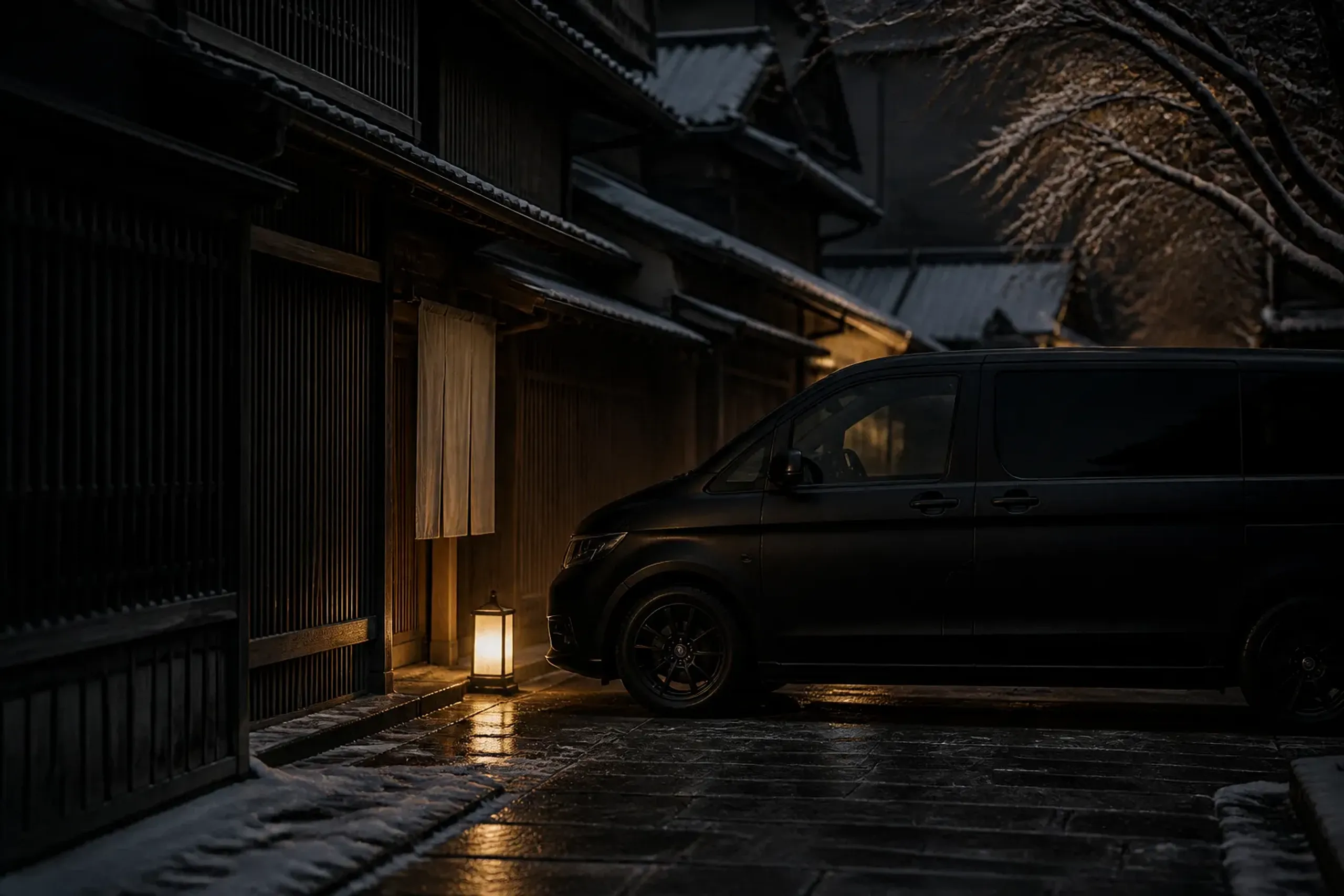
A salon night is protected by what guests barely notice: timing, routing, and quiet arrival.
Most “exclusive evenings” fail on the boring parts. Arrival. Timing. Sound leakage. The wrong car door opening on the wrong street.
We build logistics to disappear. That is the craft.
Precision reads as calm.
Arrival And Departure: Quiet In, Quiet Out
The best arrival is forgettable. The best departure is even more forgettable.
For private movement, our first recommendation is disciplined, private ground transport with a watchful chauffeur and a route that avoids predictable bottlenecks; learn more about our approach to private transportation.
- Staggered arrivals for mixed groups. It reduces hallway congestion and attention.
- Zero curbside debate. Any discussion happens inside the vehicle.
- Buffer time. Not “extra time.” Protection against surprises.
Overtourism-Aware Timing Using Official Signals
Kyoto publishes a Travel Congestion Forecast that lists hotspots such as “Gion / Kiyomizu,” with an update timestamp shown as Jun 11, 2026.
Japan’s Tourism Agency (MLIT) also maintains a public page on overtourism prevention initiatives, with a last update date shown as April 24, 2026. Policy is becoming operational.
We treat those signals as planning inputs. Not as marketing copy.
Space Design: Static-Angle Privacy That Feels Natural
Your “visuals” should come from the room, not from filming it. A tokonoma alcove. A single flower. The grain of a tea scoop.
Static angles matter because movement draws eyes. No panning. No spotlighting the practitioner.
Let the room do its job.
Shokunin Evenings: How Master-Led Sessions Differ From “Private Experiences”
Shokunin culture is not a photo opportunity. It is work, done in a particular way, at a particular tempo.
The difference is respect for the craft’s boundaries. Some masters will not accept outside guests. Others will, but only through correct channels and correct behavior.
This is where hidden-Japan begins: the Japan that Google cannot find, because it does not advertise.
What To Ask For (And What Not To Ask For)
- Ask for: a small group, a focused theme, and time for quiet questions.
- Do not ask for: backstage spectacle, forced “meet-and-greet” energy, or anything that treats the craft like a prop.
Gifting And Gratitude: Keep It Correct And Simple
If gifting is appropriate, keep it restrained. High-quality consumables are often safer than objects that create storage burden.
And never make the gift the story. Big mistake.
How To Book Official Experiences Without Overpromising (A Practical Booking Method Section)
Many salon-adjacent experiences have official booking channels. Some require introductions. Some are offered through hotels. Some are sold directly by the provider.
Use only official pathways and published rules. That protects you, and it protects the culture you are entering.
Miyakodori (Asakusa Ozashiki): Published Online Requests
- Who can book: Miyakodori states international guests can request a private geisha evening directly online in Asakusa.
- Where to book: Via Miyakodori’s official website pages for the tatami-room ozashiki experience and FAQ.
- What to expect: Their materials describe a private tatami-room evening with kaiseki cuisine, dance, shamisen, and ozashiki games, with example structure for a 3-hour “Full Course.”
For questions, contact our concierge.
Hotel Experiences In Kyoto: Follow The Property’s Official Offer Terms
- Who can book: Typically hotel guests, depending on the property’s terms.
- Where to book: Through the hotel’s official experience pages and offer listings.
- Deadlines and windows: Follow the validity windows shown on the official offer (for example, HOTEL THE MITSUI KYOTO’s CHAKYO listing shows May 18, 2026 to May 1, 2027).
For questions, contact our concierge.
Public Performances: Buy Tickets Only Through Official Sellers
If your salon plan includes a public performance such as Takigi Noh at Heian-jingu Shrine, purchase tickets through the event’s official channels and follow venue rules.
For questions, contact our concierge.
FAQ: Closed-Room Cultural Evenings In Kyoto And Tokyo
Are private geisha or maiko evenings always “introduction-only”?
No. Miyakodori’s Asakusa Geisha FAQ states Asakusa is the only Tokyo hanamachi where international guests can request a private geisha evening directly online, without an introduction required. Kyoto often operates differently, and hotel-led experiences can be a structured pathway.
Can we film the evening for personal memories?
Assume no. Kyoto’s official guidance highlights issues such as photographing geiko/maiko without permission and photographing private property, with photography allowed only in designated areas. In a closed-room salon, permission must be explicit, and many hosts will prefer no photography at all.
How many guests is “right” for a VVIP salon?
Small. The correct number is set by room comfort, not by status. In practice, a tight group supports quiet conversation, controlled timing, and better cultural focus.
Is Kyoto still worth it with overtourism measures increasing?
Yes—if you travel with restraint. The Japan Tourism Agency (MLIT) has public overtourism prevention initiatives, and Kyoto provides tools like its Travel Congestion Forecast. A closed-room evening is often a low-impact alternative to crowded, public sightseeing.
How do we keep the event private if we are a high-profile family?
Use a controlled guest list, minimize staff exposure to names, keep phones away, and plan quiet routing. Discretion is the core design principle, not a line item.
Why Choose Japan Royal Service
Many luxury travel companies can propose “exclusive culture.” Our team at Japan Royal Service is built for what comes after that phrase: discretion that holds, wabi-sabi restraint that feels intentional, and shokunin-grade craft where the evening respects the people behind the art.
We also understand overtourism realities in Kyoto and the need for permission-based access that aligns with local guidance. For UHNW principals, that is not ideology. It is risk control.
When you want a tailor-made itinerary that keeps your identity protected while still delivering cultural depth, we design the container, the timing, and the conduct so the night stays quiet—by design.
For private coordination, reach our team privately via WhatsApp or LINE, or contact us here.