In this guide
- 01Privacy Begins Before The First Reservation
- 02Need-To-Know, Not Need-To-Hide
- 03Controlled Naming And Discreet Billing
- 04Secure Communication And The Single Coordinator
- 05Discretion Without Disruption
- 06Cultural Appointments, Handled Respectfully
- 07A Simple Booking-Stage Timeline
- 08If Something Goes Wrong
- 09Frequently Asked Questions
- 10Why Choose Japan Royal Service
Privacy is not the same as hiding. Wealthy travelers to Japan often confuse the two, and the confusion costs them. Real confidentiality protects a guest's identity, their schedule, and their personal data — while still respecting Japanese law, venue rules, and every supplier's own obligations. Secrecy for its own sake tends to backfire. Discipline is what actually works.
At Japan Royal Service, we treat confidentiality as an operating system, not a mood. It runs quietly in the background of every journey. This guide lays out the principles we rely on — data minimization, need-to-know supplier access, secure communication, controlled naming, discreet transport, staff vetting, and incident response — and shows each through anonymized examples drawn from private aviation arrivals, luxury hotels, cultural appointments, and executive family travel.
None of it requires bending a single rule. That is the whole point.
Privacy Begins Before The First Reservation

Most privacy failures do not happen at the hotel front desk. They happen weeks earlier, in an email thread with too many people copied. The moment a full name, a travel window, and a property preference sit in one message, the exposure is already created. Everything after that is damage control.
So we start earlier. Before any reservation is placed, our concierge maps what information each stage of the trip genuinely requires. Not what would be convenient to share. What is necessary. That single habit — data minimization — removes most risk before it forms.
Consider a family arriving on a private aircraft into Haneda. The handler needs an arrival slot and a vehicle description. The handler does not need the guest's business affiliation, the reason for travel, or the hotel's name. Those details live with one coordinator and nowhere else. Compartmentalization, from the very first step.
Japan's amended Act on the Protection of Personal Information (APPI), in effect since April 1, 2022, sets the broader legal backdrop for how personal data is handled here. We are not lawyers and this is not legal advice. But the spirit of that framework — collect less, share deliberately, protect what you hold — mirrors how disciplined travel operations should already behave.
Core principle: The safest piece of data is the one you never distributed. Privacy planning is subtraction, not addition.
Need-To-Know, Not Need-To-Hide

There is a bright line between legitimate privacy and improper concealment. We stand firmly on the legitimate side, and we say so plainly to every guest.
Legitimate privacy means: your name is not announced across a lobby, your itinerary is not stored in five different inboxes, your dietary or medical details are handled with restraint, and your movements avoid crowds and cameras where possible. Improper concealment means: entering restricted areas, pressuring a venue to break its own policy, or expecting staff to lie. We do the first. We refuse the second.
This distinction matters more in 2026 than ever. Japan's national tourism authority maintains a regularly updated page on measures to curb overtourism, and Kyoto City published fresh initiatives in February 2026 to protect the balance between residents' lives and tourism. Respecting those measures is not a constraint on privacy — it is the foundation of it. A traveler who moves respectfully draws far less attention than one who does not.
What Each Supplier Should Know
Compartmentalization sounds abstract until you break it into roles. Here is how information genuinely flows on a well-run trip, with one trusted coordinator holding the complete picture and no one else.
| Supplier | Must Know | Must Not Know |
|---|---|---|
| Chauffeur | Pickup point, time, next address, party size | Guest identity, full-day route, hotel booking name |
| Hotel | Arrival window, room preferences, any front-desk naming request | Dining reservations elsewhere, cultural appointments |
| Restaurant | Party size, timing, dietary needs, private-room request | Where the guest is staying, why they are in Japan |
| Cultural host | Number of guests, timing, interests, mobility needs | Guest identity, transport details, lodging |
| Coordinator (JRS) | Everything — the single point of control | — |
No single vendor ever holds the full itinerary. If one link is compromised, the exposure stops at that link. That is the engineering behind quiet travel.
Controlled Naming And Discreet Billing
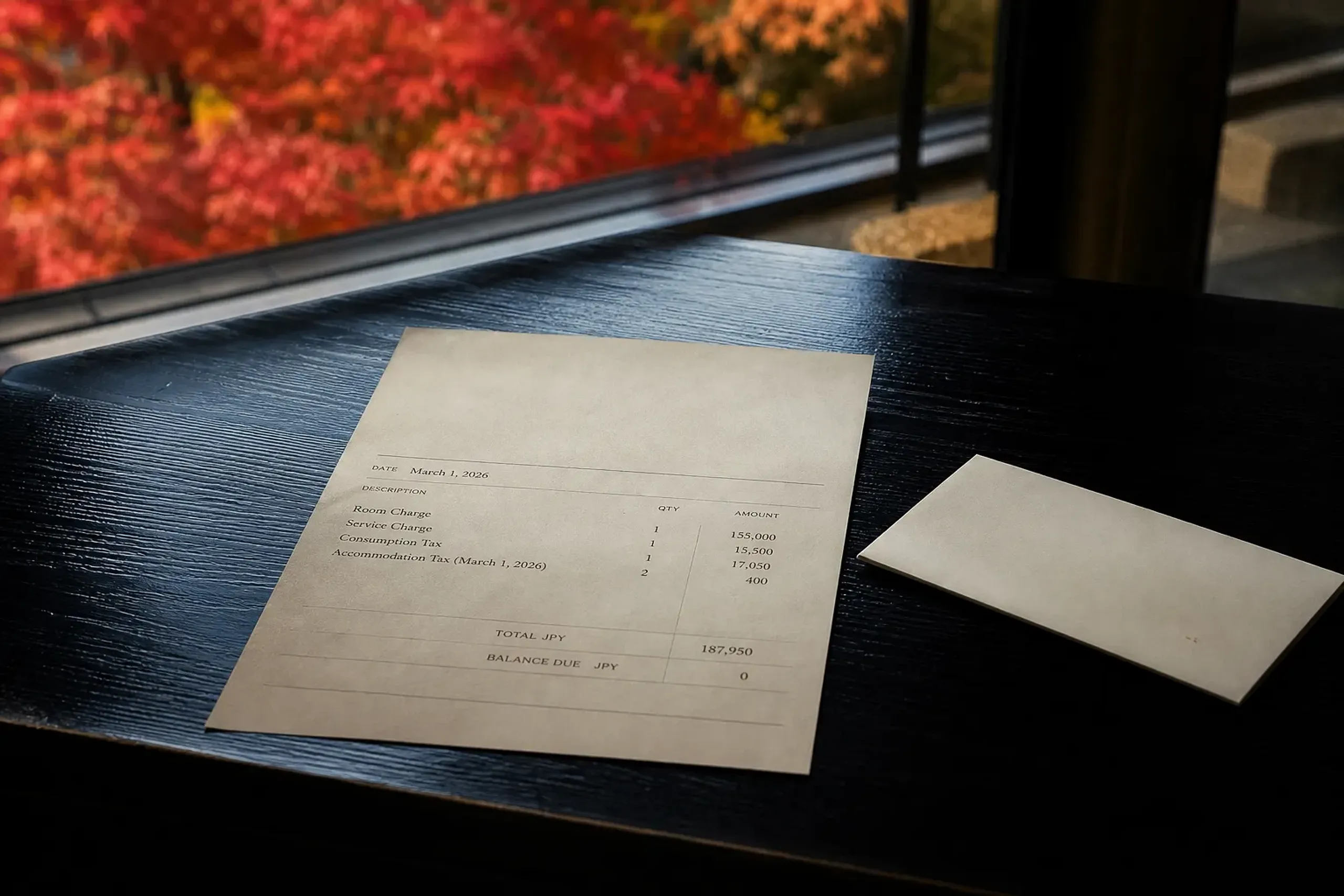
How a guest is named — and how a trip is paid for — leaks more than most people realize. A reservation under a real family name, an invoice routed to a recognizable corporate entity, a booking confirmation forwarded to a personal assistant's shared inbox. Each of these is a small door left open.
Many luxury properties will honor front-desk naming requests and non-disclosure preferences. We say many deliberately: every property's policy differs, and specifics must be verified directly with each hotel. Our concierge confirms what a given property can and cannot do before a guest ever arrives, rather than assuming.
Billing deserves the same care. Kyoto's accommodation tax rates changed on March 1, 2026, which quietly reshaped how invoices read for higher-tier stays. For executives and family offices, discreet billing means invoice handling that does not broadcast identity or itinerary across an accounting department. It is unglamorous work. It is also where a great deal of privacy is won or lost.
The Three Checklists
We keep our thinking simple with three lists. Every guest, every supplier, every message gets sorted into one of them.
- Share freely: operational logistics stripped of identity — party size, timing windows, mobility or dietary requirements, vehicle specifications.
- Share on a need-to-know basis: a naming alias for a single front desk, a phone number for one on-the-ground contact, a room preference tied to one property.
- Never disclose: the guest's true identity across multiple vendors, the complete daily route, reasons for travel, business affiliations, family details, or any medical information beyond what a single relevant venue strictly requires.
Secure Communication And The Single Coordinator
Privacy erodes fastest in group chats. Too many participants, screenshots, forwarded threads. We keep sensitive coordination on secure, private channels and route it through one coordinator who owns the full picture. Guests reach that coordinator directly. Suppliers receive only their fragment.
This model has a second benefit beyond security: it eliminates the confusion of many voices. One person answers. One person adjusts the day when a flight slips or a mood changes. Our staff are vetted, briefed, and bound to confidentiality — we never publish their names, just as we never publish yours. Discretion has to run in both directions to mean anything.
Discretion Without Disruption
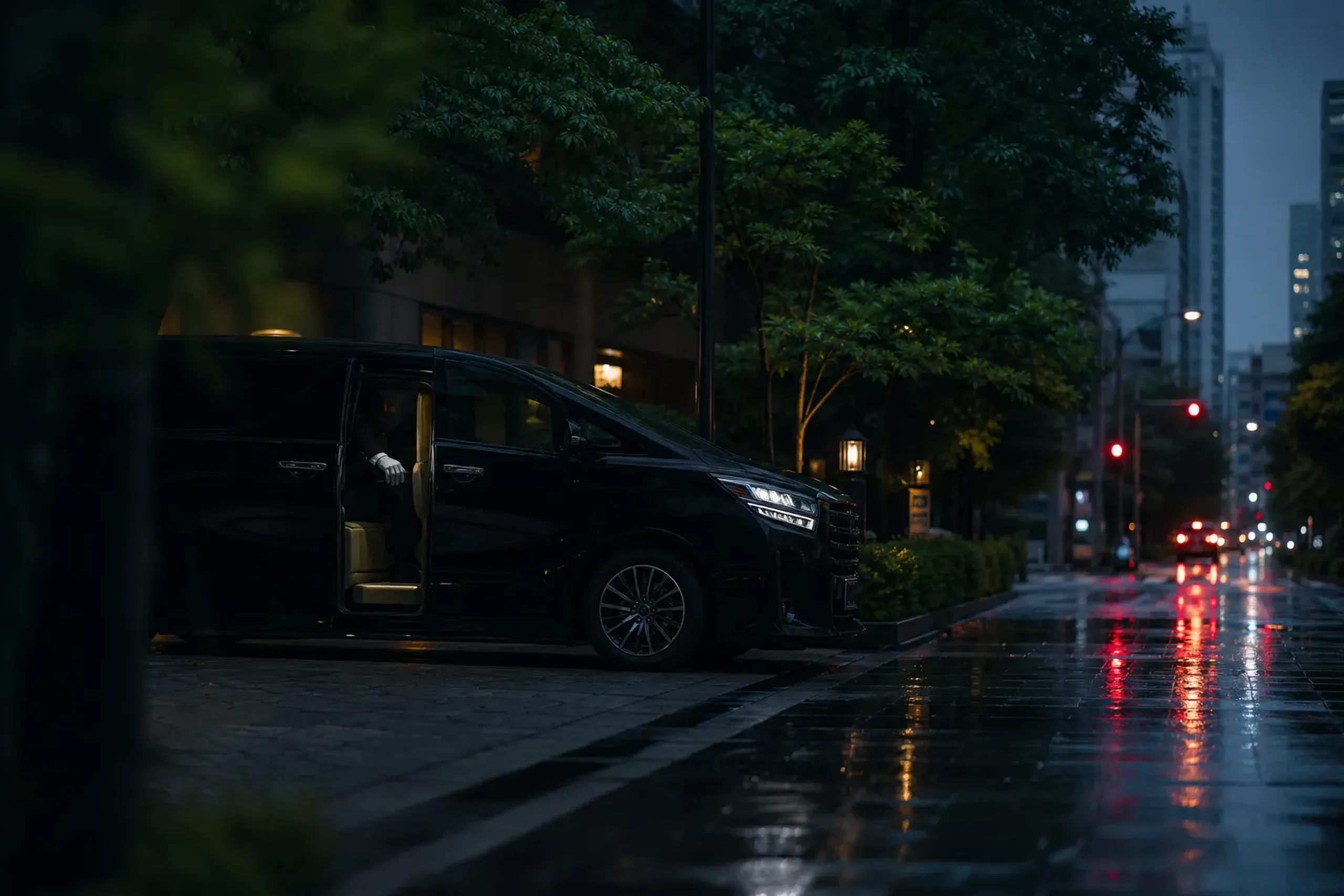
A quiet arrival is choreography, not luck. The best confidential experiences feel utterly relaxed to the guest precisely because the tension was absorbed upstream, hours before anyone stepped out of a vehicle.
Take a private aviation arrival into Narita. THE MAGARIGAWA CLUB — a members-only private driving club — sits roughly 75 minutes from Narita and about 60 minutes from Haneda and central Tokyo. For a guest with the right membership, routing directly from a discreet arrival toward such a venue avoids the recognizable rhythms of ordinary tourist movement entirely. We coordinate the ground leg, and members-only means members-only.
On the road, vehicle choice does quiet work. Our fleet leans on private chauffeured transport such as the Toyota Alphard and the Hiace Grand Cabin — vehicles common enough on Japanese roads to draw no second glance, yet appointed for genuine executive comfort inside. Anonymity through familiarity. It is a subtler form of luxury than a badged limousine, and far more effective.
Hotel Arrivals In A New 2026 Landscape
2026 brought a wave of new inventory, and some of it improves discreet access materially. 1 Hotel Tokyo opened on March 5, 2026 in the Akasaka Trust Tower, with skyline views reaching the Imperial Palace gardens — nature-inflected calm inside a working capital-city schedule. In Kyoto, the Imperial Hotel, Kyoto opened the same day with just 55 rooms in a Gion setting, and Capella Kyoto followed on March 22, 2026 in the historic Miyagawa-cho kagai. Hotel THE MITSUI HAKONE is scheduled for December 15, 2026.
New properties often bring better back-of-house flow — private entrances, controlled in-room dining arcs, considered arrival timing. But privacy architecture varies property to property, and no brochure substitutes for a direct confirmation. Our coordinator verifies each property's arrival choreography and naming policies before a guest commits. We build a tailored plan around what is real, not what is advertised. Interested guests can explore a tailor-made itinerary shaped entirely around these controls.
Cultural Appointments, Handled Respectfully

Some of Japan's most rewarding moments happen in rooms Google cannot find. A tea master's atelier. A kintsugi session. An evening around geiko and maiko performance — Miyagawa-cho, for instance, hosts its autumn Mizuekai dances featuring geiko and maiko. Access to such worlds runs through introduction and trust, never through pressure.
Here the code of conduct becomes non-negotiable. Confidential travel never means chasing photographs of maiko in the street, entering closed spaces, or expecting a host to abandon their customs. It means arriving quietly, honoring the setting, and letting the experience remain what it is. The reward for restraint is more access over time, not less. Hosts remember who behaved well.
A Simple Booking-Stage Timeline
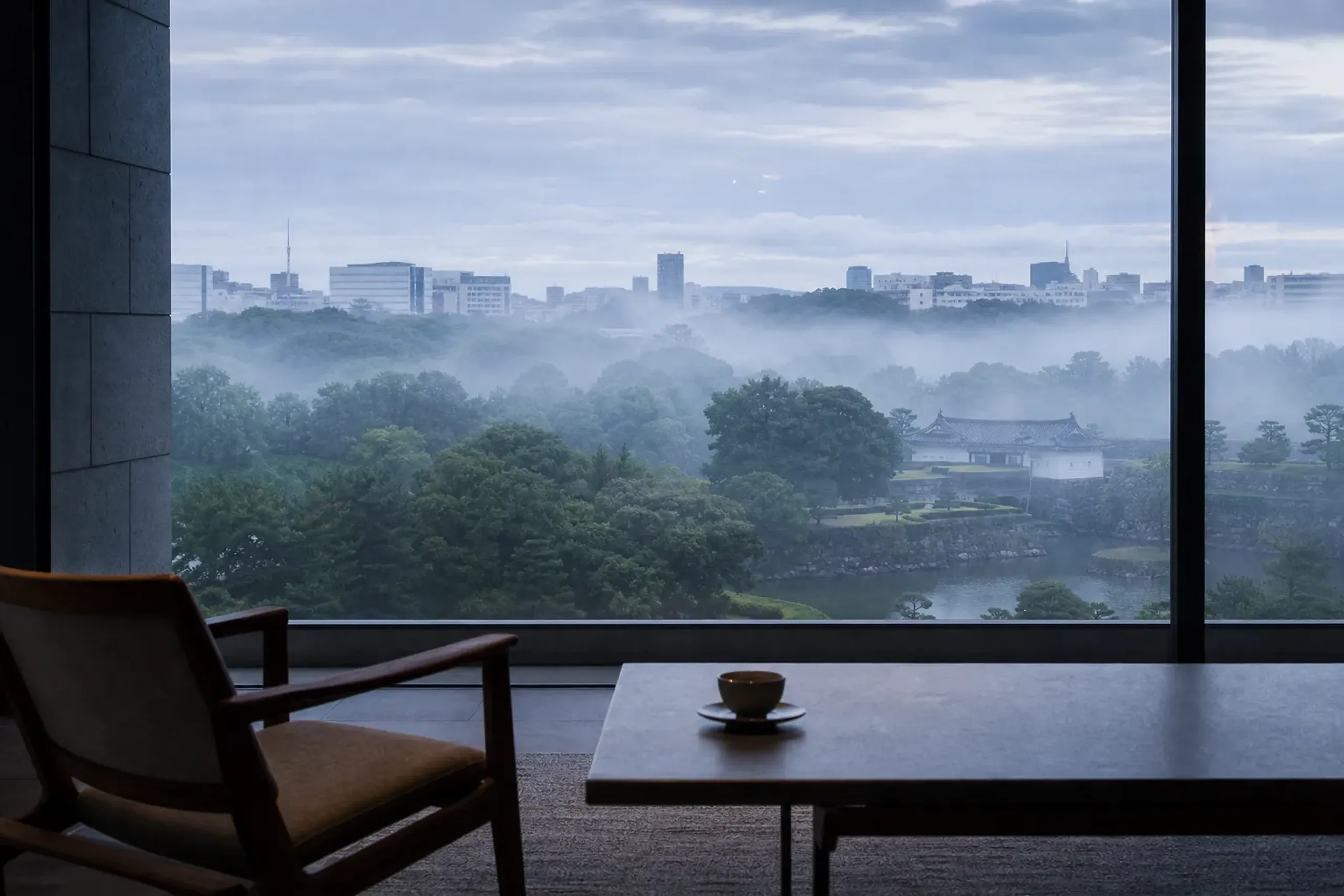
Confidentiality follows a rhythm across the planning window. Roughly, it looks like this.
- Initial inquiry: a private conversation, minimal data, no names committed to reservations yet.
- Design stage: the coordinator maps need-to-know information per supplier and confirms property policies directly.
- Confirmation stage: reservations placed with controlled naming and discreet billing arranged; suppliers briefed on their fragment only.
- In-country: one coordinator on call, secure channel live, real-time adjustments absorbed quietly.
- Post-trip: sensitive data retired, not archived indefinitely — because held data is exposed data.
If Something Goes Wrong
Good systems still plan for the bad day. Incident response is part of confidentiality, not separate from it. A lost item, an unexpected encounter, a security concern — each has a pre-agreed path so no one improvises under stress.
For visitors, Tokyo's Metropolitan Police provides an English-language resource and a non-emergency police consultation line, #9110, for guidance that does not require an emergency call. Knowing the lawful, appropriate channel in advance is itself a form of discretion. Panic is loud. Preparation is quiet.
Frequently Asked Questions
Is Confidential Travel The Same As Secret Travel?
No. Confidential travel protects identity, schedule, and personal data while fully respecting Japanese law, venue rules, and supplier obligations. Secret travel implies concealment or rule-bending, which we refuse. The distinction is the entire foundation of doing this properly.
Can A Hotel Guarantee My Name Is Never Used?
Many luxury properties honor front-desk naming and non-disclosure requests, but every property's policy differs. Specifics must be confirmed directly with each hotel, which our concierge does before you arrive rather than assuming.
How Does Compartmentalization Actually Protect Me?
By ensuring no single supplier — driver, hotel, restaurant, or cultural host — ever holds your complete itinerary. Each receives only their fragment. One trusted coordinator retains the full picture, so a single point of exposure cannot reveal the whole journey.
Do Kyoto's 2026 Tax Changes Affect Privacy?
Indirectly, yes. The accommodation tax rates changed on March 1, 2026, which affects how invoices read. For executives and family offices, discreet billing means invoice handling that does not broadcast identity across an accounting team.
Why Choose Japan Royal Service
Confidentiality is easy to claim and hard to run. What sets our team at Japan Royal Service apart is the discipline underneath the calm — the compartmentalized information flows, the vetted and unnamed staff, the property-by-property verification, the refusal to promise access we cannot lawfully arrange.
We treat your privacy the way Japan's finest hosts treat their craft: with restraint, precision, and a watchful eye on the details you will never notice. In our experience, the guests who travel most freely are the ones whose logistics were engineered most carefully. That quiet is not an accident. It is a system.
We do not advertise buyouts, name-drop, or trade on your identity. We build journeys that let you move through Japan as though you were never there — and remembered only where it matters.
To discuss a privacy-first itinerary in complete confidence, reach our team privately via WhatsApp or LINE, or contact us here.