In this guide
- 01What "VIP" Actually Means at a Free Festival
- 02Hibiki: Reading the Festival as One Exhibition
- 03Why "Emerging" Is Real Here: The UNDER 30 Program
- 04Aoyama And Omotesando: The Core Cluster
- 05Gaienmae: The Quiet Pivot
- 06Shibuya: Younger, Louder, More Experimental
- 07Ginza: The Established Edge Of The Emerging
- 08The Double-Festival Week: DESIGNART Meets Art Week Tokyo
- 09Acquisition Logistics: The Part No Map Explains
- 10Where To Stay To Minimize Transfers
- 11Practical Questions, Answered
- 12Why Choose Japan Royal Service
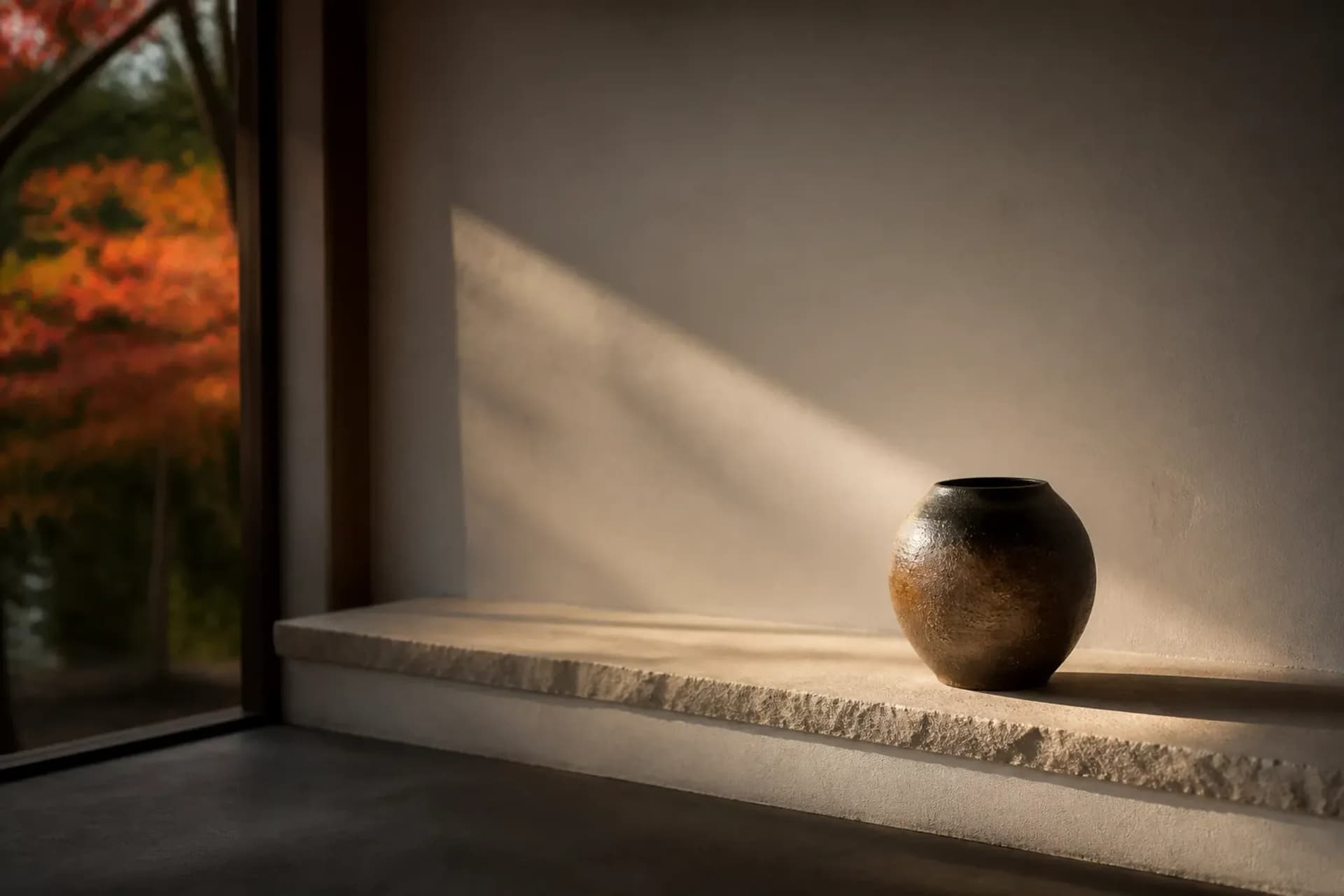
An unglazed vessel sits alone on a raw plaster shelf in a converted Aoyama shopfront. No spotlight. Just the low autumn sun bending through the window, catching the iron speckle where the clay met fire. A young designer stands beside it, waiting, not selling. You ask what the sound of the piece is, and she answers as if the question were obvious. This is what DESIGNART TOKYO 2026 does at its best. It turns a walk through the city into a conversation with material and time.
From October 30 to November 8, 2026, DESIGNART TOKYO marks its 10th anniversary under the theme Hibiki — resonance. Presentations spread across Omotesando, Gaienmae, Harajuku, Shibuya, Roppongi, Ginza, and the Tokyo Station area. The organizers call the format a walkable museum. That is generous. Seven districts across ten days is not a route. It is a scattering. The value, for a discerning collector, is the edit.
Our team at Japan Royal Service builds that edit. Below is how we think about it — the districts worth your afternoon, the theme that ties them, and the unglamorous acquisition logistics most itineraries never mention.
DESIGNART TOKYO is free and open to the public. There are no tickets and no paid entry. When we say VIP, we mean an edited route, introductions to gallerists and designers, viewings arranged outside public hours where a space agrees, and — most importantly — handling the acquisition: crating, export paperwork, and international shipping.
What "VIP" Actually Means at a Free Festival
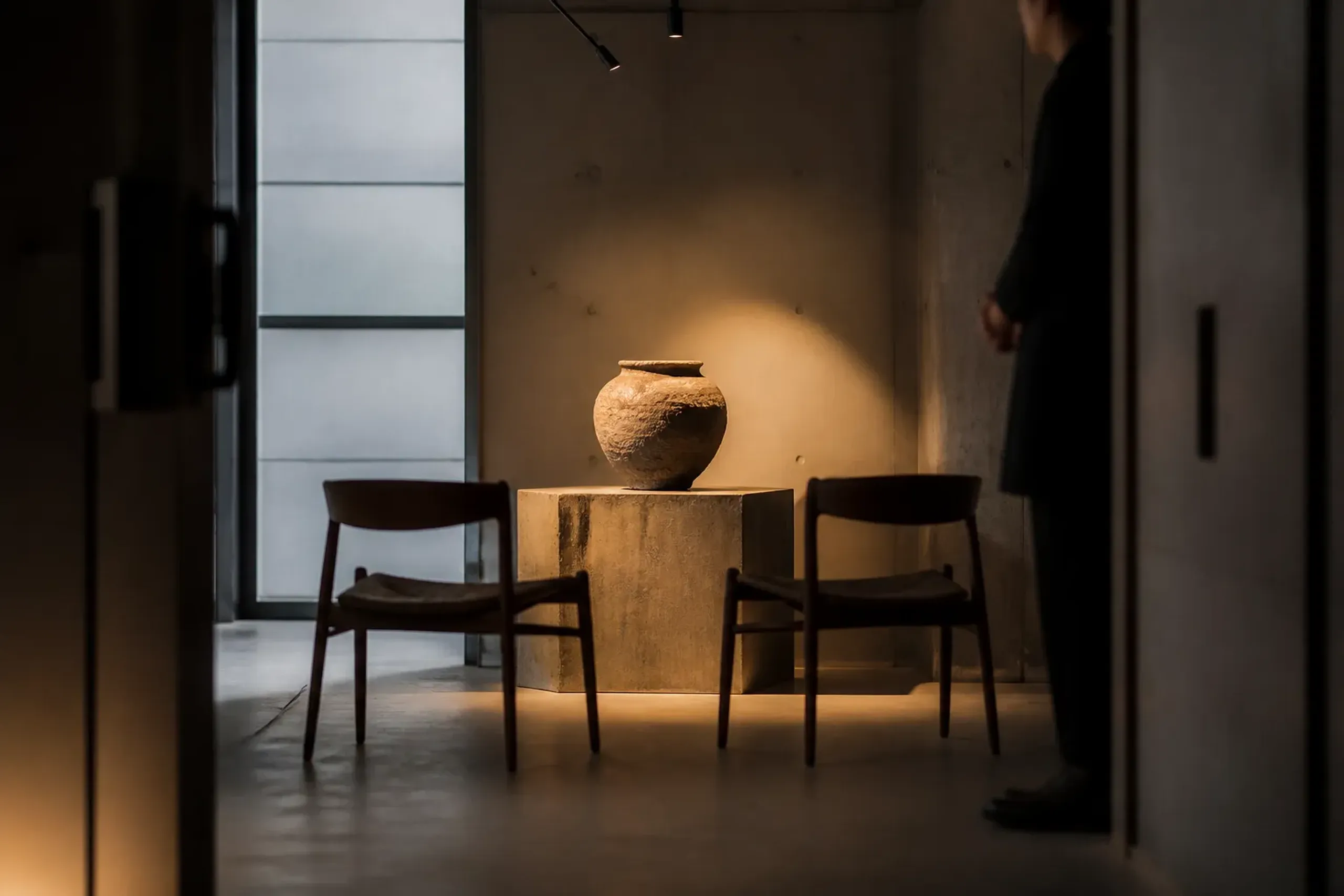
Nobody needs a concierge to walk into a free exhibition. That is not the point. The point is that a serious afternoon of collecting in Tokyo is a logistics problem dressed as a leisure activity.
Consider the arithmetic. The official festival is shifting away from its printed guidebook toward a GUIDEMAP and an upgraded website. Useful. But a map lists everything. It does not tell you which six spaces reward a collector's eye, which gallerist speaks candidly in English, or which emerging designer will still be affordable next year. It cannot pace your day. It cannot hold a car between clusters while you walk the interiors.
Our concierge assembles a route of six to eight spaces in a single afternoon. Car between the neighborhoods. Walking within them. Introductions made ahead so the gallerist expects you and clears twenty quiet minutes. And when something resonates enough to acquire, the harder work begins — which we cover in full below.
Hibiki: Reading the Festival as One Exhibition
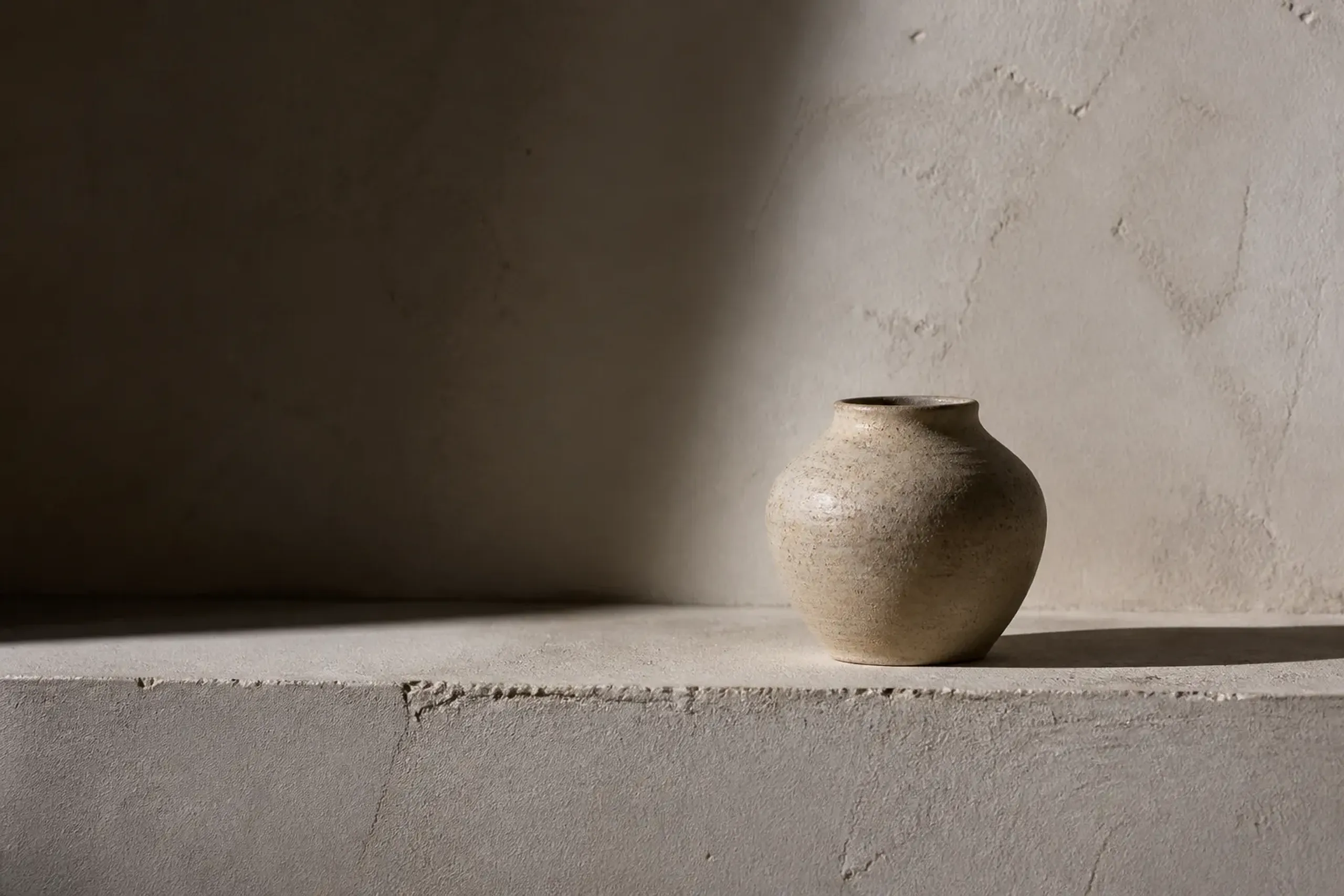
Reading DESIGNART 2026 through Hibiki: resonance across material and time.
Hibiki means resonance. Echo. The way a struck bell keeps sounding after the strike. As a curatorial lens it is unusually generous, because it invites you to read continuity between a 26-year-old ceramicist and a 15th-century glaze recipe.
This matters for how you move through the week. Instead of ticking off venues, you trace a thread. A lacquer surface in Gaienmae rhymes with a blackened timber joint in Roppongi. A textile dyed with indigo in Shibuya answers a paper lamp in Aoyama. The lineage is Japanese craft — the shokunin tradition of a maker who spends a lifetime on one material — carried forward by designers under thirty.
That thread is the difference between shopping and collecting. Western design fairs sell newness. DESIGNART, read through Hibiki, sells depth of time. We build the route so each stop is a note in a chord, not an item on a list.
Why "Emerging" Is Real Here: The UNDER 30 Program
The word "emerging" gets thrown around until it means nothing. At DESIGNART it has a concrete backbone. The festival runs an UNDER 30 program that waives exhibitor fees for young designers, removing the single largest barrier that keeps unrepresented talent out of a citywide event.
The practical consequence for a collector is direct. You are standing in front of work by people at the earliest point of their market — before gallery representation, before secondary-market pricing, before the waitlists. Some of these makers will be significant names in a decade. A few pieces you can hold now will not be available at any price later.
This is where our first-person view earns its keep. In our experience the UNDER 30 stands are also the ones least prepared for an international buyer. The designer may have never shipped a work abroad. That gap is not a problem to avoid. It is the reason to bring a concierge.
Aoyama And Omotesando: The Core Cluster
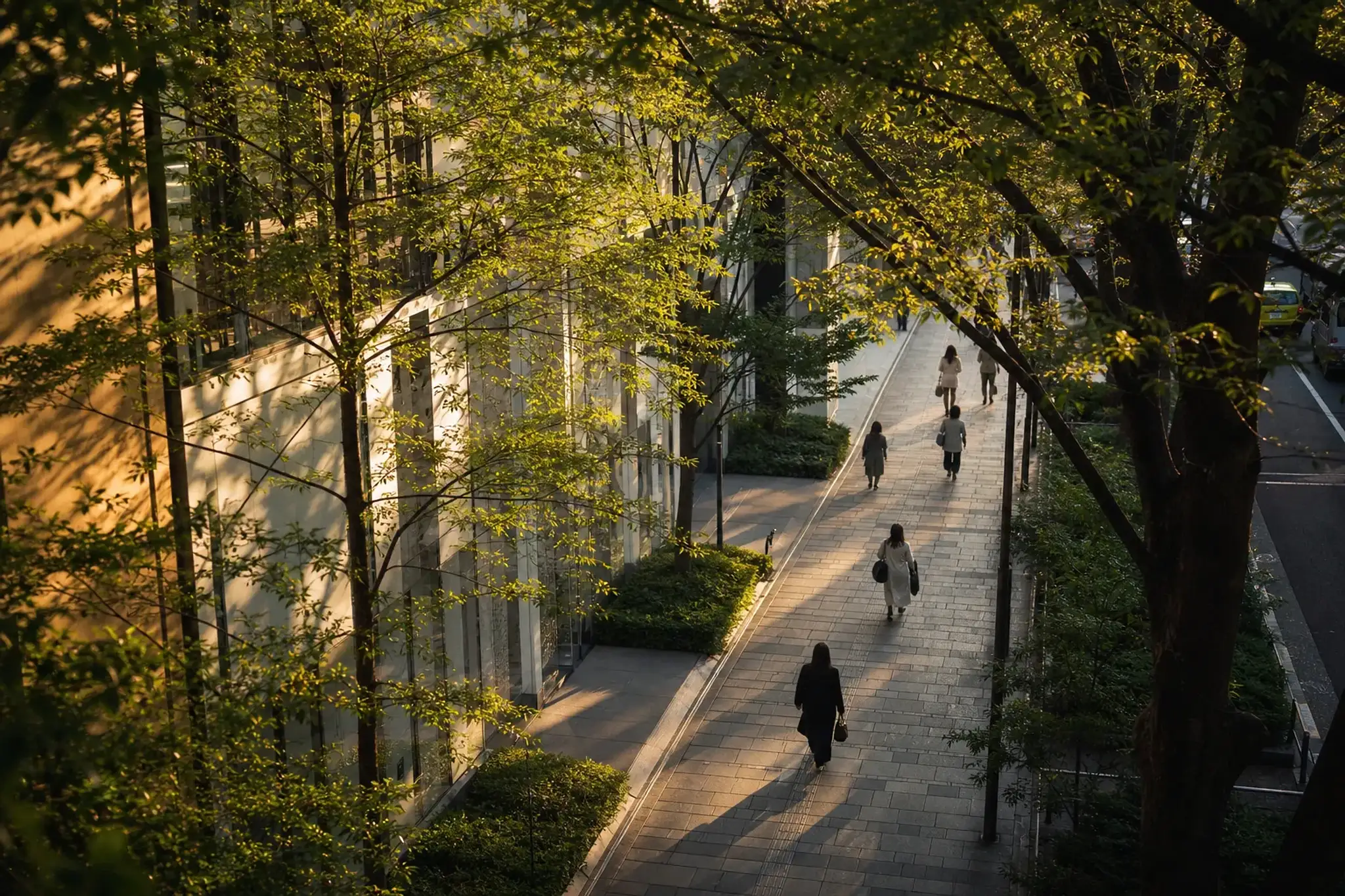
Aoyama and Omotesando: the densest, most walkable cluster of the festival.
Quick facts: Aoyama–Omotesando. Roughly 12–15 minutes on foot end to end. The densest concentration of design-led retail and gallery spaces in the festival. Start here.
This is the spine of DESIGNART. Omotesando's tree-lined boulevard and the quieter back lanes of Aoyama hold the highest density of participating galleries, showrooms, and concept spaces. The architecture alone justifies the walk — Omotesando is an outdoor catalogue of contemporary Japanese building, and reading the shopfronts is part of the experience.
We start an afternoon here for a reason. Energy is highest, judgment is sharpest, and the cluster is walkable, so the car can rest while you move on foot between three or four spaces. Introductions matter most in this zone, because the strongest galleries draw the largest public crowds. A viewing arranged for the quieter first hour, where a space agrees, changes everything about how a piece reads.
Gaienmae: The Quiet Pivot
Quick facts: Gaienmae. About 8 minutes' walk from the Aoyama cluster. Fewer, more considered installations. Worth the stop for material-led work and calmer viewing.
Gaienmae sits a short walk from the Aoyama core and functions as the exhale. Presentations here tend toward the material and the architectural — the kind of work where a single object holds a room rather than a wall of product.
Under the Hibiki lens, Gaienmae often supplies the resonance note: lacquer, ceramic, blackened wood, hand-worked metal. This is where a collector slows down. We schedule it as the middle of the afternoon, after the Aoyama density and before the evening shift toward Ginza or Roppongi.
Shibuya: Younger, Louder, More Experimental
Quick facts: Shibuya. 5–7 minutes on foot between the main festival spaces. Strong for younger studios and cross-disciplinary work. Higher energy, more crowds.
Shibuya carries the festival's experimental edge. Exhibitions here lean digital, spatial, and cross-disciplinary, and the neighborhood itself is a permanent design conversation — the department-store galleries, the redeveloped station district, the constant churn of the young.
For a collector this cluster is a scouting ground more than an acquisition zone. It is where you see where the medium is going. We keep the Shibuya visit tight and purposeful, because the crowd density is real and the signal-to-noise ratio rewards a guide who already knows which spaces are showing something durable.
Ginza: The Established Edge Of The Emerging
Quick facts: Ginza. 10–12 minutes end to end, flat and elegant. The most polished presentations, strong for evening viewings and dinner-adjacent pacing.
Ginza closes the loop. The district's galleries and flagship spaces present DESIGNART at its most refined, and the neighborhood's calm grid makes it the natural place to end an afternoon and slide into dinner without a long transfer.
We pace Ginza last for exactly that reason. A late viewing, a short chauffeured hop to a counter dinner, the day's resonance still sounding. If you want the double-festival week — more on that below — Ginza and its adjacent Tokyo Station spaces are where DESIGNART and Art Week Tokyo overlap most usefully.
The Double-Festival Week: DESIGNART Meets Art Week Tokyo
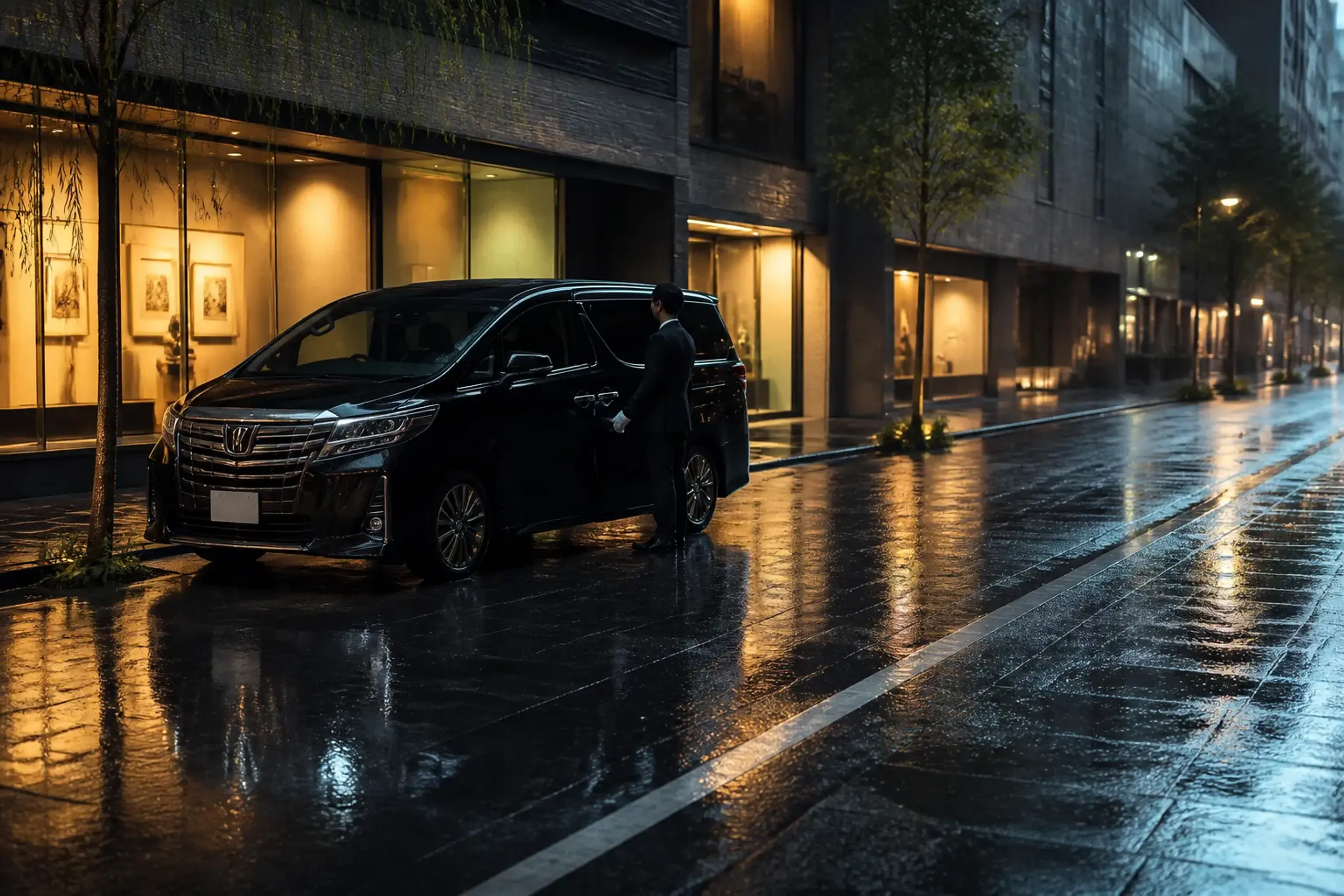
The chauffeured route: timed to your energy, not a shuttle schedule.
Here is the timing edge most luxury itineraries miss. Art Week Tokyo 2026 runs November 4 to 8, overlapping DESIGNART's closing weekend. Two major Tokyo art events, one window.
Art Week Tokyo centers on the AWT Bus — a free hop-on, hop-off shuttle that the Tokyo Metropolitan Government has confirmed will link more than fifty art spaces across the city. It is a genuinely good public system. It is also a public system, which means fixed loops, shared timing, and no control over when you arrive.
We build the double-festival week two ways.
Version A: The Insider-Public Route
- Anchored on the AWT Bus for the Art Week Tokyo museum and gallery loop
- Layered with a curated selection of DESIGNART spaces in Aoyama, Gaienmae, and Ginza
- Lower footprint, more spontaneous, ideal for a collector who enjoys moving through the city with the crowd rather than around it
- Our concierge supplies the edit and the introductions; the shuttle supplies the mobility
Version B: The Chauffeured Route
- Private chauffeured transport between clusters, timed to your energy rather than a shuttle schedule
- Viewings arranged outside public hours where a space agrees
- Gallery-to-dinner pacing with no waiting, no queuing, no exposure
- The car holds while you walk each cluster, then carries you to the next in comfort and discretion
If your appetite runs to two cities, note that Art Collaboration Kyoto runs November 7 to 9 — overlapping DESIGNART's final weekend. Tokyo first, then Kyoto. A single art week that spans the country. Our team at Japan Royal Service sequences the whole arc, including the transfer south, as one continuous bespoke itinerary.
Acquisition Logistics: The Part No Map Explains
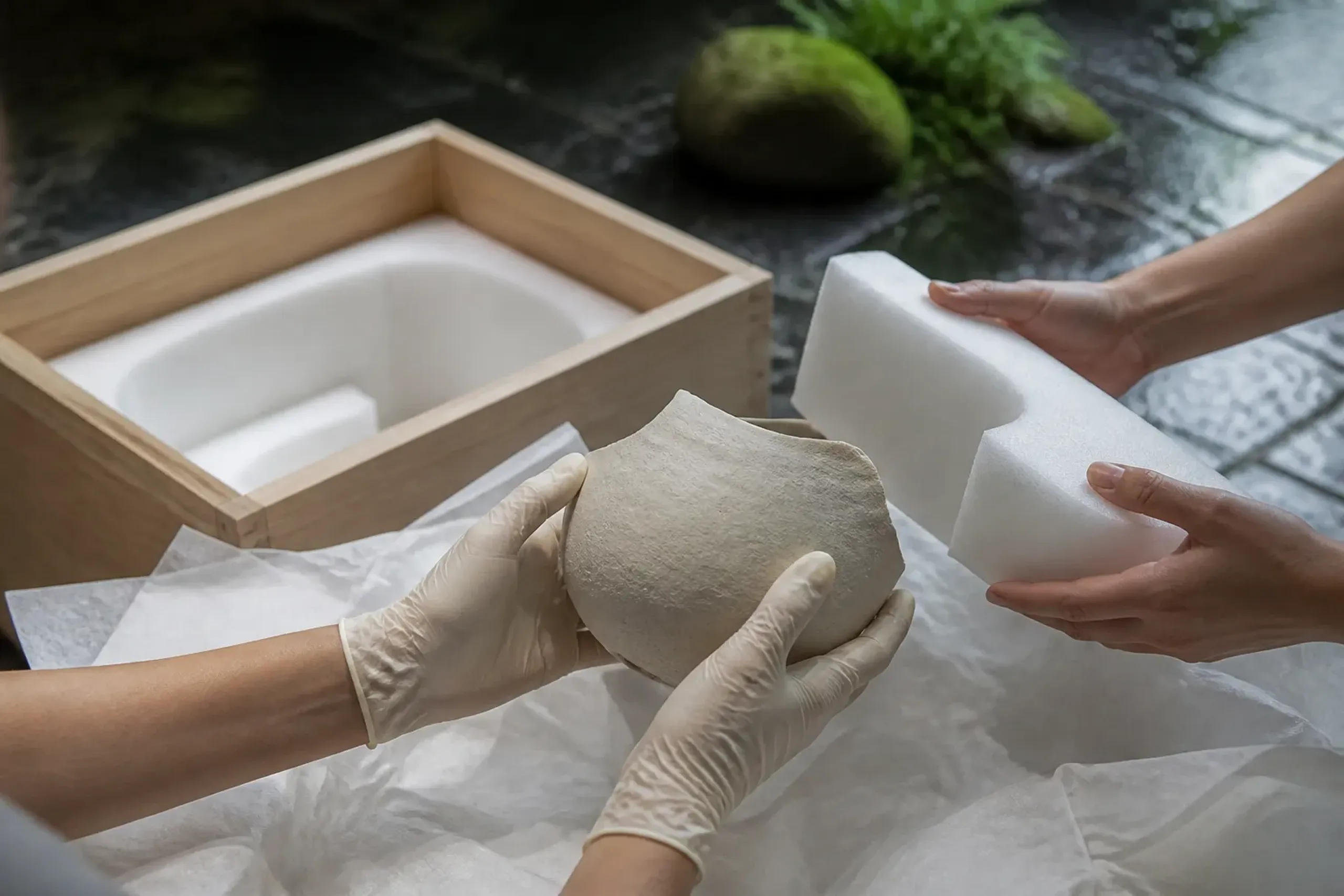
The unglamorous core: custom crating, export paperwork, and insured shipping.
You find a piece that resonates. You want it. Now the register changes, because this is the section where luxury becomes plain practicality. What follows is the reality of buying art and objects at an emerging-designer festival, and why it needs handling.
The Small-Gallery Reality
Many DESIGNART exhibitors are independent studios or UNDER 30 designers showing in a citywide event for the first time. A significant number have never shipped a work internationally. There is no export desk. There is no default crating vendor. There may not even be a formal invoice process. This is not a failing — it is the nature of early-career work — but it means the buyer, or the buyer's representative, has to bring the infrastructure.
Crating And Handling
A ceramic vessel, a lacquer panel, a glass work, a lighting piece — each demands a different crate and a different mount. Fragile and irregular objects need custom crating built to the piece, not a stock box. This is arranged after purchase, before anything moves, and it is where amateur handling destroys value.
Export Paperwork
Contemporary design objects generally move without the heavy cultural-property restrictions that apply to antiquities. Still, there is documentation: proof of purchase, valuation for customs, correct commodity classification, and the export declaration itself. A designer who has never sold abroad will not have these ready. Someone has to prepare them properly, because errors here cause holds and delays at the destination.
International Shipping
Fine-art shippers, not parcel couriers. Climate-aware handling, insured transit, tracked chain of custody, and coordination with customs brokers on both ends. Timelines run to weeks, not days, so the piece should never be part of your travel schedule — it follows you home, safely, later.
The honest summary: The joy of buying emerging work is direct contact with the maker. The friction is that the maker often cannot get the work to your home. Bridging that gap — crate, paperwork, insured shipping — is the practical core of what a concierge adds at a festival like this.
Where To Stay To Minimize Transfers
Base matters more than usual during a citywide festival. Staying adjacent to the core clusters — Aoyama, Roppongi, or the Azabudai area — collapses transfer times and keeps evenings loose. A ten-minute chauffeured hop between a Ginza viewing and a Roppongi dinner is a different day than a forty-minute crawl across town.
Tokyo's 2026 hotel landscape adds a relevant option. 1 Hotel Tokyo, the brand's first Japan property, opened in 2026 with a nature-infused, material-forward design language — greenery, raw textures, sensory quiet. Read not as eco-marketing but as wabi-sabi in the city, it is a fitting base for a design-led week. Our concierge advises on positioning without ever claiming to make the reservation on your behalf; that coordination happens privately.
Practical Questions, Answered
When is DESIGNART TOKYO 2026?
October 30 to November 8, 2026 — the 10th-anniversary edition, themed Hibiki. Presentations run across Omotesando, Gaienmae, Harajuku, Shibuya, Roppongi, Ginza, and the Tokyo Station area.
Do I need tickets?
No. DESIGNART is free and open to the public. Full details are on the official DESIGNART TOKYO website. A concierge adds curation, introductions, timing, and acquisition logistics — not entry.
Can I combine it with Art Week Tokyo?
Yes. Art Week Tokyo runs November 4 to 8, 2026, overlapping DESIGNART's closing weekend, with the free AWT Bus linking fifty-plus art spaces. The two can be woven into one route. Art Collaboration Kyoto (November 7–9) extends the arc south if you want a two-city art week.
Can I actually buy the work I see?
Often, yes — especially from independent and UNDER 30 exhibitors. The complication is getting it home. Custom crating, export documentation, and insured international shipping are the real work, and many small studios have never done it. That is the practical value of concierge support.
Is this only for serious collectors?
No. The route works equally as a design-literate afternoon in Tokyo — architecture, material, and conversation — with no obligation to acquire anything. The edit simply saves you from a scattered map.
Why Choose Japan Royal Service
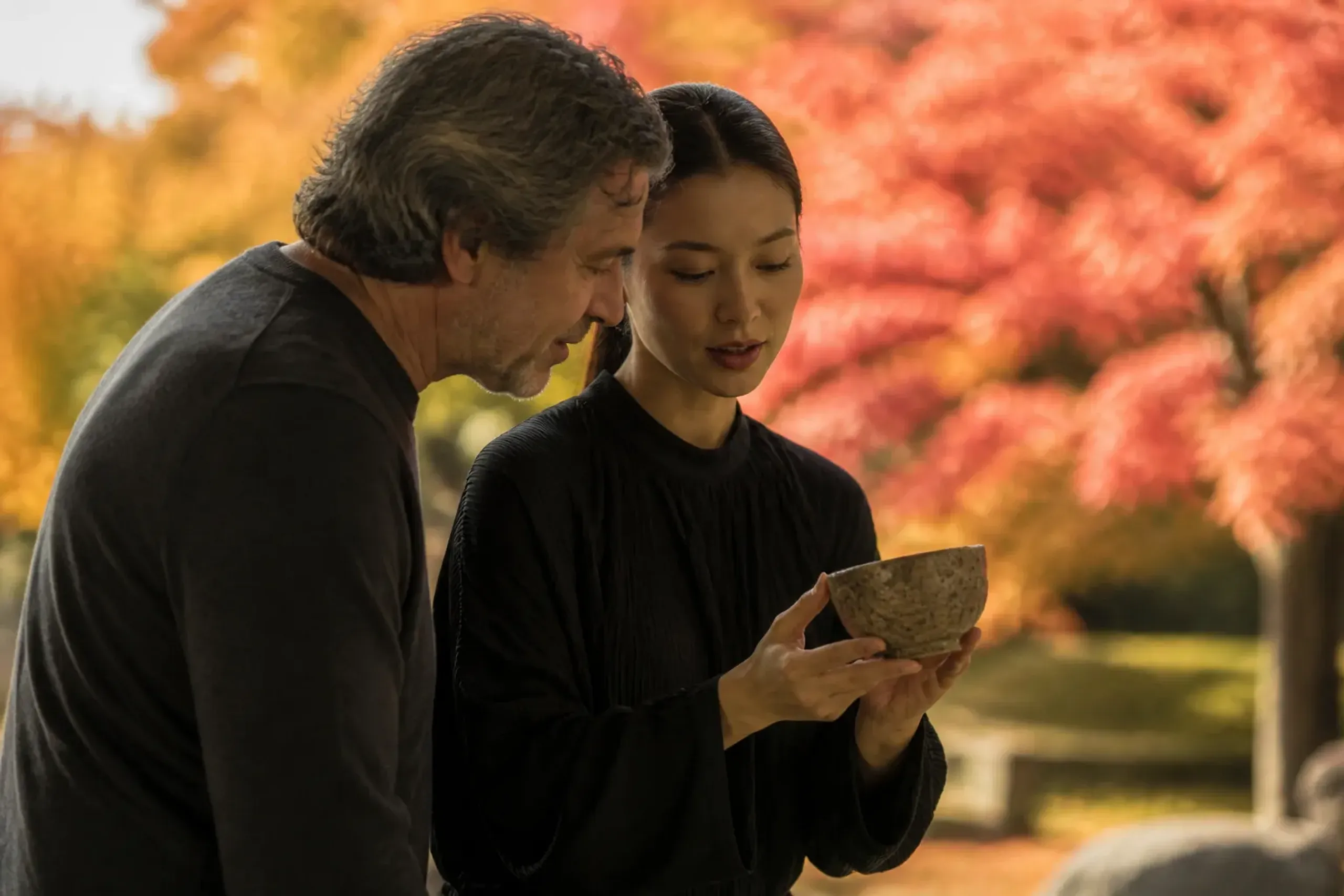
Direct contact with the maker — the reason to acquire while the work is still emerging.
Most luxury operators talk about Japanese art through Naoshima and Teshima — the Seto Inland Sea islands, Tadao Ando's concrete, the established pilgrimage. Beautiful, and covered to exhaustion. Very few can assemble a hyper-current, on-the-ground route through Tokyo's emerging galleries pegged to a specific festival week. That is precisely the ground our team at Japan Royal Service works.
We edit rather than list. Six to eight spaces in an afternoon, chosen for a collector's eye and threaded through the Hibiki theme. Introductions to gallerists and young designers, arranged ahead. Private chauffeured transport between clusters, or an insider layer over the AWT Bus if you prefer to move with the city. And the acquisition backbone — crating, export paperwork, insured shipping — that turns a piece you loved into a piece that reaches your home intact.
Discretion runs through all of it. Guest identity and itinerary stay confidential, arrivals and viewings are choreographed to keep exposure low, and dining and introductions are confirmed privately, close to travel. Our coordinators work in English, Japanese, Thai, and Filipino, so nothing is lost between you and the maker.
To design your private route through DESIGNART TOKYO 2026 — or the full Tokyo-then-Kyoto art week — reach our team privately via WhatsApp or LINE, or contact us here. We will begin with a quiet conversation about what you collect, and build the edit from there.