In this guide
- 01Where Is Mt. Haguro, And What Is The Cedar Stairway Walk?
- 02Haguro Among The Three Mountains Of Dewa Sanzan
- 03The Mt. Haguro Stone Steps, Step By Step: Gate, Cedars, Pagoda, Summit
- 04Should You Walk Up Or Ride Up And Walk Down Mt. Haguro?
- 05Mt. Haguro In Summer: Heat, Rain, Footwear, Water, And Bears
- 06Mt. Haguro Summer Calendar: What Changes In July And August
- 07How Do You Get To Mt. Haguro From Tokyo Via Tsuruoka?
- 08Bus, Toll Road, And Parking: The Practical Access Notes People Miss
- 09How Our Concierge Team Plans A Mt. Haguro Morning
You step under the red Zuishinmon gate. The light changes at once.
It is cooler here, even in midsummer, with the sound of water and the hush you only notice after you leave the road behind. One breath. Then the first stone.
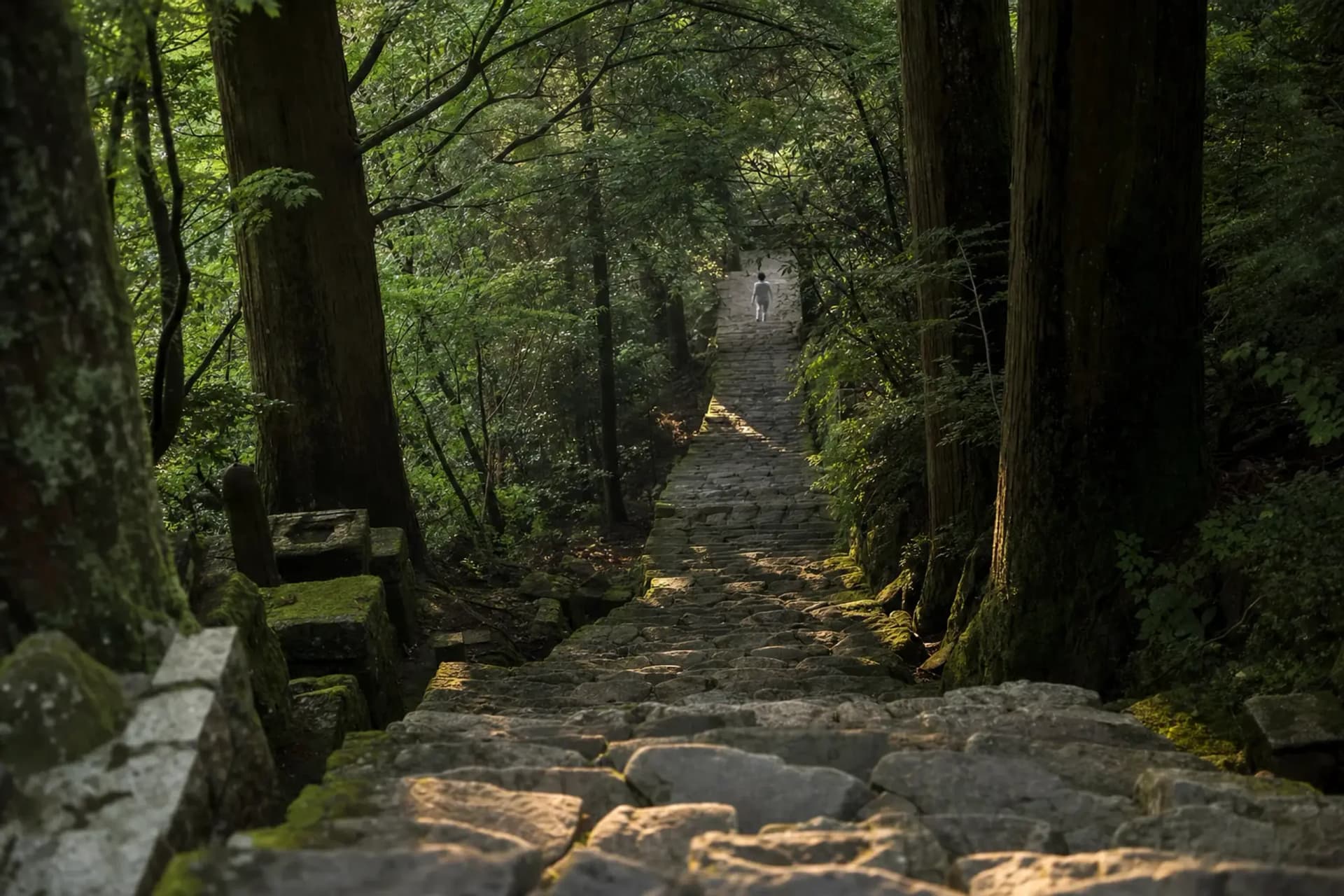
Mt. Haguro (Haguro-san) is not a lookout you “do quickly.” It is a pilgrimage path, built for walking, where the point is the steady rhythm of 2,446 steps and the long cedar shade that keeps your mind quiet.
Where Is Mt. Haguro, And What Is The Cedar Stairway Walk?
Mt. Haguro is one of the three sacred mountains of Dewa Sanzan in Tsuruoka, Yamagata, and its cedar stairway is a 2,446-step stone path (about 1.7 km) linking the Zuishinmon gate to the summit shrine precinct.
Haguro is the mountain you can walk in a morning. That simple fact is why it works so well for high-comfort travel: you can be precise with timing, still have a genuine pilgrimage experience, and return to Tsuruoka without fracturing your day into disconnected pieces.
The route runs through a cedar avenue designated a Special Natural Monument (13 August 1955). The trees are said to have been planted under the Edo-period abbot Tenyu. The air smells of damp bark and stone — a restraint and patina that no newly built luxury can imitate.
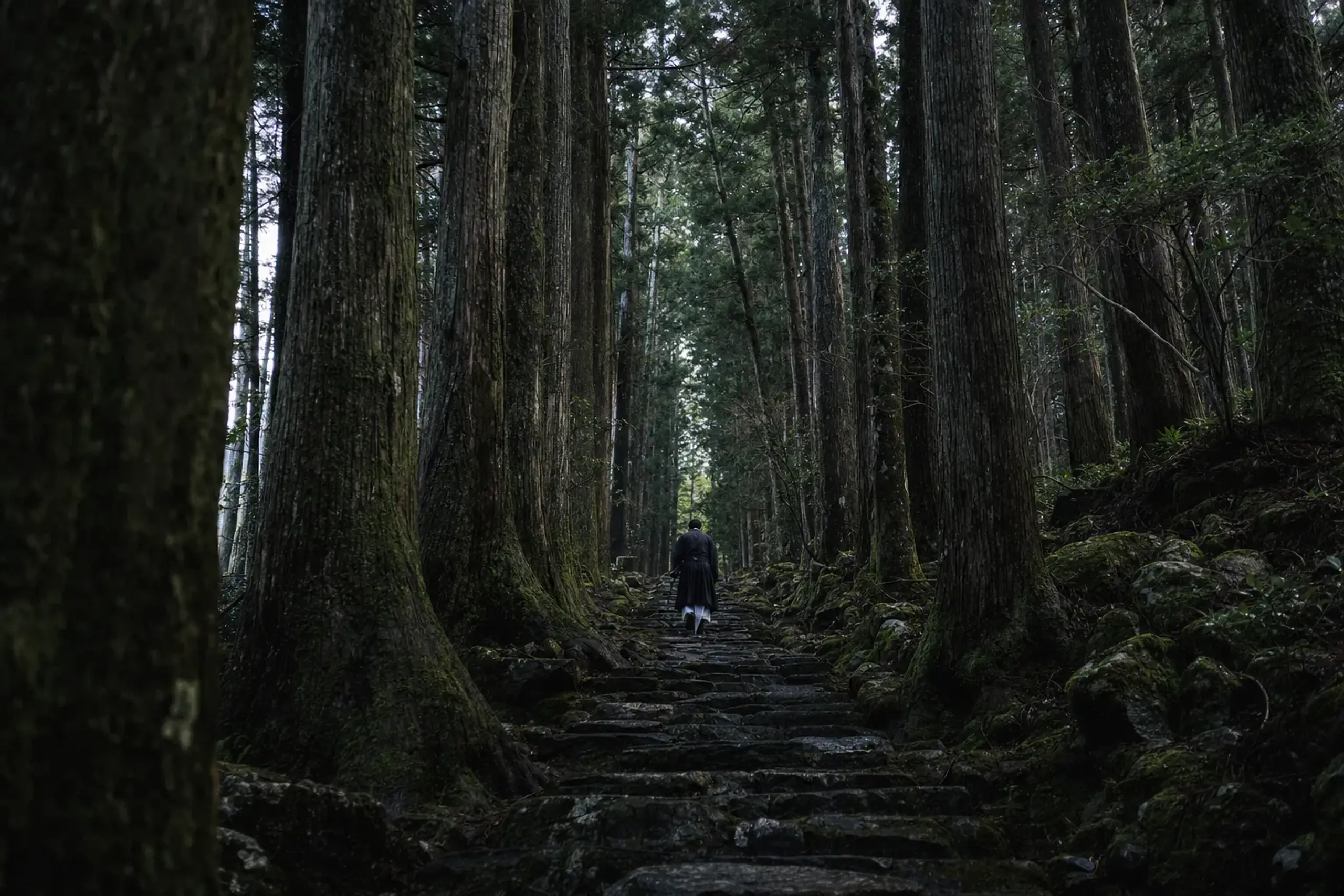
Along the way you pass the unpainted wooden Five-storied Pagoda of Mt. Haguro, a National Treasure (designated 11 June 1966), standing among trunks like something placed there and forgotten on purpose. No glare. Just grain, shadow, and a shingle roof — a quiet beauty made of weather and time rather than ornament.
Haguro Among The Three Mountains Of Dewa Sanzan
In the tradition of Dewa Sanzan, Haguro represents the present, Gassan the past, and Yudono the future. It is a simple idea with a long echo.
Gassan (1,984 m) is a summer climb, with its shrine open from 1 July and closing around mid-September, and bus links on set days only. Yudono (about 1,500 m) typically opens around June and closes in early November, with its own rules and a pilgrimage that asks for quiet respect. This article stays with Haguro: the stairway and the summit precinct.
Dewa Sanzan was designated a Japan Heritage site on 25 April 2016 (the first in Yamagata). Tradition says these mountains were opened in the sixth century, and Haguro is described as the birthplace of the Shugendo of the Tohoku region — the mountain asceticism that still shapes how the place is walked today.
The Mt. Haguro Stone Steps, Step By Step: Gate, Cedars, Pagoda, Summit
You begin at the Zuishinmon gate, around 144 m above sea level, and you finish near the summit precinct around 414 m.
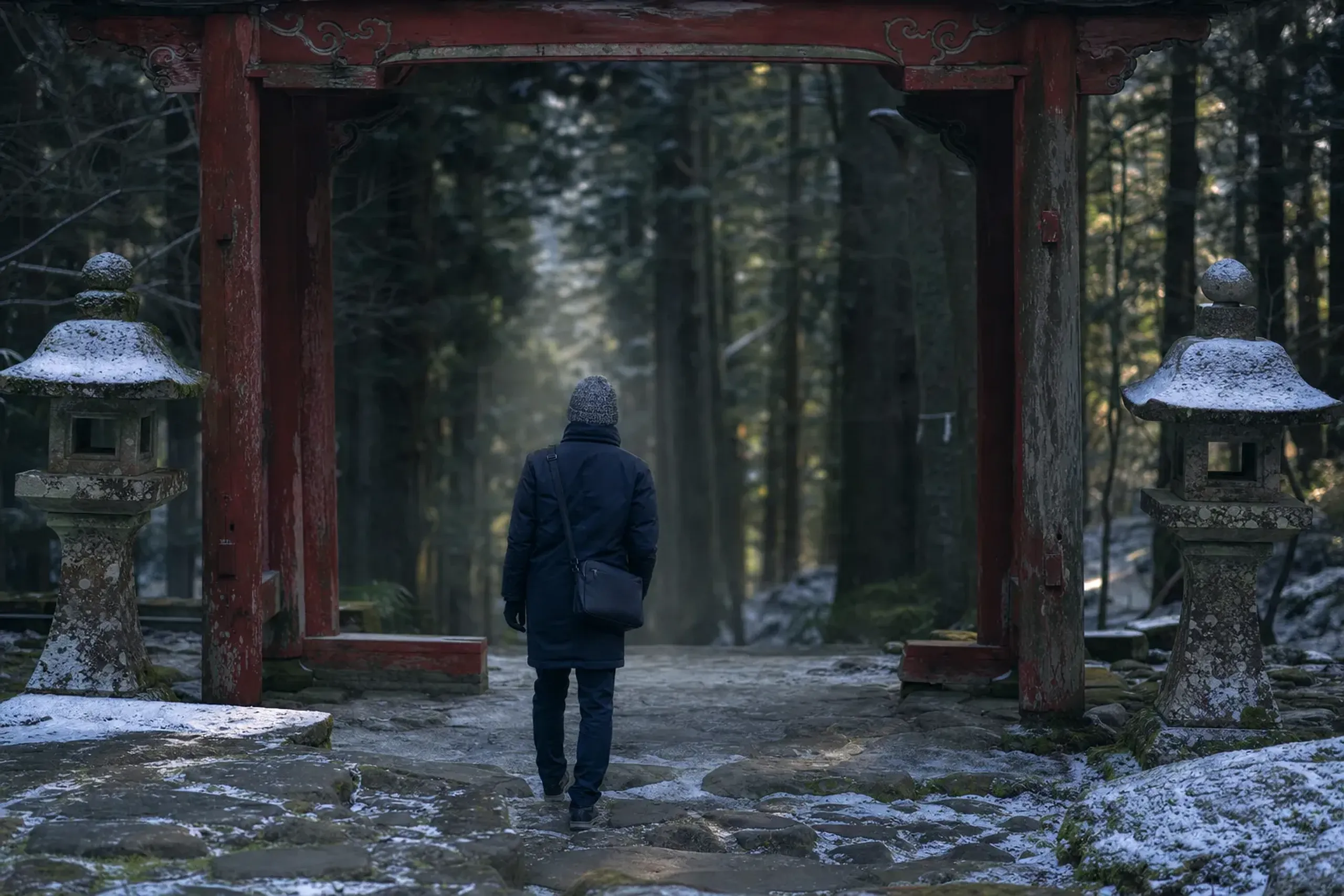
The climb is steady, not dramatic. That is the point.
A practical expectation is roughly an hour and a quarter up and a little under an hour down, depending on pace, humidity, and how long you linger near the pagoda.
From Zuishinmon To The First Long Cedar Shade
The first steps feel easy. Big mistake.
Stone here is uneven by design and by age, and summer rain can leave moss slick underfoot. Keep your eyes down when you need to, then look up when the trunks open like pillars in a dim hall.
There are no vending machines along the route, per local guidance, so you carry what you need from the start. Water matters more than people expect, especially in Tsuruoka’s wet summer air.
The Cedar Avenue As A Place Of Worship
This is a public site. It is also a living one.
You will meet pilgrims, local walkers, and visitors who lower their voices without being told. If you pause to let someone pass, do it calmly and step to the side of the stones where footing is stable.
Per Tsuruoka tourism sources, the cedar avenue holds three stars in the Michelin Green Guide Japon (the sightseeing guide, not the restaurant guide). It is a useful note, but it still undersells the feeling of being inside that shade.
The Five-Storied Pagoda And Jiji-sugi
About 300 steps lead you to the pagoda.
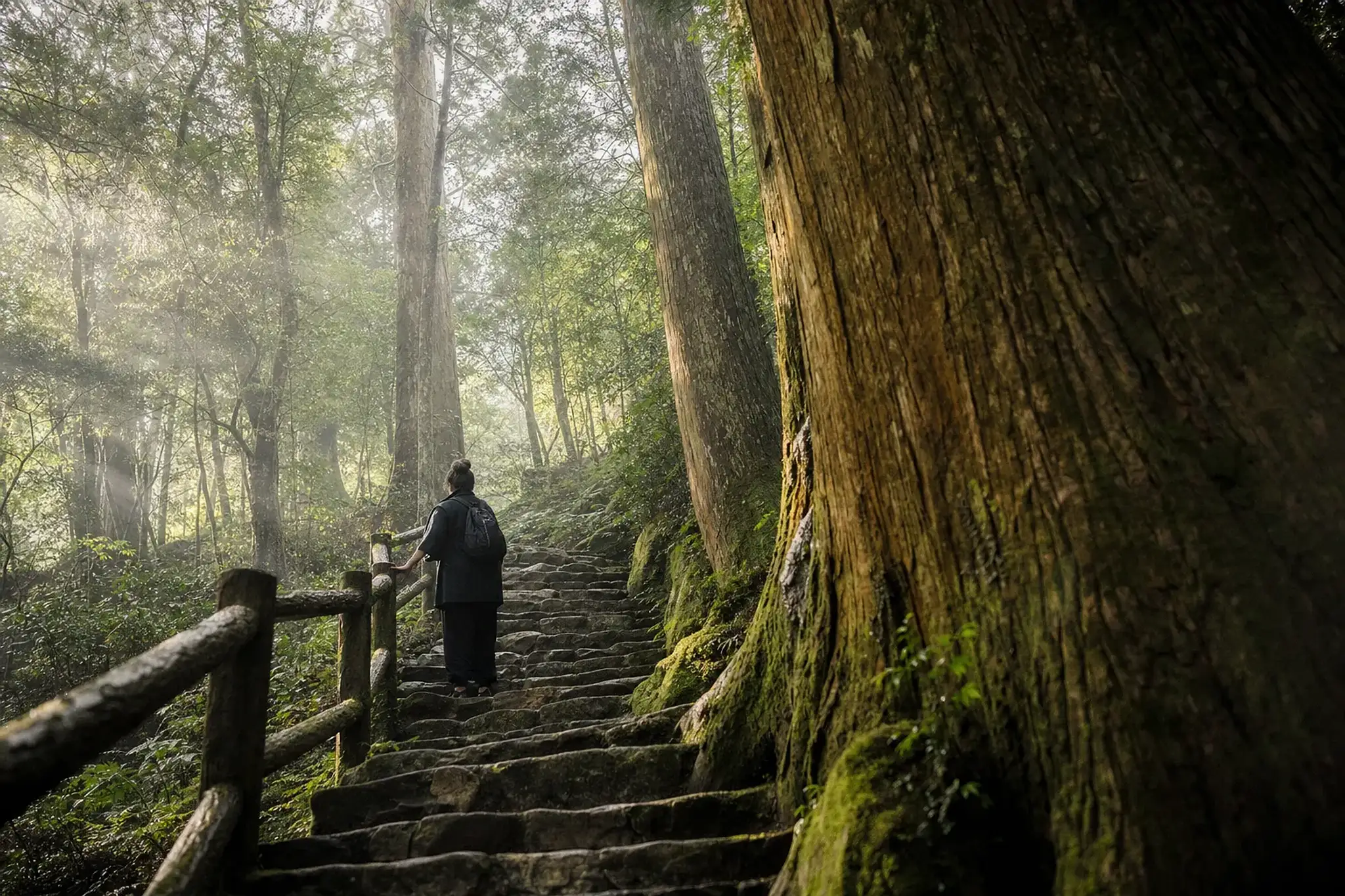
You know it before you see it.
The Five-storied Pagoda is about 29 meters tall, built of unpainted wood with a shingle roof, and the present tower is traditionally dated to the late 14th century (often said to be built around 1372). Legend traces an earlier founding to the 10th century; treat that as legend, not a timetable.
Nearby stands the Jiji-sugi cedar, designated a National Natural Monument (9 June 1951), said to be about 1,000 years old. “Said to” is important here. The tree does not need certainty to feel ancient.
The Summit Precinct: Sanjin Gosaiden
The summit precinct is not a finale. It is a threshold.
The main hall, the Sanjin Gosaiden, enshrines the deities of Gassan, Haguro, and Yudono. It serves as the home shrine for Gassan and Yudono, which can be difficult to reach in snow.
The Sanjin Gosaiden is an Important Cultural Property (designated 25 May 2000) and was rebuilt in 1818. Take a moment before you step forward. People come here to worship, not to “tick it off.” We plan arrivals for the hours when the precinct is at its most still, which turns the visit from sightseeing into something closer to devotion.
Should You Walk Up Or Ride Up And Walk Down Mt. Haguro?
For most summer visitors, riding up by road and walking down is the calmest plan because you avoid peak heat on the uphill climb while still experiencing the full cedar stairway as a pilgrimage walk.
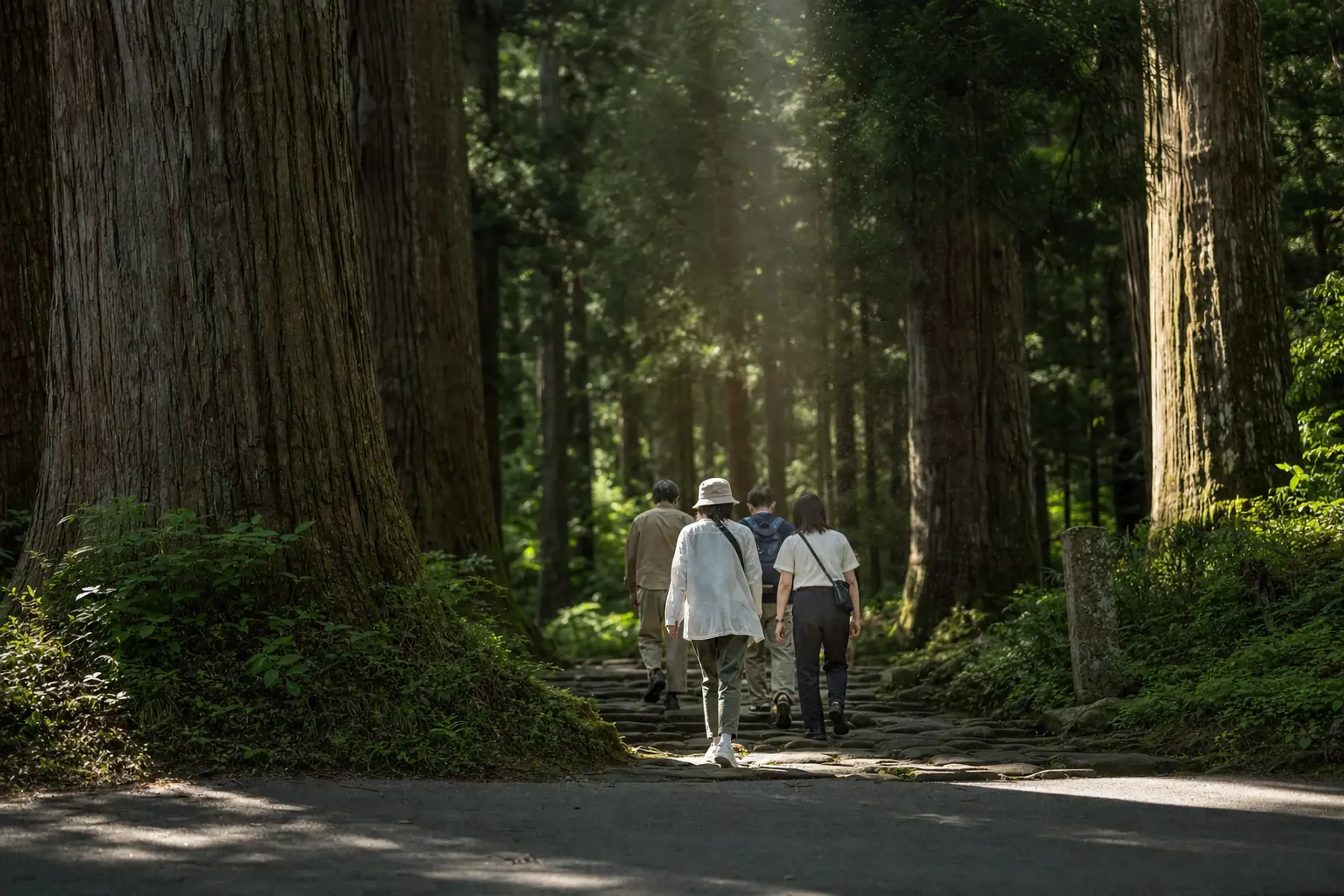
The choice is not about fitness alone. It is about what kind of morning you want: effort first, or contemplation first.
Option A: Walk Up From Zuishinmon, Then Return By Road
This is the classic way. It feels earned.
You start early, move steadily, and arrive at the summit with the same quiet focus the path teaches. In humid Tsuruoka weather, you will sweat more than expected, so light layers that dry fast matter.
- Best for: walkers who want the ascent as part of the worship.
- Watch for: slippery stone after rain.
- Timing cue: build in extra minutes around the pagoda for a long pause.
Option B: Go Up To The Summit By Road, Then Walk Down The Stone Steps
This is the high-comfort version that still feels real. No shortcuts in spirit.
The Tsuruoka Tourism Bureau describes a stone-step pilgrimage approach where you go up by bus or car, check in at the summit hall, then walk down. It respects the site as a place of worship and keeps the stairway as the heart of the day.
- Best for: families, mixed-pace couples, and travelers managing summer heat.
- Watch for: downhill fatigue; knees tire on uneven stone.
- Practical note: cars and bicycles cannot reach the pagoda.
Key fact: The stone steps have no lighting, and local guidance advises against night visits—plan to walk in daylight.
Mt. Haguro In Summer: Heat, Rain, Footwear, Water, And Bears
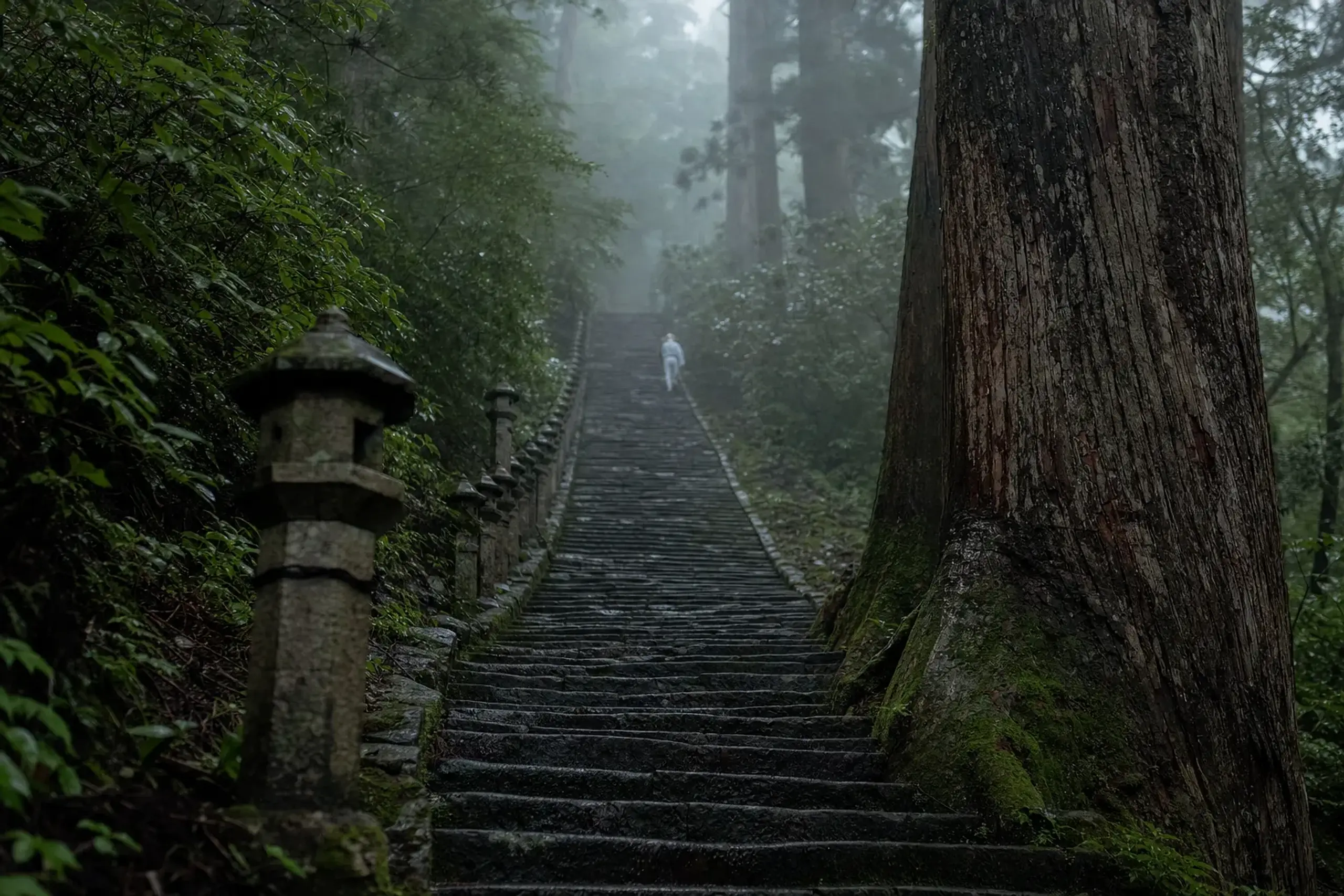
Haguro in summer is hot, humid, and often wet, so carry water from the start.
Tsuruoka’s lowland summer climate is a useful baseline: July mean temperature 23.9°C (high 28.2°C, low 20.3°C) with 220.2 mm rain; August mean 25.3°C (high 29.9°C, low 21.4°C) with 198.9 mm rain (JMA 1991–2020, Tsuruoka station). The summit is higher and can feel cooler.
Footwear: Treat The Steps As A Wet Trail
The local tourism association reports that falls are increasing: in rain, moss makes the stone slippery.
The Ideha Bunka Memorial Hall lends sneakers and rain boots free of charge. It is a small kindness that can save your day.
Water And Pacing
You will not “dash” these steps. Don’t try.
Carry water because there are no vending machines on the route.
Bears: Calm Preparation, No Drama
Bears are present in the wider area, and summer notices do occur. That is normal for forested mountains in Japan.
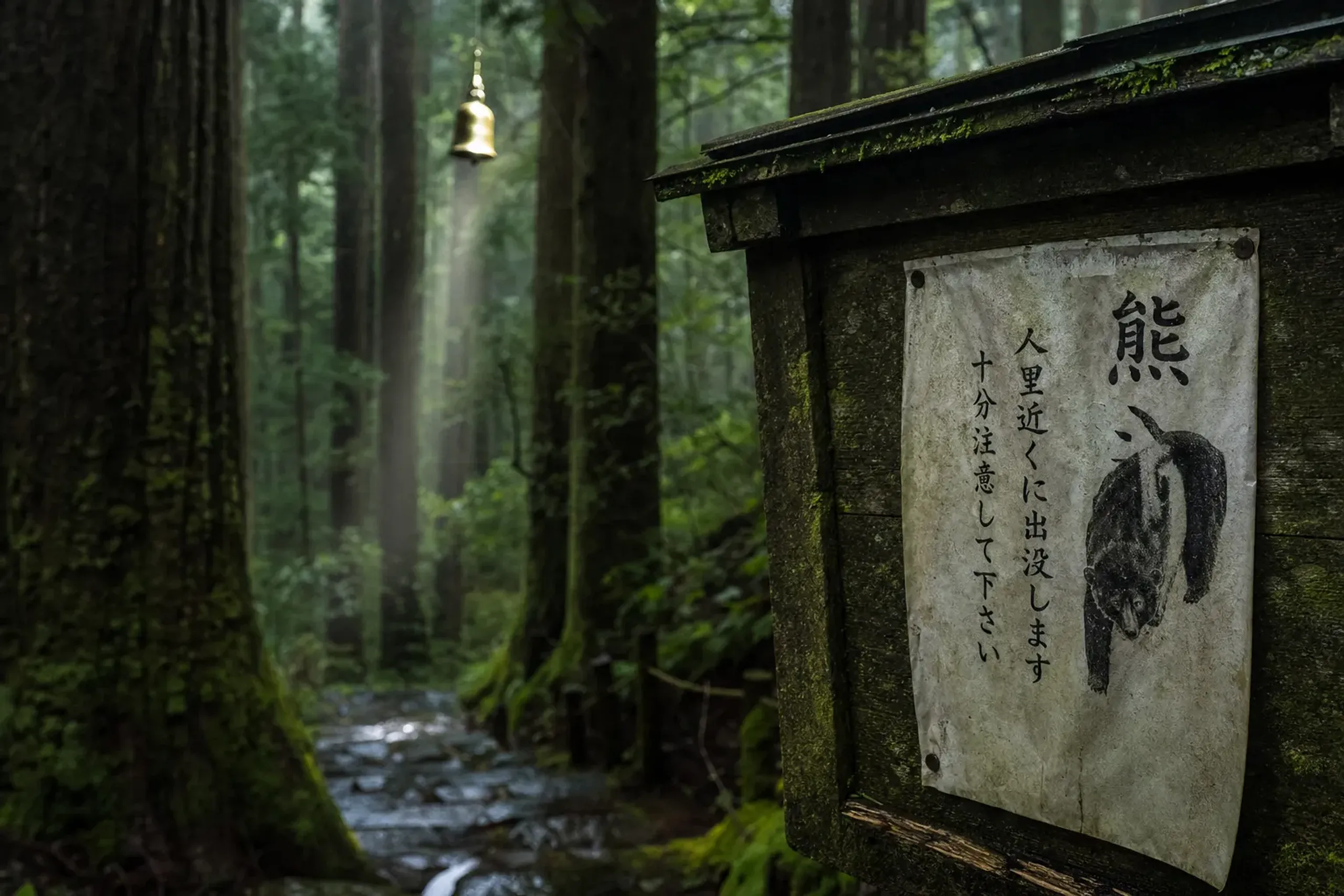
Yamagata can issue prefecture-wide bear warnings, Tsuruoka-area notices have reported attacks on bamboo-shoot gatherers in the Asahi area on the Gassan side, and a bear has been seen near Futayo-no-ike in the Haguro precinct itself.
Local rules apply and can change; follow your guide’s briefing, and the JRS concierge team confirms current conditions directly with the guest at time of arrangement.
Mt. Haguro Summer Calendar: What Changes In July And August
Mt. Haguro’s summer calendar includes annual fixed-date rites and festival periods—most notably 1 July and mid-August—so confirm dates and access details closer to your visit.
Per local tourism sources, 1 July marks the opening rite for Gassan Honmiya. On 15 July, a Hana-matsuri is held at the Haguro summit. From 13 to 15 August, the Gassan, Gassan Honmiya, and Yudono festivals take place, and schedules can affect transport patterns. Knowing precisely what unfolds on which day — the quiet weeks versus the ceremonial ones — is the kind of seasonal timing that separates a well-planned visit from a crowded one.
Gassan’s season typically closes around mid-September. Yudono typically stays open into early November. Mountain seasons shift each year with weather and operations, and the JRS concierge team confirms them directly with the guest at time of arrangement.
How Do You Get To Mt. Haguro From Tokyo Via Tsuruoka?
The most direct route from Tokyo is to fly to Shonai Airport (about 1 hour from Haneda), transfer to Tsuruoka (about 30 minutes by airport bus), then continue to Mt.
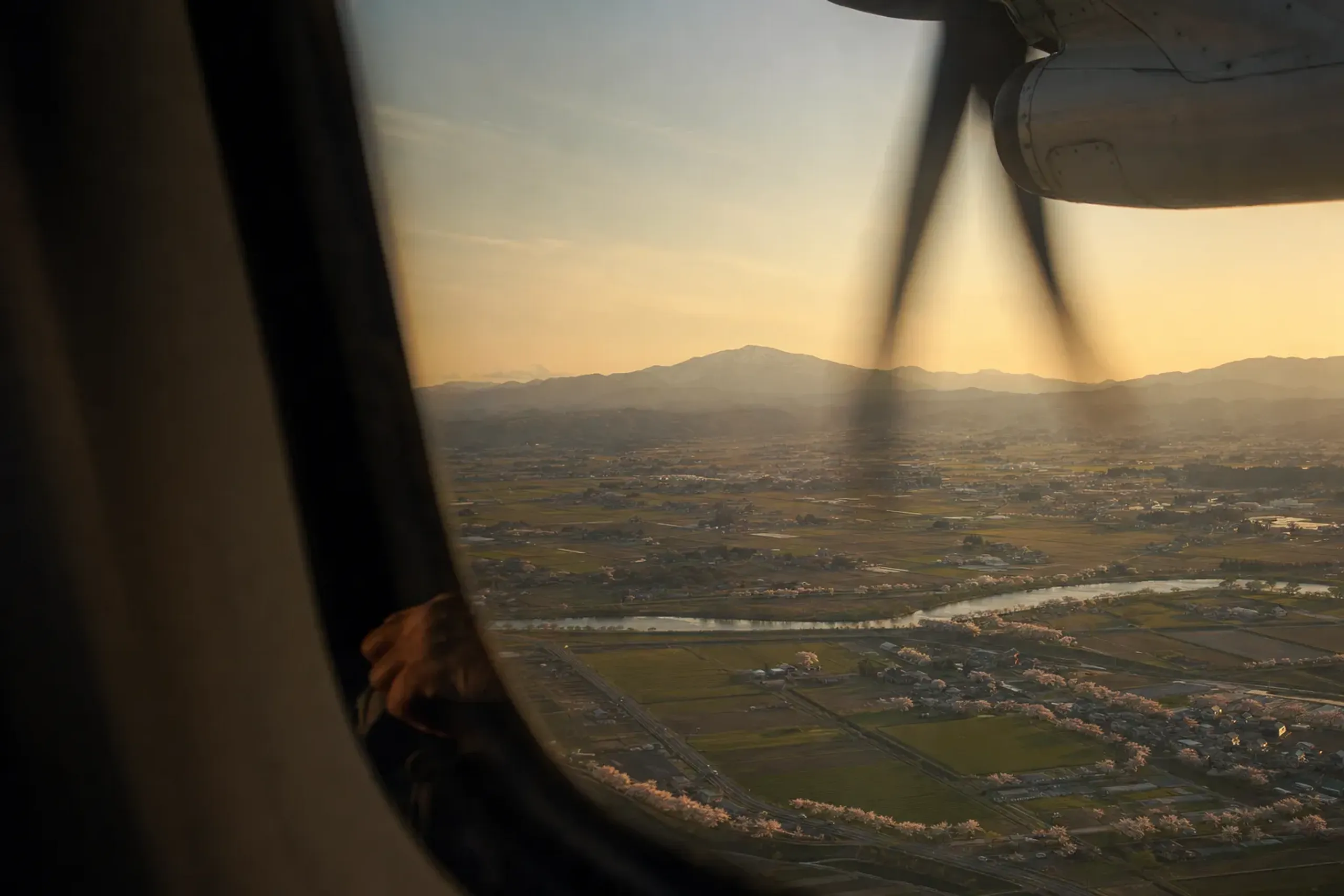
Haguro by bus or car.
Rail is also straightforward: the Joetsu Shinkansen to Niigata (about 1 hour 45 minutes), then the Inaho limited express to Tsuruoka (about 1 hour 50 minutes). The pace feels slower. Some travelers prefer that, especially if they want a night in Niigata.
From Tsuruoka Station, the bus to the Zuishinmon area takes about 40 minutes. By car, Tsuruoka Station to Mt. Haguro is about 30 minutes, depending on traffic and where you start your walk.
Bus, Toll Road, And Parking: The Practical Access Notes People Miss
The Mt. Haguro toll road is 2.0 km and, in summer, runs to published daily hours, including a summer schedule (1 July to 31 August and during Golden Week), but hours can change with ceremonies.
Summit parking is free and spread across three lots. That sounds simple, yet it changes how you plan your morning: if you drive up, you can time your worship at the summit and then choose a long descent without worrying about “beating” a last bus.
The bus from Zuishinmon to the summit takes about 15 minutes, and from Tsuruoka Station direct to the summit about 53 minutes. Some early and late runs operate only on Gassan-line days in July to September, and 13 to 16 August uses the holiday timetable; do not assume a specific departure without checking the latest notice.
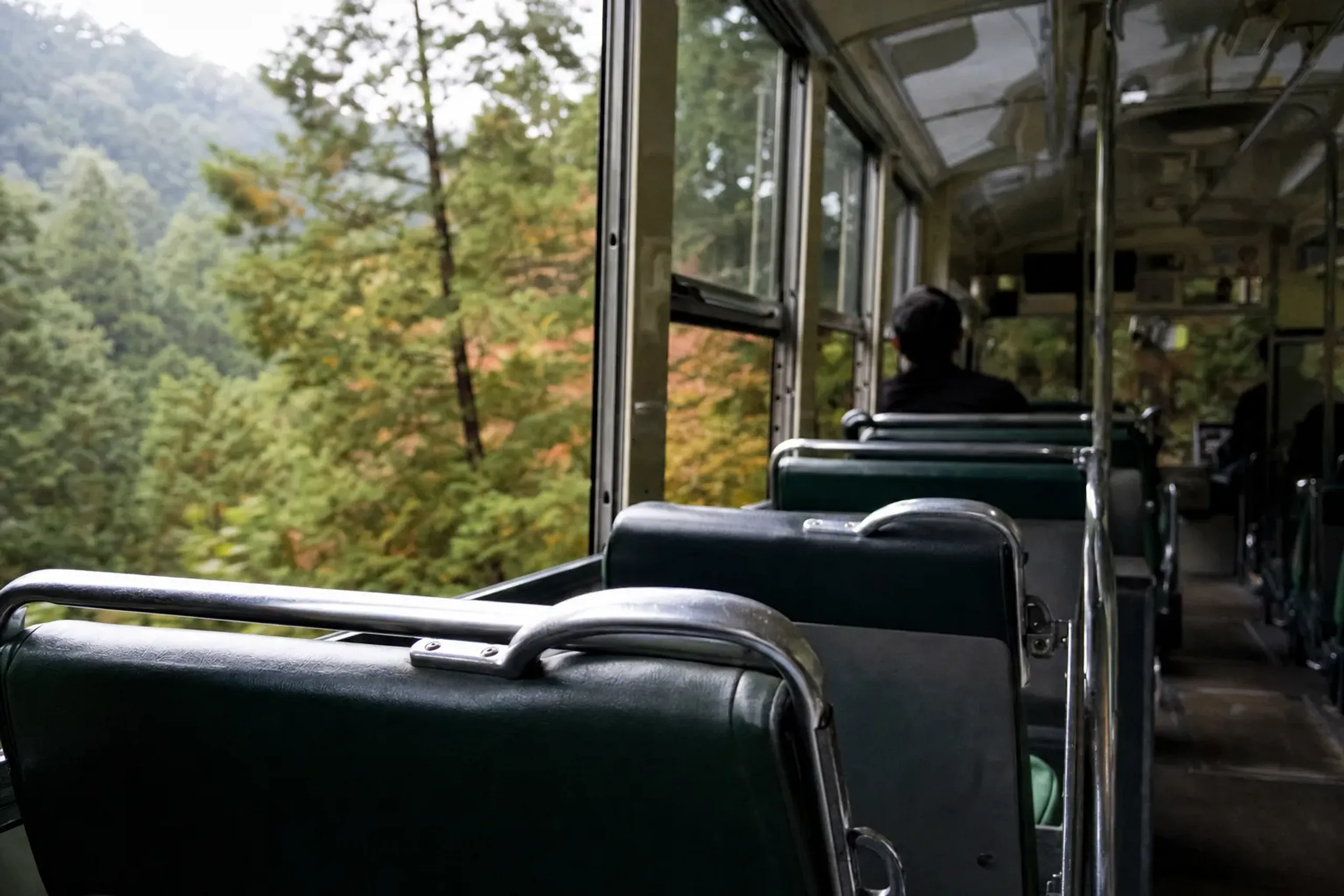
Bus timetables are revised from time to time, so the JRS concierge team confirms the current timetable directly with the guest at time of arrangement.
How Our Concierge Team Plans A Mt. Haguro Morning
We plan Mt. Haguro by treating it as worship first and logistics second, then stitching the two together so you can walk without checking your watch every five minutes.
For this specific experience, our team at Japan Royal Service can provide an English-speaking cultural interpreter guide who walks with you, explains the history, and keeps the tone respectful. Quiet matters here.
We can also coordinate a private transportation plan from Tsuruoka Station or Shonai Airport to the Zuishinmon gate or the summit, and back, in vehicles from partner companies with English-speaking drivers and with pacing that suits families and mixed-ability groups. Driver and guide are separate roles, and we anticipate what you need before you ask.
Mt. Haguro can be the quiet centre of a far wider journey through Tohoku — a region still largely absent from the standard luxury circuit, which is precisely its appeal. We can shape a tailor-made itinerary around this cedar stairway, with the timing calibrated to your preferences.
To begin planning, contact our team here.