In this guide
- 01The Principle: Exposure Lives At Thresholds And Waits
- 02Arrivals: The Longest And Most Exposed Stretch
- 03Bases And Interiors: Lobbies, Lifts, And Floors
- 04Movement Between Bases
- 05Viewings And Sites: What Timing Achieves, What Arrangement Achieves
- 06The Trade-Offs, Named Plainly
- 07What This Looks Like Across A Full Itinerary
- 08Why Choose Japan Royal Service
A public footprint is not a feeling. It is a sequence of concrete moments: the immigration hall after a long flight, the wait at baggage claim, the lobby where a group checks in ahead of you, the lift you share to a restaurant floor. Movement through Japan is rarely the issue. Standing still in public — waiting, queuing, pausing at a threshold — is where you are most visible, and where a well-designed itinerary quietly does its work.
Our team at Japan Royal Service spends much of its planning time on exactly these moments. Not on grand gestures. On the joins between them. This is a practical account of how a low-exposure trip is built, what it can genuinely change, and what it cannot.
The Principle: Exposure Lives At Thresholds And Waits
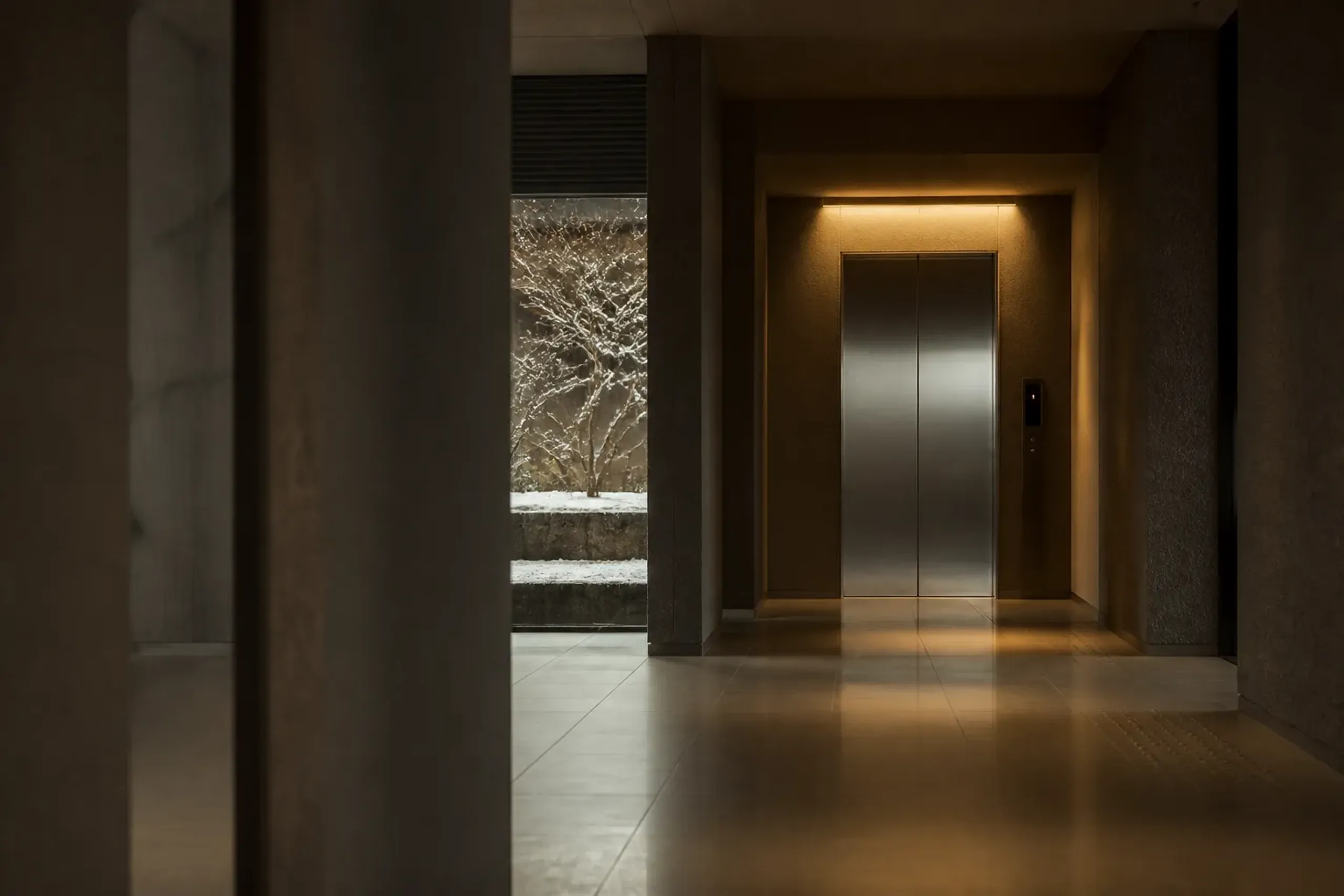
Think of a day as a series of transitions. Airport to car. Car to lobby. Lobby to room. Room to lift to dining floor. Each transition has a threshold — a doorway, a desk, a lift bank — and often a wait attached to it.
Exposure concentrates there. When you are walking, you pass. When you are seated in a private car, you are enclosed. But when you stand at a check-in desk while three other parties arrive, or hold at a restaurant entrance while a table clears, you are stationary, identifiable, and near strangers for an open-ended stretch of time.
The whole method follows from this. Fewer transitions. Shorter waits. Thresholds crossed at quiet hours. That is the entire game, and most of it is achievable through timing and sequencing alone — no special arrangement required.
Arrivals: The Longest And Most Exposed Stretch
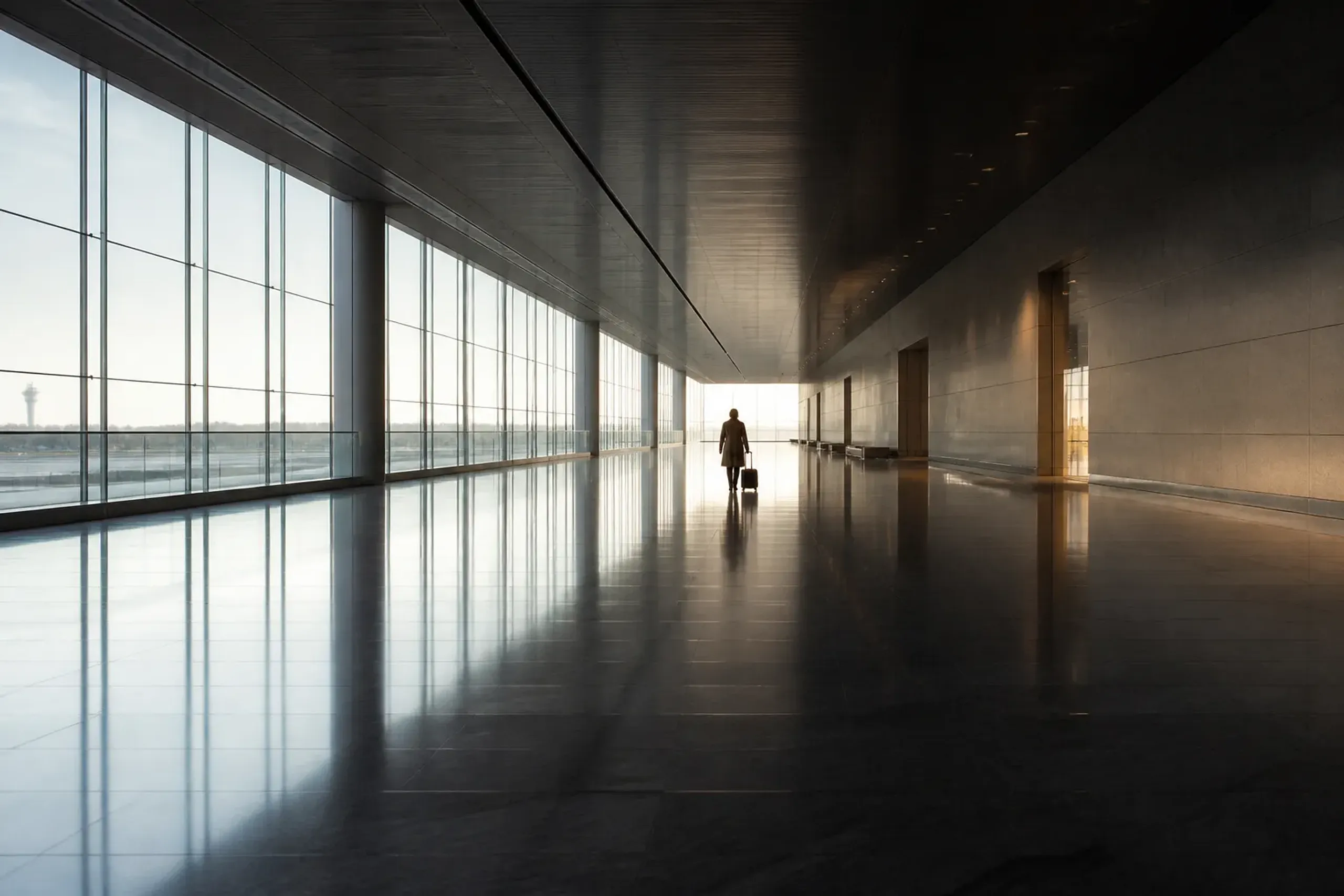
Off-peak arrival hours turn a crowded hall into a brisk, sparse walk.
Arrival is where a footprint is largest, and where you have the least control. You cannot skip immigration. You should not want to. Lawful entry checks are part of arriving anywhere, and nothing here is about avoiding them — it is about not standing in a crowded hall longer than the process itself requires.
Consider the ordinary sequence at a major gateway such as Narita, Haneda, or Kansai. Aircraft door. Long corridors. Immigration queue. Baggage carousel. Customs. Then the arrivals hall — usually the most crowded, most photographed public space of your entire trip. Meeters, drivers holding placards, tour groups forming up. It is loud and it is slow.
Three things reduce your exposure here, and they stack.
Flight And Timing Choices You Control
The single most effective decision costs nothing. Arrive at an off-peak hour. Immigration halls fill and empty in waves tied to arrival banks. A flight landing outside the heaviest window means a shorter queue, a thinner baggage hall, and an arrivals concourse you cross in a minute rather than five.
Cabin choice matters too, but less than people assume. Priority disembarkation gets you to the immigration hall first. It does not shorten the queue if you have landed into a peak bank. Timing beats seat class here.
What Arrival Assistance Genuinely Changes
Some airports and airlines offer arrival meet-and-assist services that guide you through the terminal and shorten certain waits. These are real, they are booked through the airport or airline, and they help most with wayfinding and the baggage-to-car handover. [VERIFY] Specific fast-track or premium arrival lanes vary by airport and by your carrier and cabin, so eligibility must be checked case by case.
What such services do not do is remove the immigration check itself. Nor do they make the arrivals hall private. Be clear-eyed about the ceiling: a good arrival plan turns a slow, crowded thirty minutes into a brisk, sparse ten. It does not make you disappear.
Key point: The most valuable arrival upgrade is the car handover. A private chauffeured transfer waiting at a pre-agreed point means you step from baggage claim to a closed vehicle with one short walk and no standing at a taxi rank.
The Handover To Ground
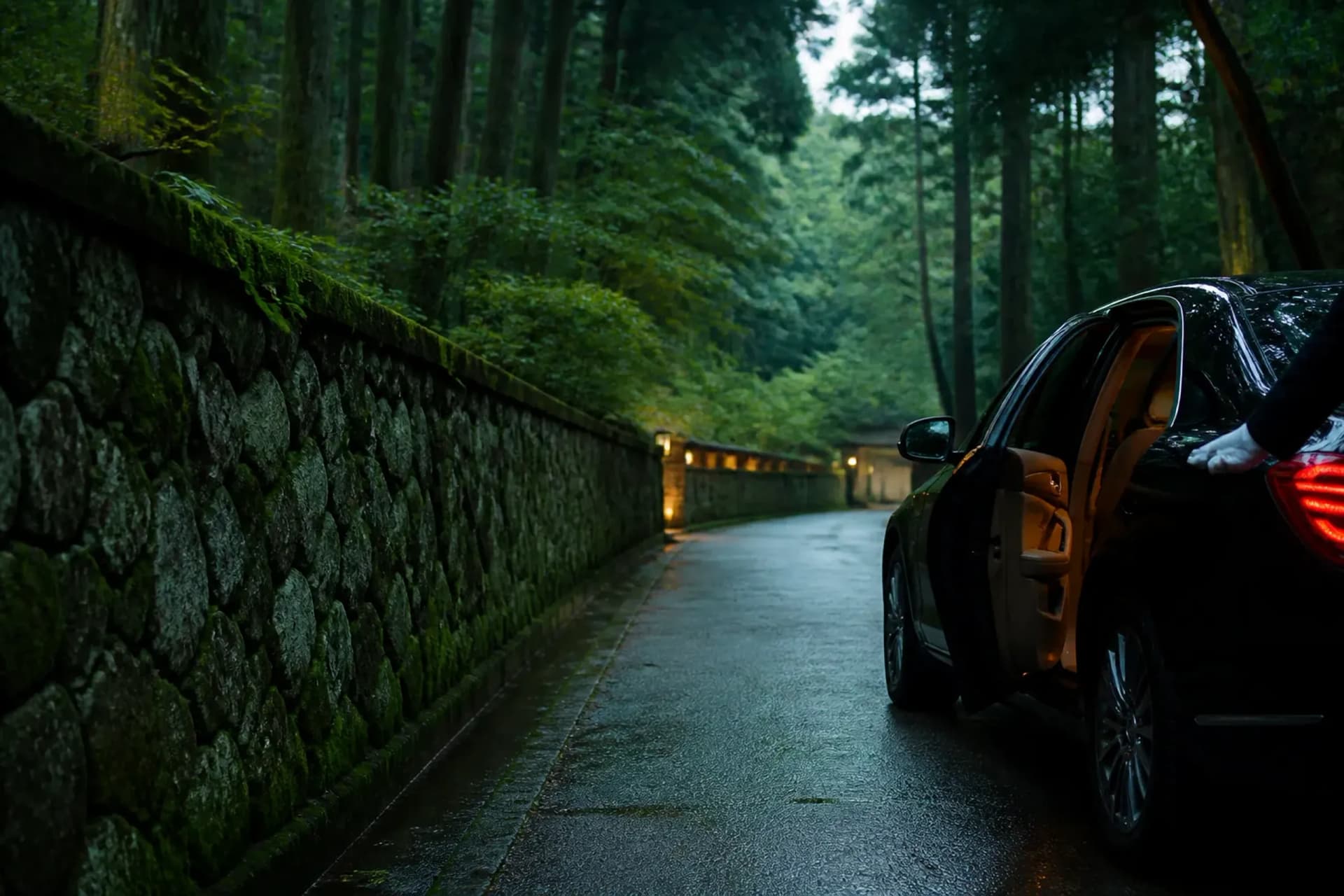
The taxi rank and the station ticket gate are the two exposure points most travellers forget. Both involve a queue and a wait, in public, with luggage. A door-to-door private transfer removes both by design. Our concierge coordinates a meeting point inside the terminal flow, so the walk from carousel to car is the shortest the airport layout allows — and the car, not the rank, becomes your first still moment.
One honest caveat: at Haneda and Kansai, terminal geography sometimes puts the practical pickup point a short covered walk from the hall. Where that is the case, we say so in advance rather than promise a door that does not exist.
Bases And Interiors: Lobbies, Lifts, And Floors
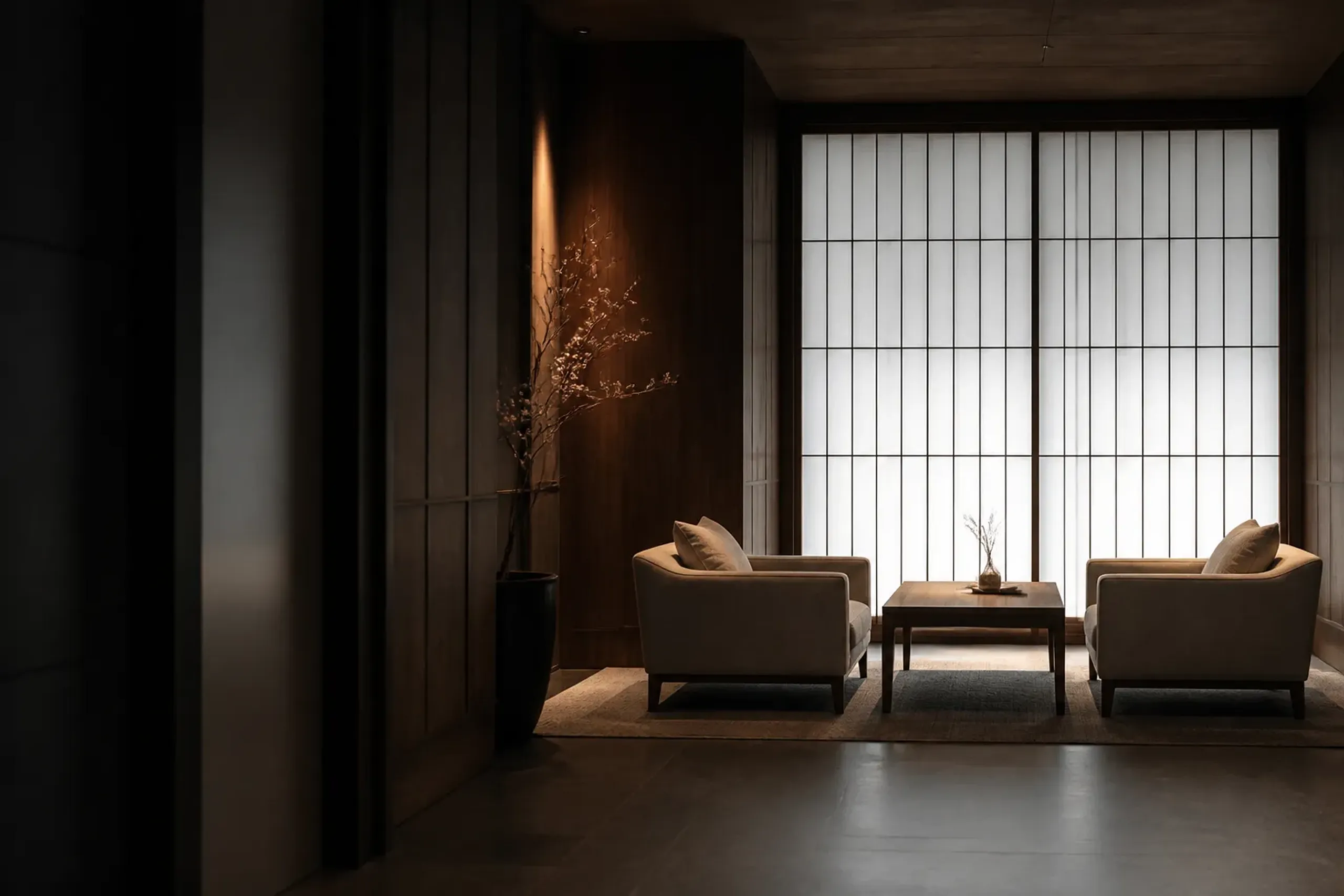
Smaller, newer properties naturally thin the lobby at any given moment.
Where you stay shapes your daily exposure more than any single activity. A base is not just a room. It is an entrance, a lobby, a lift bank, and a set of floors — each with its own footprint.
The lobby is the busiest interior you pass through repeatedly. Check-in, checkout, and every departure and return route through it. Properties differ enormously in how they handle this. Some newer openings — Japan's 2025–2026 pipeline includes intimate additions in Tokyo and Osaka — were designed with smaller room counts and more controlled arrival flow, which naturally thins the lobby at any given moment.
Hotel-side arrangements can genuinely change several things. Arrival routing away from the main desk. Lift access that reduces shared rides. Dining sent to the suite, or taken in a private room rather than the main floor. Where a property offers these, our team confirms them in advance so you are not negotiating at the desk on arrival.
What such arrangements do not change: you will still share some corridors, and the property still operates as a hotel with other guests. A private-room dinner removes the dining-floor crowd. It does not empty the building. We do not invent capabilities a property has not confirmed, and we tell you plainly where the interior footprint simply cannot go lower.
Movement Between Bases
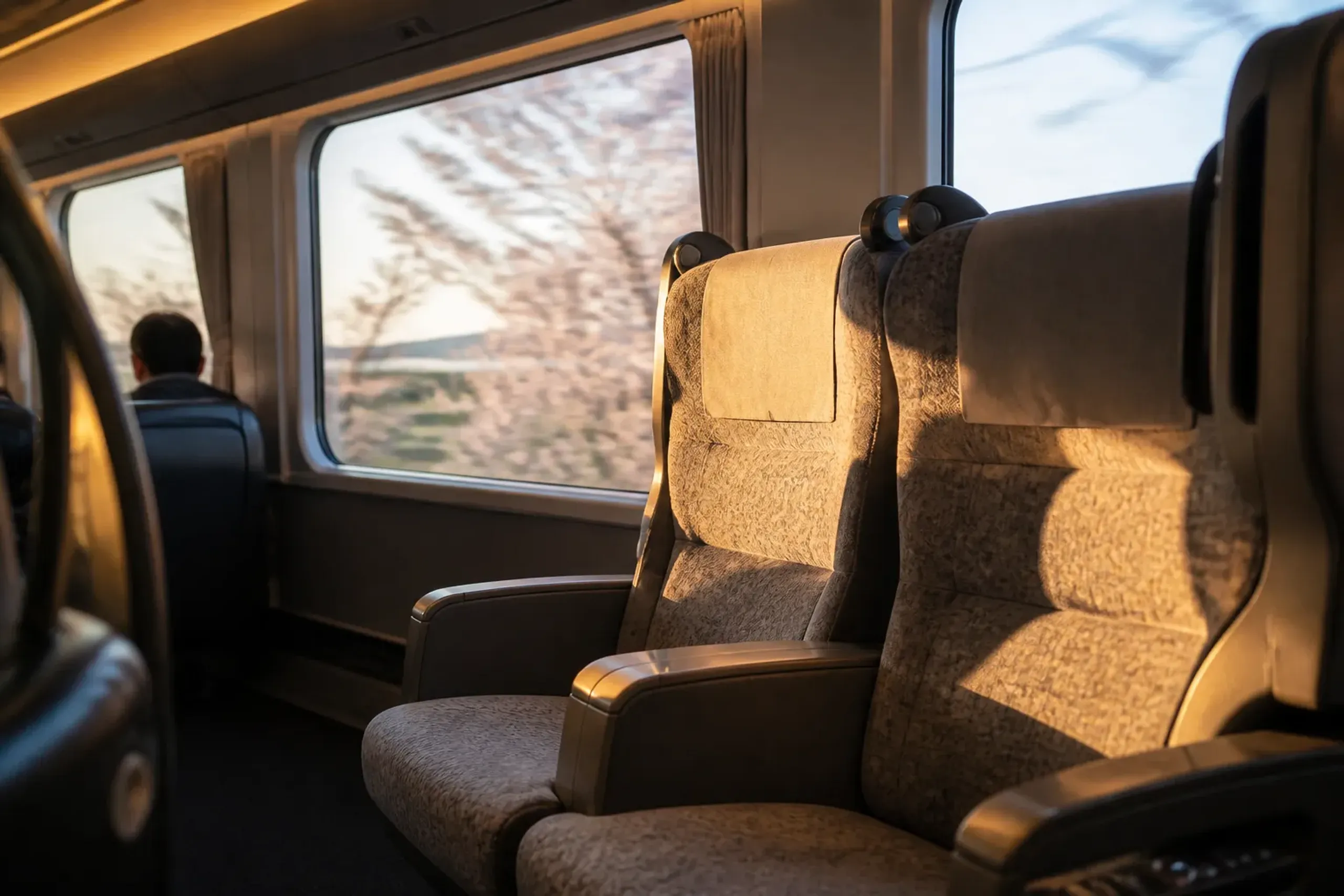
On the Tokyo–Kyoto corridor, rail's short, sharp footprint can beat road.
Every hotel change is a fresh checkout, a fresh lobby, a fresh arrival. So the first principle of routing is blunt: change bases less. Longer stays in fewer places cut your total number of exposed transitions more than any in-transit trick.
When you do move, the choice between road and rail is not automatic. Road gives door-to-door continuity — one enclosed vehicle from lobby to lobby, no concourse, no platform. For a Tokyo day tour, or Kyoto to Nara, a chauffeured car is usually the lower-footprint choice.
But rail is sometimes more discreet, not less. On the Tokyo–Kyoto corridor, the Shinkansen in a reserved Green Car is fast and predictable, and a private car on the same route means hours in traffic. The exposure on rail is concentrated and brief: a station concourse, a platform, a seated carriage. Where the concourse can be entered close to departure and left quickly on arrival, rail's short, sharp footprint beats a long road journey. Our coordinators weigh this per leg rather than defaulting to one mode.
Where the car cannot reach: Many of Japan's quietest cultural sites sit on lanes closed to vehicles, or in districts where cars are asked to keep out. Kyoto's Gion is a residential neighbourhood, and the city's official 2026 guidance asks visitors to move through it respectfully and photograph only in designated areas. Here, a short discreet walk is not a failure of planning — it is the correct, courteous way to arrive.
Viewings And Sites: What Timing Achieves, What Arrangement Achieves
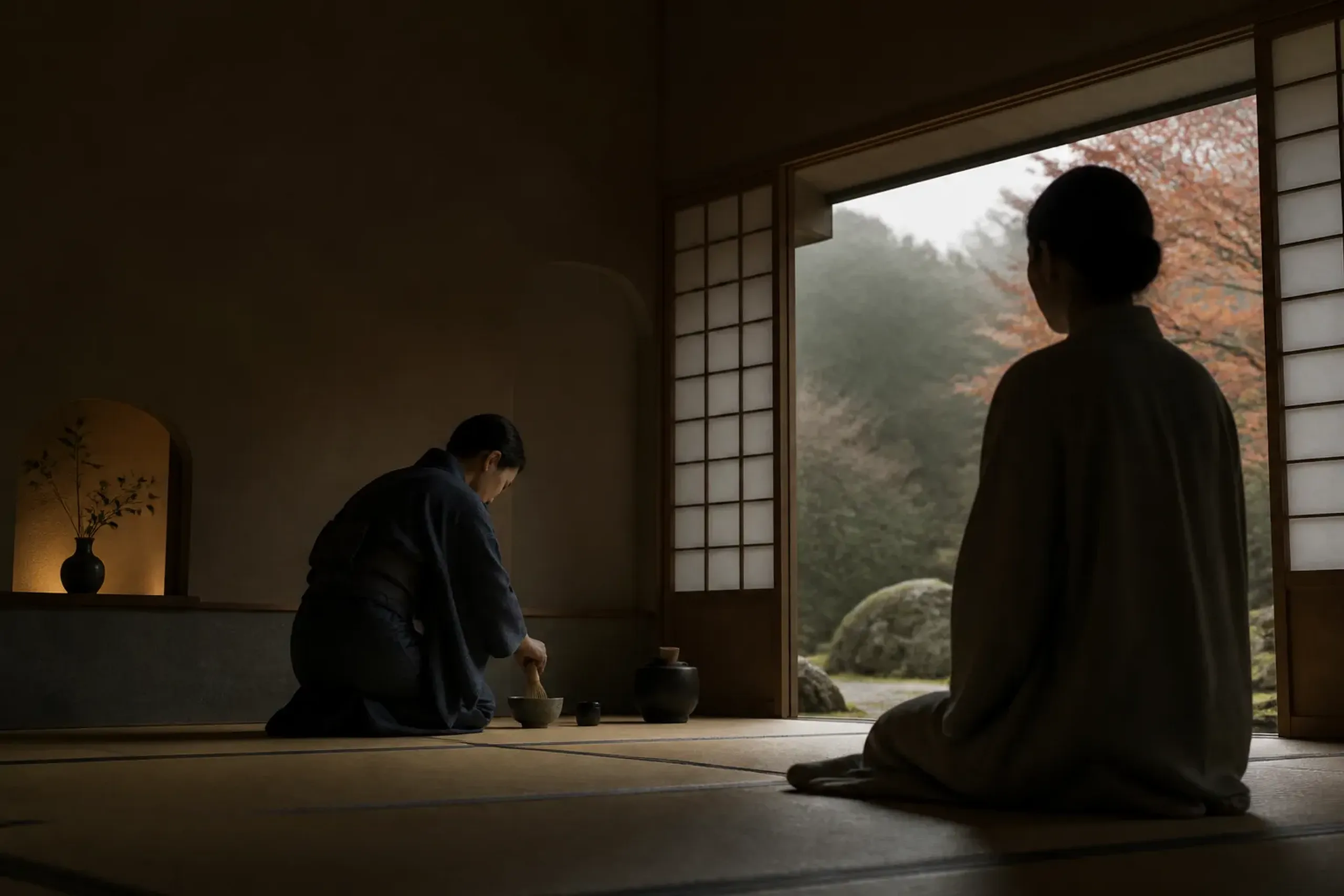
Arranged through proper channels, a private tea ceremony has no public audience.
At temples, gardens, and museums, your footprint is a function of who else is there. Two levers reduce it.
The first is timing, and it is free. Concurrency with crowds is the enemy. First entry at opening, or the last slot before closing, transforms a famous site from a scrum into something close to solitude. Weekday routing and shoulder-season travel compound this. Japan's own tourism policy through 2026 actively encourages dispersal and off-peak visiting, and JNTO's 2026 luxury messaging points travellers toward less-discovered prefectures — which means the quiet route is now also the endorsed one.
The second lever is arrangement, and it is narrower than marketing suggests. Some sites permit private viewings outside public hours through proper channels. A private temple tea ceremony, arranged correctly, gives you a tatami room and a tea master without a public audience. Kyoto geiko and maiko entertainment can be arranged as a private dinner in a private room through the established ochaya system — never by approaching them in the street, which the city explicitly discourages.
Our team at Japan Royal Service arranges these through the correct introductions on your behalf. What we will not do is pretend every site offers this. Most do not. For the majority of places, timing is the tool, and it is a very good one.
The Trade-Offs, Named Plainly
A minimal public footprint has real costs. It is fair to state them before you commit.
- Spontaneity. Low exposure depends on sequencing. Walk-in dinners, last-minute detours, and "let's just see where the day goes" all raise your footprint. A discreet trip is a planned trip.
- Some restaurants. The hardest counters are small, public, and shared. A few of Japan's best rooms simply cannot be experienced with a low footprint. You either accept the exposure or choose a private-room alternative.
- Some sites. A handful of iconic places are crowded whenever they are open. If seeing them matters more than seeing them quietly, the footprint follows.
- Cost, and time. Private transfers, longer stays, and off-peak timing carry a premium and ask for patience. Discretion is not efficient. It is deliberate.
And a limit no honest planner should hide: total privacy is not achievable. You will pass through public space. The goal is fewer exposed moments, shorter waits, and quieter thresholds — not invisibility.
What This Looks Like Across A Full Itinerary
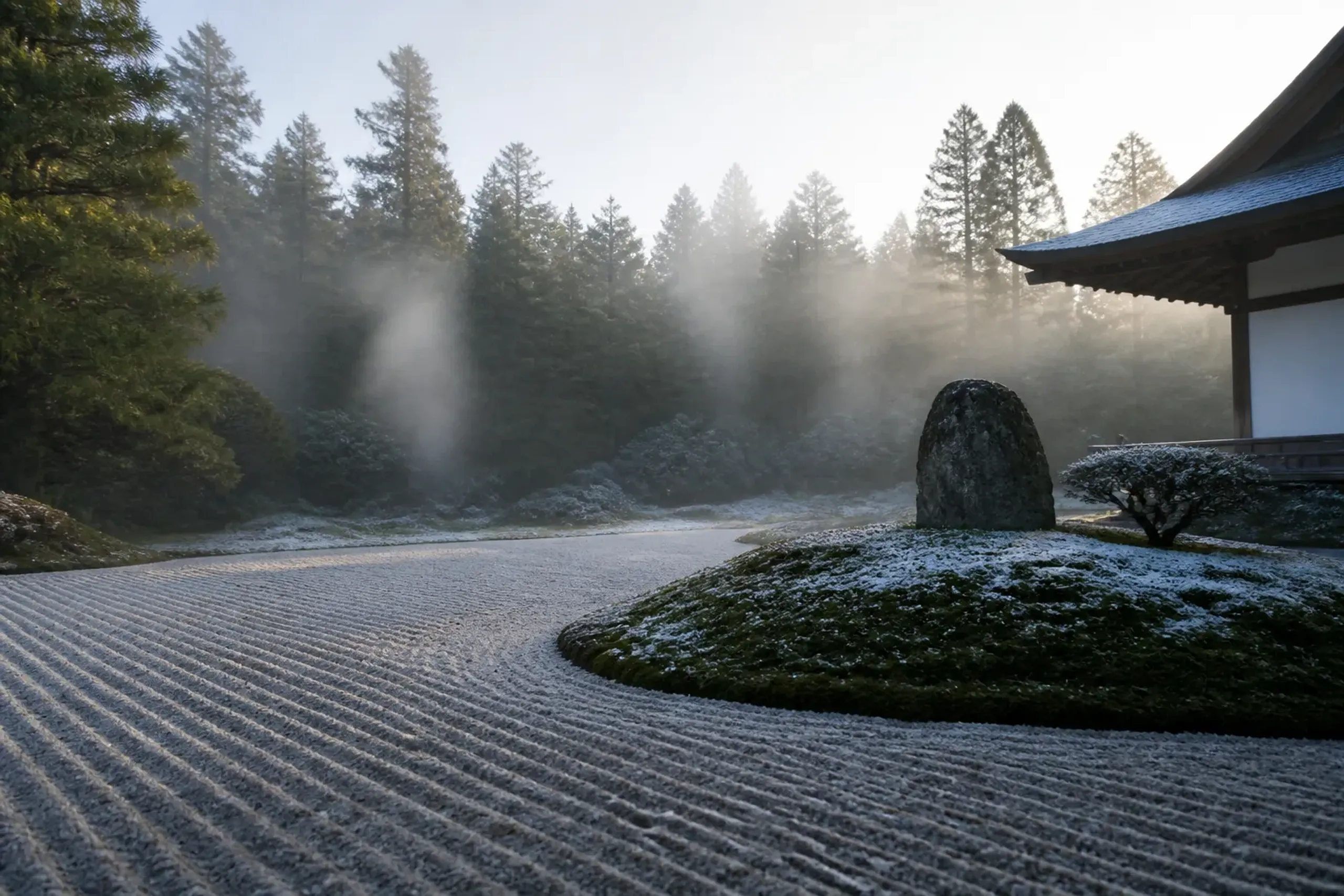
First entry at opening transforms a famous site into near-solitude.
In shape only, a low-footprint trip tends to look like this. An off-peak arrival, met and driven door-to-door. Two or three bases rather than five, each held for several nights. Mornings that start at opening, when sites are near-empty. A midday pause indoors, dining in-suite or in a private room. Cultural access booked in advance as private sessions where it exists, and as first- or last-slot visits where it does not. Movement between cities chosen leg by leg — car for continuity, rail where its short footprint wins. Fewer checkouts. Longer stays. Quieter hours.
Notice how much of that costs nothing but planning. Off-peak timing, longer stays, first-entry viewings, weekday routing — these are available to any traveller willing to sequence carefully. The paid layer sits on top: door-to-door transfers, private rooms, and introductions-only access.
Why Choose Japan Royal Service
Our value here is not a claim to make you disappear. It is a working knowledge of where the exposure points actually are — the arrivals hall at Kansai at a given hour, the lift geography of a particular base, the leg where rail quietly beats road — and the introductions to arrange private access where it genuinely exists.
We plan in first-person detail. Our coordinators map a proposed bespoke itinerary against its thresholds and waits, name the trade-offs before you commit, and never promise a capability a property or site has not confirmed. Where a competitor markets "insider access," we prefer to show you the sequence and let it speak. Our team works in English, Japanese, Thai, and Filipino, across Tokyo, Kyoto, Osaka, Nara, Nikko, Hakone, Hiroshima, and Hokkaido.
If you have a trip already sketched, we are glad to review it purely for exposure points — an assessment of where your footprint concentrates and how sequencing might lower it, with no obligation to book. To arrange a private conversation, reach our team via WhatsApp or LINE, or contact us here.