In this guide
- 01What "Discretion Architecture" Actually Means
- 02The Three Systems That Produce Invisibility
- 03The Kyoto Case Study: Privacy As A Civic Contract
- 04How To Move Invisibly: The Operational Playbook
- 05Vehicle Choreography: The Most Underrated Layer
- 06A Privacy-Tolerance Framework For Choosing A Base
- 07Discretion Beyond Travel: Principles You Can Apply Anywhere
- 08Frequently Asked Questions
- 09Why Choose Japan Royal Service
Privacy in Japan is not a locked door. It is a sequence.
The country's most guarded spaces do not announce their protection with steel and guards. They dissolve it into geometry — a screen placed just so, a vestibule that breaks a sightline, a service corridor that never crosses a guest's path. For the traveller who moves at the very top of the wealth spectrum, this is the difference between a stay and a disappearance. At Japan Royal Service, we call the underlying system discretion architecture: the built environment, the service choreography, and the guest's own conduct working as one machine to produce the same outcome — passage unobserved.
This is a working paper, not a marketing brochure. Below, we take apart the mechanics. Where a fact touches public policy, we ground it in Japan's own official guidance. Where it touches your itinerary, we hand you the playbook.
What "Discretion Architecture" Actually Means
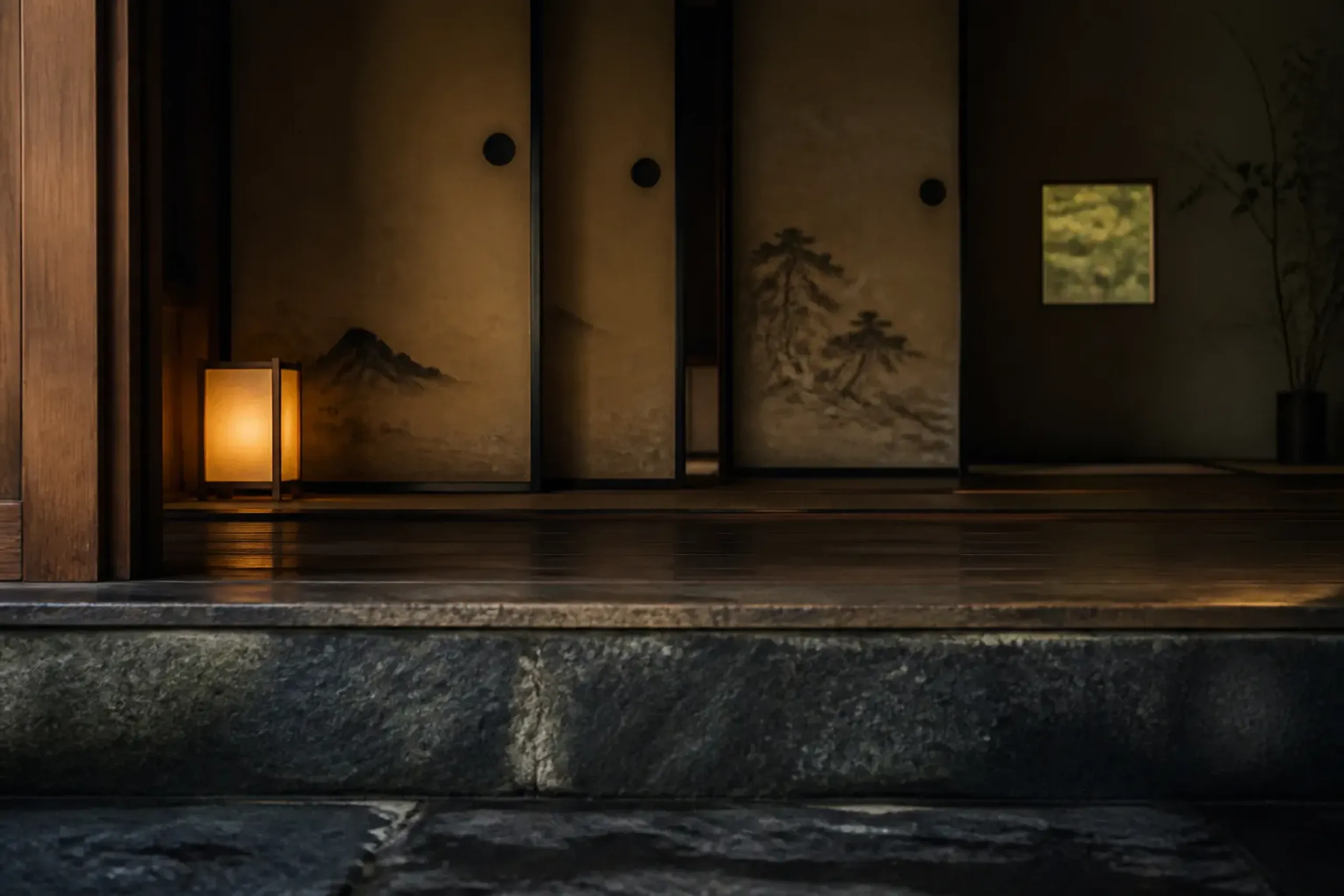
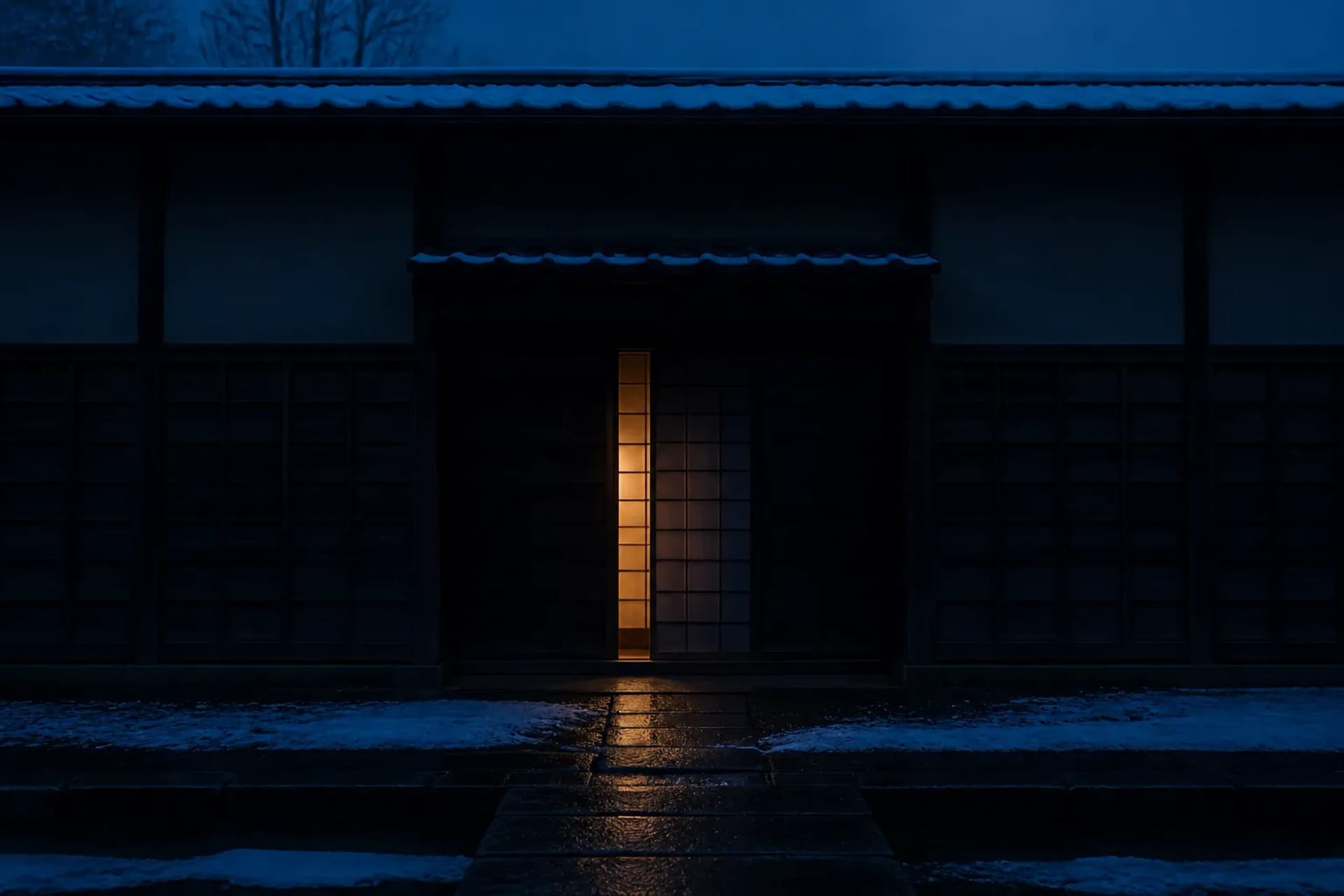
Layered thresholds turn arrival into a graded descent inward — the oldest privacy mechanism in Japan.
Most luxury travel writing treats privacy as a single dial. Turn it up, pay more. That framing collapses three distinct things that Japanese design keeps carefully separate.
Private means controlled access — who is permitted to reach you. Quiet means low sensory footprint — how little noise, motion, and visual clutter surrounds you. Anonymous means minimal identity exposure — how few people can attach your name to your face. A ryokan can be private without being anonymous. A city penthouse can be quiet while broadcasting exactly who arrived. The finest Japanese spaces engineer all three, and they do it without a single visible instruction to the guest.
The mechanism is old. Traditional architecture layers thresholds — the genkan entrance, the engawa veranda, the sliding fusuma panels — so that arriving anywhere is a graded descent inward rather than a single crossing. Each layer strips away a little more of the outside world. In our experience, the modern properties that succeed at discretion have simply digitised and formalised that ancient instinct.
Key distinction: "Exclusive" tells the world you were there. "Discreet" ensures no one noticed. UHNW guests almost always want the second — and are frequently sold the first.
The Three Systems That Produce Invisibility
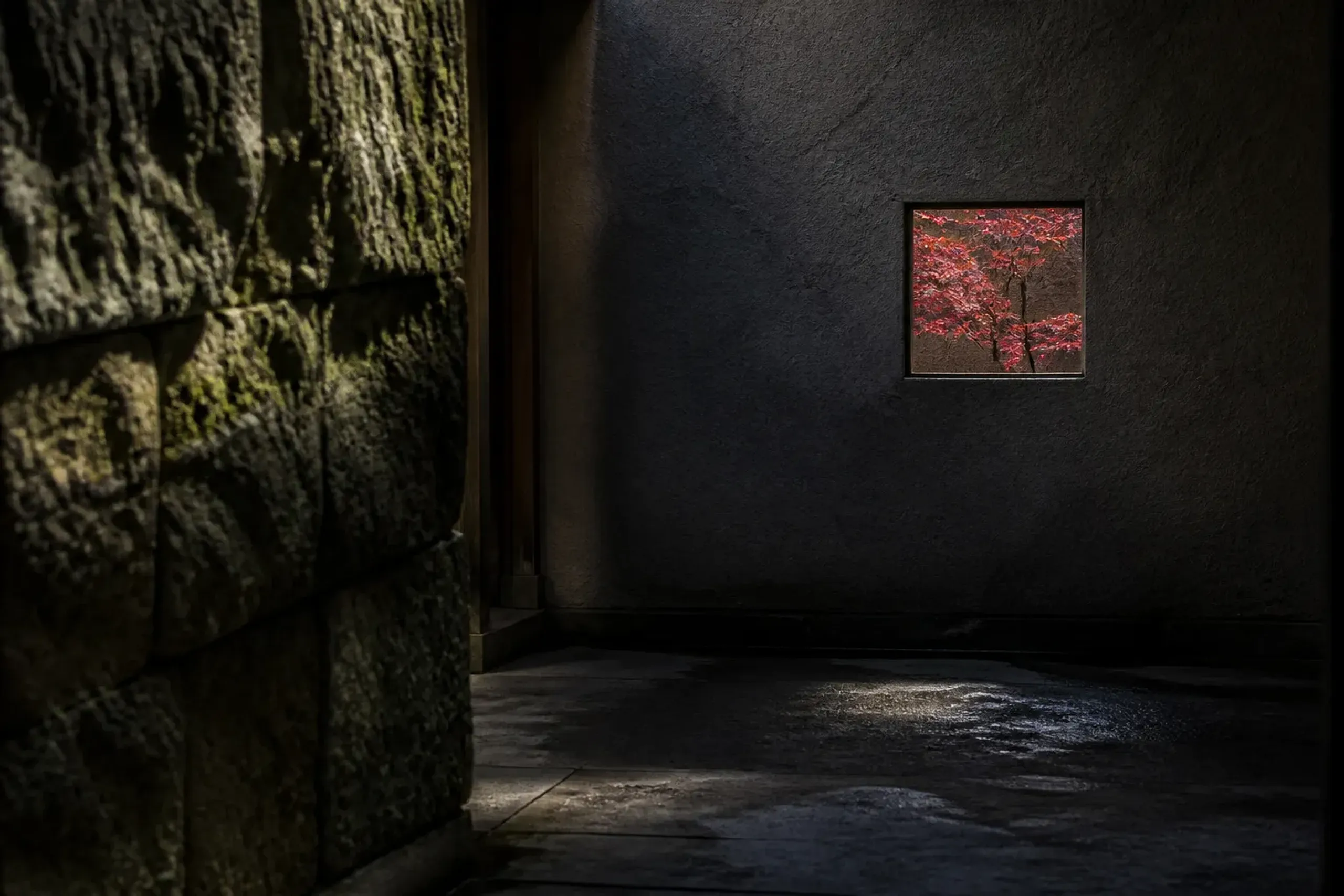
Break any well-run discreet stay into its parts and you find the same three subsystems. They must interlock. A flawless private entrance is undone by a chatty lobby. Perfect service is wasted if the guest walks the wrong corridor.
System One: Space Design
This is the hardware. Concealed or secondary entrances that never touch the main lobby. Vestibules that force a turn, breaking the line of sight from the street. Controlled elevator access — a car that will not stop on a residential floor without a key. In-room dining that removes the need to be seen in a restaurant at all. Private onsen attached to the room, so bathing never becomes a shared, exposed act.
The most refined examples lean on wabi-sabi restraint rather than fortification. Think moss, unpolished stone, a single window framing a maple. The seclusion reads as taste, not security. Nobody looking at the property from outside would guess how thoroughly it hides its guests.
System Two: Service Choreography
This is the software, and it is where Japan is genuinely without peer. The staff who anticipate a need before it is voiced, then withdraw before they are thanked. Arrival timing staggered so two parties never meet in a corridor. Luggage that vanishes at the car and reappears in the suite, hands-free. The name never spoken above a whisper, never written where it can be read.
Good choreography is invisible by design. You should feel cared for and utterly alone at once.
System Three: Guest Conduct
The overlooked subsystem. No architecture survives a guest who behaves conspicuously. Moving quietly, arriving off-peak, understanding where photography is welcome and where it is a trespass — these are not manners, they are load-bearing. In our experience, the guests who disappear most completely are the ones who learned the local grammar of restraint before they arrived.
The Kyoto Case Study: Privacy As A Civic Contract
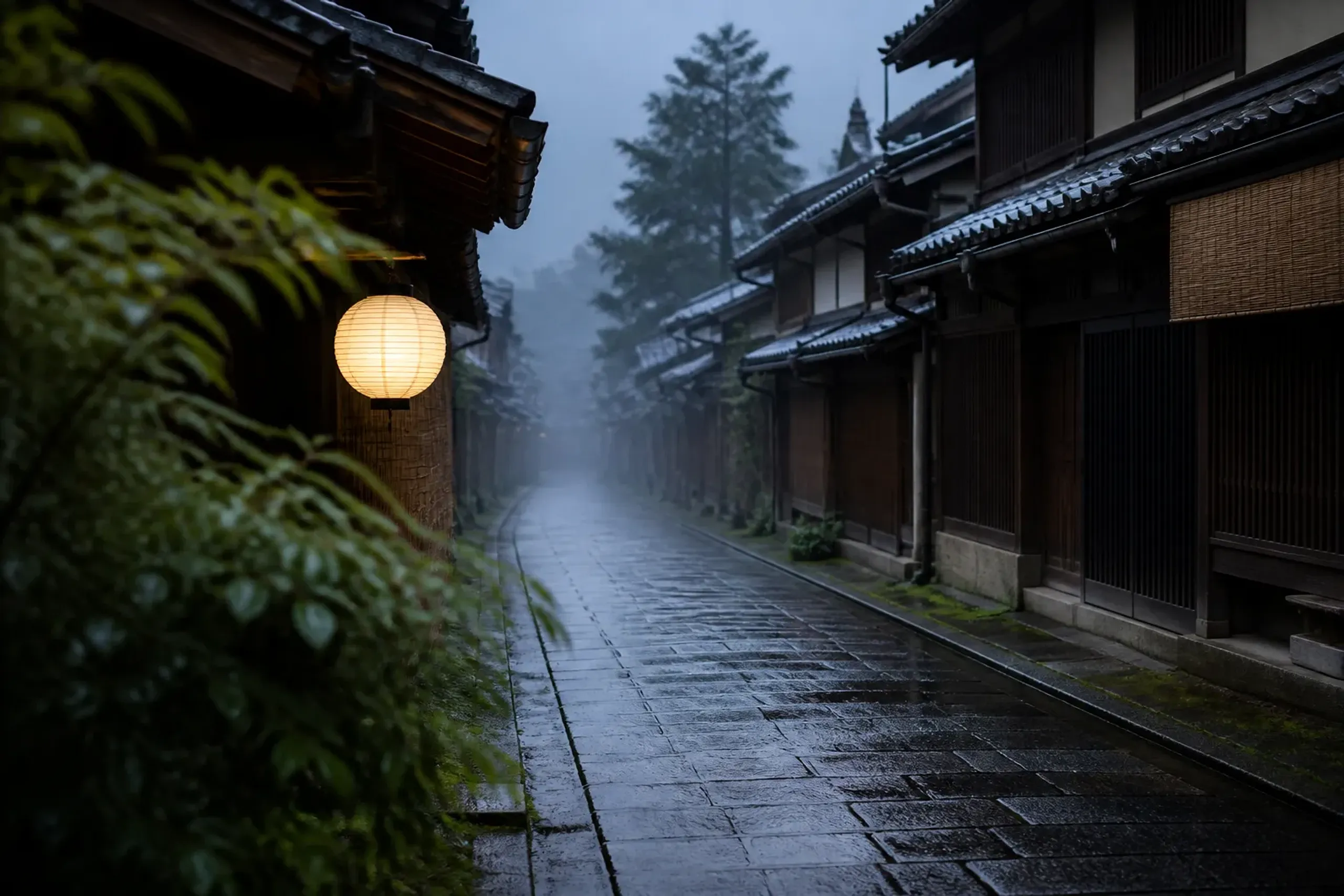
A Gion lane at first light is a private gallery; the same lane at noon is a crowd. Timing is discretion.
Nowhere is this clearer than Kyoto, where discretion has stopped being a courtesy and become law.
Kyoto's official 2026 visitor guidance is explicit. In certain areas, including parts of Southern Gion, prohibited acts include following geiko or maiko, photographing them without permission, trespassing on private property, and photographing private property. The city states plainly that photography is permitted only in designated areas. Kyoto Travel's public message asks visitors not to stop, touch, follow, or take unauthorised photos or videos of geiko and maiko — and points those who wish to see genuine performance toward Gion Corner, which holds programmes daily.
Read that carefully. The city is teaching a two-way discretion. You wish to pass unobserved; so do the residents whose neighbourhood you are walking through. The right to move without being filmed belongs to the maiko as much as to you.
This is not a fringe rule. Japan's Ministry of Land, Infrastructure, Transport and Tourism, through the Japan Tourism Agency, publishes its "Travel Etiquette for the Future" guidelines, complete with pictograms and downloadable English-language materials designed to make correct conduct legible to visitors. The national government has adopted a target, reported in March 2026, to grow the number of regions running overtourism measures from 47 in 2025 to 100 by 2030. Discretion is now policy.
The ethical line: Discretion protects you and the people whose home you are visiting. A guest who trespasses to photograph a geiko has not bought privacy — they have spent someone else's. The finest travellers we work with grasp this instantly.
How To Move Invisibly: The Operational Playbook
Theory is worthless without mechanics. Here is how discretion becomes a set of concrete decisions across a day.
- Timing. Arrive at cultural sites at their quietest hour — dawn or the final hour before closing. Crowds are the enemy of anonymity. Empty rooms grant it for free.
- Routing. Approach venues by secondary entrances where they exist. A back lane in Higashiyama at 7am is a private gallery; the same lane at noon is a scrum.
- Hands-free logistics. Luggage forwarded ahead, never wheeled through a lobby. Nothing marks a party as "arriving" like six cases and a map.
- Reservations under discretion. Bookings held without the guest's name attached to public systems. Confirmation handled privately.
- Quiet entry and exit. Vehicle stopped at the threshold, doors on the concealed side, the walk from car to door measured in seconds, not minutes.
- Photography discipline. Shoot only in designated areas. Never a resident, never a private doorway, never a maiko. The self-restraint reads as class and keeps you out of the frame yourself.
Vehicle Choreography: The Most Underrated Layer
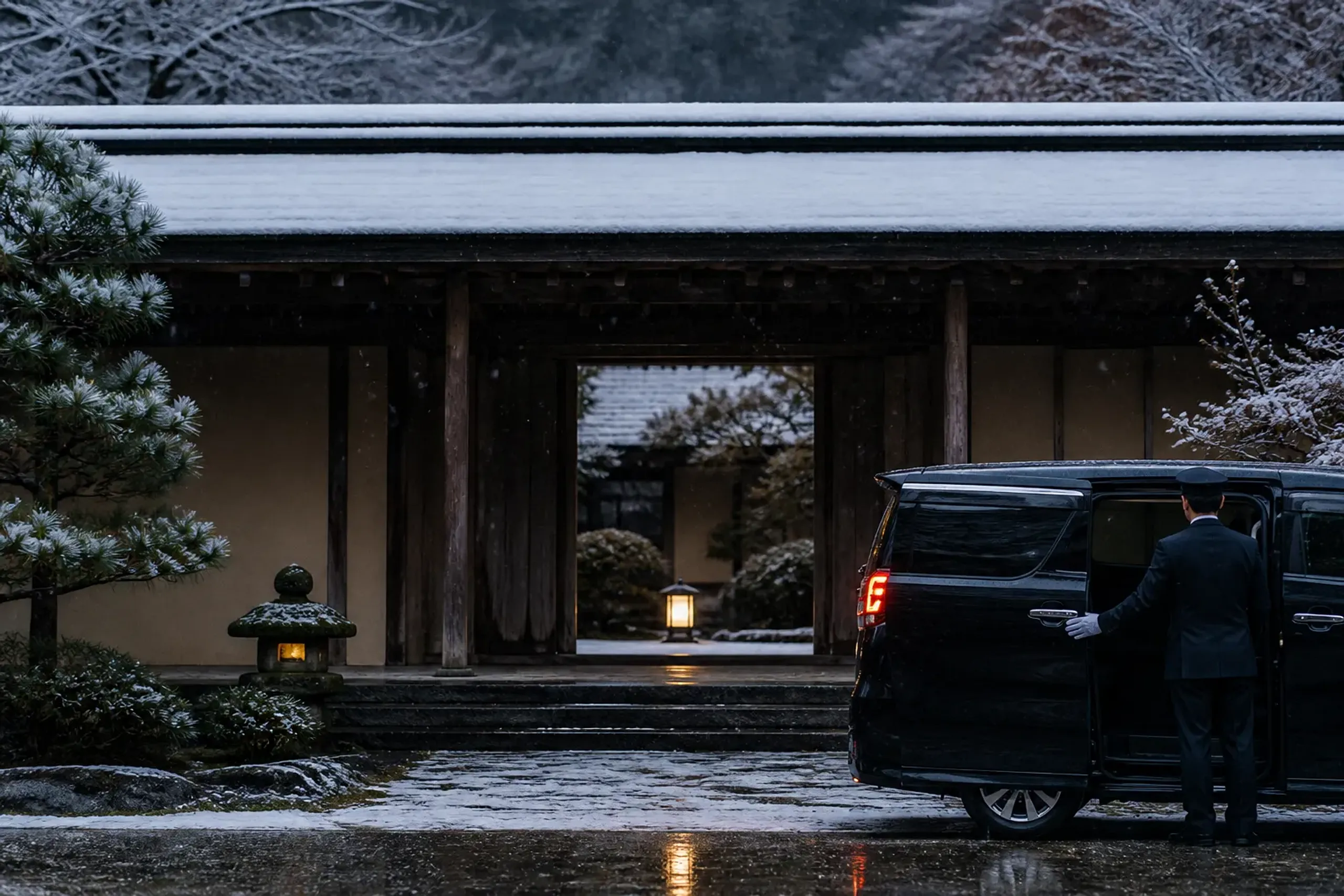
The vehicle stops at the threshold and opens on the sheltered side — a transfer measured in seconds, not minutes.
The car is where most privacy fails. A conspicuous vehicle idling on a public street is a beacon. The choreography of arrival and departure — where the vehicle stops, which door opens, how long the walk is — often matters more than the building itself.
Our private chauffeured transportation is built around this. The fleet is chosen for quiet presence rather than announcement: the Lexus LM 500 and Toyota Alphard for families and small parties, the Mercedes V-Class for executive groups, larger Coaster and Sprinter options when a party grows. Curtained cabins. English-speaking chauffeurs who understand that the door opens on the sheltered side, that the engine stays running, that the goal is a threshold-to-threshold transfer with no exposed pavement in between.
Timing is choreographed against the property. A vehicle should not arrive early and sit. It should appear as the guest reaches the door, and vanish once they are inside. This is the layer competitors most often neglect — and the one that quietly decides whether an arrival was seen.
A Privacy-Tolerance Framework For Choosing A Base
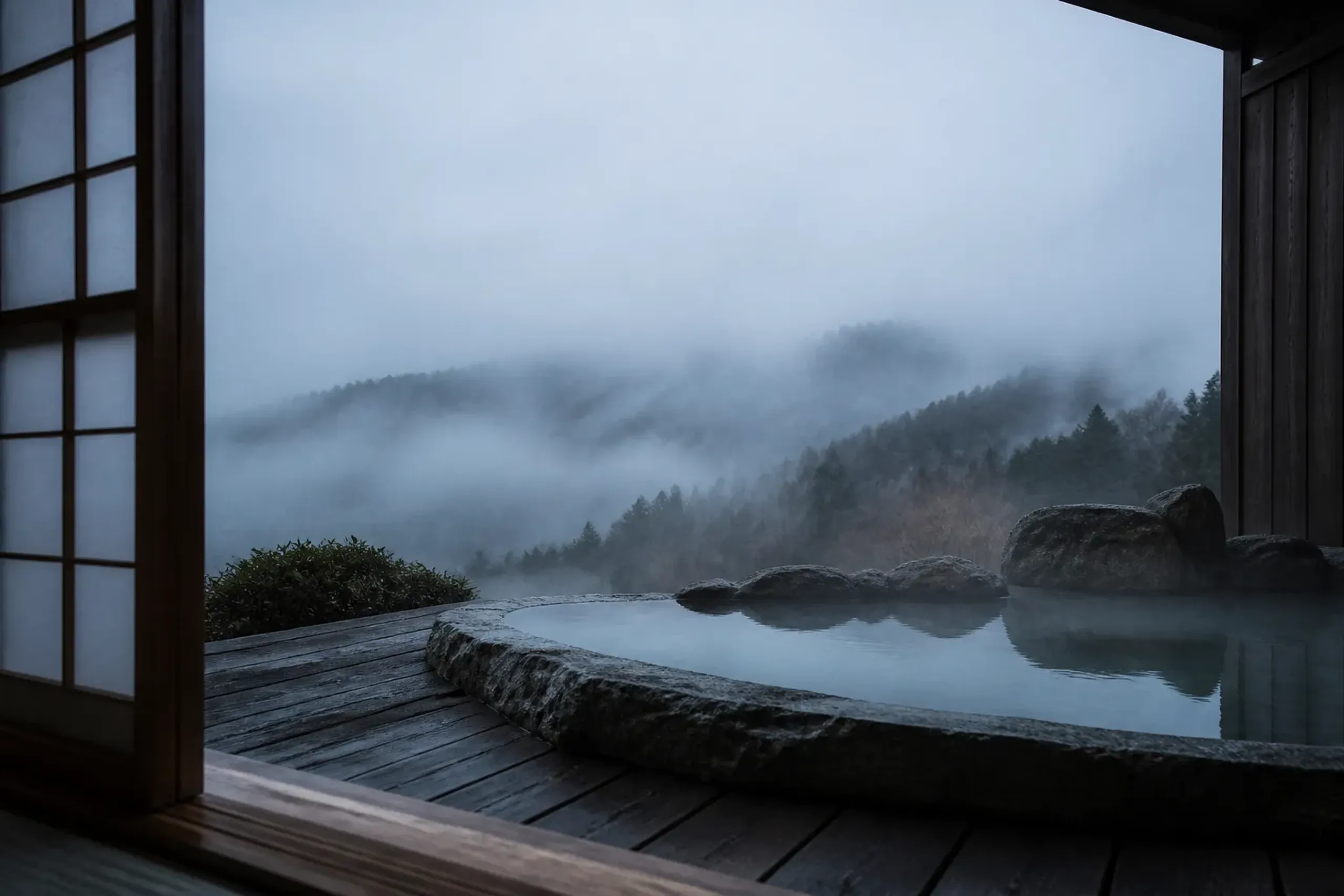
A private bath attached to the room means bathing never becomes a shared, exposed act.
Not every luxury property offers the same grade of discretion. Before committing, we assess a base against a simple matrix. The questions are more useful than any star rating.
| Factor | What To Ask |
|---|---|
| Street exposure | Can the entrance be seen and photographed from a public road? |
| Lobby visibility | Must every guest cross a shared, watched lobby to reach their room? |
| Elevator access | Is floor access key-controlled, or open to any car? |
| In-room dining | Can meals — including full kaiseki — be served in-suite? |
| Private bathing | Is a private onsen or bath attached to the room? |
| Seclusion vs city | Does isolation aid privacy, or does it create conspicuous logistics? |
The 2025 and 2026 openings give this matrix fresh material. Gōra Kadan Fuji opened in July 2025 with 42 suites and villas, drawing openly on an imperial-villa legacy — nature-forward, secluded, and quietly compatible with wabi-sabi restraint. In the cities, the Imperial Hotel Kyoto opened in March 2026, and the Four Seasons Hotel Osaka includes a contemporary ryokan-concept floor, a useful bridge for guests who want Japanese aesthetics without remote-ryokan logistics. On the wellness side, Hoshino Resorts opened KAI Kusatsu in Gunma on 7 June 2026. Each suits a different profile. The matrix, not the brand name, should decide.
Discretion Beyond Travel: Principles You Can Apply Anywhere
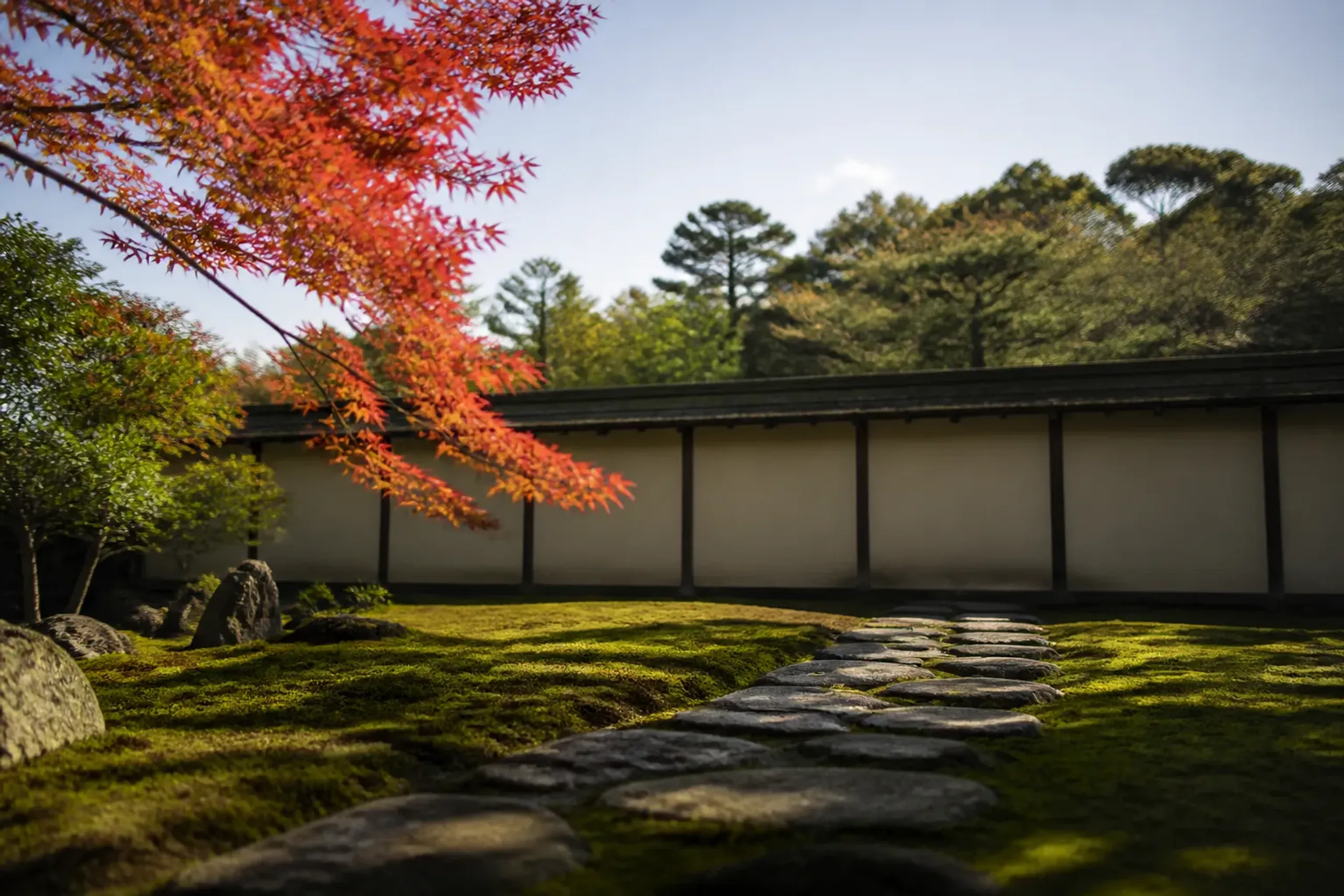
When privacy looks like taste rather than paranoia, it stops advertising itself.
The Japanese method transfers cleanly to residential design and personal security. Three ideas carry the most weight.
Layer, don't fortify. A single guarded gate signals value. A sequence of soft thresholds — a turn, a screen, a change of level — conceals it. Sightline management beats visible defence every time.
Choreograph the arrival, not just the perimeter. The most exposed moment is the transition from vehicle to door. Design that gap to be short, sheltered, and unpredictable in timing. Everything else is secondary.
Make restraint the aesthetic. When privacy looks like taste rather than paranoia, it stops advertising itself. The moss garden hides more effectively than the wall.
Frequently Asked Questions
What is the difference between privacy and exclusivity in Japan?
Exclusivity controls who is allowed in and often signals status publicly. Privacy controls who can observe you and aims to leave no trace that you were present at all. Discreet Japanese design prioritises the second, using layered thresholds and service choreography to keep guests unobserved rather than merely gated.
Can I photograph geiko and maiko in Kyoto's Gion district?
No. Kyoto's official 2026 guidance prohibits following or photographing geiko and maiko without permission and restricts photography to designated areas. Trespassing on and photographing private property is also prohibited in parts of Southern Gion. To see genuine performance, Kyoto Travel directs visitors to Gion Corner, which runs programmes daily.
How does a chauffeur service improve privacy?
A well-choreographed transfer removes the most exposed moments of a day — the walk between vehicle and door. A discreet chauffeur stops at the threshold, opens the sheltered side, and times arrival so the guest is never left waiting in public view. The vehicle's quiet presence matters as much as its comfort.
Which new 2025–2026 properties suit privacy-focused travellers?
Gōra Kadan Fuji, opened July 2025, offers secluded suites and villas with an imperial-villa heritage. The Imperial Hotel Kyoto opened in March 2026, and KAI Kusatsu opened in June 2026 for onsen-led slow travel. The right choice depends on your privacy-tolerance matrix, not on brand recognition alone.
Why Choose Japan Royal Service
Discretion is not a feature we add at the end. It is the frame we build the entire journey inside. Our concierge treats guest identity and itinerary as confidential without exception — the single value that matters most to the travellers we serve, whatever their tier.
What we bring is the interlock. Space, choreography, and conduct handled as one system rather than three loose promises. Our team at Japan Royal Service coordinates tailor-made itineraries with the quiet-entry protocols, private routing, and threshold-timed transfers that make invisibility real rather than aspirational. We also ground every plan in current, official guidance — because true discretion protects residents as scrupulously as it protects our guests. That is the Japan that ordinary search will not surface for you, and it is the one we know well.
Where competitors publish etiquette checklists, we operate the machinery beneath them.
If you are planning a stay where being unseen matters as much as being cared for, reach our team privately via WhatsApp or LINE, or contact us here, to begin a confidential conversation.