In this guide
- 01Confirmed For One Scene, Not The Whole Film
- 02The White Heron: Legend, Symbol, And A More Grounded Reading
- 03Ōkuninushi And Sukunahikona: A Myth With An Underwater Channel
- 04Dōgo Onsen Honkan History: What You’re Actually Looking At
- 05When Should A Luxury Traveler Visit Dōgo Onsen For Quiet, Not Crowds?
- 06How Do You Plan A Three-Bath Route In Dōgo Without Feeling Rushed?
- 07Natsume Sōseki, “Botchan’s Room,” And The Sign That Still Scolds You
- 08Dōgo In 2026: Art Installations And Night-Walk Energy
- 09Getting To Dōgo Onsen, Ehime: The Clean, Low-Stress Way
- 10What We Can Coordinate Privately For Dōgo Onsen Visits
- 11Plan Your Private Dōgo Onsen Visit
- 12Frequently Asked Questions
The drum comes first. Three times a day, high on the roof of Dōgo Onsen Honkan, a mechanical heron stirs inside a small turret named for a shaking bird. It calls out over the arcade and the tram stop below. Brief. Metallic. Impossible to forget.
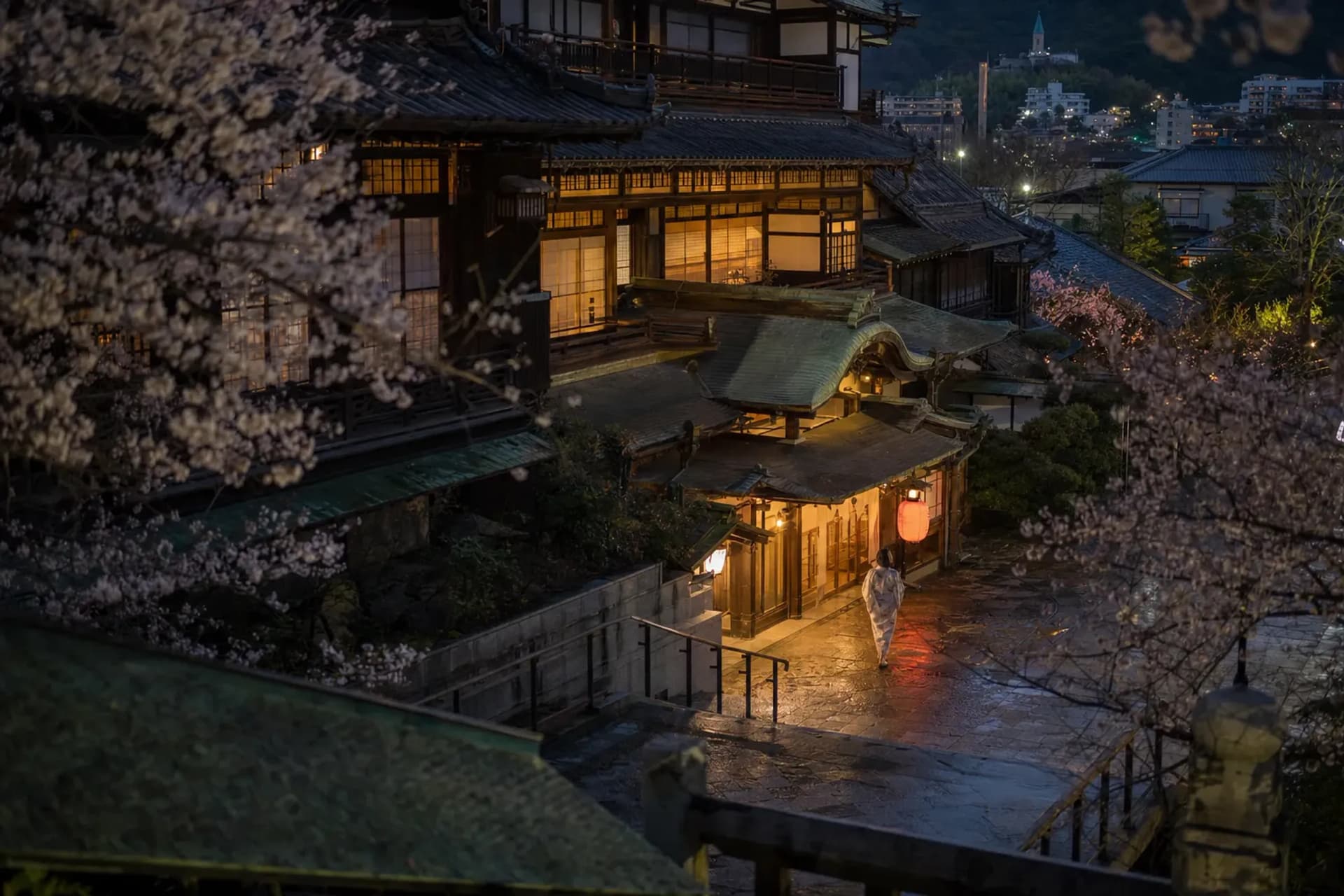
That heron is the town’s true signature—not a slogan, but a motif you begin to notice in carvings, in signage, in a hundred quiet details once you start looking with the kind of patience Japan rewards.
Dōgo Onsen, in Matsuyama, Ehime, also carries a different sort of symbol: the persistent habit of being described as “the model” for the bathhouse in Spirited Away. It’s close. But it isn’t the clean truth. And the honest version, as so often in Japan, is the better one.
Confirmed For One Scene, Not The Whole Film
One Studio Ghibli art director has stated he used Dōgo Onsen Honkan as reference when drawing the exterior of the Spirited Away bathhouse, while Hayao Miyazaki said there was no single model, though Dōgo was included.
Both statements can be true at once. They also point to a more rewarding way to visit: treat Dōgo as a reference point, not a scavenger hunt. Come for the building’s real history, and let the film echo wherever it wishes to.
What’s on record is unusually specific. In July 1998, Studio Ghibli staff visited Dōgo Onsen on a company trip.
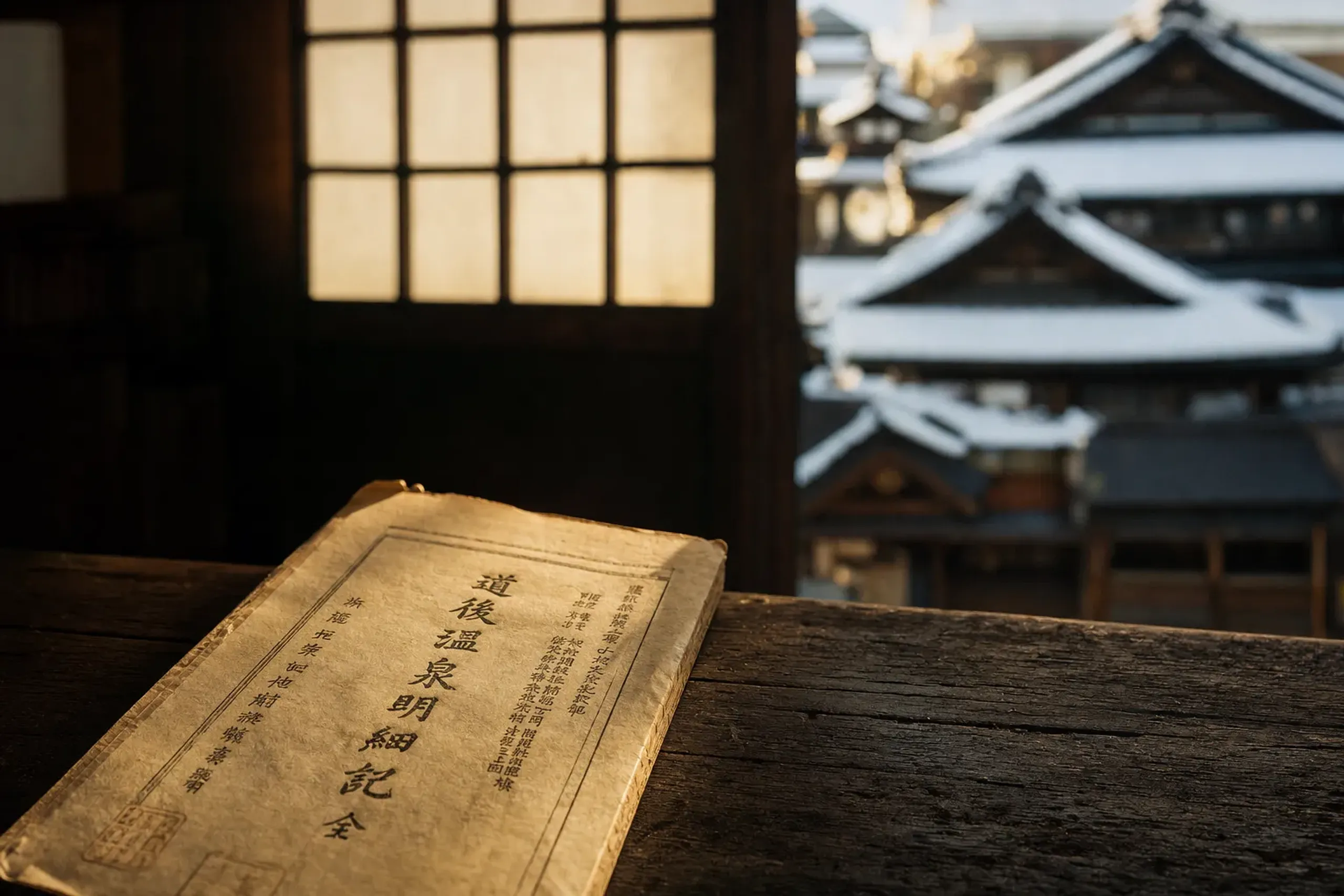
Art director Takeshige Yōji later stated directly that he used the building, specifically, as reference when drawing the exterior of Aburaya.
Separately, Miyazaki is on record via the studio’s own published diary: asked which onsen was the actual model, he answered that there was no single specific one—that many hot springs went into the design—but that Dōgo is definitely among them. A different claim, a different weight, the same destination.
The White Heron: Legend, Symbol, And A More Grounded Reading
The oldest story attached to Dōgo begins with injury. A white heron, its leg hurt, finds hot water rising between the rocks and soaks the wounded limb in the warmth. Then it flies away, restored and energetic. A fast cure. A clean image.
This legend is recorded in a regional gazetteer, the Yōyō Gunkyō Rigenshū. In the telling, people who witnessed the heron began bathing there too, finding that the water relieved fatigue and aided recovery from illness. We treat that phrasing as tradition and folklore—not a modern claim about the water itself.
Near the Dōgo Onsen tram station, a stone marker is said to indicate where the heron landed. It’s small. Easy to walk past. That is precisely the point: Dōgo’s finest details rarely shout.
There is also a wry, scholarly alternative. One theory holds that the white heron was a symbol of the Kōno clan, a historical ruling family of the region, and that the heron-discovery story may encode a real event—perhaps a new spring replacing an earlier one lost to an earthquake—rather than pure myth.
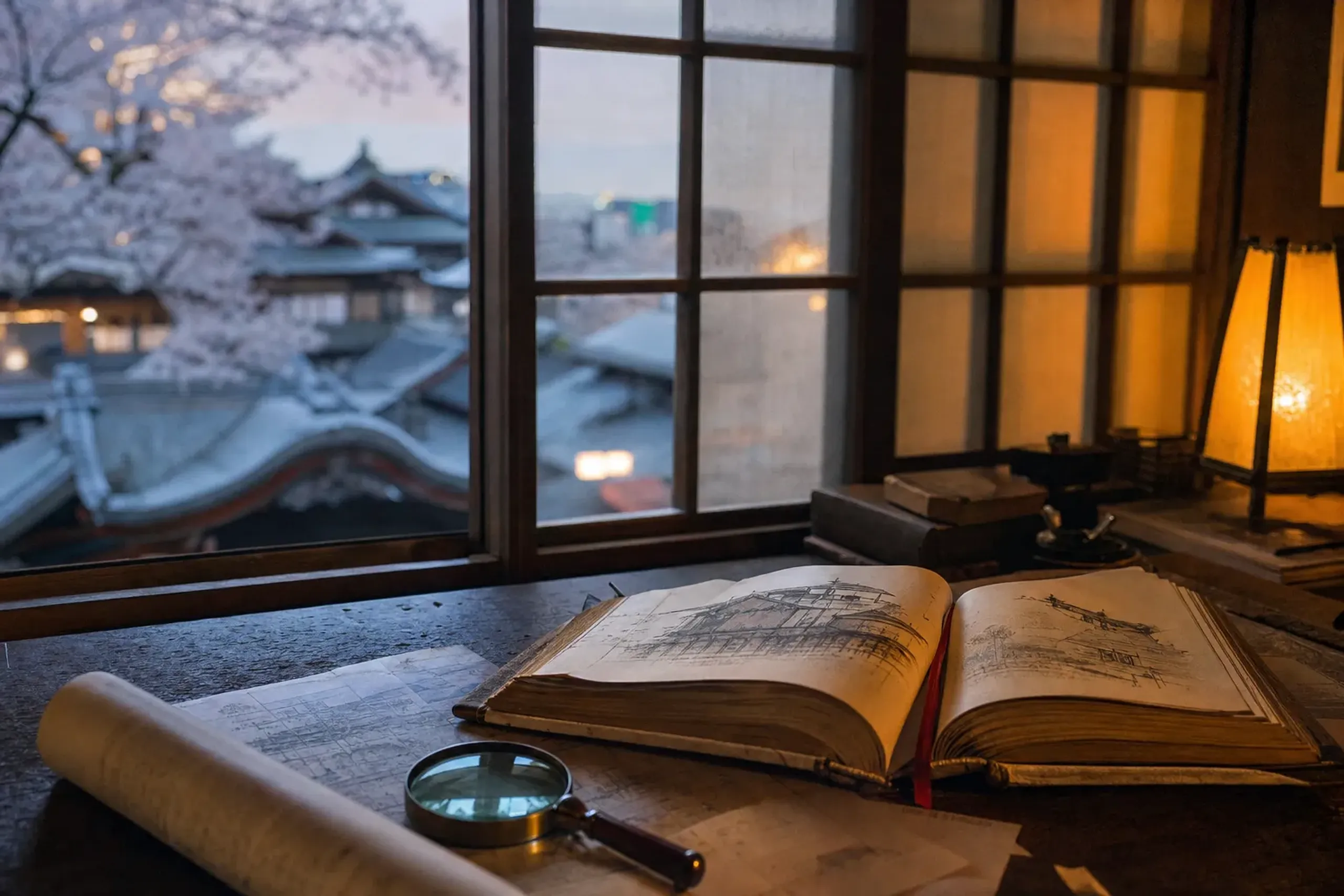
A theory, not a verdict.
Either way, the heron became the site’s enduring emblem. You will see it repeated throughout the Honkan, and that rooftop turret transforms the symbol into a daily ritual—timekeeping by birdcall rather than by phone.
Ōkuninushi And Sukunahikona: A Myth With An Underwater Channel
Another story attached to Dōgo is larger and stranger still. It tells of the god Ōkuninushi, who guided hot water from Beppu, on Kyūshū, through a hidden underwater channel all the way to Dōgo. A long distance. An invisible route.
In the myth, Ōkuninushi cradles the ailing god Sukunahikona in his palm and soaks him in the water. Sukunahikona recovers his strength at once—and then, overjoyed, dances atop a stone.
It reads like a scene composed to be remembered in fragments: a hand, a stone, a sudden return of vigor. For the traveler, it is also a reminder of what Dōgo truly is. Not a “facility,” but a place where stories have been used to explain warmth, luck, and timing for centuries.
Dōgo Onsen Honkan History: What You’re Actually Looking At
Dōgo Onsen Honkan is a public bathhouse in Matsuyama, Ehime, widely described as one of Japan’s oldest and most storied hot springs.
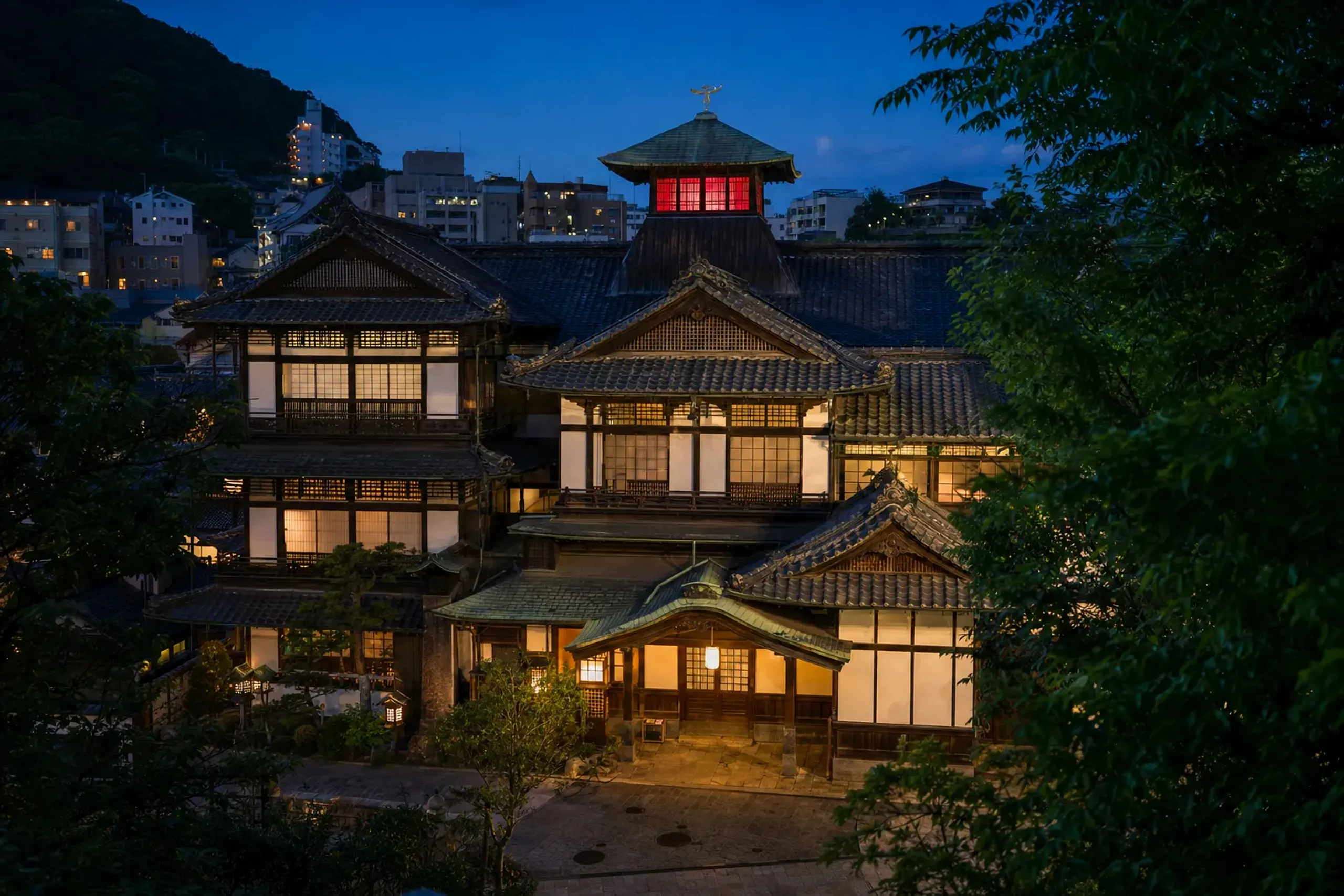
It is also a layered building with dates you can trace—useful, when you wish to see more than a postcard.
The main wing is the Kami-no-yu Honkan, completed in 1894. Three storeys: bathing on the ground floor, rest rooms above. The silhouette is instantly recognizable, even before you learn why.
In 1899, a second wing was completed—the Yūshinden. This is Japan’s only hot spring bathing facility built exclusively for imperial family use, and it contains a room known as the Throne Room. Quiet protocol, made architectural. For our guests, this imperial-class lineage is part of what elevates a Dōgo visit from a stop to an experience.
In 1924, the South Wing was completed. The structure you see today, then, is not a single-era creation. It is a public building that kept being added to—carefully, patiently—without ever losing its center of gravity.
Key fact: Dōgo Onsen Honkan was designated Japan’s first Important Cultural Property among public bathhouses in December 1994.
Most recently, a 5.5-year preservation and restoration project was completed in July 2024. Matsuyama City states that from July 11, 2024, Dōgo Onsen Honkan resumed full-building operation, including the upper floors with their rest rooms. That matters if your last mental image is one of scaffolding.
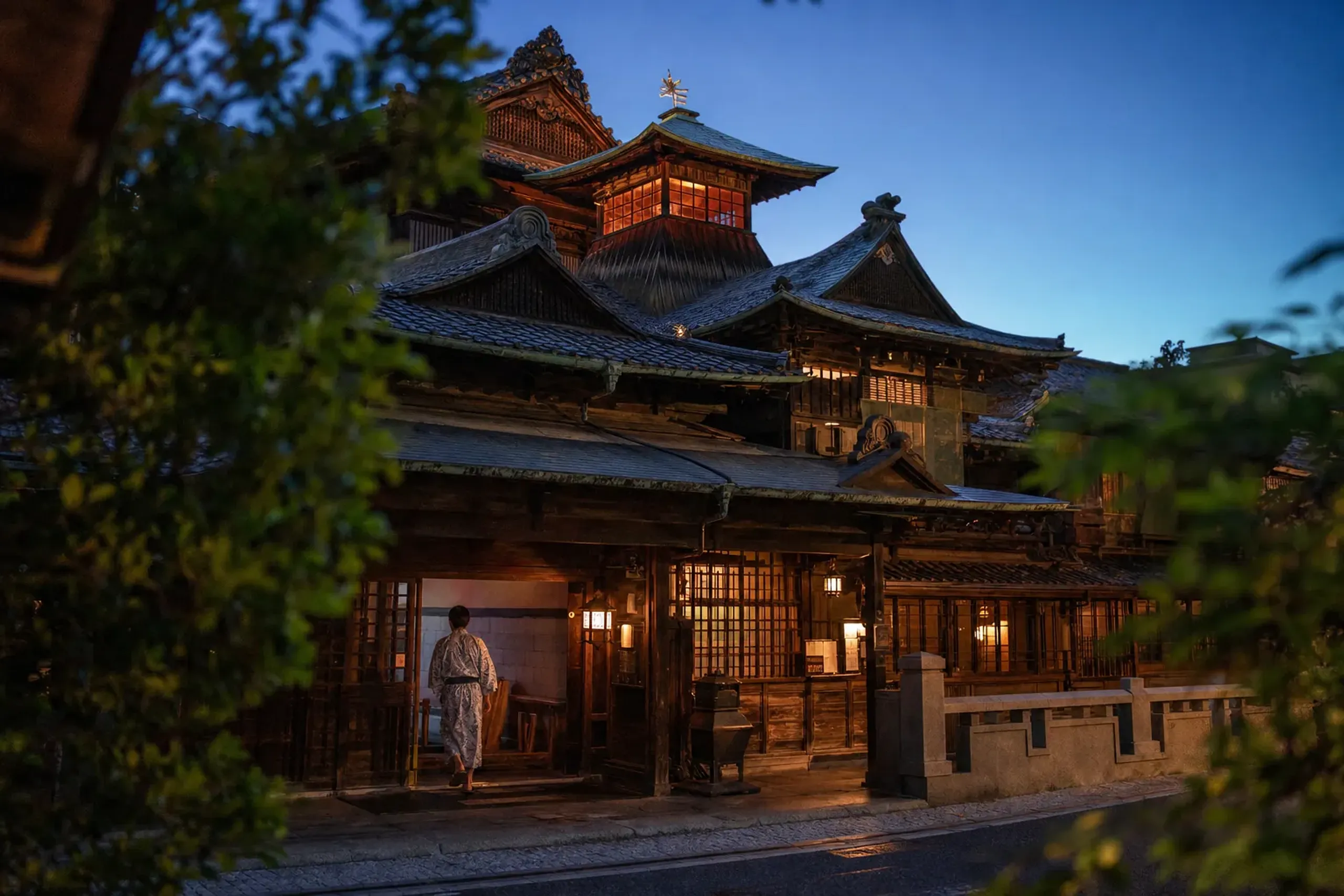
It is fully back.
A little practical orientation helps. The JNTO positions the Dōgo area as Matsuyama’s main tourist hub, roughly a five-minute walk from the Dōgo Onsen tram stop via a covered shopping arcade. Close. Human-scale. Easy to savor without rushing.
When Should A Luxury Traveler Visit Dōgo Onsen For Quiet, Not Crowds?
Visit on weekday mornings or later evenings, and steer clear of weekends and festival days, for the calmest Dōgo Onsen experience.
Dōgo is compact, which is part of its charm. It also means crowd patterns reveal themselves quickly. In our experience, the simplest strategy for privacy is not some elaborate hack—it is choosing hours with less foot traffic, then moving on foot at an unhurried pace.
Build the visit around one unmissable moment: taking in the Honkan exterior before you bathe. Do it when the light is soft and the arcade is still stretching awake. A short walk. A long memory.
If you want Dōgo at its liveliest, aim for the event dates deliberately rather than colliding with them by accident. The Dōgo area promotes the Dōgo Onsen Festival 2026 (道後温泉まつり), positioned by Matsuyama City as a customary event signaling the start of spring in Dōgo. That is a cultural win—simply not a quiet one.
The official Dōgo Onsen site also published a notice for the Dōgo Onsen Summer Festival 2026 (道後温泉夏まつり2026), indicating that the event has ended.
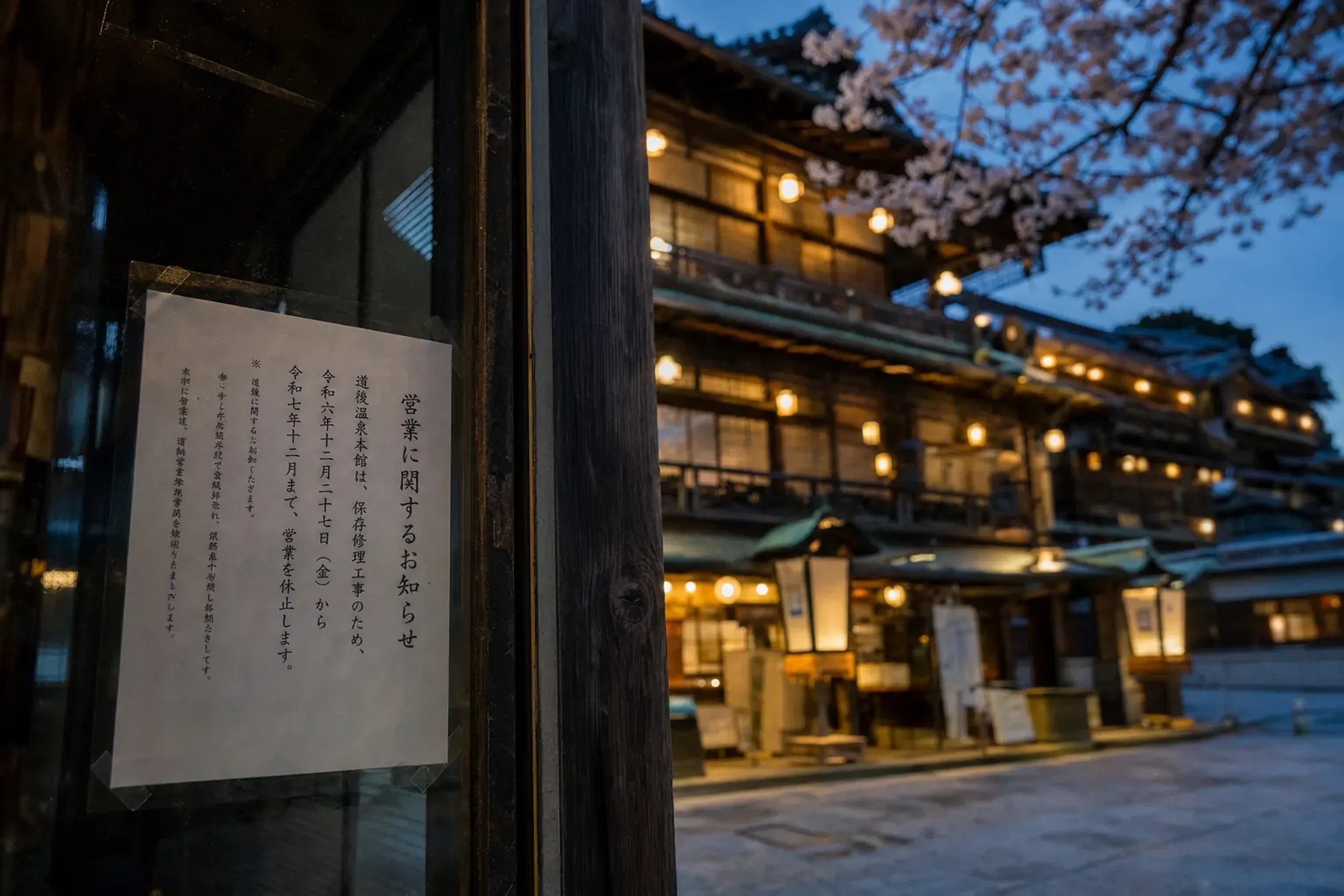
Such notices are useful signals: the calendar in Dōgo is active, and timing shapes the mood entirely. Knowing precisely what to experience here, and in which month—the Japanese sense of shun, of perfect seasonality—is exactly the kind of judgement a well-planned itinerary buys you.
How Do You Plan A Three-Bath Route In Dōgo Without Feeling Rushed?
Plan one main bathhouse visit, then add a single lighter stop and a long break for tea or a rest room—rather than attempting all the baths back-to-back.
Dōgo works best when you treat it as a district, not a single ticket. Many travelers focus on the Honkan alone, then leave the moment they’re dry. A missed opportunity.
The “three public baths” concept in Dōgo is simple in theory and easy to overdo in practice. The reward lies in contrast: different architecture, different pacing, different atmosphere across the area’s core bathing options (the Honkan among them). Space them out.
Our concierge team at Japan Royal Service typically suggests a rhythm like this for discerning travelers: arrive, walk the arcade slowly, read the Honkan exterior like an architectural sketchbook, bathe once, then rest—properly—before deciding whether a second bath adds anything at all.
- Start with the exterior. It is where the Ghibli reference is most tangible, and it sets the tone for everything after.
- Choose one bathing session to do beautifully. Quiet focus beats checking boxes.
- Reserve time for the upper-floor rest rooms, now that full-building operation has resumed as of July 11, 2024, per Matsuyama City.
- Keep footwear and small-towel logistics simple. Less fumbling, more calm.
We avoid publishing bathing fees in our journal because experiences vary by room and by timing, and because many guests prefer a private, tailored plan.
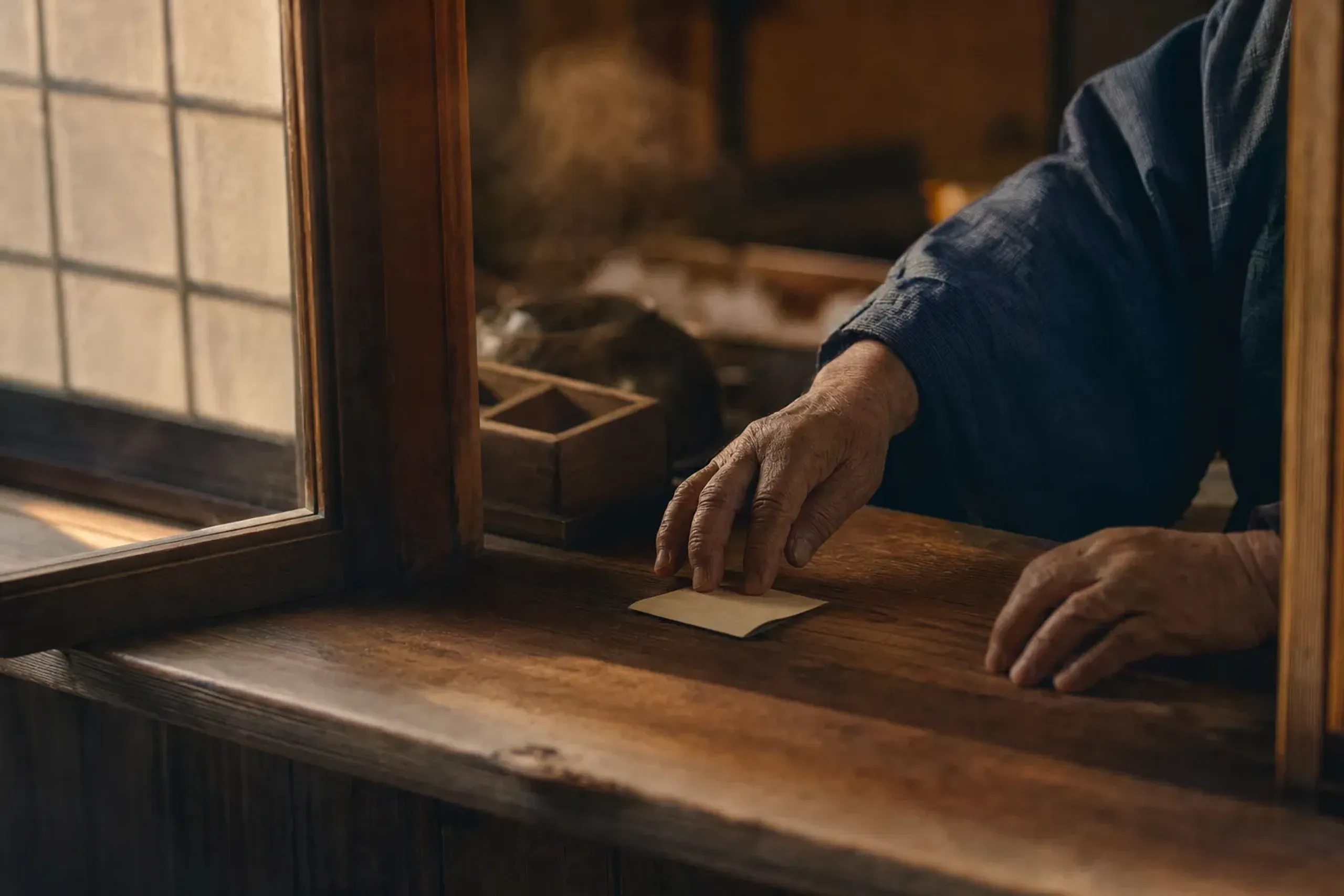
If you would like a clear, personal outline, speak with our team directly—we will shape it around a bespoke itinerary built for your rhythm, not the crowd’s.
Natsume Sōseki, “Botchan’s Room,” And The Sign That Still Scolds You
Literature sits close to the surface in Matsuyama, and Dōgo is one of the places where it turns physical. In 1895, the novelist Natsume Sōseki arrived in Matsuyama as an English teacher, just one year after the Honkan’s main building was completed. Timing like that becomes mythmaking.
Sōseki visited Dōgo in October 1895 with the fellow writer Masaoka Shiki. Two names. One outing. Enough to anchor a town’s self-image for generations.
In 1966, a specific third-floor corner room was named “Botchan’s Room” by Sōseki’s son-in-law, the literary figure Matsuoka Yuzuru. It is a rare kind of commemoration: a later generation pinning a precise room to a novel’s aura.
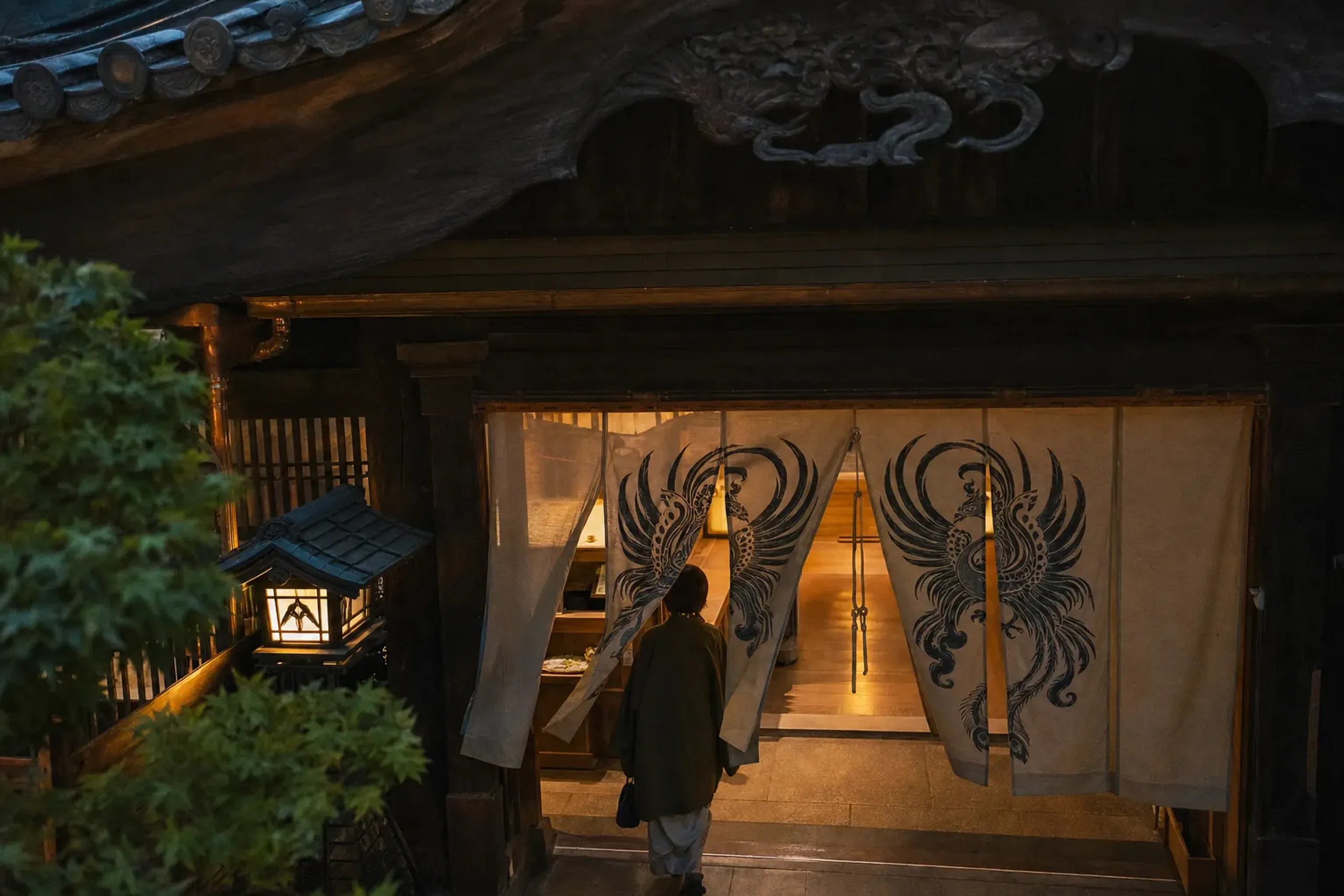
There is also a detail that makes visitors smile because it refuses to be sentimental. The Kami-no-yu bath is said to be the model for the bath where the protagonist in Botchan is depicted swimming—and a “Botchan, no swimming allowed” warning sign still hangs on the wall as a direct allusion. A small sign. A sharp personality.
Dōgo In 2026: Art Installations And Night-Walk Energy
Dōgo’s story did not end with Meiji-era timber and literature. The district carries a contemporary layer that suits the repeat visitor who has already done Tokyo and Kyoto twice over. This is where many others stay vague. We will not.
The official site for DOGO ART describes the project “Mika Ninagawa with EiM × Dōgo Onsen DOGO ART”, held with the creator Mika Ninagawa and the creative team EiM. That single collaboration changes the visual temperature of the town—suddenly there is color, light, and modern composition set against the Honkan’s steady, unchanging silhouette.
An Ehime local television report (ITV / TBS NewsDig) cited Matsuyama City saying that since the event began (reported as starting the prior October), it has produced synergistic effects such as increased external-bath use and longer tourist dwell time, with further developments under consideration. Translation: people linger. And when they linger, the crowds shift.
If you are planning a 2026 visit, treat Dōgo as an evening district as much as a daytime one.
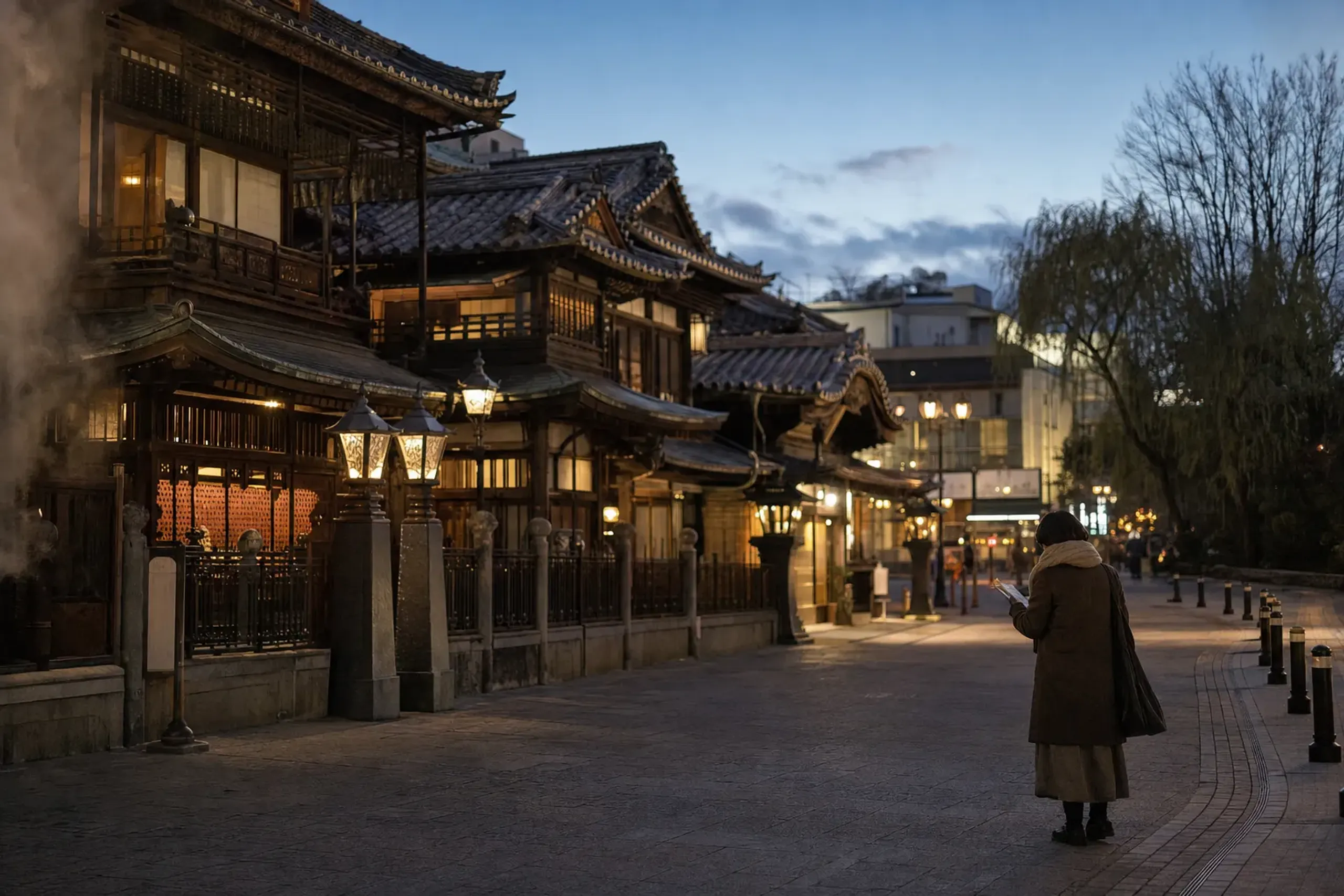
A night walk through the arcade, taken after a bath, can feel almost private when you time it away from the obvious surges—the kind of hidden, hard-to-find Dōgo that a good guide knows and a guidebook cannot.
Getting To Dōgo Onsen, Ehime: The Clean, Low-Stress Way
Dōgo Onsen Honkan sits about a five-minute walk from the Dōgo Onsen tram stop, reached via a covered shopping arcade.
That short approach is part of the charm. You arrive gradually—through shops and street sounds—and then the Honkan appears like a stage set that never needed a stage.
For our travelers, the real friction is rarely those final five minutes. It is the transfers, the luggage, and the timing across a day that already holds its own commitments. This is where private ground transport becomes less about luxury and more about sanity.
If you want a calm arrival and a quiet departure, our team can advise on routing and pacing with private transportation matched to your party size and luggage profile. Simple. Watchful. Without drama.
What We Can Coordinate Privately For Dōgo Onsen Visits
Japan Royal Service supports Dōgo visits with guiding, transfers, and bathing reservations, all coordinated privately once you inquire.
We keep our public pages informational by design. Many venues and programs carry rules, limits, and etiquette expectations that are best handled quietly, guest by guest.
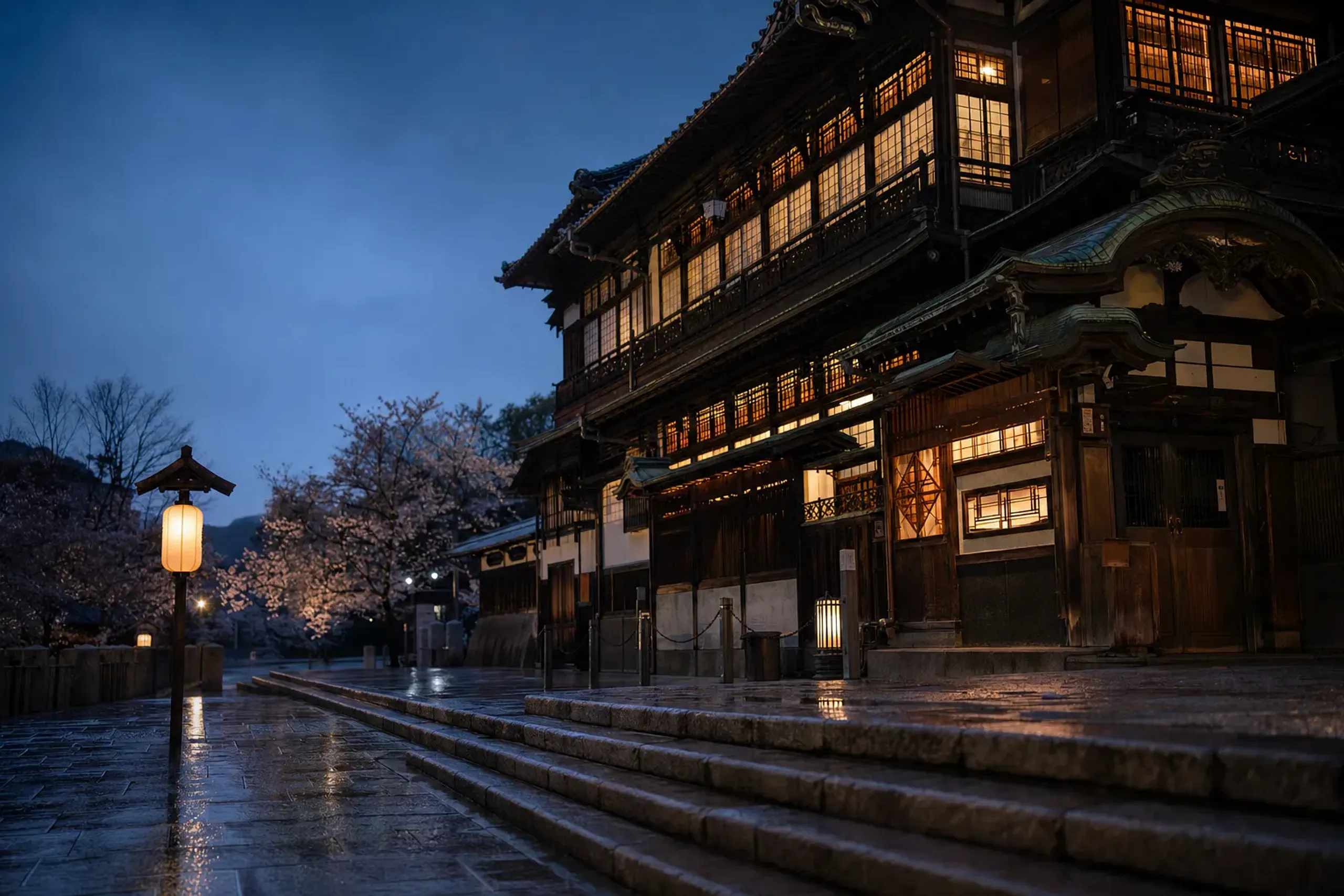
What we focus on is how Dōgo feels in real time: which arrival hour keeps your group unhurried, how long to rest between walks and bathing, and where a shokunin-level detail—architecture, craft, or a private explanation—turns a famous place into a personal one. It is the sort of introduction-only access, and the moss-and-timber restraint of the wabi aesthetic, that reveals a Japan Google cannot find.
Discretion, for us, is never an add-on. It is the baseline. Your identity, your schedule, and your preferences remain contained—especially in smaller towns, where word travels quickly.
Plan Your Private Dōgo Onsen Visit
Dōgo rewards those who arrive with intention: the right hour, the right pace, the right quiet corner known only to those who know the town from the inside. If you would like your visit shaped around calm rather than crowds—and held in complete confidence—contact us here to begin a tailored conversation.
Frequently Asked Questions
Is Dōgo Onsen Really The Model For Spirited Away?
Dōgo Onsen Honkan is confirmed as a reference for the bathhouse exterior drawings by a Studio Ghibli art director, while Hayao Miyazaki said there was no single model, though Dōgo was included.
This is why we frame the connection as “confirmed for one scene, not the whole film.” It is more accurate—and it makes the visit far more interesting.