In this guide
- 01The 'Eternal' Flame That Was Relit
- 02When Was the Flame Relit? The Honest Timeline
- 03The Mother Mountain of Japanese Buddhism
- 041571: What Nobunaga Did Here
- 05The Marathon Monks of Mount Hiei
- 06Is Summer a Good Time to Visit Enryaku-ji?
- 07Getting Between the Three Precincts
- 08Frequently Asked Questions
- 09Why Choose Japan Royal Service
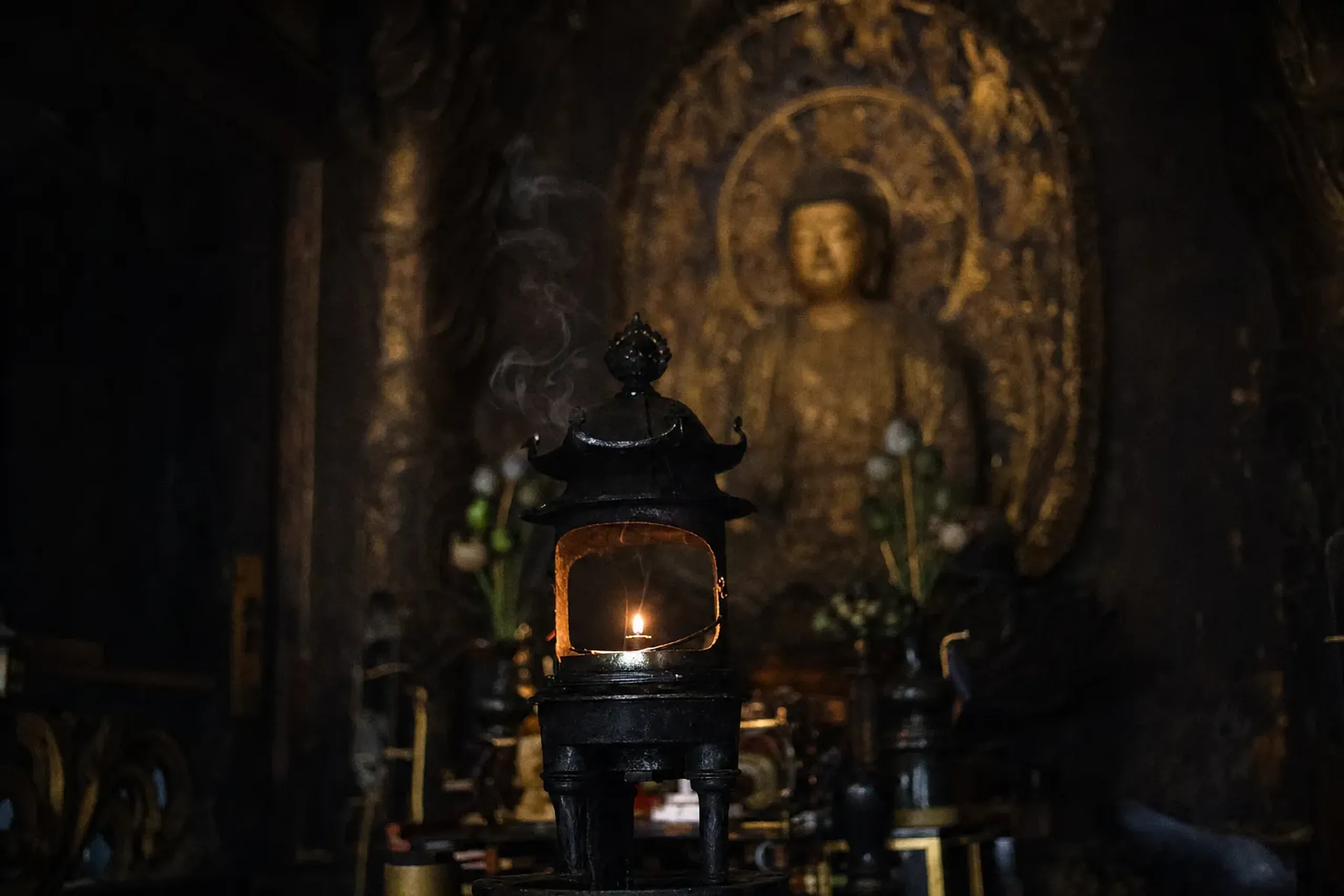
Step into the dim of Konpon Chūdō and the light finds you at eye level. Not above. Not behind an altar rail set high for distant reverence. The flame of the inner sanctum burns on the same plane as the worshipper's gaze, so that the eye meets the Yakushi image and the fire together. The temple explains this plainly: the arrangement expresses that anyone may become a Buddha. You stand level with the sacred. That is the point.
This is the heart of Mount Hiei, the mountain that shaped Japanese Buddhism, and the flame at its centre carries a story far stranger than the one usually told. At Japan Royal Service, we think the true account is better than the legend.
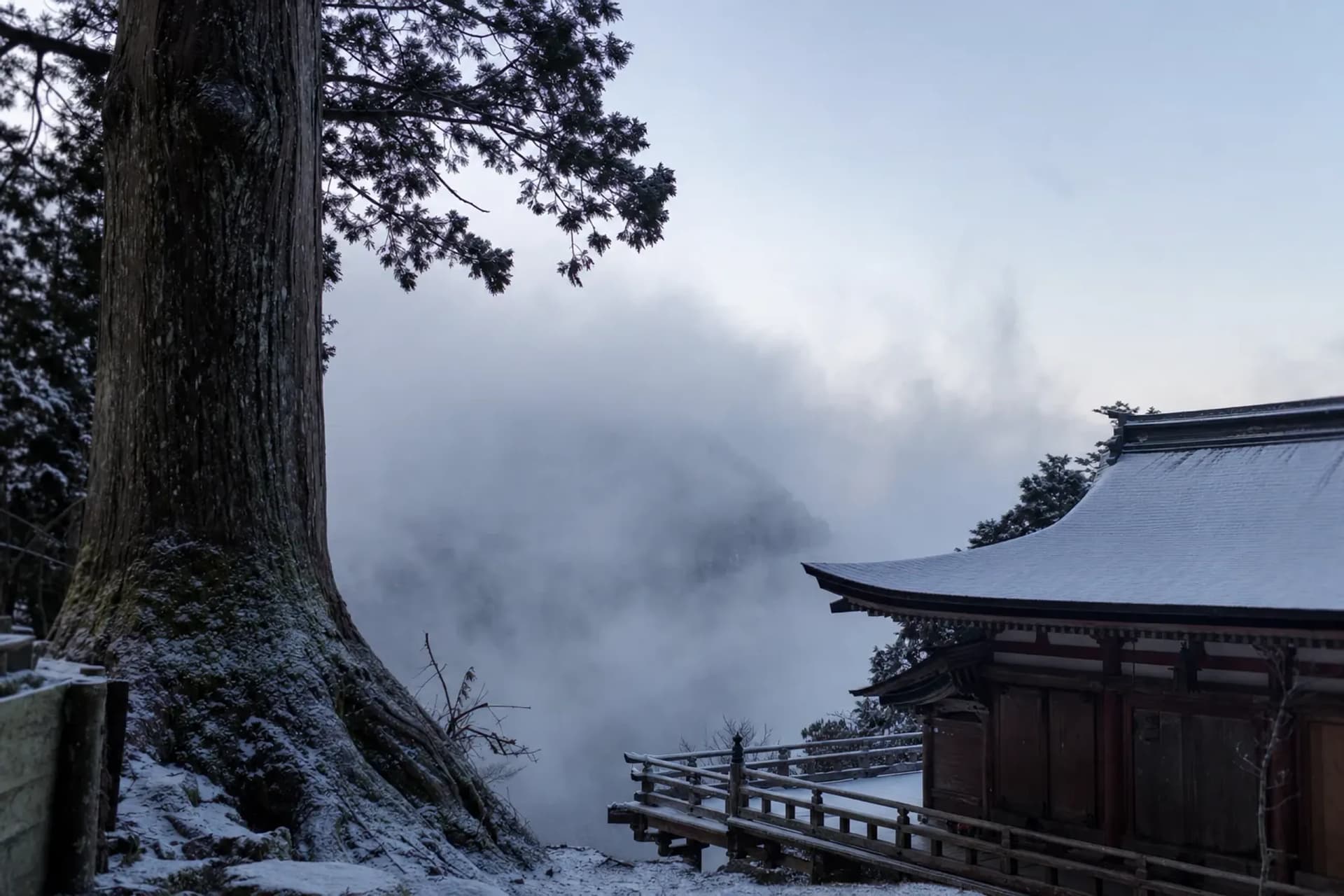
Visiting now (through 2030): Konpon Chūdō is in a major preservation repair that began in 2016. Shiga Prefecture's notice lists 30 September 2030 as the end date. The exterior is wrapped in scaffolding; the interior remains open for worship, and a viewing stage lets you watch the roof work up close. Some sources note an interior access change from January 2026 — our concierge team verifies the current status before every visit.
The 'Eternal' Flame That Was Relit
The popular line says Enryaku-ji's lamp, the Fumetsu no Hōtō, has burned without a break since Saichō first lit it in 788. Unbroken for more than twelve centuries. It is a beautiful claim. It is also not quite what the record shows.
Here is what the sources actually describe.
The flame was divided — shared out — to Yamadera in distant Yamagata, far to the north. Then, in 1521, Yamadera burned, and its light nearly or fully went out. The temple sent to Mount Hiei for a new division; Japanese sources date one such sharing to 1543.
Then came 1571. Oda Nobunaga ordered Mount Hiei burned, and the lamp of Enryaku-ji itself was lost. To relight it, the monks turned to Yamadera — the very temple that had once received Hiei's flame — roughly 700 kilometres away. The light travelled back.
So the continuity is not one wick guarded for twelve hundred years. It is a chain. A light kept alive precisely because it was given away, carried north, then carried home. That, to us, is the deeper truth of the thing.
When Was the Flame Relit? The Honest Timeline
The sources disagree, and we will not pretend otherwise. One account places the relighting around 1589; others tie it to the great rebuilding under Tokugawa Iemitsu, which produced the present main hall in 1642. We present both because both appear in the record.
Set out plainly, the chain of dates reads like this:
| Year | What the record describes |
|---|---|
| 788 (tradition) | Saichō lights the lamp before the Yakushi image. |
| 1521 | Yamadera burns; its shared flame nearly or fully goes out. |
| 1543 | A fresh division of the flame sent from Mount Hiei to Yamadera. |
| 1571 | Nobunaga burns Mount Hiei; Enryaku-ji's own flame is lost. |
| 1589 / 1642 | Sources differ: relit from Yamadera around 1589, or during Iemitsu's rebuilding (present hall, 1642). |
Today the light is divided to around forty temples across Japan.
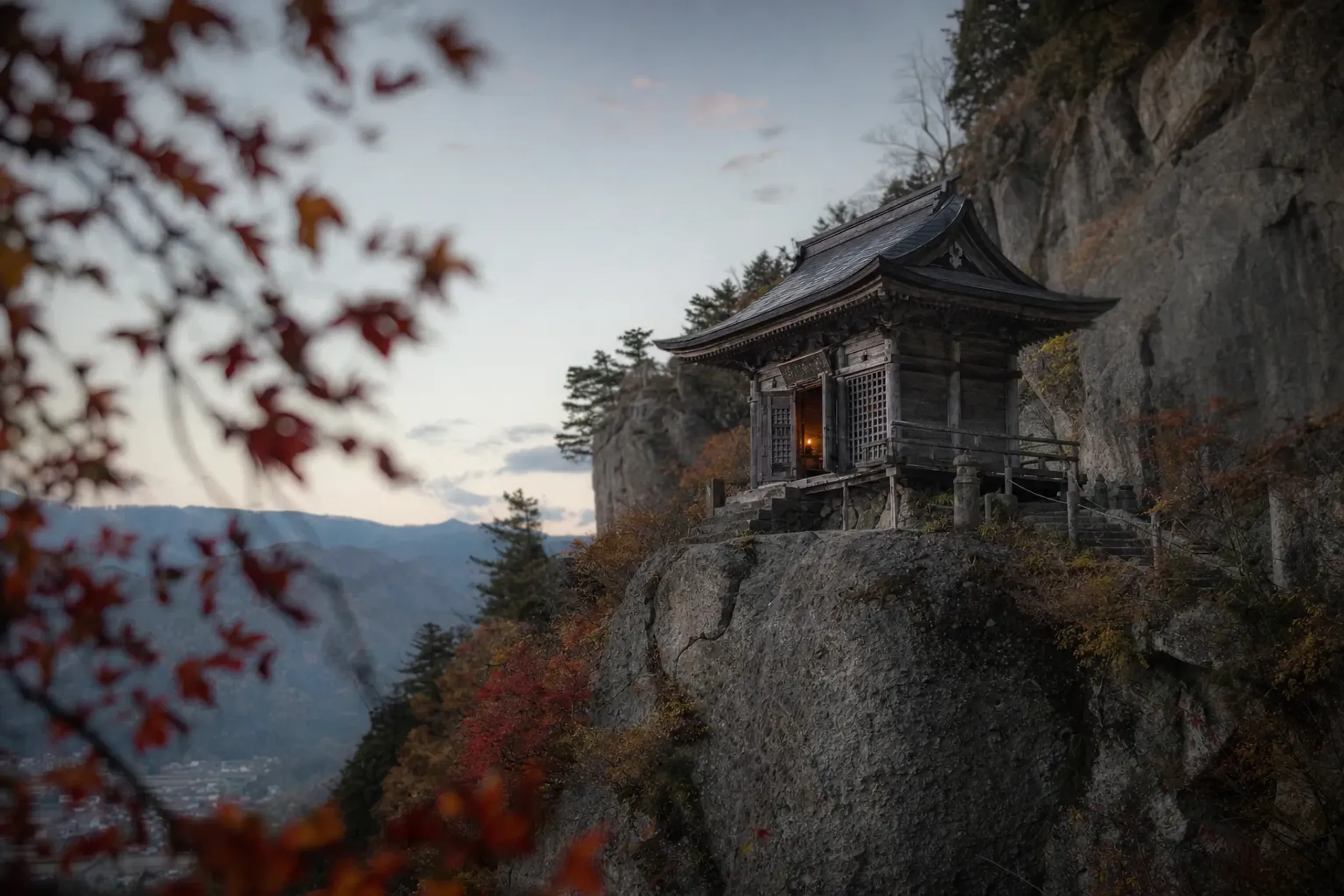
The flame survives because it keeps being shared.
The Mother Mountain of Japanese Buddhism
Enryaku-ji is the head temple of the Tendai sect, founded in 788 by Saichō according to tradition. It is part of the UNESCO World Heritage listing "Historic Monuments of Ancient Kyoto." Few places in Japan carry this much weight.
The temple spreads across three precincts — Tōtō, Saitō, and Yokogawa — holding ten National Treasures and more than fifty Important Cultural Properties between them, according to the Hieizan tourism association. The present Konpon Chūdō, rebuilt in 1642 under Iemitsu, is itself a National Treasure.
What makes Mount Hiei extraordinary is who trained here. The founders of Jōdo, Jōdo Shinshū, Sōtō Zen, and Nichiren Buddhism all studied on this mountain before founding their own schools. Dōgen, whose Sōtō Zen lineage leads to Eiheiji in Fukui, was among them.
And there was Ennin, the third head priest of this mountain, who later founded Yamadera and also Osorezan, the volcanic place in Aomori where mediums are said to speak with the dead. That thread runs through our account of Osorezan in spring. One mountain. A startling number of the figures who built Japanese Buddhism.
1571: What Nobunaga Did Here
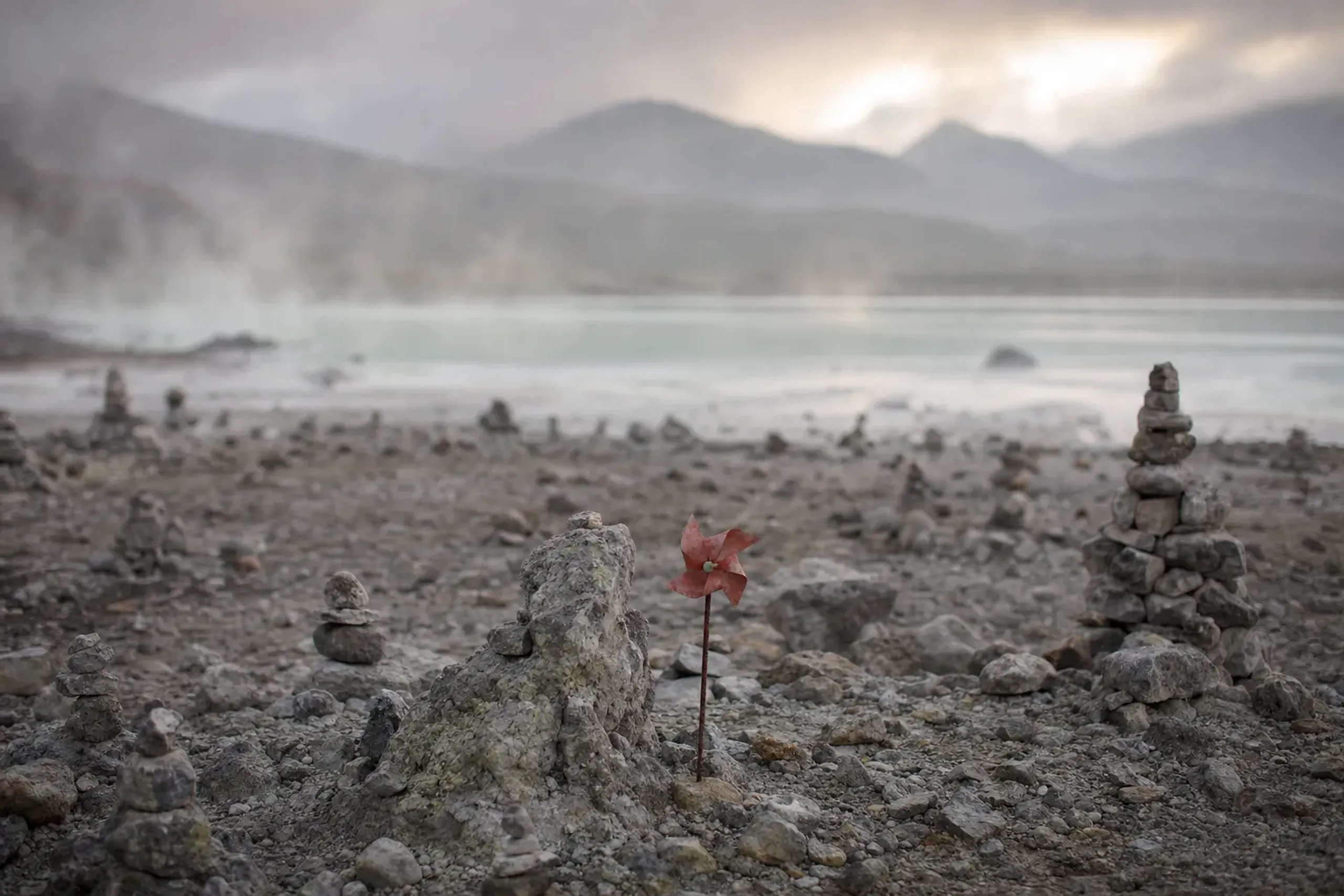
In 1571, Oda Nobunaga burned Mount Hiei. It was a mass killing. Accounts of the toll range from roughly 1,500 to several thousand, and some archaeologists believe many halls had already been abandoned by then. We state this plainly and leave it there. The mountain you walk today was rebuilt from that ruin.
The Marathon Monks of Mount Hiei
Mount Hiei is also home to one of the most severe disciplines in any religion: the kaihōgyō, the walking practice said to have been founded in the 9th century by the monk Sōō.
It runs 1,000 days across seven years. About 975 of those days are actually walked; the rest are said to be completed over a lifetime. The distances climb — around 30 kilometres a day at first, later 60, then 84 — totalling something close to the circumference of the earth. Sources put the full figure at 38,000 to 40,000 kilometres.
After 700 days comes a nine-day stage with no food, no water, no sleep, and no lying down. Those who complete the full thousand are titled Daigyōman Ajari. Roughly fifty are counted since the late 16th century, and about a dozen since 1945.
Understand clearly what this is. A rare, closely supervised monastic discipline. Not a visitor activity. Not a wellness retreat. Not something a traveller takes part in. We mention it because it is part of what this mountain means — and for no other reason.
Is Summer a Good Time to Visit Enryaku-ji?
Summer is the cooler season on Mount Hiei, not its signature one. The mountain averages about 5°C below central Kyoto, per the Hieizan tourism association, which makes a July or August visit a genuine relief from the city's heat.
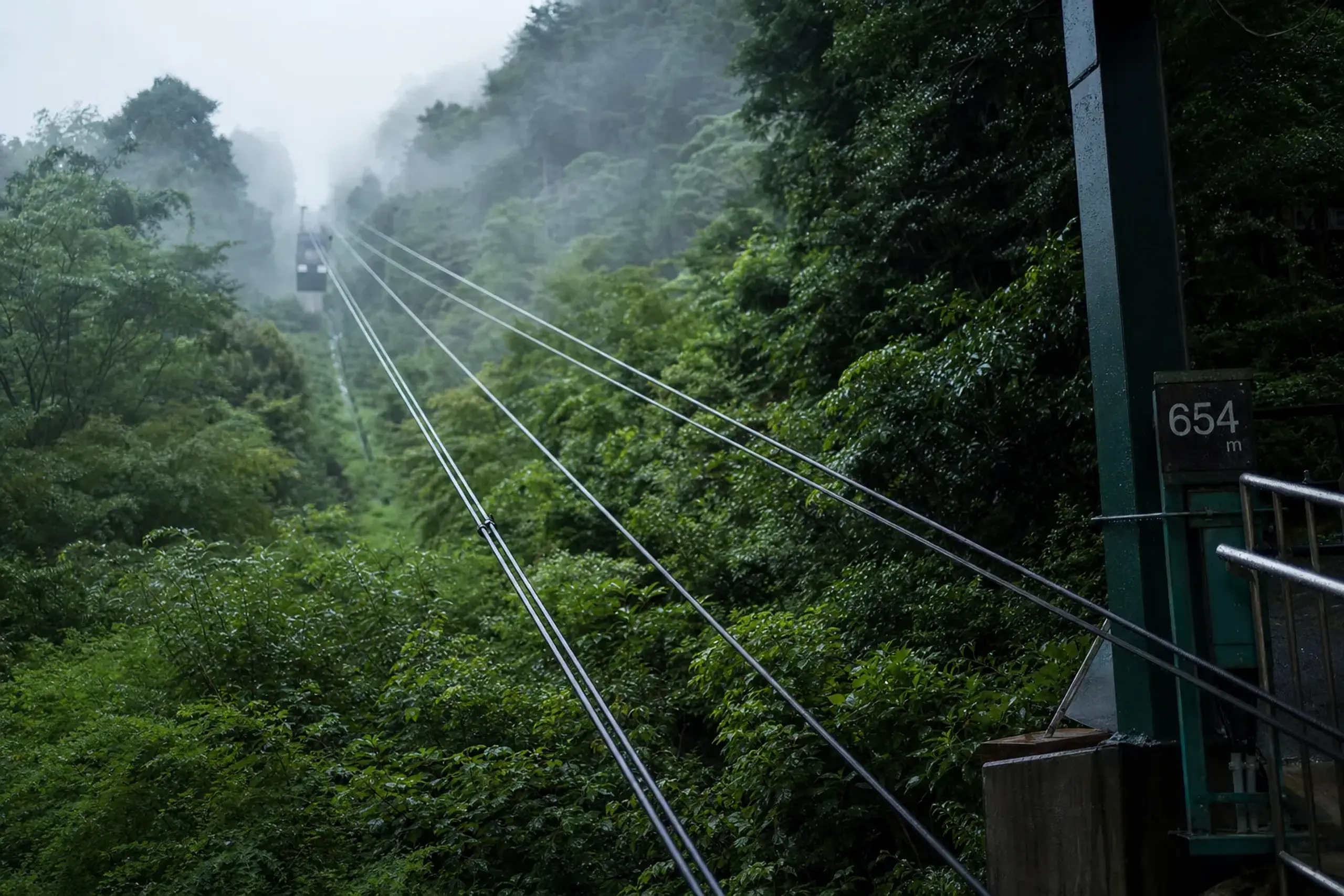
The cable-car station sits at 654 metres. On the Shiga side, the Sakamoto Cable — opened in 1927 and Japan's longest funicular — climbs 2,025 metres in eleven minutes through cedar forest. On the Kyoto side, the Eizan Cable connects to a ropeway for the ascent.
A word on timing through the year: autumn colour peaks here about a month earlier than at the mountain's foot, and cherry blossom about a month later. If you are planning around foliage or blossom, the mountain runs on its own calendar. Our concierge team plans visits with that offset in mind.
Getting Between the Three Precincts
The three precincts are spread out. Shuttle buses link them, and Yokogawa in particular sits far from the cable station. On foot alone, the distances eat a day quickly.
This is where routing matters. A well-planned day moves from Tōtō — where Konpon Chūdō stands — through Saitō's quieter halls, and out to Yokogawa if time and interest allow. Our concierge team sets the order, the transfers, and the pacing so the mountain reveals itself without rush. The temple town of Sakamoto at the foot, with its stone walls and quiet lanes, pairs beautifully for travellers seeking the stiller side of the Kyoto–Shiga border.
Frequently Asked Questions
Can I see the eternal flame at Enryaku-ji during the restoration?
The interior of Konpon Chūdō remains open for worship during the exterior repair, though some sources note an access change from January 2026 with an alternative viewing arrangement on site. Our concierge team confirms the current status before every visit.
How long is the Sakamoto Cable up Mount Hiei?
The Sakamoto Cable runs 2,025 metres in about eleven minutes, making it Japan's longest funicular. It opened in 1927 and climbs from the Shiga side through cedar forest to near the Tōtō precinct.
Can visitors take part in the marathon monk training?
No. The kaihōgyō is a rare, supervised Tendai monastic discipline, not a visitor activity or wellness practice. Travellers may learn about it through expert interpretation, but it is not something one joins.
Is Enryaku-ji worth visiting while the main hall is under repair?
Yes. Konpon Chūdō's interior remains open for worship, a viewing stage shows the roof work up close, and the Saitō and Yokogawa precincts, with their National Treasures, are unaffected. The mountain rewards a full, well-paced day.
What is the best way to reach Mount Hiei from Kyoto in comfort?
A private chauffeured vehicle from central Kyoto gives the most flexibility, letting you choose the Sakamoto Cable on the Shiga side or the Eizan Cable on the Kyoto side, and reach the far Yokogawa precinct without waiting on shuttle timetables.
Why Choose Japan Royal Service
Mount Hiei is a public, active monastery. We want to be exact about what we do and do not do here. Our team at Japan Royal Service arranges guiding, transfers, and route planning across the three precincts — and that is the whole of it. We do not offer private access to the inner sanctum, to the flame, or to any closed hall, and no visitor takes part in the monks' discipline. Those things are not ours to give.
What we do give is a day shaped with care. A tailor-made itinerary that reads the mountain's odd seasonal calendar, a bilingual scholar-guide who can tell the flame's true story as you stand before it, and private chauffeured transport that spares you the shuttle queues between distant precincts. Where you rest afterward — in Kyoto, by Lake Biwa, in a quiet ryokan — we help with accommodation that matches the register of the day. Discretion runs through all of it. Your identity and your itinerary stay with us, and nowhere else.
Our concierge team verifies current hours, the repair status, and transport on your behalf before you arrive, so the day you imagine is the day you get.
To plan a private visit to Enryaku-ji and Mount Hiei, reach our team privately via WhatsApp or LINE, or contact us here. We would be glad to carry the planning, so you can simply stand level with the light.