In this guide
- 01Why Niigata, And Why Autumn
- 02The Three Autumn Pillars Of Niigata Terroir
- 03What "Private Access" Actually Means Here
- 04A Sample Autumn Itinerary Shape
- 05Art Among The Rice Terraces: The Echigo-Tsumari Add-On
- 06Getting There, And Getting Around
- 07Best Time To Go: A Quick Reference
- 08Frequently Asked Questions
- 09Why Choose Japan Royal Service
Most luxury travelers arrive in autumn and turn toward Kyoto. The maple crowds swell. The famous ryotei book out a year ahead. And a quieter part of Japan — the one that actually grows the rice, brews the sake, and cures the salmon — goes almost entirely unseen by foreign visitors.
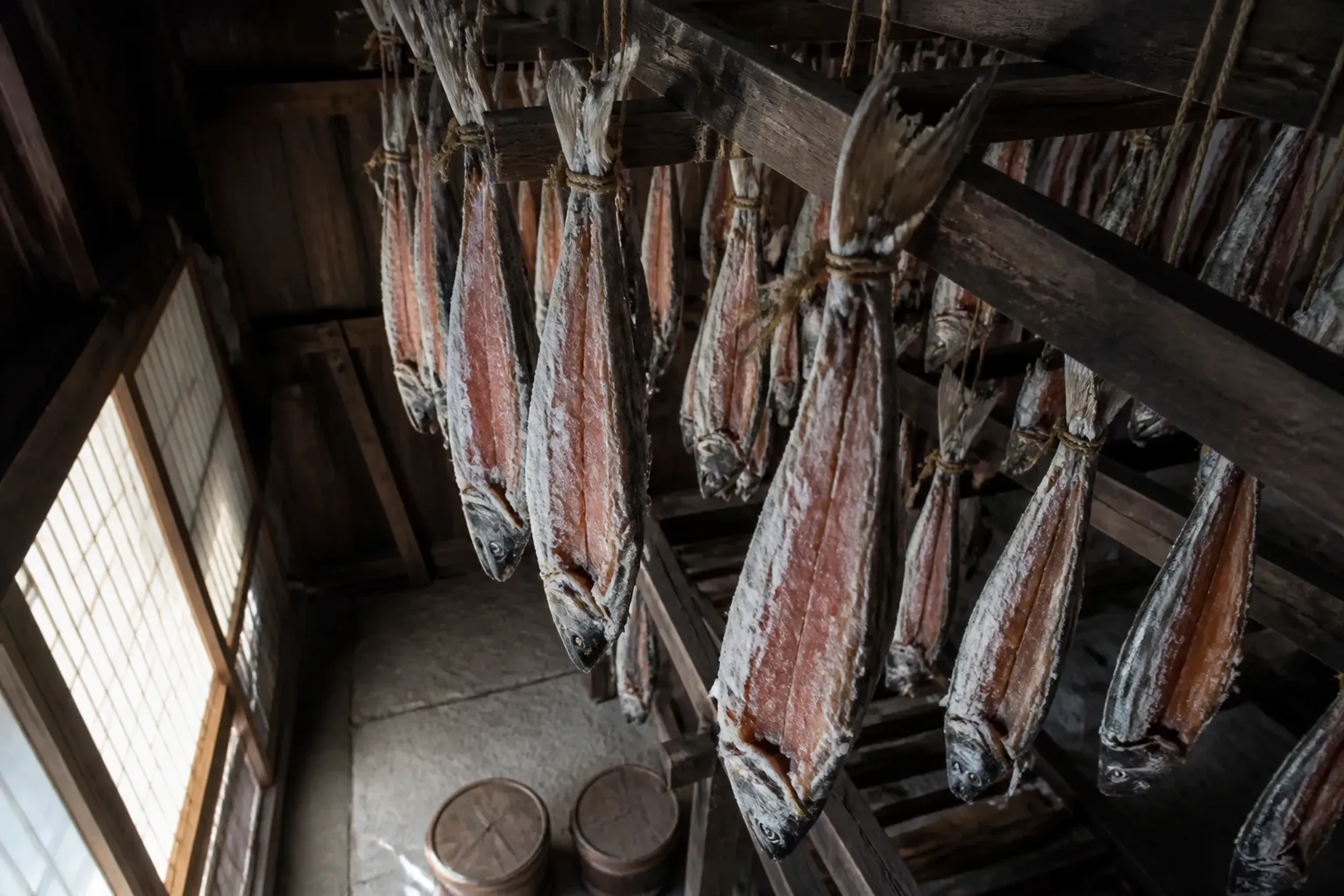
Murakami's centuries-old salmon tradition, documented by Japan's agriculture ministry.
That is Niigata. Snow country. Japan's rice capital.
Between early September and late October, the prefecture releases its shinmai — the first rice of the new season — and the whole region seems to exhale. Our team at Japan Royal Service has spent years building the introductions that let a small number of guests step behind that curtain: into working kura, onto terraced Koshihikari fields, and to the table of a salmon house that has cured fish the same way for centuries. This is a guide to what that autumn can actually look like — and what "private access" here truly means.
Why Niigata, And Why Autumn
Niigata sits along the Sea of Japan, walled off from Tokyo by mountains that trap enormous winter snowfall. That snow matters. It melts into soft, mineral-light water, and that water shapes both the rice and the sake — clean, dry, refined rather than heavy.
The Japan National Tourism Organization describes Niigata as Japan's rice capital, and its sake as light and dry in profile. That is not marketing gloss. It is geology.
Autumn is when all of this becomes edible. Niigata City states that new rice (shinmai) circulates from September through October, with shipping running early September to late October. Eat Koshihikari fresh-milled in October, still faintly sweet, and you understand why the Japanese treat the harvest as an event rather than a chore.
Three things ripen together in this window. New rice. Salmon returning up the rivers of Murakami. And the water-and-craft tradition that turns both into something worth traveling for.
The Three Autumn Pillars Of Niigata Terroir
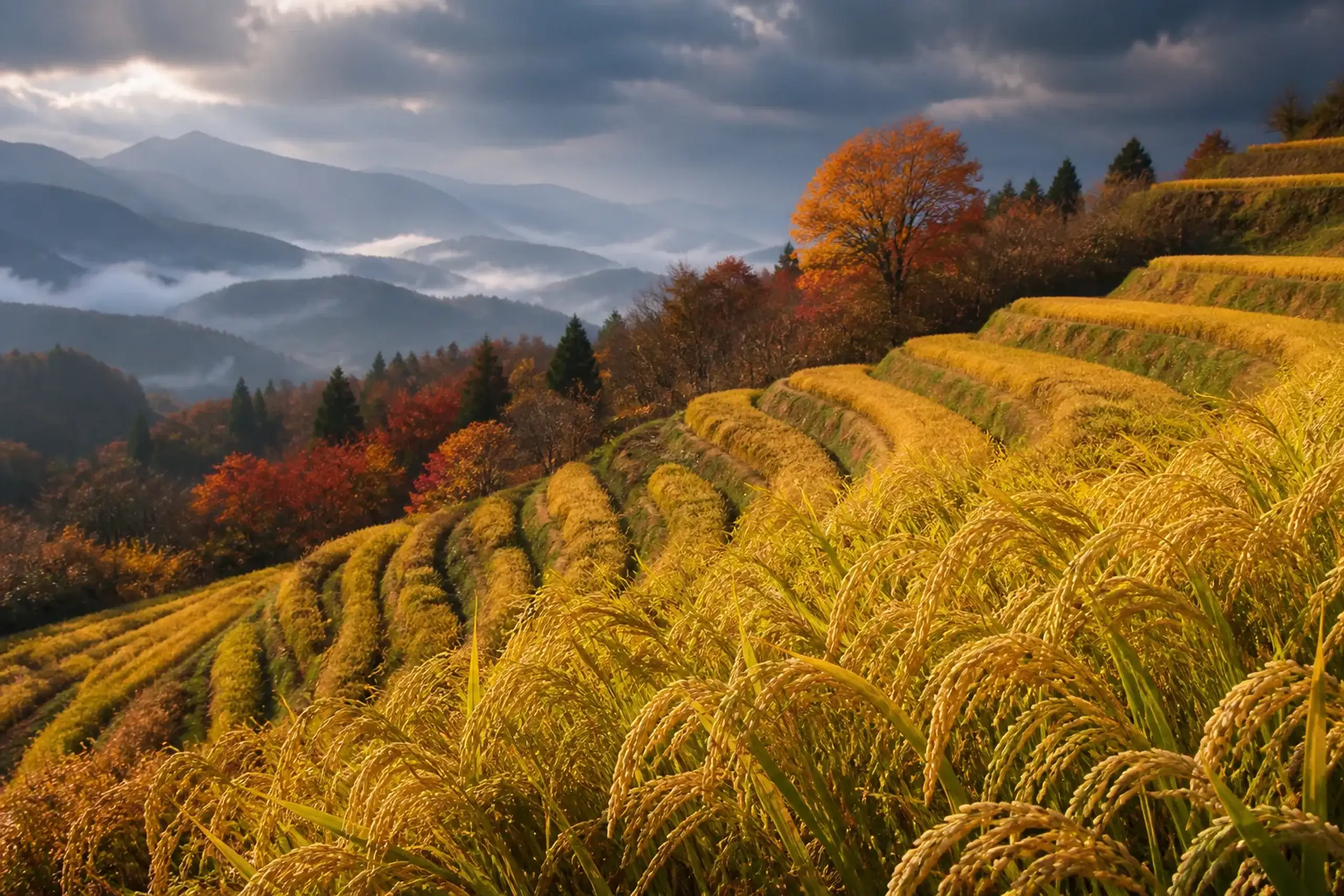
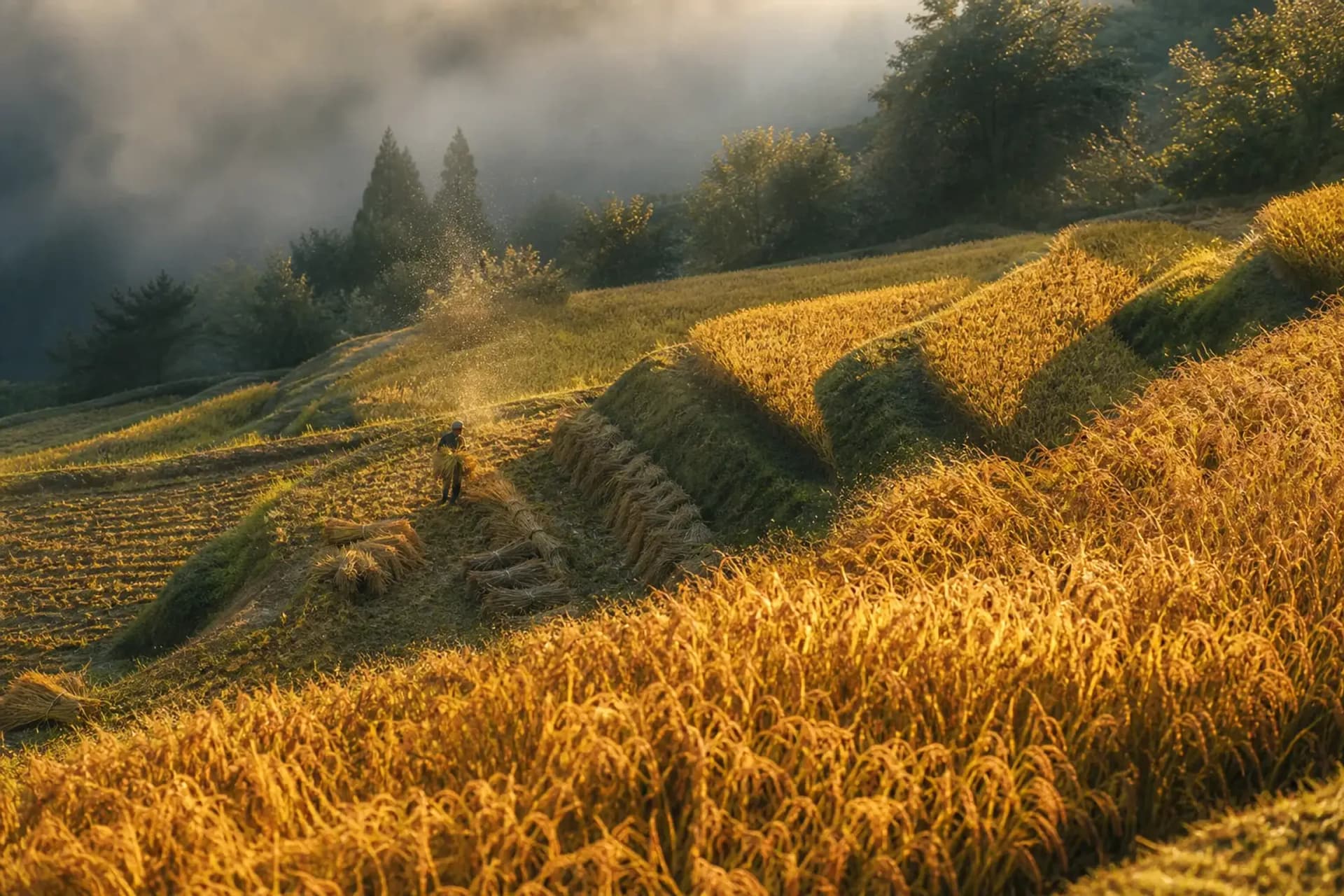
New-season Koshihikari, timed to the prefecture's harvest bulletin.
Rather than a scattered food tour, we organize the region around three anchors. Each one is a real place, a real producer, a real dish — not a vague "culinary experience."
Pillar One: New-Season Koshihikari
Koshihikari is the rice most Japanese chefs reach for when they want the best. Niigata grows the benchmark. In the terraced fields of the Uonuma and surrounding snow-country districts, the grain draws on that soft snowmelt water and a sharp day-night temperature swing that concentrates flavor.
Niigata Prefecture publishes an official rice cultivation bulletin — the inasaku sokuhō — with harvest-timing guidance updated through 2026 for early, mid, and late varieties. We watch it. When the mid-season crop firms up, the window for standing in a golden field at the right moment is narrow. A week early, the fields are green. A week late, they are cut and bare.
What we arrange, quietly, is a walk through working paddies with the grower rather than a staged photo stop — and a tasting of that year's shinmai milled hours before it reaches the bowl.
Pillar Two: Murakami And Its Salmon Culture
This is the part almost no luxury itinerary tells you about. Murakami, a castle town in northern Niigata, has built an entire food culture around salmon.
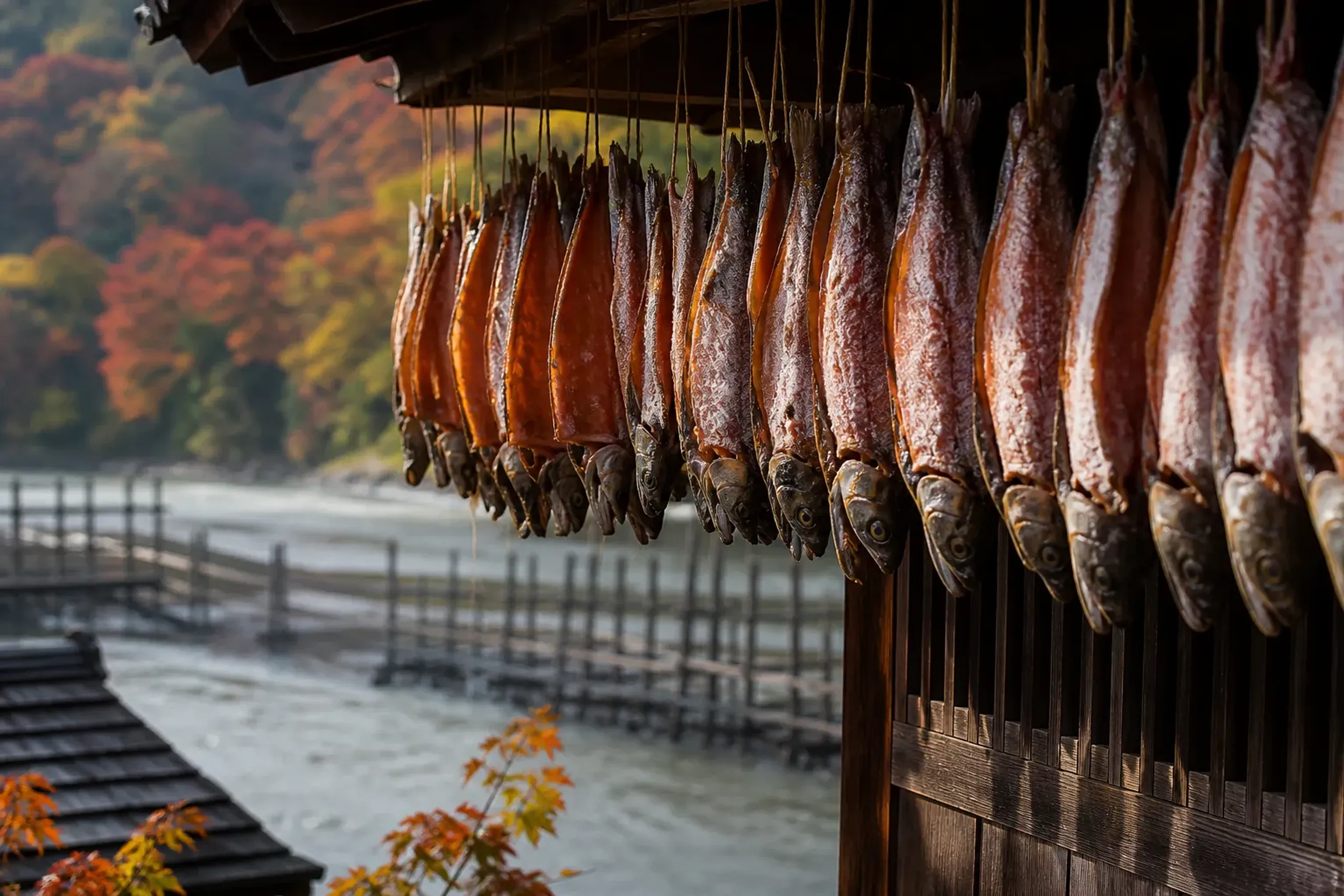
Japan's Ministry of Agriculture, Forestry and Fisheries documents the Murakami tradition: autumn river-trap fences called urai set in the Miomote River, and a deep repertoire of preserved salmon dishes. Kikkoman notes that Murakami is best known for its traditional salted salmon. Walk the old merchant streets in November and you will see salmon hung to air-dry from the eaves of houses — hundreds of them, heads down, a living archive of technique.
The official Discovery Niigata tourism site promotes salmon dining at Sennen Sake Kikkawa Izutsuya, a Murakami specialist. This is the "other" autumn luxury ingredient — one the Kyoto-focused competitors simply do not cover.
Pillar Three: Snow-Country Water And The Kura
Everything circles back to that soft water. JETRO's Discovery Niigata profile of Takanoi Shuzo, a brewery in Ojiya City, describes the area as ideal for sake because of excellent rice and soft water born of heavy snowfall.
The public face of Niigata sake is the great annual gathering, Niigata Sake no Jin, officially announced by the Niigata Sake Brewers Association for 2026. It fills Niigata City with thousands of tasters. Wonderful energy. Also the opposite of private.
For guests who prefer a quieter register, the value lies in the after-hours kura — a small brewery visited outside public hours, where a conversation with the tōji (master brewer) replaces a crowded pour table. That is a different kind of access entirely.
What "Private Access" Actually Means Here
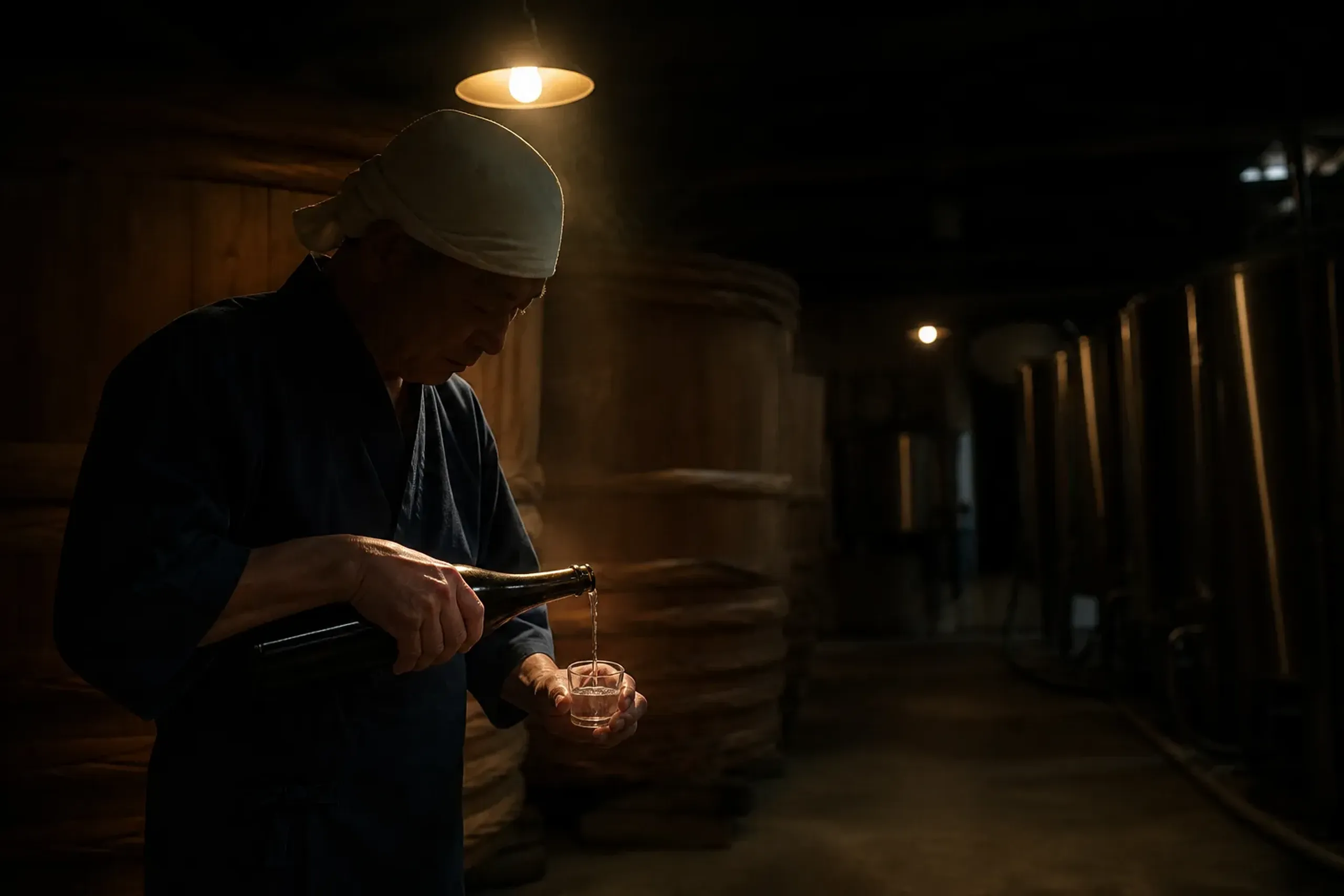
The after-hours kura: time with the tōji, not a crowded tasting table.
The phrase gets abused. So here is our plain checklist for what genuinely private looks like in Niigata autumn — and what it does not.
Private, in our definition: an after-hours kura walkthrough with the tōji present; a field visit with the grower during actual harvest; a limited-release bottling poured for you rather than queued for; a salmon house that seats your party alone. Not private: a scheduled group tasting, a public festival booth, a "skip-the-line" pass to a crowded room.
These introductions are not transactional. Small Niigata producers do not run a booking desk for outsiders. They open their doors on the strength of trust built over years — which is why an itinerary here has to be negotiated quietly, one relationship at a time. That is the work. That is the difference.
Timing is everything. Because the harvest bulletin shifts, we lock the sequence of a Niigata trip late, adjusting to the actual state of the fields rather than a calendar printed months earlier.
A Sample Autumn Itinerary Shape
Every plan we build is bespoke, so treat this as a sketch of how the pieces fit — not a fixed package. A tailor-made itinerary reorders these to your pace.
- Days 1–2 — Niigata City base: arrival, an evening of Niigata's light, dry sake matched to new-season rice, and orientation to the region's water-and-grain story.
- Day 3 — Snow-country fields: a private walk through terraced Koshihikari paddies with the grower, timed to the harvest bulletin, followed by a farm-adjacent table built around that morning's milling.
- Day 4 — After-hours kura: a small brewery outside public hours, time with the tōji, a limited bottling poured in quiet.
- Day 5 — Murakami: the salmon town — air-dried fish hanging from merchant eaves, a specialist salmon house seating your party alone, and the urai tradition of the Miomote River explained on the ground.
- Optional add-on — Echigo-Tsumari: contemporary art set among rice terraces.
Art Among The Rice Terraces: The Echigo-Tsumari Add-On
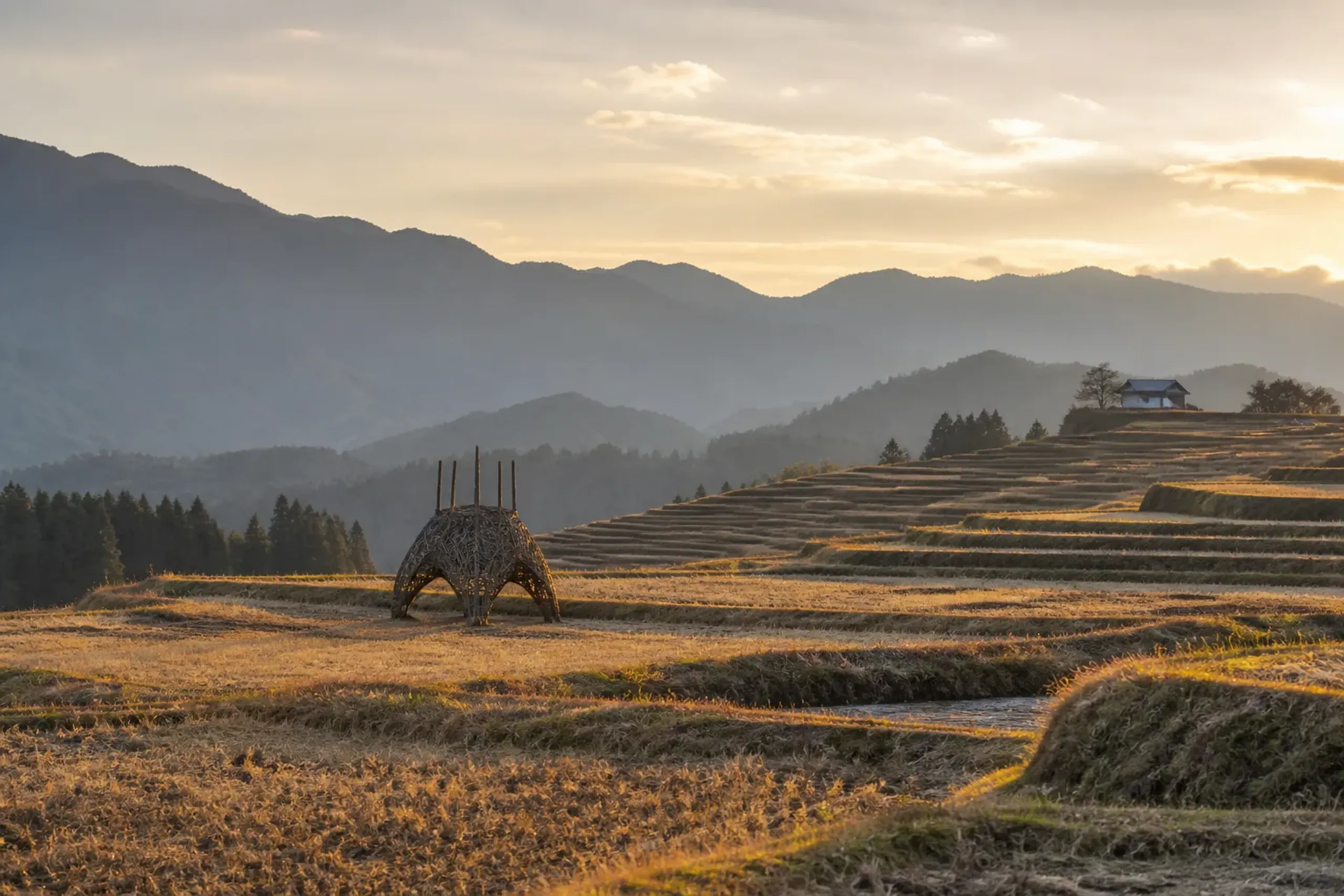
Echigo-Tsumari Art Field 2026 runs through November 8, 2026.
Niigata's autumn is not only appetite. The Echigo-Tsumari Art Field runs its year-round 2026 program through Sunday, November 8, 2026 — large-scale contemporary works scattered across the snow-country valleys, many set directly among working rice terraces.
Pairing a harvest lunch with a private, guided passage through these installations gives an autumn trip a second dimension: culture and countryside, appetite and quiet. It is the kind of restrained, place-rooted experience — wabi-sabi in feel, if not in name — that reads as far more considered than another temple queue in Kyoto.
Getting There, And Getting Around
Niigata is reachable by Shinkansen from Tokyo in roughly two hours, which makes it an unusually easy detour from the Golden Route. The harvest districts and Murakami, however, sit apart from the rail lines and reward being driven.
Our private chauffeured transport — from the Lexus LM 500 for couples to a Mercedes V-Class for a family group — keeps the day flexible. Fields do not run on a bus schedule. When the grower says the light is right at seven, you leave at seven.
Best Time To Go: A Quick Reference
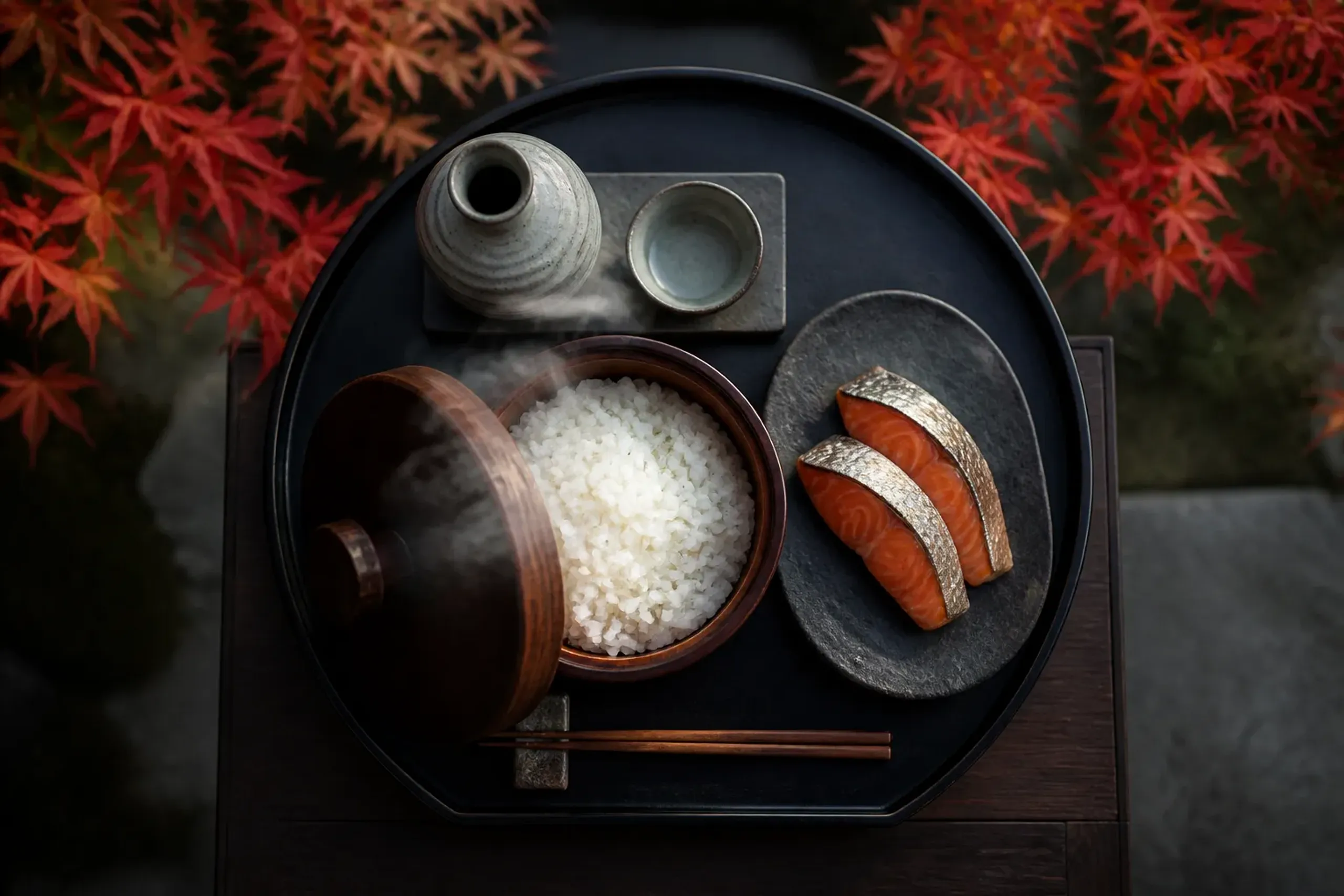
The harvest on one table: salmon, shinmai rice, and light, dry Niigata sake.
| Element | Peak Window |
|---|---|
| New rice (shinmai) circulation | Early September – late October |
| Murakami salmon season | Autumn (river-trap urai season) |
| Echigo-Tsumari Art Field 2026 | Through November 8, 2026 |
| Niigata Sake no Jin 2026 (public) | Announced by the Brewers Association |
Frequently Asked Questions
When Is The Best Month To Visit Niigata For The Harvest?
October is the sweet spot. New rice circulates from September through late October per Niigata City, and by October the fields are golden and the salmon season is underway in Murakami. We fine-tune the exact days against the prefecture's official cultivation bulletin.
Can I Visit A Niigata Sake Brewery Privately, Outside Festival Crowds?
Yes — and that is where the real depth lies. The public flagship is Niigata Sake no Jin, announced for 2026 by the Niigata Sake Brewers Association, which is lively but crowded. For guests who want the tōji's undivided attention, a small after-hours kura visit is the far more rewarding path. Our concierge can advise on what is possible for your dates.
What Makes Murakami Salmon Worth A Detour?
Murakami has centuries of salmon culture, documented by Japan's agriculture ministry — the urai river traps of the Miomote and a deep tradition of salted and preserved salmon. Few luxury itineraries include it, which is precisely why it feels like a discovery.
Is Niigata A Good Alternative To Kyoto In Autumn?
For travelers who have seen Kyoto — or want to avoid its autumn crush — Niigata offers countryside, harvest cuisine, contemporary art at Echigo-Tsumari, and genuine privacy. It pairs beautifully with a restorative onsen stay to bookend the trip.
Why Choose Japan Royal Service
Niigata's autumn cannot be bought off a shelf. Its growers, its salmon houses, its small breweries do not maintain reservation lines for foreign visitors — they open their doors to people they trust, on days the harvest allows.
Our team at Japan Royal Service has spent years earning those introductions, and we hold them carefully. We plan for HNW travelers who want depth over spectacle, and we extend the same discretion to guests who require total confidentiality of their identity and movements. In our experience, the difference between a good Niigata trip and an unforgettable one is timing and trust — knowing precisely which week the fields turn gold, and who will meet you there.
We work in English, Japanese, Thai, and Filipino, with a concierge on call throughout your journey. For those weighing Niigata against a wider autumn route — a heritage hotel here, a private onsen there — we build the whole arc around you.
To explore a private Niigata harvest journey for autumn 2026, reach our team quietly via WhatsApp or LINE, or contact us here. Tell us your dates, and we will tell you what the season allows.