In this guide
- 01Why Daisetsuzan Rewards The Traveller Who Slows Down
- 02The Two Gateways: Asahidake And Sounkyo
- 03Trails By Skill Level: Where To Actually Walk
- 04What To Pack: Gear That Actually Matters
- 05Planning Around Bears And Ropeway Closures
- 06The Best Seasons: A Month-By-Month View
- 07Event-Led Journeys: Two Reasons To Stay The Night
- 08Where To Base: Gateway-Town Intelligence
- 09Getting There And Getting Around
- 10Frequently Asked Questions
- 11Why Choose Japan Royal Service
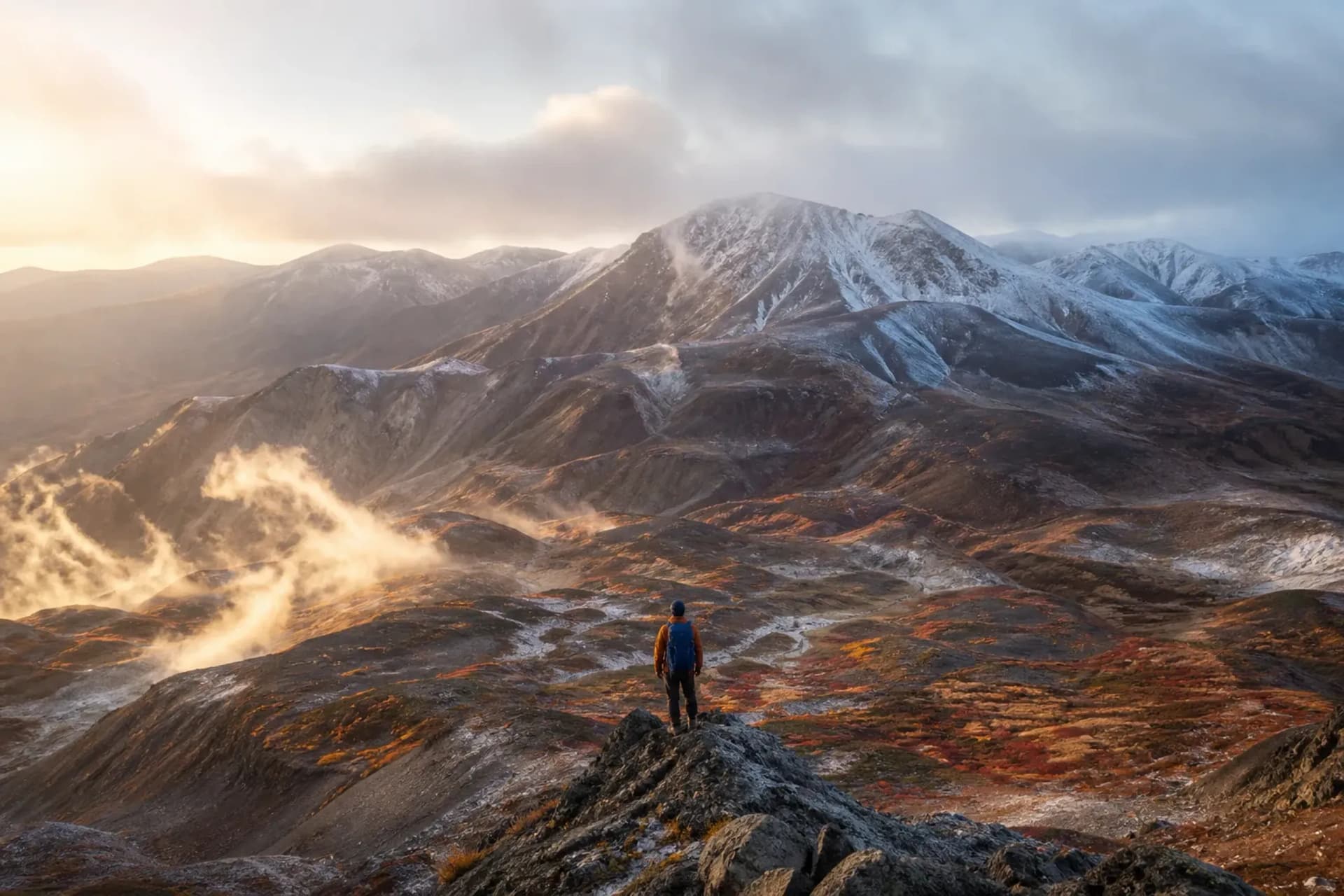
The Ainu called it Kamuymintar. The Playground of the Gods. Stand on the boardwalk at Sugatami, roughly 1,600 metres up, and the name stops feeling like poetry. Steam vents hiss from the flank of Asahidake. Alpine flowers cling to volcanic gravel. And beyond the ridgeline, a wilderness the size of a small country rolls on, indifferent to your schedule.
Daisetsuzan is Japan's largest national park — about 226,000 hectares of volcanic peaks, hot-spring towns, and forest that turns to fire every autumn. It is also, quietly, one of the hardest places in Japan to travel well. Ropeways close for maintenance. Bears leave the treeline. Weather rewrites your plans by breakfast.
This is the guide our concierge team at Japan Royal Service wishes more travellers read before they arrived. Not a highlights reel. A working plan — trails by skill level, gear that matters, the seasonal windows that actually pay off, and how we keep a private itinerary intact when the mountain has other ideas.
Why Daisetsuzan Rewards The Traveller Who Slows Down
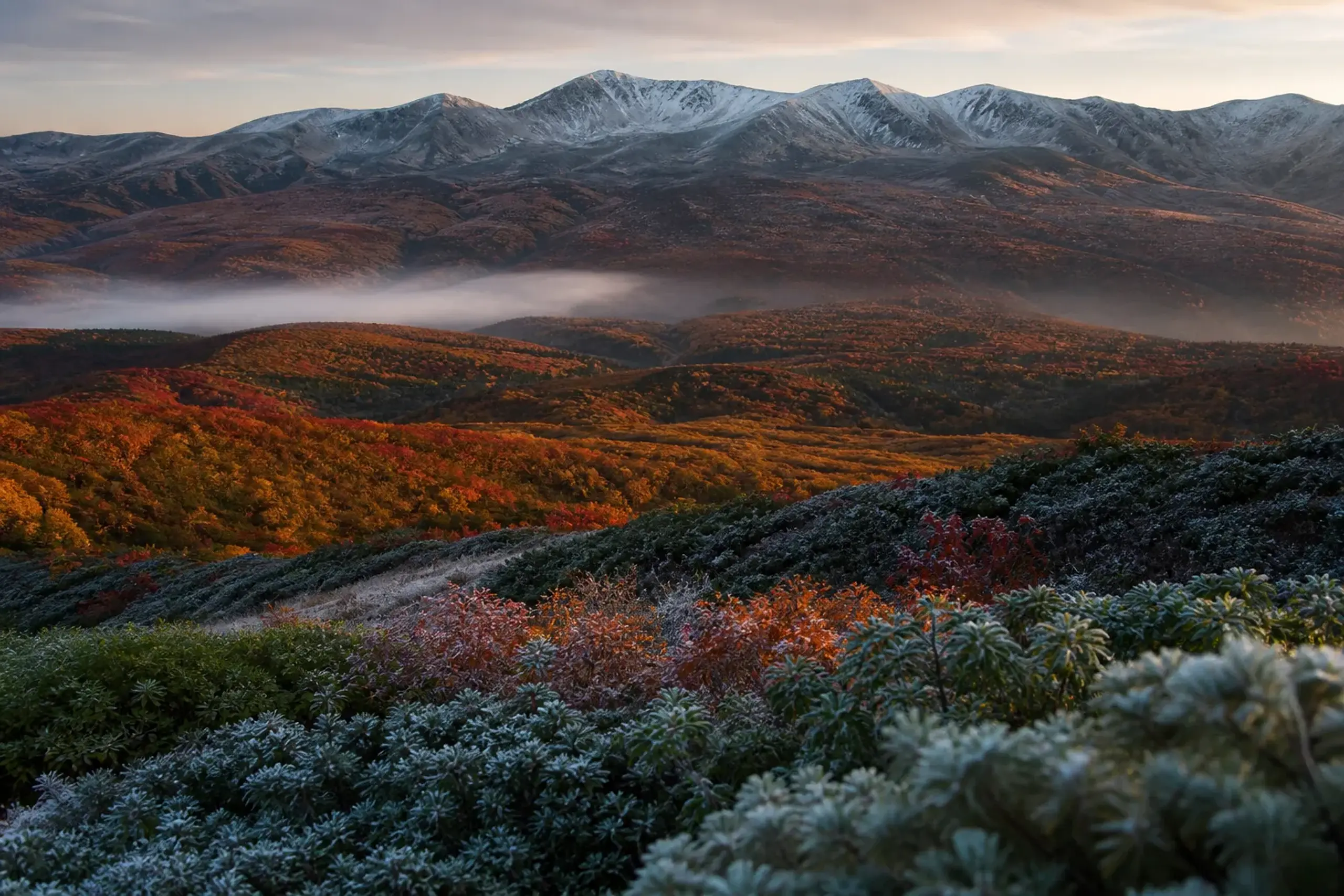
Japan's earliest autumn arrives in Daisetsuzan's high country weeks before the rest of the country.
Most visitors to Hokkaido never see it. They chase Sapporo, Furano's lavender, maybe Otaru. Daisetsuzan sits in the centre of the island, established as a national park in 1934, and it asks for something the Golden Route never does: patience.
The reward is scale. Volcanic ranges that stay snow-flecked into July. Autumn colours that arrive here first, in mid-September, weeks ahead of Kyoto. Onsen towns where the sulphur smell greets you before the signage does. This is hidden Japan in the truest sense — not a secret restaurant behind an unmarked door, but a landscape that simply refuses to be rushed.
For our HNW guests, that restraint is the point. Wabi-sabi is easy to invoke in a tea room. It is harder, and more honest, to feel it standing in moss-covered silence below a peak that was old before the first shrine was built.
The Two Gateways: Asahidake And Sounkyo
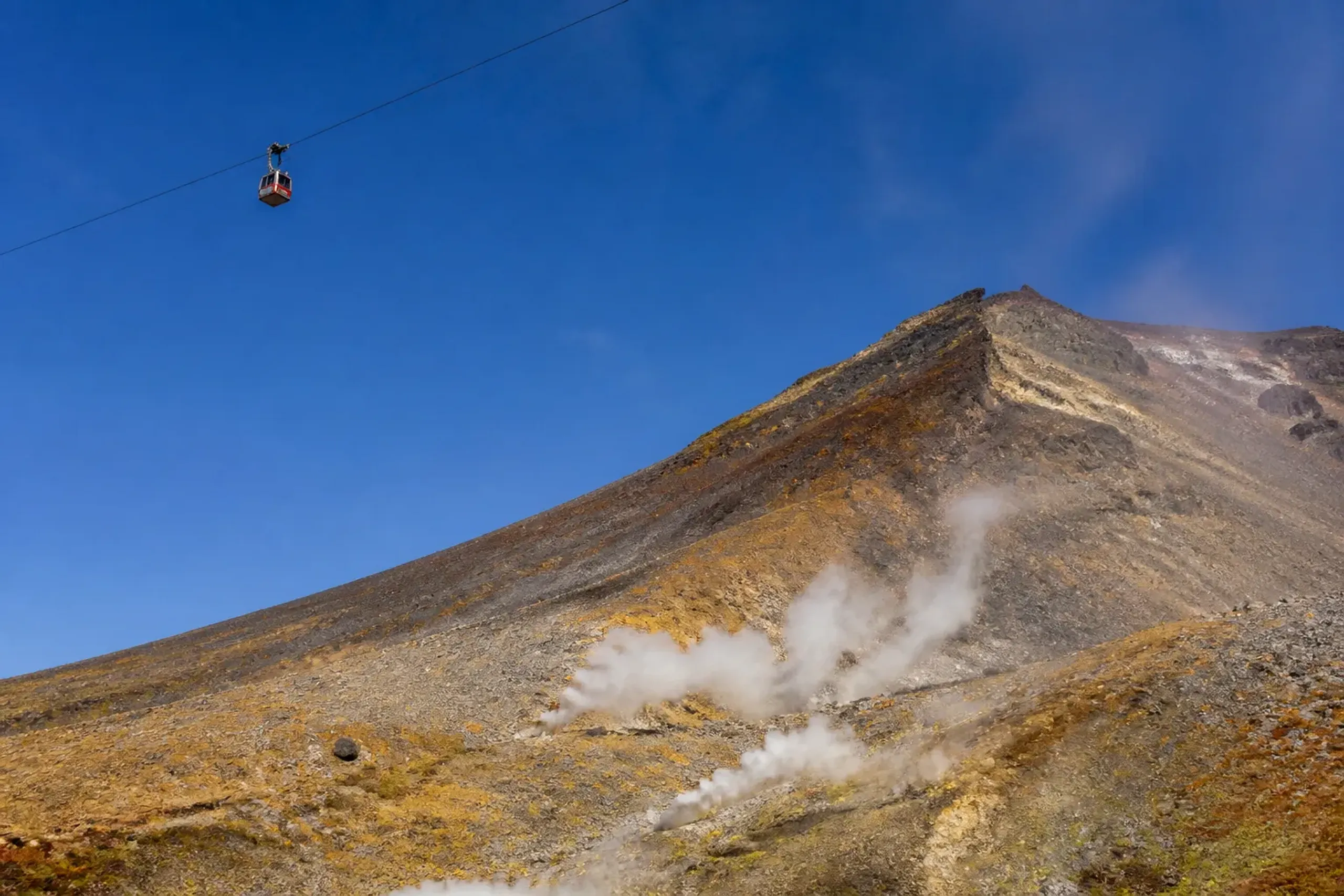
The Asahidake Ropeway lifts travellers to alpine scenery at roughly 1,600 metres.
Nearly every Daisetsuzan journey pivots on two ropeways. Understanding the difference shapes your entire trip.
Asahidake Ropeway (Higashikawa Side)
The Asahidake Ropeway lifts you from the base near Asahidake Onsen to Sugatami Station, at roughly 1,600 metres. From there, a network of boardwalks and trails opens up beneath Hokkaido's tallest peak. The Sugatami Pond loop is gentle. The summit push is not.
This is the western gateway, closest to Asahikawa Airport (CTS's quieter cousin) and the calm farming town of Higashikawa. It is our preferred base for guests who want comfort within reach of serious alpine terrain.
Kurodake Ropeway (Sounkyo Side)
The Kurodake Ropeway rises from Sounkyo Onsen, a hot-spring town wedged into a dramatic gorge on the park's northeast edge. From the upper station, trails feed into the high traverse routes that connect the range's great peaks.
Sounkyo is the more festival-minded of the two. It hosts the winter Ice Fall Festival and the summer Gorge Fire Festival — reasons, as you will see, to stay the night rather than day-trip.
Operational note: Ropeways run scheduled maintenance windows. The Asahidake Ropeway publishes closure notices on its official site — a June 2026 maintenance post is one recent example. A luxury itinerary that hinges on a single ropeway, with no backup, is a fragile itinerary. We build contingencies before we build the day.
Trails By Skill Level: Where To Actually Walk
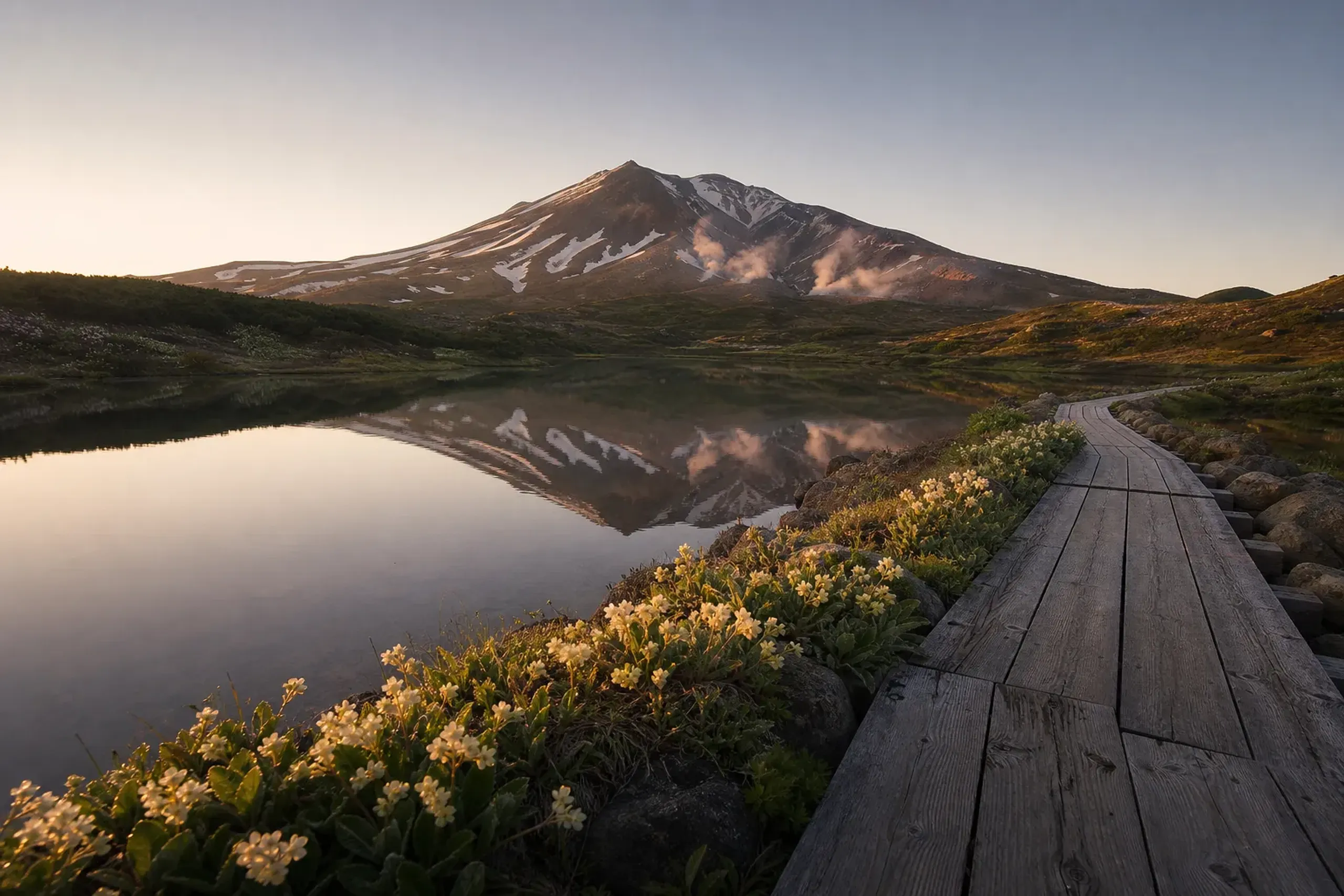
The Sugatami Pond loop offers volcanic drama on gentle, well-maintained ground.
Daisetsuzan spans everything from paved boardwalk to multi-day traverse. Here is how we match terrain to ability.
Gentle: The Non-Hiker's Alpine Day
You do not need to be an athlete to stand in the high country. From Sugatami Station, the boardwalk loop past Sugatami Pond delivers volcanic drama — steam vents, reflected peaks — on flat, well-maintained ground. An hour, unhurried, with the ropeway doing the climbing for you.
Pair it with a scenic drive, a waterfall stop near Sounkyo, and a private onsen soak. Soft adventure, no summit required.
Intermediate: Half-Day Summit Attempts
- Asahidake summit — from Sugatami, a demanding but non-technical climb over volcanic scree to Hokkaido's highest point. Weather-dependent, always.
- Kurodake — from the Kurodake Ropeway upper station, a steady ascent with rewarding ridge views. A satisfying half-day for reasonably fit walkers.
Advanced: The Great Traverse
The classic Asahidake–Kurodake traverse crosses the roof of Hokkaido, linking the two gateways over high, exposed terrain. The TAISETSU Traverse PASS 2026 covers this corridor, with a sales and validity window of June 27 to September 30, 2026, and includes use with the Daisetsuzan Asahidake Ropeway.
This is a serious undertaking — mountain huts, real weather exposure, hours above the treeline. We plan these with a private guide, staged transport at both ends, and a firm turnaround protocol. Ambition is welcome. Bravado is not.
What To Pack: Gear That Actually Matters
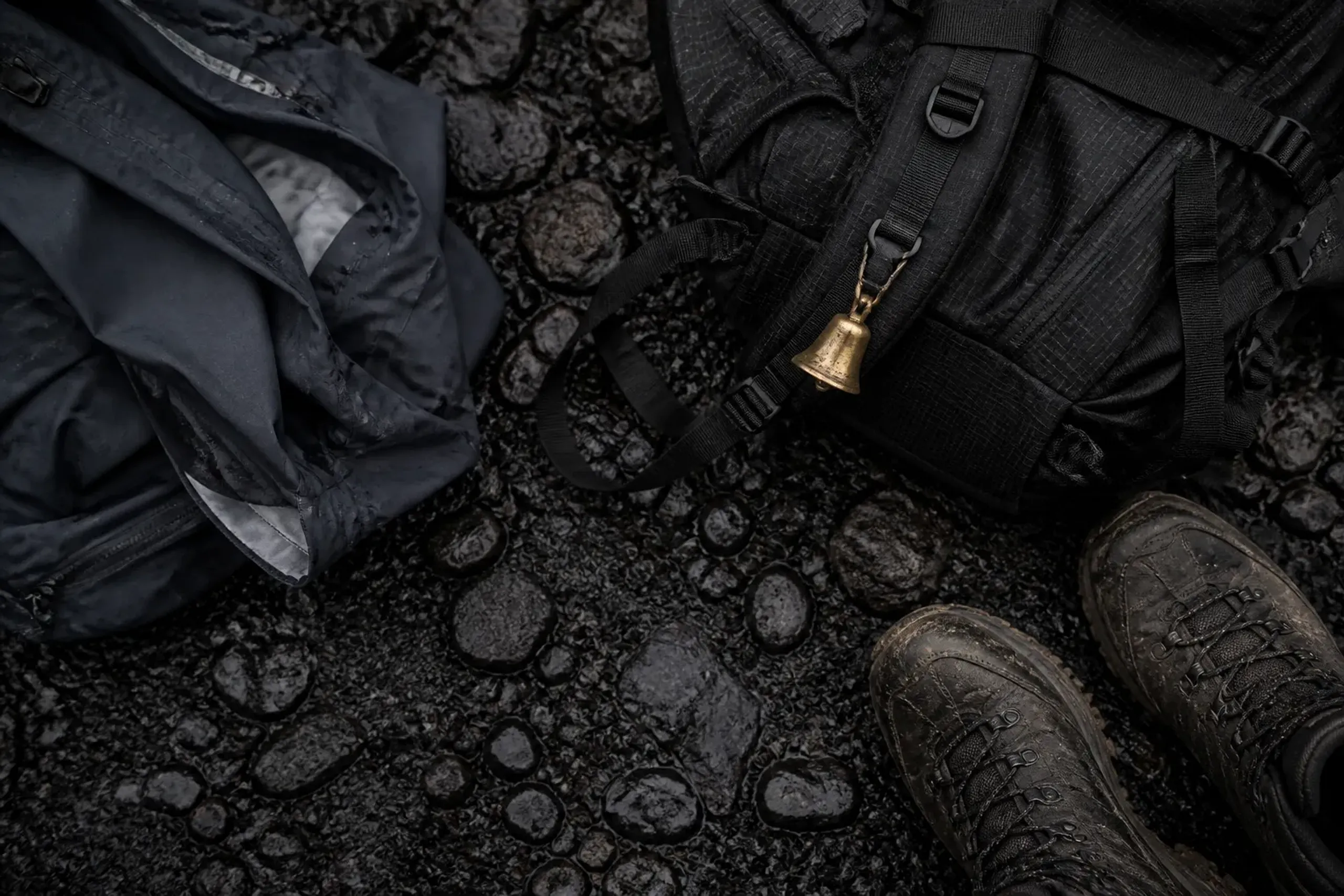
Hokkaido's mountains make their own weather. Sun at the trailhead, sleet at the summit. Even our soft-adventure guests carry more than they expect.
- Layers — a warm mid-layer and a genuine waterproof shell, even in August. The summit is a different season from the base.
- Proper footwear — grippy, ankle-supporting boots. Volcanic scree is unforgiving.
- Sun and wind protection — high-altitude UV is fierce; wind more so.
- Water and food — no vending machines above the ropeway.
- A bear bell — noise is your first line of defence. More on that below.
Our team pre-stages weather-appropriate kit so guests are never caught short. The luggage stays in the vehicle. The right jacket is always within reach.
Planning Around Bears And Ropeway Closures
This is where operational intelligence separates a smooth journey from a ruined one.
Bear Safety, Handled Seriously
Daisetsuzan is brown bear country. The Ministry of the Environment posted a park notice dated July 7, 2026, calling attention to bear sightings — a routine but real part of travelling here. This is not cause for fear. It is cause for planning.
Our protocol is straightforward: we monitor official park alerts, choose trailheads and timing that reduce encounter risk, keep groups appropriately sized, and insist on noise on the trail. A private guide who reads the mountain daily is worth more than any single view.
When The Ropeway Is Down
Maintenance windows are published in advance, and we route around them. If Asahidake is closed, the day shifts — to Sounkyo and Kurodake, to the gorge waterfalls, to Higashikawa's craft ateliers and Asahikawa's quieter pleasures. A closed ropeway should cost you a viewpoint, never a whole day.
Key fact: The single most common way a Daisetsuzan trip fails is a rigid, single-point itinerary. Build in a second gateway and a fair-weather backup, and the mountain almost never wins.
The Best Seasons: A Month-By-Month View
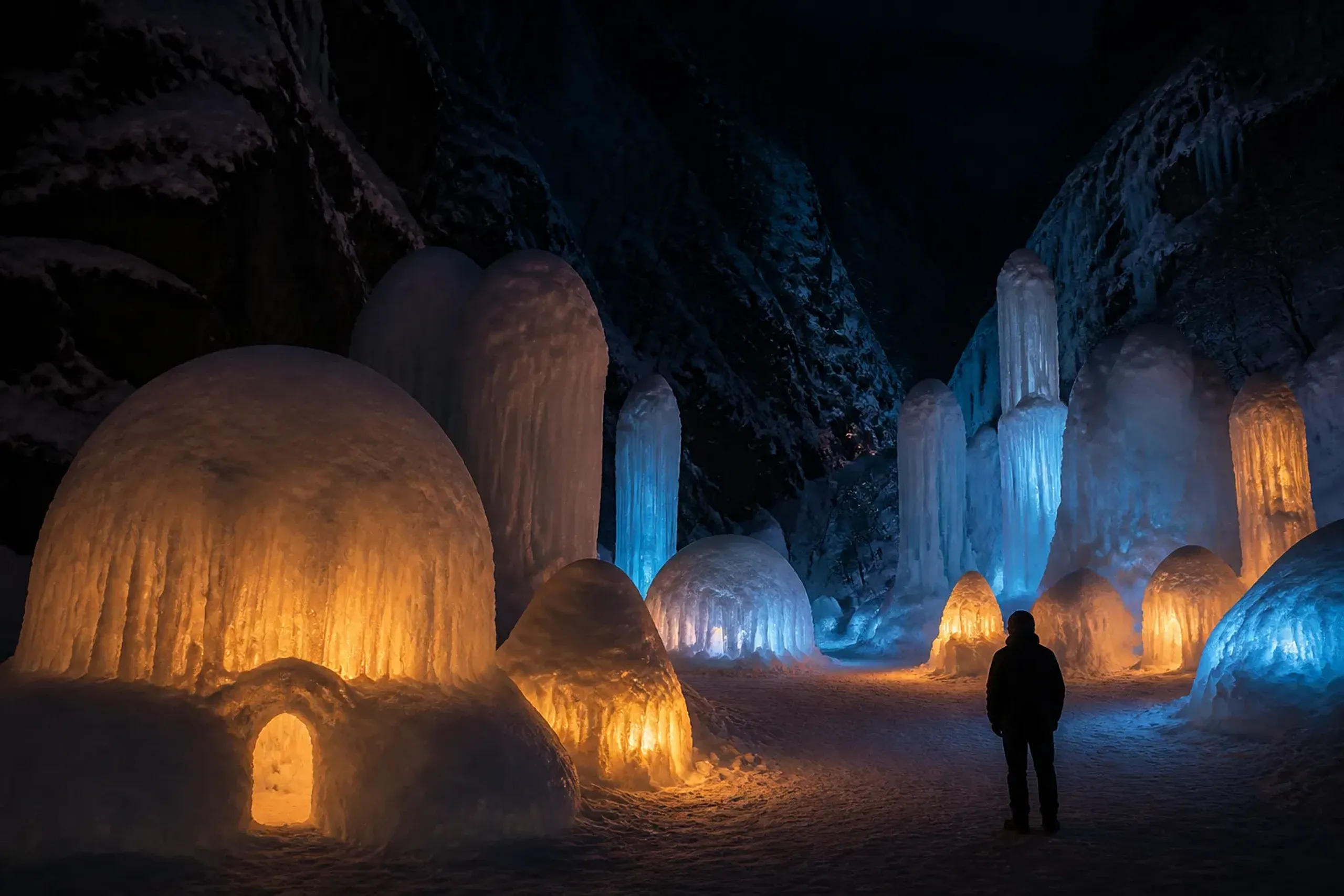
Through the coldest weeks, Sounkyo builds a glowing village of ice against the black gorge.
| Season | What You Get |
|---|---|
| Late Jun – Sep | Hiking season. Traverse Pass valid. Alpine flowers, long light, warm onsen evenings. |
| Mid Sep – early Oct | Japan's earliest autumn colours, sweeping across the high slopes. Our favourite window. |
| Jan – Mar | Deep-winter Sounkyo. Ice Fall Festival illumination, frozen gorge, private onsen. |
If forced to name one window: mid-to-late September. The colours here arrive weeks before the rest of Japan, and the crowds have not yet learned the secret.
Event-Led Journeys: Two Reasons To Stay The Night
Sounkyo Ice Fall Festival (Jan 24 – Mar 8, 2026)
Through the coldest weeks, Sounkyo builds a village of ice — sculptures and towers lit after dark, glowing against the black gorge walls. The 2026 festival runs January 24 to March 8. Pair the illumination with a private guide, a photographer's slot at dusk, and a return to a ryokan bath as the temperature drops below zero.
Sounkyo Gorge Fire Festival & Summer Fireworks (from Jul 25, 2026)
The main Gorge Fire Festival falls on Saturday, July 25, 2026, from 18:30 to 21:00, with a summer fireworks period running July 26 through August 15, 2026. This is the argument for basing in Sounkyo rather than day-tripping: hike by day, culture by night, onsen between.
Serious trail-runners, meanwhile, may note the Daisetsuzan Trail Journey (DTJ), scheduled for Sunday, July 26, 2026 — the basis, for us, of a spectator-and-recovery itinerary pairing the event with quiet onsen restoration.
Where To Base: Gateway-Town Intelligence
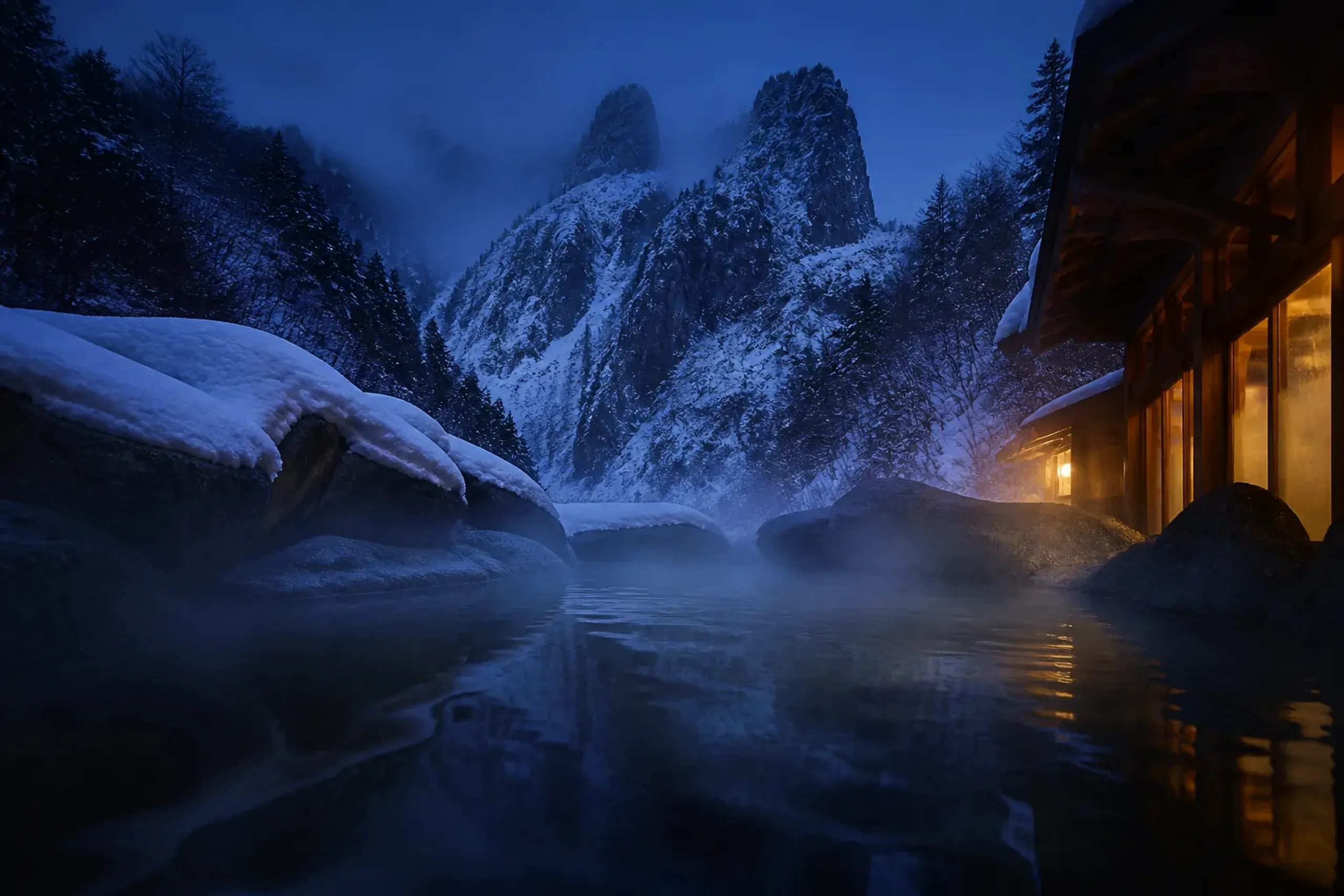
Sounkyo's gorge-side onsen make the case for staying the night rather than day-tripping.
Higashikawa & Asahidake Onsen
Calm, design-minded Higashikawa sits between Asahikawa Airport and the Asahidake trailheads. Asahidake Onsen puts you at the ropeway's foot. This is our base of choice for guests prioritising the western peaks and a softer, craft-town rhythm.
Sounkyo Onsen
Dramatic and festival-forward, Sounkyo is the place for the traverse's eastern end, the two annual festivals, and a gorge-side onsen night. Stay here when culture and Kurodake are your priorities.
For couples chaining Hokkaido into a wider trip, some of Japan's 2025–2026 openings sharpen the appeal of a two-region journey — a wilderness stretch in Daisetsuzan, then quiet recovery at a heritage ryokan elsewhere. Gōra Kadan Fuji, which opened in July 2025 with 42 suites and villas drawing on an imperial-villa legacy, is one such counterpoint for guests who want raw nature followed by imperial-class calm.
Getting There And Getting Around
Asahikawa Airport is the practical entry point, roughly an hour by road from the Asahidake side. Our private, English-speaking chauffeured transport handles trailhead staging, luggage, and the flexible timing that mountain weather demands. A driver who can reposition to the far gateway on short notice is the difference between a salvaged day and a lost one.
From there, a bespoke itinerary knits the whole thing together — hikes, onsen, festivals, and the fair-weather alternatives held quietly in reserve.
Frequently Asked Questions
Is Daisetsuzan suitable for travellers who don't hike?
Yes. The Asahidake Ropeway delivers you to alpine scenery at 1,600 metres, where flat boardwalks past Sugatami Pond offer volcanic views with minimal effort. Combined with scenic drives, waterfall stops, and private onsen, it makes a rewarding soft-adventure day.
When is the best time to visit Daisetsuzan?
Late June to September for hiking and the Traverse Pass window. Mid-September to early October for Japan's earliest autumn colours. January to March for the Sounkyo Ice Fall Festival and deep-winter onsen.
How dangerous are the bears?
Daisetsuzan is genuine brown bear habitat, and the park issues sighting notices — one dated July 7, 2026, for example. Encounters are uncommon with sensible precautions: noise on the trail, appropriate trailhead choice, correct timing, and a knowledgeable private guide who follows current park alerts.
What happens if the ropeway is closed?
Maintenance closures are published in advance. A well-built itinerary shifts to the alternate gateway — Sounkyo and Kurodake if Asahidake is down, or vice versa — plus gorge waterfalls and gateway-town experiences, so a closure costs a viewpoint rather than a day.
Why Choose Japan Royal Service
Plenty of operators can sell you a Daisetsuzan tour. Far fewer can protect it when the mountain turns.
What sets our team at Japan Royal Service apart here is operational intelligence. We track official park alerts and ropeway maintenance notices. We stage private chauffeurs at both gateways. We hold fair-weather and foul-weather versions of every day, so a closed ropeway or a bear notice becomes a graceful pivot, not a crisis. In our experience, that quiet readiness is what HNW travellers actually pay for — not the view they were promised, but the one they still get when the plan changes.
And we do it with discretion. Your identity, your itinerary, your movements through Hokkaido's wild centre stay entirely private. We match the traverse's most technical corridors with the right guide, and the softest boardwalk day with the same care. Wabi-sabi in the landscape; precision in the logistics.
To plan a private Daisetsuzan journey — whether a gentle alpine day or the full traverse — reach our team privately via WhatsApp or LINE, or contact us here to begin a tailored proposal.