In this guide
- 01Why First Light Works (And Why It Is Not A Hack)
- 02Sequence 1: Higashiyama At Dawn—Walking First, Then Withdrawing
- 03Sequence 2: A Private Breakfast That Is Actually Private (Aman Kyoto 07:00–11:00)
- 04Sequence 3: Sunday Zen Without Theater—Engaku-ji (Kamakura) 06:00–07:00
- 05Sequence 4: Kyoto Zen On A Real Schedule—Enkō-ji Sundays, Or Shunkoin’s Published Programs
- 06Sequence 5: A True “Before Opening” Example (On Published Dates)—Byodoin 06:30 Private Tour In Autumn Programming
- 07The Dawn Logistics Layer: Wake Times, Chauffeur Staging, And What To Arrange Early
- 08Frequently Asked Questions About First-Light Mornings In Japan
- 09How To Plan A Tailor-Made First-Light Itinerary (Without Overloading The Morning)
- 10Why Choose Japan Royal Service
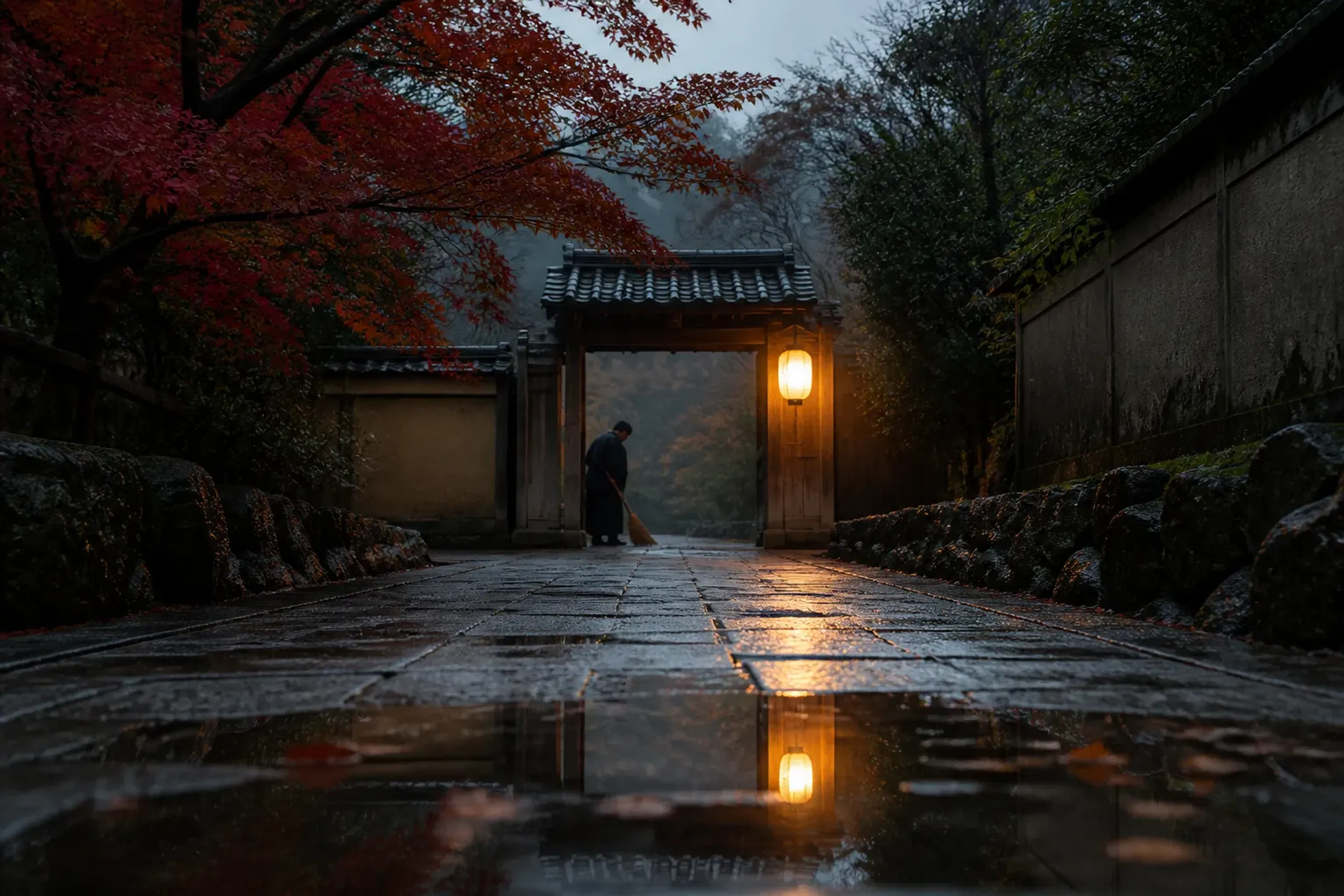
You step out while the city still holds its breath. The air feels rinsed. A delivery bicycle clicks past, then nothing—just your own shoes and the faint drag of a broom where someone is already tidying stone.
This is the hour most travelers miss. Not because it is hard, but because it is precise. Miss it by 40 minutes and the spell breaks.
Our team at Japan Royal Service builds mornings like this for guests who value quiet over proof. You don’t need a louder itinerary. You need timing, clean logistics, and the restraint to leave before the first wave arrives.
Why First Light Works (And Why It Is Not A Hack)
The logic is simple. Japan’s most visited places compress demand into a short daytime band, and the first hour after opening has the fewest decision points: fewer tour buses, fewer school groups, fewer people stopping mid-path.
It is also the most respectful way to be present. Kyoto’s official visitor guidelines are clear about behavior in sensitive areas, especially around Southern Gion—no chasing geiko/maiko, no unauthorized photos, and no treating private lanes like sets.
One hard truth. Quiet is not a private show.
Key fact: Kyoto’s official guidance also warns that unauthorized paid passenger transport by non-licensed private vehicles is illegal. Use properly licensed services and plan pickup points that don’t burden residents.
For VHNW travelers, first light is not about doing more. It is about doing one thing cleanly, then retreating—often to a private breakfast—before the public day begins.
Sequence 1: Higashiyama At Dawn—Walking First, Then Withdrawing
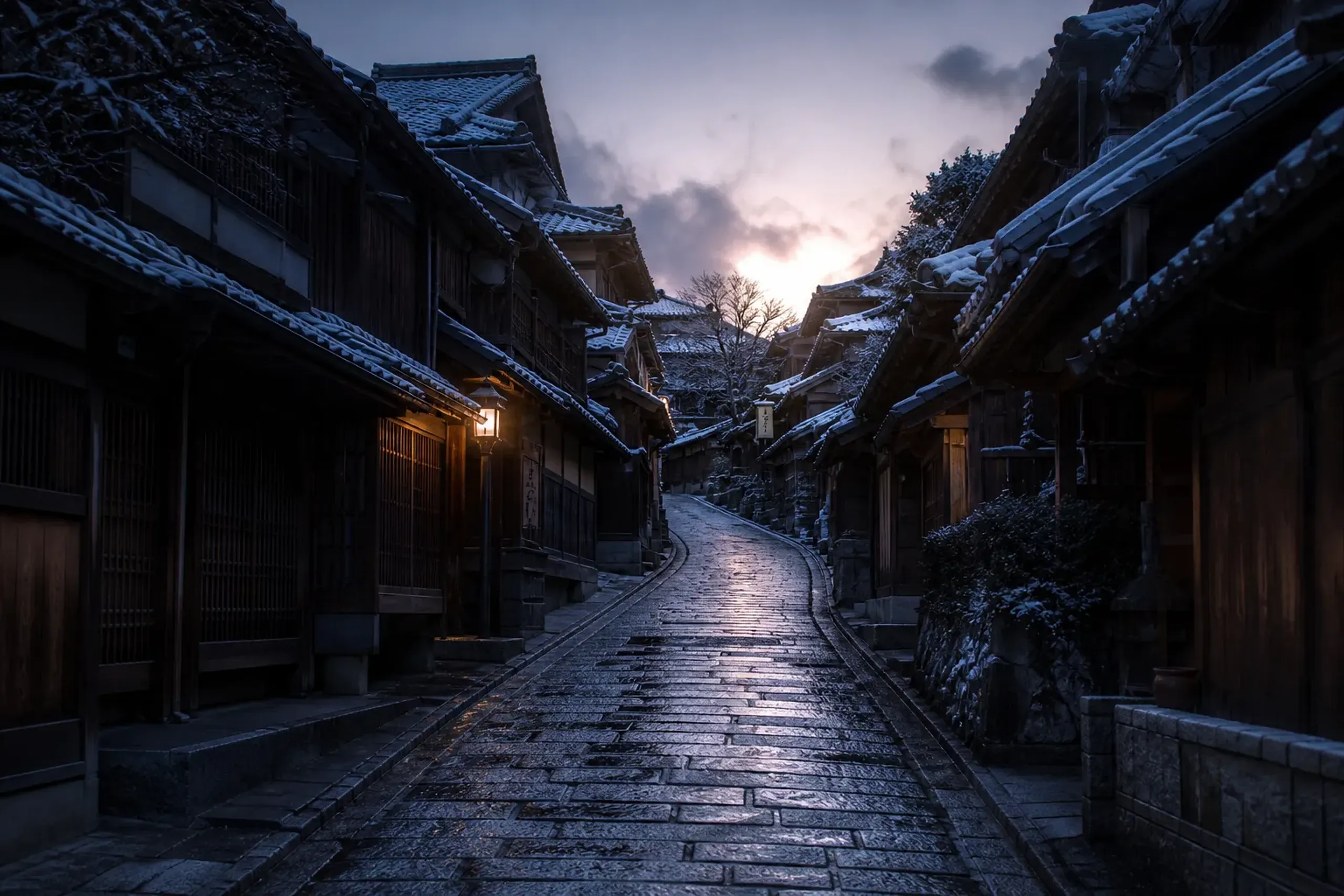
The streetlamp is still on when you reach the slope. A vending machine hums. Somewhere behind a gate, water runs into a basin with that steady, domestic sound that makes you lower your voice without thinking.
You are not hunting “empty Kyoto.” You are aiming for the narrow band when movement feels possible. The official Kyoto Travel itinerary “Higashiyama at Dawn: Kiyomizu-dera Temple to Yasaka-jinja Shrine and Gion” exists for a reason: the route is coherent before the crowds and complicated after.
Here is the repeatable way to run it. Start walking while it is still cool, then keep your first segment strictly linear so you don’t double back into the same choke points. Give the route a firm cut-off time—because the difference between 07:10 and 08:10 is not subtle in Higashiyama.
Timing anchor: Use Kyoto Travel’s “Higashiyama at Dawn” route as your backbone. Any site-specific opening hours along your exact path must be checked on the official pages and should be treated as variable by season. Mark anything not verified: [VERIFY].
How Long The Quiet Lasts
On many mornings, you get a short pocket of calm before the first large groups arrive. It is not guaranteed. That is the point.
Plan for 30–60 minutes of truly low density on the streets, then assume it changes quickly. If you want the atmosphere without the squeeze, your success metric is leaving the neighborhood before it becomes a corridor.
What Must Be Decided The Night Before
- Your start point and your stop point. No improvising in the dark.
- What you will not photograph. Private property is not content.
- Your return plan for breakfast: in-hotel, in-suite, or a simple café near your base.
Trade-off, stated plainly. A pre-dawn walk costs you late-night spontaneity. If you are arriving in Kyoto that same evening, don’t do this on day one. Sleep first.
Sequence 2: A Private Breakfast That Is Actually Private (Aman Kyoto 07:00–11:00)
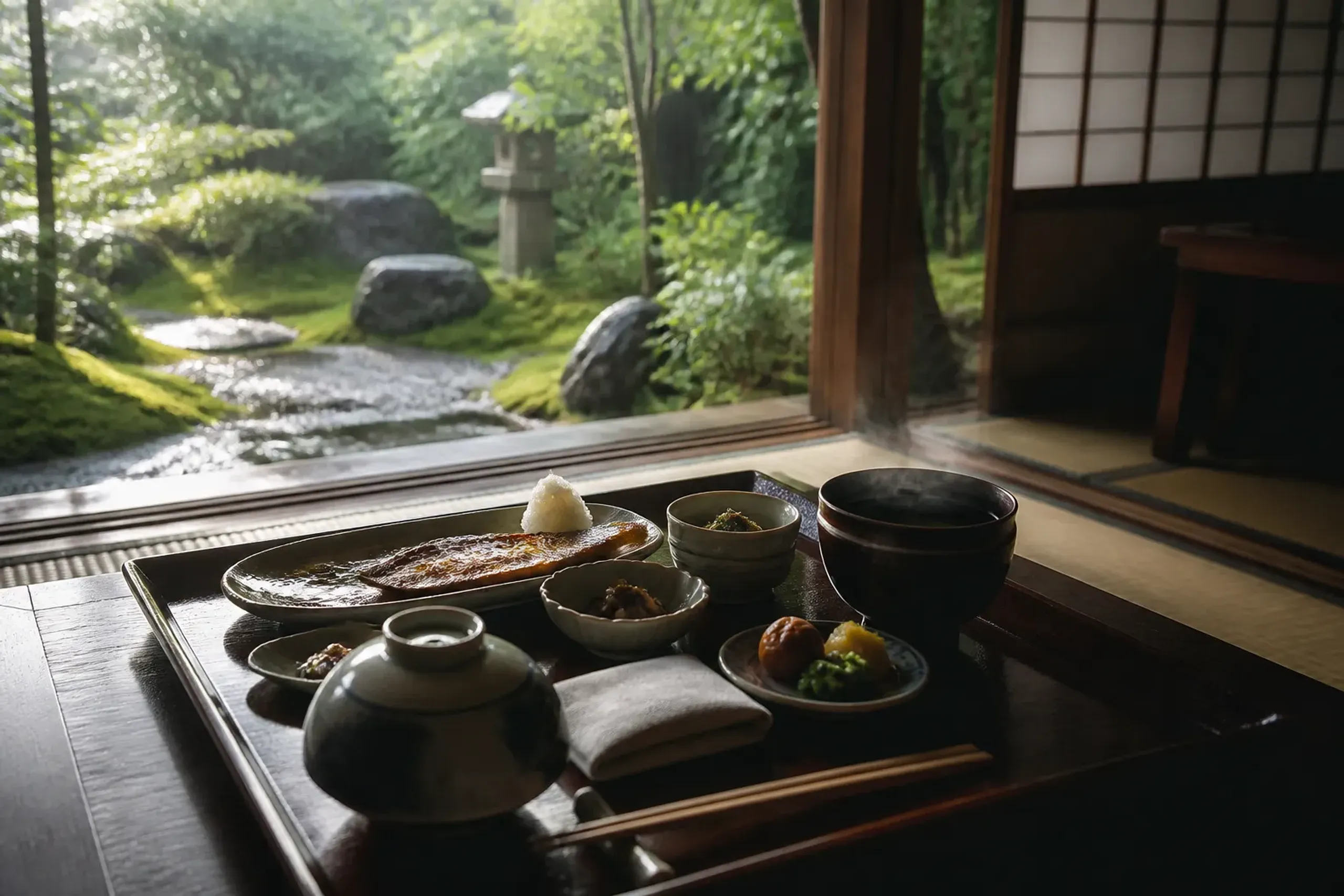
You come back while your hair still smells faintly of cold air and cedar. The corridor is quiet. The door closes and the outside world disappears, not through drama, but through thickness—carpet, wood, and a kind of hush you can only buy with space.
This is where the morning becomes sustainable. First light works best when it ends with retreat.
Aman Kyoto publishes a practical detail that makes planning honest: in-room dining breakfast is listed as 7:00am–11:00am. That window means you can take a short dawn walk, return, and eat privately without rushing into a public breakfast room at peak time.
Timing anchor: Build a two-part morning: (1) pre-breakfast movement, (2) in-suite reset. If your walk ends around 06:30–06:50, you can be seated for breakfast soon after service begins, then still have the late morning open for indoor culture when streets are loud.
A Simple Dawn-to-Breakfast Flow
- 05:30–06:45: Short, local walk near your base (avoid residential lanes that amplify footstep noise).
- 07:10–08:10: In-room breakfast, slow pace, no second location.
- 10:00 onward: Choose one indoor visit (museum, craft atelier, or a reservation-based lunch) while outdoor icons absorb crowds.
Trade-off. You will be awake while most of the building sleeps. If you are traveling with young children, this only works if the whole family genuinely rises early. If not, it becomes a negotiation every morning.
Sequence 3: Sunday Zen Without Theater—Engaku-ji (Kamakura) 06:00–07:00
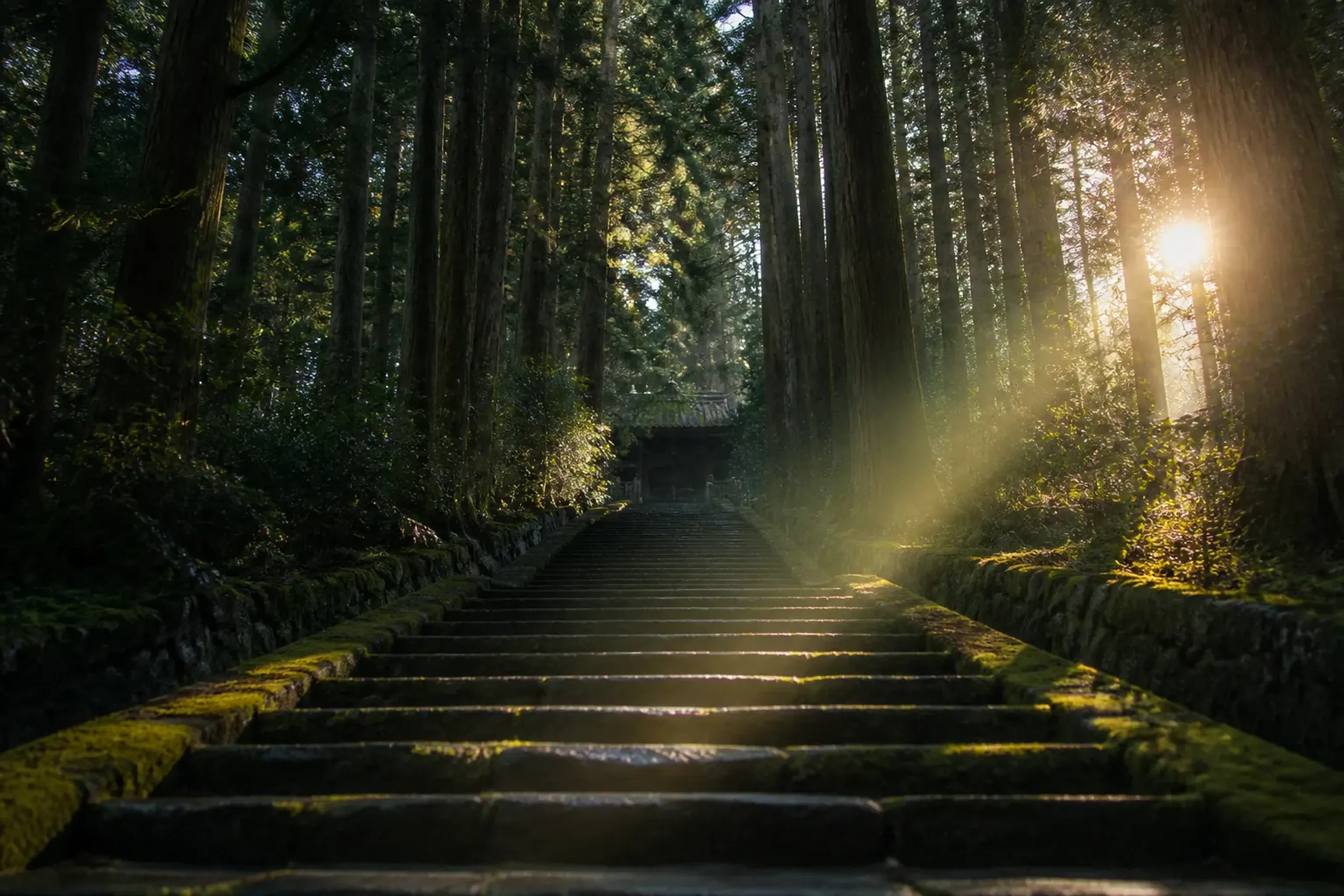
In Kamakura, the morning has a different sound. Less traffic. More birds. You approach a temple precinct and your pace changes, because the setting tells you what kind of behavior fits.
Engaku-ji is described by JNTO as holding Zen meditations on Sunday mornings from 6:00am to 7:00am. That single operational fact is rare. It gives you a concrete target instead of vague “early” language.
Here is the discipline: you do not arrive at 06:00. You arrive early enough to enter, settle, and not make your presence a disturbance. For many guests, that means being at the gate with a margin—your exact buffer depends on the day’s entry process and signage, which should be confirmed on arrival and treated as [VERIFY] if not published in English.
Timing anchor: Sunday 06:00–07:00 is the fixed block. Everything else—transport, arrival buffer, post-meditation exit—hangs from that.
What Comes After (So The Morning Does Not Collapse)
Do not schedule a second “serious” moment immediately after. Give yourself a decompression segment.
- 07:10–08:00: Quiet walk, then a simple breakfast.
- 08:30–09:30: One scenic stop, then leave before the day-trippers thicken.
Trade-off. This is not a casual add-on after a late Tokyo dinner. If your trip rhythm is nightlife-forward, choose a different morning and keep this one free.
Sequence 4: Kyoto Zen On A Real Schedule—Enkō-ji Sundays, Or Shunkoin’s Published Programs
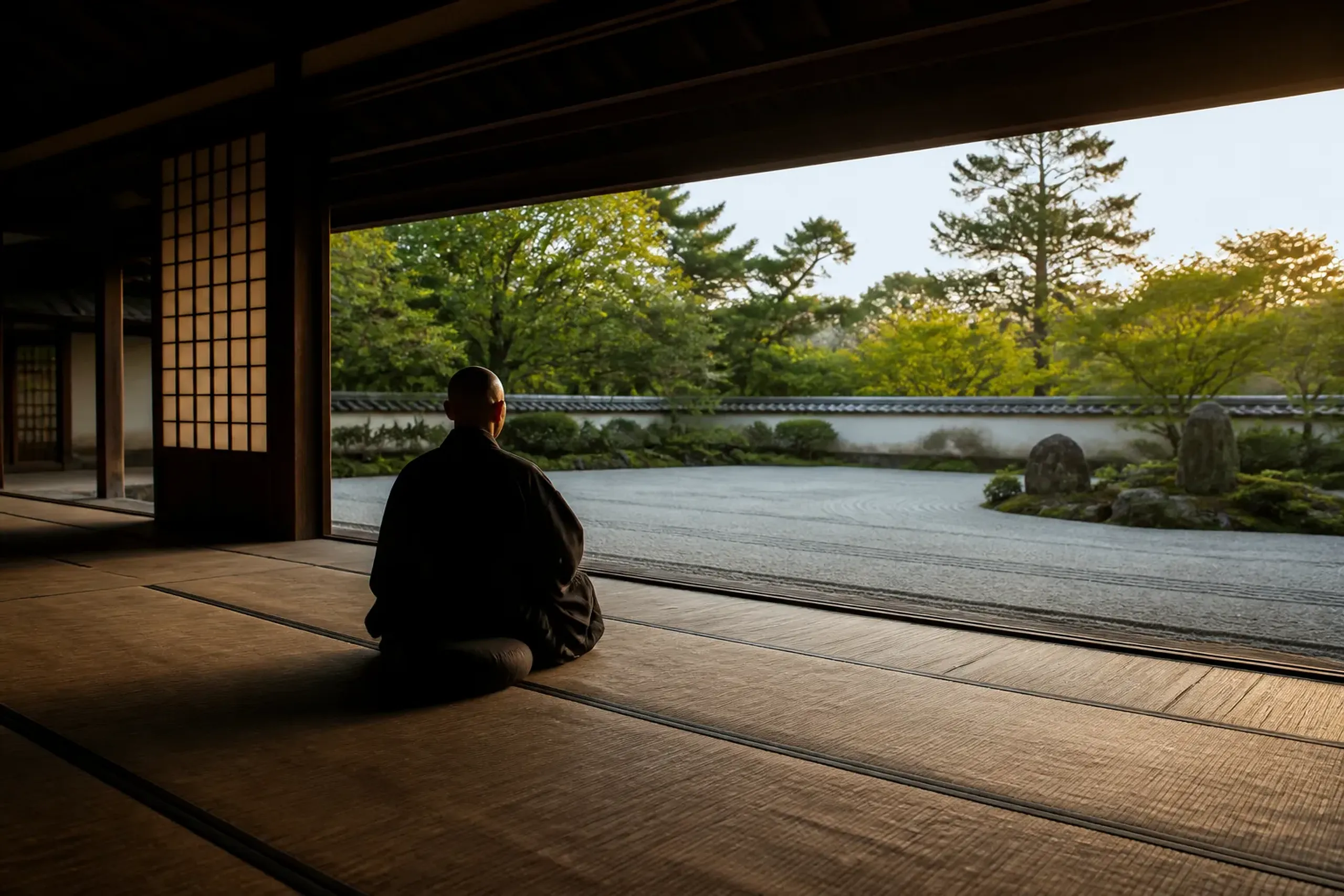
Kyoto before breakfast is mostly soundless, but not empty. A groundskeeper moves a rake across gravel. A neighbor opens a shutter. You feel, quickly, that the city is lived-in and your presence must be light.
For guests who want a true practice rather than a photo, we point to temples that publish their own structure. Enkō-ji states on its official site that seated Zen meditation sessions are held in the early morning every Sunday. Shunkoin publishes a “Zen Immersion” schedule for March–June 2026, which is a useful signal: this is programmed time, not something you should expect on demand.
Timing anchor: Treat temple practice like a performance calendar. You work off published schedules, not assumptions. For any time not explicitly listed on the official site, mark it [VERIFY].
How To Run It Without Rushing
- Arrive early enough to read rules quietly and store phones away.
- Plan a single exit route. No lingering near gates with cameras.
- Keep the rest of the morning light: one garden, one coffee, then back to your base.
Trade-off. A structured session can feel strict. If you are seeking a softer morning, choose a garden walk instead and keep the temple visit for a normal hour.
Sequence 5: A True “Before Opening” Example (On Published Dates)—Byodoin 06:30 Private Tour In Autumn Programming
Uji has its own quiet. The air is cooler than central Kyoto. The river keeps moving, indifferent, and the town feels awake in small ways—shutters, kettles, the first commuter crossing a bridge.
When travelers ask whether “private early access” is real, we point to published examples. HOTEL THE MITSUI KYOTO’s fall programming press release lists a Byodoin Temple Early Morning Private Tour starting at 6:30am, with a stated price of ¥400,000 per group and an 8-person maximum on specific dates in autumn programming.
This is not a vague promise. It is a time-stamped product in a primary-source document. That is why it matters.
Timing anchor: 06:30 is the fixed start for the cited program. The key operational nuance is that it is date-bound. If your travel dates do not match, do not build your morning around it.
How To Think About This Kind Of Access
- It is calendar-led. You plan the trip around the dates, not the reverse.
- Group size is capped. Keep your party lean if you want calm.
- Expect rules. Silence is part of the permission.
Trade-off. This style of morning can pull you away from Kyoto’s walkable core, which means earlier alarms and more dependence on transport precision.
The Dawn Logistics Layer: Wake Times, Chauffeur Staging, And What To Arrange Early
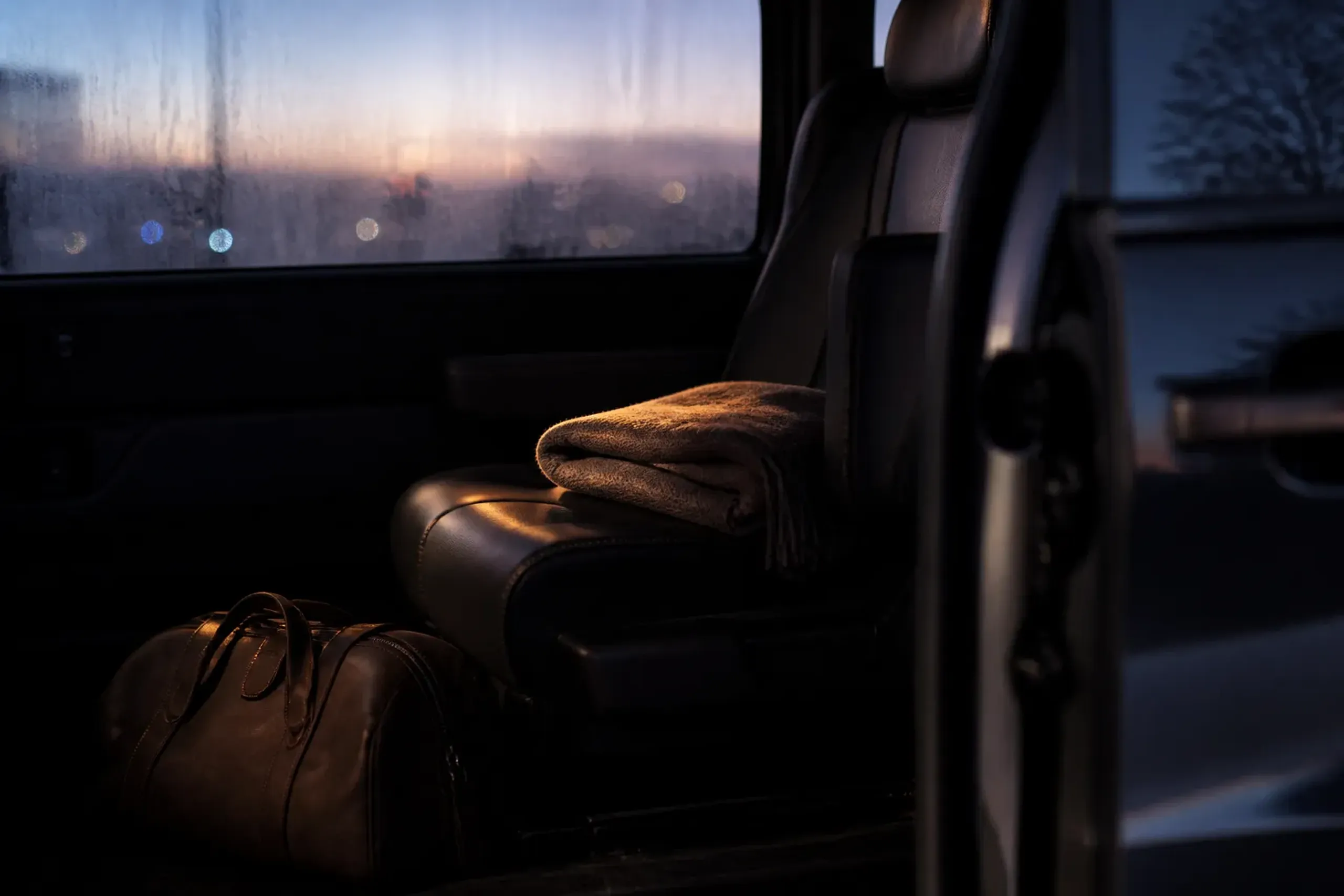
First light fails for predictable reasons. Shoes that squeak. A hotel breakfast that starts too late. A pickup that forces you to wait outside, exposed, while the street wakes up.
Our approach is to engineer the boring parts so the quiet feels effortless. That includes the first mention of private transportation because dawn routes are rarely forgiving of missed trains or confused taxi queues.
Realistic Wake Times (And Who Should Skip Them)
For a 06:00 fixed start (like Engaku-ji’s Sunday block), many guests do best with a 04:45–05:05 wake time, depending on distance and how fast they move in the morning. It is early. That is the price of silence.
Who should skip it: families with very young children, travelers landing the night before, and anyone who becomes sharp-tempered when hungry. No moralizing. Just pattern recognition.
What To Set The Night Before
- Clothes laid out, including a warm layer even in warmer months.
- One small bag only. No repacking in the hallway.
- Breakfast plan locked: in-room, early hotel service, or a simple fallback.
Ethics And Etiquette: Quiet Access Requires Quiet Conduct
Kyoto’s official guidance is not optional reading. It is part of the luxury brief now, because it protects residents and it protects your experience from turning awkward.
Keep it simple. No flash. Don’t block lanes. Don’t treat Southern Gion like a backdrop. And never step onto private property for a “better angle.”
Key fact: Japan’s Tourism Agency (MLIT / Kankocho) publishes overtourism initiatives and last updated the referenced page on April 24, 2026—official policy context that supports crowd-dispersal strategies like early starts.
Where Wabi-Sabi And Hidden Japan Actually Show Up
wabi-sabi is not a lecture in a museum. It is a timing choice: you choose the mossy stone silence over the mid-day crush, and you accept that the reward is subtle.
Hidden Japan is the same. It is not “secret.” It is simply the Japan that Google cannot plan into a 10:00am slot, because the most delicate moments happen when the city is still private.
Frequently Asked Questions About First-Light Mornings In Japan
How Early Is “First Light” In Real Minutes?
For structured practices, it can mean being present by 06:00 (example: Engaku-ji’s Sunday 06:00–07:00 meditation as described by JNTO). For city walks, it often means moving before the typical breakfast rush, but any claim of “empty” should be treated cautiously and site-specific details should be checked [VERIFY].
Is There An Official “Kyoto At Dawn” Experience?
Yes. Four Seasons Hotel Kyoto offers a bookable experience titled “Kyoto at Dawn,” described as visiting iconic sites in early morning calm before crowds, departing from the hotel with an English-speaking guide. Guests who want to compare approaches can use it as a benchmark for what a hotel defines as dawn logistics.
How Do I Avoid Breaking Kyoto’s Etiquette Rules While Photographing?
Follow Kyoto Travel’s published guidelines: avoid unauthorized photos in sensitive areas, do not trespass or photograph private property, and do not follow geiko/maiko. Plan your route so you are not stopping in narrow lanes where locals need to pass.
Does Japan Royal Service Handle Temple Reservations Or Third-Party Experiences?
On public pages, we share planning guidance and verified operational details from official sources. For private coordination and tailored advice based on your dates, you may contact our concierge team directly.
What If I Want The Calm But Not The 5:00am Alarm?
Then we design a different kind of quiet: later-morning indoor culture, reservation-based lunches, and neighborhoods that disperse crowds better. The point is not suffering for silence. It is choosing the right trade-off for your travel style.
How To Plan A Tailor-Made First-Light Itinerary (Without Overloading The Morning)
Start with one fixed anchor. A published practice time. A breakfast service window. A hotel departure that makes sense. Then build only one more element.
The highest-performing mornings are short. They end early, and they protect the rest of the day.
If you want us to shape a tailor-made itinerary around your dates, we will ask for constraints first: your wake tolerance, your walking tolerance, and your need for privacy. We will also ask what you refuse to do—because restraint is where this style of travel becomes elegant.
Why Choose Japan Royal Service
Luxury competitors often sell dawn as a product. Our team at Japan Royal Service treats it as a discipline: precise minutes, discreet movement, and a plan to withdraw before crowds turn your morning into a performance.
We are built for VHNW preferences—privacy that does not announce itself, Hidden Japan that depends on introductions handled privately, and shokunin craft sessions designed around real schedules rather than marketing language. Discretion is the baseline. Always.
If you want first light done properly—without guesswork—reach our team privately via WhatsApp or LINE, or contact us here.