In this guide
- 01Why Nishijin Rewards The Unhurried Traveller
- 02The Anchor: Kombu To Men Kiichi
- 03Before Lunch: A Nishijin Craft Stop
- 04The Half-Day, Paced Hour By Hour
- 05Getting Around Nishijin Without The Friction
- 06Planning For 2026: Taxes, Timing, And A Seasonal Variant
- 07What To Do If Kiichi Is Fully Booked
- 08Questions Travellers Ask Us
- 09Why Choose Japan Royal Service
Most Kyoto lunches feel like a pin dropped on a map. You arrive, you eat, you leave. The rest of the day scatters into taxi queues and half-remembered temple stops.
A meal at Kombu to Men Kiichi deserves better. It is not a place you rush toward, phone in hand, hoping the reservation holds. It is the centrepiece of a quiet Nishijin afternoon — a slow arc that begins with looms and ends with kelp-clear broth.
Our team at Japan Royal Service designs that arc. In this guide we walk you through a private half-day built around Kiichi: a craft stop before lunch, the meal itself, and a small, considered piece of souvenir curation on the way out. No checklist. No sprint. Just Nishijin, unfolding at its own pace.
Why Nishijin Rewards The Unhurried Traveller
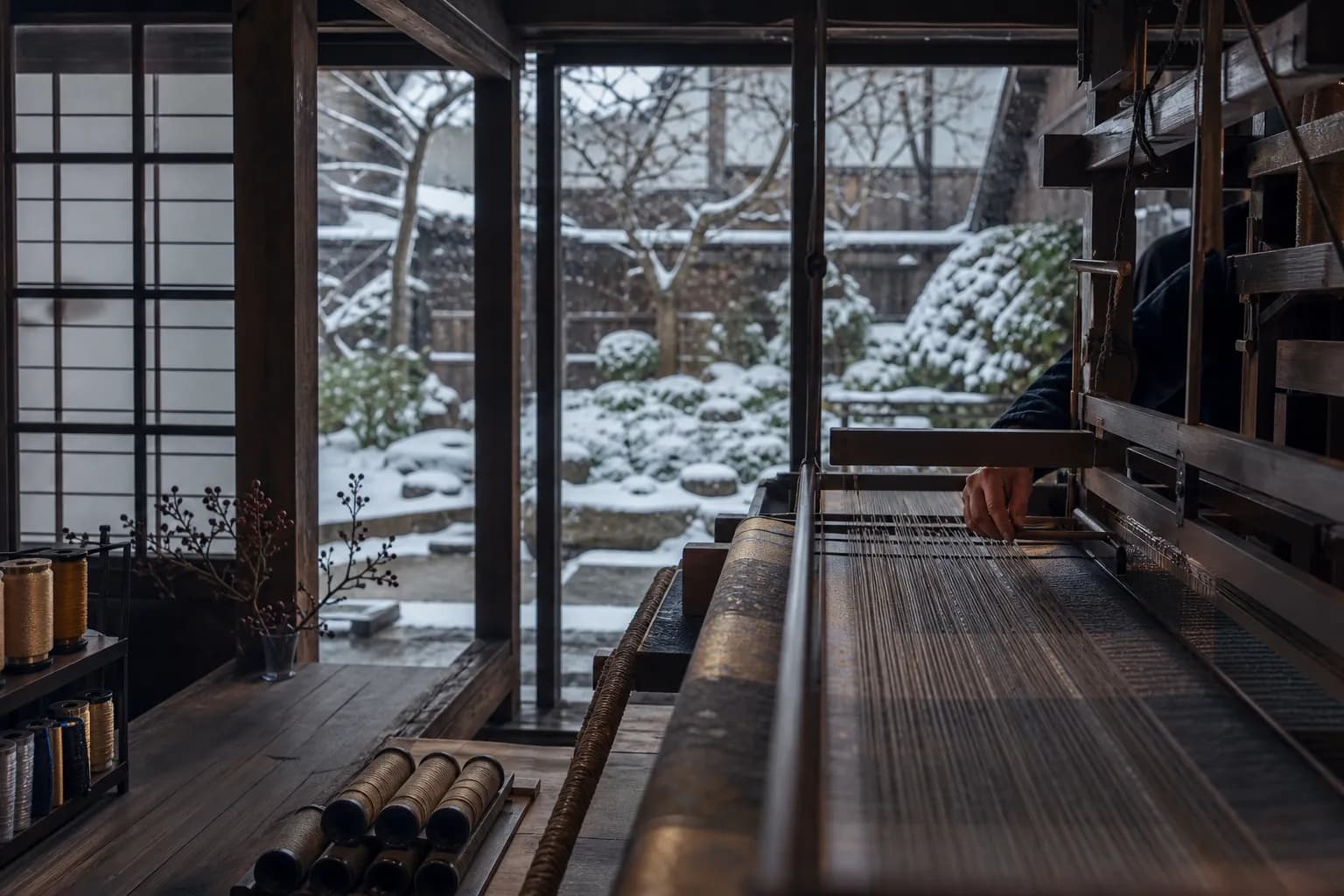
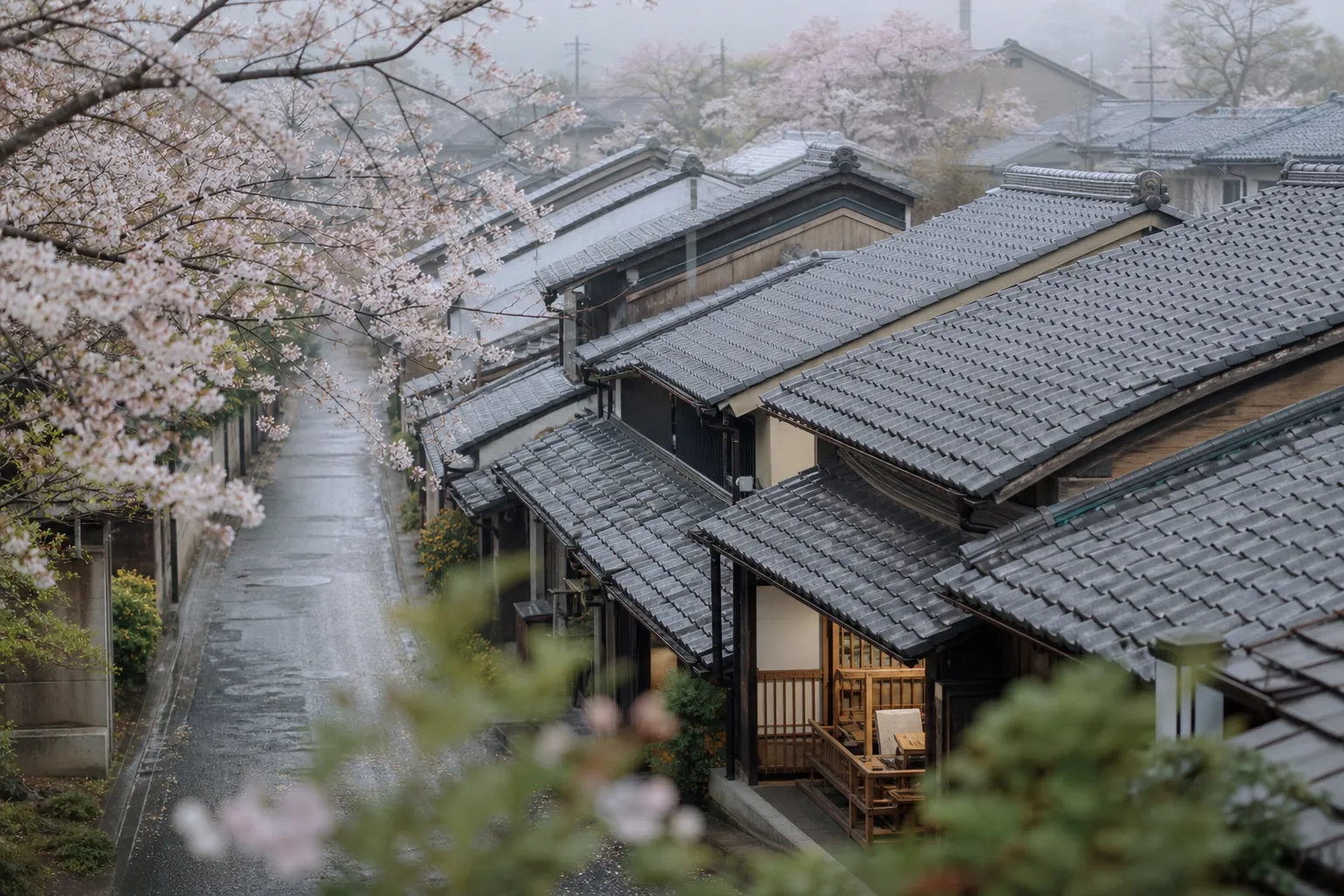
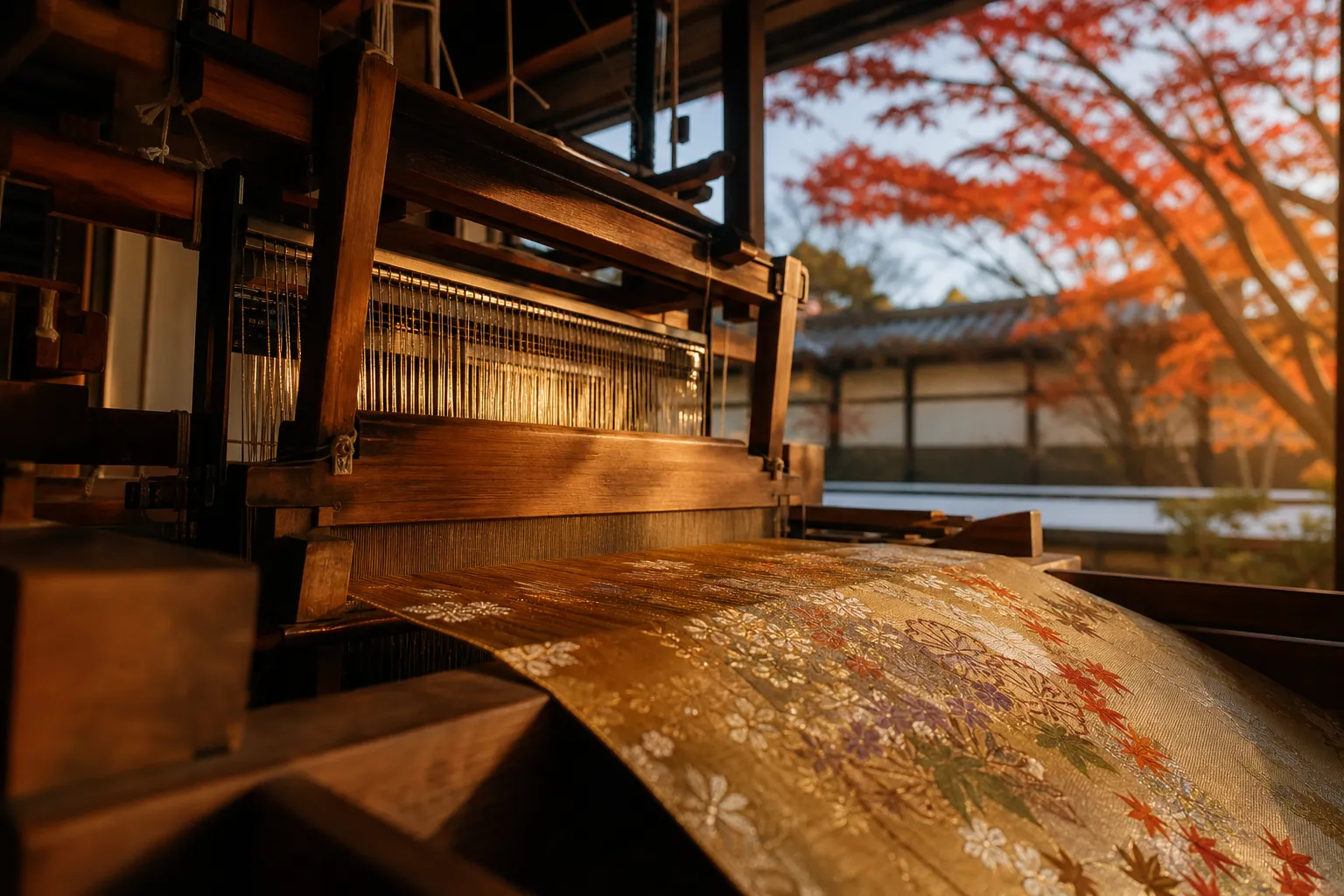
Nishijin is Kyoto's old weaving quarter. Narrow lanes. Low machiya rooftops. The occasional clack of a loom drifting through a half-open door.
This is a residential district, not a theme park. That is precisely its value. The Kyoto that Google struggles to surface tends to live behind exactly these unmarked frontages — the ateliers, the family kombu house, the workshop where a weaver still threads gold by hand.
Nishijin-ori, the district's silk brocade, has clothed emperors and Noh stages for centuries. In our experience, guests feel the weight of that lineage more when they are not being marched between photo spots. A residential neighbourhood asks for a lighter footprint. Quiet voices, small groups, respect for private thresholds.
Kyoto's own Kyoto Tourism Moral — the city's code of conduct for sustainable travel — asks the same of every visitor. Our route is designed around it: low-impact scheduling, private arrivals, and a pace that treats Nishijin as a living place rather than a backdrop.
The Anchor: Kombu To Men Kiichi
Everything hinges on Kiichi. So we build outward from it.
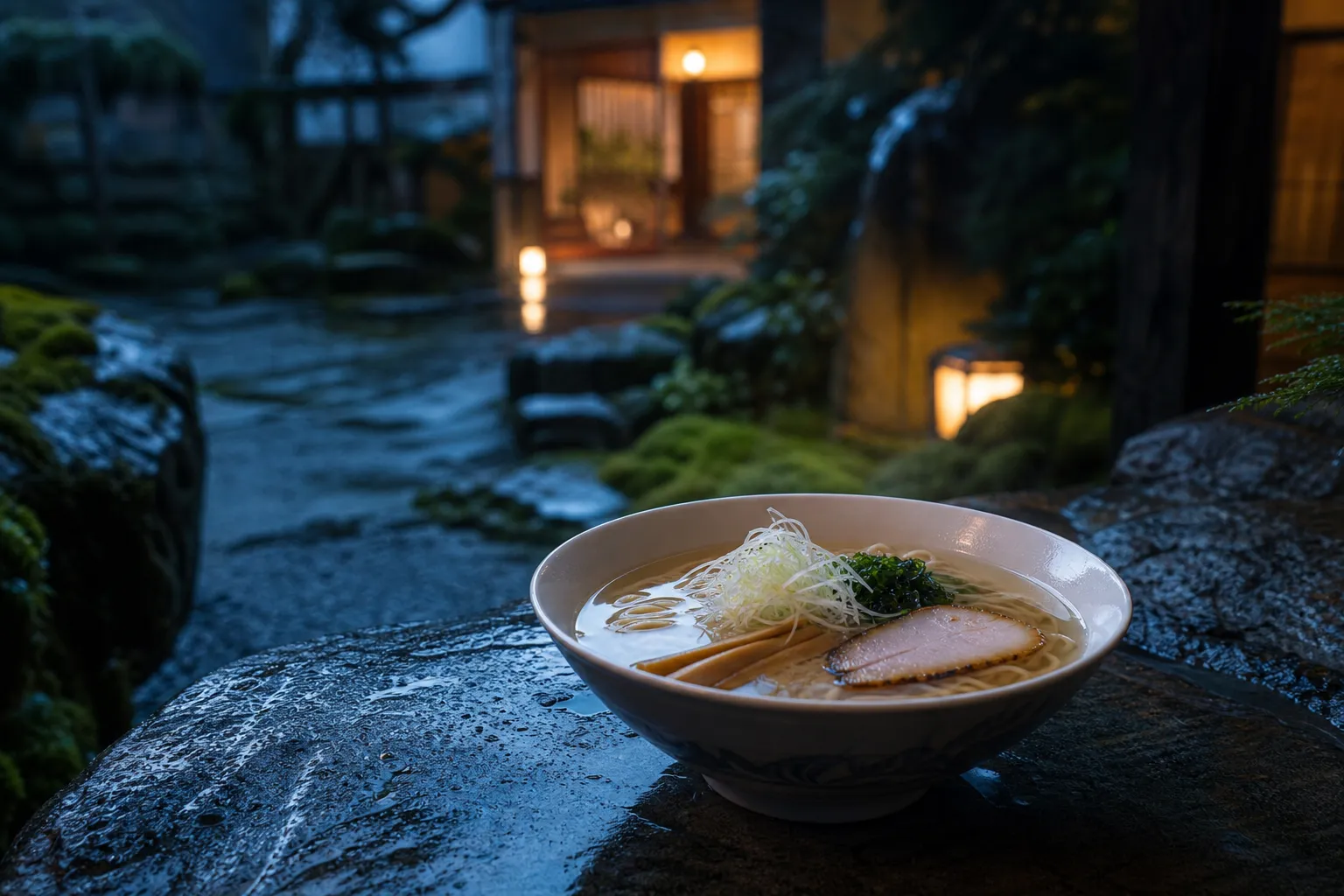
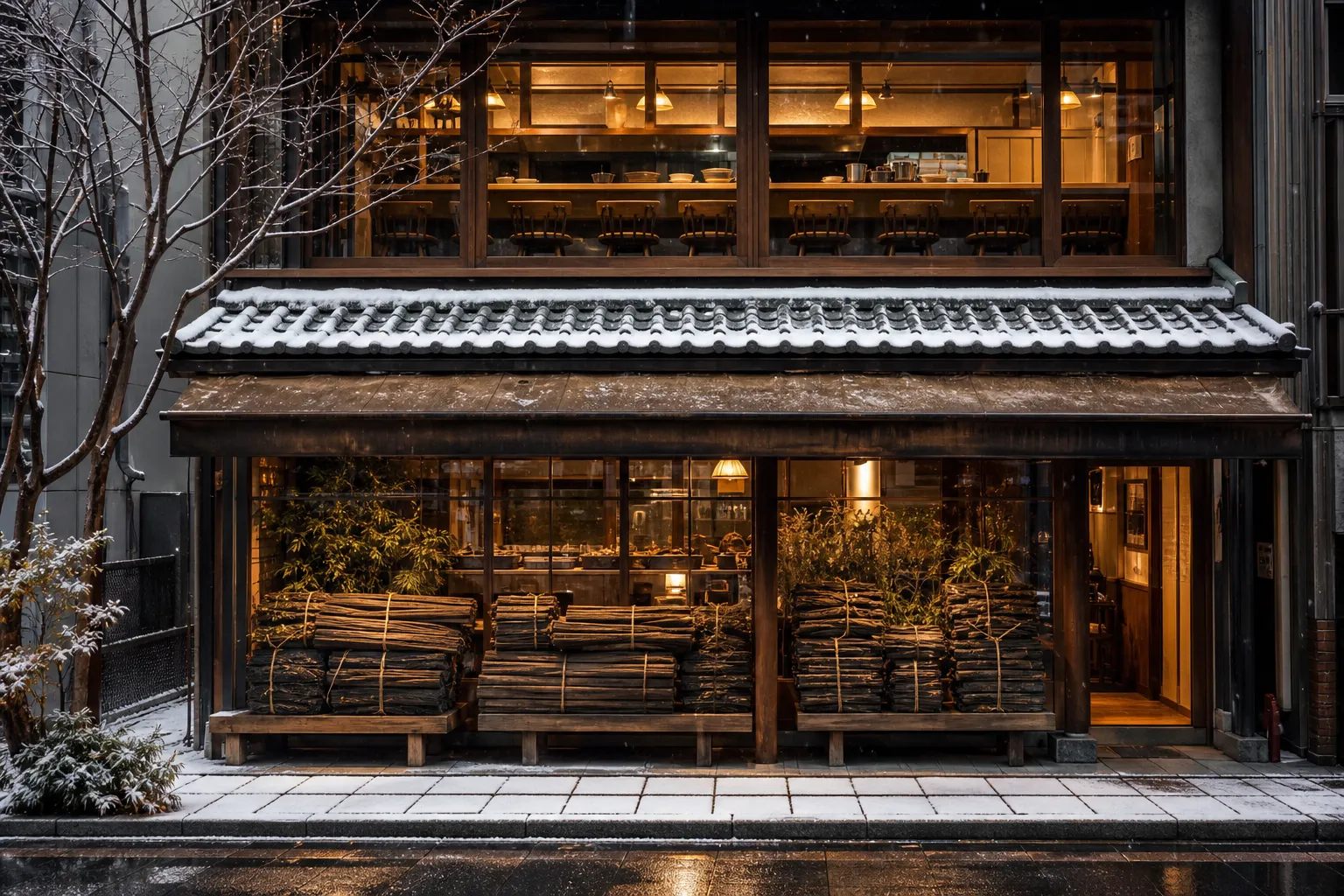
Kombu to Men Kiichi (昆布と麺 喜一) sits on the second floor of Itsutsuji no Konbu (五辻の昆布), a kombu house founded in Meiji 35 — 1902. The shop has sold kelp for well over a century. The ramen counter upstairs is comparatively young, and it exists for one reason: to let you taste what a lifetime of handling kombu can do to a bowl of noodles.
This is not a ramen shop that happens to use good stock. It is a kombu education that arrives in the form of a meal.
What Makes The Broth Different
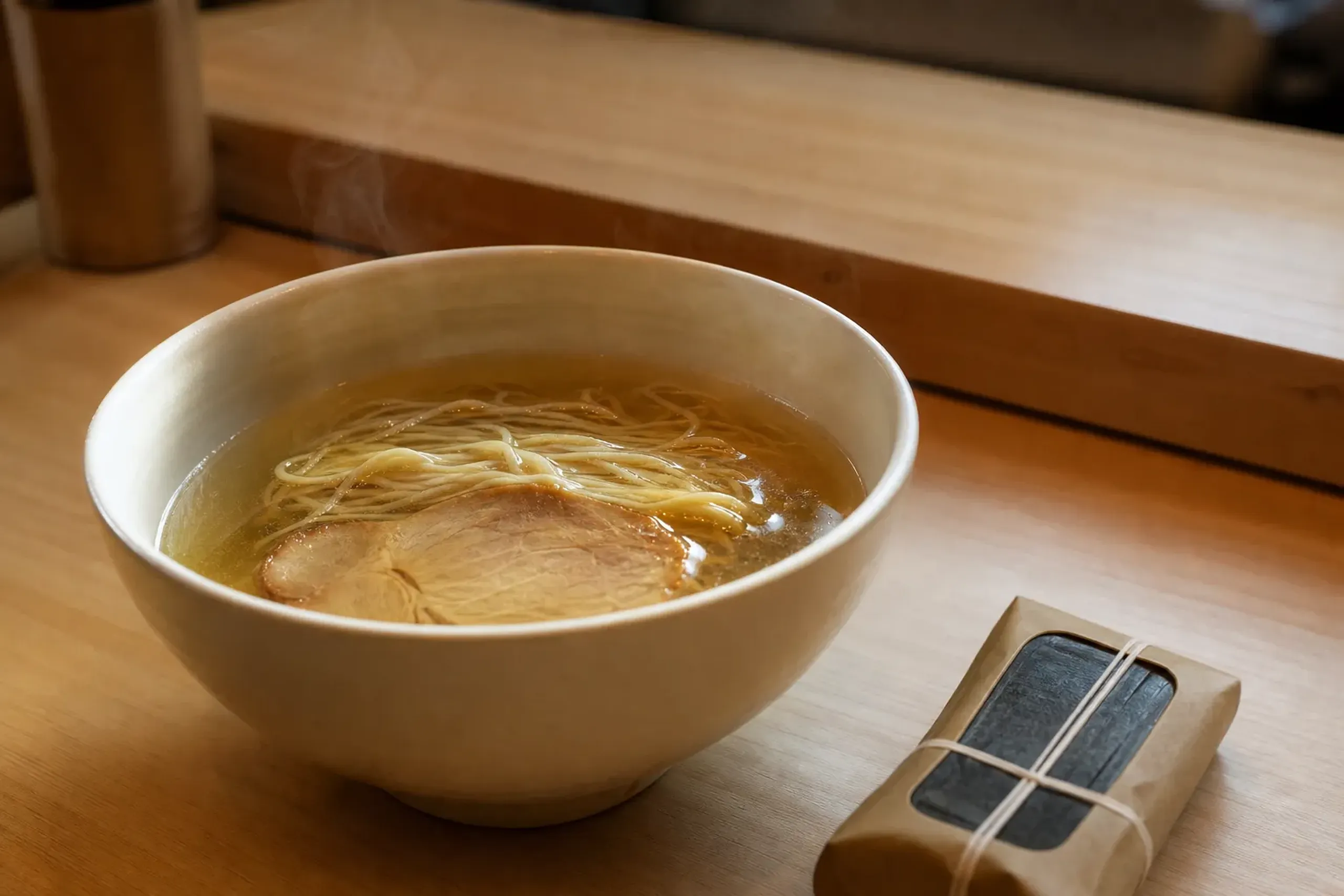
Kiichi builds its base from a blend of prized kelp — Rishiri kombu (利尻昆布), Rausu kombu (羅臼昆布), and Makombu (真昆布). Each brings something distinct. Rishiri is treasured across Kyoto's kaiseki kitchens for the clear, restrained stock it yields.
Then there is the water. The kitchen uses extremely soft water — hardness effectively zero — produced through reverse-osmosis purification. Soft water coaxes umami from kombu without muddying it. The result is a broth that reads as delicate rather than heavy, closer in spirit to a fine dashi than to a rich tonkotsu.
Dashi itself is disarmingly simple: water, kelp, patience. Kombu dashi in particular is made by soaking or gently warming kombu until the water takes on its quiet glutamate depth. Kiichi lets you watch this idea play out at the counter.
The Kombu-Water Tasting And The Oboro Demonstration
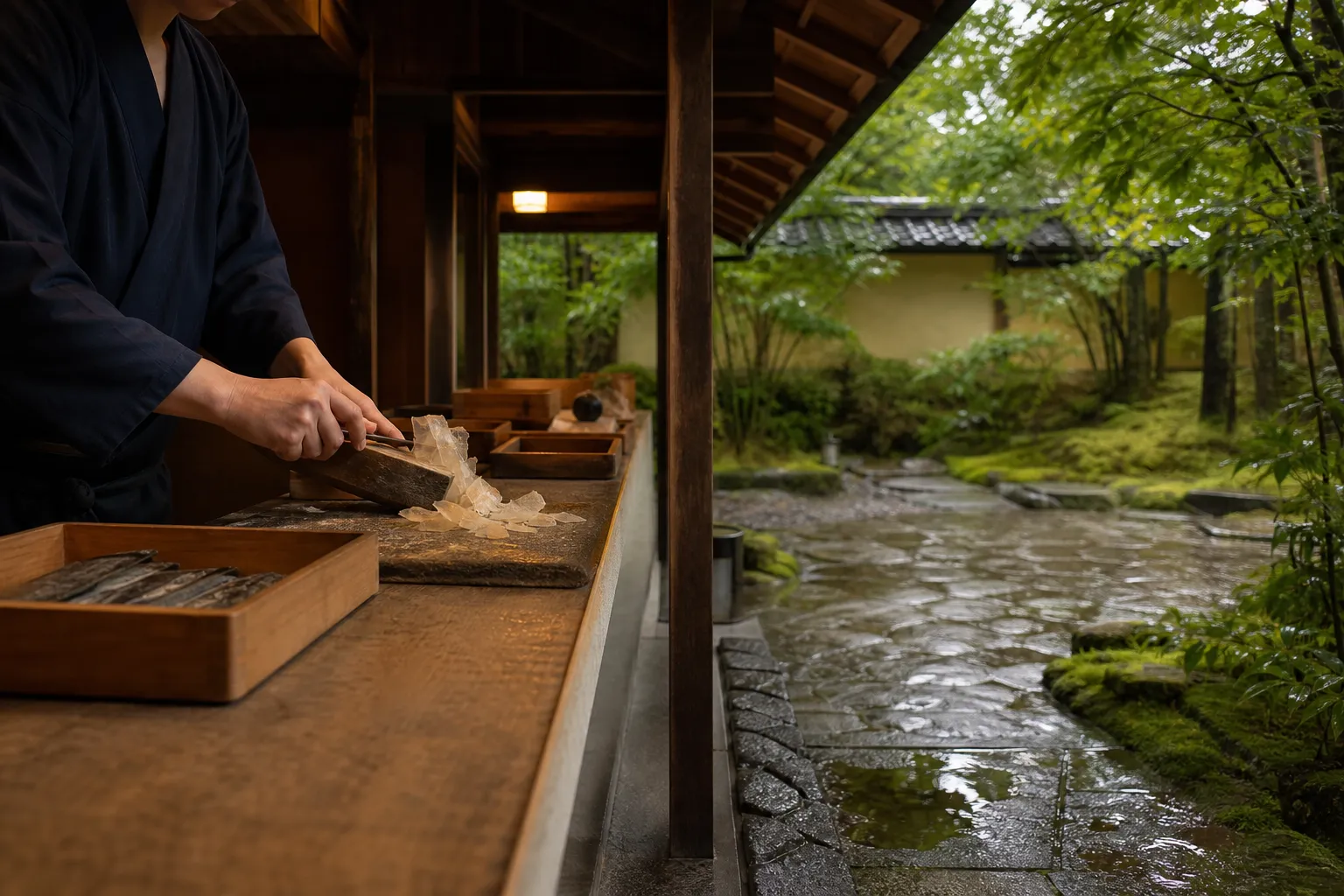
The house does more than feed you. According to fisheries-industry reporting, Kiichi offers a kombu-water tasting and an oboro-kombu shaving demonstration — a craftsman shaving whisper-thin ribbons from a block of pressed kelp.
It is a small piece of theatre. Watch it. The tissue-fine sheets that fall away explain, better than any menu, why kombu commands the reverence it does in Kyoto cooking.
Key fact: Kiichi is reservation-only. Since June 1, 2023, guests must purchase at least one item from Itsutsuji no Konbu — the shop below — in addition to the ramen. Locals call it the "one-konbu" system. Plan for it; it doubles neatly as your take-home souvenir.
Before Lunch: A Nishijin Craft Stop
Arrive at Kiichi cold and the broth is merely lovely. Arrive after an hour among the looms and it becomes the closing note of a longer sentence about Nishijin craft. That is the whole point of pacing.
We offer two pre-lunch openings, depending on your appetite for hands-on versus refined.
Option A: Nishijin Textile Center
The Nishijin Textile Center, run by the Nishijin Textile Industrial Association, is the district's public heart. Artisan weaving demonstrations run on the floor. There is a museum layer, a shop, and — for those who want to feel the thread between their fingers — hands-on weaving experiences.
It suits first-time visitors and multi-generational groups. Children can try a small loom; grandparents can watch a master at work. A gentle, legible introduction to a craft that can otherwise feel opaque.
Option B: HOSOO Flagship
For guests who already know their way around fine textiles, we lean toward HOSOO. Founded in 1688 in Nishijin, HOSOO has spent three centuries at the summit of Japanese weaving and now applies that expertise to contemporary interiors and lifestyle pieces. Its flagship carries textiles and objects you will not find on any department-store floor.
Japan's national tourism organisation profiles HOSOO in its luxury vertical for good reason. The house's story — heirloom brocade reimagined for the present day — is exactly the heritage-meets-modern thread that discerning travellers respond to.
There is a live version of that story, too. In 2025, the Associated Press reported that Nishijin-ori weavers are experimenting with AI as a design collaborator, a way of keeping the craft alive amid falling kimono demand. Old looms, new tools. It gives a HOSOO visit an unexpectedly current edge.
A Quieter Third Door
If you want something smaller still, the Orinasu-kan Museum of Hand-Weaving sits in Nishijin beside a working weavers' workshop — a hushed, intimate space where hand-weaving is preserved rather than performed. Our concierge can suggest which of the three best fits your morning and your group.
The Half-Day, Paced Hour By Hour
Here is how the pieces settle into an unhurried afternoon. Timings are illustrative; we shape them to your reservation slot at Kiichi and your walking pace.
| Segment | What Happens |
|---|---|
| Private pickup | Collection from your hotel by chauffeur; a calm, air-conditioned start with no taxi queue. |
| Craft stop (about 60–75 min) | Nishijin Textile Center, HOSOO, or Orinasu-kan — matched to your interests. |
| Short transfer | A brief drive or gentle walk through Nishijin's back lanes toward Itsutsuji no Konbu. |
| Lunch at Kiichi (about 60 min) | Kombu-water tasting, oboro demonstration, and the noodles themselves. |
| Souvenir curation (about 20 min) | The "one-konbu" purchase downstairs, chosen with guidance rather than guesswork. |
| Return or extend | Back to your hotel — or onward to a temple, garden, or river walk at your leisure. |
Notice what the schedule protects: breathing room. Nothing is stacked back to back. The gaps are the luxury.
Getting Around Nishijin Without The Friction
Nishijin is not on a subway line. That single fact quietly ruins many a self-planned afternoon.
Kyoto buses reach the district, but they run packed in high season and the stops sit a walk from the shop fronts. Taxis work until it rains, or until the driver cannot find a lane barely wide enough for one car. Neither respects a fixed reservation window like Kiichi's.
A private chauffeur solves the whole equation. Our vehicles — a Lexus LM 500 for couples wanting space, a Toyota Alphard for families, a Mercedes V-Class for a larger group — wait discreetly, carry your parcels, and reappear the moment you step out. In a residential quarter, arriving quietly by private car is also simply the more courteous way to visit.
Our English-speaking guides do the connective work: interpreting the oboro demonstration, easing you through the one-konbu selection, and narrating the walk between looms and lunch so the morning reads as one story.
Planning For 2026: Taxes, Timing, And A Seasonal Variant
Two practical notes will shape any Kyoto trip in 2026.
The Accommodation Tax Change
Kyoto's accommodation tax rates changed for stays beginning March 1, 2026. It is charged per night at checkout by your hotel or ryokan, not on tours or meals. The city's official notice outlines the revised structure. Small in the scheme of a luxury stay — but worth knowing before you see the folio, so nothing at checkout surprises you.
A Twilight Variant: The Nishijin Tanabata Festival
If your visit lands in early July, the half-day can become an evening. The Nishijin Tanabata Festival takes place at the Nishijin Textile Center on July 4–5, 2026, from 5pm to 8pm, with hand-weaving experiences and yukata dressing (dressing requires advance reservation).
Reworked around it, the afternoon becomes a craft-to-culture twilight: an earlier Kiichi lunch, then the festival as the light softens. A different mood entirely — festive, lantern-lit — for the same district.
A Base To Match The Pace
Kyoto's 2026 hotel openings suit this unhurried spirit. The Imperial Hotel, Kyoto opened March 5, 2026 near Gion, offering a culturally grounded stay rather than high-rise spectacle. Capella Kyoto is slated to open in late March 2026, with Shiseido's first spa service launching there from March 22, 2026. Either makes a serene anchor for a Nishijin day; our concierge can advise on which neighbourhood best matches your rhythm.
What To Do If Kiichi Is Fully Booked
Kiichi is small and reservation-only, and it does fill. So we always hold a plan behind the plan.
The Nishijin craft stop stands entirely on its own — the looms and the weaving experience are worth the morning regardless. For the culinary half, Kyoto is threaded with kaiseki and small counters where dashi is treated with equal seriousness. Our team can redirect to an alternative kombu-forward or dashi-centred table so the day's through-line — craft to broth — survives intact.
The narrative matters more than any single address. Nishijin makes; Kyoto's kitchens transform. As long as that arc holds, the afternoon holds.
Questions Travellers Ask Us
Is Kombu to Men Kiichi really just a ramen shop?
In form, yes — you eat noodles in broth. In substance, no. It is run by a kombu house dating to 1902 and functions as a tasting of what fine kelp and ultra-soft water can do. The kombu-water tasting and oboro shaving demonstration frame it as an education, not a quick bowl.
Do I have to buy kombu to eat there?
Yes. Since June 1, 2023, the one-konbu system requires at least one purchase from Itsutsuji no Konbu alongside your meal. We treat that requirement as the day's souvenir — something you would want to carry home anyway.
How long is the half-day?
Roughly four hours door to door, including private transfers, a craft stop, lunch, and souvenir time. It leaves your afternoon free for a temple, a garden, or simply rest.
Can this work for a family with children?
Yes. The hands-on weaving at the Nishijin Textile Center engages younger guests, and a private vehicle removes the strain of buses and walking in the heat. We size the car to your party.
When is the best time of year?
Nishijin is comfortable in spring and autumn. Early July brings the Tanabata Festival variant. High summer is manageable with private, air-conditioned transport between short indoor stops.
Why Choose Japan Royal Service
Anyone can find a photo of a ramen bowl online. Far fewer can turn a reservation-only lunch into a paced, dignified Nishijin afternoon that respects both your time and the neighbourhood you move through.
That is the work our team at Japan Royal Service does. We hold the reservation logic, the private chauffeur, the English-speaking guide who reads an oboro demonstration aloud, and the local judgement to route you courteously through a residential quarter — all in line with Kyoto's own sustainable-tourism expectations. Our discretion is absolute; your itinerary and identity stay with us.
For deeper Nishijin and kombu context, our related reading includes how to visit Kombu to Men Kiichi and what Kiichi teaches about umami.
To design your private half-day around Kiichi — with Nishijin craft, seasonal timing, and a chauffeur who anticipates your pace — contact our concierge for a tailored proposal. Reach our team directly via the contact form or WhatsApp to begin a private conversation.