In this guide
- 01Why Is Geibikei Gorge Famous For A Single-Pole Boat Ride?
- 02How Long Is The Geibikei Gorge Boat Ride And What Happens During It?
- 03What Does “Geibikei” Mean, And Why Is Shishigahana Important?
- 04How Did Satō Kō Turn Geibikei From Remote River To Destination?
- 05The Gorge Up Close: Limestone Walls, Named Rocks, And A Quiet Kind Of Scale
- 06When Is The Best Time To See Wisteria At Geibikei Gorge In Spring?
- 07How Much Does The Geibikei Gorge Boat Ride Cost In 2026?
- 08How Do You Get To Geibikei Gorge From Ichinoseki Station?
- 09A Spring Day Plan: Geibikei With A Calm, Luxury Tempo
- 10Other Seasons At Geibikei (Briefly): Autumn Foliage And Winter Kotatsu Boats
- 11What Japan Royal Service Can Privately Coordinate For Geibikei
- 12Frequently Asked Questions
- 13Why Choose Japan Royal Service
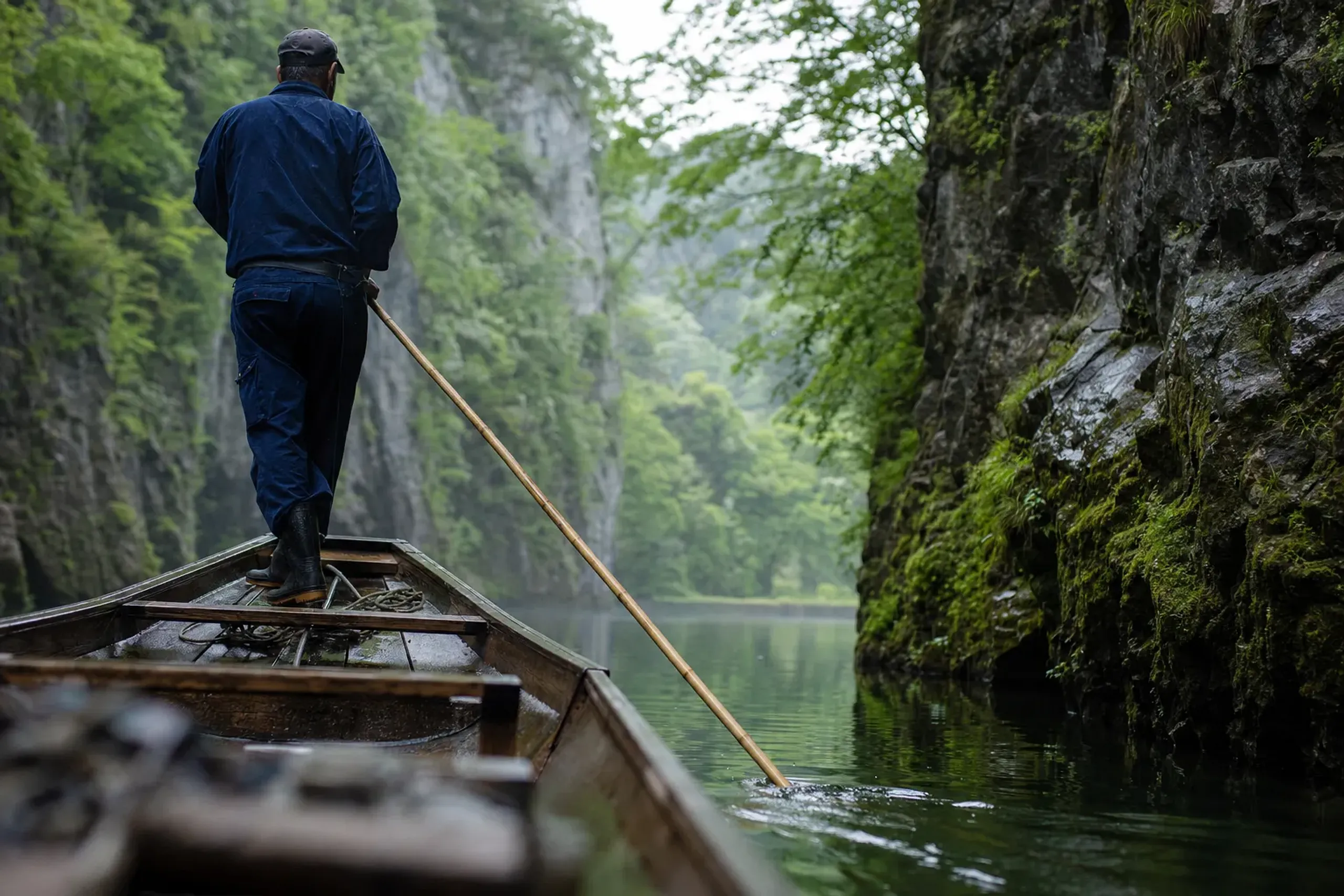
The boat doesn’t row.
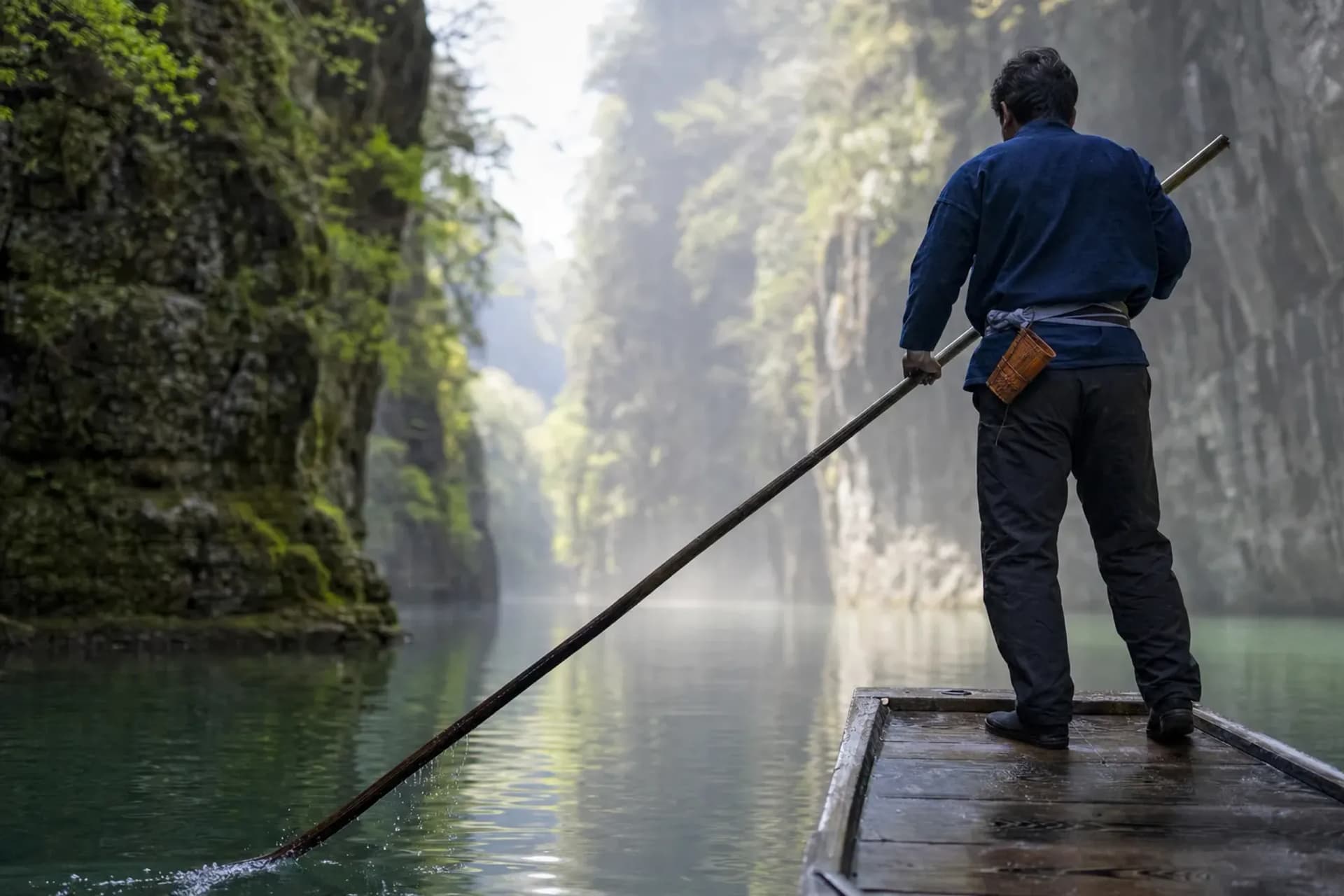
No engine coughs to life. No oars flash. At Geibikei Gorge (猊鼻渓) in Iwate, a boatman stands tall and moves you forward with a single pole, finding purchase in the riverbed and turning quiet force into gentle motion.
It feels old, but not staged. Just practiced. The kind of restraint that reveals itself only to those who slow down enough to notice it.
For discerning travelers who want the Japan that lies beyond the lobby and the checklist, Geibikei is a rare kind of proof. One mechanism. One gorge. And, according to widely cited destination sources, nowhere else in Japan where a river-boat tour runs quite this way. This is wabi made navigable — beauty measured in what has been left out.
Why Is Geibikei Gorge Famous For A Single-Pole Boat Ride?
Geibikei Gorge is famous because its traditional river boats are propelled by a single pole—no oars and no motor—often described as unique in Japan for sightseeing boat tours.
You notice it in the first minute. The sound is not mechanical. It’s water sliding past wood, the soft scrape of pole against stone, and the small shifts of balance as the boatman reads the current like a language he was born speaking.
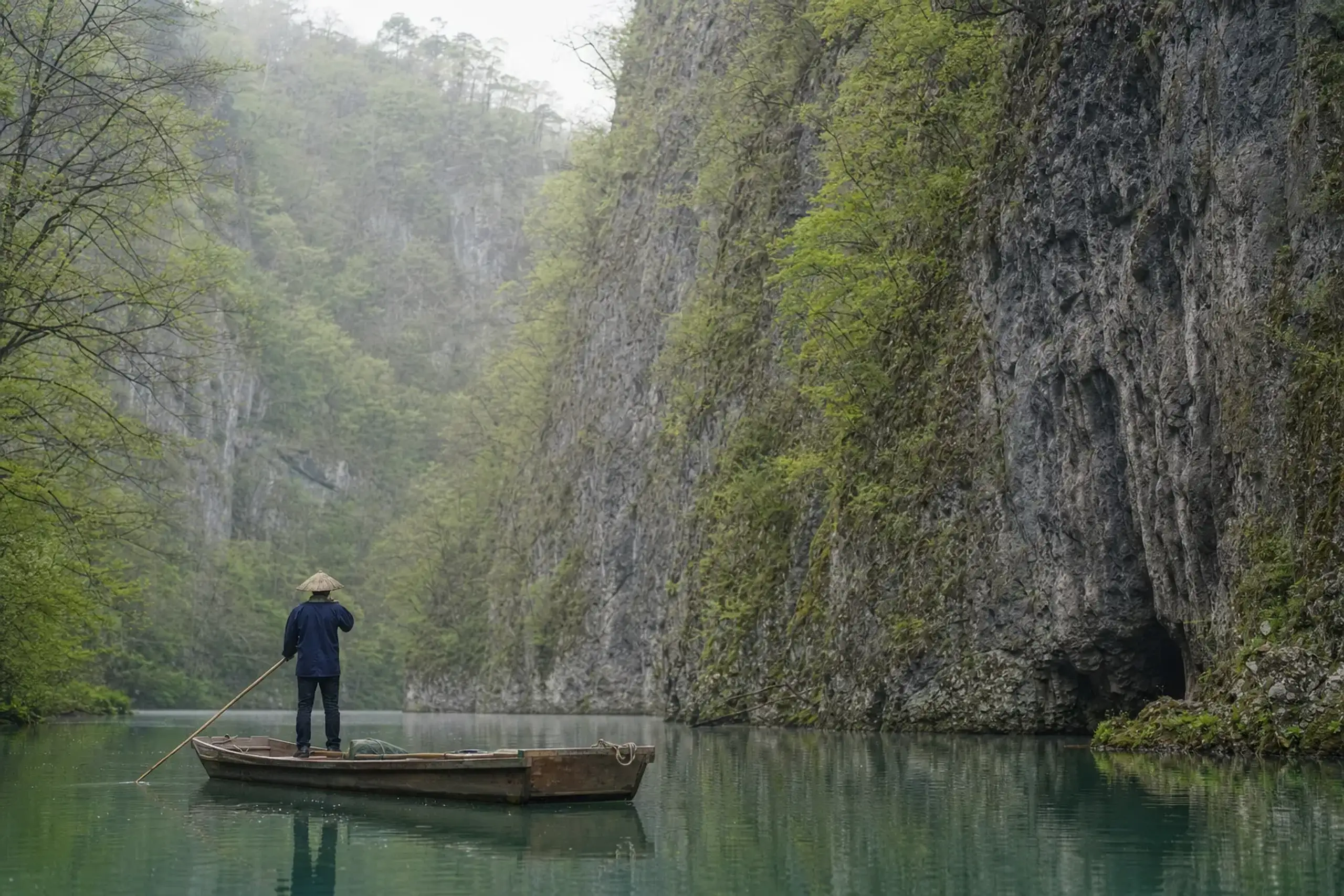
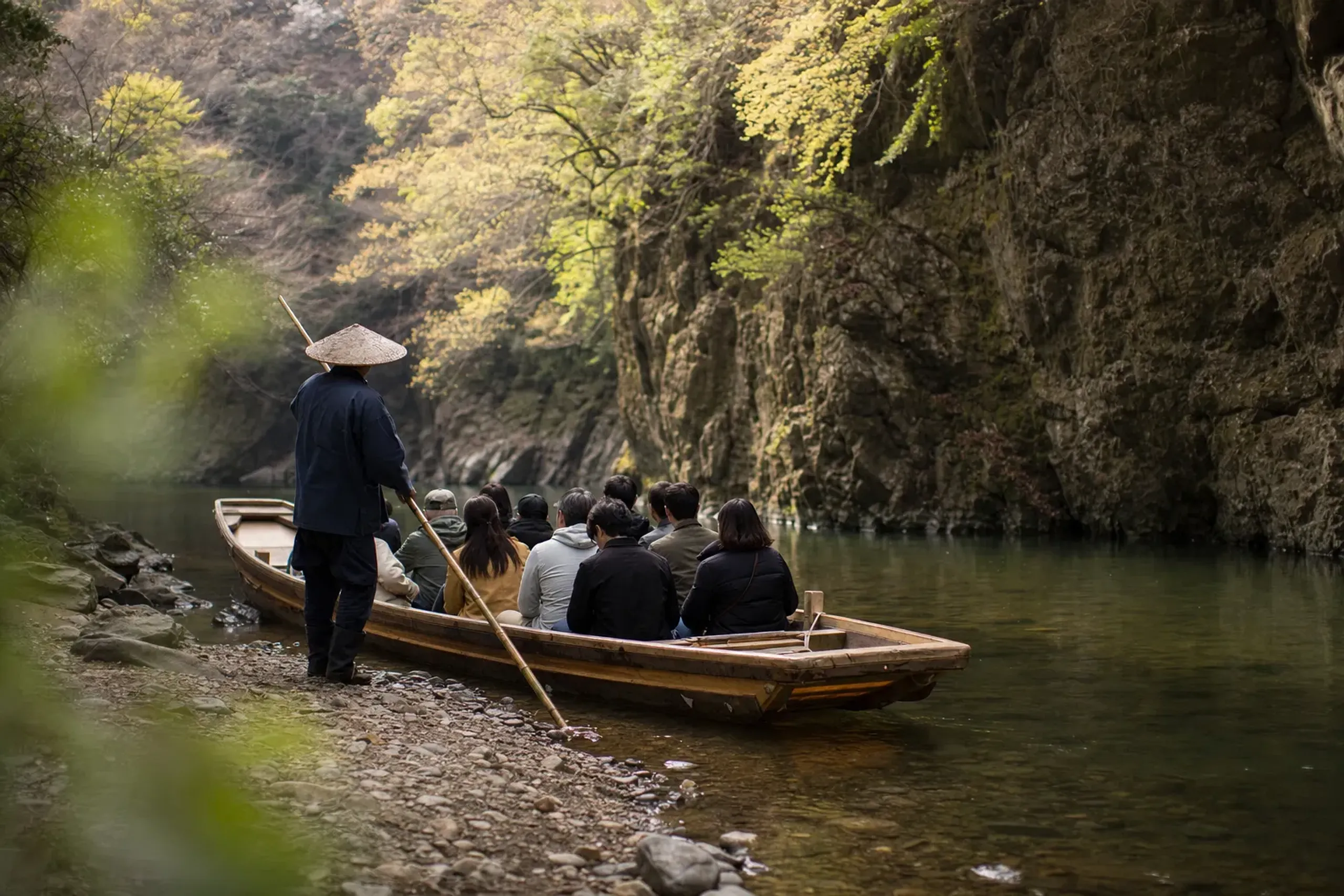
The ride is typically a round trip of about 90 minutes along roughly 2 km of limestone cliffs. On the return, boatmen may sing the local boat song often referred to as Geibi Oiwake, and the gorge becomes a resonant chamber—song rising, then thinning into air, then swallowed by moss-covered stone.
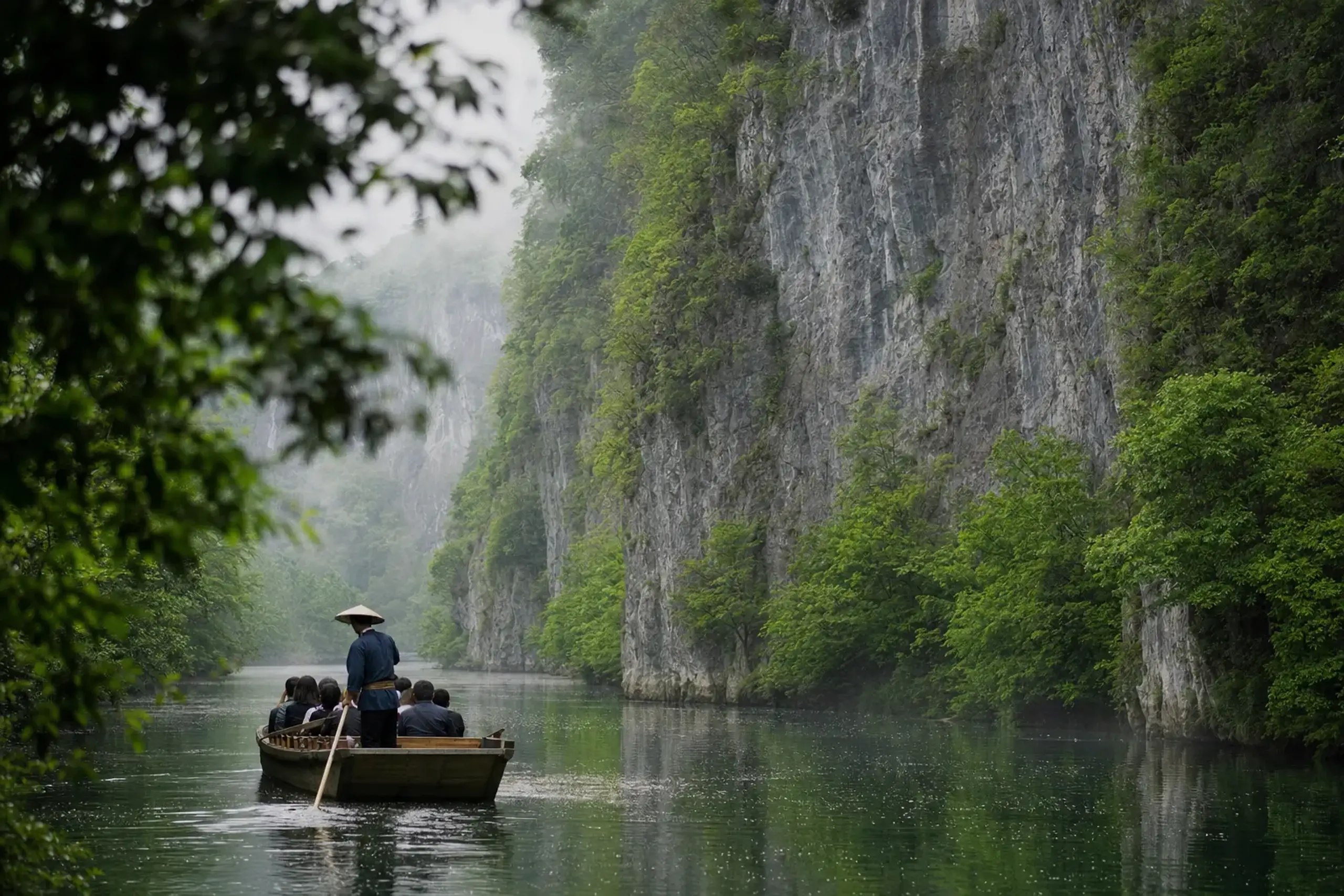
Spring here isn’t about crowds gathering under cherry blossoms. It’s about timing, restraint, and that single pole pushing you into a corridor of stone where the silence has texture.
How Long Is The Geibikei Gorge Boat Ride And What Happens During It?
The Geibikei Gorge boat ride is usually a 90-minute round trip, with a turnaround stop where you disembark briefly and can try local lucky-ball throwing.
The structure is simple, which is part of the appeal. You board near the gorge entrance, glide between cliffs that rise over 100 meters, and pass named rock formations that locals have been reading like a picture scroll for generations.
At the turnaround point, you reach an area associated with Shishigahana, the “lion’s nose” rock formation. You disembark for around 20 minutes at Miyoshigaoka.
There, you’ll see a small ritual called un-dama nage. You throw small clay balls toward a hole in the cliff face for luck. It’s oddly satisfying. Quick. A little competitive if your group has that energy.
Key fact: Geibikei (猊鼻渓) is distinct from Genbikei (厳美渓), a separately named gorge in Ichinoseki known for the “flying dango” snack delivery. Don’t mix them up.
What Does “Geibikei” Mean, And Why Is Shishigahana Important?
Geibikei was named for Shishigahana, a rock formation said to resemble a lion’s nose, seen near the turnaround point close to the gorge’s tallest walls.
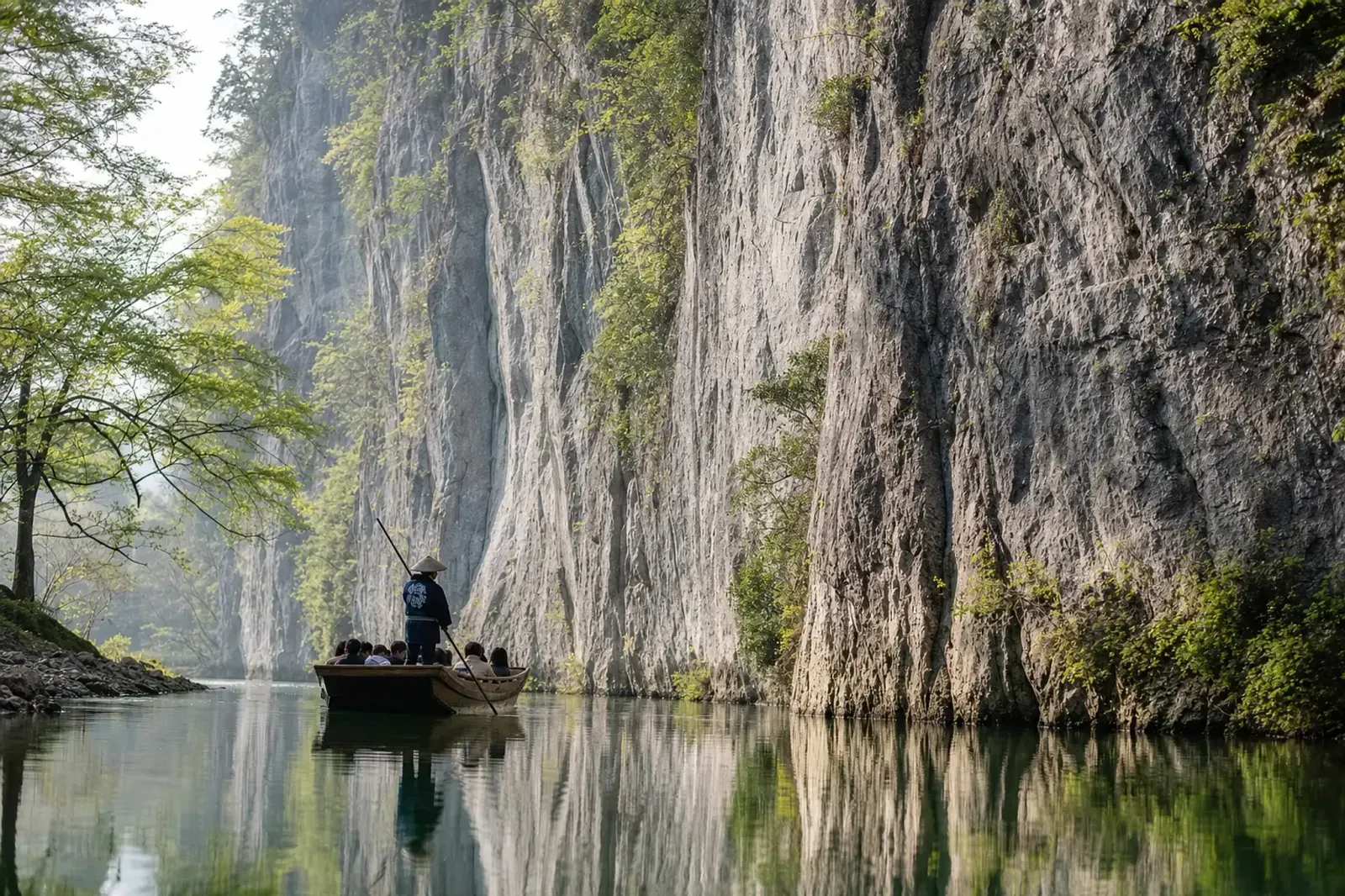
Names matter in Japan, especially when a landscape is not just “scenery” but a living reference. Geibikei was officially named in 1910, and the act of naming fixed it in the public imagination.
As your boat approaches the turnaround, the cliffs feel higher and the river feels narrower. The “lion’s nose” idea lands because it’s specific, not poetic fog. You can actually see it. Then you realize people have been arriving here for a long time and looking at the exact same shape.
Geibikei is also recognized among Japan’s “100 Scenic Spots” (Nihon Hyakkei) and is designated as a National Historic Site, Place of Scenic Beauty, and Natural Monument. The labels are formal. The gorge itself is not.
How Did Satō Kō Turn Geibikei From Remote River To Destination?
Satō Kō, a local from Ichinoseki, discovered and developed Geibikei into a tourist destination using private funds from himself and his father, first guiding visitors using borrowed timber-rafting boats.
This origin story is not glossy. That’s why it holds. Geibikei was genuinely unknown for a long time, and what changed it wasn’t a government campaign or a rail-company slogan—it was one man’s quiet conviction.
Satō Kō began by borrowing boats used for timber rafting from a local inn and guiding literary and artistic visitors through the gorge. Slowly, the place gained a reputation and was compared to Yabakei in Kyushu—enough of a compliment that people started calling it “the Yabakei of the East.”
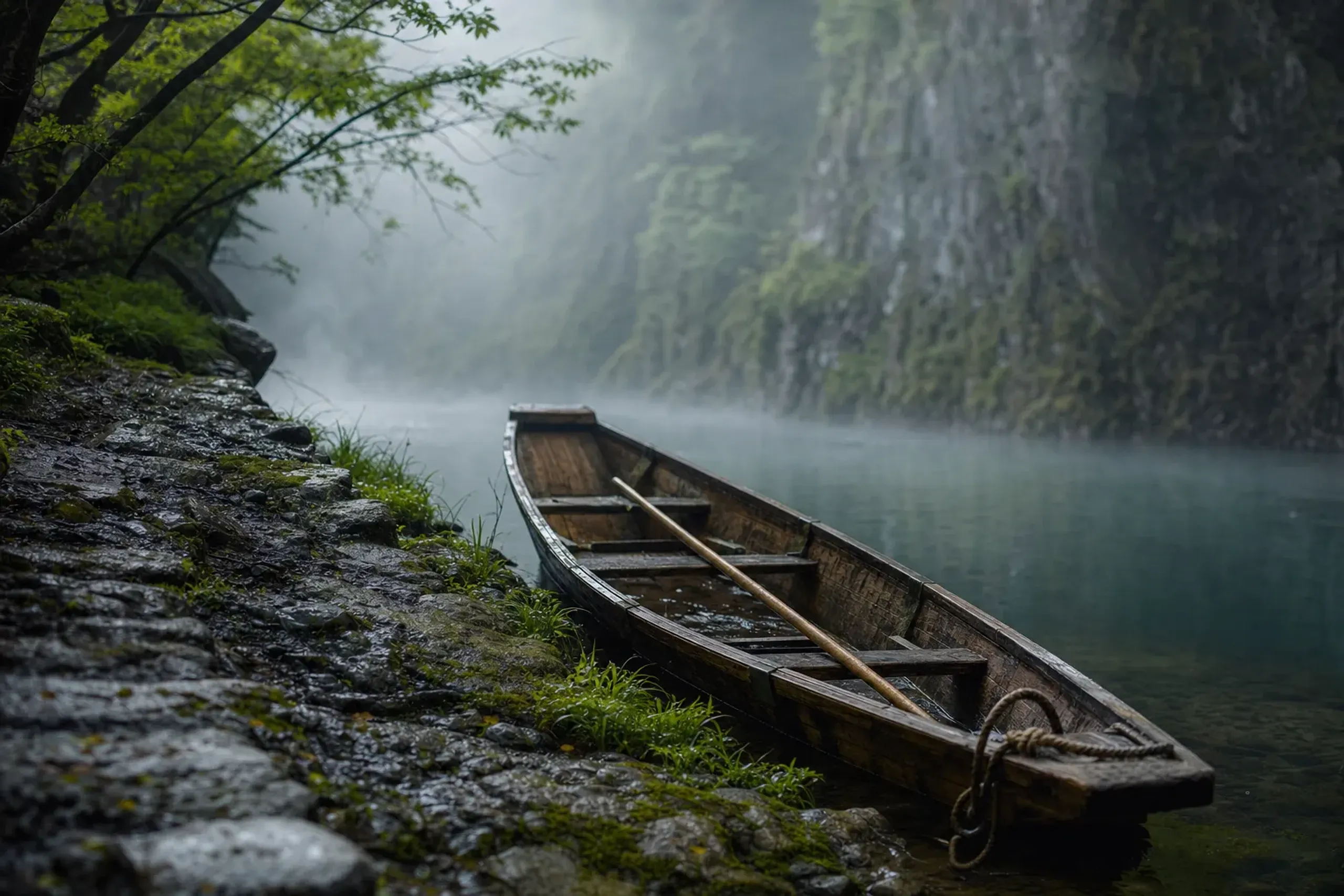
This is the kind of hidden Japan that no algorithm surfaces: a place kept alive by word of mouth among writers and artists long before it appeared on any map.
Later, the practical side caught up with the romance. Three competing boat operators eventually combined in 1970 to form the single operating company that still runs the sightseeing boats today.
The Gorge Up Close: Limestone Walls, Named Rocks, And A Quiet Kind Of Scale
Geibikei Gorge was formed as the Satetsu River eroded limestone over a long period, creating a scenic corridor where cliff walls generally reach around 100 meters.
Some features are easy to spot even if you arrive without context. Others become clearer when you slow down and let the boat drift a moment longer.
Along the route, you may hear rock formations called Sōfugan and Shōfugan—the “husband” and “wife” rocks facing each other across the river. There is also Kyokuhei-iwa, often likened to a folding screen, and Baryō-iwa, the “horse-mane” rock where pine along the ridge suggests hair in motion.
Near the turnaround point stands Dai-Geibigan, measured separately at 124 meters. It’s not a statistic you feel in your head. You feel it in your neck, looking up—and then in the stillness that follows, when the scale settles over you and no one in the boat feels the need to speak.
When Is The Best Time To See Wisteria At Geibikei Gorge In Spring?
Wisteria at Geibikei typically blooms from late May into early June, making it a spring-into-early-summer visit that is later than most cherry blossom trips.
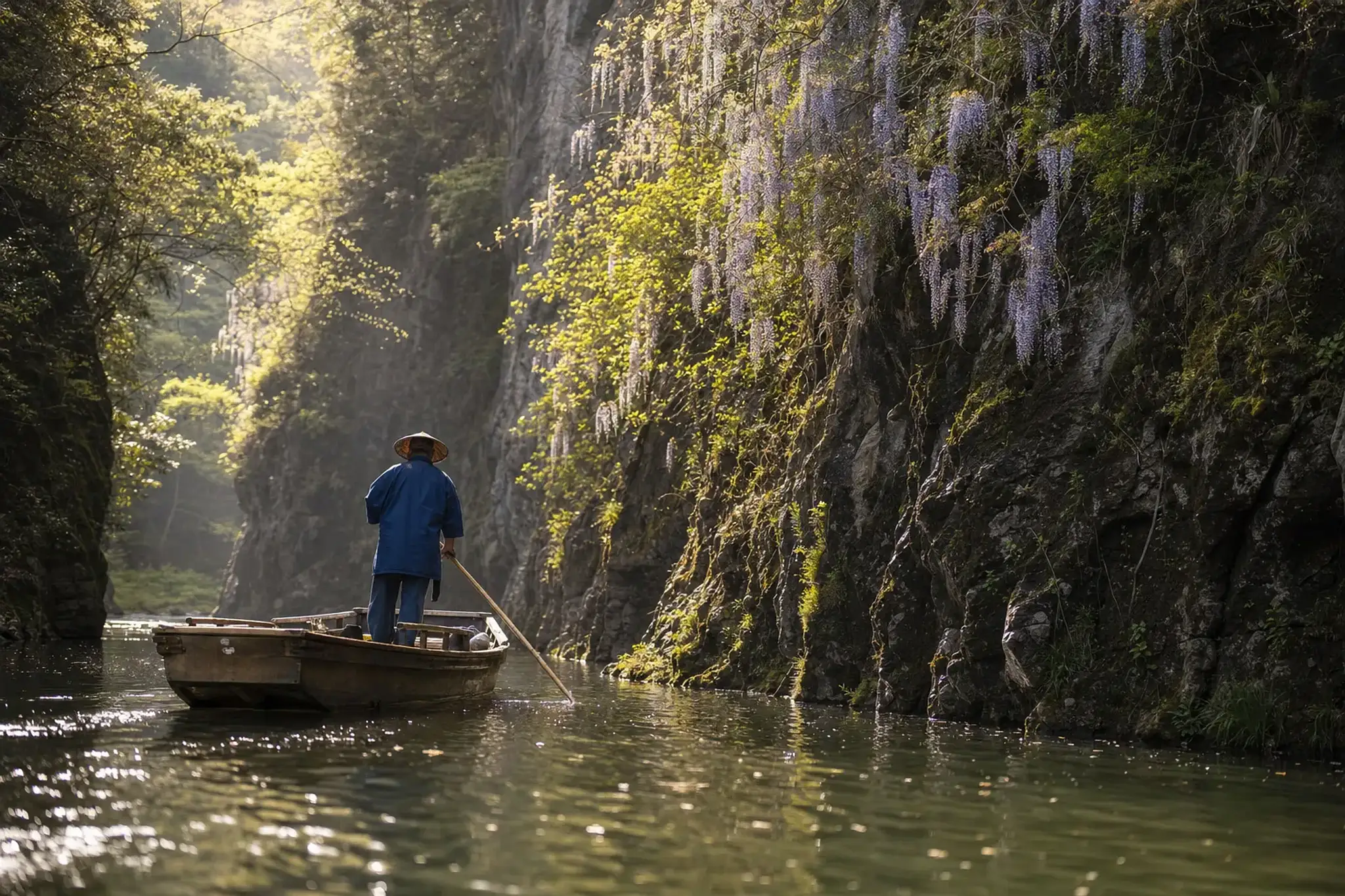
This is the spring detail most itineraries miss. People build “spring in Japan” around sakura, then leave Tohoku just as it gets interesting. Knowing precisely what to experience where, and in which week, is exactly the kind of seasonal judgment we consider our craft.
In our experience, Geibikei in the wisteria window feels calmer than the peak-blossom cities. The colors are different, too—purple hanging over water rather than pink against sky, with limestone behind it like a pale stage wall.
If you’re planning for photography, aim for soft daylight and light wind. Wisteria moves easily. So do reflections.
How Much Does The Geibikei Gorge Boat Ride Cost In 2026?
As of the April 1, 2026 revision, the published Geibikei Gorge boat ride fare is ¥2,000 for adults, ¥900 for elementary school children, and ¥200 for children age 3+ (tax included).
These are operator-published standard fares for the regular sightseeing boat ride. Charter pricing also exists and varies by weekday versus weekend/holiday, and larger parties may be calculated with a per-person formula rather than a flat fee.
Discerning travelers often ask us whether a private boat is “worth it.” Sometimes yes—especially if you want control over the mood, the seating, the pacing at the turnaround stop, and the way your group moves through the dock area, unhurried and unobserved.
We keep one rule: we don’t guess.
Our concierge team at Japan Royal Service verifies the current schedule and any seasonal programming close to your dates before you travel—and keeps the details of your itinerary entirely to ourselves.
How Do You Get To Geibikei Gorge From Ichinoseki Station?
From Ichinoseki Station, you can reach Geibikei Station via the JR Ōfunato Line (commonly described as about 30 minutes) and then walk a few minutes to the boat landing.
That’s the clean public-transport answer, and it works well if you enjoy the rhythm of local rail. For many HNW travelers, though, the friction isn’t distance—it’s the seams: platform timing, walking in the wrong direction, arriving just after a boat has departed.
If you prefer a controlled day, we often suggest a private driver from your base in Iwate or from a nearby rail hub, with the day paced around the boat departure that best matches your group. Quietly efficient. No sprinting.
The first time we mention it, we’ll keep it clear: for private transportation, our team focuses on comfort, discretion, and realistic timing in rural areas where small delays snowball.
A Spring Day Plan: Geibikei With A Calm, Luxury Tempo
Geibikei doesn’t need a heroic itinerary. It needs air around it.
Here is a practical structure our team at Japan Royal Service often uses when clients want Geibikei in late May or early June. Adjustments happen based on your base, the train you prefer, and how much walking your group enjoys.
- Late morning arrival: Arrive with enough buffer to breathe, use facilities, and board without rushing.
- 90-minute boat ride: Treat the first half as observation, not “content.” Phones away for ten minutes. Try it.
- Turnaround stop: Disembark at Miyoshigaoka, take the short break, and try un-dama nage.
- Return ride: Listen for the Geibi Oiwake boat song on the way back if it is performed that day.
- Lunch planning: Keep it simple and nearby, or schedule a longer meal back toward your hotel.
One extra note for families: the boat ride format is friendly to multi-generational groups because the experience is largely seated. That matters. A lot.
Other Seasons At Geibikei (Briefly): Autumn Foliage And Winter Kotatsu Boats
If you return, come back changed. Geibikei is one of those places.
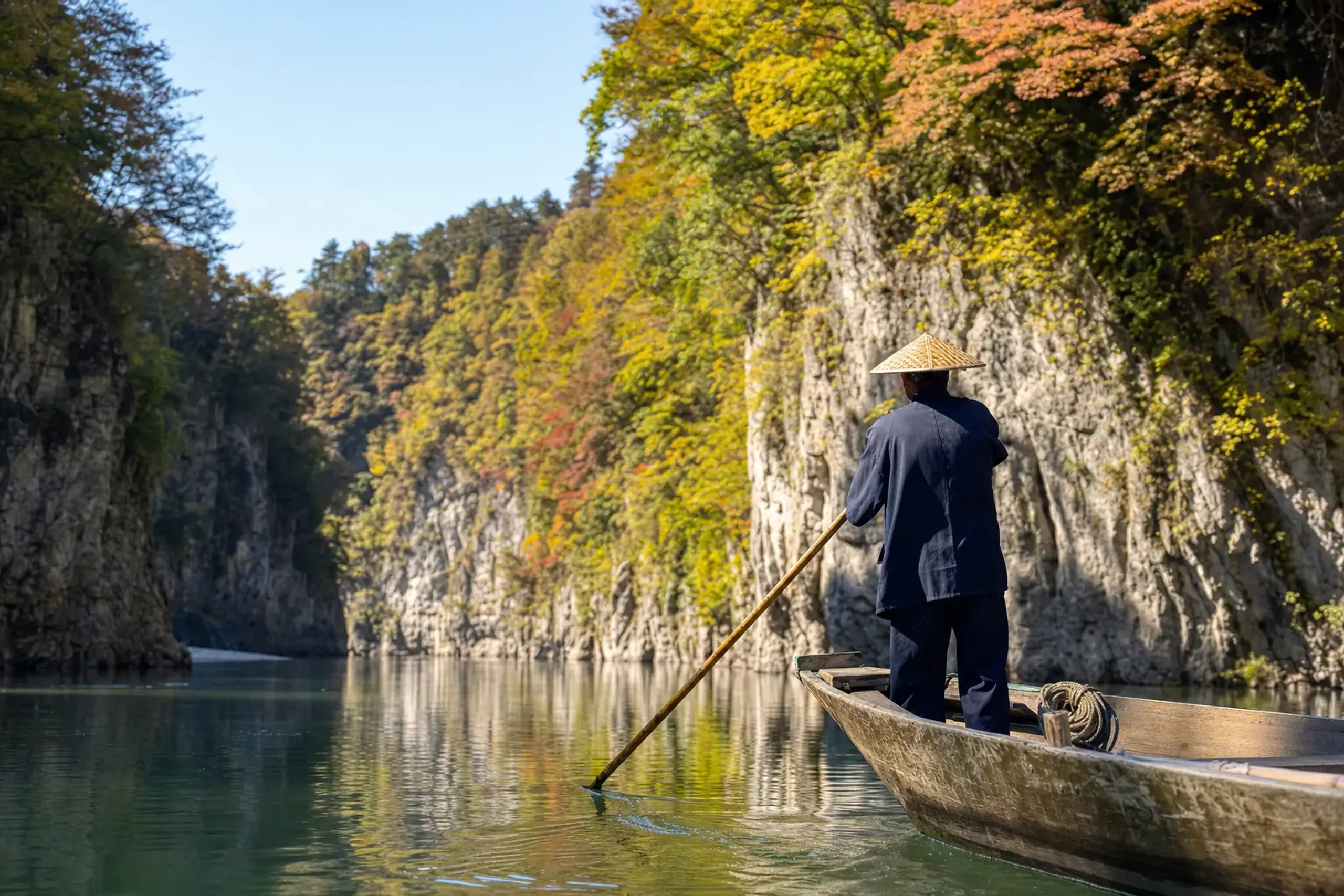
Autumn tends to peak from mid-October into early November, when the gorge walls carry color like a slow fire. Timing shifts each year, and travelers increasingly track foliage status closely.
Winter brings a different headline: kotatsu boats. You ride under a heated table and eat hot pot while snow sits on the cliffs and the river looks ink-dark. It’s intimate. It also draws growing interest from inbound visitors, according to local reporting.
Conditions can affect operations in any season. Weather and river levels decide more than taste does, and we treat that reality with respect.
What Japan Royal Service Can Privately Coordinate For Geibikei
For Geibikei, Japan Royal Service can privately coordinate guiding, transfers, and boat ride reservations after you inquire directly with our concierge team.
We keep public pages informational, because third-party operators set their own rules. In private, we help you decide what makes sense for your party size, pace, language comfort, and how you want the day to feel—all handled with the confidentiality our guests rely on.
If you’re building a broader Iwate visit, we may suggest one quiet, relevant pairing and stop there. For example, Chūson-ji in Hiraizumi is a strong cultural counterpoint to the gorge—stone and gold after limestone and water.
When clients ask for a fully tailor-made itinerary, we shape the day around real constraints: train frequency, seasonal bloom timing, and how rural Japan actually moves.
Frequently Asked Questions
Is Geibikei Gorge The Same Place As Genbikei Gorge In Ichinoseki?
No—Geibikei (猊鼻渓) and Genbikei (厳美渓) are different gorges in Ichinoseki with different experiences, and Geibikei is the one known for the single-pole boat ride.
If your goal is the pole-propelled boat and the boatman song, Geibikei is the correct choice. If your goal is a walking gorge experience, Genbikei may fit better. Many travelers confuse the names, so we recommend double-checking kanji when planning.
Do I Need A Reservation For The Geibikei Boat Ride If My Party Has 15 People?
Yes—per the operator’s published rules, group reservations are required for parties of 15 or more.
If your group is near that threshold, it’s wise to plan early, especially on weekends and holidays when timing matters and boats can fill around popular departure windows.
What Is The Best Spring Timing If I Want Wisteria, Not Cherry Blossoms?
For wisteria at Geibikei, plan for late May to early June rather than the March–April cherry blossom period.
This window can be a smart choice for HNW travelers who want spring atmosphere without the heaviest crowds found in major sakura cities.
How Do I Reach Geibikei Gorge Without Renting A Car?
You can take the JR Ōfunato Line from Ichinoseki Station to Geibikei Station (often described as about 30 minutes) and walk a few minutes to the boat landing.
Between April and November, some sources note direct buses from Hiraizumi Station to Geibikei Gorge with limited frequency, so schedules should be checked for your exact date.
Why Choose Japan Royal Service
Luxury in rural Japan isn’t about adding gilding. It’s about removing friction while keeping the day honest.
Our team at Japan Royal Service is built for travelers who want the real mechanism—the single pole, the limestone, the silence between notes—without the usual drains on time and attention. Discretion comes first. Always.
If Geibikei belongs in your spring in Japan—wisteria over water, a boatman’s song rising through the gorge—let us shape the day around you. To begin a private, unhurried conversation about your journey, contact us here, and our concierge team will take it from there.