In this guide
- 01Who Nakashima was
- 02The 1964 licence, and what it meant
- 03Sakura Seisakusho, still a working firm
- 04Reading the timber
- 05The memorial gallery
- 06Furniture meant to be sat on
- 07Mure, and Noguchi next door
- 08Commissioning a piece
- 09Hours, reservation and photography
- 10What Japan Royal Service arranges
- 11Frequently Asked Questions
- 12A quiet invitation
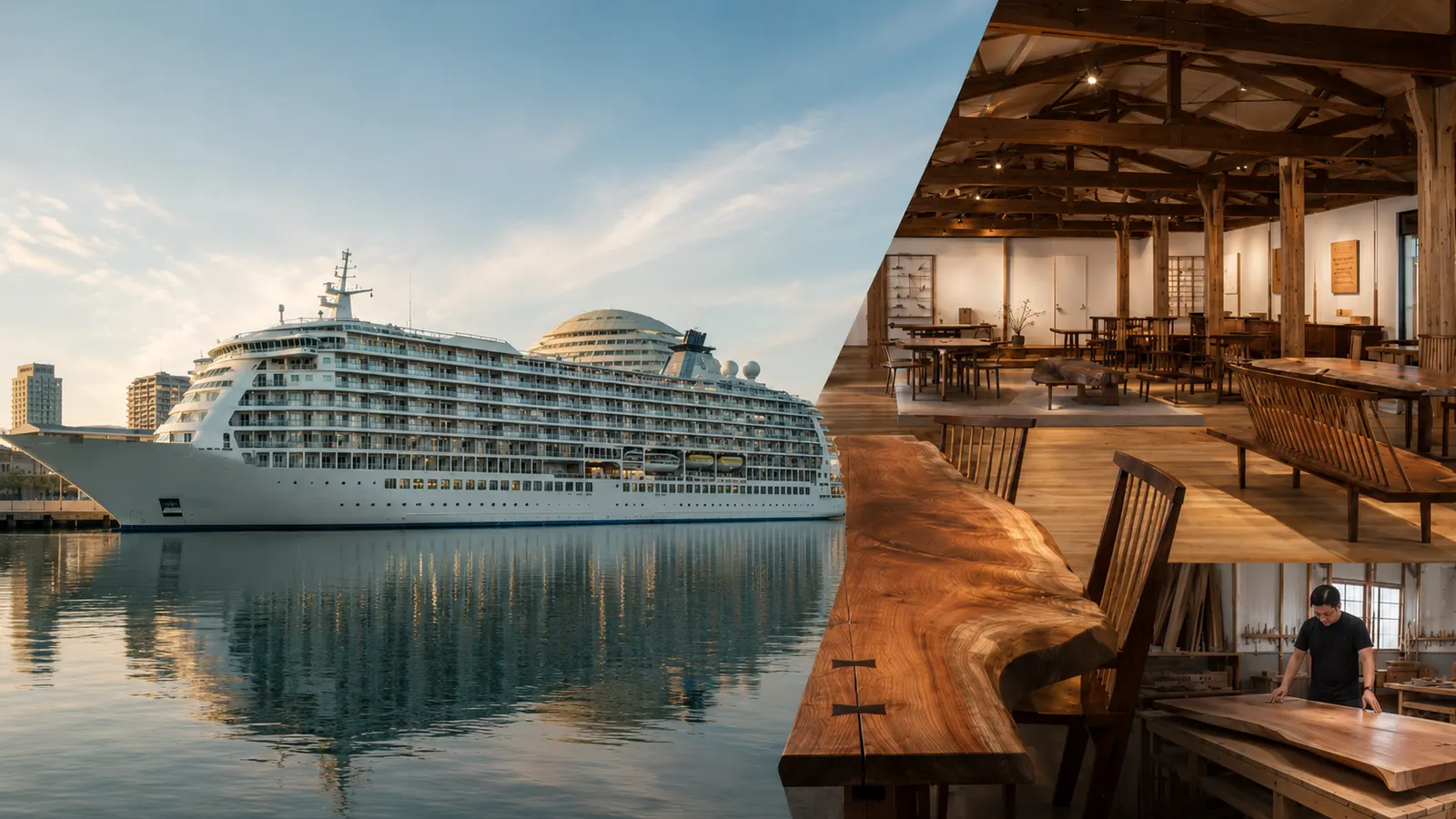
Mure, Takamatsu — an Experience Showcase, and one of the shore days Japan Royal Service arranges along the Seto Inland Sea for travellers who prefer to spend their time among makers rather than crowds.
George Nakashima refused to hide the flaw in a piece of wood. Where a board had split, he set a butterfly joint across the crack in a contrasting timber and left it showing — a repair turned into the most looked-at part of the table. Walk into a room of his furniture and that is the first thing that reaches you: not polish, not ornament, but the frank grain of walnut, a live edge left exactly as the tree grew it, and the faint resinous smell of a shop where wood is still being worked.
Nakashima's own workshop was in New Hope, Pennsylvania. But since 1964 there has been a second one, in a small town fifteen minutes east of Takamatsu — Sakura Seisakusho, the only workshop in the world whose technique Nakashima recognised and licensed to make his furniture. It is still working today. This is not a museum about a designer. It is the place where his furniture is still made, by the firm that made it with him.
Who Nakashima was
Nakashima was born in Spokane in 1905, trained as an architect, and worked in Japan through the 1930s in the Tokyo office of Antonin Raymond — where, among other things, he designed chairs for St Paul's Church in Karuizawa. He worked in India, and during the war was interned with his family in Idaho, where a Japanese carpenter interned alongside him taught him traditional joinery. He built his practice afterwards in New Hope, and became one of the founders of the American studio furniture movement. He worked in Pennsylvania to the end. Japan he returned to as a place to be understood, not a place to relocate.
The 1964 licence, and what it meant
Sakura Seisakusho was founded in 1948 in Mure-chō, making custom furniture. In 1964 Nakashima found here a workshop whose standard of joinery satisfied him, and licensed it to make his furniture in Japan — the only workshop worldwide to hold that licence. The first American sample arrived from New Hope that same year as the starting point for production. It is in the gallery still.
Think about what that means. Of all the makers on two continents, Nakashima chose one shop, in a small town in Kagawa, and trusted it to build to his standard. That relationship has now run for sixty years and two generations. It is not a satellite of an American operation. It is a Japanese workshop that has spent its working life making one man's designs, in a city that has spent four hundred years being serious about how things are made.
This is the Japan that does not advertise itself — the workshop you reach by introduction rather than search, chosen by the maker himself and largely unknown outside the small world of people who care about his work.
Sakura Seisakusho, still a working firm
The important word is still. This is a working custom workshop, not a shrine. It makes furniture, it takes commissions, and it is visited by Nakashima enthusiasts from around the world who come to see where the licensed pieces are built. The same workshop, in the same decade, also made the furniture for the Kagawa Prefectural Government Hall East Building — a fact that places Sakura Seisakusho squarely inside the story of Kagawa's mid-century modernism, the same firm and the same prefecture.
Reading the timber
Chairman Nagami Shin'ichi has described the method in a way that says more than a manifesto could. When he joins the outer and inner faces of a board, he reads the timber's nature and lets the two settle against each other, so that no warping or distortion appears. The symmetry you see in the finished piece is not imposed on the wood. It is the result of accepting how the material behaves.
That single line is Nakashima's whole philosophy stated as a working method rather than a slogan. The maker does not overrule the tree. He finds the one right use for a particular board, keeps the free edge because that is the shape the tree was, and leaves the butterfly showing because a hidden repair would be a lie about the wood. A room of sixty pieces is sixty arguments about what that meant.
The memorial gallery
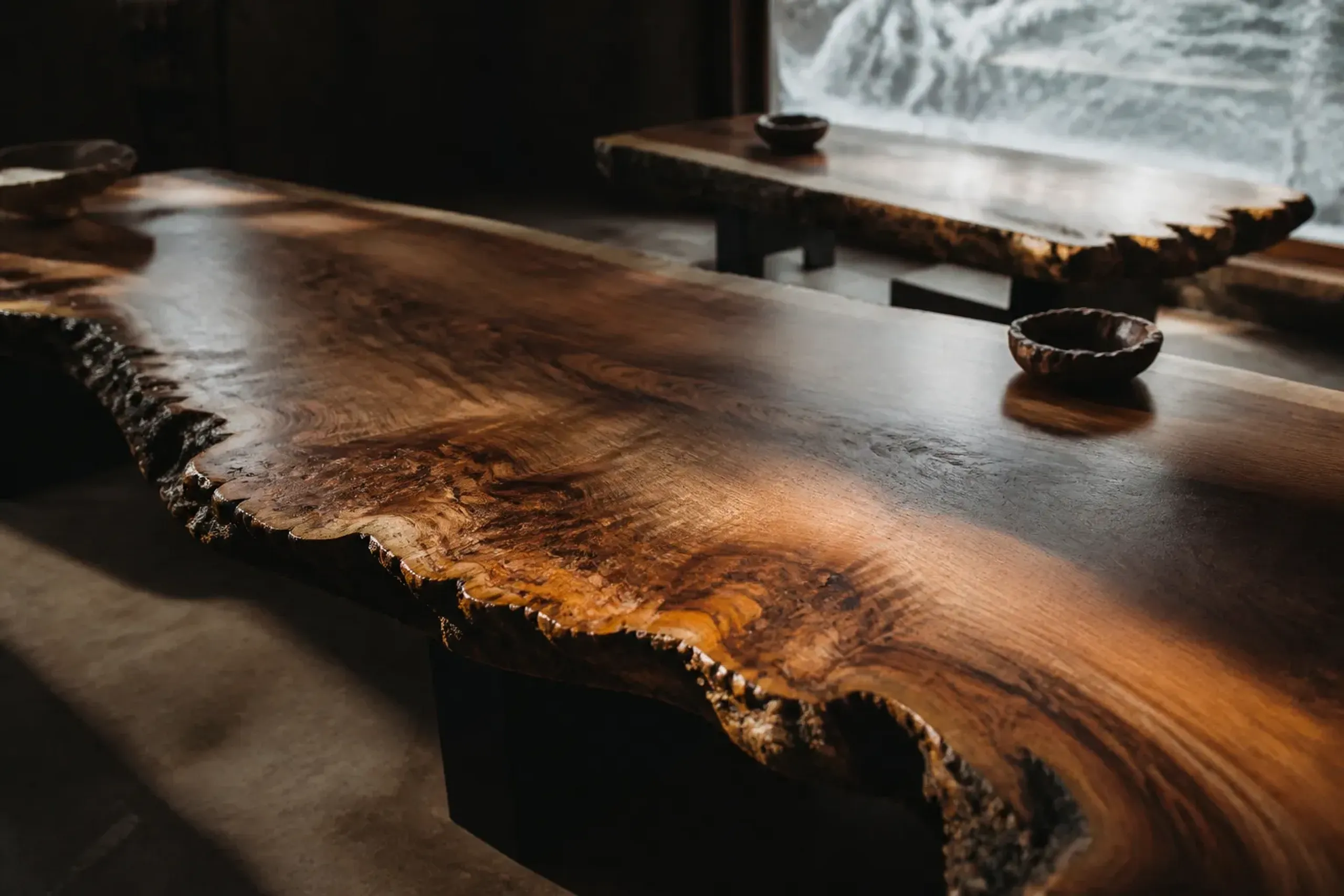
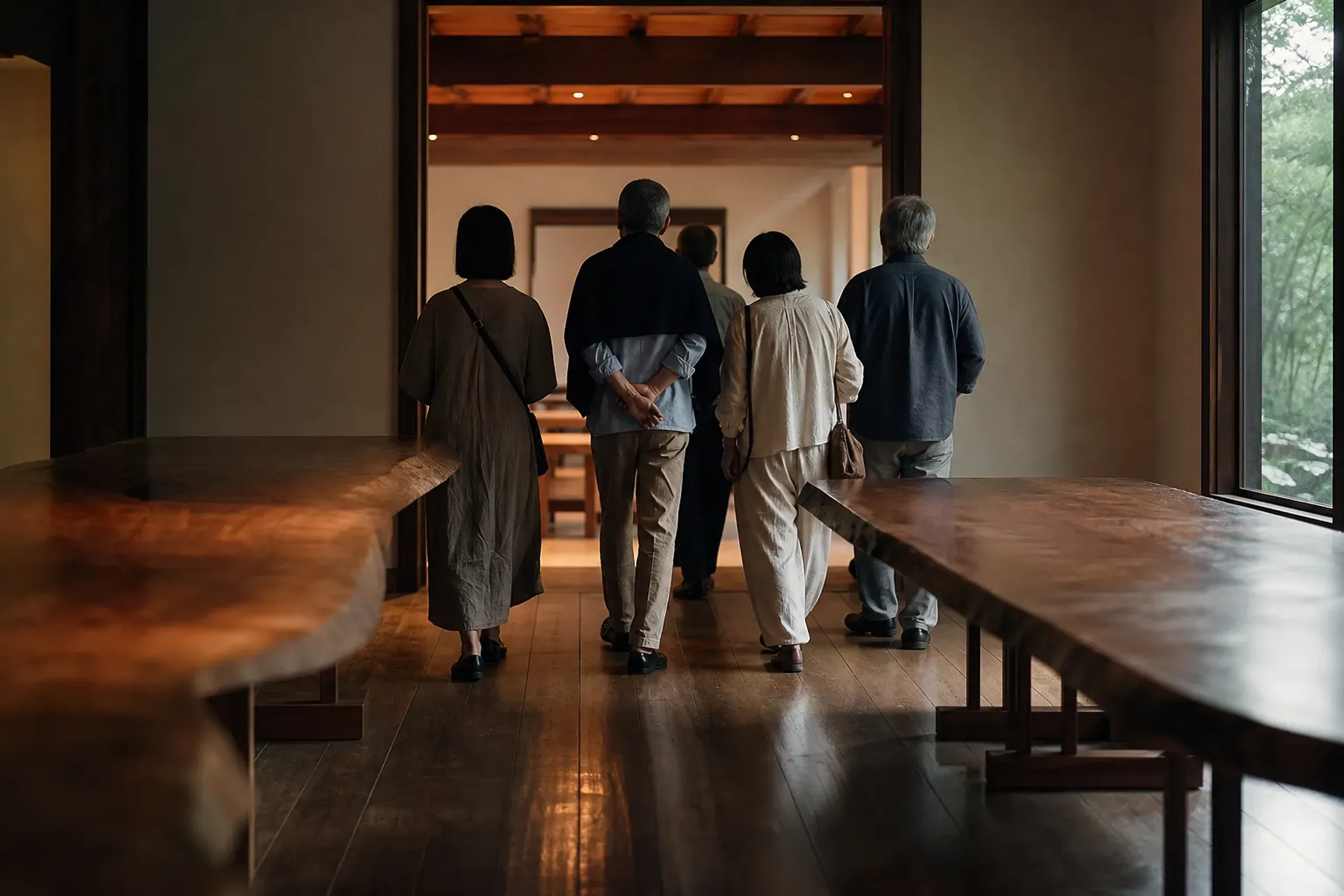
Sakura Seisakusho established the memorial gallery in 2008, to mark its sixtieth anniversary. It stands at 1132-1 Ōmachi, Mure-chō, about five minutes on foot from Shioya Station, and holds around sixty works made in both Japan and America, shown alongside handwritten letters, drawings and photographs that trace Nakashima's life.
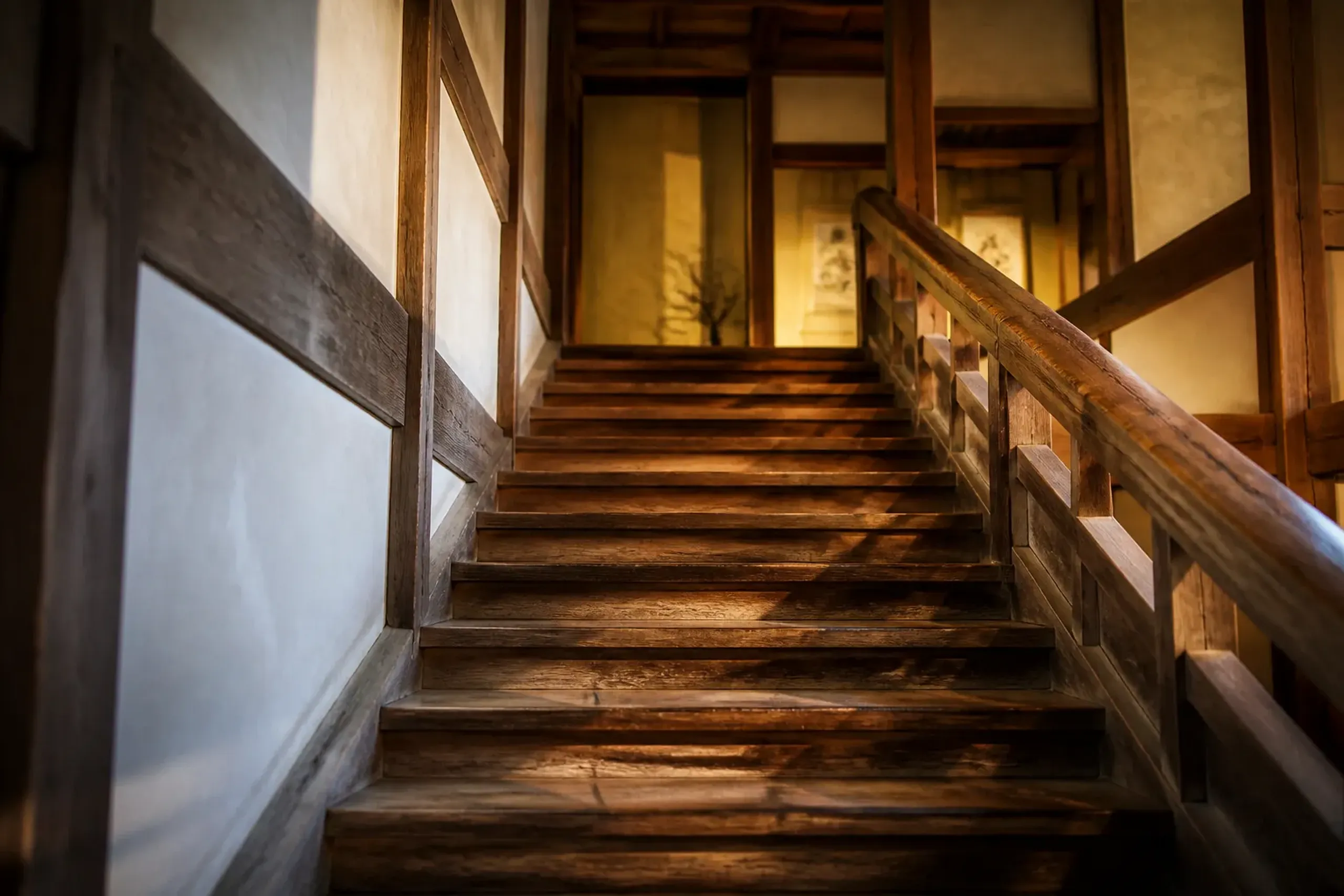
Among the holdings are the chairs he designed for St Paul's Church in Karuizawa during his years in Antonin Raymond's office in the 1930s, the 1964 American sample that started production here, and works from the first Odakyu Halc exhibition of 1968. The main exhibits are on the second floor, up a staircase, in rooms lit for furniture rather than for a museum audience — which is the correct way to look at a table. Photography is prohibited in that room; come to look, not to record.
Furniture meant to be sat on
The ground floor holds a gallery shop and a café where the furniture can be sat on and handled — some pieces original, others made by Sakura Seisakusho. This is the point of the place. Nakashima made furniture to be used, not admired behind a rope. A gallery where you are meant to lower yourself into the chair and feel where the grain meets your hand is unusual, and it follows directly from what the man believed. Orders can be placed here.
Mure, and Noguchi next door
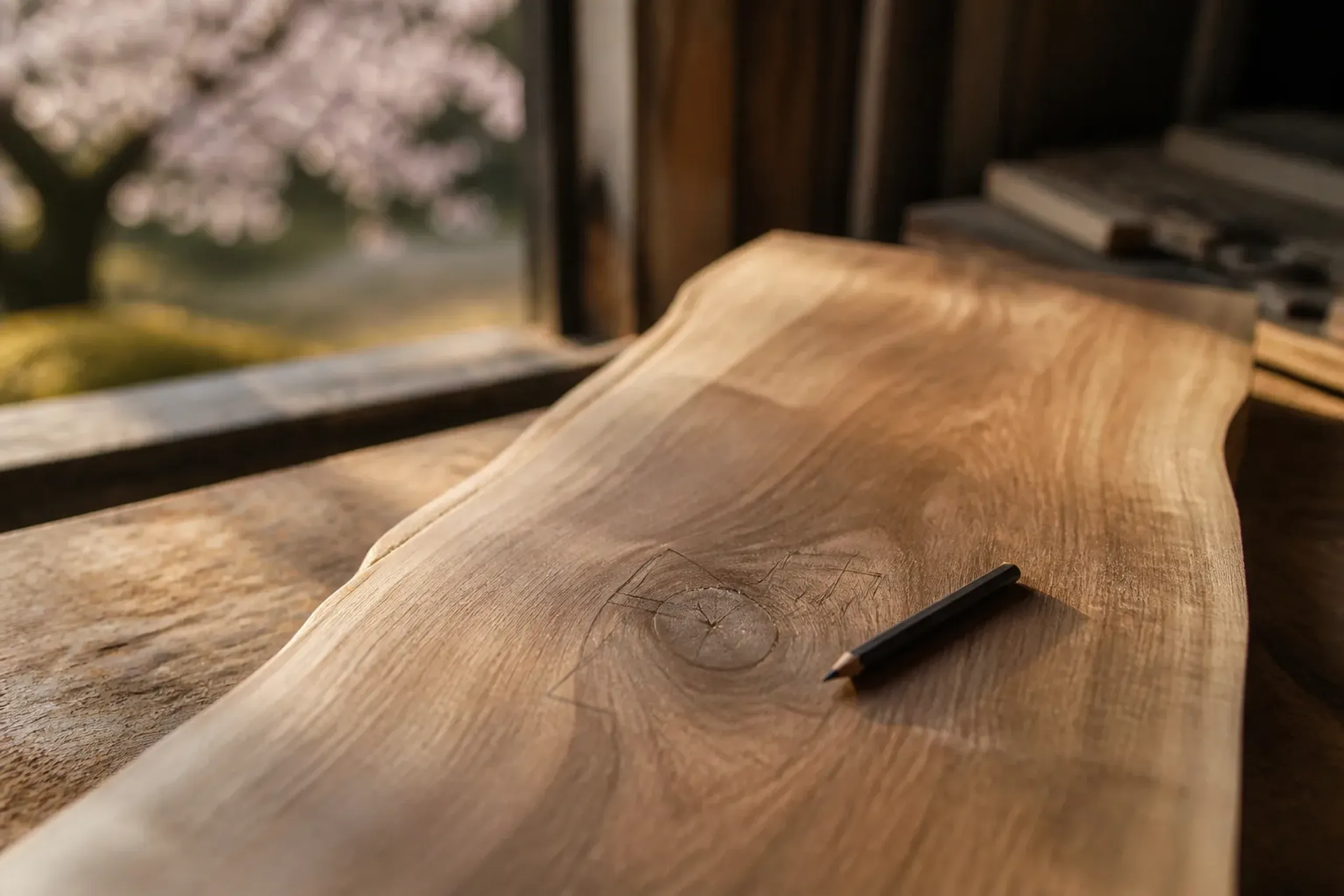
Mure holds an unusual concentration of makers within a short distance of one another. Isamu Noguchi kept his studio in the same town, left much as he stopped work in 1988, and the two men knew each other. Two of the twentieth century's significant makers — one in wood, one in stone — worked within a few minutes of each other here. A morning with Noguchi's stone and an afternoon with Nakashima's wood is one argument rather than two errands.
The same coast carries the granite that both drew on: the Aji quarries worked by hand for eight hundred years, and the specialist stone workshops that still cut and finish it. Wood in the morning, stone in the afternoon.
Commissioning a piece
The workshop still makes, and still takes commissions. An appointment with the person who inherited that responsibility is a different proposition from a gallery visit. It is a conversation about a specific piece: which board, which way the grain runs, where the butterfly goes, how long it will take, and whether the thing you have in mind is the right thing to make from the timber that exists.
Very few people outside Japan have that conversation. A commission from a licensed workshop carries a real lead time and the shipping that a large piece of solid timber implies, and both are worth understanding before you begin. If a Nakashima piece for a residence is of any interest at all, this is the version of the visit worth your time — and it needs arranging well ahead.
Hours, reservation and photography
Confirm the following at the time of your visit; hours, admission and reservation rules change.
- Hours 10:00 to 17:00, last entry 16:30.
- Admission ¥500 for adults, ¥200 for school-age children; a group rate applies from twenty people.
- Closed on public holidays and over the New Year period.
- Sunday visits and groups are by reservation. For a shore day, this is the constraint that decides whether the visit happens at all — the gallery closes on public holidays, and arriving on the wrong day is what happens to almost everyone who tries this without asking first.
- Photography is prohibited in the second-floor exhibition room.
- The main exhibits are reached only by a staircase; there is no lift. The commission appointment, by contrast, happens seated at a table, so the stairs do not come into it.
What Japan Royal Service arranges
Japan Royal Service arranges the memorial gallery visit, access to the workshop, and the placing of an order. We work in Japanese, with the people who run these places, and the arrangement is made by someone the other side already knows. That includes an interpreter, because the workshop's knowledge is not held in English and the interesting part is precisely what a maker says about a board — and an honest brief beforehand about what the workshop can and cannot take on.
Because the ship lies at Takamatsu for days rather than hours, a gallery that opens on its own schedule becomes a matter of choosing the right morning rather than a gamble. We can also arrange private transportation for the short run east from the port, so the day between wood and stone is unhurried.
Frequently Asked Questions
Which days does the gallery open?
It opens 10:00 to 17:00, with last entry at 16:30, and closes on public holidays and over the New Year period. Sunday visits and groups are by reservation. Arriving on the wrong day is what happens to almost everyone who tries this without asking first.
Can a visit be arranged around a limited call?
Yes — that is exactly the point of arranging it ahead. Because the closures and reservation rules decide whether the visit is possible at all, the day is chosen to fit them rather than left to chance.
Why is Nakashima connected to Takamatsu at all?
In 1964 he found a workshop here whose joinery met his standard and licensed it to make his furniture in Japan — the only such licence in the world. That relationship has run for sixty years.
Can a piece be commissioned?
Yes. The workshop still makes and still takes commissions, and an appointment is a conversation about a specific board rather than a tour. It carries a real lead time and shipping, and needs arranging well ahead.
A quiet invitation
Some places are worth the whole morning: a working shop where a man's idea about wood is still being built to his standard, sixty years on, in a town most travellers never reach. If a table you can sit at — or one made for you — belongs in your day at Takamatsu, we would be glad to arrange it. Enquiries are handled privately and directly; contact us here. We do not publish our clients, our itineraries, or our rates.