In this guide
- 01What Makes Ginzan Onsen Feel Like A Different Japan In Winter
- 02Why Are There Winter Entry Restrictions At Ginzan Onsen?
- 03How Does The Ginzan Onsen Winter Shuttle And Priority Pass Work?
- 04An Evening Walk In Ginzan: Lamps, Snow, Bath, Dinner
- 05Can You Visit Ginzan Onsen As A Day Trip In Winter From Tokyo?
- 06Step-By-Step: Getting To Ginzan Onsen In Winter (Tokyo To Oishida To Taishō Roman-Kan)
- 07Is It Allowed To Walk From Taishō Roman-Kan To Ginzan Onsen In Winter?
- 08Snow Reality Check: What Winter Feels Like In Obanazawa
- 09Designing Ginzan The Way It Deserves: Overnight First, Then The Street
- 10Private Transportation In Winter: What To Expect (And What Not To Assume)
- 11How We Build A Ginzan Winter Plan Without Turning It Into A Checklist
The last day-visitor shuttle pulls away, and the sound changes.
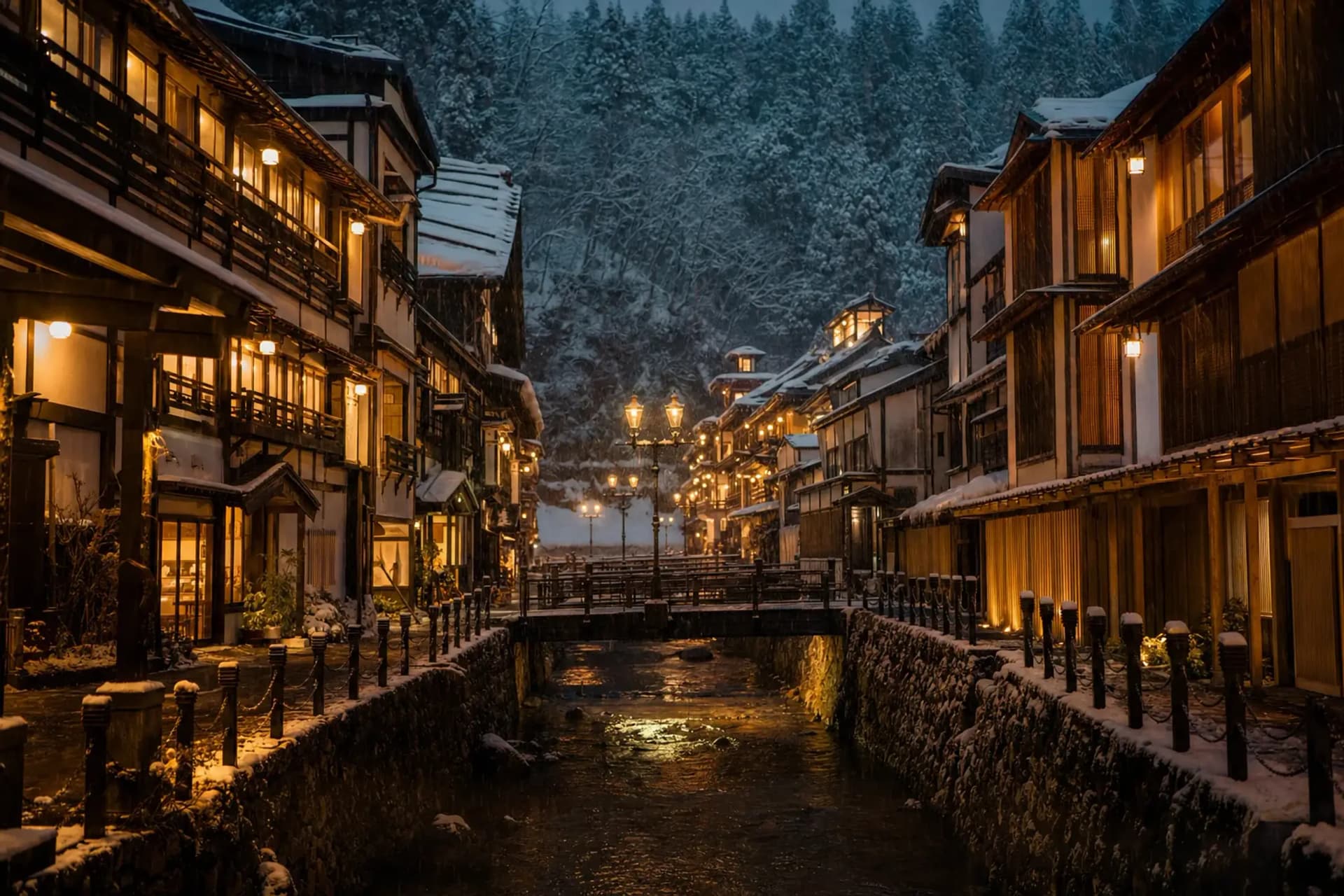
Boots on packed snow. A river moving under a thin skin of ice. Then, one by one, gas lamps begin to glow along the Ginzan River.
This is the Ginzan Onsen people imagine but rarely experience. Not a quick photo stop at noon, but an evening that belongs entirely to the guests who stay the night.
In winter, that difference is everything. Ginzan Onsen, in Obanazawa City, Yamagata, now uses a managed entry system to protect the town’s narrow approach road and the stillness that makes dusk feel private. It is, quite simply, a corner of the country that Google cannot find on a casual search — the Japan you reach by knowing when to arrive and how to stay.
What Makes Ginzan Onsen Feel Like A Different Japan In Winter
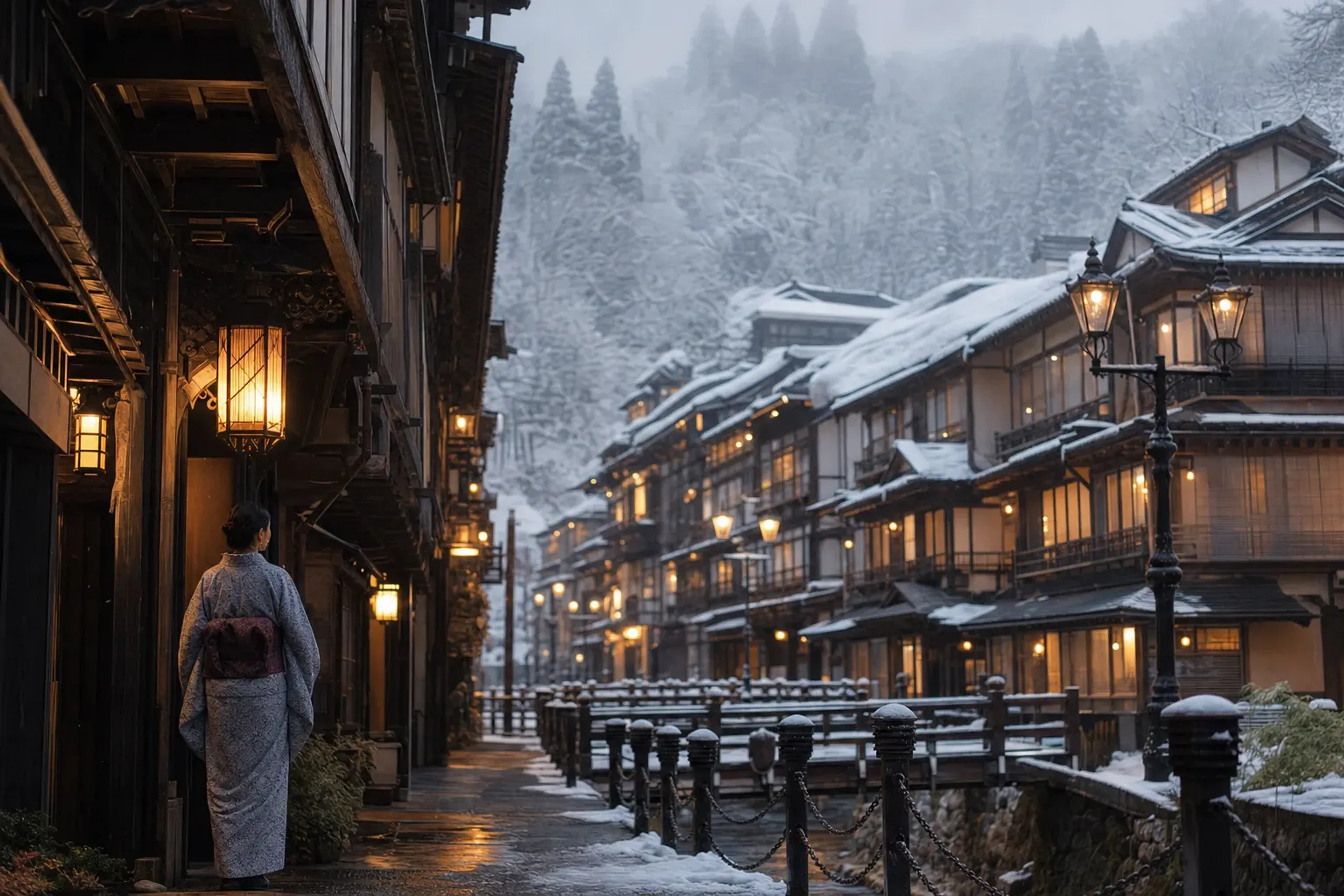
Ginzan Onsen sits in a tight valley in Obanazawa City, Yamagata Prefecture, its narrow river street lined by wooden ryokan-style inns that seem to lean toward one another across the water.
Small bridges cross the river. The street bends gently. In the cold, steam drifts from bathhouses and open doorways, catching the lamplight.
No neon. No modern facade shouting for attention. Just timber, plaster, and snow-softened edges — restraint rendered in architecture.
Many of the buildings are described by Japan’s Environment Ministry as wooden, multi-storey inns from the Taishō era and early Shōwa period, a look said to have been rebuilt after a 1913 flood.
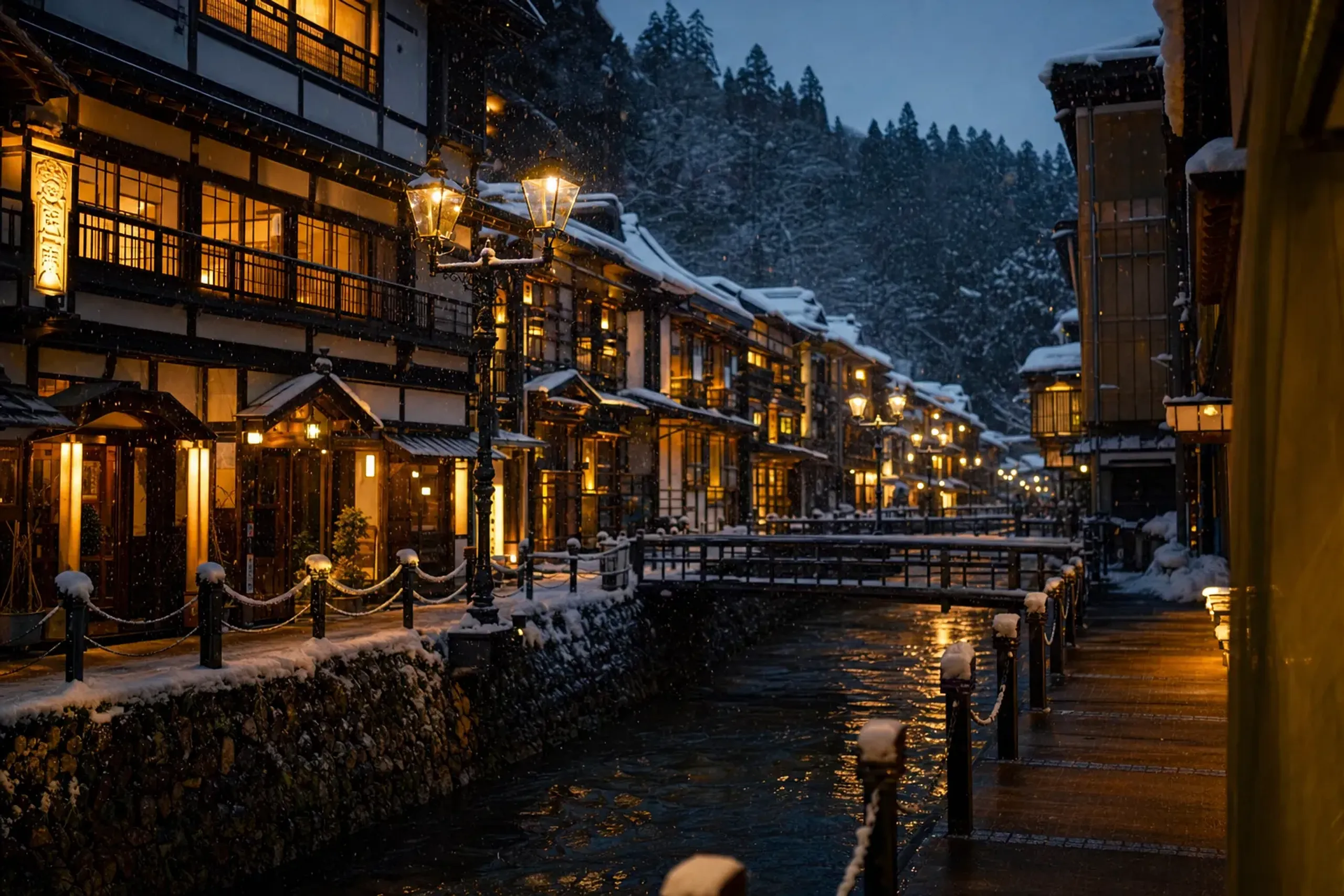
There are about a dozen inns along the river. That intimate scale is precisely the point — Ginzan cannot be mass-produced, and it was never meant to be.
The town also has depth well beyond the postcard. The Nobesawa silver mine ruins above the valley are a national historic site (designated December 1985); the mine opened in the mid-15th century and closed in 1689, lending the town a quiet, worn character that no new development can imitate.
Even if you take in only one detail, keep this one: the town is small enough that a single crowded hour can change everything. Which is exactly why the hour after the crowds leave is the one worth travelling for.
Why Are There Winter Entry Restrictions At Ginzan Onsen?
Ginzan Onsen restricts winter access because a single narrow road serves the entire town, and snowbound traffic can block emergency vehicles.
The official Ginzan Onsen association explains the core issue plainly: one approach road, severe winter conditions, and the need to keep space clear for ambulances and fire engines.
This is not “luxury theatre.” It is basic safety in a steep, snowy valley where visibility can drop within minutes.
It also preserves the atmosphere that makes Ginzan famous. When the evening turns quiet, guests walk slowly, keeping to the river side. The rules are what allow that evening to remain intact — and, for a discerning traveller, that protected calm is itself the luxury.
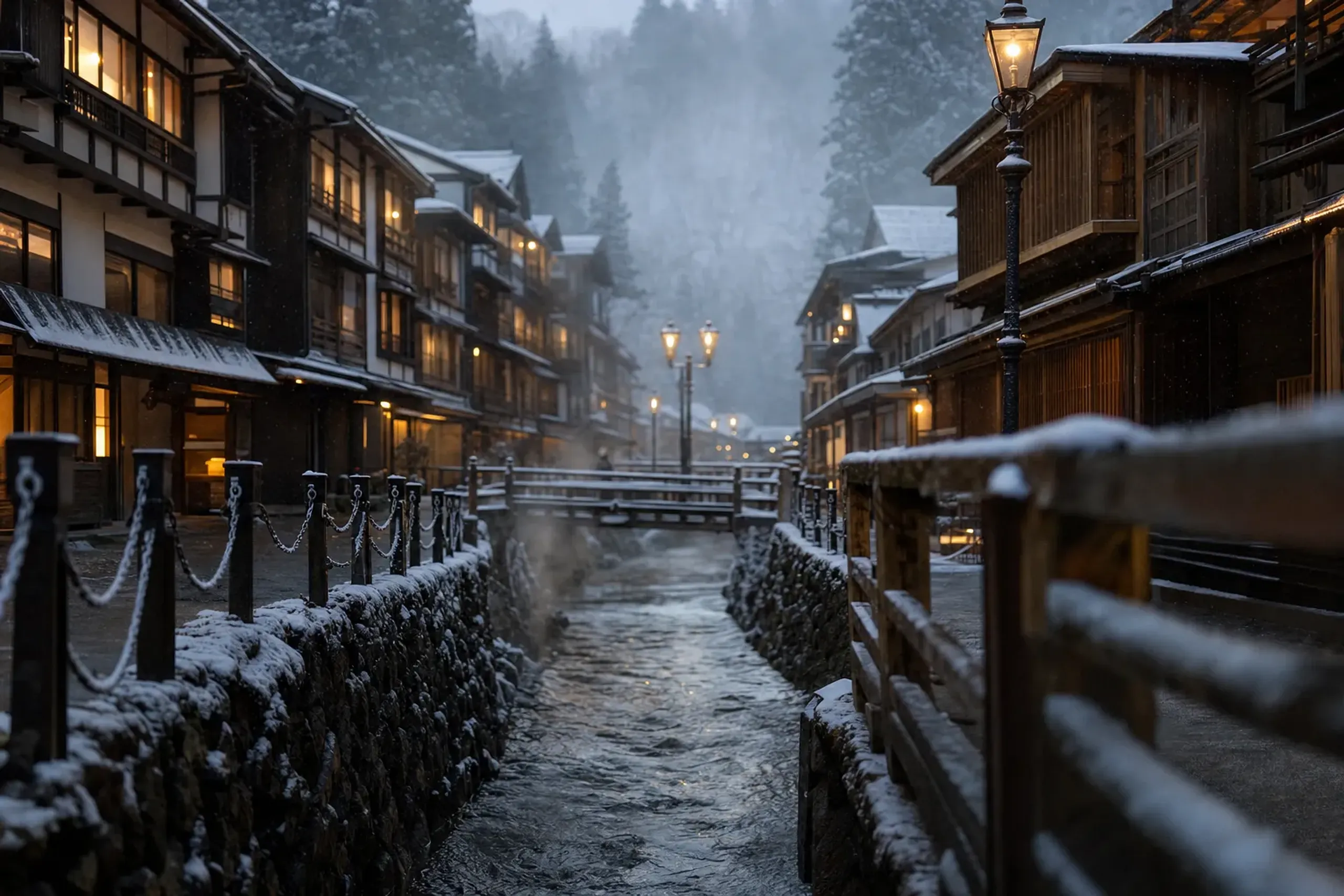
Key fact: In winter, Ginzan is best approached as an overnight stay, not a last-minute day trip.
How Does The Ginzan Onsen Winter Shuttle And Priority Pass Work?
Last winter (2025–26), day visitors parked at Taishō Roman-kan and used a shuttle bus that ran every 20 minutes from 9:00 to 18:00, with the last return at 19:30.
Those timings and intervals come from the official winter measures described by the Ginzan Onsen association for 20 December 2025 to 1 March 2026.
The association also recommended a paid “Priority Pass” for the outbound shuttle, with limited seats per time slot. No one wants to hear that after driving for hours — yet it is simply part of winter Ginzan now.
Overnight guests were treated differently. They did not need the Priority Pass and were exempt from the day-visitor restriction, showing proof of their inn reservation at the checkpoints. The quiet reward for staying, in other words, begins before you even reach the street.
The association also noted that entry numbers are adjusted by time of day, counting day visitors, guests, residents, and staff. There is no single public “nightly cap” figure to plan around, so a sound plan is built on precise timing and quiet compliance rather than guesswork.
For the next season, the association’s 2026–27 winter page is marked as a draft. It states the measures are planned for December 2026 to early March 2027, with final dates, fares, times, and the reservation link still to be confirmed; it also indicates conditions are planned on the same basis as last year.
Our team at Japan Royal Service treats these pages as living documents. We confirm the current entry arrangements and your inn’s specific guest procedure ahead of your visit, discreetly and on your behalf, because winter rules can tighten quickly after heavy snowfall.
An Evening Walk In Ginzan: Lamps, Snow, Bath, Dinner
Dusk arrives early in the valley.
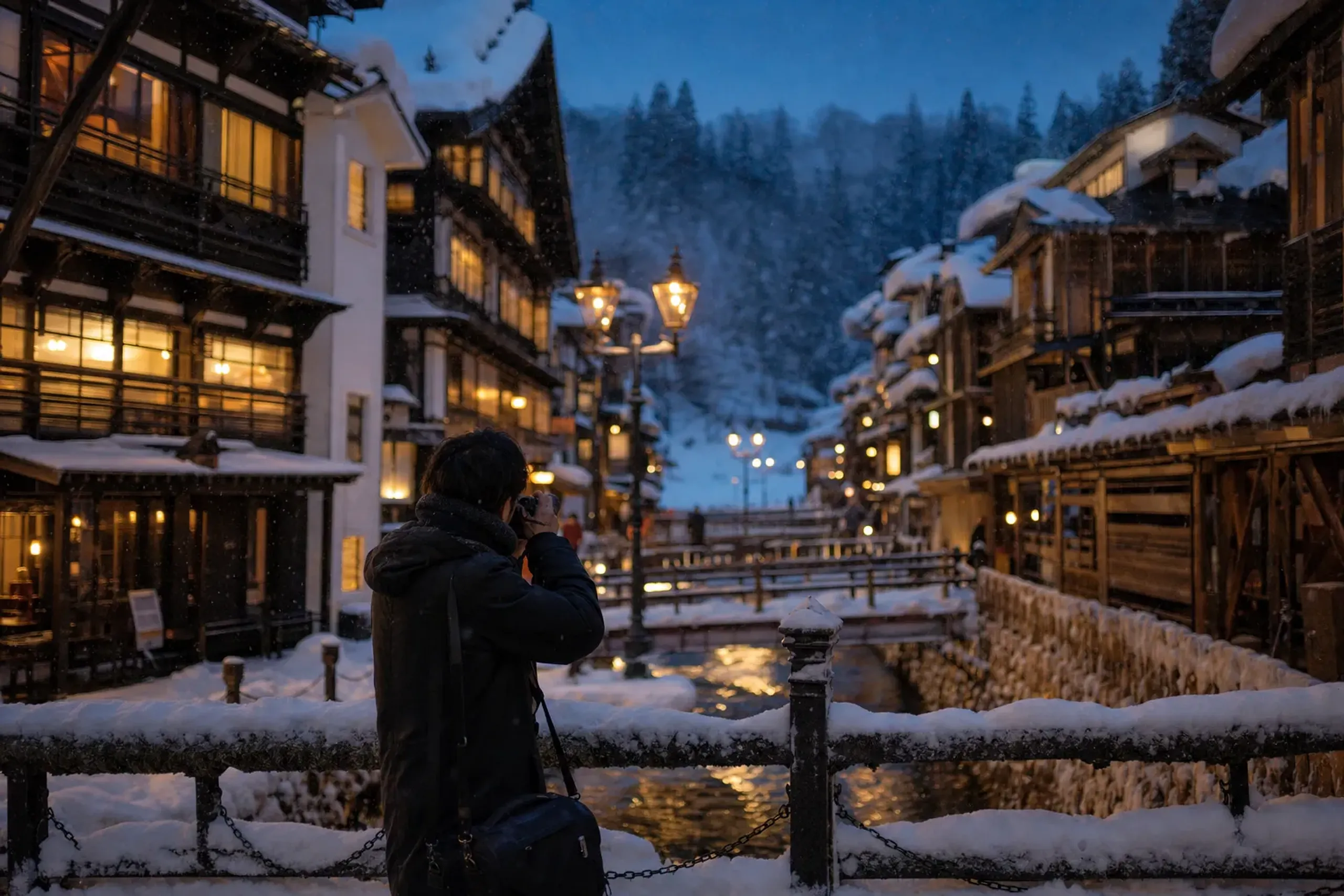
When the light drops, the gas lamps begin to matter. Not as a scheduled “light-up time,” but as a slow change in the street’s mood — the river becoming a dark ribbon, the snow reflecting every glow back into the cold air.
Walk on the river side. In winter, the official guidance is to keep to the diamond-shaped tile plates in the street’s centre, because roof snow can slide off the building side without warning.
After a few minutes, you stop hearing arrivals. You start hearing the town itself: the scrape of a shovel, the hush of falling snow, water moving under a bridge. This is the kind of silence you cannot book from a brochure — only arrive into.
For a simple public soak, Ginzan has the Shirogane-yu public bath. There is also the Warashi footbath for a short warm-up before you return to the inns.
Then comes the heart of the night: dinner at the inn.
In winter, the official wording leans toward hot-pot dishes waiting for a chilled body — the season dictating the menu, as it should.
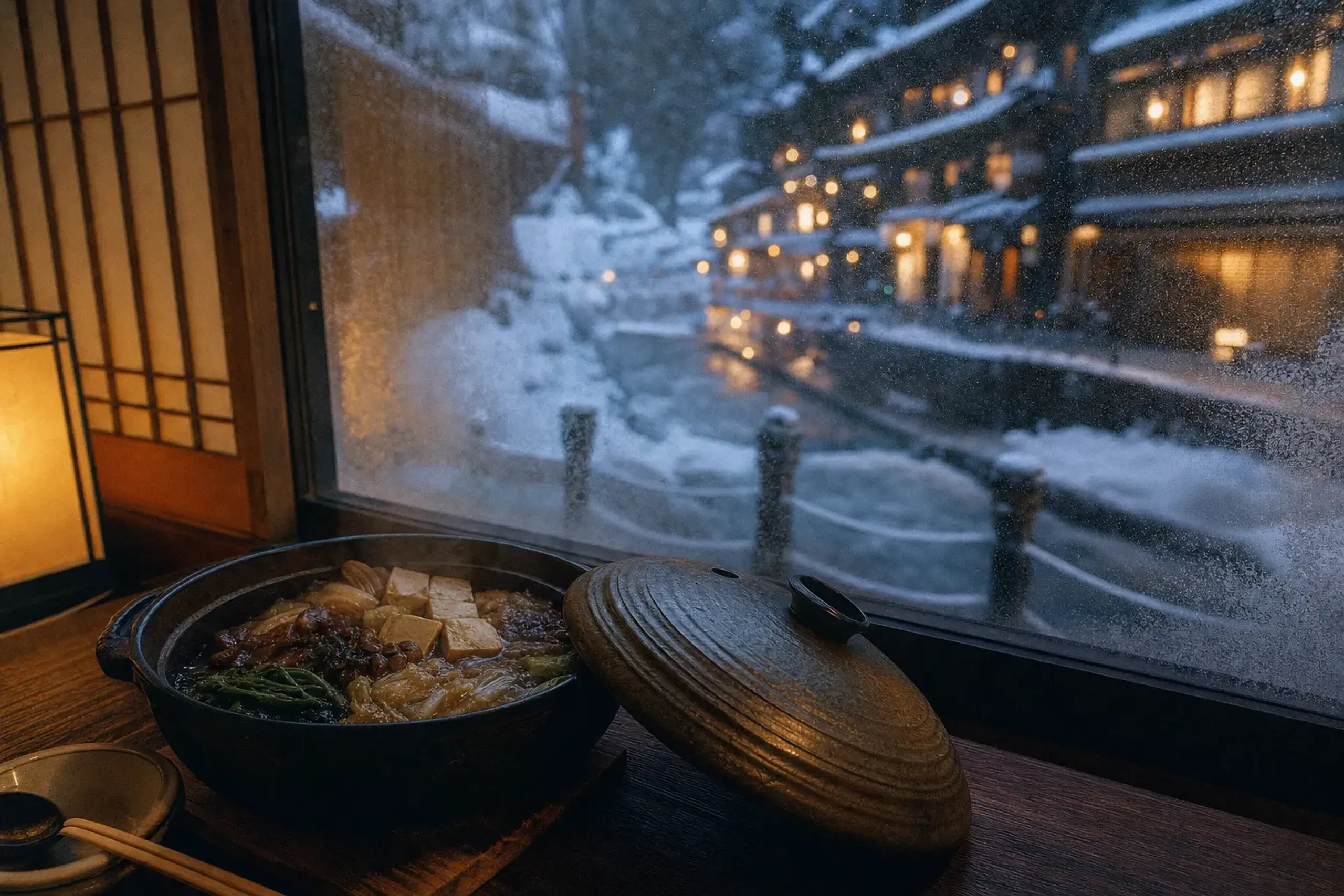
That is the rhythm of a Ginzan night: soak, eat, step outside again for a few quiet minutes, then back into warmth.
If you want one optional local note, Obanazawa beef is promoted with brand rules tied to the city and its grading standards. Availability depends on the inn and the day, so we treat it as a quiet preference to pursue, never a promise to make.
Can You Visit Ginzan Onsen As A Day Trip In Winter From Tokyo?
Yes, but a winter day trip to Ginzan Onsen from Tokyo is long, rule-bound, and far less rewarding than staying overnight.
On paper, the rail segment is straightforward. JNTO describes taking the JR Yamagata Shinkansen to Oishida Station in about 3 hours 20 minutes, then a bus to Ginzan Onsen in about 35 minutes.
Real winter adds friction. Buses can be delayed by snow, and the winter entry measures can reshape how close day visitors are permitted to get without an overnight reservation.
More importantly, the iconic atmosphere only emerges once the day visitors leave. If you arrive for a narrow window, you risk spending your best hour watching the clock for the last shuttle back.
In our experience, the day-trip mindset creates a photo chase. The overnight mindset creates a memory — and, for the kind of traveller who values the evening more than the itinerary, there is no real contest.
Step-By-Step: Getting To Ginzan Onsen In Winter (Tokyo To Oishida To Taishō Roman-Kan)
The cleanest way to think about Ginzan in snow is as a two-stage approach: first to Oishida Station, then into the valley under winter rules.
Step 1: Tokyo To Oishida Station By Train
From Tokyo, the JR Yamagata Shinkansen (Tsubasa) reaches Oishida Station in roughly 3 hours 15–20 minutes, depending on the service.
There is no Shinkansen station in Obanazawa. Oishida is the rail doorway to Ginzan.
Step 2: Oishida Station To Ginzan Onsen Area By Bus Or Car Transfer
Japan.travel (JNTO) describes a bus ride of about 35 minutes from Oishida Station to Ginzan Onsen, with departures roughly every 60–90 minutes.
Timetables can change by season, and the winter 2026–27 schedule may not match the autumn timetable that ends in late October. Snow delays are not rare.
If you are using private transportation, the Ginzan Onsen association states that Obanazawa IC is about 30 minutes away by road. In winter, the key question becomes where vehicles must hand over to the shuttle system.
Our concierge team confirms the current handover point and the permitted approach for your specific visit date, since taxi and charter terms have been adjusted in past winters.
Step 3: Taishō Roman-Kan Shuttle Into Ginzan (When Measures Are Active)
Last winter (2025–26), day visitors left their cars at Taishō Roman-kan and used the shuttle every 20 minutes during the day, with a final return later in the evening.
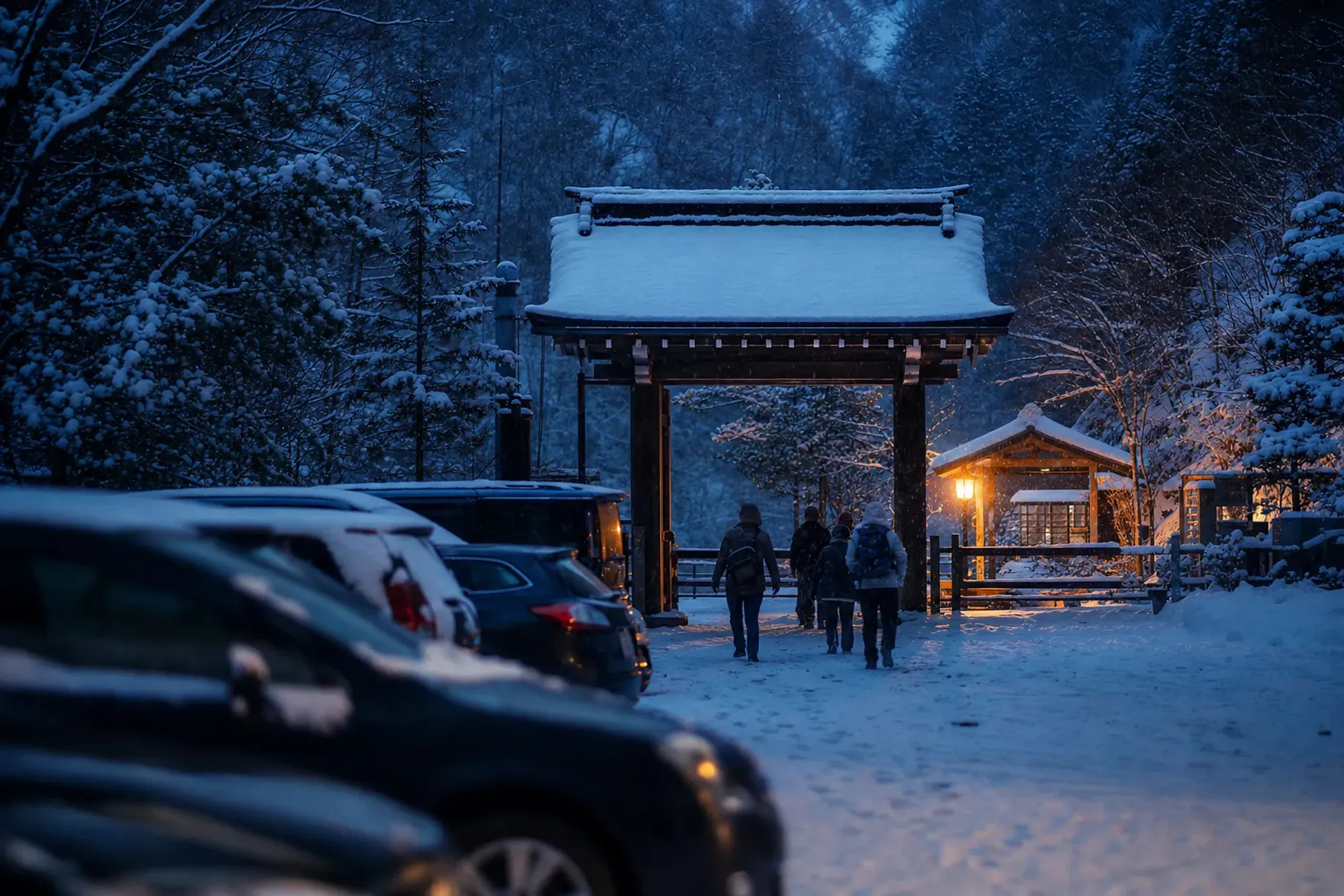
Expect checkpoints. Expect to show proof of your inn reservation if you are staying.
Plan luggage like a minimalist. A common mistake: arriving with multiple hard-shell suitcases and no plan for the last kilometre. (This is precisely the kind of friction we remove quietly in advance, so you never feel it.)
Is It Allowed To Walk From Taishō Roman-Kan To Ginzan Onsen In Winter?
No — walking in from Taishō Roman-kan is discouraged by official guidance, because there is no cleared footpath and the road can become dangerously narrow with snow walls and sudden whiteouts.
In some winters, third-party pages have described walking as “prohibited.” The official association language we rely on emphasises safety: no cleared pedestrian route, poor visibility, and reduced road width.
Either way, the intent is clear. Do not treat the 1.5–2 km stretch as a scenic stroll in a storm.
If you are travelling with children, older parents, or anyone with balance concerns, this becomes non-negotiable. Use the system as it is designed — and let us arrange the comfortable alternative.
Snow Reality Check: What Winter Feels Like In Obanazawa
Obanazawa is not “a little chilly.” It is proper snow-country, and it does not pretend otherwise.
Japan Meteorological Agency normals (1991–2020) for Obanazawa show maximum snow-depth averages of about 76 cm in December, 129 cm in January, 149 cm in February, and 114 cm in March.
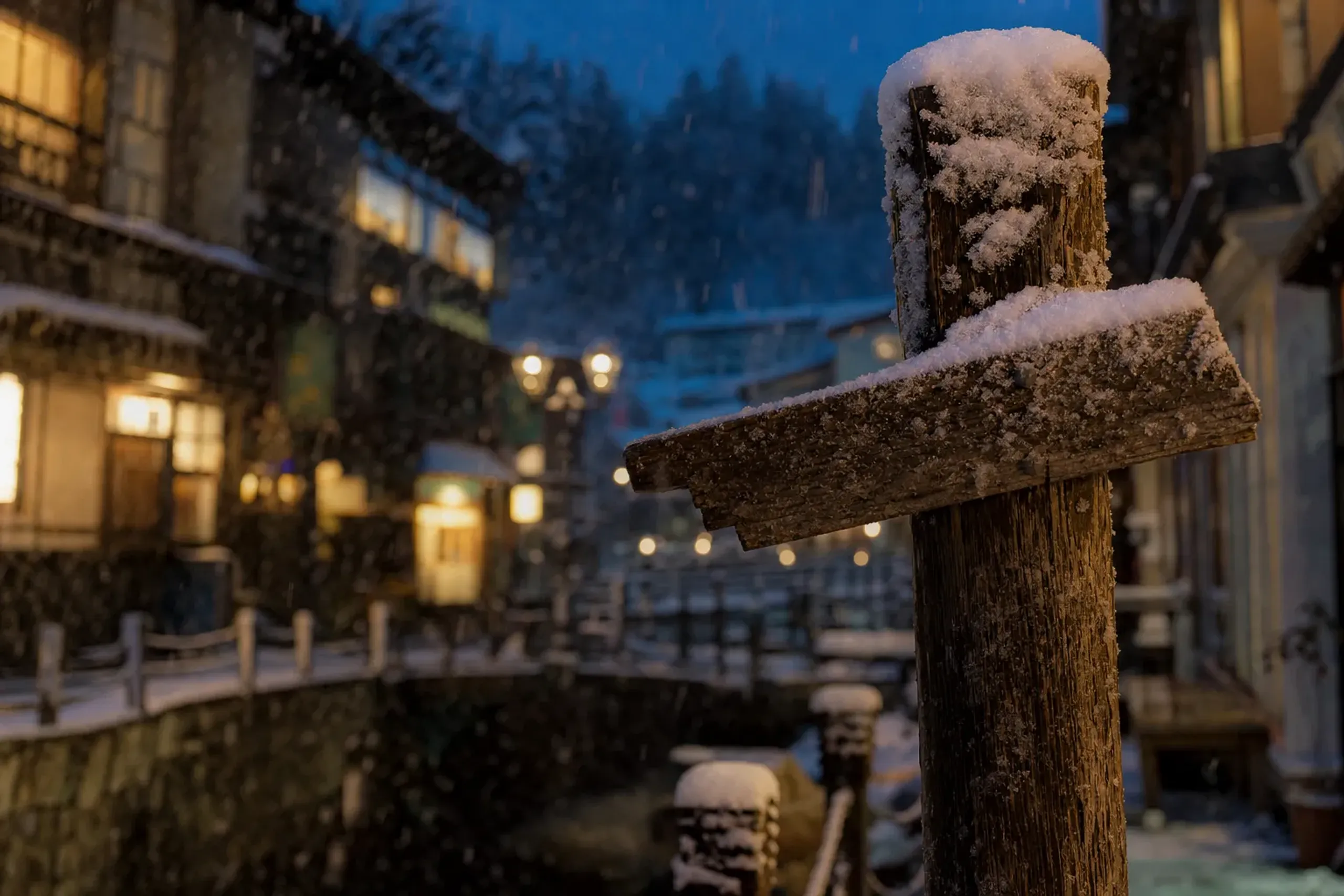
Average temperatures sit below freezing in mid-winter: around −1.0°C in January and −0.7°C in February. Cold air finds every gap in a scarf. It always does.
Pack for traction. Wear boots with real grip — not city soles pretending to be hiking shoes.
Expect overnight snow clearing. You may hear machinery early in the morning. It is the sound of the town quietly keeping itself open.
- Clothing: base layers, a waterproof outer shell, and gloves that still allow phone control.
- Footing: a cautious pace on polished snow; watch the bridges and the edges of packed paths.
- Street etiquette: keep to the river side and the centre tiles; respect the snow-shedding risk from the roofs.
Photography is part of Ginzan’s appeal, but privacy comes first — both the town’s and your own. Avoid lingering in front of inn entrances, and follow any rules your accommodation sets regarding tripods or drones. Discretion is a courtesy that runs both ways here.
Designing Ginzan The Way It Deserves: Overnight First, Then The Street
Ginzan’s winter argument is simple: the street is a place you sleep in.
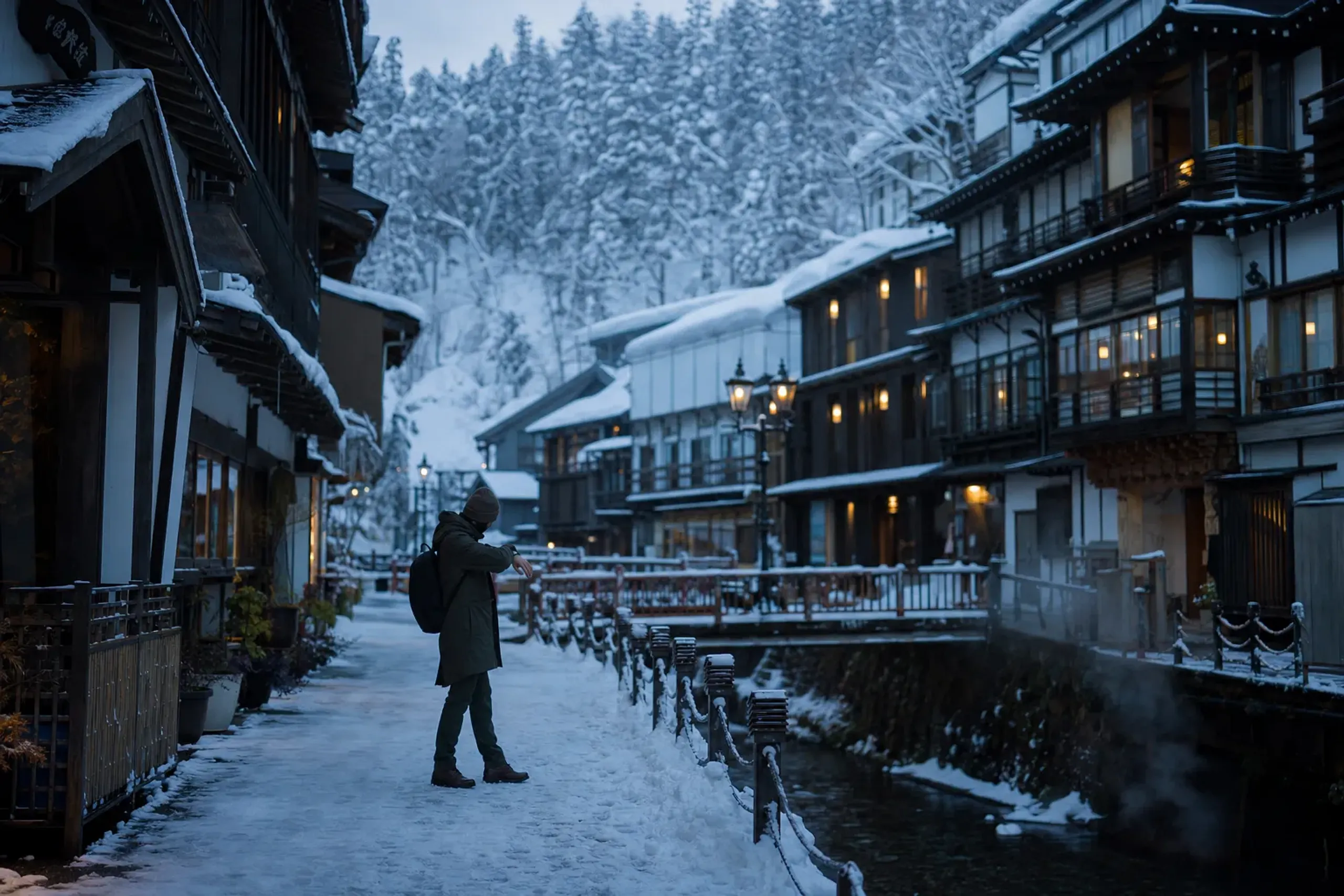
When you stay overnight, you receive the town twice. Once at arrival, while the day traffic still hums. Then again after dinner, when the lamps and the snowfall turn the river to ink.
That second Ginzan is why people come. It is also exactly why the winter system exists to protect it.
If your schedule cannot allow an overnight, design your day like a watchmaker — tight connections, clear handover points, and a plan for delays, with no room left for improvisation.
For broader winter planning, many of our clients find it helpful to read our guidance on winter onsen logistics in snow-country Japan before they commit to dates.
Private Transportation In Winter: What To Expect (And What Not To Assume)
Even for the most discerning travellers, winter Ginzan imposes hard limits on vehicle access — and it is wiser to respect them than to be surprised by them.
The official association notice dated 15 January 2026 stated that, last winter, taxis required a pre-arranged passage permit and only regular dispatch taxis qualified; hire cars, sightseeing taxis, and charters had to hand over at Taishō Roman-kan.
That is the important mindset to hold. A private vehicle does not automatically grant a private approach.
When we discuss private transportation with clients, we frame it around control where control is genuinely allowed: departure time, cabin comfort, luggage management, and a calm, composed handover to the official system when the rules require it.
For some travellers, rail plus a guided handover is the cleaner choice. For others, a chauffeured approach removes the winter stress entirely. Our role is to map the constraints first, then make the day feel effortless — with the quiet, anticipatory care that leaves nothing for you to manage.
If you are still deciding between modes, our private driver vs rail decision framework helps clarify what matters most for your party size and your tolerance for weather disruption.
How We Build A Ginzan Winter Plan Without Turning It Into A Checklist
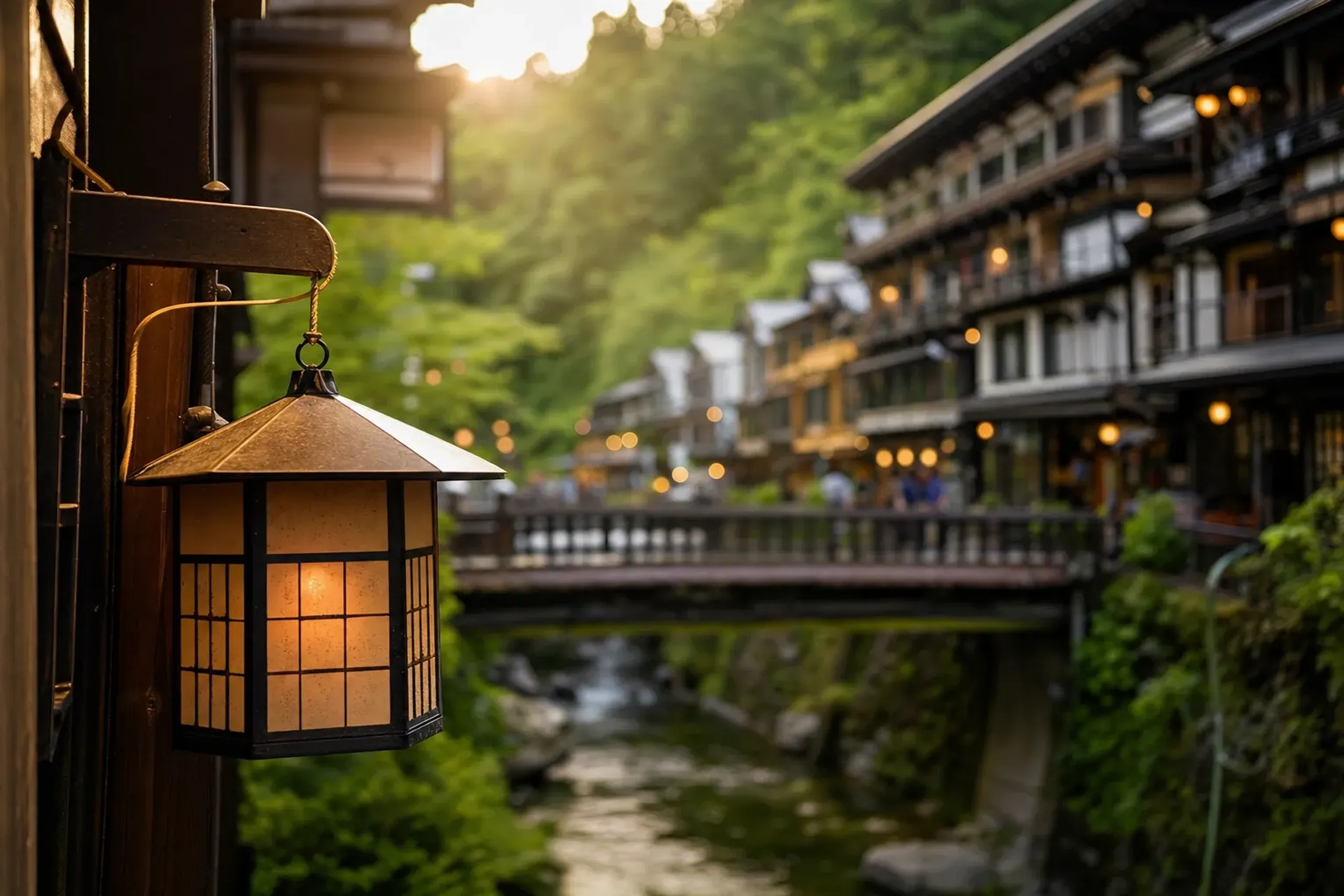
Luxury in Ginzan is quiet.
It is not a stack of “VIP add-ons.” It is arriving at the right hour, with the right expectations, and no friction at the checkpoints — because your documentation and timing have already been thought through on your behalf.
Our team at Japan Royal Service usually begins with three decisions: whether you are staying overnight, how many nights, and where you base yourself before and after (Tokyo, Sendai, or elsewhere in Tohoku).
From there, we shape the plan around restraint — the same wabi-sabi sensibility the town itself embodies. A shorter street walk at dusk can feel far richer than two hours of back-and-forth for photographs.
We also keep the story intact. Ginzan is not only a winter icon; it is a former silver-mine town of such small scale that it rewards soft voices, slow steps, and early nights. The whole of it can be arranged through quiet introduction, and your presence there kept entirely to yourself.
When you are ready to design your own evening on the wooden street — overnight, under the lamps, after the shuttles have gone — contact us here, and we will prepare a tailor-made itinerary shaped entirely around your dates, your pace, and your privacy.