In this guide
- 01Why July Feels Harder Than You Expect At Tokyo Disney Resort
- 02What Disney Premier Access Is (And What It Is Not)
- 03Grandparent-Friendly Planning Principles: Fewer Steps, Fewer Surprises
- 04Which DPA Choices Tend To Feel Gentler In The Heat
- 05A Sample July Day Pacing Pattern (Designed For Older Guests)
- 06Heat Strategies That Actually Reduce Fatigue (Not Just Discomfort)
- 07How To Reduce Walking Without Making The Day Feel Small
- 08Accessibility And Courtesy: A Quiet Standard In Japan
- 09Getting There And Leaving Comfortably: Transport Choices That Save Energy
- 10FAQ: Disney Premier Access For Older Guests In July
- 11Why Choose Japan Royal Service
July at Tokyo Disney Resort can be dazzling. It can also be punishing.
Heat, glare, long queues, and concrete underfoot add up fast, especially for older guests who want the joy without the endurance test. One wrong choice early in the day can ripple into the afternoon. Big mistake.
Our team at Japan Royal Service plans day pacing the way a good host plans a multi-course meal: with rests built in, exits kept easy, and “extra steps” treated as a real cost. This guide shows how Tokyo Disney Resort’s Premier Access can reduce standing and waiting, so grandparents can stay comfortable and present.
Why July Feels Harder Than You Expect At Tokyo Disney Resort
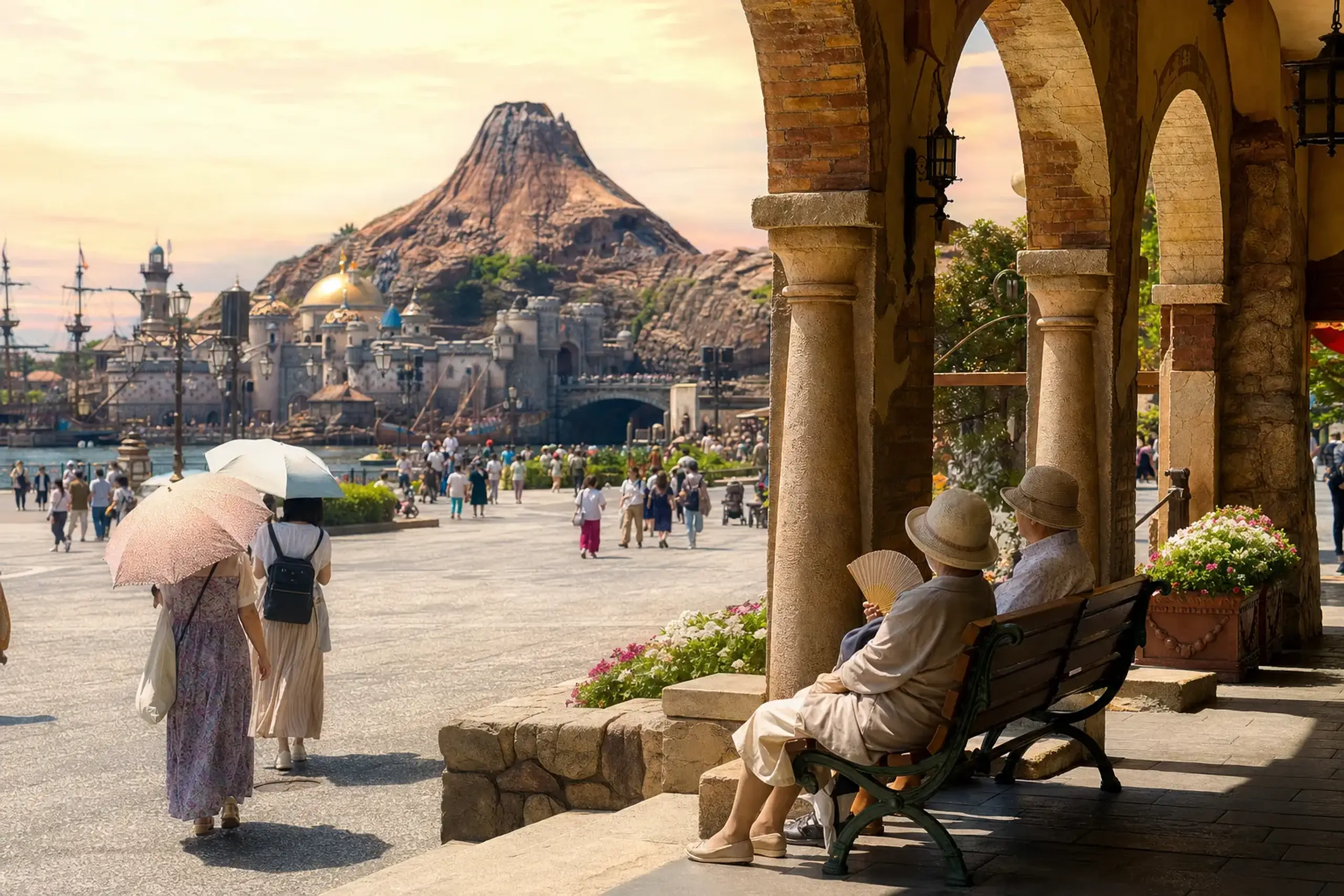
Summer in Tokyo is humid, and the parks amplify it. Shade is limited in several high-traffic corridors, and reflected heat from pavement can feel sharp by midday. It’s not only the temperature. It’s the constant stop-and-go.
Older guests often do well with gentle motion and predictable breaks, yet theme-park days tend to become long periods of standing. That’s the enemy. Waiting is walking, just slower.
A July plan should assume shorter stamina windows. It should also assume that “we’ll rest later” rarely happens when crowds swell. Plan the rests first.
What Disney Premier Access Is (And What It Is Not)
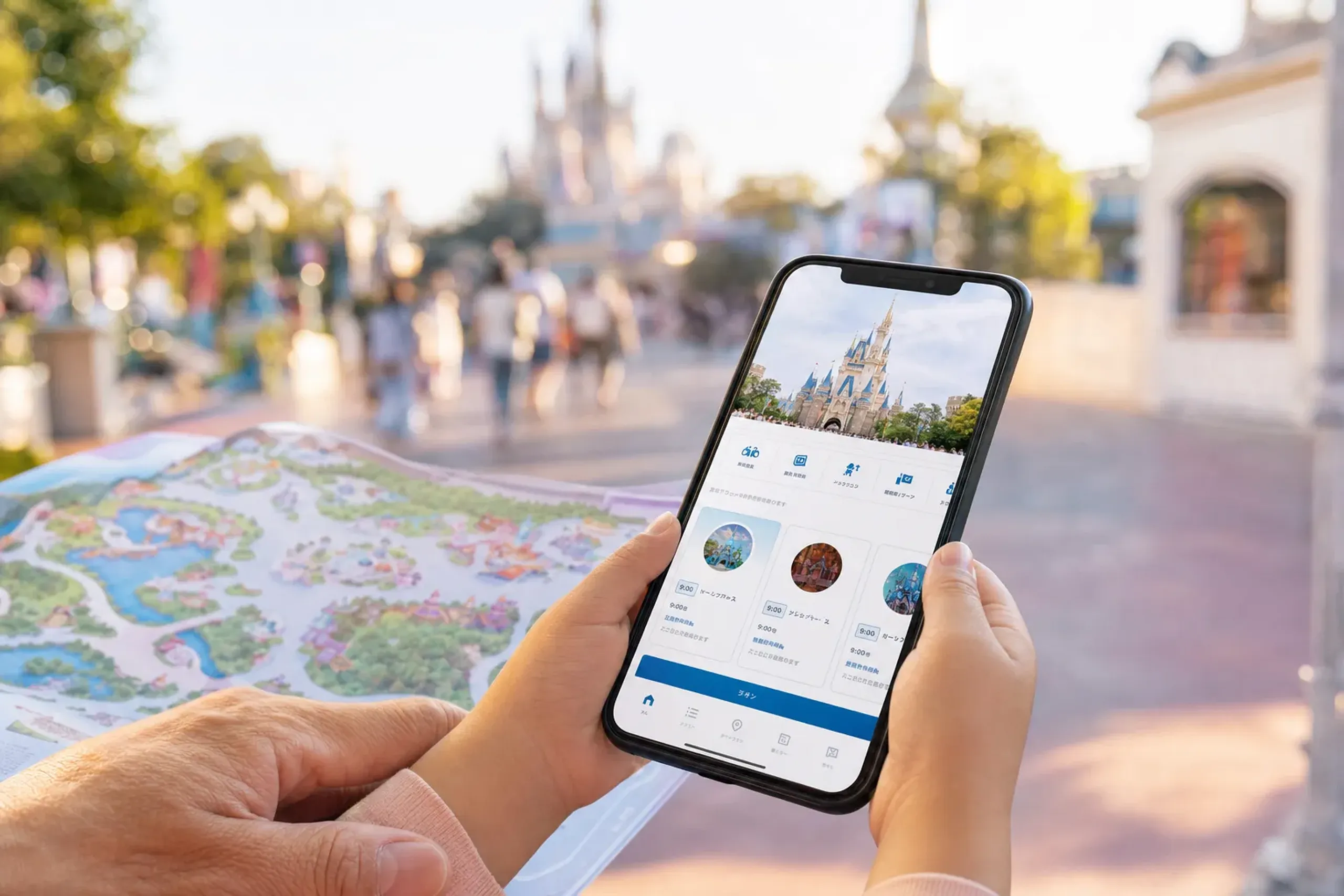
Tokyo Disney Resort’s Disney Premier Access (DPA) is a paid option for certain attractions and shows that lets you choose a return time and use a dedicated access queue. It’s designed to reduce time spent waiting in the regular standby line. Simple.
DPA is not a blanket front-of-line privilege for everything, and it does not remove all walking. You still cross lands, you still handle stairs in some places, and you still keep an eye on timing. Think of it as targeted relief.
Key fact: DPA availability, eligible attractions, and return-time rules can change by park and day. Always confirm inside the official Tokyo Disney Resort app on your visit date.
Why DPA Helps Grandparents Most
It shrinks the longest standing blocks. That alone can prevent the “one-hour line” that quietly becomes a two-hour recovery later. The win is cumulative.
It also lets the family anchor the day around calm windows. That means shade breaks, slower meals, and a clean exit plan when fatigue shows up. Quiet control.
Grandparent-Friendly Planning Principles: Fewer Steps, Fewer Surprises
When we plan for multi-generation groups, we treat the day like a loop, not a checklist. Fewer crossings. Fewer abrupt pivots. One land, then a rest.
Heat management is part of the itinerary, not an afterthought. That includes where you sit, when you sit, and how far you push between air-conditioned interiors. Details matter.
Choose One Park, Not Two
Park-hopping is a younger person’s game, especially in July. Transfers, security lines, and decision fatigue all add friction. One park is plenty.
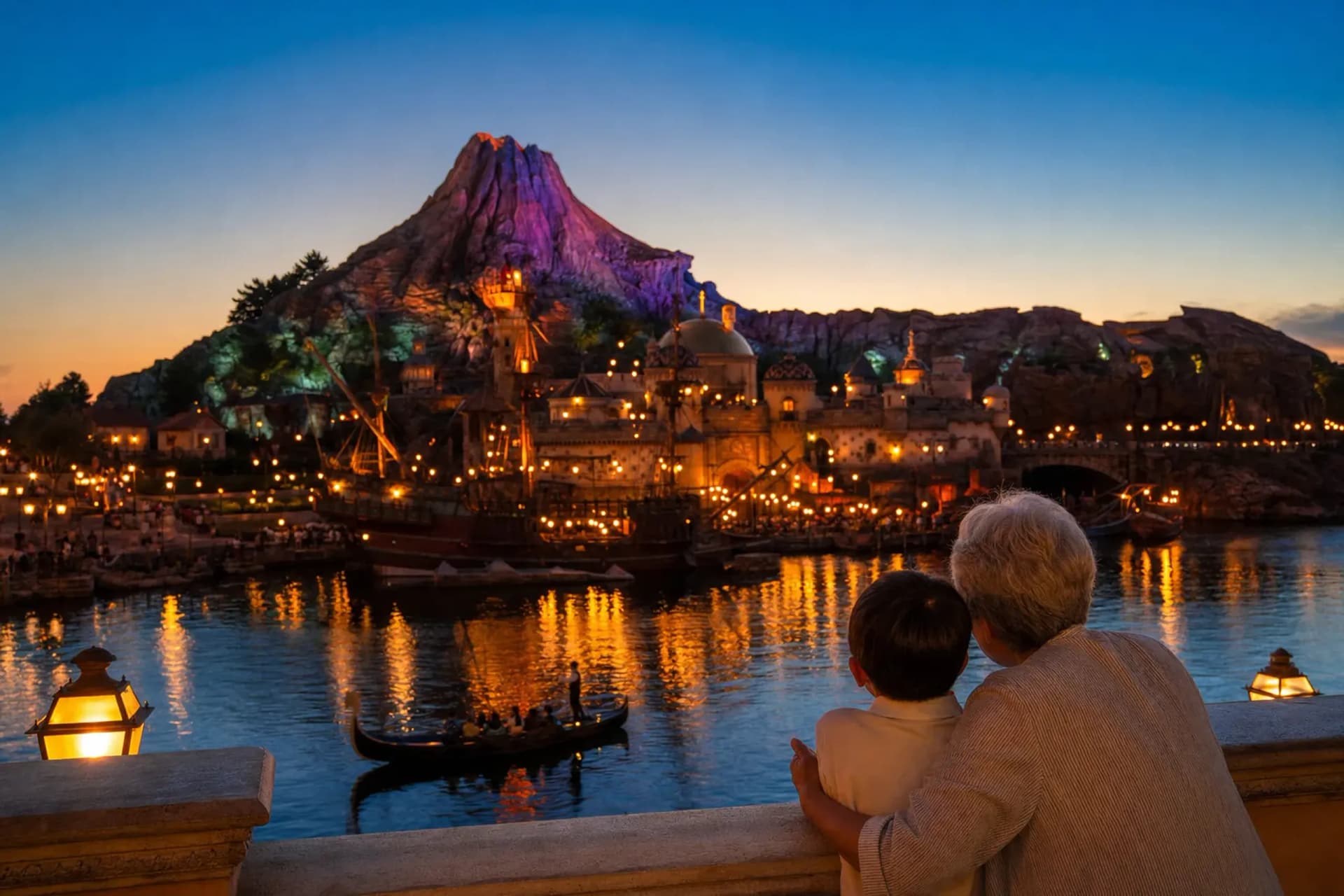
If your party wants slower pacing and gentler attractions, Tokyo DisneySea often supports that mood well, with long waterfront promenades and indoor venues you can use as “cooling stations.” Still, distances can be large. Choose carefully.
Build A “Return To Base” Habit
Pick one predictable rest point. A shaded bench area, a quiet café, or an indoor show venue you can use as a cooling reset between DPA times. Make it familiar.
Grandparents relax when they know where they can recover without debate. That calm spreads to everyone. It’s wabi-sabi in practice: restraint over hustle.
Which DPA Choices Tend To Feel Gentler In The Heat
Not every “must-do” is worth the heat cost. In our experience, the best DPA picks for older guests share two traits: indoor queueing for much of the path, and a predictable ride posture without sudden physical strain.
Your family’s comfort comes first. Always.
Look For These Signals
- More indoor time (queue, pre-show, or loading area) so you’re not baking outside.
- Lower jostle and easier seating, especially if knees or backs are sensitive.
- Shorter walk from your current land, because “just one more” becomes a kilometer quickly.
Avoid Stacking High-Intensity Rides Back-To-Back
Even when a ride is “seated,” the heat and adrenaline can spike fatigue. Two thrill-heavy attractions in a row can drain older guests fast. Don’t do it.
Alternate: one DPA ride, then a show, then a slow meal. Give the body time to settle.
A Sample July Day Pacing Pattern (Designed For Older Guests)
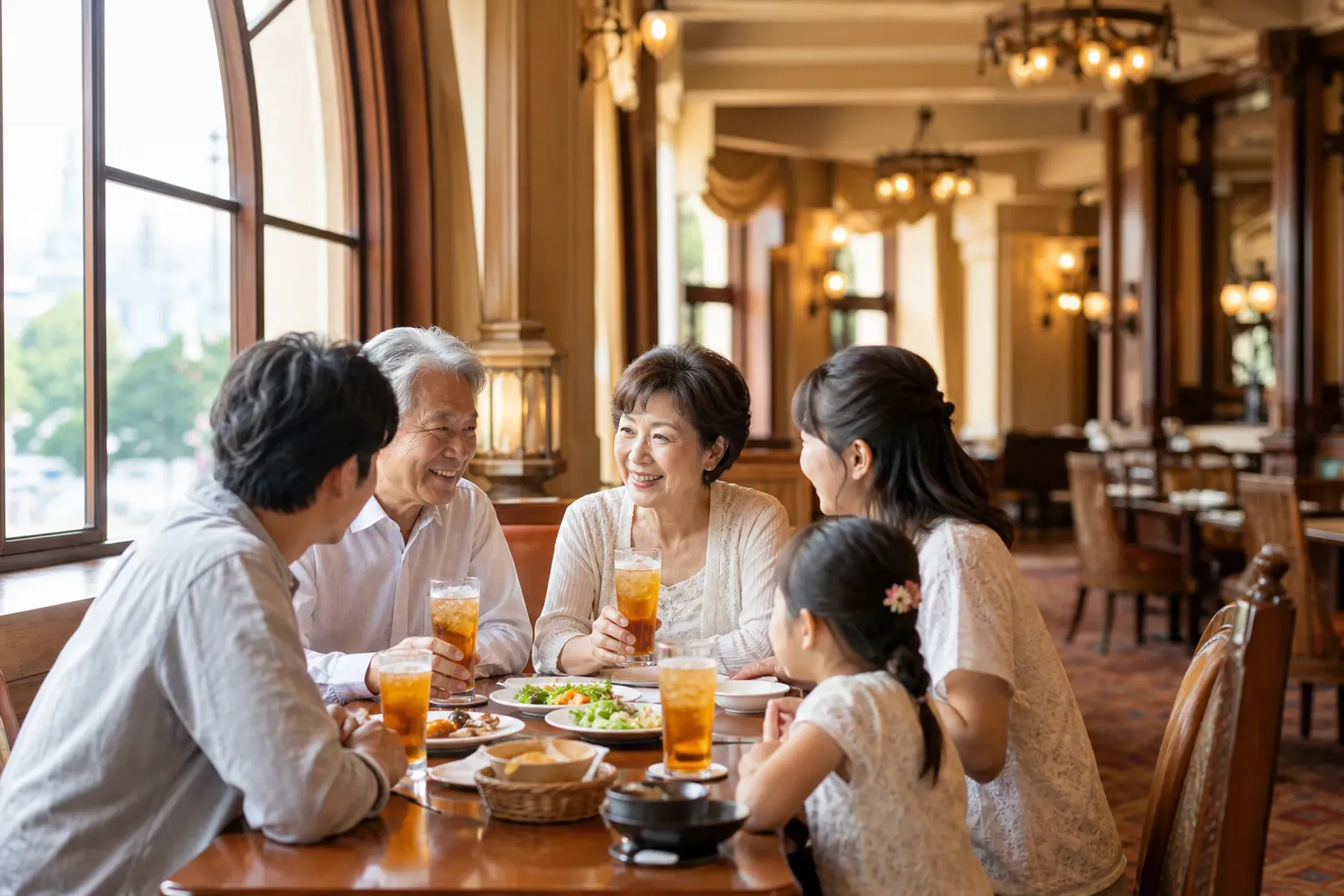
This is a pacing model, not a rigid schedule. The point is rhythm.
We aim for a morning push while temperatures are manageable, then a long mid-day cooling block, then a gentle finish that keeps the exit easy. No heroics.
Morning: One Anchor Attraction, Then Sit
Arrive early enough to avoid a crowded entry surge, but don’t sprint. Let the park open up in front of you. Keep steps deliberate.
Use one high-value DPA selection early, then sit down within 20 minutes of finishing it. Even a short break helps the day feel “owned,” not endured.
Midday: Indoor Time Is The Luxury
In July, the best “experience” is often a cool room and a quiet drink. Choose an indoor show, a shaded restaurant, or a long, unhurried lunch. Protect this window fiercely.
If your party can return to a nearby hotel for a rest, that can transform the afternoon. In our planning, a mid-day reset is often the difference between a graceful evening and an early retreat.
Afternoon: Two Short Blocks, Not One Long March
Instead of trekking across the park for a single headline ride, plan two nearby experiences in the same area. Keep the radius tight. Your grandparents will notice.
Space DPA return times so you are not rushing. Rushing creates heat, and heat creates mistakes.
Evening: Choose Calm Over “One Last Ride”
Night temperatures can soften, but fatigue is already in the muscles. End with something seated, slow, and emotionally satisfying. A show can do more than another queue.
Then leave before the exit crush if your group is sensitive to crowds. A five-minute earlier departure can feel like an hour saved.
Heat Strategies That Actually Reduce Fatigue (Not Just Discomfort)
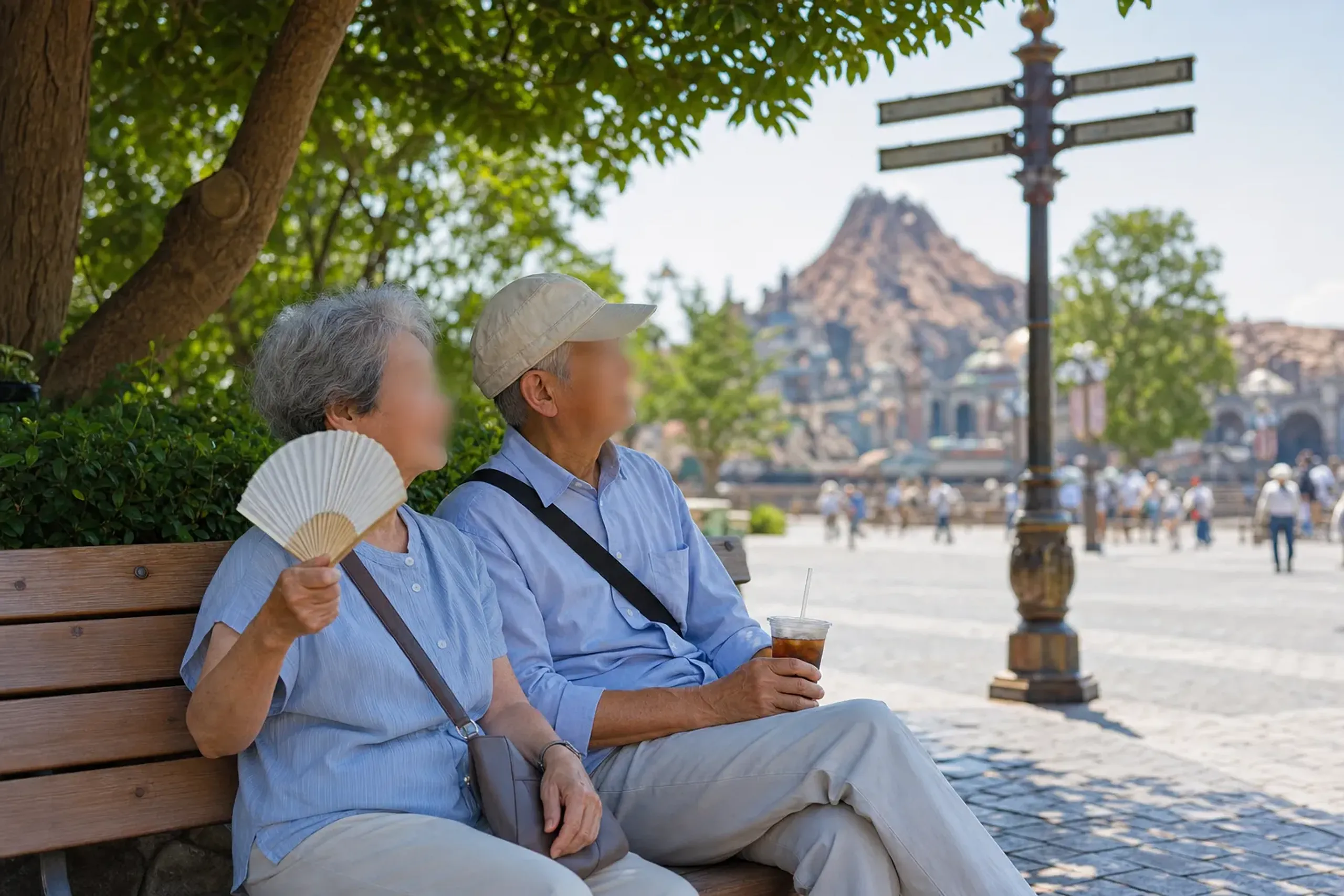
Fans and cold drinks help, but fatigue management is broader. The goal is steady body temperature and fewer stress spikes. Small choices stack up.
Use Cooling Breaks As Non-Negotiable Appointments
Don’t wait until someone looks unwell. Schedule cooling stops the way you schedule DPA return times. Treat them with the same seriousness.
Older guests often won’t complain until it’s late. Watchful planning matters.
Prioritize Seating With Back Support
It sounds minor, but it changes recovery speed. A bench with a back can restore posture and breathing. A low wall often cannot.
When we design a day, we mark “good seats” the same way we mark attractions. Comfort is an attraction.
Keep Meals Simple And Early
A late, heavy lunch in the thick of the heat can flatten energy for hours. Aim earlier, eat lighter, then add a calm snack later. It’s more forgiving.
Hydration should be steady, not frantic. Sip often.
How To Reduce Walking Without Making The Day Feel Small
Some families fear that “walking less” means “seeing less.” Not true.
The trick is to design micro-areas of depth: a single land where you do one ride, one shop with air-conditioning, a show, and a slow snack, all within a short radius. You’re still immersed. You’re just not commuting.
Plan By Zones, Not By Headlines
Pick a zone and work it fully before you move. That reduces backtracking, which is where steps explode. It also keeps grandparents oriented.
Orientation reduces stress. Stress adds heat.
Make Photos Part Of The Rest, Not An Extra Task
Older guests love photos when it doesn’t feel like a production. Take them during seated breaks, near shaded views, or after indoor attractions when faces are cooler. It’s kinder.
This is where restraint looks like taste. Wabi-sabi again, without saying it out loud.
Accessibility And Courtesy: A Quiet Standard In Japan
Japan tends to handle public order with a subtle hand. Lines are orderly, staff are attentive, and guests often help each other without drama. It makes multi-generation travel feel safer.
Still, mobility needs should be addressed plainly. If a guest uses a wheelchair or needs frequent seating, build the day around that reality rather than fighting it.
Our concierge team takes these needs seriously, and we keep all health and identity details strictly confidential. Discretion is not a feature for us. It’s the default.
Getting There And Leaving Comfortably: Transport Choices That Save Energy

The park day begins before the gate. A crowded train in July can drain your group before the first attraction.
For many HNW families, private ground transport is the simplest way to reduce friction, control temperature, and keep grandparents from standing during transfers. It also gives you a calm place to reset on the ride back.
When clients ask us what feels “most luxurious” in July, we often say this: a cool, quiet car and a direct route.
Learn more about our chauffeured options here: private transportation.
FAQ: Disney Premier Access For Older Guests In July
Does Disney Premier Access Reduce Walking?
It reduces waiting time in standby lines for eligible experiences, which often reduces standing. You will still walk between lands and venues, so zone-based planning remains important.
Is Disney Premier Access Guaranteed To Be Available?
No. Availability can sell out or be limited, depending on the attraction, show, park, and day. Check the official Tokyo Disney Resort app during your visit.
What’s The Best Way To Prevent Overheating?
Schedule indoor breaks before anyone feels unwell, keep return times spaced so there is no rushing, and plan meals earlier in the day. A mid-day hotel rest can help if your base is nearby.
Should Grandparents Ride Everything With The Family?
Not necessarily. A better approach is to keep the group together for the most meaningful moments, then allow optional split time so older guests can rest without feeling they are “holding everyone back.”
How Do We Handle Privacy If We Don’t Want Attention?
Choose quieter routes, avoid peak exit surges, and keep logistics controlled from start to finish. For private guidance, our concierge team can advise discreet pacing and arrival strategies.
Why Choose Japan Royal Service
Many luxury travelers don’t need “more activities.” They need a day that feels composed.
Our team at Japan Royal Service designs tailor-made itineraries with a watchful eye on heat, walking load, and the quiet dignity older guests deserve. We plan for discretion first, then comfort, then joy.
We also bring Japan-specific cultural depth into family travel when you want it: a private moment with a shokunin craftsperson in Tokyo or Kyoto, a restrained garden walk that honors wabi-sabi, or a Hidden Japan detour that trades crowds for atmosphere. The point is not to cram. It’s to curate.
If you’d like a July Disney day that feels calm for grandparents and still magical for everyone else, reach our team privately via WhatsApp or LINE, or contact us here.