In this guide
- 01The Season At A Glance: When Gujo Odori Happens
- 02How Does A Typical Gujo Odori Night Work, And How Do You Join The Circle?
- 03The Four All-Night Obon Dances: What To Expect From Tetsuya Odori
- 04The Water Town Between Songs: What To See In Gujo Hachiman
- 05Rain, Heat, And Crowd Logic: How To Stay Comfortable Without Getting In The Way
- 06How Do You Get To Gujo Odori From Nagoya (And Leave After Midnight)?
- 07A Two-Night Gujo Odori Blueprint For High-Net-Worth Travelers
- 08How Our Concierge Team Plans A Gujo Odori Visit Quietly And Precisely
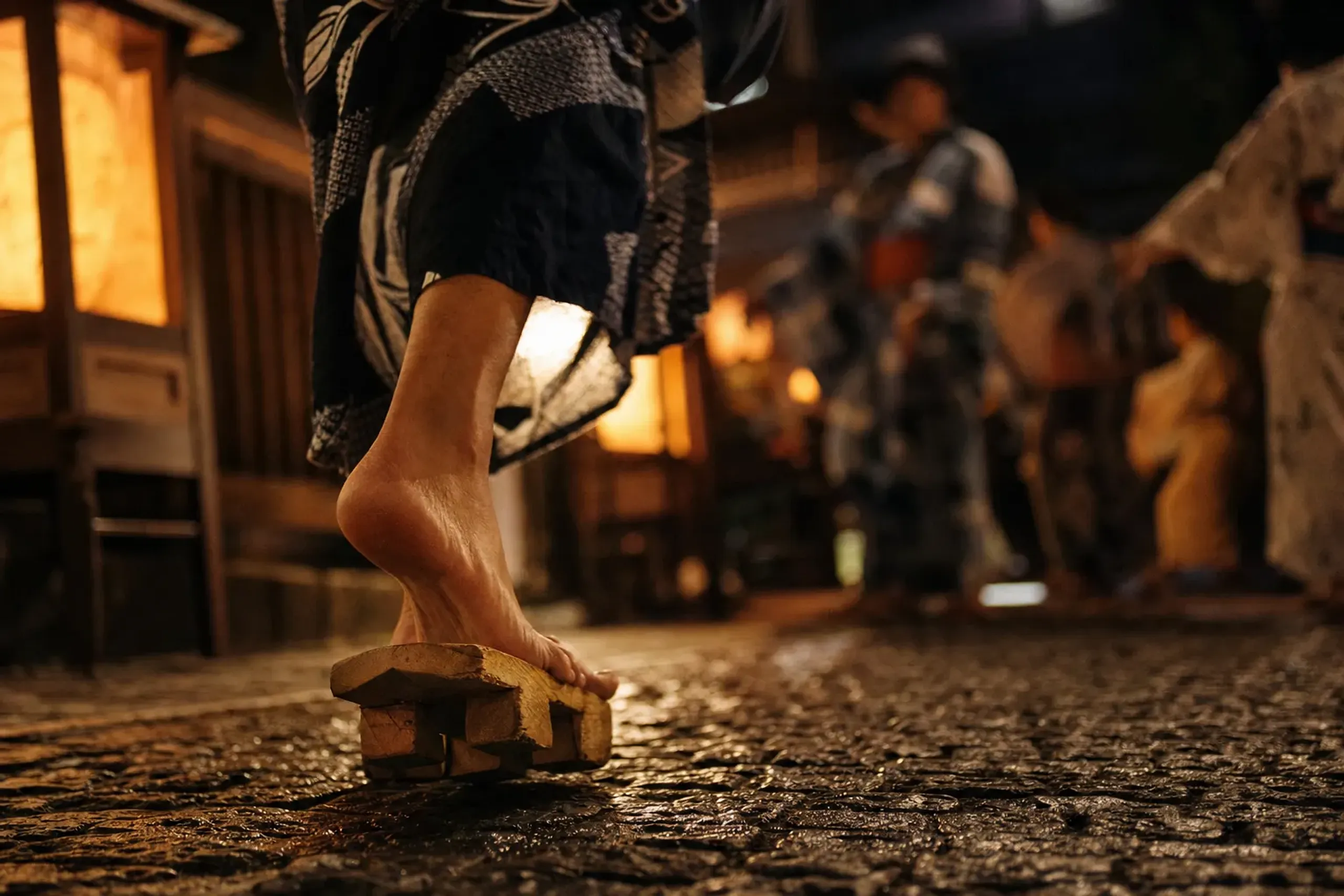
You hear the first geta before you see the circle.
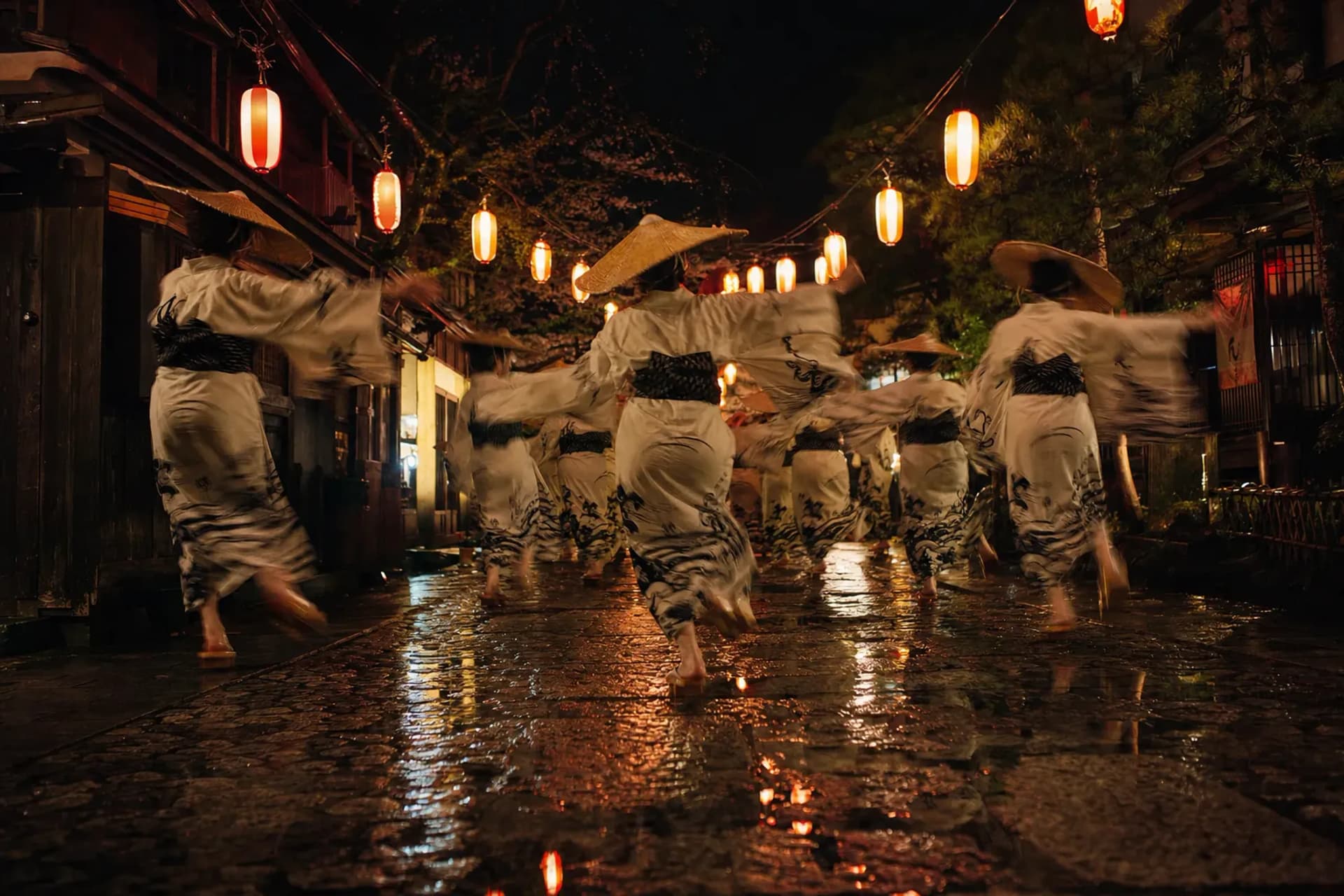
Wooden clogs strike stone in a rhythm that refuses to hurry, and then the song drifts down the street the way it has for generations. Lantern light catches on faces, sleeves, and slowly turning fans. Someone glances your way, steps sideways, and the ring opens. Join.
Gujo Odori in Gujo Hachiman (Gifu Prefecture) is not a performance you sit through. It is a festival you enter with your own feet, one small step at a time, until you are moving in quiet unison with strangers who already know every turn. For the discerning traveler, this is the rare encounter that cannot be bought outright—only arranged, understood, and entered on the town's own terms.
The Season At A Glance: When Gujo Odori Happens
Gujo Odori runs for about 30 dance nights from mid-July to early September, with four all-night tetsuya odori nights during Obon in mid-August.
This is the first planning truth: the dance is not held every night. The season stretches across roughly two months, yet the dates are bound to local neighborhood events, so your visit must be matched to a specific night and a specific venue. Knowing precisely what to experience, where, and in which part of the season is exactly the sort of quiet calibration that separates a memorable evening from a missed one.
For a worked example, the 2026 season ran from Saturday 11 July to Saturday 5 September, and the all-night dances fell on Thursday 13 to Sunday 16 August. The 2025 season ran from Saturday 12 July to Saturday 6 September, with all-night dances Wednesday 13 to Saturday 16 August. The route and venue can shift from year to year. Check close to your travel dates.
Gujo Odori is recognized nationally as an Important Intangible Folk Cultural Property (designated 20 December 1996). In 2022, it was also inscribed by UNESCO as part of furyu-odori, a group listing of processional dance traditions. Significant heritage—and yet, still a living town festival, danced by the people who live here.
How Does A Typical Gujo Odori Night Work, And How Do You Join The Circle?
You arrive before the music starts, follow the lanterns to the night’s street or square, and step into the outer edge of the circle; after a few minutes of watching feet and hands, you mirror the pattern and keep moving.
Gujo Odori is, above all, a participatory dance. People of every age join in, and visitors are genuinely welcome. The point is to become part of the flow, not to “perform” for the camera. There is a particular, understated grace in this—a restraint that rewards the traveler who watches first and arrives without spectacle.
On many nights, the official schedule lists typical hours as 20:00 to 22:30 on weekdays and Sundays, and 20:00 to 23:00 on Saturdays.
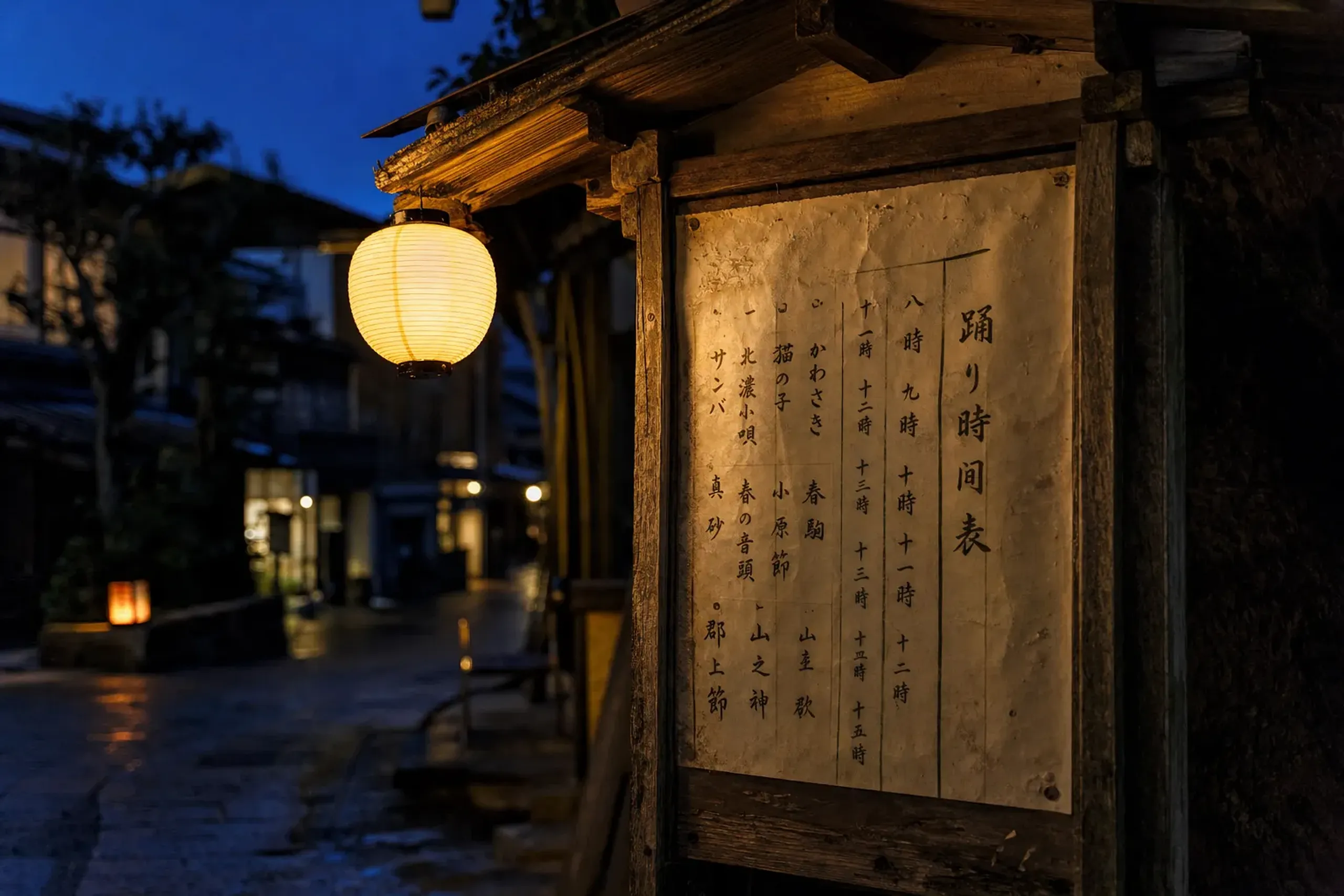
Some evenings include contests where only entrants dance at first, with general dancing afterwards. A small detail—but one that quietly reshapes your timing.
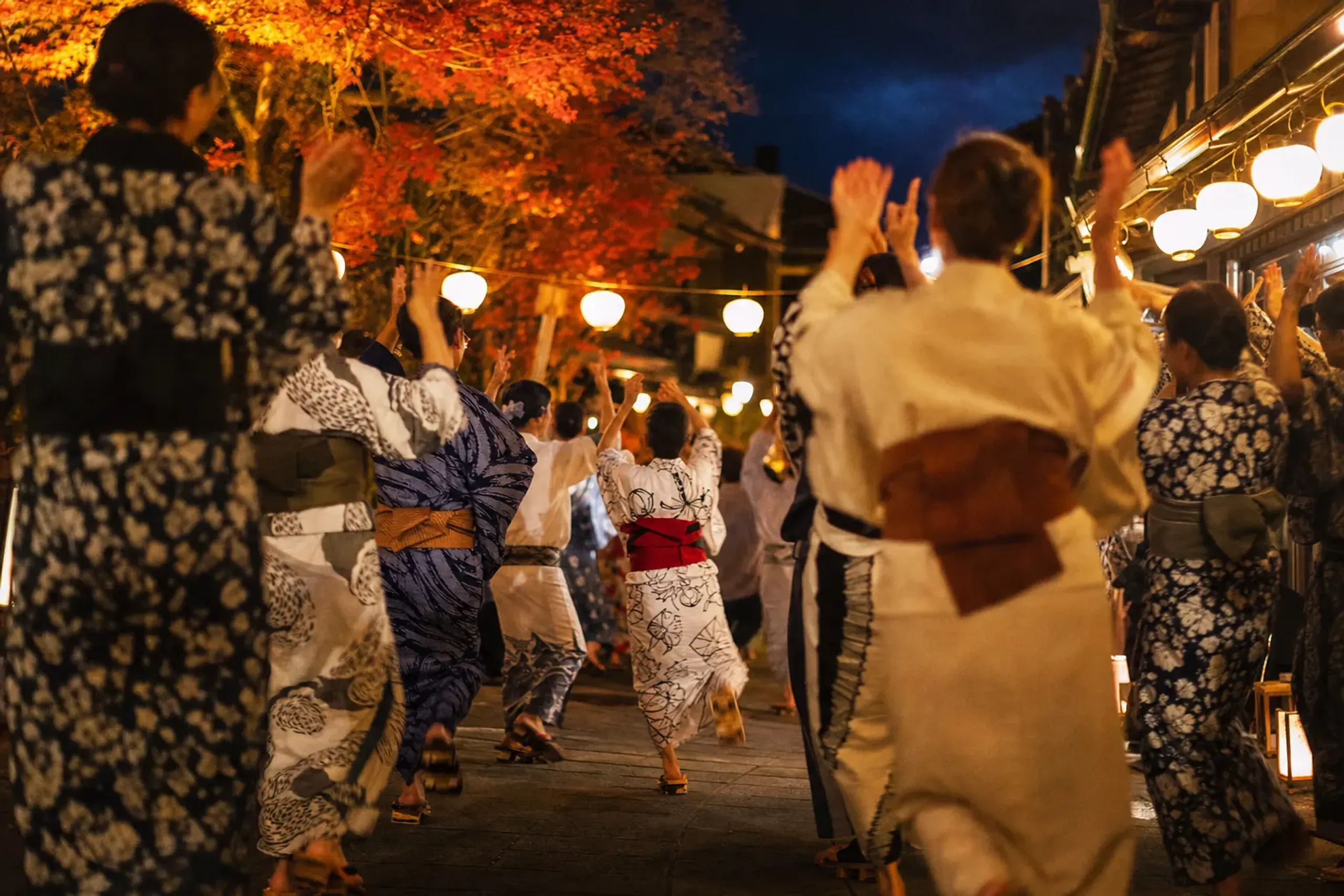
What to wear? There is no required costume. Still, you will soon understand why locals recommend a yukata and geta. The sound of wood on stone is part of the night itself, and the footwear makes the small steps easier to repeat for an hour at a stretch. Rentals exist in town, and items such as tenugui towels are sold locally.
Dance lessons are offered during the season, though the exact terms can vary by provider and year. Our team verifies current conditions before we suggest it as part of your plan. Do not assume. Confirm.
If you would like a gentle daytime “primer,” the Hakurankan museum (in the former tax office) offers Gujo Odori demonstrations roughly hourly. It is a calm, unhurried way to learn what your feet will later attempt—without the pressure of the crowd pressing in around you.
The Four All-Night Obon Dances: What To Expect From Tetsuya Odori
The all-night tetsuya odori nights run from around 20:00 until roughly 04:00–05:00, and the town becomes a single moving, sleepless circle, with road restrictions and limited parking.
These are the four nights people speak of in low voices.
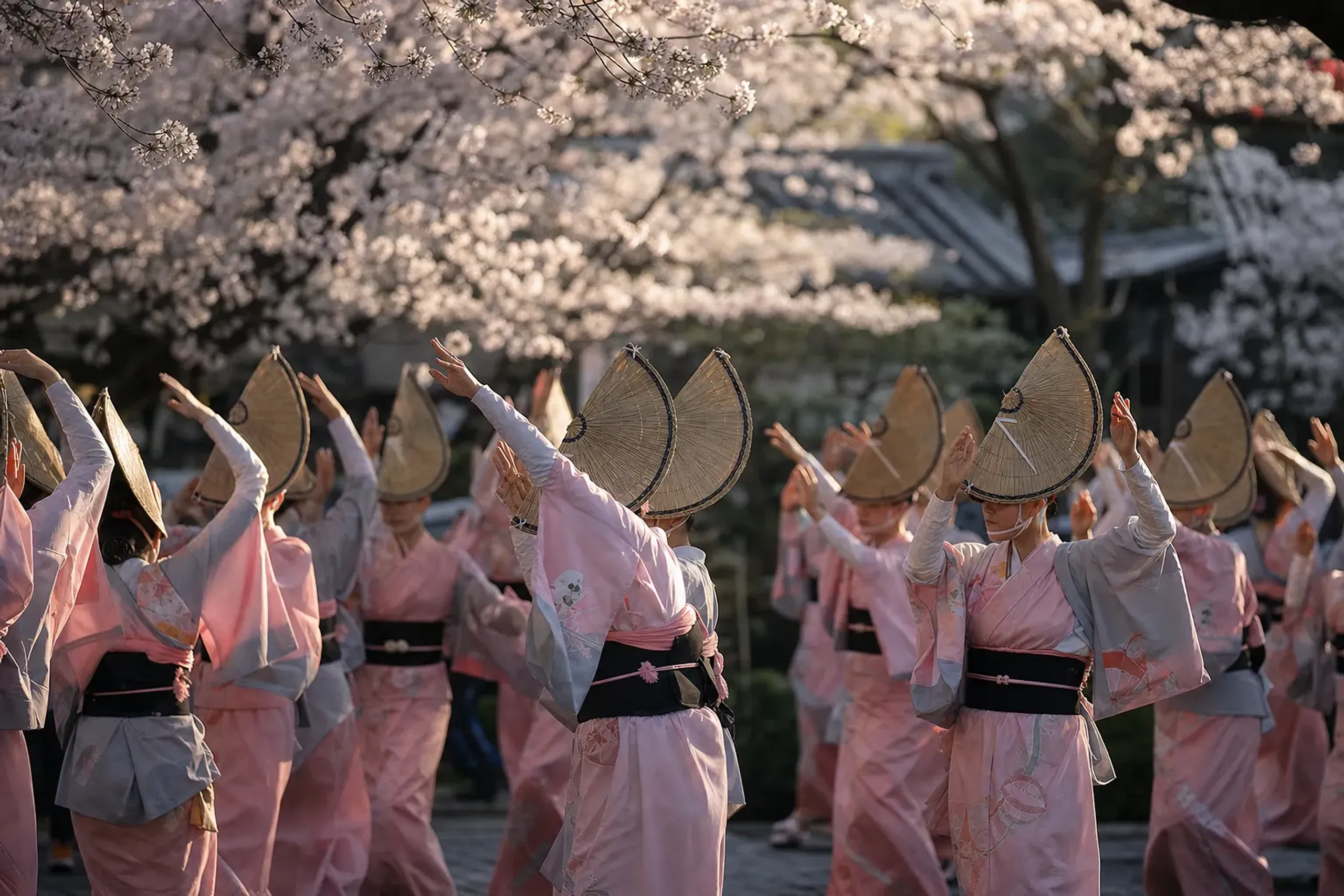
The most alive. The most demanding. You dance in the humid night air as the hours tip quietly over into “tomorrow,” and the crowd swells because everyone understands this is the peak of the season.
Using the 2026 schedule as an example, the all-night nights were Thursday 13 to Sunday 16 August, with end times that differed by night (some listed to 04:00, others to 05:00). Venues also shifted across streets such as Shinmachi, Hashimoto-cho, and Honmachi depending on the date. One wrong assumption can cost you the whole night. Check the year’s official schedule close to travel.
Key fact: On the all-night Obon dates, central Gujo Hachiman is typically no-parking, and traffic restrictions apply around the dance area.
What do you do at 02:00 when you need a pause? You rest. You drink water. You step out of the circle and let the stream pass you by, then re-enter when you are ready. No drama, no apology. The dance continues without you—and that, in truth, is the comfort of it.
If you have been reading about another event called Shirotori Odori, note that it is a separate dance festival held elsewhere in Gujo City. An easy mix-up. A different plan entirely.
The Water Town Between Songs: What To See In Gujo Hachiman
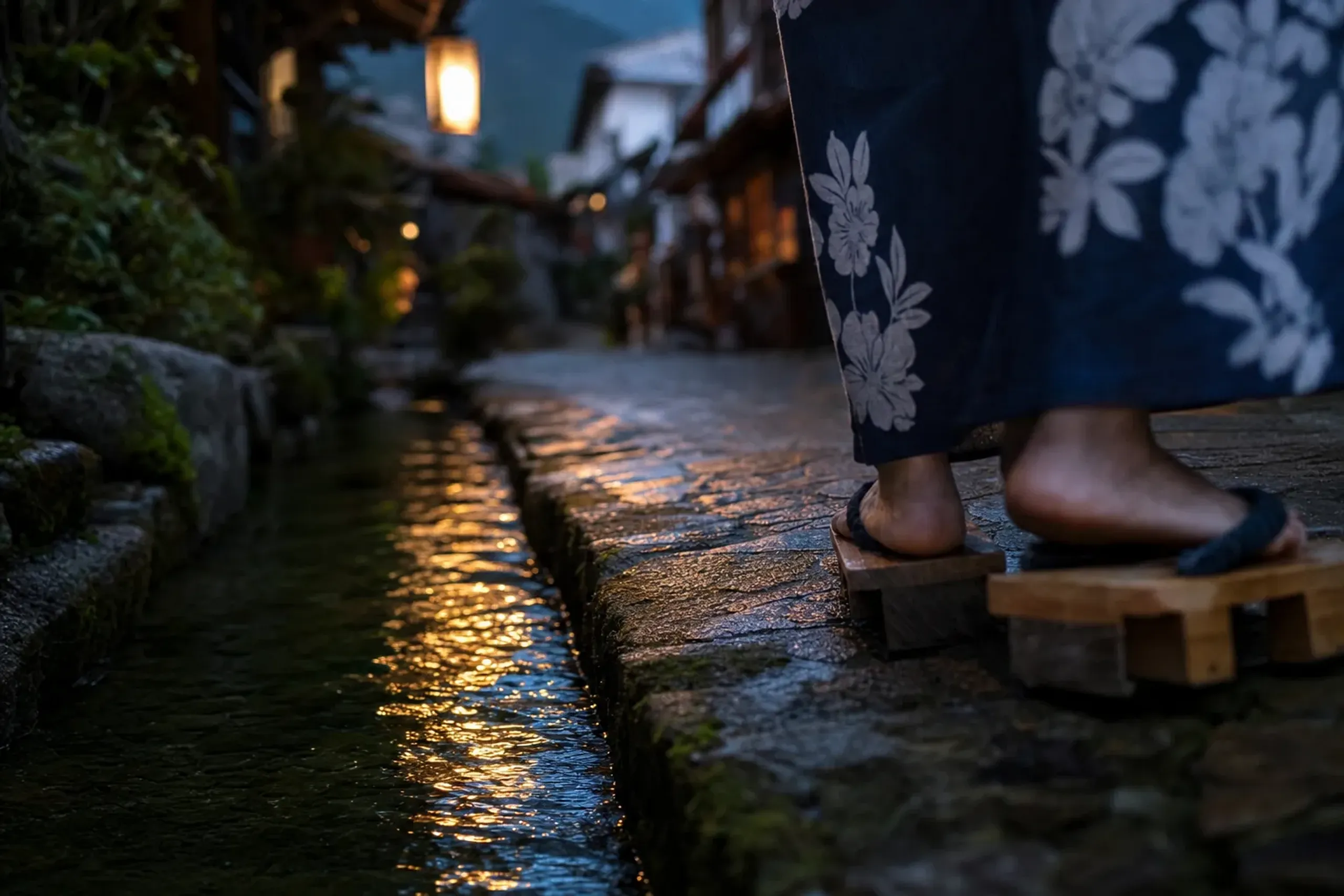
Gujo Hachiman’s old streets are shaped by clear water: canals running beside the lanes, carp in the town channels, and the Yoshida River cutting through the center.
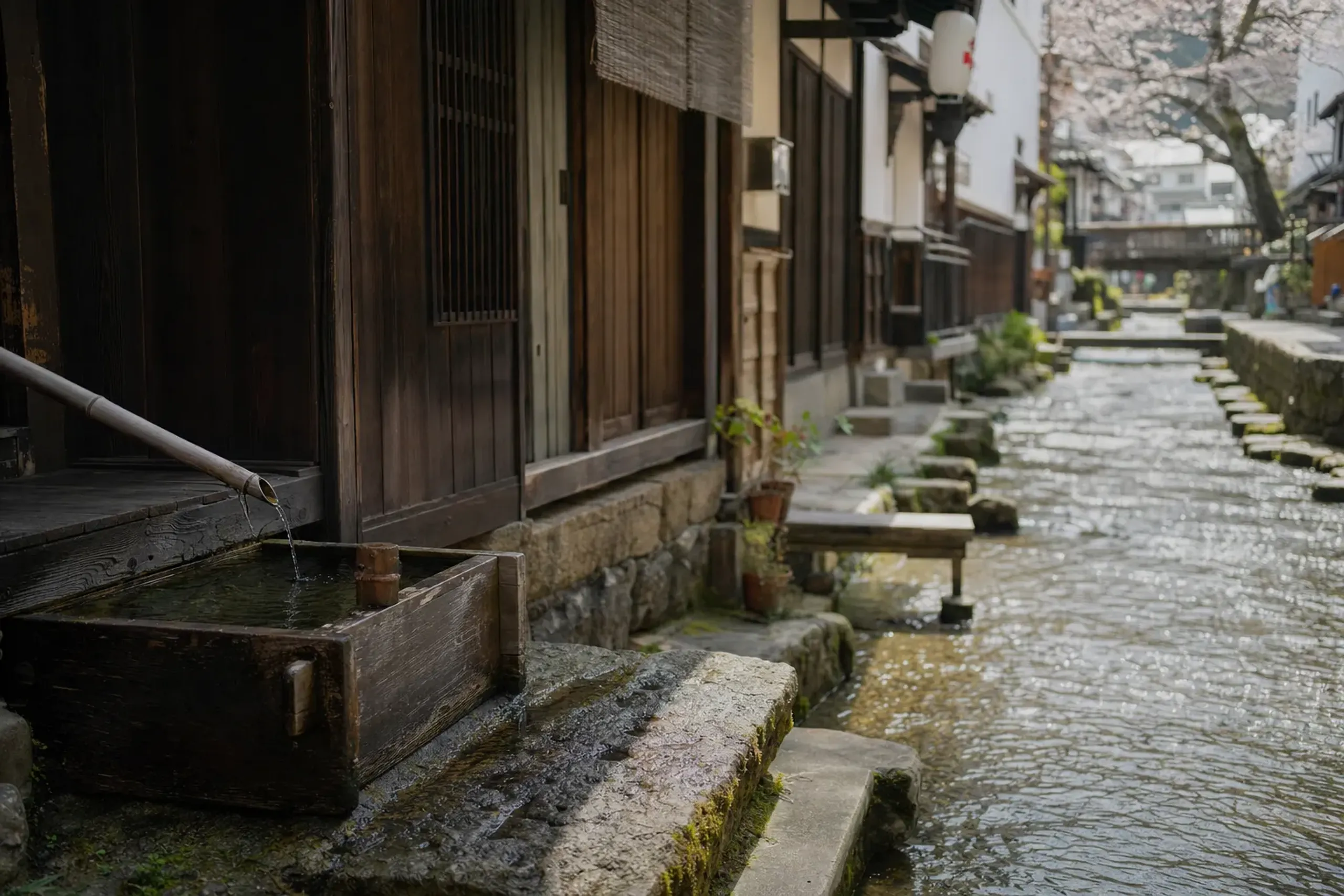
Come in the afternoon, not at dusk. The town is easier to read in daylight, and the water quietly explains why the night feels so cool on your skin even when the air stays warm. There is a restrained beauty here—moss on stone, the steady sound of running water, the deliberate modesty of a place that has never needed to announce itself.
Start with Sogi-sui, a spring selected in 1985 among the Environment Agency’s “Famous Waters 100.” It is named for the renga poet Iio Sogi. You will see locals filling bottles with the calm focus of routine. Watch. Keep your voice low.
Walk Yanaka Mizu no Komichi (Yanaka Water Lane), a cobbled path lined with channels and willows. Nearby, carp swim in the canal by the Former Government Office Memorial Hall area. It is domestic in scale. That is precisely the point.
Above the town sits Gujo Hachiman Castle. The original dates back to 1559 as a field camp, and the keep was reconstructed in wood in 1933. It is described locally as Japan’s oldest wooden reconstructed keep. Either way, the view from up here helps you understand the street grid you will be navigating after dark.
You may hear about Shinbashi bridge jumping.
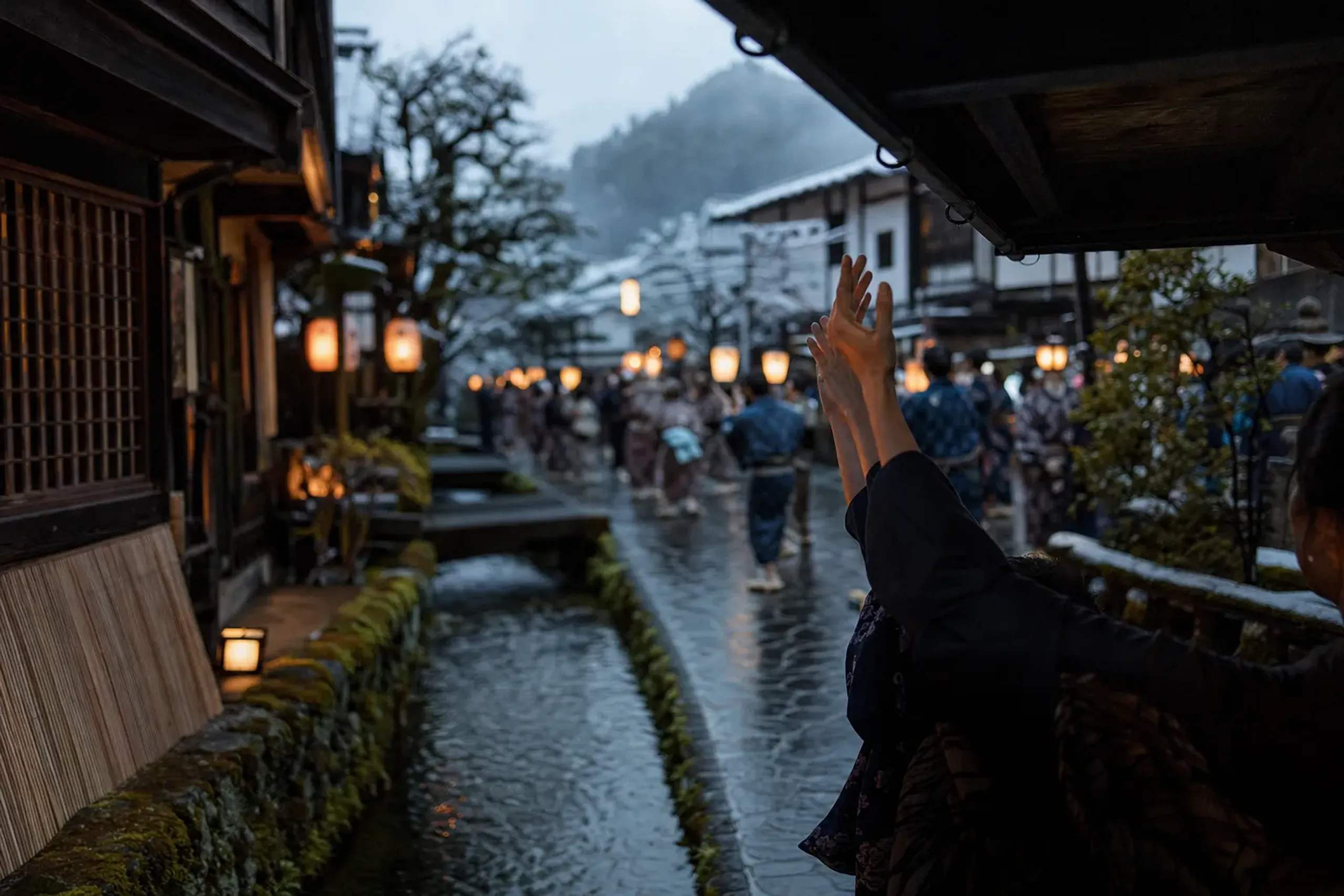
The local tourism association asks visitors not to jump. Watch only. Respect the line between local custom and visitor imitation—a distinction that matters more here than most places.
Gujo Hachiman is also renowned for food replica craft. The town itself says the idea began here and claims it produces a large share of Japan’s output. Workshops exist, and this is where a session with a local artisan turns “souvenir” from trinket into a small, genuine skill you carry home.
If you want broader context, Hida Takayama and Shirakawa-go are often paired with Gifu travel. They are not Gujo Hachiman, and Gujo Odori deserves a night entirely its own.
Rain, Heat, And Crowd Logic: How To Stay Comfortable Without Getting In The Way
Gujo Odori can be cancelled for safety if the Japan Meteorological Agency forecast shows a Level 3-or-higher warning for Gujo City between 12:00 and 24:00 on the day.
The cancellation decision is typically made around 09:30 on the day, and it may come earlier for typhoons. Light rain may be workable, but warnings change everything. If you plan to travel in from Nagoya or Takayama, you need an itinerary that can pivot gracefully. No stubbornness.
Heat is the second reality. JMA normals (1991–2020) at the Hachiman AMeDAS station show July averages around 24.3°C with highs around 30.0°C, and August averages around 25.3°C with highs around 31.7°C.
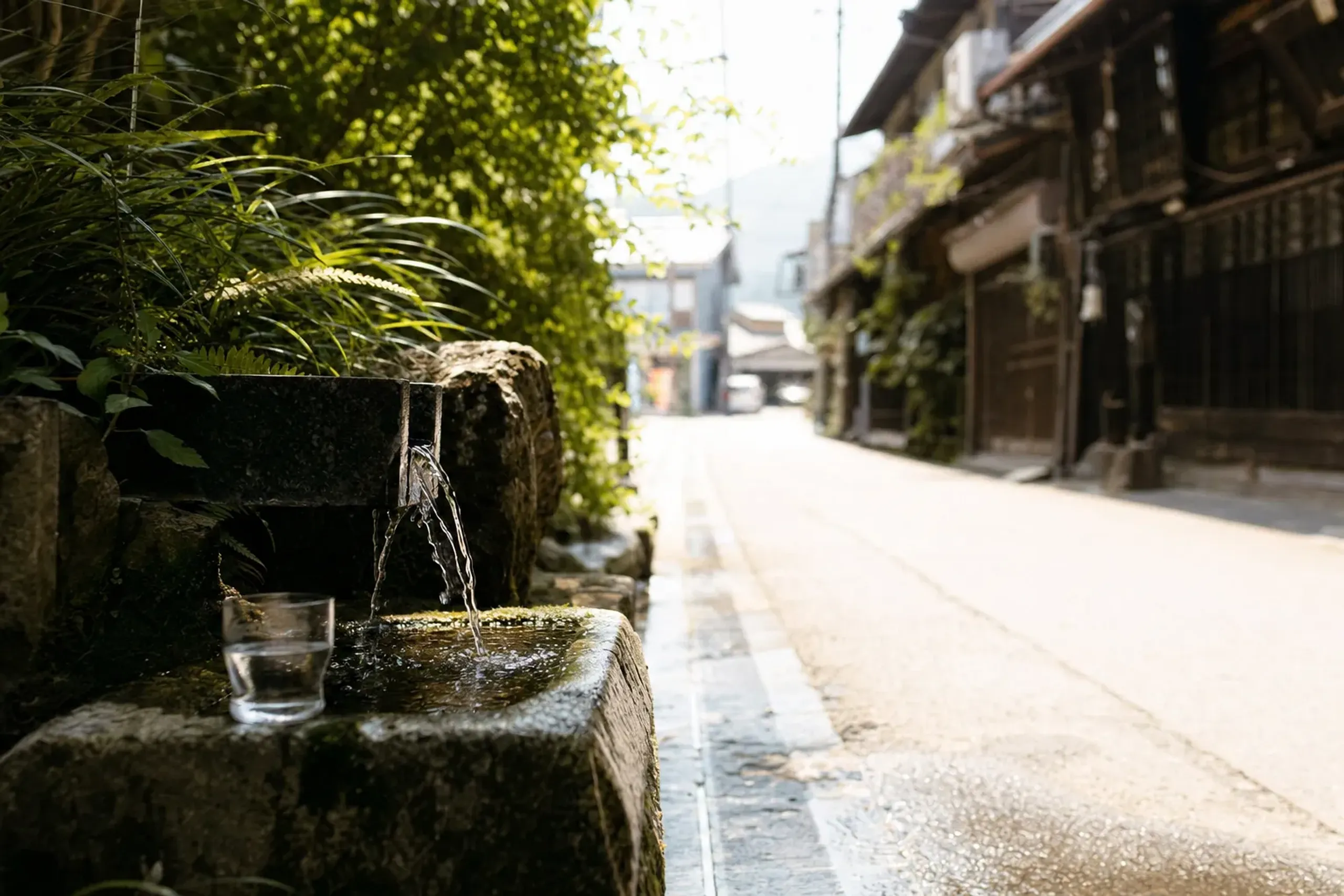
The humidity lingers. You will sweat.
Our practical checklist for a respectful night:
- Hydrate early, not only when you begin to feel tired.
- Carry a small towel (tenugui is ideal) and keep your hands free.
- Step out of the circle if you need to check your phone or adjust your clothing.
- Take your rubbish home. This is clearly and consistently asked by local sources.
During the Obon all-night dates, crowd logic matters. Arrive earlier than you think you need to, learn where the flow is strongest, and choose a meeting point outside the densest lane in case you become separated. Simple. Crucial.
How Do You Get To Gujo Odori From Nagoya (And Leave After Midnight)?
From Nagoya, the highway bus to Castle Town Plaza takes about 1.5 hours, while rail via Gifu and Mino-Ota takes about 2.5 hours; after the all-night dances, early-morning departures are limited.
Gujo Hachiman is reachable, but it rewards careful planning. Here are the realistic routes well-traveled guests tend to compare, without guessing fares or inventing “last bus” promises.
Option A: Highway Bus From Nagoya (Direct, Clear, Reservation-Based)
A Gifu Bus route runs from Meitetsu Bus Center in Nagoya to Castle Town Plaza in Gujo Hachiman in about 1.5 hours (some official wording cites 95 minutes; others say about 1h30). Reservations are required, and bookings typically open one month ahead.

It is clean and simple. But after an all-night dance, you may not wish to be bound to a single early-morning departure pattern.
Option B: Rail To Gujo-Hachiman Station (More Steps, Useful For Some Itineraries)
By rail, you typically route via Gifu and Mino-Ota and arrive at Gujo-Hachiman Station. From the station to the old town, plan roughly 20 to 25 minutes on foot. There is a local loop bus for residents (Mamebus), but it is not positioned as a sightseeing solution for visitors.
Option C: Car Transfer (Best For Timing, Bags, And Late-Night Recovery)
If you want genuine control over your arrival time, rest breaks, and the post-dance exit, a private transportation plan by car is almost always the most comfortable—and the most discreet—approach.
By car, the drive from Nagoya is about 1.5 hours via expressways. From Takayama, it is about 65 minutes by car. During the all-night Obon dates, you cannot expect door-to-door access into the center owing to traffic control, so the plan must include a designated drop point, a parking strategy, and a calm walk-in route.
One more detail that matters on the Obon nights: in 2026, temporary Nagaragawa Railway trains were scheduled (for example, a late train at 23:51 toward Mino-Shirotori on certain dates and an early 04:51 toward Mino-Ota on others). These patterns can change by year.
Confirm close to travel.
A Two-Night Gujo Odori Blueprint For High-Net-Worth Travelers
You will enjoy Gujo Odori far more if you treat it as a 24–48 hour stay, not a rushed late-evening detour.
This is where many well-traveled people misjudge Gujo Hachiman. They assume it is like a stadium event: arrive, watch, leave. A real mistake.
Here is a practical structure our team often recommends for a tailor-made itinerary built around the dance, using only what is verifiable and flexible by year.
- Late afternoon arrival: check in, then walk the waterways before sunset. Begin at Sogi-sui, then Yanaka Water Lane.
- Early dinner: keep it light, and keep your schedule forgiving.
- Pre-dance orientation: meet an English-speaking cultural interpreter guide who can explain the night’s venue, the circle etiquette, and how the ten dance songs differ in mood.
- Dance time: join the outer ring first, then move inward once your steps settle.
- After the music: if it is an all-night date, plan breaks and a clear rendezvous point outside the densest street.
- Next morning: a slow start, hydrate, and choose one focused daytime activity (the castle view, a museum demonstration, or a craft workshop with a local artisan). Resist overpacking the day.
This kind of pacing is not about indulgence. It is about staying courteous and steady in a town that is, in every sense, hosting you—and about the unspoken, anticipatory care that makes the whole evening feel effortless.
How Our Concierge Team Plans A Gujo Odori Visit Quietly And Precisely
Gujo Odori looks simple on paper—“go and dance”—but it is the details that decide whether it feels effortless or chaotic.
In our experience at Japan Royal Service, the most valuable work happens long before you arrive. Nothing flashy. Simply disciplined, and handled with complete discretion—your identity and your itinerary remain entirely your own.
Here is what we confirm ahead of your travel dates, privately and case by case:
- Which night you are attending, and the venue for that exact date (the location changes).
- The day’s weather-risk status, including the published warning-based cancellation rule and the typical decision time.
- Traffic and shuttle conditions for the Obon all-night dates, including designated parking and no-parking zones in the center.
- Comfort pacing: where to pause, how to handle late-night returns, and how to keep the evening respectful.
Gujo Odori is one of those rare experiences the search engines cannot truly deliver to you—its circle opens only to those who arrive prepared, pace themselves well, and understand the town's quiet rhythms. If you would like us to build a discreet, precisely timed visit around the dance and the water town that surrounds it, contact us here for a tailored proposal.