In this guide
- 01What Is Gunkanjima, And Why Does It Look Like A Warship?
- 02The Engineering Story: A Town Built Almost Entirely Offshore
- 03When Did The Mine Close, And Why Is The Island Abandoned?
- 04Wartime Forced Labor On Hashima: What Is Documented, And What Is Disputed?
- 05How Did UNESCO List Gunkanjima, And Why Is It Still Contested?
- 06What Most Standard Gunkanjima Narration Leaves Out—and How To Visit With Clear Eyes
- 07How Do You Visit Gunkanjima From Nagasaki (And What Are The Non-Negotiable Rules)?
- 08Is Landing On Gunkanjima Guaranteed? What Happens If The Sea Cancels It?
- 09A No-Regrets Gunkanjima Day: Plan A, Plan B, And Plan C
- 10Cinematic Gunkanjima (Skyfall), Kept In Its Place
- 11How To Book A Gunkanjima Tour As A Foreigner (And What To Check First)
- 12What A Private Charter And Private Guide Actually Change
- 13Plan Your Gunkanjima Visit With Us
- 14Frequently Asked Questions
From Nagasaki Harbor, Gunkanjima looks like a compact wall of concrete pushed up from the sea. The silhouette is real. The story is bigger. If you only hear about apartment blocks and a “battleship” outline, you miss what made the island possible—and what happened there during wartime. This is precisely the kind of place that rewards the traveler who arrives with the right guide, the right questions, and the patience to read it slowly.
What Is Gunkanjima, And Why Does It Look Like A Warship?
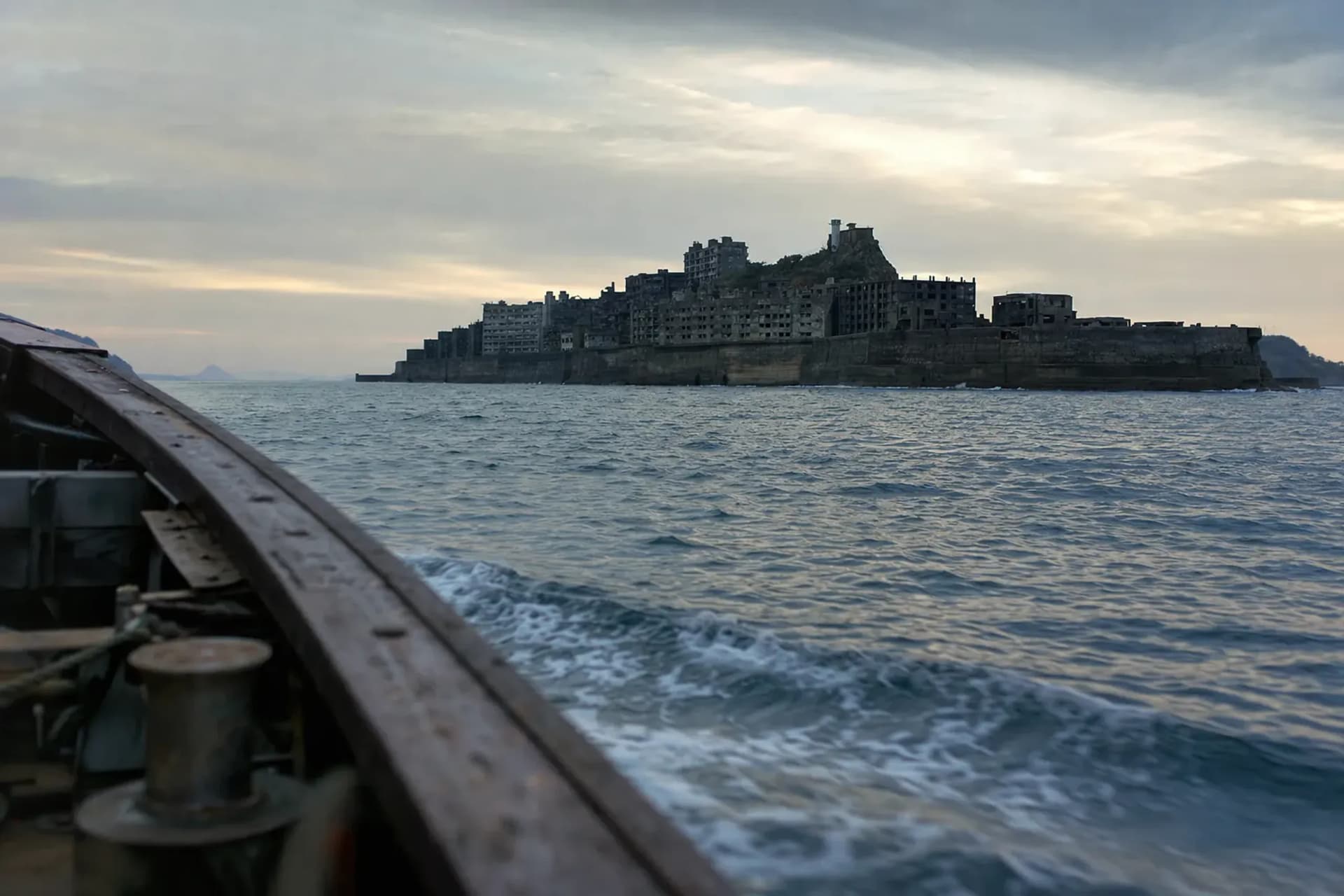
Gunkanjima is Hashima Island, a former undersea coal-mining site whose high seawalls and tightly packed buildings create a warship-like outline when seen from the water.
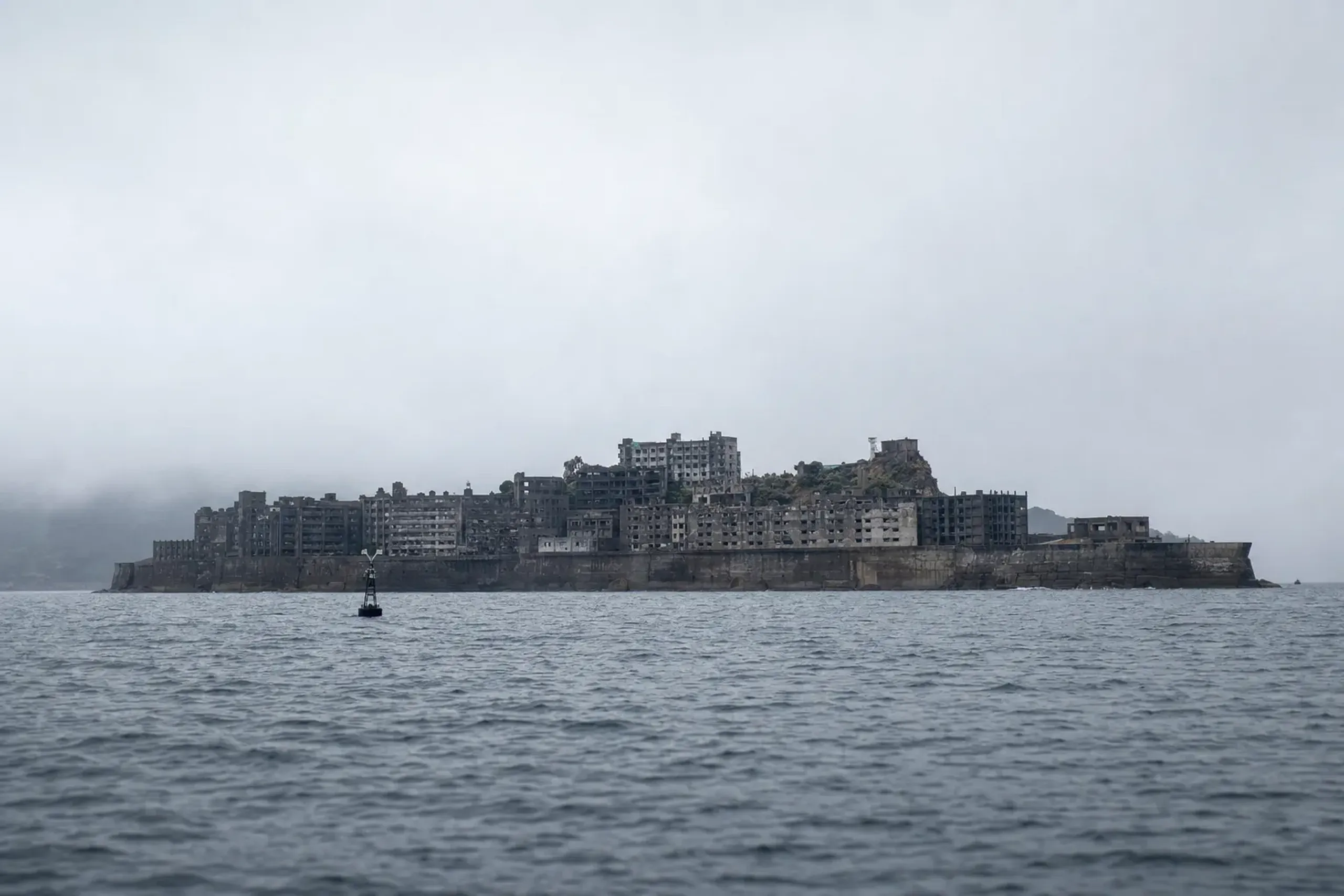
The nickname “Gunkanjima” (Battleship Island) comes from shape, not metaphor. The island’s seawalls form a hard, unbroken edge, and the buildings rise in a dense block behind them. On a clear day, you can read the profile from the boat in seconds. That instant recognizability is why so many visitors add it to a Nagasaki trip.
Hashima sits about 19 km offshore from Nagasaki Harbor. Not far on a map. Far enough to feel like open water when the wind shifts and the swell picks up.
Hashima was developed as an undersea coal-mining island operated by Mitsubishi. Space was scarce. So the “town” rose vertically in reinforced concrete, with residential blocks built to hold workers and their families on a footprint that could not expand outward.
The Engineering Story: A Town Built Almost Entirely Offshore
Hashima’s engineering story is a story of constraint: waves, salt, typhoons, and a mine that sat under the sea. That relentless pressure produced one of Japan’s most concentrated built environments. It also produced early, large-scale concrete housing that remains striking in photographs today.
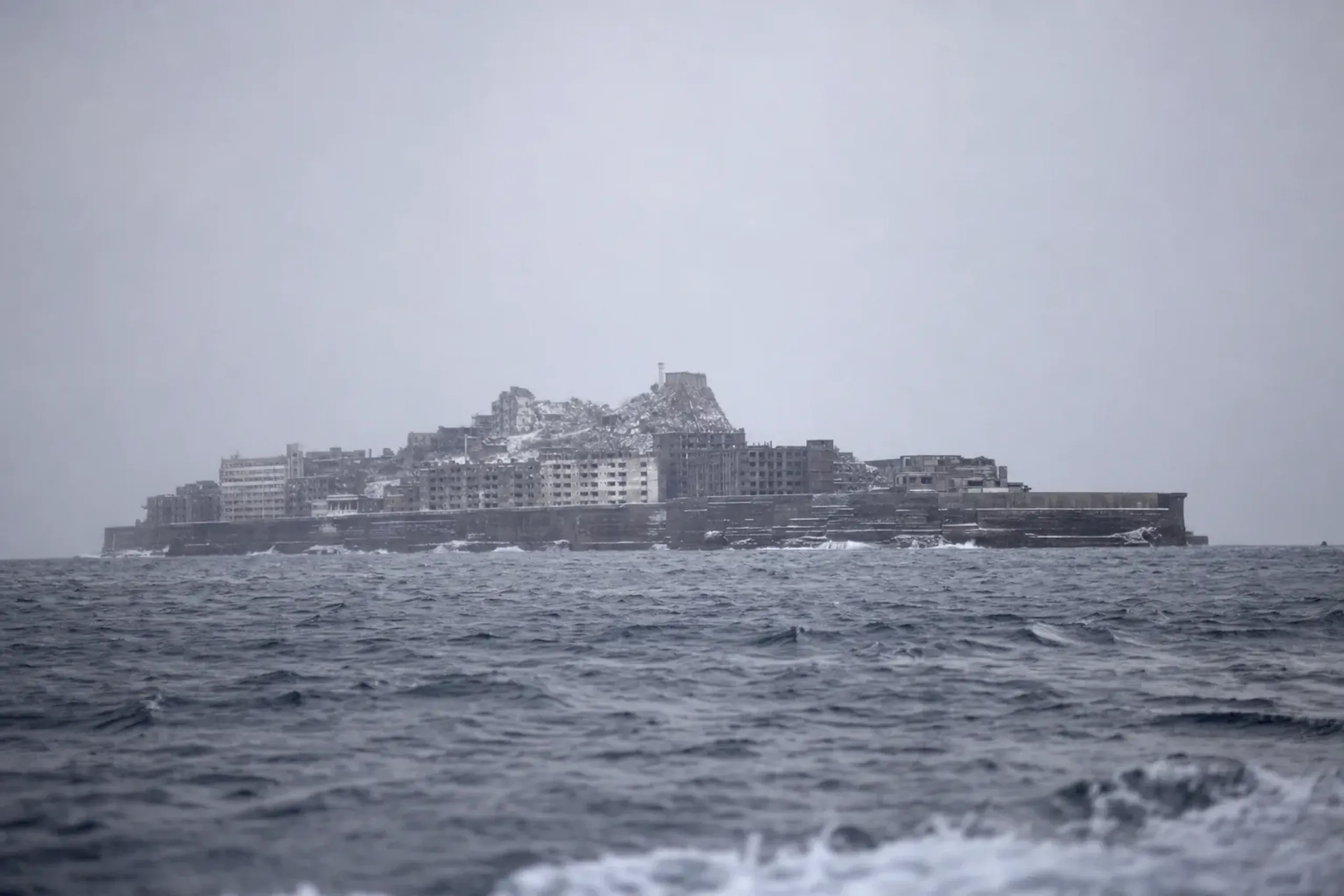
At its peak in 1959, the island held 5,259 people. That number matters, because it explains everything you see from the boat: compressed streets, stacked balconies, and a skyline where “housing” looks closer to infrastructure than real estate. Tight living was not a lifestyle choice. It was arithmetic.
Coal powered modern industry, and the mine alone made the island worth building. The seawalls guarded the edge. The apartments filled the center. In our experience, the best visits begin by treating the buildings less like ruins and more like evidence of a functioning company town—a place where people worked, married, raised children, and buried the dead.
Then comes the hard part. The island did not decay because it was simply “abandoned.” It decayed because it was exposed, because concrete ages, and because the site has been deteriorating for decades in an unforgiving marine climate.
When Did The Mine Close, And Why Is The Island Abandoned?
The mine closed in January 1974 as Japan shifted from coal to oil, and the island was fully evacuated within the following year.
Those dates explain the mood of the place. This was not a slow decline with a handful of lingering residents. It was a fast exit. When the economic reason for Hashima vanished, there was no other reason to stay on a tiny, wave-battered slab of concrete offshore.
Ownership later passed to Nagasaki City in 2001. Visitor walkways were built, and tours began in 2009. That “tour era” is far shorter than most people assume.
Many structures are structurally unsound and actively collapsing.
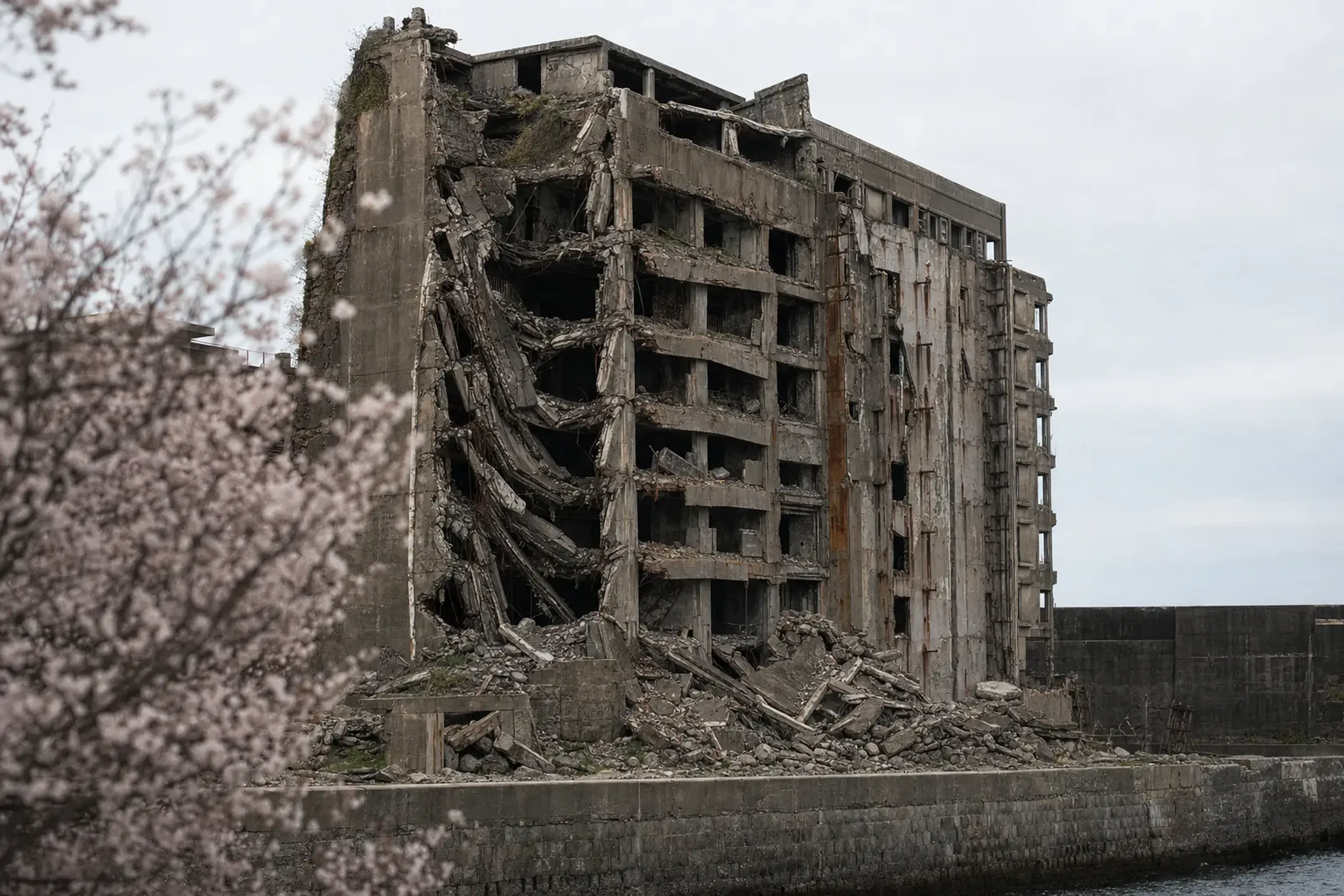
So the island you see today is a carefully controlled visit to a site that is still changing—still shedding pieces, still in need of vigilant management for safety.
Wartime Forced Labor On Hashima: What Is Documented, And What Is Disputed?
During World War II, Korean laborers were brought to work on Hashima starting in 1939, and from 1943 Chinese prisoners of war were also forced to work there under Japan’s wartime labor mobilization system.
This section calls for a different tone, because it describes human harm that remains a live international dispute. The existence of forced labor on Hashima during the war is documented in multiple accounts, and the broad timeline is established in the historical record. The precise contours—especially death-toll figures—remain contested across sources and are often argued within political contexts.
Conditions reported for wartime labor on the island were severe. Work involved long shifts and dangerous underground tunnel labor in extreme heat. Deaths occurred. Estimates vary considerably, often cited in a range from roughly 1,000 to over 1,300, and it would not be responsible to present a single fixed number as settled fact.
For a visitor, the key point is not the exact tally. It is the ethical shape of the place: a highly engineered industrial town that also sits within a wartime system of coercion and suffering. If your only lens is “urban density,” you will leave with an incomplete account of what Hashima represents.
How Did UNESCO List Gunkanjima, And Why Is It Still Contested?
Hashima Coal Mine is part of UNESCO’s “Sites of Japan’s Meiji Industrial Revolution” (inscribed in 2015), and the listing has been contested because of unresolved disputes over acknowledging wartime forced labor history.
UNESCO inscribed the serial property in 2015 under the title “Sites of Japan’s Meiji Industrial Revolution: Iron and Steel, Shipbuilding and Coal Mining.” Hashima Coal Mine is one component of that larger group. The World Heritage framing is industrial modernization—how a country built capacity at extraordinary speed, and what physical traces remain.
The 2015 inscription also became a diplomatic flashpoint. South Korea formally objected during the nomination process, specifically over how forced labor would be handled in interpretation and public acknowledgment. Japan received the listing on the condition of acknowledging the forced labor history and establishing an information center addressing it.
Since then, UNESCO’s World Heritage Committee has issued official statements on the matter. In 2018, and again in 2021, the Committee expressed “deep regret” that Japan had not fully met its commitment. That wording is institutional record. It is not a travel-company verdict, and we do not extend it into broader claims beyond what UNESCO has stated.
Separately, UNESCO’s listing notes the site is in a state of deterioration and presents substantial conservation challenges. That matters on the ground. You are visiting a place that must be protected from both the sea and human impact, while also being interpreted responsibly.
What Most Standard Gunkanjima Narration Leaves Out—and How To Visit With Clear Eyes
Many visitors report that standard tour narration and on-site interpretation focus heavily on engineering and the “battleship” silhouette, with little attention to wartime forced labor history.
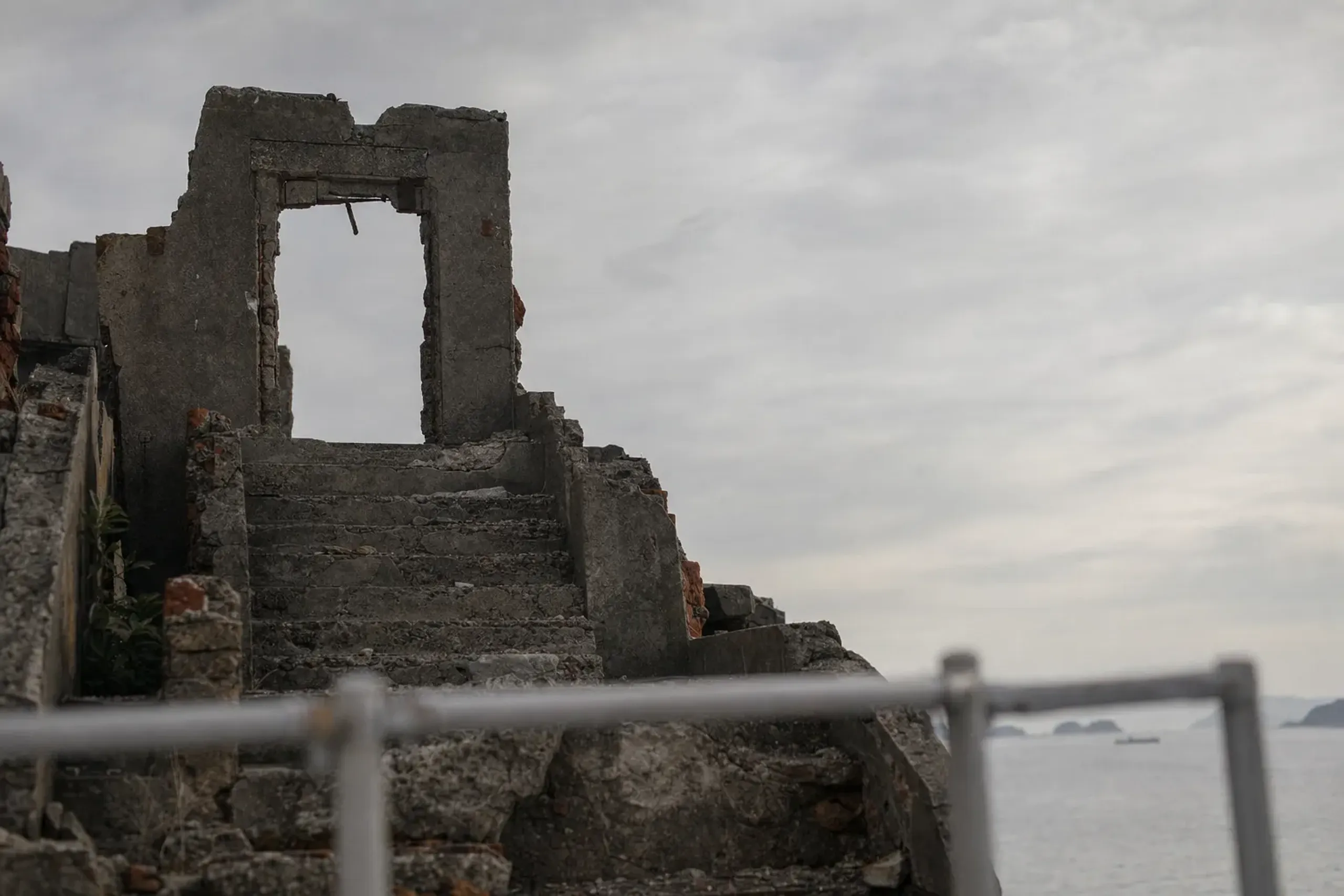
This gap is exactly what creates the uneasy feeling some thoughtful travelers describe afterward. You stand before a place of obvious human cost, yet the words you hear may stay on concrete, density, and the closed mine. The result is a visit that can feel cleanly packaged. Too clean.
There is a straightforward way to approach the day without turning it into a political argument. Decide in advance that you want both stories: the engineering achievement and the wartime record. Then choose a guide willing to speak in complete sentences about the contested parts—using careful language and acknowledging where the sources genuinely disagree. This is the difference between a booked ticket and a curated day, and it is exactly the terrain of Japan you cannot find on a search engine: entered by introduction, interpreted by someone who has earned the right to speak plainly.
Our team at Japan Royal Service sees this as a matter of respect. A serious destination deserves serious interpretation. Quietly. Without spectacle.
Key fact: You cannot visit Hashima independently; landings are only permitted through licensed tour operators, and visitors are confined to designated walkways and observation areas for safety.
How Do You Visit Gunkanjima From Nagasaki (And What Are The Non-Negotiable Rules)?
You can only visit Hashima via organized, licensed tour operators departing Nagasaki, and you will be restricted to designated walkways and observation areas because many structures are unsafe.
Start with the basic geometry. Hashima is offshore. Boats depart from Nagasaki, and operators run a “landing & cruise” style tour when conditions allow. A full experience typically runs about 2.5 to 3 hours.
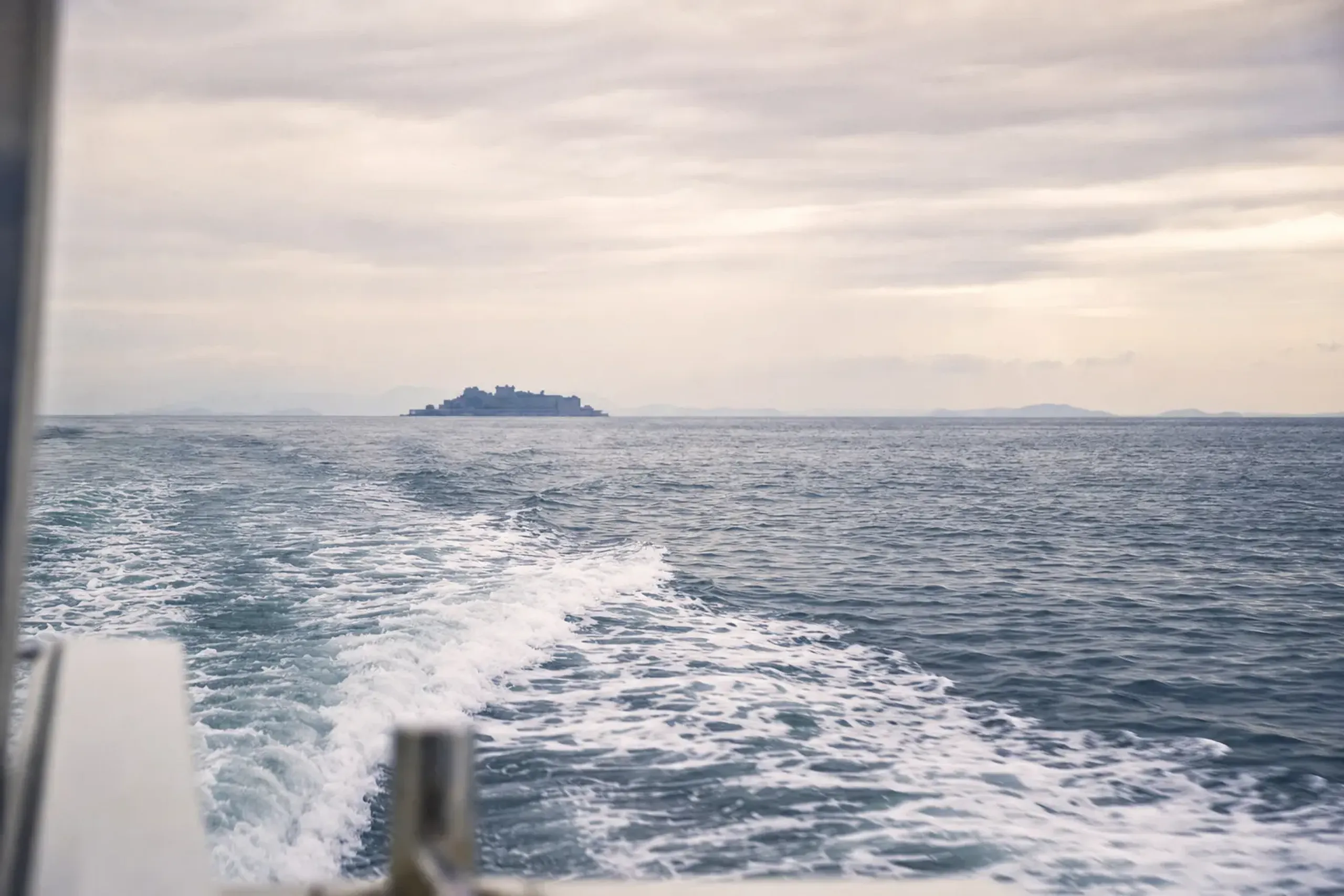
There is no independent landing. No private wandering. Even if you have visited other industrial sites where you can roam freely, Hashima is different: collapsing structures and sheer sea exposure make open access both unrealistic and dangerous.
This also means there is no “special access” to closed buildings. Not for anyone. The walkways and observation areas are set by Nagasaki City regulations and structural safety, and the same rules apply to every visitor regardless of operator. What can be tailored is not where you stand, but how you experience it—the pacing, the privacy, and above all the depth of interpretation.
Check-in and reception details vary by operator. Gunkanjima Cruise, for example, lists reception and check-in at its office in Nagasaki City (Motofune-cho). Practical, yes—but you should still leave ample time for arrival and briefings.
Is Landing On Gunkanjima Guaranteed? What Happens If The Sea Cancels It?
Landing on Hashima is not guaranteed; if conditions make landing unsafe, many tours convert to an around-island cruise without landing and may refund only certain fees.
Say it plainly: you might not step onto the island. Wind and swell frequently cancel landings, and this happens often enough that serious operators publish their policies in advance. Your “tour day” can quietly become a “circle-the-island” day.
Refund rules are operator-specific and can be surprisingly precise. Yamasa Shipping, for instance, states that if landing becomes impossible it refunds the landing fees in full and refunds 10% of the passage fee, with the trip changing to a “Gunkanjima Tour Cruise.” That sort of detail matters for setting expectations.
For 2026 planning, there is also a municipal fee change to track. Nagasaki City raised the Hashima landing facility fee from ¥310 to ¥650, effective April 2026 (reported March 10, 2026).
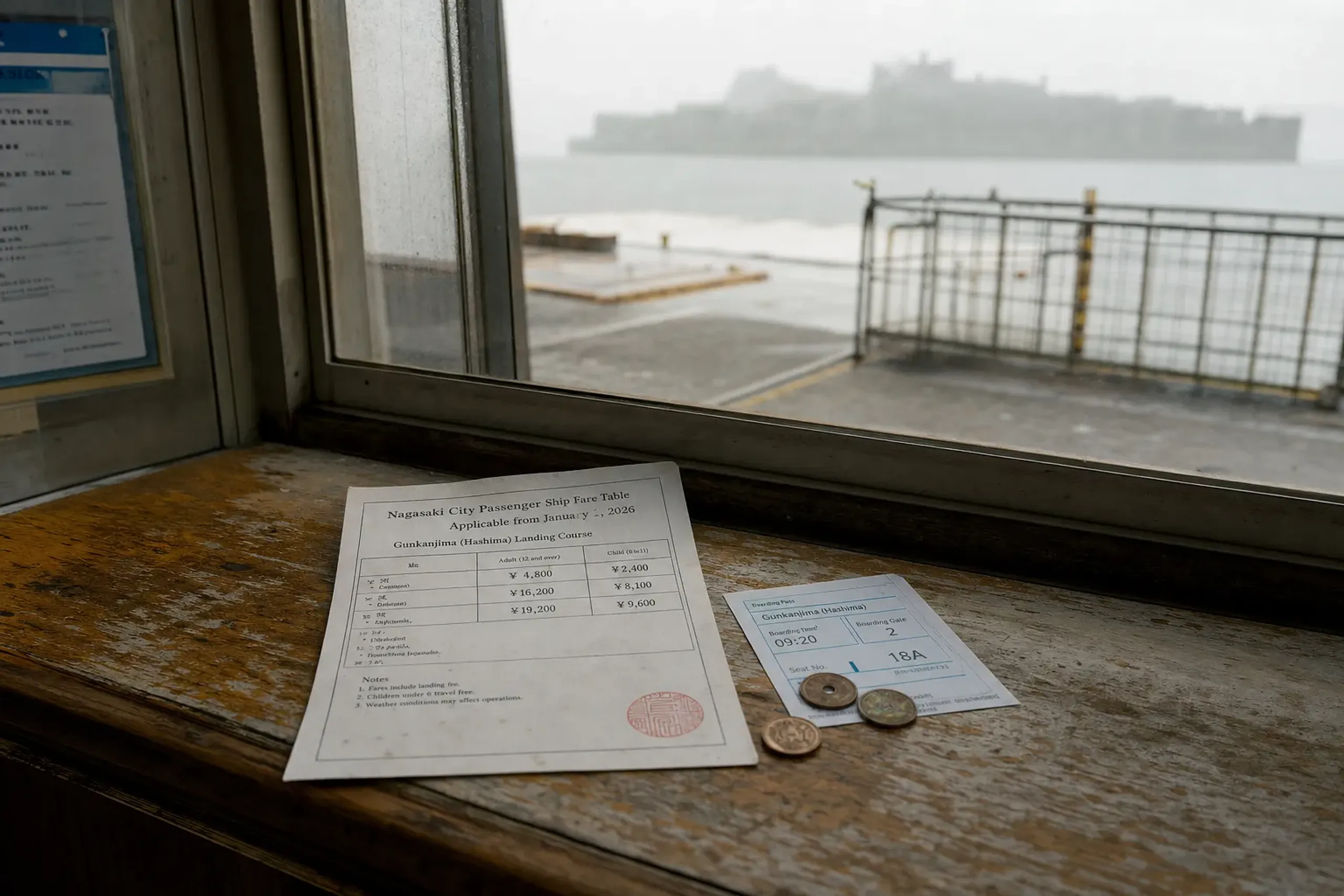
That increase is not a “tour company” decision. It is a city fee tied to the landing facility.
If you are building a Nagasaki itinerary, the smartest move is to design the day so it stays satisfying even when you don’t land. No scrambling. No resentment. Just a clean, elegant Plan B—arranged so quietly you barely notice the pivot. That anticipation of the unspoken need, the plan already in place before you know you need it, is the quiet hospitality that distinguishes a truly considered day.
A No-Regrets Gunkanjima Day: Plan A, Plan B, And Plan C
A practical luxury plan treats the landing as weather-permitting and builds two contingency layers: an onshore “wow” alternative and a full Nagasaki heritage day that still feels complete.
This is where the discerning traveler often differs from the backpacker. You do not want your day to hinge on a single outcome. And you certainly do not want to spend your afternoon refreshing weather apps in a café.
Option A: Landing & Walkway Tour (Weather-Permitting)
This is the version most people imagine, and it can be extraordinary in a restrained, almost documentary way. You will still be on designated paths. You will still be looking, not entering.
- What you get: A controlled set of vantage points that reveal the density, the seawalls, and the city-block feel of a town built offshore.
- What you do not get: Free exploration inside buildings, roof access, or entry into unsafe structures.
- Best mindset: Treat it as a heritage site under stress, not an “abandoned playground.”
Option B: Around-Island Cruise + Onshore Interpretation
If landing cancels, you can still capture strong waterline views. The boat’s angle makes the “battleship” outline most readable, and photography can actually be easier without the time pressure of disembarking.
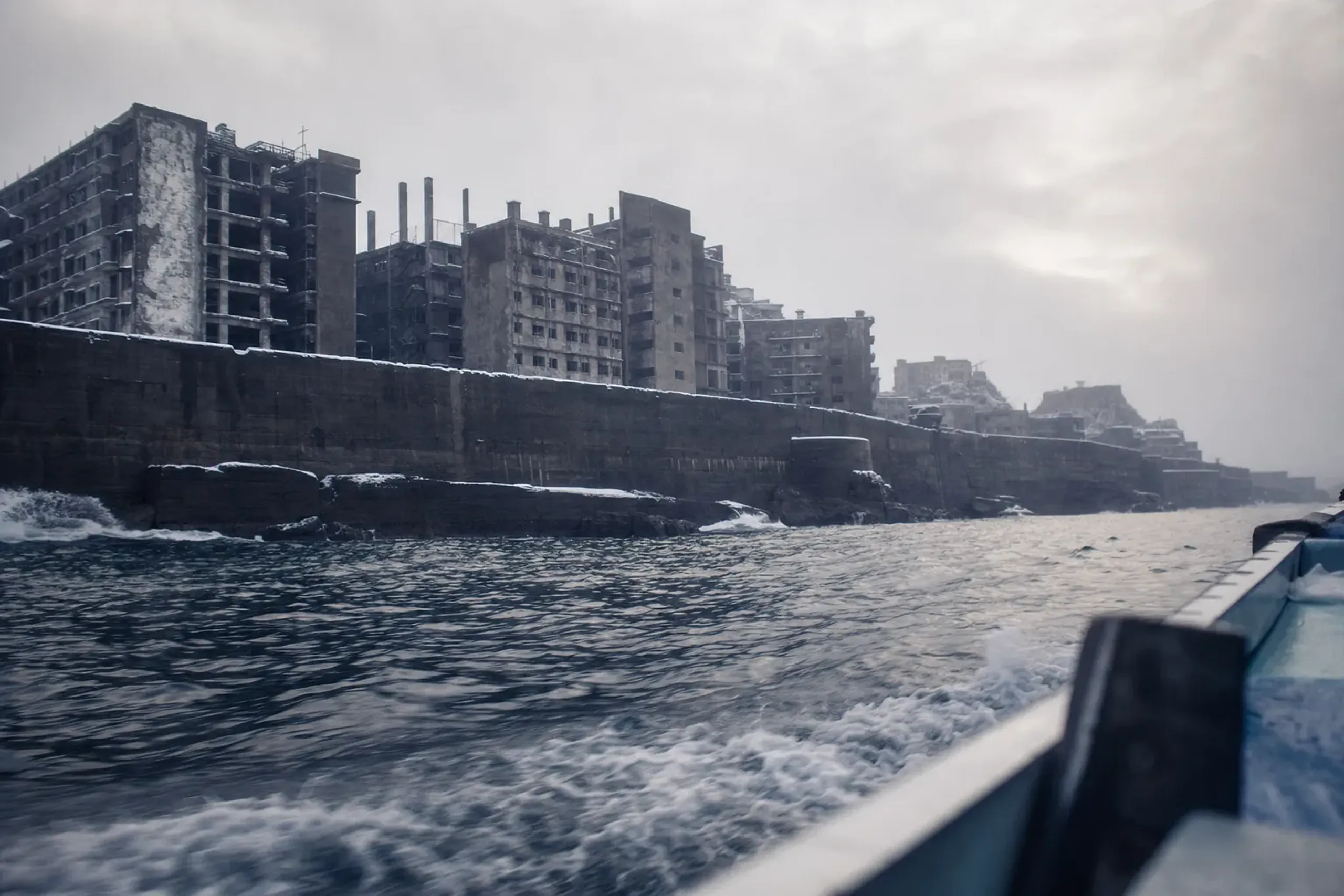
- Pair it with: The Gunkanjima Digital Museum in Nagasaki (address listed as 5-6 Matsugae-machi).
- Operational note: Temporary closures can happen; one official visitor-info notice listed an equipment-maintenance closure on September 2–4, 2026.
- Why it works: You still leave with context, not just a distant silhouette.
Option C: A Premium Nagasaki Heritage Day (When Conditions Collapse)
On rough days, forcing the boat plan can feel like gambling. A better approach is to keep your day grounded in Nagasaki’s modern history and its international connections.
- Good pairings: Dejima and Glover Garden are real, legible sites that anchor the city’s modernization story.
- What changes: Your “Hashima day” becomes a “Nagasaki day,” with Hashima as the offshore chapter you interpret from shore.
Cinematic Gunkanjima (Skyfall), Kept In Its Place
Hashima is widely cited as the visual inspiration for the villain’s island lair in the 2012 film Skyfall. That reference can help some travelers recognize the outline from the water, and it can be a simple way to explain why the island photographs so powerfully. Then you move on.
This site is not a movie set. It is a former industrial community with a wartime record and a postwar abandonment. Keeping the pop-culture note brief helps the day stay grounded.
How To Book A Gunkanjima Tour As A Foreigner (And What To Check First)
Foreign visitors book Gunkanjima tours through licensed operators’ official websites, and should confirm language support, refund rules, and weather-related landing policies before paying.
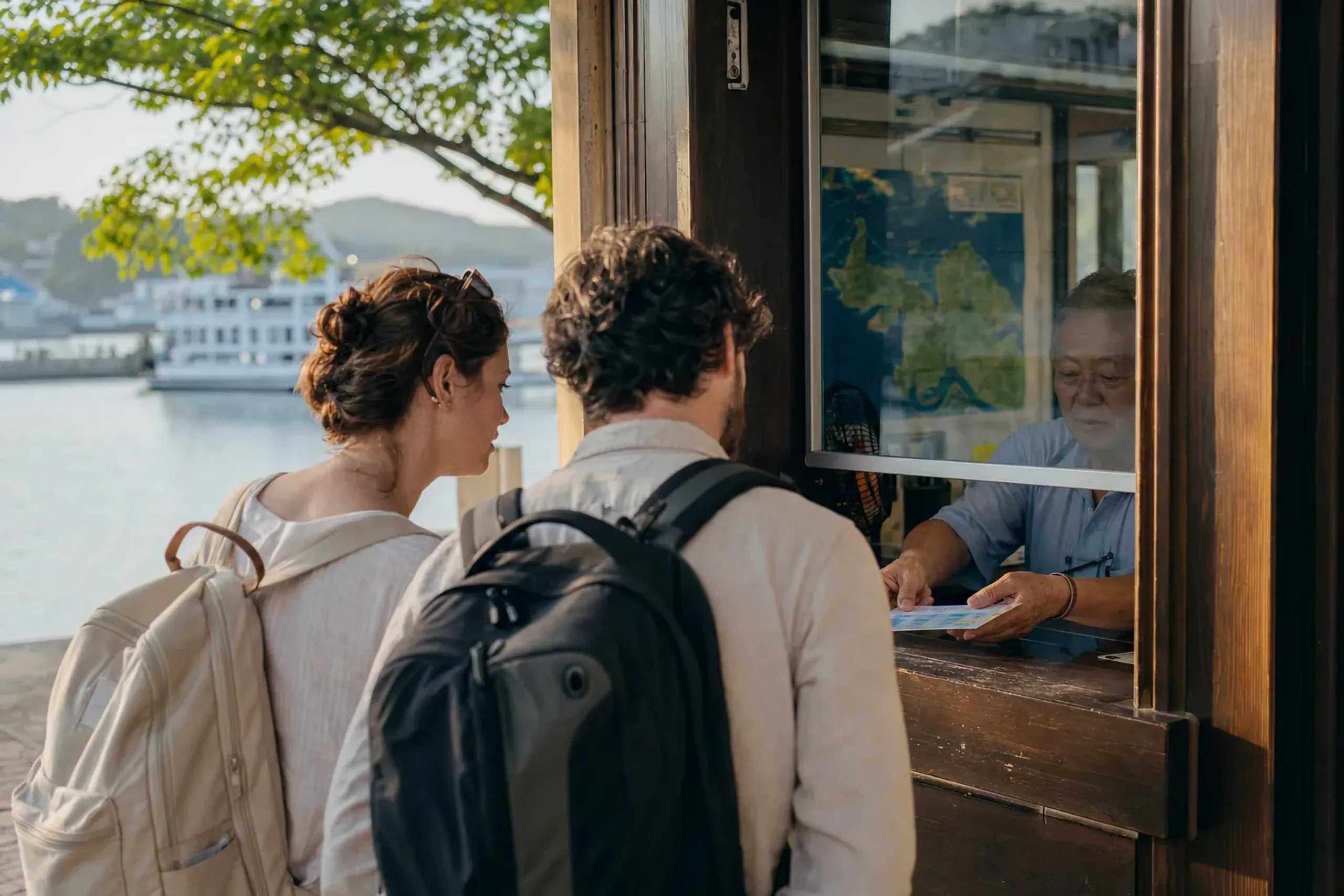
This is a simple process, but small details create outsized friction. Look for an English booking path if you need one. Confirm where reception and check-in happen in Nagasaki City, and how early you should arrive.
Next, read the landing policy the way you would read a ferry cancellation notice. Yamasa, for example, publishes a specific partial-refund approach when landings are not possible, with the trip converting to a cruise. Other operators publish their own rules. They are not identical.
Also check for municipal fee changes that affect the day. For 2026, the landing facility fee increase effective April 2026 is a planning detail worth knowing in advance, because discerning travelers prefer “no surprises”—even when the numbers themselves are modest.
If you want your day designed with contingency built in—private guide interpretation onshore, tight timing, and a calm backup plan already prepared—our concierge team can advise you privately on how to structure it within a broader Kyushu itinerary.
What A Private Charter And Private Guide Actually Change
A private charter and private guide change your timing, privacy, and historical depth—but they do not change which areas of Hashima are open or closed under Nagasaki City safety rules.
This is the line we do not blur. Access restrictions exist because the buildings are unstable and actively collapsing. The designated walkways and observation areas are the visit. For everyone.
So what actually improves? First: pacing. A private boat and thoughtfully arranged private transportation avoid the “herd rhythm” of a large shared group.
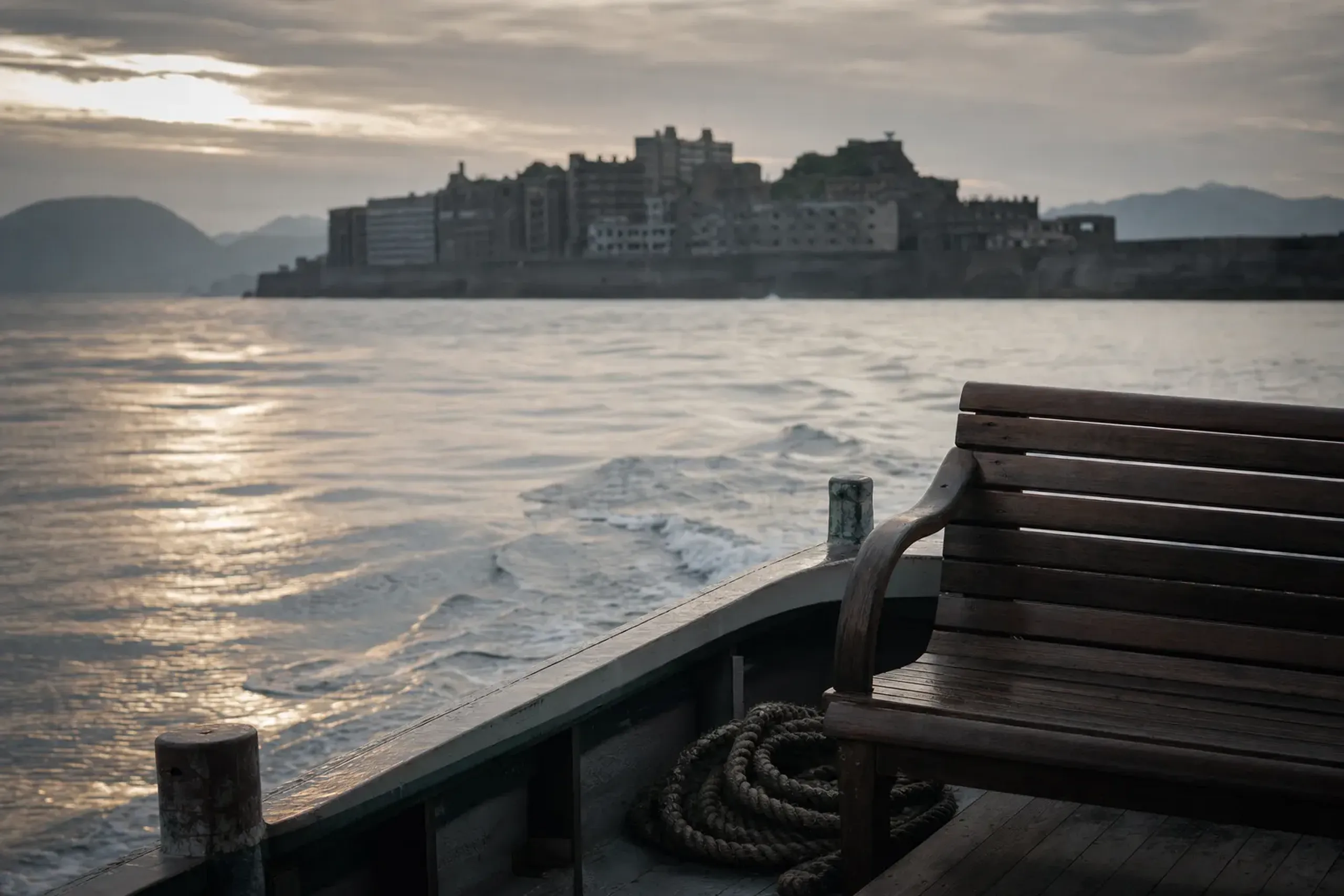
Second: discretion. You are not announcing your identity, schedule, or family details to strangers at close quarters. That confidentiality—total, quiet, and assumed—matters deeply for travelers who prefer a low profile, and it is the value we protect above all others.
Third: interpretation. This is where a guide becomes the difference between an impressive ruin and a coherent historical site. A guide with the right discipline can explain the engineering achievement, acknowledge the wartime forced labor record with care, and place UNESCO’s ongoing dispute in institutional terms—without theatrics.
That approach reflects three pillars we hold tightly at Japan Royal Service: discretion as a default, imperial-class conduct as a standard of formality and restraint (even in casual settings), and wabi-sabi as a preference for quiet truth over glossy packaging. A day like this is best shaped as part of a wider, bespoke itinerary across Kyushu—where the offshore chapter at Hashima sits within a longer, more considered narrative.
Plan Your Gunkanjima Visit With Us
Gunkanjima is not a place to rush, and it is not a place to leave to chance. If you want the fuller story—the engineering, the human cost, and the honest complexity that most tour boats leave unspoken—it deserves a guide who will tell it, and a day designed to stay meaningful whether or not the sea permits a landing. To begin shaping a private, discreet Nagasaki and Kyushu itinerary tailored to your interests, contact us here.
Frequently Asked Questions
Is Gunkanjima A UNESCO World Heritage Site Or Just A Popular Tour?
Hashima Coal Mine is one component of UNESCO’s “Sites of Japan’s Meiji Industrial Revolution,” inscribed in 2015.
It is both: a global heritage designation within a serial site, and a popular boat-based visit from Nagasaki that depends on sea conditions and safety regulation.
How Long Is The Gunkanjima Tour From Nagasaki, And What Do You Actually Do?
Most Gunkanjima tour experiences take about 2.5 to 3 hours and involve a cruise with a possible landing on designated walkways if conditions allow.
You should expect a controlled, safety-regulated visit. You will not enter buildings, and you may not land at all if wind and swell make it unsafe.