In this guide
- 01What’s Actually Protected At Gunkanjima Under UNESCO?
- 02Why Does Gunkanjima Look Like A Battleship From The Sea?
- 03The Island That Was Built For Coal, Then Left To Salt And Wind
- 04Building 30: Why The Most Photographed Ruin Still Matters
- 05Hell Steps, A Shrine, And The Bathhouse: The Human Map Inside The Concrete
- 06How Do You Visit Gunkanjima (Hashima Island) Without Getting Turned Away?
- 07When Does Gunkanjima Landing Get Canceled (Exact Safety Criteria)?
- 08What Are The Best Months To Maximize Your Chances Of Landing At Gunkanjima?
- 09A Practical “No-Disappointment” Plan A / Plan B Day In Nagasaki
- 10How To Book A Gunkanjima Landing Tour As A Foreigner (Official Process)
- 11What You’ll Notice If You Care About Architecture And Urban Planning
- 12Decay Is The Present Tense: Why Safety Rules Keep Tightening
- 13April 2026: A New Research Base On The Island
- 14What We Provide For A Gunkanjima Day (Without Overpromising)
- 15Plan Your Gunkanjima Day With Us
- 16Frequently Asked Questions
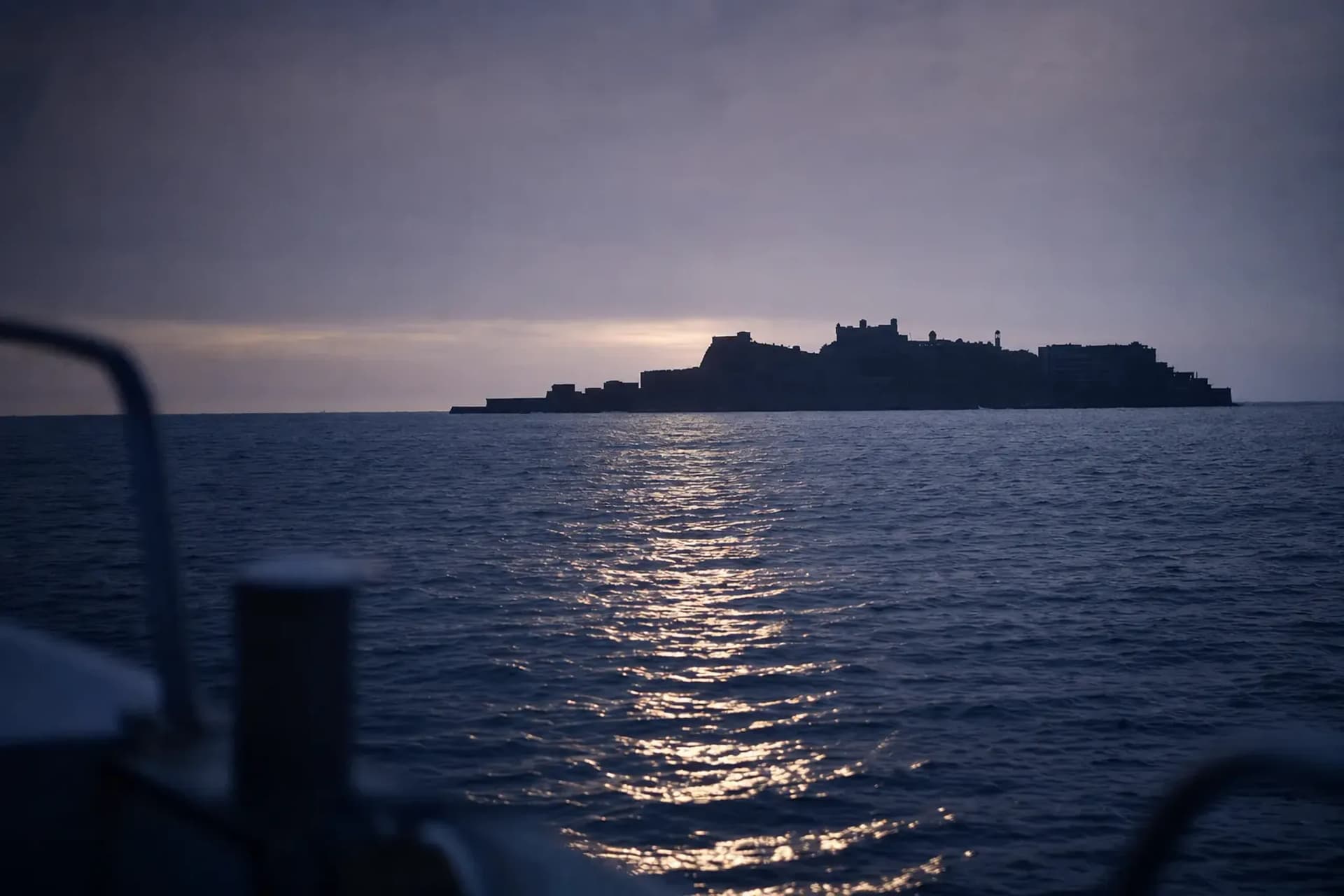
The island appears first as a dark line on the water.
Then a ridge of concrete. A serrated skyline. The reason people call it Gunkanjima—“Battleship Island.”
From the deck, it’s easy to assume the famous apartment ruins are the UNESCO World Heritage Site. Most visitors do.
They are not.
What’s Actually Protected At Gunkanjima Under UNESCO?
UNESCO protection at Gunkanjima covers the Meiji-era coal mining shafts and the “Amakawa” seawall construction method—not the island’s later apartment blocks, schools, or hospital ruins.
That single correction changes how you should visit.
The camera wants the crumbling towers. The inscription cares about the older, harder-to-photograph engineering under your feet: the mine infrastructure that drove Japan’s industrial leap, and a seawall technique that predates widespread cement use.
So we encourage guests to come with two lenses.
One is visual. You’ll still see the apartment ruins from the boat, and from the limited landing corridor when conditions allow.
The other lens is technical, almost forensic. It asks: what exactly is being conserved, and why is access so tightly controlled?
Why Does Gunkanjima Look Like A Battleship From The Sea?
Gunkanjima earned the nickname “Battleship Island” because Hashima’s silhouette resembles a warship when viewed from the water—especially with its seawall and dense building mass.
On calm days, the outline looks intentional. It isn’t.
Hashima is a small, reclaimed platform of industry, repeatedly expanded as mining intensified. The island’s perimeter reads like armor because, in truth, it had to be.
Out here, weather is not a detail.
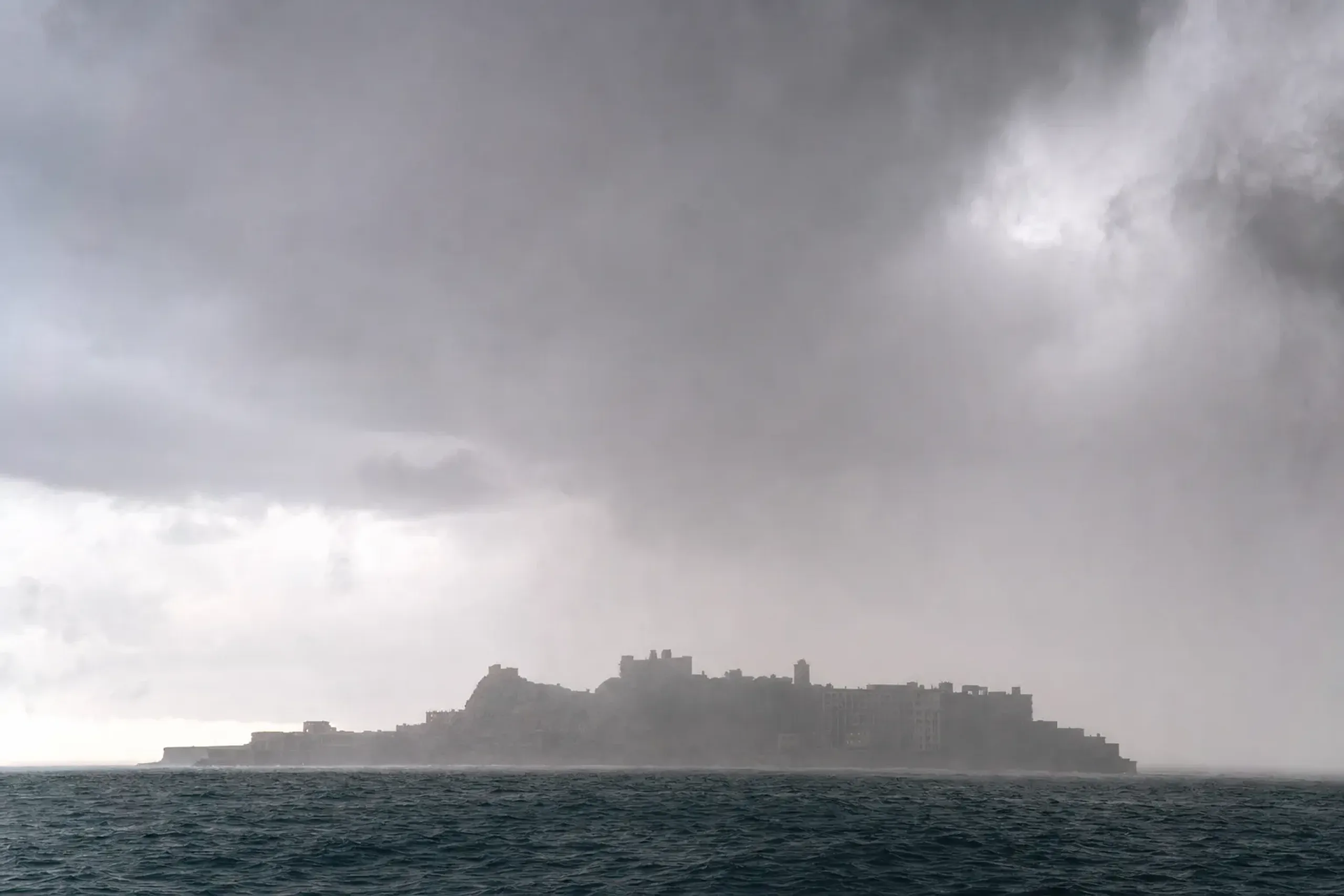
It’s the author.
The Island That Was Built For Coal, Then Left To Salt And Wind
Coal was discovered here in 1810, first noticed by fishermen.
Mitsubishi later took over management, and full-scale development began in 1890. The island became a machine—housing, shafts, seawalls, work rotations—engineered around a single purpose.
The coal seams ran roughly 600 meters below the seabed. That number lands differently when you’re standing above open water.
Miners descended by elevator at about 8 meters per second, working three shifts, around the clock, every day of the year.
The mine closed in 1974 after roughly 84 years of operation.
What remains is not “abandoned” in the romantic sense. It is an exposed system degrading in real time, with typhoons and sea air doing what they always do to reinforced concrete: find the weak point, then widen it.
Building 30: Why The Most Photographed Ruin Still Matters
Building 30, completed in 1916, was Japan’s first high-rise reinforced concrete apartment building—seven stories built as miners’ housing.
That is why architects and urban researchers keep coming back.
It wasn’t built to be scenic. It was built to hold lives efficiently in a compressed space, on an island that kept shrinking under the pressure of its own population.
Nearby, Building 31 held everyday infrastructure that feels almost shocking now: a post office and public telephone on the ground floor, and a barbershop and beauty salon in the basement.
This is the detail that cuts through the “ruin” label.
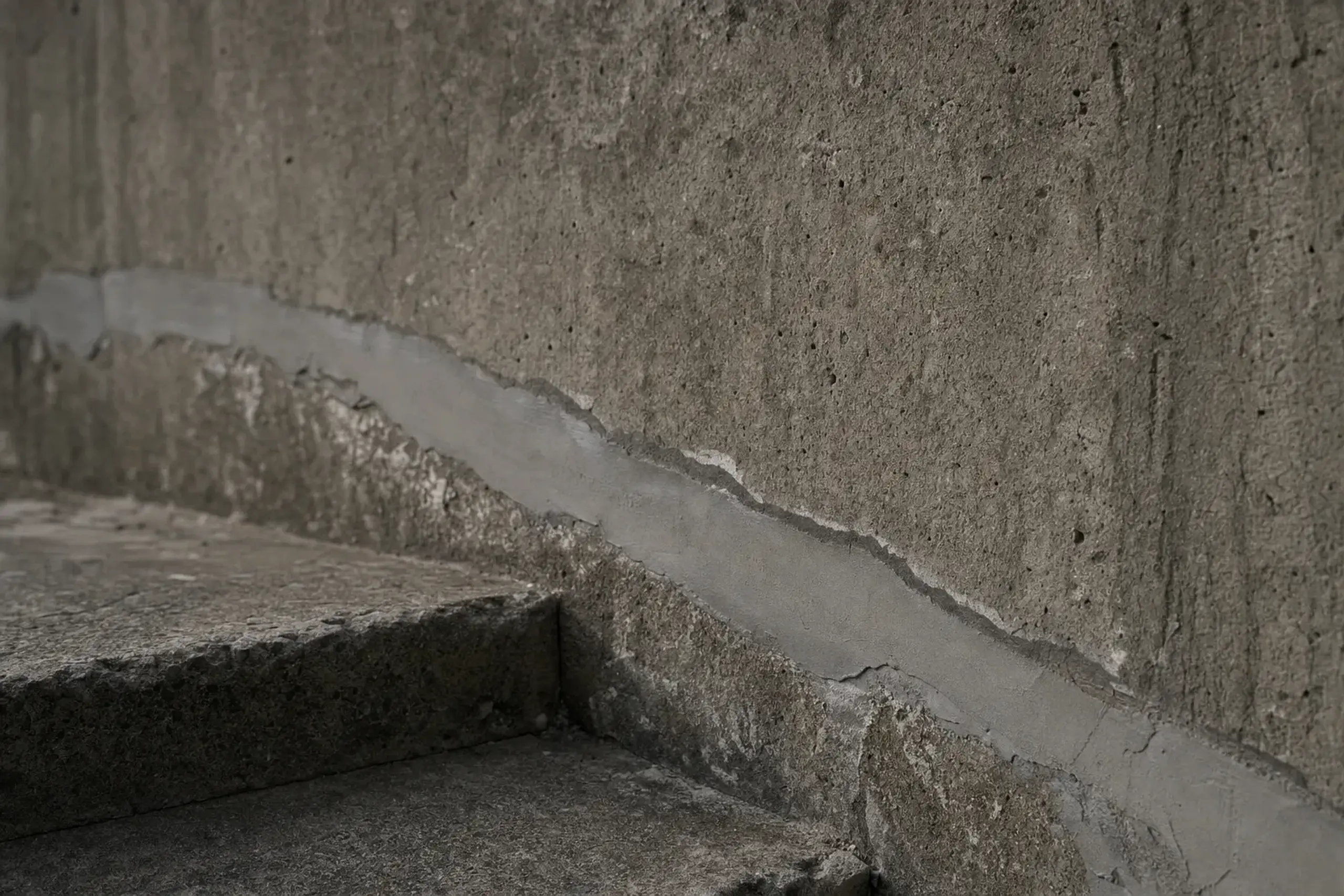
It was a town.
At its peak around 1960, roughly 5,300 residents lived on just 6.4 hectares—about seventeen times the population density of Tokyo’s ward area at the time. Enough children lived here to sustain a nursery alongside elementary and middle schools.
Hell Steps, A Shrine, And The Bathhouse: The Human Map Inside The Concrete
A steep staircase once nicknamed “Hell Steps” climbed toward Hashima Shrine.
Words like that don’t come from brochures. They come from knees and lungs.
Near the shrine area stood a red-brick general affairs office and the miners’ communal bathhouse. After a shift, workers washed the coal dust off first with seawater, then rinsed with fresh water.
It’s a small ritual, practical and blunt, and it hints at how the island ran: strict, repetitive, communal.
When we plan a Gunkanjima day, we begin by asking guests what they want to feel.
Some want scale and engineering. Others want the quiet human residue—stairwells that lead nowhere, a corridor where a town’s worth of footsteps used to pass. It is a restraint closer to wabi than to spectacle: meaning found in what has weathered and worn away, not in what glitters.
How Do You Visit Gunkanjima (Hashima Island) Without Getting Turned Away?
You can only land at Gunkanjima via one of five licensed tour operators, and visitors must submit a signed pledge (waiver) to Nagasaki City through the operator before landing.
No individual, unguided access exists. Not as a loophole. Not as a “special case.”
Landing was fully prohibited for years due to danger and decay, and tourist landings were permitted again starting 22 April 2009. The current system exists because the site is unstable and actively deteriorating.
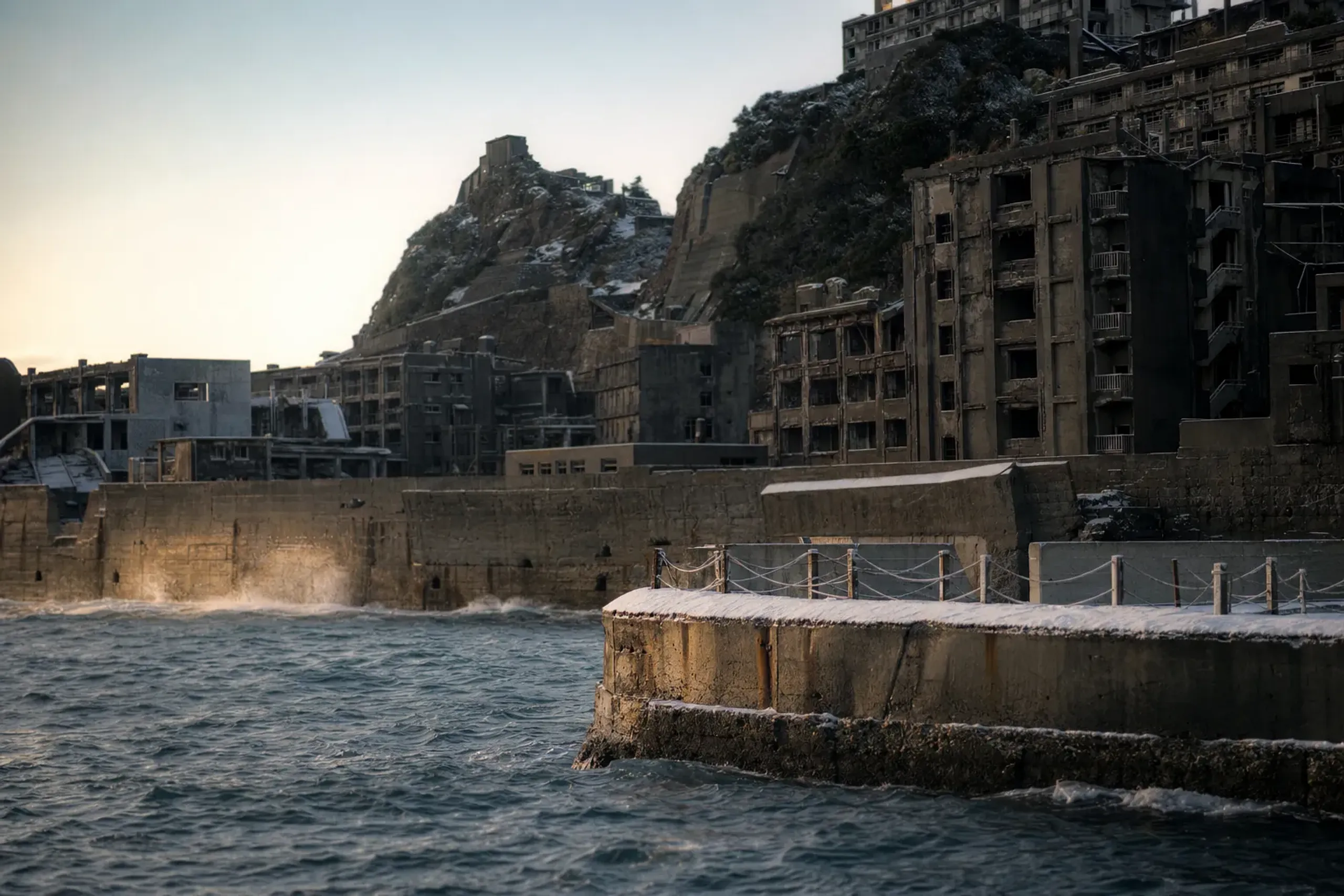
Once you land, you do not roam the island. Movement is confined to designated viewing plazas and a defined viewing corridor set by city ordinance.
That constraint disappoints some travelers—until they see the exposed rebar, the crumbling edges, and the voids where floors used to be.
Key fact: Even on “landing tours,” the island experience is a narrow, controlled route. Plan your expectations around the corridor, not the fantasy of free exploration.
When Does Gunkanjima Landing Get Canceled (Exact Safety Criteria)?
Landing is canceled when wind exceeds 5 m/s, wave height exceeds 0.5 m, or visibility drops below 500 m at the pier.
Those thresholds sound clinical. They are.
They also explain why you can have a sunny morning in Nagasaki and still miss the landing. Conditions at the pier decide the day, and Nagasaki City publishes safety criteria that tour operations must respect.
When landing is judged unsafe, the cruise may continue as an around-the-island tour instead. Some operators occasionally substitute a landing at nearby Takashima in these cases.
One more point many first-timers miss: even if landing is canceled, most operators do not refund the full cruise fare—only a small facility-use portion.
So the real luxury is not forcing the sea to behave. It’s building a day that still feels complete, whichever way the weather turns.
What Are The Best Months To Maximize Your Chances Of Landing At Gunkanjima?
Historically, February and September have seen around 90% landing success, while July has dipped as low as 34% in some past seasons.
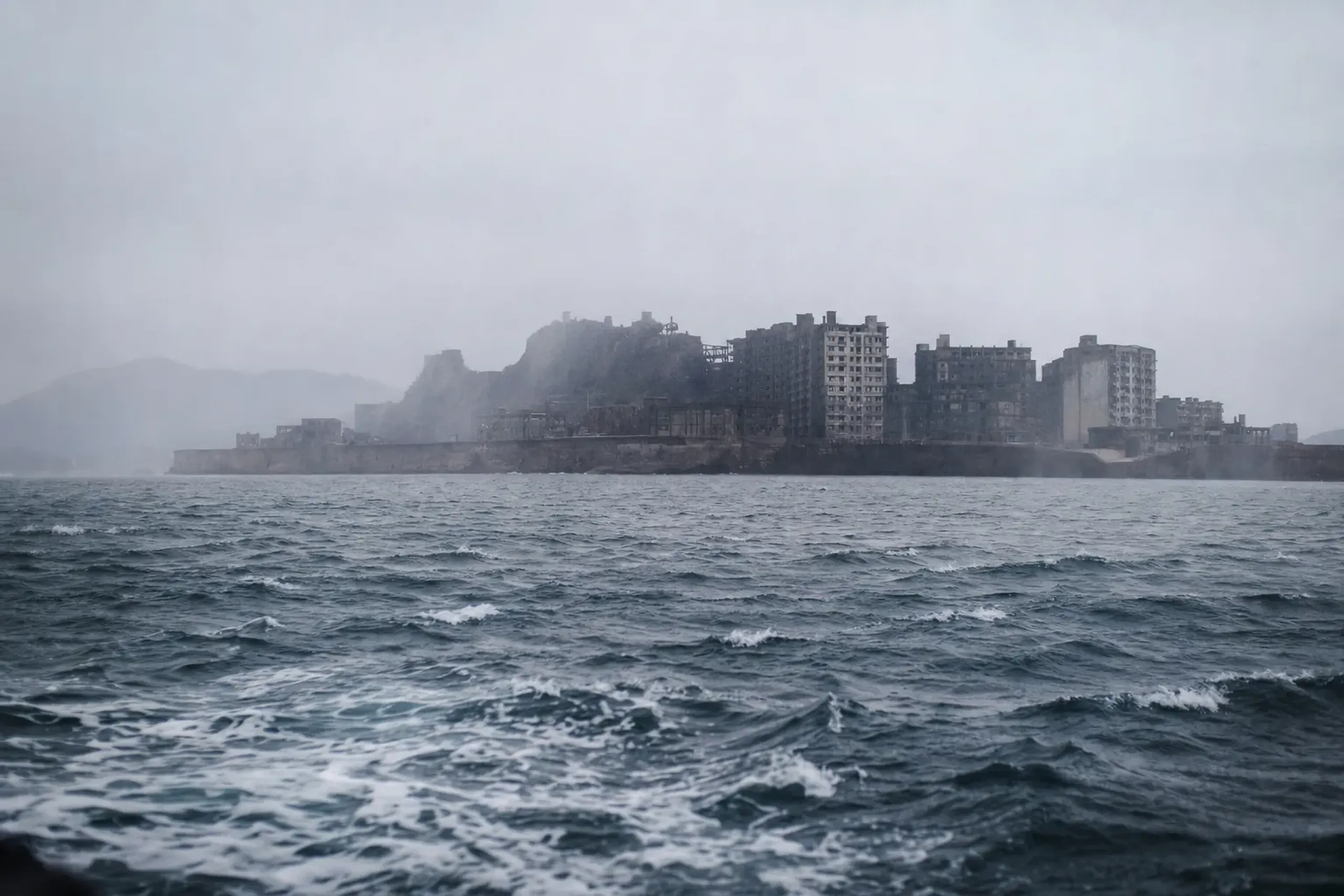
Those numbers are why our team treats Gunkanjima as a probability problem, not a simple excursion. Knowing precisely which month gives you the best odds—and pairing it with the right tide and weather window—is exactly the kind of seasonal judgment that separates a plan from a gamble.
If Gunkanjima is the reason you came to Nagasaki, we often recommend scheduling it early in your stay, not on the final day. A simple move, with an outsized payoff.
And we design a Plan B that never feels like a consolation prize.
A Practical “No-Disappointment” Plan A / Plan B Day In Nagasaki
For the discerning traveler, the pain point is not the boat ride. It’s the emotional whiplash when landing is canceled.
So we plan the day like a production.
Plan A is the landing day you pictured: a guided cruise from Nagasaki Port (about 40 minutes by tour boat in typical conditions), the battleship silhouette, the controlled corridor, and enough time afterward to decompress and reflect on what you saw.
Plan B treats the cancellation as a switch, not a failure. The point is to keep the narrative intact: why this island mattered, what UNESCO actually inscribed, and why decay and safety now govern the rules.
Option A: Landing Day (When The Pier Opens)
When landing is permitted, pace matters.
You will be on a narrow route with other visitors, and you’ll want your photography and your attention to arrive in the same place at the same moment.
- Approach: Stay on deck as the island comes into profile. The “battleship” read is strongest from the water.
- On the corridor: Look for exposed reinforcing bars and fractured edges—evidence of the island’s ongoing structural countdown.
- After: Give yourself quiet time to process. A rushed lunch can flatten the experience back into mere “ruins.”
Option B: Non-Landing Day (When The Sea Says No)
If the cruise becomes a non-landing tour, meaning matters even more.
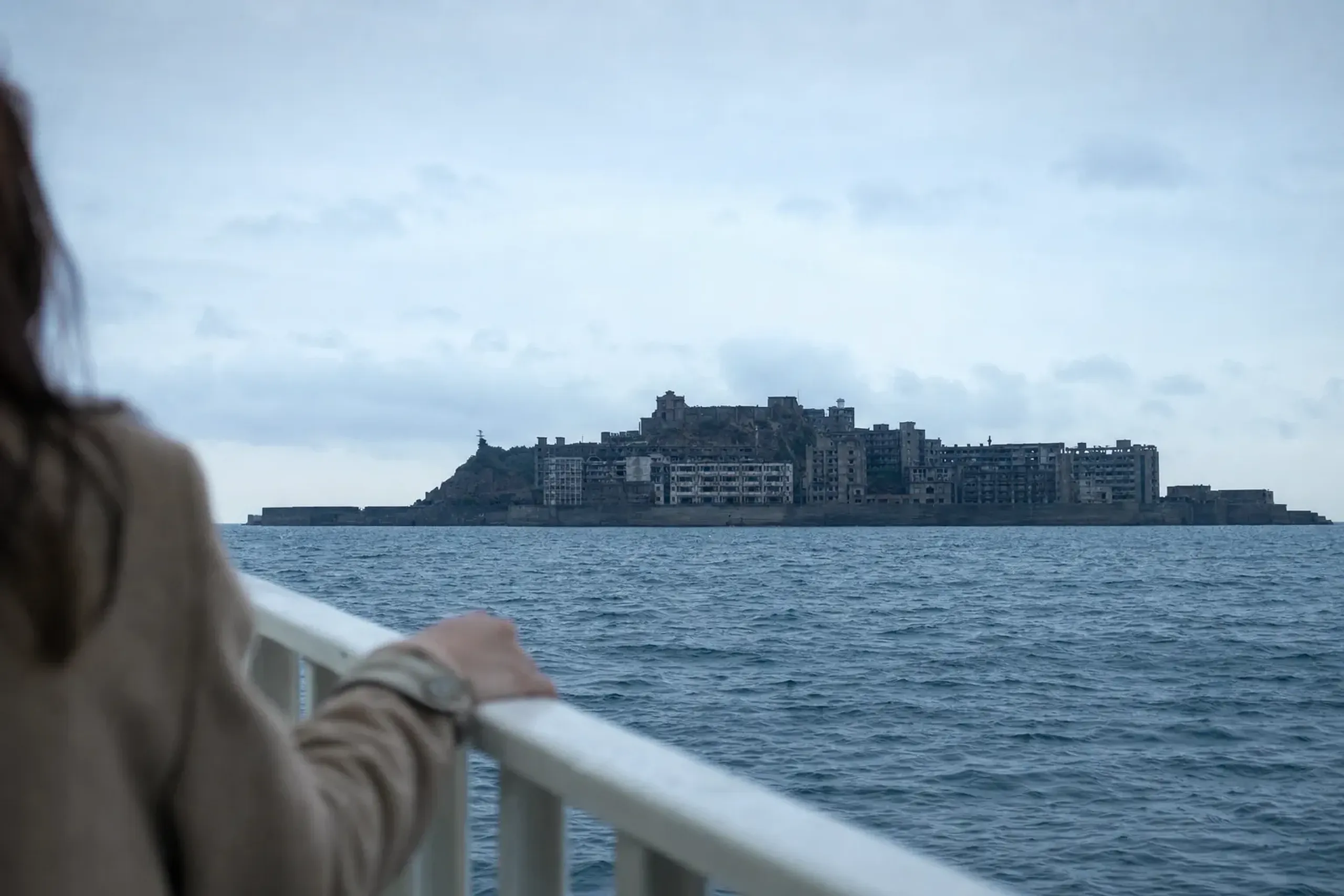
We often suggest pairing the circumnavigation with a visit to the Gunkanjima Digital Museum in Nagasaki, which focuses on the digital reconstruction and interpretation of the island.
- Start with the boat: You still get the silhouette, the scale, and the seawall’s brooding presence.
- Then go digital: The museum lets you “enter” spaces you cannot safely walk through in reality.
- End with context: A short debrief with your guide turns the day from disappointment into understanding.
How To Book A Gunkanjima Landing Tour As A Foreigner (Official Process)
Foreign visitors book Gunkanjima tours through one of Nagasaki’s licensed operators, and landing requires submitting a signed pledge (waiver) through the operator before the visit.
Because landing is weather-dependent, confirm in advance what happens on a non-landing day: whether the boat still sails, what the alternative route is, and how refunds are handled.
Operators also publish specific safety and eligibility rules. Yamasa Shipping, for example, states that children under 6 cannot enter Gunkanjima and warns against high heels due to footing and accident risk.
For questions—or to have these logistics handled quietly on your behalf—contact our concierge.
What You’ll Notice If You Care About Architecture And Urban Planning
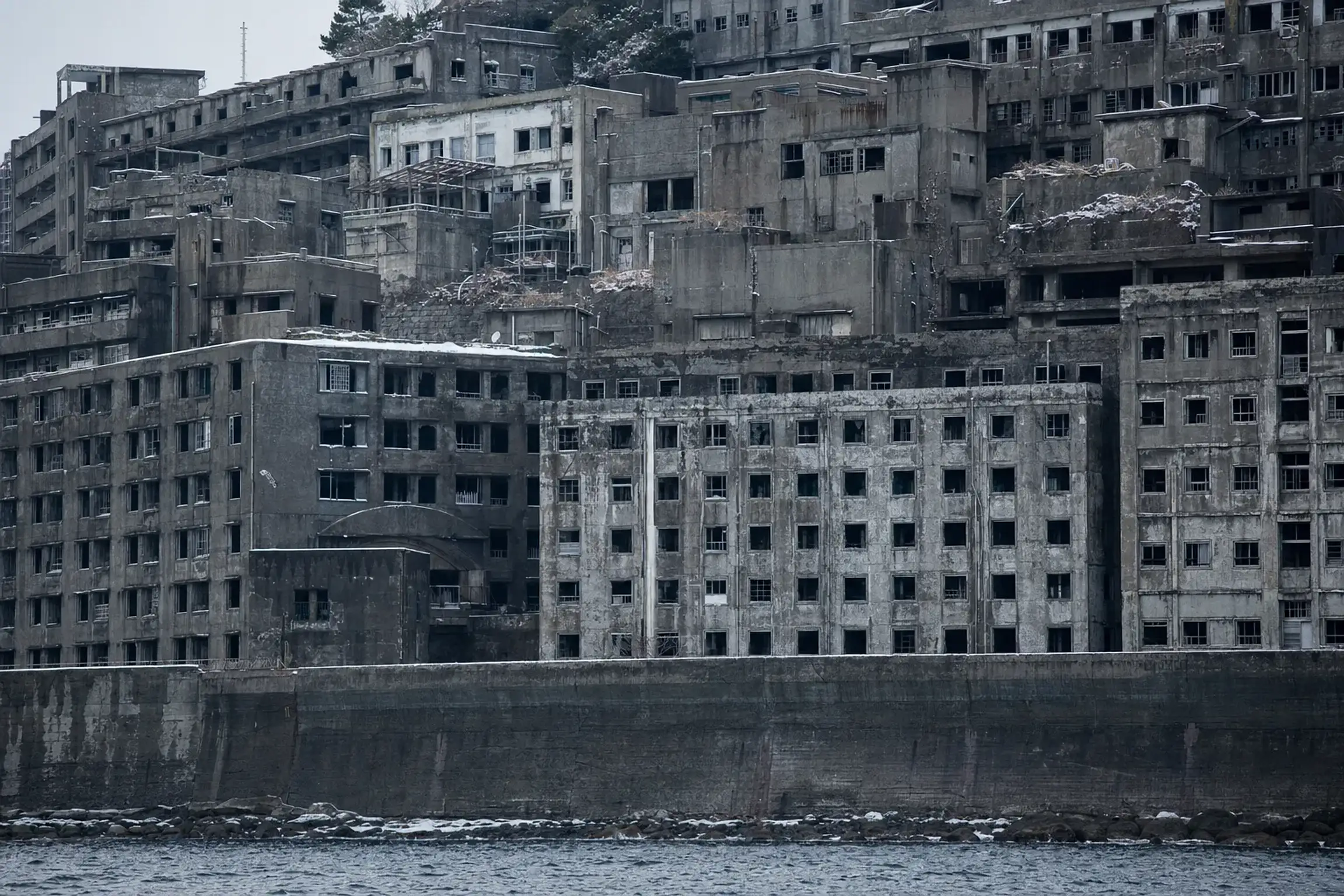
Even if you never set foot on the corridor, the island reads like a compressed city.
Researchers describe the density—over 5,000 residents on 6.4 hectares—as having no clear parallel.
And unlike a museum district, this was never curated space. It was working space.
From the sea, the apartment blocks form a wall. Up close, they resolve into a stack of small domestic decisions: windows placed for light, stairwells cut into narrow volumes, corridors that once carried voices and laundry and arguments.
Building 30 matters here again. It sits outside the UNESCO listing boundary, yet it remains architecturally significant as an early, formative reinforced-concrete high-rise in Japan.
Two truths can coexist. That’s the honest way to look at Hashima.
Decay Is The Present Tense: Why Safety Rules Keep Tightening
Many of Hashima’s non-UNESCO structures—apartment blocks, school, hospital—are in active, documented decay, with exposed rebar and crumbling exterior walls.
It feels less like “abandoned” and more like “unheld.”
Typhoons and rough seas do not ask permission. They take the corners first, then whole edges.
This is also why the site’s controlled access is not theater. It is risk management.
And it is why we encourage respectful behavior on tours: no climbing, no touching unstable surfaces, no chasing the perfect angle at the cost of safety or dignity.
April 2026: A New Research Base On The Island
In April 2026, a new research base facility was completed on Hashima—reported as the first new construction there in 56 years.
That date matters because it signals the site is not being left to dissolve unattended.
UNESCO decision documents for the broader Meiji Industrial Revolution inscription also reference long-term conservation priorities, including retaining walls and conservation techniques.
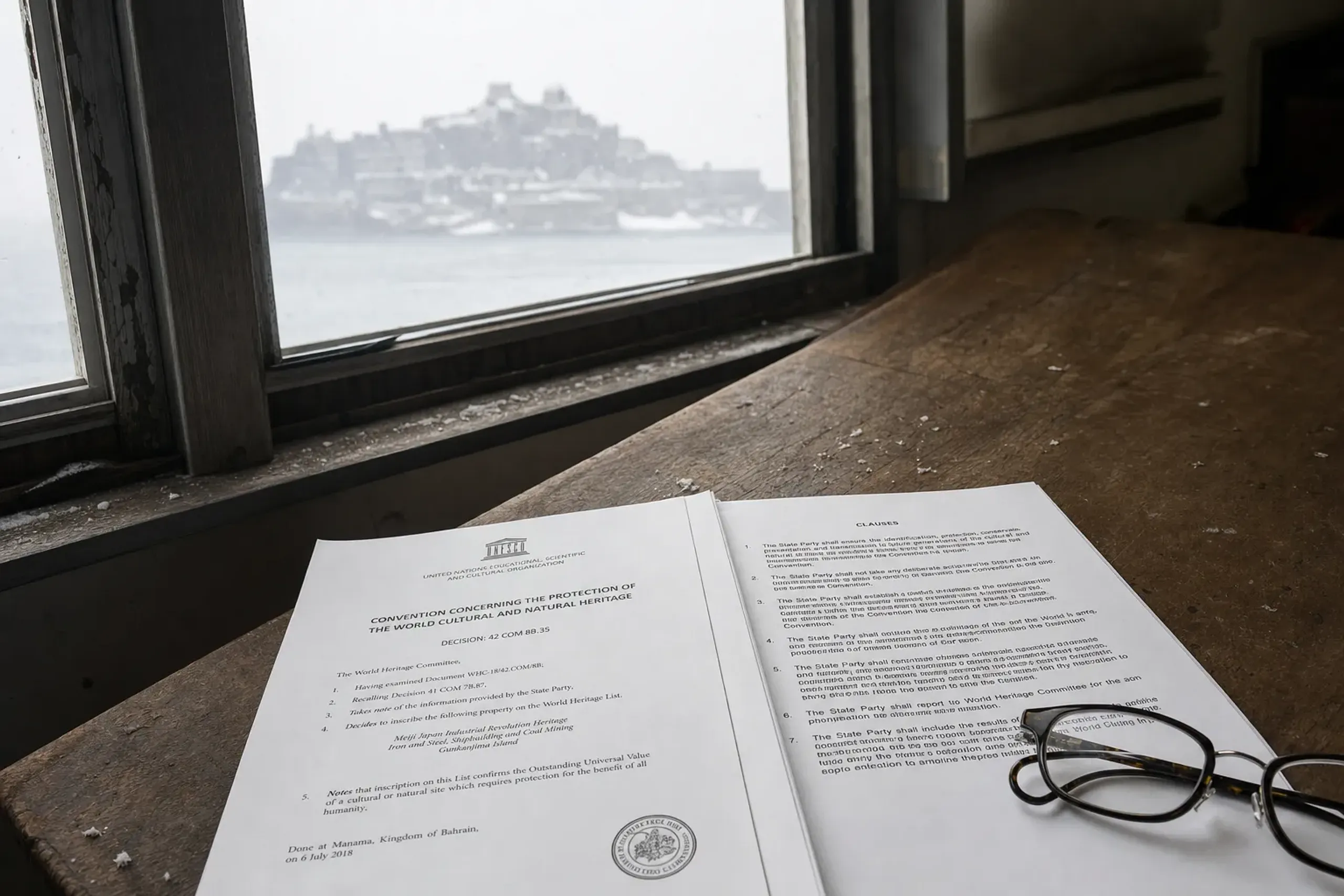
On Hashima, those priorities meet the reality of a harsh marine environment.
For travelers, this shifts the emotional register. You are not “trespassing into a ruin.” You are visiting a controlled heritage site under active study, with a living preservation effort—limited by physics, funding, and time.
What We Provide For A Gunkanjima Day (Without Overpromising)
Our team at Japan Royal Service supports Gunkanjima visits with private guiding, private transportation to and from Nagasaki Port, and coordination through a licensed landing tour operator.
We do not publish booking guarantees on the website. We stay discreet, and we keep the operational details private—the same confidentiality we extend to every guest and every itinerary.
What we can do openly is the part discerning travelers actually feel: designing the day so the weather never decides whether it was “worth it.” This is the heart of a tailor-made itinerary—one built around the constraints of the sea rather than in denial of them.
That includes timing advice based on landing-success patterns, an on-the-ground readiness checklist (footwear, heat planning, what to avoid), and a Plan B that still delivers meaning.
If you’re comparing specialists like Black Tomato, Artisans of Leisure, or Relais & Châteaux-style trip design, our difference is quiet but decisive: we operate from within Japan, we protect your identity, and we plan for the constraints—rather than selling a fantasy of access. It is also how we open doors elsewhere in the country that Google cannot find: the introduction-only ryokan, the private audience with a craftsman, the imperial-class viewing arranged only through trusted hands.
Plan Your Gunkanjima Day With Us
Gunkanjima rewards those who understand it before they arrive—what UNESCO truly protects, why the sea holds the final vote, and how to build a day that stays meaningful either way.
If you would like a quietly orchestrated Nagasaki itinerary with Gunkanjima at its centre—private guiding, seamless logistics, and a Plan A and Plan B that both feel complete—contact us here to begin a tailored proposal.
Frequently Asked Questions
Is Gunkanjima (Hashima Island) A UNESCO World Heritage Site Even If You Only See The Apartments?
Yes, Hashima is part of the UNESCO “Sites of Japan’s Meiji Industrial Revolution” listing—but the famous apartment ruins fall outside the inscribed boundary, which focuses on the mining shafts and a seawall method.